
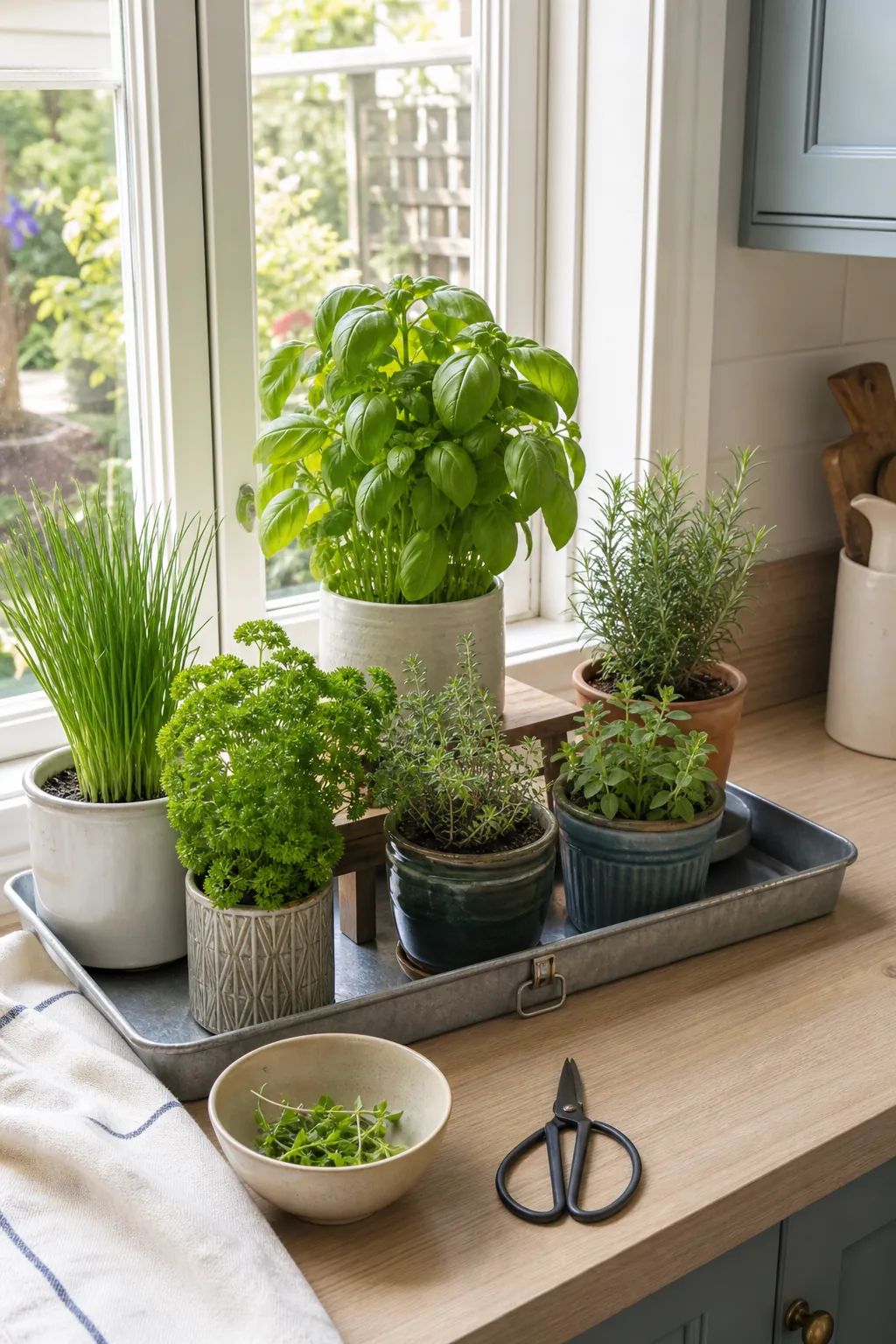
The best windowsill herb garden ideas solve a specific problem: a ledge that is too shallow, a window that gets uneven light, herbs that need different amounts of water, or a kitchen that cannot surrender much prep space. A clever container means little if the roots stay wet or the sash can no longer open. Choose the arrangement for the window and the plants, then make it beautiful.
These setups use ordinary pots, trays, risers, rails, and seasonal moves to create a useful indoor herb garden. Each one can be scaled down to two plants or expanded after the first herbs prove that the light and care routine work.
A modular tray of separate herb pots
Place individual pots on one waterproof tray so the group reads as a single garden while every herb keeps its own root zone. This is a strong choice for basil, parsley, chives, thyme, and rosemary because you can lift and water each container according to need. Use a tray with a raised edge, but empty any runoff rather than treating it as a reservoir.
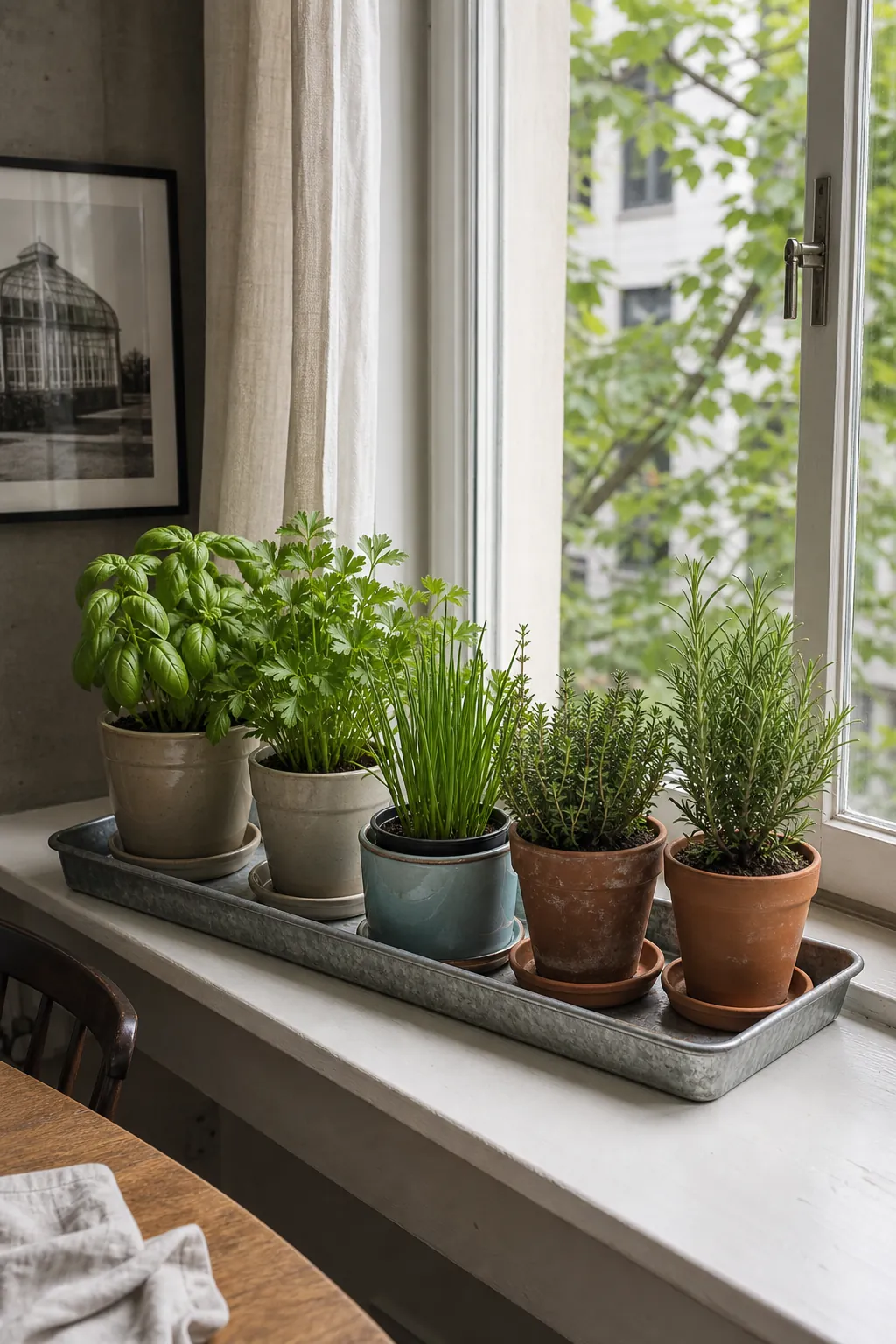
Mix container materials on purpose. Terracotta can suit herbs that prefer a drier interval, while glazed or plastic pots lose moisture more slowly. Keep mint in its own pot, and leave small gaps for airflow and easy lifting. The visual unity should come from the tray and a restrained palette, not identical care conditions.
A turntable garden for corner windows
A low, stable plant turntable can help a compact cluster receive more balanced light in a corner window. Choose one rated for the wet weight of pots, set it on a waterproof mat, and rotate it a small amount every few days. Keep foliage and saucers inside the platform edge so nothing catches the frame.
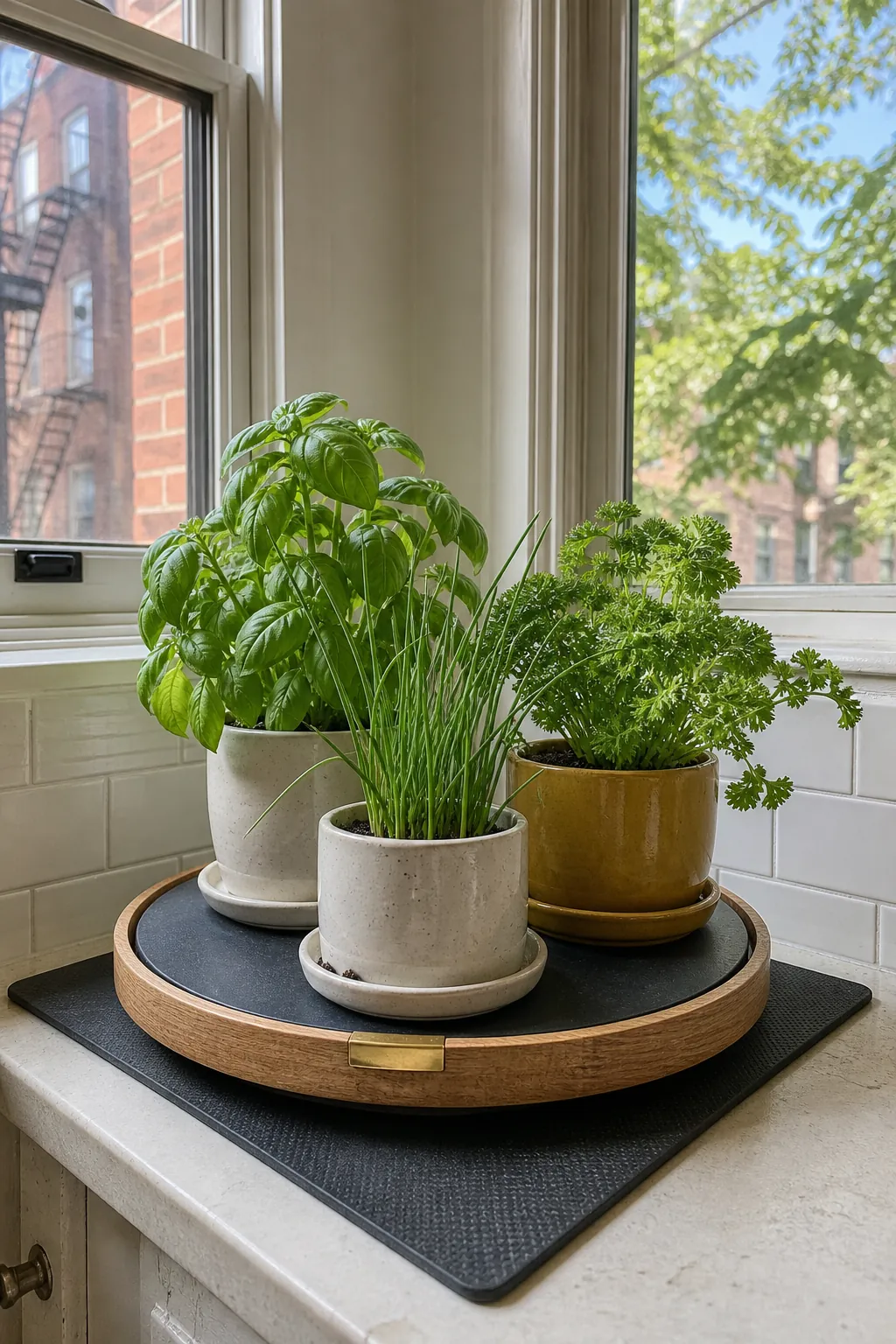
This works best with three or four modest plants, not a tall stack. Put the shortest herb on the light-facing side and avoid a central plant that shades everything else. A turntable improves access and rotation; it does not create more light. Add a nearby grow light if stems continue to stretch.
A mixed-depth planter station
Herbs do not all need the same container shape. Dill and other taprooted herbs need deeper pots, while thyme can thrive in a broader, shallower container with excellent drainage. Group different heights on one sturdy sill extender or freestanding shelf, keeping the tall pot where it will not cast afternoon shade across the rest.
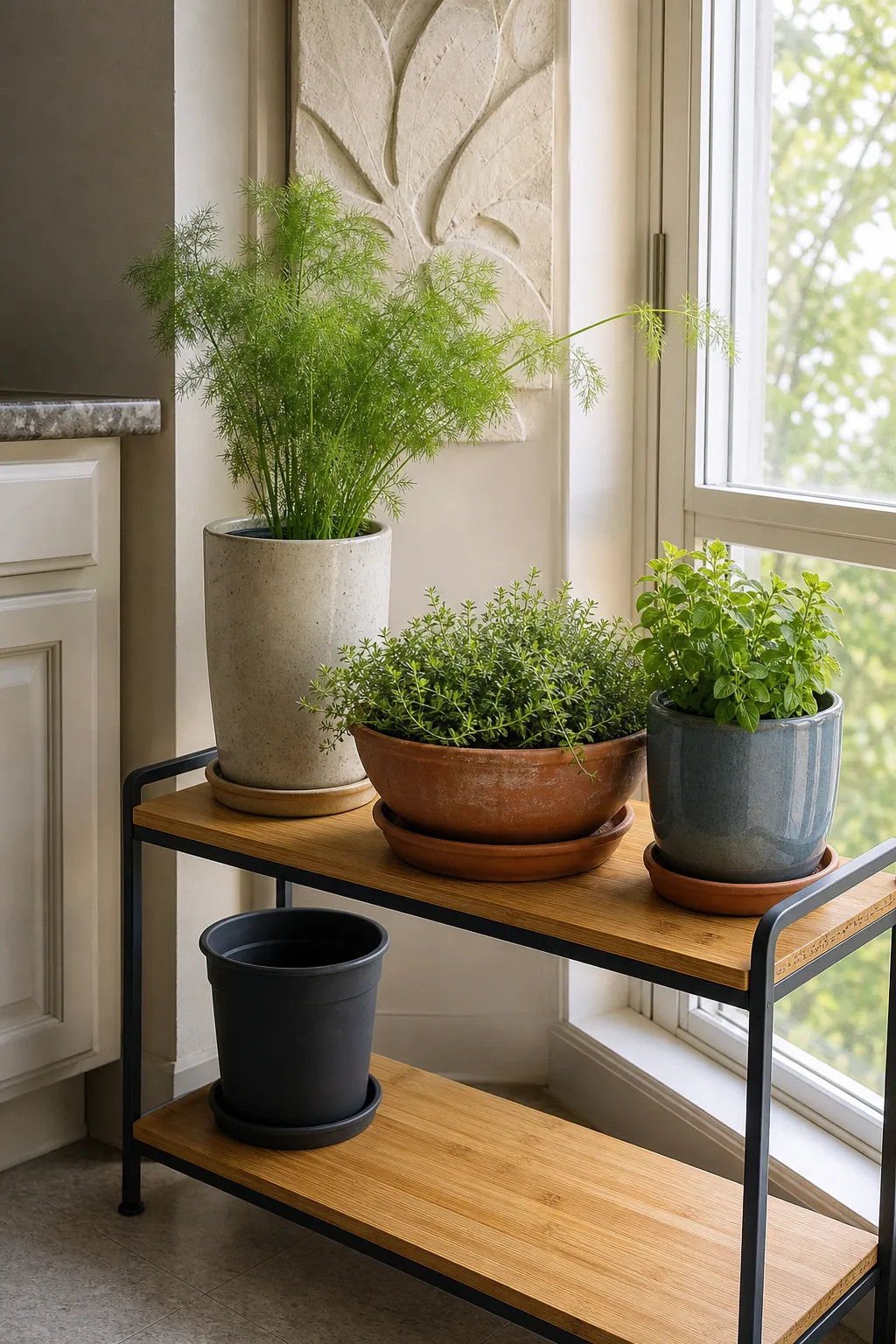
Use potting mix rather than dense garden soil, and make sure every vessel drains. A long trough looks tidy but can force roots with different moisture preferences into one schedule. Mixed depths preserve the garden aesthetic while respecting mature plant size and root form.
A side-hung basket for trailing herbs
Trailing oregano or thyme can use vertical space beside a bright window instead of filling the sill. Hang the basket from a properly rated freestanding frame or approved structural fixing, never from curtain hardware or a suction hook above a walkway. Keep it low enough to check the soil and remove for watering.
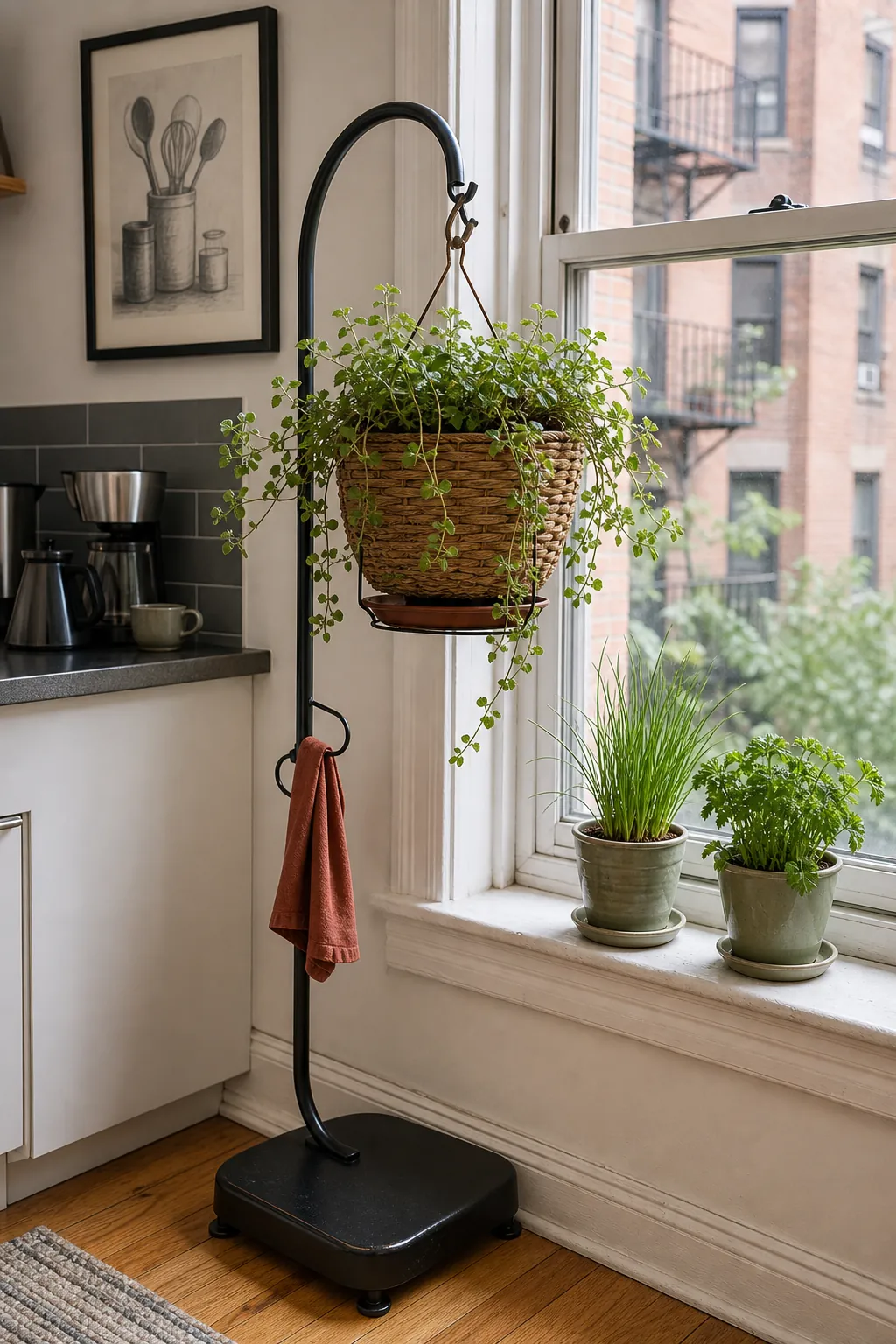
Choose a basket with a removable inner pot and saucer so water never drips onto trim or flooring. Do not hang it directly over food prep. A small open frame can hold the basket beside two windowsill pots, creating height without turning the arrangement into an inaccessible vertical garden.
A window-to-porch seasonal herb box
Use a portable handled planter to move herbs between a bright indoor window and a protected porch or patio when weather allows. The transition must be gradual: plants accustomed to glass-filtered indoor light can scorch if placed straight into intense outdoor sun. Begin in sheltered partial shade and increase exposure over several days.
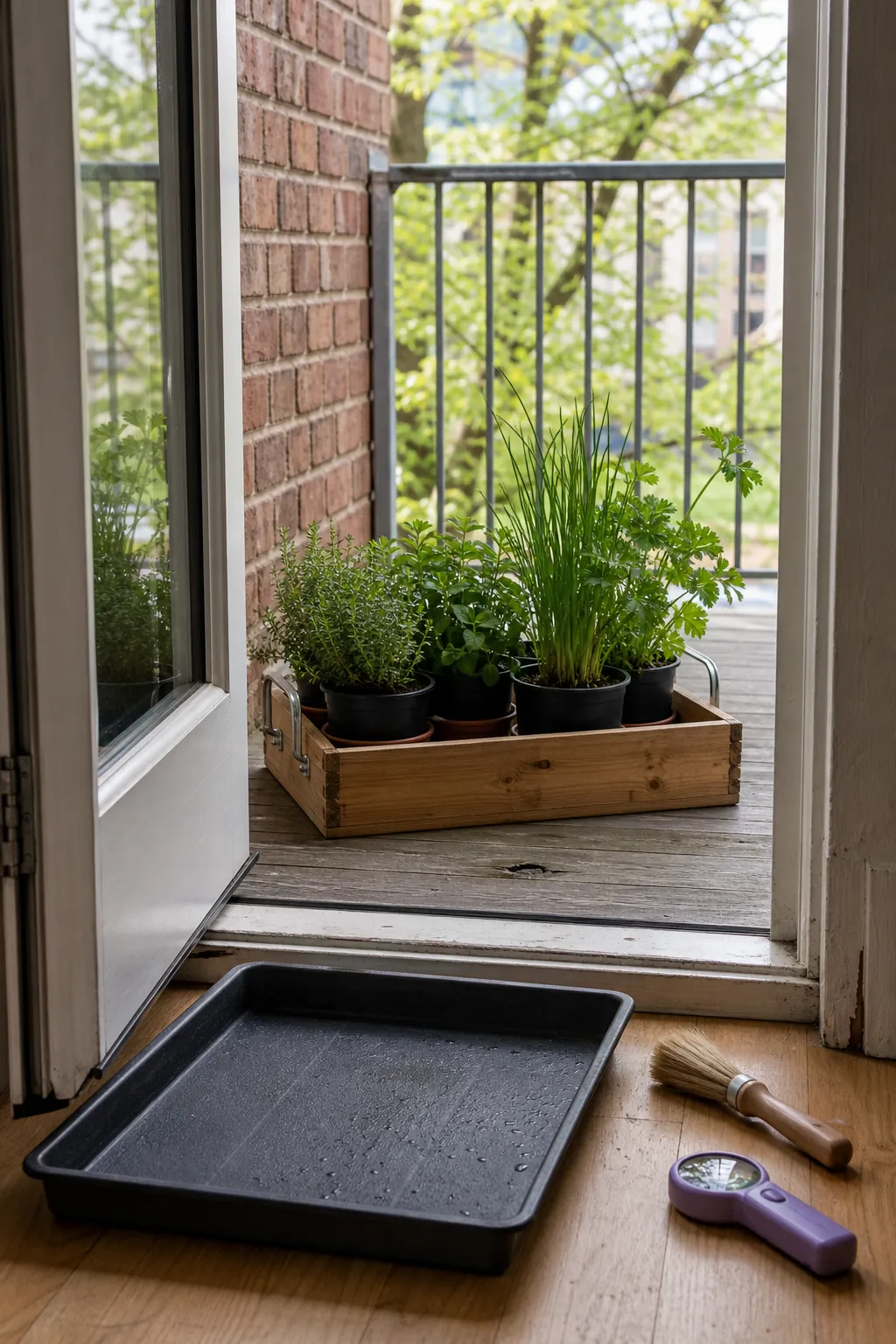
Inspect leaves before bringing outdoor pots back inside so pests do not spread to houseplants. Outdoor containers also dry faster in wind and sun, so the indoor watering pattern will not carry over unchanged. This idea connects an apartment herb garden to a porch herb garden without requiring two separate collections.
A simple wick reservoir for one thirsty herb
A small two-piece self-watering pot can help basil or parsley stay more evenly moist, especially in a warm sunny window. Use it for one herb, follow the planter’s fill and cleaning instructions, and still check the mix. The reservoir should have an overflow or clear limit so roots do not remain submerged.
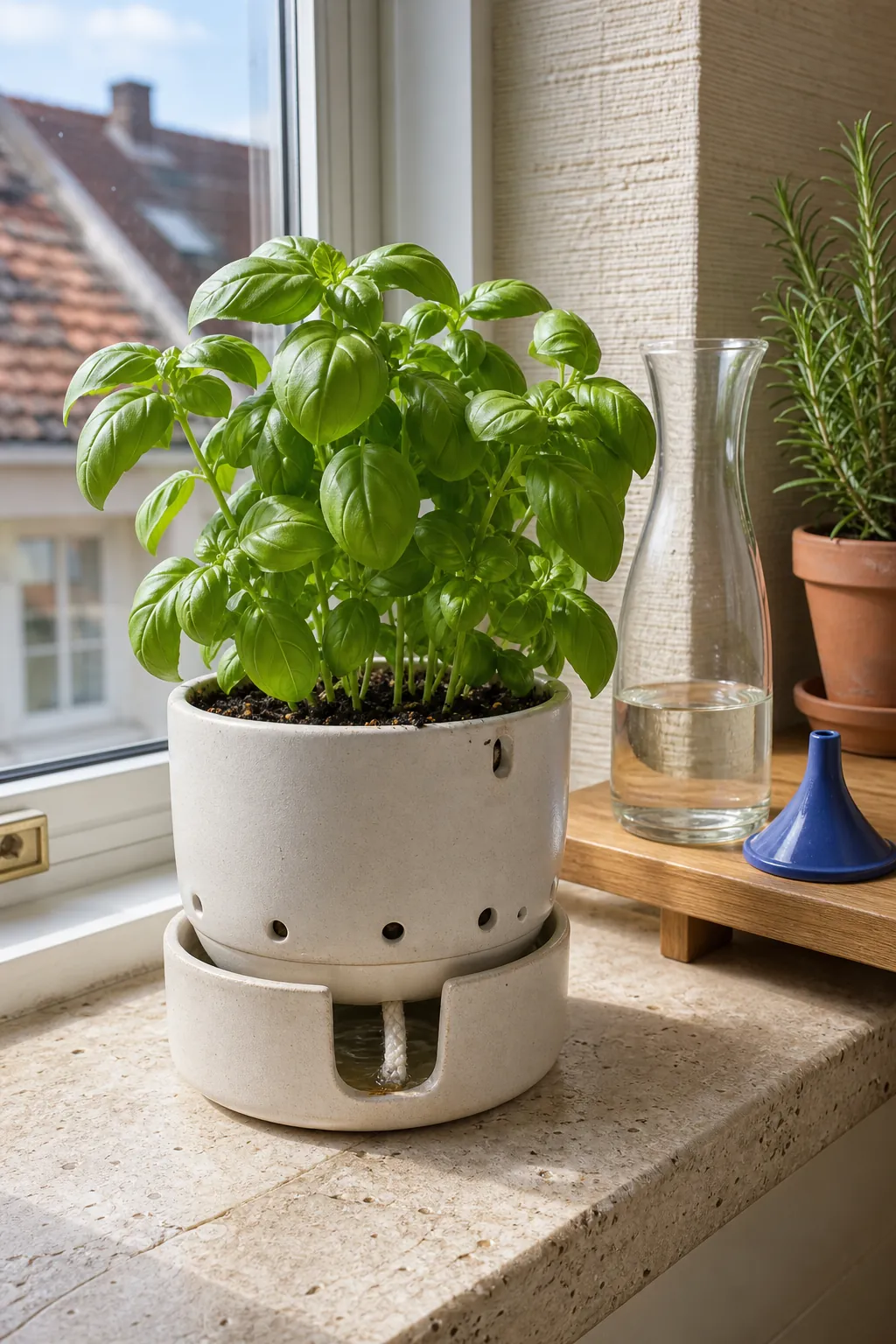
Do not put drought-tolerant rosemary in the same reservoir system just to match containers. Clean the reservoir periodically, watch for odor or algae, and let your observations guide refilling. A wick planter reduces abrupt drying; it does not correct weak light, cold glass, compacted mix, or an oversized root system.
Choose one idea that fixes your real constraint
If the ledge is narrow, move the garden to a nearby freestanding surface. If light arrives from one direction, use spacing and rotation. If watering needs conflict, keep separate pots. If summer outdoor space is available, build a portable transition instead of a permanent indoor display.
The right windowsill herb garden idea removes friction from care. Start with the herbs you cook with, verify drainage and light, and add the design feature only when it makes those plants easier to keep healthy.