A table can fit inside a nook while the people around it cannot move comfortably. Before setting out the holiday plates, test your chairs in their pulled out positions and walk the route from the kitchen with a tray. Choose the arrangement that leaves usable seats and an open passage, even if that means keeping serving dishes somewhere else.
Follow the long direction of the nook
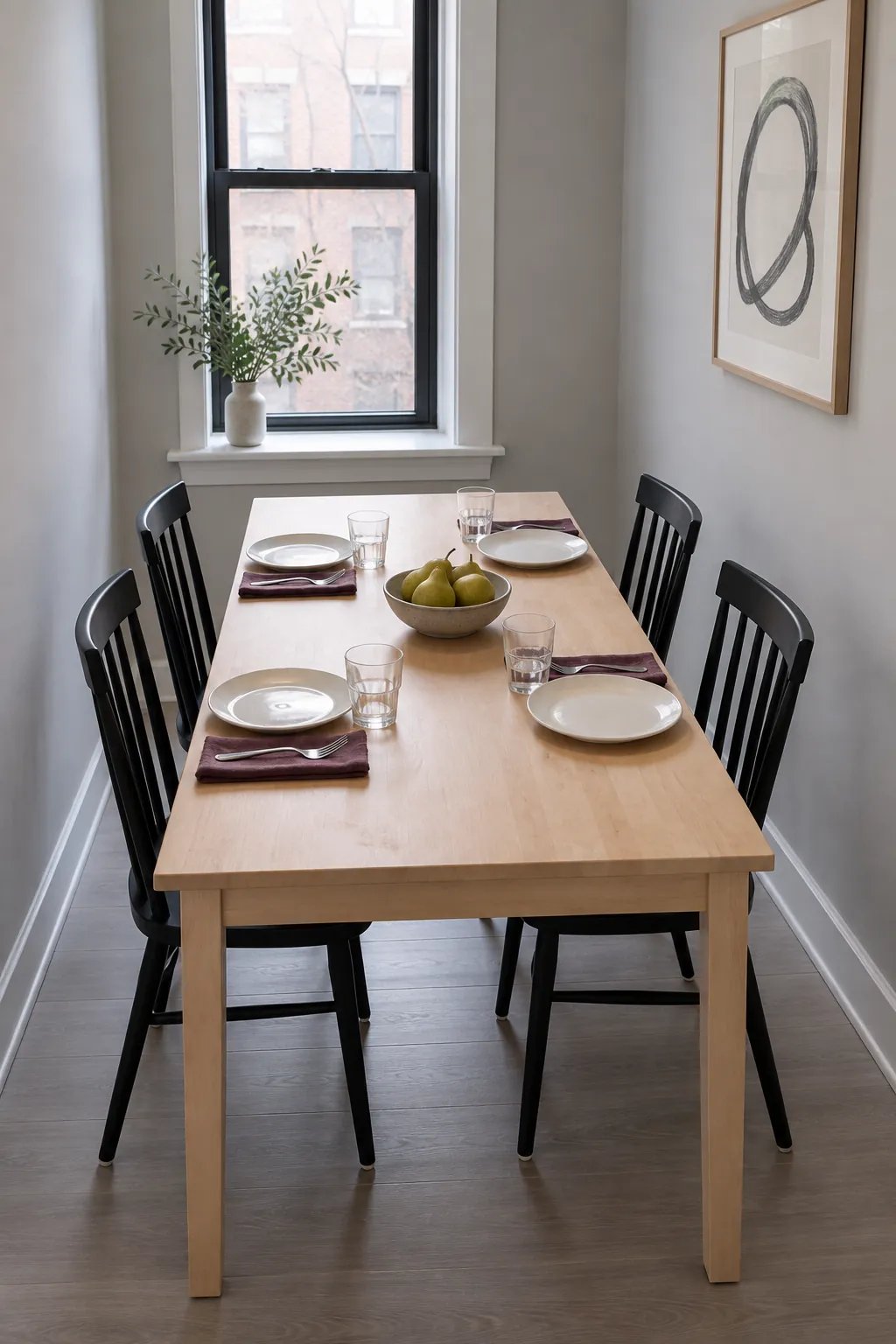
Align a slim rectangular table with the nook’s longest direction so its ends do not cut across the main walking route. Check both long sides with the chairs occupied, because a narrow tabletop alone does not solve chair clearance. Leave an accessible end for entering and leaving the table, and keep the centerpiece low enough that it does not consume the working surface.
Put one short end against a wall
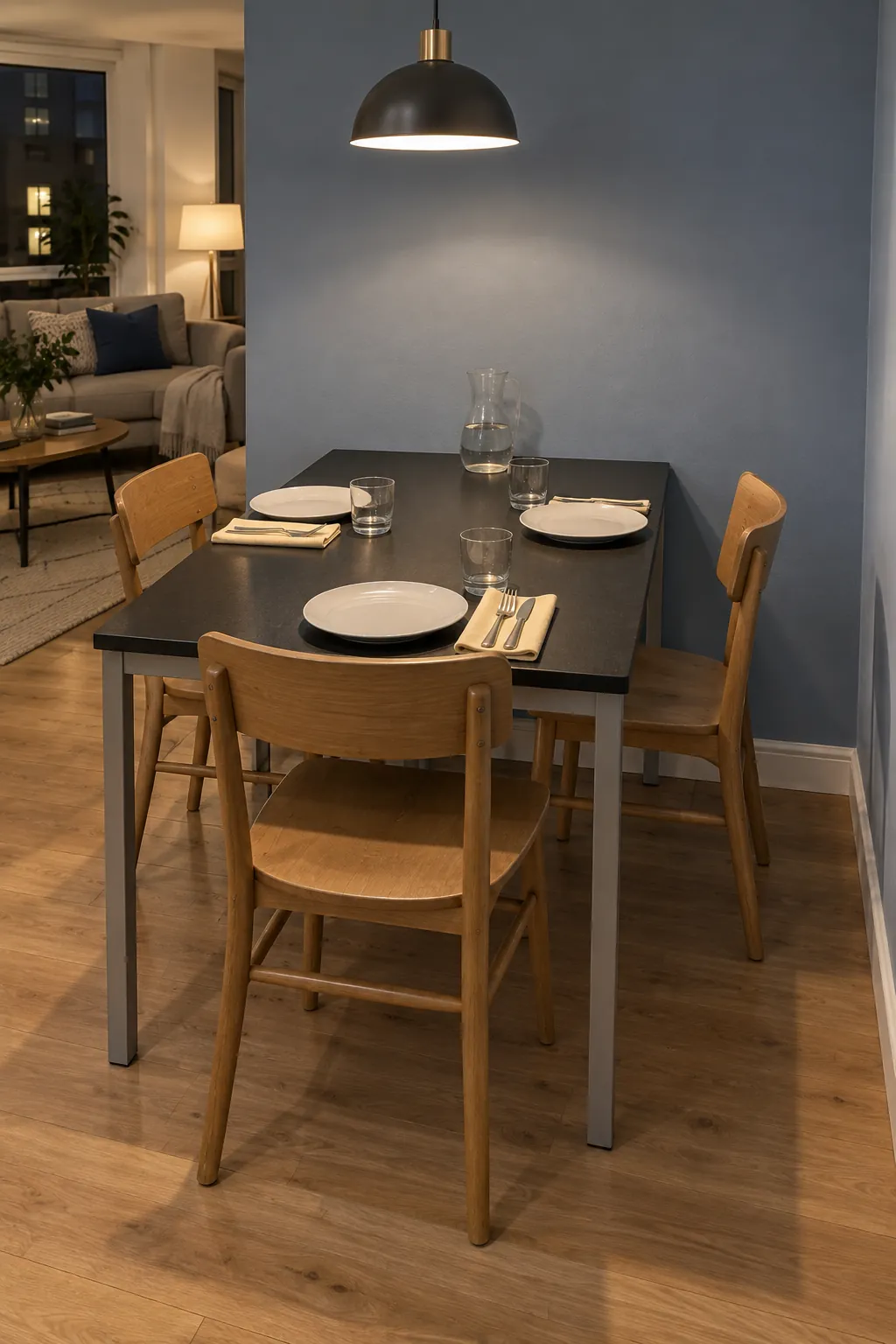
A rectangular table can sit with one short end against a wall when you do not need a seat at that end. Place settings belong only on the accessible sides, rather than in a corner that forces someone to climb past another diner. This holiday table placement works especially well when the free end faces the open room. Move the table out only if doing so actually creates a usable additional seat, then recheck the full chair footprint.
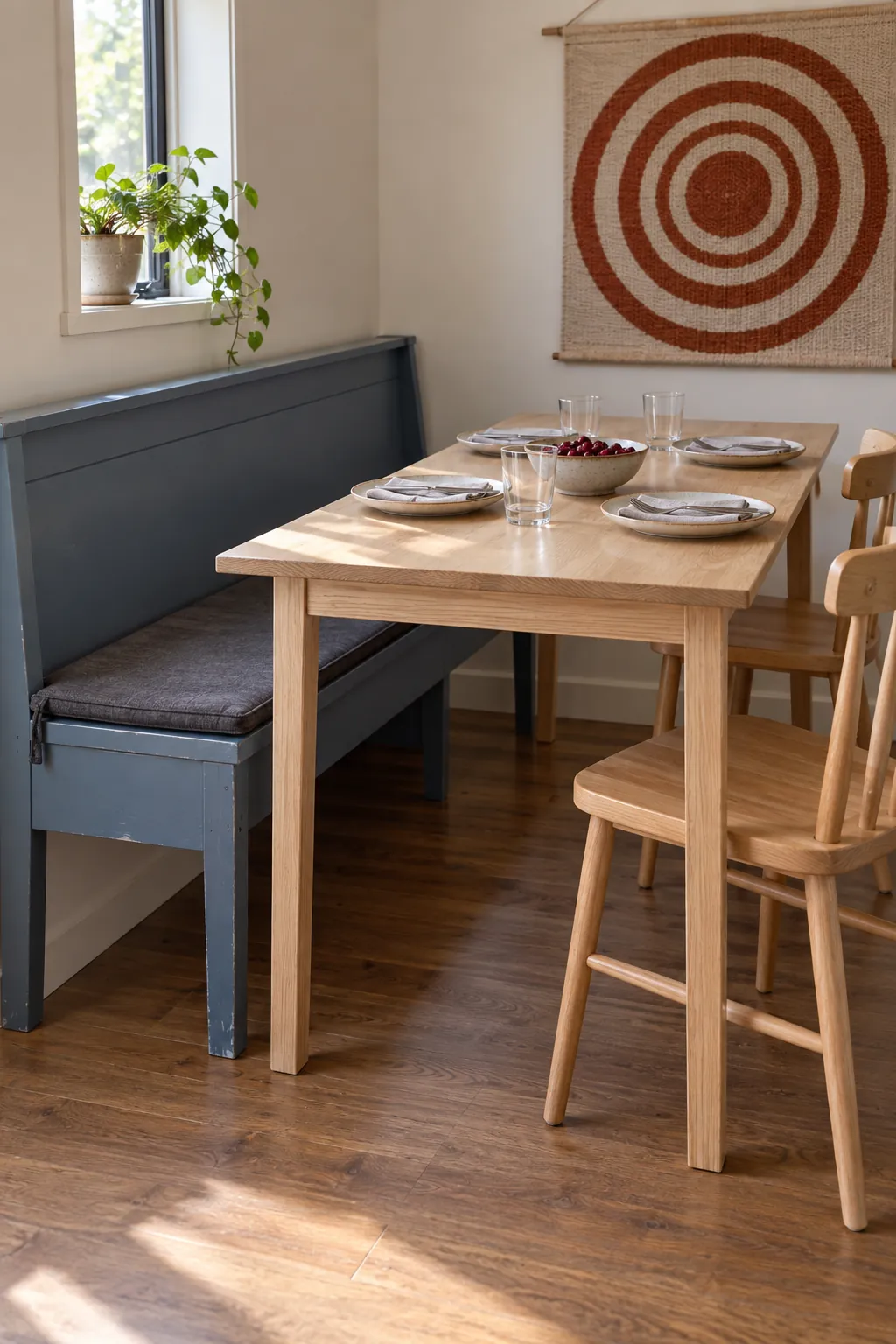
Pair an existing wall bench with loose chairs
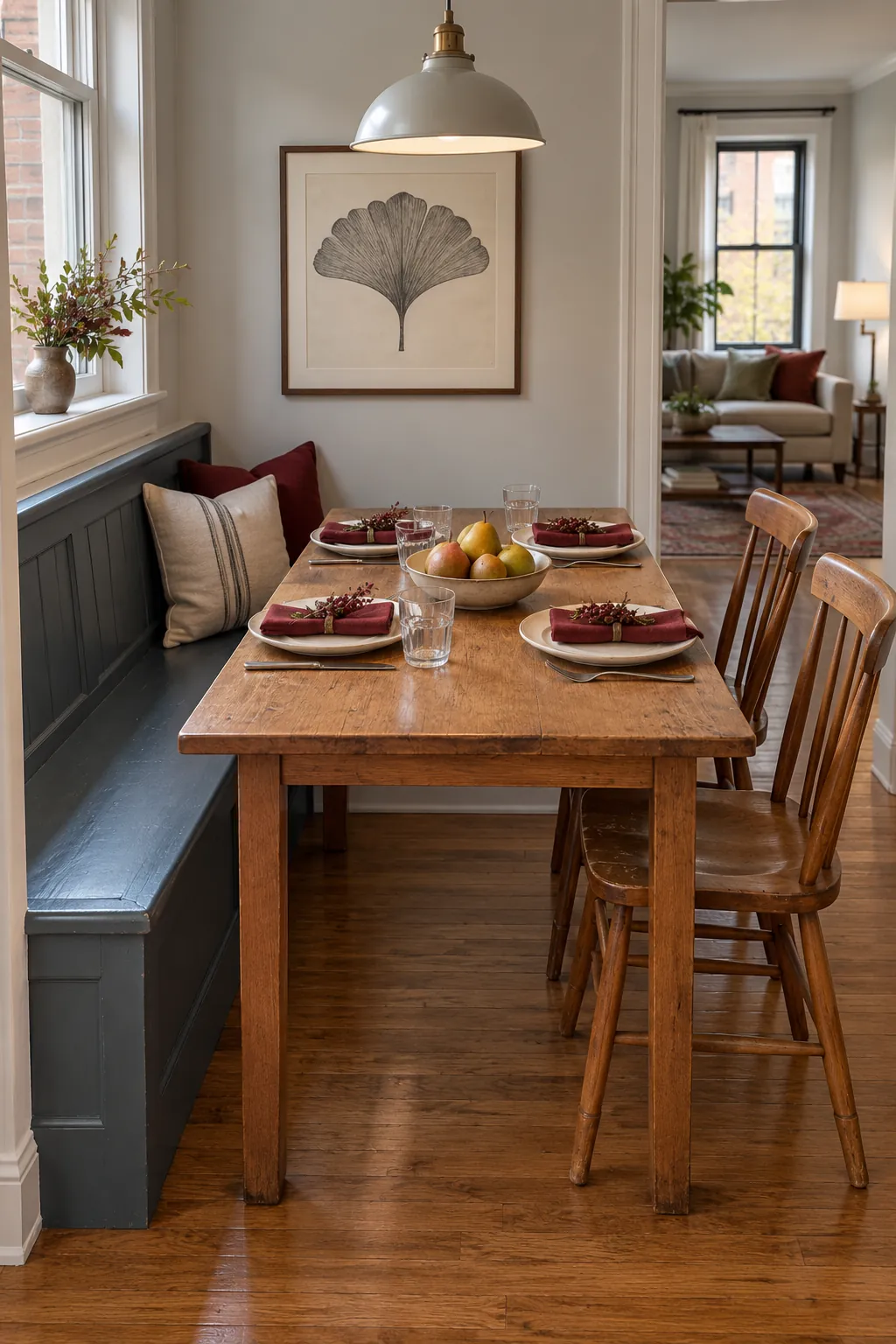
Slide a suitable narrow table in front of an existing bench, with loose chairs along the open side. A bench reduces the need to pull chairs backward on the wall side, but people still need a comfortable way to get in and out. Check the gap between the bench front and table edge with someone sitting in place. Keep the ends open where possible so a diner is not trapped in the middle of the bench. Use only the bench’s intended seating capacity, and remember that armchairs on the opposite side may consume more width than you expect.
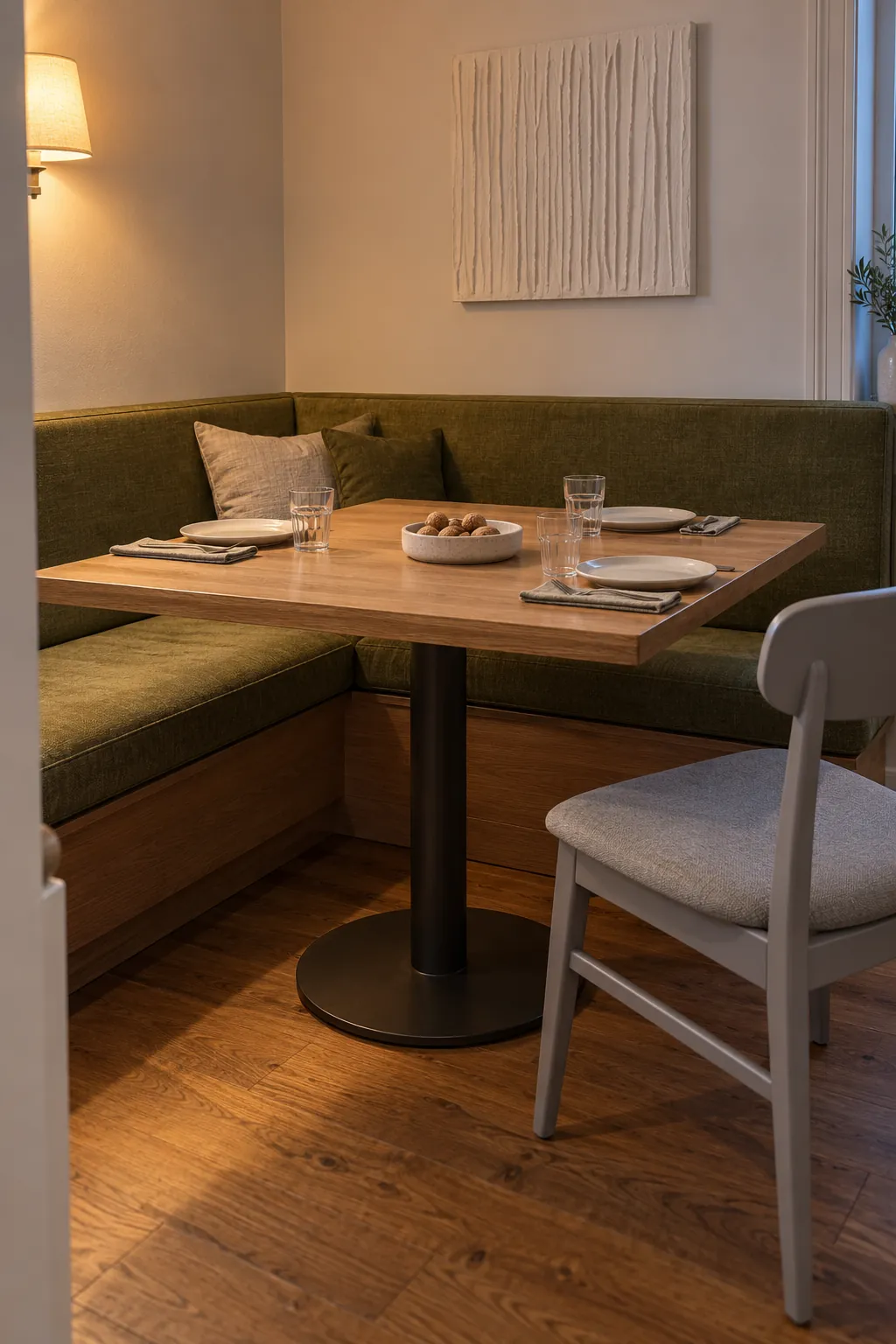
Use the open edge of a corner banquette
An L shaped banquette can hold a compact table inside the nook while keeping loose chairs on its open edge. Arrange seats around the real tabletop rather than treating the banquette corner as an automatic extra place. A pedestal can make leg placement simpler, but its base still occupies floor space and needs testing.
Keep frequently used serving dishes elsewhere so the corner diners do not have to twist around a centerpiece to reach them. Seat anyone who needs an easy exit at the accessible open edge. Check that the chair there does not block the route into the rest of the apartment.
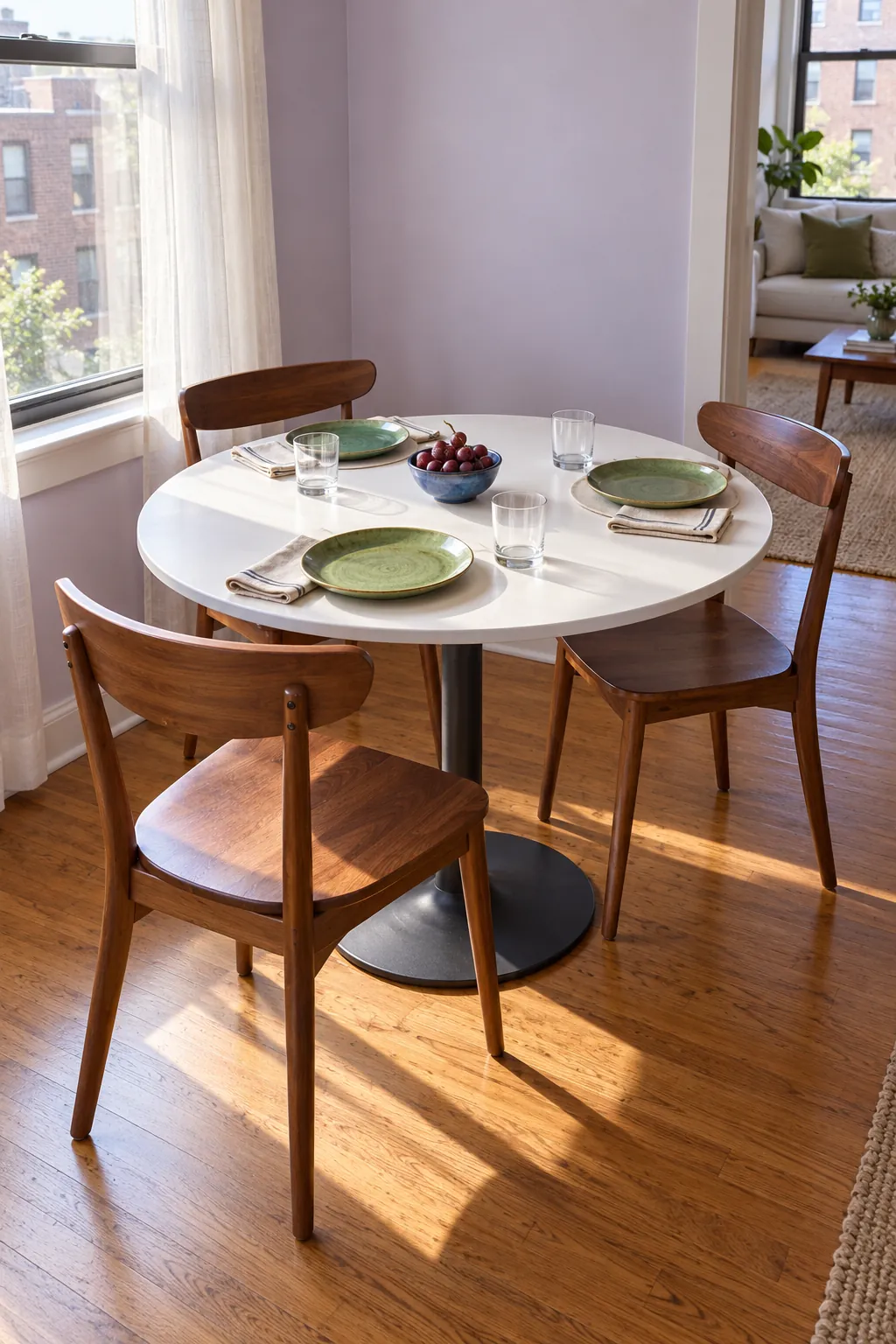
Try a round pedestal at the open end
A small round table may work at the open end of a nook when square corners are the main obstacle. Its curved edge can soften a tight turn, but the chair footprint still needs room around the circle. Set out the actual number of plates before assuming the table can hold your Thanksgiving meal. If serving bowls leave no usable space for glasses, keep them on a separate counter rather than buying a larger table that blocks the entrance.
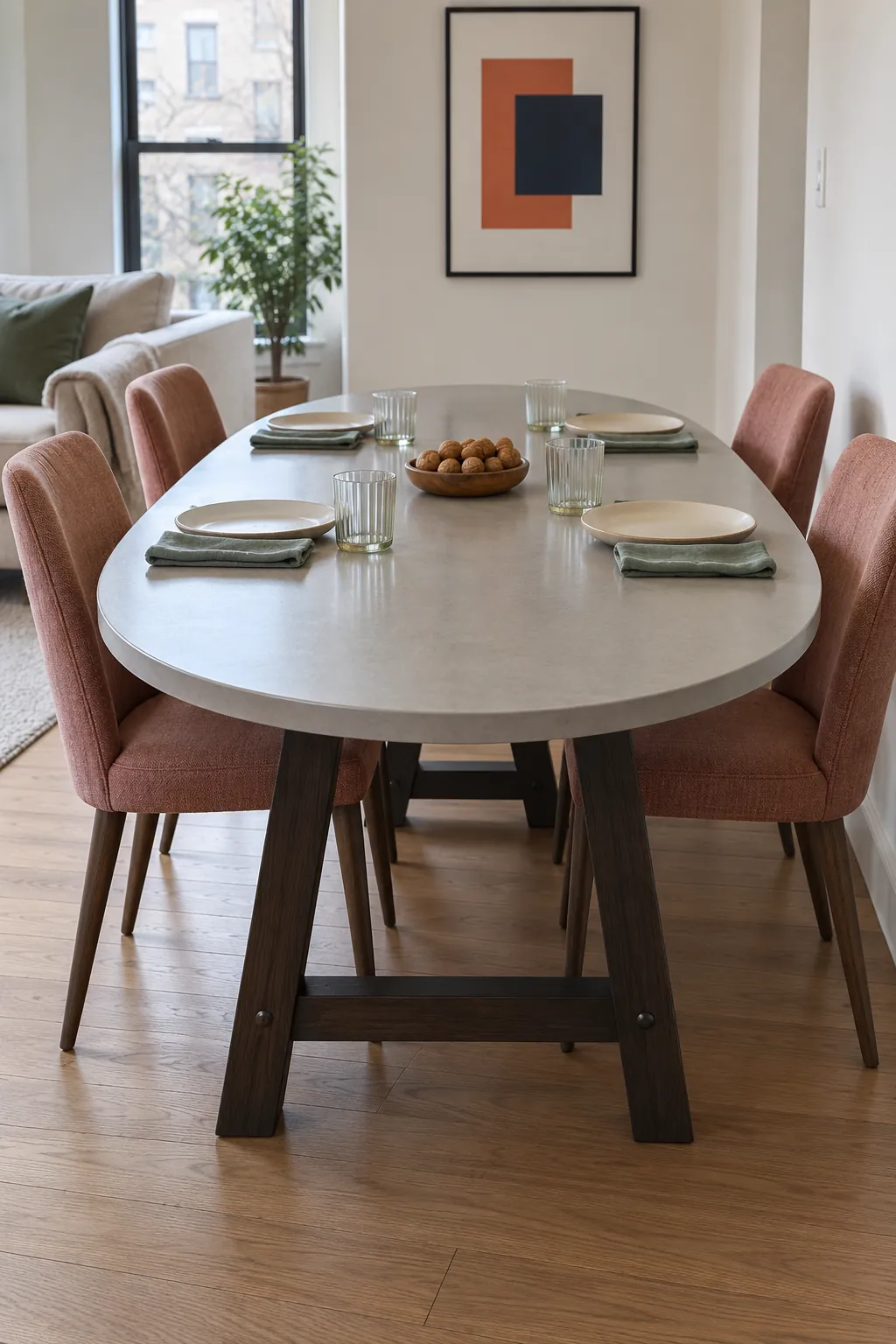
Centre an oval table in a longer recess
An oval top keeps the useful length of a rectangular table while rounding its end corners. It suits a longer dining recess when the free end sits near a route people repeatedly use. Inspect the base or legs before placing chairs, since the shape of the top does not guarantee comfortable knee room. Leave the narrow end seats empty if they would crowd the adjacent diners or interrupt the passage.
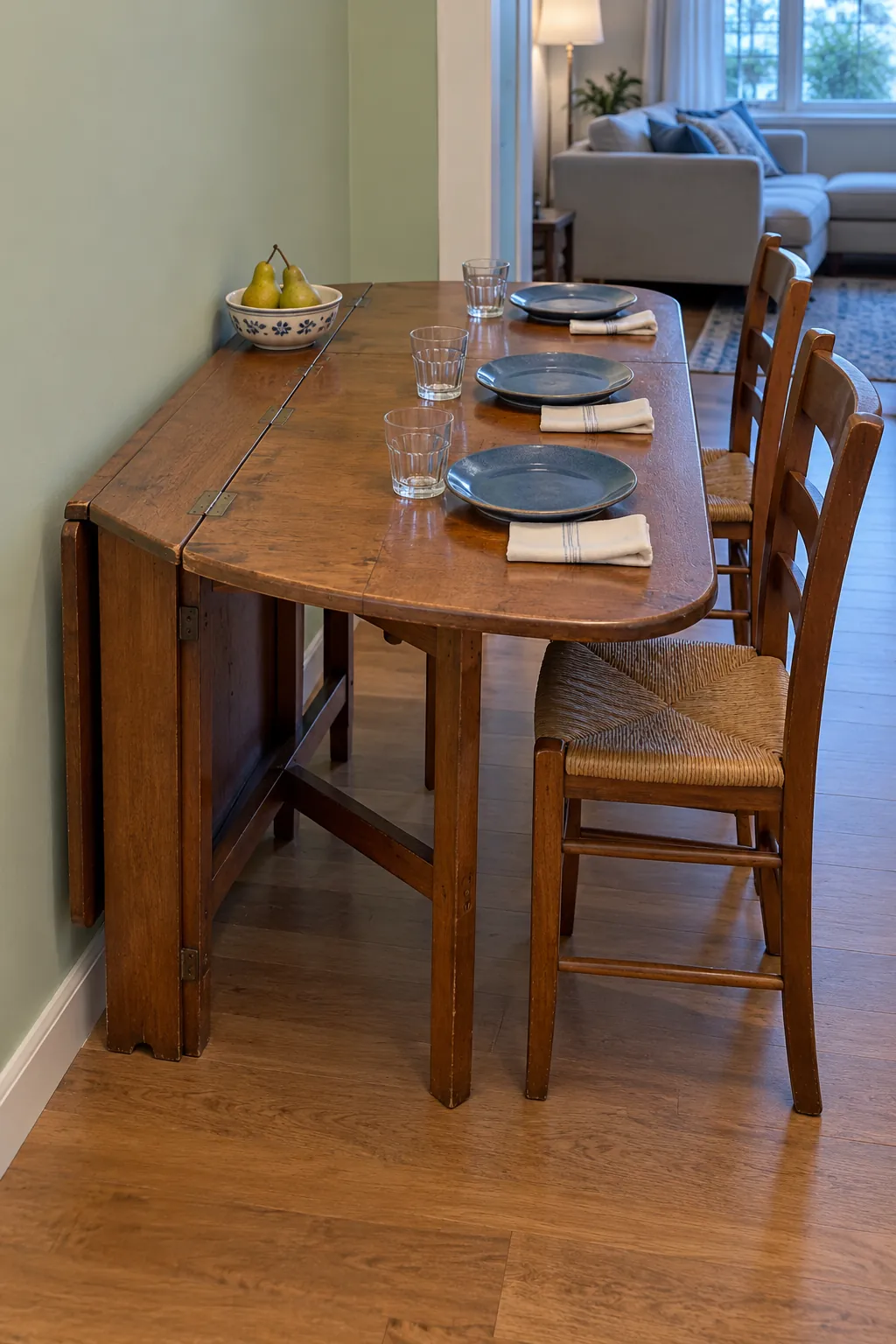
Open one leaf toward the living room
A drop leaf table can keep its wall side folded while the usable leaf opens toward the room. Check the manufacturer’s intended positions, locking supports, and load limit before treating a partially opened table as a holiday dining surface. Place chairs only where the open top and support leave genuine leg space.
This arrangement is useful when the nook itself is tight but its open side connects to a larger living area. Move lightweight furniture from that expansion space before setting the table. Keep the shared route clear instead of letting the extra leaf turn it into a bottleneck.
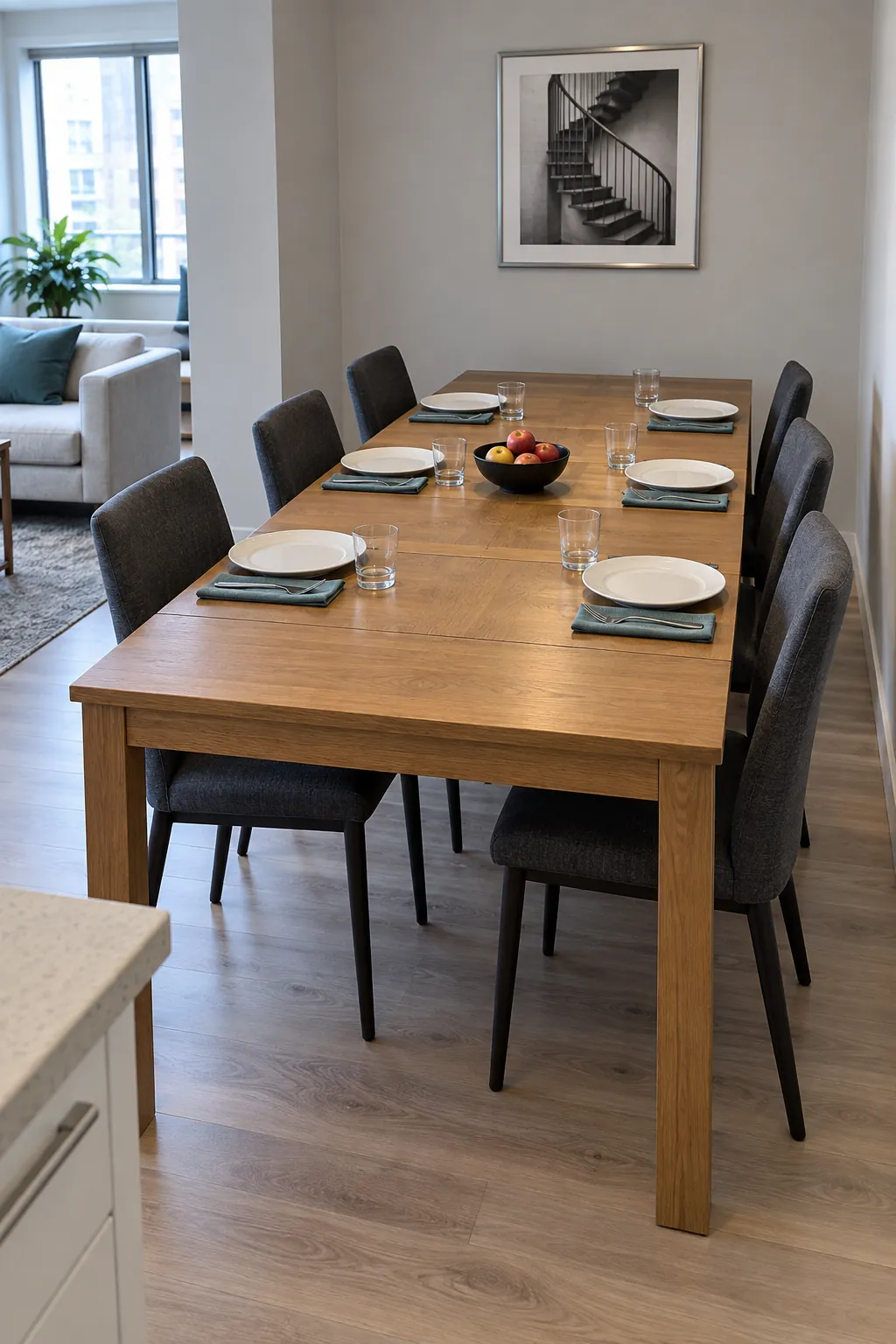
Extend a table along the available length
An existing extension table can grow toward the open end of the nook when there is more usable length than width. Measure its fully extended dimensions and the chairs around it, rather than relying on its everyday footprint. Install and lock the leaf according to the table’s instructions, checking that the support and joint are stable. Avoid adding an end chair if it would sit directly in the kitchen route. Put extra serving pieces on another surface so the newly gained place settings remain usable.
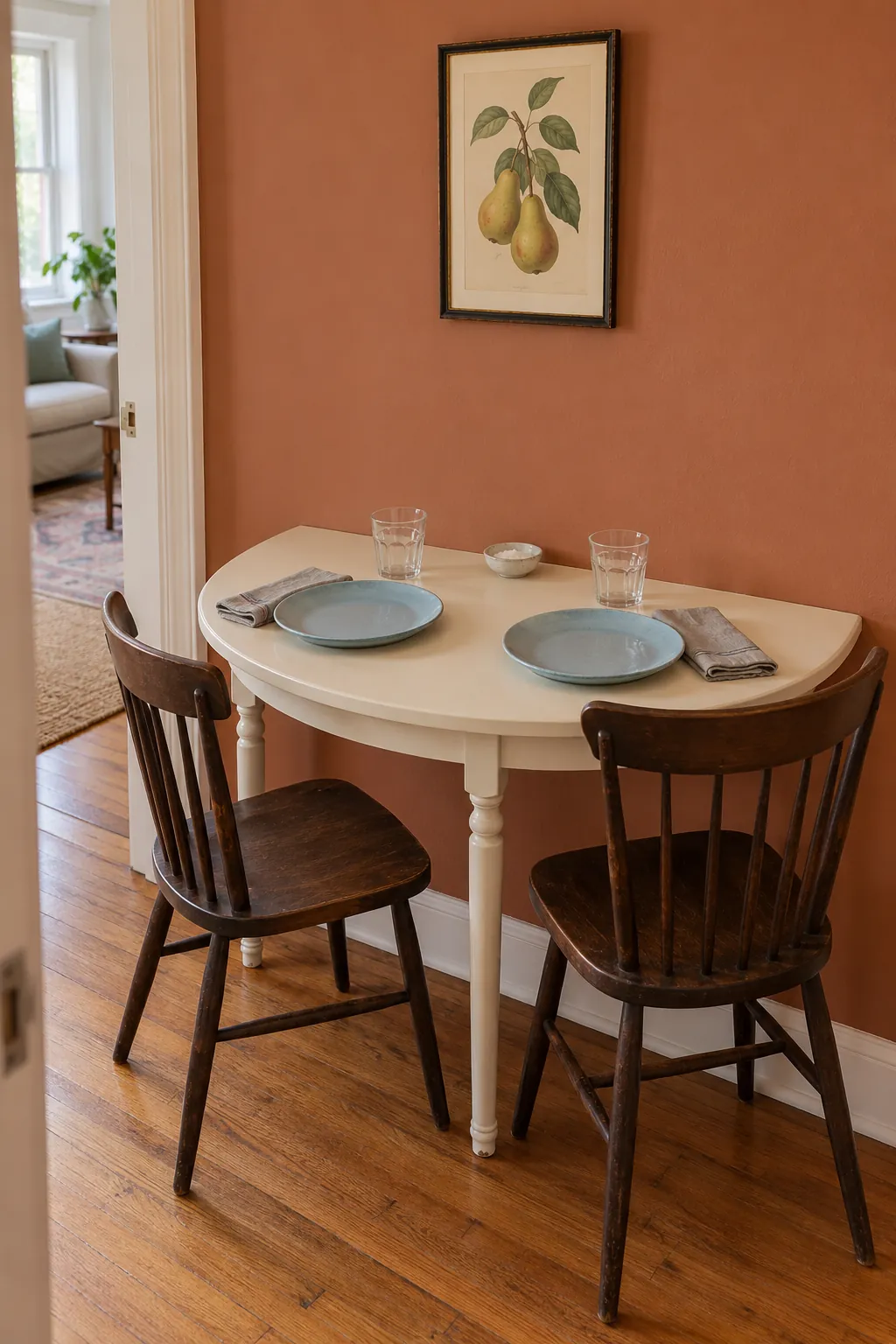
Use a small semicircular wall table for two
A semicircular table places its straight edge against a wall and offers a curved open edge for two diners when the actual top is large enough. Test the two place settings with glasses and cutlery so the curve does not push everything toward the middle. Keep the chairs on the accessible open edge and check that both people can leave without shifting the table. A simple compact centerpiece or no centerpiece at all is more useful here than a sprawling holiday arrangement.
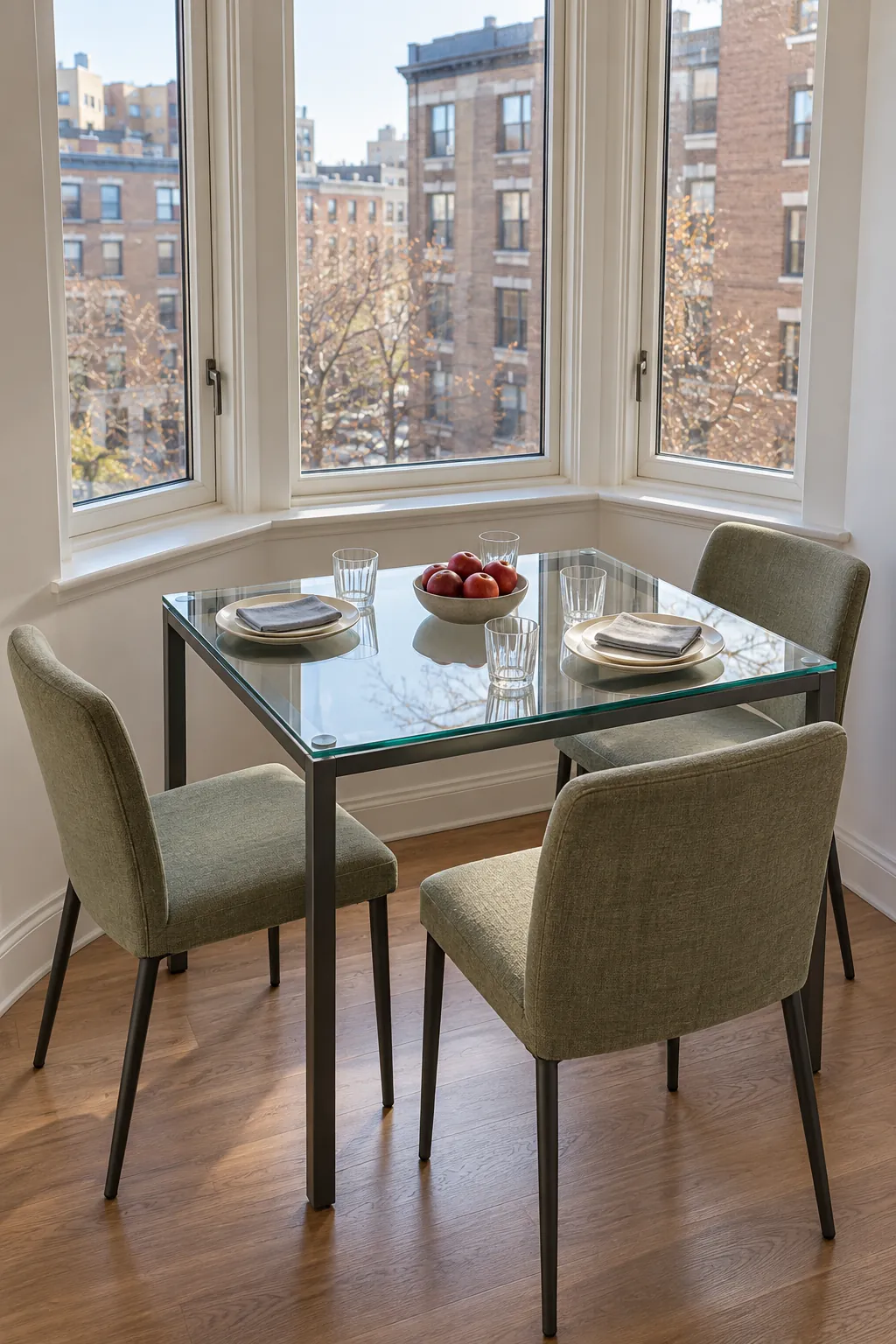
Set the table in a usable window recess
A window recess can make room for a compact dining setup when its depth is genuinely available. Keep the table and chairs clear of heaters, window operation, and any required access, following the equipment guidance for the actual room. Pull the chairs out during your test, since the sill can make the space look deeper than it is. Use a low arrangement on the tabletop so the daylight remains useful and guests can see one another.
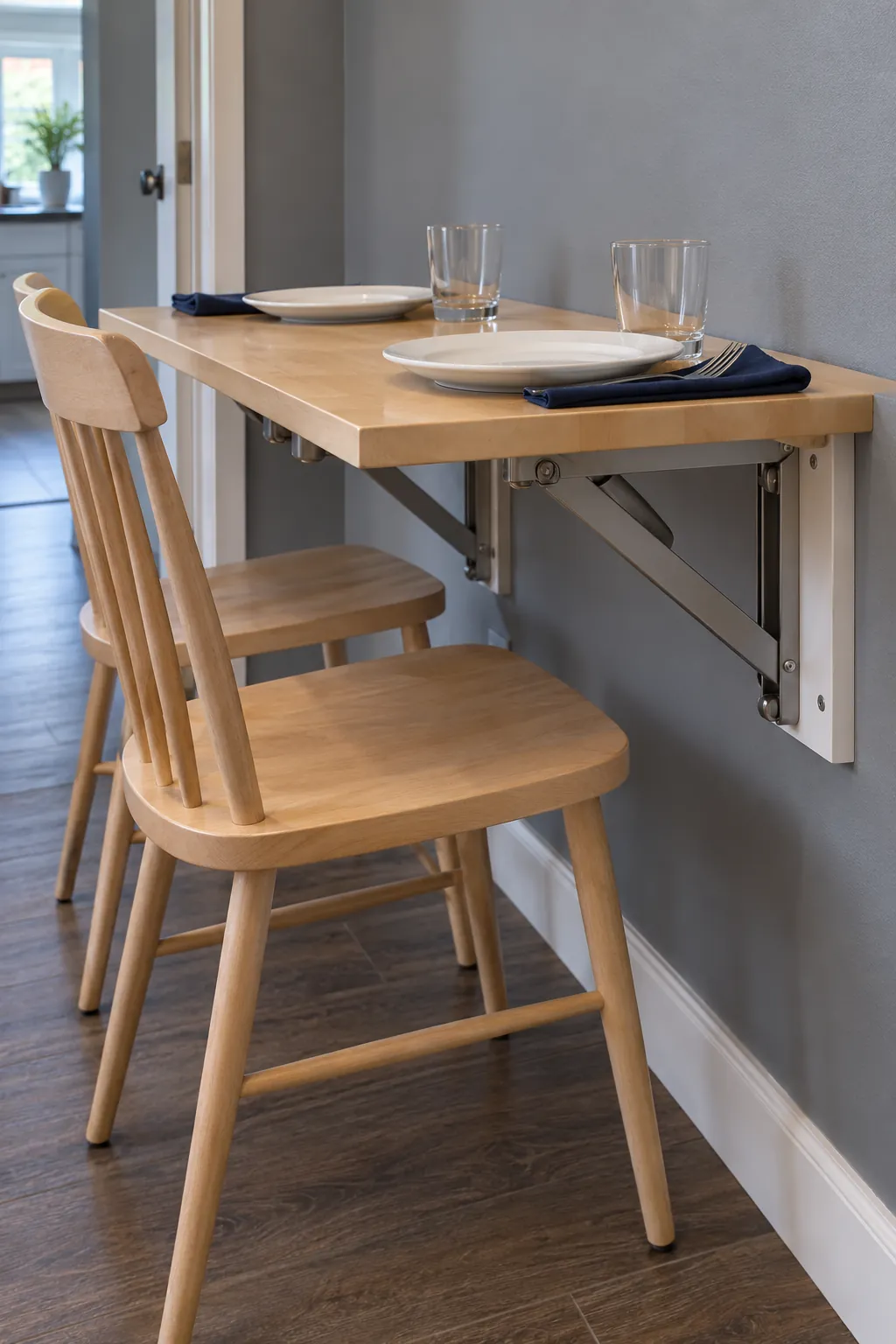
Open a properly supported folding wall table
An existing folding wall table can offer a meal surface that disappears afterward, provided its installation and load rating suit dining use. Fully engage its supports before laying out plates, and place chairs where their knees clear the actual brackets or legs. Do not improvise a wall attachment for a holiday visit or assume a narrow shelf can bear the same load as a table. Keep heavy serving dishes on a separate stable surface, and fold the table only when it has been emptied and the chairs moved safely away.
Join compatible small tables in a straight line
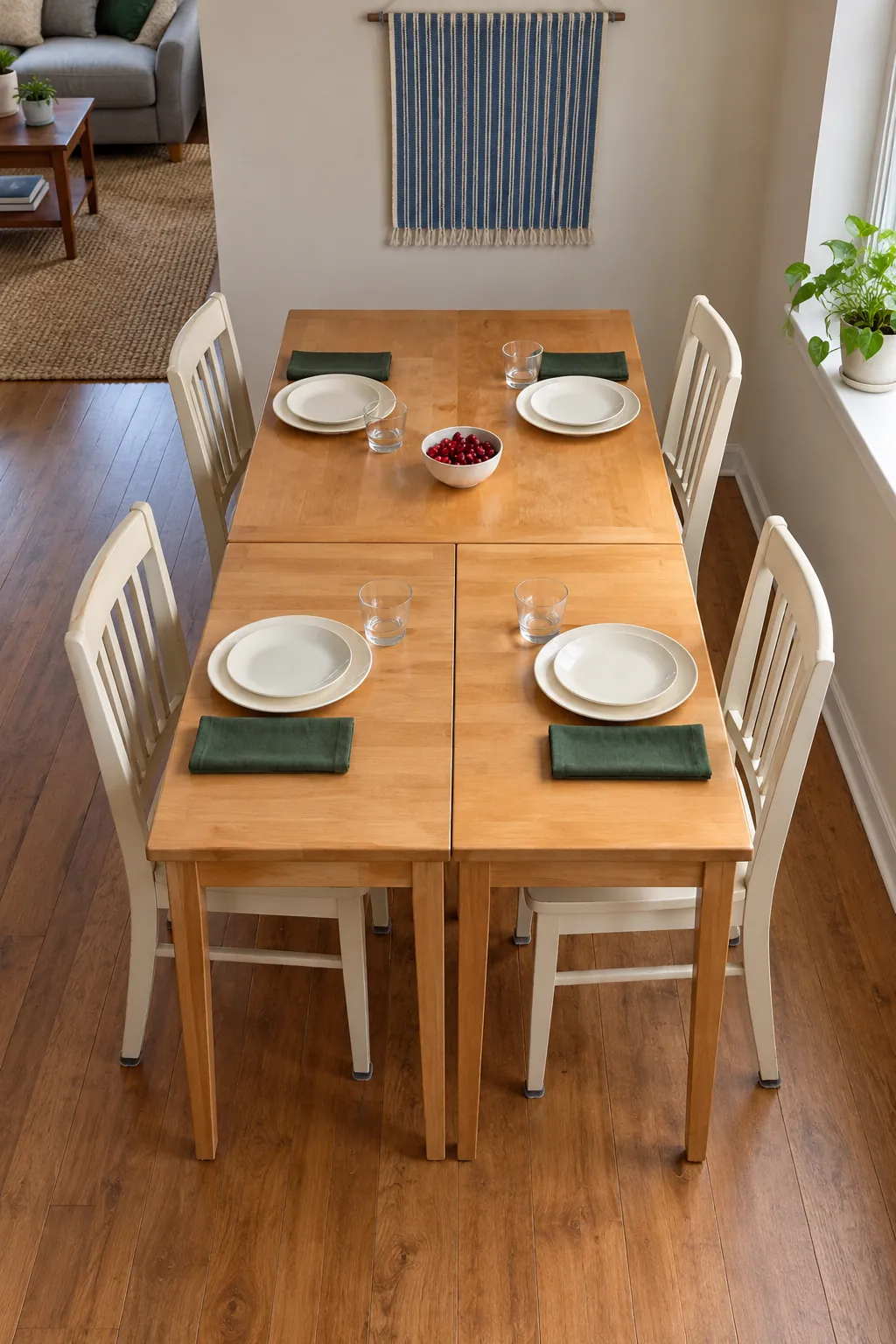
Two stable small tables of matching height can form a longer arrangement when their combined footprint fits the nook. Put them in a straight line with each table supported by its own base, and make sure neither rocks on the floor. A cloth can visually connect them, but it must not be used to hide an unstable joint or bridge a gap under a plate.
Give every diner a complete place setting on a supported section of tabletop. Check knees and chair positions against both bases, especially near the meeting point. When the seats and route are comfortable, keep the layout simple and let the meal provide the occasion.