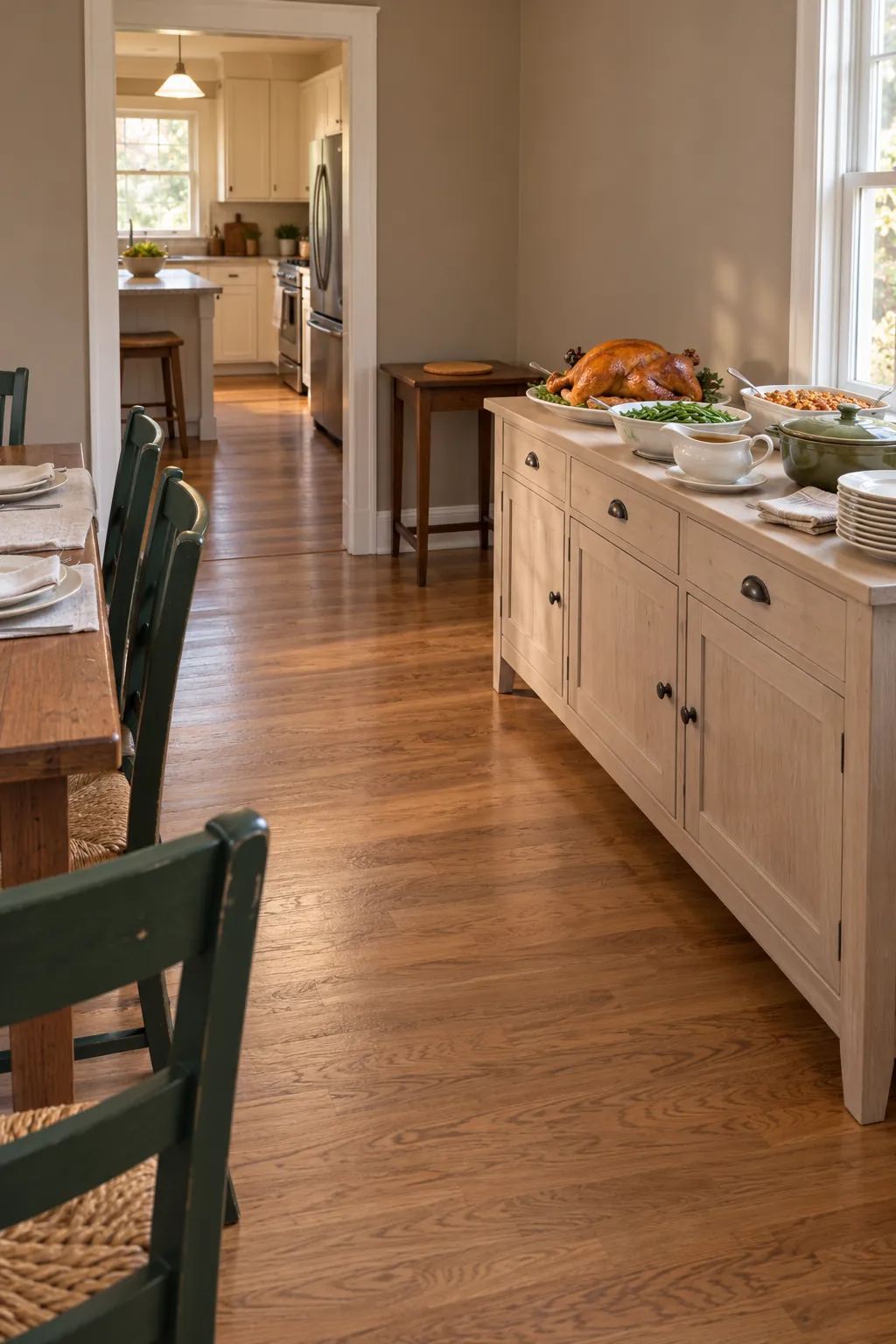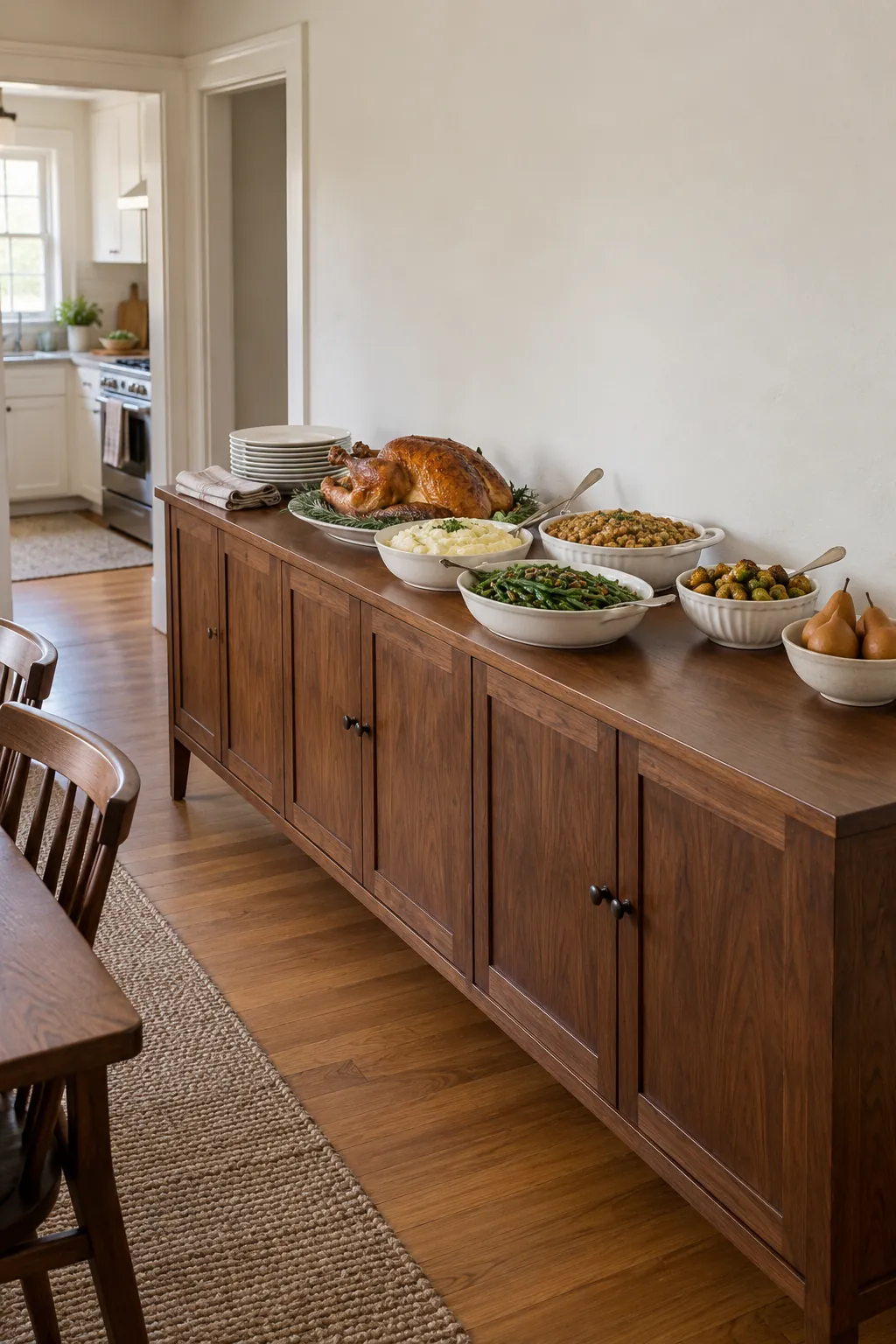
A buffet can look generous until the food arrives. The vase that seemed modest suddenly blocks a casserole handle, and the pumpkin at the front leaves nowhere to rest a plate. Build the display around the serving motions first, then give the room its holiday feeling in the space those motions leave.
The most useful Thanksgiving buffet decor has a clear job: frame the food, identify a serving zone, or bring color to an otherwise plain background. A few deliberate accents usually work better than small decorations scattered between every dish. This approach also makes refilling easier once everyone starts eating.
Lay out the empty serving dishes before decorating
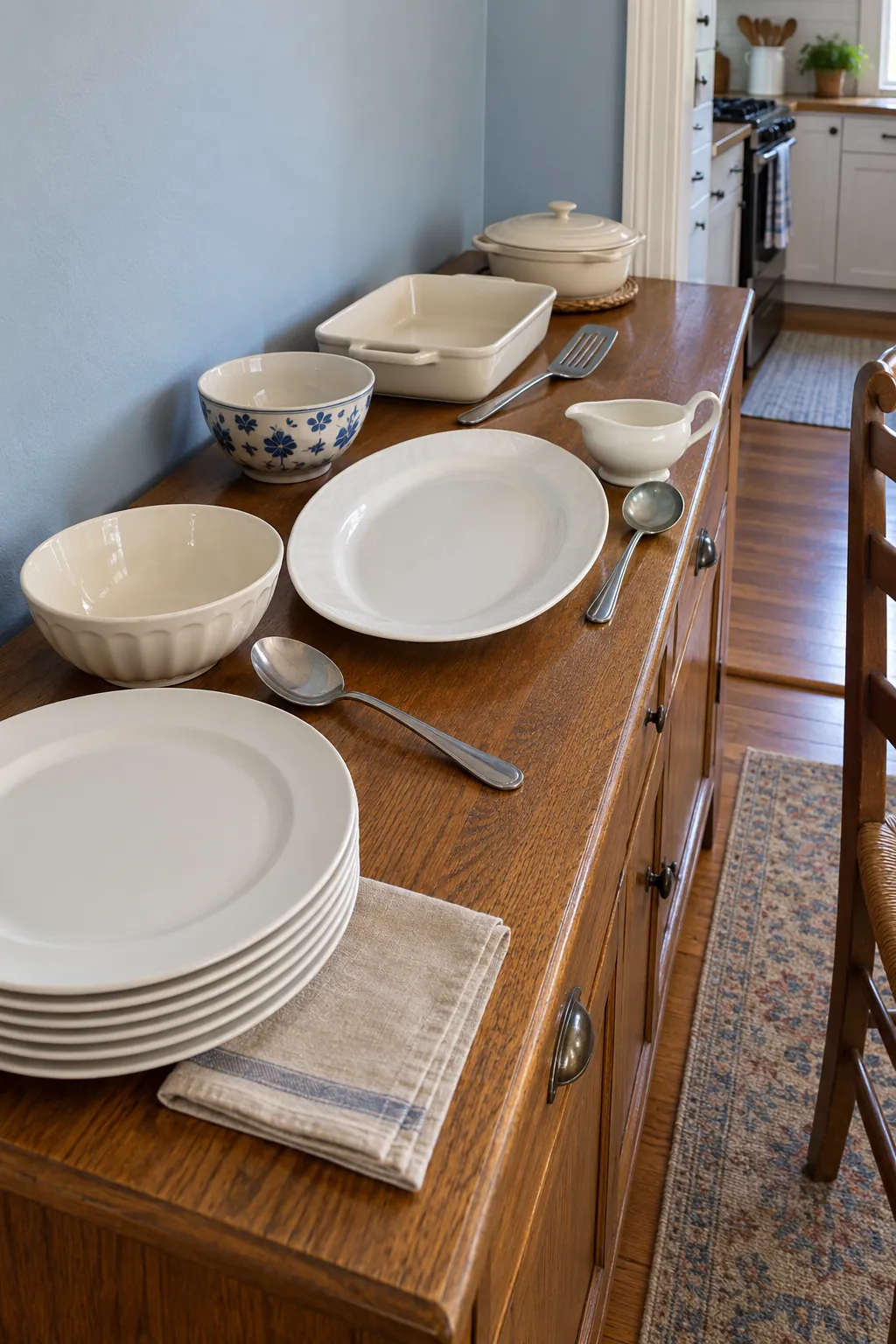
Put the actual platters, casserole dishes, gravy boat, and serving utensils on the buffet while they are still empty. Include lids if you expect to set them down during service, and leave room for the utensil handles rather than measuring only the bowls. A paper menu beside the layout helps you notice the dish you have forgotten before it comes out of the oven.
Arrange the food in the order guests will take it, with plates at the starting end and sauces near the dishes they accompany. Turn handles toward the approach side so people do not reach across another dish. If the full menu cannot fit comfortably, move bread or dessert to another surface instead of squeezing decoration into the remaining gaps.
Protect the front edge for hands and plates
The front of the buffet is working space. Keep that edge free of loose leaves, garland, tiny pumpkins, and fabric folds that can catch a spoon or drag into a dish. Test it with your largest dinner plate in one hand and a serving spoon in the other, because a layout that looks spacious from above can feel awkward when you are holding food.
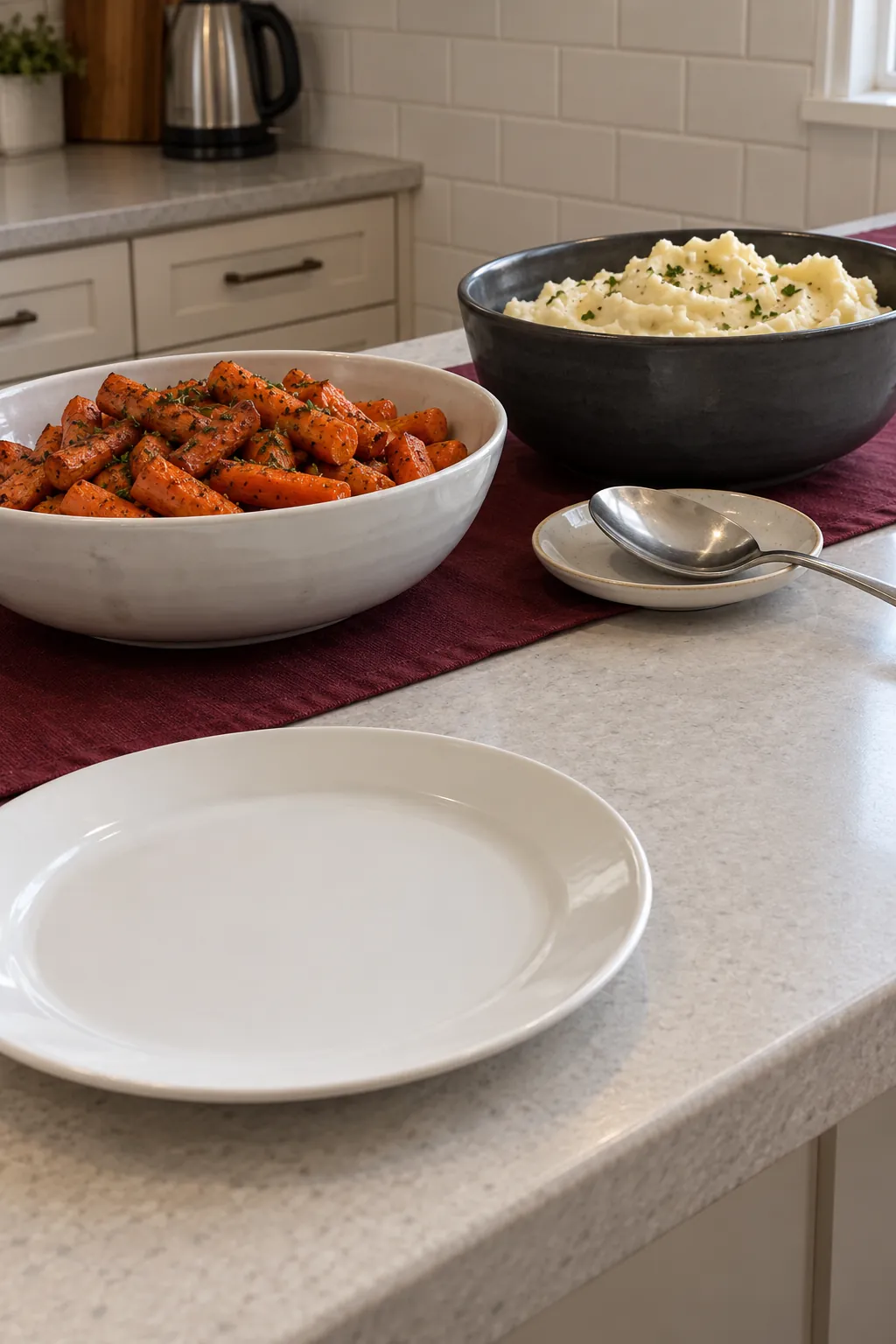
Use a flat runner only if it stays secure and suits the surface beneath the dishes. Heat protection still needs to come from appropriate trivets or the serving equipment, not from decorative fabric. A narrow strip of visible tabletop is often the simplest way to make the whole food display feel orderly.
Give the backdrop the decorative work
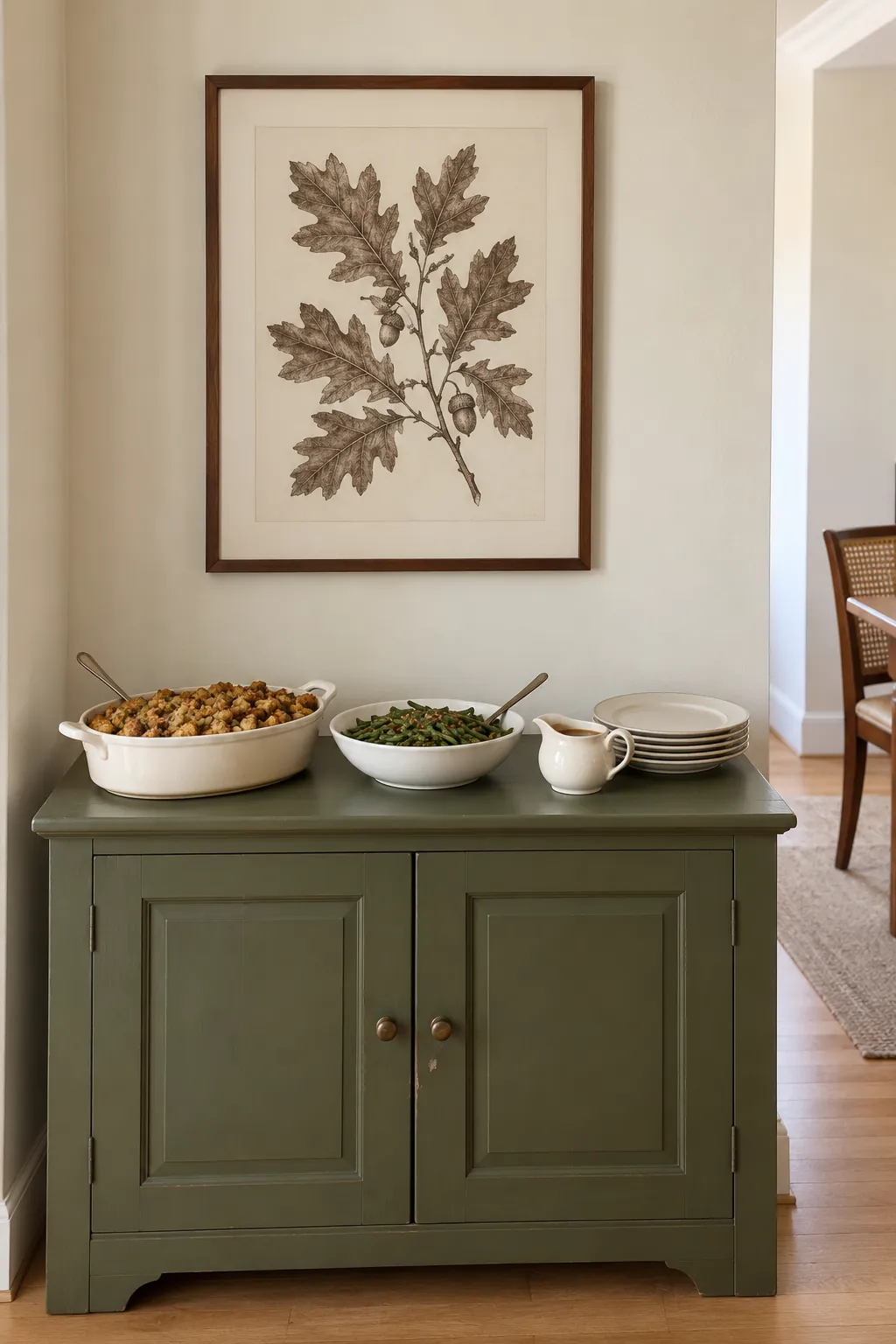
When serving space is tight, move the visual emphasis above the food rather than between the dishes. An existing framed botanical print, a securely hung paper garland, or a mirror can make a plain sideboard feel intentional without consuming its usable depth. Keep hanging pieces high enough that they cannot brush food, utensils, or guests.
A backdrop also lets you use a stronger color without repeating it across the entire buffet. Choose one accent from the dining table, such as burgundy, muted olive, or brown, and repeat it in the paper decoration or a nearby vase. Check the mounting method against your wall finish and use the product as directed, especially on painted rental walls.
Skip a new wall installation if it creates extra work or uncertain attachment. The existing room can supply the backdrop while matching serving dishes provide the visual rhythm. Functional buffet setup matters more than filling an empty patch of wall.
Keep one movable accent at the quiet end
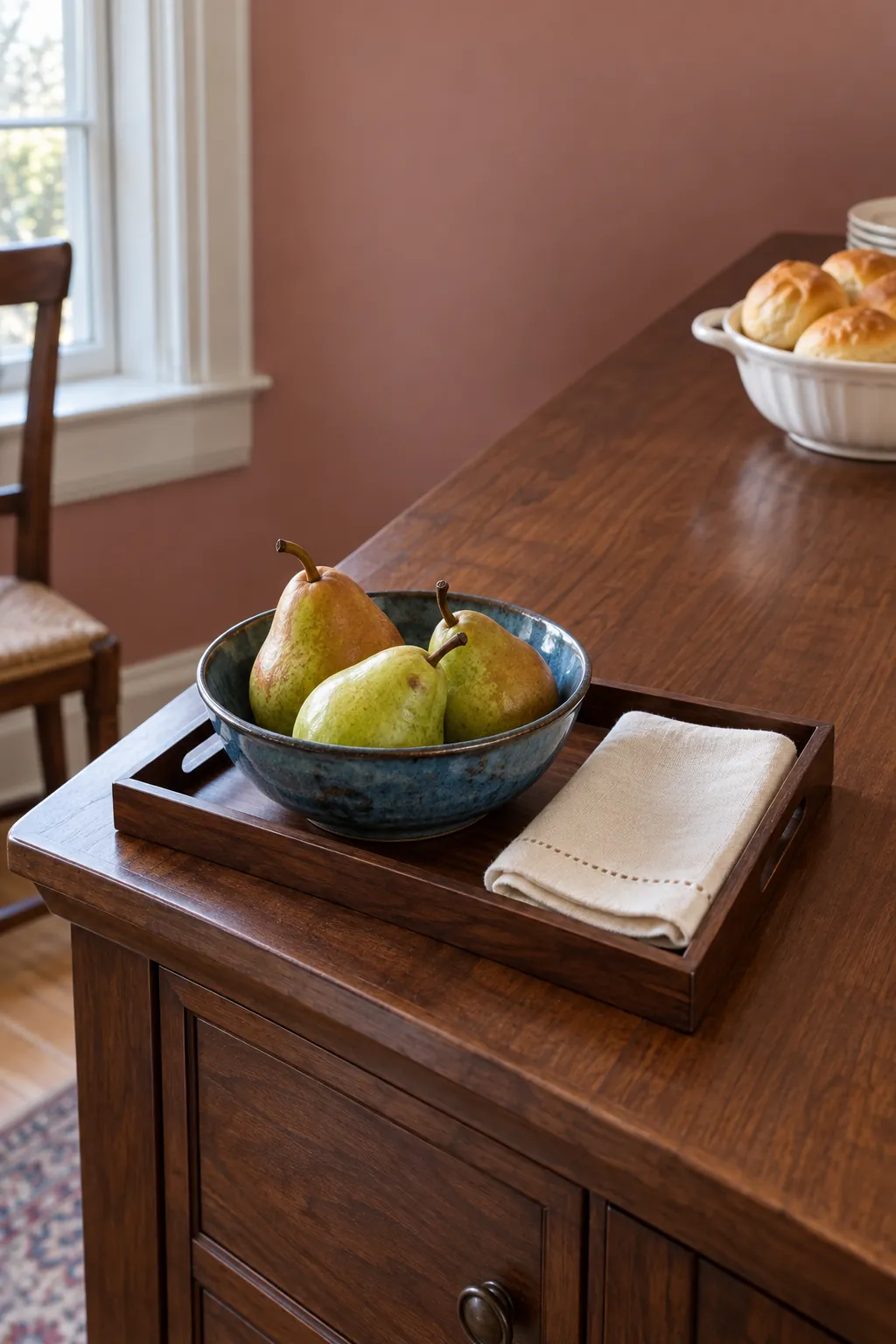
Choose an end that is outside the plate pickup area and the refill route. Place one compact arrangement there, such as a small bowl of whole pears or a short vase with a few sturdy stems. Keep the entire accent on a tray so it can move as one piece if an unexpected dish needs the space.
Leave a visible gap between the decorative tray and the nearest serving dish. Avoid shedding dried material near food, strong fragrance, and anything with a trailing ribbon or branch over the service area. If the accent must sit in a guest’s reaching path, that surface is already full and the decoration belongs elsewhere.
Separate the things that slow the line
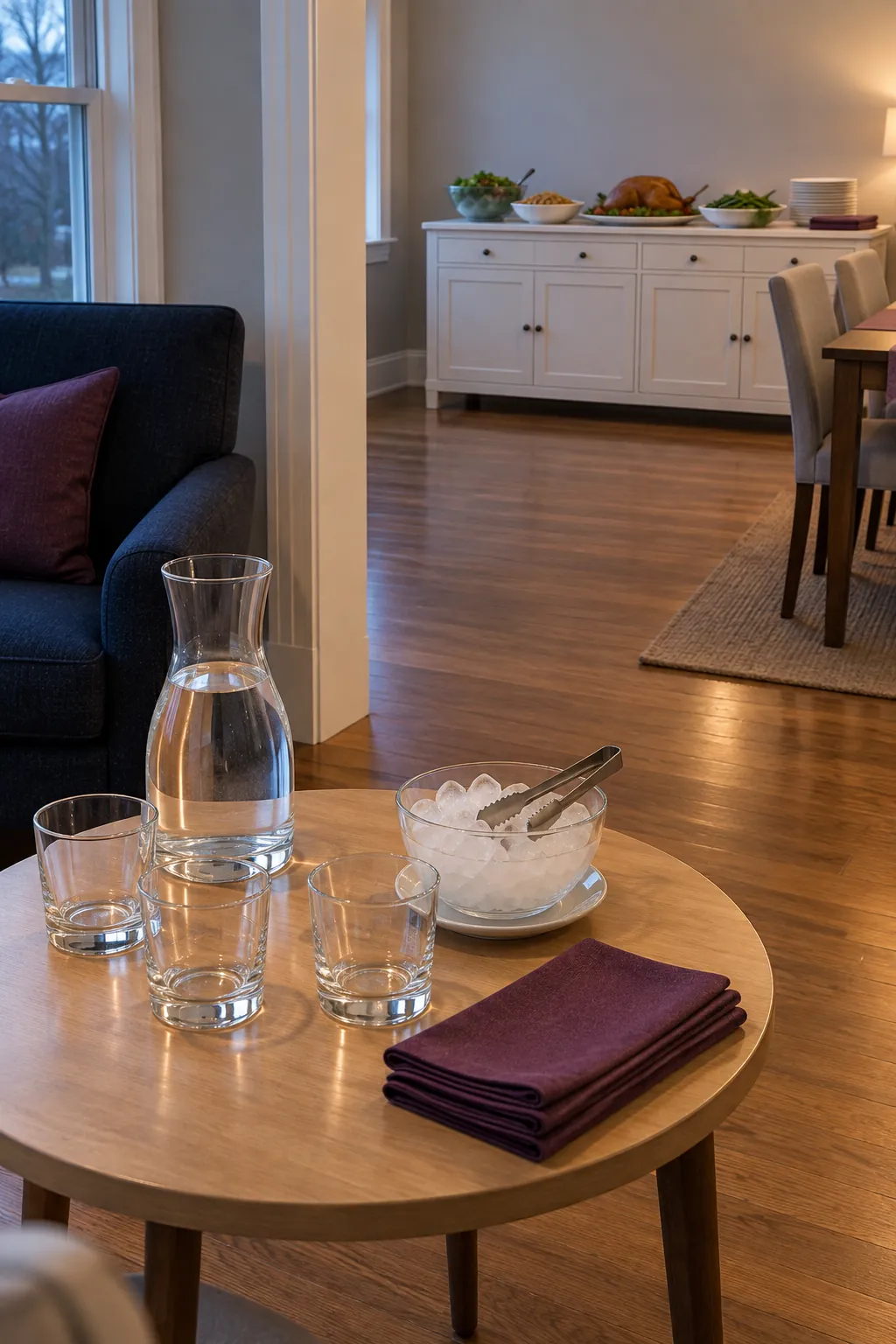
Guests can carry a plate more comfortably when they collect cutlery and napkins after choosing food, or find those items already at their seats. Drinks deserve their own station when possible because pouring, adding ice, and deciding what to drink take longer than picking up a roll. Even a small side table can remove that pause from the food queue.
Use restrained repetition to connect the stations: the same napkin color, a similar tray, or matching clear glasses. Small menu cards can identify dishes, but place them where they are readable without blocking a serving handle. Describe ingredients accurately, and do not present a decorative label as an allergy guarantee when cross contact is possible.
Use height only where it improves access
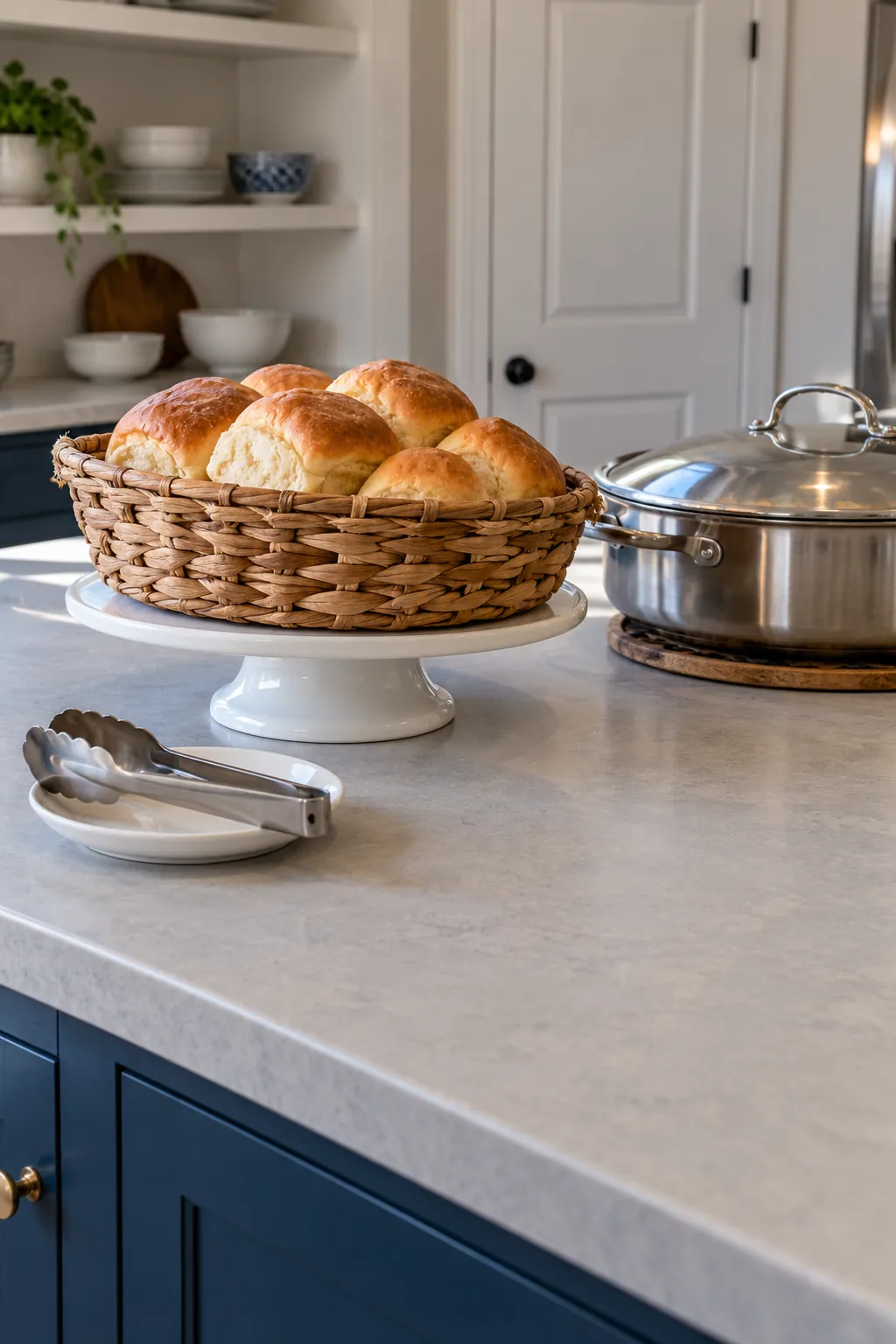
A low, stable serving stand can add food table visual balance while keeping the main surface from feeling flat. Use a stand designed for the dish and its loaded weight, with a base that rests fully on the buffet. A raised bread basket is usually easier to manage than a heavy casserole perched on an improvised stack.
Check the reach to every item before committing to the arrangement. A taller display belongs toward the back only when guests can still take the food without stretching over a hot dish. Do not rely on overturned glassware, books, loose crates, or an uneven decorative pedestal to support food.
Raised buffet decorations can stay off the service surface entirely. A vase on a separate adjacent cabinet adds height without requiring anyone to reach around it. If a riser adds complexity rather than useful capacity, keep the food at one level.
Do a serving and refill rehearsal
Walk from the plate stack to the last dish while carrying a plate, then return with an empty casserole as if you were refilling it. Notice where you turn, where a chair narrows the route, and whether another person could pass without brushing the display. Shift furniture or move a station before you add the final decorative accent.
Keep spare utensils and appropriate trivets nearby, and plan how you will handle hot dishes safely. Follow food safety guidance for holding and timing rather than assuming the display will keep food warm. A photograph is useful for checking balance, but the rehearsal is what proves the setup works.
Finish by removing one object that makes service harder. The Thanksgiving serving space should remain useful after the first guest, not just look finished before the doorbell rings. If the pumpkin tray has to move when the casserole arrives, give it a permanent home on another table now.