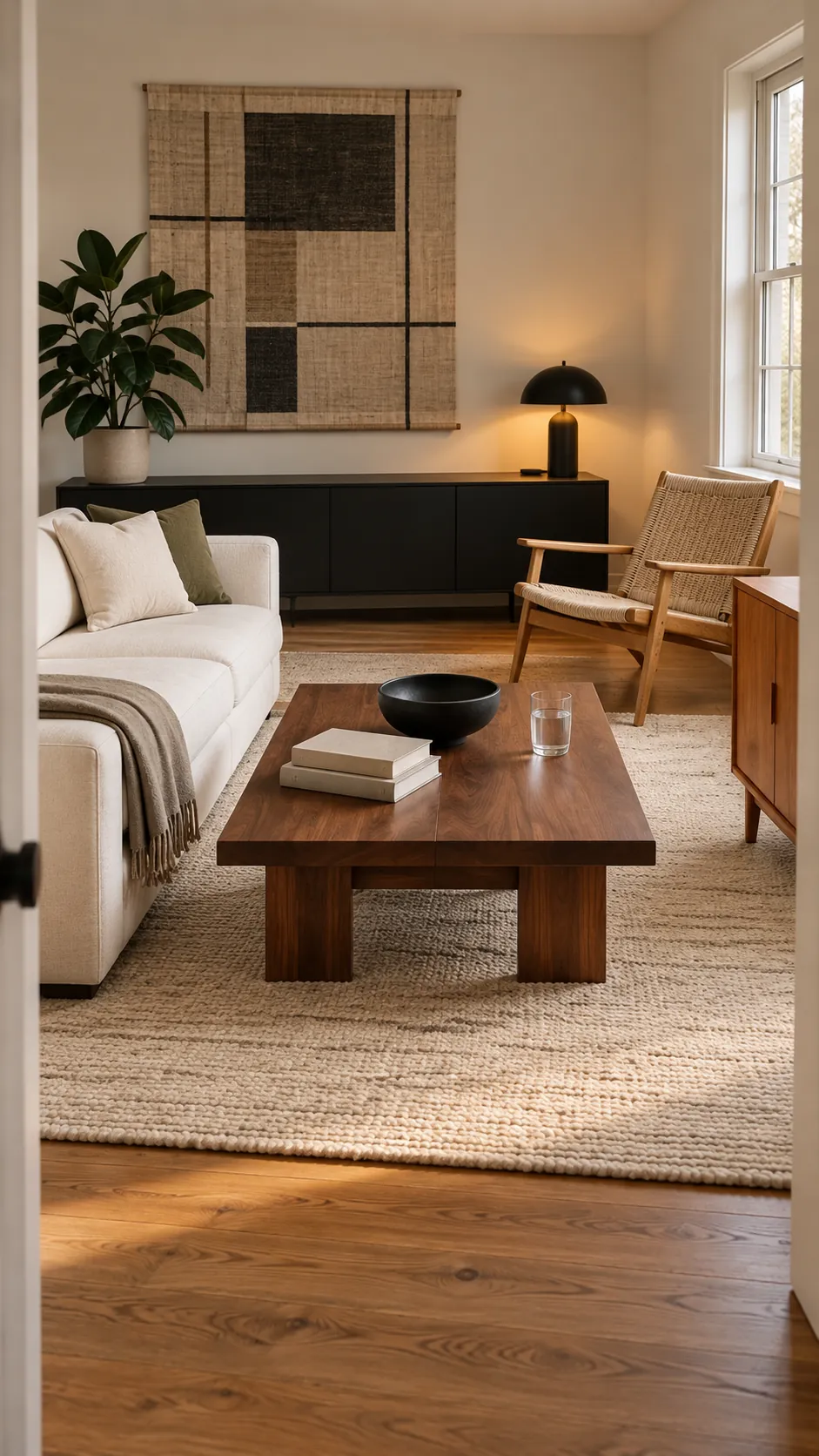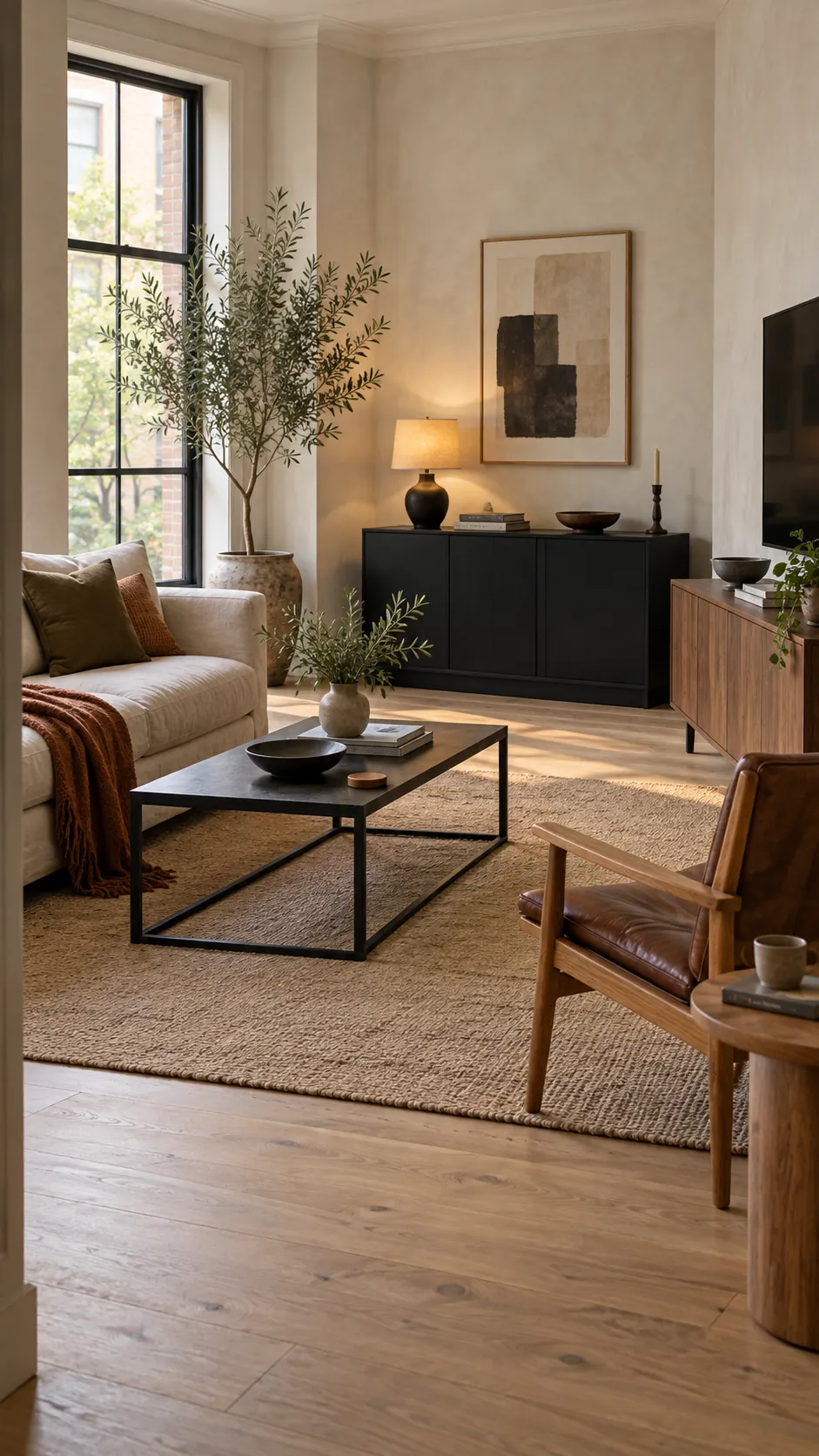
A room can contain beautiful pieces and still feel unsettled when the darkest object seems to belong to a different story. The fix is not to replace either finish or force every surface to match. A few deliberate connections can make strong black forms and inviting wood tones feel balanced, collected, and easy to live with.
Let One Finish Lead
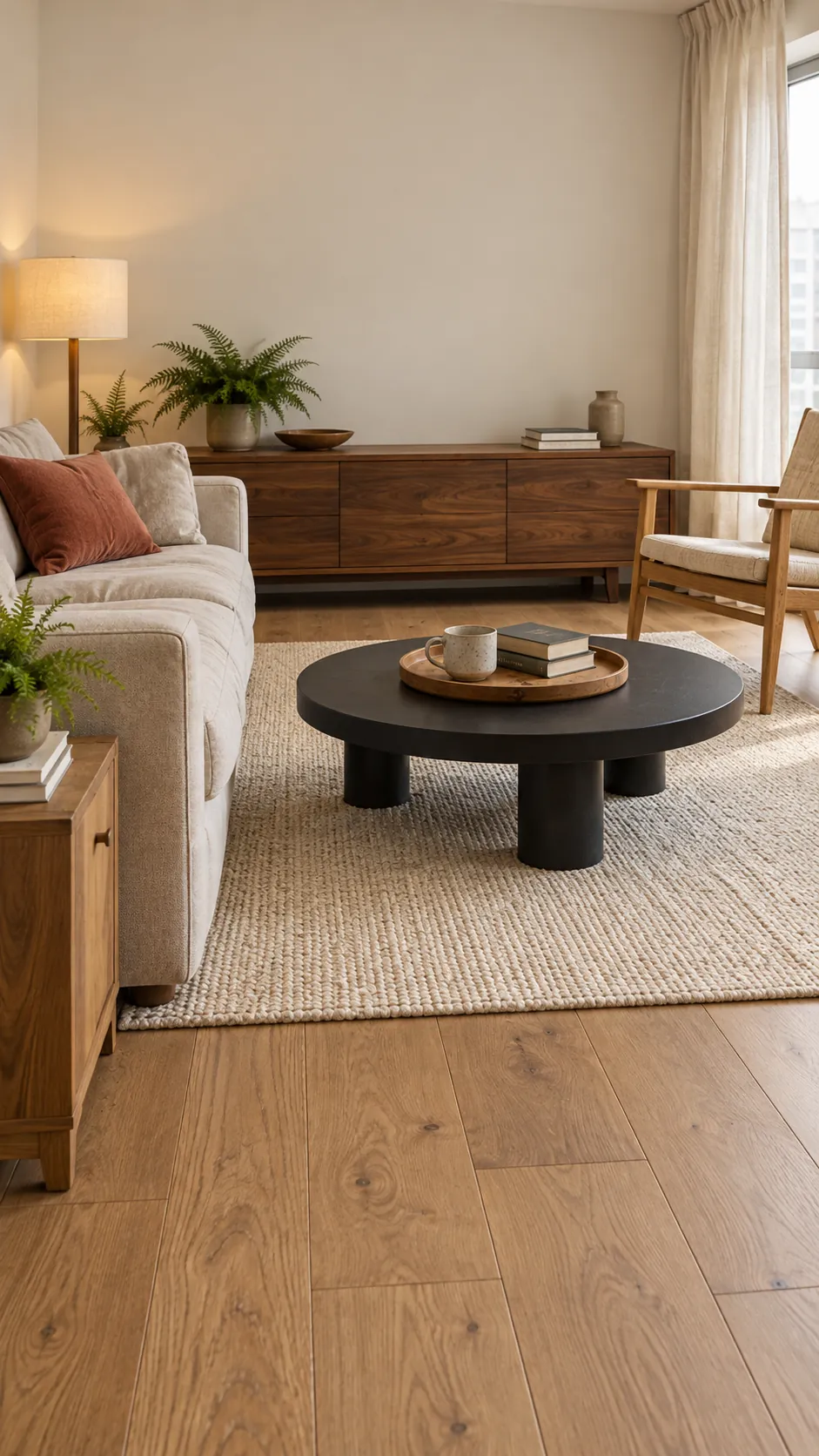
Choose black or warm wood as the dominant finish, then let the other act as a clear supporting note. This decision keeps equal amounts of both from creating a busy checkerboard effect. In a warm wood living room, for example, a black coffee table can anchor the seating area while wood remains the larger visual field through floors, shelving, and side pieces. The room will read as intentional because the hierarchy is easy to see.
Repeat Black in Small Anchors
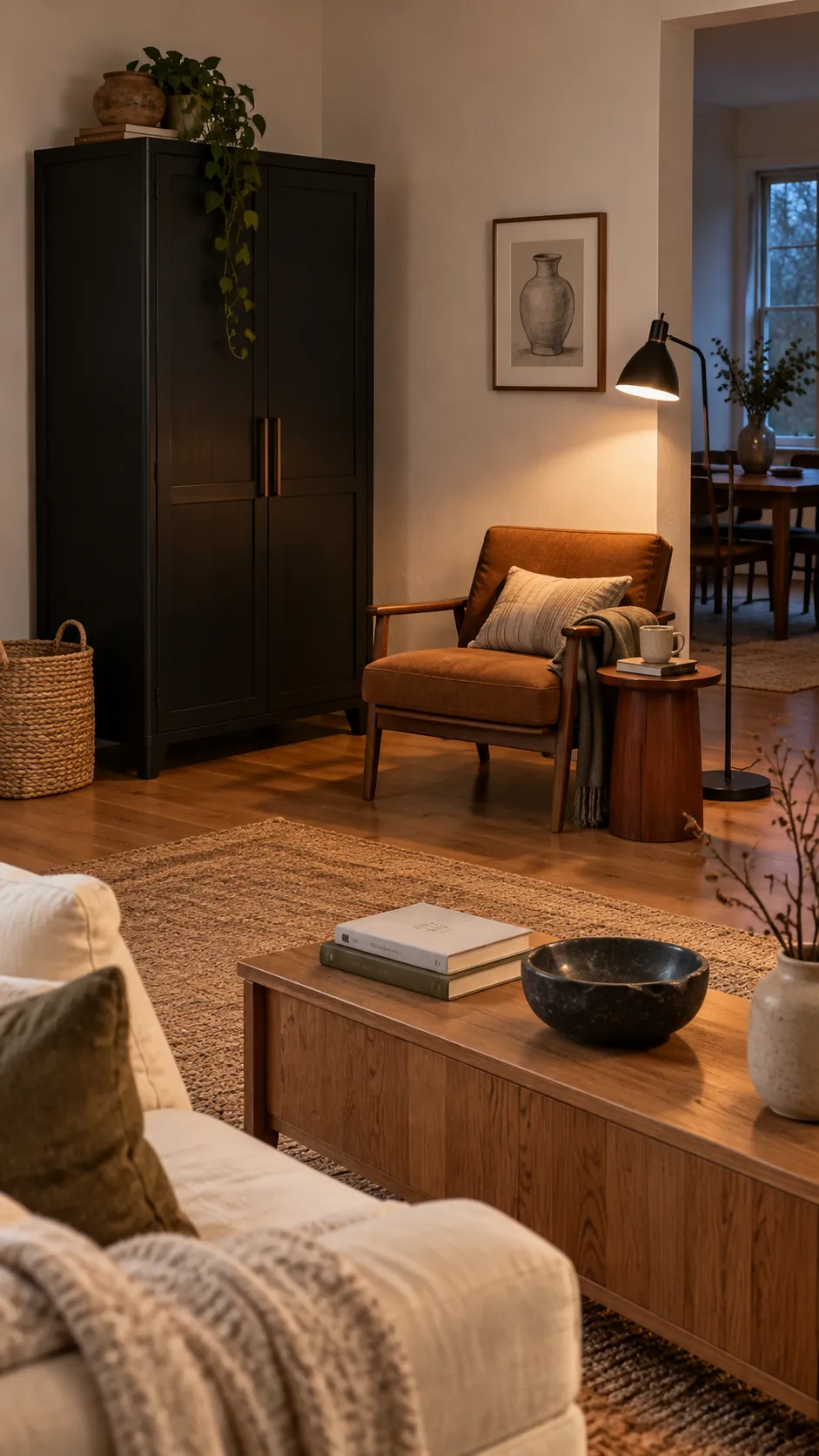
A single black cabinet can look isolated beside several wood pieces. Repeat black two or three times through a lamp base, a slim frame, or a small bowl so the eye can trace the color around the room. Keep these black accent decor pieces modest because their purpose is connection, not competition. The repeated dark notes make the large cabinet feel integrated without turning the whole room heavy.
Echo Wood Near the Darkest Piece
Place one warm wood detail close to the largest black item to soften the visual break between finishes. A walnut tray on a black coffee table, an oak lamp beside a charcoal console, or a teak bowl on black shelving can create that bridge. The nearby pairing is more effective than scattering unrelated wood shades across the room. It also gives black and wood furniture a shared focal point that looks composed from a distance.
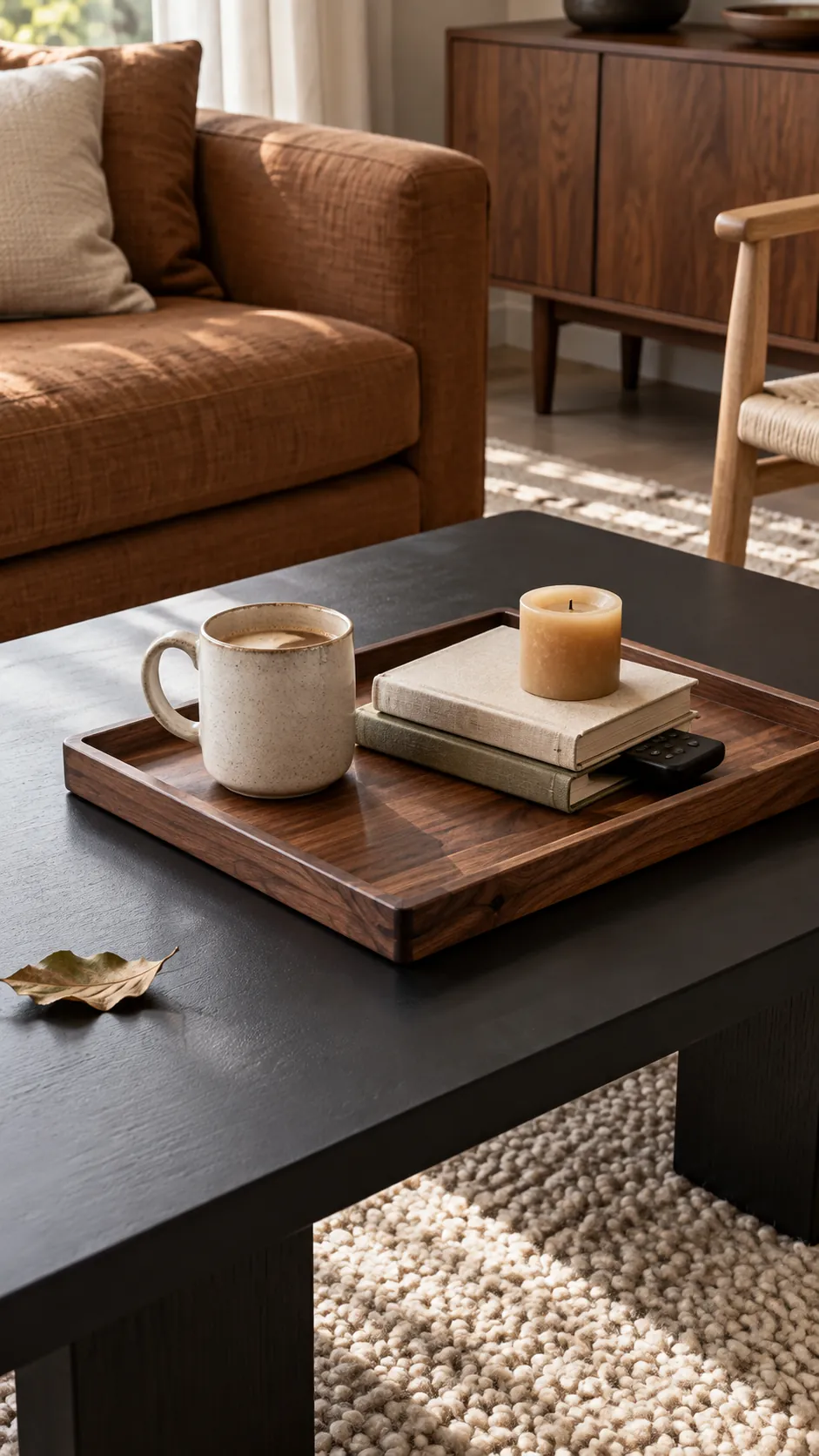
Match the Undertone, Not the Species
Different wood species can work together when their undertones feel related. Compare the wood furniture undertones in daylight and look for shared red, golden, or muted brown notes rather than identical grain. A black piece is neutral enough to sit between compatible warm woods and give each one breathing room. If one wood looks distinctly gray or pink beside the others, repeat that undertone elsewhere or remove it from the main grouping.
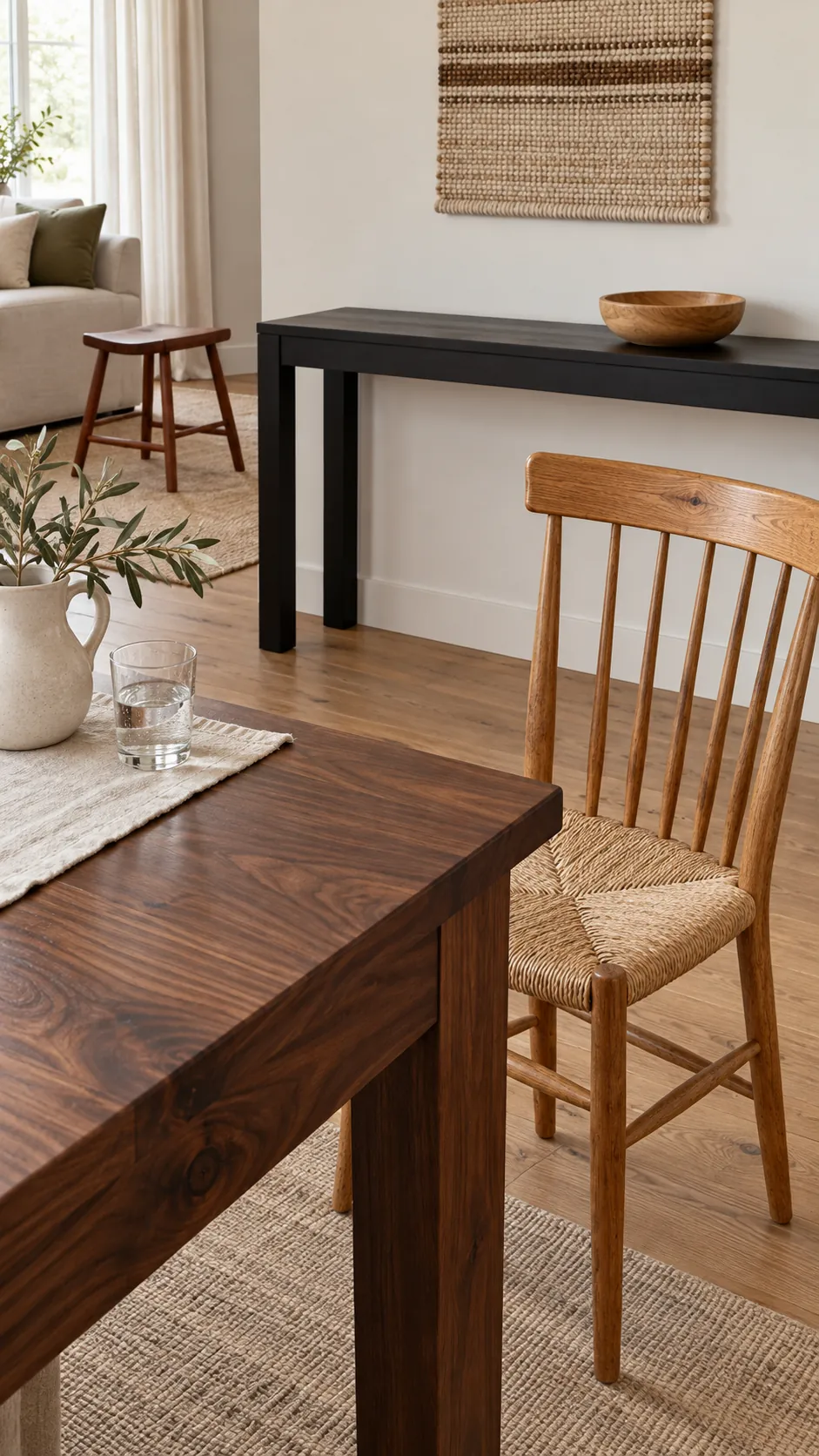
Use a Shared Hardware Finish
Hardware can quietly connect furniture that has different colors and ages. Repeating matte black pulls on a wood cabinet, black hinges on a chest, or dark metal legs beneath a wood top creates a consistent detail language. Use the same level of sheen when possible because glossy black and chalky black can feel unrelated in close proximity. This approach improves furniture finish coordination without changing the character of the wood.
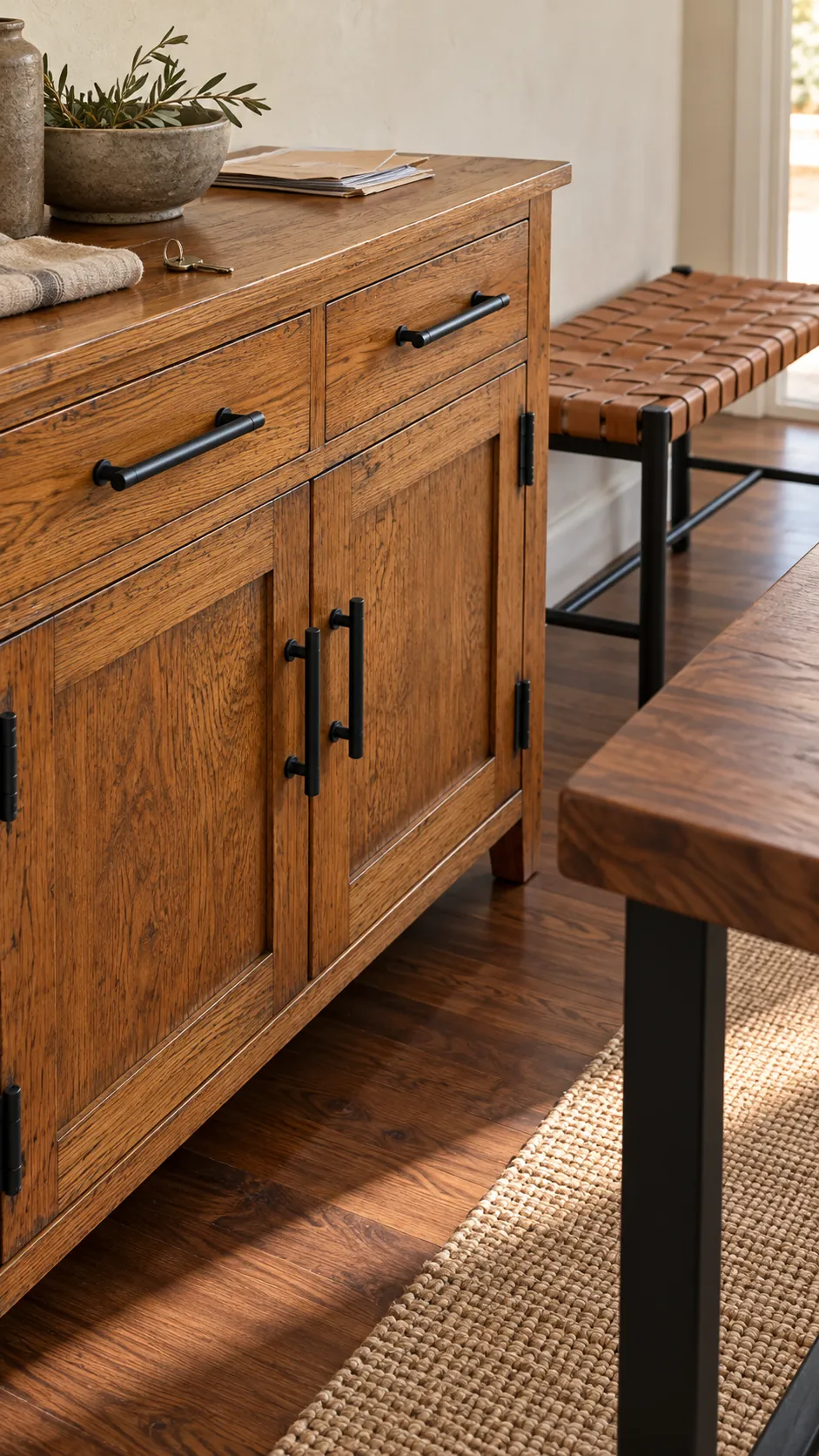
Bridge the Palette With Textiles
Textiles can carry both finishes in a softer form and improve living room texture balance. Choose a rug, cushion, or throw that combines charcoal with camel, rust, oat, or tobacco tones. The fabric should include enough variation to relate to natural grain rather than presenting two hard color blocks. A woven bridge makes mixed furniture finishes feel comfortable and layered instead of stark.
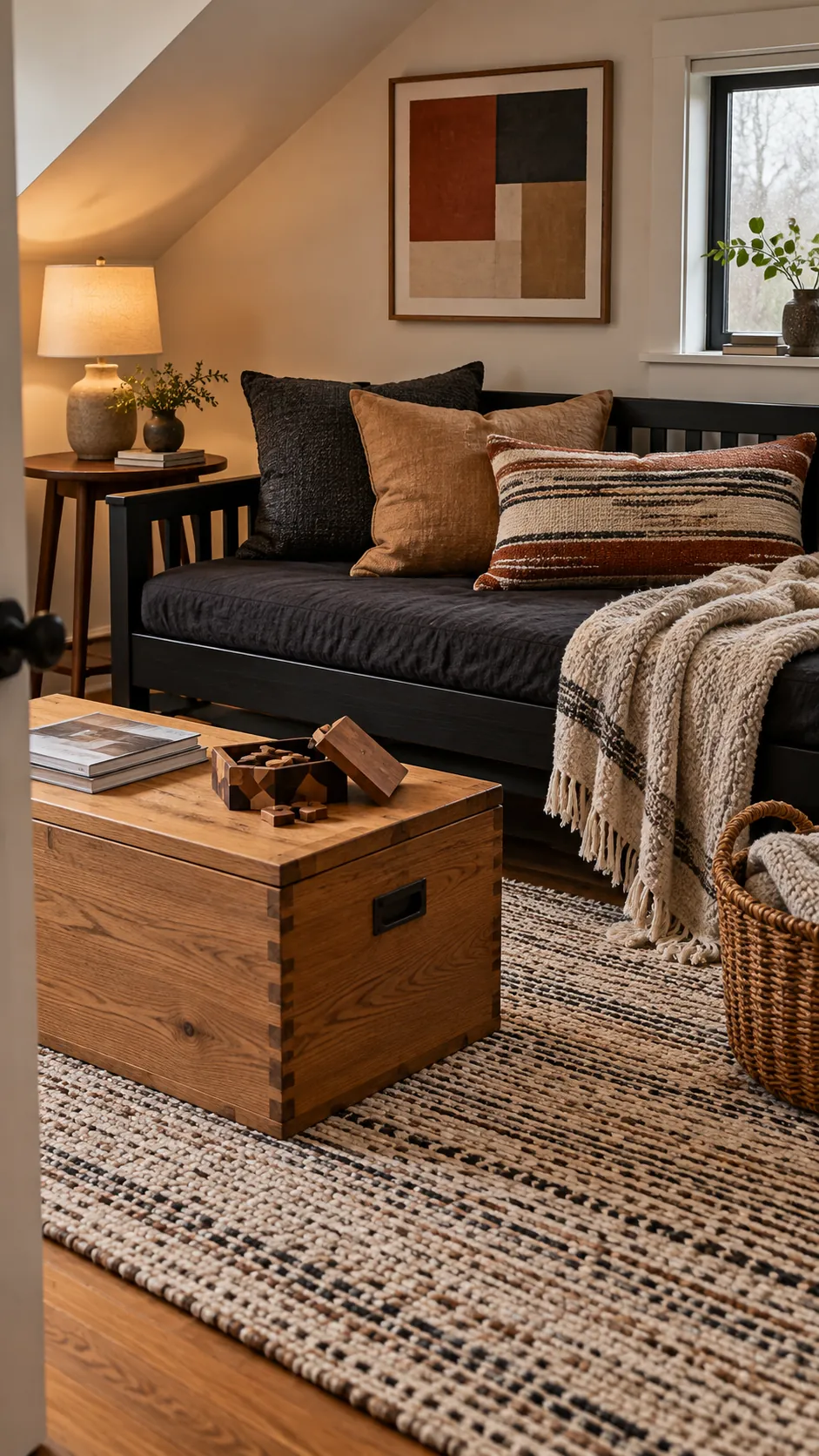
Balance Visual Weight Across the Room
Black furniture usually carries more visual weight than a wood piece of the same size. Place the darkest mass opposite another strong feature, such as a substantial wood cabinet, a wide window, or a textured fireplace. Avoid clustering every black item in one corner because that area will feel crowded while the rest of the room seems unfinished. A balanced floor plan lets the wood and black color palette guide the eye through the whole space.
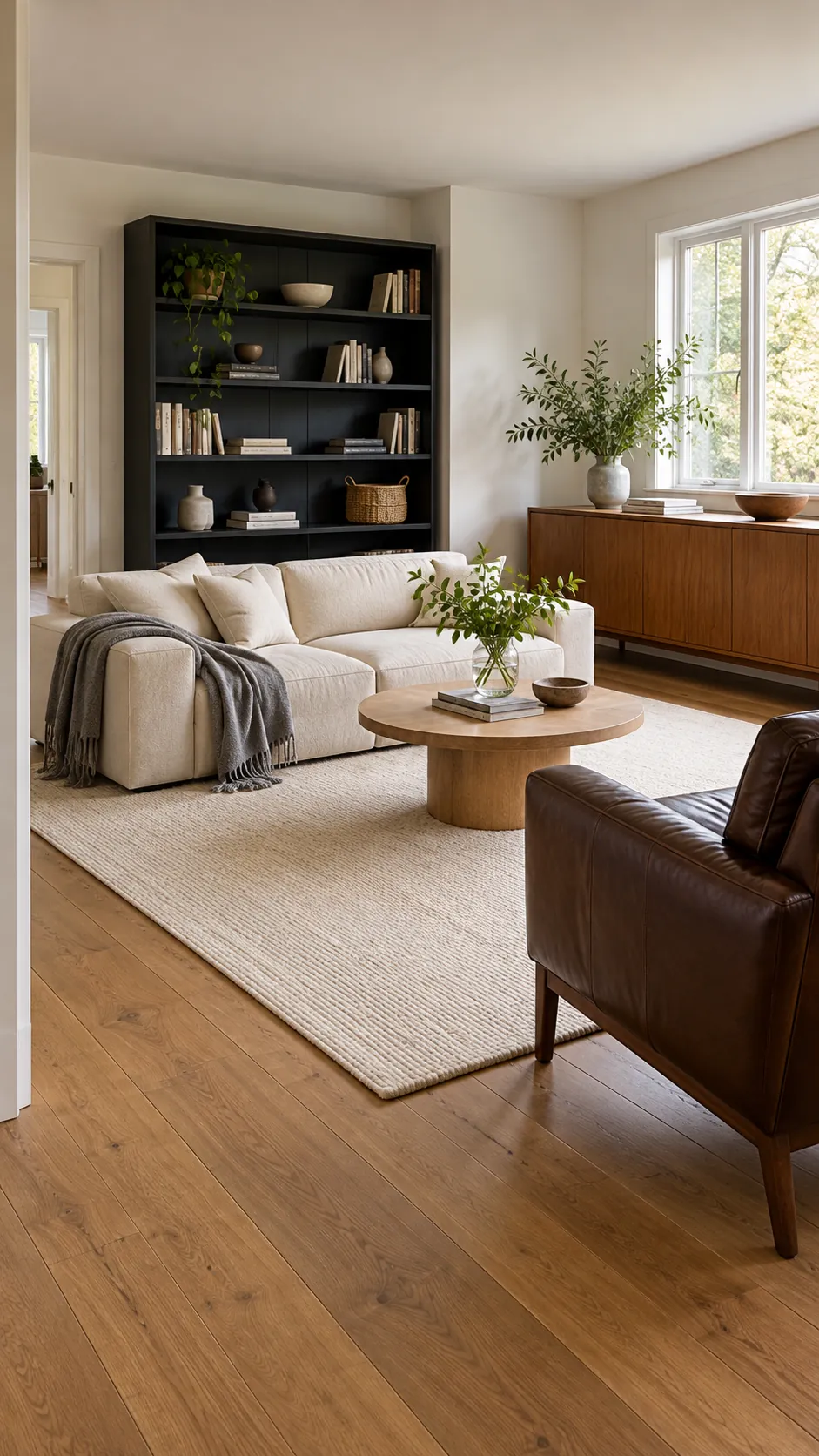
Add a Middle Tone Between Extremes
Very dark black beside honey colored wood can create a sharp jump. Introduce a middle tone through leather, aged brass, medium brown pottery, or a muted taupe fabric. This intermediate value helps the eye move gradually from the darkest finish to the lightest one. The result keeps black furniture styling crisp while preserving the warmth that makes wood inviting.
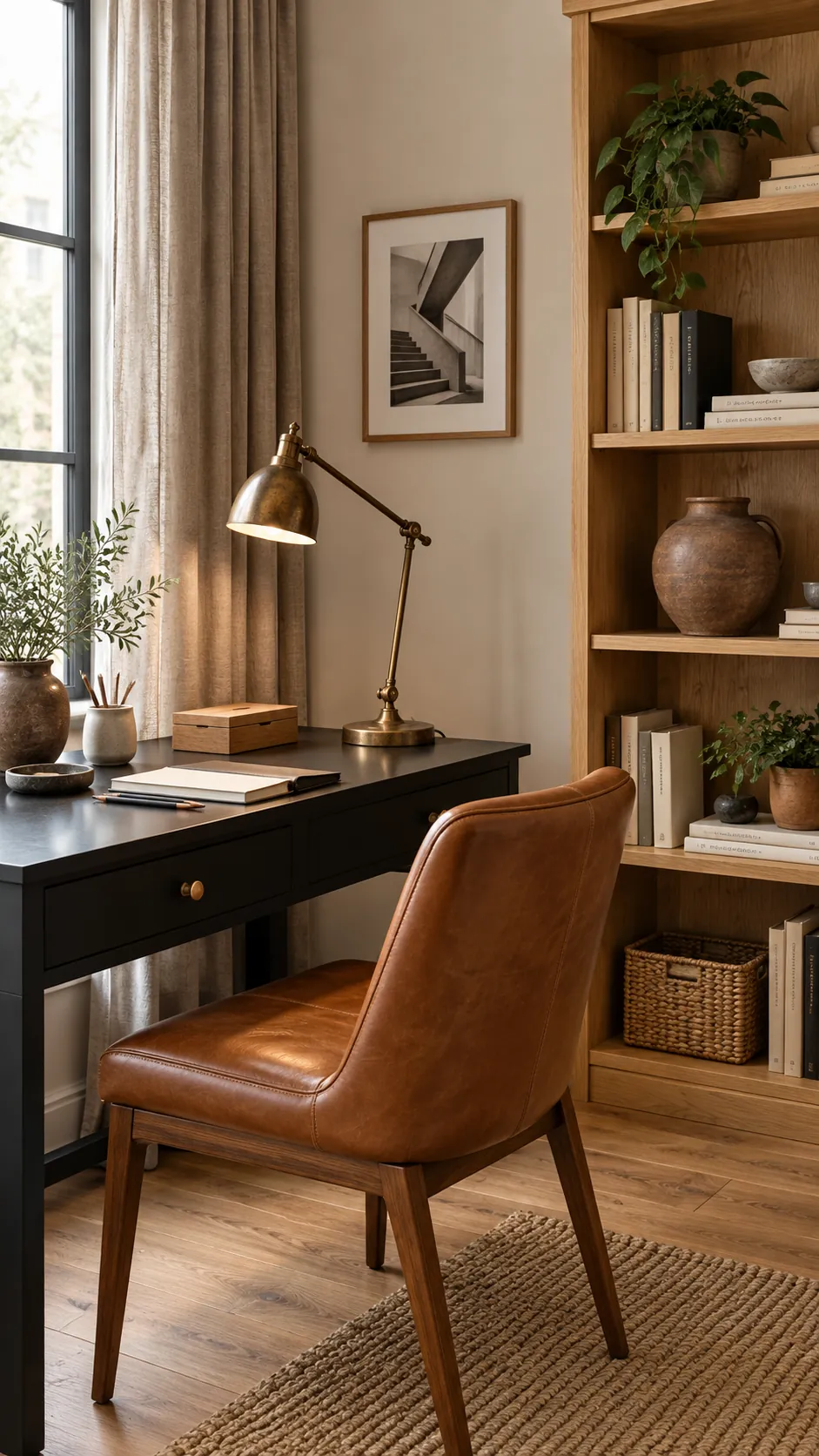
Vary Texture While Keeping Color Steady
A room becomes flat when every black surface is smooth and every wood surface is polished. Mix a matte black cabinet with woven black fibers, then pair finished wood with a rough stool, ribbed panel, or visible grain. Texture creates depth without adding more colors to manage. It also helps older and newer furniture coexist because tactile variety looks collected over time.
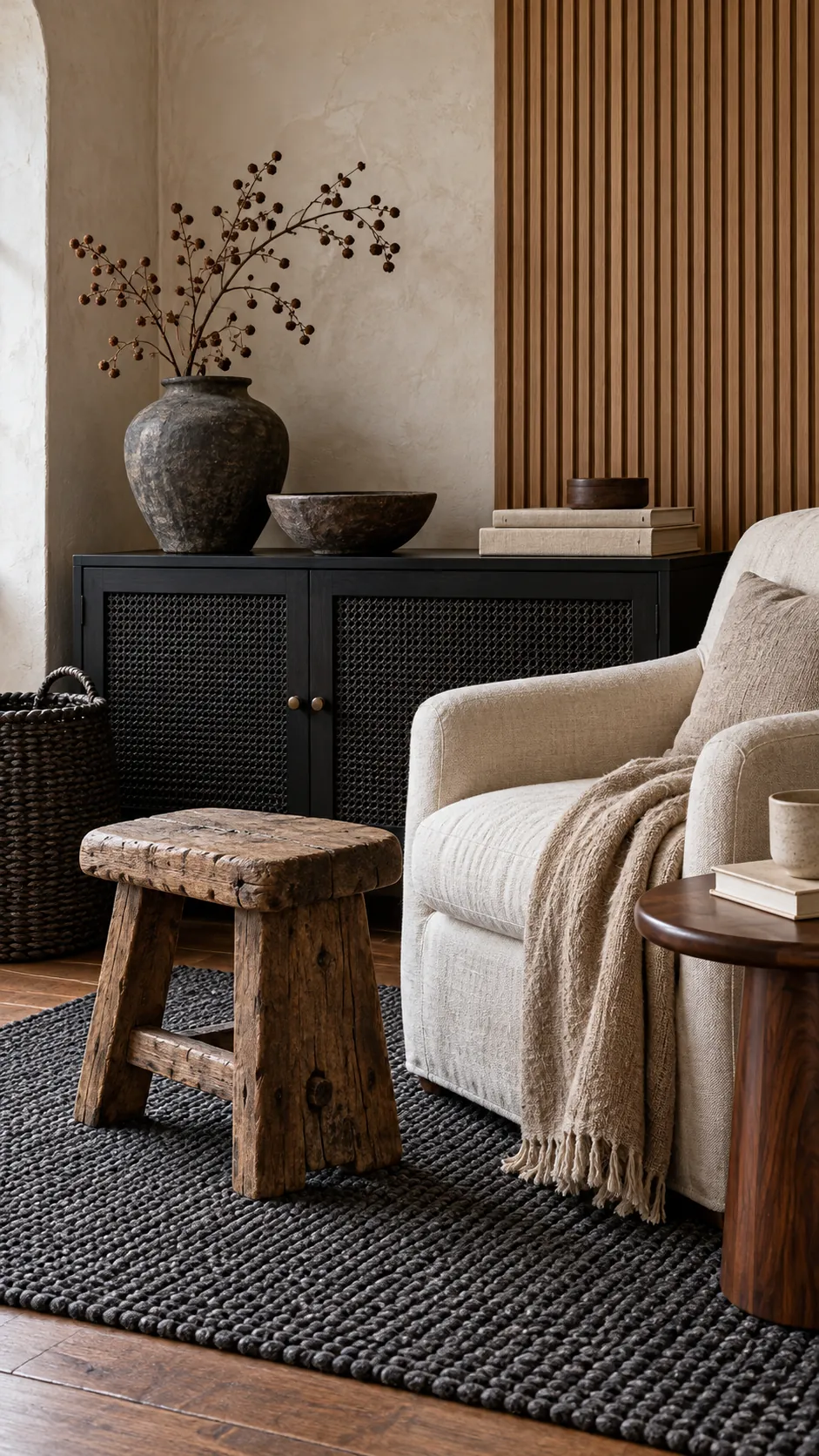
Give Each Statement Piece Space
Distinctive furniture needs enough open space for its shape and finish to register. Leave a little floor or wall area between a bold black chair and a sculptural wood console rather than pushing them into one dense cluster. The gap acts like a visual pause and prevents the contrast from becoming a collision. Smaller shared accents can still connect the pieces across that breathing room.
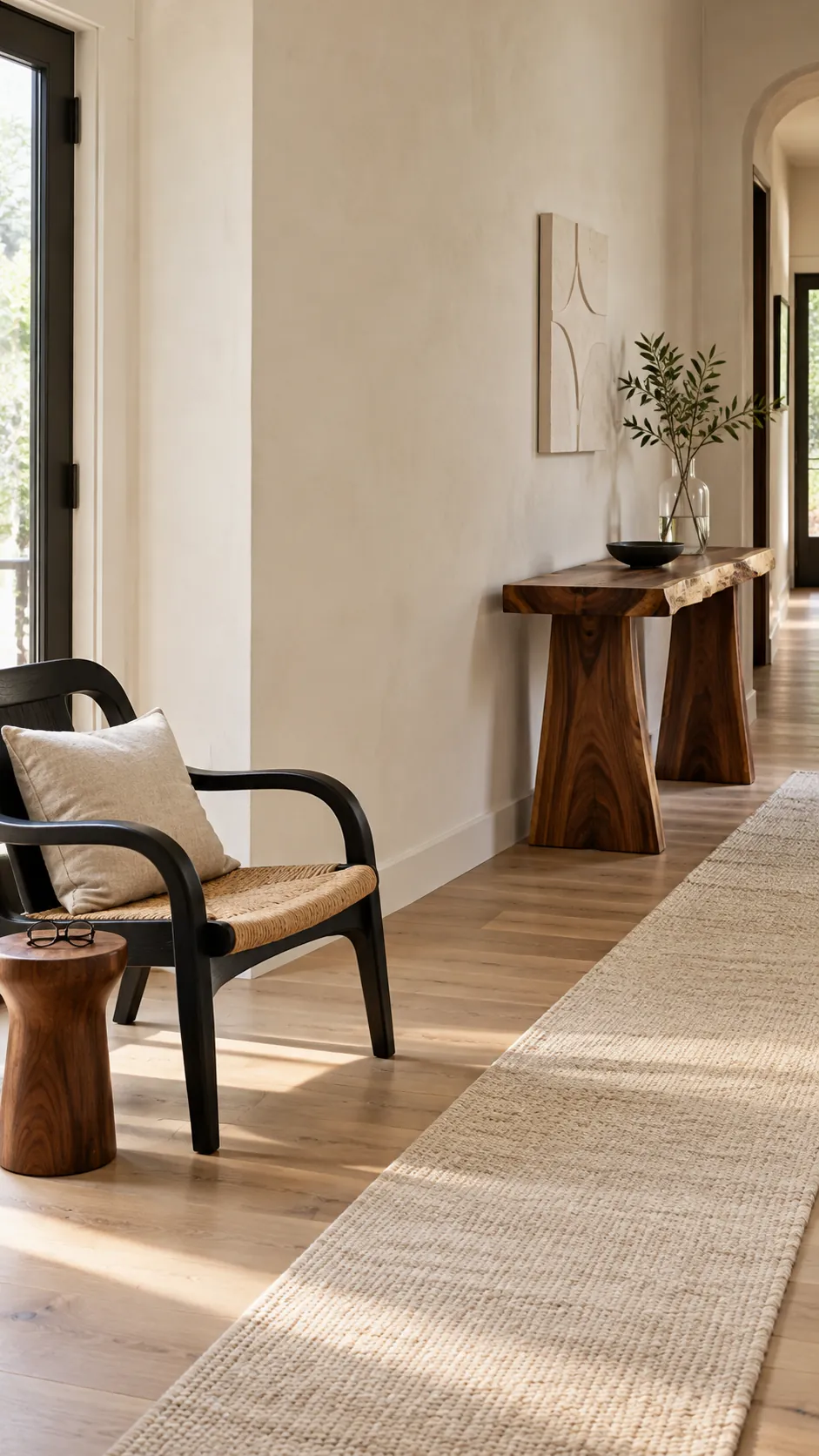
Connect Rooms Through Repetition
An open plan feels more coherent when both finishes appear in each visible zone. A black dining chair can answer a black living room table, while a warm wood shelf repeats the dining table tone. The pieces do not need to be identical or come from one set. Repeating the finishes across sight lines creates continuity while allowing every area to keep its own function.
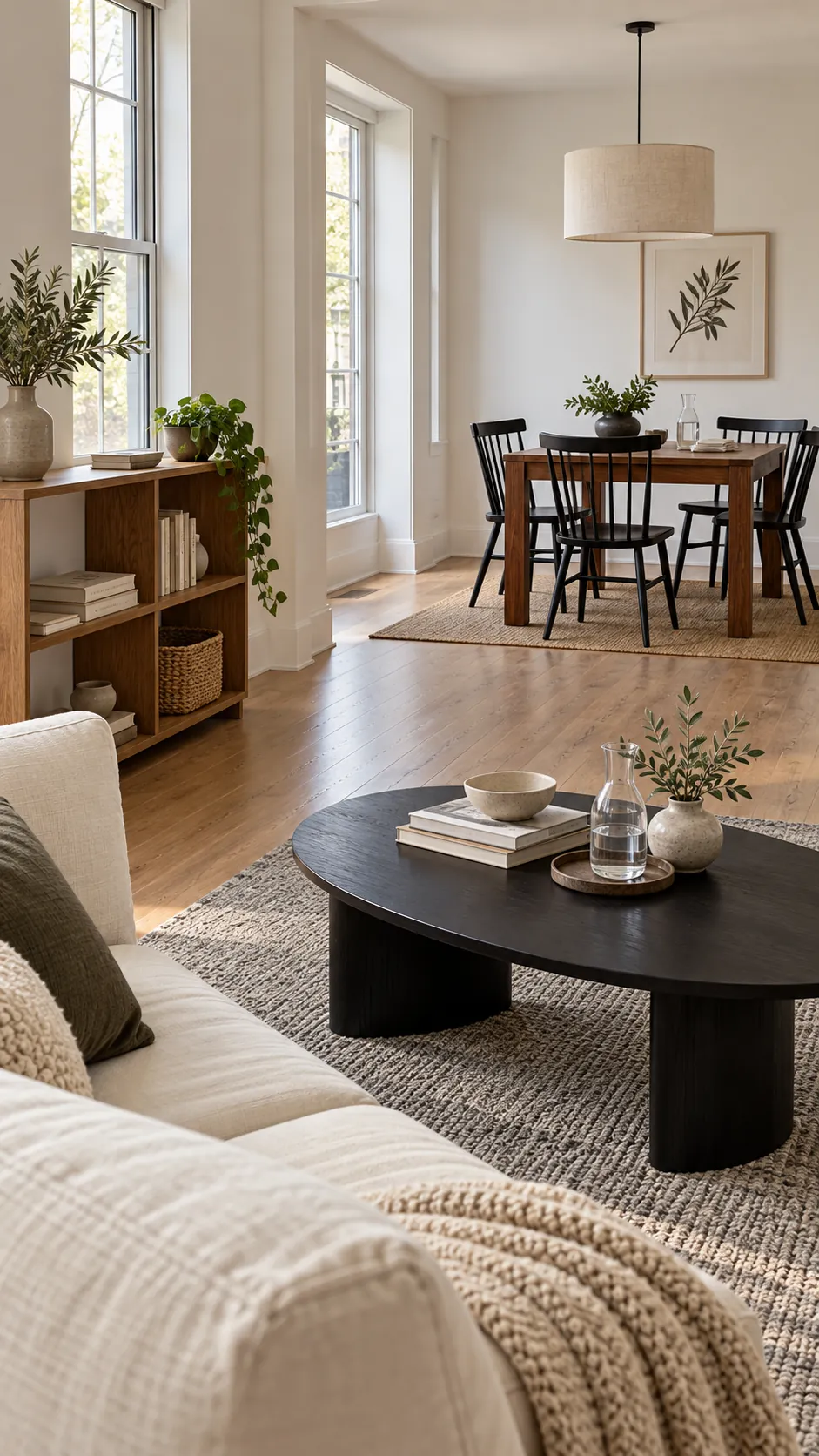
Edit Until Every Repeat Has a Purpose
Step back from the doorway and identify the first three dark shapes and the first three warm wood shapes you notice. Remove or relocate any small accent that creates a random spot instead of reinforcing a larger piece. Keep enough repetition to establish rhythm, but allow quiet areas so the room can breathe. This final edit is what makes the combination look considered rather than merely coordinated.