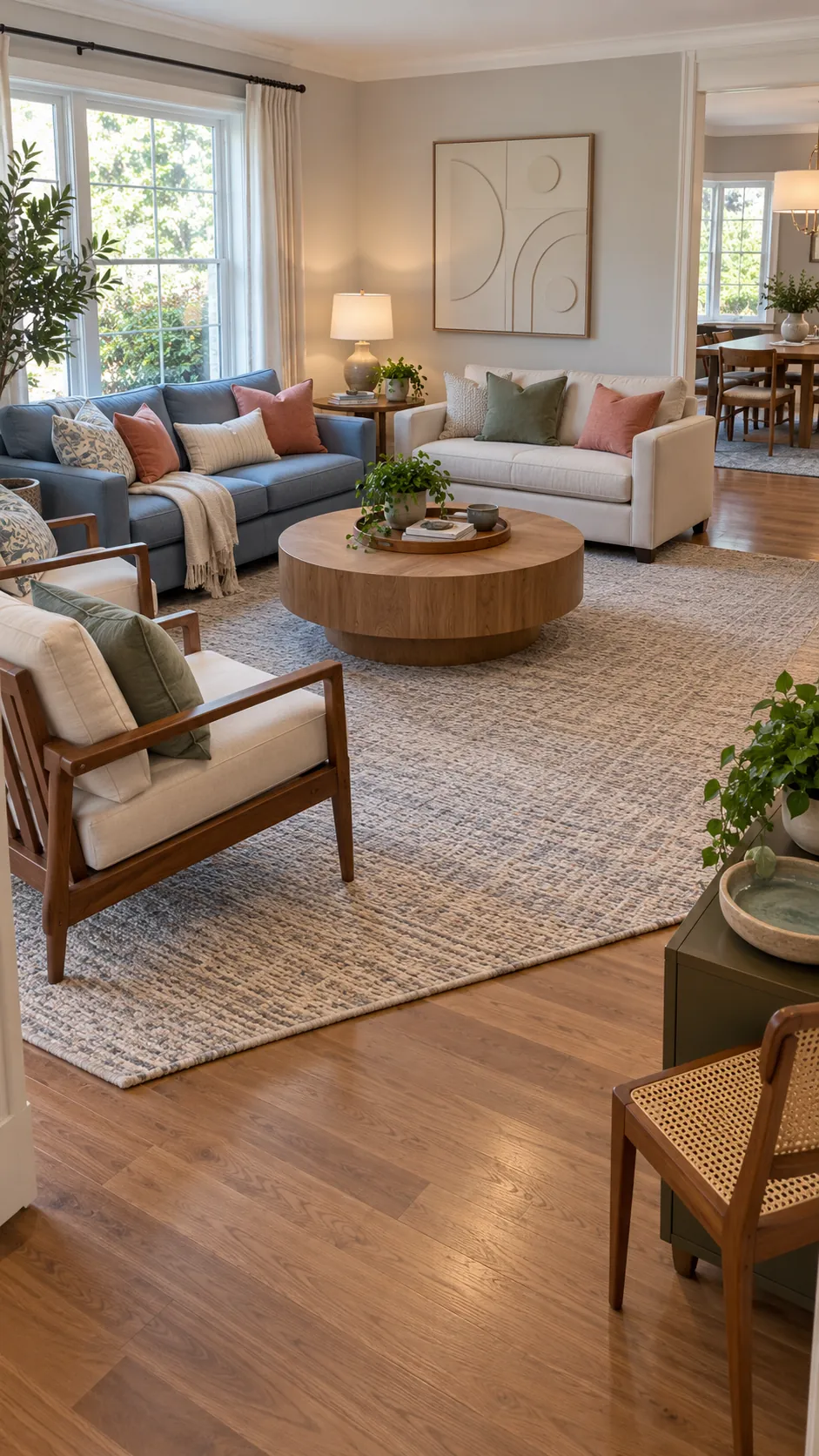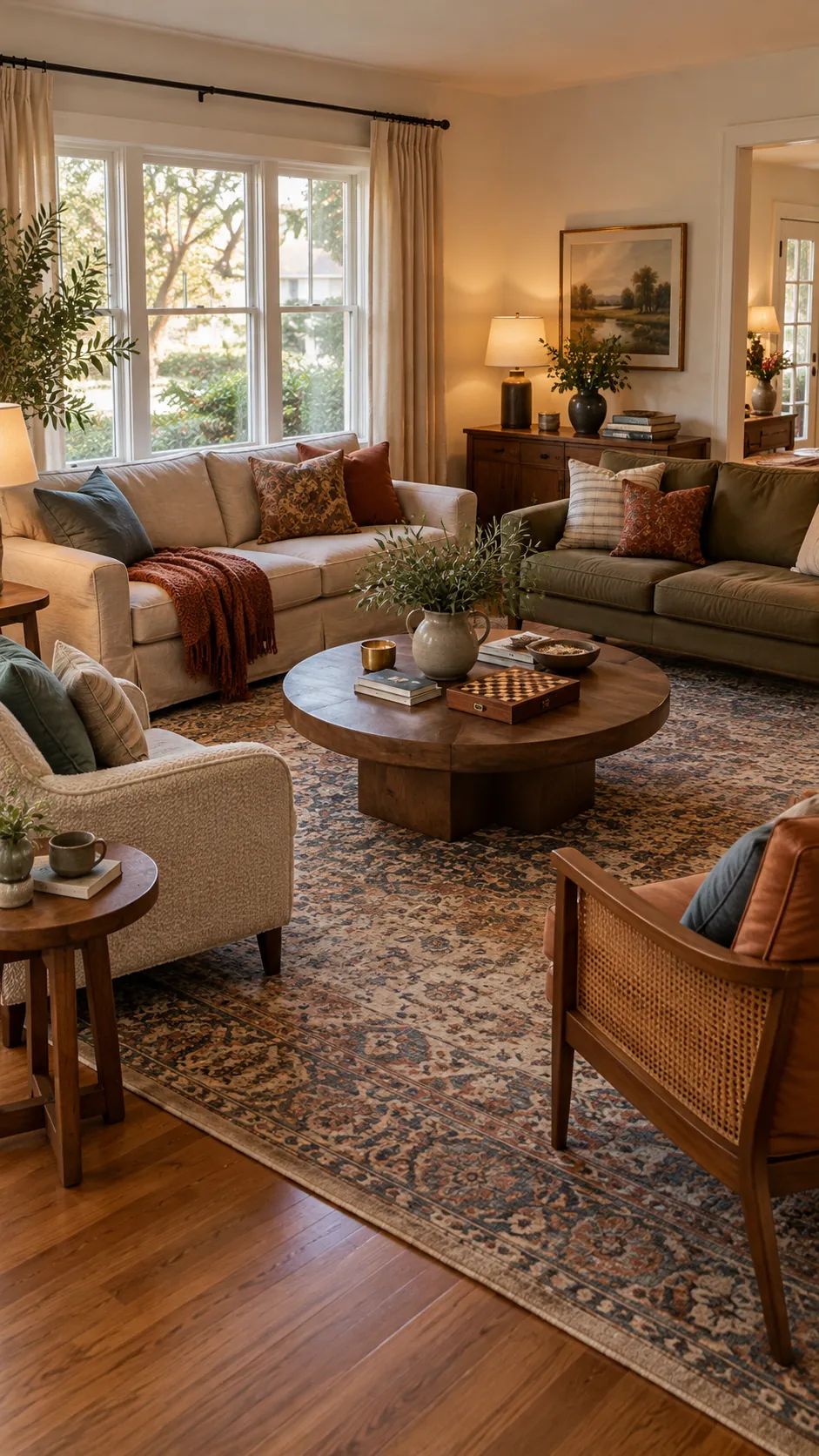
A room can hold plenty of seats and still make conversation feel awkward. The problem is usually direction, distance, or a coffee table that pushes people too far apart. A social layout gives every person an easy view of at least two other faces and a comfortable place for a drink.
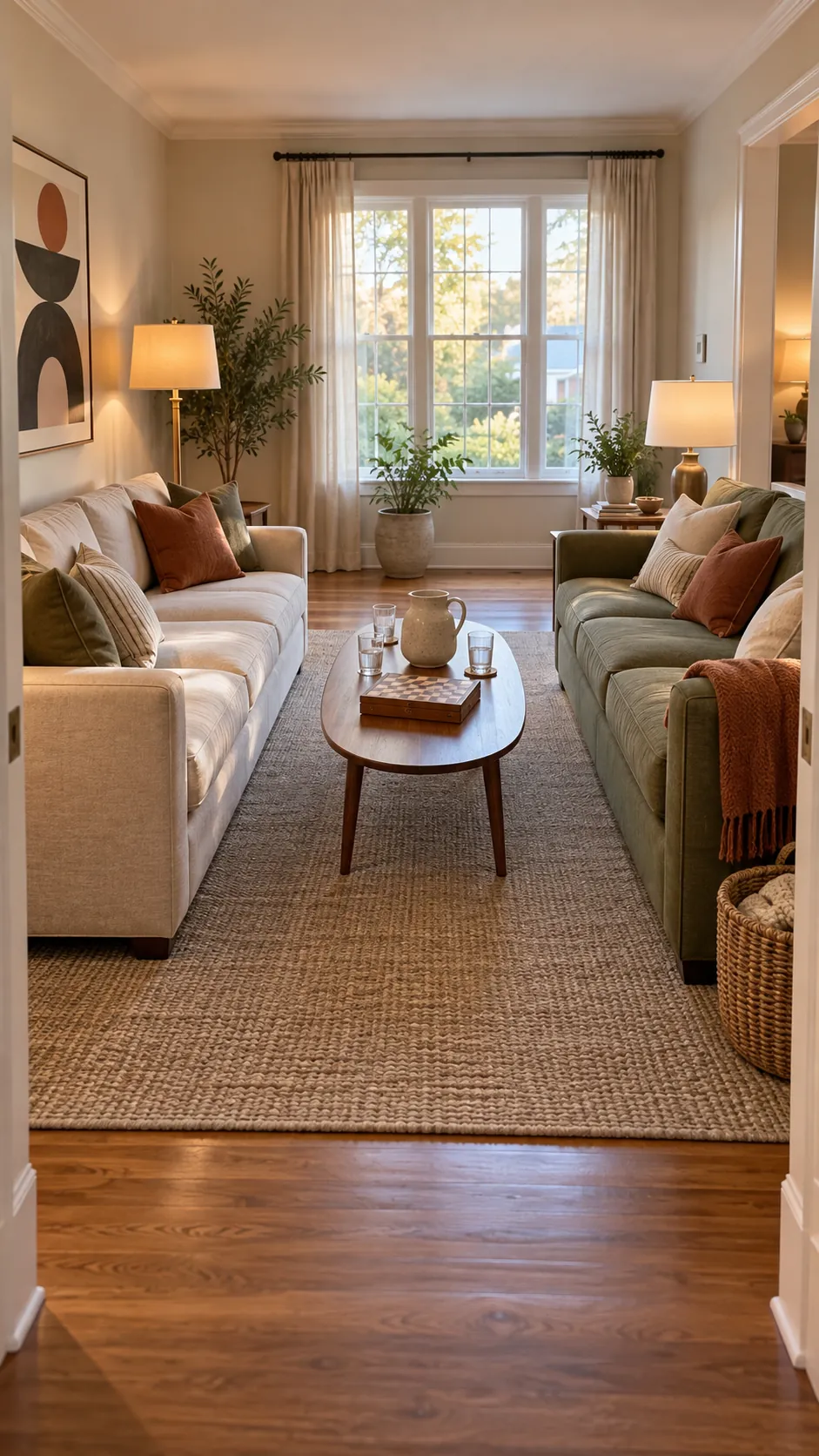
Face two sofas across a shared table
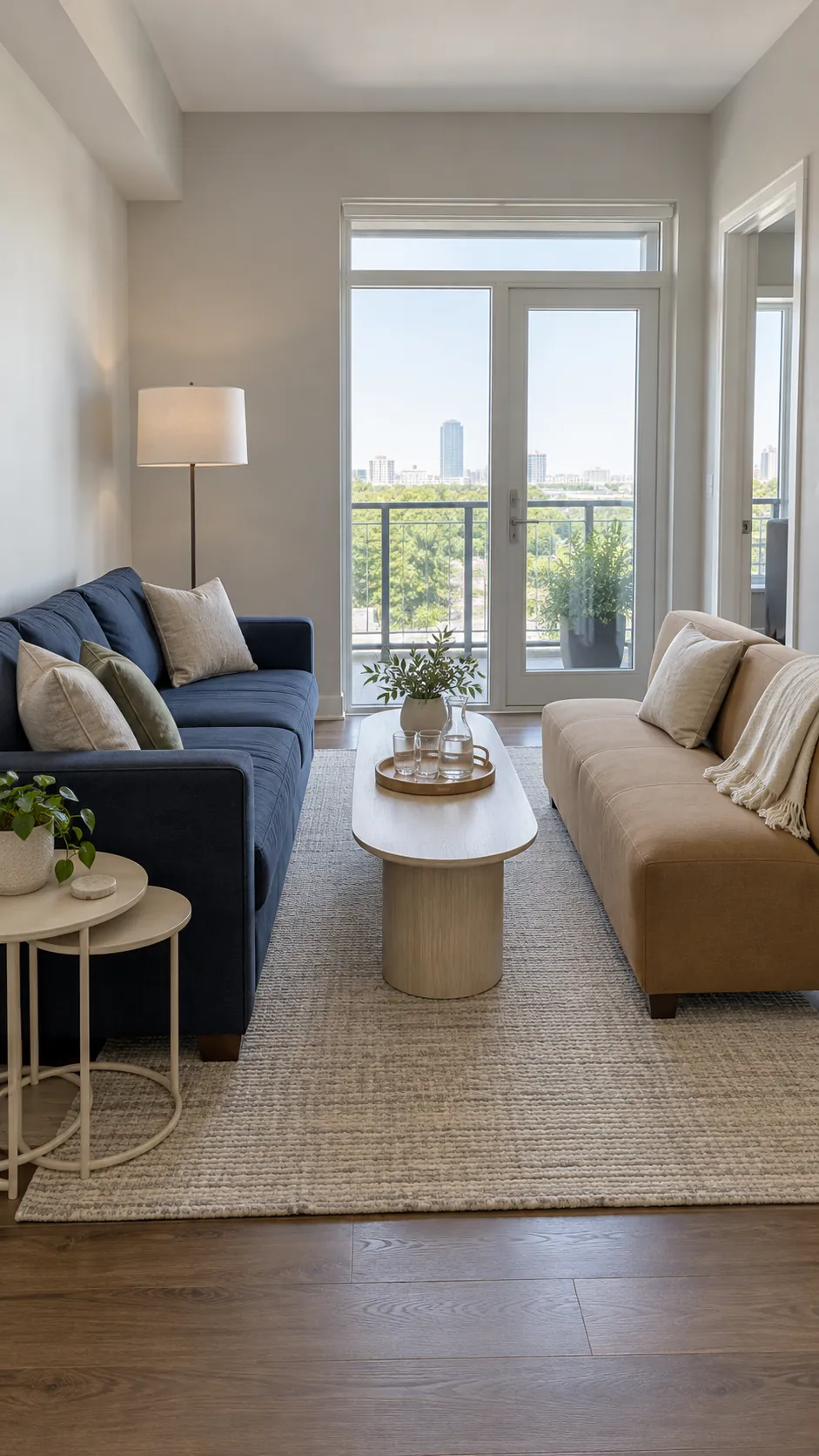
Two sofas facing each other create an immediate conversation seating plan for a long room. Keep the gap close enough for normal voices, then use a narrow coffee table that everyone can reach. Leave one end open so family members can enter without squeezing past knees.
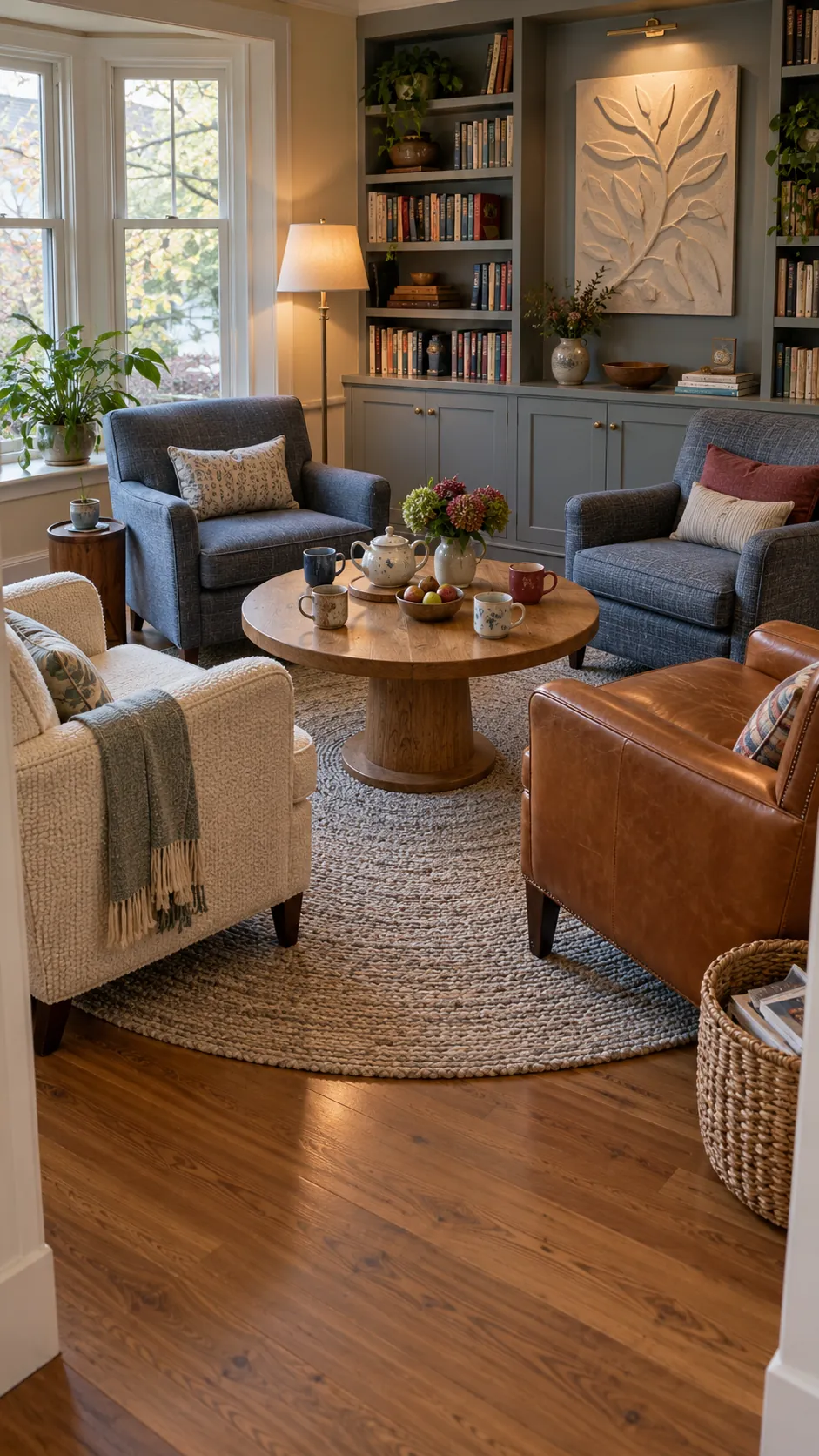
Turn four chairs toward the center
Four chairs around a round table give each person an equal place in the group. Choose chairs with arms and supportive backs when adults may sit through a long visit. Small differences in fabric or shape keep the family living room relaxed while a shared rug unifies the set.
Pair a sofa with two angled chairs
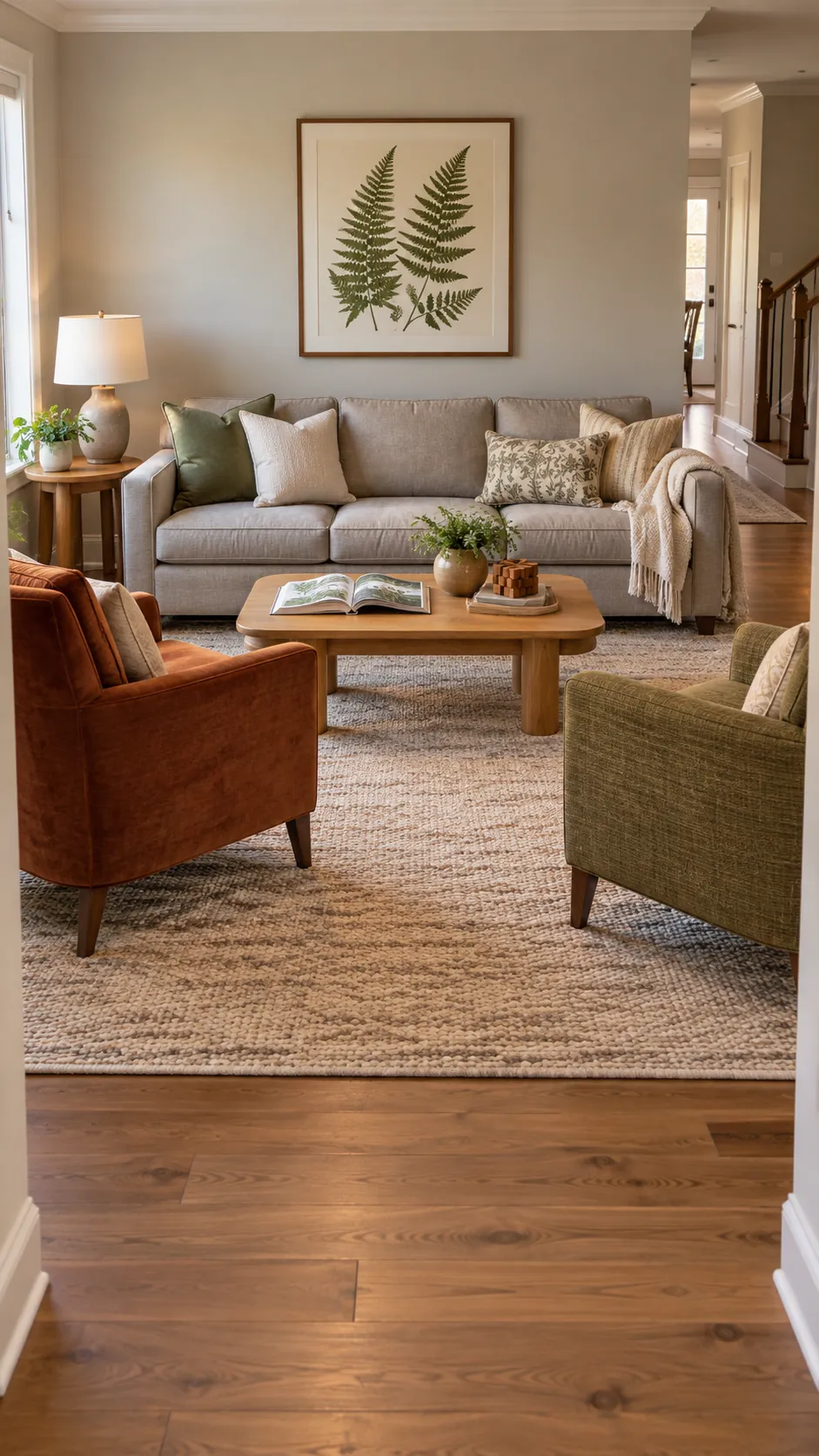
A sofa and two chairs form a flexible U shape that suits many average rooms. Angle the chairs slightly toward each other so they do not stare past the sofa occupants. Keep the open side aligned with the main walkway, which protects circulation and makes an empty seat feel welcoming.
Float a loveseat opposite the main sofa
A compact loveseat can complete the far side of a social living room without the weight of another full sofa. Select a shallow frame when the room must keep a passage behind it. Matching seat heights help adults make eye contact naturally, even when the upholstery is different.
Place a bench beside the hearth
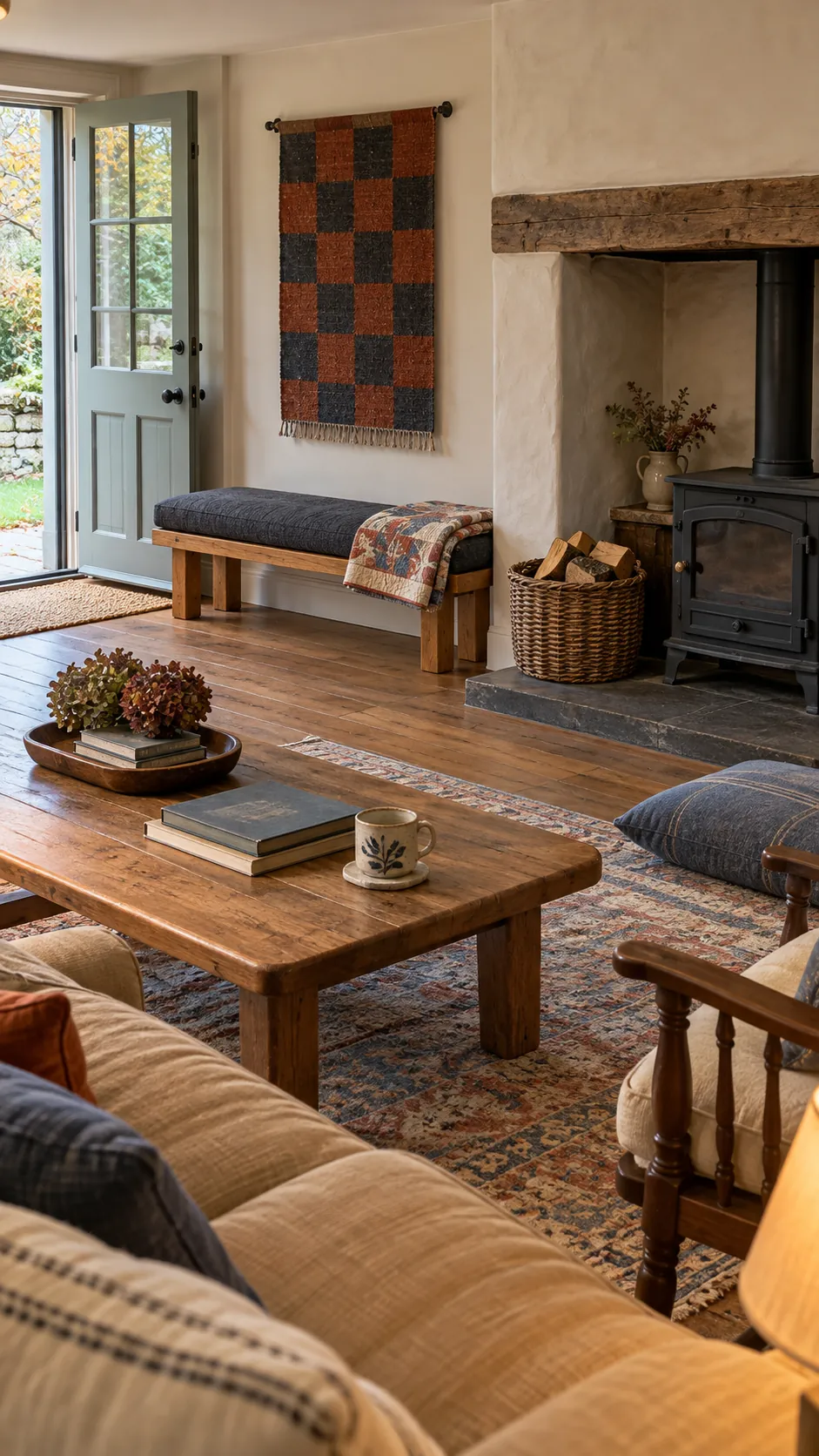
A backless bench adds two casual places without blocking the fireplace or the view across the room. It works best for shorter visits, children, or guests who like to perch near the group. Add a firm cushion, keep the hearth clearance safe, and ensure the bench does not become a barrier to the exit.
Use a sectional with an open end
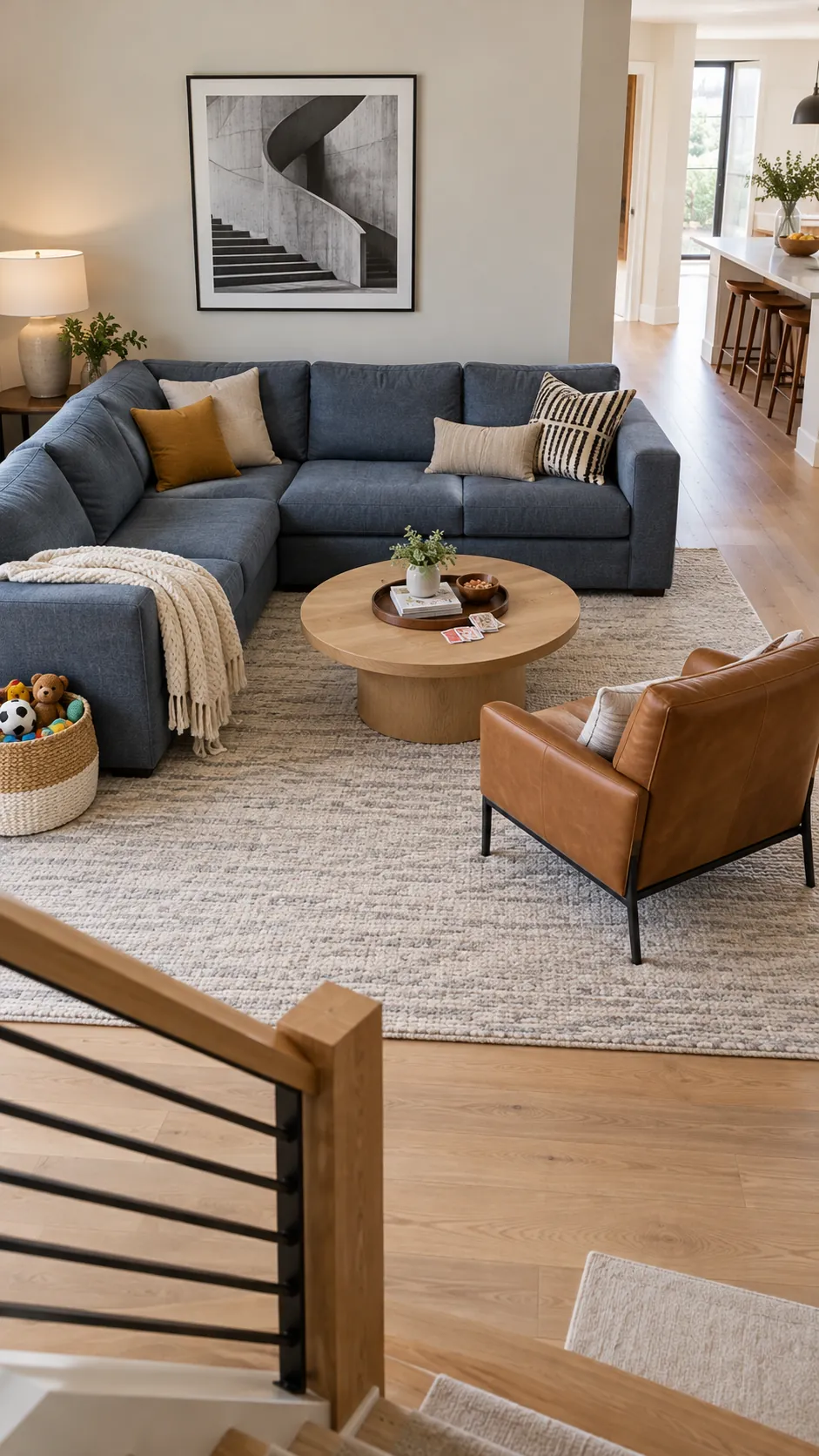
A sectional supports a large family when its open end faces the room rather than cutting it off. Put the shorter return against the least important walkway and leave the other side visually open. Add one movable chair across from the corner so people seated at the ends can join the same exchange.
Create a circle with swivel chairs
Swivel chairs let people turn between a conversation group, a window, and a television without dragging furniture. Use broad stable bases and allow clear rotation space around each chair. This comfortable seating arrangement is especially useful when one room serves several purposes during the day.
Add window seats to the group
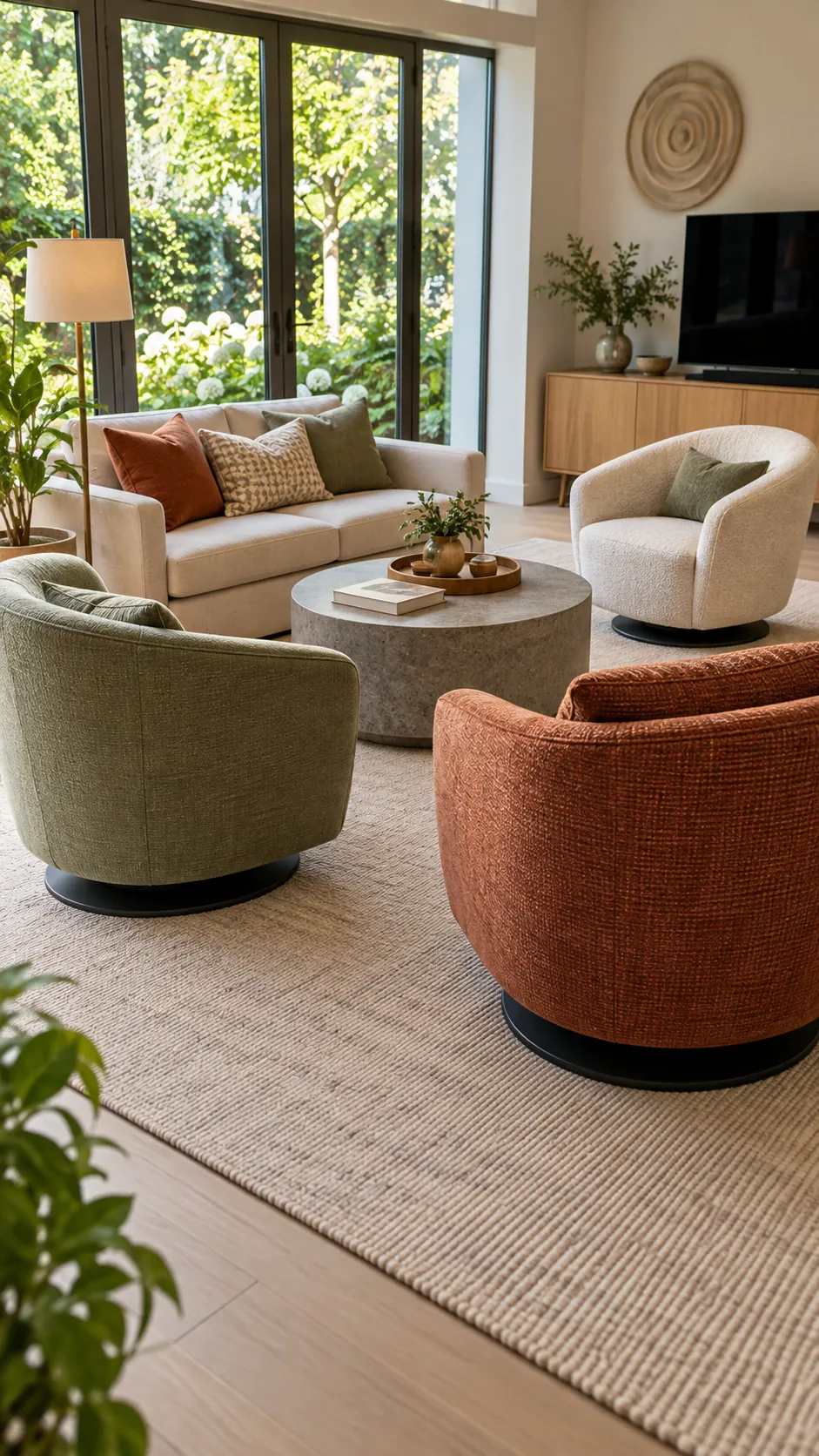
A built in window seat can become part of the family gathering space instead of remaining a separate reading perch. Pull one lounge chair close enough to connect it with the sofa, then use a small table between them. Firm seat cushions and loose back pillows make the window ledge comfortable for longer conversations.
Tuck stools beneath a console
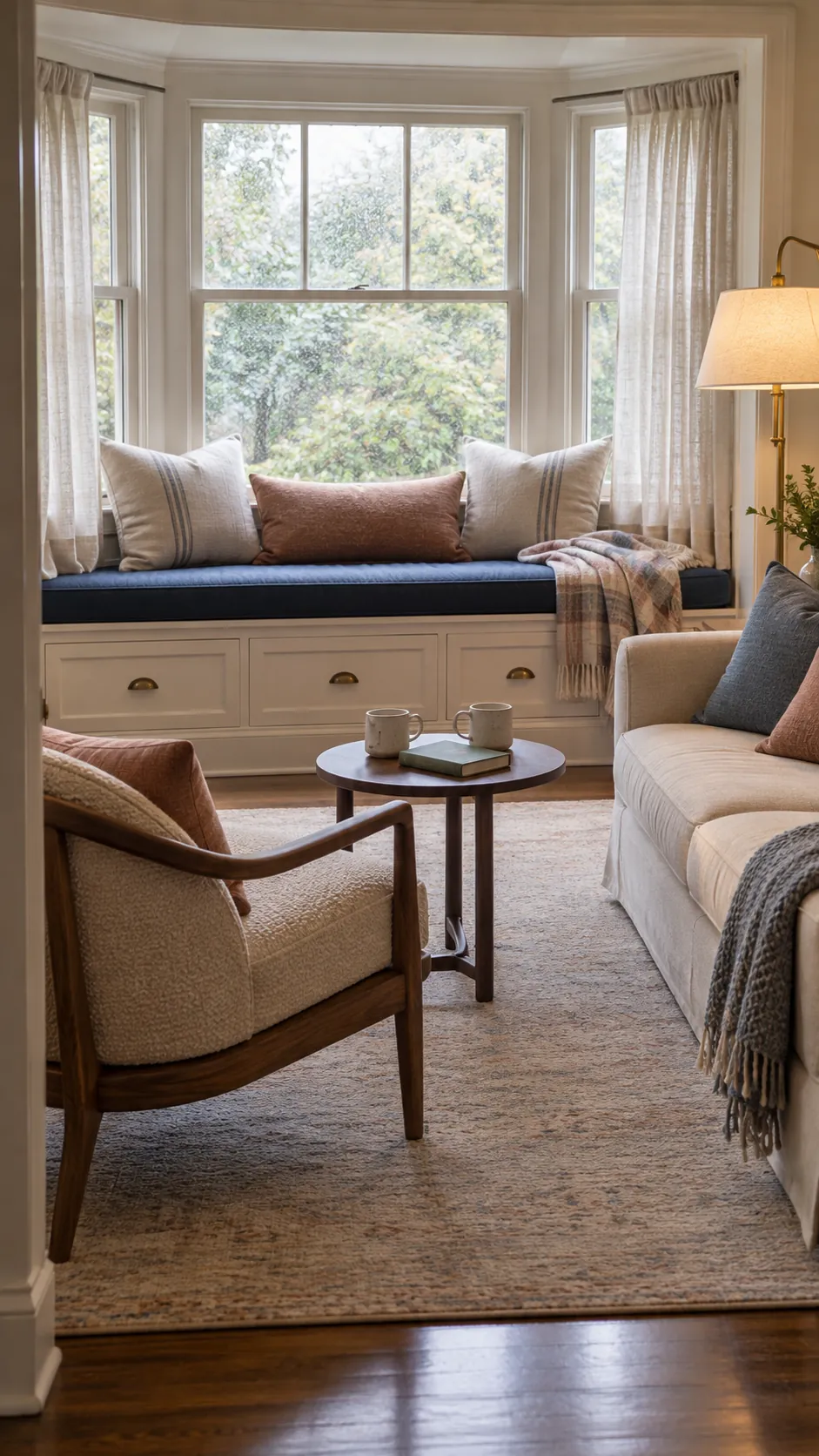
Small stools provide useful overflow seating when they have a real storage place between visits. Tuck them beneath a console at the edge of the rug, then pull them beside the coffee table when the room fills. Choose stable seats with enough surface area for adults, not tiny decorative pieces that wobble.
Let an ottoman move between seats
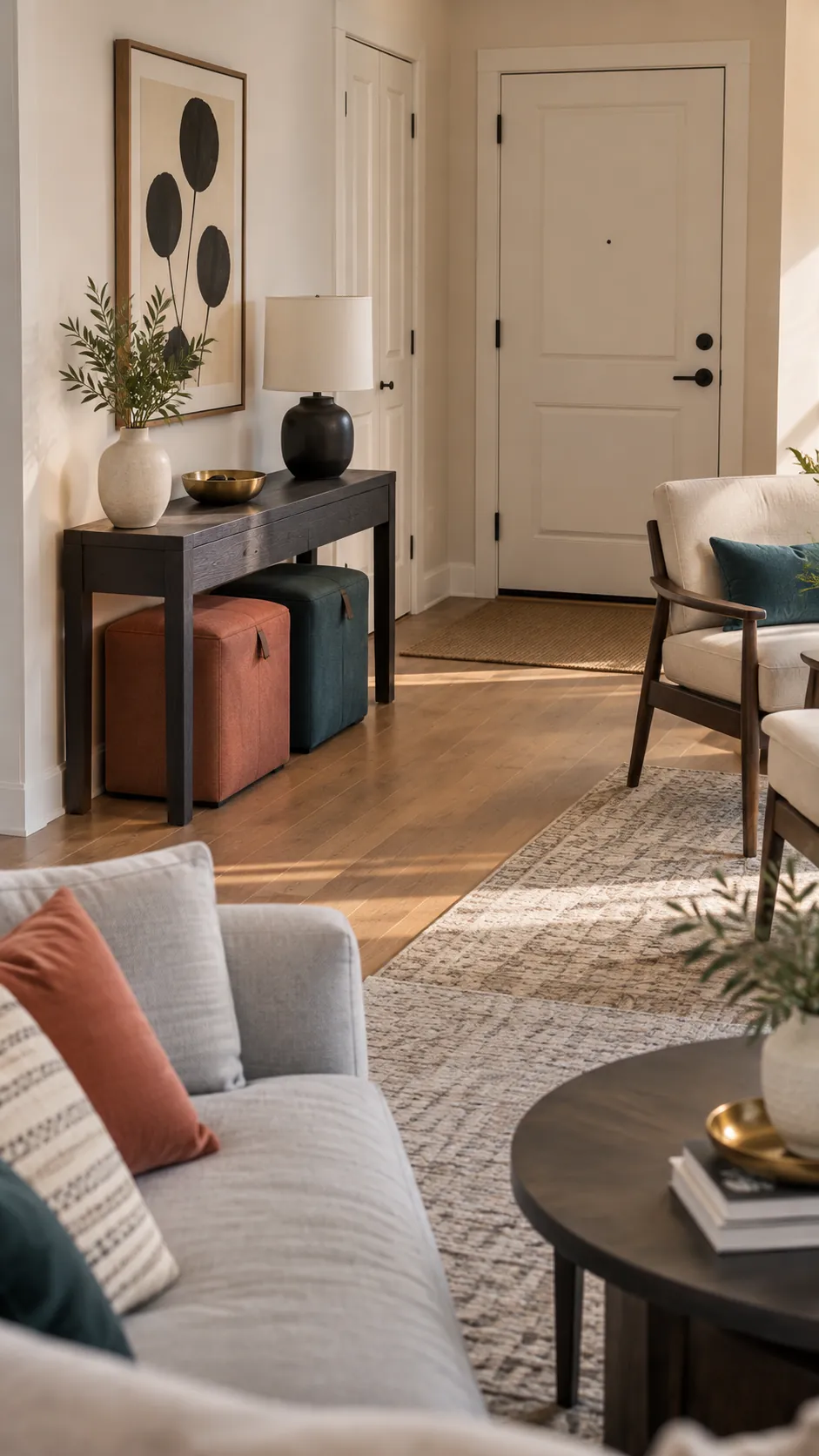
A firm ottoman can support feet, hold a tray, or become a temporary seat. Pick a lightweight piece that one person can move without scraping the floor. Keep it out of the central path until it is needed, because flexible furniture only helps when people can reposition it safely.
Angle chairs away from the television
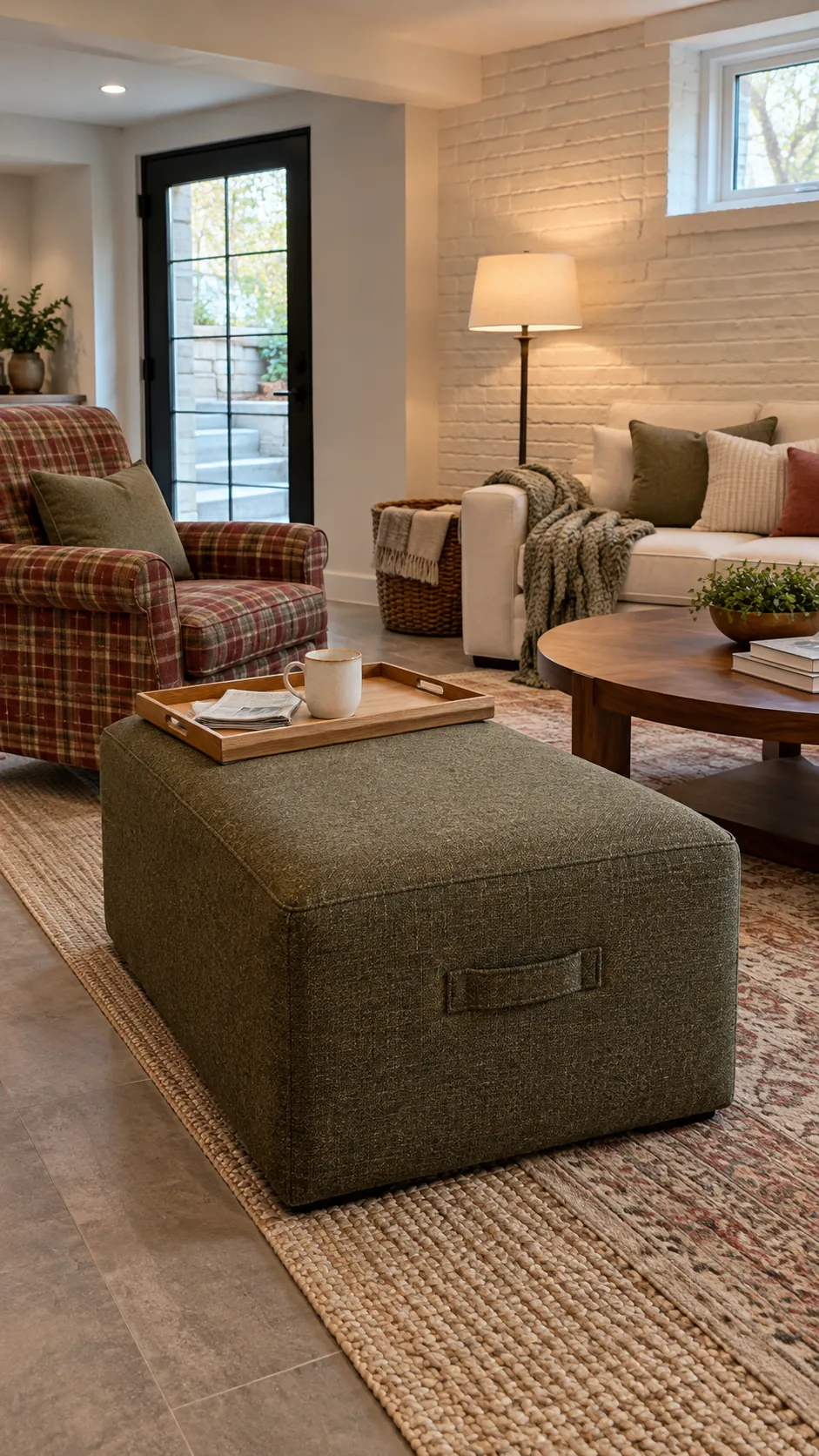
A television can remain in the room without becoming the only focal point. Turn the side chairs toward the sofa and place the screen off the main conversational axis. People can still watch when desired, but the everyday arrangement makes faces easier to see than the blank screen.
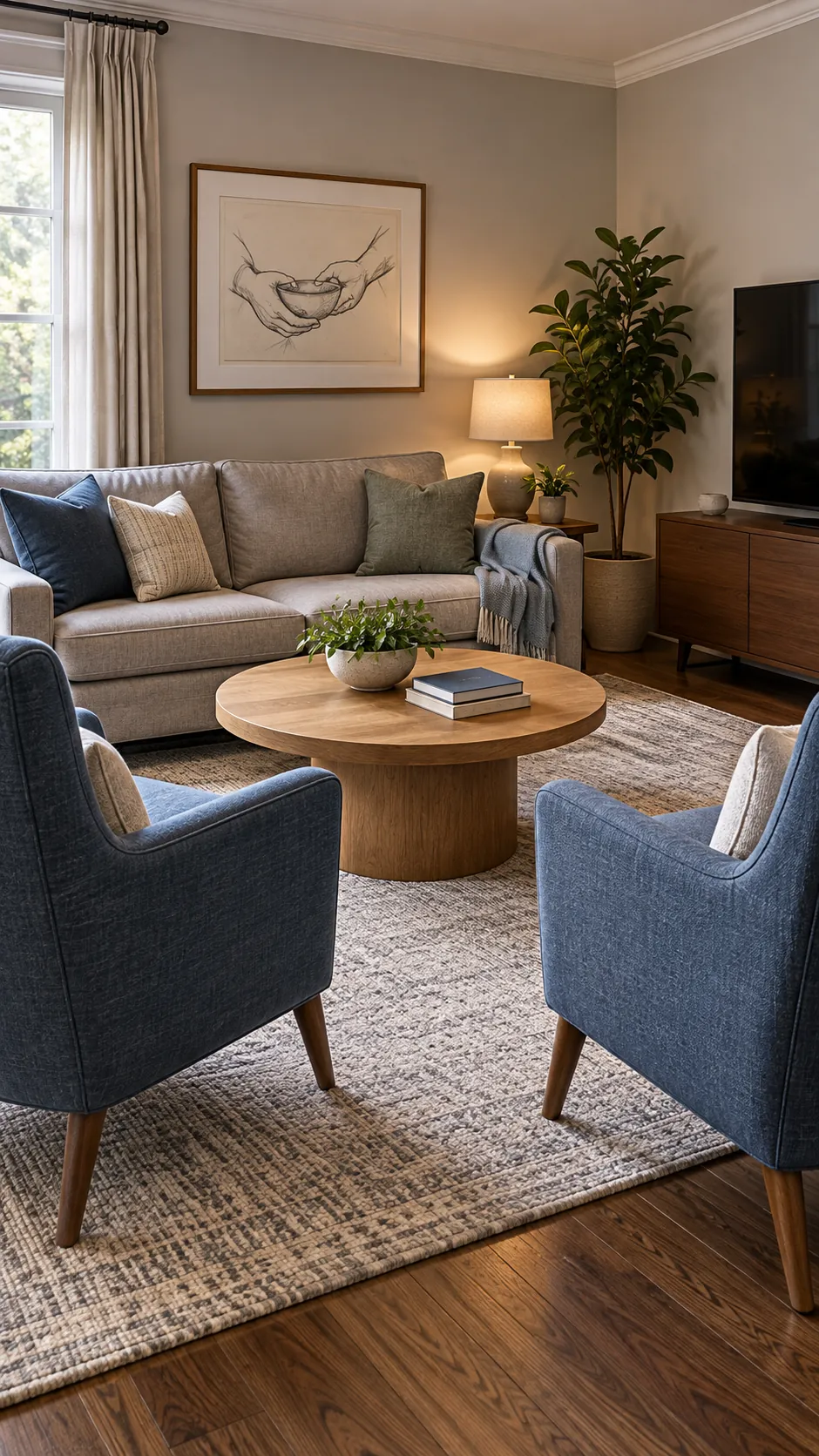
Build a quiet corner for two
Not every conversation needs the full room. Two supportive chairs with a small table can form a quieter pair within a larger family living room. Keep the corner visually connected to the main rug so it feels available, while a lamp and slight angle provide enough intimacy for a focused talk.
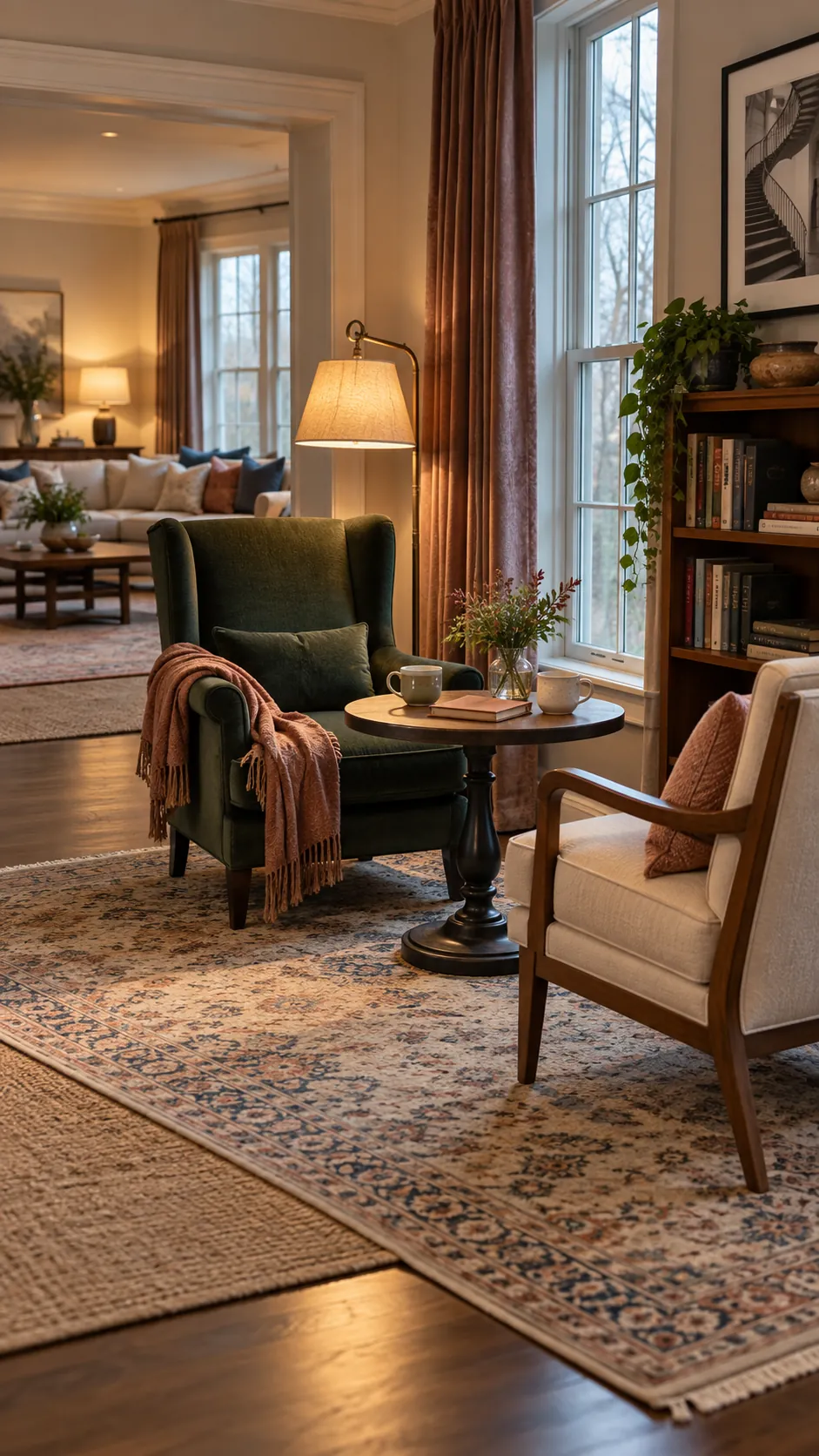
Use matching chairs across one sofa
A matching pair gives the open side of a sofa arrangement enough visual weight to feel complete. Separate the chairs by a small table so each person has elbow room and a place for a glass. This classic layout stays balanced without requiring identical upholstery on every seat.
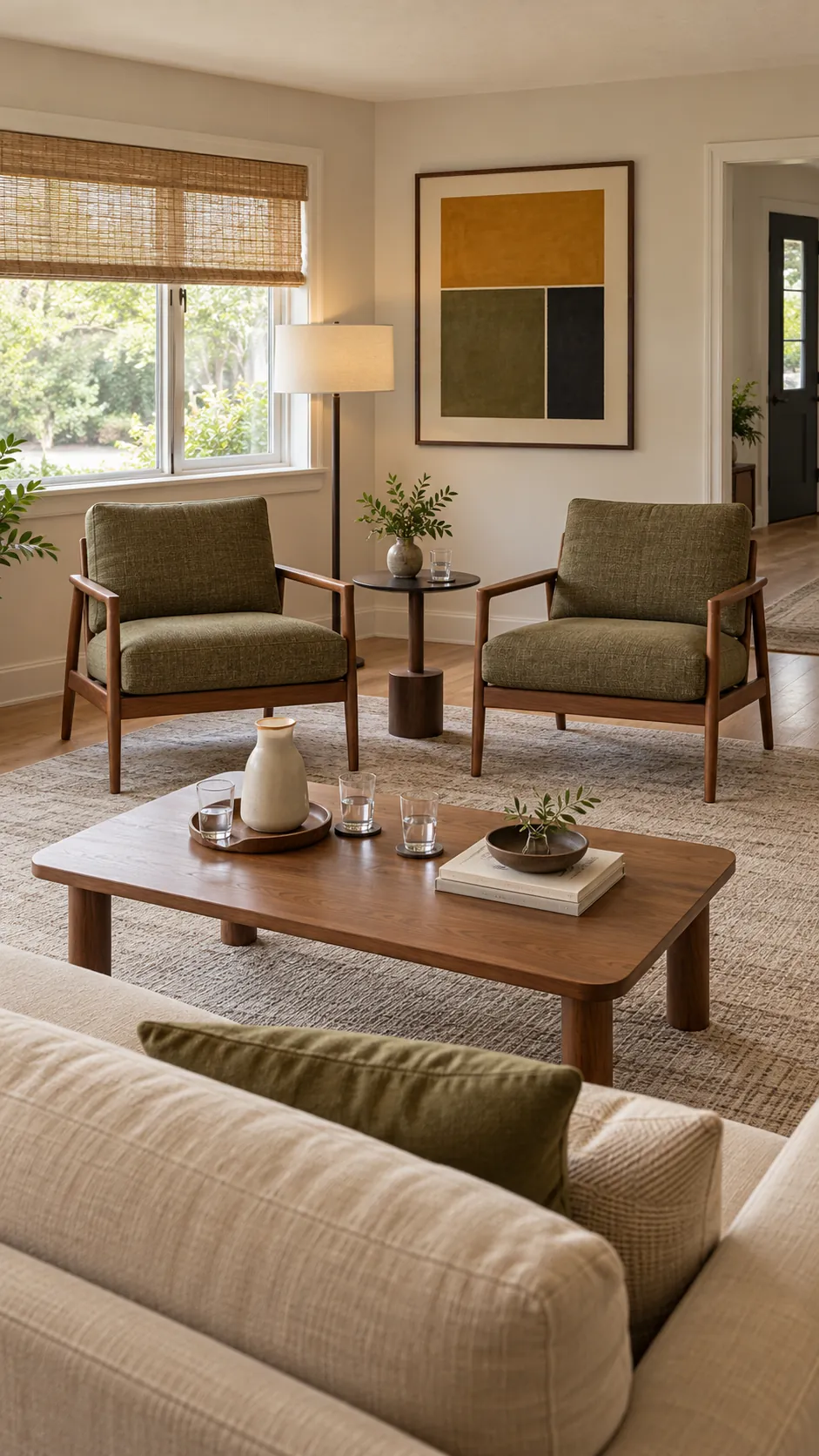
Mix seat heights with intention
A low modern sofa can feel disconnected from upright dining style chairs if the difference is extreme. Use cushions or select accent chairs whose seat height stays reasonably close to the sofa. A slightly taller chair can help someone stand more easily, but it should still face the same conversational center.
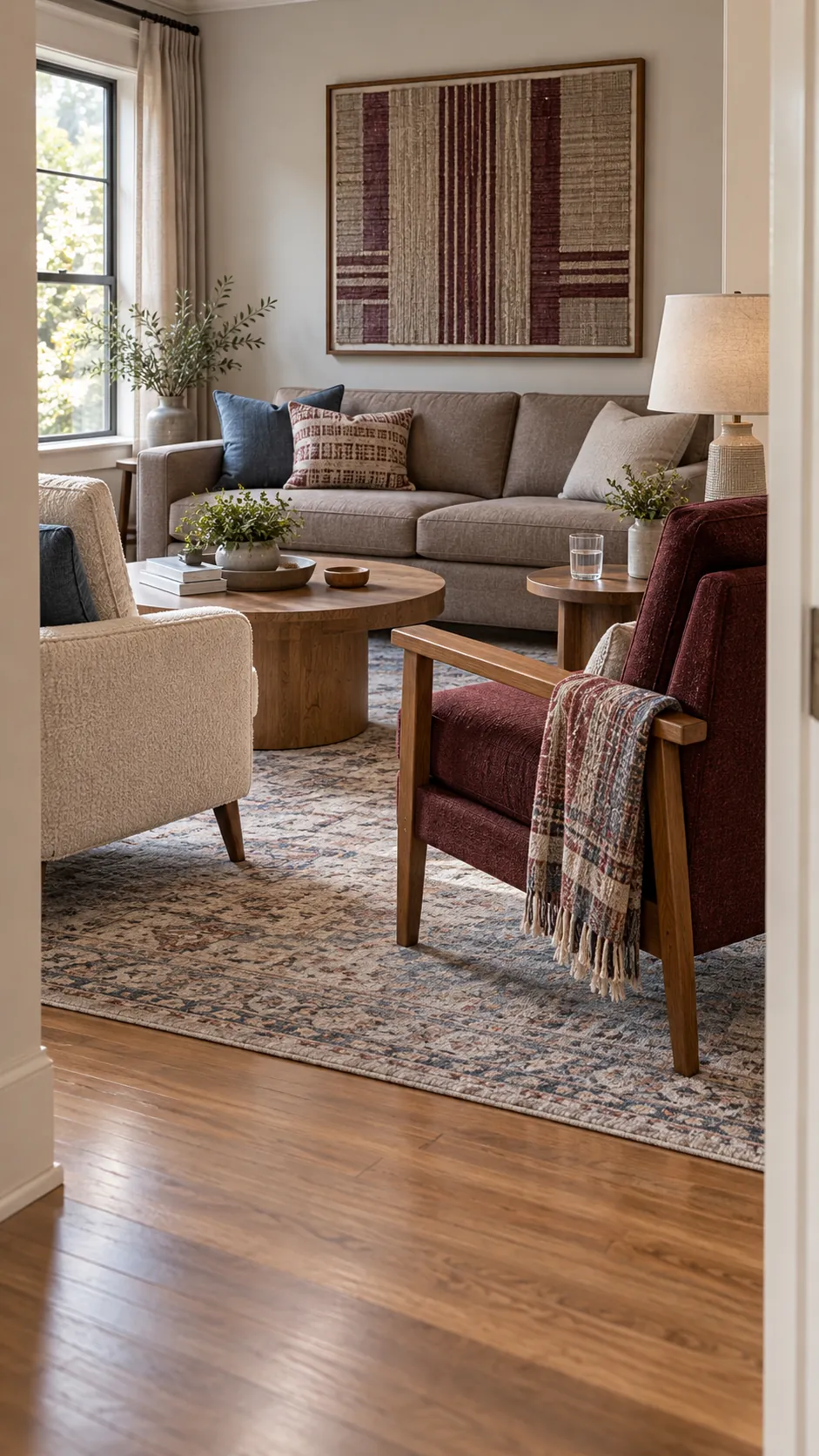
Divide a large room into two circles
A very large room becomes more social when it offers two complete groups instead of one distant ring. Use the main sofa arrangement for six or more people and a nearby pair of chairs for quieter conversation. Repeat a color or lamp finish between them so both circles belong to one room.
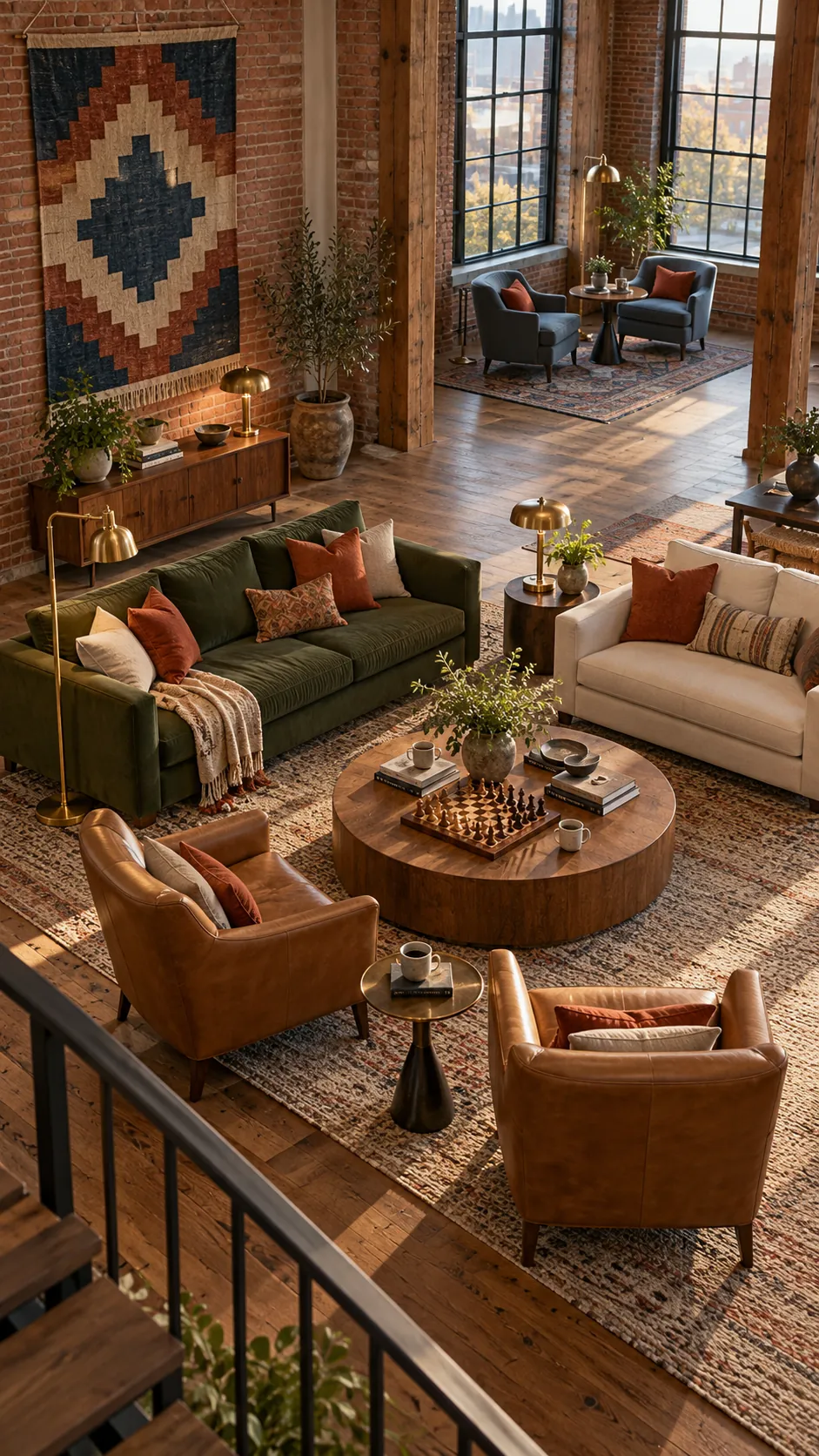
Pull floor cushions into family game time
Thick floor cushions give children and flexible adults a comfortable place near a low table. Store them in a basket when the central floor needs to stay clear. Use washable covers and enough padding to separate knees and hips from a hard surface during games or long stories.
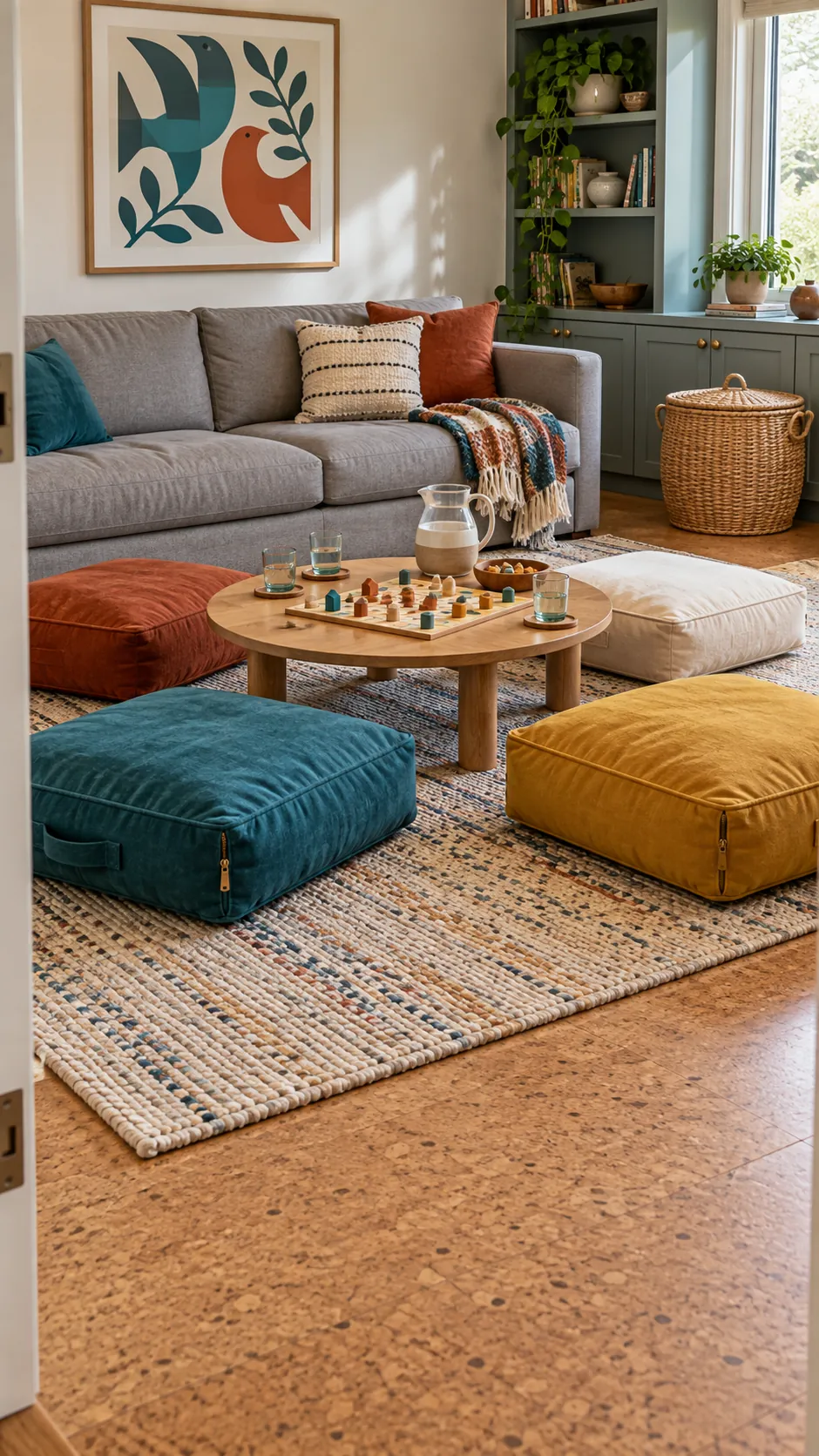
Choose chairs that are easy to leave
Older relatives and guests with limited mobility often prefer a firm seat, supportive back, and stable arms. Place at least one such chair near the room entrance so reaching it does not require a tight turn. Keep a side table close, and avoid a deep soft cushion that makes standing difficult.
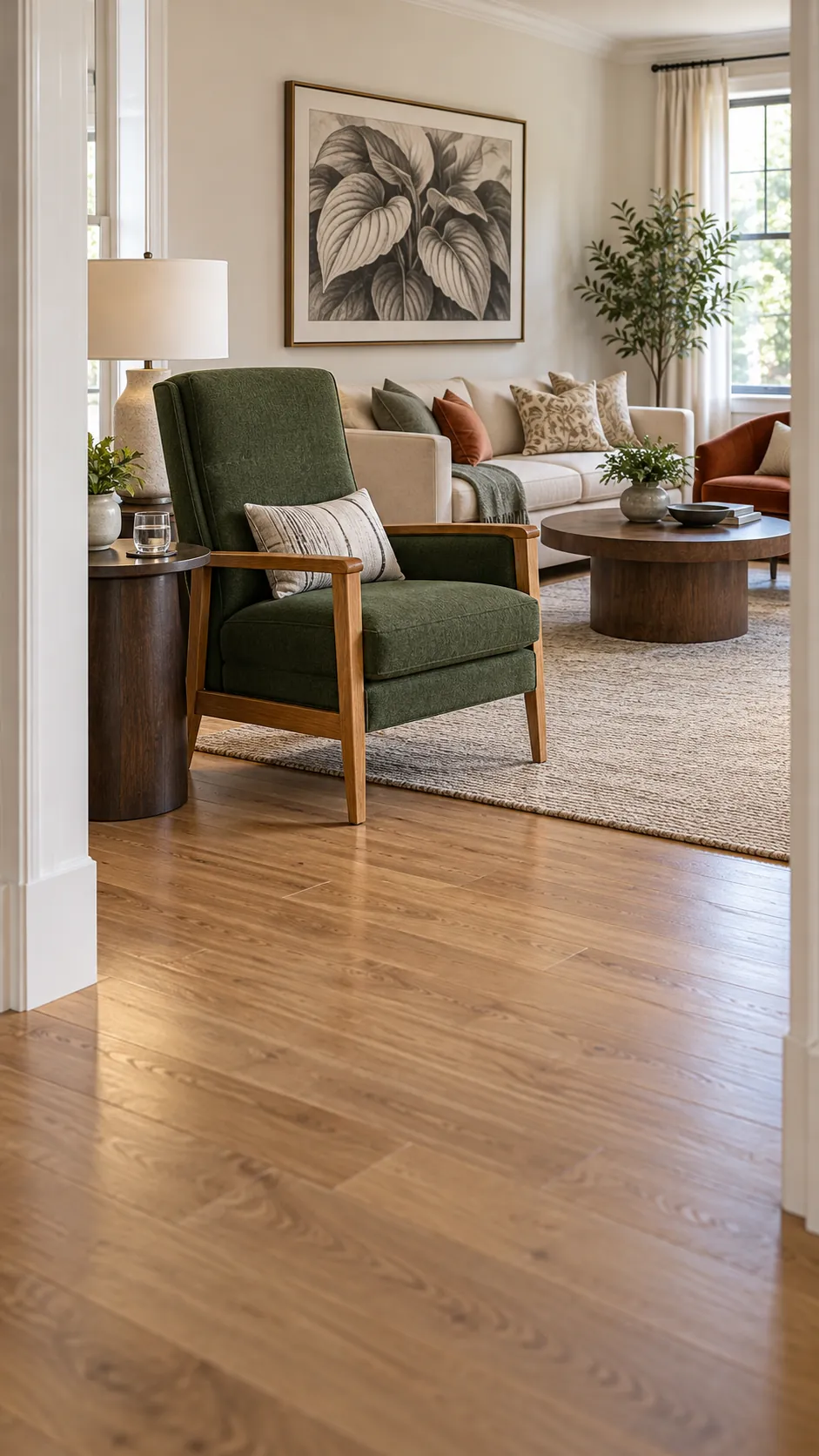
Place tables within every reach zone
Conversation feels easier when nobody must stand to set down a drink. Combine one central table with compact side tables where the main surface is too far away. Use rounded edges along busy paths and keep each table level with or slightly below the nearest arm.
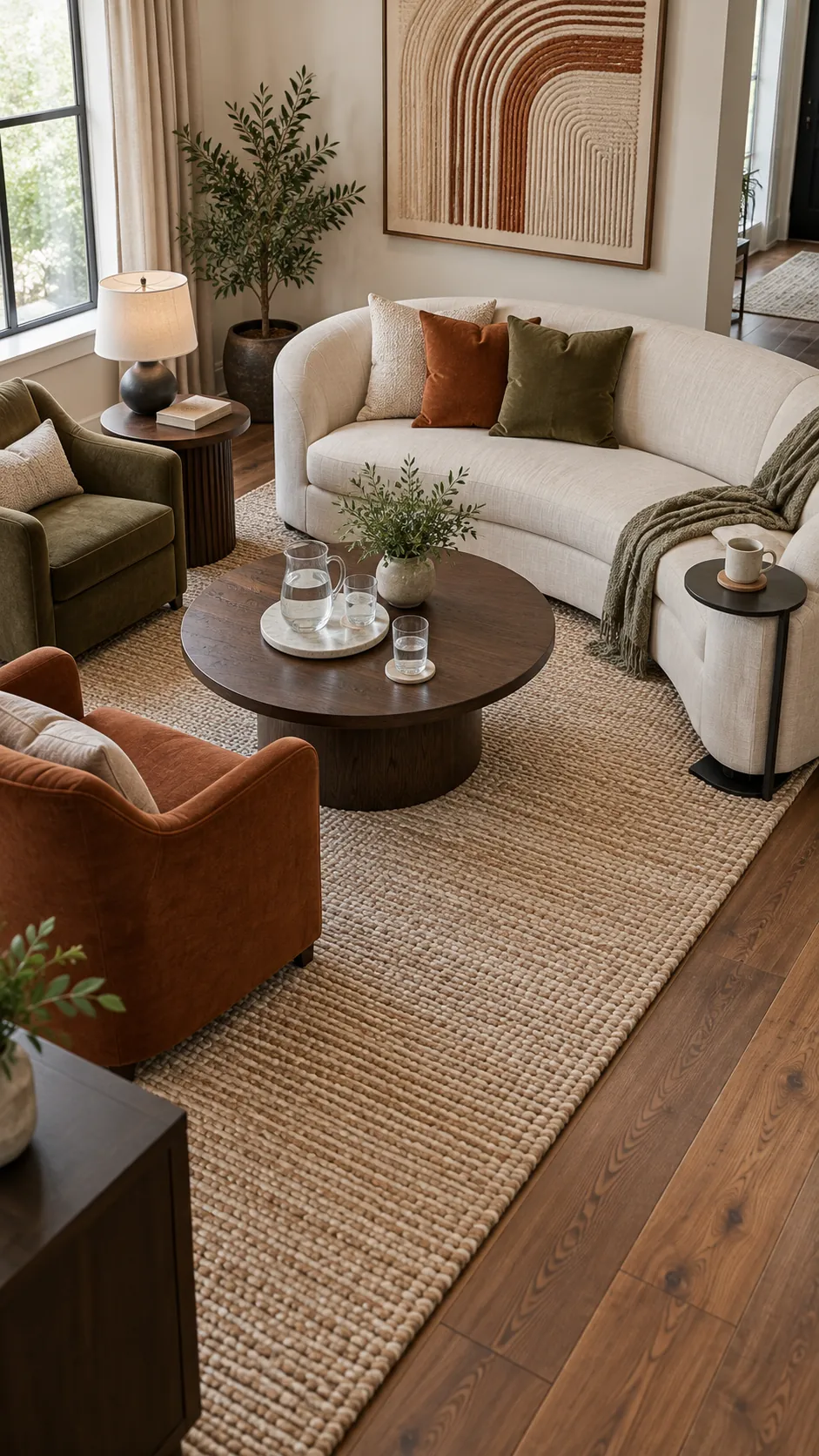
Keep one flexible space in the circle
Leave one open position where a dining chair, wheelchair, or extra stool can join the gathering. The gap should connect directly to a clear route rather than sit behind a coffee table. This small choice lets the room adapt to changing family needs without making any person feel added as an afterthought.