A bathroom vanity can have plenty of drawers and still feel impossible to use. The usual problem is not a lack of containers; it is that makeup, towels, backups, and everyday toiletries are competing for the same easy-to-reach space. People describing this problem online repeatedly mention packed organizers, bottles lost around plumbing, and counters that are too cluttered to wipe without moving everything.
The most reliable fix is to organize by frequency and routine. Daily items should move in one grab, weekly items can sit one layer farther back, and backups should not occupy prime space. These vanity storage ideas follow that rule while working around moisture, awkward pipes, shallow drawers, and limited bathroom storage.
Build a Lift-Out Morning Caddy
Group the products used every morning—cleanser, moisturizer, sunscreen, deodorant, and a small makeup edit—in one handled caddy. Store it under the sink or in a deep drawer, then lift the whole routine onto the counter. One movable unit clears the surface faster than ten individual bottles and makes a quick wipe realistic on busy mornings.
Choose a washable caddy with straight sides and no fabric lining. Leave a little empty space so products return easily instead of being wedged together. If two people share the bathroom vanity, give each person a separate caddy rather than dividing one crowded organizer.
Create a Separate Evening Routine Bin
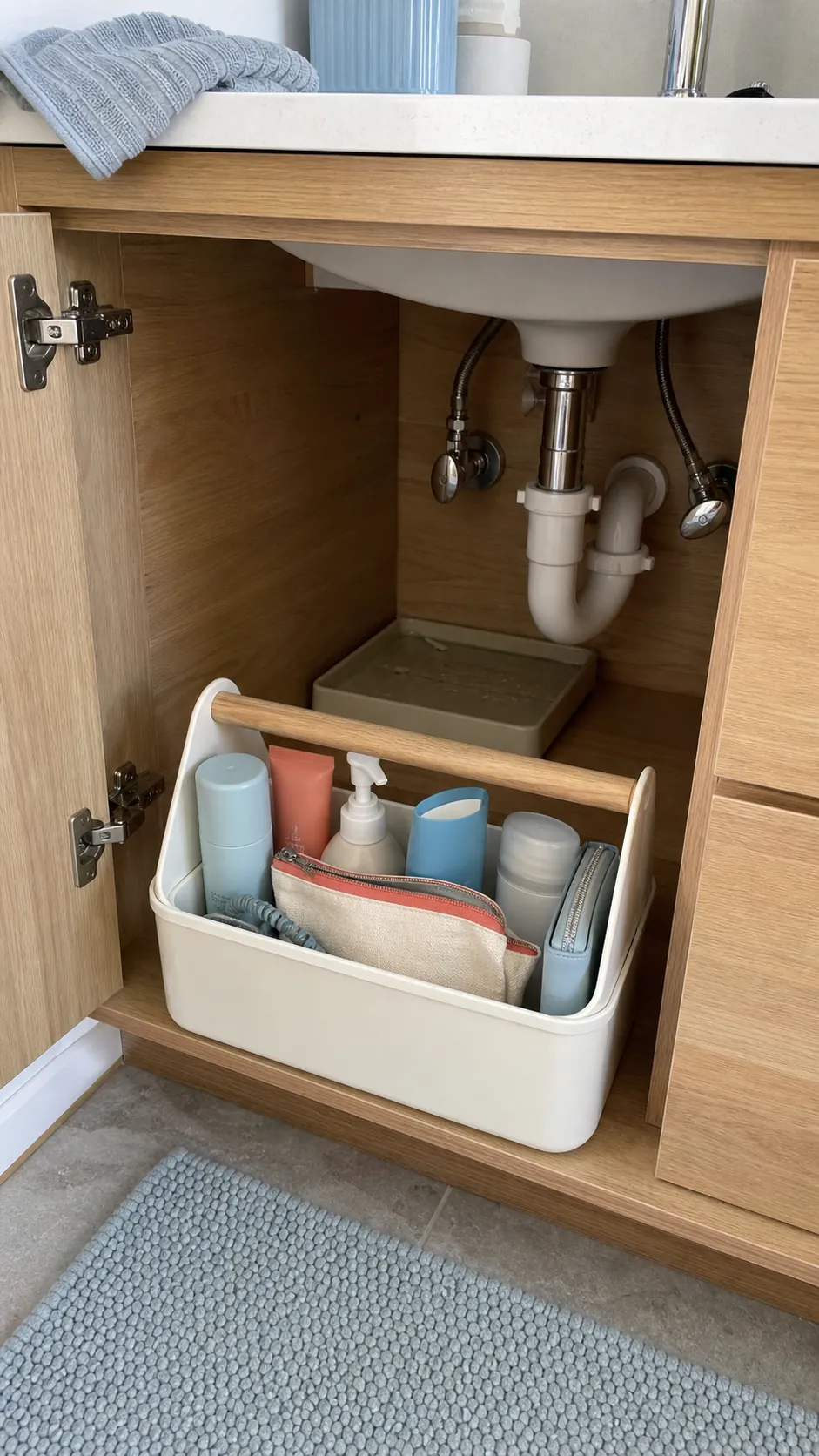
A second caddy for makeup remover, treatment products, night cream, dental care, and retainers prevents the morning basket from becoming a catchall. This AM-and-PM split answers a common frustration: products may technically fit, but reaching the right one is tedious because every routine is mixed together.
Keep the evening bin close to the sink and place leak-prone bottles in a shallow removable tray. The routine becomes easier to complete, while spills stay contained. Storage should shorten the sequence of getting ready, not simply hide clutter behind a door.
Fit Modular Trays Into Shallow Drawers
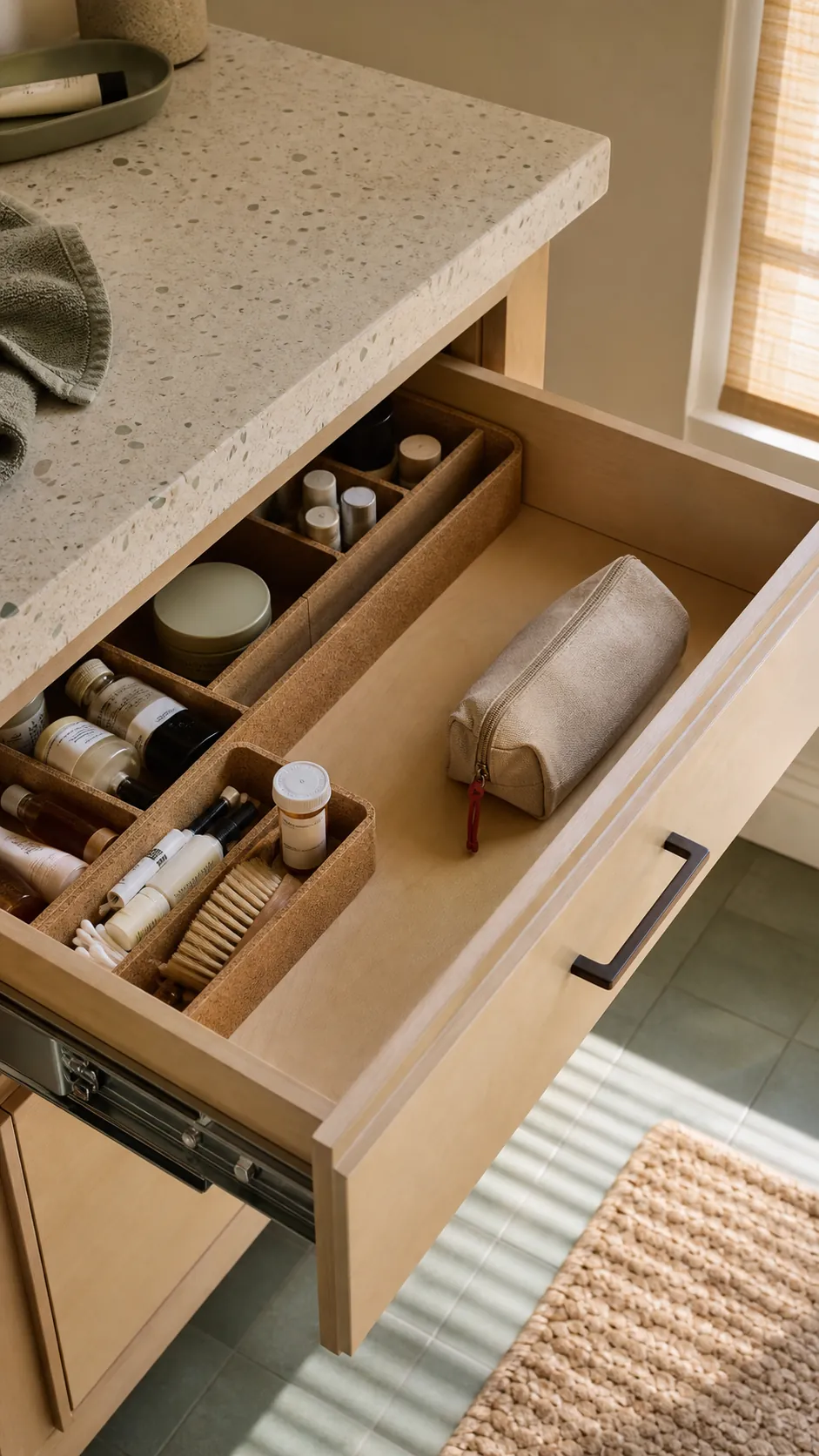
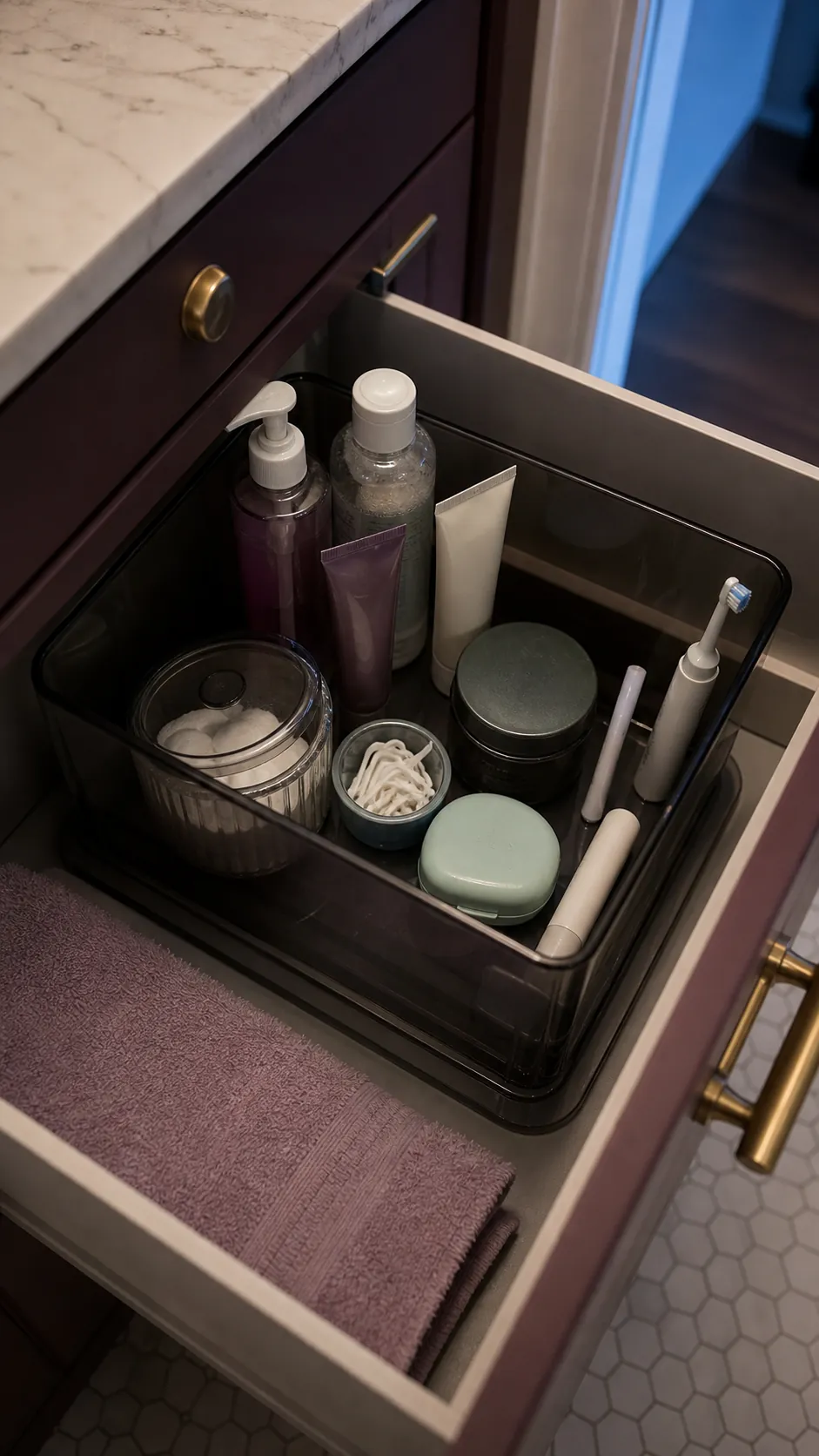
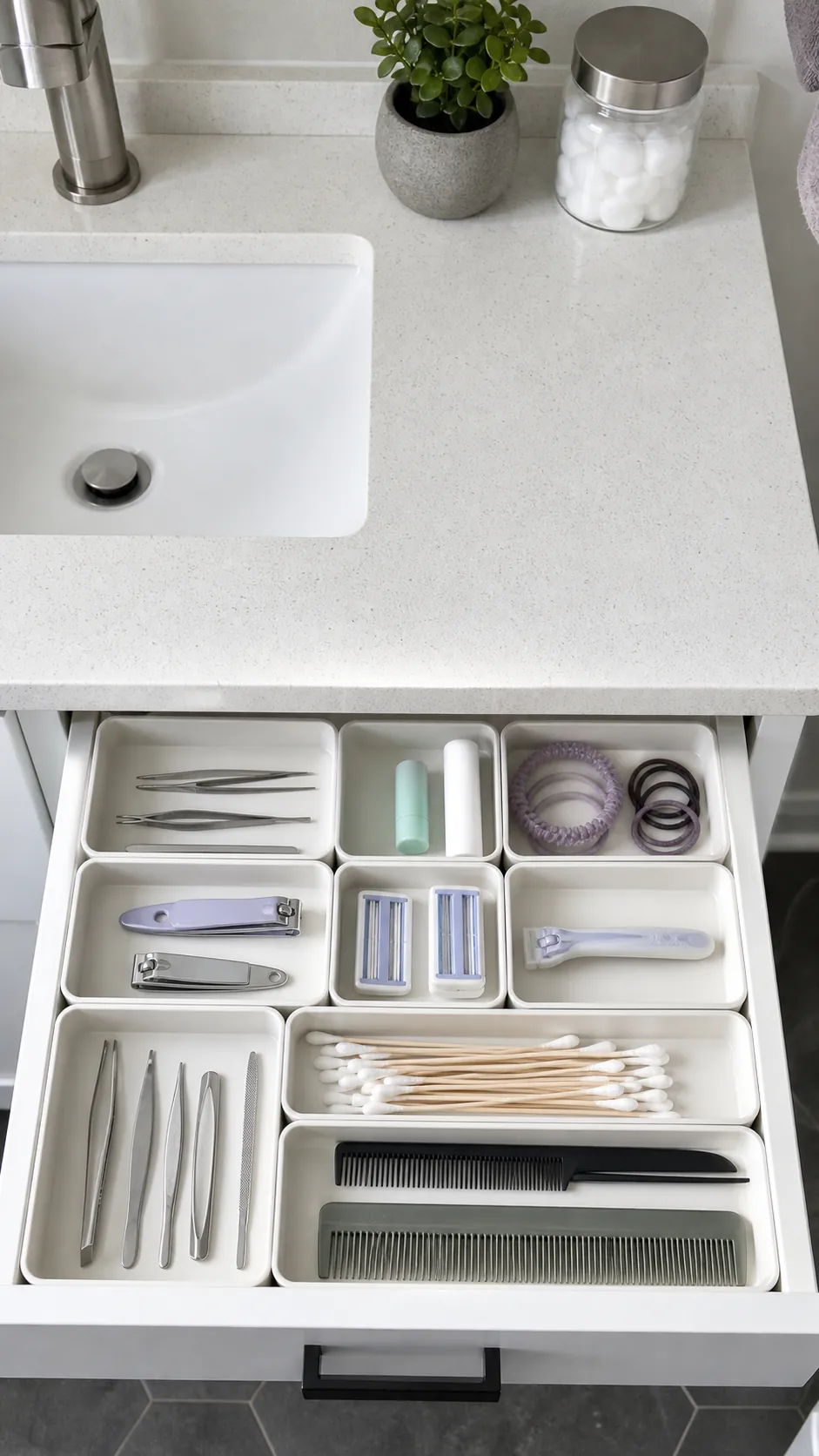
Shallow drawers are best for small daily items: lip balm, tweezers, hair ties, razors, cotton swabs, and the makeup used most often. Measure the drawer’s internal width, depth, and height before buying inserts. A beautiful tray that steals half an inch at every edge can waste more space than it organizes.
Combine several small trays instead of committing to one molded insert. That lets you change the layout when products change. Keep each compartment loose enough to remove an item without lifting its neighbors, and use the front row for the things reached for with wet or hurried hands.
Stand Makeup Upright by Category
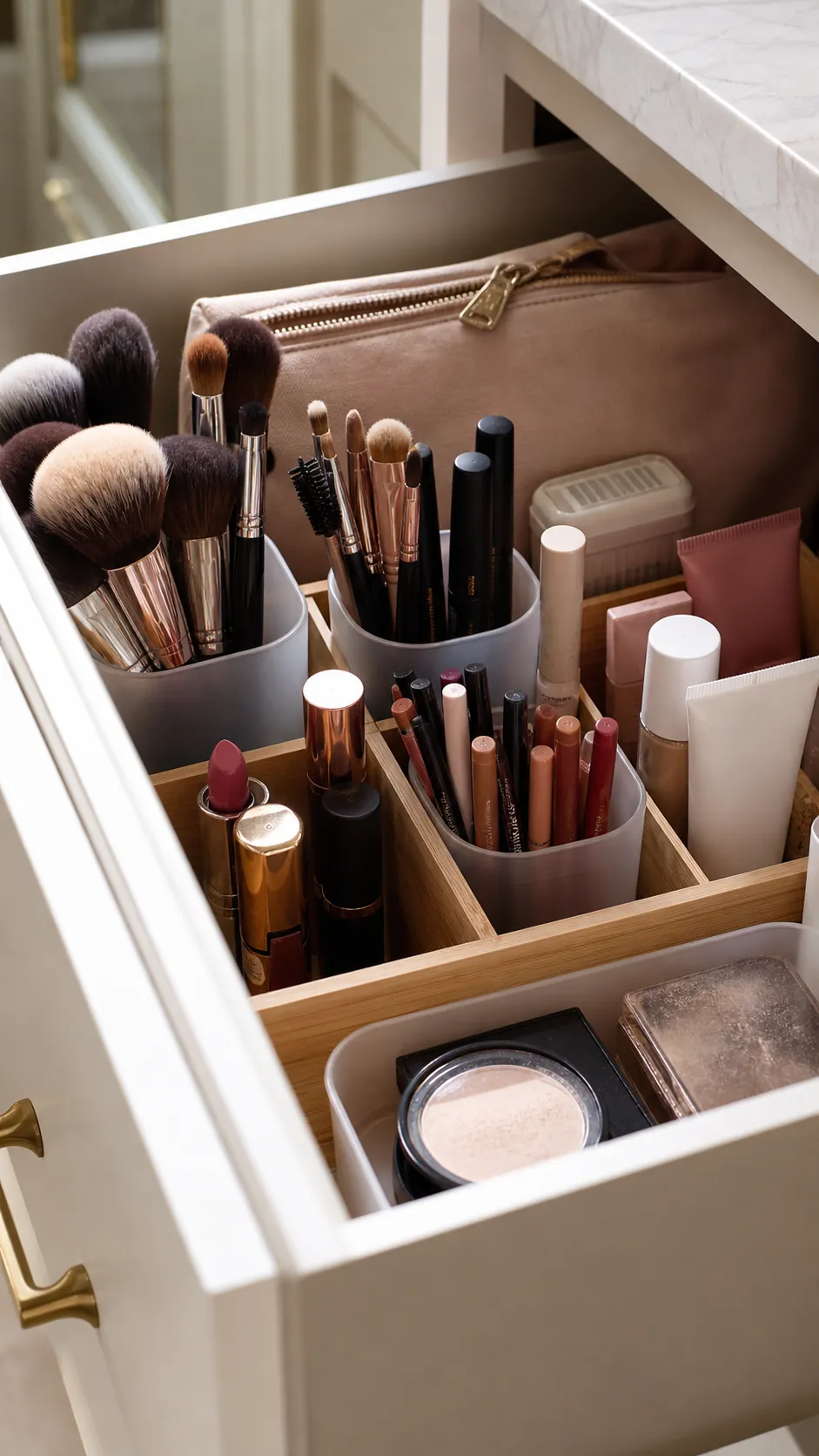
Makeup storage works better when products are visible from above. Stand brushes, pencils, mascara, and slim tubes upright in short divided cups inside a drawer or pull-out bin. Keep complexion products together, eye products together, and tools together so a routine does not require searching through one packed acrylic tower.
Use a small rotating selection for everyday makeup and move occasional palettes or false lashes to a drier bedroom drawer if bathroom humidity is high. Accessibility improves when the daily edit is intentionally smaller; it does not require displaying the entire collection.
Wrap Storage Around the Sink Plumbing
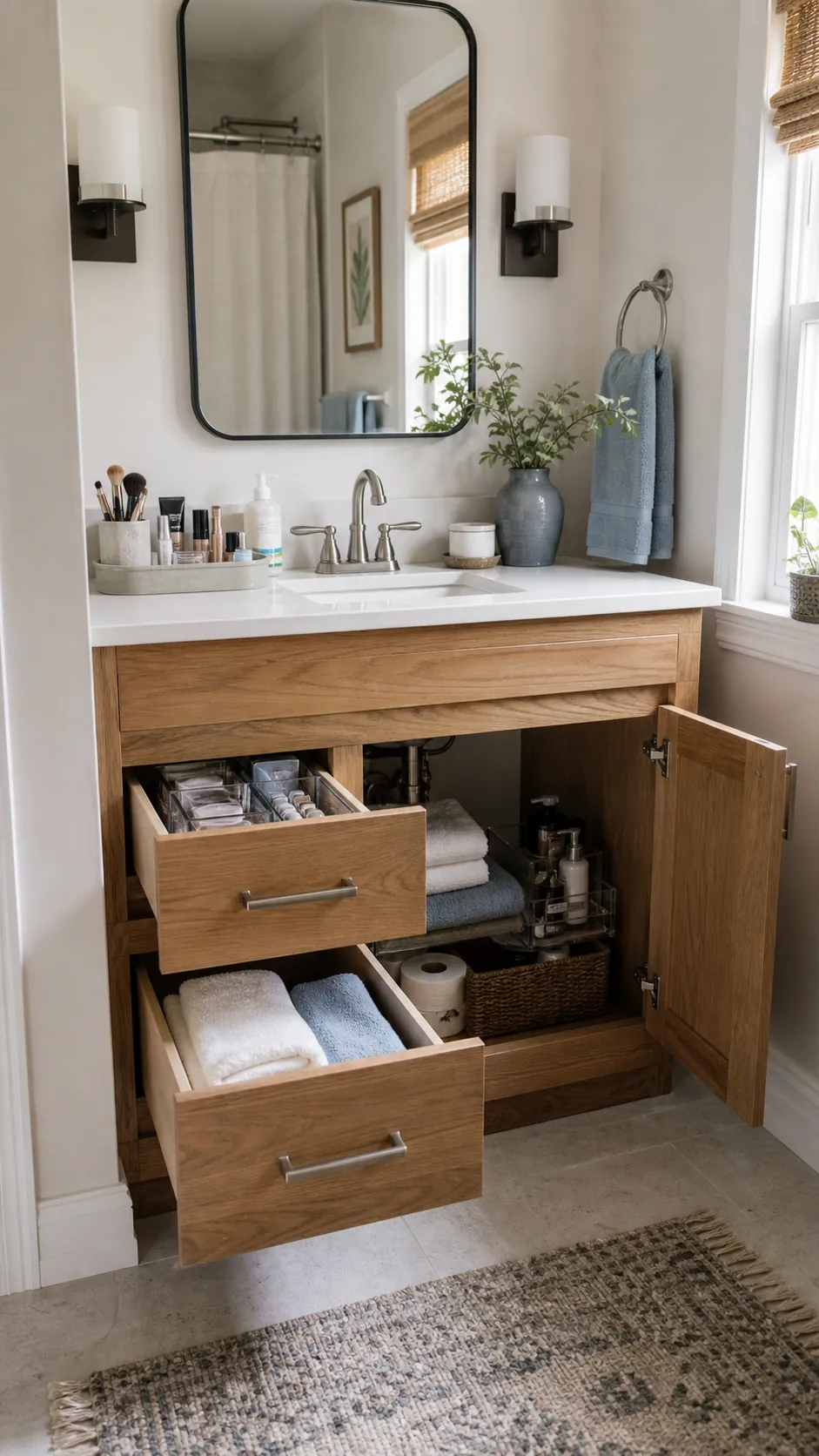
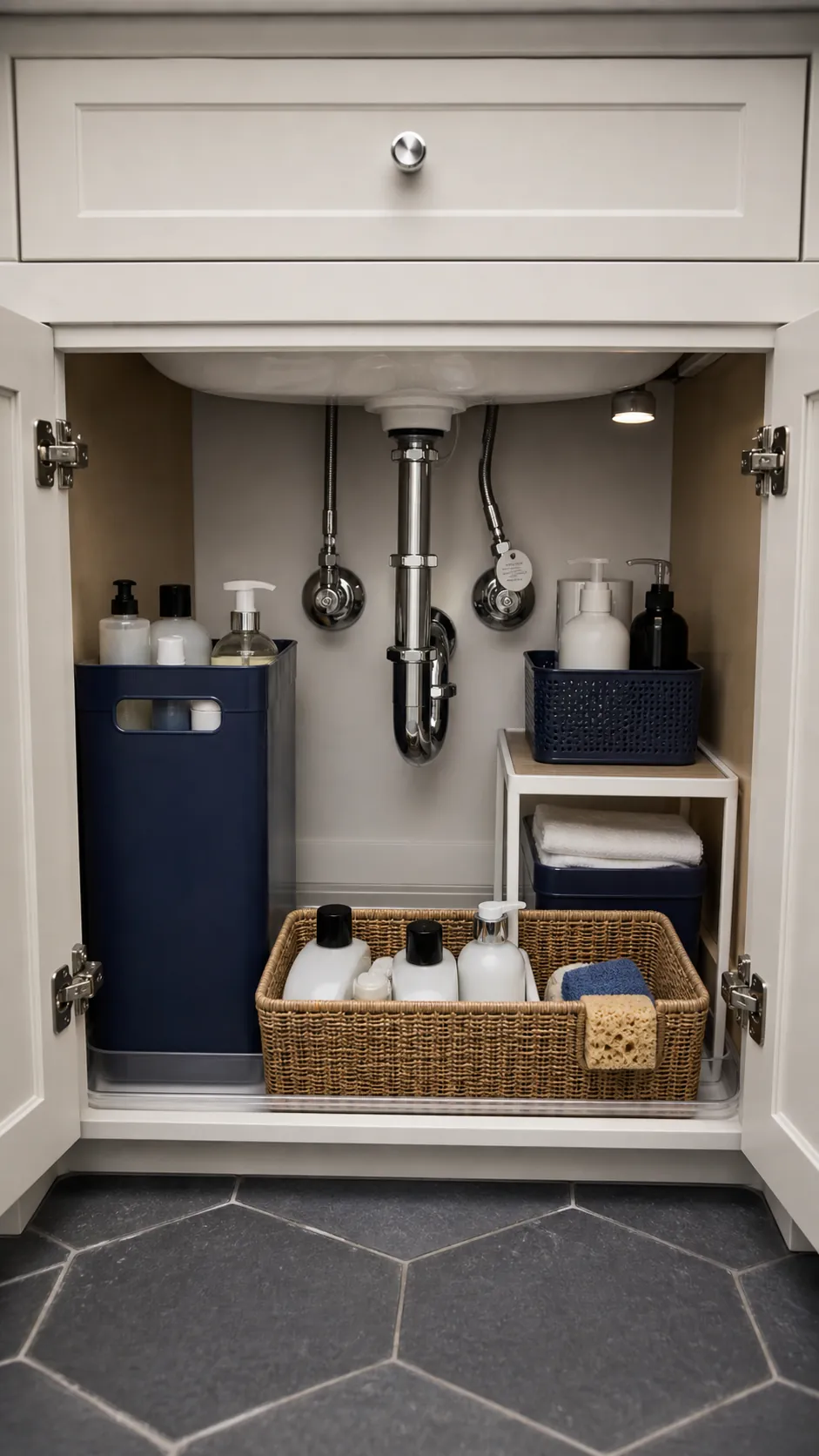
The empty space around a P-trap is rarely one useful rectangle. Treat it as three zones: a narrow side for tall bottles, a low front zone for a pull-out bin, and a raised back zone for less-used supplies. Stackable drawers or shelf risers can use vertical space without blocking the shutoff valves.
Keep a clear path to the plumbing and use bins that lift out quickly if there is a leak. Avoid storing paper goods directly on the cabinet floor; a washable tray gives early warning of drips. Heavy refills belong low, while light daily items can sit on the riser.
Use Cabinet Doors for Slim Essentials
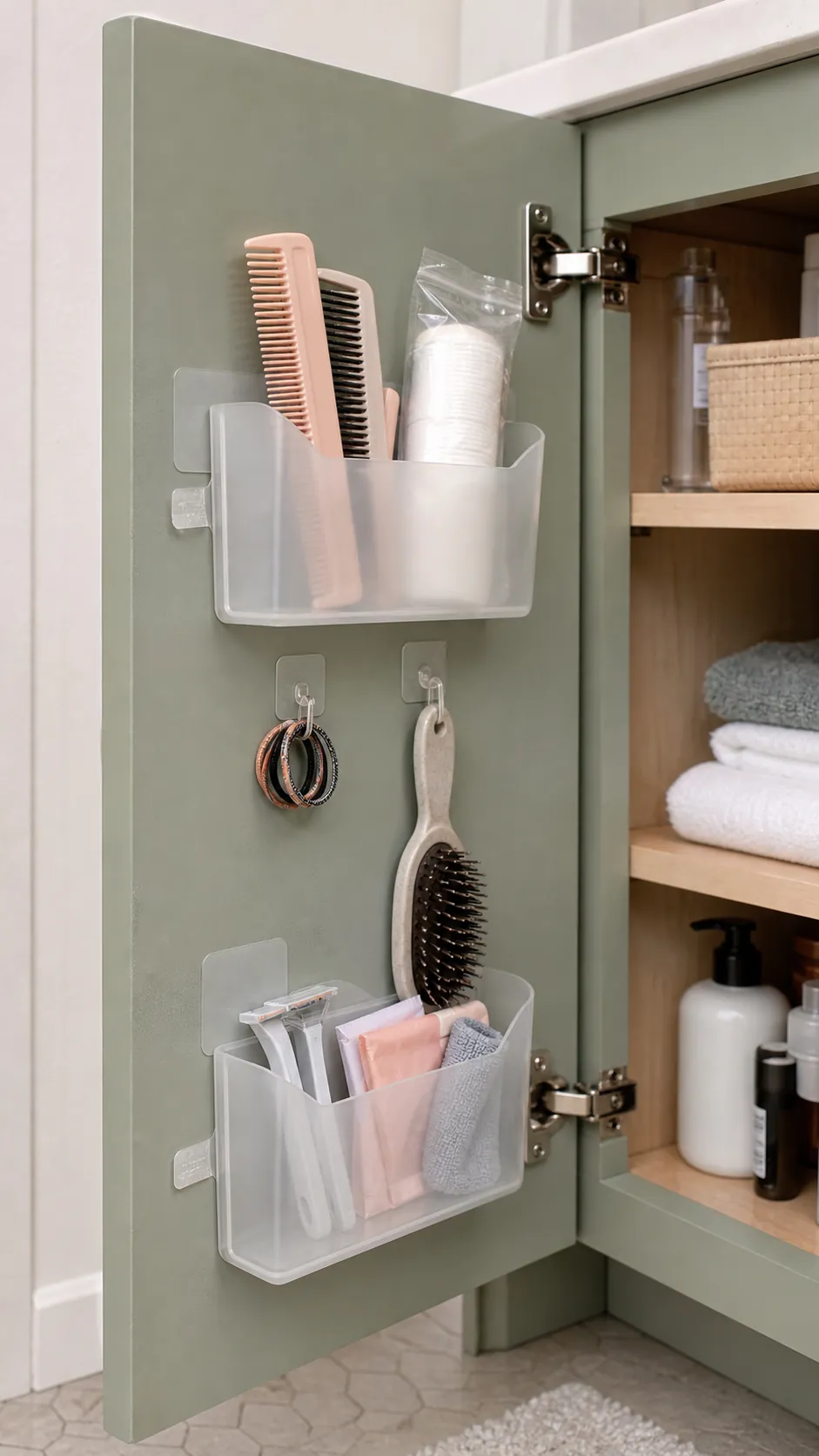
The inside of a vanity door can hold light, narrow items that otherwise disappear in drawers. Adhesive bins suit combs, spare razors, cotton pads, or cleaning cloths; hooks can hold hairbrushes and headbands. Check the door’s closing path first so the organizer does not collide with shelves or plumbing.
Keep weight modest and follow the adhesive’s curing time, especially in a humid bathroom. Renters can choose removable strips, but should still test them on an inconspicuous surface. Door storage is most effective for one-hand items with fixed homes, not a loose assortment.
Give Hot Hair Tools a Safe Zone
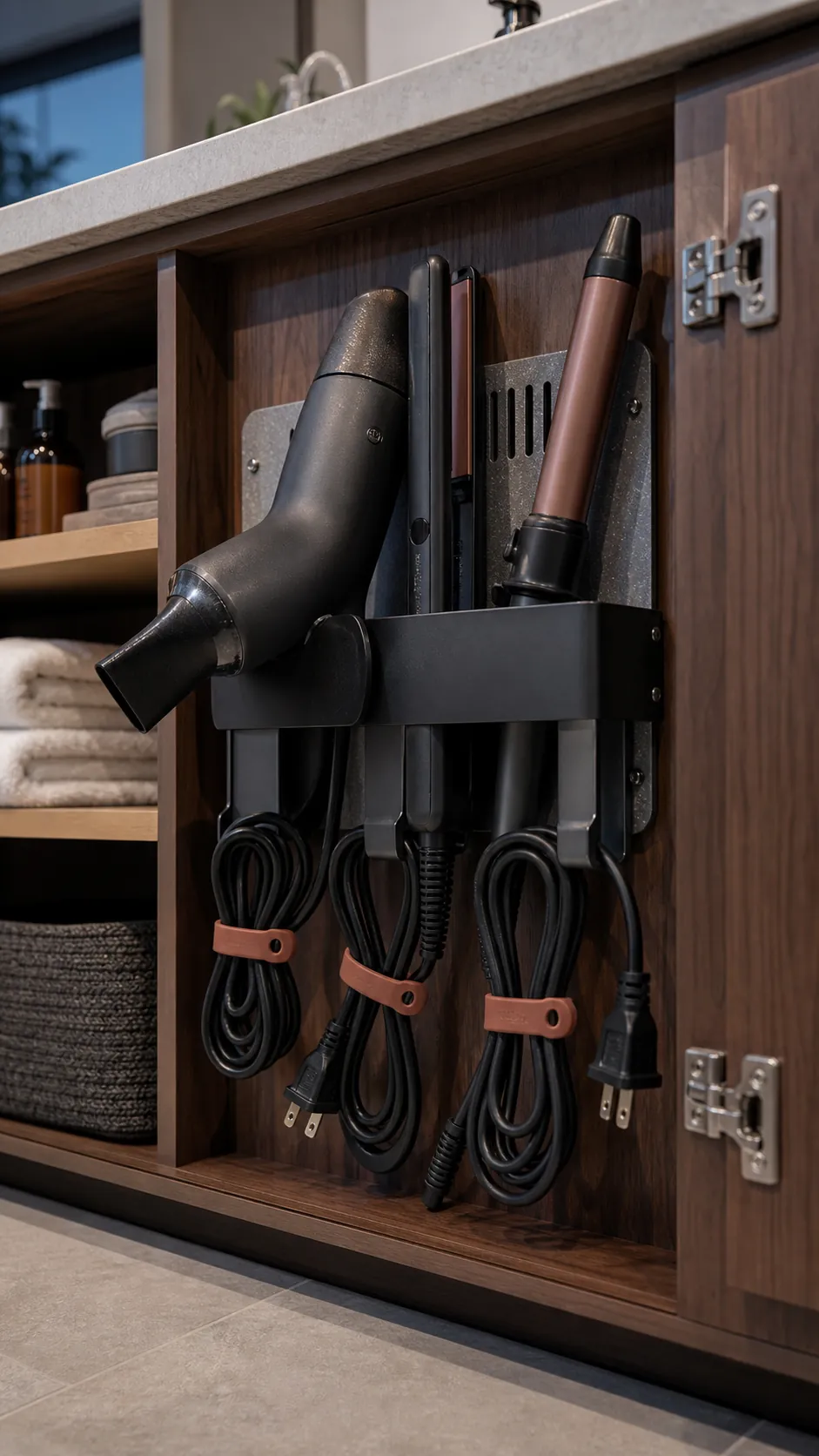
A heat-resistant holder mounted inside the cabinet can corral a dryer, straightener, or curling iron and prevent cords from knotting around toiletries. Put it on the side farthest from water lines and confirm that hot tools can cool without touching plastic bottles, towels, or the cabinet finish.
Wind each cord loosely and secure it with a reusable strap. Do not close a still-hot tool into an unventilated cabinet unless the holder is specifically rated for that use. The goal is a safe landing place that keeps bulky shapes out of the daily-item drawer.
Roll Hand Towels Into a Deep Drawer
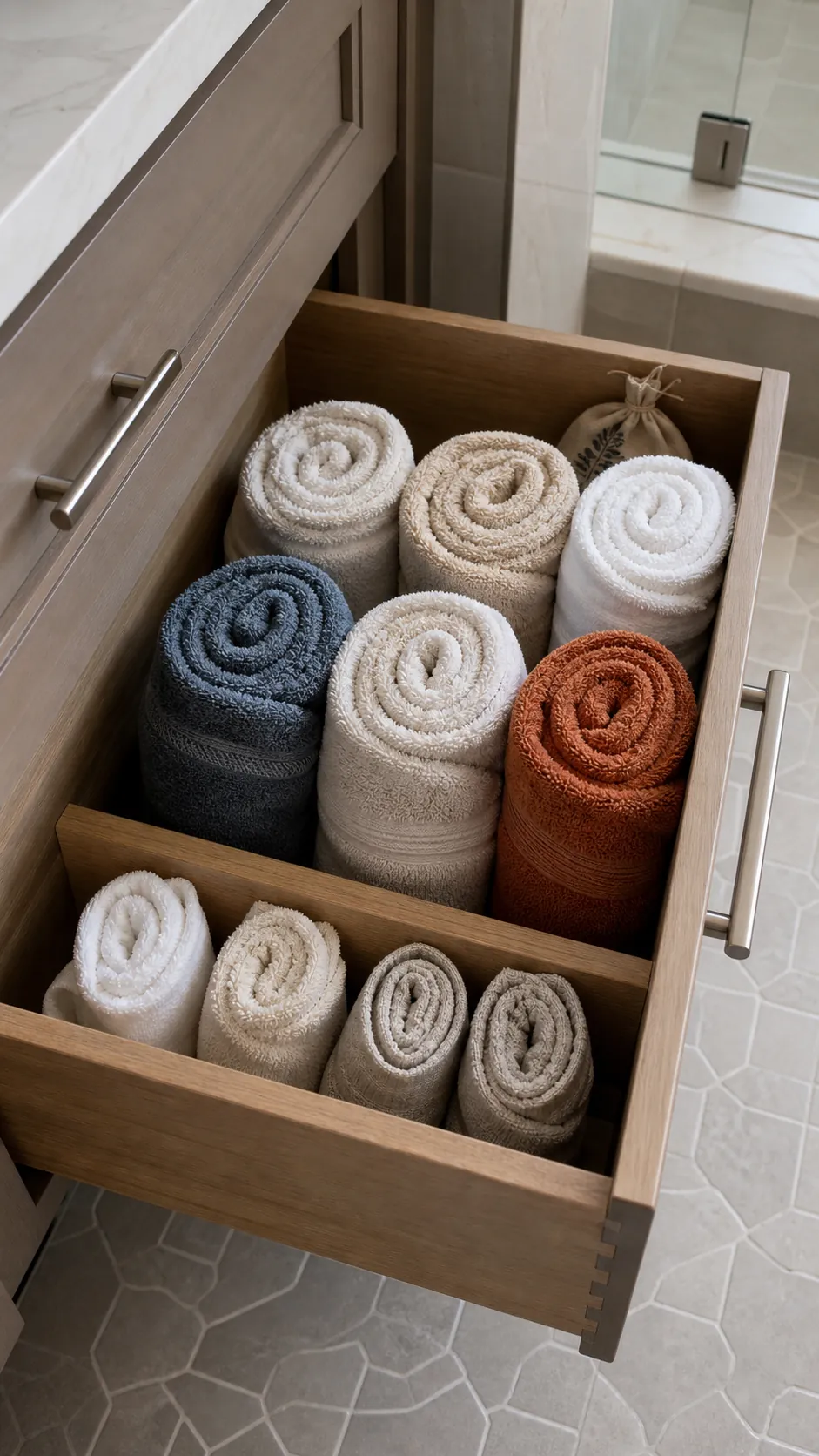
Rolling works well when a vanity has one deep, wide drawer but no linen closet. Arrange hand towels and washcloths on edge so every piece remains visible. Separate face cloths from hand towels with a divider, and keep damp textiles out of the drawer until fully dry.
Store only the working rotation here—usually enough for the next several changes. Extra bath towels can live outside the vanity, where their bulk does not crowd products used at the sink. This keeps towel storage convenient without sacrificing the entire cabinet.
Corral Countertop Items on One Washable Tray
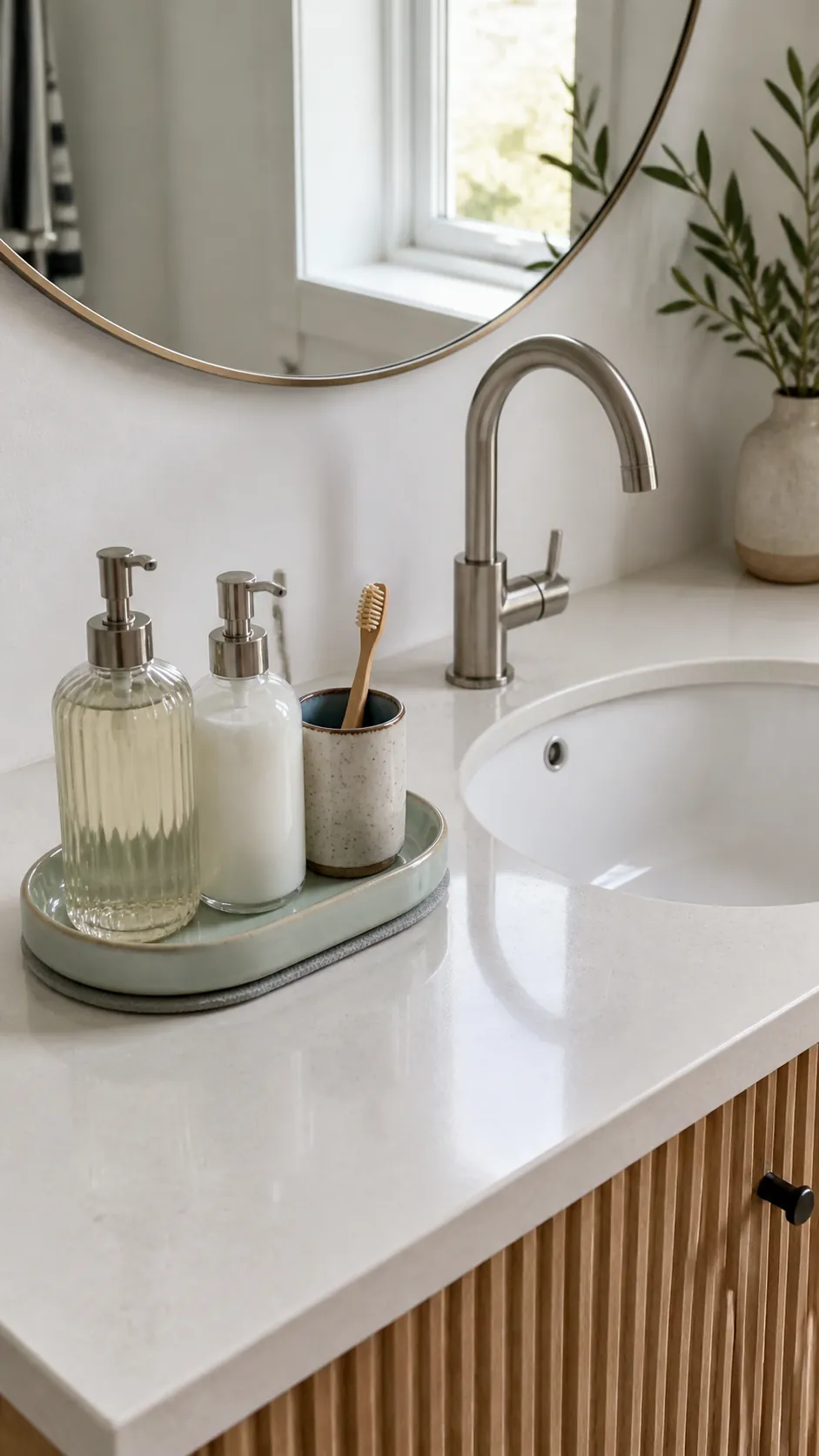
If certain daily items must remain visible, contain them on one small tray rather than spreading them around the basin. Hand soap, lotion, and perhaps a toothbrush cup are enough for most counters. Pick a tray that can be lifted with one hand and washed when residue gathers.
This is not just vanity styling. A single movable footprint makes the countertop faster to wipe and keeps water from creeping under multiple bottles. Leave clear space around the sink edge, and resist enlarging the tray when new products appear; move lower-frequency items into a routine bin instead.
Add a Narrow Pull-Out Beside the Vanity
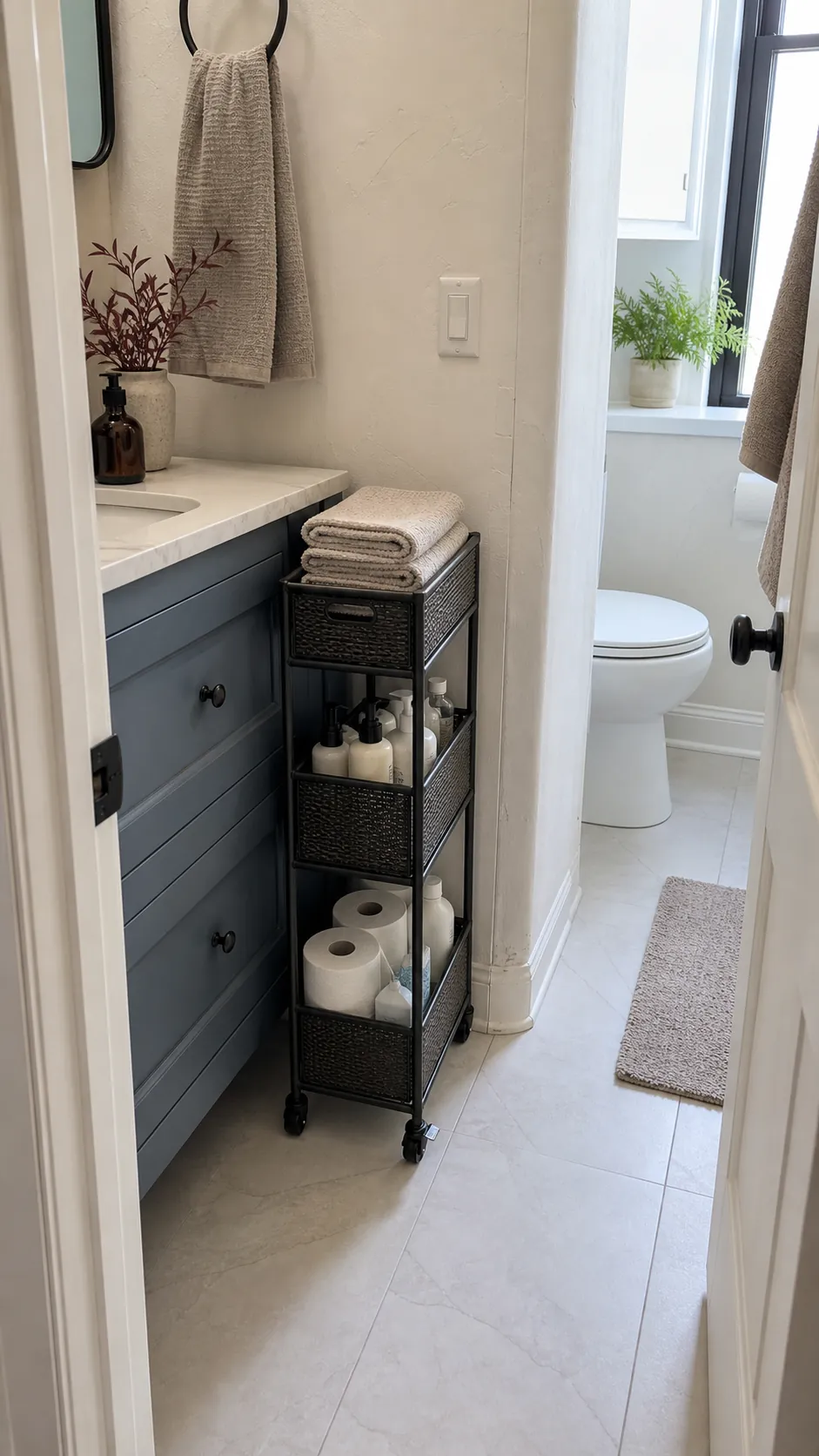
A slim rolling cart can turn a small gap between the vanity and wall into storage for toilet paper, spare toiletries, or folded hand towels. Choose a unit that clears baseboards and can roll fully out for cleaning. Opaque or woven-look sides reduce visual clutter while labels keep categories obvious.
Reserve the top tier for frequently used items, the middle for weekly supplies, and the bottom for heavier refills. A cart should not pinch access to the toilet or doorway. If it must be moved every time a drawer opens, it is adding friction rather than solving it.
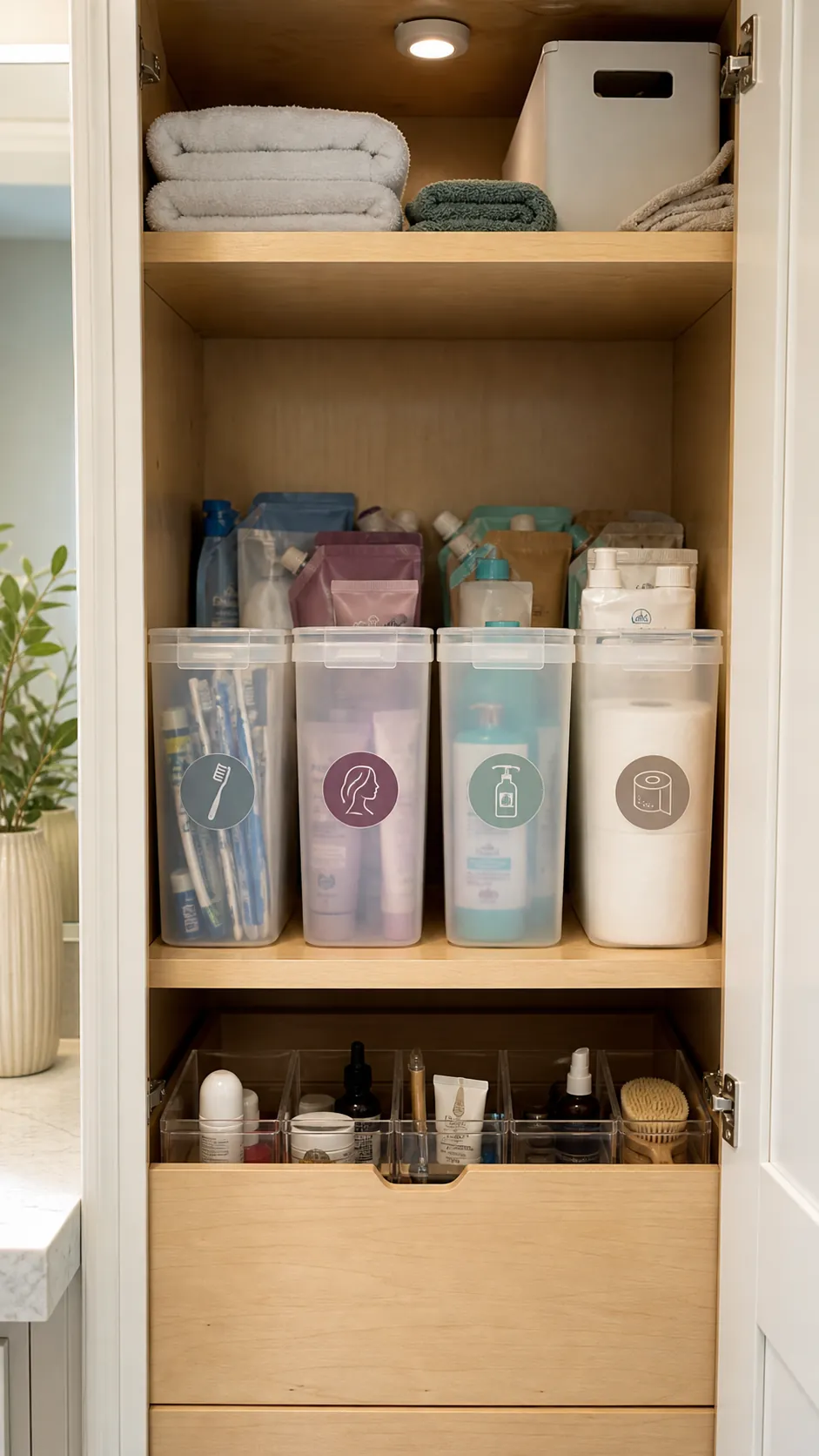
Decant Backups Into Labeled Bins
Backstock becomes a problem when half-used and unopened items mix with daily supplies. Give refills a labeled bin—oral care, hair care, body care, and paper goods—then use the oldest item first. Keep only what fits comfortably and check the bins before shopping.
Do not decant cosmetics or liquids merely for appearance; original packaging carries ingredients, dates, and safe-use information. Here, “decant” means moving packaged backups into category bins. One open product plus one sensible replacement is often enough for a small bathroom.
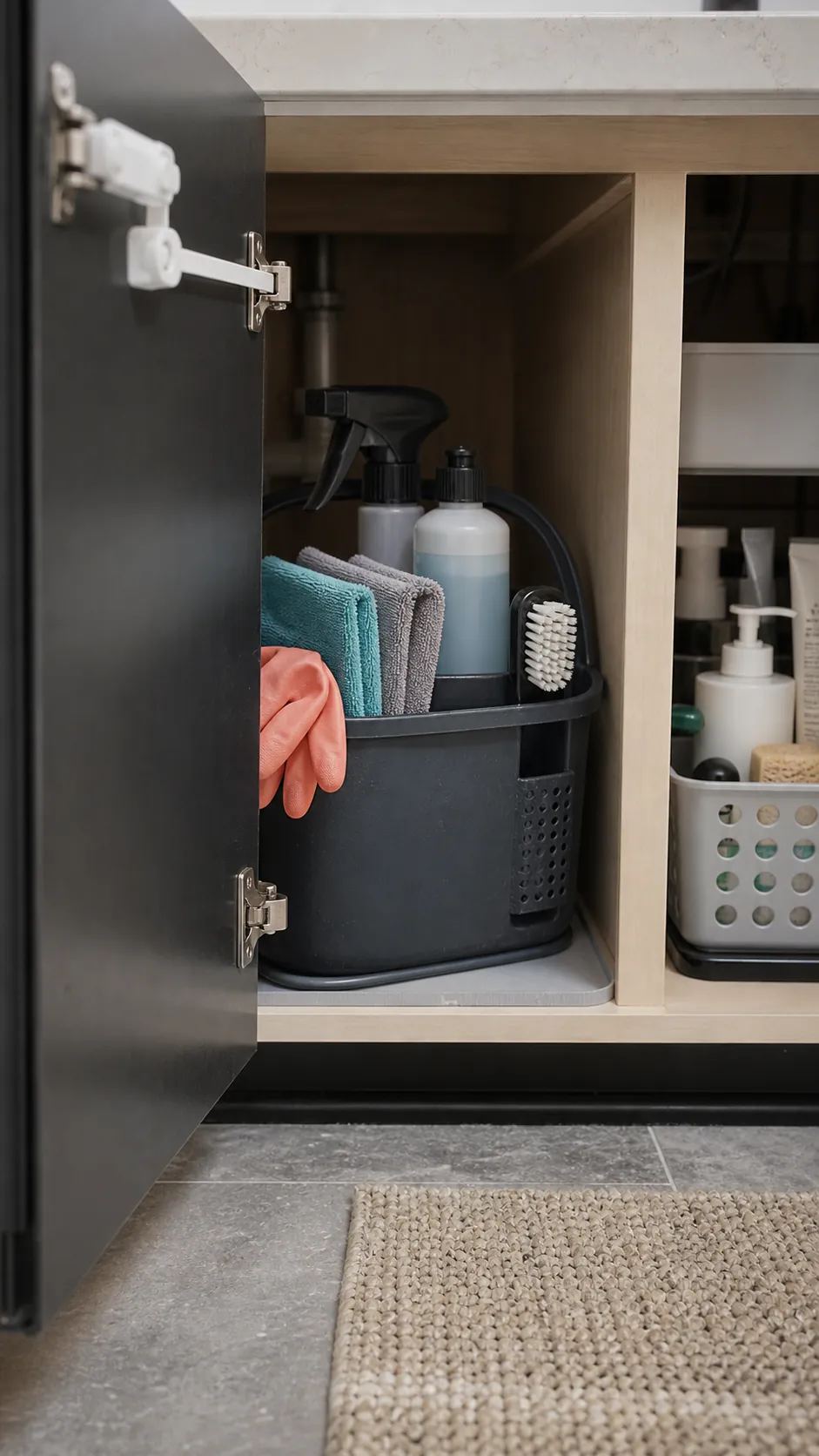
Keep Cleaning Supplies in a Grab Bin
A compact cleaning bin makes it easier to wipe toothpaste, makeup dust, and standing water before they harden. Store a bathroom-safe cleaner, microfiber cloths, and a small brush together, away from children and incompatible products. Place the bin low and separate from personal-care supplies.
With the counter already limited to one tray, a quick clean becomes a short sequence: lift the tray, wipe the surface and basin, dry the wet edge, and return the tray. That low-friction routine is the strongest reason to organize the vanity in the first place.
Leave One Flexible Space for Real Life
Perfectly filled organizers look efficient on day one but fail when a new prescription, travel bag, guest towel, or seasonal product arrives. Leave one small drawer section or bin partly empty. That buffer prevents temporary items from landing on the counter and starting a new clutter pile.
The best bathroom organization is not the arrangement with the most containers. It is the one that makes the daily routine easy, keeps towels dry, protects products from humidity, preserves access to plumbing, and lets the counter be cleaned without a project. When every prime spot reflects how often an item is used, the vanity stays workable even as daily life changes.