
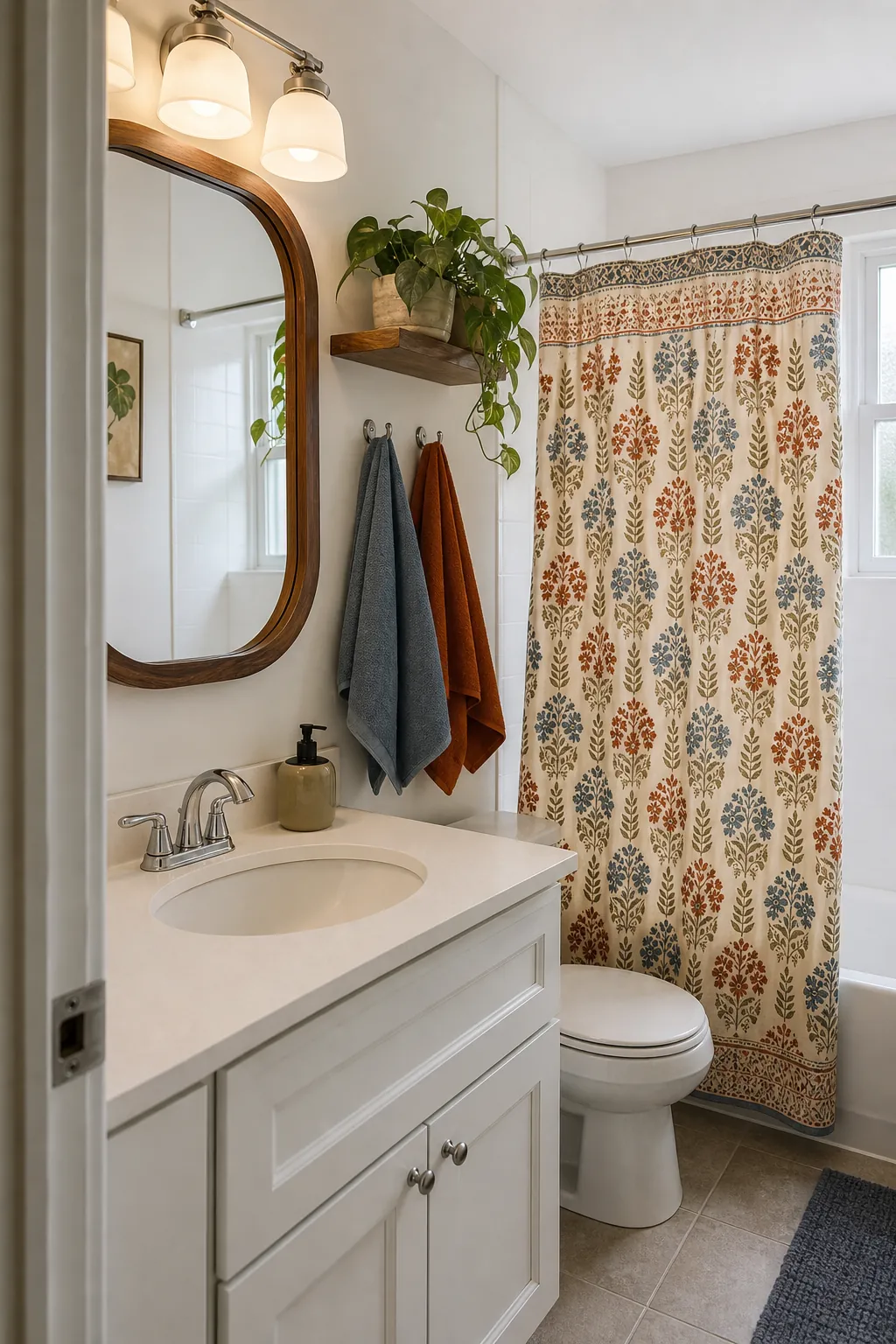
A basic bathroom is not failing because it has white tile, a plain vanity, or builder-grade chrome. It feels anonymous because every visible choice is either default or disconnected. The fix is not to cover every surface. It is to make a few decisions that clearly belong to the same person.
That is encouraging news for renters and anyone postponing a remodel. A shower curtain, mirror, towel, cabinet, or paint color can carry more personality than expensive tile when it is chosen with conviction. The room needs a point of view, not a theme.
Choose One Thing That Tells You What the Room Is About
Start with an object you already like enough to keep: a patterned towel, a piece of art, a hand-thrown cup, or a colorful shower curtain. Pull two main colors and one small accent from it. One color should lead, one should support, and the third should appear sparingly. This is more reliable than buying a matching bathroom set because the anchor contains a relationship between colors, not just a single hue.
Use that palette on practical objects first. Towels, a bath mat, soap dispenser, storage pouch, and plant pot already need to be in the room. When those pieces repeat a controlled color story, the bathroom looks intentional without gaining extra clutter.
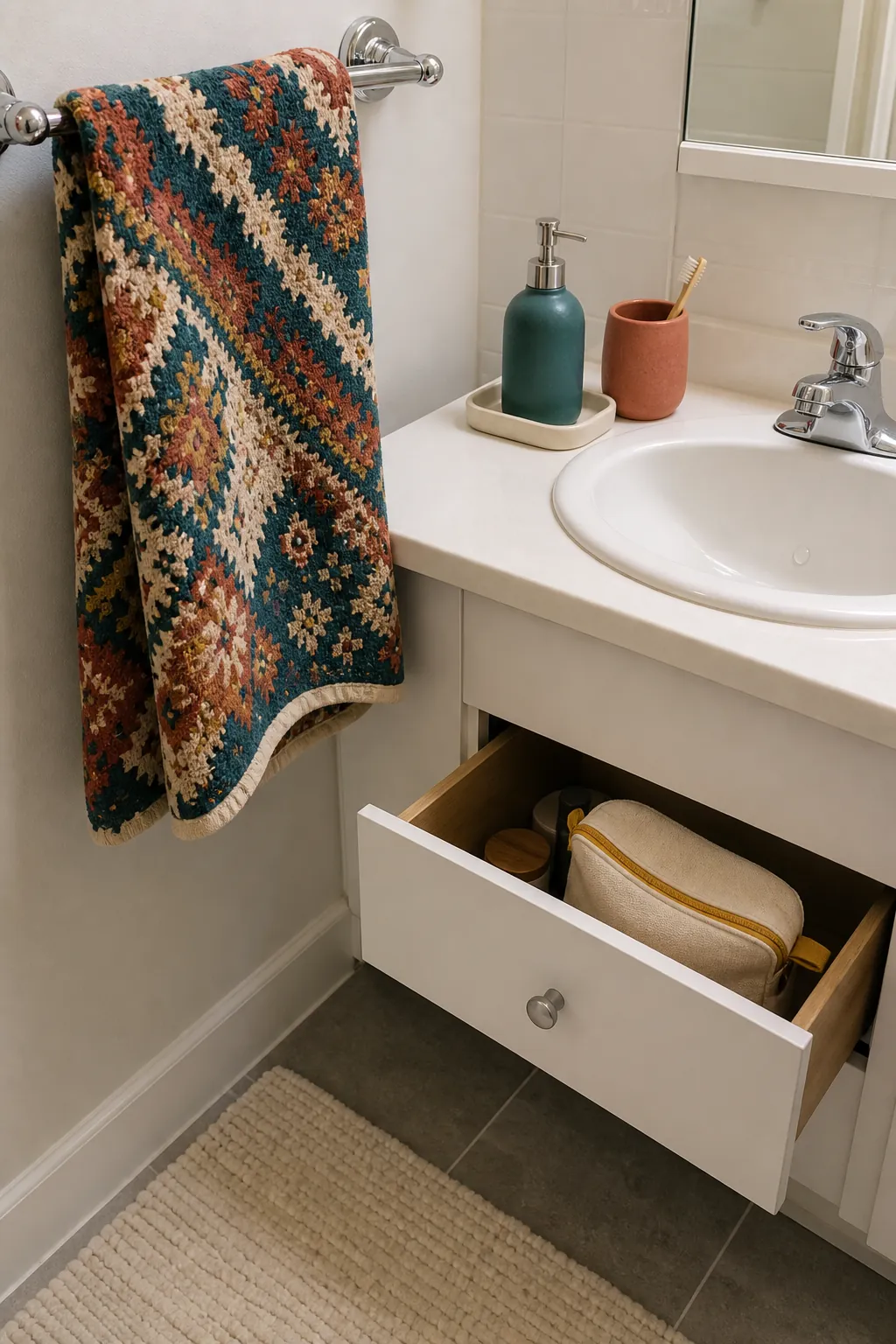
Do not force a color you love to fight the room. Existing tile, countertop, floor, and metal finish count as part of the palette. A cold gray floor may need saturated blue, plum, cognac, or leafy green rather than another pale gray. Old colored tile can become the room’s best feature when new accents repeat or complement it instead of trying to disguise it.
Let the Shower Curtain Be the Largest Piece of Art
In a small bathroom, the shower curtain may be the biggest uninterrupted surface. Treat it accordingly. A block print, broad stripe, botanical, or abstract pattern can establish the entire room in one reversible move. If the curtain is bold, keep the bath mat and towels mostly solid. If the curtain is solid, let art or paint carry the pattern.
Fabric matters. A cotton or textured outer curtain hangs more like a textile than a thin plastic sheet; pair it with a separate water-resistant liner. Check dimensions before raising the rod. The liner still needs enough overlap to keep water in the tub, and fabric should not pool on a damp floor.
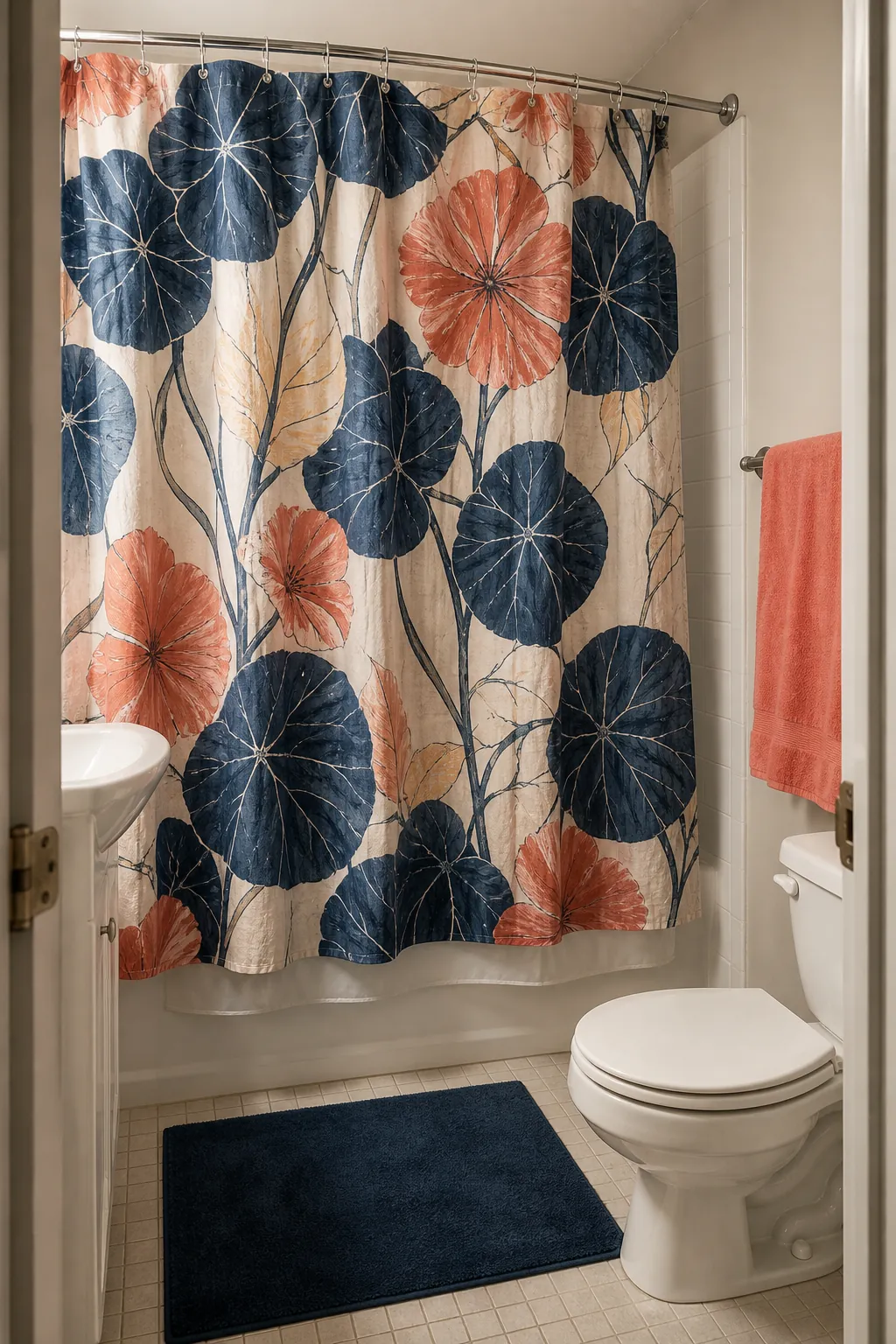
Reddit decorating discussions often split between “use a fun curtain” and “keep the curtain quiet because the tile is busy.” Both can be right. Only one large pattern should demand attention at a time. Work with the room’s strongest permanent feature, not against it.
Change the Shapes Before You Add More Objects
Basic bathrooms are often a collection of rectangles: rectangular vanity, medicine cabinet, tile, door, and tub. A rounded, arched, scalloped, or softly asymmetrical mirror can alter the room’s character without adding visual mess. The frame material matters too—dark oak feels collected, painted metal feels graphic, and pale wood softens hard white surfaces.
Pair shape with better light. A beautiful mirror under a harsh cool bulb still feels unwelcoming. Use bulbs supported by the fixture with good color rendering and a warm-neutral temperature. If you change hardwired lighting, use a qualified professional and appropriate bathroom-rated fixtures. Renters should get written permission and store any original pieces safely.
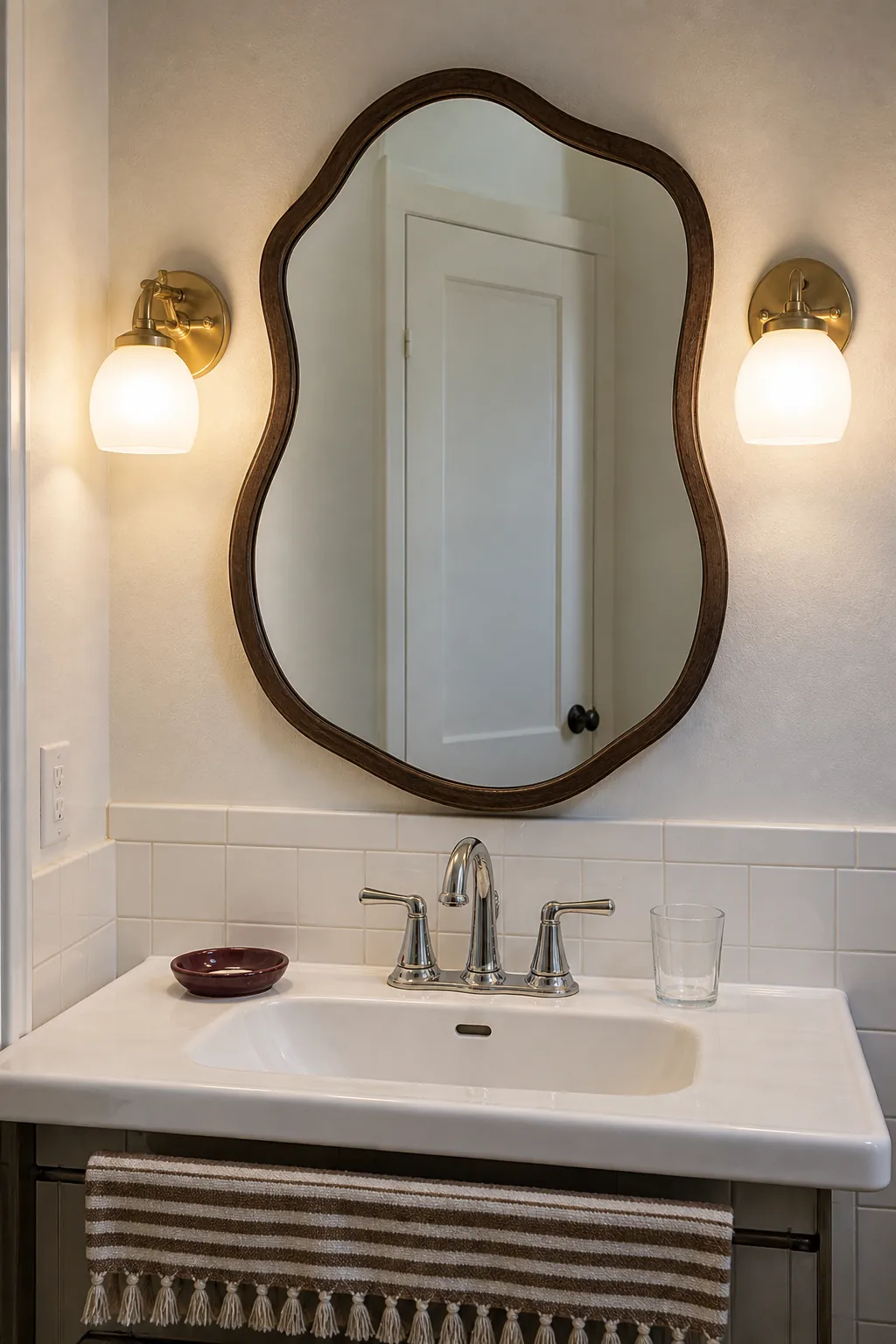
Before buying a mirror, mark its outline on the wall with painter’s tape. Check faucet clearance, sconce spacing, door swing, and what the mirror will reflect. A distinctive silhouette should improve the room you see, not create an awkward view of the toilet or doorway.
Put Color Where the Architecture Can Handle It
Paint is powerful because it changes a surface without filling floor or shelf space. An accent ceiling can make a tiny room feel deliberately enveloping. A saturated vanity wall can give a white sink and mirror contrast. Painting every wall is not required; one well-chosen plane can make the rest of the bathroom look cleaner and more purposeful.
Use paint formulated for bathroom conditions, repair moisture problems first, and prepare the surface properly. A room with recurring peeling, mildew, or poor ventilation needs maintenance before decoration. In a rental, confirm what can be painted and what color must be restored.
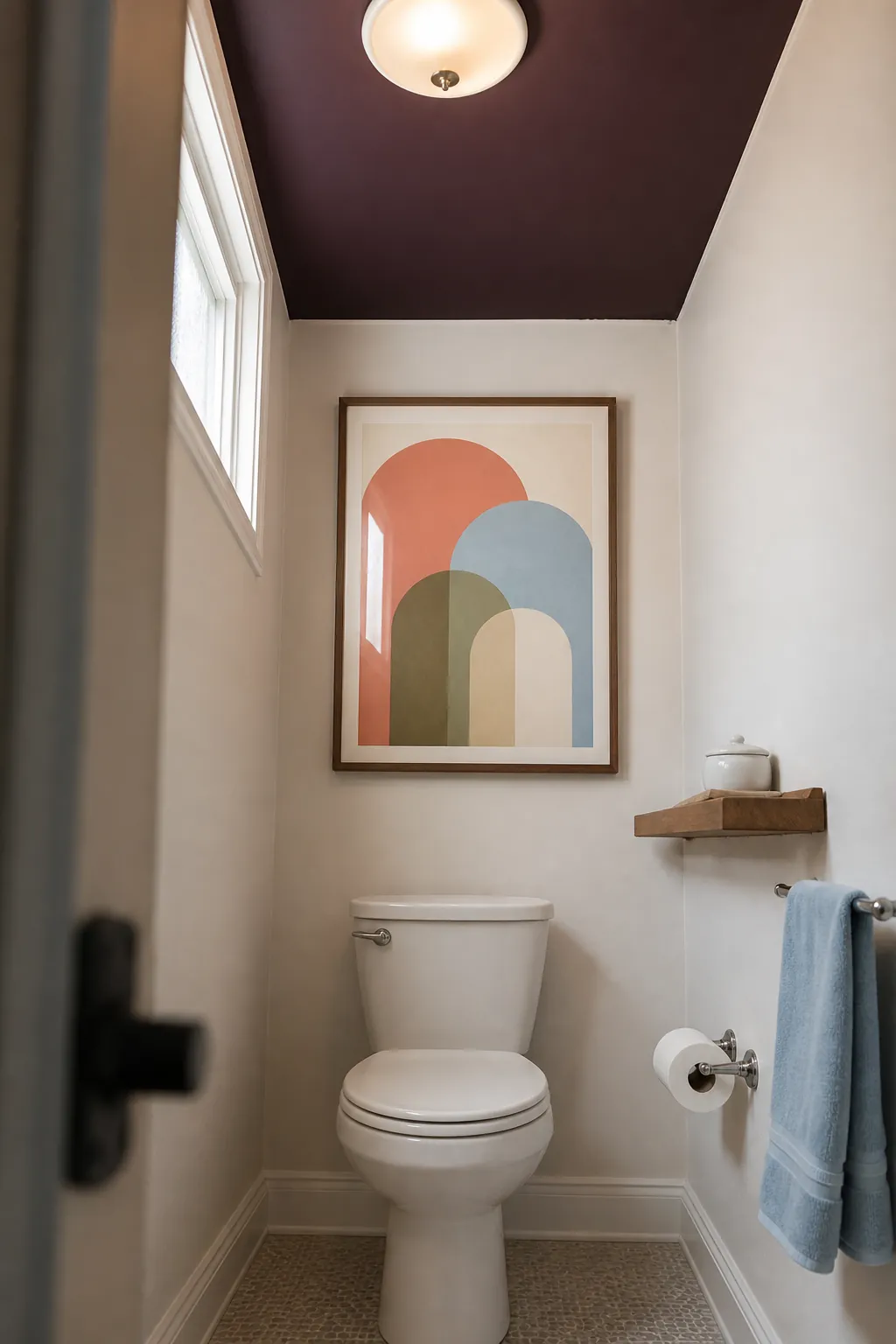
Art belongs in a bathroom when the material and location make sense. Avoid precious paper beside direct spray or constantly wet surfaces. Use lightweight acrylic glazing, sealed prints, metal art, or inexpensive pieces you can enjoy without anxiety. One specific image—geometric arches, a charcoal figure study, a vintage textile fragment—says more than a generic “wash, brush, floss” sign.
Make Storage Part of the Personality
If the counter and shelves are crowded, colorful bathroom accessories will look like more clutter. Move cleaning products, backups, and rarely used items behind a door or into a lidded bin. Then choose a storage piece with character: a narrow painted cabinet, vintage wall box, compact metal cart, or warm wood stool.
Search beyond the bathroom aisle. Small cabinets sold for entryways, bedrooms, or offices can offer better colors and proportions, as long as their materials tolerate the room and their dimensions preserve access to plumbing. Keep heavy supplies low, leave air around pipes, and make sure every door and drawer can open fully.
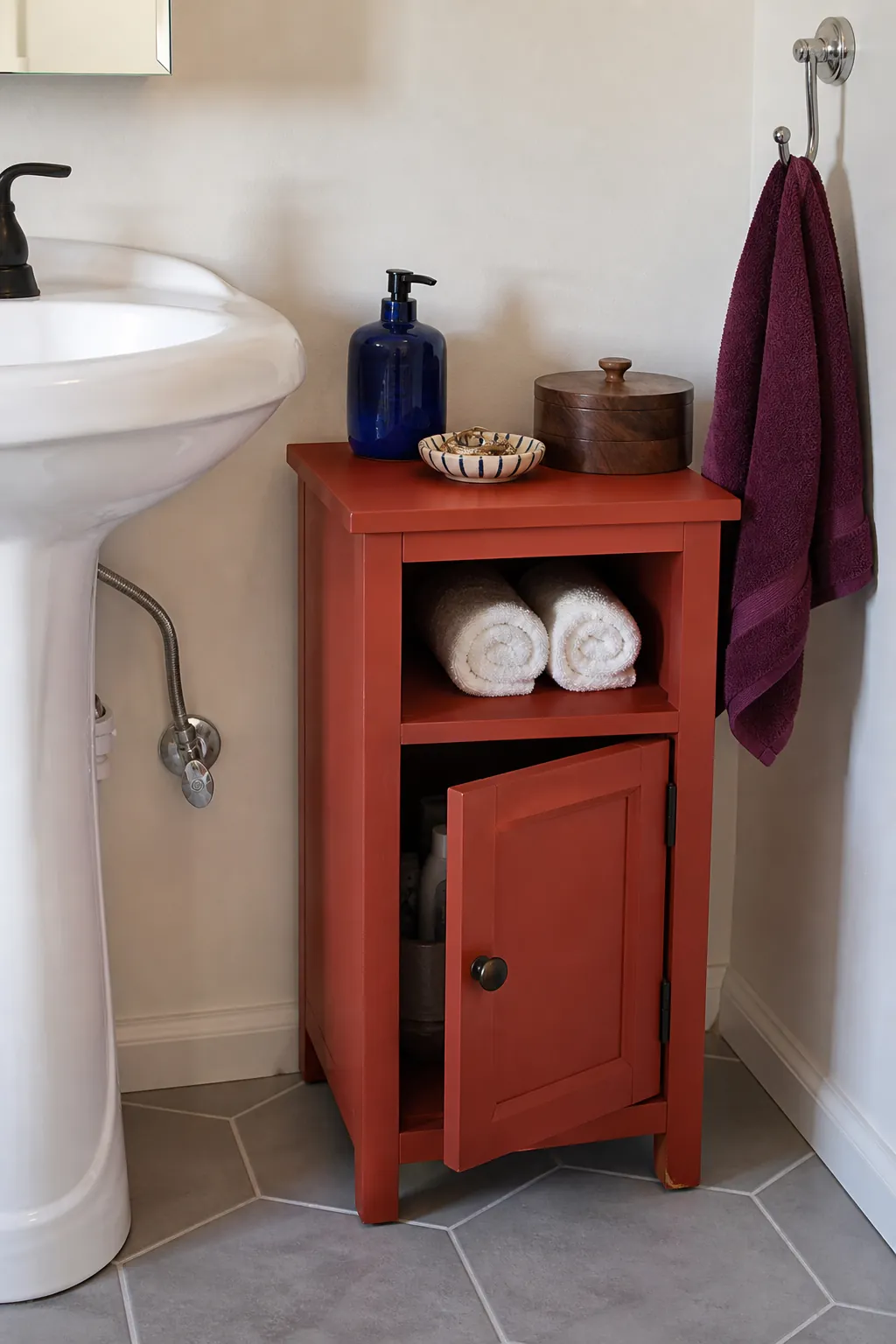
Limit the top of a cabinet or vanity to a few useful objects with different heights and materials. A hand-thrown pump, small jewelry dish, and wood canister have more presence than six matching dispensers. Handmade variation, patina, and a favorite color are what make the grouping yours.
Use Plants and Handmade Texture as a Quieter Signature
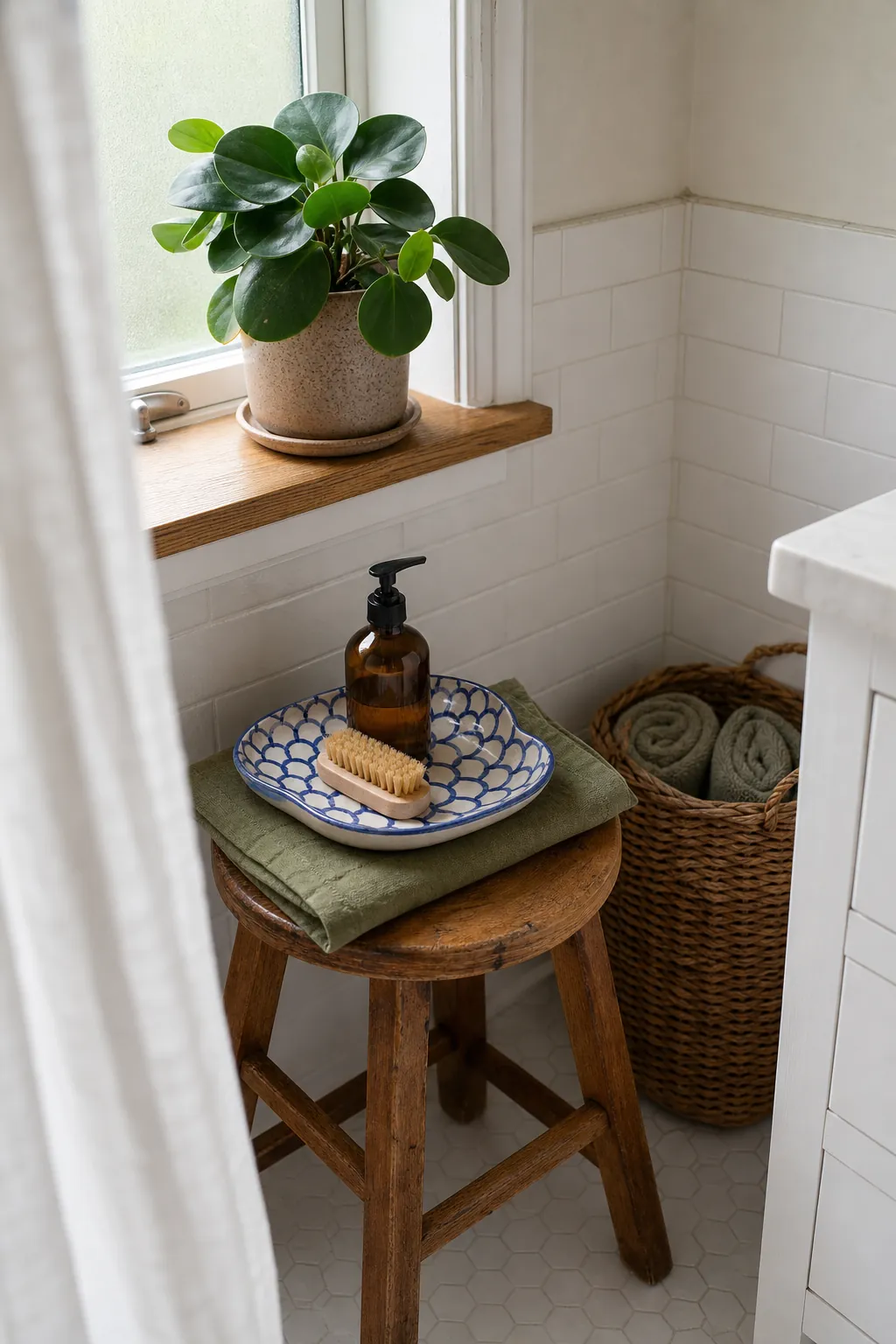
Personality does not have to mean bright walls. A natural bathroom can still feel specific through leaf shape, clay, linen, wood grain, woven fiber, and one memorable pattern. The mistake is choosing every object in the same pale beige. Contrast a quiet material palette with a cobalt tray, olive towel, amber bottle, or dark wood frame.
Choose bathroom plants according to actual light, not humidity alone. Put pots on waterproof saucers, keep leaves away from latches and vents, and make sure a basket or stool can be moved for cleaning. If there is no useful natural light, a convincing faux plant is more responsible than treating a live plant as disposable decor.
Edit Until Every Choice Feels Intentional
Stand in the doorway and name the first three things you notice. If they are the toilet brush, product clutter, and gray bath mat, solve those before adding art. If they are a patterned curtain, sculptural mirror, and painted cabinet, the room already has a readable point of view.
Repeat color, but do not match everything. Repeat shape, but do not buy a set. Let ordinary necessities carry texture and character. Remove themed filler that explains the bathroom too literally. A room becomes personal when the choices reveal taste, habits, and restraint—not when every blank wall has been filled.
The white tile and basic vanity can stay. Once one textile leads the color story, the mirror introduces a new shape, storage hides the visual noise, and a few useful objects show a maker’s hand, those plain surfaces stop looking anonymous. They become the background that lets your decisions speak.