A crowded counter can slow dinner before anyone has picked up a plate. The roasting pan needs a safe landing place, guests need to reach the food, and the cook still needs the sink. Without an island, the best serving plan usually gives each surface one job and keeps the walking route simple.
Choose a setup that fits your actual kitchen, then rehearse it with empty dishes. Check that hot food has heat safe support and that guests do not need to pass behind an open oven. A compact Thanksgiving buffet can work, but it should make cooking and cleanup easier, not turn every spare inch into a serving spot.
Run a single direction buffet along one counter
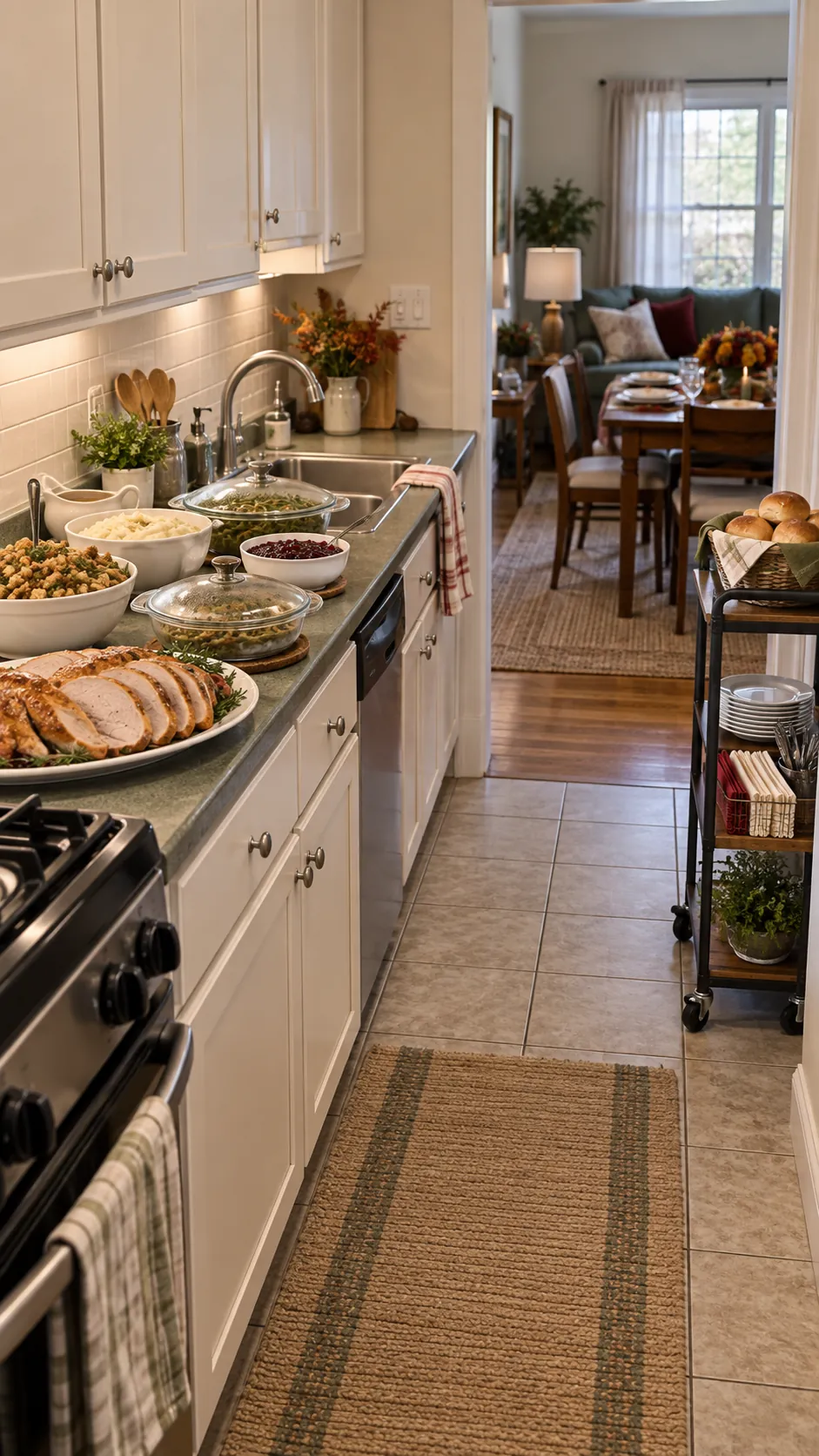
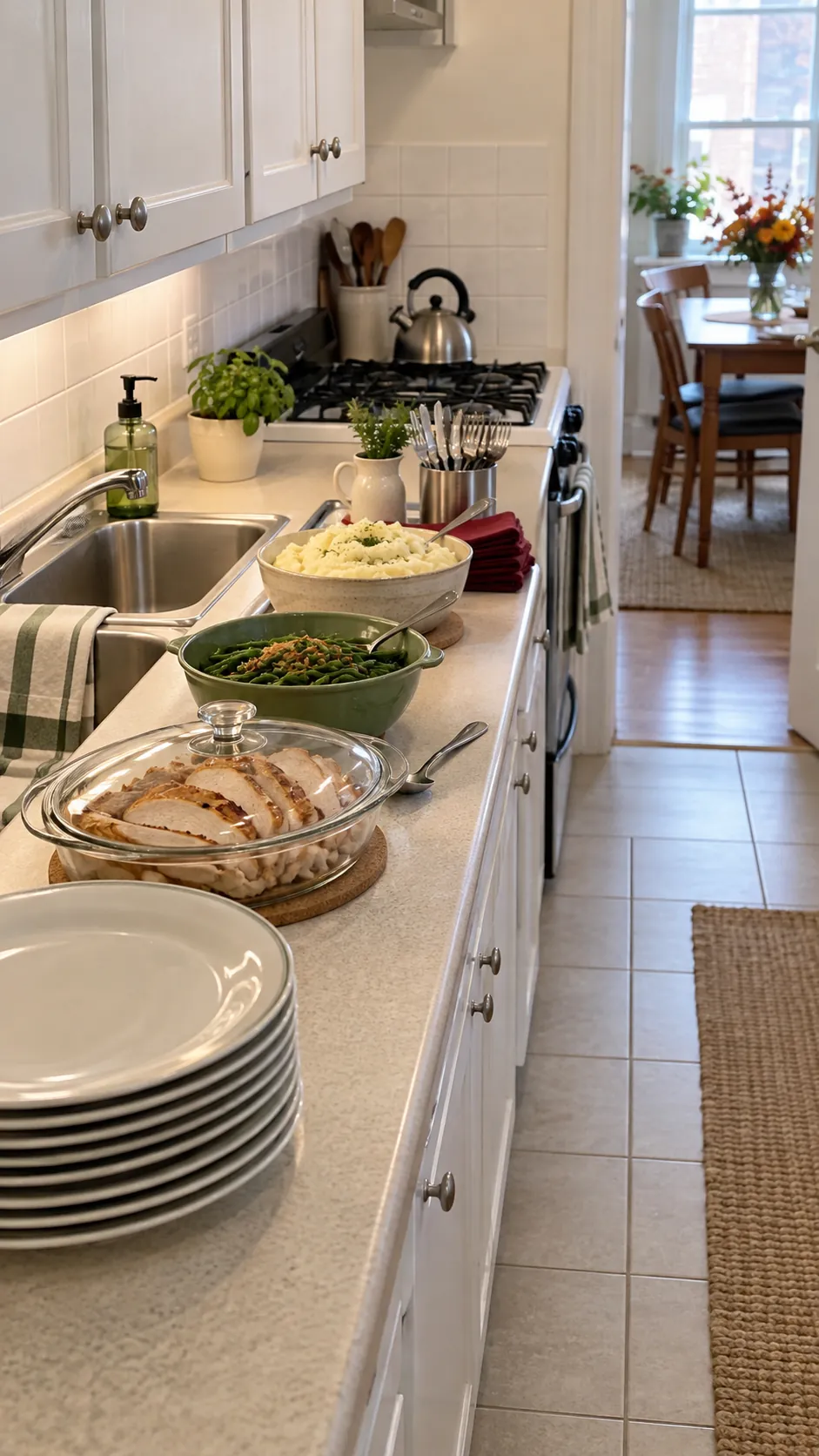
Clear one counter from its kitchen entrance end to its dining end. Put plates first, then food, then cutlery and napkins so guests move in one direction rather than reach across each other. Keep a separate strip for the cook to set down hot dishes, and leave the sink and stove controls accessible. If the counter is short, offer only the main dishes here and move drinks elsewhere.
Turn an L shaped counter into two short stations
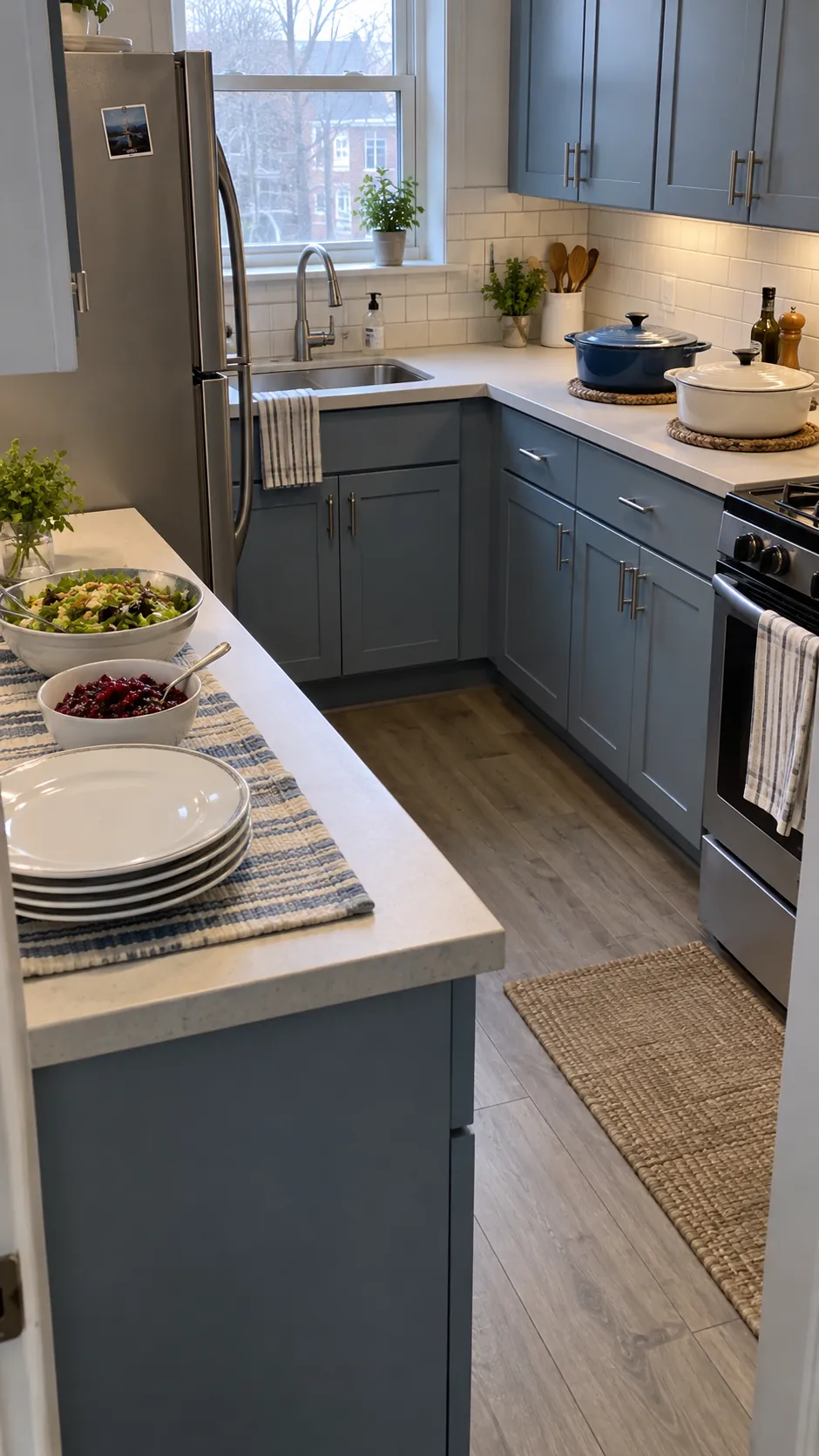
An L shaped counter can separate plate pickup from food service without adding furniture. Put plates and cold sides on one arm and warm dishes on the other, with a clear corner so guests can turn without bumping handles. Avoid putting the busiest bowl directly beside the stove or sink. This layout works best when the kitchen entrance is broad enough for people to leave after serving.
Park a rolling cart at the kitchen threshold
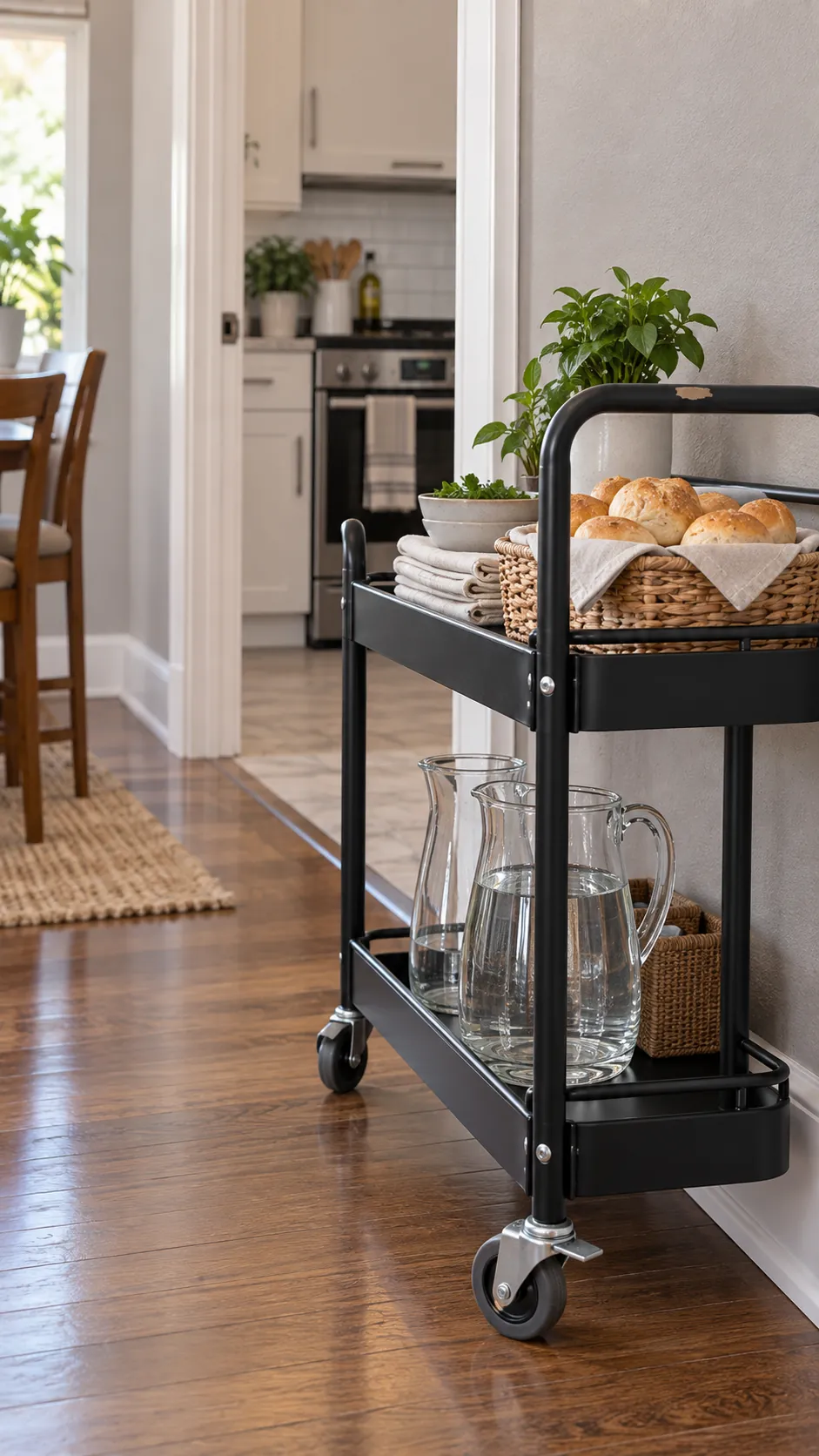
A narrow cart can carry napkins, bread, and room temperature sides just outside the kitchen. Lock the wheels, keep heavier dishes on the lower shelf, and make sure the cart does not narrow the doorway. The counter remains available for cooking and hot dish landing. A cart is especially useful when a guest can collect finishing items without entering a one person kitchen.
Use a living room console as the main buffet
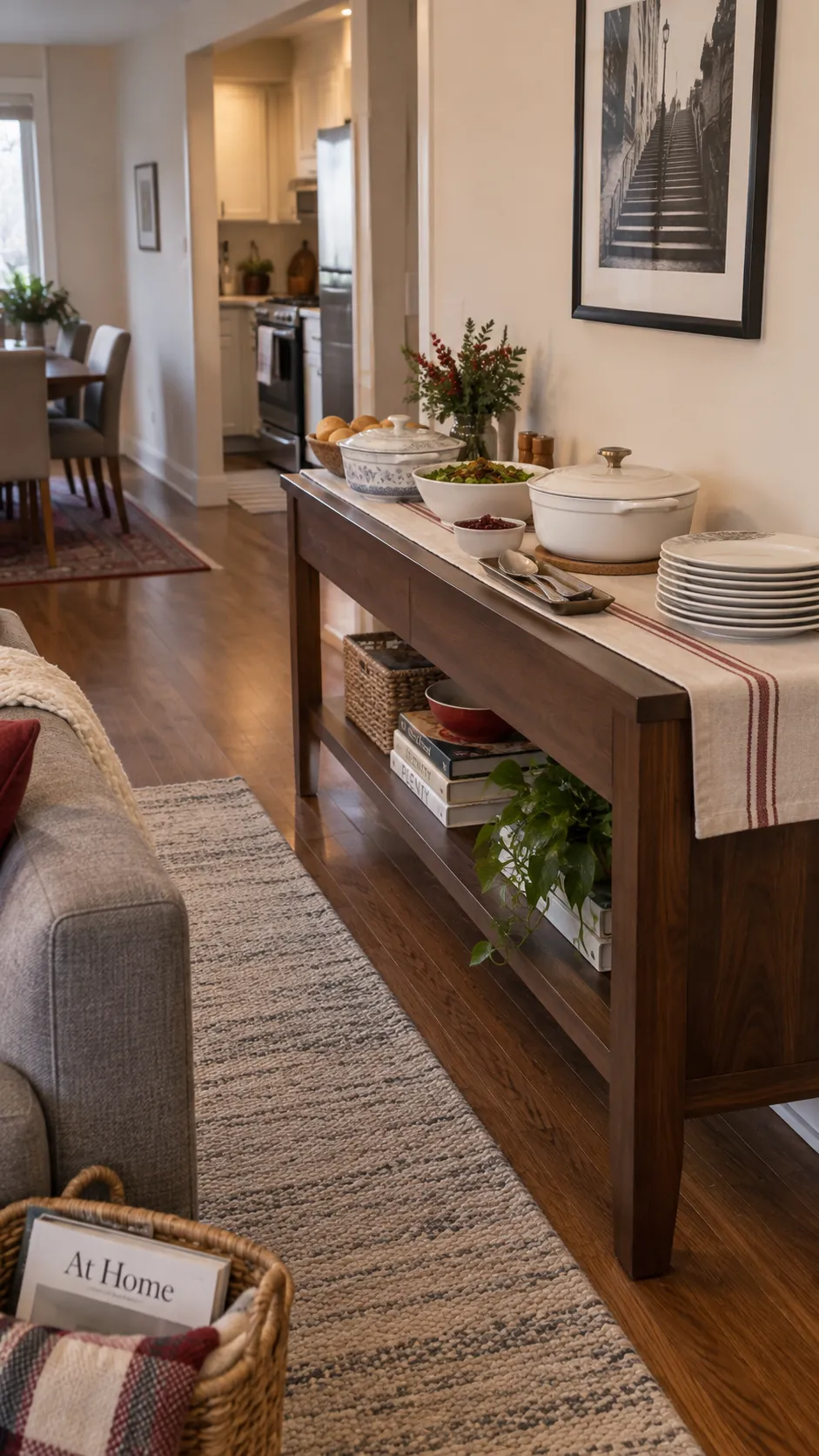
A stable console can become a serving surface when the kitchen is too narrow for guests. Check its depth and weight capacity before placing platters, then protect the top with washable runners and heat safe pads. Carry covered dishes out in manageable trips rather than balancing a crowded tray. Keep the console away from the front door so arriving guests and diners do not form opposing lines.
Open a folding table against a blank wall
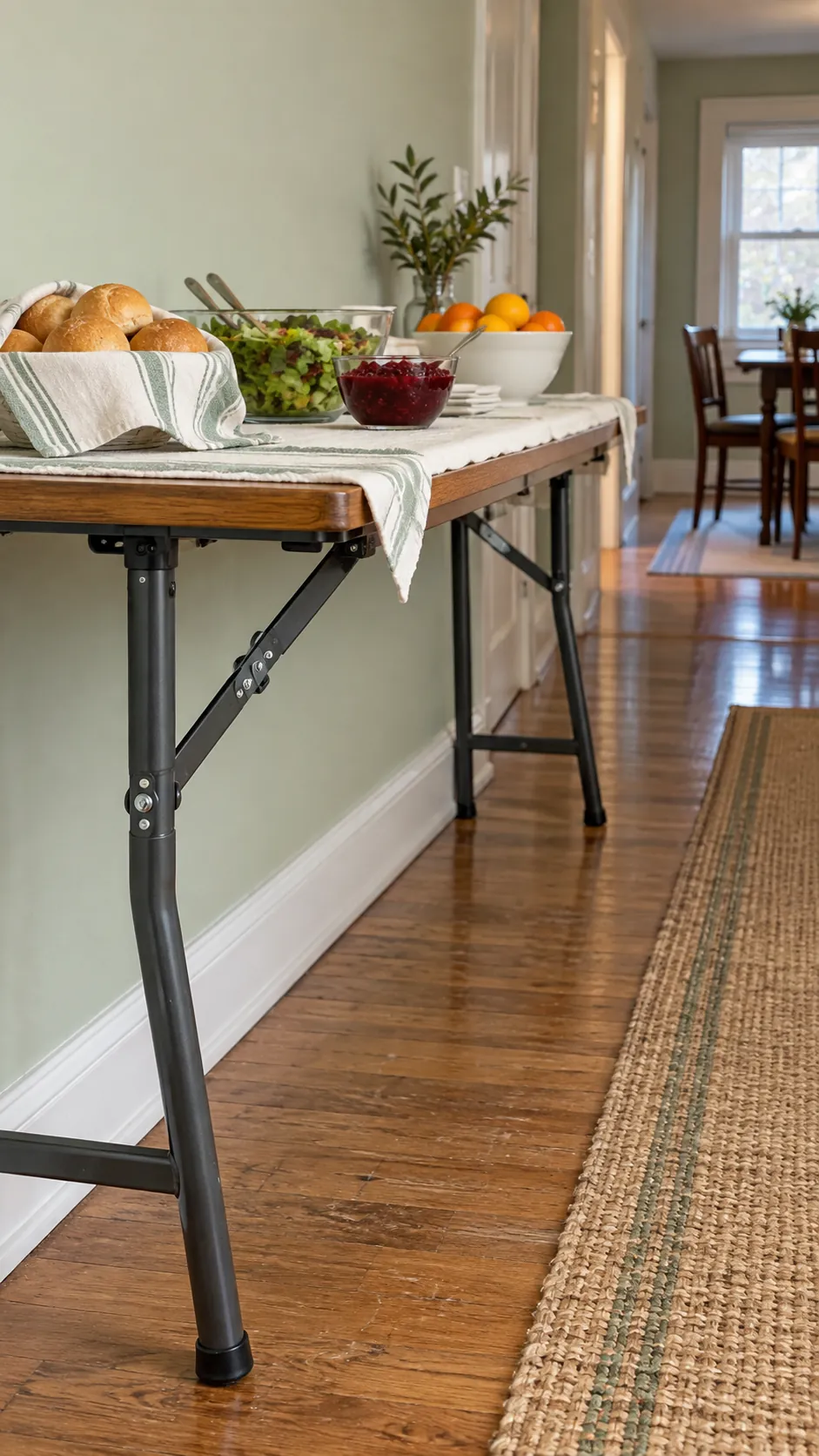
A properly locked folding table creates temporary buffet space without permanently taking the apartment floor. Place it where a guest can reach the front and where the legs will not cross a traffic lane. Use the kitchen for hot food and this table for serving vessels that are safe at room temperature. After dinner, wipe it down and fold it away instead of finding permanent storage for another cabinet.
Divide hot dishes and cold dishes between rooms
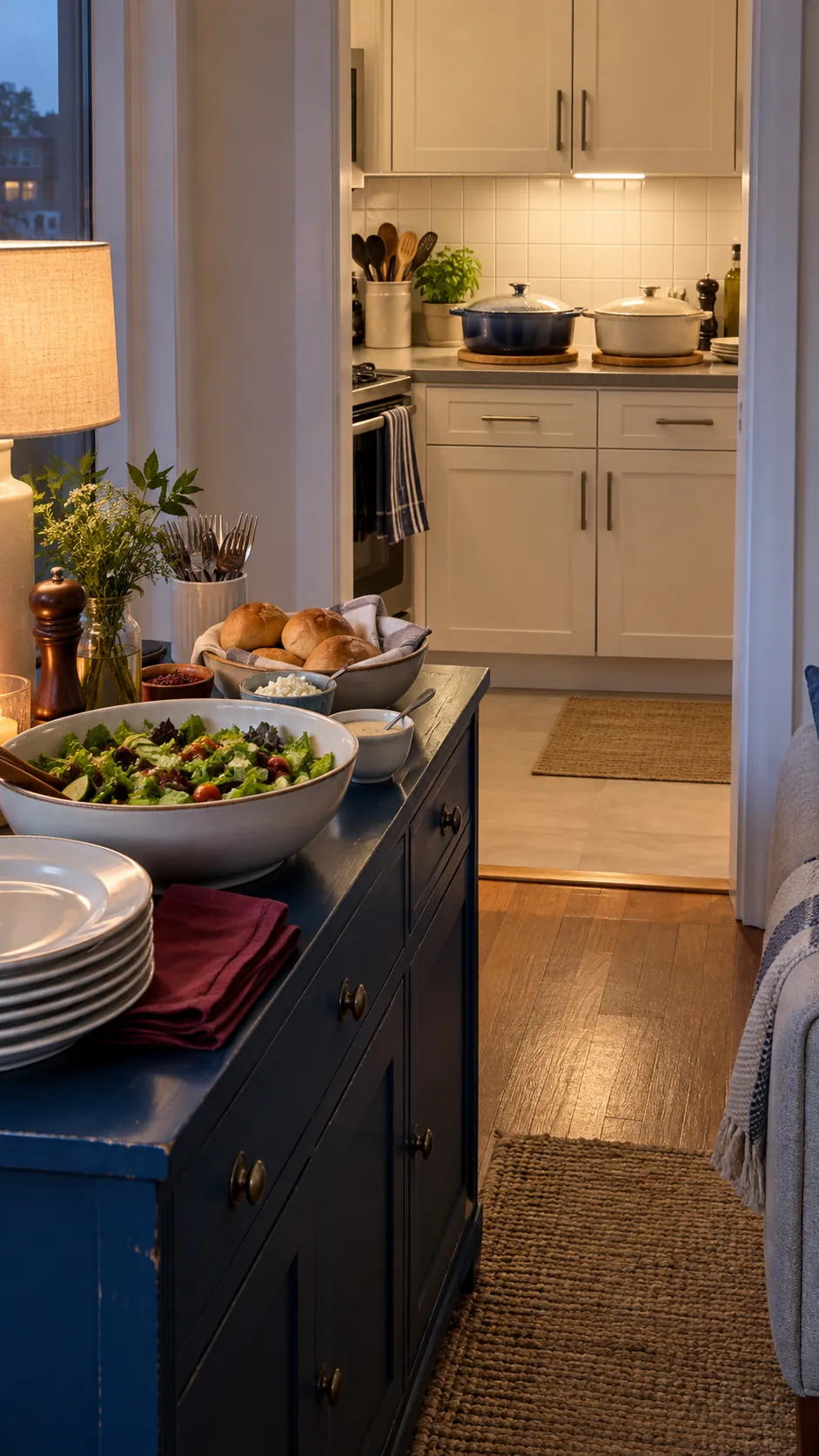
Keep hot food near the kitchen landing area and place salads, rolls, and condiments on a separate sideboard. This shortens the distance a cook carries heavy hot pans while giving guests more elbow room at the cold station. Tell guests where the second station is so they do not stop in the kitchen searching for every side. Provide a trivet and serving tool at each hot dish before anyone joins the line.
Reserve one end of the dining table for shared bowls
For a small guest group, the table itself can hold two or three modest shared bowls if each place setting still has room. Put the serving end nearest the kitchen and leave the center clear of tall decorations. Pass heavy dishes from a stable surface rather than reaching over seated people with a hot roasting pan. If the table seats its full capacity, move the bowls away once plates are filled.
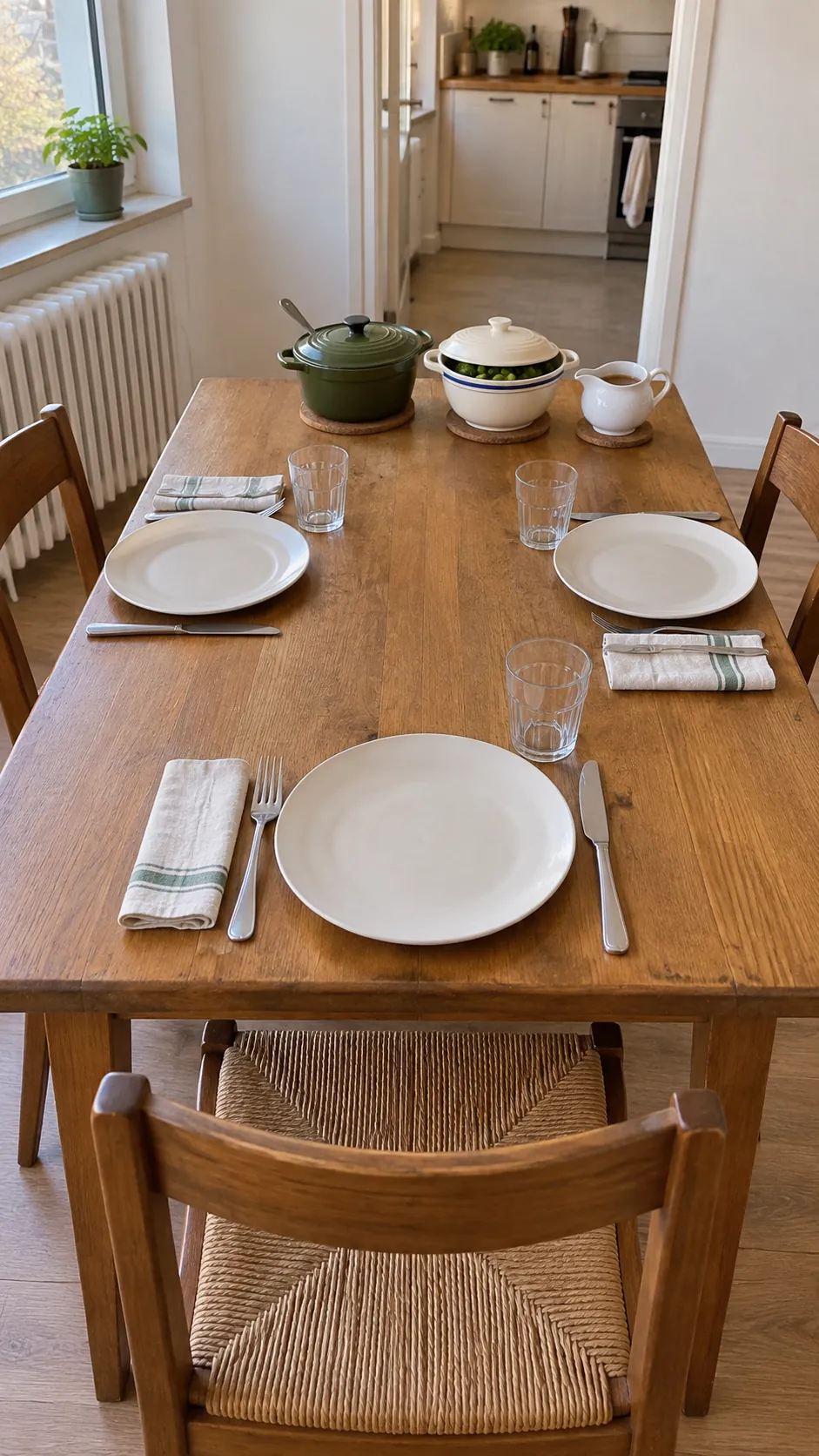
Make a plate pickup point beside the kitchen door
Move clean plates and cutlery to a narrow shelf or sturdy tray just outside the kitchen entrance. Guests can collect what they need without crowding the cook, then continue to the food station. Keep the stack low enough to lift comfortably and away from a swinging door. This small handoff point can calm a tight apartment kitchen even when the dishes themselves stay on the counter.
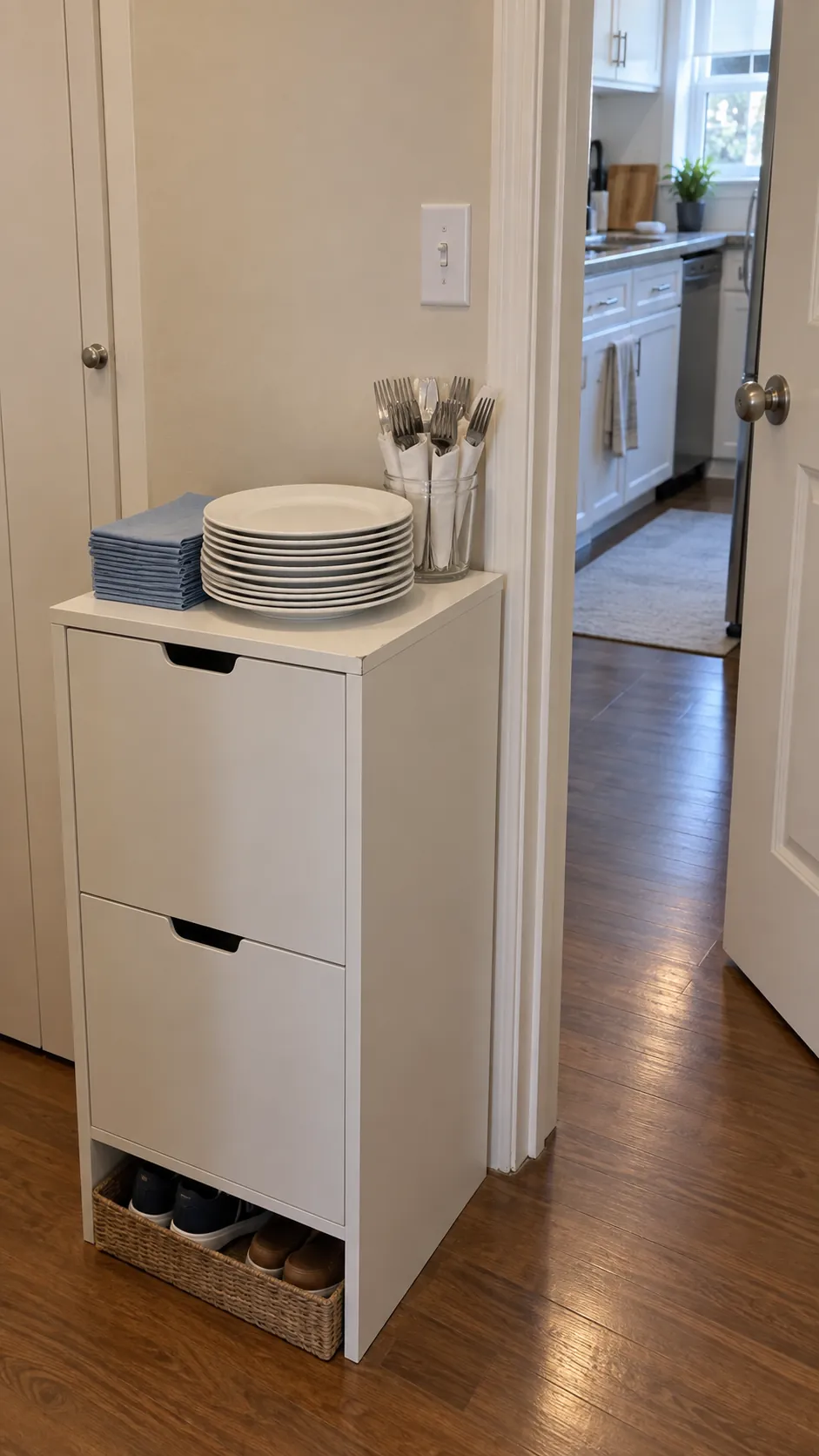
Plate the main course at a clear counter landing
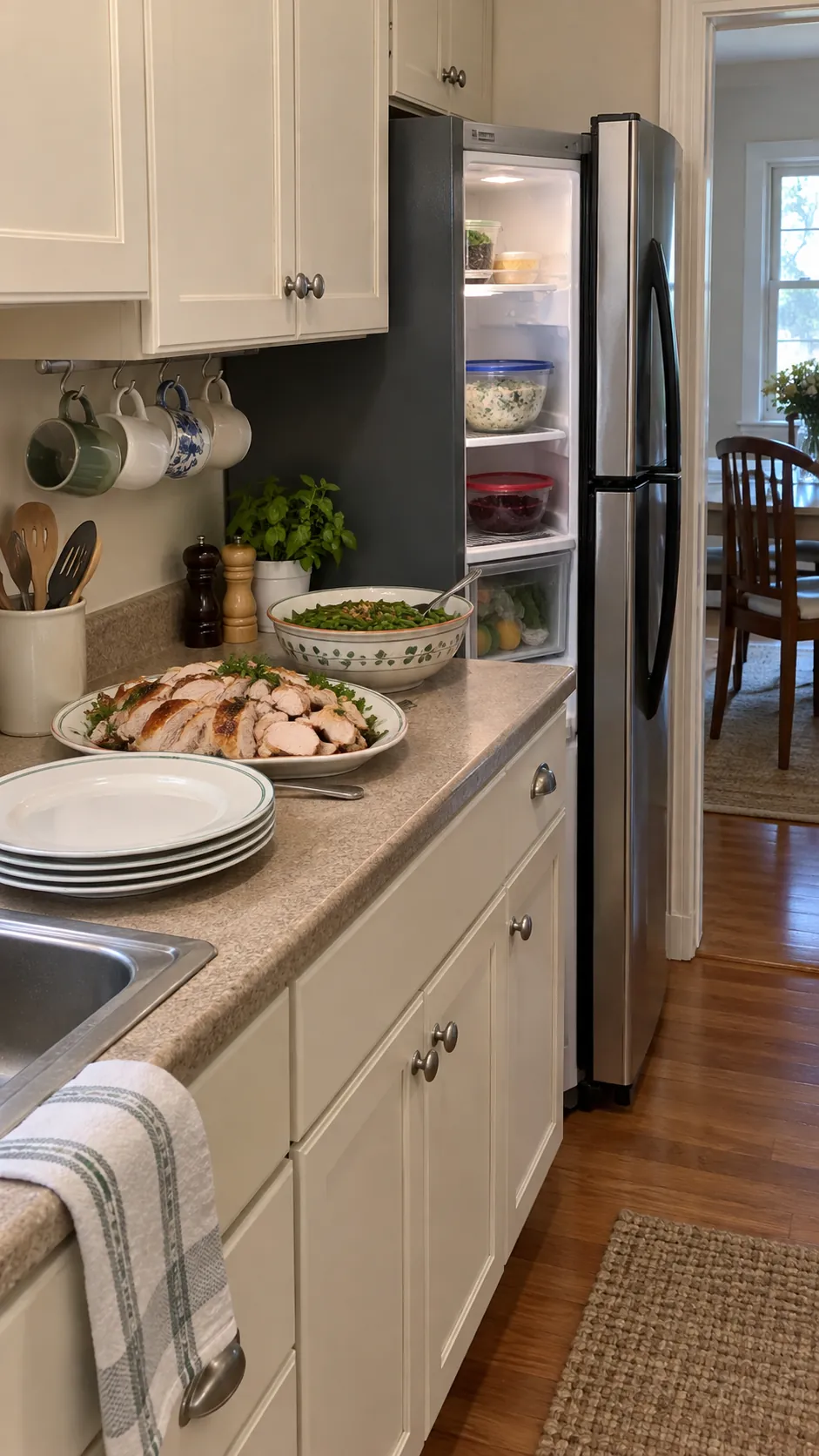
When the kitchen only fits the cook, set plates on a cleared counter and serve turkey and hot sides before handing them to guests. Use a stable tray for each trip to the table, and keep the oven door shut during handoff. Guests can add cold items from a second station after they sit. This is slower than a buffet but safer than asking a line of people to move through a narrow work zone.
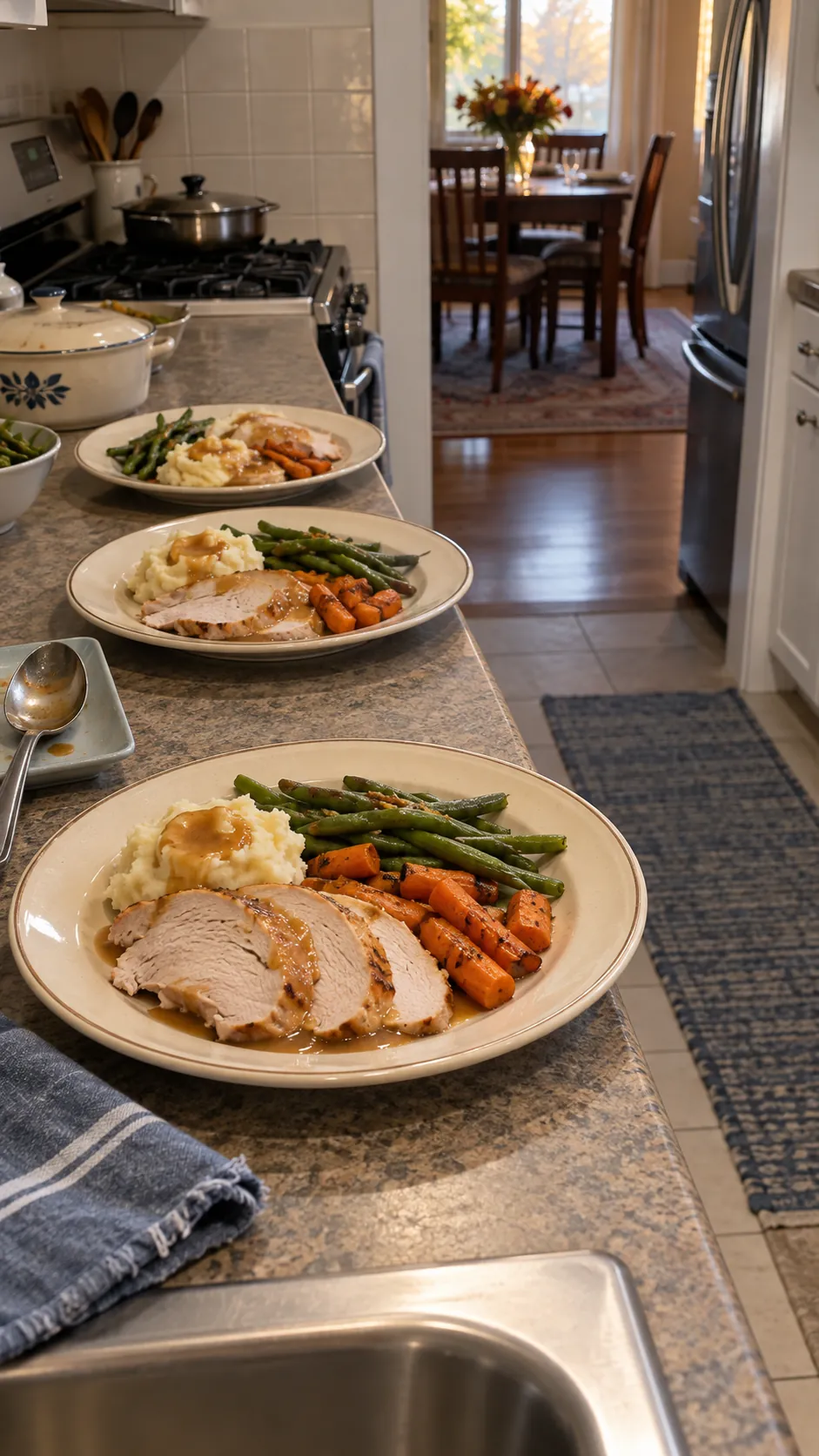
Lift small cold sides onto a tiered stand
A sturdy two level stand can free a little counter area for bread, fruit, and small cold dishes. Keep the heavier food below, use low bowls that cannot slide, and test the stand for wobble before guests arrive. Do not place hot casseroles on a display stand simply to gain height. Treat the stand as a small accessory station, not a way to double the capacity of a narrow counter.
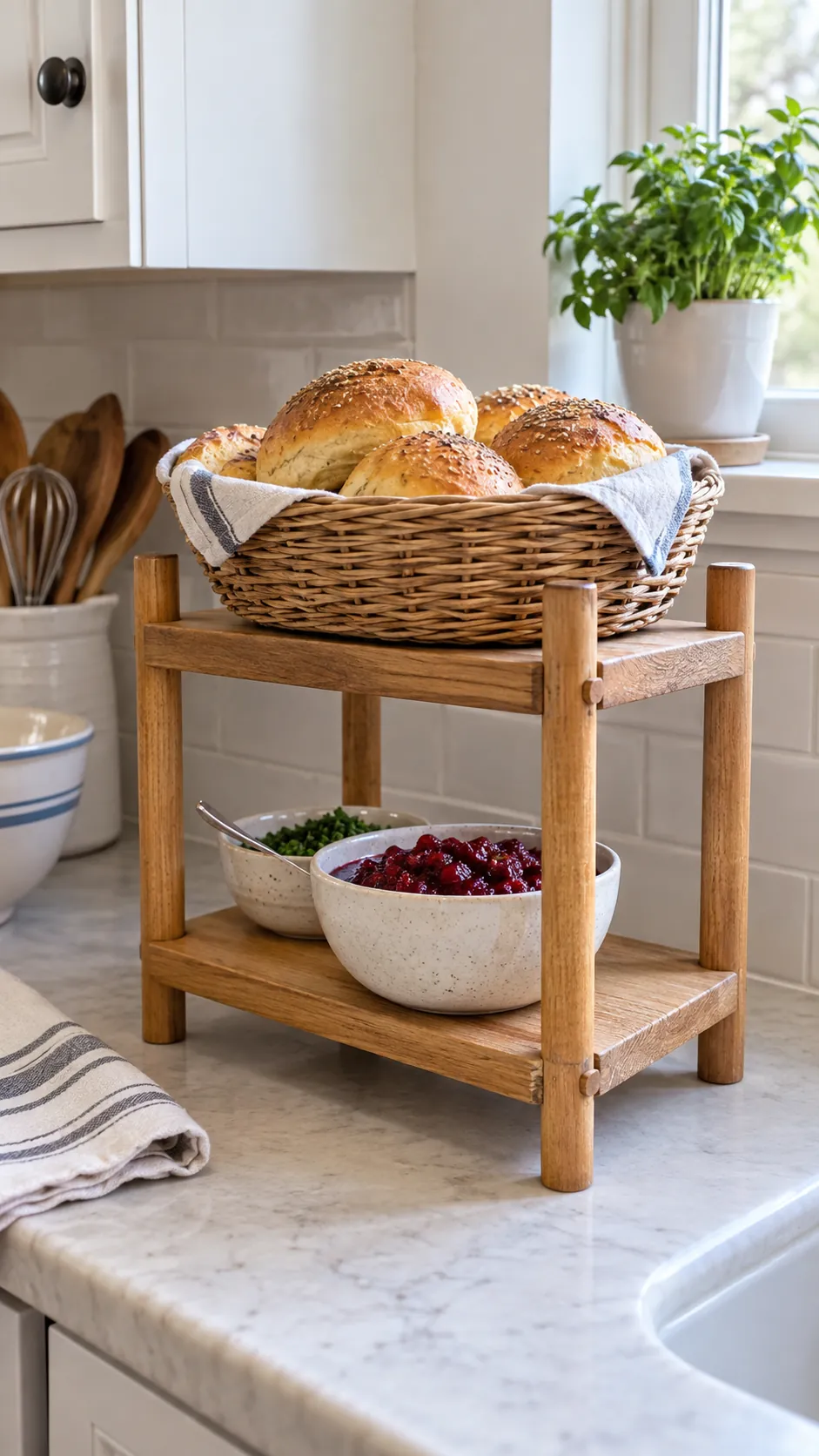
Move drinks to a separate cabinet or tray
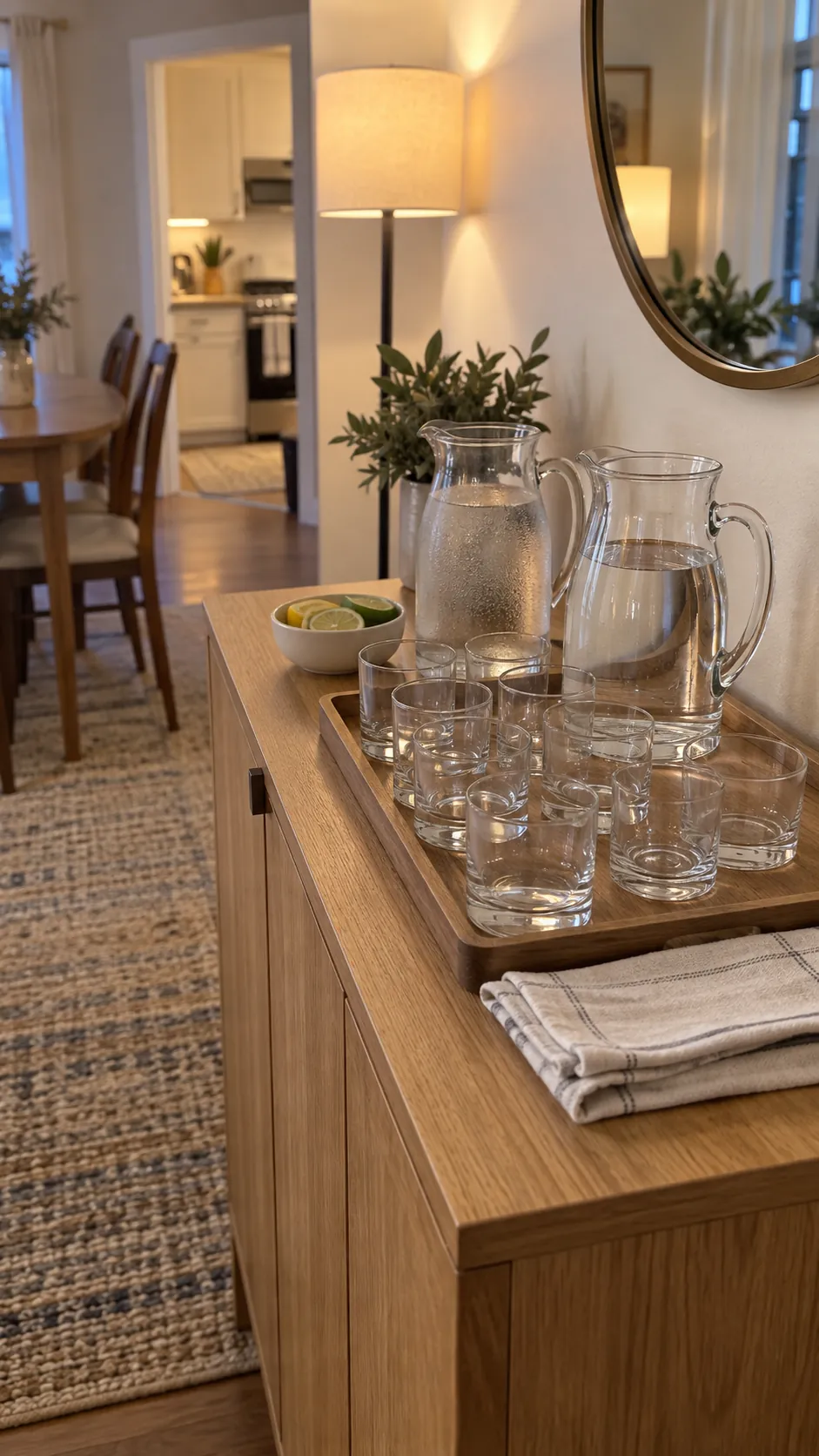
A water pitcher and glasses can cause a traffic jam when they sit beside the food. Give drinks a sturdy cabinet top or tray away from the buffet line, with a cloth nearby for spills. Keep the station within sight of the dining area but out of the kitchen work path. Guests can refill without standing between the cook and a hot dish.
Send dinner in two service rounds
If there is room for only a few serving dishes at once, bring out the main course first and return for extra sides once plates are underway. Use a covered holding area appropriate for the food rather than leaving perishable dishes out for a long wait. Tell guests what is coming next so no one fills a plate assuming the first counter display is everything. The method reduces clutter while preserving a relaxed meal.
Reset a coffee table for dessert only
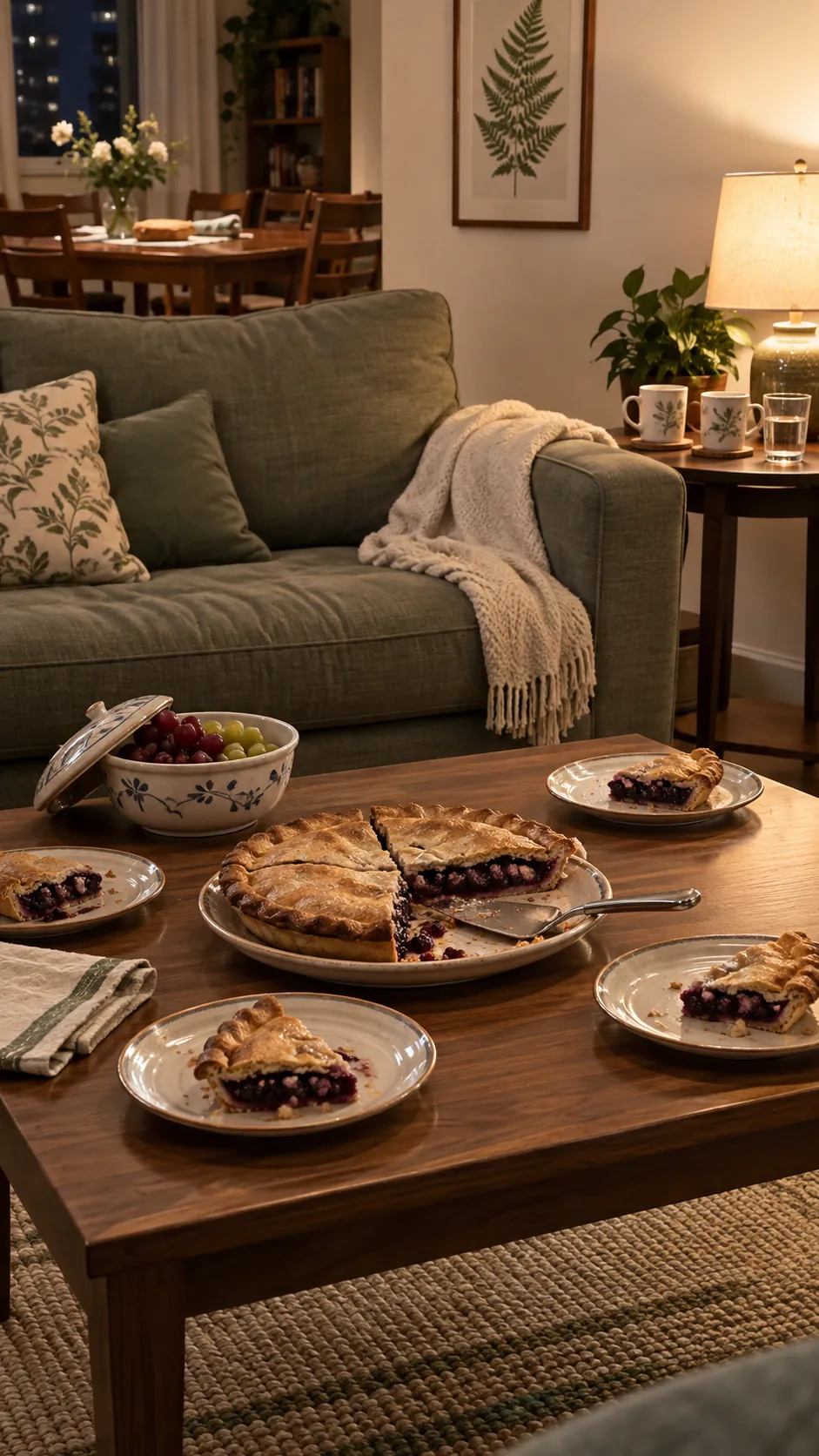
After the main meal, clear used plates and turn a stable coffee table into a low dessert station. Offer small plates and portions that do not require carving or a tall stand, and keep hot drinks on a separate firm surface. Avoid asking guests to serve a heavy pie while kneeling in a tight walkway. Dessert can occupy the living room after the dining and kitchen routes have reopened.
Give leftovers their own packing surface
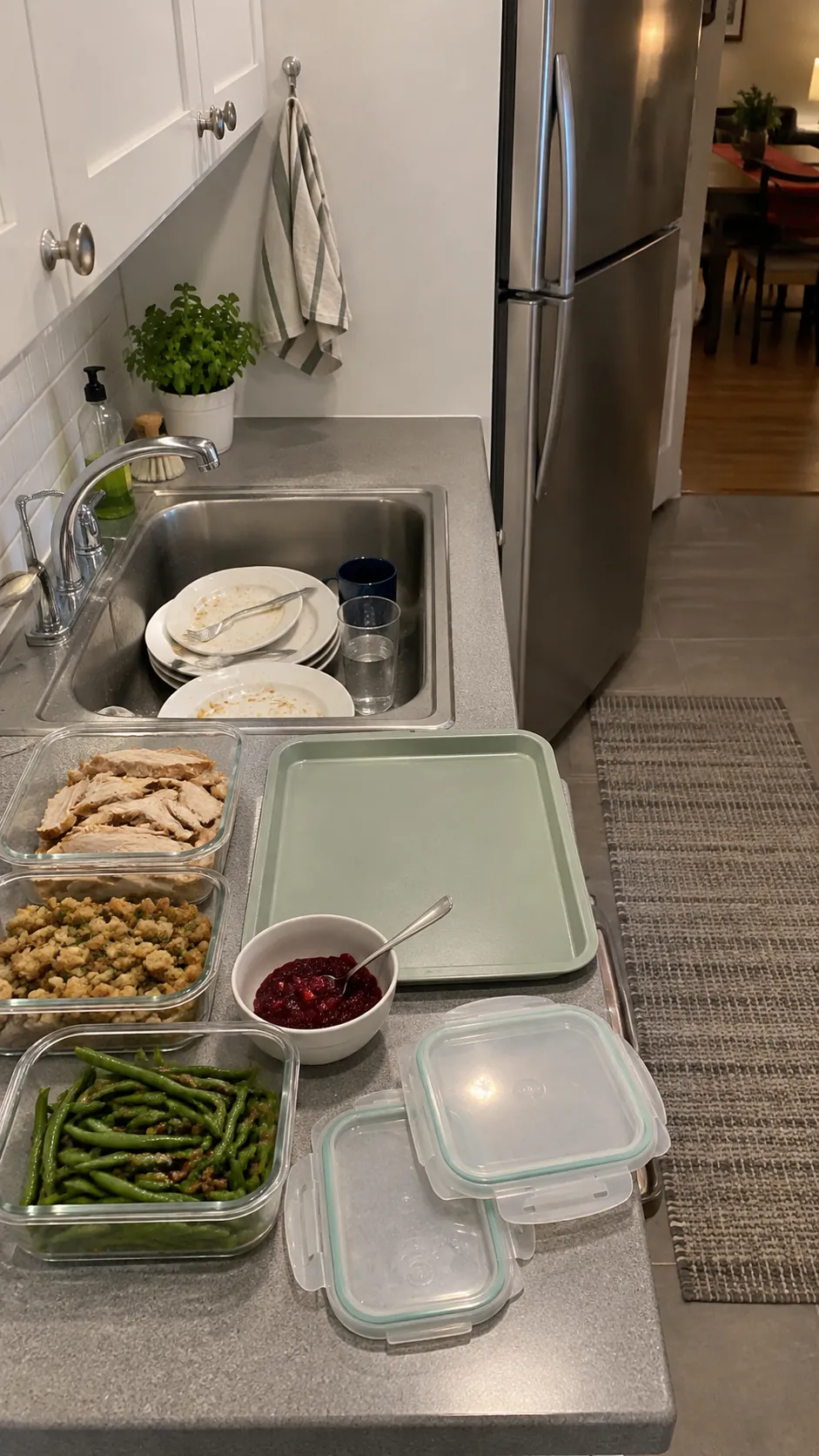
Set empty containers, labels, and a clean tray near the sink before serving begins. Once dinner ends, move food to this surface in small batches so the buffet does not become a pile of lids and used dishes. Refrigerate perishable leftovers promptly in shallow containers rather than waiting for every guest to leave. This final station makes cleanup part of the serving plan, which matters when the kitchen has no spare island.