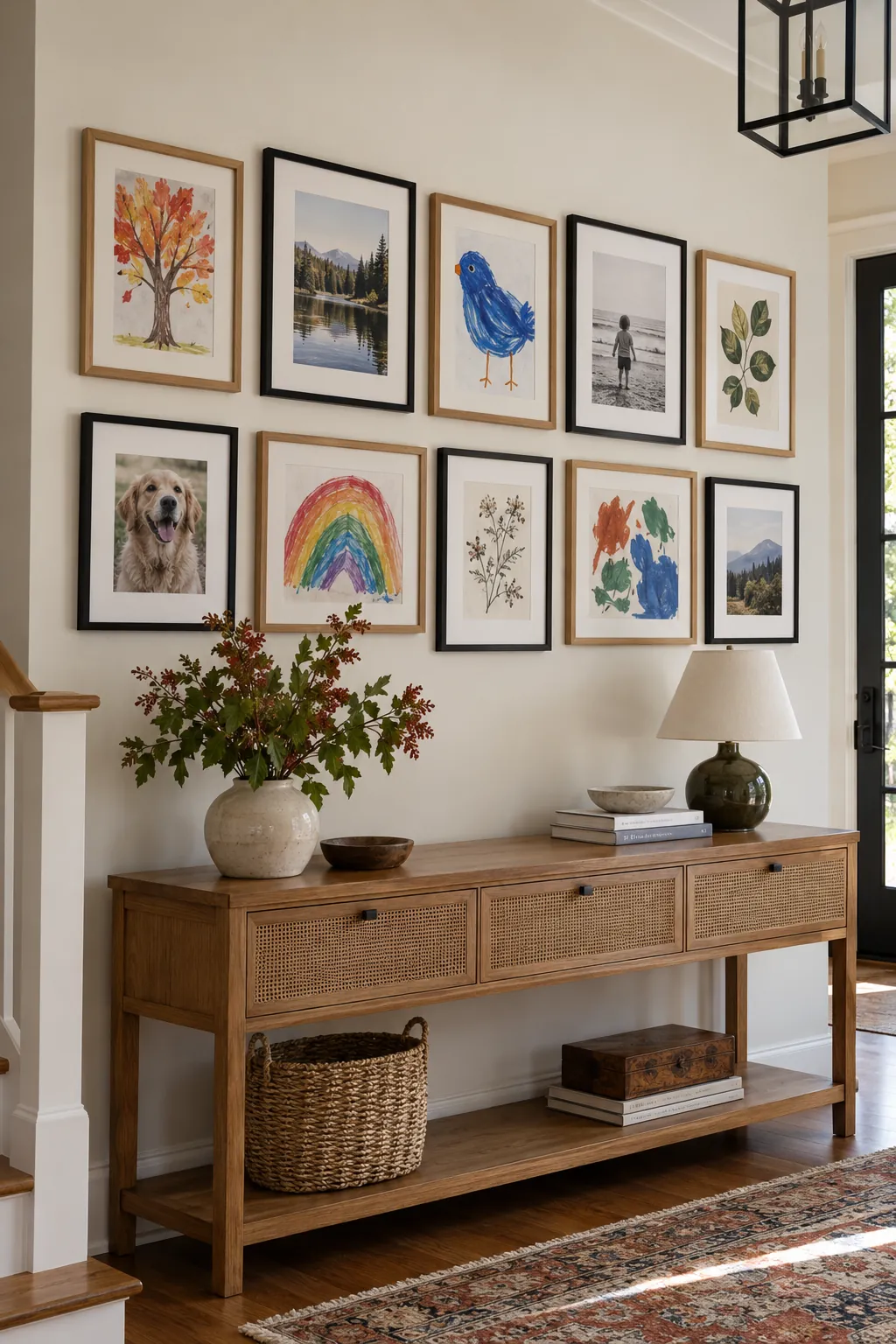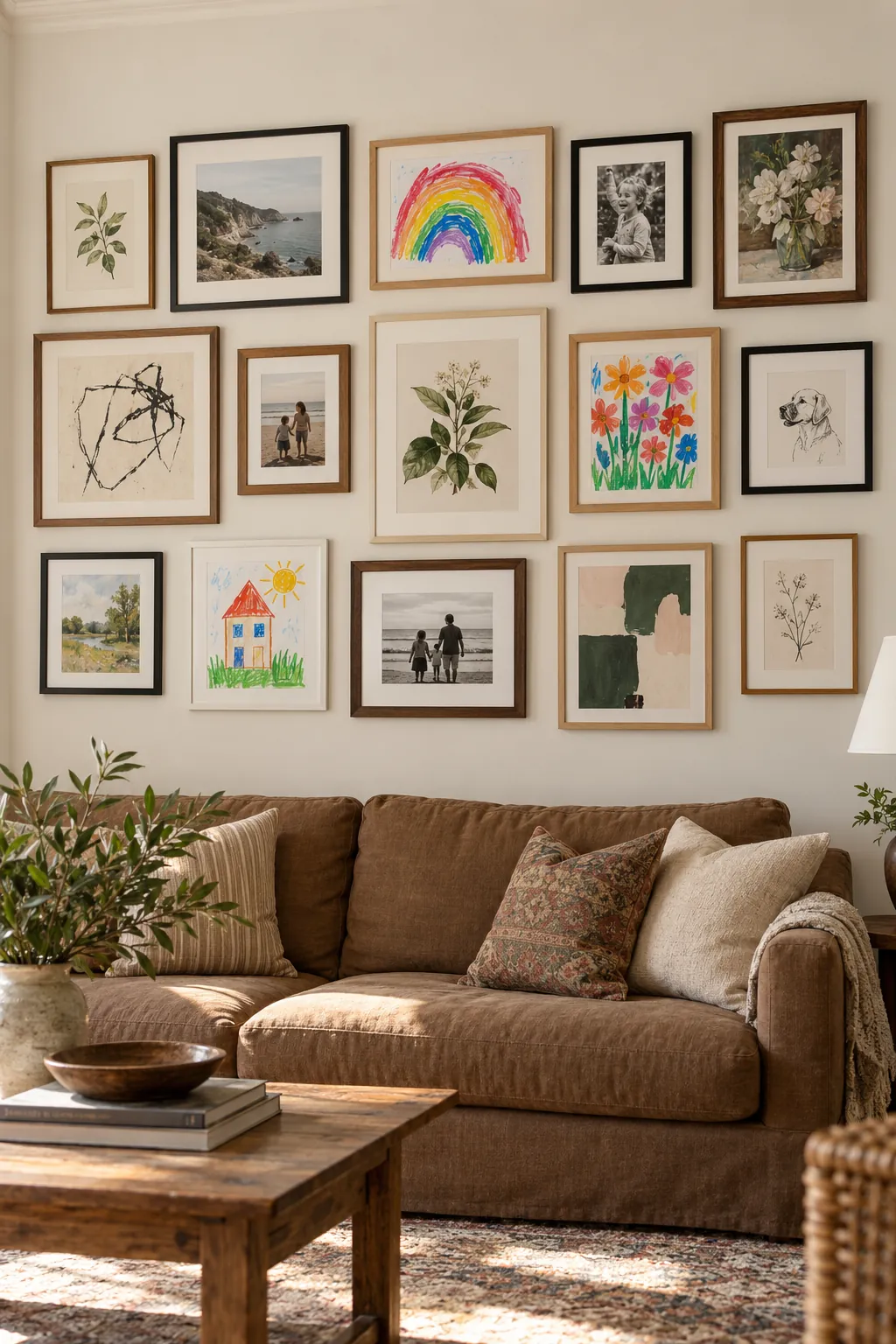
Children’s art can live beside photographs and collected prints without making the wall feel temporary. The key is to treat each piece with the same care you give the rest of the collection, then repeat a few framing and spacing choices. Select work the child values, record its date separately, and use materials that do not damage an original you want to keep.
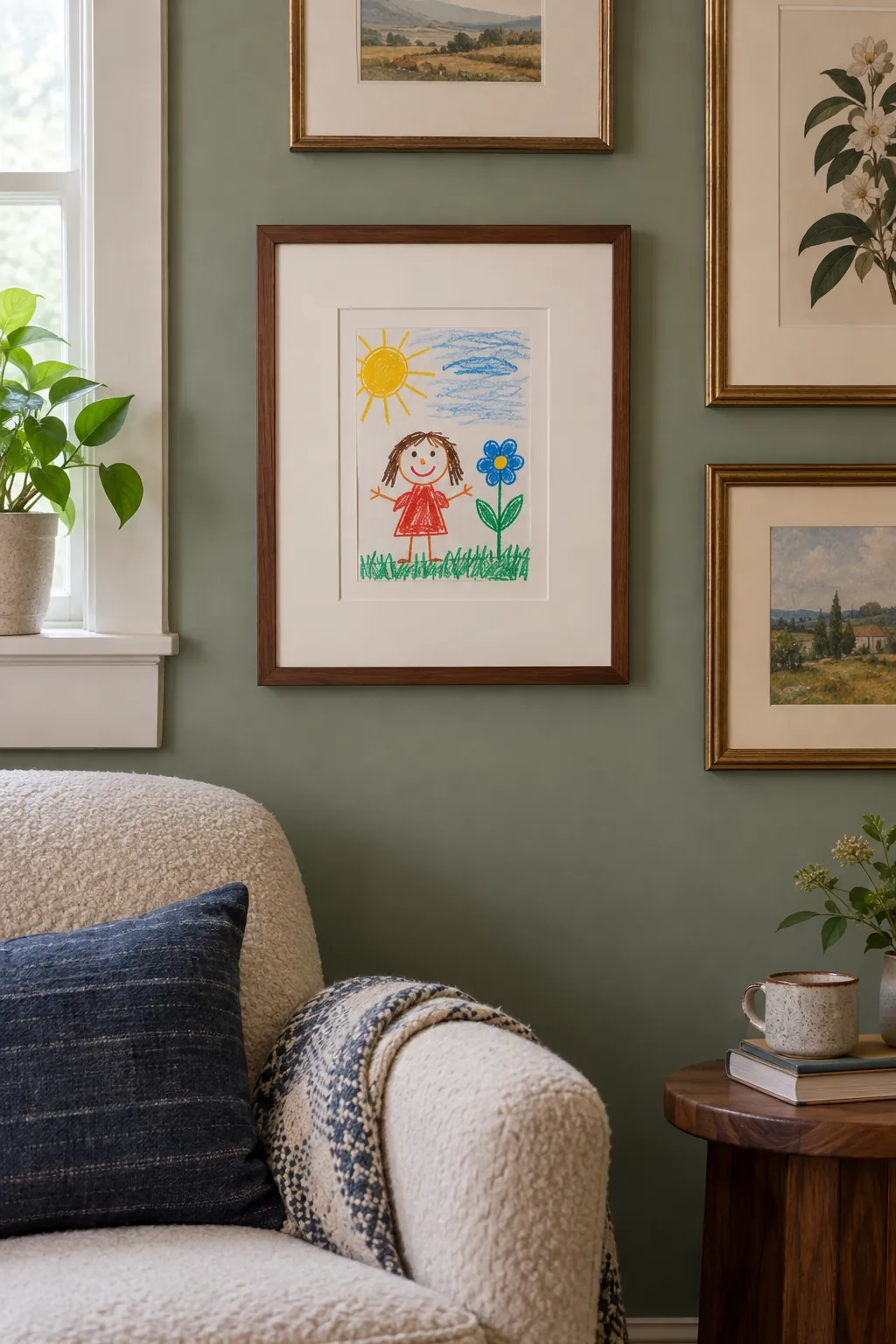
Give One Drawing a Generous Mat
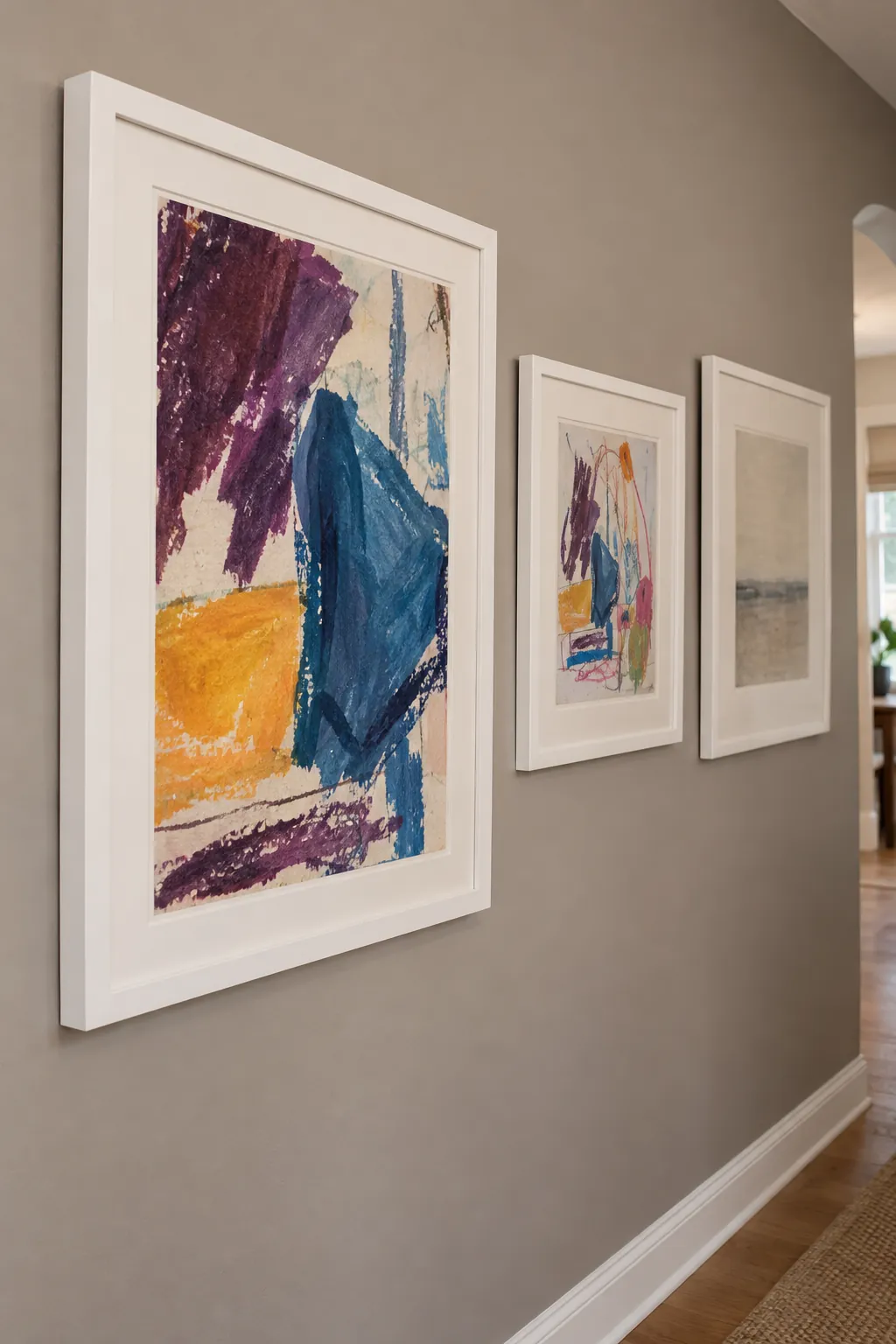
Choose a small drawing with a strong shape and surround it with a wide warm white mat. The quiet border gives energetic marks room to breathe beside more formal art. Use a standard frame and ask a frame shop to cut the opening to the exact paper size.
Repeat the Existing Frame Finish
Place a colorful painting in the same black, oak, or white finish already used elsewhere on the wall. Repetition connects the new piece without muting its personality. Keep the frame profile similar even if the artwork needs a different size.
Pair Child Art With a Related Adult Print
Match a child’s flower, house, animal, or landscape with a collected print that shares the subject. Hang the pair near each other but avoid making them identical in size. Their visual conversation makes the family art wall feel intentional and personal.
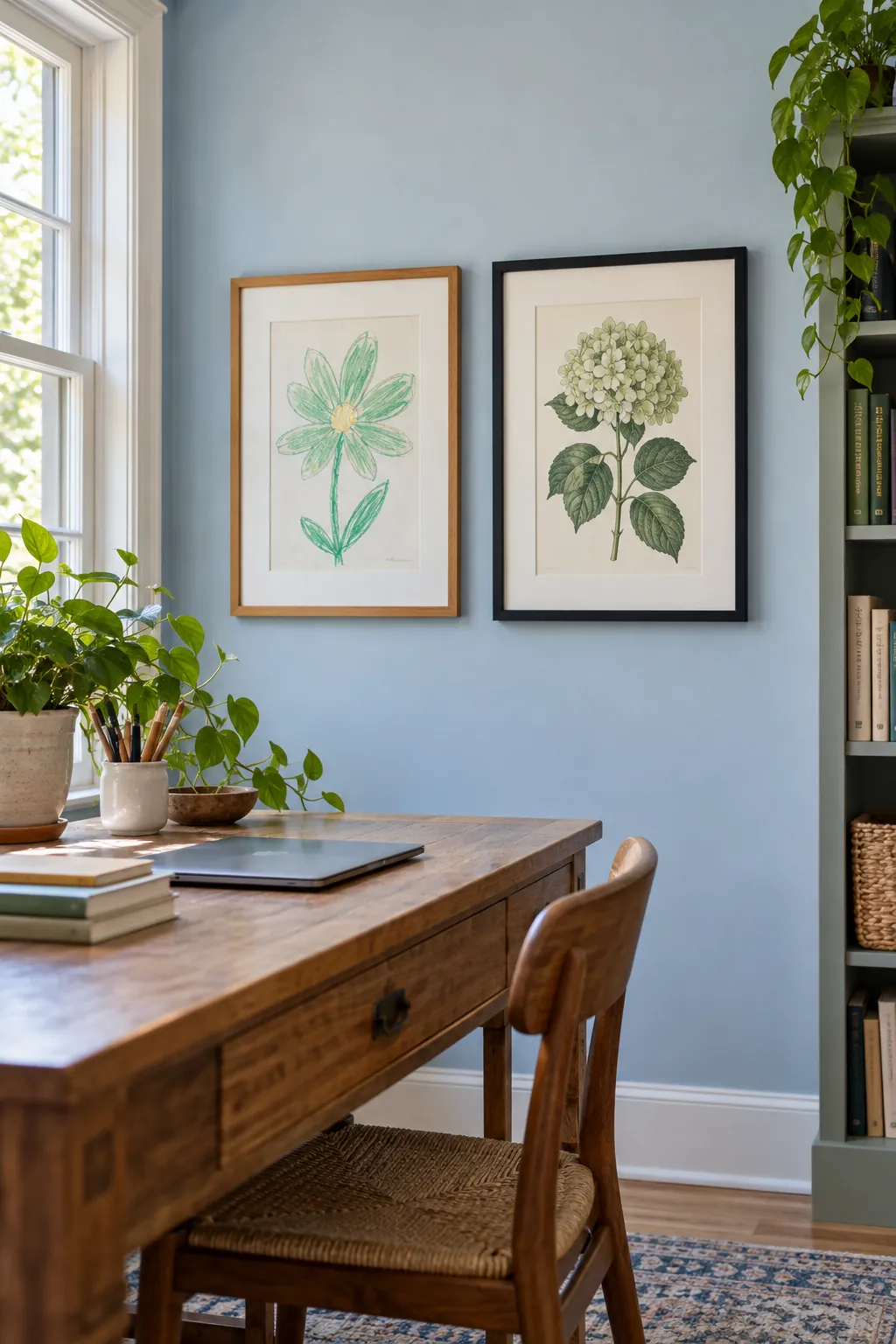
Float Irregular Paper in a Deep Frame
Show torn edges, handmade paper, or an unusual cut shape against a larger backing board. A deep frame protects raised paint and keeps the work from pressing against glazing. Use archival hinges when the original matters, and ask a professional framer when materials are thick or fragile.
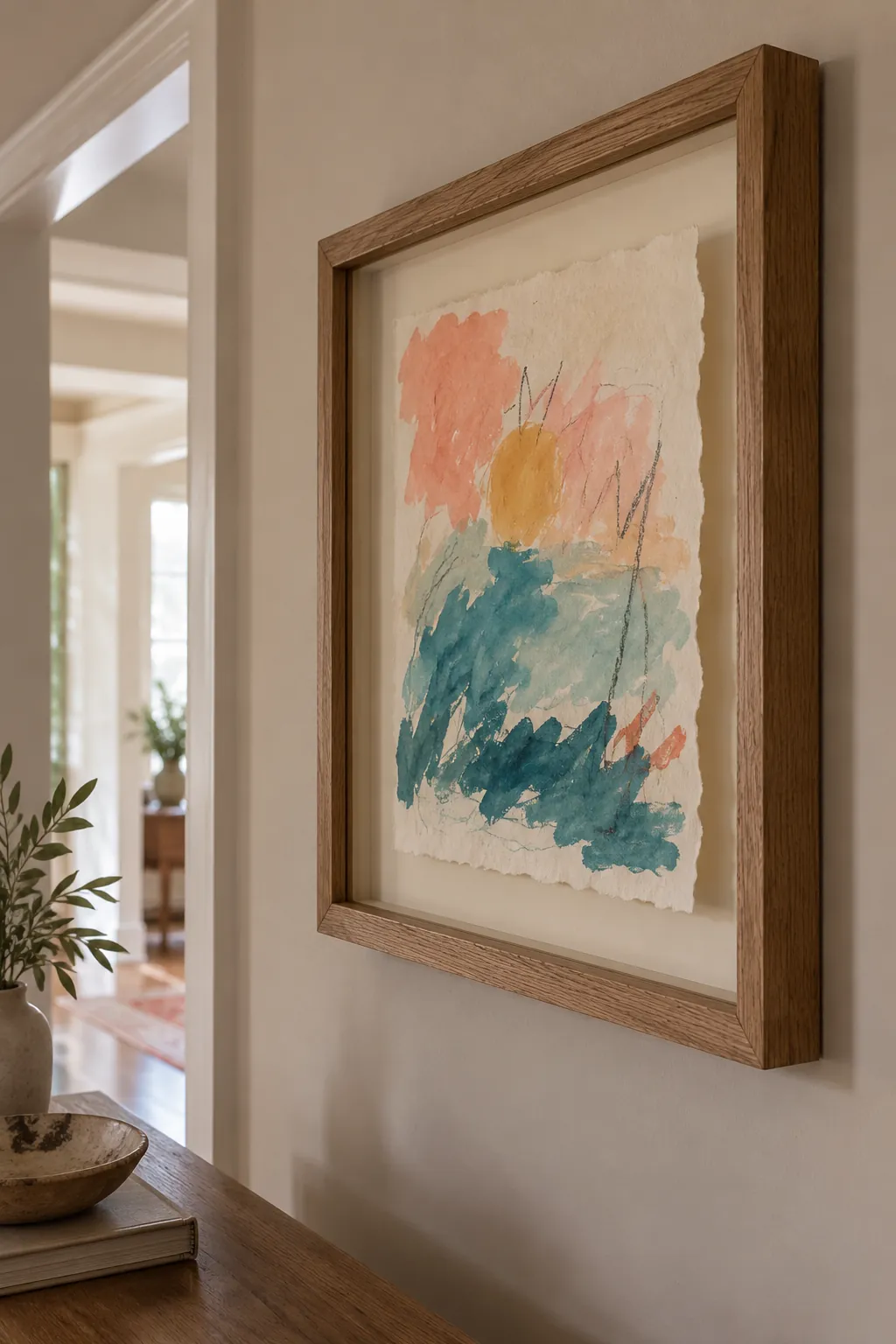
Use One Accent Color From the Artwork
Pull one restrained color from the drawing into a narrow inner mat or small frame detail. Keep the outer frame related to the rest of the gallery wall. The accent should support the artwork rather than compete with every color on the page.
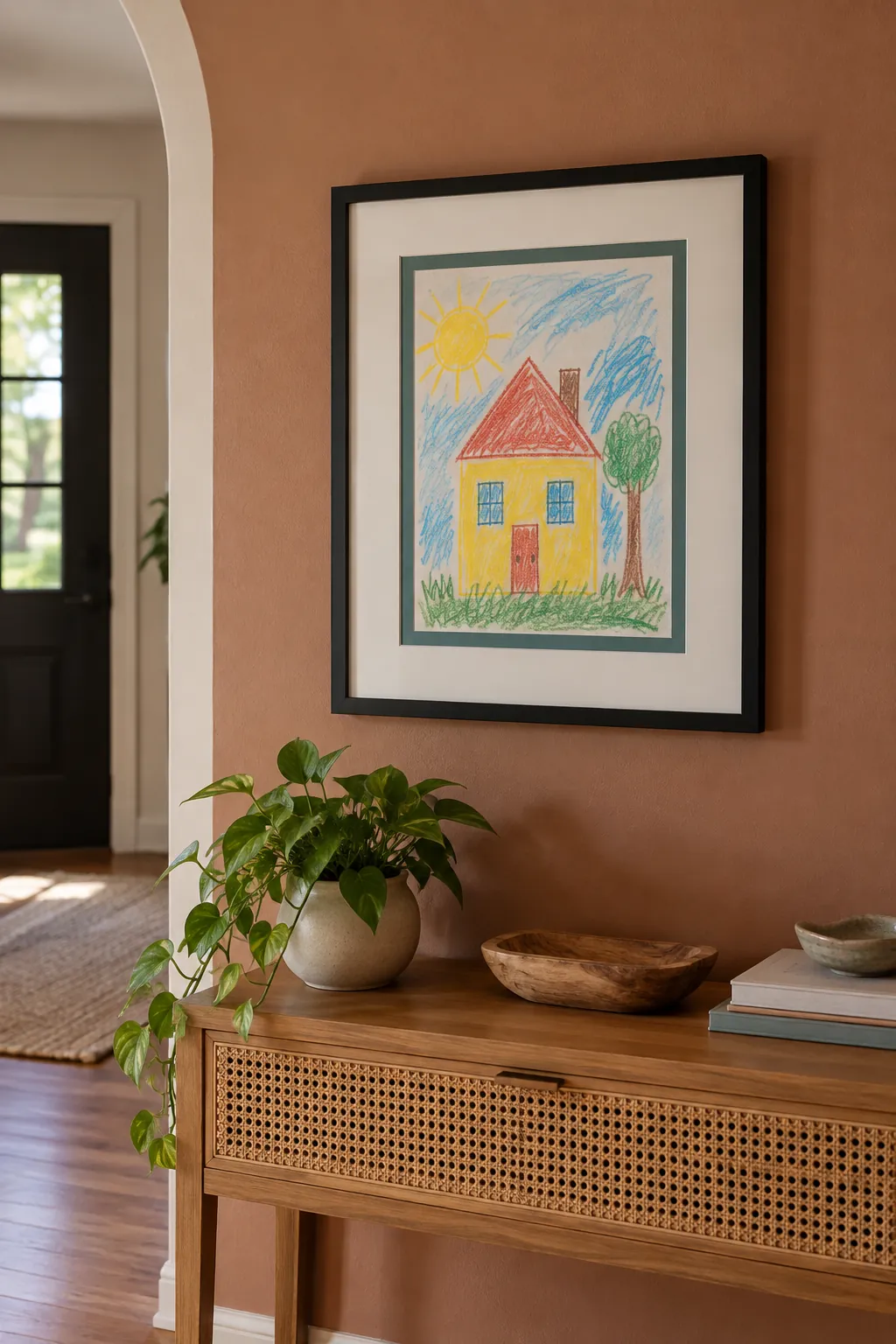
Create a Small Series From One Theme
Select three pieces about the same subject from different ages or school years. Frame them with matching mats and place them in a compact row or column. The series reads as a deliberate study while preserving visible changes in confidence and technique.
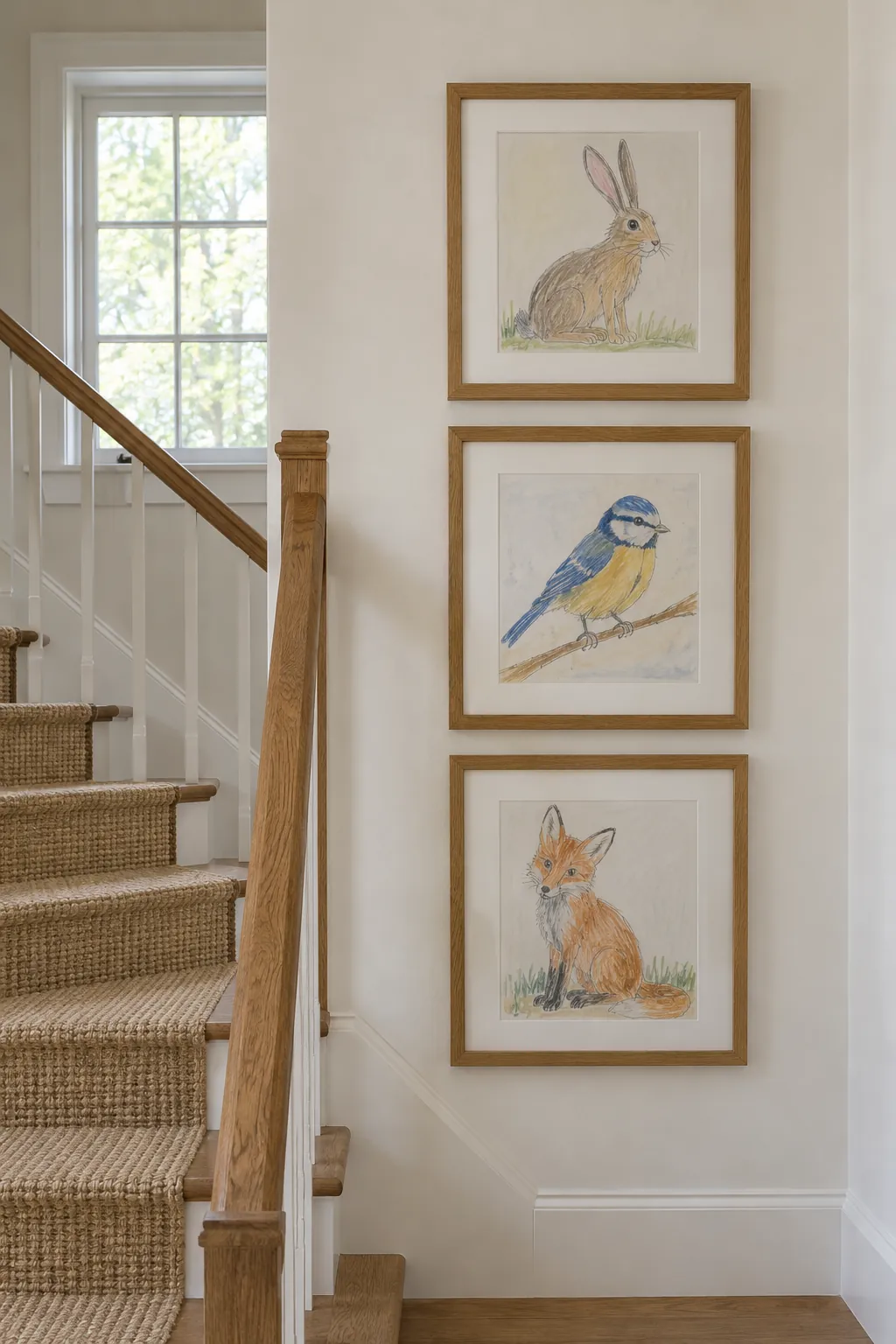
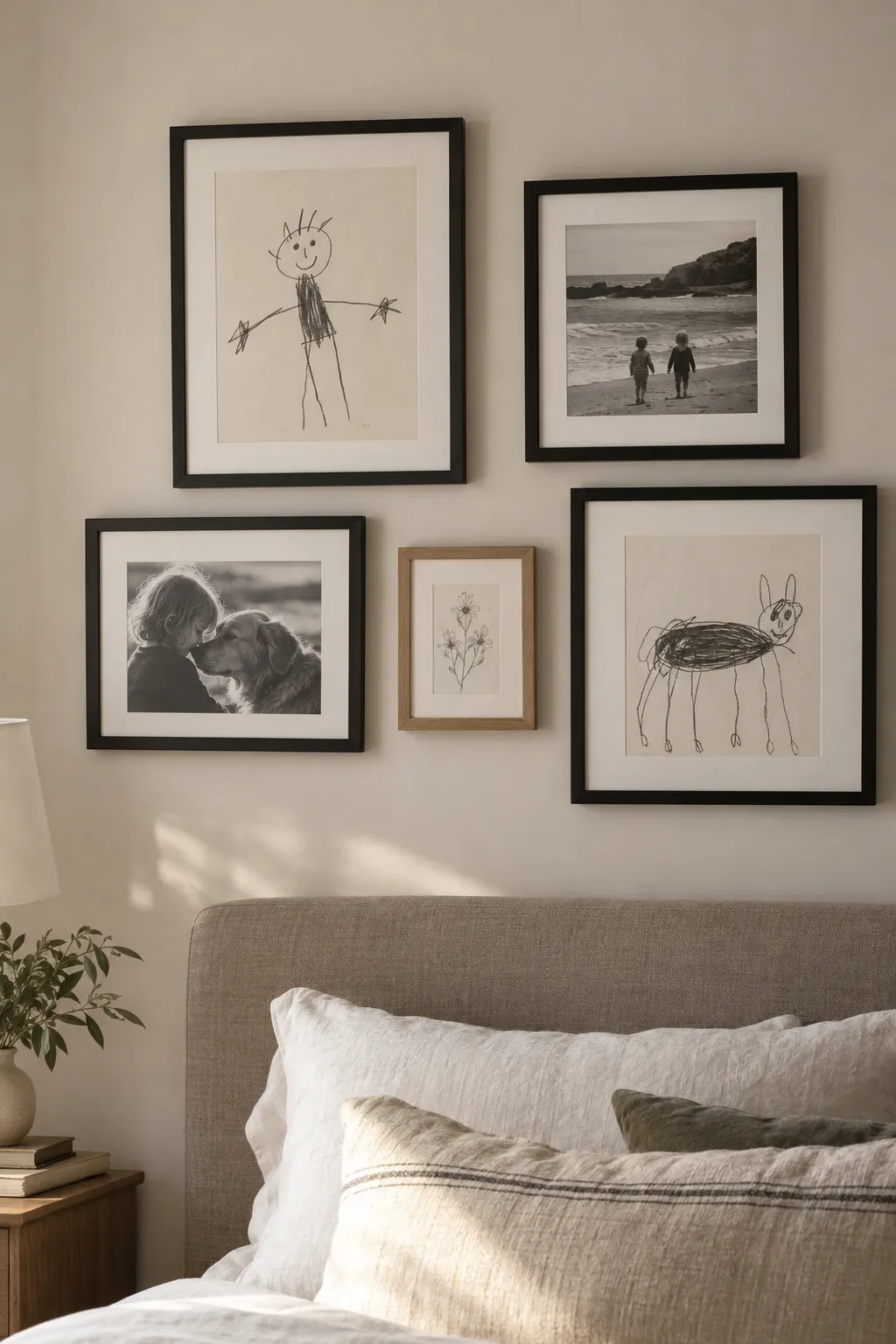
Make a Calm Monochrome Corner
Group pencil, charcoal, ink, or black marker drawings near black and white photographs. Shared value and line connect the pieces even when the subjects differ. Add one natural wood frame if the corner needs warmth.
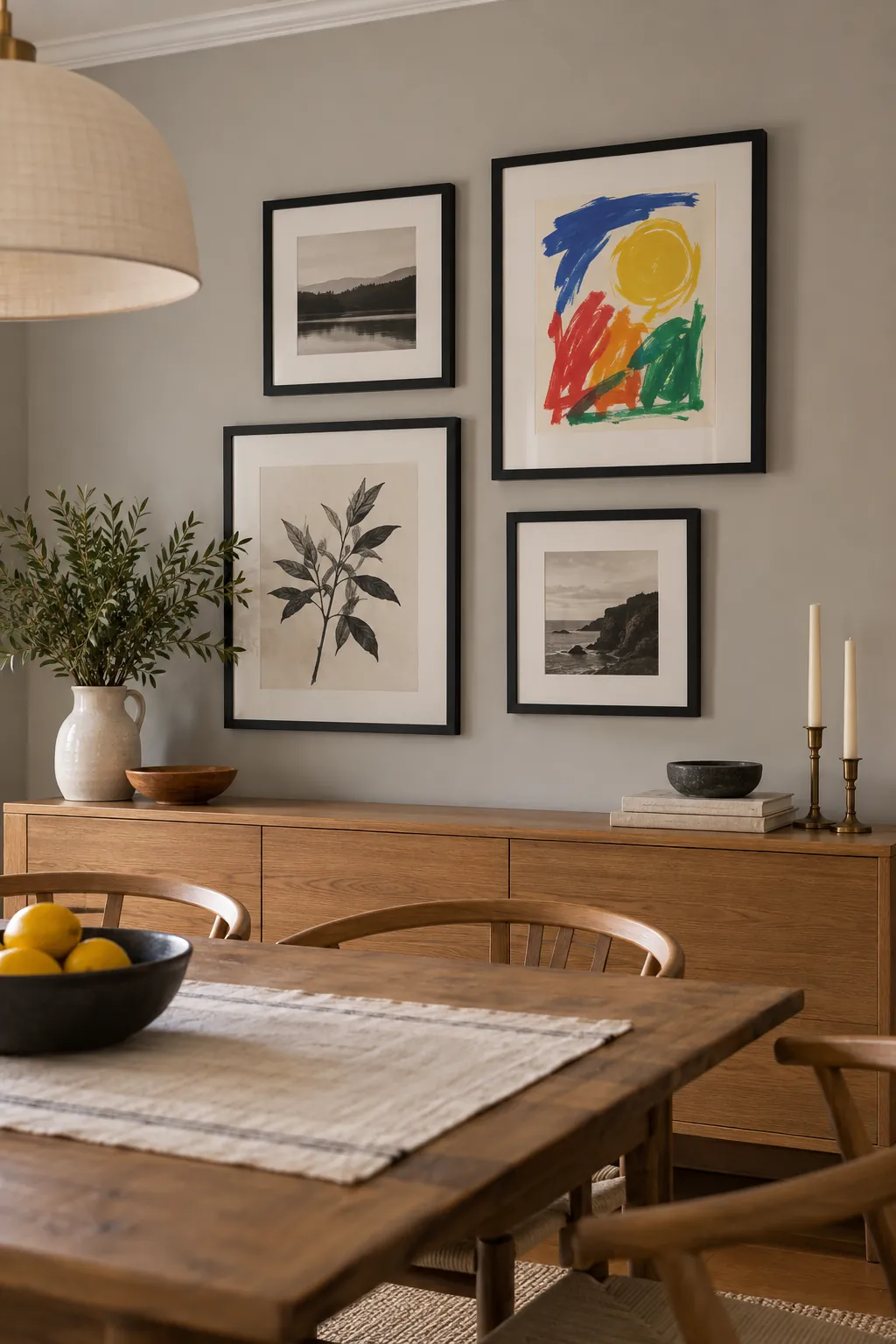
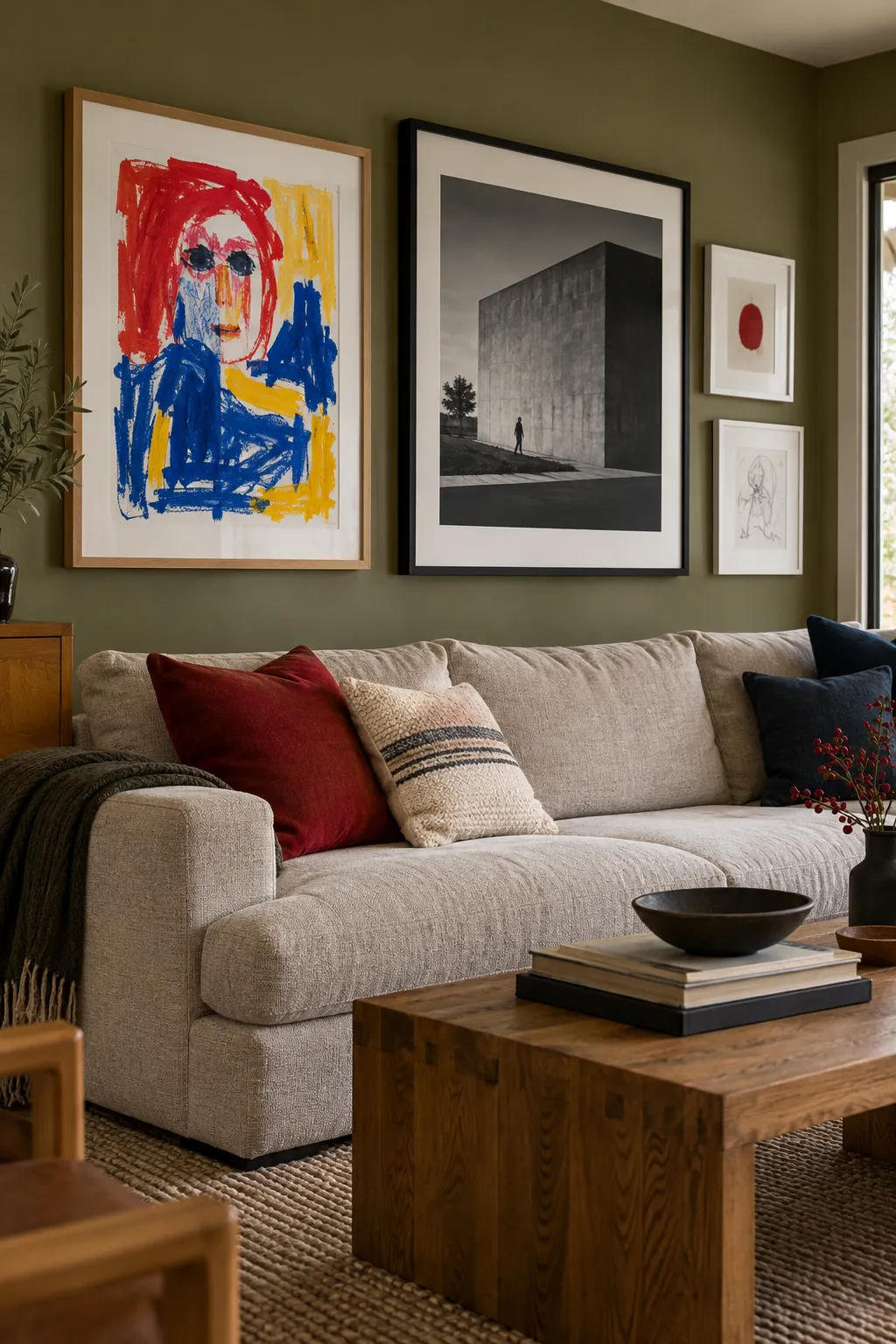
Place Bold Color Near a Visual Anchor
Hang the most saturated child’s painting near a large neutral print or a substantial dark frame. The anchor absorbs some visual weight and keeps the colorful piece from floating alone. Repeat one small color elsewhere in the wall if the arrangement still feels unbalanced.
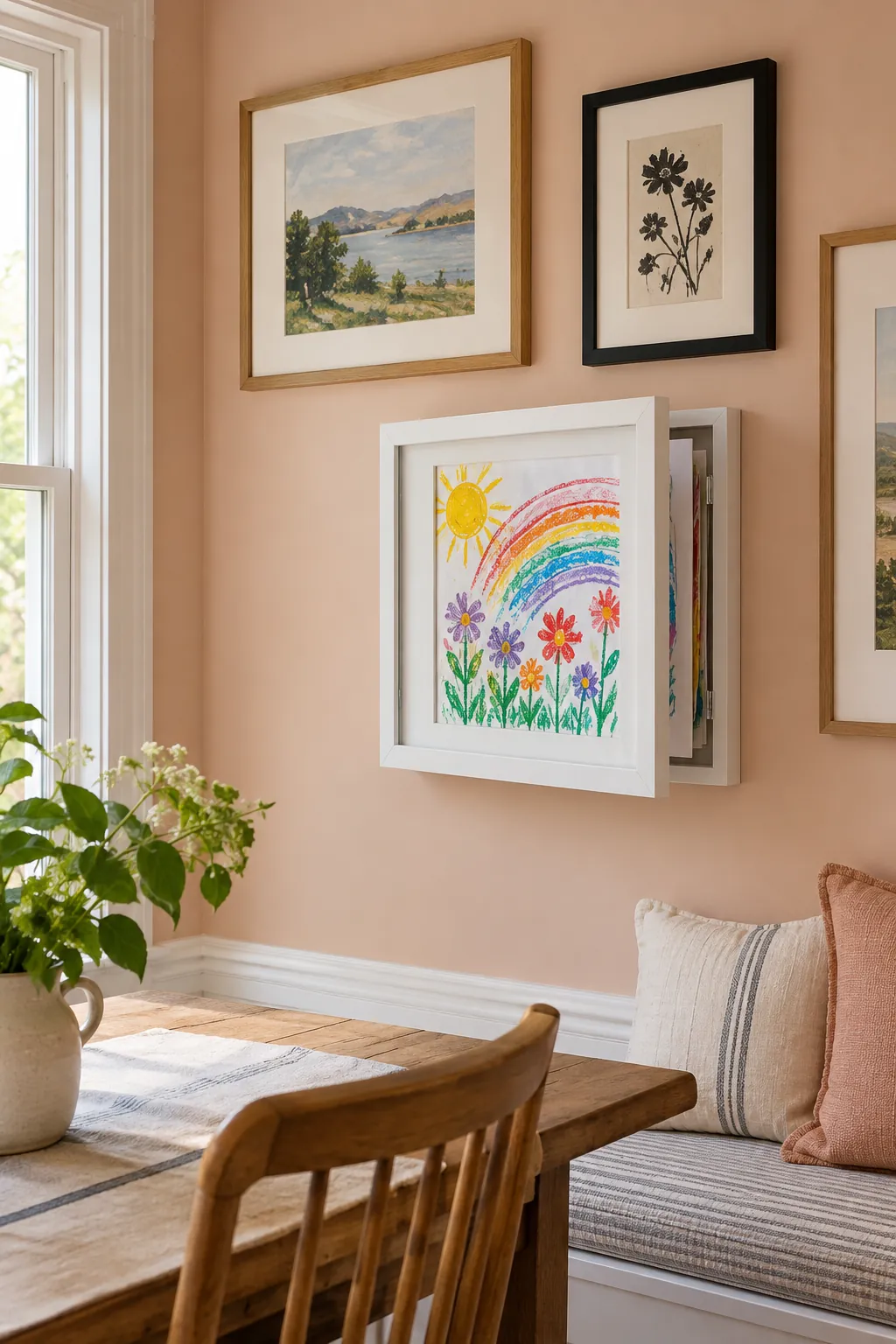
Use a Front Opening Rotation Frame
A front opening frame makes regular changes possible without removing the whole display from the wall. Choose a simple finish and a mat opening that suits the paper sizes your child uses most. Store only the number of sheets the frame manufacturer allows so the stack stays flat and protected.
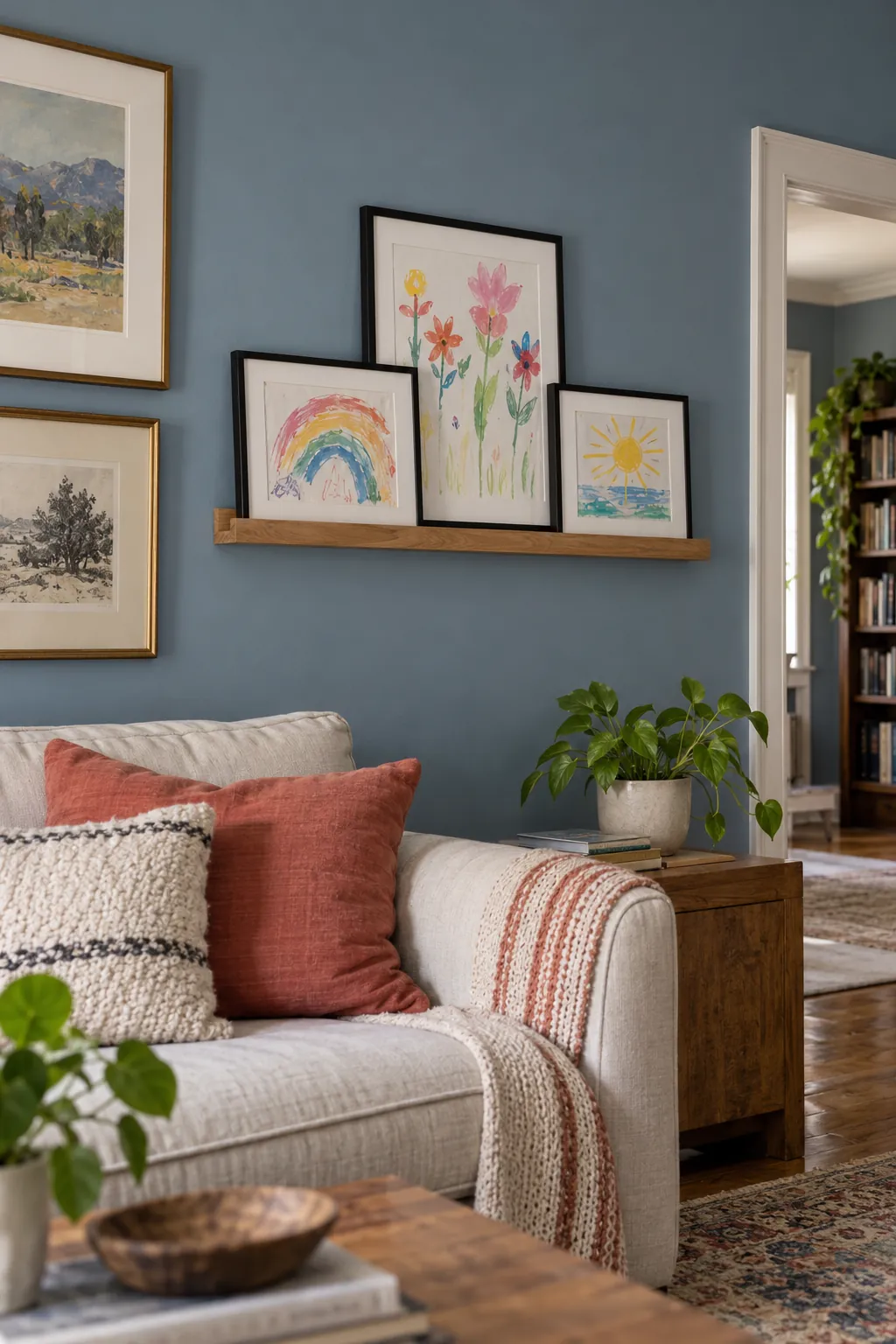
Add a Narrow Picture Ledge
Use a short ledge as one element inside the larger gallery instead of turning the whole wall into shelves. Lean two or three framed pieces with only slight overlap and keep important marks visible. A ledge is useful for frequent rotation, but secure frames where bumps or vibration could move them.
Frame a Tiny Detail as Its Own Piece
Photograph or carefully scan a favorite detail from a large school project that cannot be preserved whole. Print the detail at a useful size and keep the original file with the date and story. The close crop can sit comfortably beside photography and graphic prints.
Mix One Sculptural Piece Into the Wall
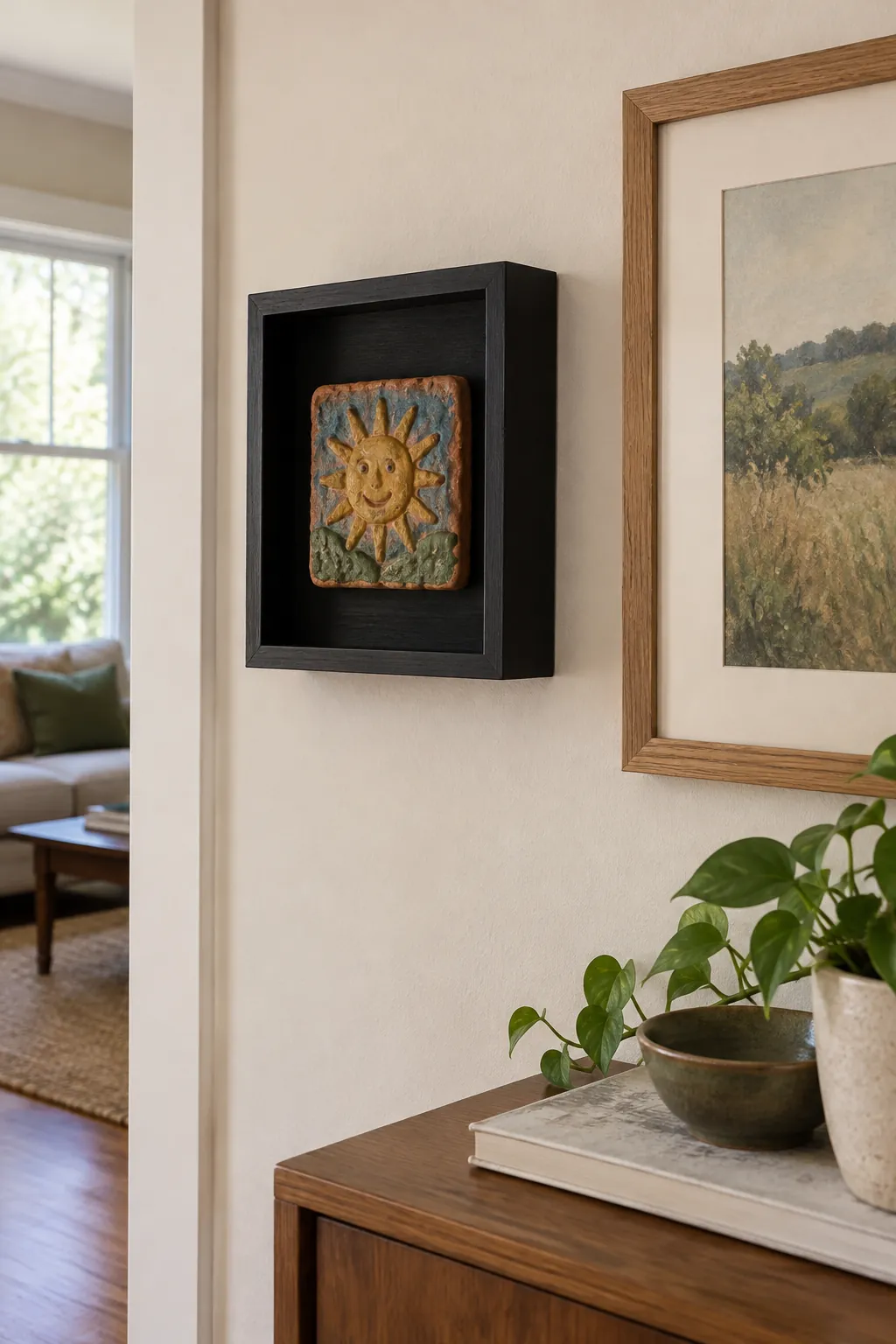
Mount a light clay tile, woven project, or shallow relief in a secure display case. Keep the case finish simple and leave extra space around it so the added depth does not crowd nearby frames. Confirm the hardware supports the total weight and keeps the object safely enclosed.
Keep the Label Quiet and Separate
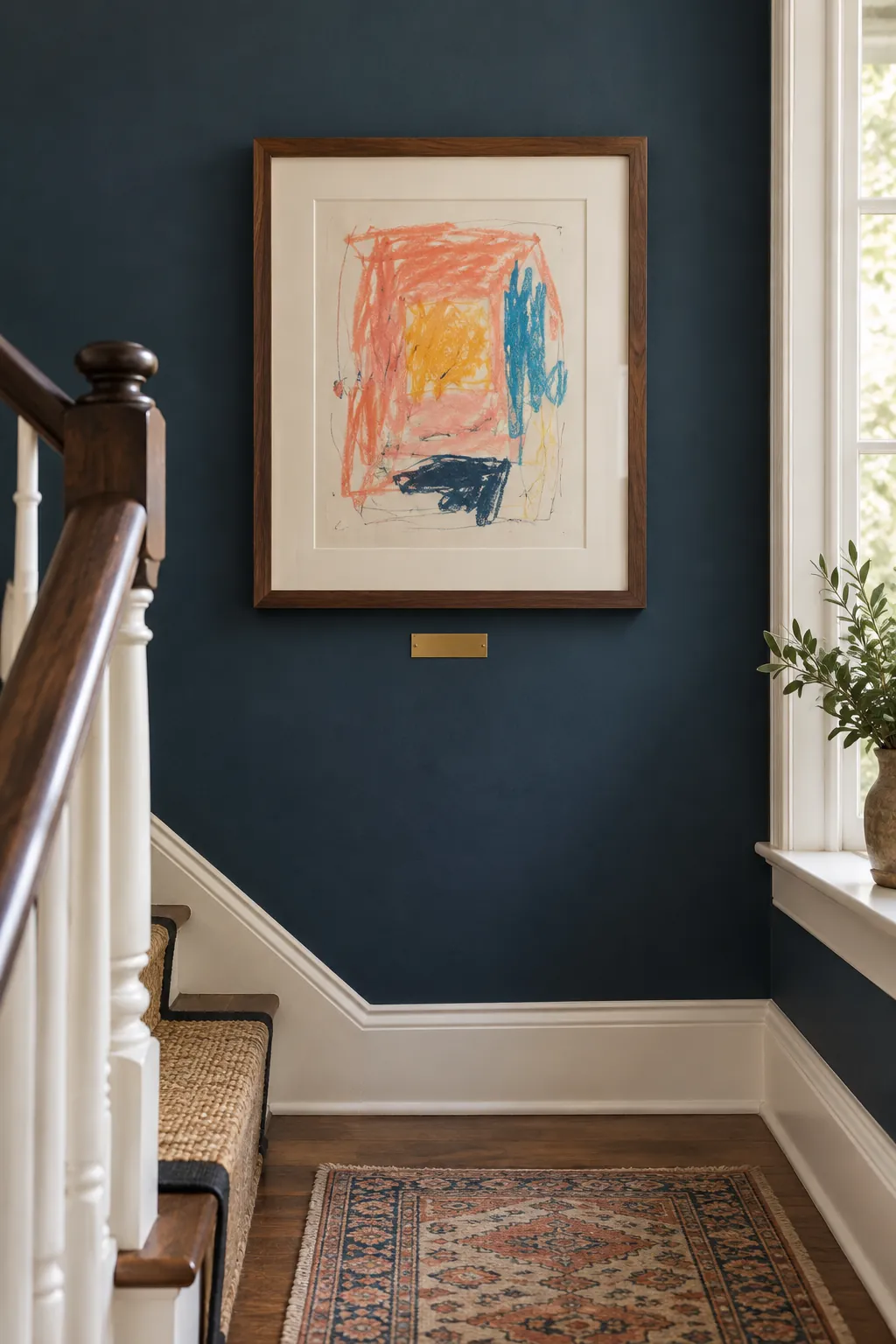
Record the child’s name, age, date, and story on the back or in a private family catalog. If a visible label matters, use one small consistent format beneath selected pieces. Avoid placing readable personal details where they will appear in photographs shared publicly.
Rotate Seasonally Without Moving the Layout
Choose several fixed frames whose openings suit common paper sizes, then swap selected art a few times each year. Photograph every displayed arrangement before changing it and store valued originals flat with suitable interleaving materials. The wall keeps its grown up structure while the child’s current interests and skills remain visible.