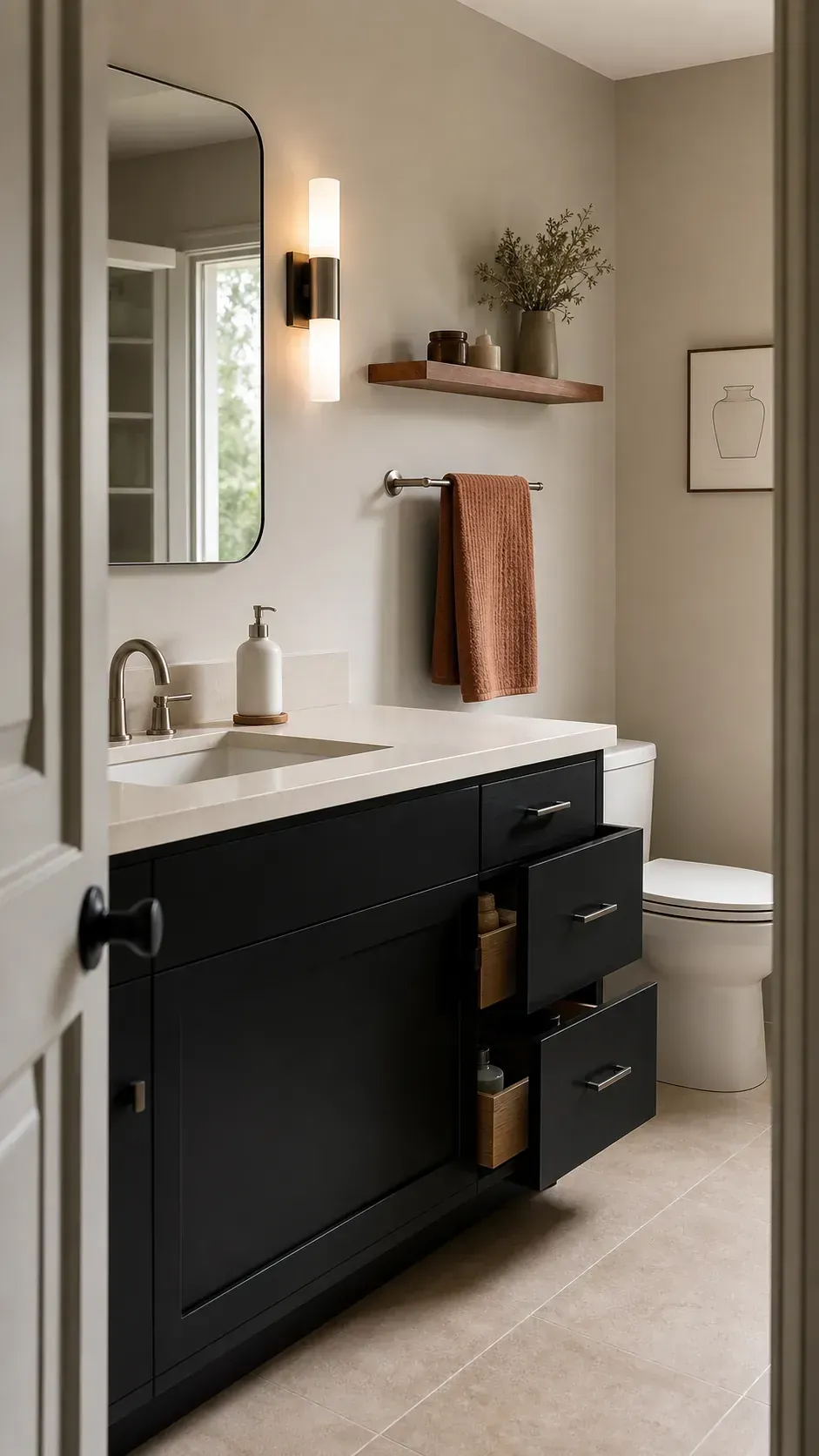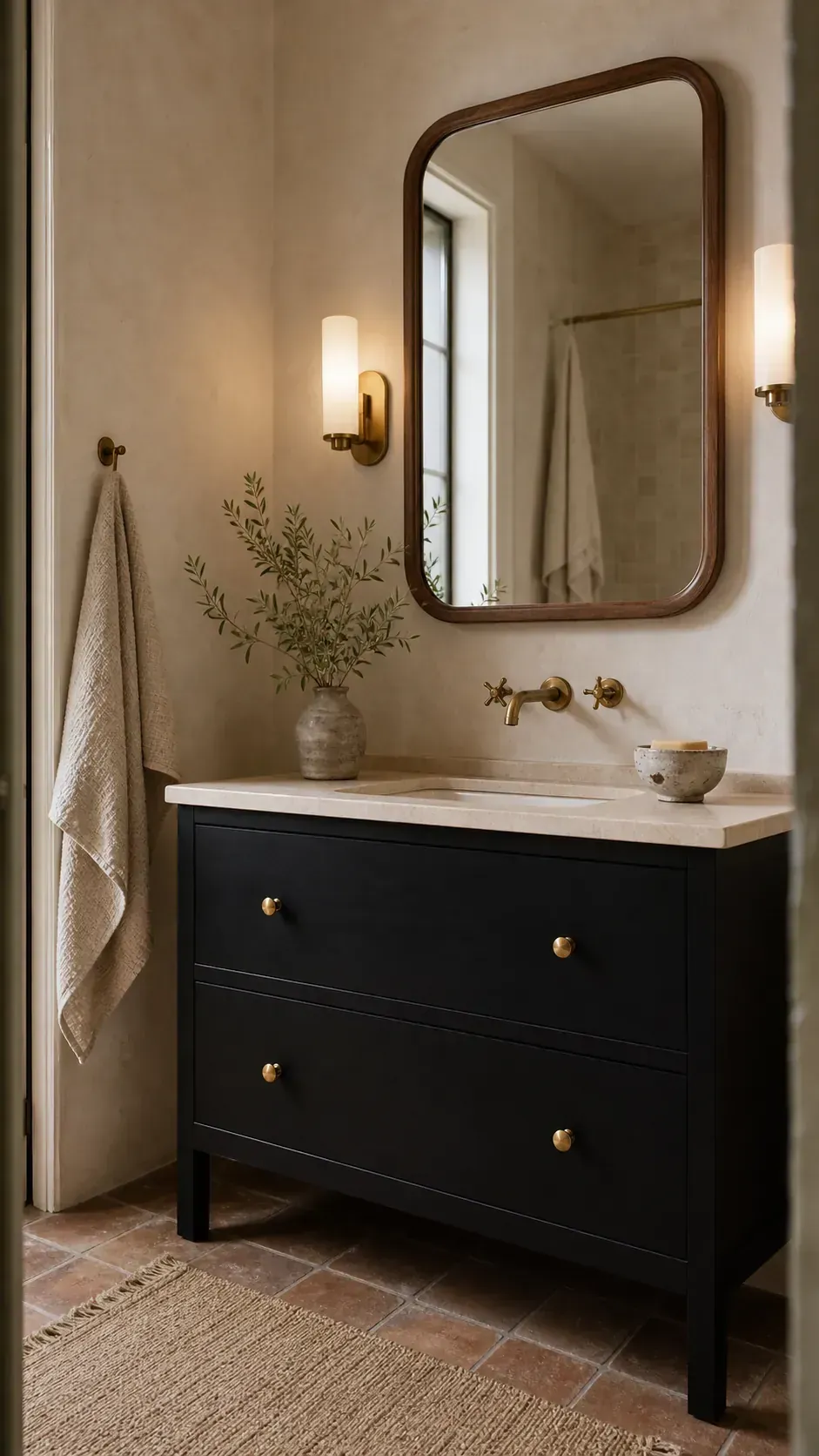
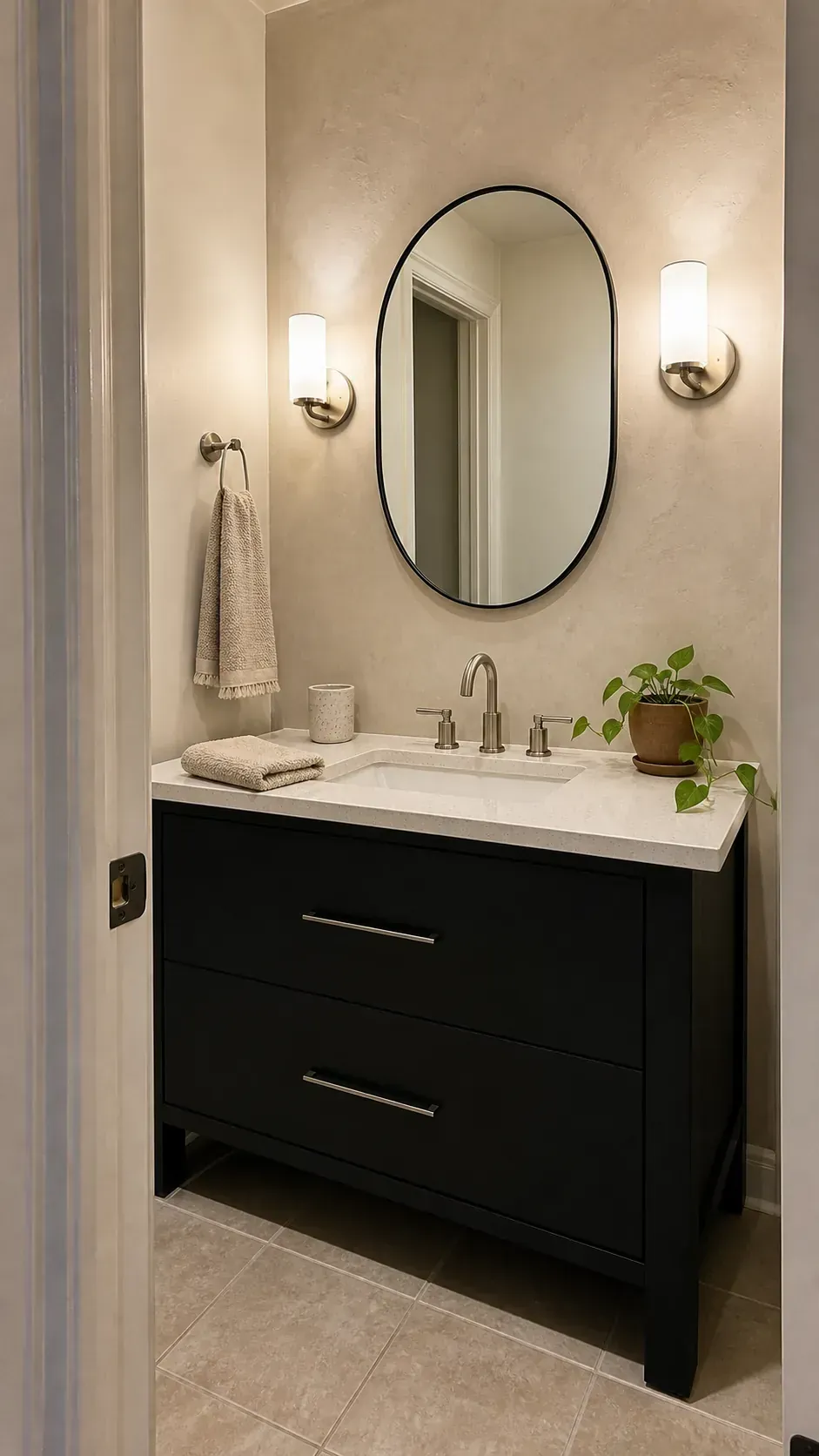
A black bathroom vanity does not have to turn the room into a hard-edged black-and-white box. The finish feels severe only when every nearby choice repeats the same sharp contrast: icy bulbs, blue-gray tile, glossy surfaces, and thin metal details. Keep the vanity as the visual anchor, then use warm light, tactile materials, softened shapes, and quieter contrast to make it feel settled and inviting.
Pair Matte Black With Creamy Plaster Walls
Matte black looks gentler against cream than it does against optic white. Choose a wall color with a muted sand, putty, or oatmeal undertone, and test it beside the vanity at morning, afternoon, and night. The goal is not a yellow wall; it is a low-contrast backdrop that lets the cabinet read as deep charcoal instead of a cutout.
A hand-troweled plaster or limewash-style finish adds tiny shifts in tone that break up a flat wall. Keep the counter pale and simple so the texture remains quiet rather than rustic. This is especially effective in windowless rooms, where perfectly white paint can appear cold under artificial light.
Add a Reeded Oak Drawer Front
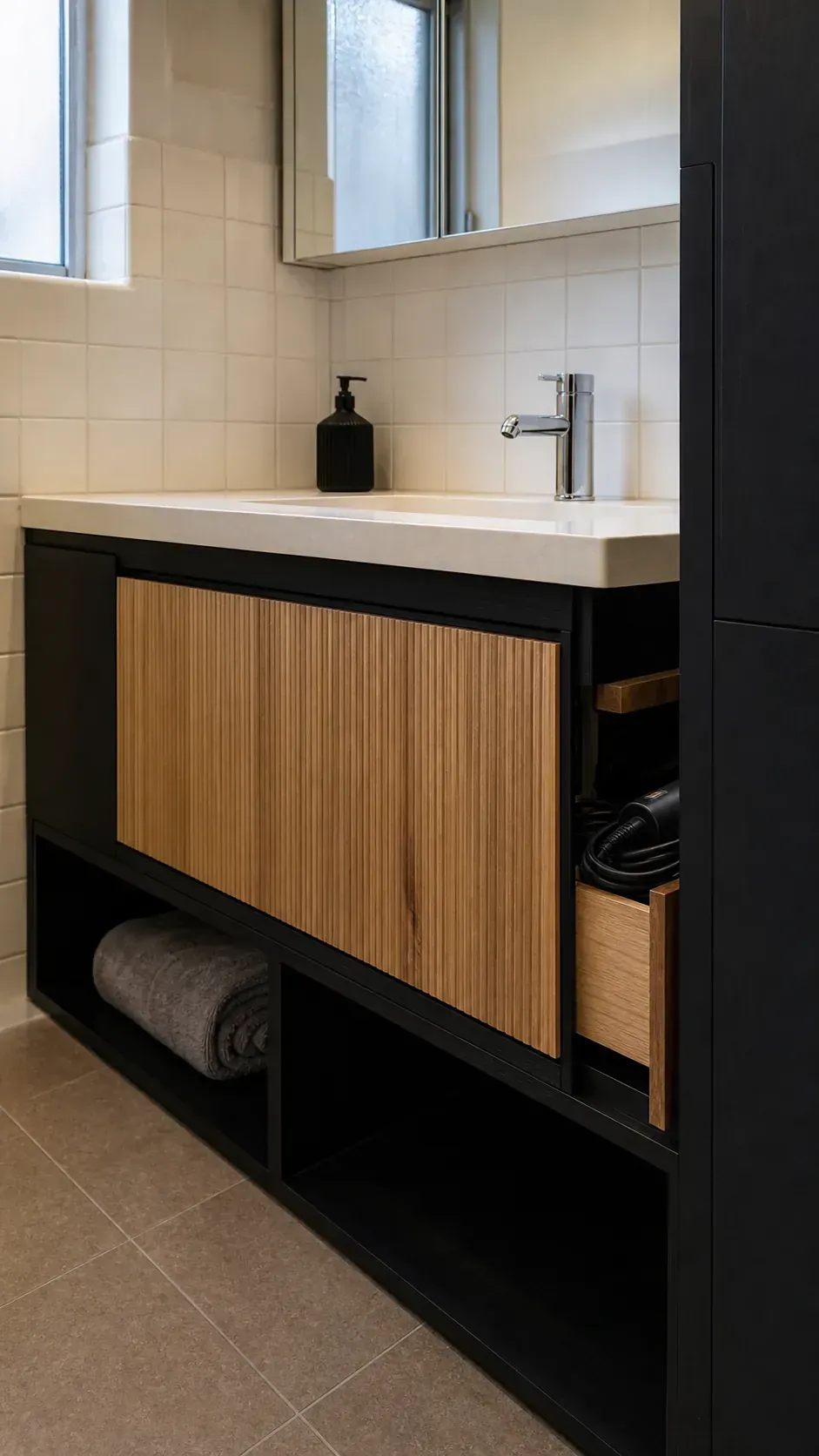
You do not need to give up the black silhouette to bring in wood. A reeded oak drawer, open shelf, or slim side panel interrupts the dark mass while preserving the vanity’s graphic shape. The vertical grain also makes a compact cabinet feel taller and more crafted.
Use a sealed, bathroom-safe finish and keep the oak tone natural rather than orange. Repeat it once in a mirror frame or stool, not everywhere. That limited repetition makes the room feel coordinated without turning the wood into a theme.
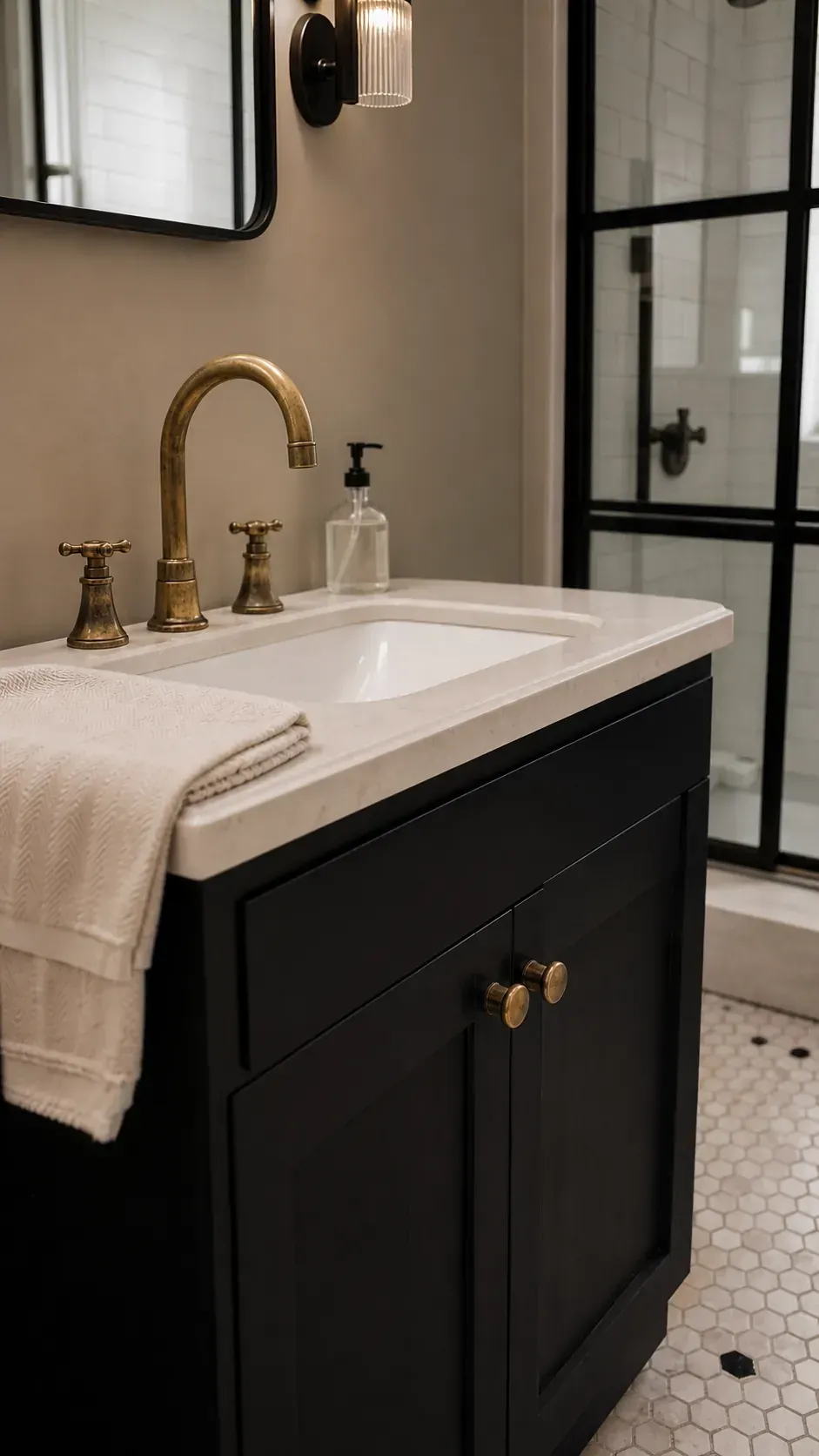
Use Aged Brass in Small Doses
Aged brass warms black because its soft brown-gold surface has depth, unlike a mirror-bright metallic finish. Use it for the faucet and two restrained knobs, then let the vanity remain the dominant element. The best finishes have subtle variation rather than a sprayed-on yellow color.
Mixing metals is fine when the roles are clear. Aged brass can sit at the vanity while a black shower frame recedes elsewhere. Avoid matching every hook, hinge, and accessory; too much brass can feel staged and can compete with the soft mood you are building.
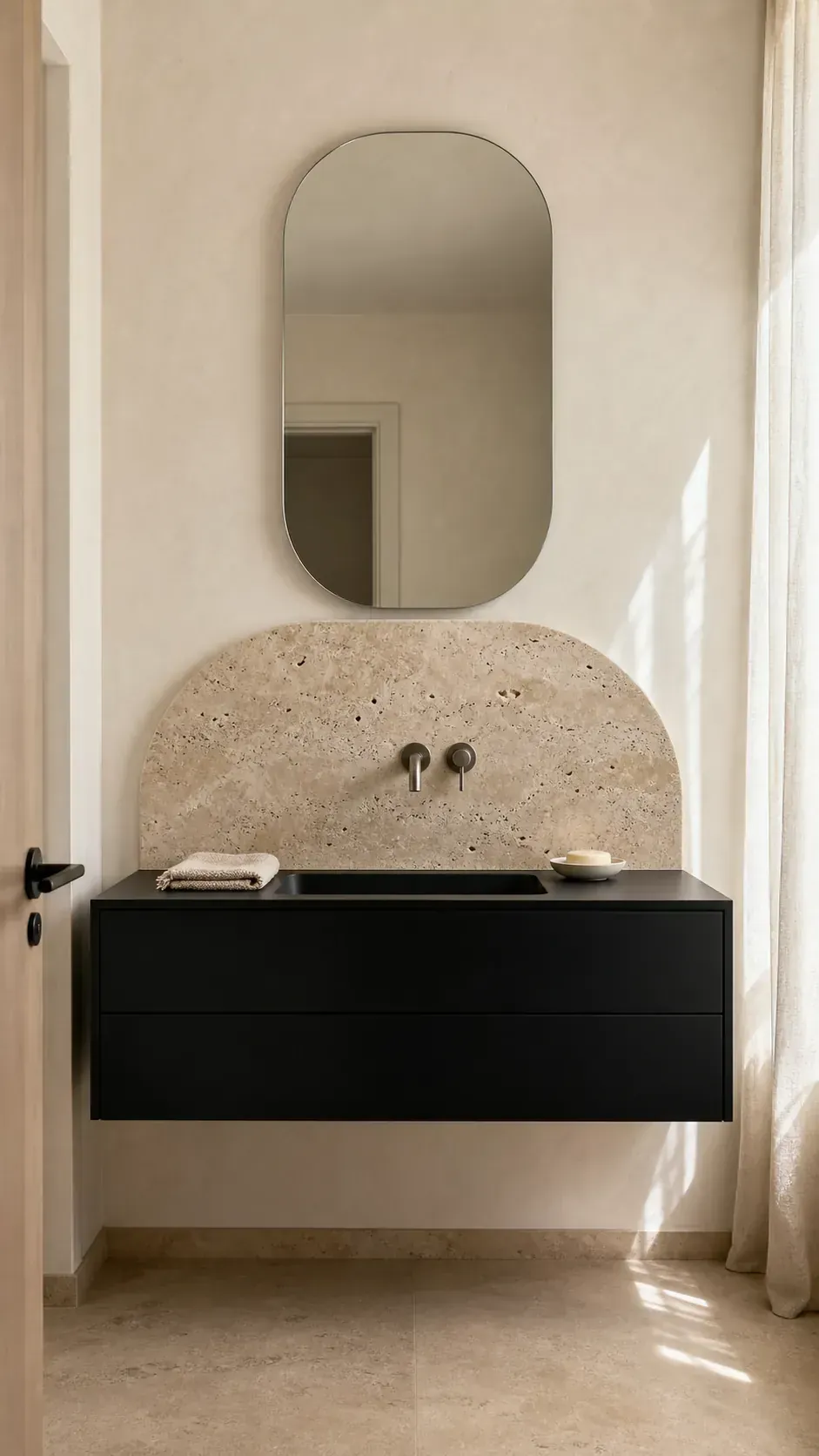
Choose a Rounded Travertine Backsplash
Travertine brings warm mineral color and irregular pores to the vanity zone. Instead of a rigid rectangular splash, try a shallow arch or a slab with softened top corners. The curve eases the cabinet’s straight lines, while the stone bridges black paint and warmer bathroom decor.
Seal porous stone correctly and confirm the installer uses a bathroom-appropriate product. If real travertine is outside the budget, a warm porcelain with convincing variation can create the same color relationship with less maintenance.
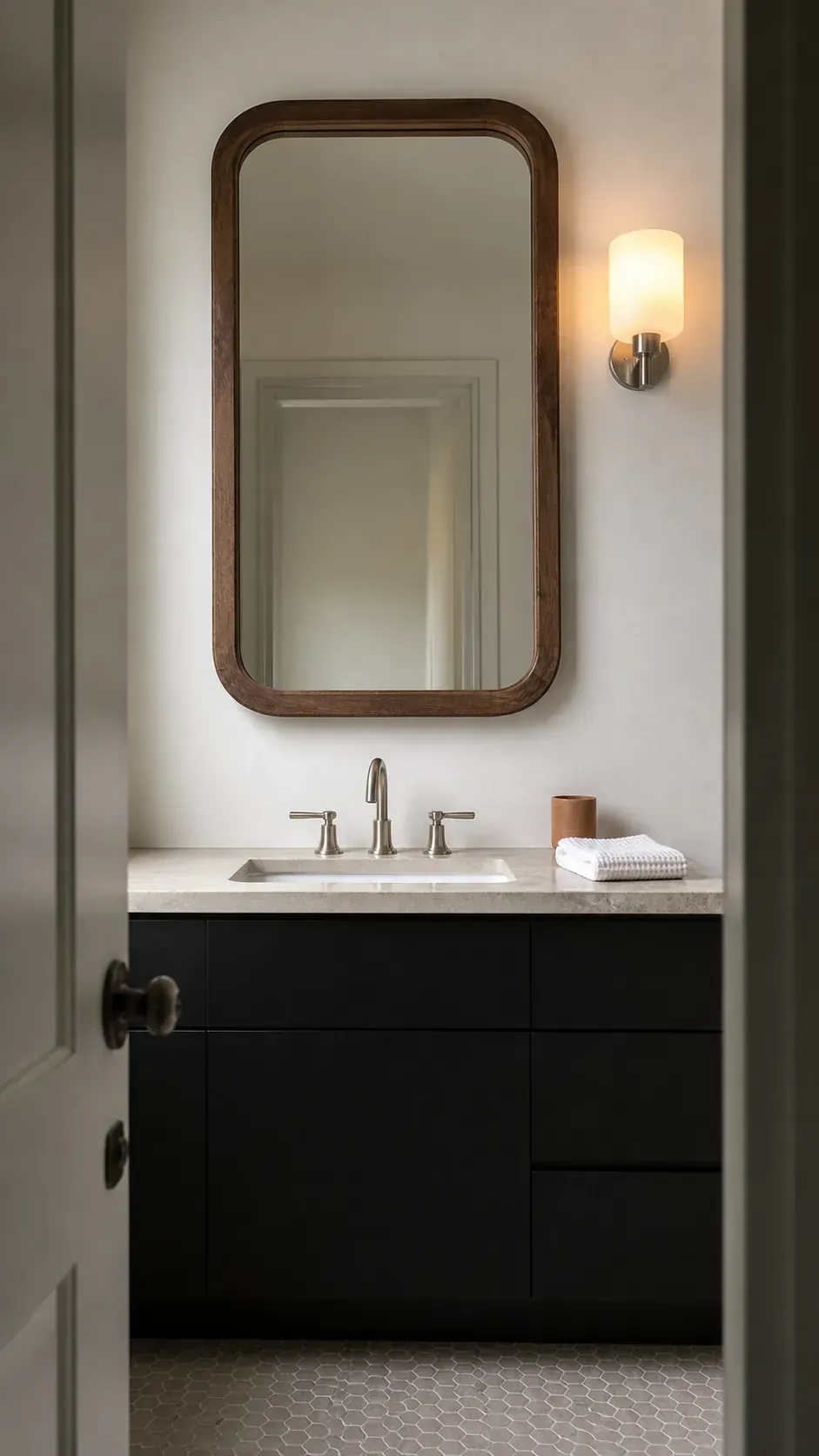
Frame the Mirror in Walnut
A walnut mirror frame places warmth at eye level, where it has more influence than a small countertop accessory. Choose a softly rounded rectangle or oval to counter the vanity’s blocky geometry. A medium-dark walnut holds its own beside black without creating another high-contrast stripe.
Scale matters: leave enough breathing room between the frame, faucet, and sconces. A mirror squeezed tightly between fixtures makes the whole arrangement feel tense. A slightly smaller mirror with a generous wood frame often looks calmer.
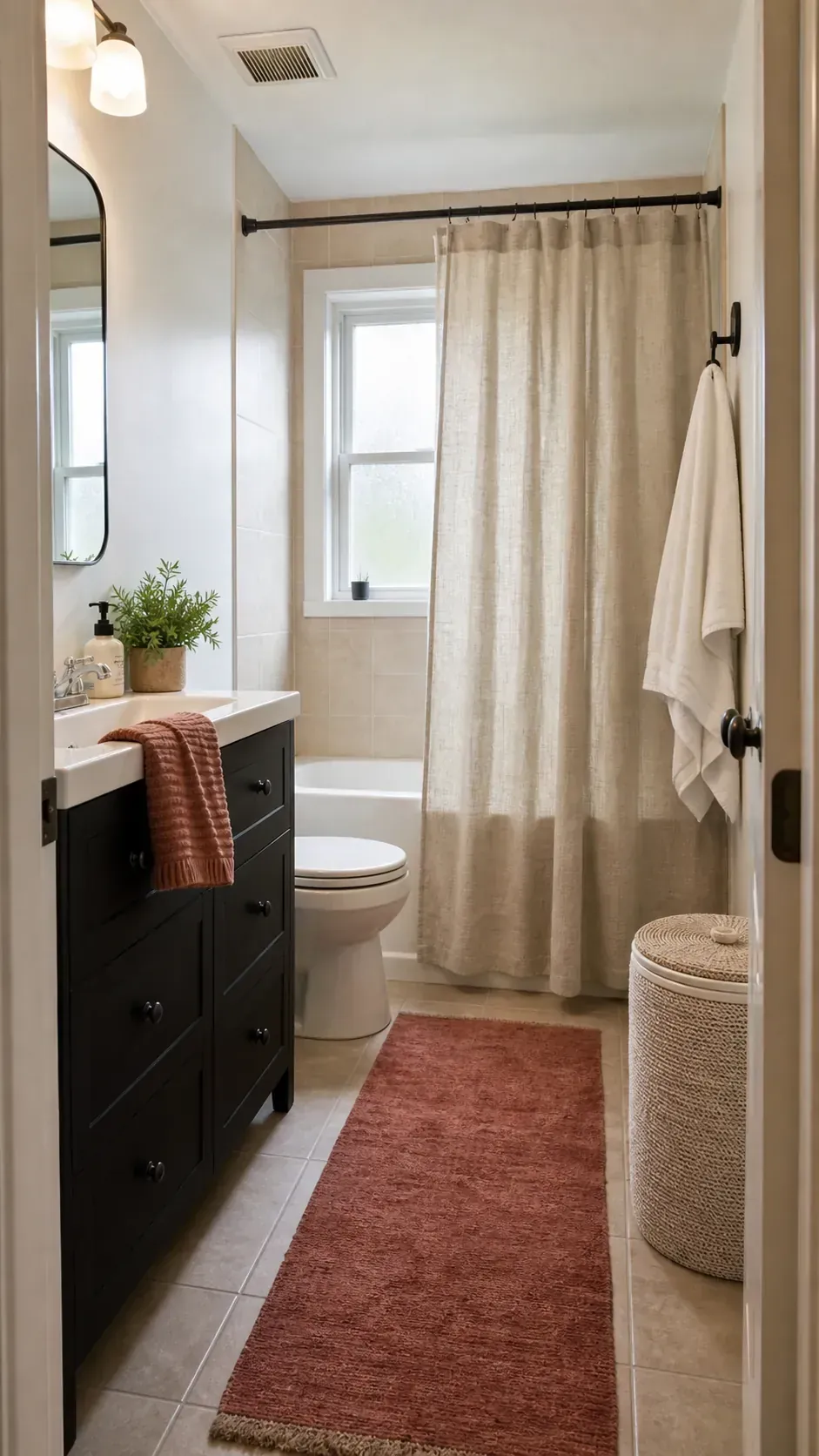
Layer Flax Linen and Woven Towels
Textiles are the fastest reversible way to soften black accents. A flax-look shower curtain, ribbed hand towel, and washable low-pile runner introduce movement and absorb some of the room’s visual glare. Choose useful pieces rather than adding decorative clutter to the counter.
In a humid bathroom, favor quick-drying towels and a rug that can be washed often. Keep the palette to two or three related tones—oatmeal, clay, and muted olive work well—so the texture remains the feature.
Bring in Muted Olive Tile
Muted olive gives black a natural context and avoids the brittle effect of monochrome tile. Use a handmade-look zellige or satin ceramic behind the vanity, where gentle tonal variation catches the light. The color should read earthy and gray-green, not bright or glossy.
If permanent tile is not possible, bring olive into paint, towels, or a shower curtain instead. The principle is the same: place a mid-tone color between the black vanity and the room’s palest surface.
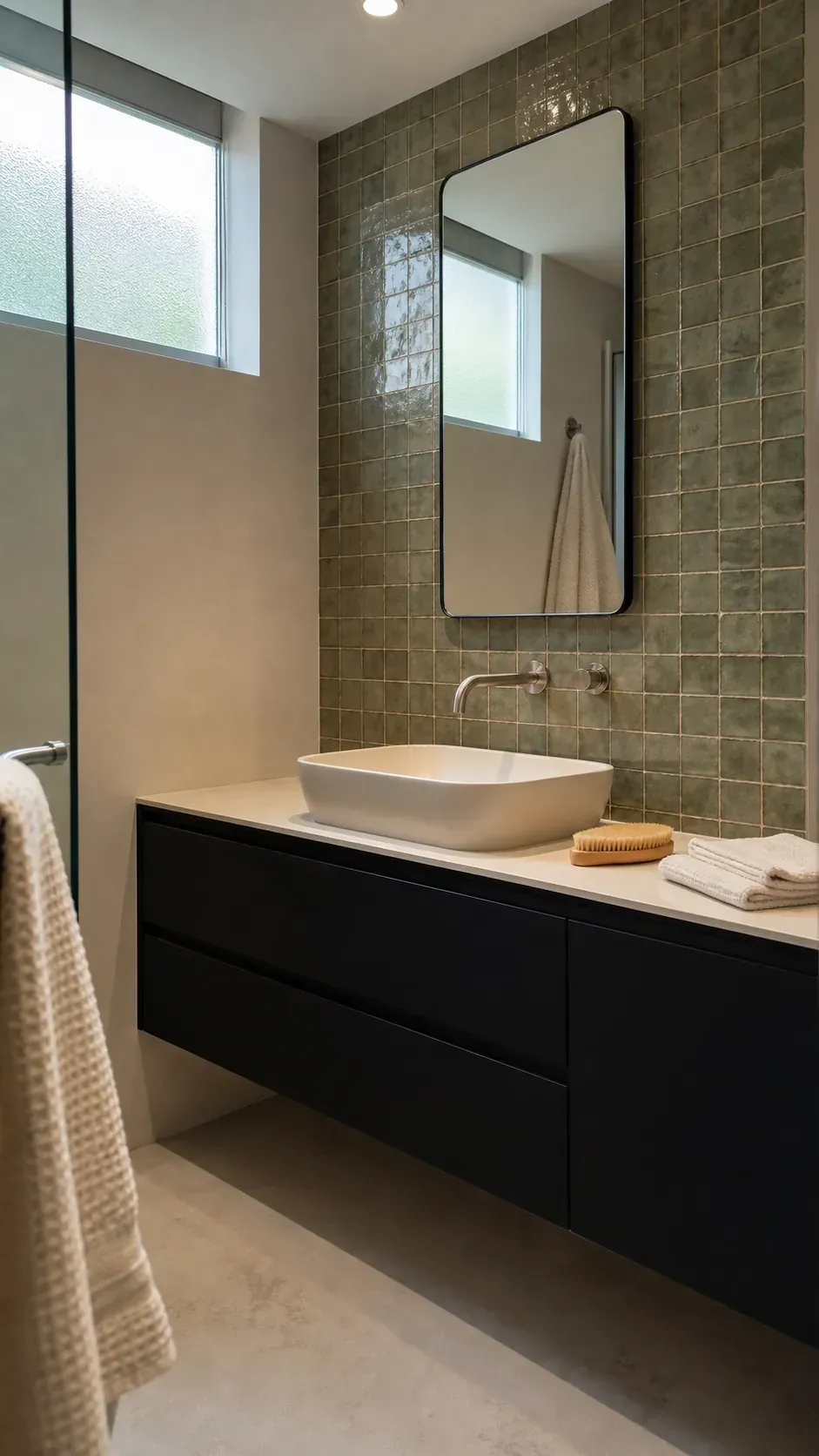
Install Warm Globe Vanity Lighting
Lighting can make or break a black vanity. Frosted globe sconces diffuse light across faces and surfaces, reducing the sharp reflections created by exposed clear bulbs. Choose high-quality warm-neutral bulbs and check color rendering so skin, towels, and stone still look accurate.
Place sconces near face height when the wiring allows, or use a broad shaded fixture above the mirror. Do not rely on a single cool ceiling light; it exaggerates shadows beneath the cabinet and makes pale tile look bluish.
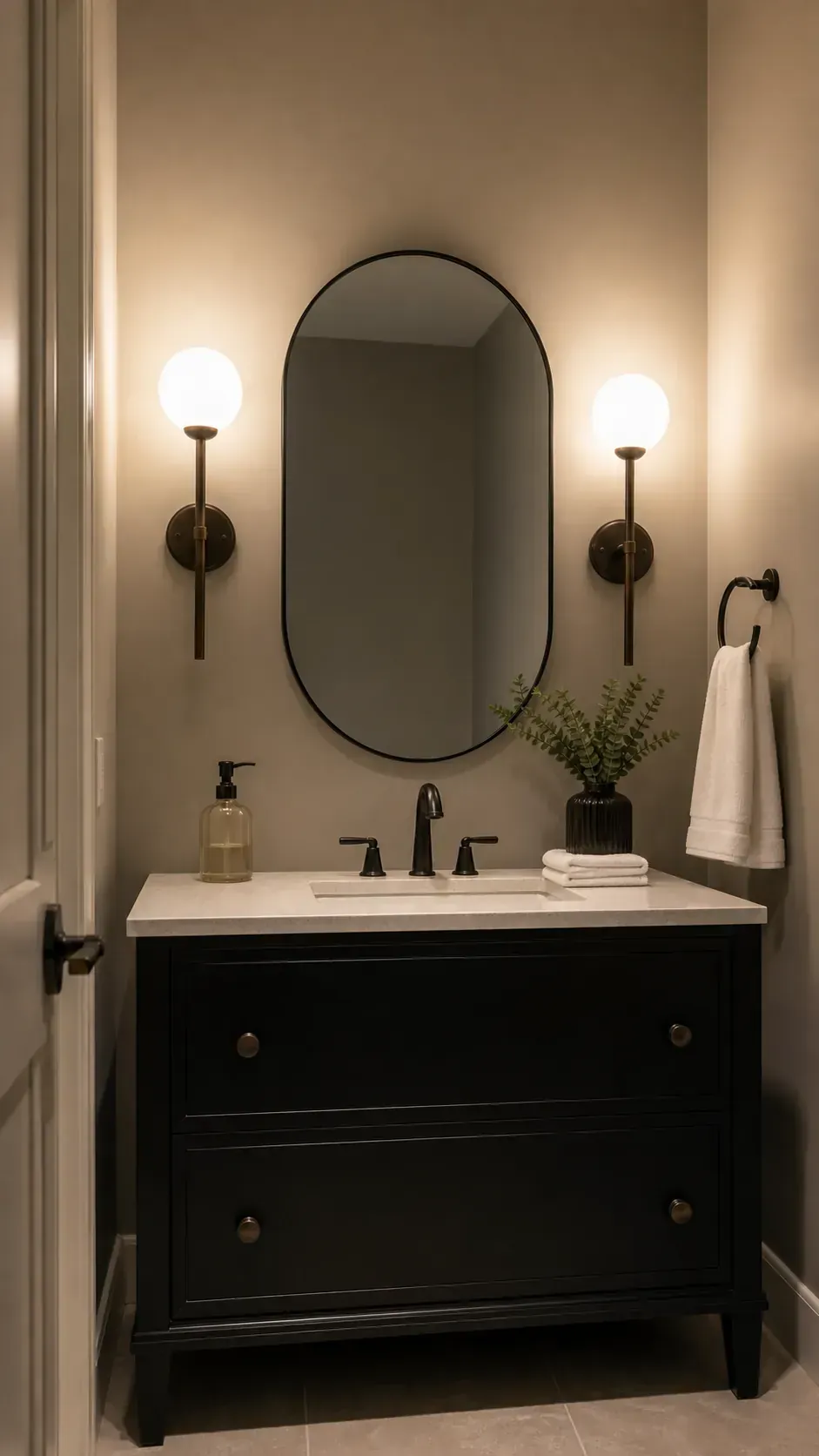
Set It Against Blush Clay Walls
A dusty blush or pale terracotta wall makes black feel sophisticated rather than stark. Look for a mineral, muted version with brown or gray in the undertone. Against it, the vanity reads almost like dark furniture instead of a severe modern fixture.
Balance the color with a pale stone counter and simple towels. Because bathrooms amplify color through mirrors and tile, sample a large patch before committing. The right shade should still feel calm under evening vanity lighting.
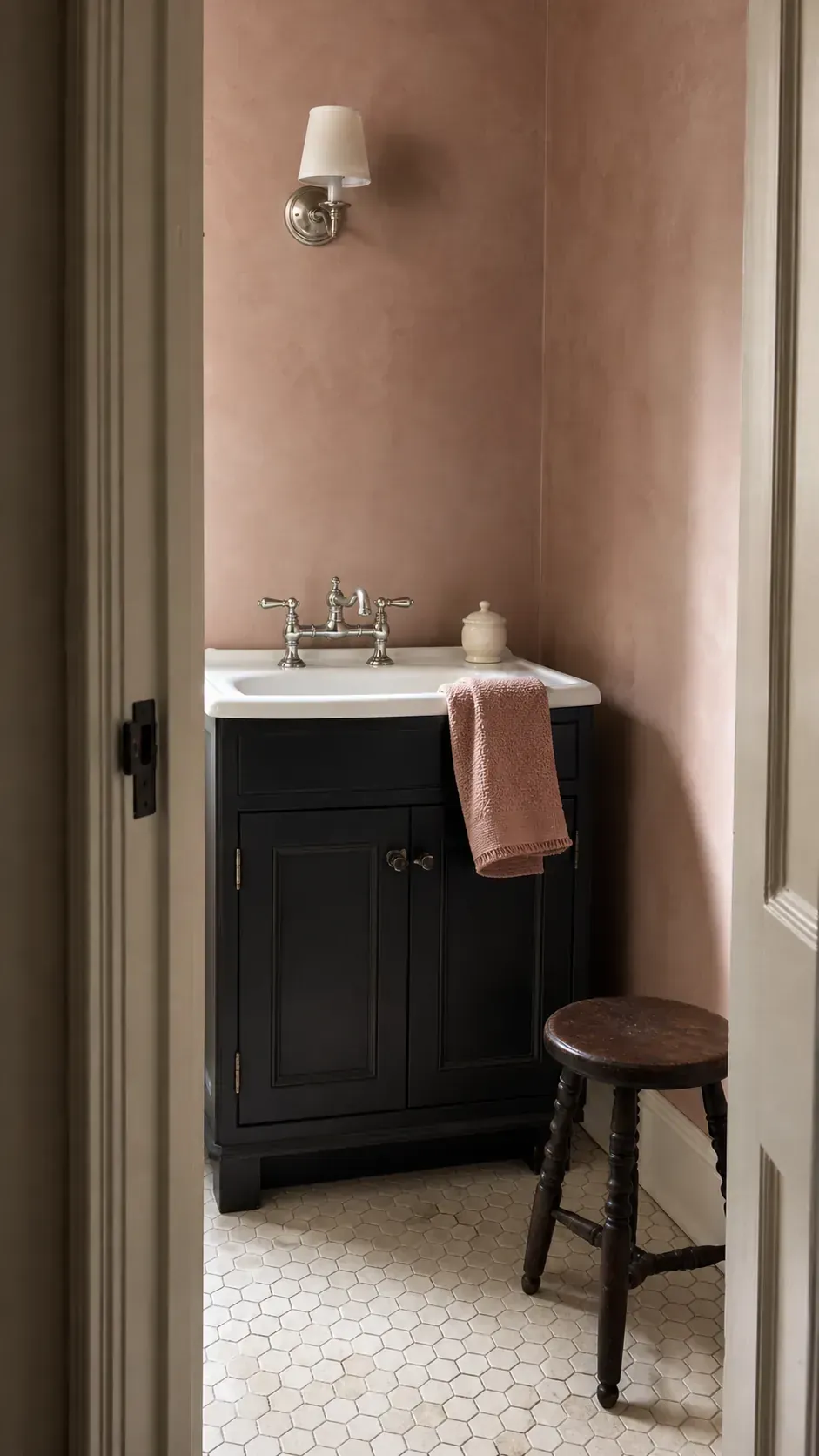
Float the Vanity Over Pale Terrazzo
A wall-mounted black vanity feels lighter because the floor continues underneath it. Pale terrazzo with small cream, tan, and charcoal chips connects the cabinet to the rest of the palette without creating a black border around the room.
Mount it high enough to clean underneath comfortably and confirm the wall can support the cabinet and counter. Add drawers rather than a large open cavity to protect everyday storage. The open floor is most convincing when it remains clear, not filled with baskets.
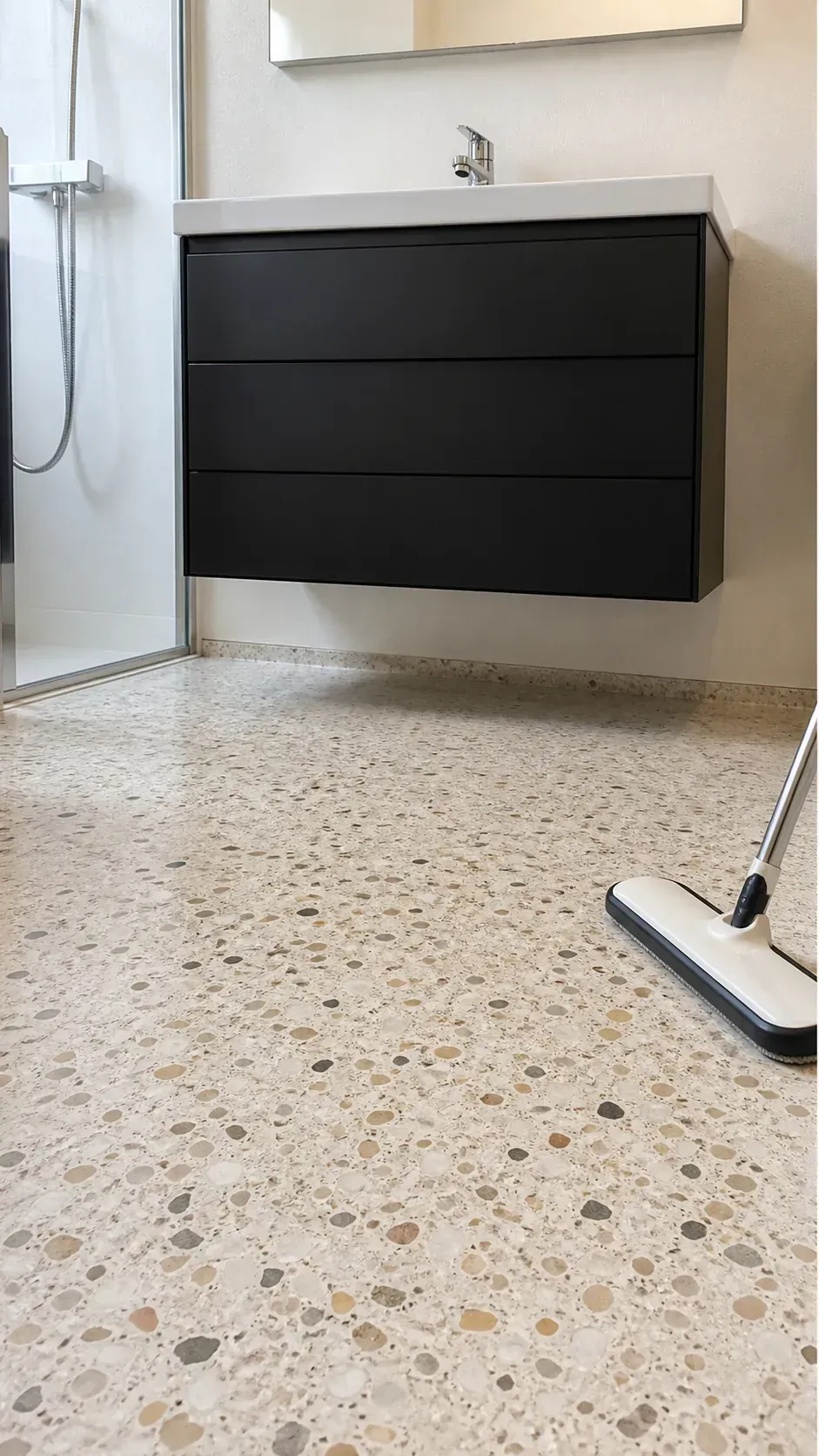
Top It With Honed Warm Marble
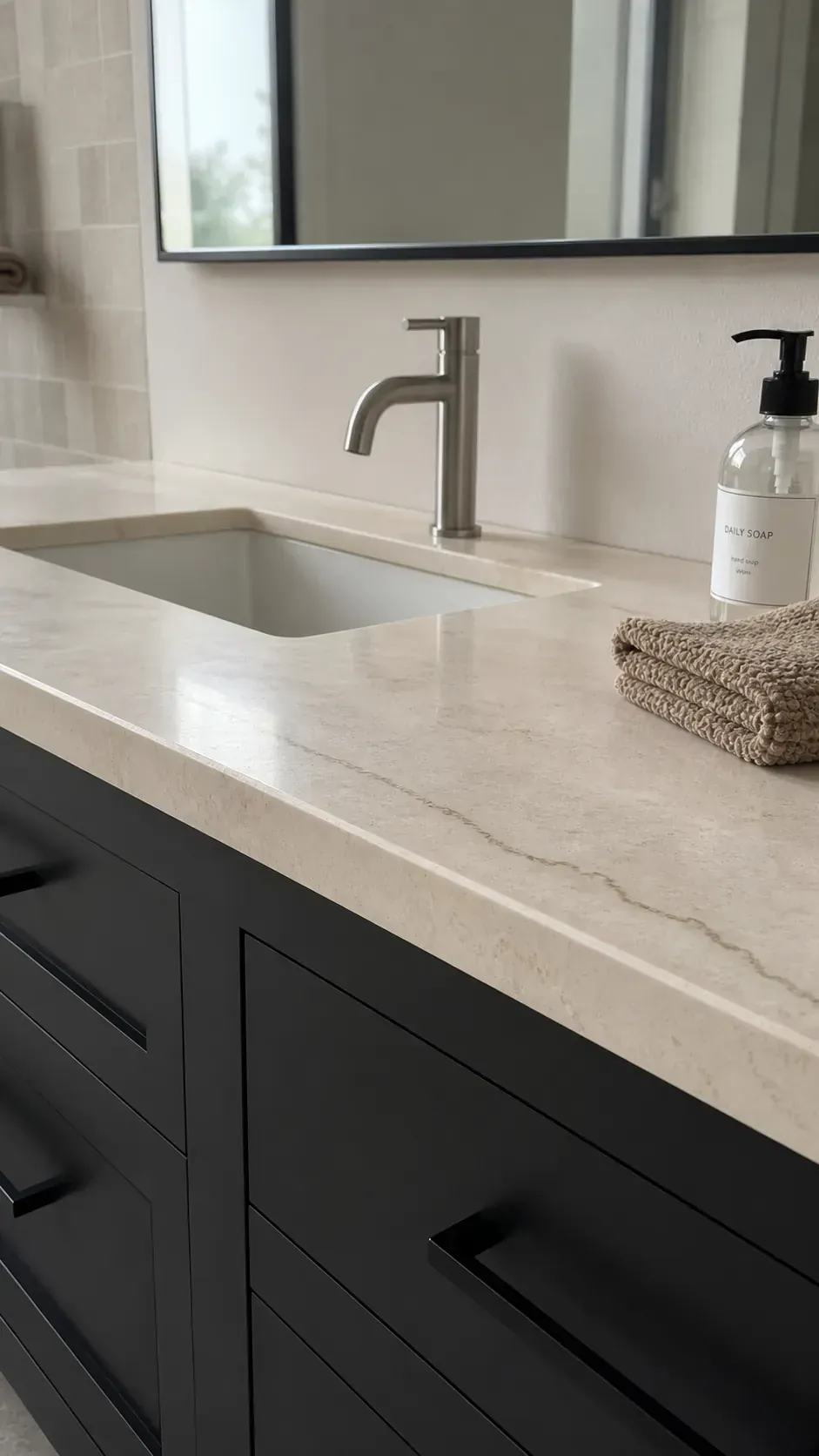
Honed marble has a quieter, velvety surface than polished stone. A slab with creamy ground color and restrained taupe veining softens a black base while keeping the room refined. The low sheen also avoids doubling every light source in a small space.
Natural marble needs realistic expectations about etching and staining. If that patina would bother you, choose a honed-look quartz or porcelain. What matters visually is the warm undertone and subdued finish, not the material label.
Add a Cane-Front Linen Tower
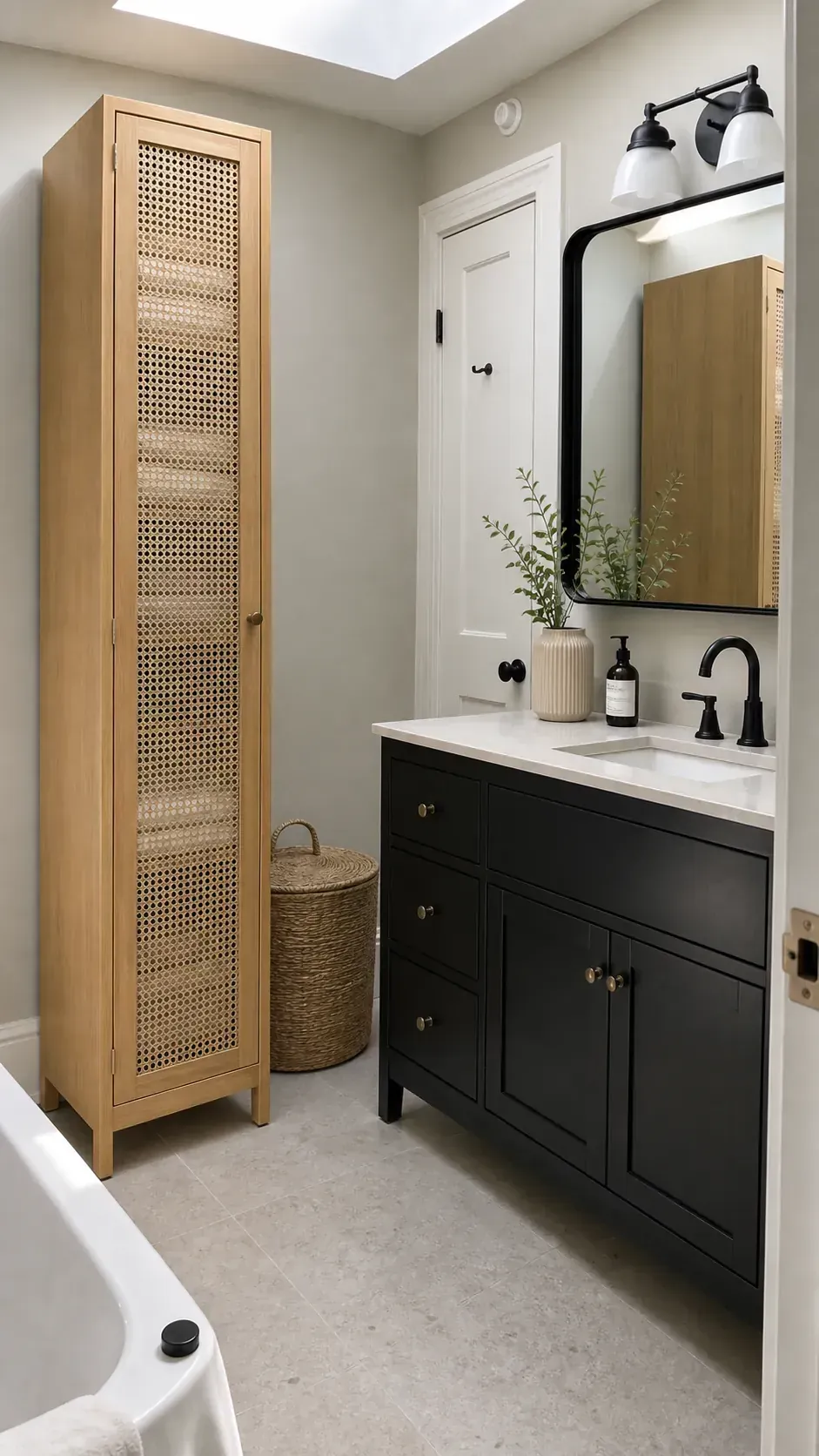
When a black vanity needs more storage, pair it with a narrow cane-front tower instead of extending black cabinetry across the whole wall. The woven panel introduces air and texture, while the lighter wood prevents the storage zone from becoming visually heavy.
Use closed shelves behind the cane for towels and backup toiletries, and check that splashes cannot reach delicate material. A small gap between tower and vanity helps each piece read clearly and makes cleaning easier.
Style With Handmade Ceramic Accessories
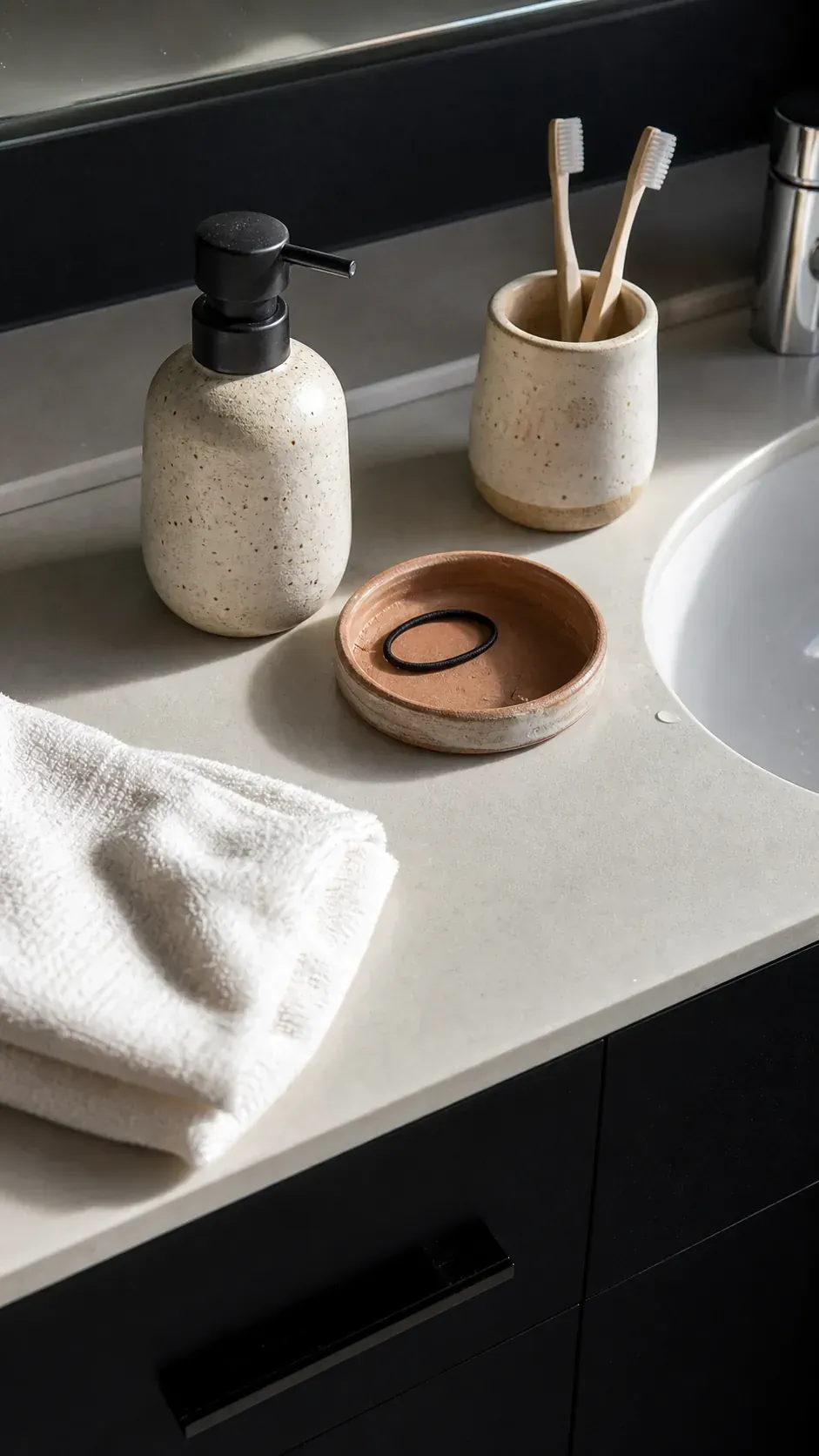
A few imperfect ceramic pieces make a sleek black vanity feel lived-in. Choose a soap dispenser, shallow tray, and toothbrush cup with subtle throwing lines or speckled glaze. Their rounded forms and matte surfaces create a useful counterpoint to machine-straight cabinetry.
Keep the counter functional. Group the daily items on one tray and store backups inside a drawer. Softness comes from material character, not from piling on decor, so leave open counter space around the basin.
Soften the Floor With a Vintage-Style Runner
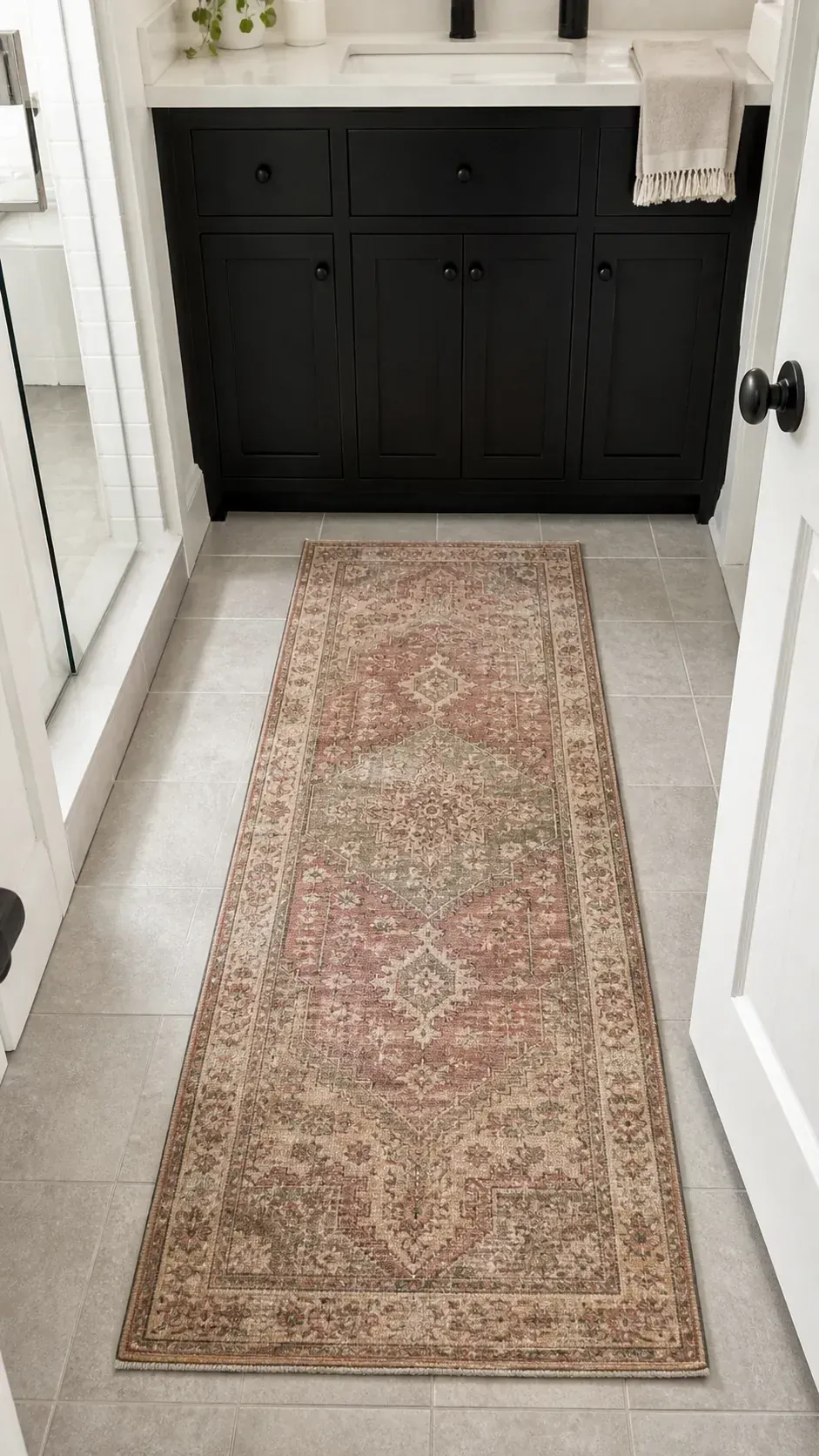
A washable vintage-style runner reduces the expanse of cold tile that often makes black cabinetry feel harsher. Look for faded rust, muted rose, tobacco, or moss rather than crisp black outlines. The worn-looking pattern adds history without requiring a permanent renovation.
Measure door swings and keep the rug clear of the shower threshold. In damp rooms, use a grippy washable pad and dry the runner fully after heavy moisture. A rug is effective only when it is safe and easy to maintain.
Keep the Final Palette Quiet and Tonal
The calmest black vanity spaces do not depend on one decorative trick. They use a measured tonal ladder: deep black at the cabinet, walnut or clay in the middle, and cream at the lightest end. Each surface has a different texture, but the colors stay related.
Before buying more bathroom decor, remove anything that adds a new unrelated finish. Then check the vanity lighting, the largest textile, and the wall undertone. If those three choices feel warm and cohesive, the black will look grounded—not harsh—and the room will remain easy to live with.