A home library does not need a spare room, a wall of custom millwork, or even a large bookcase. It needs a collection that is easy to reach, a place where reading feels natural, and enough visual structure that the books look intentional instead of homeless. The most useful small-space library ideas borrow square footage from places that already exist: a bedroom corner, the back of a sofa, a hallway end, or the wall above a desk.
The ideas below are designed for real homes where walkways, rental rules, limited budgets, and everyday clutter matter. Start with the location that already matches your reading habits, then add storage upward or around it. The goal is not to display every book you own; it is to make the books you love part of the room you already use.
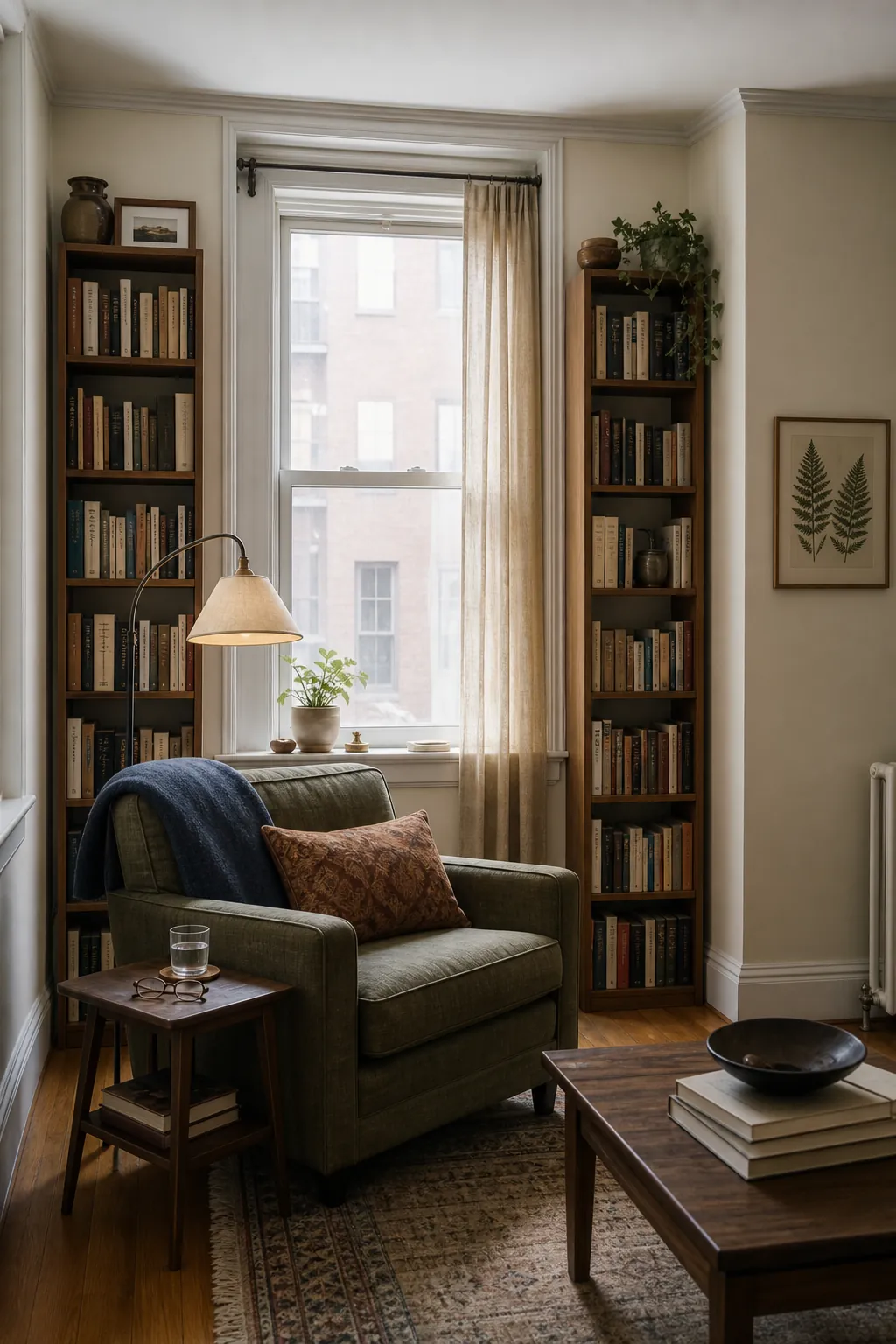
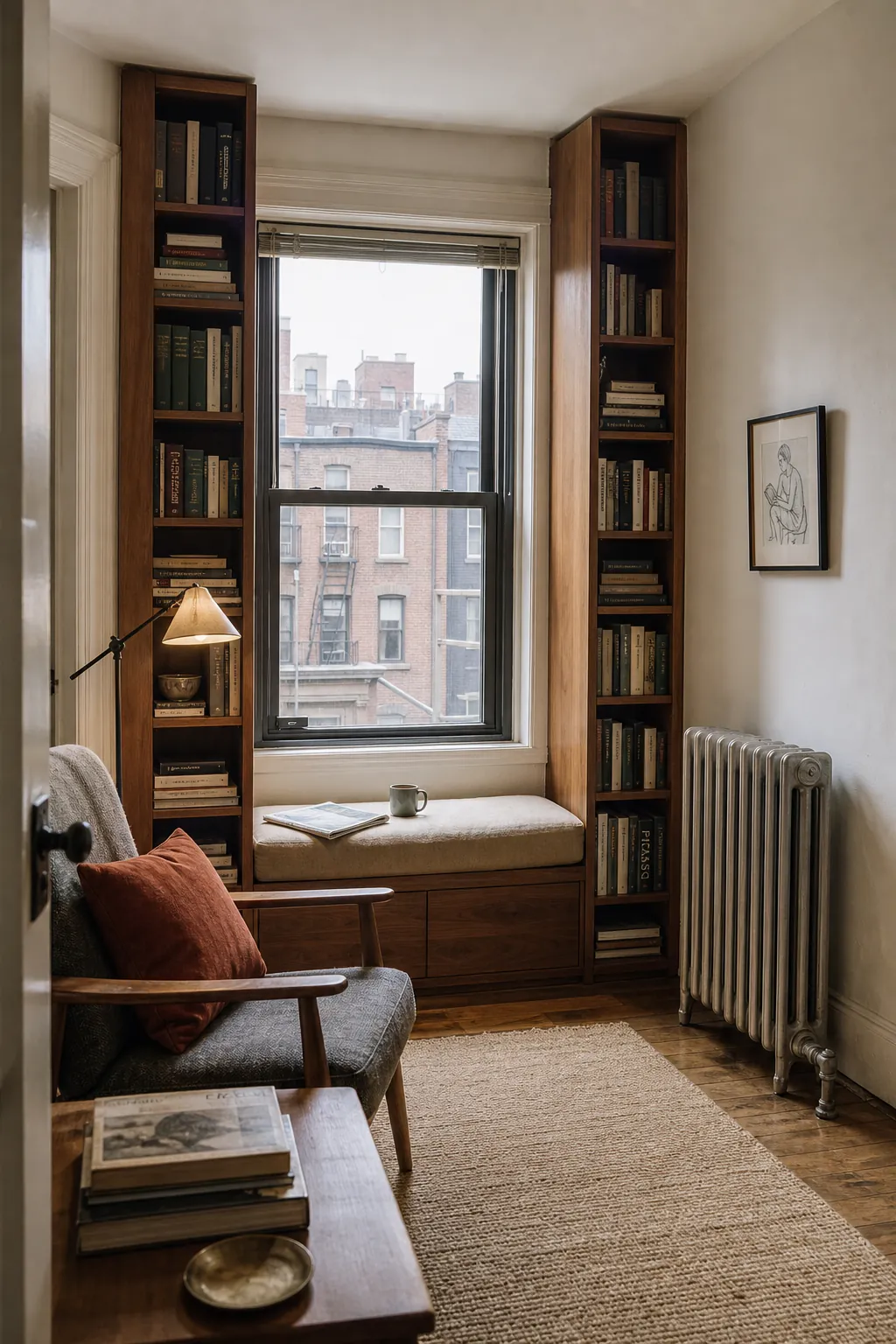
Frame a Living Room Window With Shelves
A window wall often has narrow strips of unused space on either side. Two tall, shallow bookcases can turn those strips into a compact home library while keeping the center open to daylight. Match their height and finish so the pair reads as one architectural feature rather than two unrelated storage units.
Keep the lowest shelves for heavier books and baskets, and place less frequently used titles higher up. Leave enough clearance around curtains, radiators, and window hardware. A low bench beneath the window can complete the composition, but a nearby armchair works just as well if the sill must remain clear.
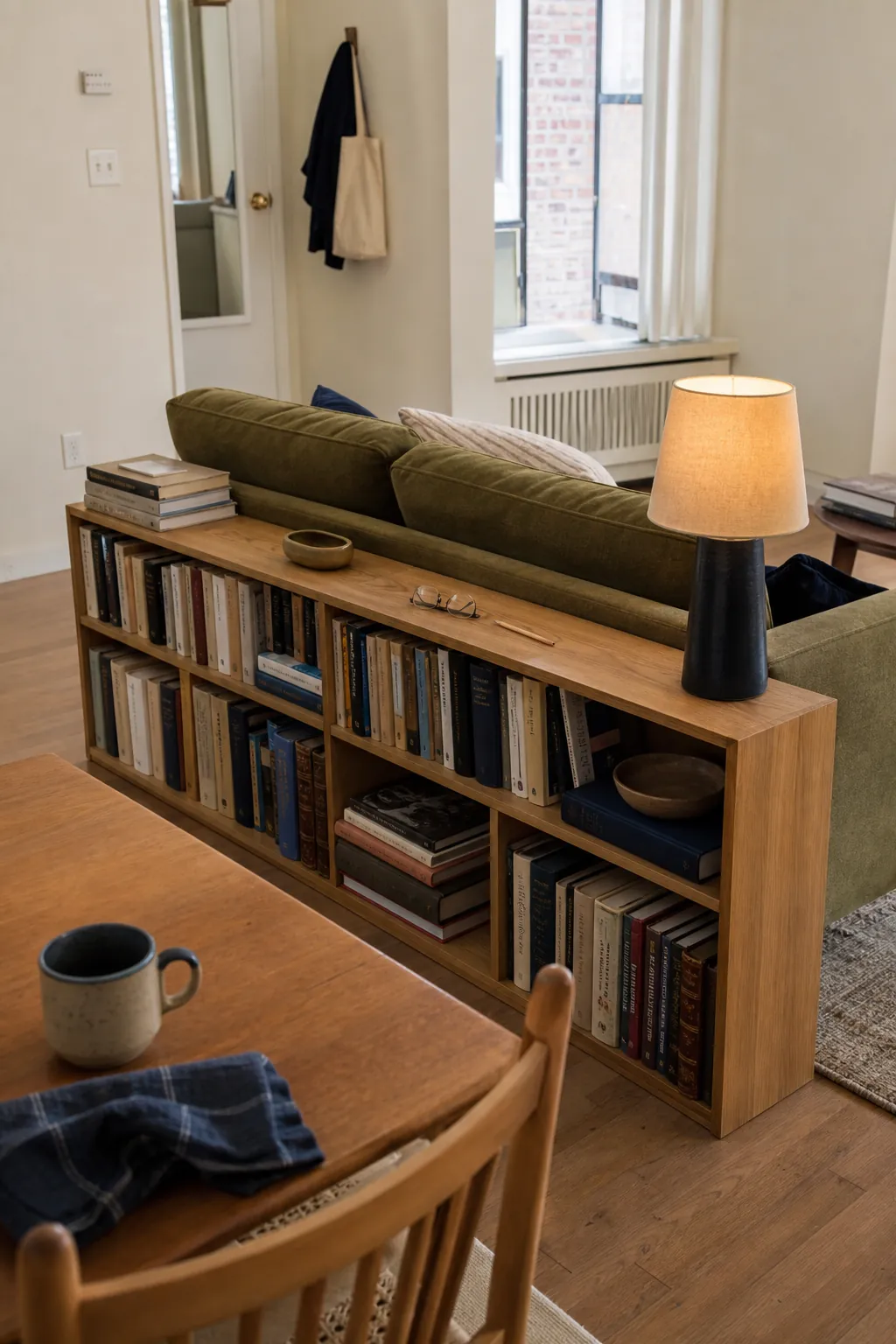
Turn the Back of the Sofa Into a Library Wall
When a sofa floats away from the wall, the space behind it can hold a slim console-height bookcase. This creates book storage without taking over the main sightline, and the top becomes a useful ledge for a lamp, reading glasses, or a small stack of current reads.
Choose a unit that is no deeper than the sofa back and secure it so it cannot tip. Keep objects below shoulder height to avoid a crowded feeling. This is especially effective in an open-plan room because the books also define the seating zone.
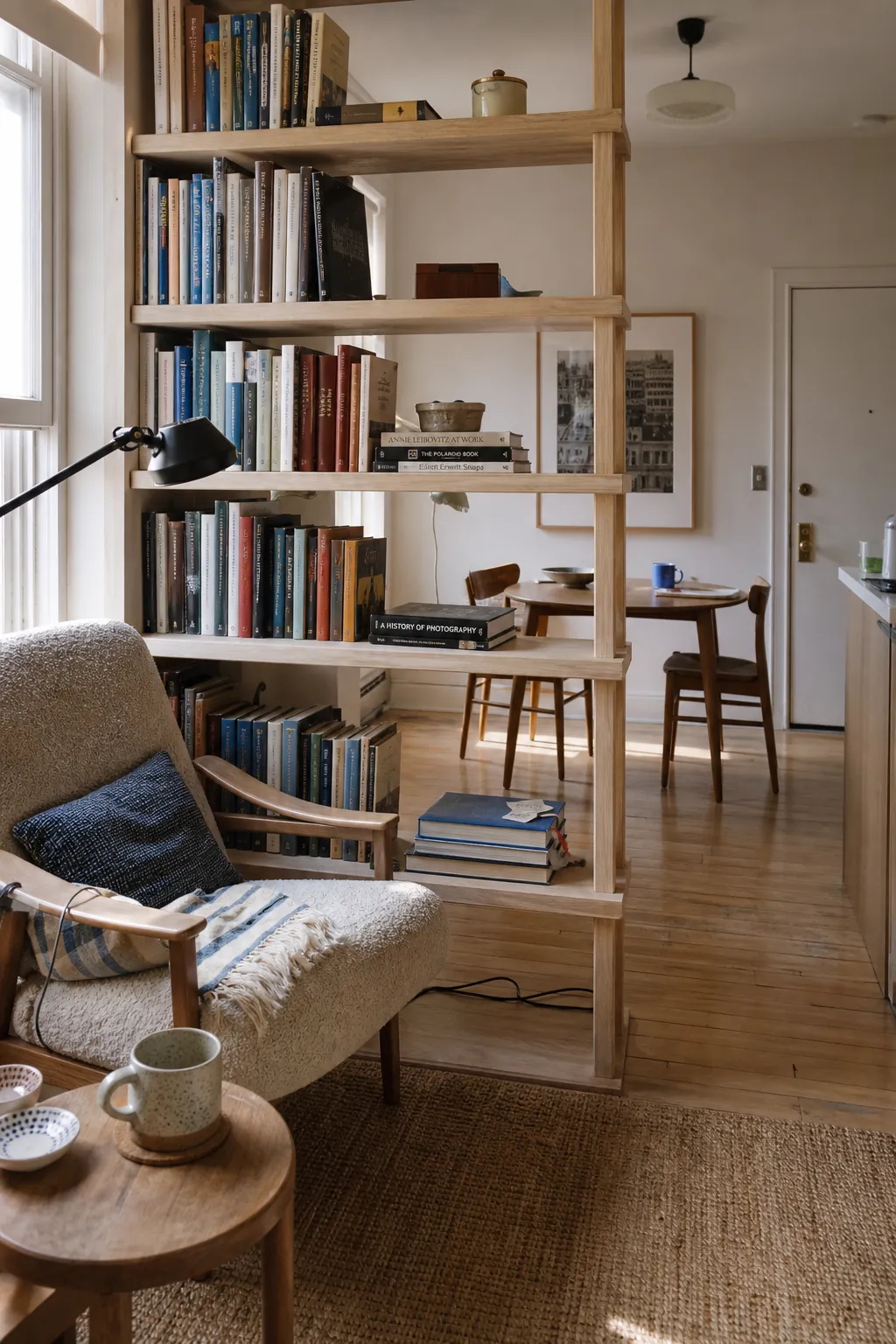
Use a Narrow Bookcase as a Room Divider
A tall, open-backed bookcase can separate a reading corner from a dining or work area without blocking light. The shelves give books a home while creating the psychological feeling of a library room inside a larger space.
Arrange books on both sides so the divider works from every direction. Do not overload the upper shelves; a few open gaps preserve light and make the unit feel less imposing. Anchor the bookcase properly, especially in homes with children or pets.
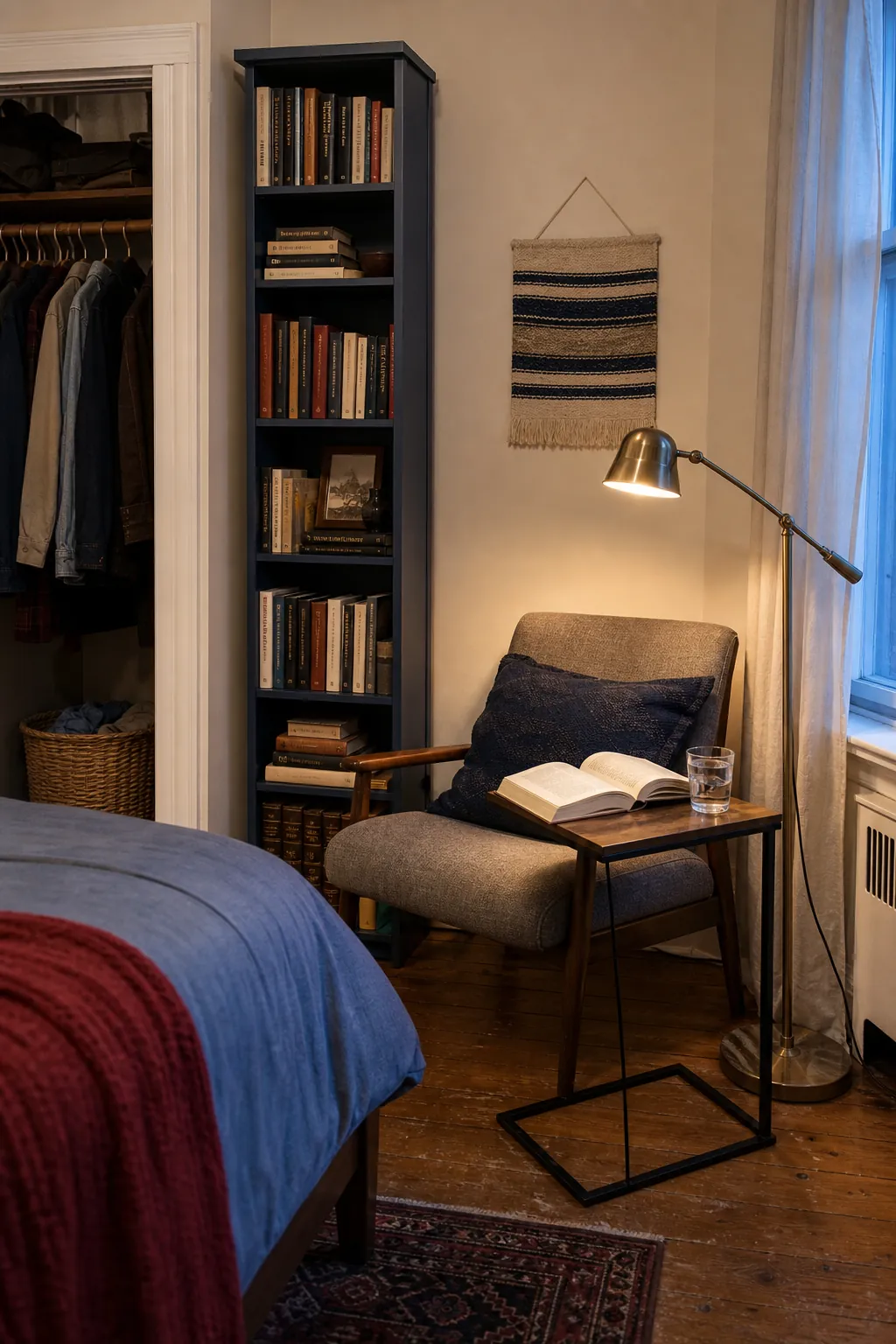
Claim the Corner Beside the Bed
A bedroom corner can become a small reading nook with a narrow shelf, a supportive chair, and one focused lamp. The setup works best when each piece has a compact footprint and the route to the bed and closet stays unobstructed.
Use the bookshelf top as a side table, or add a tiny C-table that slides under the chair. A warm bulb and a washable throw make the corner feel separate from the sleeping zone without adding visual clutter. Keep the book selection edited so the bedroom remains calm.
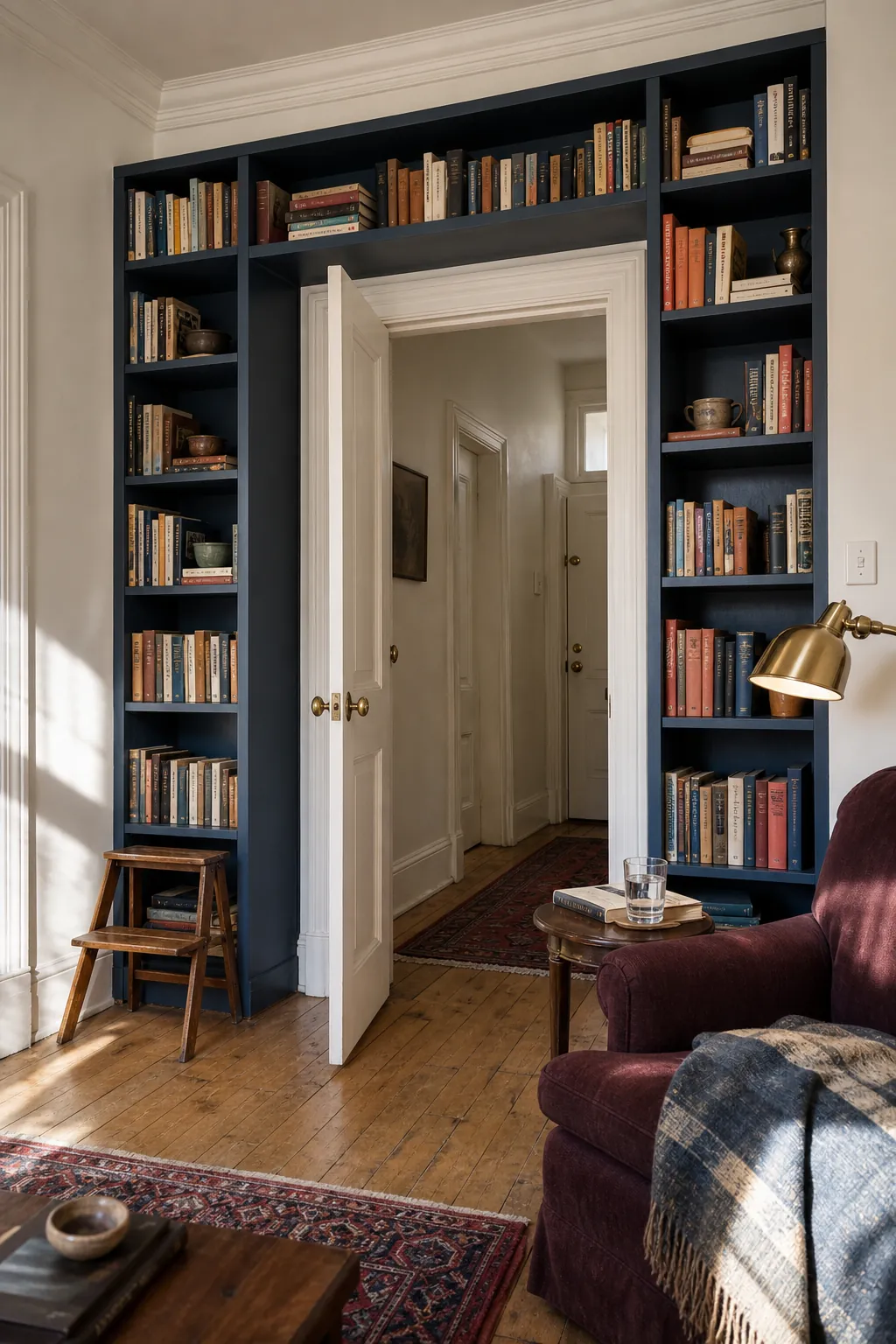
Build Up Around a Doorway
The wall above a door is rarely used, yet it can connect two shallow book towers into a dramatic library surround. This is a strong option for a living room, office, or wide hallway where floor space beside the opening is available but limited.
Reserve the overhead shelf for lighter books or attractive series that you do not reach for every day. Keep trim, switches, and the door swing clear. For rentals, recreate the idea with two matching freestanding towers and a visually aligned high shelf only if safe mounting is permitted.
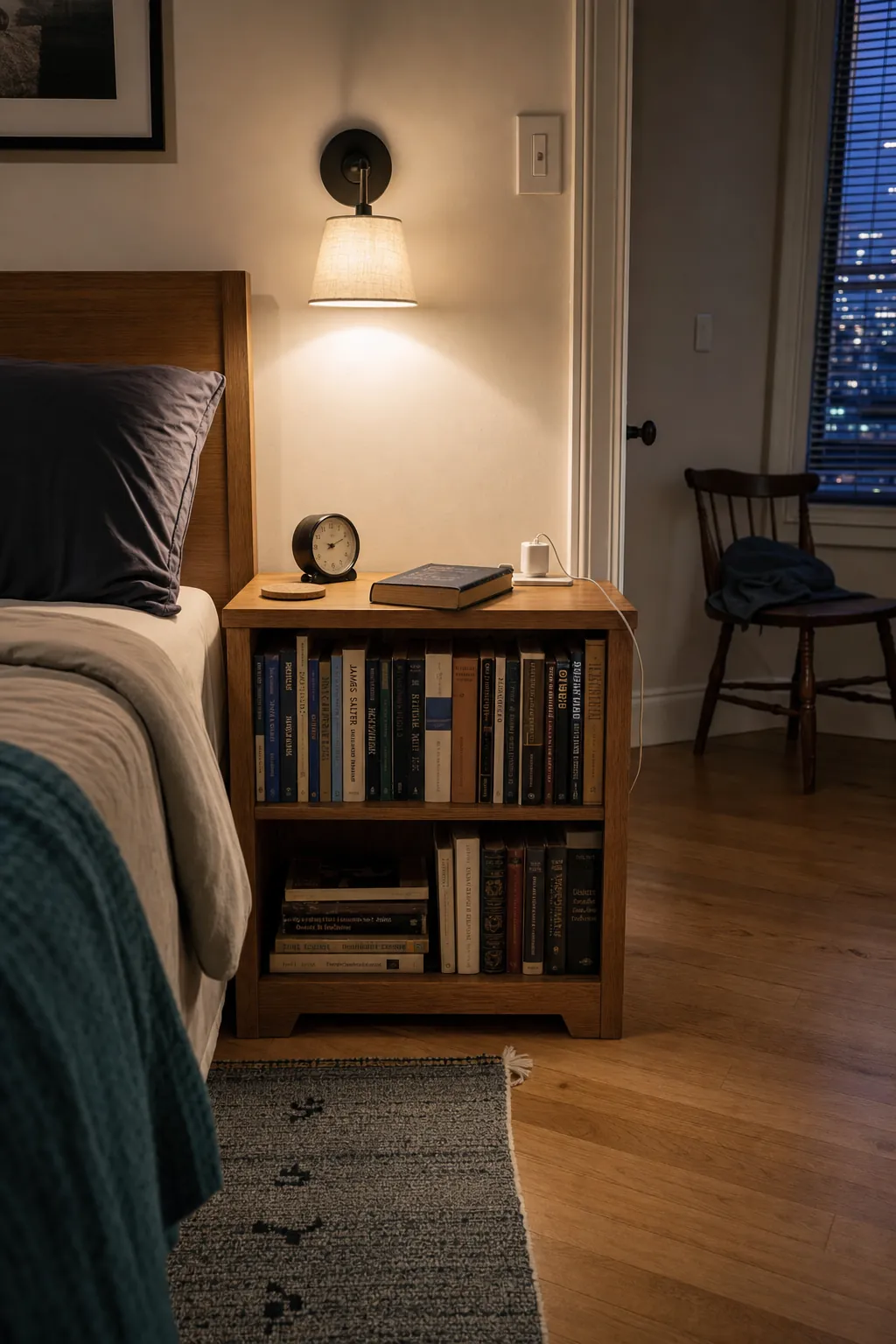
Replace a Bedside Table With Bookshelves
A short bookcase can do everything a nightstand does while holding far more books. Pick one with a stable top at a comfortable height for a lamp and water glass, then organize the shelves by what you actually read in bed.
A wall-mounted reading sconce frees the top surface and provides better task light than a bright ceiling fixture. Avoid stacking books too close to drinks, humidifiers, or an open window. One shallow basket can hide charging cables without consuming a shelf.
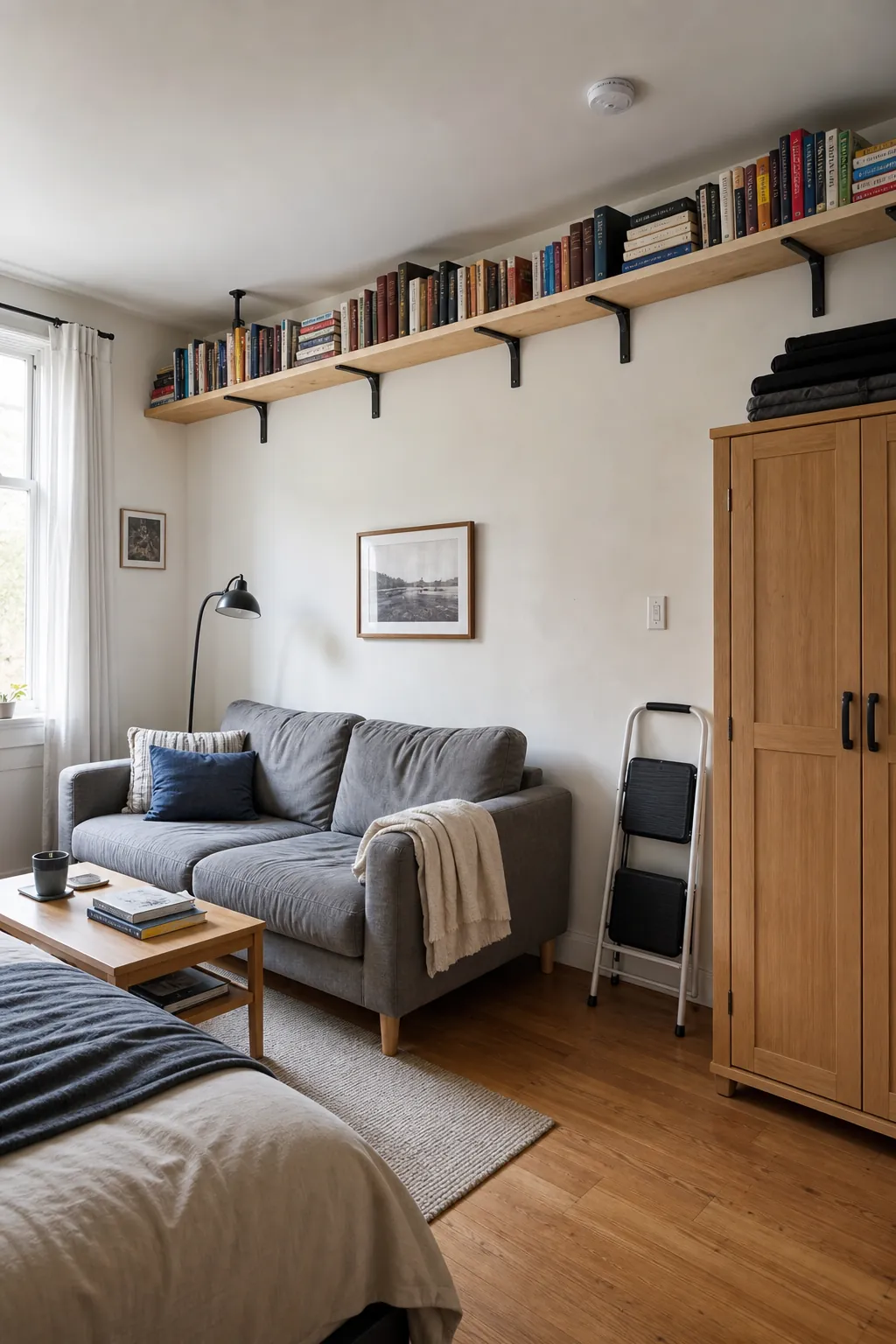
Run a High Shelf Around the Room
A continuous shelf near the ceiling stores books without competing for furniture space. It is ideal for collections you want to keep but do not need every week, and it creates a satisfying visual line around a studio, bedroom, or office.
Use substantial brackets fixed into appropriate structure and respect the shelf’s load rating. Arrange books upright with occasional bookends rather than leaning unstable piles. Keep a safe step stool nearby and avoid placing treasured volumes in direct sun or above sources of heat and steam.
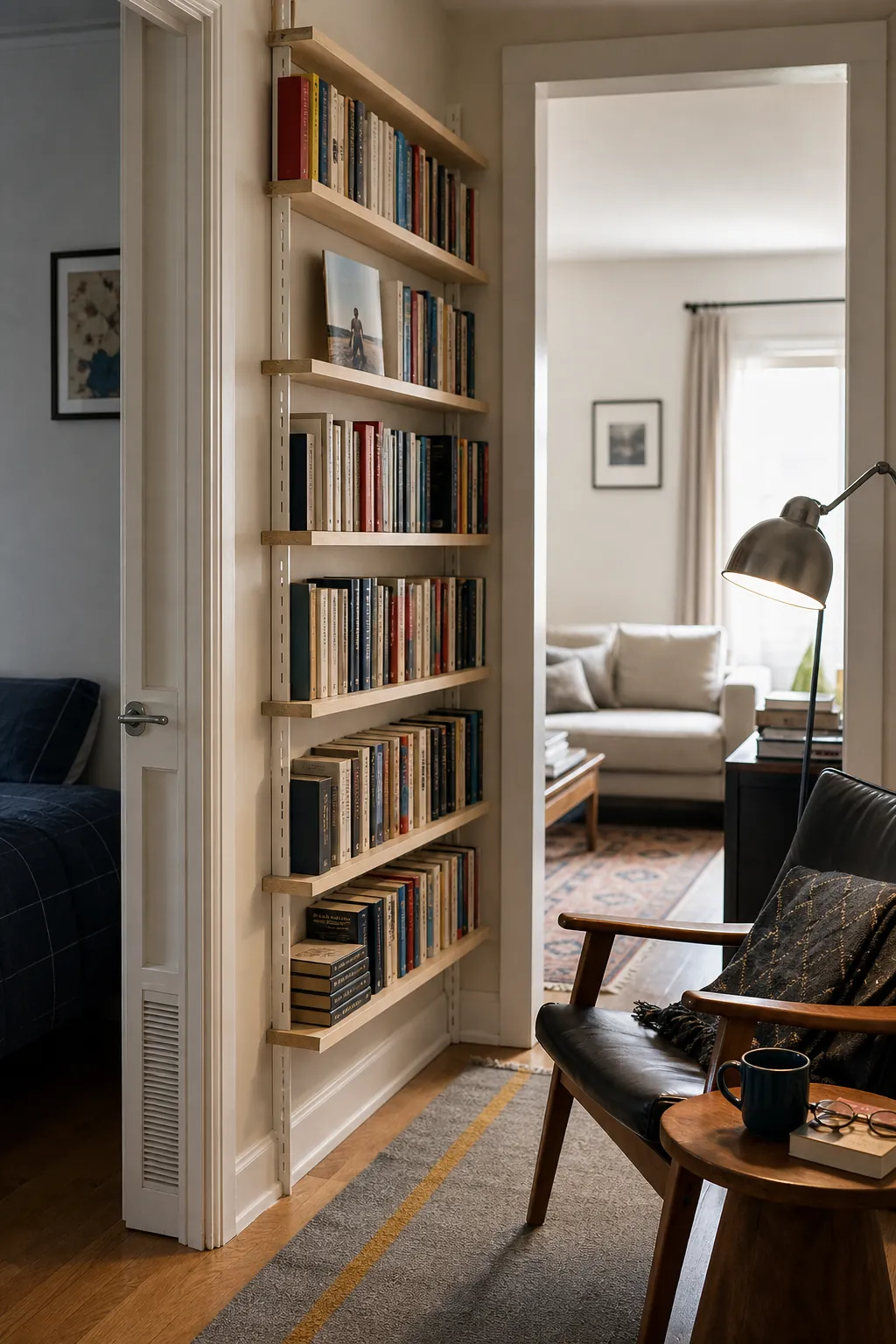
Fit Paperback Shelves Into a Shallow Wall
Standard bookcases are often deeper than paperbacks require. A shallow media-style shelf can hold rows of novels while projecting only a few inches into a hallway, bedroom, or awkward wall beside a closet.
Measure your tallest and deepest books before buying. Grouping similar sizes lets you adjust shelves efficiently and prevents wasted vertical space. Secure a tall narrow unit, and leave the walkway comfortably wide rather than forcing storage into a circulation pinch point.
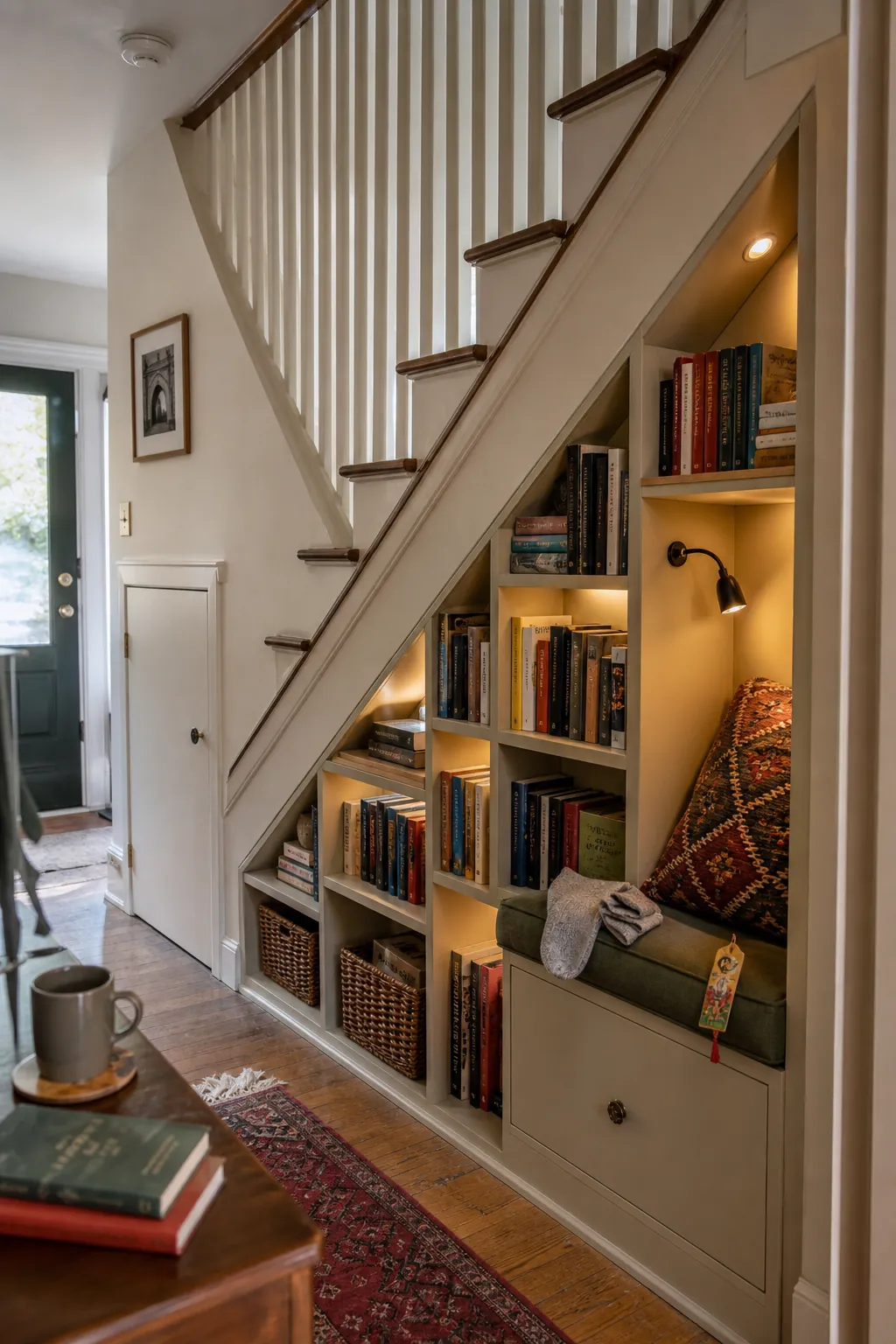
Create a Library Under the Stairs
The changing height beneath a staircase naturally suits stepped book storage. Low cubbies can hold large volumes and baskets, while taller sections fit novels and a small display shelf. If headroom allows, the deepest end can accommodate a compact reading seat.
Good lighting matters because under-stair spaces can feel dim. Use a shaded task lamp or concealed warm strip lighting that does not glare into the reader’s eyes. Keep access panels, vents, and stair structure untouched unless a professional confirms the alteration is safe.
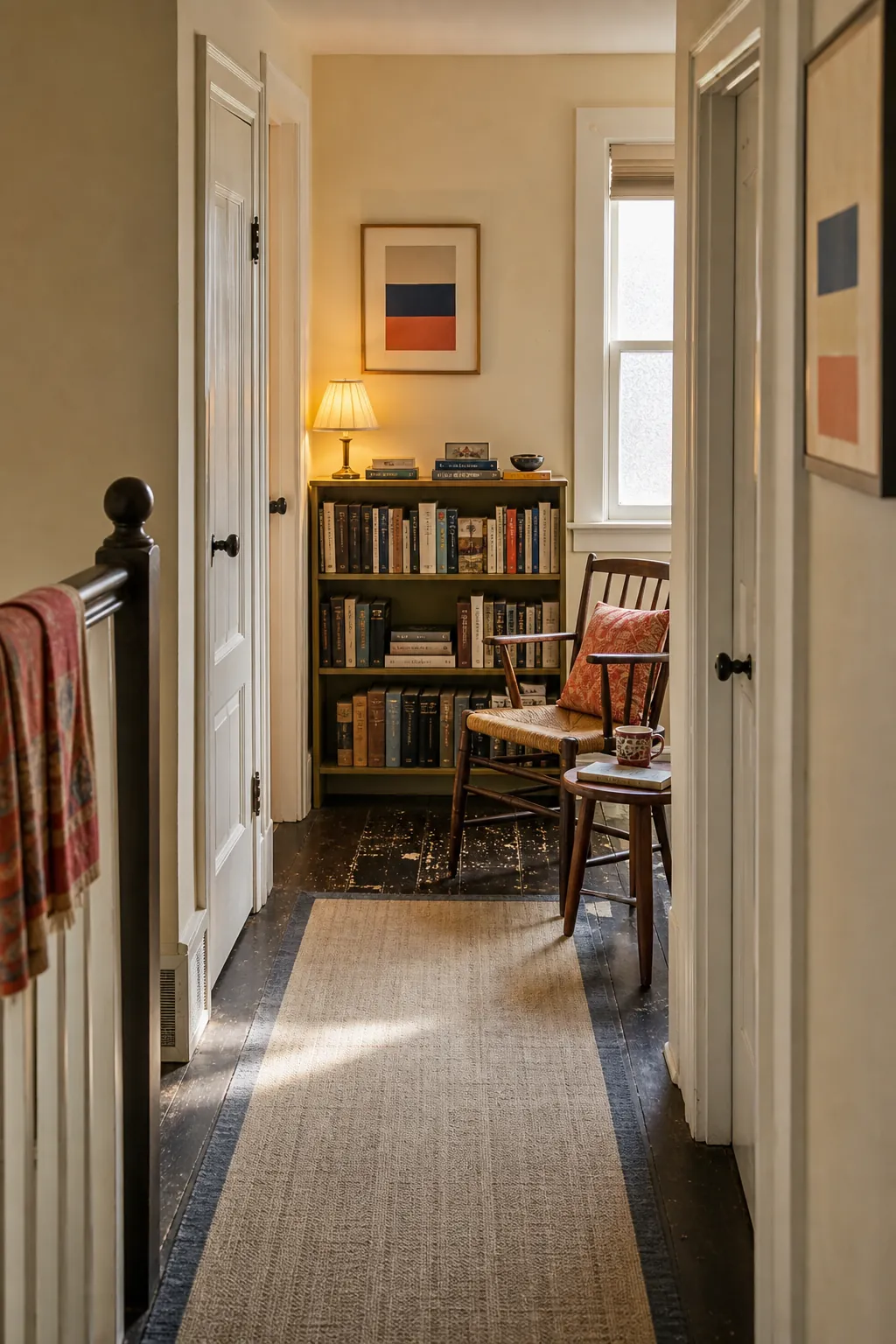
Give a Hallway End a Reading Purpose
A dead-end landing or wide hallway can hold a compact chair and a low bookcase, turning unused circulation space into a destination. The key is to preserve a clear path and avoid placing seating where people will constantly brush past it.
A low shelf keeps the area open and can double as a surface for a small lamp. Add a rug only if it lies flat and does not create a trip hazard. This idea works best in a quiet end zone, not beside a frequently used bedroom door or at the top of an exposed stair.
Hide Book Storage Inside a Bench
A window bench or freestanding storage bench can combine seating and books in one footprint. Open cubbies keep frequently read titles visible, while a hinged compartment is better for blankets, magazines, and less attractive supplies.
Choose a seat depth that supports comfortable reading and add a firm cushion rather than a pile of pillows that steals the usable surface. If the bench sits in sun, rotate books or use window coverings to reduce fading. Comfort, task light, and a place to set a drink are what turn storage into a real reading nook.
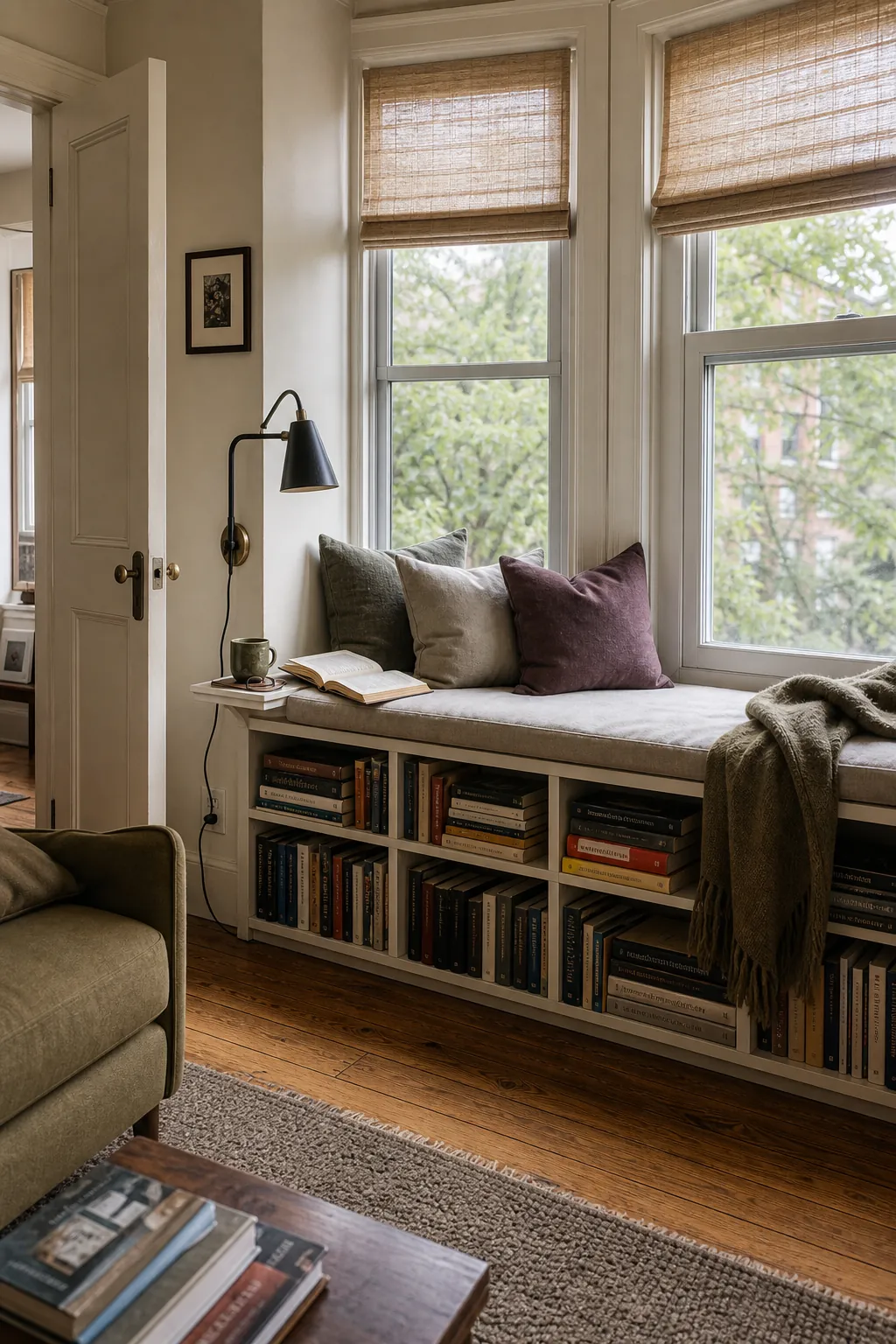
Wrap Shelves Around a Home Office Desk
Bookshelves above and beside a desk let one wall serve as both home office and home library. Keep everyday reference books within arm’s reach and place decorative or archival volumes higher. Matching shelf lines help the mixed-use wall feel orderly.
Leave breathing room around the monitor and reserve part of the desktop for reading or note-taking. A separate adjustable lamp prevents the screen and books from competing for one harsh light source. Closed boxes on the lowest shelf can contain office clutter so the books remain the visual focus.
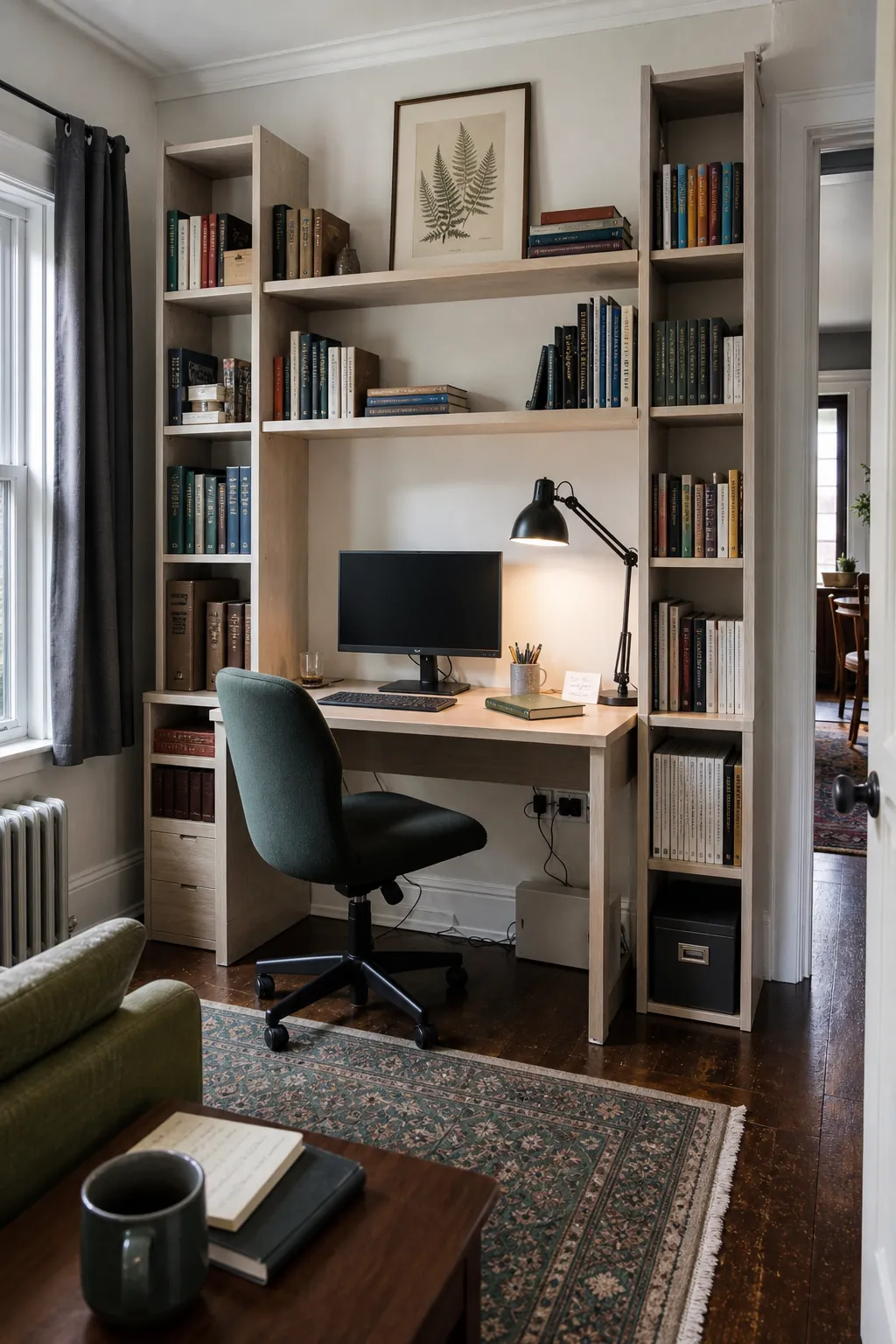
Use a Rolling Book Cart for a Flexible Library
A sturdy rolling cart is a renter-friendly answer when walls cannot be drilled and floor plans change often. It can live beside a sofa during the week, move next to the bed at night, and tuck into a closet when extra floor space is needed.
Choose locking casters and shelves deep enough that books cannot slide out. Sort by current reads, library returns, and notebooks so the cart supports a habit rather than becoming a random pile. A clip-on lamp can travel with it if the cart’s frame is stable.
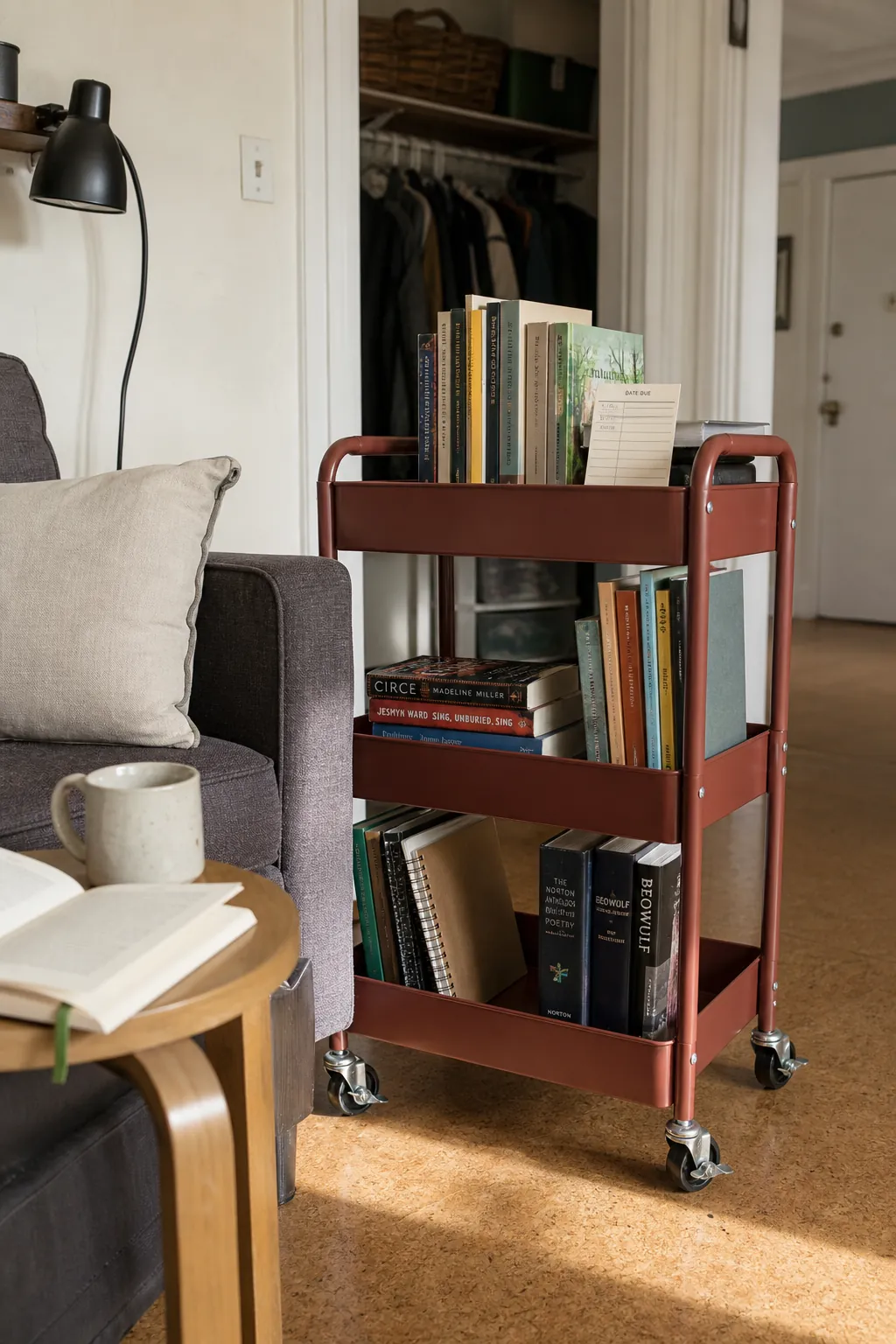
Turn a Dining Room Sideboard Into Book Storage
If a sideboard already occupies the dining room, use its lower shelves or cabinets for books. Glass doors keep titles visible while reducing dust, and solid doors can hide less attractive reference material or oversized volumes.
Keep books away from serving spills and do not pack volumes beside a warm appliance or radiator. A small edited stack on top can signal the room’s library role without interfering with meals. The result feels collected, not like another bookcase squeezed into the plan.
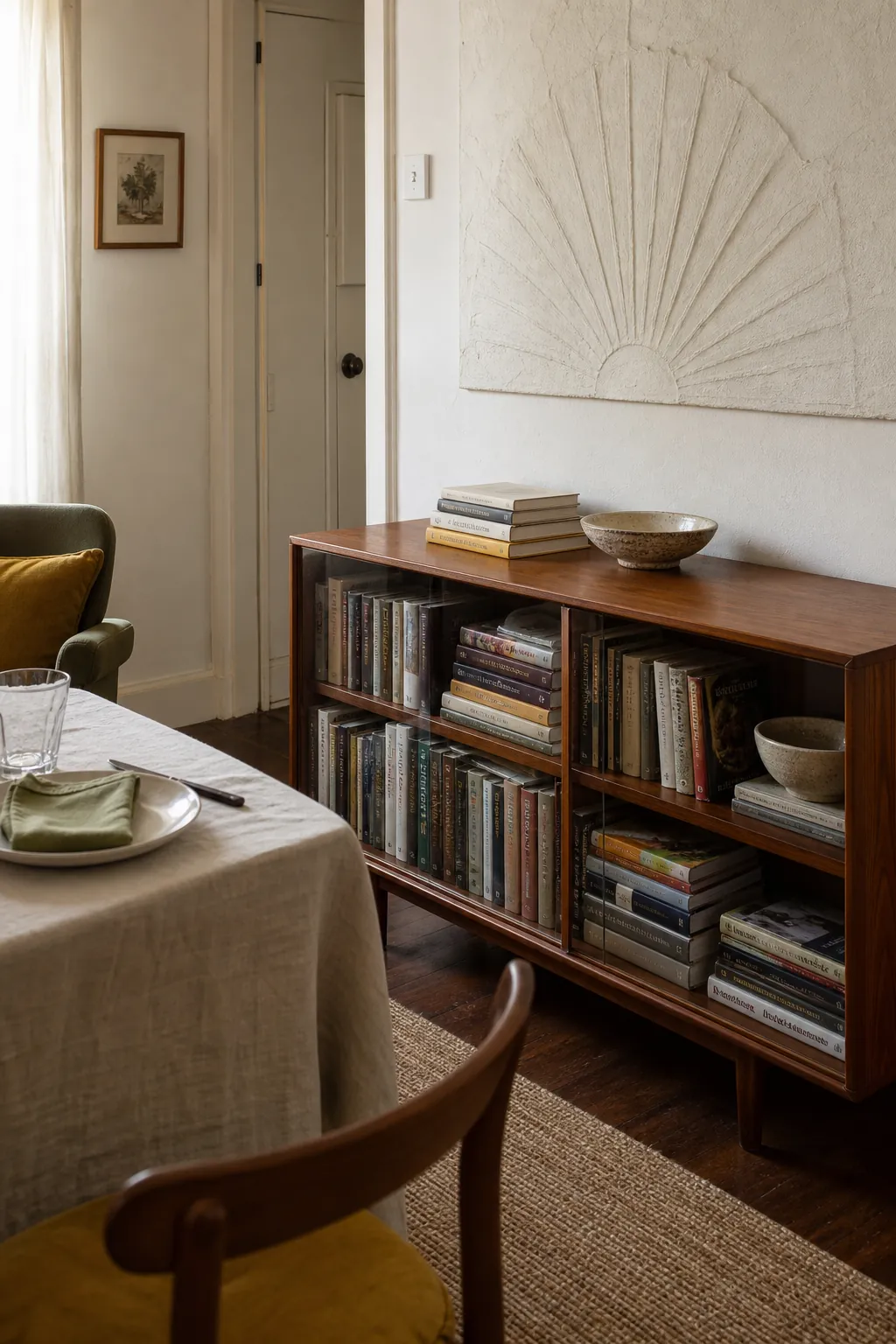
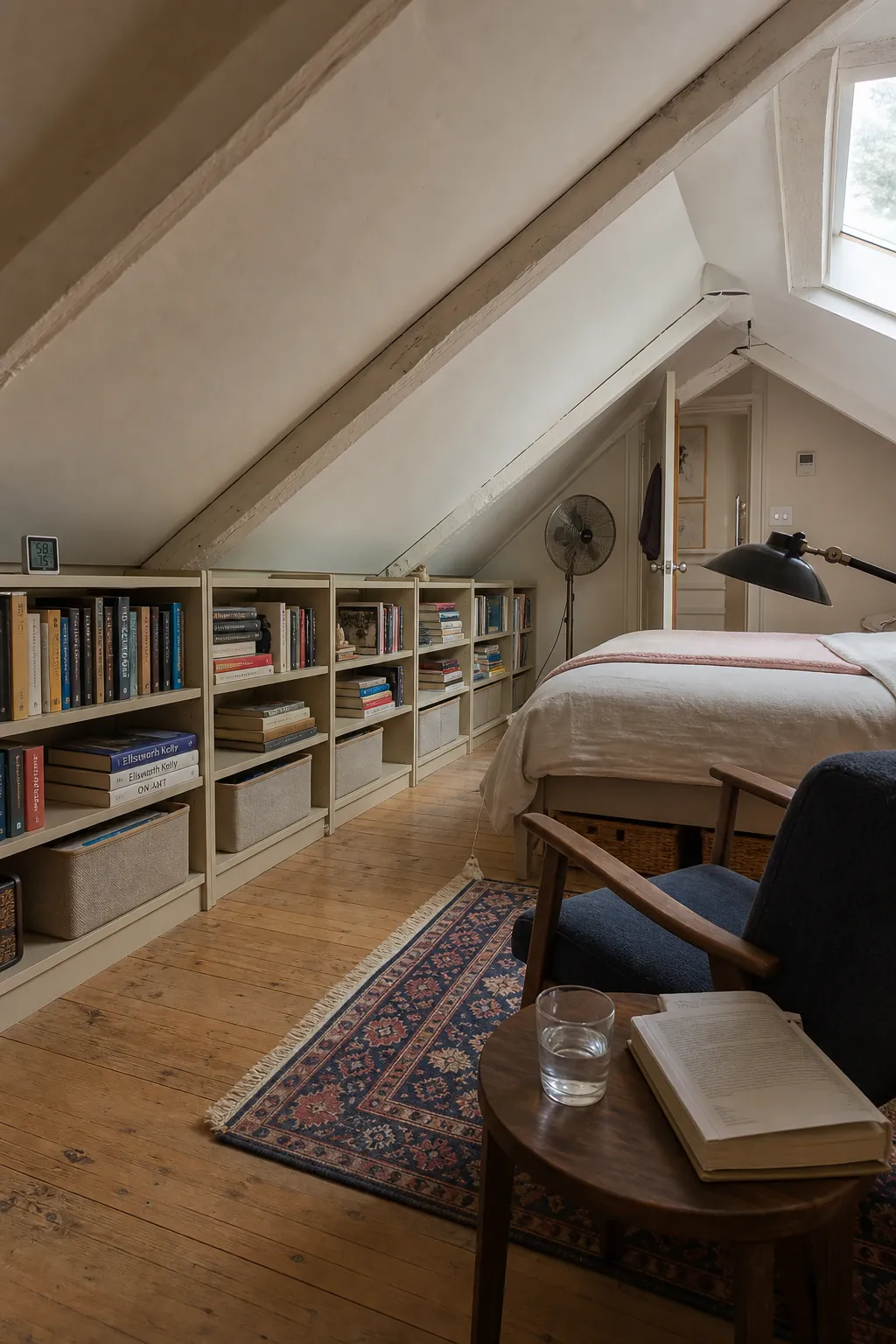
Make a Low Library Beneath a Sloped Ceiling
Eaves and sloped ceilings are awkward for tall furniture but ideal for low modular shelves. A continuous run follows the usable wall height, keeps the center of the room open, and gives a loft bedroom or attic office a grounded library feel.
Measure at several points because old walls and rooflines are rarely perfectly even. Use closed baskets for items that would make the low shelves look busy. If the space becomes hot or humid, monitor conditions and avoid storing fragile or valuable books there.
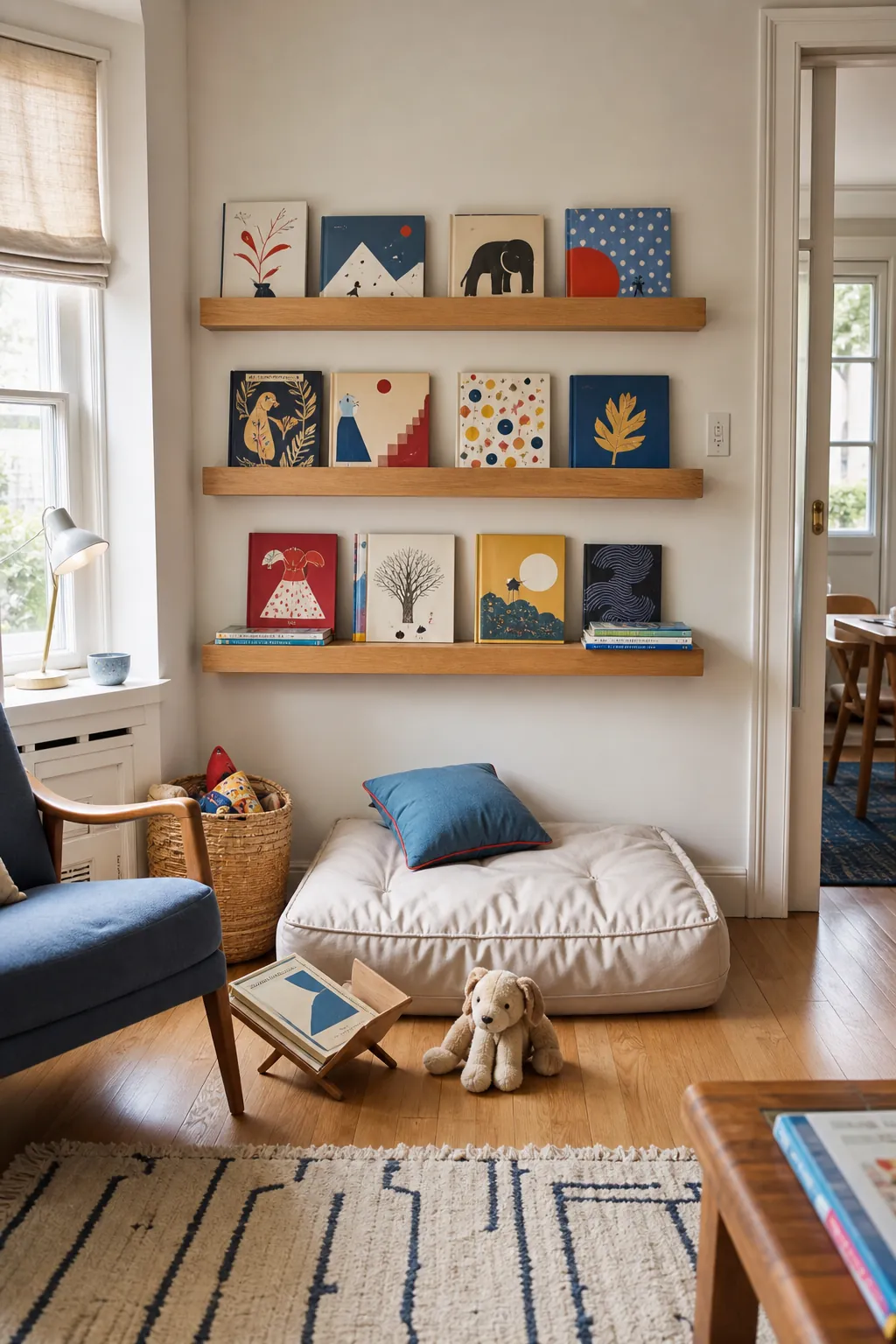
Add Picture Ledges for a Rotating Book Display
Shallow picture ledges display book covers face-forward and require less depth than conventional shelving. They are useful for children’s books, art books, cookbooks outside the splash zone, or a rotating selection that changes with the season.
Limit each ledge to a single layer so books remain easy to remove. Install them where covers will not be hit by opening doors or passing shoulders. A rotating display reduces visual noise and lets the rest of the collection stay in closed storage.
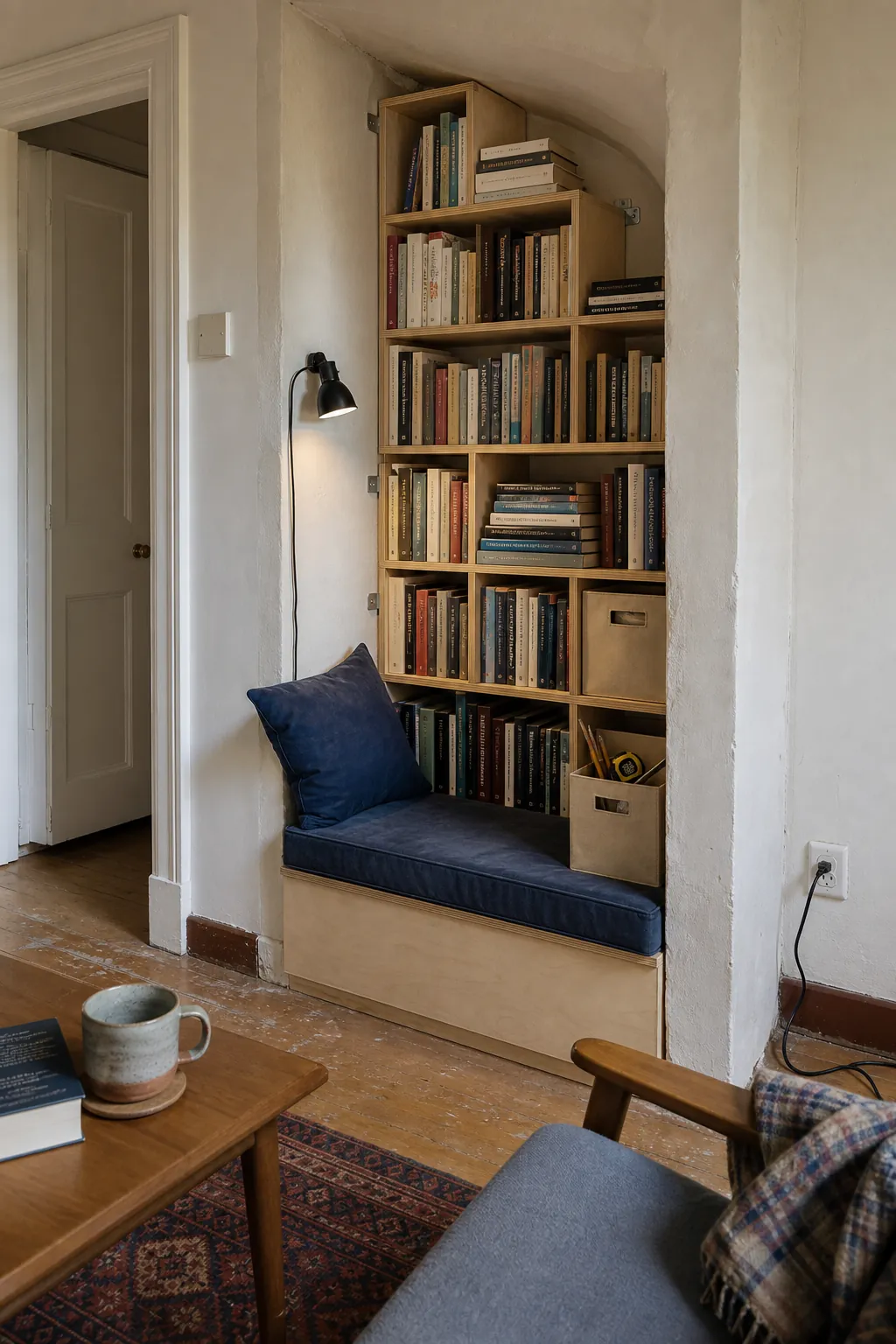
Stack Modular Cubes Into an Awkward Alcove
Modular cubes can fill an alcove that is too narrow, shallow, or uneven for a standard bookcase. Build the arrangement from the floor upward, keeping heavier books low and leaving a few cubes open for rhythm.
Use units designed to connect, and anchor the final stack according to the manufacturer’s instructions. Matching bins can hide cables or mixed household items, but let most cubes remain recognizably book-focused. Measure skirting boards and outlets before deciding the final width.
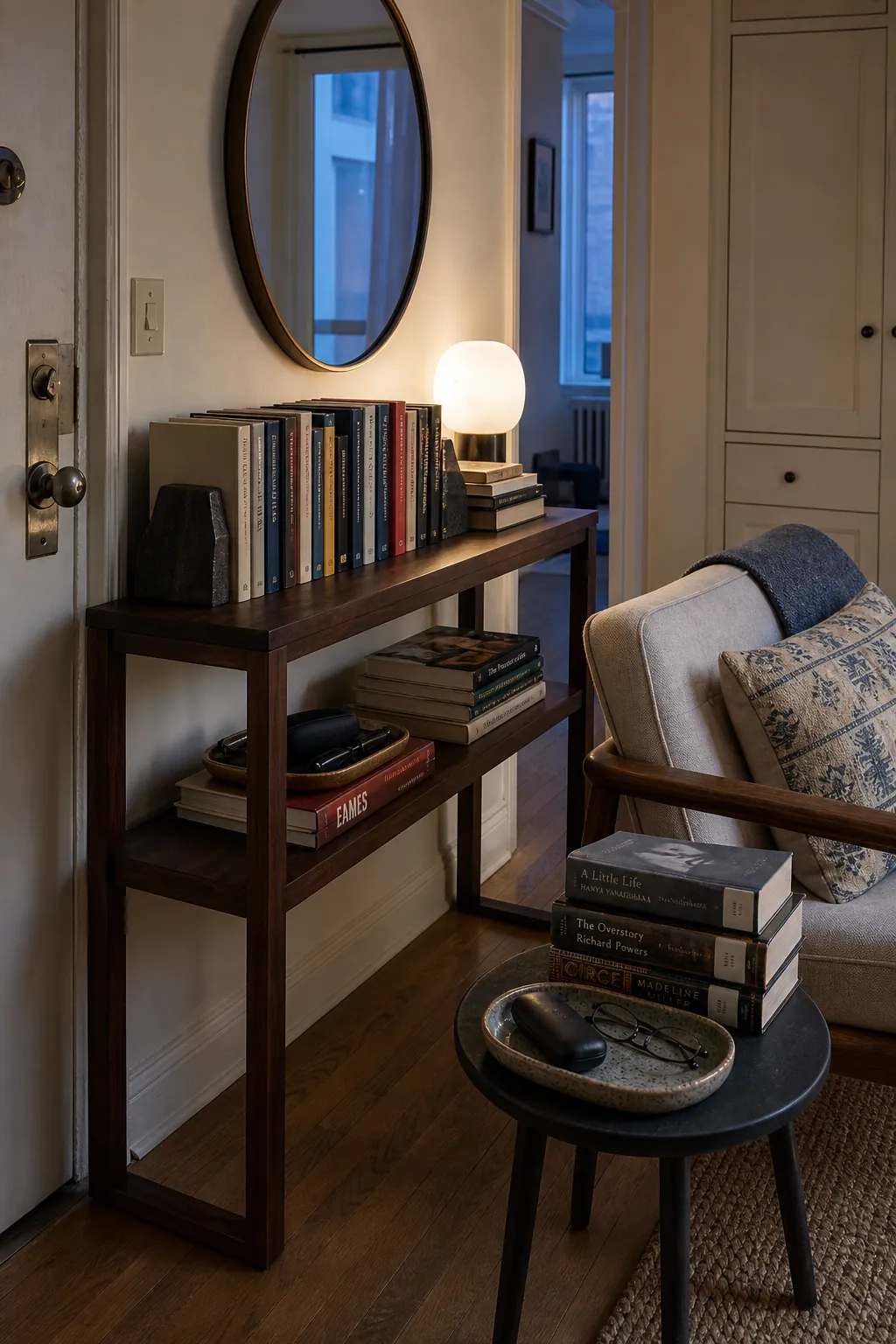
Keep a Curated Library on a Console
Not every home library needs to contain the entire collection. A console table can hold a deliberate set of favorite books, current reading, and a few reference titles while the rest live in closed storage or rotate through the local library.
Use sturdy bookends and keep stacks low enough that the surface remains useful. A chair placed nearby creates the reading relationship; without seating and light, the console is only a display. This edited approach is particularly calming for people who feel overwhelmed by densely packed shelves.
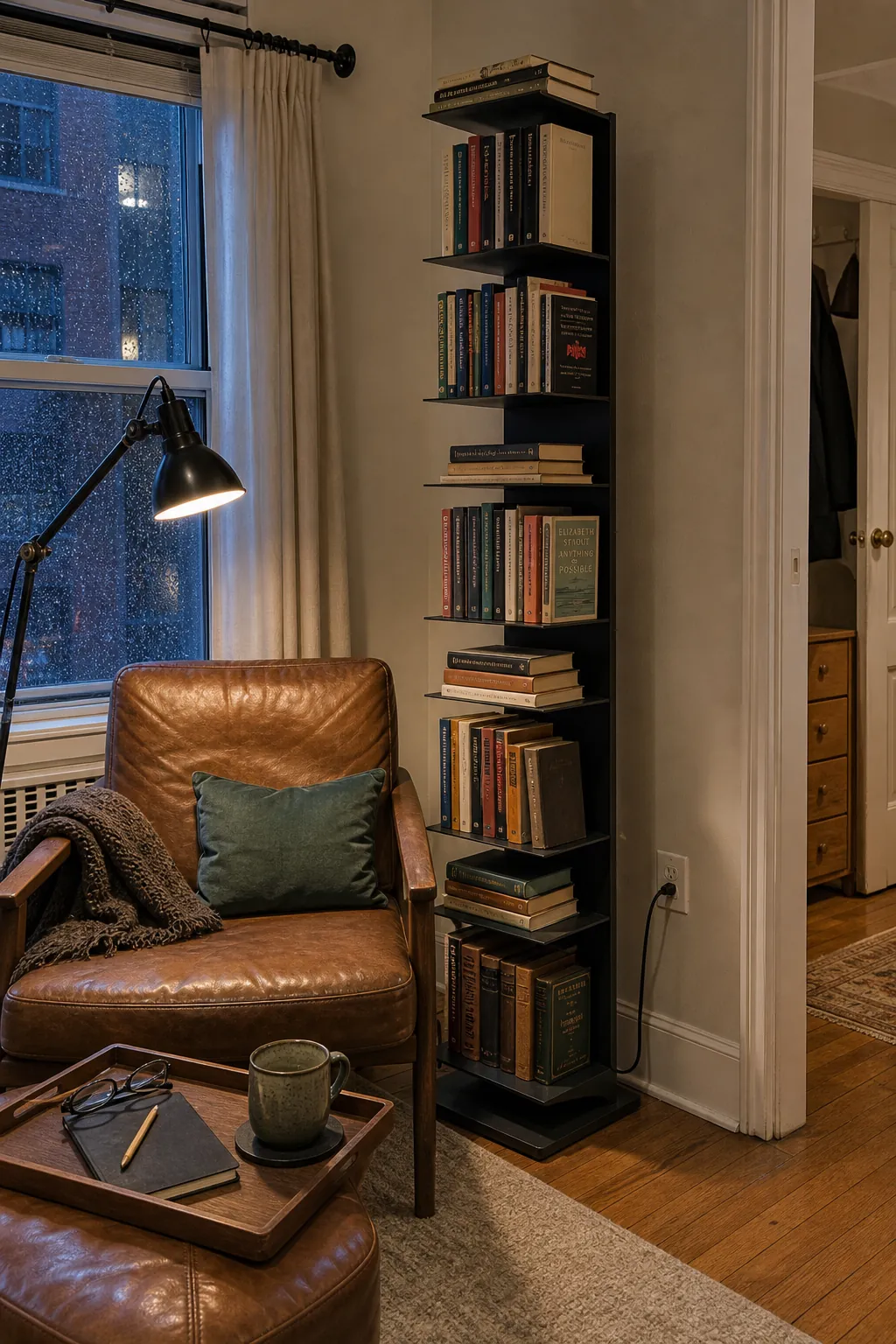
Let One Book Tower Mark Your Reading Habit
A single narrow book tower beside the chair you already use can be enough to make reading visible and convenient. Place current books at hand height, heavier volumes near the base, and a small tray for bookmarks or glasses on top. Add an adjustable lamp positioned over the shoulder so the page is bright without lighting the whole room.
This smallest version of a home library works because it follows behavior instead of chasing a decorating ideal. Keep the chair comfortable, preserve a clear walkway, and rotate finished books back into storage. When the collection outgrows the tower, edit it before adding furniture. A successful small home library is the one that makes you pick up a book more often while the rest of the room still works.