
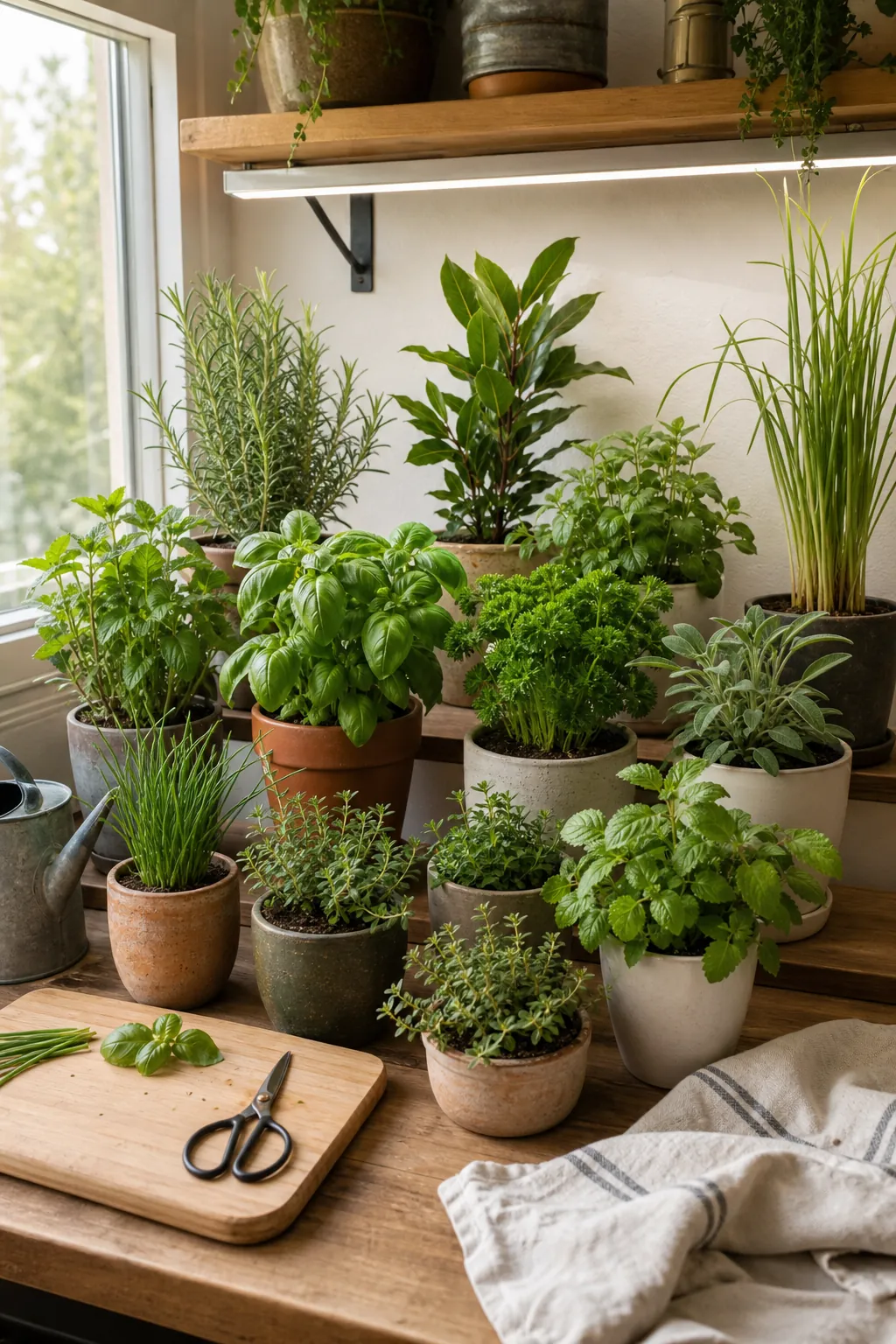
Growing herbs indoors works best when you stop treating every herb like the same little windowsill plant. Basil wants warmth and steady moisture. Rosemary wants sharper drainage and brighter light. Mint is forgiving, but it will crowd anything planted too close. Cilantro grows fast, then bolts if it gets stressed.
That is why many apartment herb gardens fail after the first pretty week. The setup looks right, but the light is weak, the pots have poor drainage, or Mediterranean herbs get watered like parsley. A productive indoor food garden starts with herbs that match your window, your grow light, and the way you actually cook.
The 15 herbs below are strong candidates for growing herbs indoors, from beginner-friendly kitchen staples to slightly fussier plants that reward a brighter setup. Use the notes on light, water, pot choice, and harvesting to build better indoor herb garden ideas for a windowsill, shelf, counter, or small apartment corner.
Basil
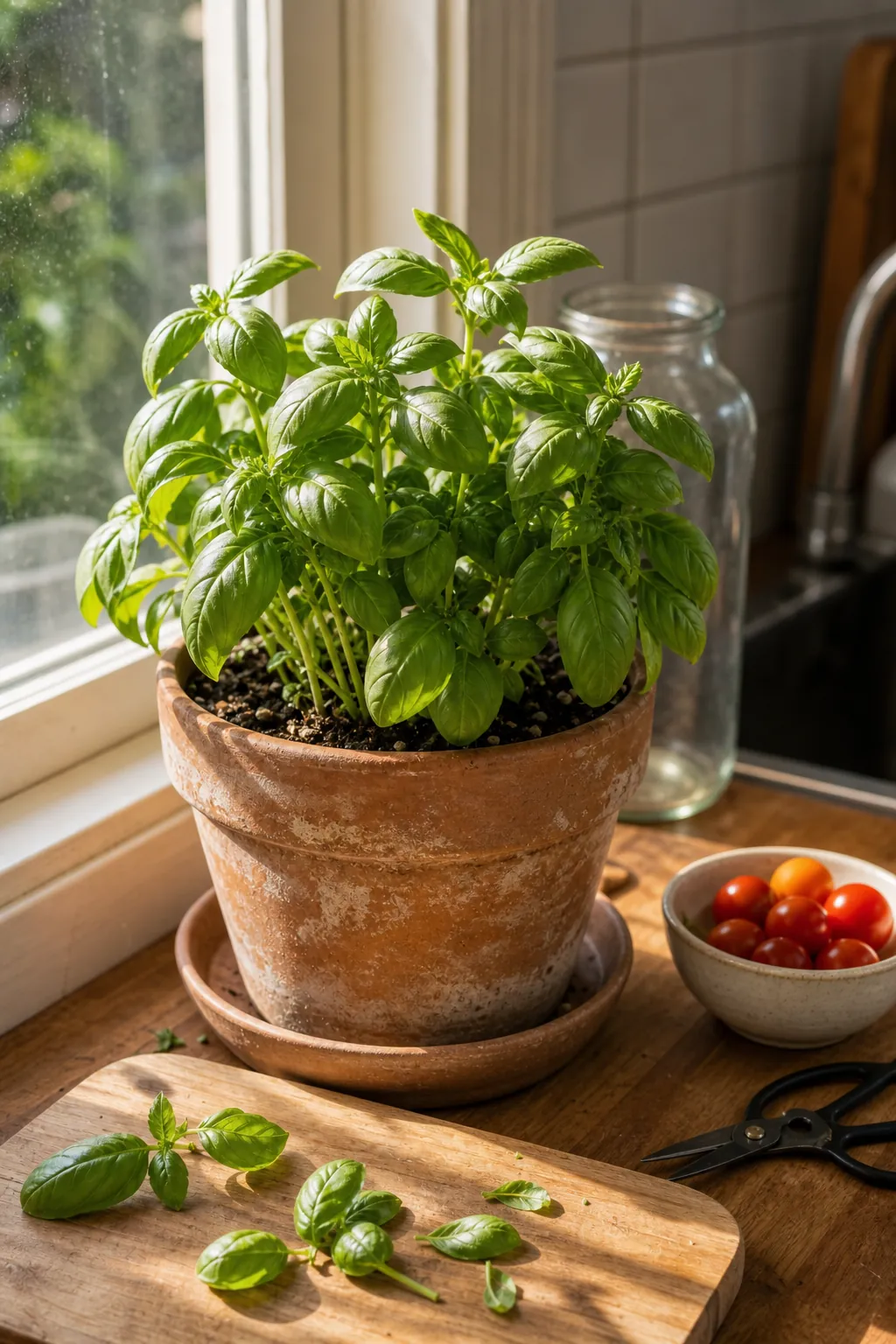
Basil is the herb most people want first, and it is also the one that exposes a weak indoor setup quickly. It needs bright light, warmth, and consistent moisture. A sunny south or west window can work in spring and summer, but a simple full-spectrum grow light makes basil much more reliable through short winter days.
Choose a compact variety such as Genovese, spicy globe, or dwarf basil for pots. Keep it away from cold glass, clip the top growth often, and never strip the plant bare. Harvesting above a leaf pair encourages branching, which gives you a fuller plant instead of one tall stem with tired leaves.
- Best spot: warm kitchen window or grow-light shelf
- Water: keep lightly moist, never swampy
- Use it for: pesto, tomato dishes, soups, and quick herb oils
Parsley
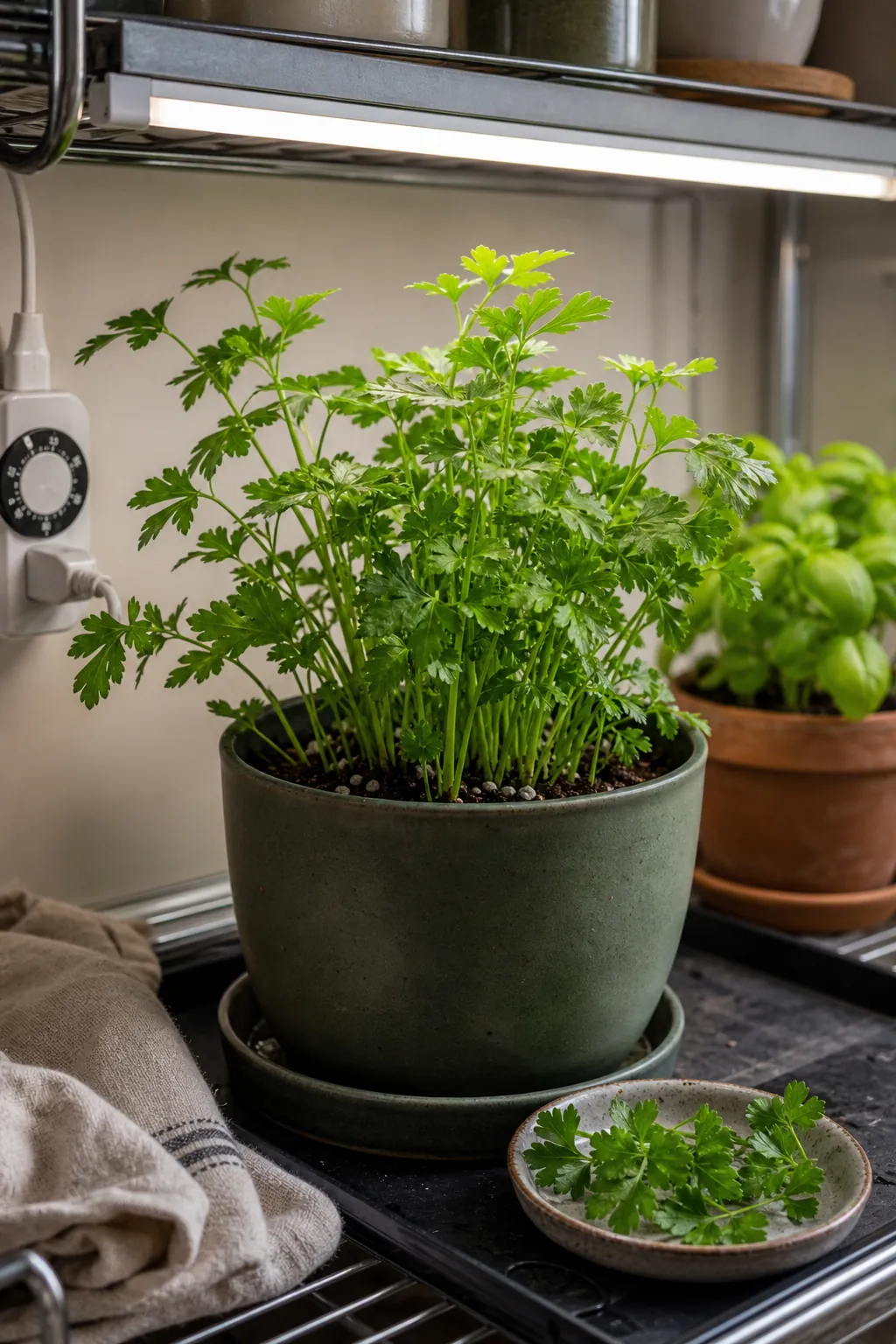
Parsley is slower than basil, but it is one of the most useful herbs to keep indoors because it handles regular cutting. Give it a deeper pot than you think it needs, because parsley forms a taproot and sulks in shallow containers. Flat-leaf parsley is usually better for cooking, while curly parsley is compact and tidy.
For stronger indoor parsley, start with a healthy transplant instead of expecting tiny seedlings to carry your kitchen garden right away. Cut outer stems near the base and leave the center growing point alone. If the plant gets pale and stretched, it is asking for more light, not more fertilizer.
- Best spot: bright window with supplemental light
- Water: evenly moist soil with drainage
- Use it for: grain bowls, soups, sauces, eggs, and roasted vegetables
Mint
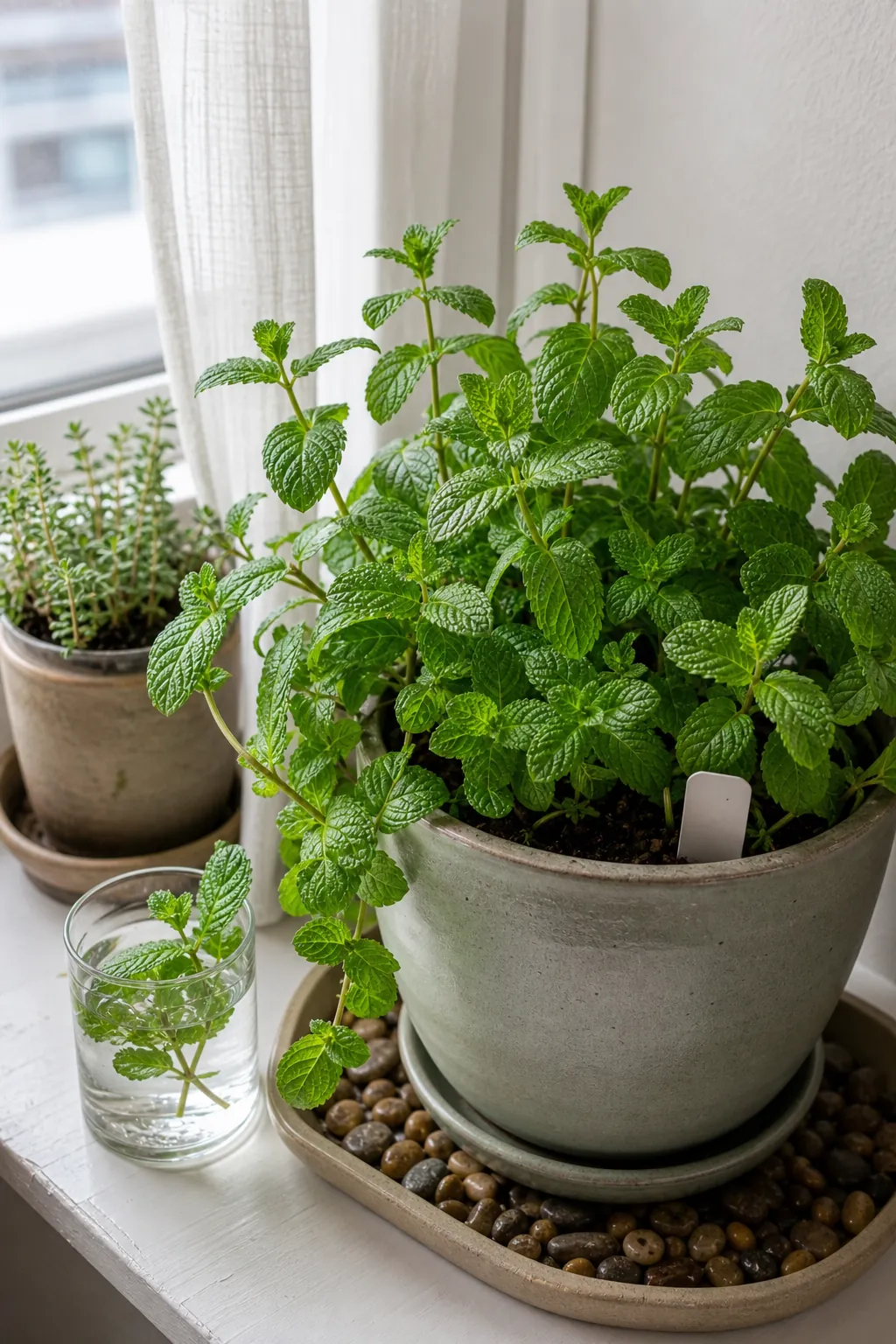
Mint is forgiving indoors, but it has one non-negotiable rule: give it its own pot. In mixed herb planter ideas indoor, mint often becomes the pushy roommate. Its roots spread aggressively, and the plant can shade smaller herbs if it is allowed to sprawl.
Mint tolerates slightly less direct sun than basil or rosemary, which makes it useful for bright apartment kitchens that are not perfect. Keep the soil lightly moist, rotate the pot, and pinch often so the stems stay compact. Peppermint, spearmint, and chocolate mint are easy choices if you use fresh leaves for drinks and desserts.
- Best spot: bright windowsill with morning or filtered sun
- Water: more moisture than woody herbs, but no standing water
- Use it for: tea, fruit, yogurt, cocktails, and fresh salads
Chives
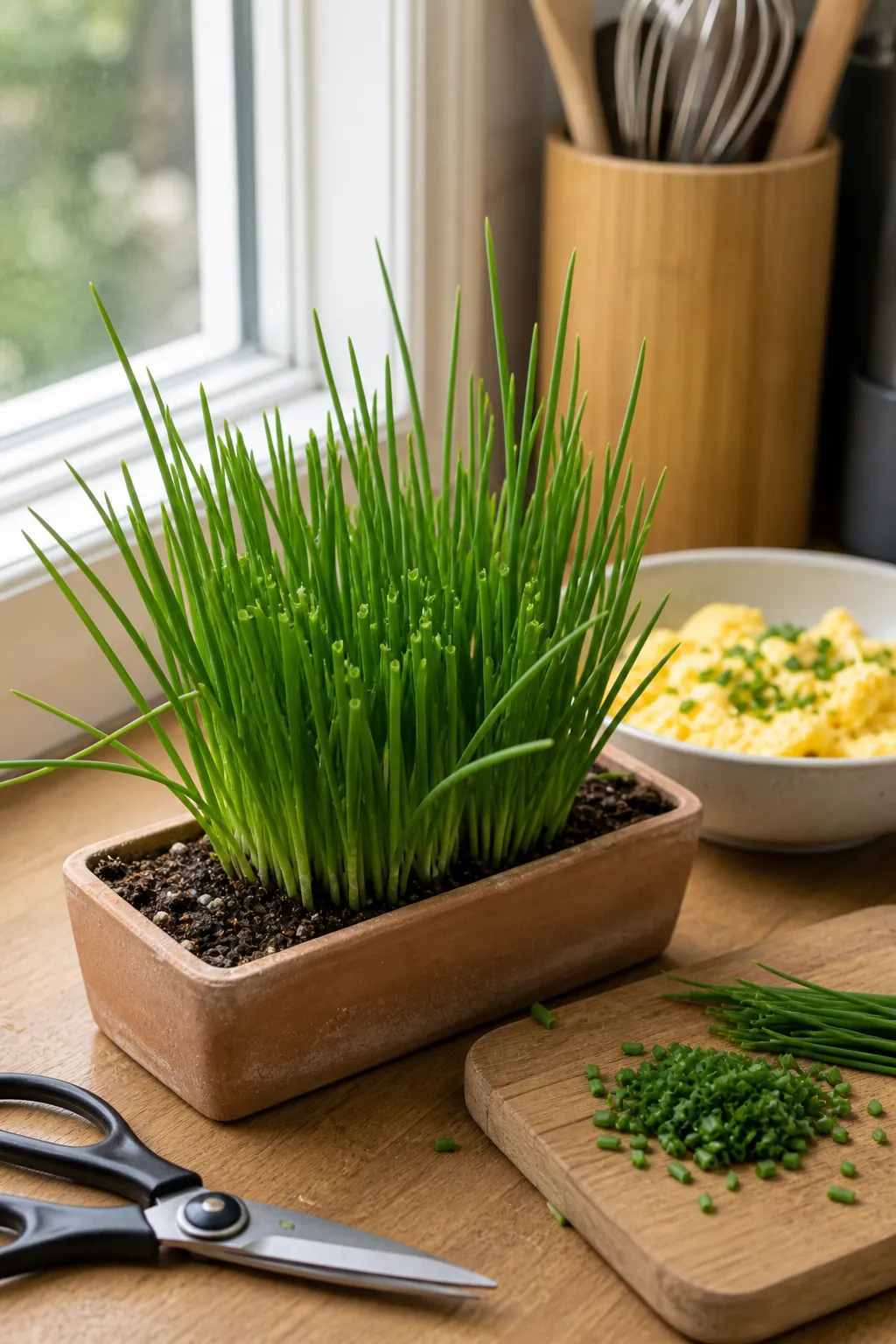
Chives are one of the easiest herbs to recommend for beginners because they fit real cooking habits. You can snip a few blades for eggs, potatoes, noodles, or dips without planning a big harvest. They also stay neat in small pots, which makes them useful for apartment herb gardens.
Give chives bright light and trim from the outside rather than chopping the whole plant flat every time. If you divide a clump from an outdoor herb garden, let it rest in a cool spot for a short period before bringing it into warmth. That helps trigger fresh indoor growth.
- Best spot: sunny kitchen sill or compact grow-light shelf
- Water: steady moisture, especially after harvesting
- Use it for: eggs, baked potatoes, dumplings, soups, and spreads
Cilantro
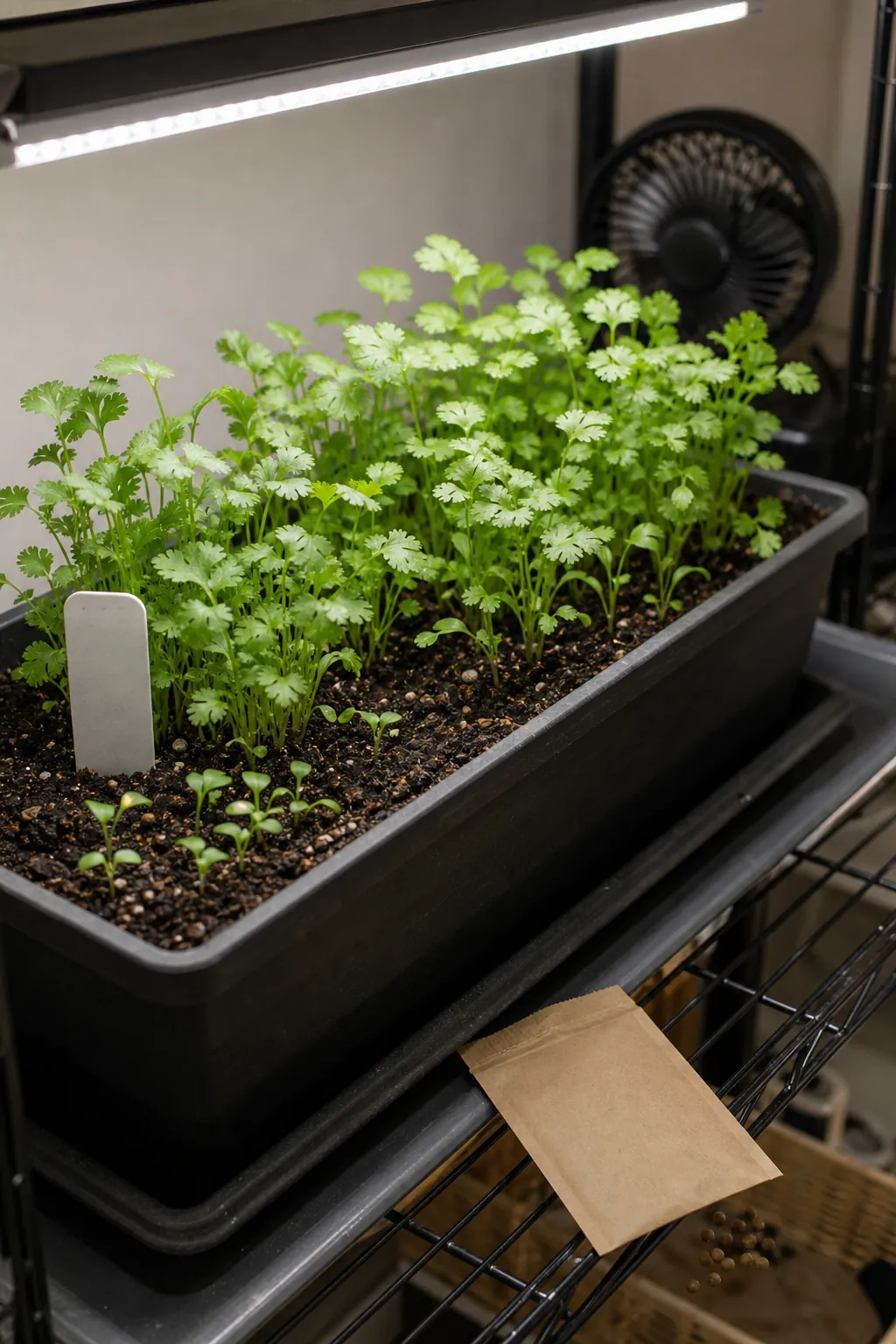
Cilantro is not hard because it is delicate. It is hard because it is fast. It wants cool conditions, strong light, and a steady schedule. When indoor cilantro gets leggy, the problem is usually not enough light close to the leaves. When it bolts, the plant is often too warm, too crowded, or too dry.
Instead of trying to keep one cilantro plant forever, sow a small pot every two to three weeks. Use a deeper container, thin crowded seedlings, and harvest outer stems while the center keeps growing. If you cook with cilantro often, succession planting is the difference between a useful plant and one sad tuft on the counter.
- Best spot: cool bright window or close grow light
- Water: evenly moist, never dried hard
- Use it for: tacos, rice bowls, chutneys, curries, soups, and salsa
Thyme
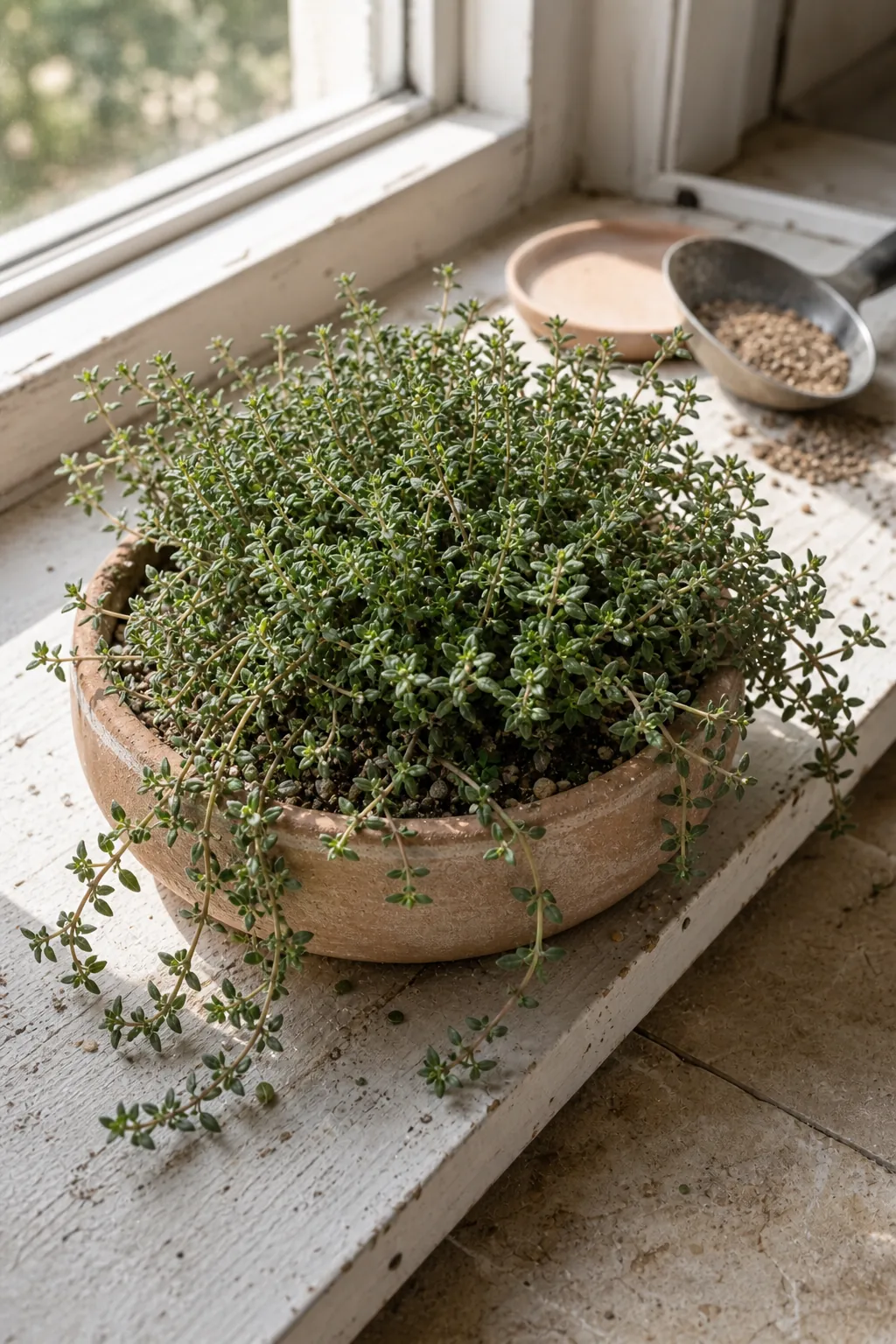
Thyme is ideal for small-space herb growing because it stays compact, smells good, and does not need constant attention. It belongs with the drier, sunnier herbs. The fastest way to ruin thyme indoors is to plant it in heavy soil, water it too often, and keep it in a dim corner.
Use a gritty potting mix with perlite or coarse material, and choose a pot with real drainage. Let the top layer dry before watering again. Harvest short sprigs rather than tearing at the plant. Lemon thyme is especially good if you want a plant that earns its place in both food and scent.
- Best spot: brightest sill or warm grow-light shelf
- Water: let the surface dry between waterings
- Use it for: roasted vegetables, beans, chicken, mushrooms, and bread
Oregano
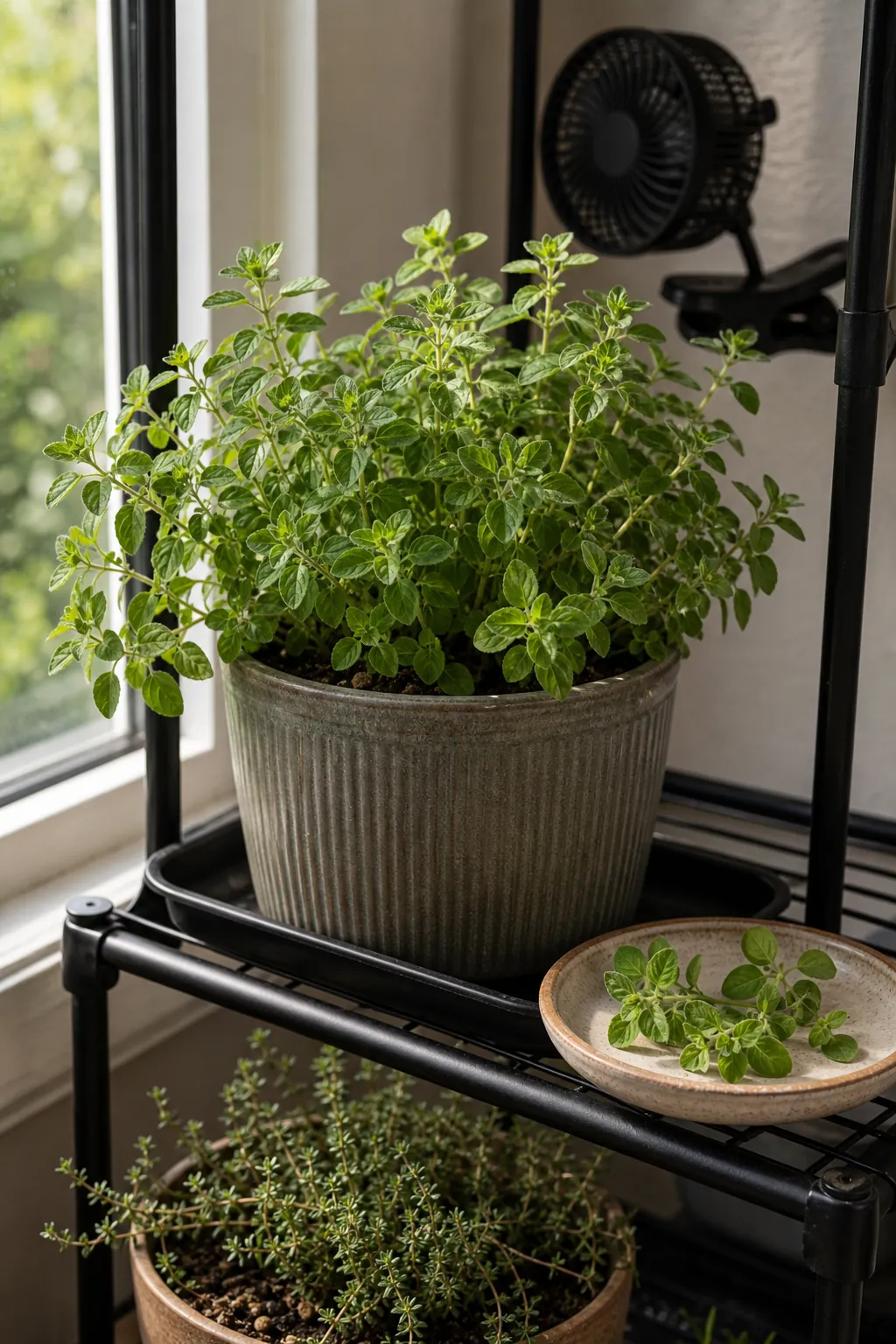
Oregano is a strong candidate for growing herbs in pots because it responds well to trimming and does not demand a large container at first. The flavor is more intense when the plant gets strong light, so do not hide it behind taller herbs.
Keep oregano on the drier side and pinch stems before they get woody and sparse. Greek oregano is the classic cooking choice, while golden oregano can look beautiful in a mixed display if the light is strong enough. If growth slows in winter, harvest less and wait for longer days or stronger artificial light.
- Best spot: sunny shelf with airflow around the leaves
- Water: moderate, with dry-down between waterings
- Use it for: pizza, pasta sauce, roasted peppers, beans, and marinades
Rosemary
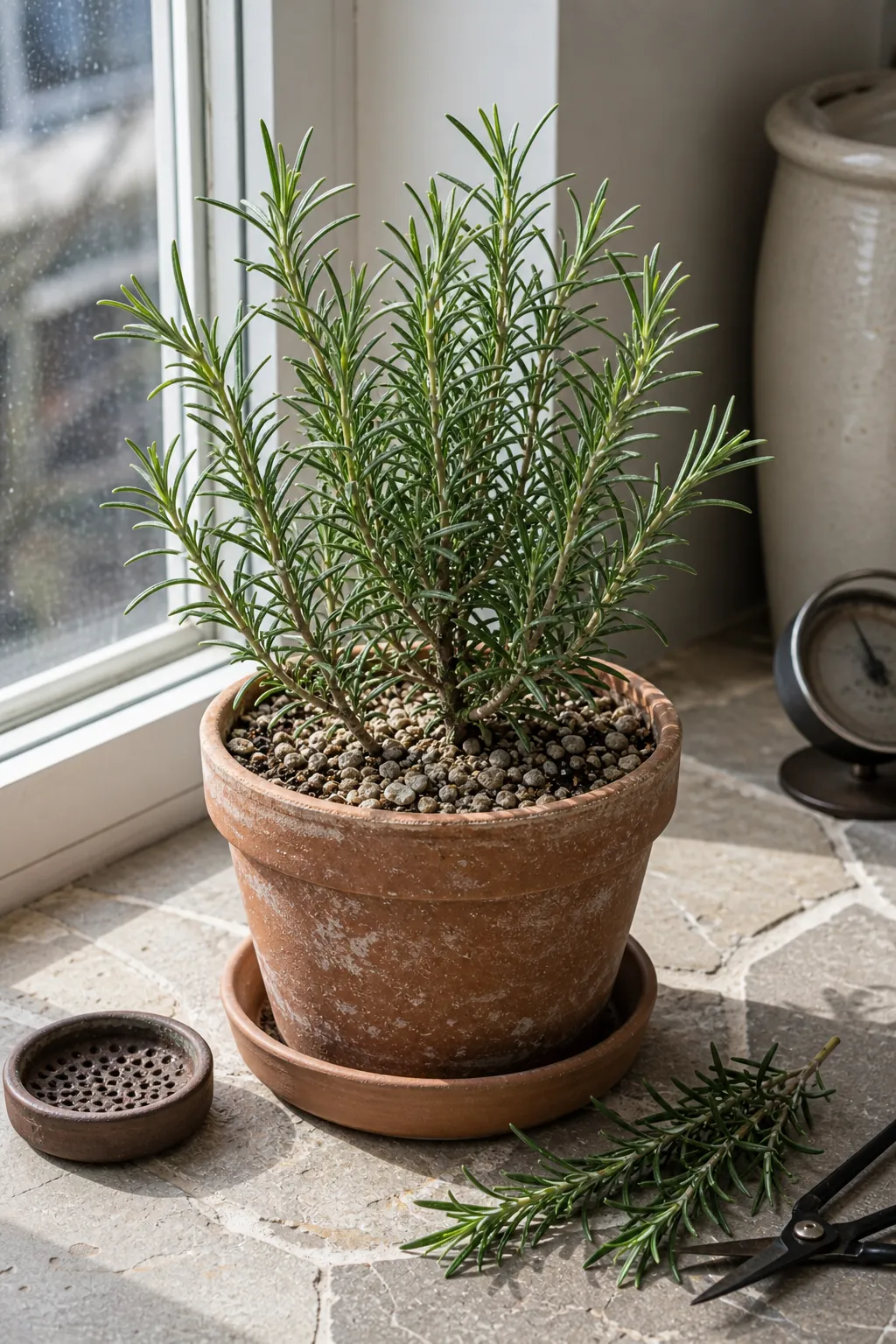
Rosemary is worth growing indoors, but it is not a soft windowsill plant. It wants high light, sharp drainage, and air movement. Many rosemary plants die indoors because the top looks dry, the owner waters again, and the roots sit cold and wet.
Use an unglazed clay pot if your home runs humid, and keep the plant near the brightest window you have. Water deeply, then let the mix dry more than you would for basil or parsley. If you bring rosemary indoors from outside, inspect it carefully for pests and give it a gradual transition before placing it near other herbs.
- Best spot: bright south or west window with supplemental light
- Water: deep but infrequent, with excellent drainage
- Use it for: potatoes, focaccia, beans, roasted vegetables, and stews
Sage
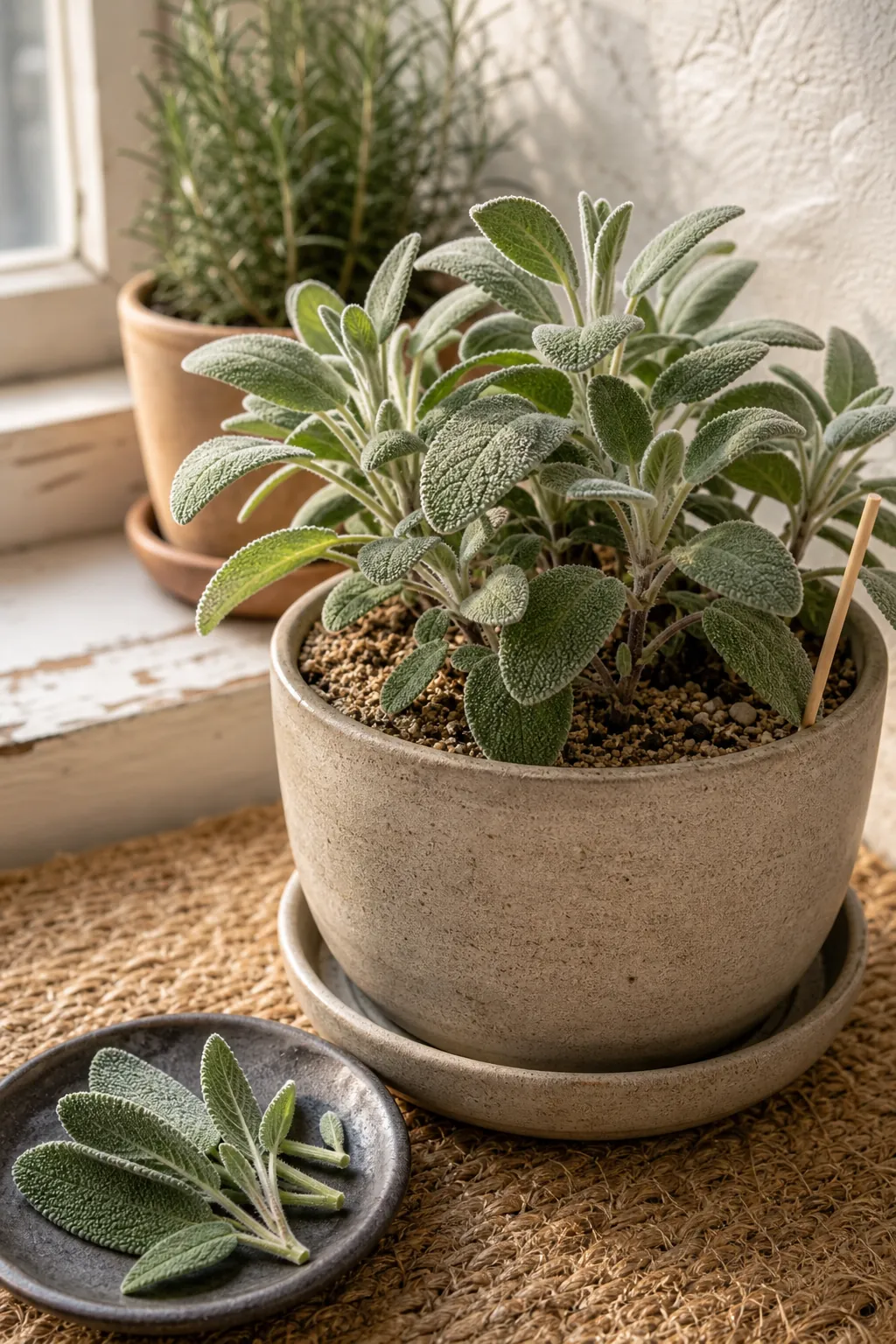
Sage belongs with rosemary and thyme in the dry-loving group. Its soft gray-green leaves are beautiful in a natural kitchen setup, but the plant needs enough light to stay dense. In low light, sage stretches, drops older leaves, and becomes more vulnerable to watering mistakes.
Plant sage in a gritty mix, avoid oversized pots, and harvest lightly. A few leaves carry a lot of flavor, so this is not a plant you need to strip weekly. If your indoor garden includes both moisture-loving and dry-loving herbs, keep sage in a separate container rather than forcing it into the same watering routine as mint.
- Best spot: bright warm sill with airflow
- Water: allow the top soil to dry well
- Use it for: brown butter, squash, beans, stuffing, and roasted poultry
Lemon Balm
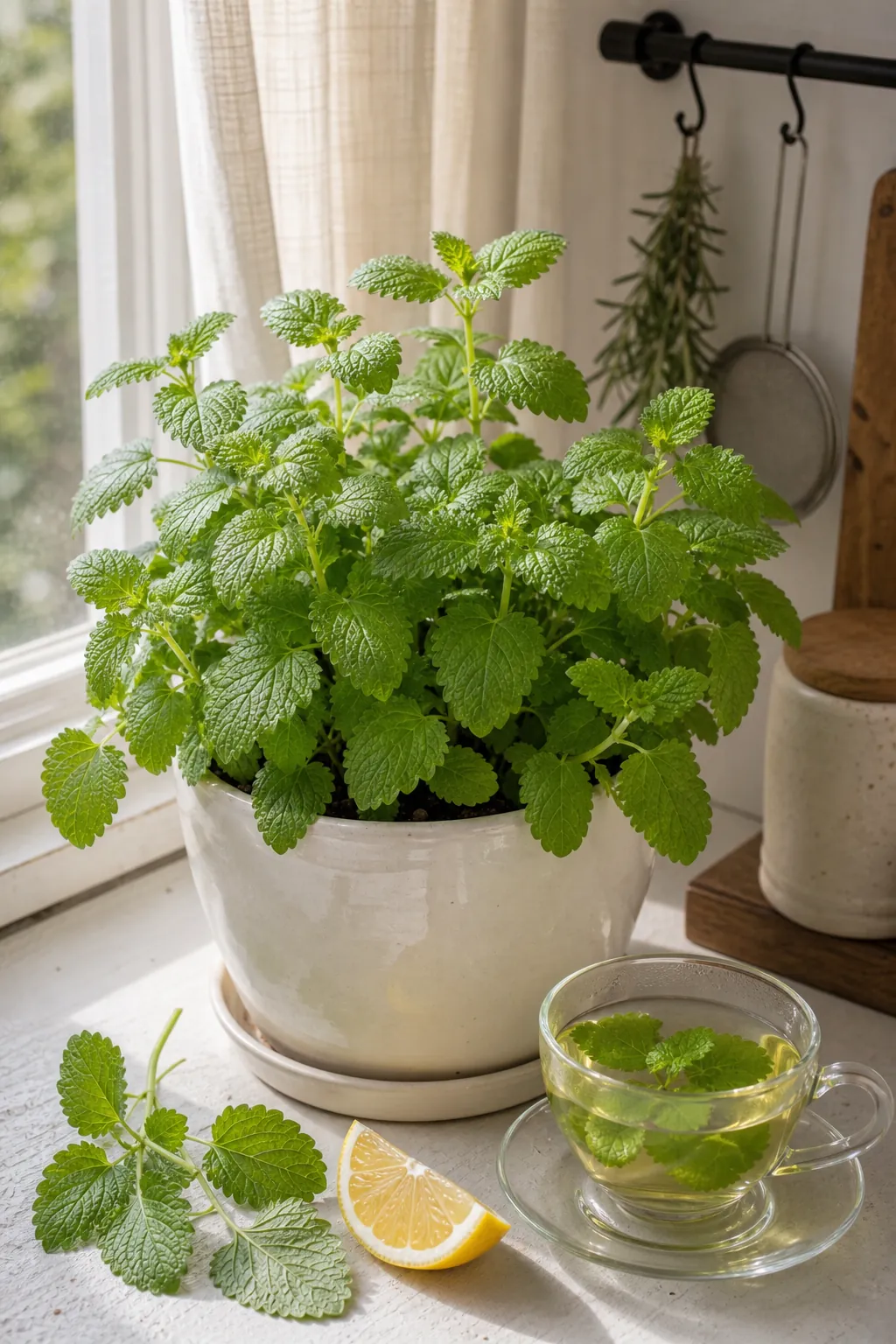
Lemon balm is a good next step after mint because it has the same generous growth habit with a softer citrus scent. It can handle indoor conditions well if it gets enough light and regular trimming. Without pruning, it becomes loose and floppy.
Keep lemon balm in its own pot or pair it only with herbs that like similar moisture. Pinch the tips to encourage branching, and use young leaves for the cleanest flavor. This is one of the better herbs for tea, fruit salads, infused water, and simple desserts, so it earns its space even in a small kitchen herb garden idea.
- Best spot: bright window with gentle afternoon light
- Water: lightly moist, similar to mint
- Use it for: tea, fruit, lemonade, yogurt, and herb butter
Marjoram
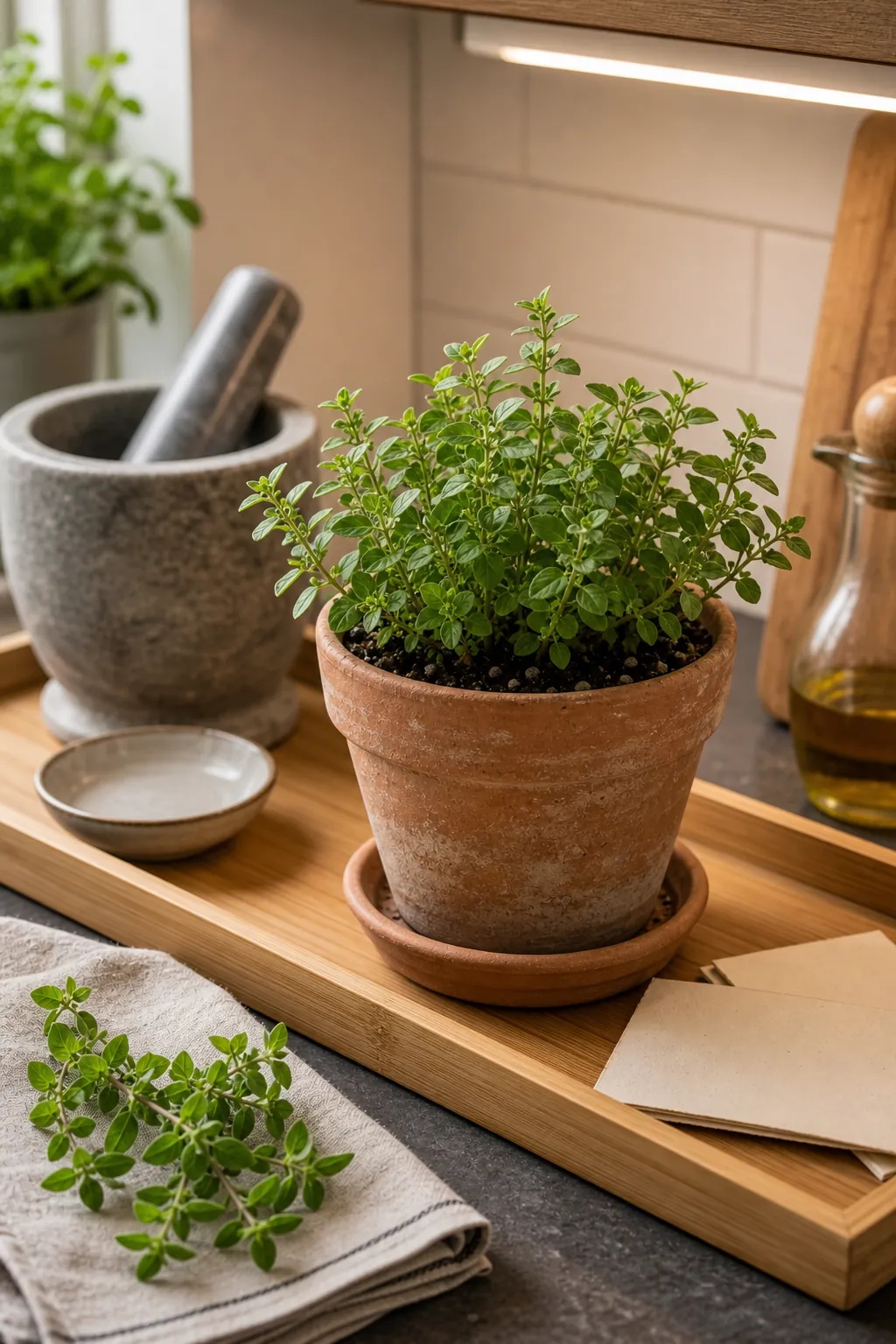
Marjoram is often overlooked because oregano gets more attention, but it is excellent indoors when you want a gentler, sweeter herb. It stays manageable in pots and works well in a small collection of Mediterranean herbs.
Give marjoram strong light and a container that drains cleanly. Harvest stem tips before the plant gets lanky. Because the leaves are small, you do not need a huge plant to flavor a meal. That makes marjoram a practical choice when your indoor garden is a shelf, not a whole sunroom.
- Best spot: warm sunny counter or grow-light shelf
- Water: moderate, with a dry surface before watering
- Use it for: soups, beans, chicken, mushrooms, and herb blends
Chervil
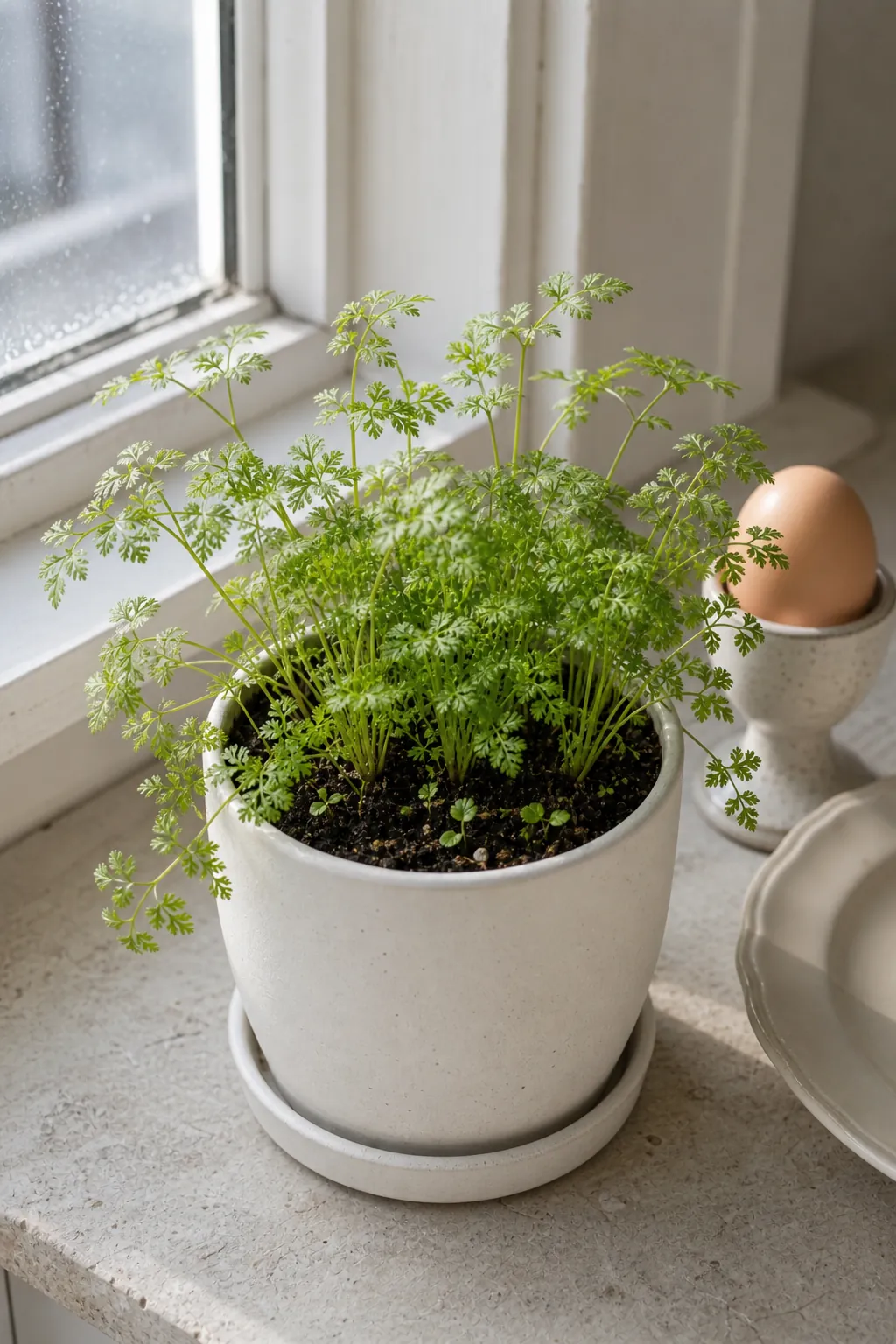
Chervil is a delicate herb with a mild anise-parsley flavor. It is useful indoors because it prefers cooler conditions than heat-loving basil. If your window is bright but not blazing hot, chervil may behave better than herbs that want long, intense sun.
Sow chervil directly in its final pot because it dislikes transplant disturbance. Keep the soil evenly moist and harvest young leaves before the plant tries to flower. For cooks who love omelets, fish, potatoes, and light spring dishes, chervil feels like a small luxury that does not need a large footprint.
- Best spot: bright cool window or gentle grow light
- Water: consistent moisture without soggy soil
- Use it for: eggs, fish, potatoes, sauces, and delicate salads
Bay Laurel
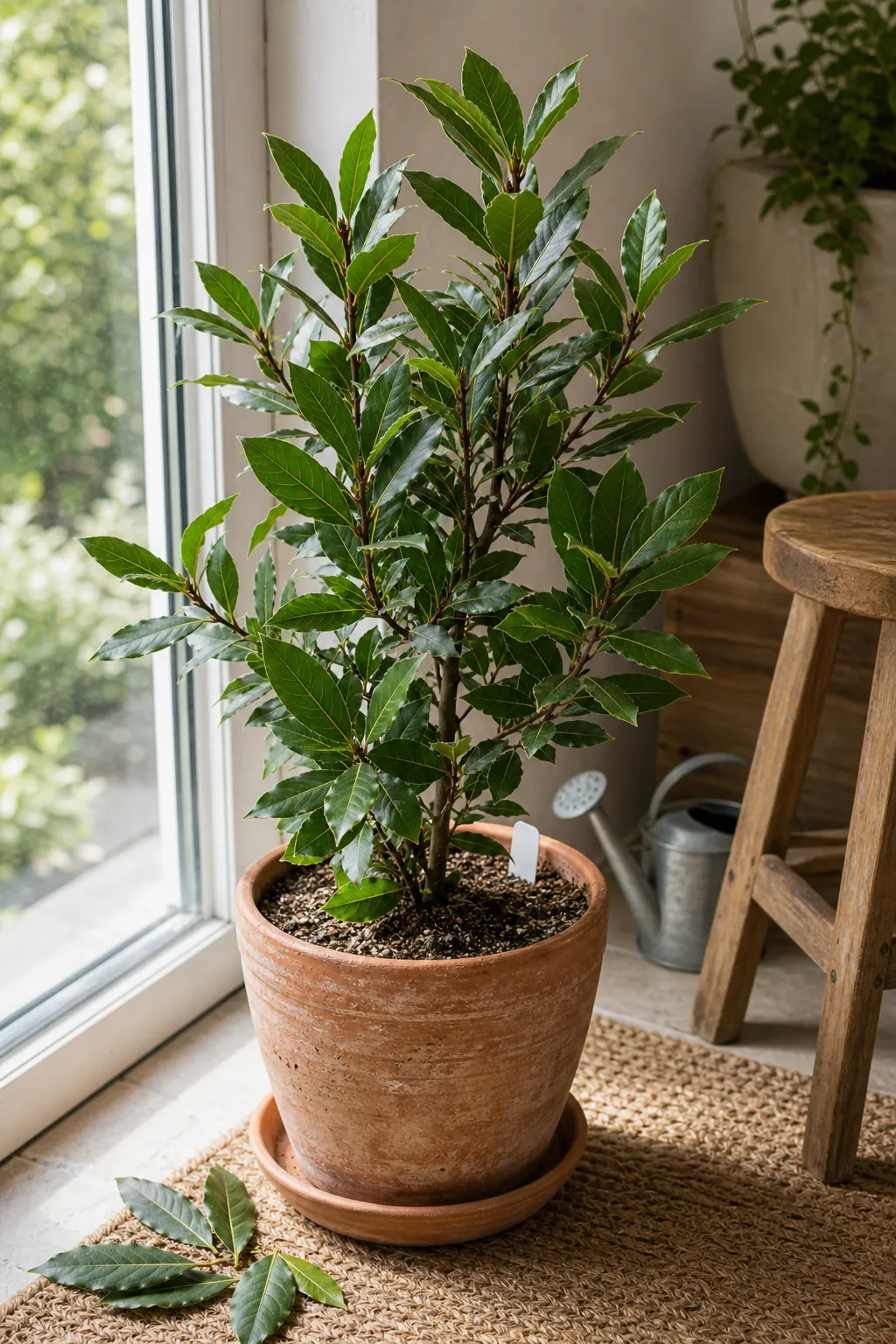
Bay laurel is different from the small leafy herbs on this list. It grows as a small shrub or tree, so it needs more vertical space and patience. The payoff is long-term: one healthy bay plant can supply leaves for soups, stews, beans, and sauces for years.
Place bay laurel in bright light and let the surface of the soil dry before watering. Avoid constantly wet soil, and wipe leaves occasionally so dust does not reduce light. If the plant spends warm months outdoors, bring it inside before cold weather and check the undersides of leaves for scale or other pests.
- Best spot: sunny door, bright window, or sunroom corner
- Water: moderate, with dry-down between waterings
- Use it for: soups, sauces, rice, beans, braises, and stocks
Lemongrass
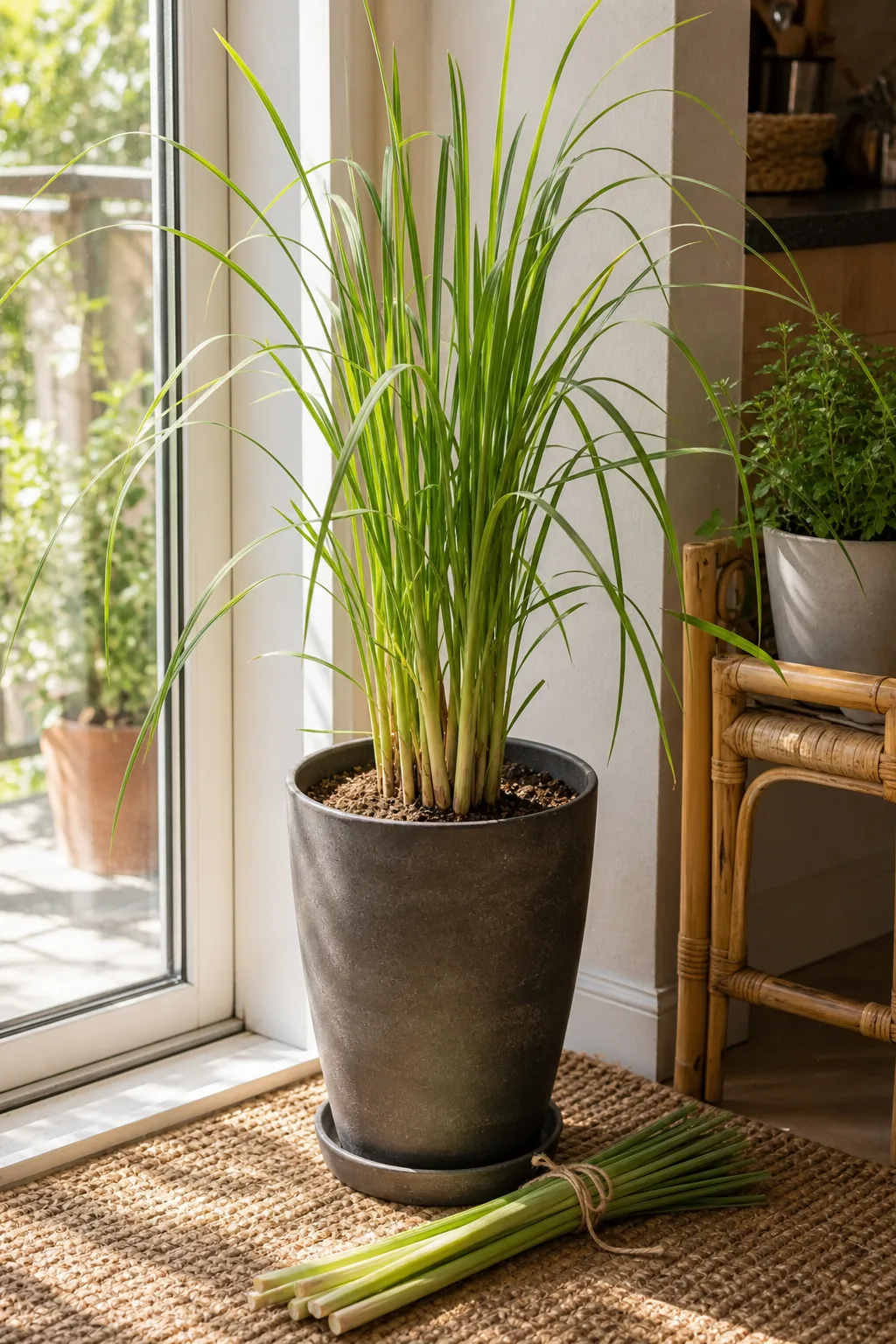
Lemongrass brings height and fragrance to an indoor food garden, but it needs more room than thyme or chives. Think of it as a bright corner plant rather than a tiny windowsill herb. If you have a patio door, sunroom, or strong grow light, lemongrass can be a rewarding container plant.
Start with a rooted stalk or small plant, then move it into a deep pot. Keep it warm, give it strong light, and water when the upper soil begins to dry. Harvest outer stalks when they thicken, and keep the plant trimmed so it does not overwhelm a small apartment setup.
- Best spot: bright warm corner with vertical space
- Water: steady moisture in a deep, well-drained pot
- Use it for: curries, soups, teas, marinades, and broths
Dill
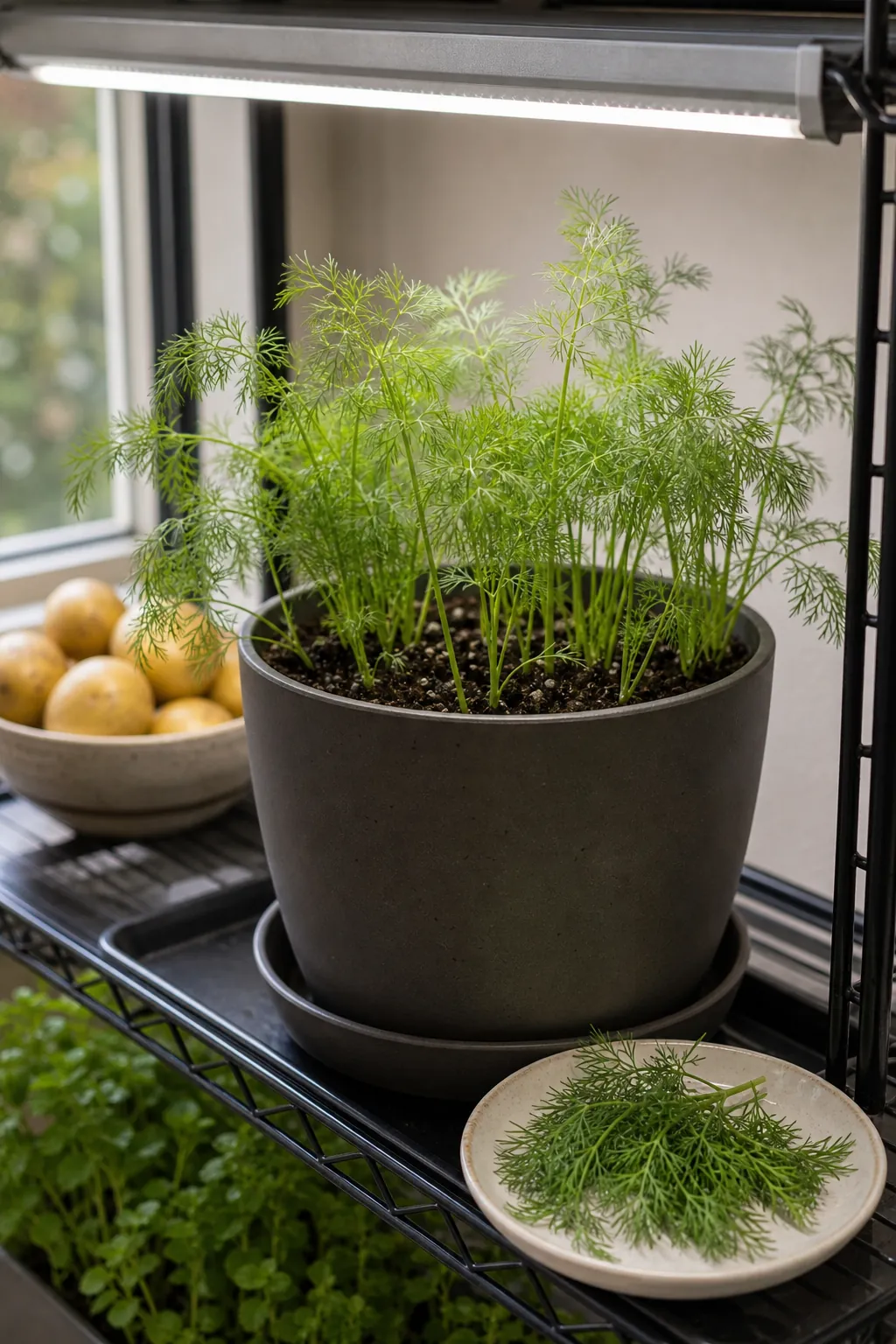
Dill is not the longest-lasting indoor herb, but it belongs on this list because it is useful, fast, and excellent when harvested young. Treat it like cilantro: sow small batches, give it strong light, and do not expect one plant to stay perfect forever.
Use a deep pot because dill forms a taproot and dislikes transplanting. Thin seedlings so they are not crowded, and keep the soil evenly moist while growth is tender. If your dill stretches toward the window, move the light closer or rotate the pot more often. Fresh dill is worth the trouble when you use it regularly.
- Best spot: strong grow light or very bright window
- Water: even moisture, especially in seedling stage
- Use it for: potatoes, fish, pickles, yogurt sauces, eggs, and salads
If you are building an indoor herb garden from scratch, start with basil, parsley, mint, chives, cilantro, thyme, and oregano. Add rosemary, sage, lemon balm, marjoram, chervil, bay laurel, lemongrass, and dill once your light and watering routine are steady. The best indoor herb garden is not the one with the most plants – it is the one where each herb gets the conditions it actually needs.