
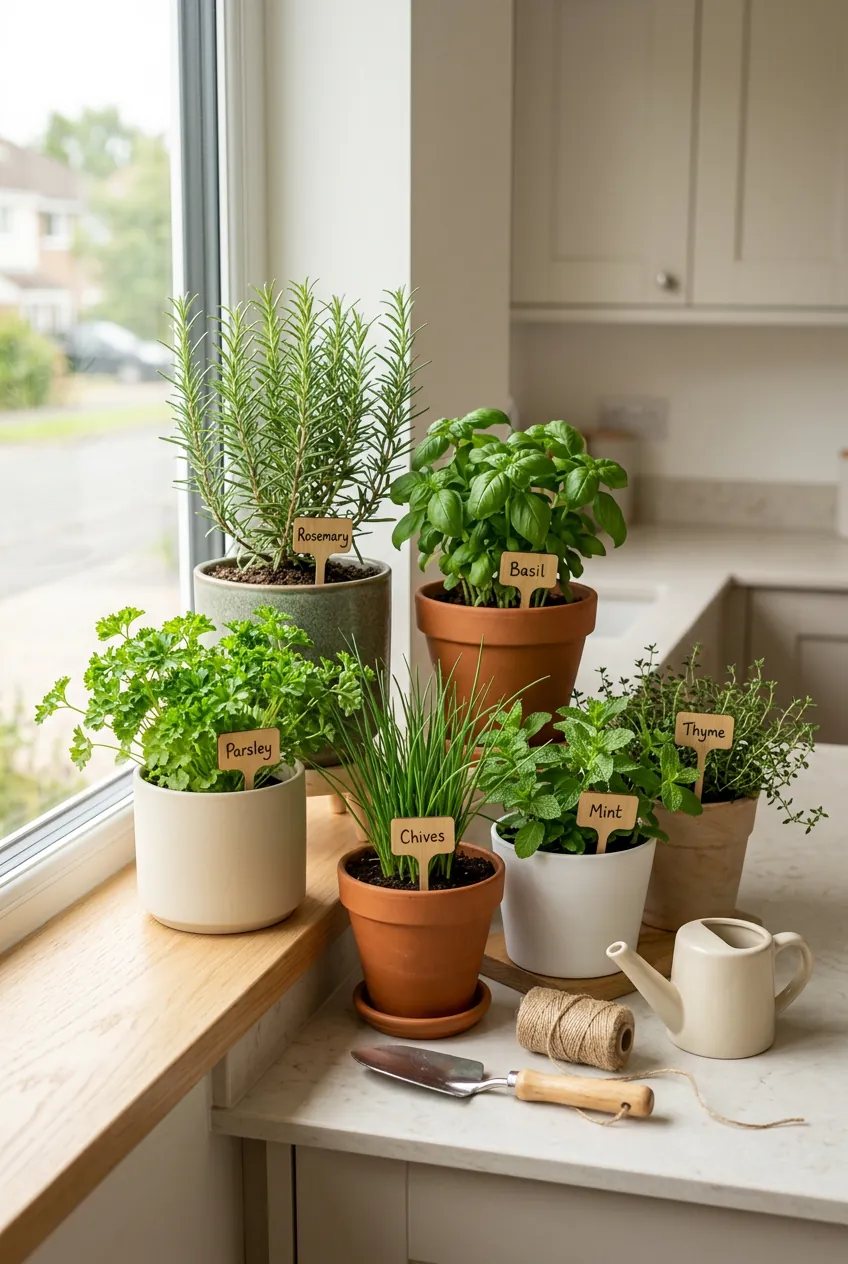
Indoor herbs look simple in photos: a few pots on a sunny sill, a handful of basil for dinner, maybe mint by the sink. In real kitchens, the story is usually less charming. Basil stretches toward the glass, cilantro bolts, mint gets thirsty every time you forget it, and rosemary sulks in damp soil.
The fix is not buying a prettier planter. The fix is matching the herb to the light, pot, soil, and watering rhythm your home can actually provide. Once you do that, an indoor herb garden becomes one of the most useful small indoor garden projects you can keep near the kitchen.
Start With Light, Not With A Cute Pot
Most indoor herbs want stronger light than a normal room provides. A bright south- or west-facing window is the easiest setup. If you only have a dim apartment kitchen, use a simple grow light instead of hoping the herbs will adapt.
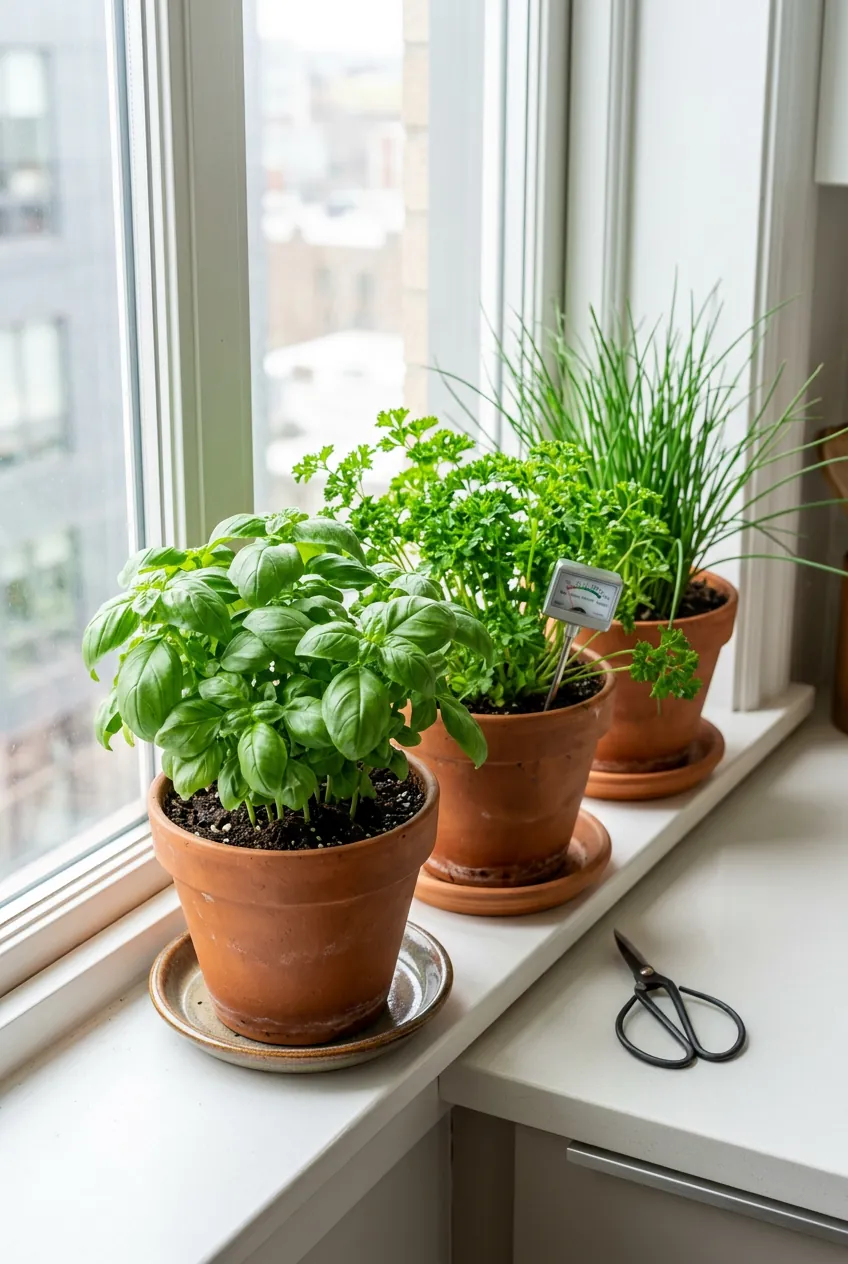
Soft, weak light causes long stems, pale leaves, and slow regrowth after harvest. That is why many windowsill herb garden setups fail even when the watering looks careful. If the plant is reaching hard toward the window, it needs more light, closer light, or a different herb.
Use the brightest sill for basil, rosemary, thyme, oregano, sage, and dill. Slightly more forgiving herbs such as parsley, chives, mint, and cilantro can handle a little less sun, but they still need a bright spot to stay useful.
Use A Grow Light If Your Kitchen Is Dim
Apartment herb gardens often work better on a shelf than on the window. A slim full-spectrum grow light gives you control, especially in winter or in kitchens facing north. Keep the light close enough that the herbs stay compact, but not so close that leaves dry or bleach.
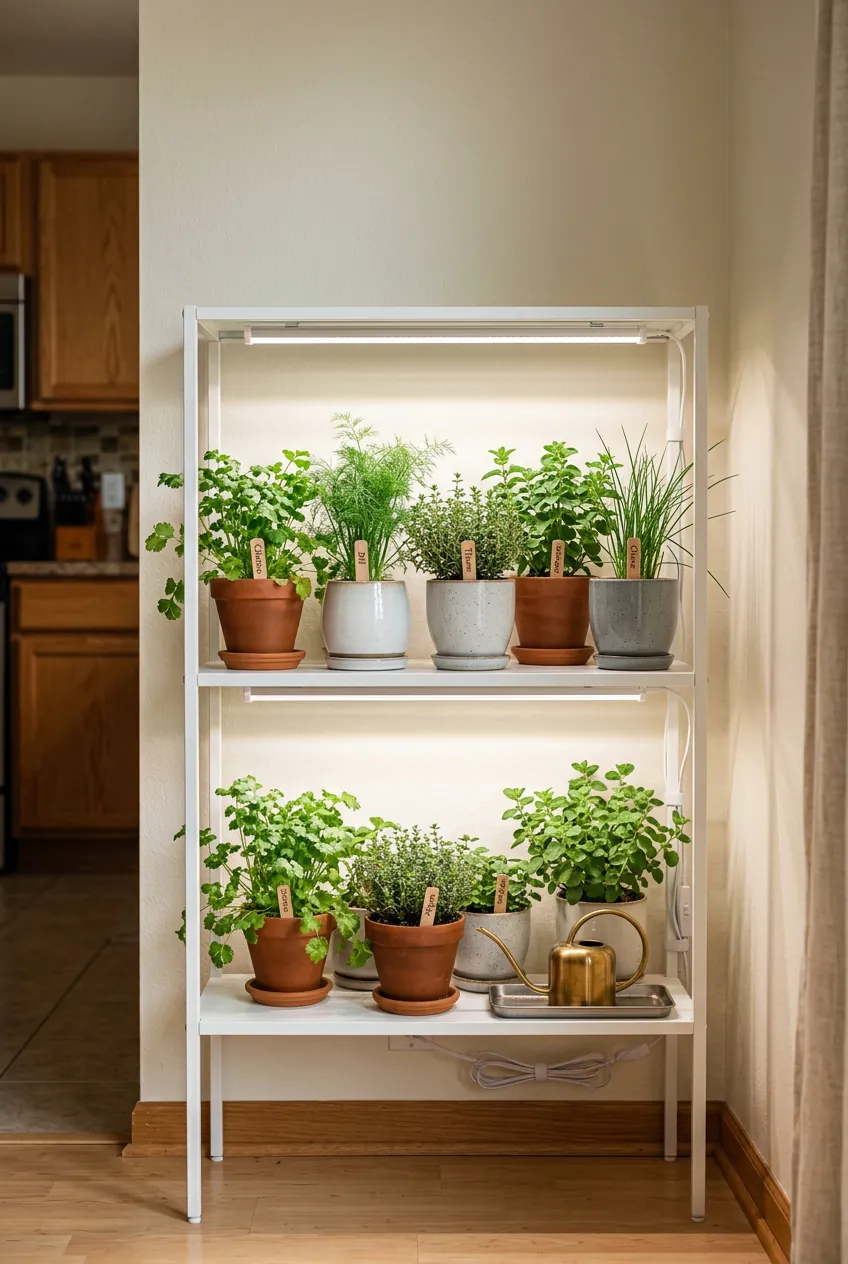
A basic rule: if you cannot read comfortably beside the plant without turning on a lamp, the herb probably cannot grow well there. A dedicated shelf also keeps pots out of crowded sink zones, which reduces knocked-over plants and inconsistent watering.
Choose Pots That Drain
The most common indoor herb mistake is planting into a container with no drainage. A sealed decorative pot may look clean, but wet roots cannot breathe. Basil, thyme, rosemary, oregano, sage, and many other herbs decline quickly when soil stays soggy.
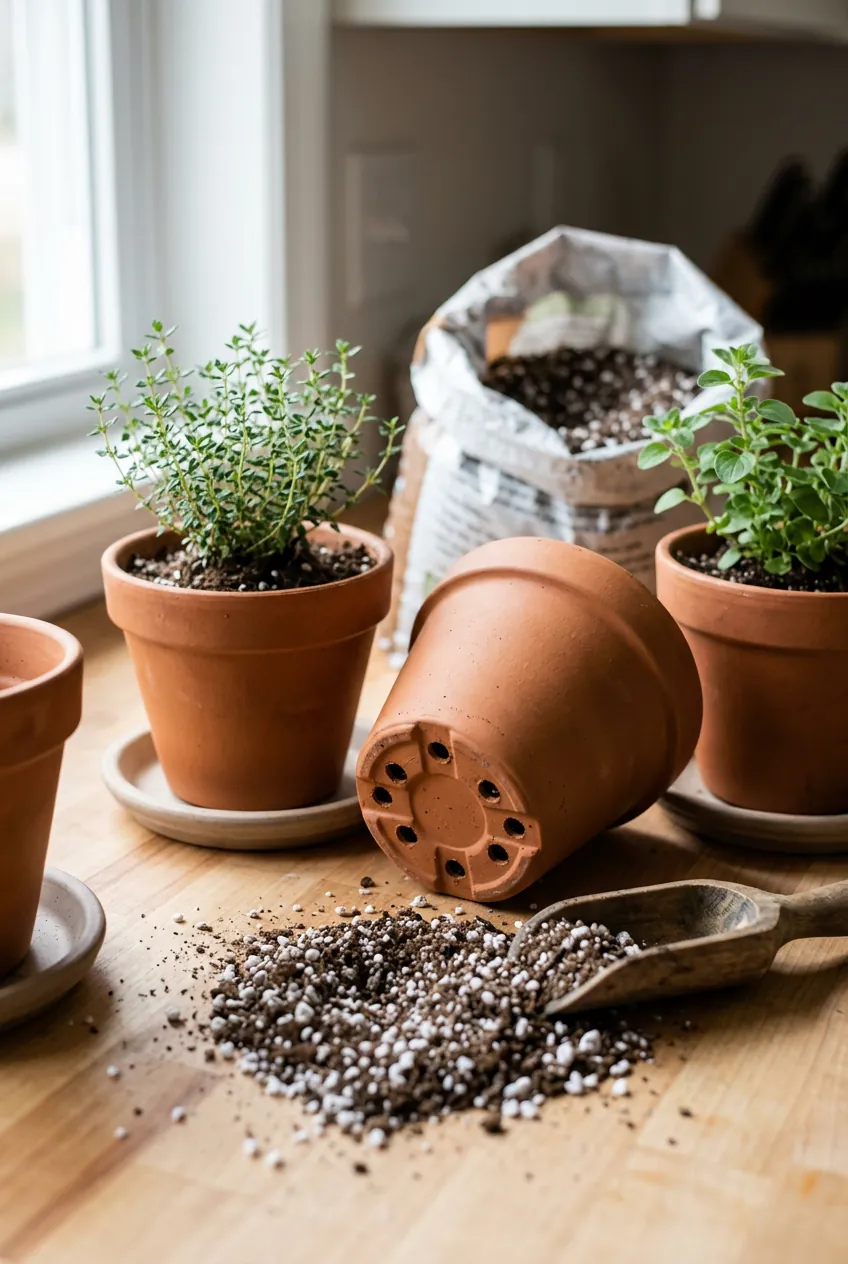
For growing herbs in pots indoors, use containers with drainage holes and saucers. If you love a decorative outer planter, keep the herb in a nursery pot inside it and remove standing water after watering. A loose potting mix is better than dense garden soil, which compacts in small containers.
Separate pots are usually easier than one long herb planter. Basil likes steady moisture. Rosemary and thyme prefer a drier rhythm. Mint grows aggressively and can crowd neighbors. Separate pots let you water each plant according to what it needs.
Water By Soil Feel, Not By The Calendar
Indoor herbs do not need a fixed watering day. They need you to check the soil. Push a finger into the top inch of potting mix. If it feels dry, water thoroughly until water drains into the saucer. If it still feels damp, wait.
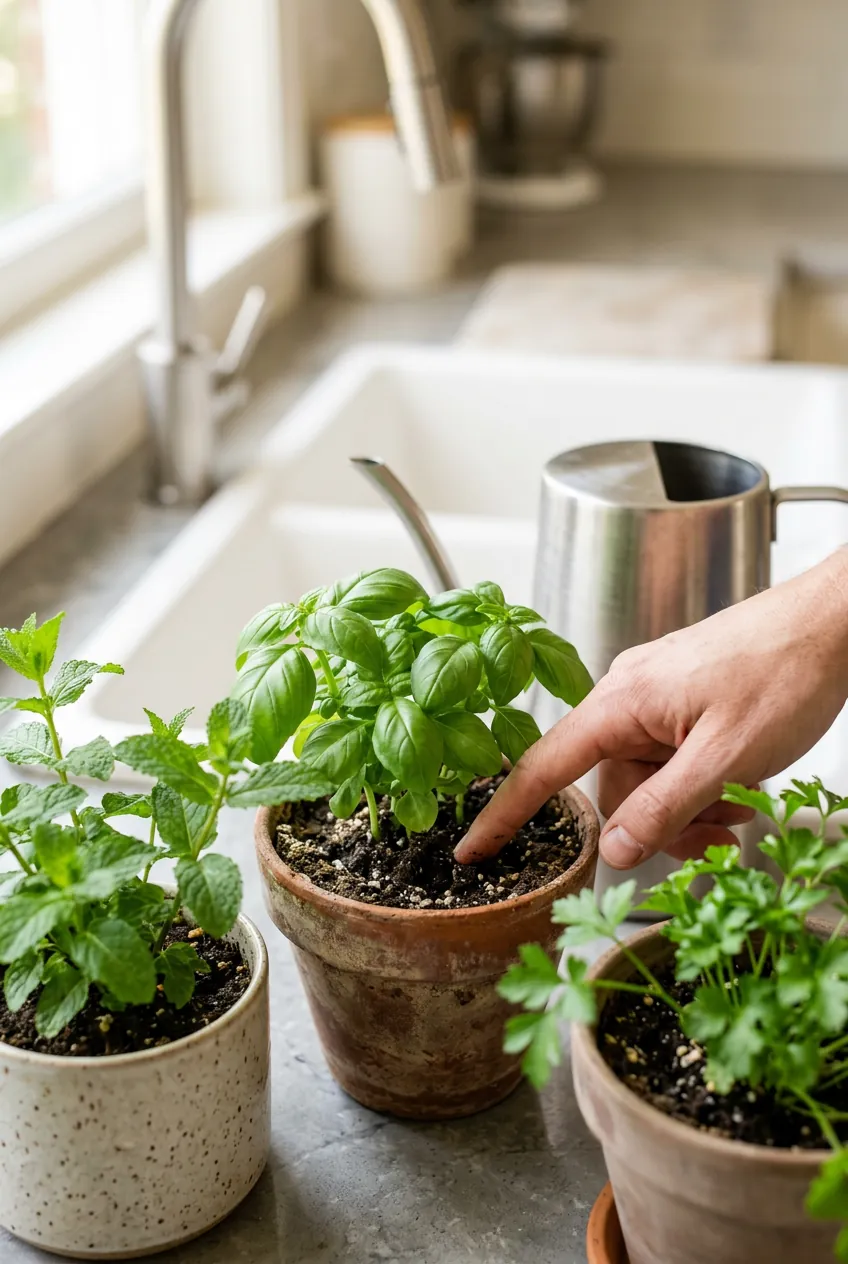
Small indoor garden pots dry faster near heat vents, sunny glass, and grow lights. They dry slower in deep decorative planters or cool rooms. That is why the finger test beats a schedule.
Basil, parsley, cilantro, chives, and mint usually want more consistent moisture. Thyme, oregano, rosemary, and sage prefer to dry more between waterings. If leaves yellow from the bottom and soil smells stale, you are likely watering too often or the pot is not draining well.
Pick Herbs That Match Your Space
Not every herb deserves the best spot in your kitchen. Choose the ones you cook with often, then match them to the conditions you have.
- Basil: Best for the brightest window or a grow light. Keep it warm, pinch the tips, and do not let it sit cold against winter glass.
- Parsley: A dependable indoor herb for steady snipping. It likes consistent moisture and a deep enough pot for roots.
- Chives: One of the easiest indoor herbs for beginners. Give it bright light and trim from the outside clumps.
- Mint: Useful, forgiving, and thirsty. Keep it in its own pot so it does not take over a mixed planter.
- Thyme and oregano: Great for sunny, drier windows. Use smaller pots with excellent drainage.
- Rosemary: Worth growing indoors only if you can give it strong light, airflow, and soil that does not stay wet.
- Cilantro and dill: Quick growers, but not long-lived indoors. Sow small batches every few weeks instead of expecting one plant to last all season.
Harvest So The Plant Keeps Growing
Indoor herbs stay fuller when you harvest a little at a time. Cut above a pair of leaves on basil, mint, oregano, and thyme so new side shoots can form. For chives, cut leaves near the base with clean scissors. For parsley and cilantro, take outer stems first and leave the center growing.
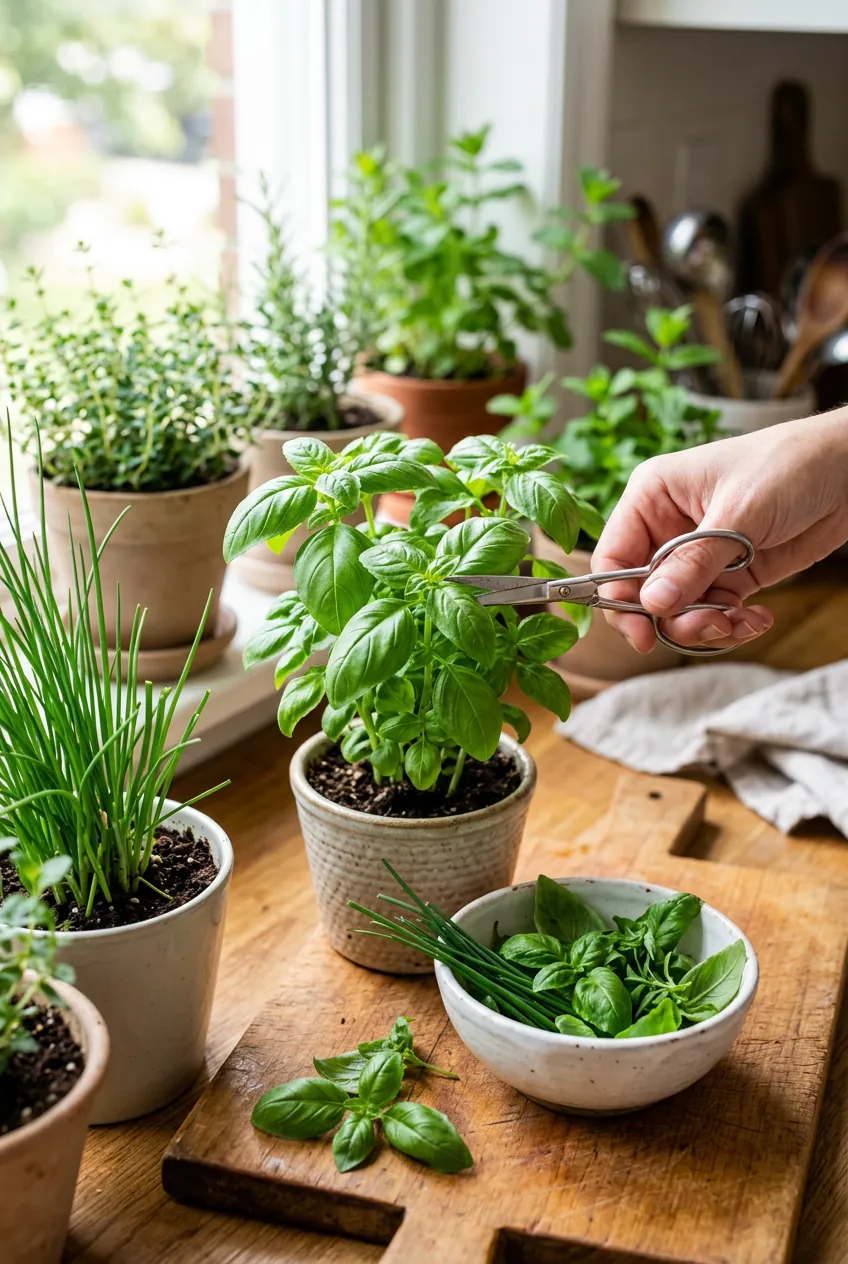
Avoid stripping more than about one-third of the plant at once, especially if your light is limited. The plant needs leaves to rebuild energy. If you want big weekly harvests, grow more pots or use a grow light instead of asking one small plant to do too much.
Make The Setup Easy To Maintain
The best herb garden design is the one you can maintain while cooking. Keep the pots near water, but not where they block the sink. Use a tray to catch drips, rotate pots every few days, and keep scissors nearby so harvesting becomes a habit.
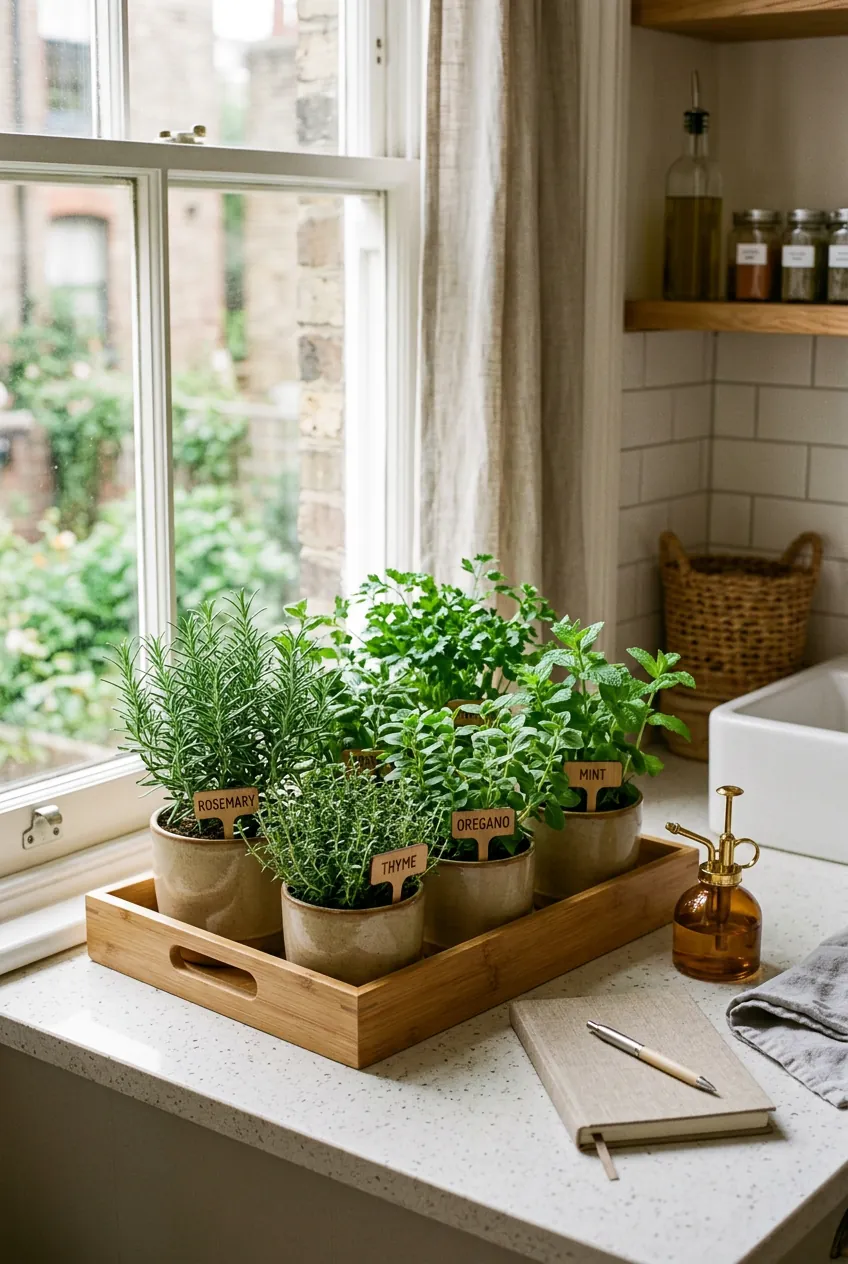
If you are building an indoor herb garden DIY setup from scratch, start with three to five herbs instead of ten. A simple group of basil, parsley, chives, mint, and thyme covers a lot of cooking and teaches you how your home handles light and moisture.
Quick Troubleshooting For Indoor Herbs
- Long, weak stems: Not enough light. Move the plant closer to the window or add a grow light.
- Yellow lower leaves: Often too much water, poor drainage, or old wet soil.
- Dry crispy edges: The pot may be drying too hard between waterings, or the plant is too close to heat or intense light.
- White crust on soil: Mineral buildup from water or fertilizer. Flush the pot well and let it drain.
- Tiny flying insects: Fungus gnats usually mean the surface is staying wet. Let the top layer dry more and avoid standing water.
A Simple Starter Plan
For a reliable first windowsill herb garden, plant basil, parsley, chives, mint, and thyme in separate draining pots. Put basil and thyme in the brightest spots, keep mint in its own pot, and water only after checking the soil. If the window is weak, place the same group under a grow light shelf.
Indoor herbs reward consistency more than perfection. Give them real light, breathable pots, and small regular harvests, and the garden starts feeling less like decoration and more like part of the kitchen.