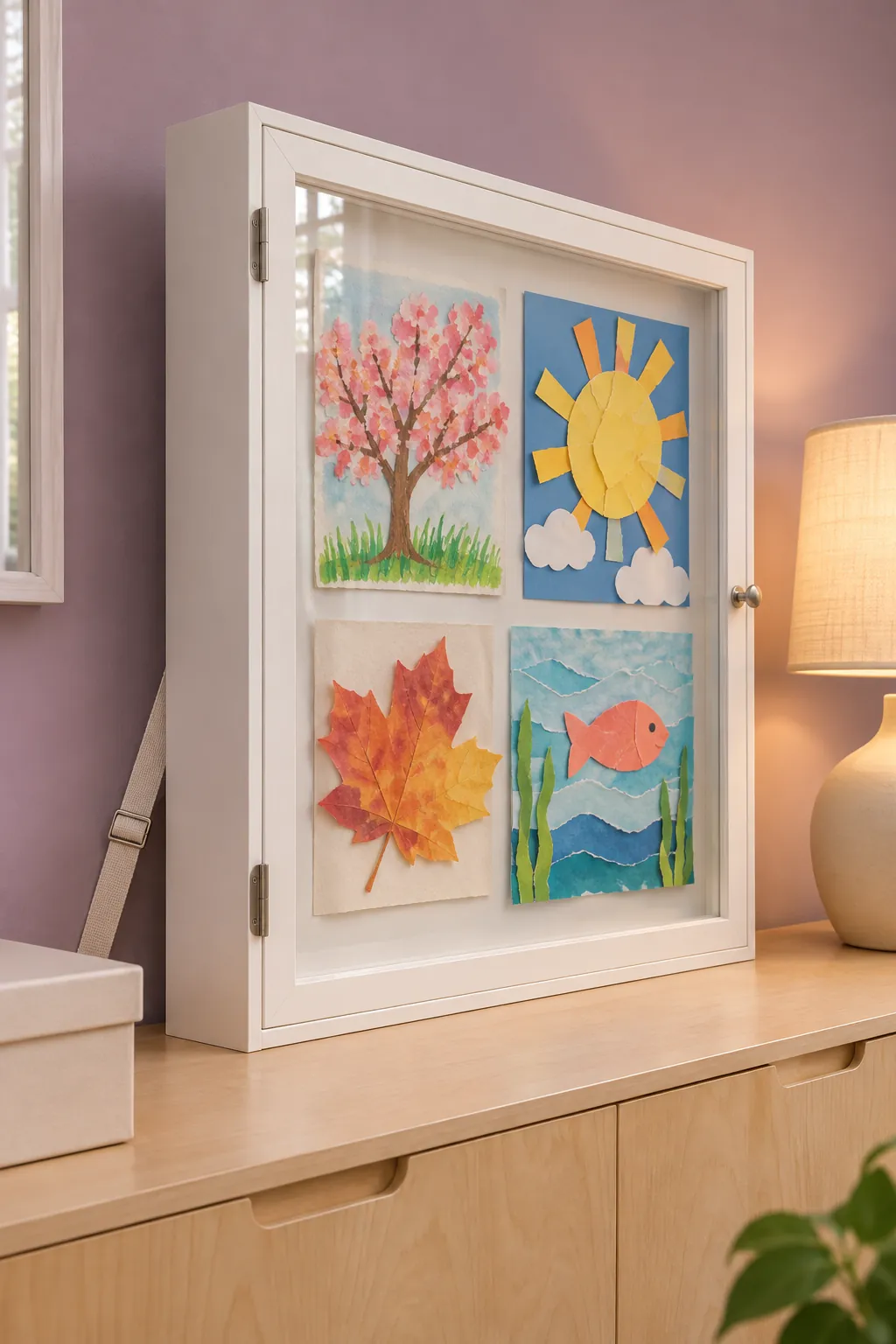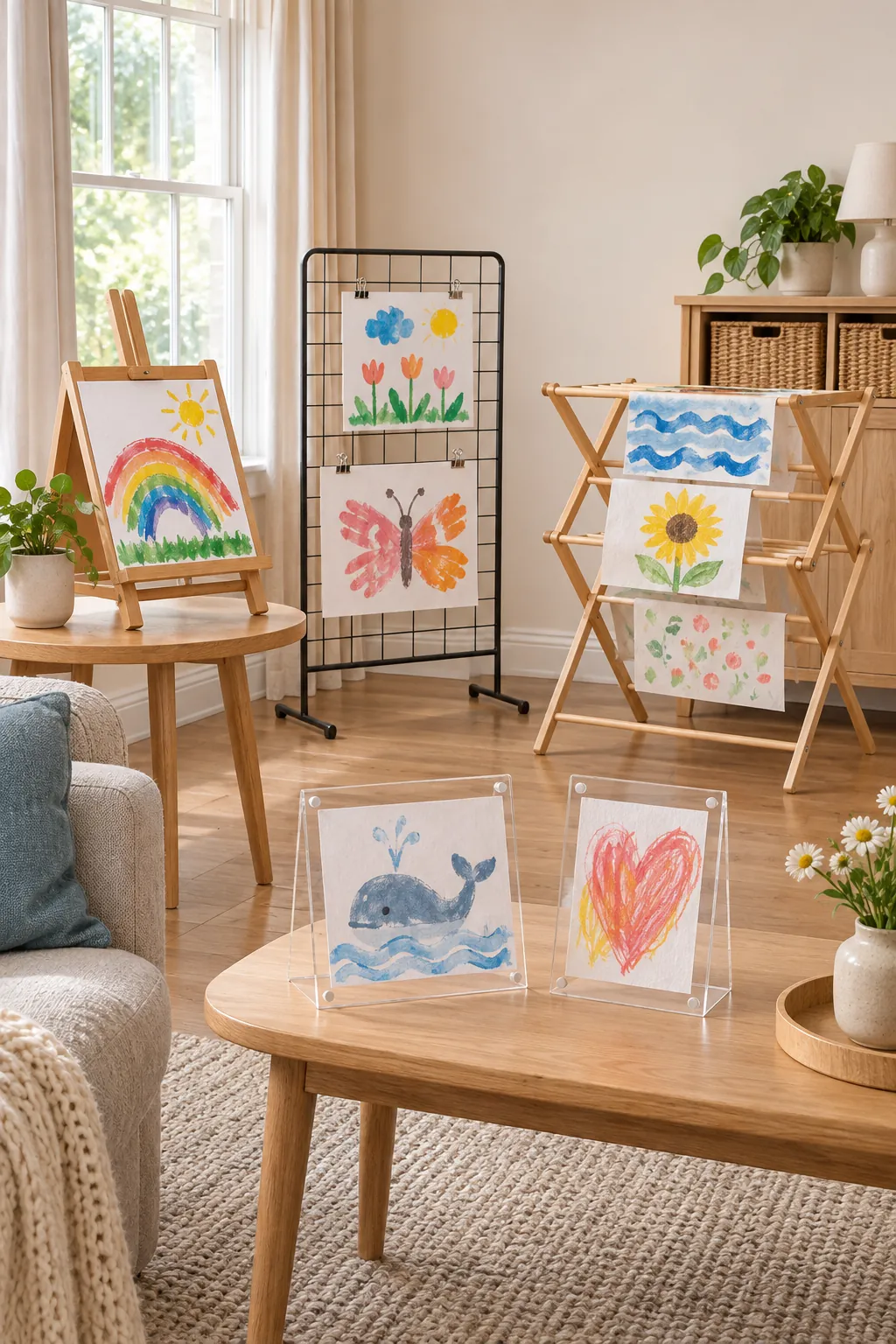
School papers can cover a room faster than most families can sort them. The harder problem in a rental is that a product sold as removable can still fail on warm, dusty, or weak paint. A better display uses furniture, doors, glass, or existing hardware, then limits how many pieces stay visible.
Choose one arrival point for new work and one archive box for the pieces that matter most. Let your child select what replaces the current display, then photograph or recycle the rest. Check every stand, clip, and support for stability before putting it into daily use.
Tabletop Easel
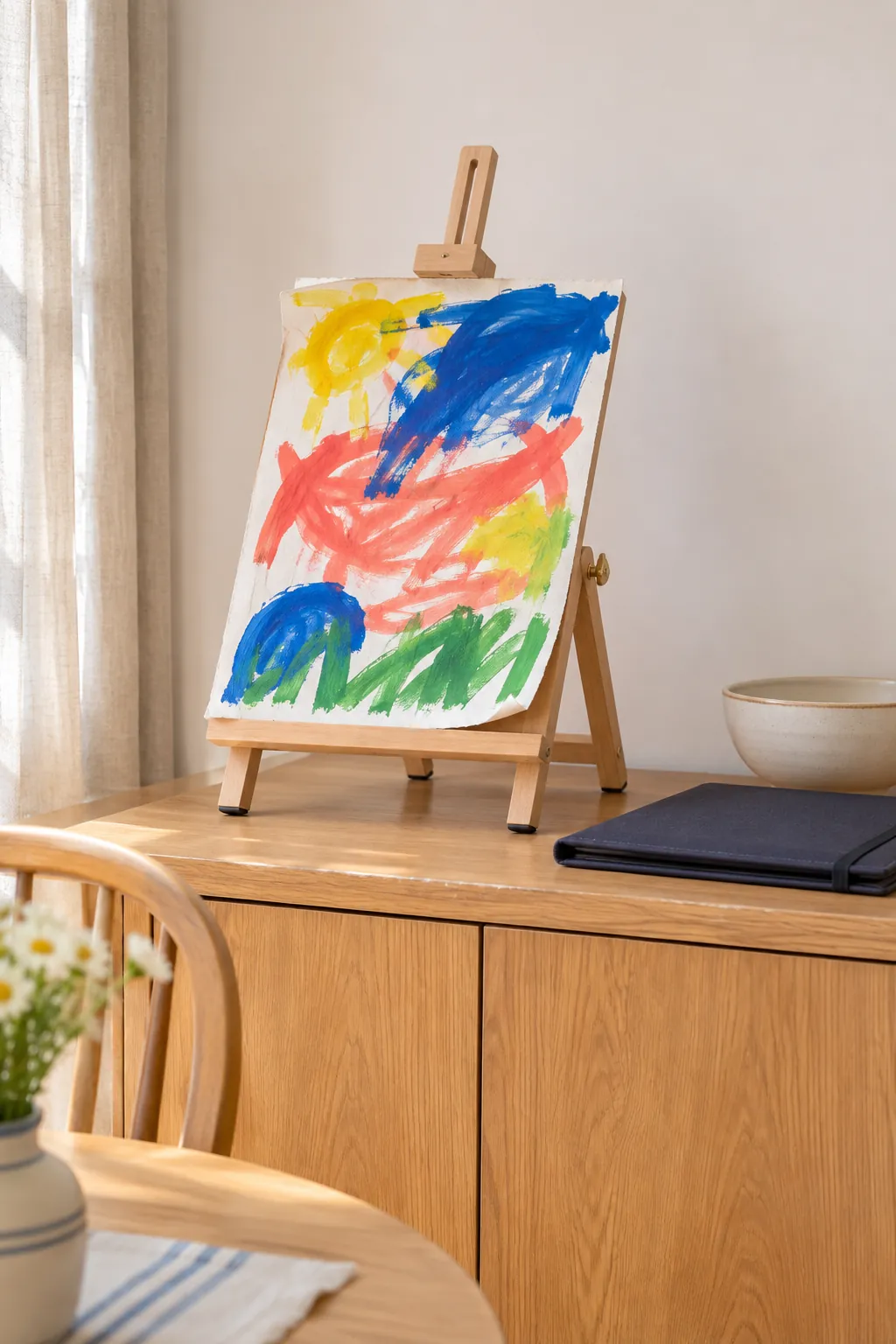
A small easel turns one current favorite into the focus of the room. Set it well back on a cabinet or desk, and use only lightweight paper or card. Keep the next few choices in a flat portfolio beside it so rotation takes less than a minute.
Freestanding Wire Grid
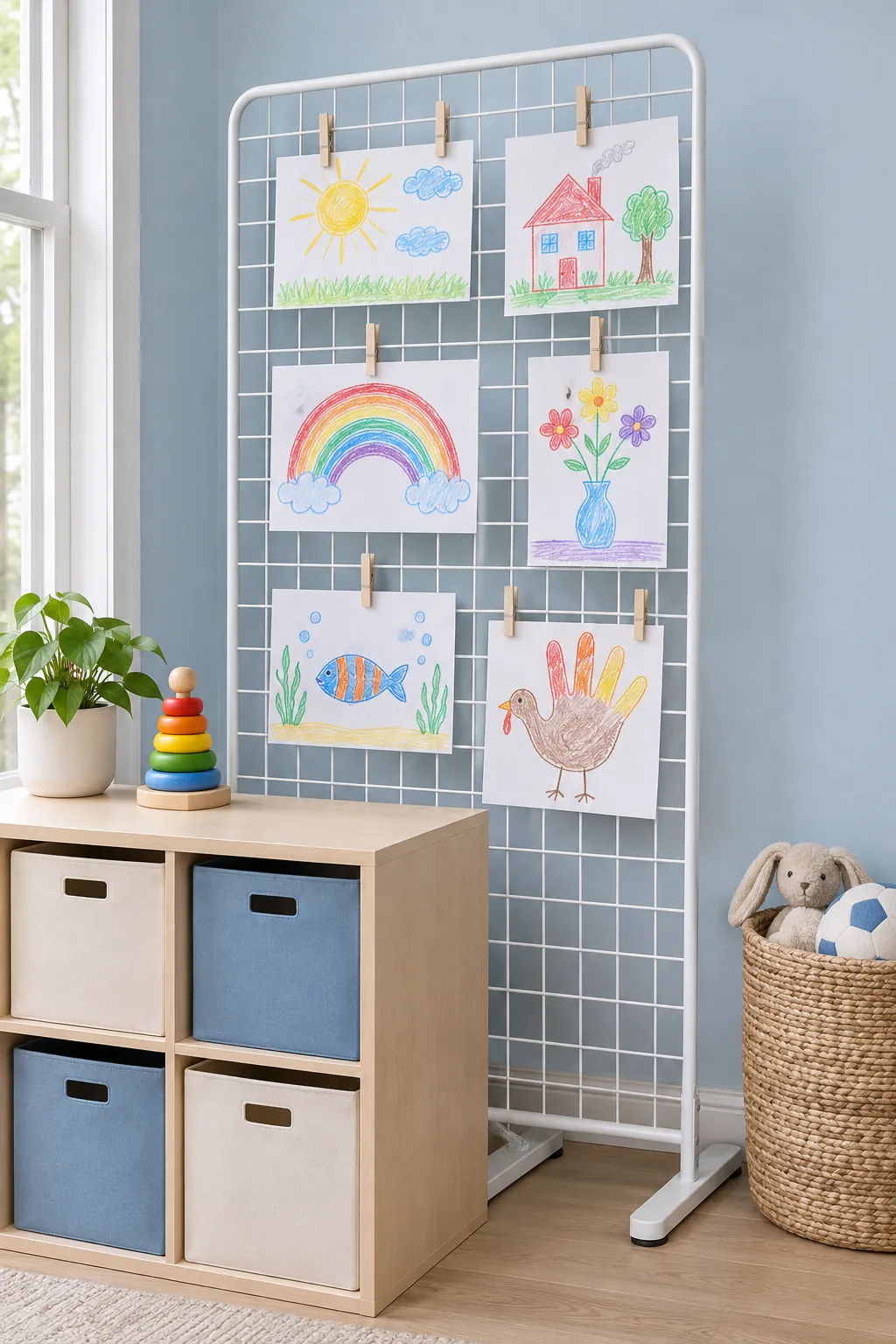
A floor grid can hold several drawings while the wall remains untouched. Pick a model with broad feet and rounded edges, then place it behind low storage so children cannot trip over the base. Wooden clips make frequent changes easy without pressing adhesive onto the artwork.
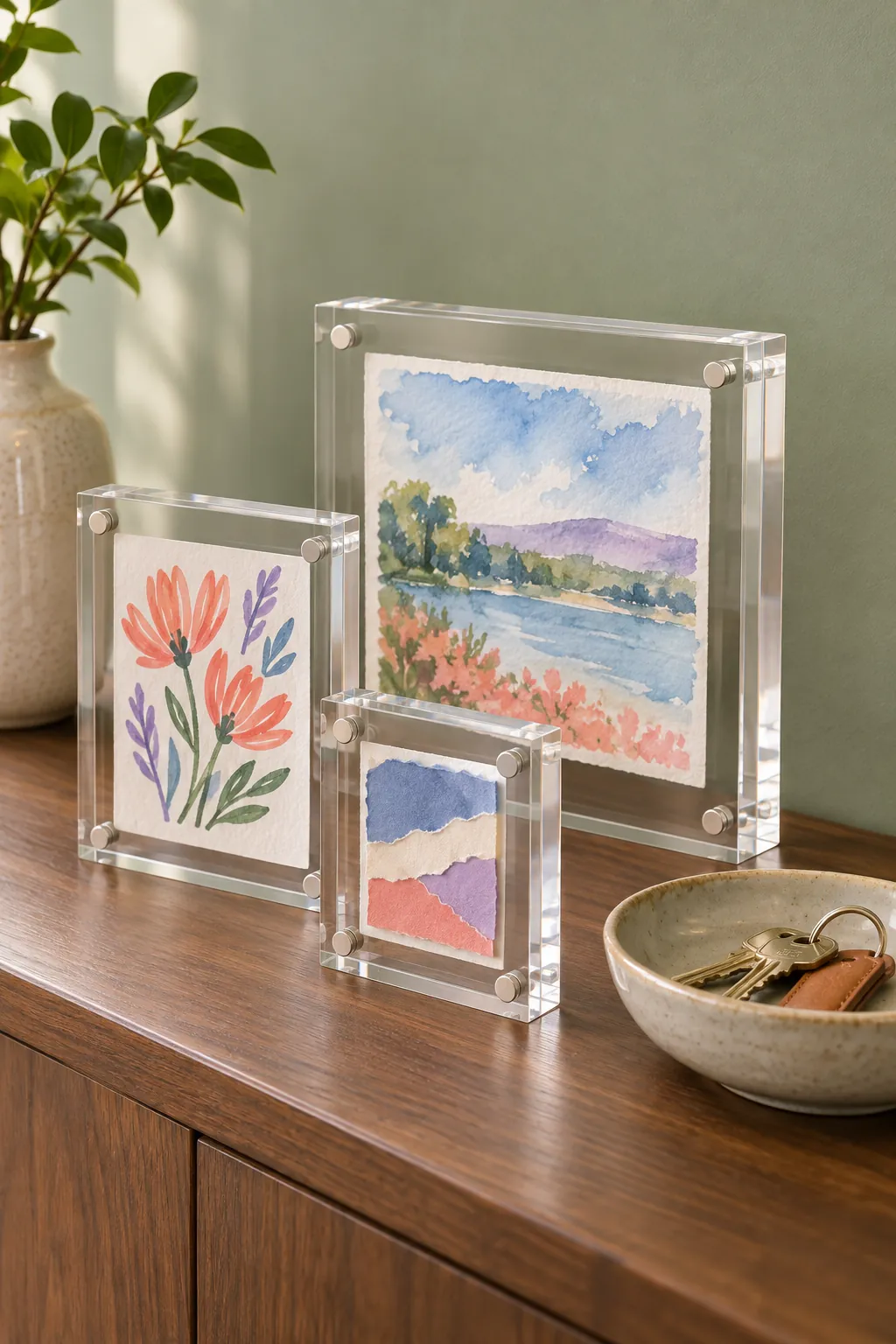
Acrylic Tabletop Frames
Clear block frames protect small flat pieces and look calm in an entry or living room. Magnetic versions open quickly, which helps when art changes every week. Put the heaviest frame at the back of the surface and keep all acrylic well away from the edge.
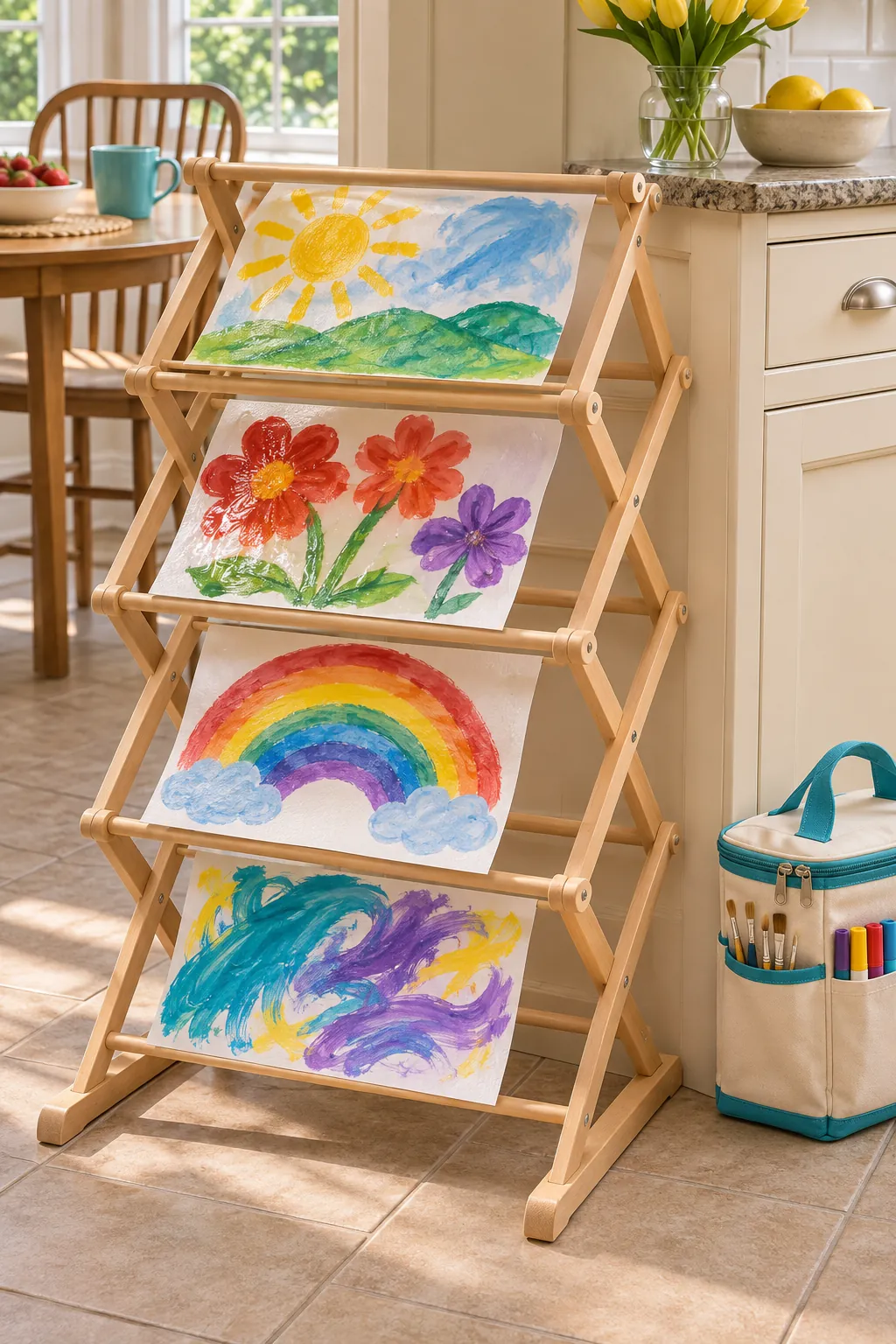
Folding Drying Rack
A wooden drying rack can serve as the gallery before paint is fully dry. Space sheets across separate rails so wet surfaces do not touch, and move the rack away from cooking heat or water. Once the work dries, select one piece for a longer display and clear the remaining rails.
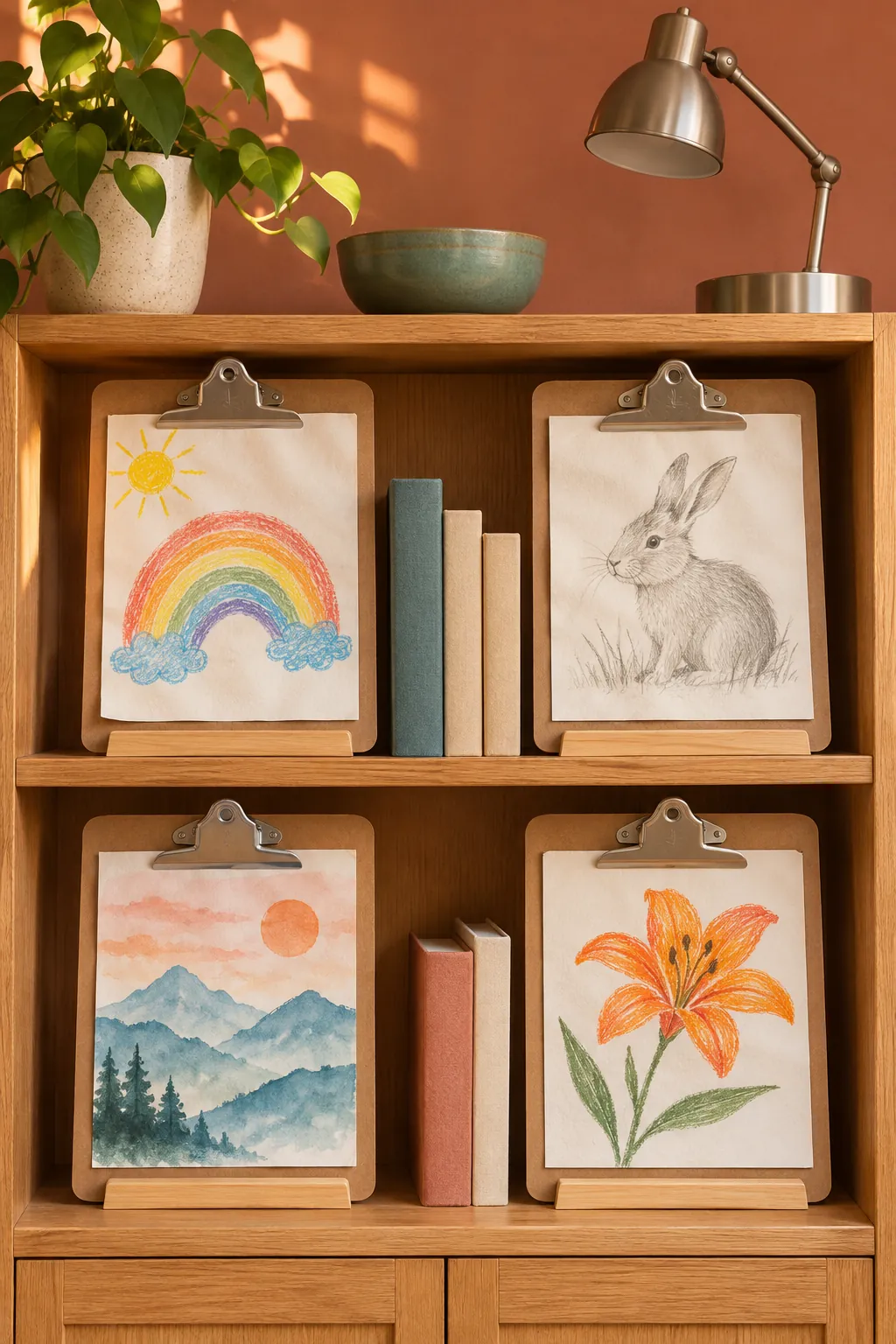
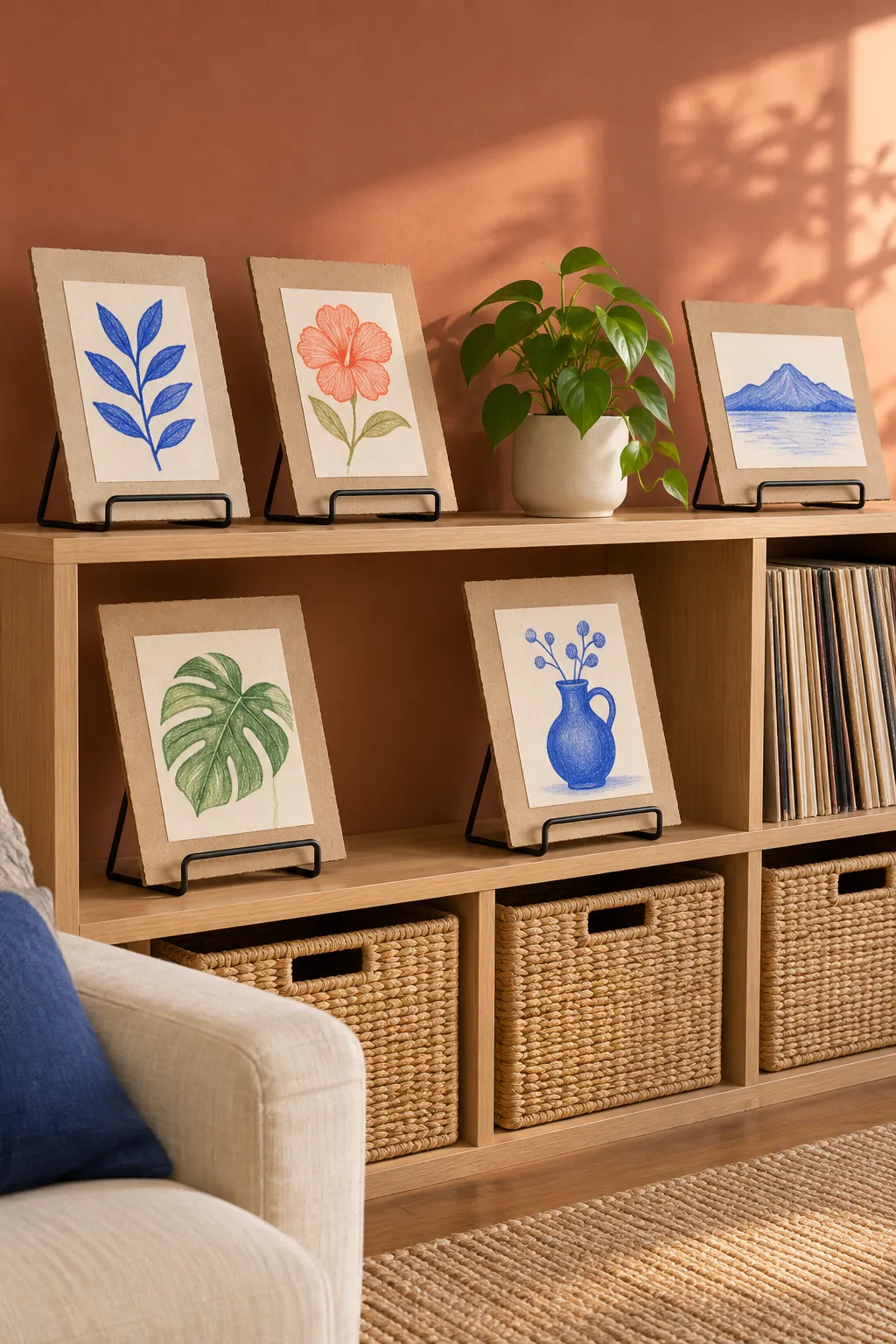
Clipboards on a Bookcase
Clipboards make drawings feel intentional without requiring a frame for every sheet. Rest each board in a sturdy book stand and keep it inside the shelf depth. Write names and dates on the back of the paper, since visible labels can distract from a mixed display.
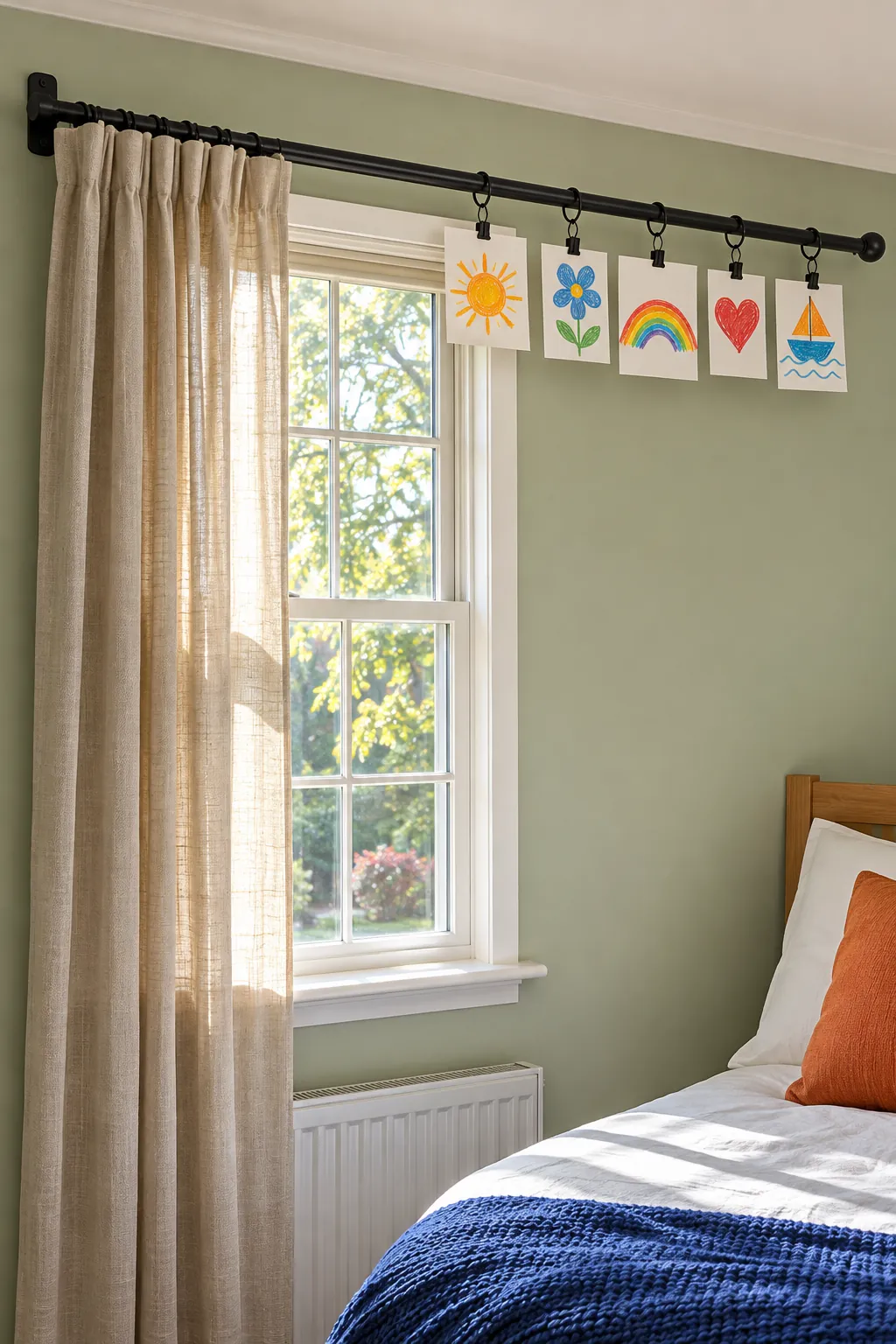
Existing Curtain Rod
A strong existing curtain rod may support a few light drawings on removable ring clips. Keep the art outside the curtain travel path so fabric still opens and closes freely. Confirm the rod is secure, avoid heavy mounts, and remove the display if any bracket begins to move.
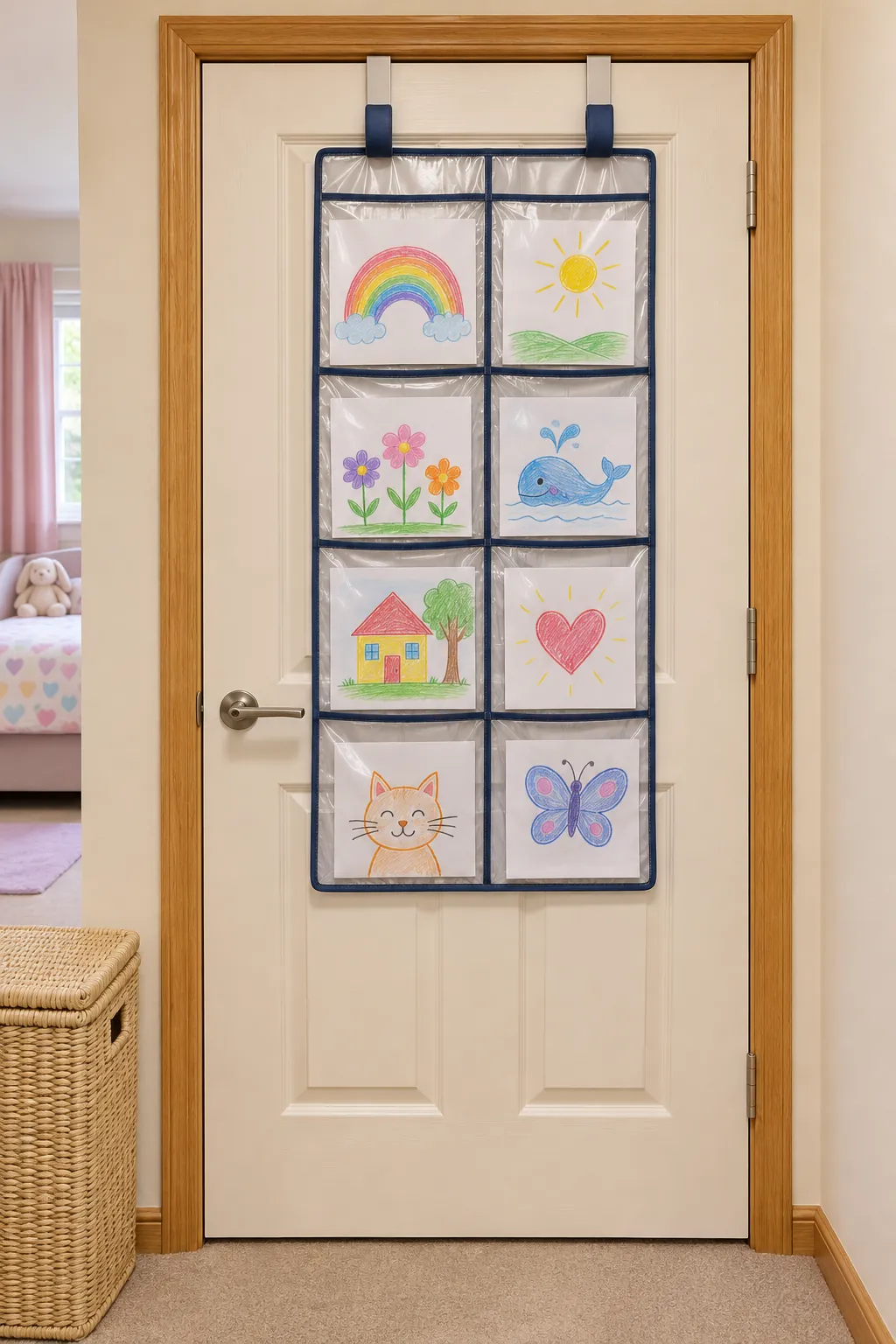
Over Door Pocket Organizer
A clear pocket organizer gives small drawings a visible home and creates a simple rotation queue. Use padded hooks that allow the door to close fully, and keep pockets clear of the latch. Limit each pocket to one sheet so the display stays readable and the door remains light.
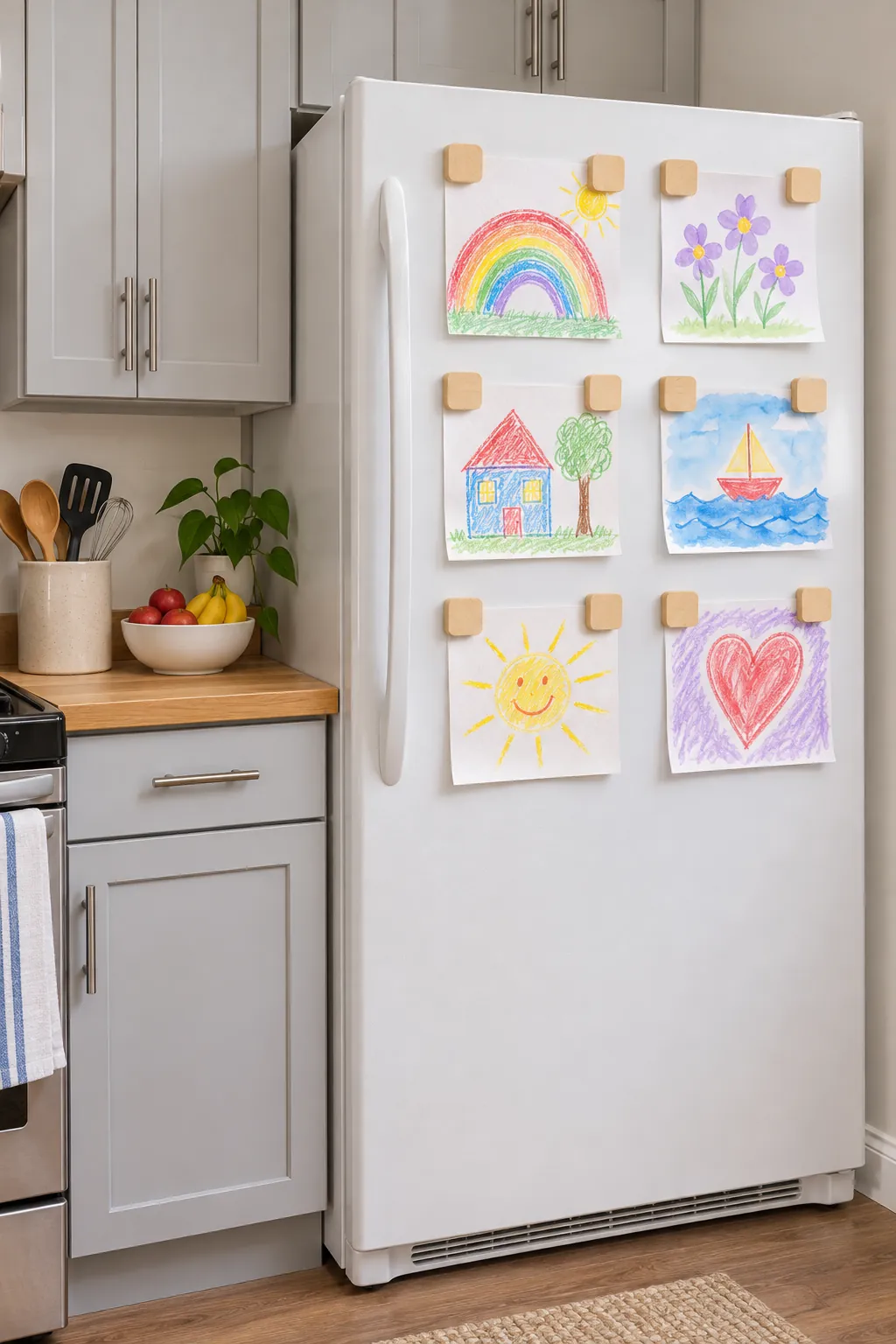
Refrigerator Gallery
The refrigerator is useful when the front or side is magnetic and easy to see. Choose large magnets that are not a swallowing risk, then arrange a strict number of pieces in calm rows. Keep handles, vents, and the lowest splash area free so everyday kitchen use does not damage the art.
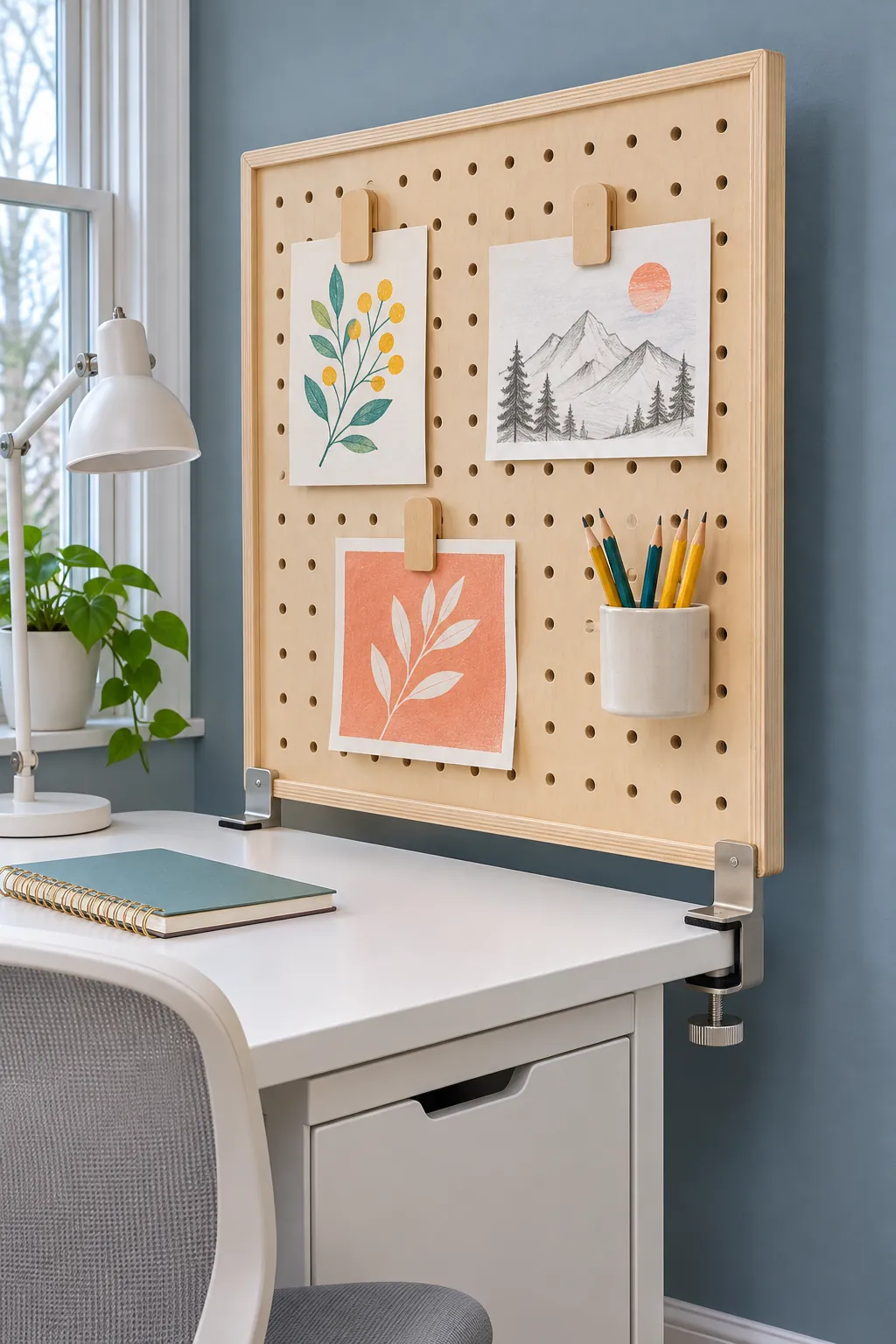
Desk Mounted Pegboard
A pegboard clamped to the back of a desk creates a flexible gallery above a work zone. Add felt between the clamp and furniture, and leave a visible gap between the panel and the painted wall. Use rounded pegs for light paper only, then keep the main desk surface open for drawing.
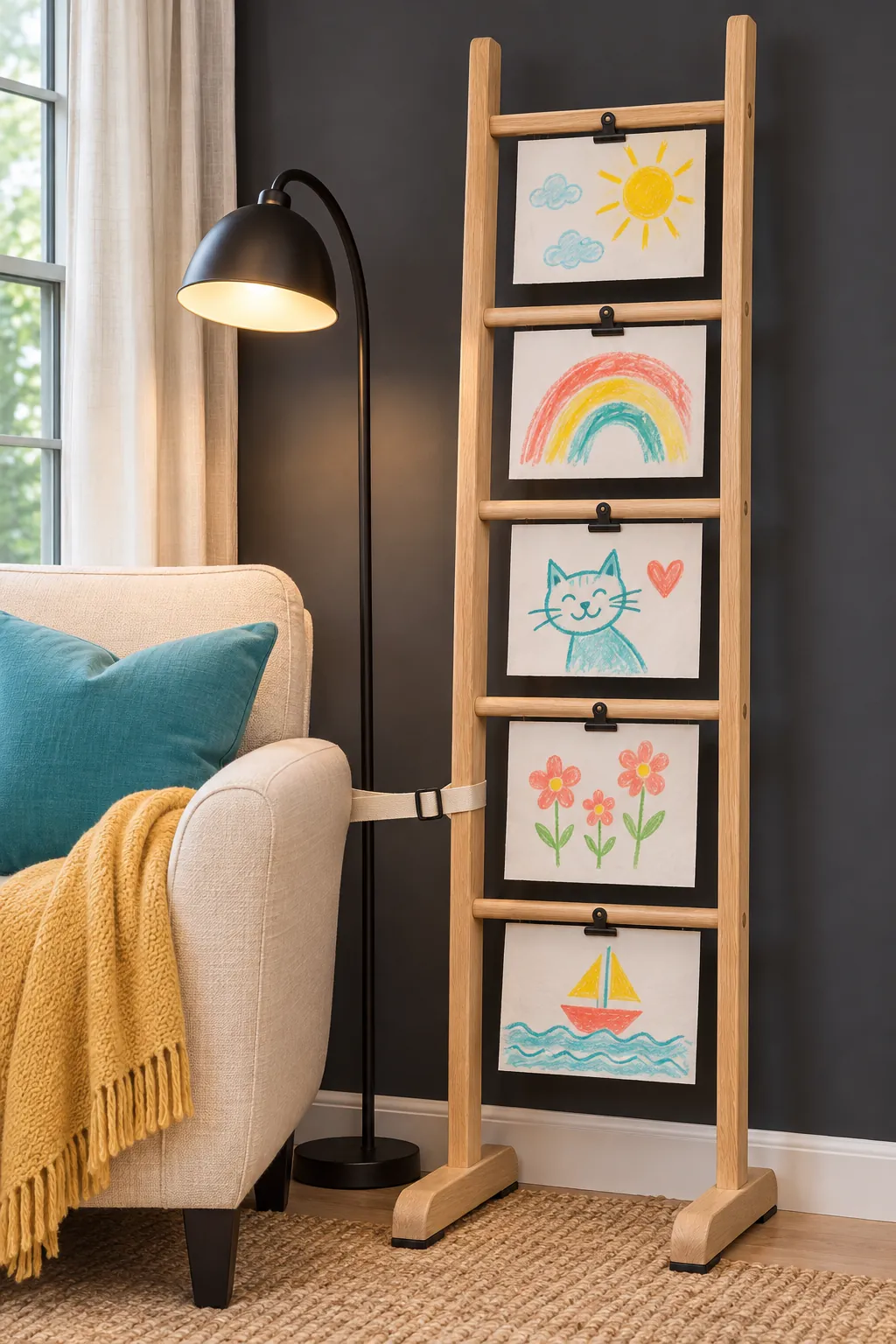
Blanket Ladder Gallery
A narrow blanket ladder can turn an unused corner into a vertical display. Fit nonslip pads under broad feet and secure the ladder to heavy furniture with a discreet safety strap. Hang only paper from the rails, since frames add weight and can make the ladder tempting to climb.
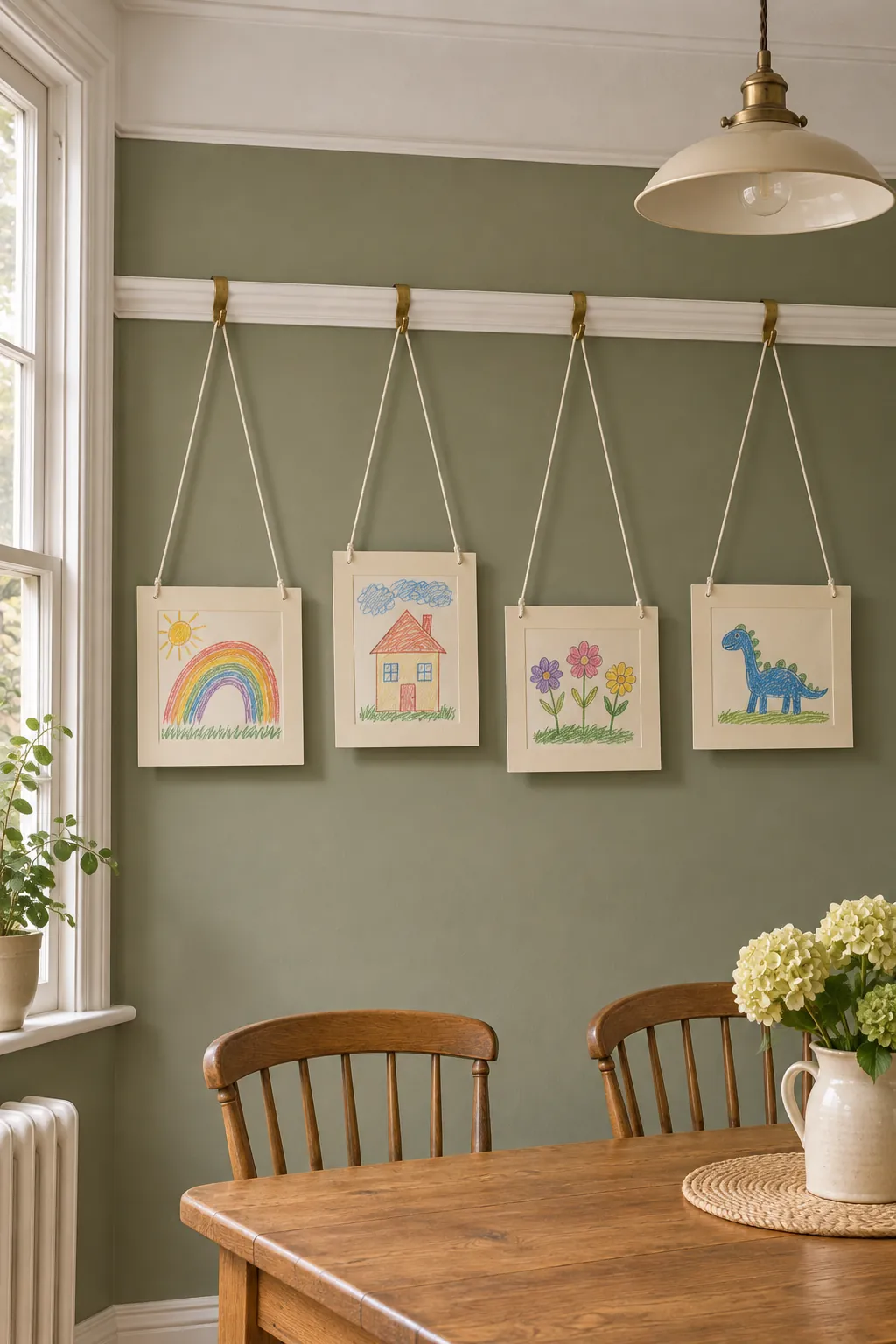
Existing Picture Rail
Older rentals sometimes include a picture rail designed to carry hanging art. Use proper rail hooks, light card mounts, and secure cotton cord rather than adding holes below the trim. Keep the lowest mount above chair backs and check knots whenever the selection changes.
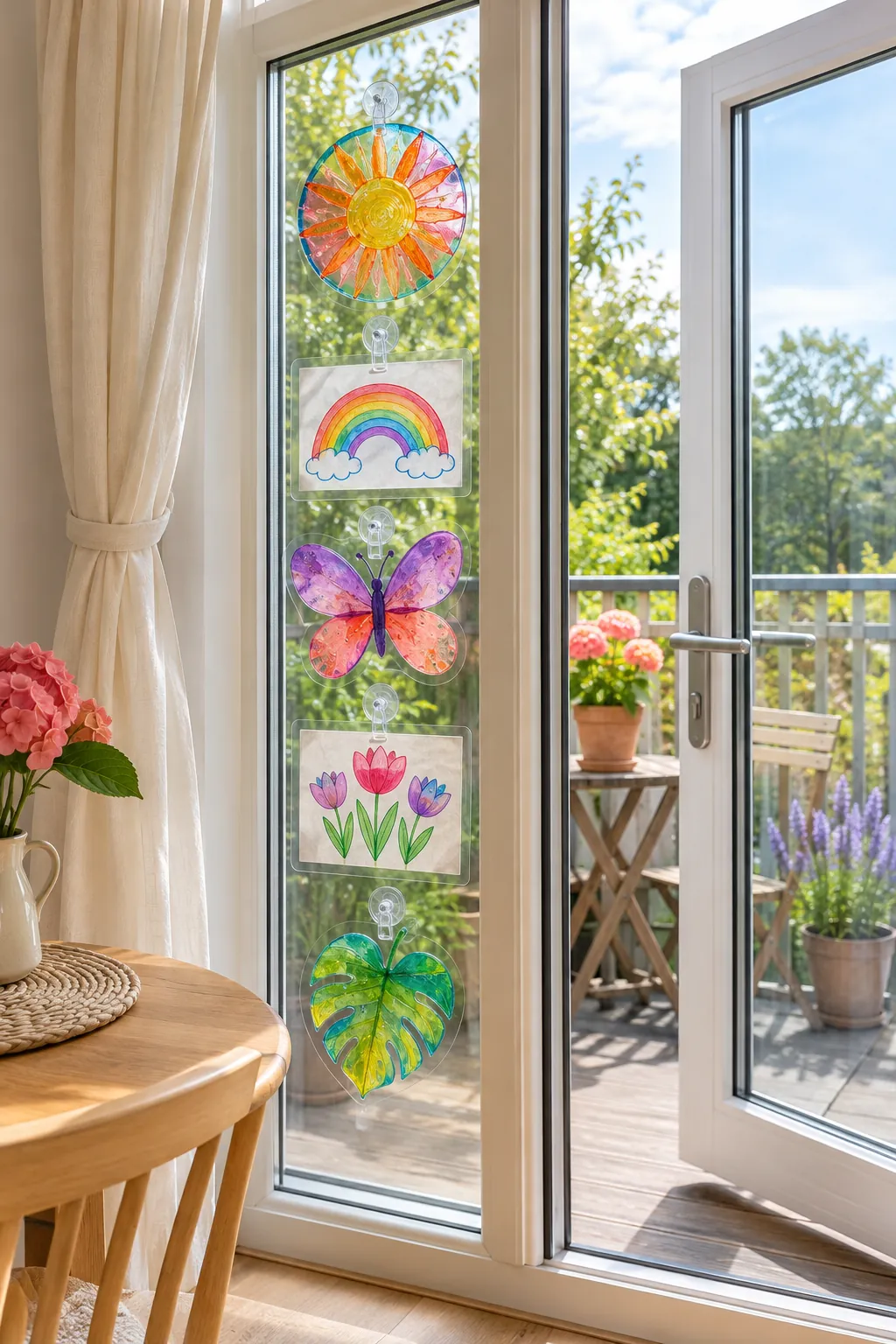
Window Suction Clips
Rated suction clips can turn translucent painting into a temporary sunlit display. Clean the glass first, use only very light pieces, and keep the door handle and sight line open. Check the grip often because temperature changes can weaken suction without warning.
Art in Book Stands
Small book stands let mounted drawings sit upright on existing shelves. Back thin paper with recycled card, then choose stands with a low centre of gravity. Alternate art with empty space so each piece can be seen and no mount projects beyond the shelf edge.
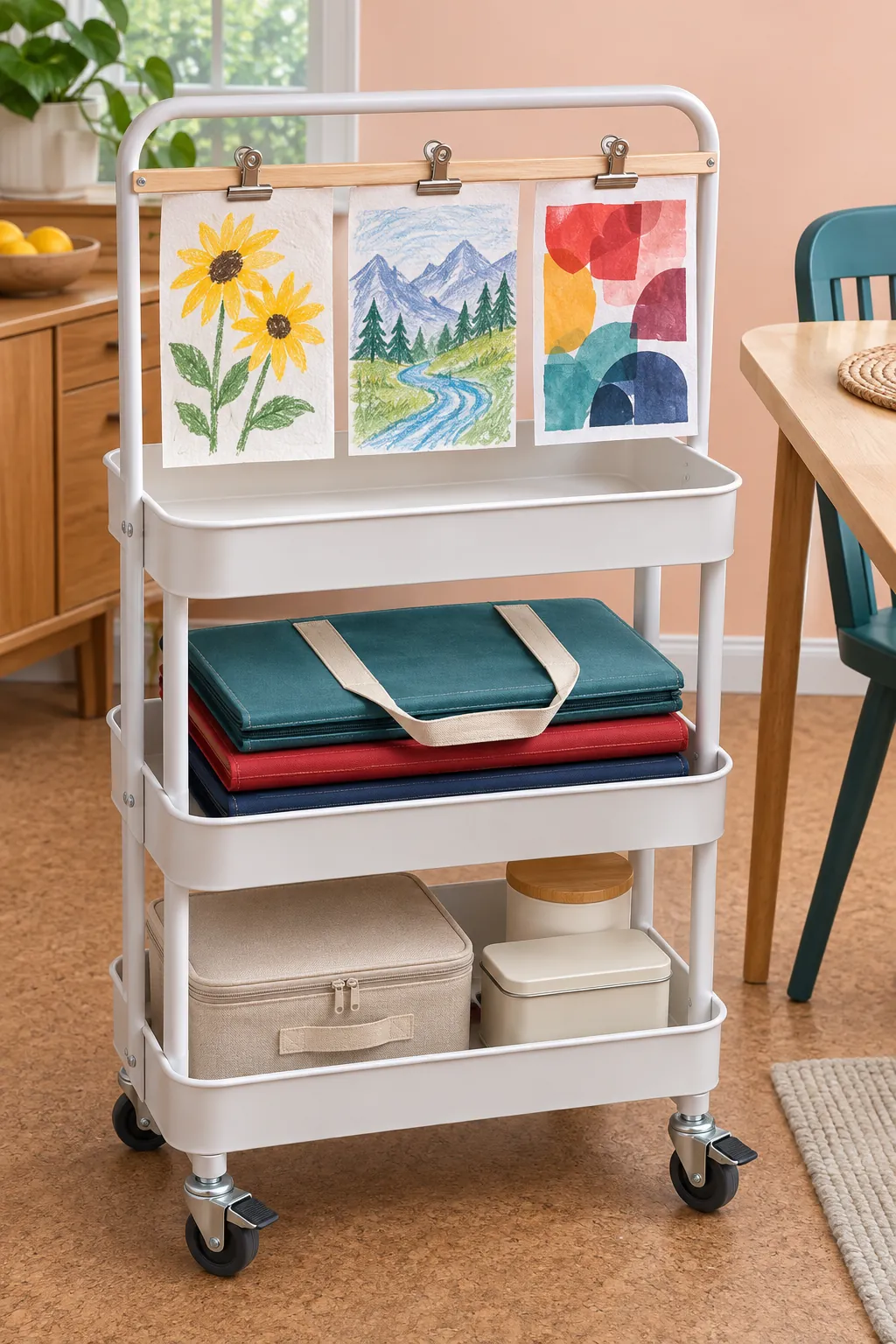
Rolling Cart Gallery
A rolling cart can combine a small current gallery with closed storage for the next rotation. Clip a few drawings to a rounded top bar, and keep portfolios or supplies contained on lower tiers. Lock the casters whenever the cart is parked and prevent paper from extending into the walkway.
Front Opening Floor Frame
One large front opening frame can hold a curated group and stop the room from filling with many small frames. Choose acrylic rather than glass, set the frame well back on a low credenza, and secure it to that furniture. When new art arrives, replace part of the collage and move the older selection into one dated archive box.