
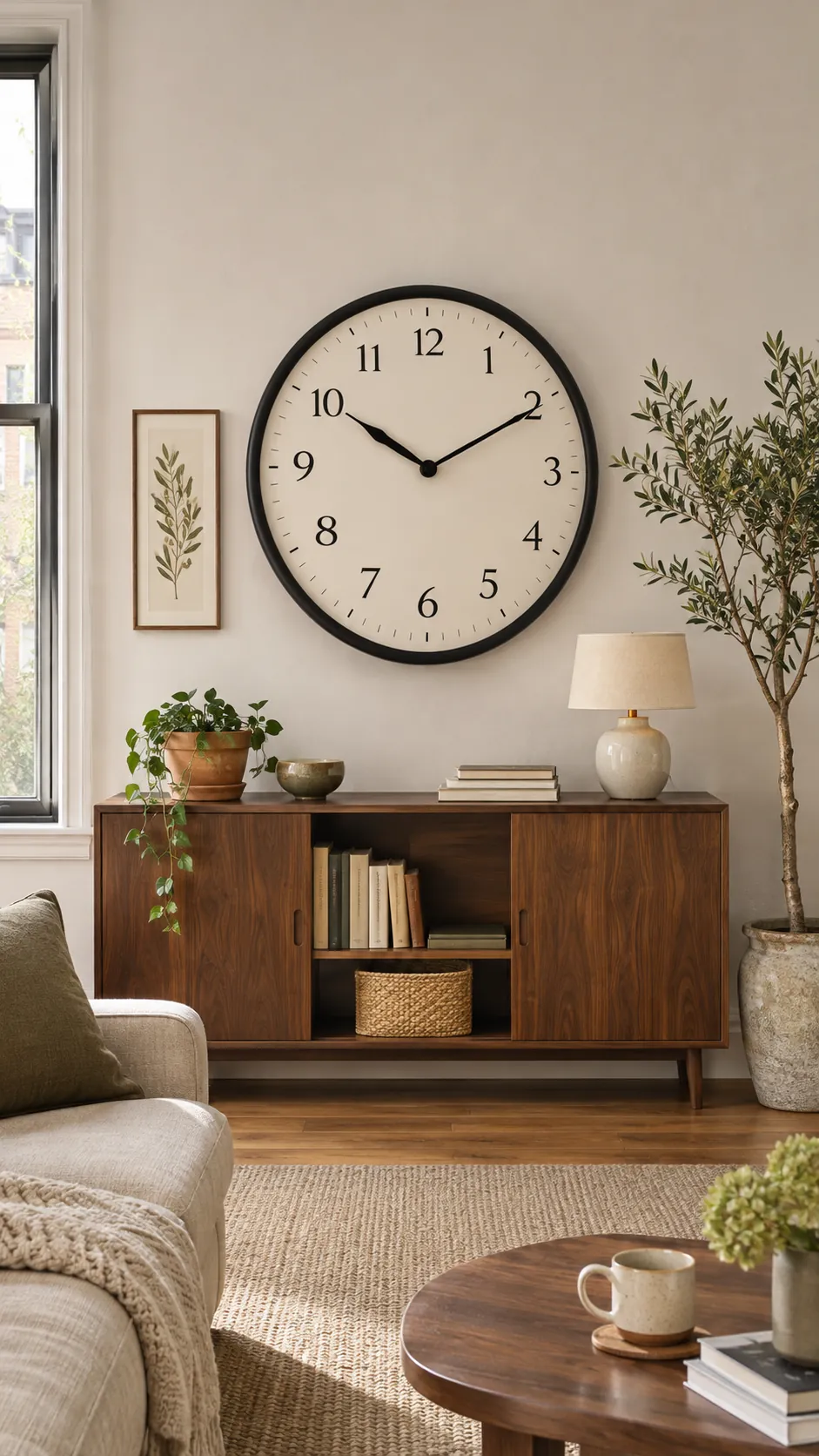
A large clock can anchor a room, but empty space around it often feels awkward. The solution is not always to fill both sides. Start with the clock, the furniture below it, and the available wall as one composition, then add only what improves that balance.
Start With Scale and Placement
Center the clock on the visual zone that matters most, which is often a console, sofa, or dining sideboard rather than the full wall. Leave enough open space around the rim for the clock to read clearly from across the room. If the clock sits over seating, keep it high enough that a standing person cannot strike it with a head or raised hand.
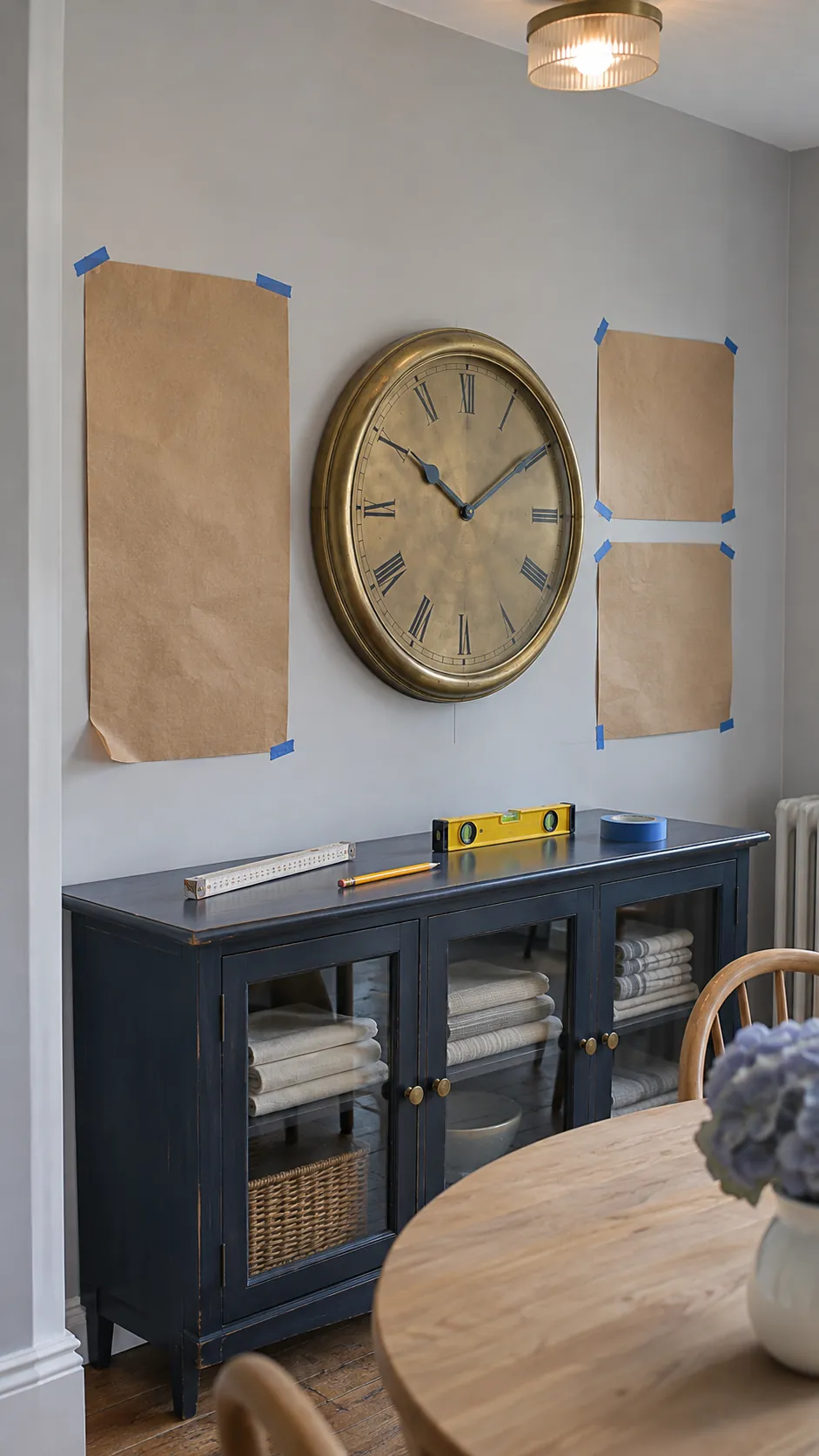
Before hanging extra decor, make paper templates for the clock and each possible companion piece. Step back to the doorway and check whether the whole group is roughly narrower than the furniture beneath it. This quick test also reveals when a clock is too small for the wall and extra objects would only emphasize the mismatch.
Use Matching Pieces for Calm Symmetry
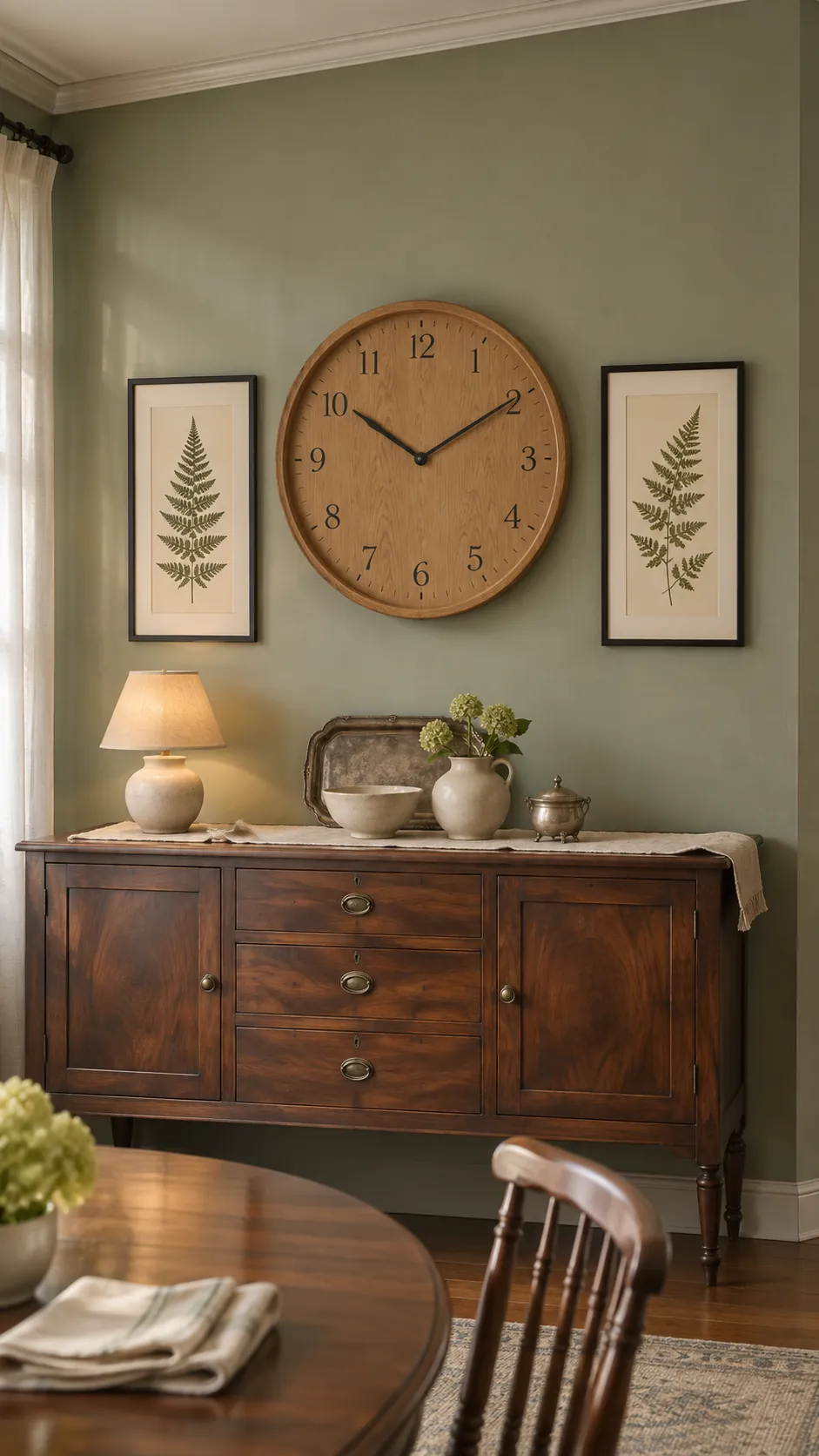
A pair of narrow botanical prints is a reliable choice when the room already has formal lines. Match their frame size and hanging height, then keep the gap from each frame to the clock consistent. The pair should support the round focal point without rising above it or competing with its face.
Wall sconces can create the same orderly effect while adding useful ambient light. Choose compact fixtures with shades that sit outside the clock rim, and confirm that doors, cabinet tops, and seated heads will not interfere. Use battery or plug in models when new wiring is impractical, but conceal cords so they do not divide the arrangement visually.
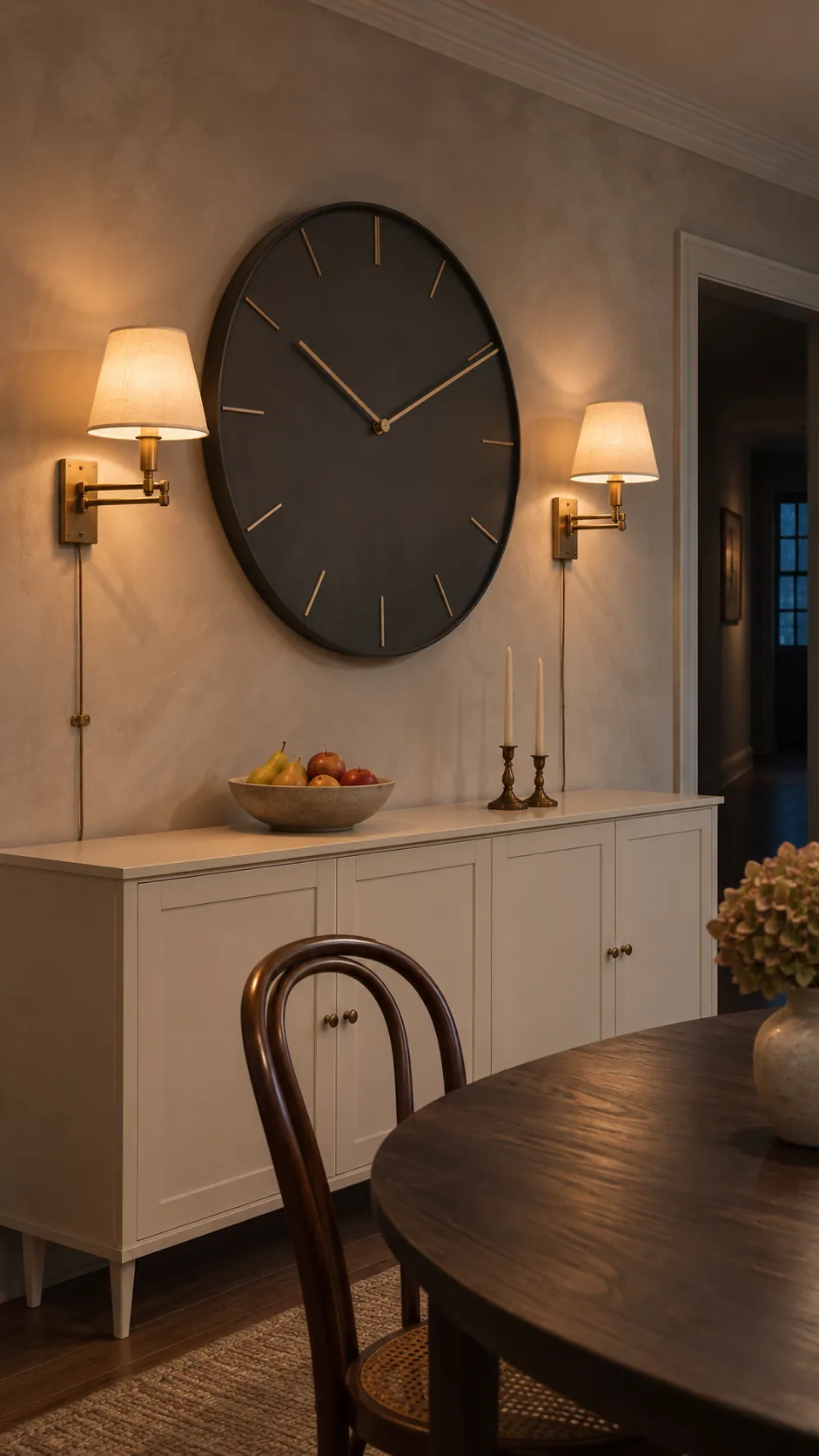
Build an Asymmetrical Arrangement With Equal Visual Weight
Balanced wall decor does not require identical objects. A tall framed charcoal drawing on one side can balance two smaller pieces on the other when their combined area and contrast feel similar. Keep at least one alignment point, such as a shared center line or matching lower edge, so the grouping still looks intentional.
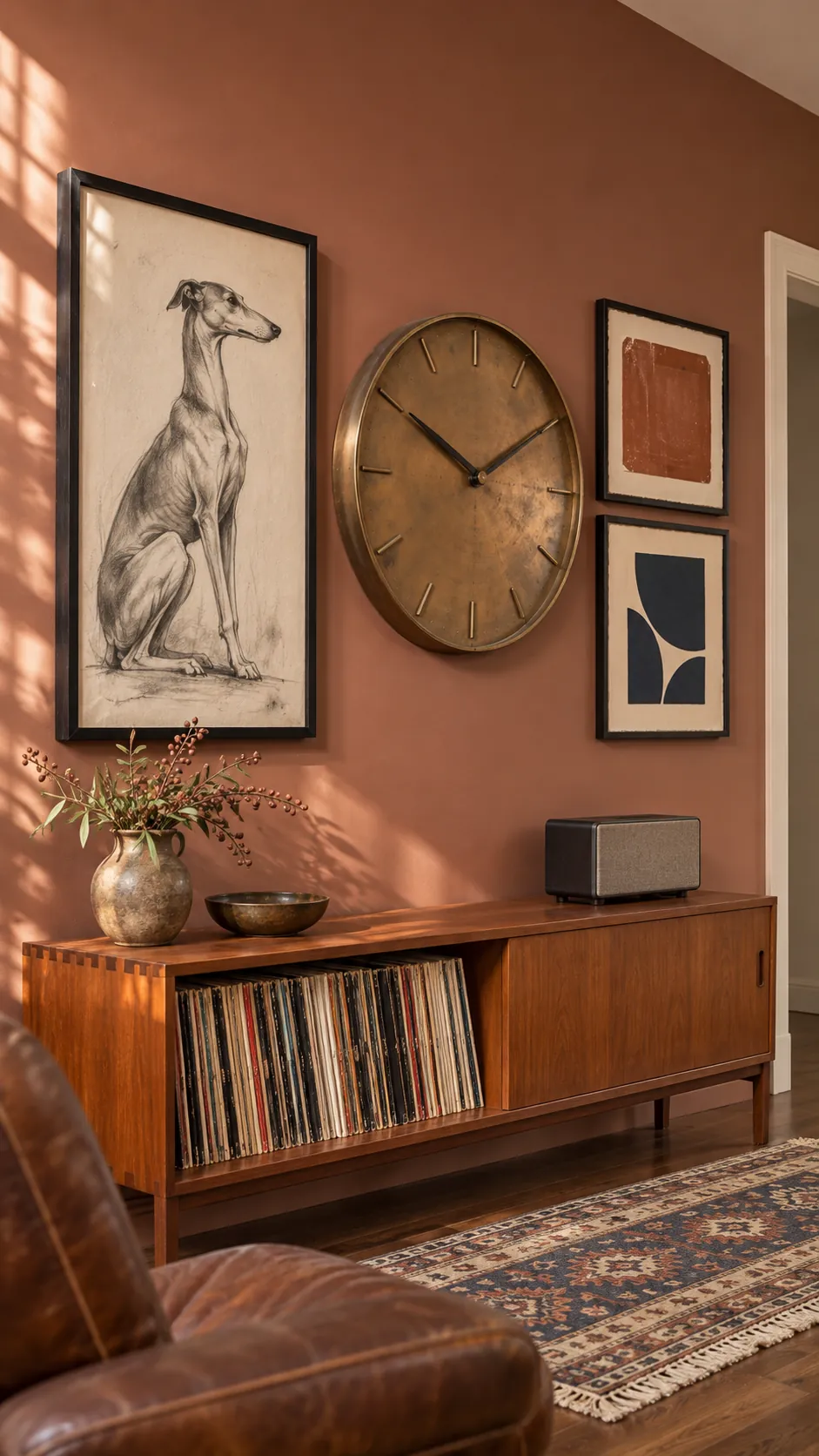
You can also balance wall decor with objects below it. A floor plant beside the console may provide enough height and texture to answer a smaller frame on the opposite side. Keep the plant below the top of the clock and let some bare wall remain between the leaves and the rim.
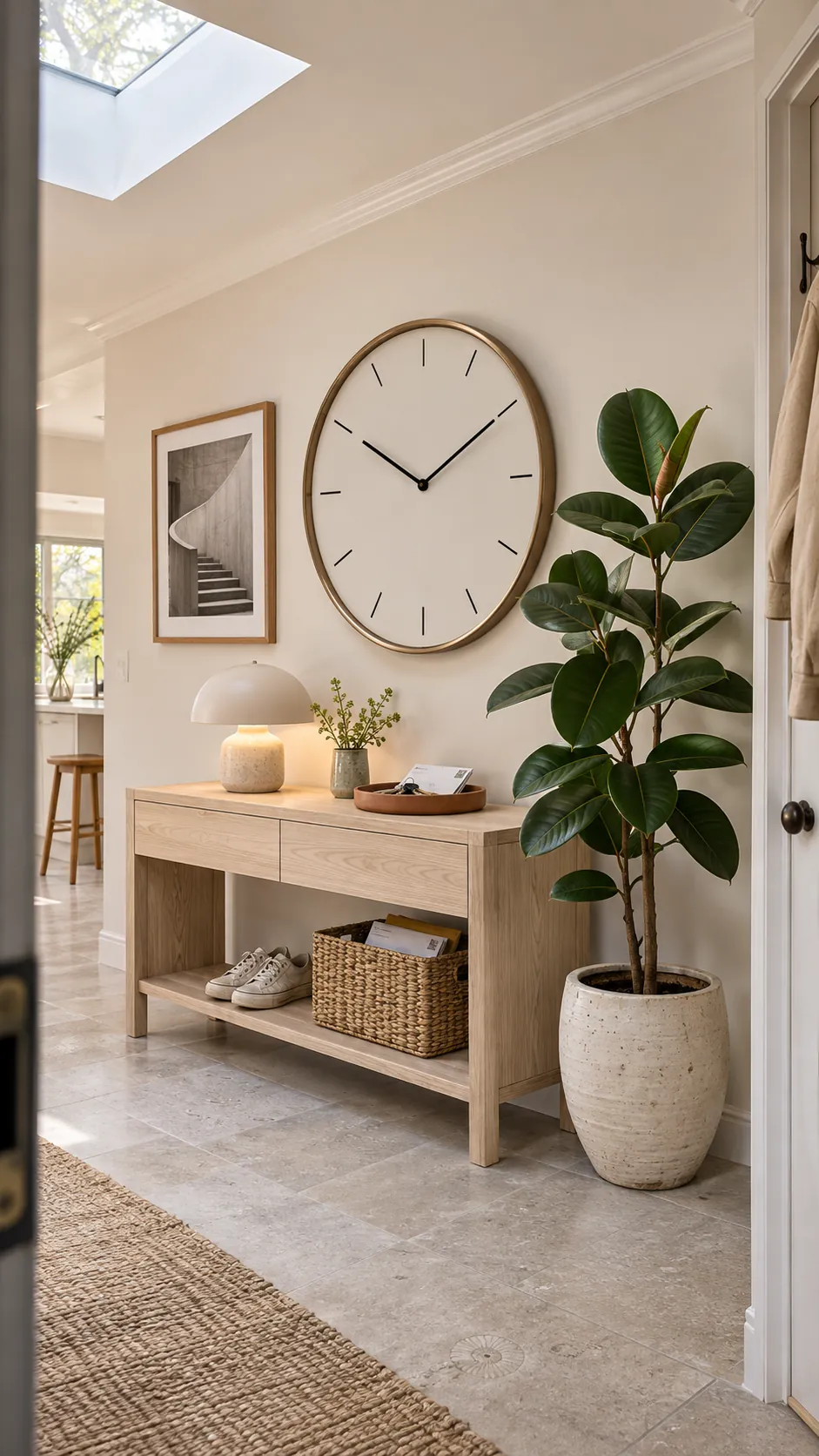
Add Texture Instead of More Framed Art
When the room already contains several pictures, woven wall baskets can soften the hard circle of a metal clock. Use a small cluster on only one side or a restrained pair with different weave patterns. Natural fibers work especially well near wood furniture because they connect the wall grouping to materials already in the room.
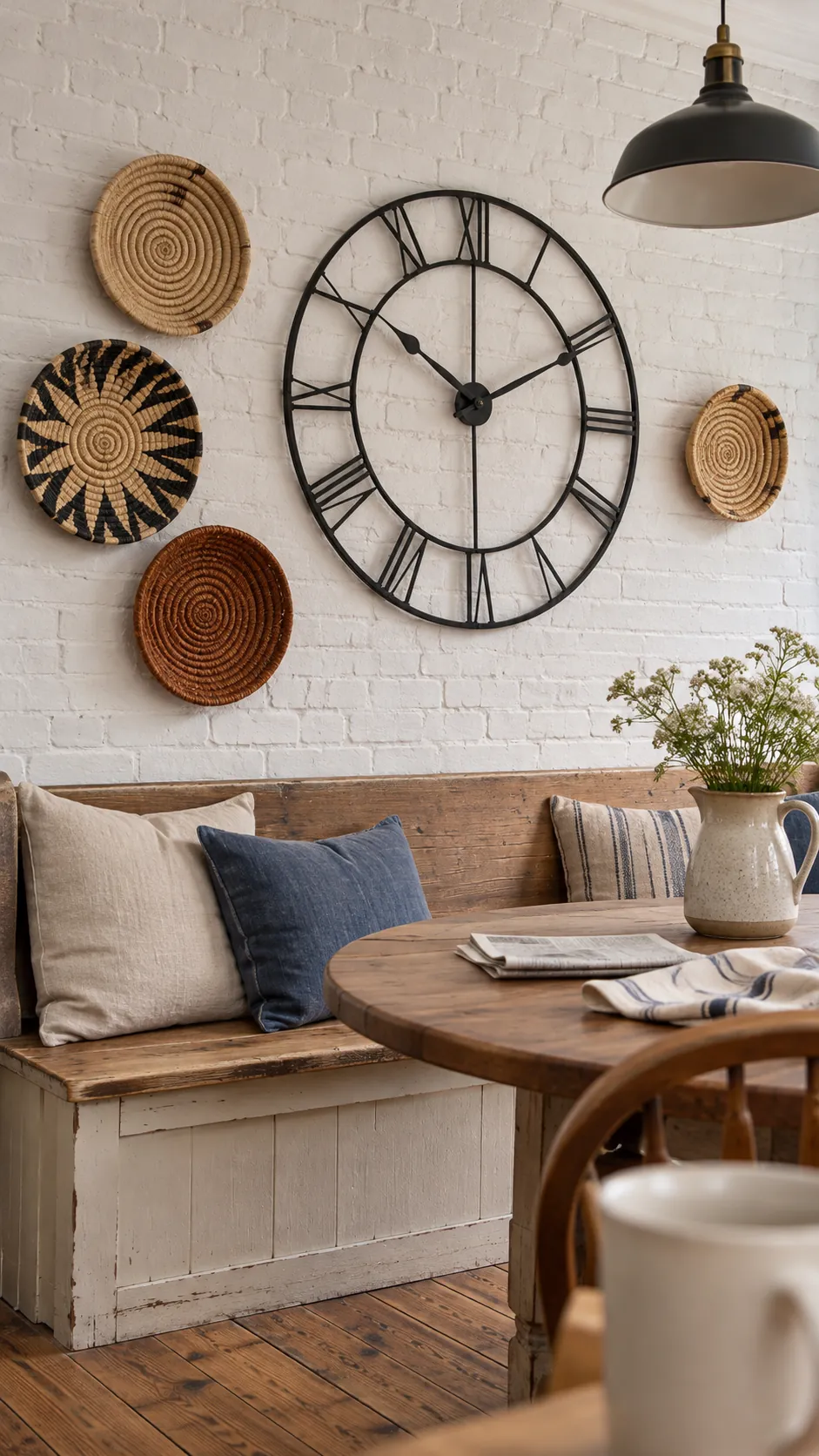
Shallow sculptural objects are another option for a contemporary room. Ceramic relief tiles or slim wood panels add shadow without introducing another strong picture subject. Check their depth from the side before mounting them in a narrow passage.
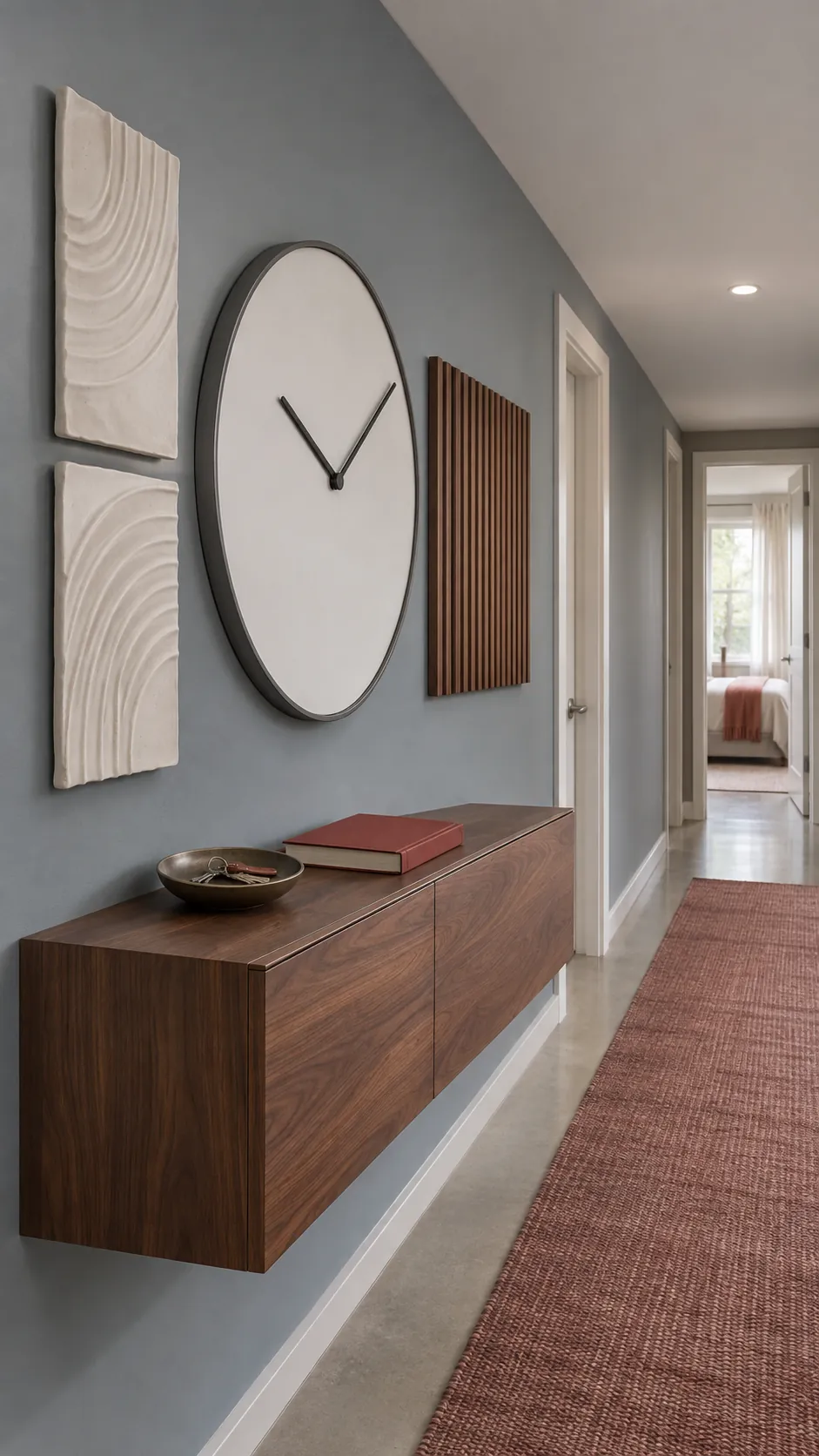
Know When to Leave the Sides Empty
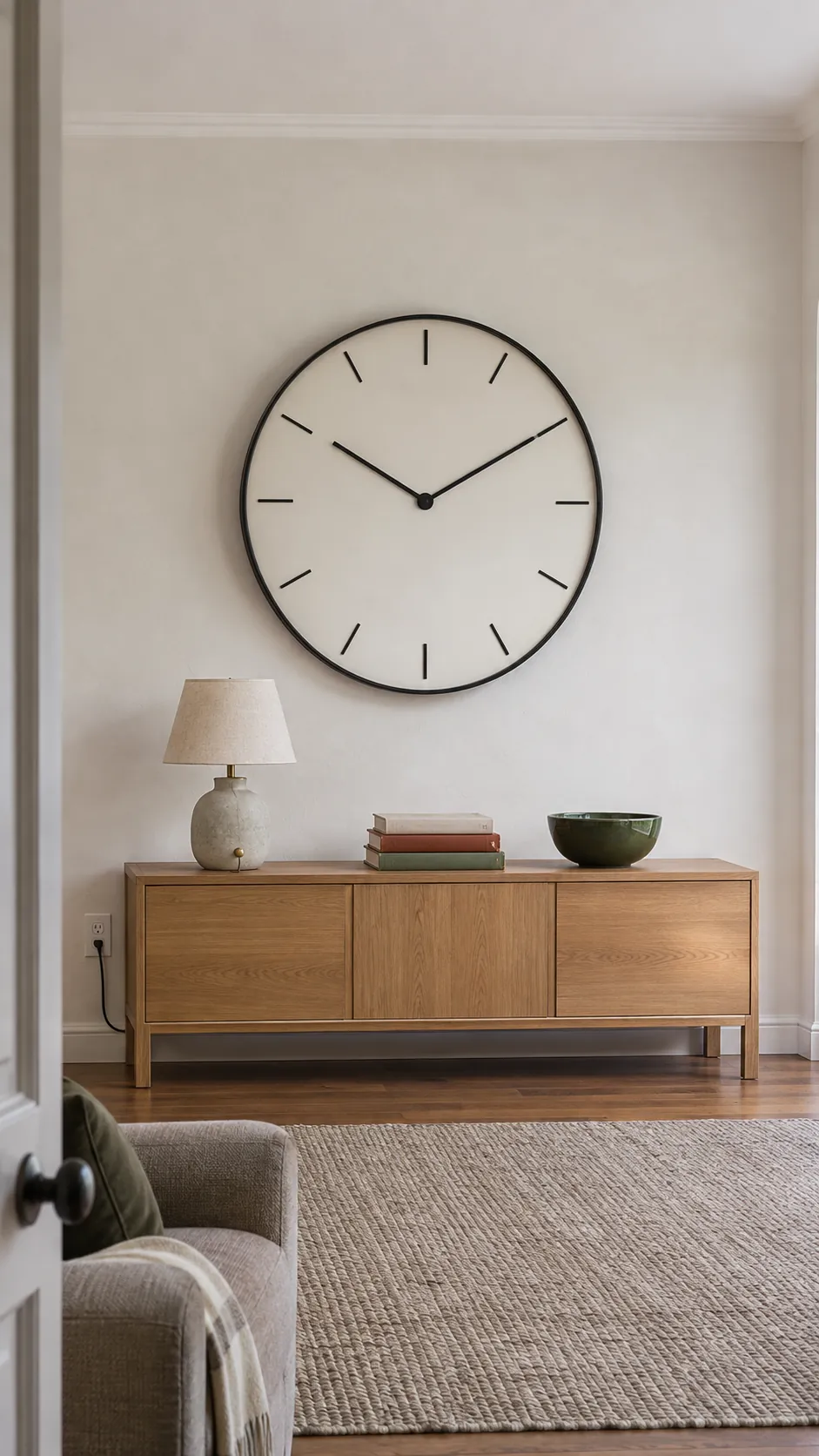
A decorative clock can be the complete focal point when it has a bold frame, an oversized face, or a textured wall behind it. Extra pieces may make patterned wallpaper, nearby lighting, and furniture styling compete for attention. Remove the proposed additions for a day, view the wall in morning and evening light, and keep it simple if the clock already feels connected to the furniture below.
Also leave the wall open when the available gaps are too narrow for safe mounting or clear spacing. Decor that nearly touches the clock looks accidental, while shelves that overload fragile plaster create a practical risk. A single vase, lamp, or branch arrangement on the console can supply the missing height without putting anything else on the wall.