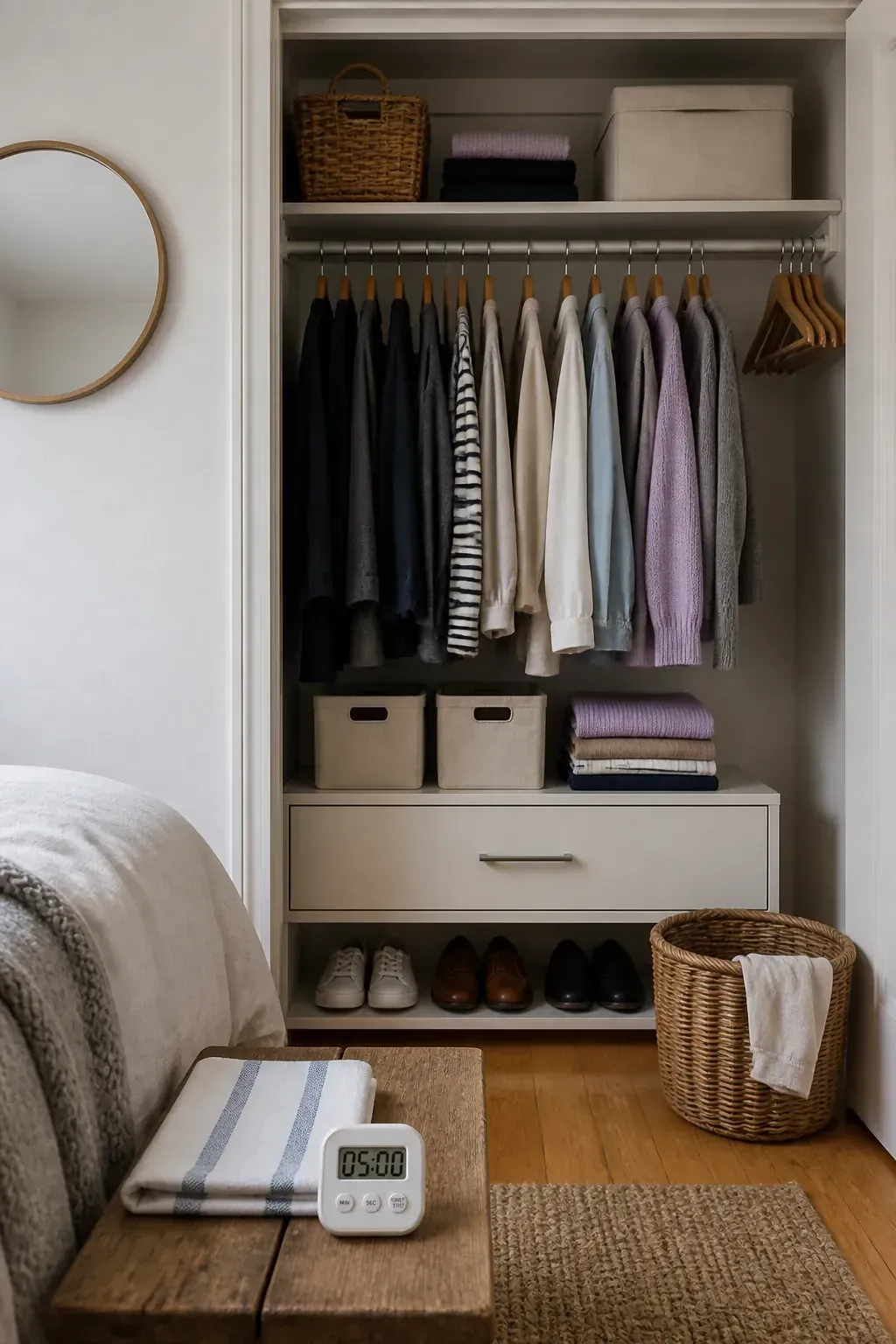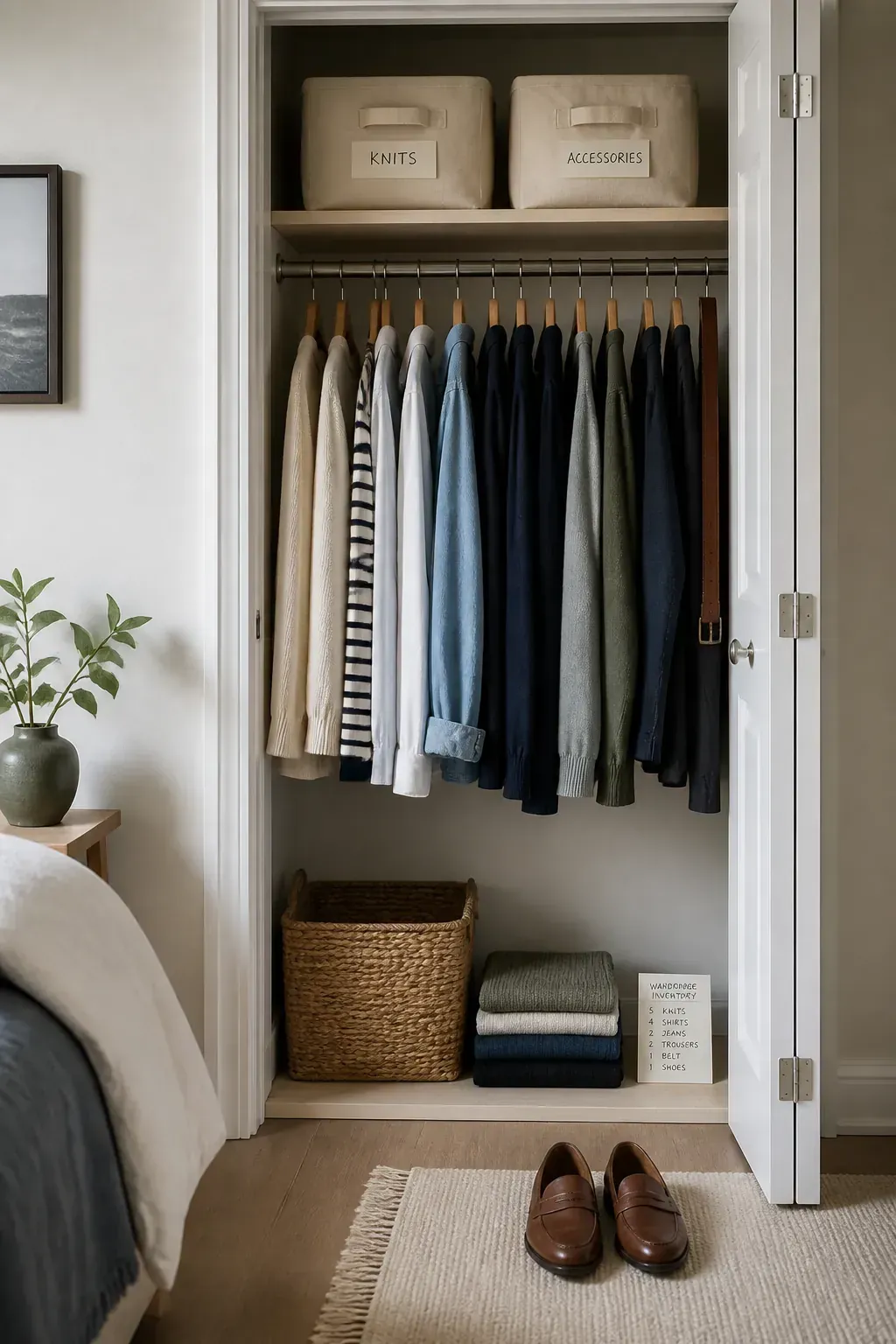
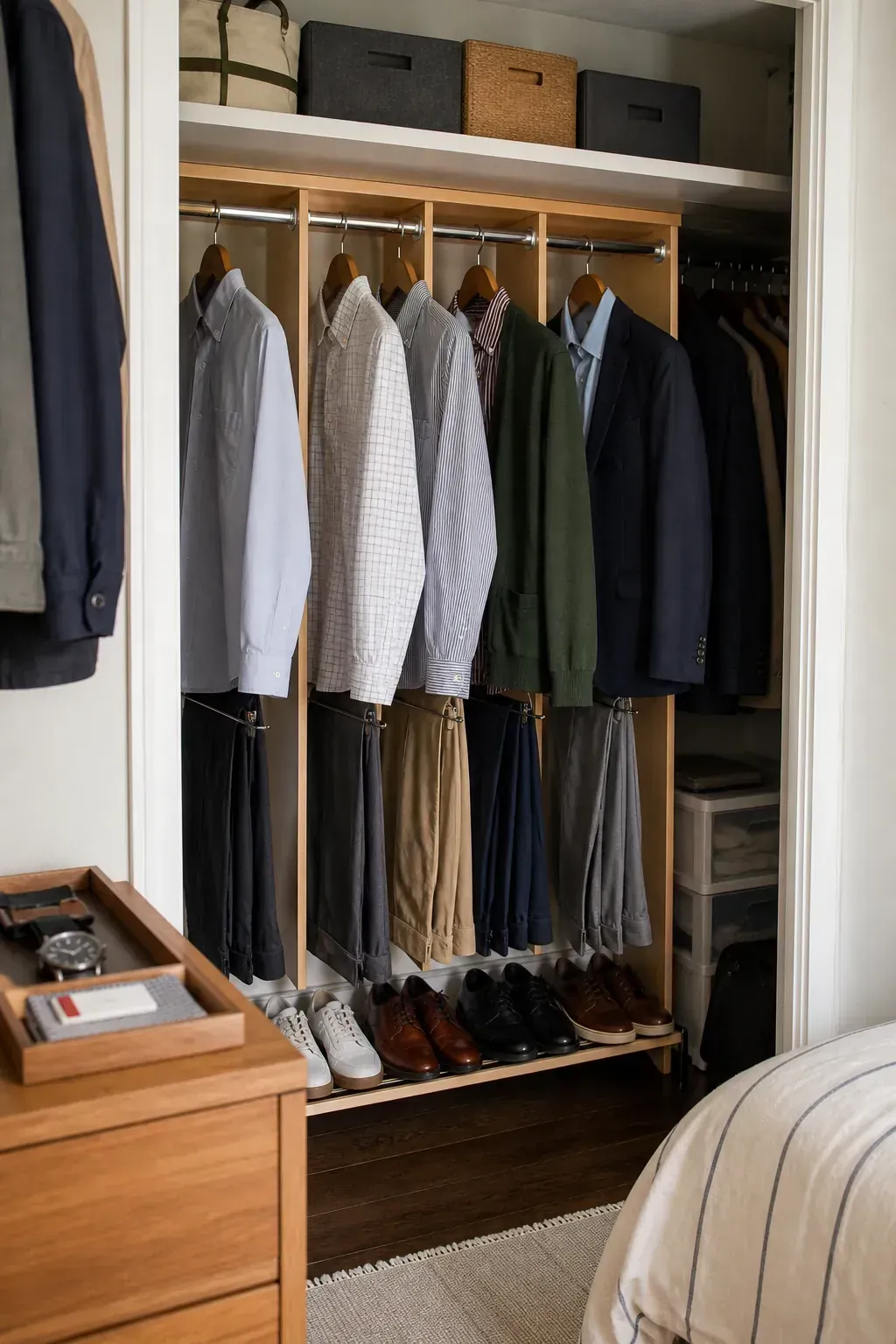
A cramped closet becomes exhausting when every hanger, shelf, and basket asks you to make a decision before breakfast. The useful goal is not to squeeze in more clothing, but to make a smaller collection visible, reachable, and easy to return. A capsule wardrobe works best when the storage itself reinforces those choices.
Start With a Wearable Color Story
Choose a compact group of neutrals and accent colors that can share outfits, then place those pieces together at eye level. This exposes duplicates and separates genuinely useful clothes from items that only work with one forgotten purchase. The result feels styled because the rail reads as one intentional collection.
Give Every Hanger the Same Profile
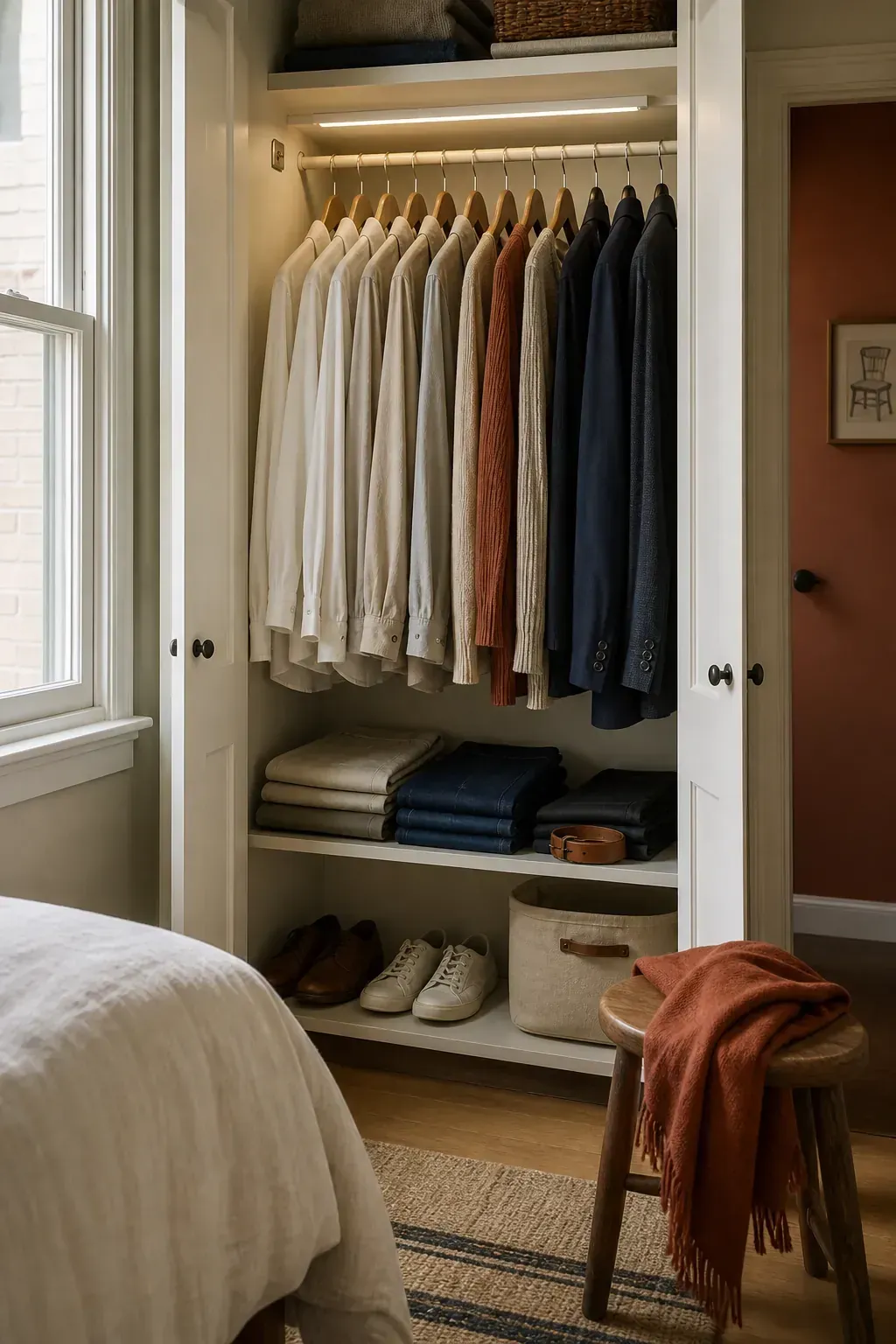
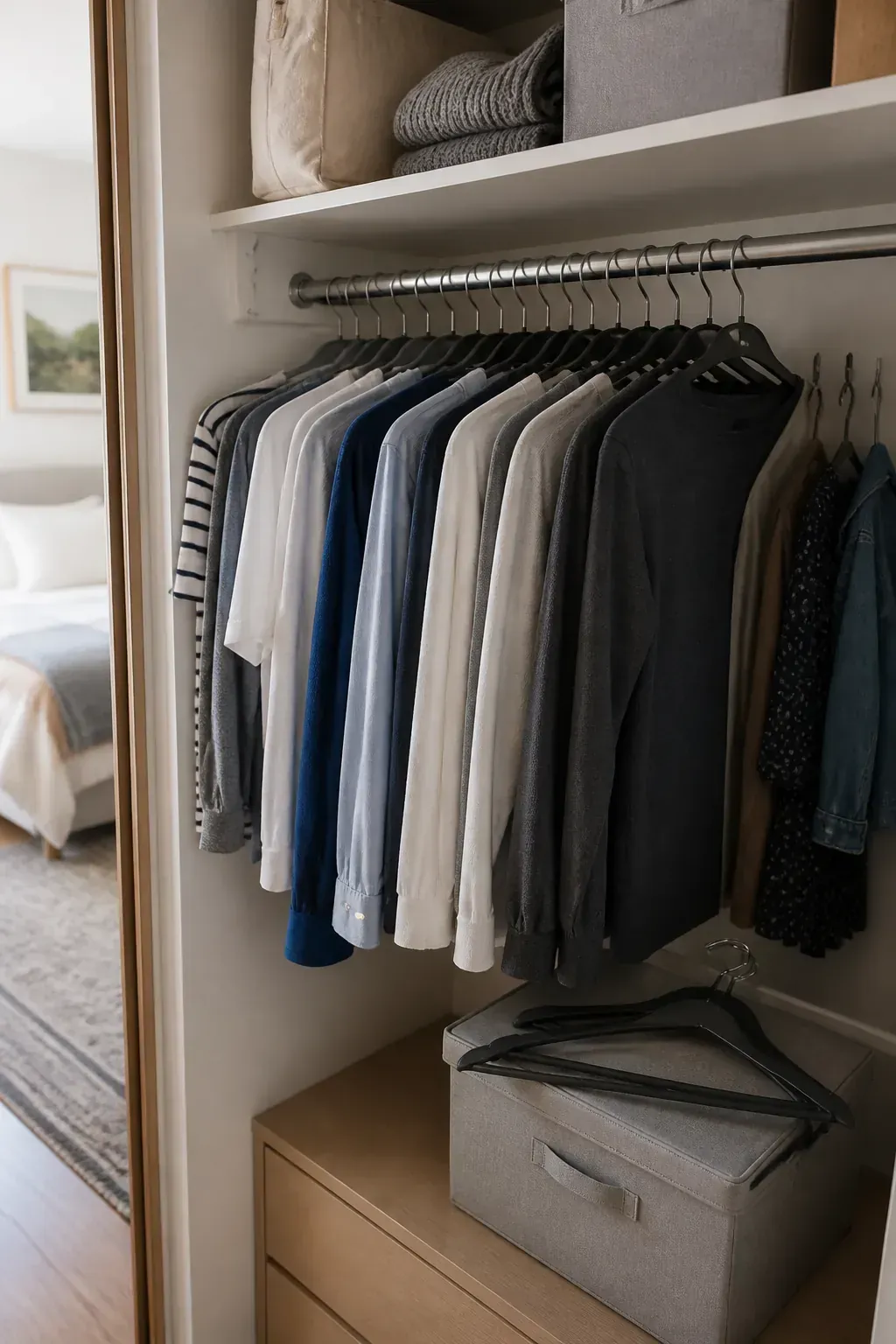
Slim hangers create breathing room without changing the closet structure. Matching shapes also prevent shoulders from tangling and make visual gaps easy to spot when laundry has not been put away. Keep heavier coats on stronger hangers elsewhere so the everyday rail stays light and orderly.
Build a Daily Uniform Zone
Reserve the easiest section of the rail for the pieces you reach for during a normal week. Work trousers, reliable tops, and a favorite layer belong here, while occasional clothes can move toward the edges. This small zone removes searching and makes your actual wardrobe habits visible.
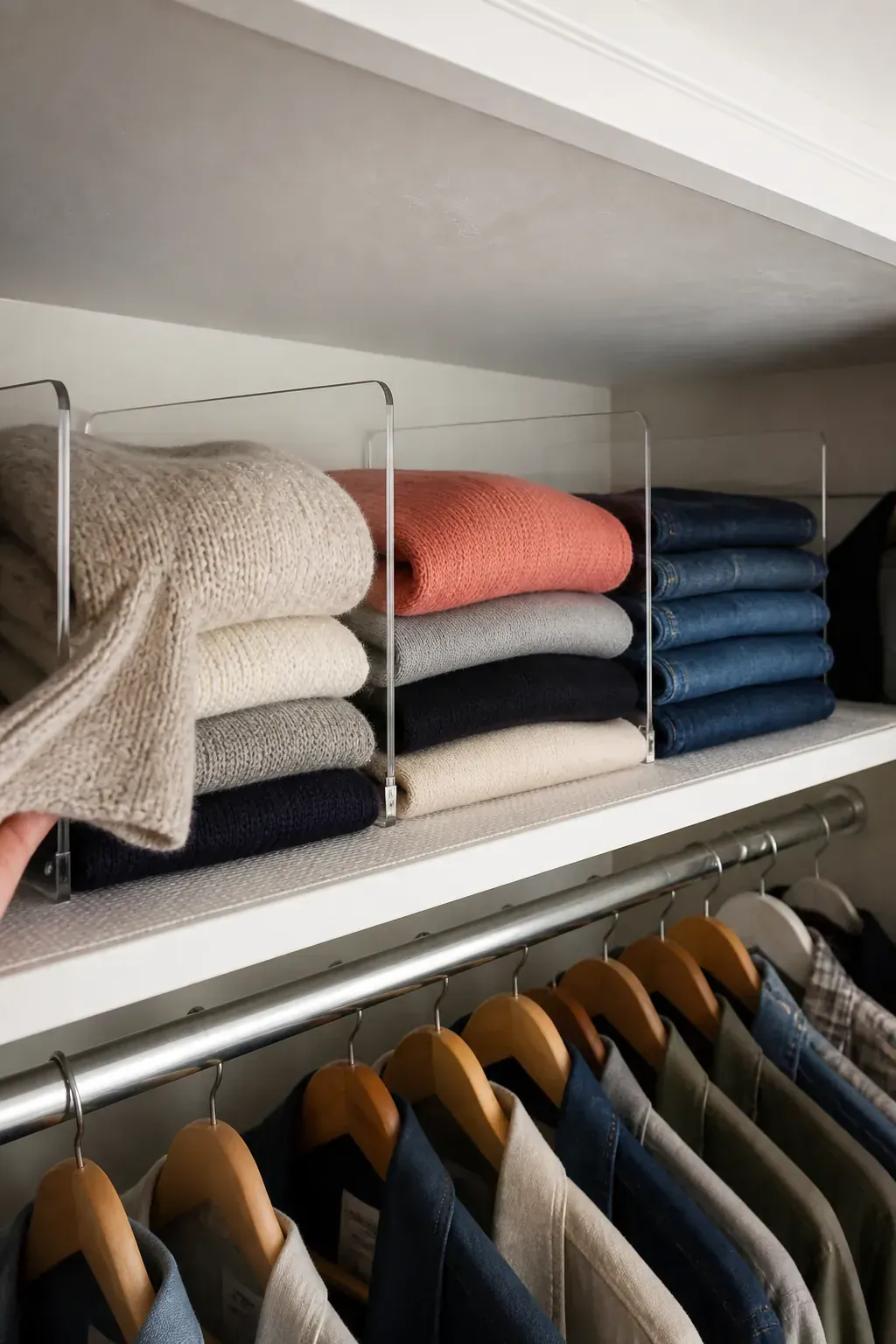
Use Shelf Dividers for Soft Stacks
Sweaters and denim stay neater when each category has a physical boundary. Clear or wire dividers stop one leaning stack from collapsing into the next, which means you can remove a piece without rebuilding the shelf. Limit each stack to a height you can lift comfortably with one hand.
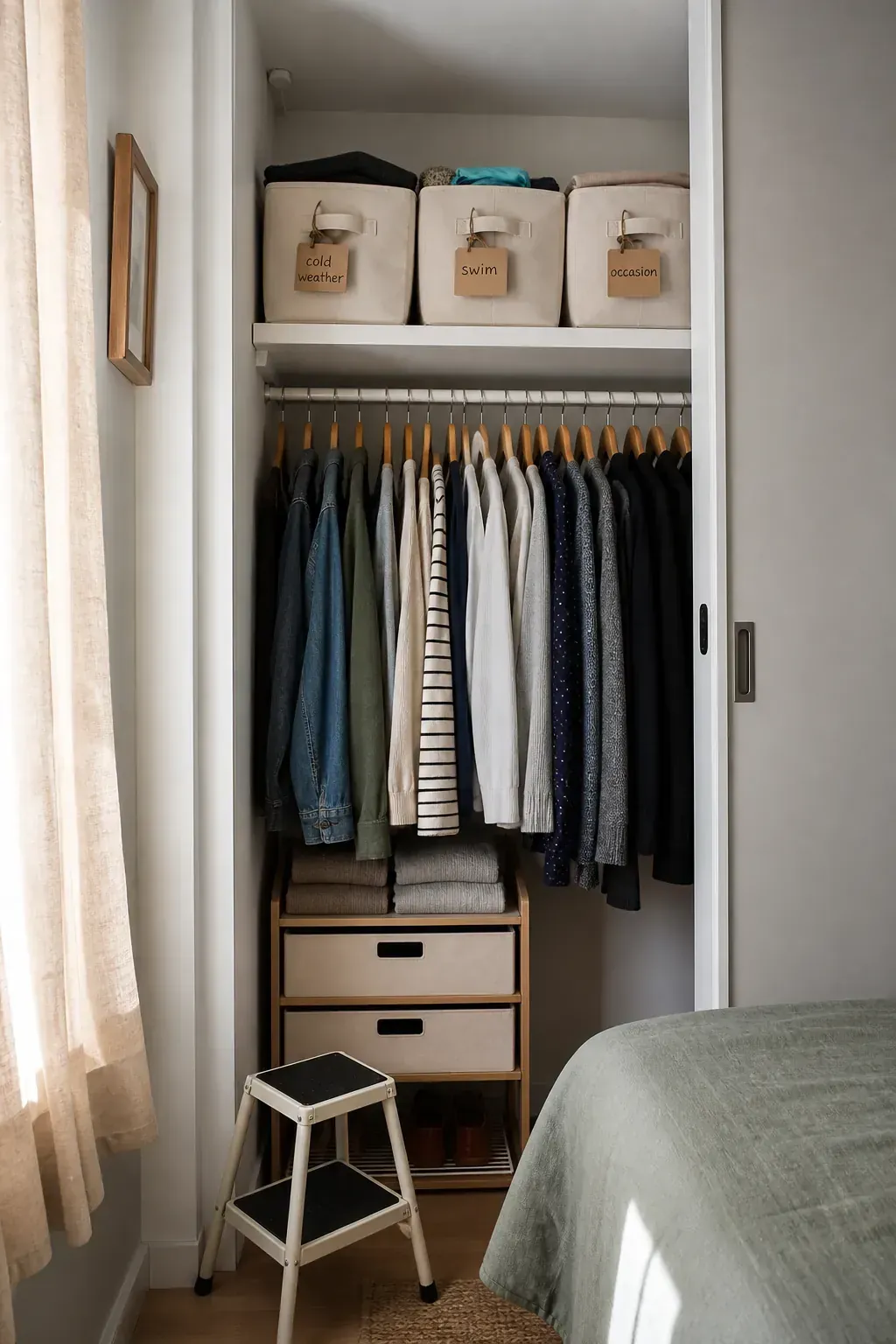
Turn the Upper Shelf Into Seasonal Storage
The highest shelf is valuable, but it should not hold items needed every morning. Place off season clothing in two or three labeled fabric bins, with the current season facing forward. A short inventory card inside each bin prevents buying something you already own.
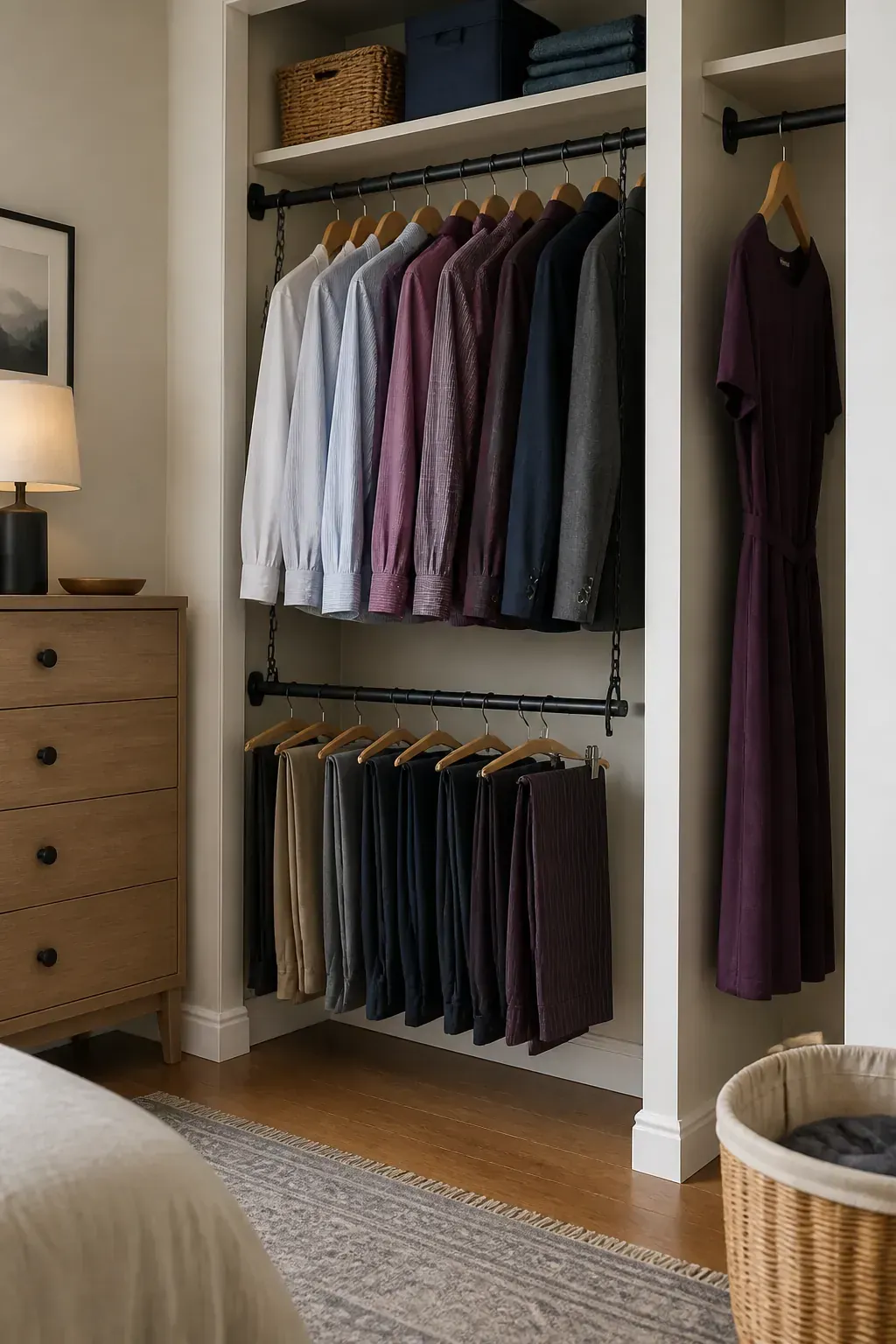
Add a Second Rail for Short Pieces
A removable lower rail can double useful hanging space beneath shirts and folded trousers. Measure the longest garment first so hems remain clear and visible. Keep dresses and coats in one full height bay rather than forcing every category into the doubled section.
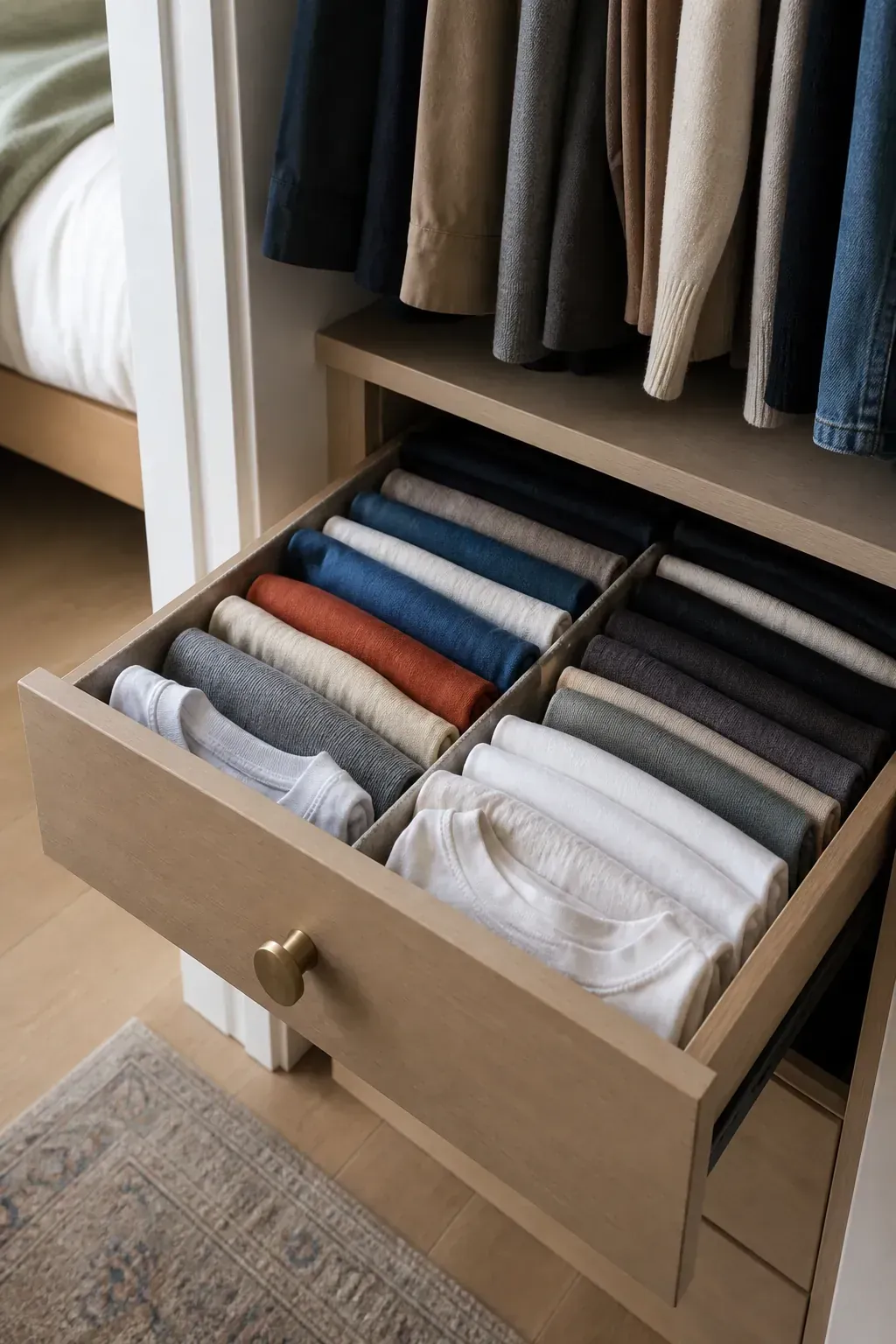
File Fold Clothes Inside Shallow Drawers
Vertical folding lets you see every tee or knit instead of sacrificing the bottom half of a pile. Shallow drawer inserts keep rows upright when several pieces are in the wash. Assign one row per clothing type so putting laundry away takes seconds rather than another sorting session.
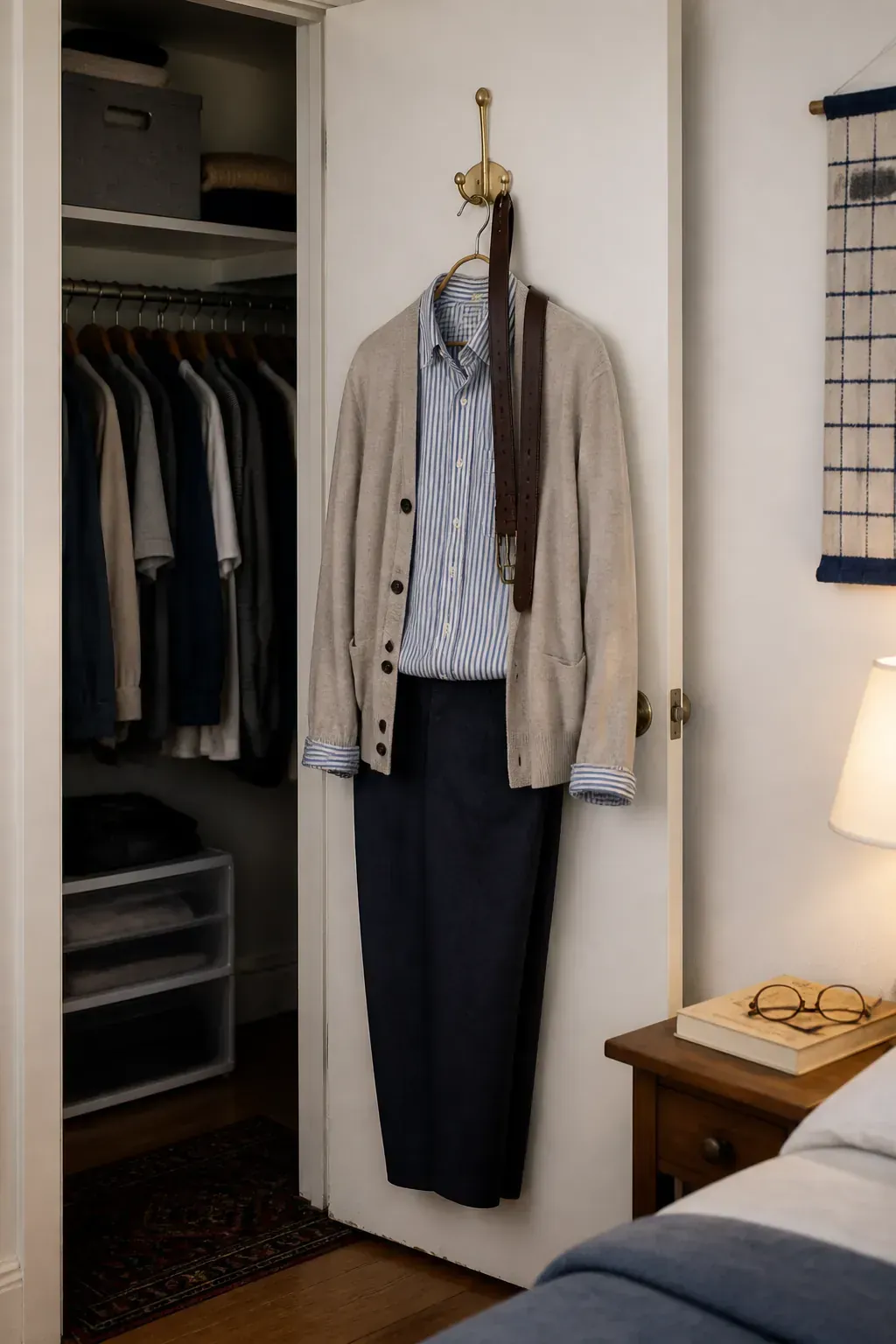
Create a Visible Outfit Staging Hook
A sturdy hook on the side wall or door gives tomorrow’s outfit a temporary home. It also provides a landing spot for clothes that are worn once but not ready for washing. Restrict the hook to one outfit so it never becomes a hidden chair pile.
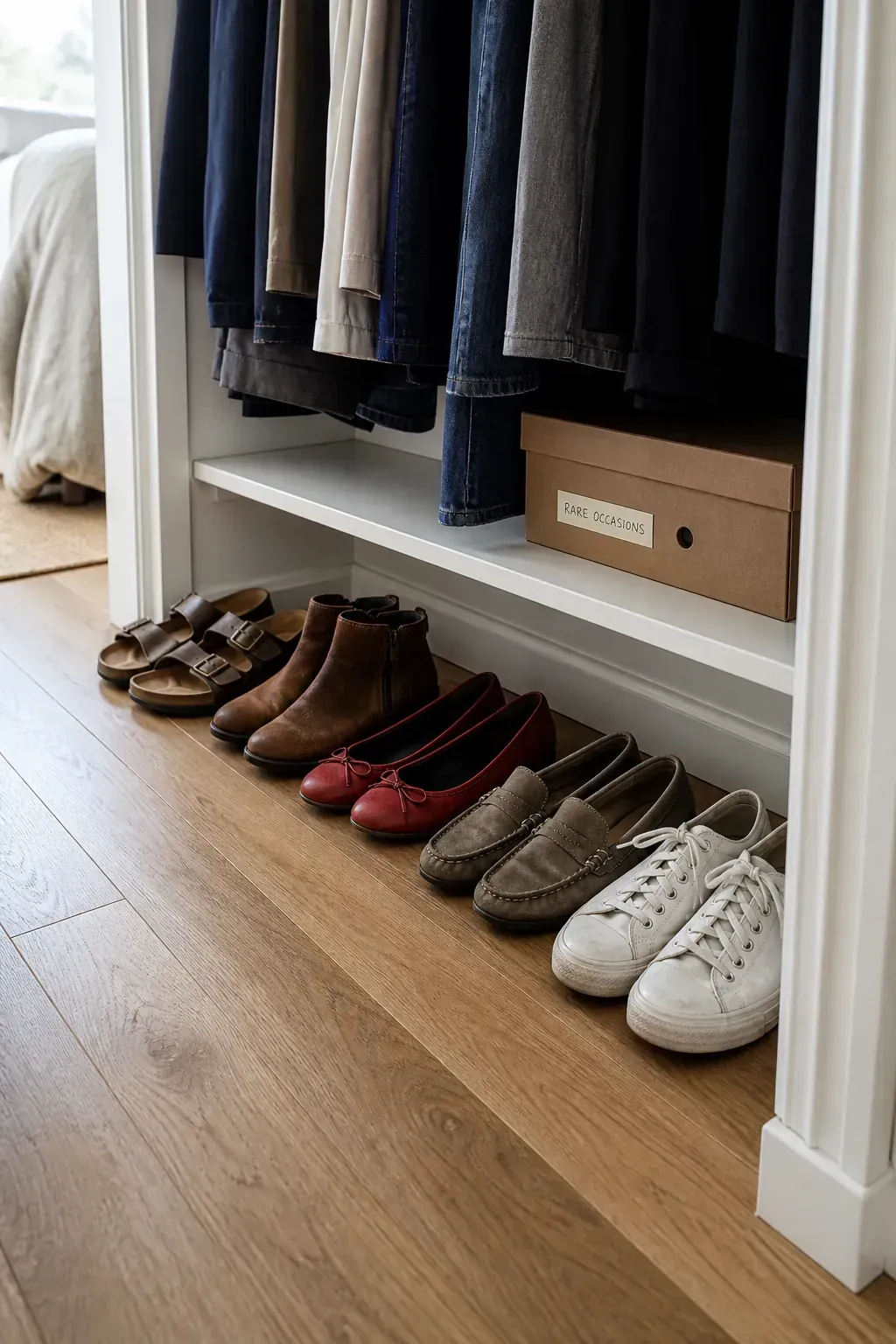
Store Shoes Toe Forward in One Row
A single visible row makes shoes faster to choose and easier to return. Place the most frequently worn pairs near the center, then move special occasion shoes to a labeled box above. If the row is full, treat that boundary as the collection limit rather than stacking pairs out of sight.
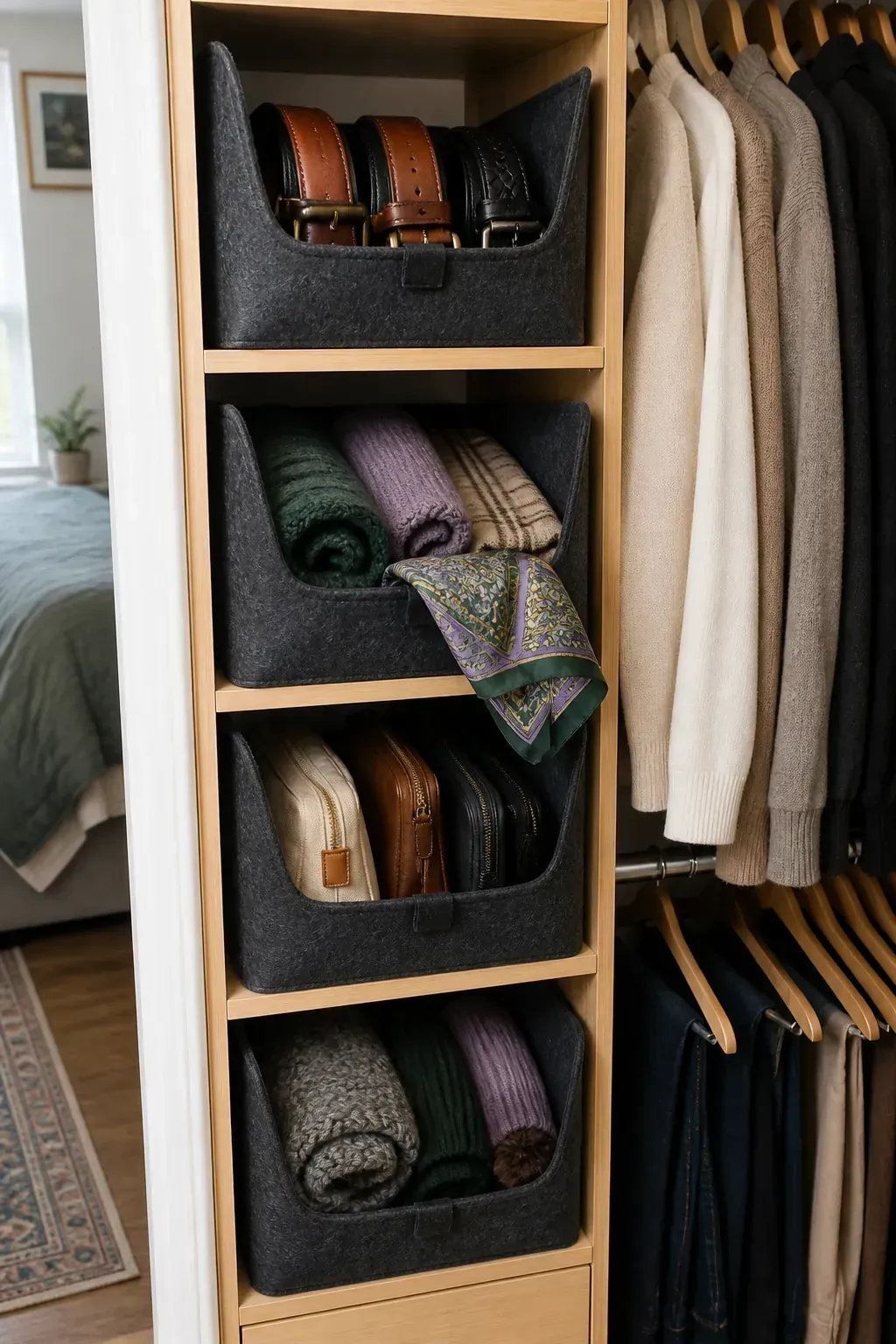
Contain Accessories in Open Front Bins
Belts, scarves, and small bags disappear when they are buried in deep boxes. Open front bins preserve the clean look of containers while allowing you to reach each category without lifting a lid. Choose shallow bins so every accessory remains visible from the doorway.
Keep a One In One Out Basket
Place a small donation basket on the closet floor for clothes that no longer fit your life. Deciding in the moment is easier than scheduling a large decluttering day, and the container keeps rejected pieces from returning to the rail. Empty it as soon as it fills so the basket never becomes permanent storage.
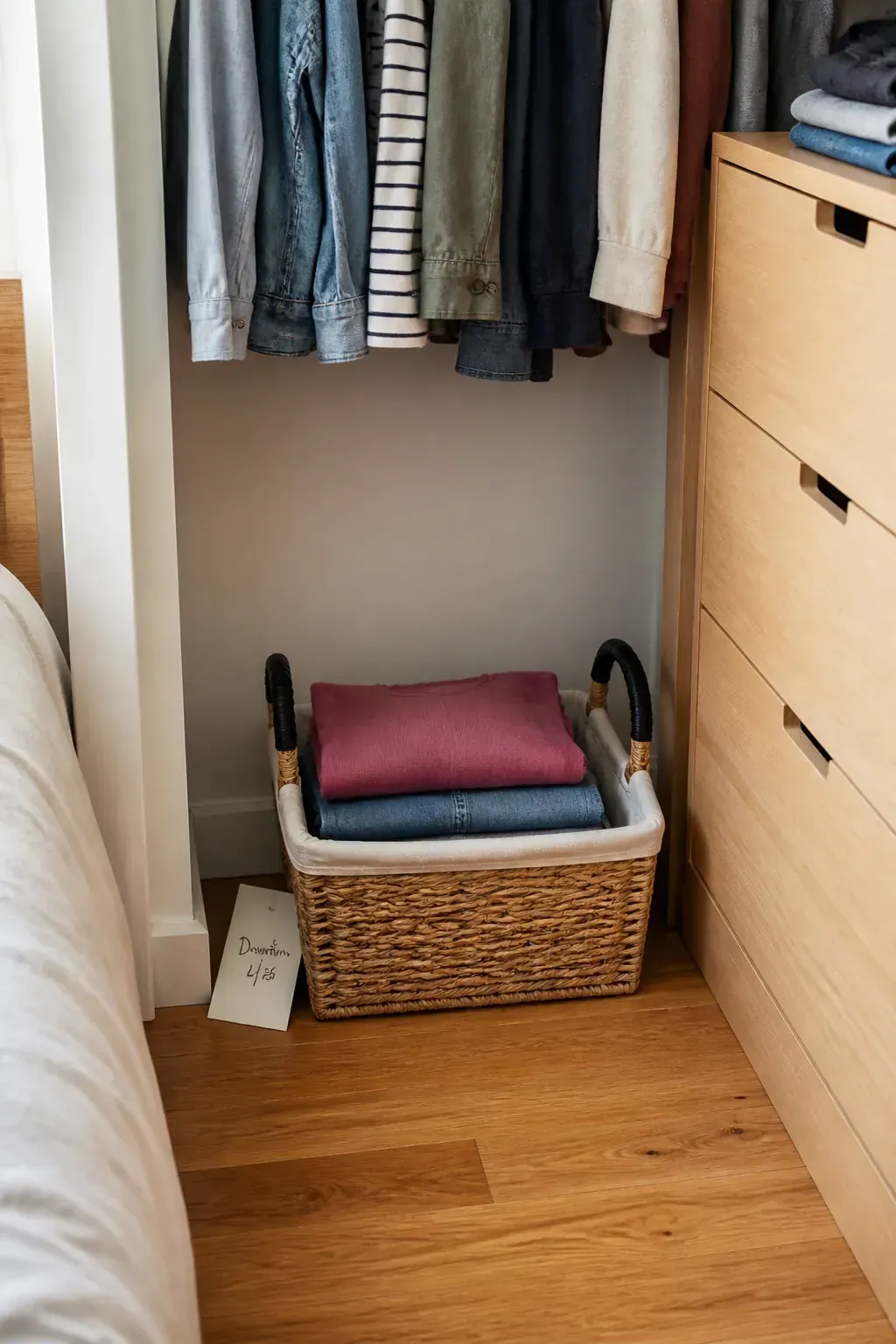
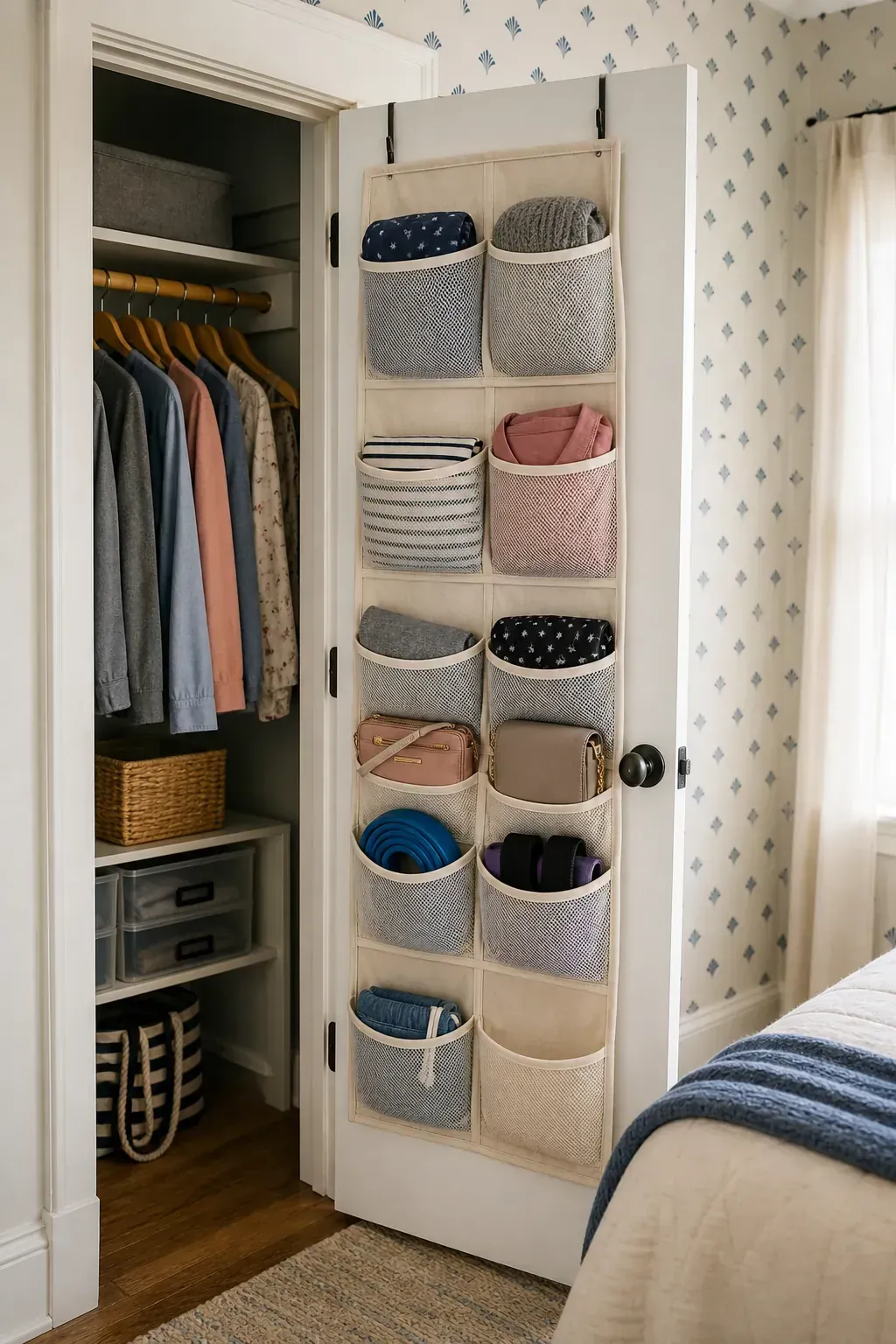
Use the Door for Lightweight Essentials
An over door organizer can hold tights, sleepwear, workout pieces, or small purses without consuming shelf space. Choose pockets that are wide enough to see inside and avoid overfilling them. The door should still close easily, since a storage idea that creates daily friction will not last.
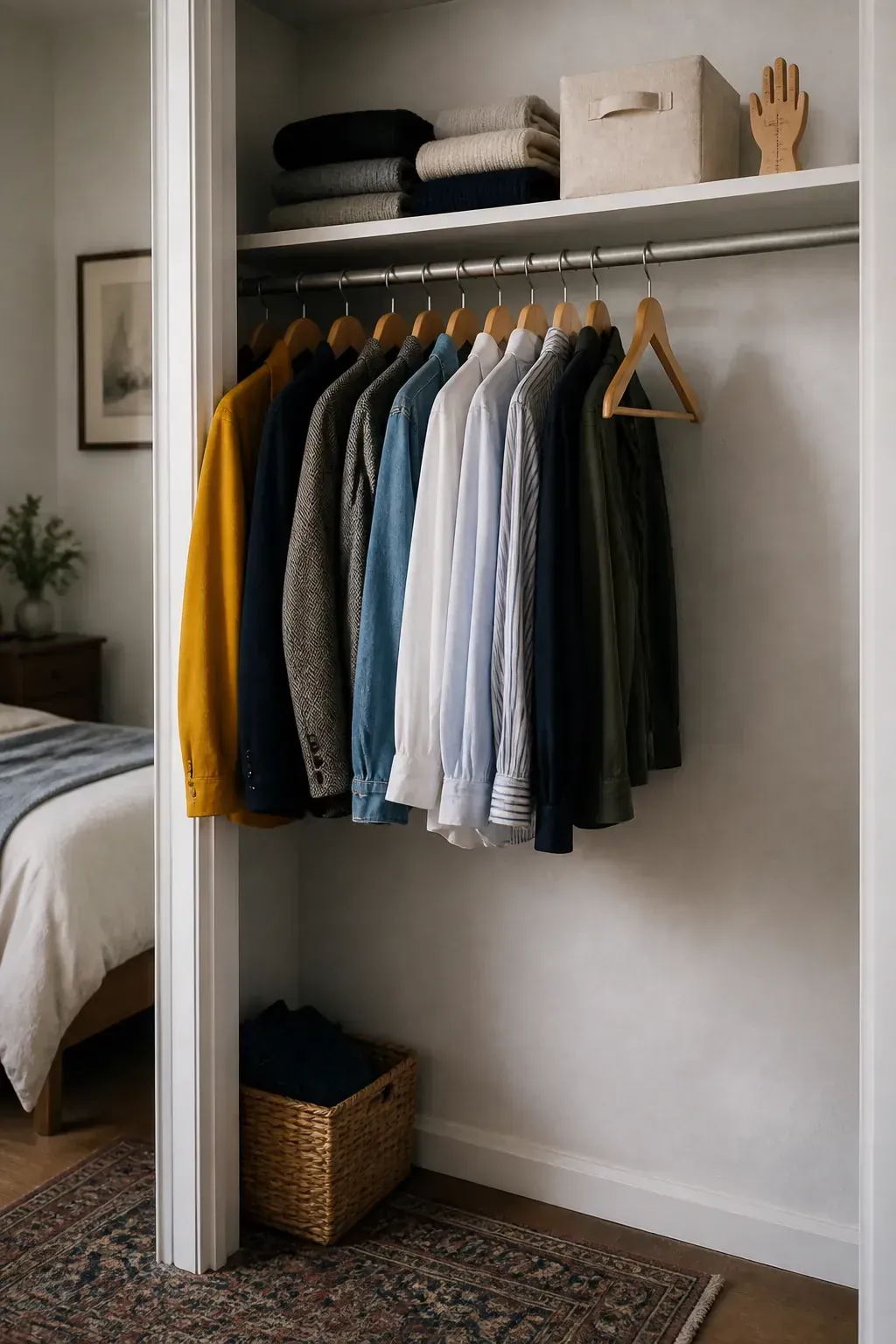
Leave a Deliberate Gap on the Rail
Empty space is a working feature because it lets hangers slide and clothes remain visible. Aim for a hand width of open rail rather than packing garments from wall to wall. That gap also gives new purchases a clear test, since adding one item should not destroy the closet’s ease.
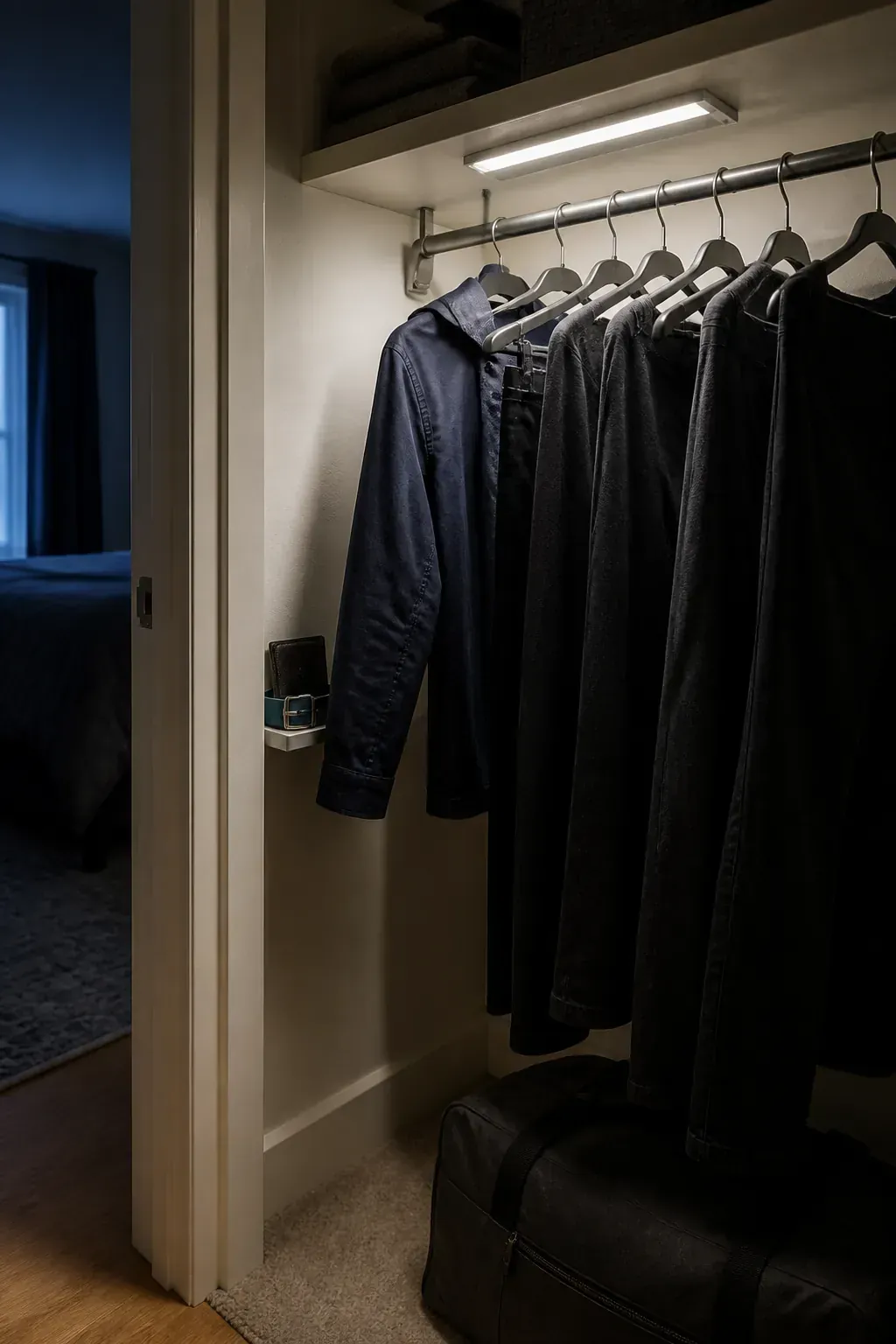
Light the Dark Corners
A rechargeable motion light reveals colors and prevents small items from vanishing at the back. Mount it where your body will not block the beam while you choose clothes. Clear visibility reduces repeat purchases and makes even a basic closet system feel considered.
Reset the Closet in Five Minutes
Choose one regular evening to return empty hangers, refold a loose stack, and move unwanted pieces into the donation basket. Stop after five minutes, because a capsule wardrobe should not demand a full cleaning project every week. This small reset protects the system that makes dressing simpler.