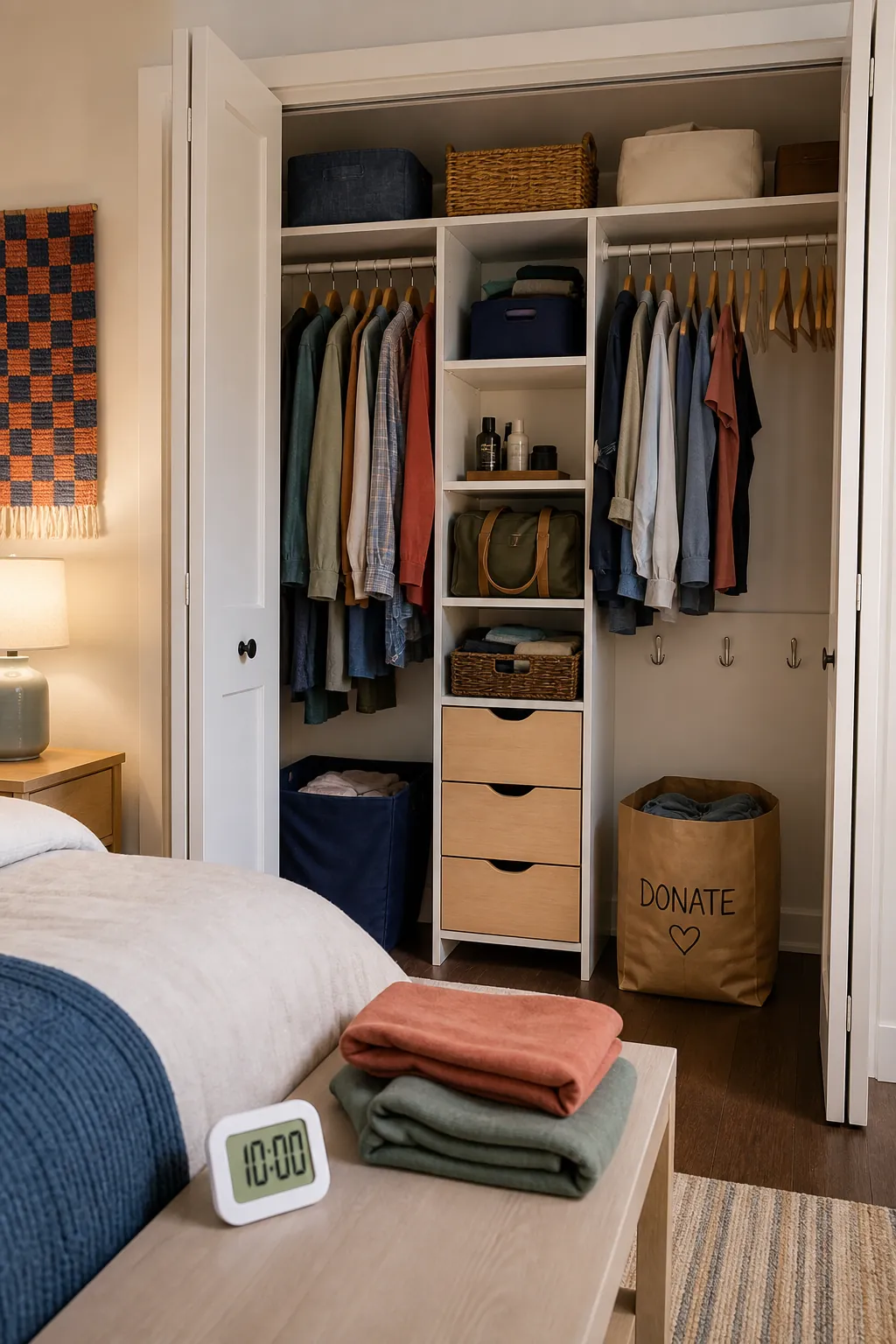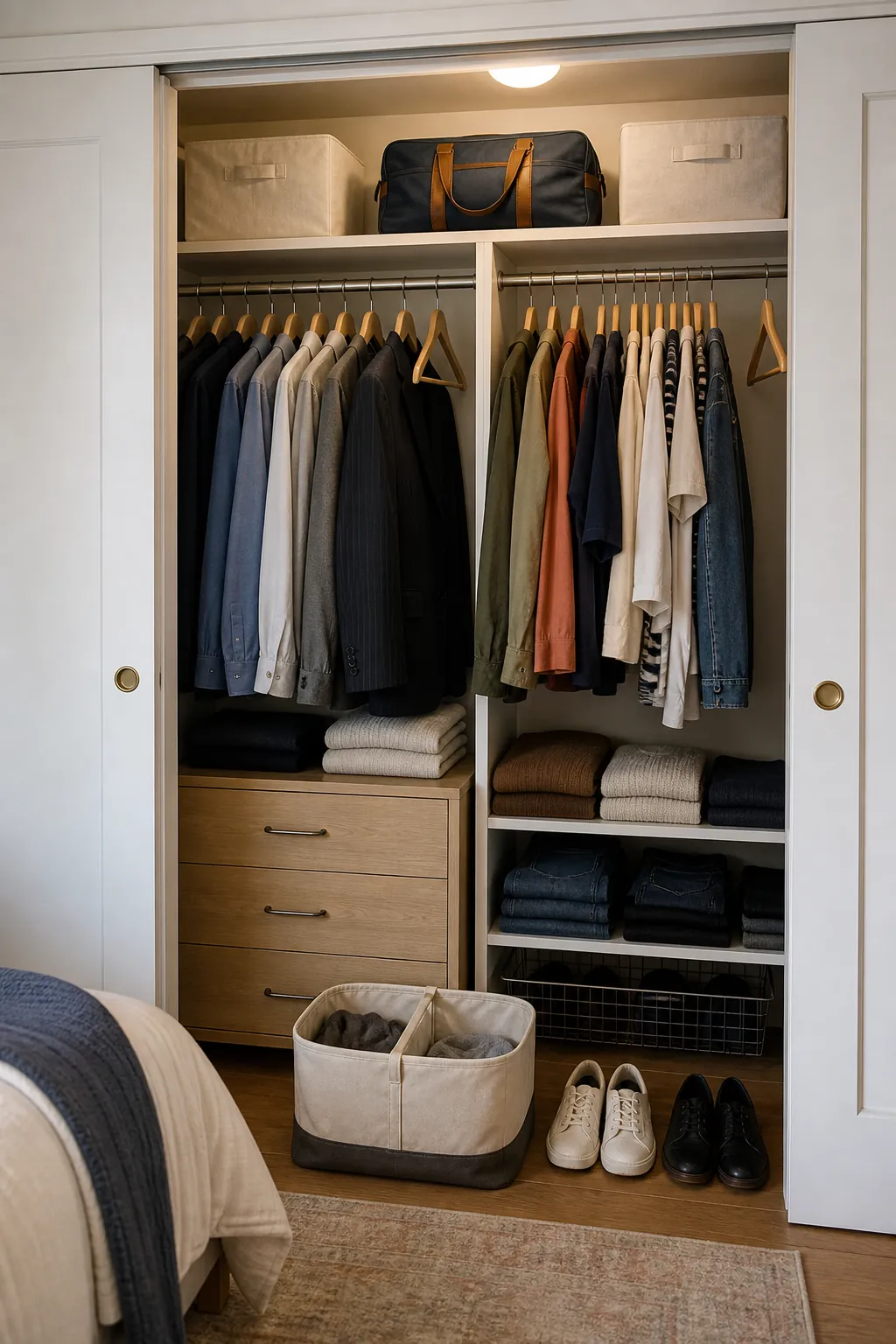
A shared closet rarely feels unfair because two people own exactly the same number of clothes. Conflict begins when one person cannot find a clean shirt, the other cannot reach a drawer, and nobody knows where temporary items belong. The cure is a visible agreement about access, capacity, and maintenance.
Measure What Each Person Actually Stores
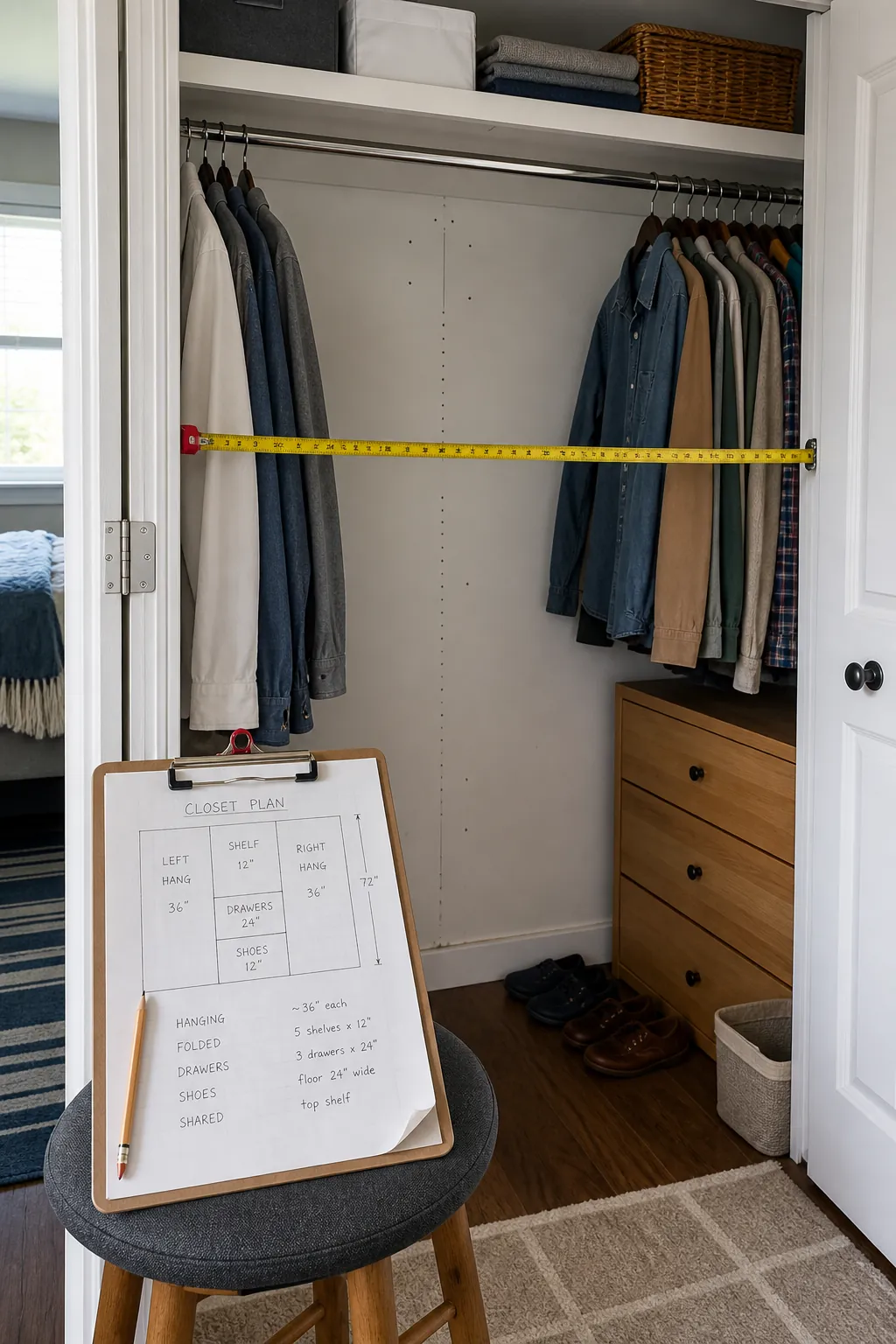
Empty the closet and measure the usable hanging width, shelf depth, drawer height, and floor clearance. Then sort clothes by storage need rather than splitting the closet in half by instinct. Someone with more folded knits may need shelves, while someone with uniforms may need a longer rail. Fairness means each wardrobe has the right type of space, not identical rectangles.
Assign Clear Personal Zones
Give each person a distinct rail section, shelf area, and drawer group. A center line, shelf divider, or different hanger finish can mark the boundary without turning the closet into a labeled locker room. Personal zones make it obvious where clean laundry returns and who must edit an overflowing section. Leave one small shared zone for genuinely shared items such as travel bags or spare bedding.
Protect the Prime Reach Area
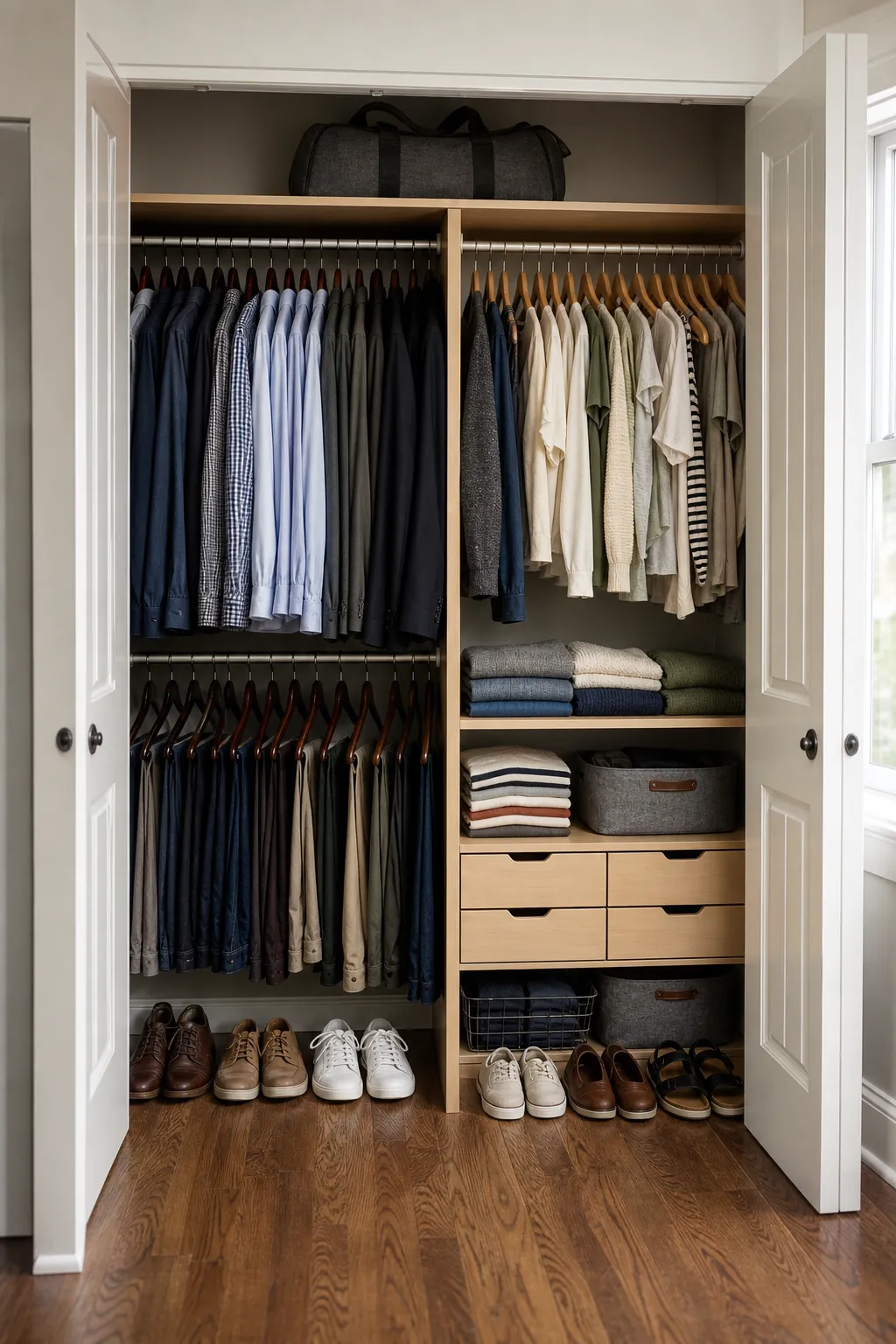
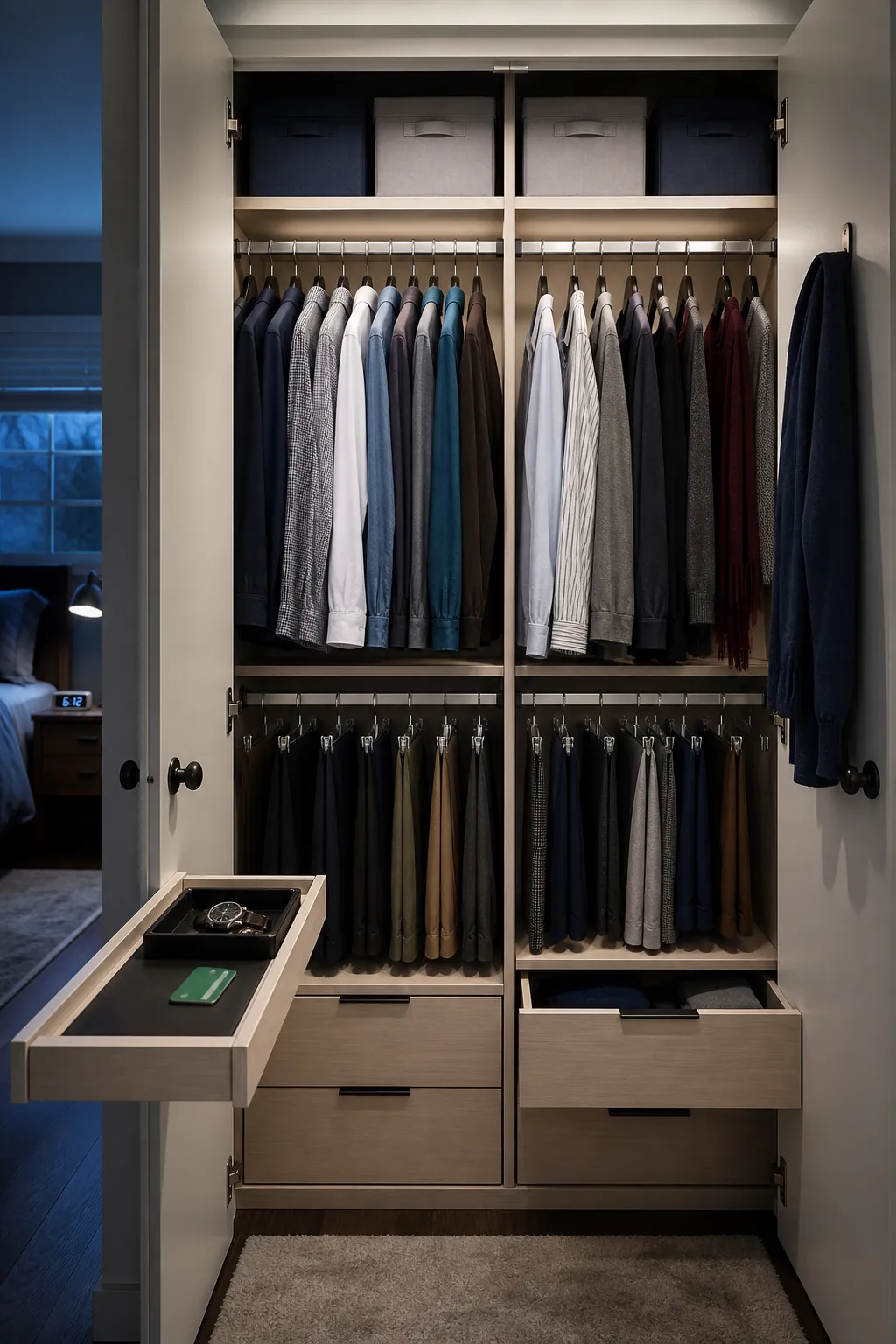
The central rail and waist height drawers should hold clothes used during a normal week. Formalwear, seasonal layers, and sentimental pieces can move higher or farther from the door. If one partner leaves earlier, place that person’s daily zone near the quietest access point. This reduces searching, light use, and accidental wakeups during rushed mornings.
Create One Neutral Landing Spot
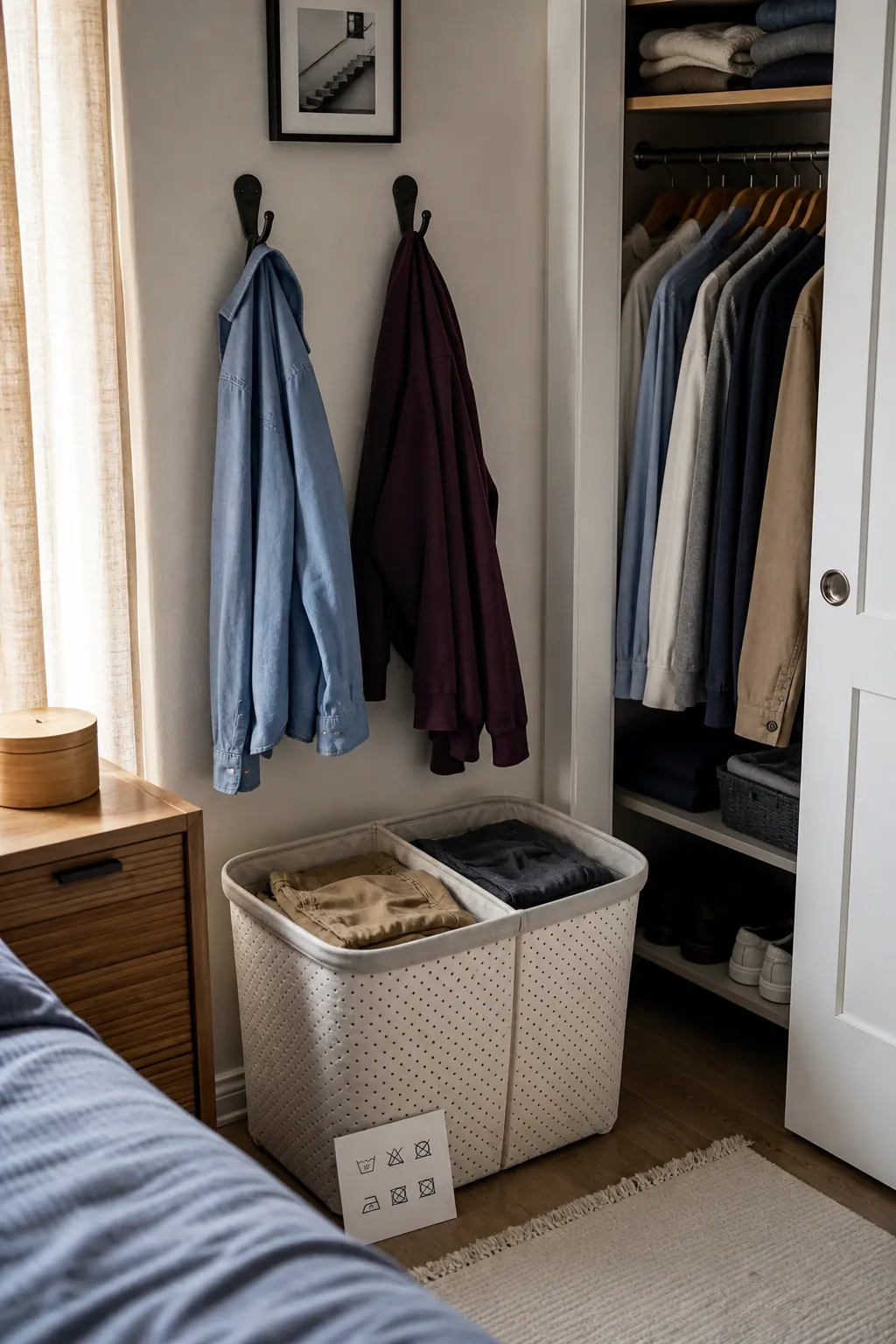
Clothes worn once often cause more arguments than clean laundry because they belong to neither the hamper nor the rail. Install two hooks or provide one divided basket for these in between pieces. Set a simple capacity rule so each person can keep one outfit there. When the space is full, something must return to storage or go to washing.
Separate Small Items Before They Spread
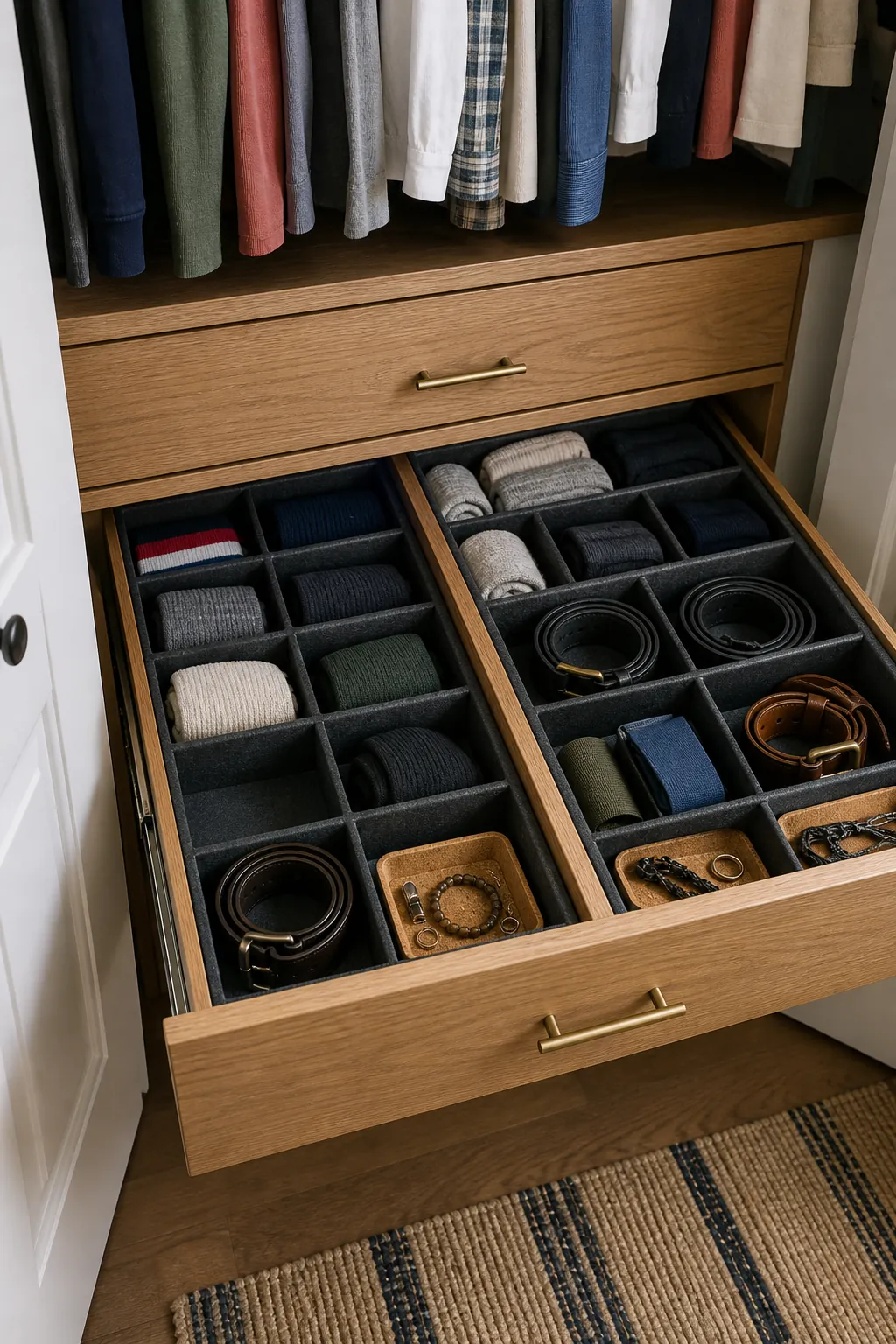
Socks, belts, workout pieces, and accessories quickly cross invisible boundaries. Use shallow drawer inserts, small open bins, or paired trays that are easy to identify at a glance. Avoid one deep shared basket because retrieving a single item disturbs everything above it. A container should hold one category and remain light enough to lift with one hand.
Set Capacity Limits Instead of Policing Purchases
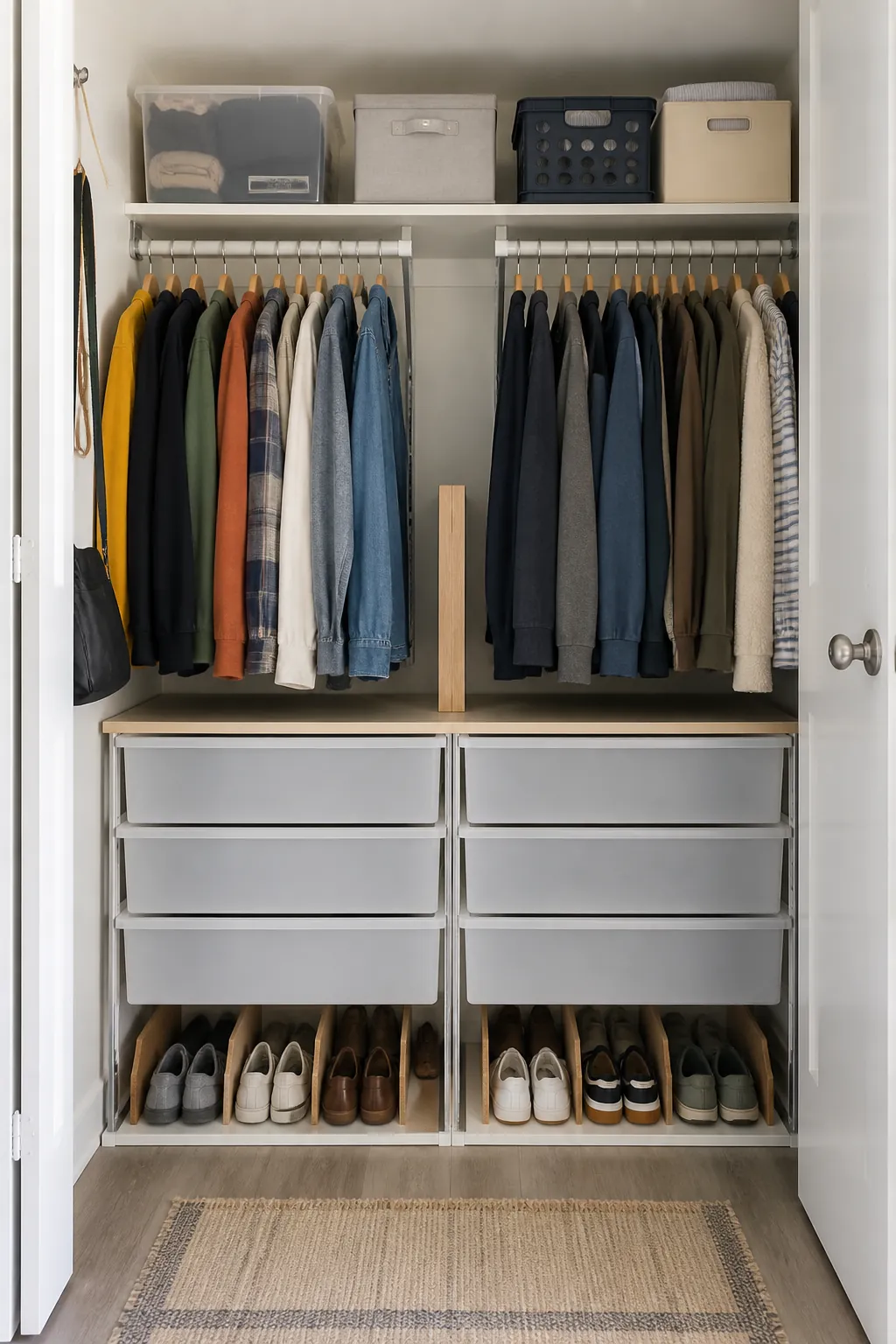
Arguments become personal when one partner decides what the other should own. Let the physical zone set the limit instead. Clothing must slide on the rail, drawers must close, and shoes must remain inside the assigned row. Each person can choose what stays as long as their section continues to function.
Use a Ten Minute Joint Reset
Choose one predictable time each week to return hangers, empty temporary hooks, and move seasonal items back to their zones. Both people should reset their own section first, then address the shared shelf together. Keep the session short enough that it does not feel like a judgment or a major cleaning project. A shared closet stays peaceful when small decisions happen regularly and visibly.