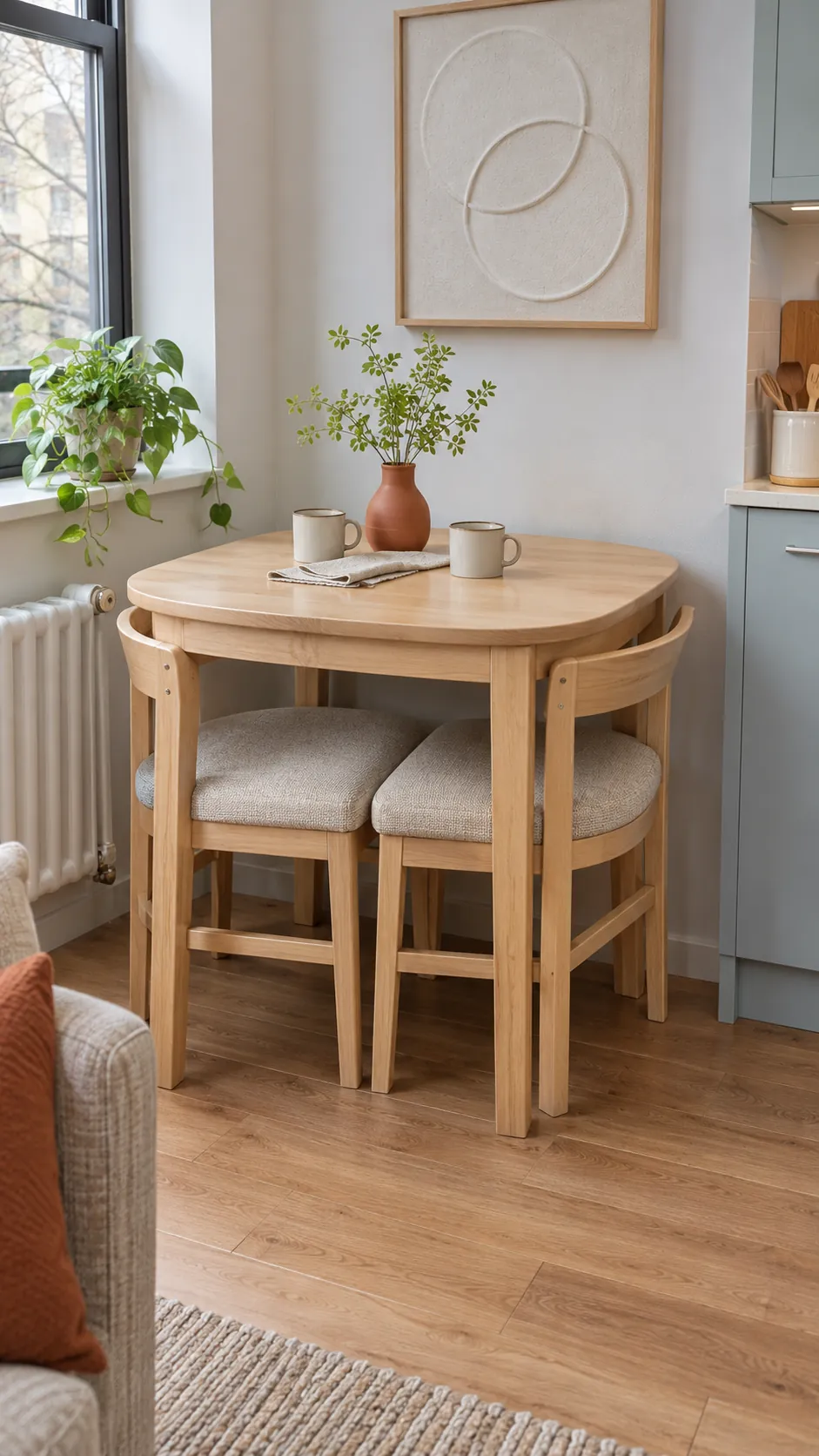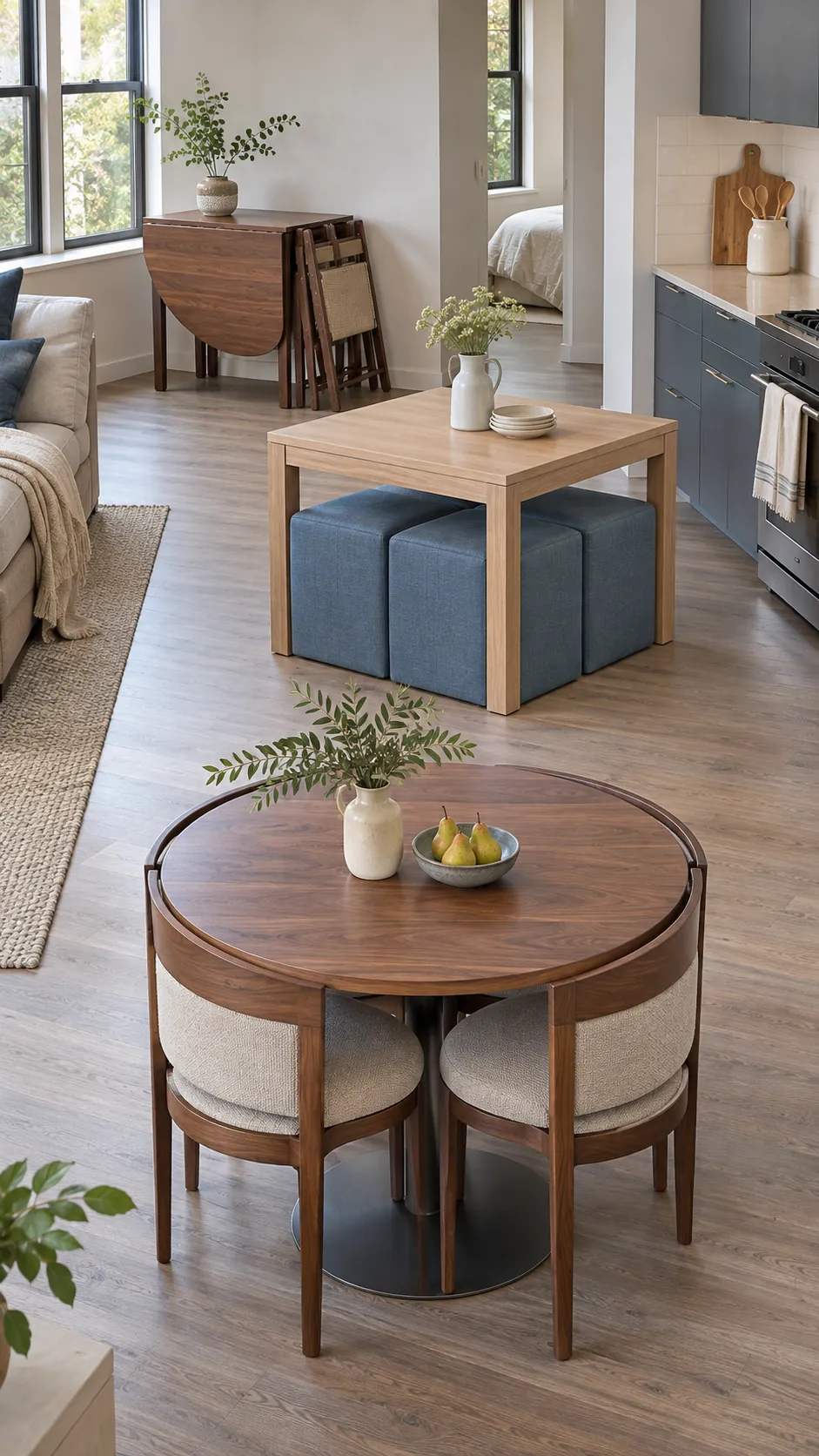
A compact dining set earns its floor space only when the seats disappear after the meal. Look beyond the table width and check the full stored outline, the route used to pull each chair out, and whether the seating remains comfortable enough for daily use.
Round Pedestal Set With Curved Chairs
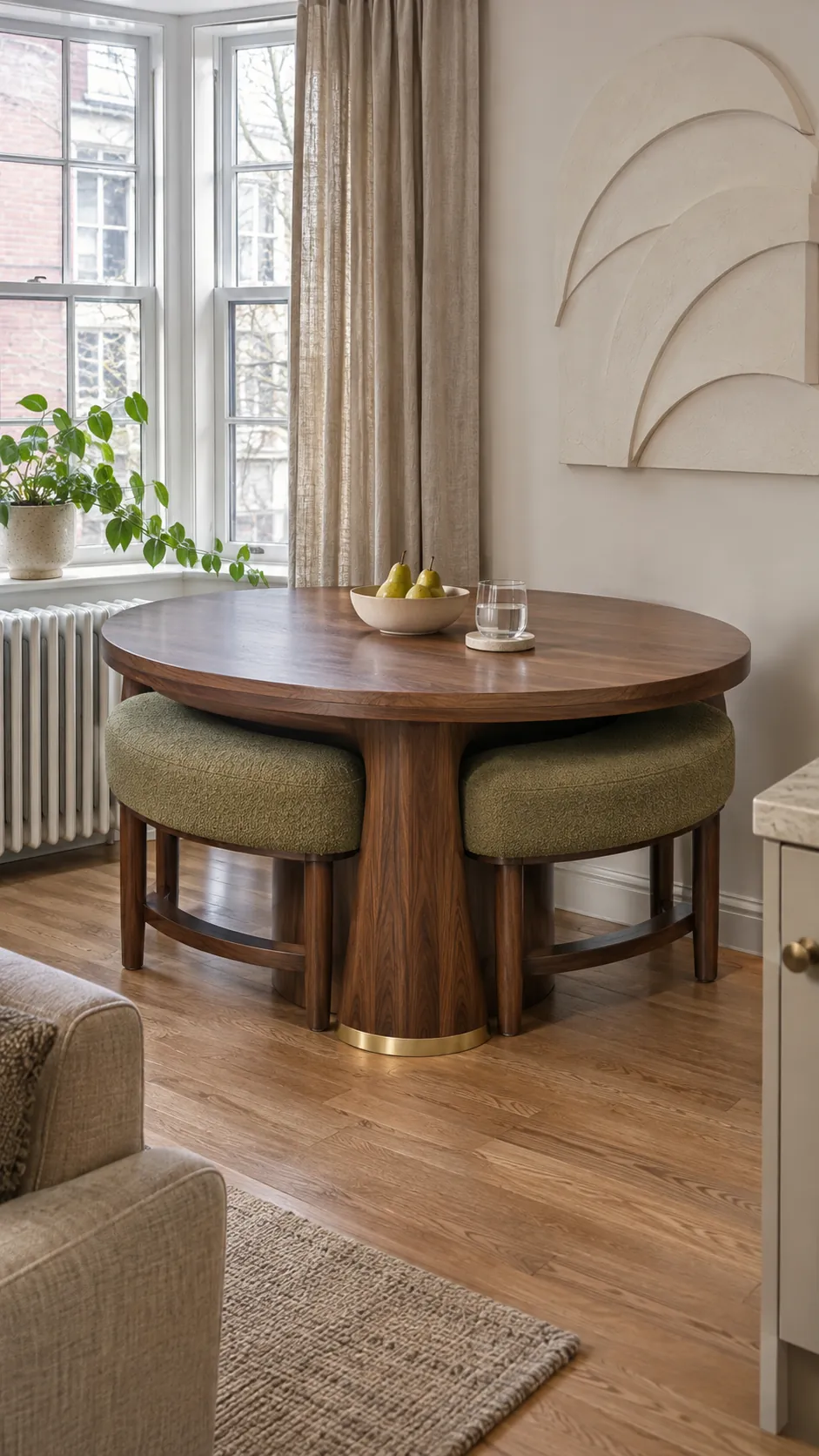
Curved chair backs can follow the edge of a round top so the stored set reads as one compact cylinder. A central pedestal removes corner legs that would stop the chairs early. Check that chair feet clear the base and that the seat still offers enough depth for a meal.
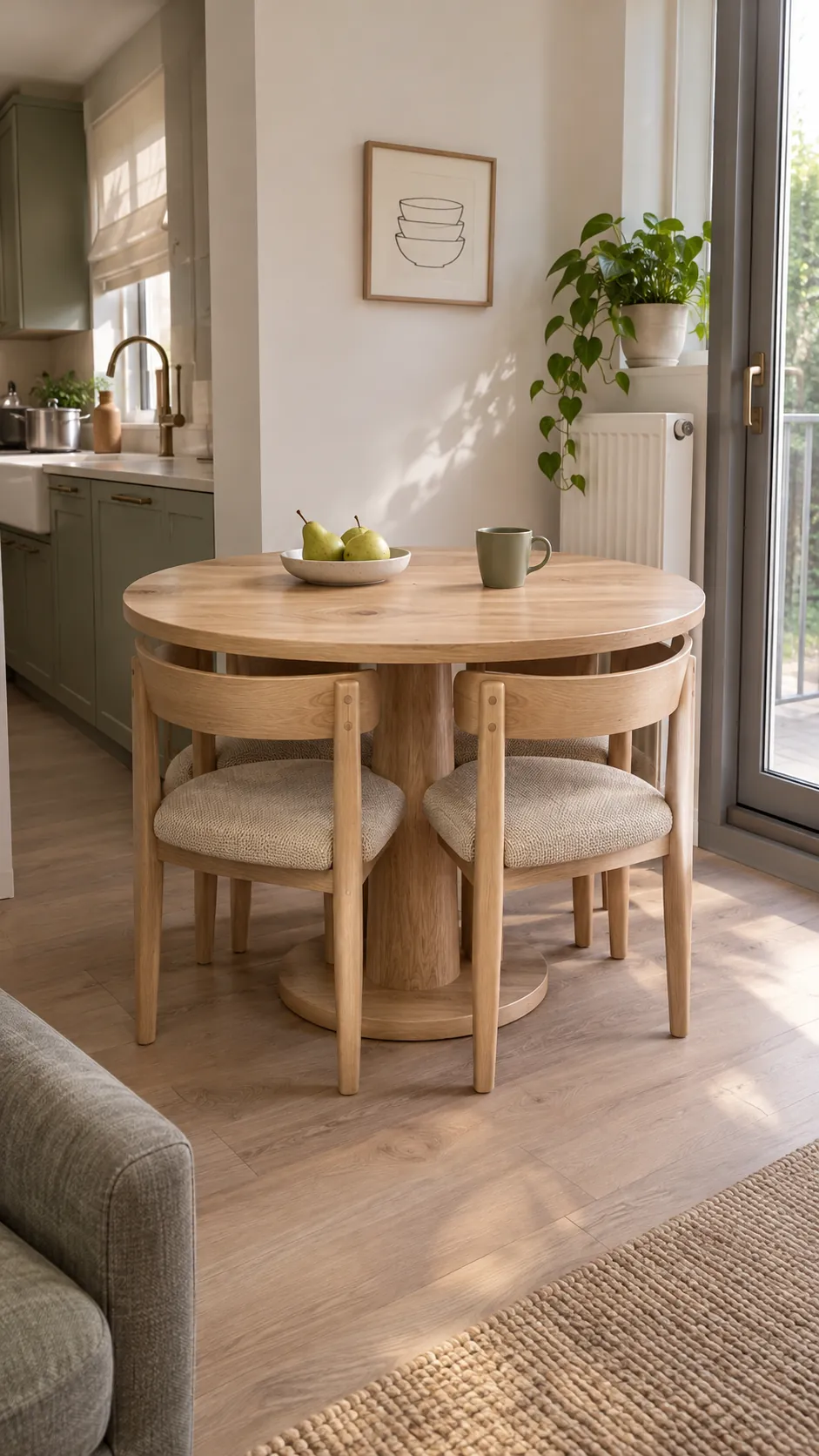
Square Table With Backless Cube Stools
Four cube stools can fill the open bays beneath a square table without leaving chair backs in the walkway. This shape creates a clean stored outline and gives every stool a predictable place. Choose padded tops and test knee room because a backless seat is best for shorter meals.
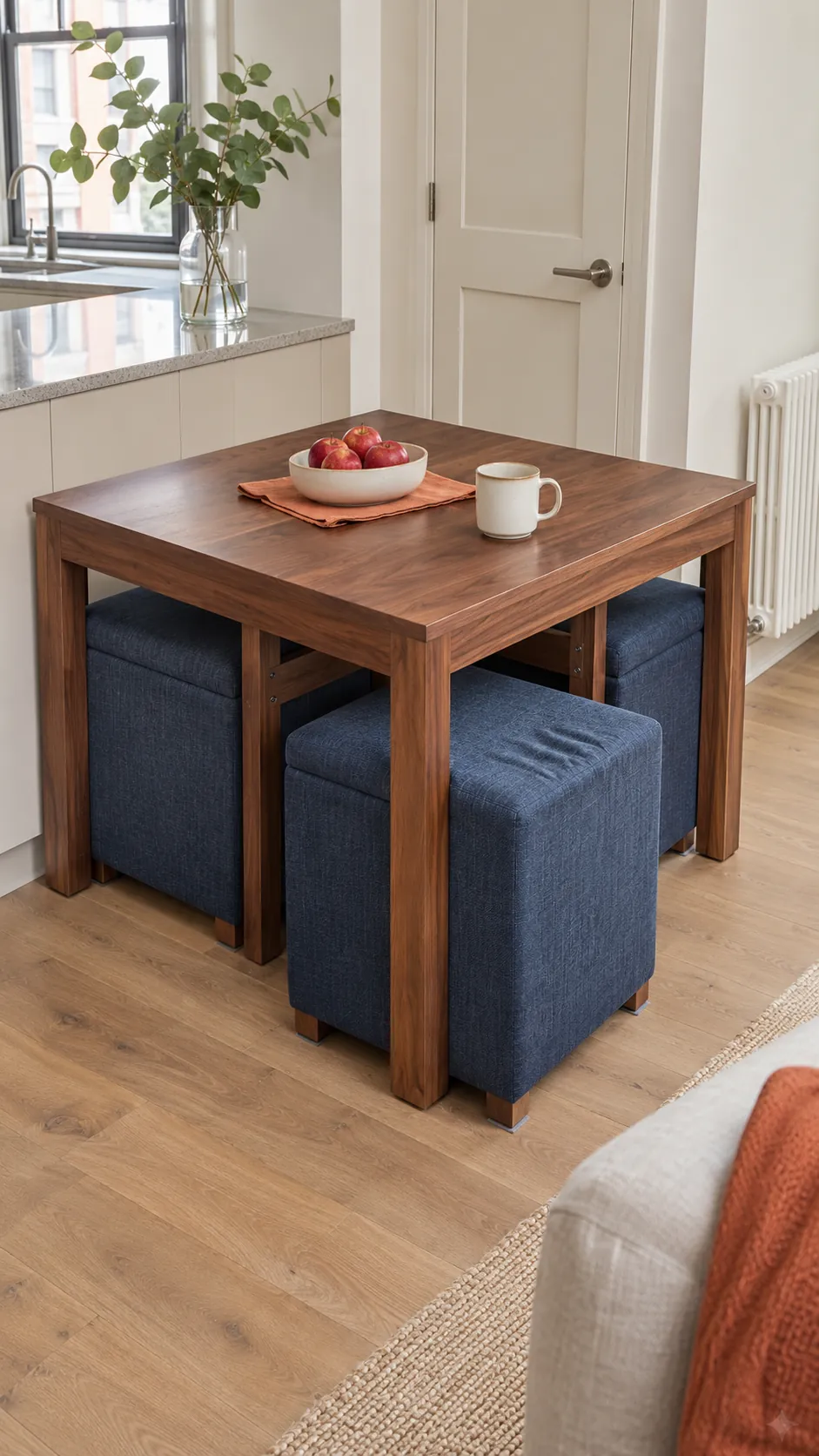
Drop Leaf Table With Folding Side Chairs
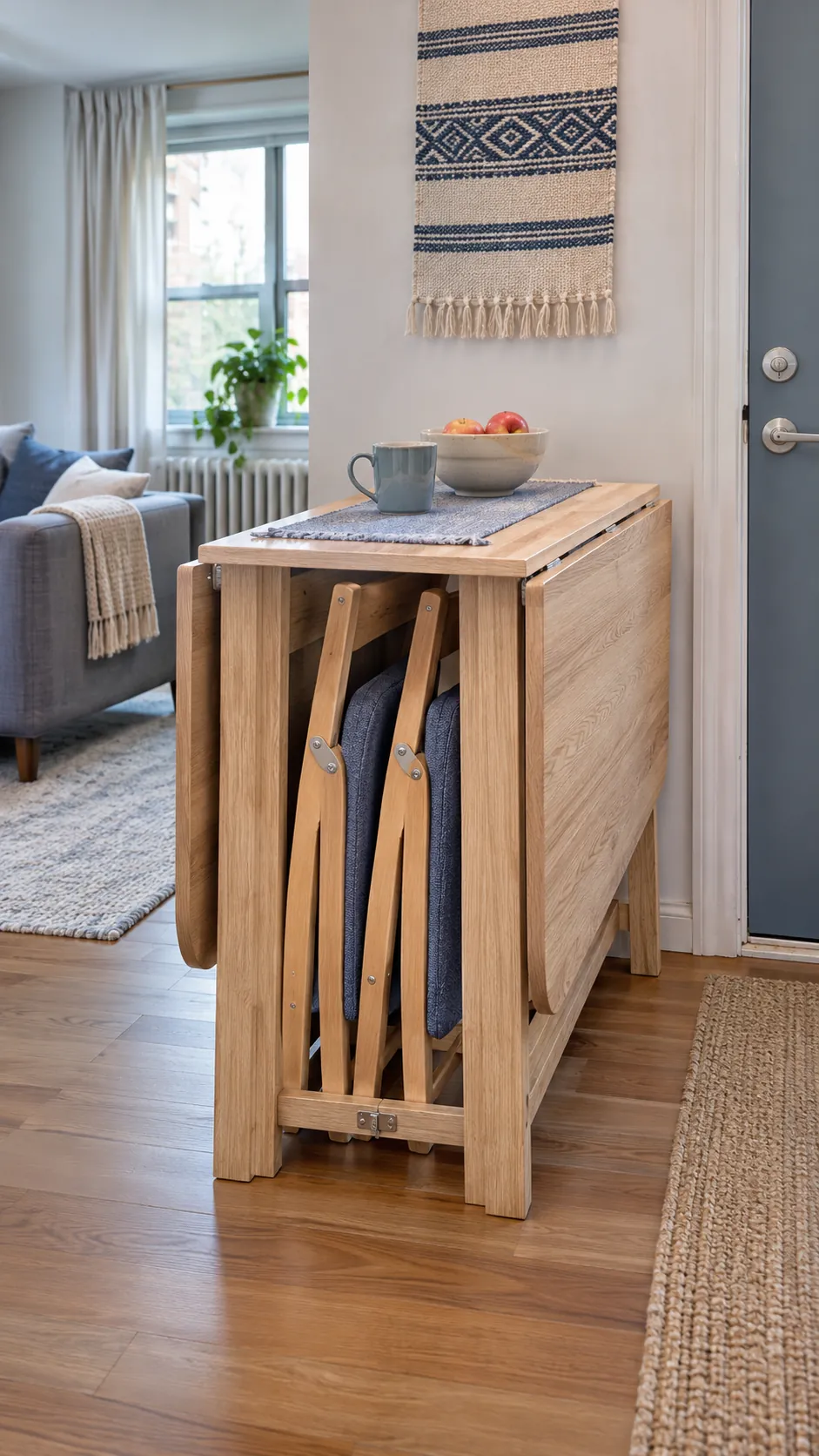
A drop leaf table can narrow for daily use while two slim chairs fold into a center rack. The design works well in a passage that must reopen after breakfast. Inspect the leaf supports, folded chair thickness, and finger safe locks before relying on it every day.
Oval Table With Crescent Benches
Two crescent benches can nest against an oval pedestal and leave no sharp corners outside the top. The continuous seats are useful when the number of diners changes. Look for manageable bench weight and enough hand space to pull each piece out without scraping the base.
Counter Height Table With Saddle Stools
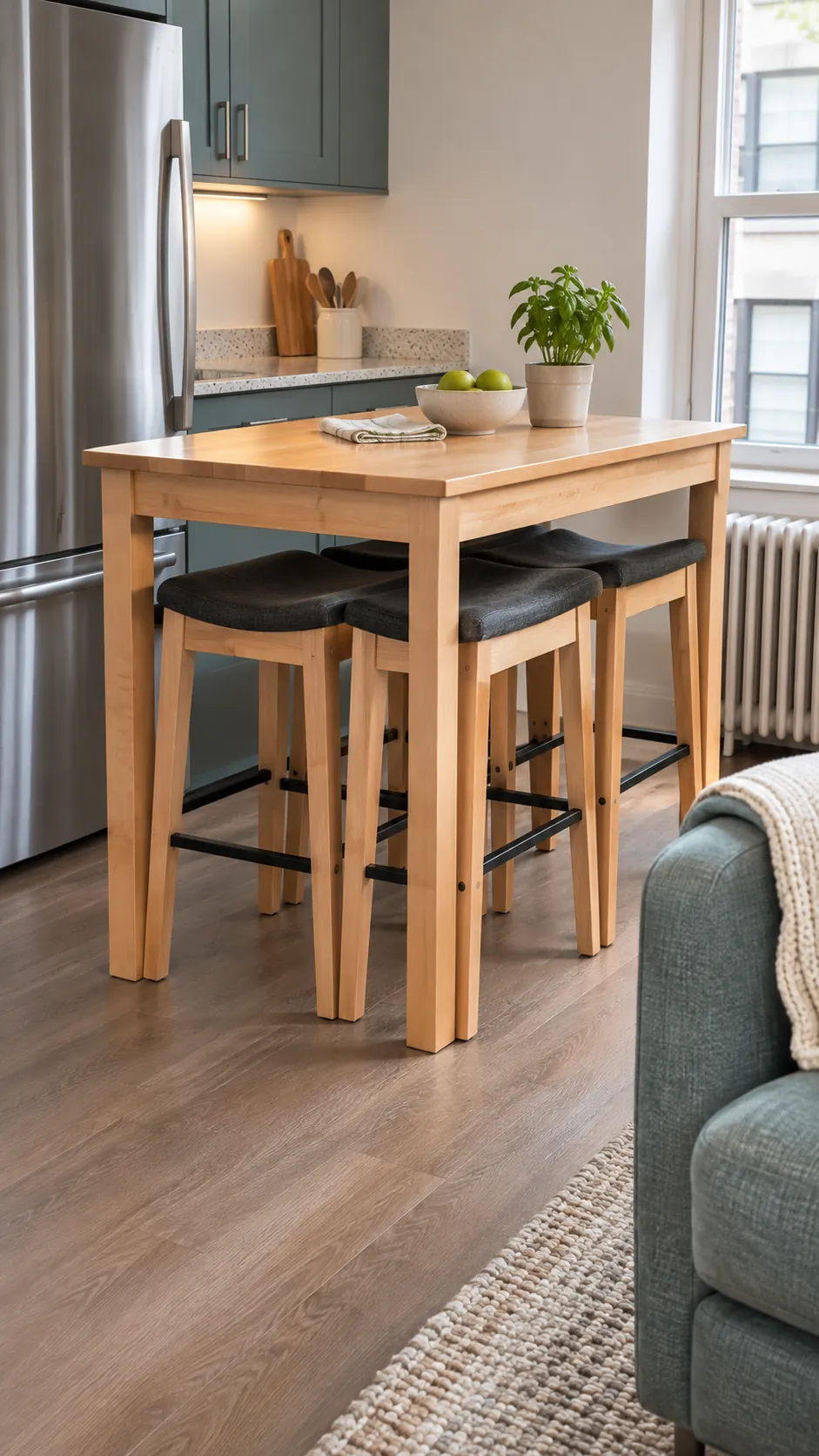
Saddle stools slide beneath a counter height table because they have no back and a narrow seat profile. The taller surface can also serve as kitchen prep space. Confirm that the footrests remain inside the footprint and that every diner can use the higher seat safely.
Console Table With Nesting Benches
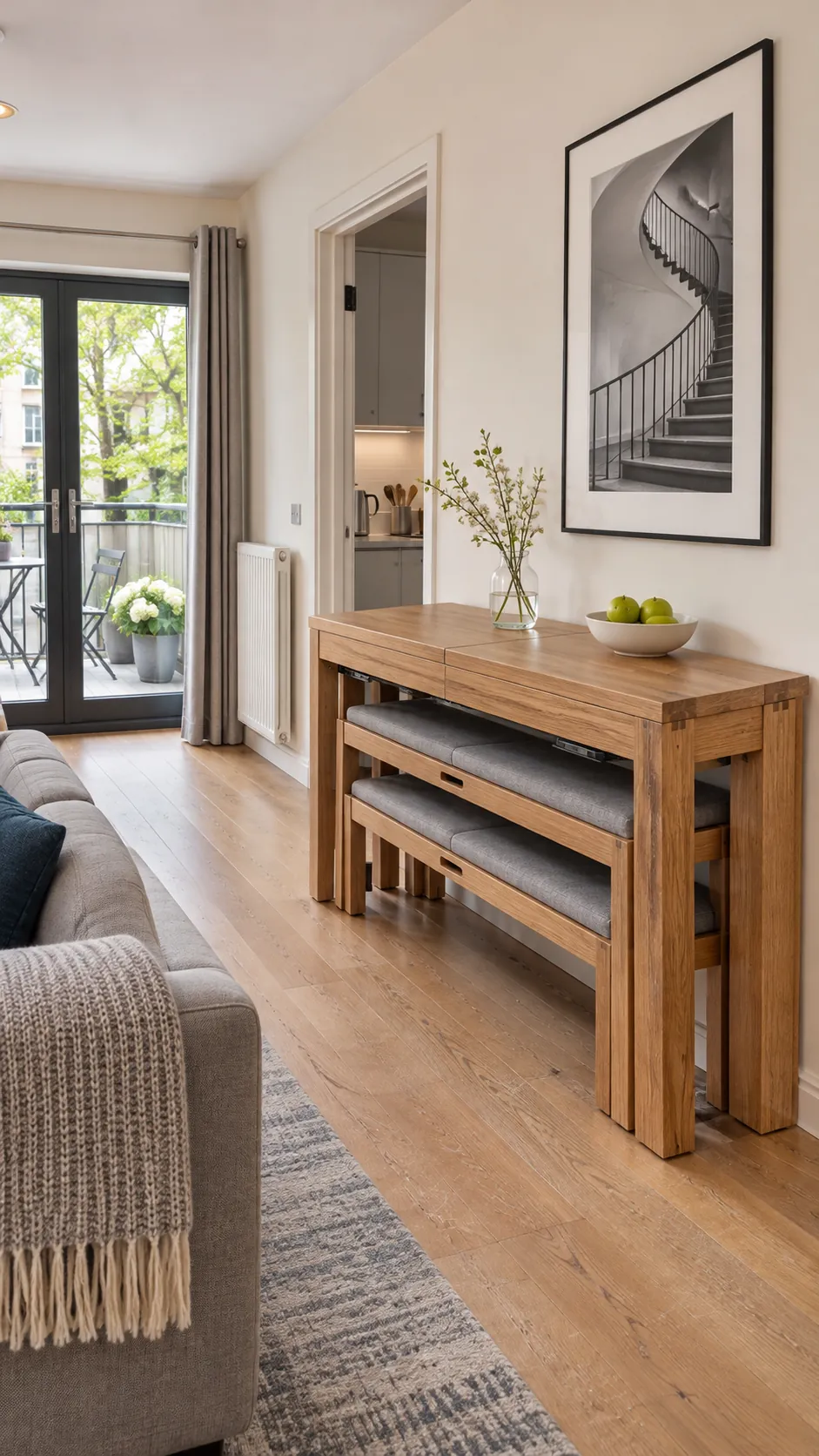
A slim console can expand into a dining surface while two benches store lengthwise below it. This format protects a clear path on days when nobody eats at the table. Measure the expanded support span and check where loose leaves are stored before buying.
Corner Table With Two Tuck Away Stools
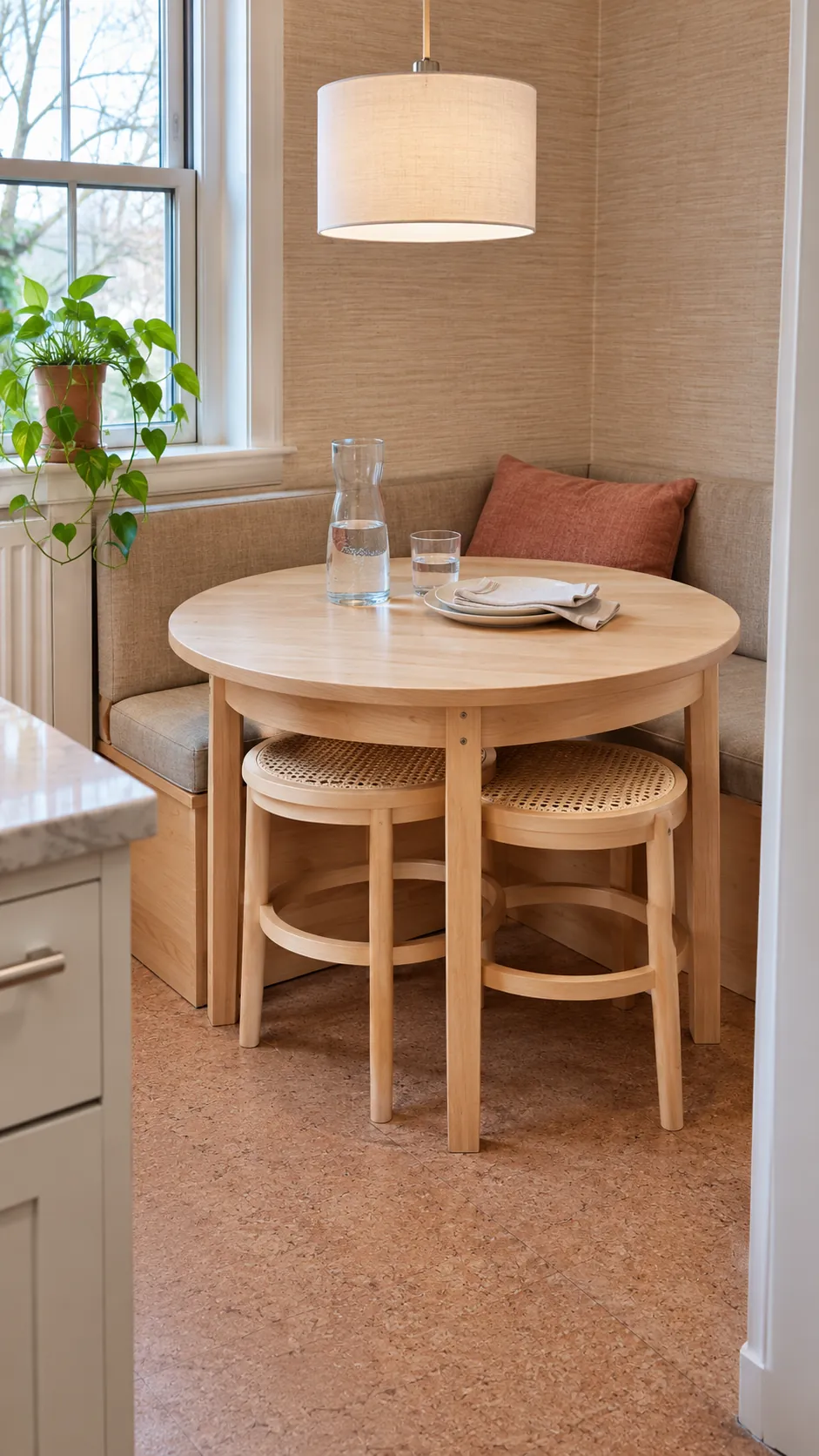
A small table beside a fixed corner bench needs loose seating only on the open side. Two stools can disappear beneath that edge and keep the main route clear. Ensure the bench depth supports upright dining and that the table base does not block entry to the corner seat.
Rectangular Table With Slim Spindle Chairs
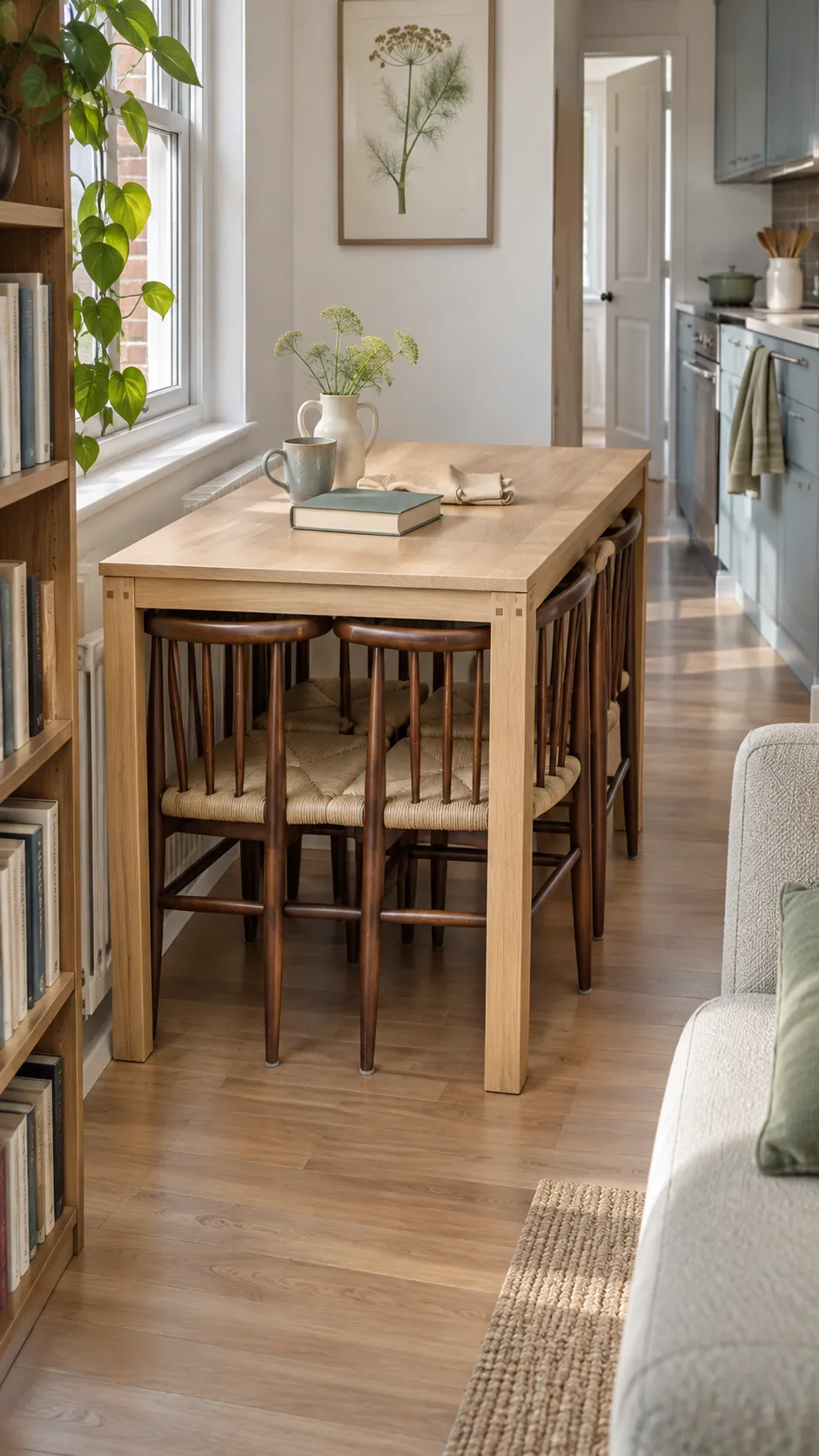
Low spindle backs can slide beneath a thin rectangular top when the legs sit close to the corners. The chairs still provide more support than stools and can suit daily meals. Compare the widest back rail with the leg opening and allow a small buffer against scratches.
Round Table With Pie Shaped Seats
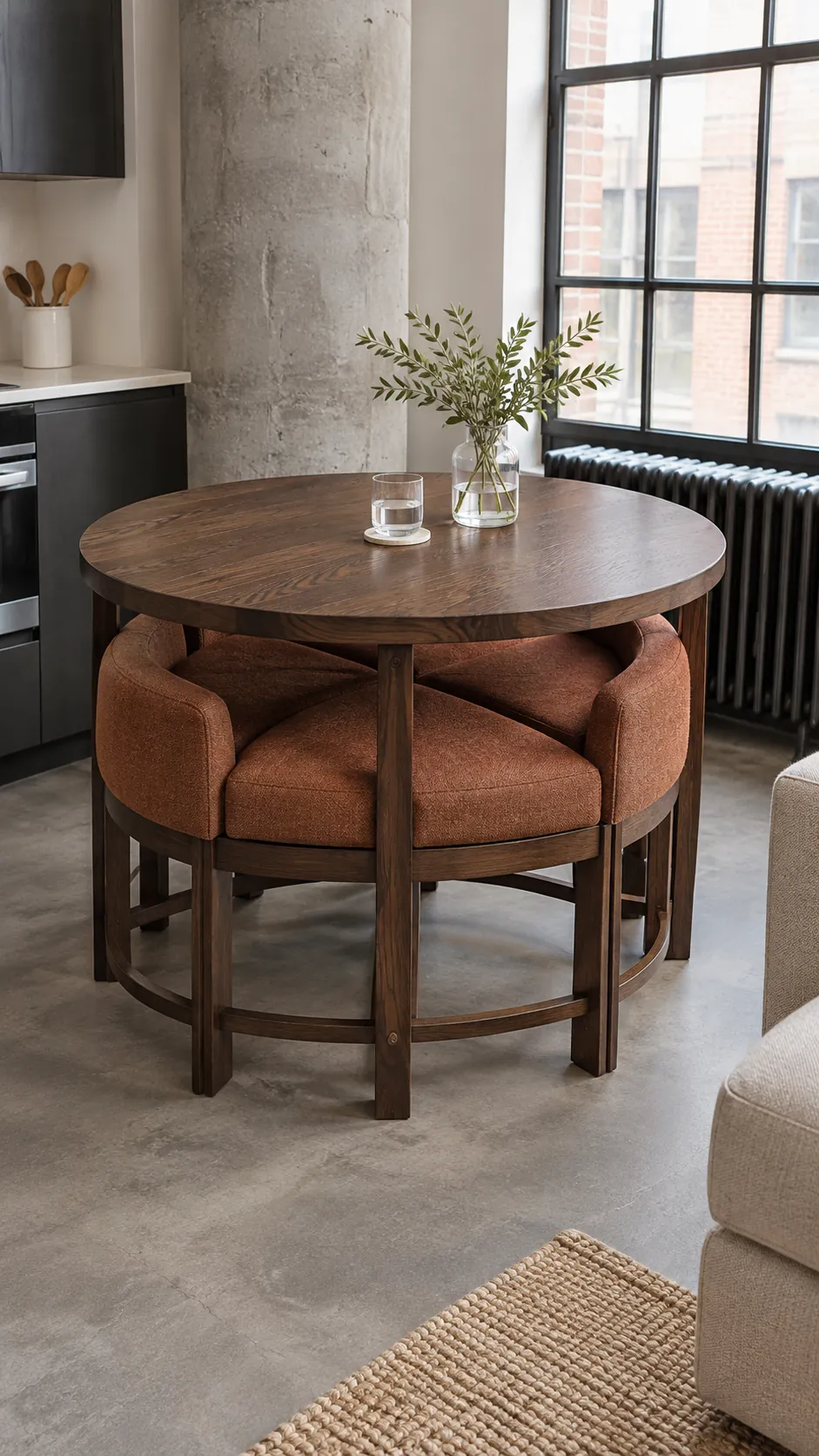
Wedge shaped seats can meet beneath a round top like sections of a circle. This creates an exceptionally tight stored package and a clear outer edge. Test the unusual seat shape for comfort and verify that each piece has a stable base when pulled away.
Kitchen Cart Table With Nesting Stools
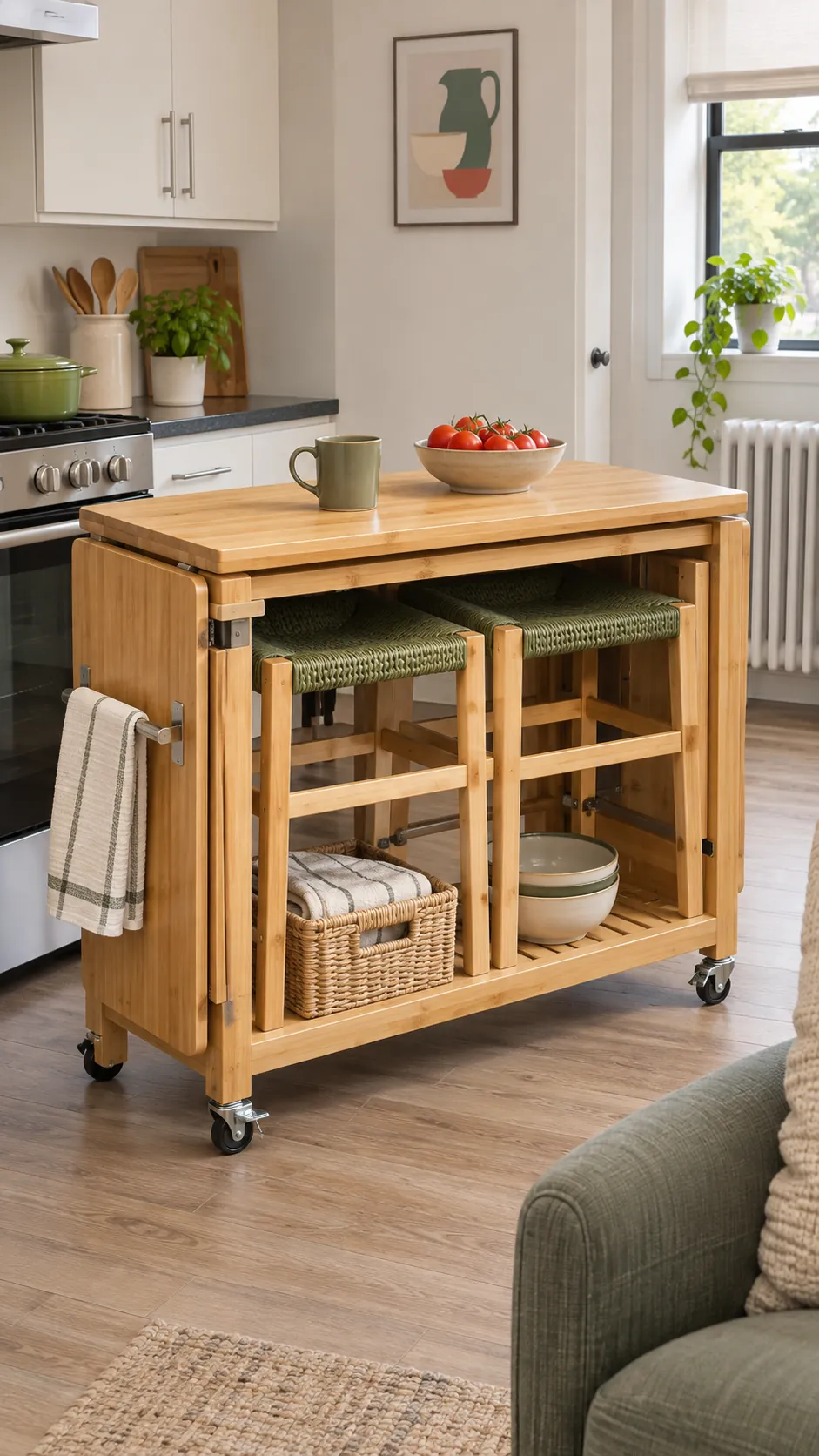
A lockable kitchen cart can provide a small dining top and store two stools between its lower rails. Shelves add value when the furniture must also hold everyday kitchen items. Check wheel locks, knee clearance, and whether stored objects interfere with the stools.
Butterfly Leaf Table With Armless Chairs
A butterfly leaf stores inside the table, while narrow armless chairs tuck beneath the closed top. The set stays compact for two and expands without a separate leaf closet. Examine the center mechanism and confirm that chair positions still clear the folded leaf housing.
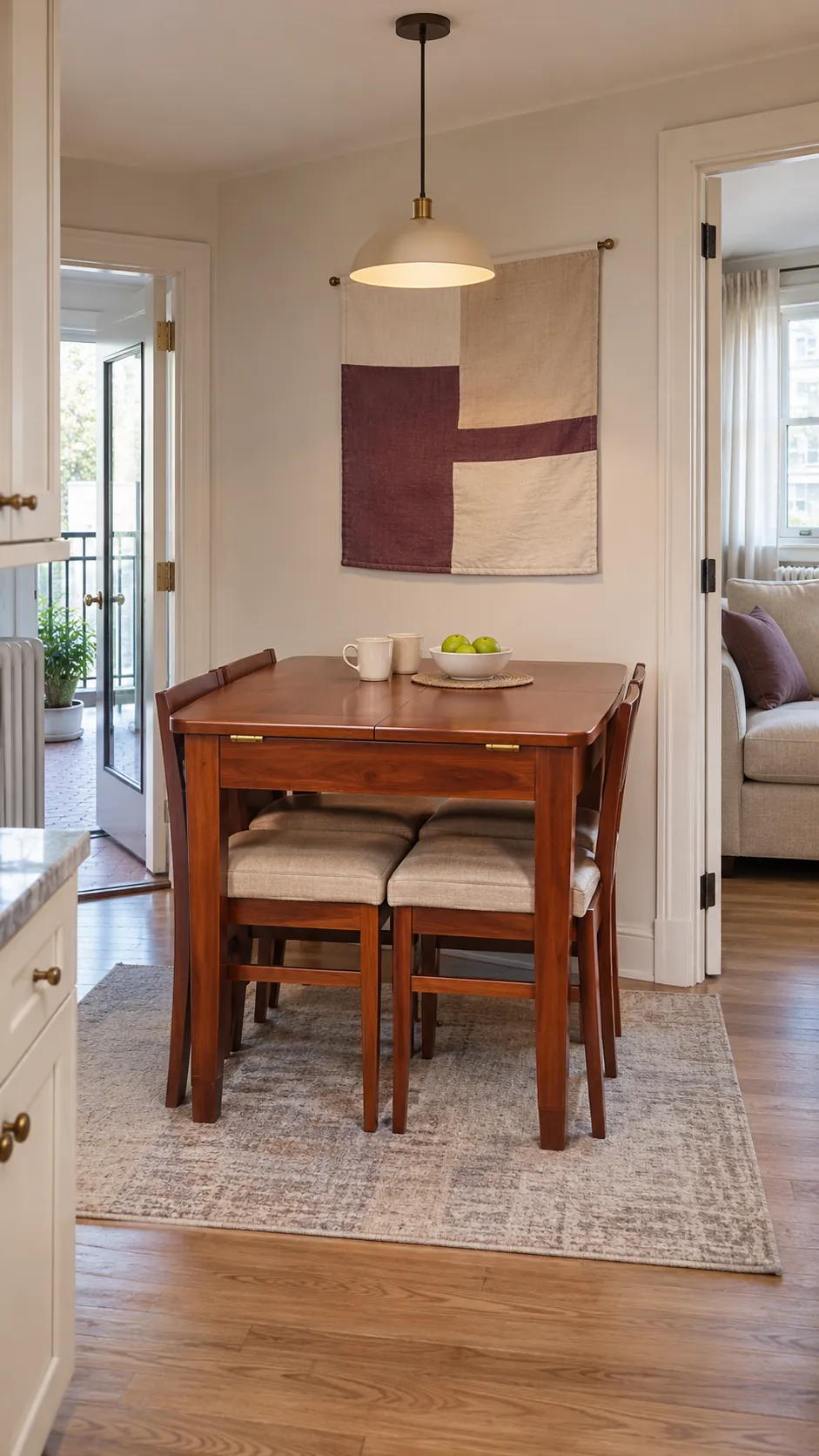
Gateleg Table With Stored Folding Chairs
A gateleg table can fold to console depth and carry matching folded chairs in a side compartment. This is useful when dining happens only a few times each week. Practice opening every gate and chair because a compact mechanism is not helpful when setup feels unstable or awkward.
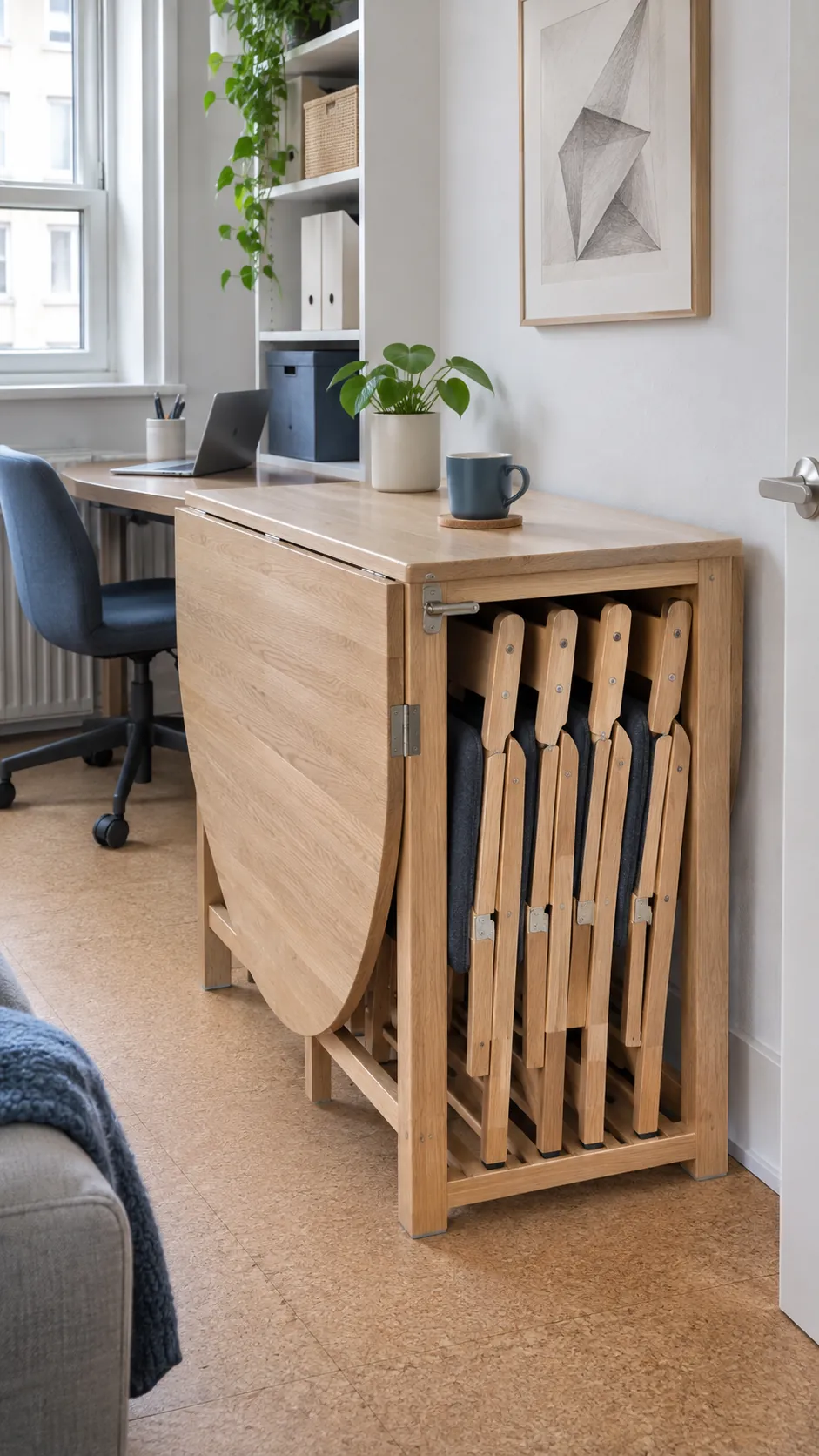
Barrel Table With Curved Back Stools
A barrel shaped base can hide curved back stools in shaped openings around its perimeter. The closed form looks tidy and can add storage at the center. Check ventilation, legroom, and stool weight because dense pieces may be harder to move than they appear.
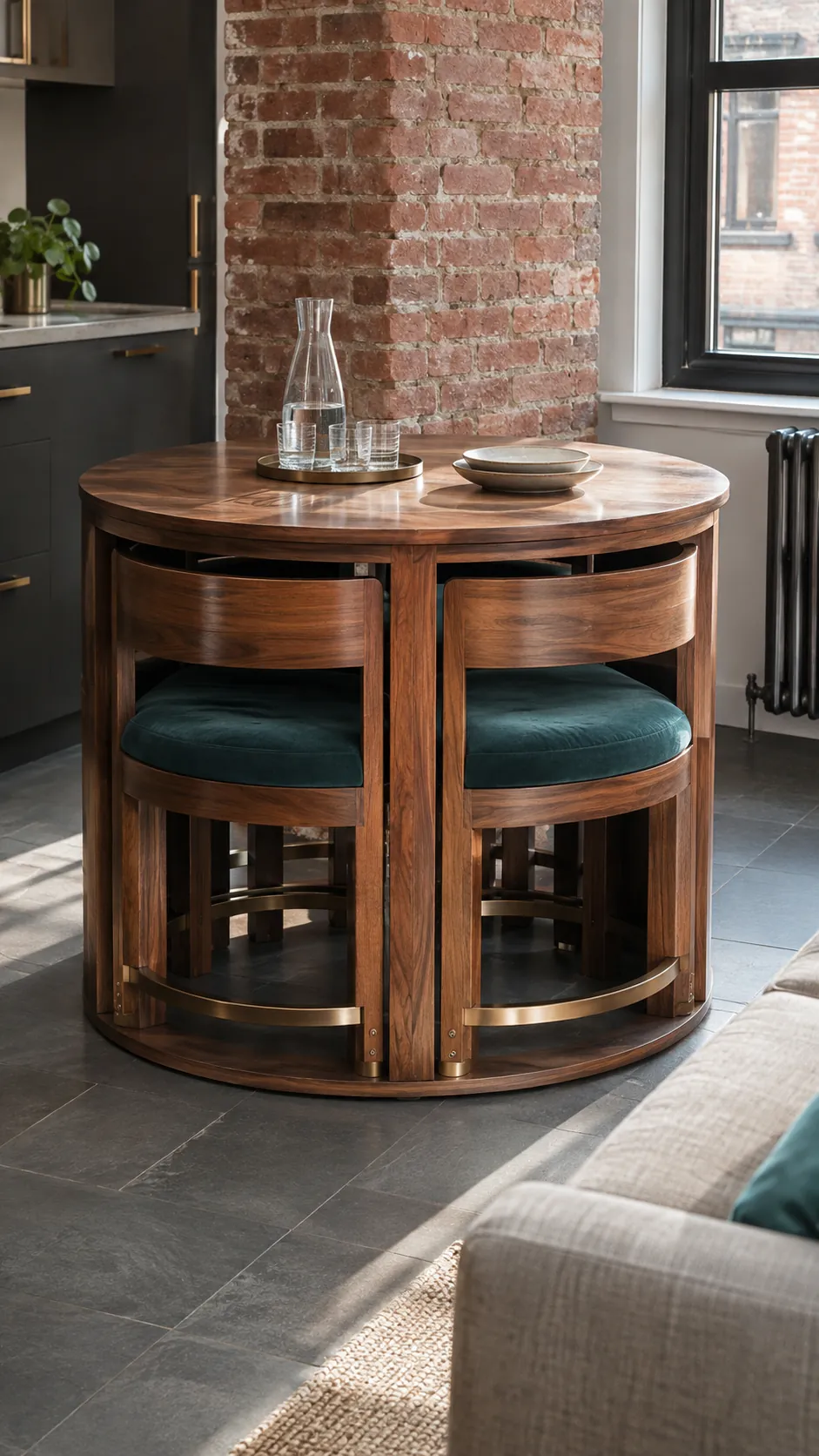
Wall Side Table With Stacking Chairs Below
A narrow wall side table can reserve one open bay for a short stack of chairs. The stored set uses the table footprint while the top serves as a desk or breakfast surface. Leave enough height to lift the top chair and protect the wall from repeated contact.
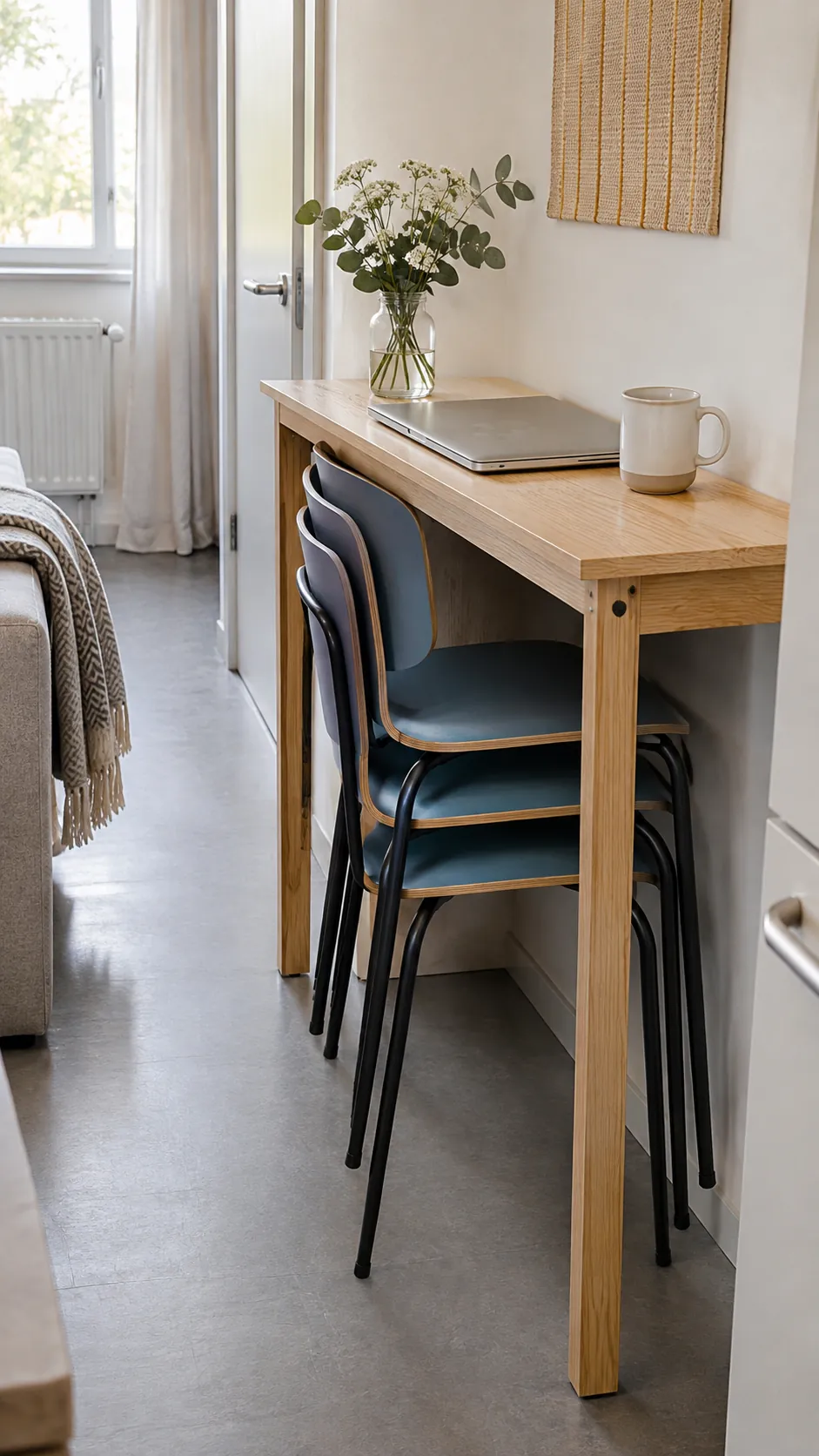
Two Person Table With Low Back Chairs
A two person table can accept chairs from opposite sides until their low backs nearly meet under the top. This is one of the simplest ways to keep a breakfast set inside a tiny outline. Confirm that the seats do not collide and that each chair still reaches a comfortable dining depth.