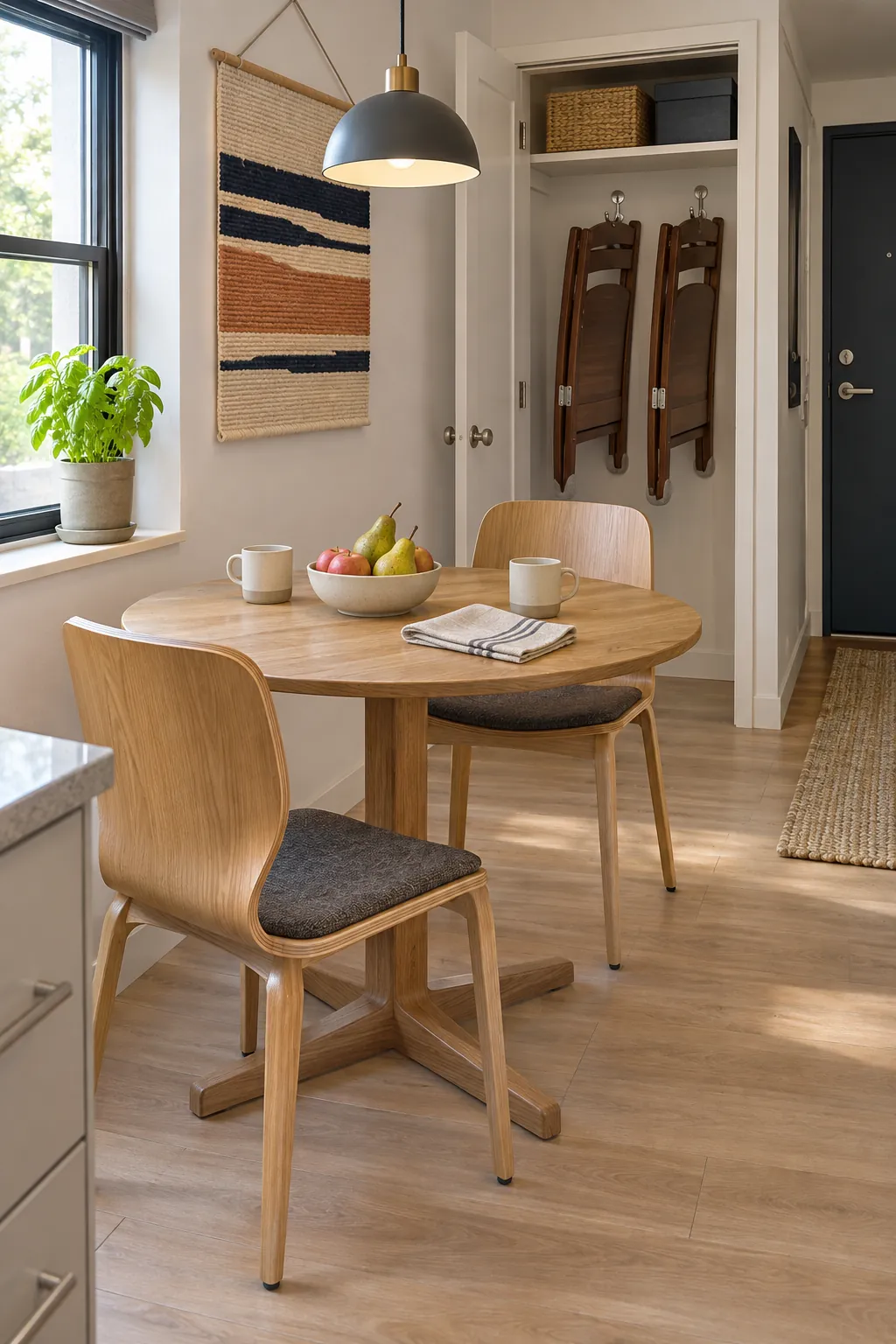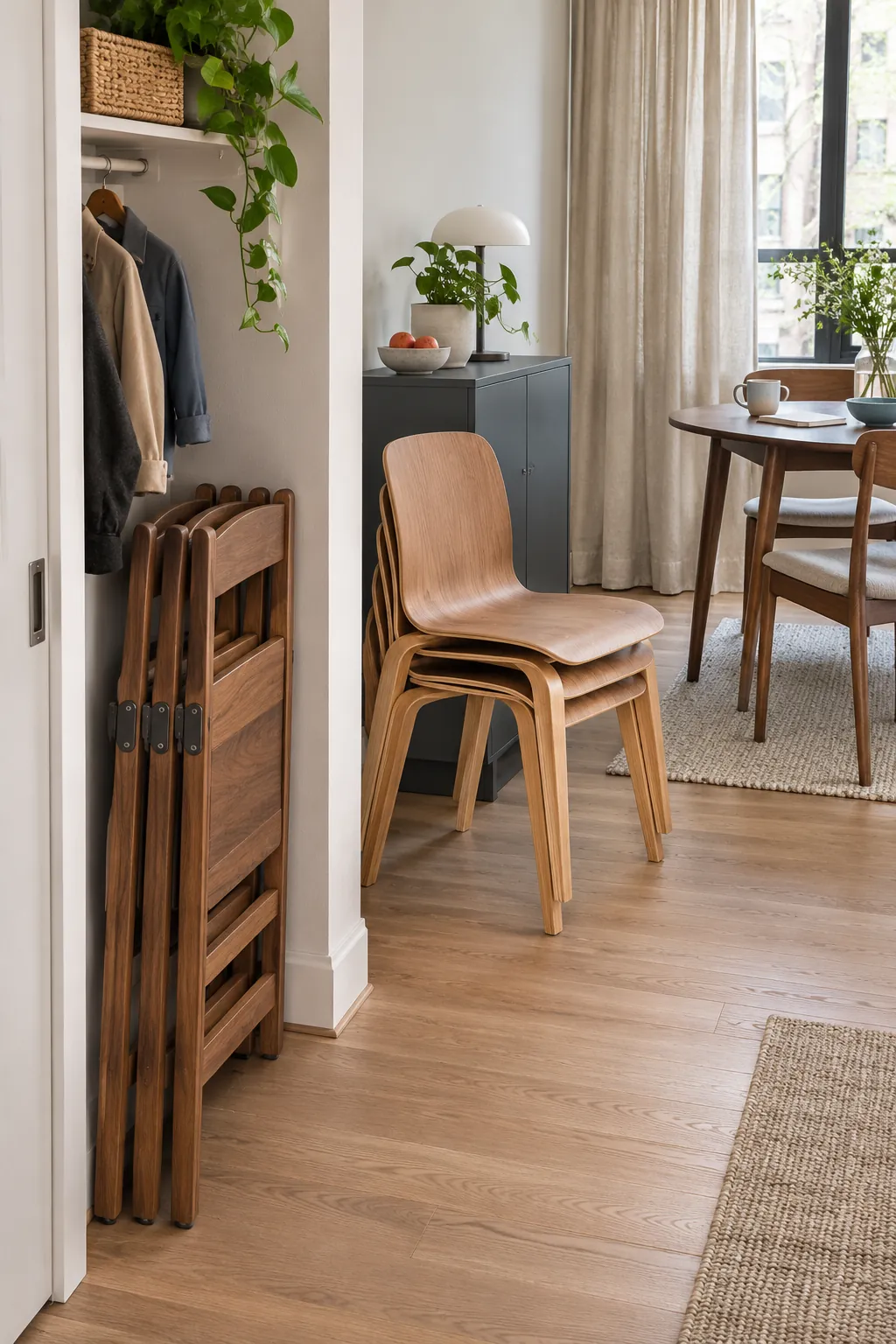
Extra chairs solve a hosting problem only when they are comfortable enough to use and easy enough to store. In a small apartment, the best type depends on the shape of the available storage, how often guests stay, and how much setup you will tolerate.
Measure the Storage Space First
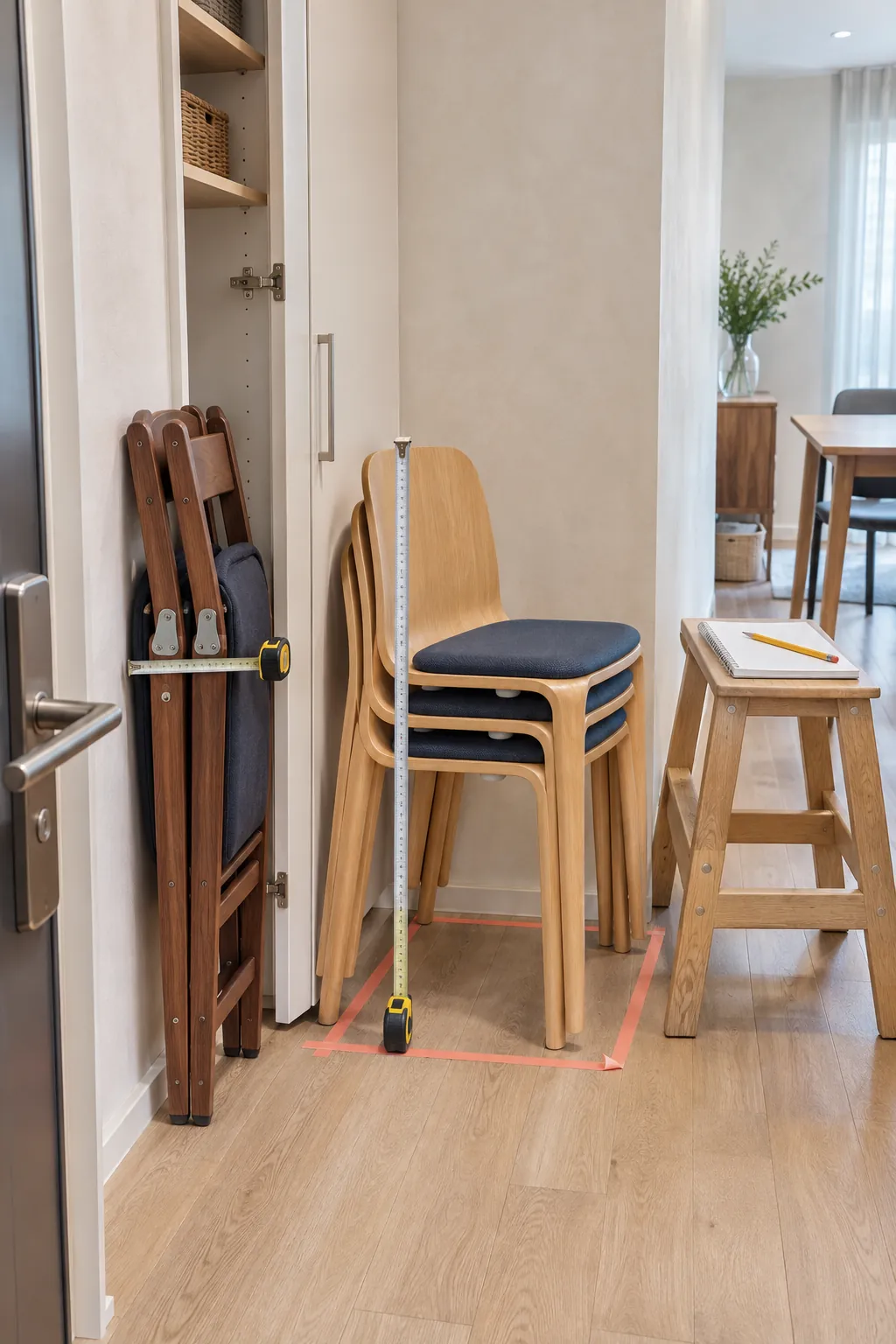
Folding chairs trade floor area for wall width and depth. Measure the folded thickness, overall height, and any handles or feet that protrude. Decide whether they will hang, slide beside a wardrobe, or stand in a closet.
Stackable chairs keep their full footprint but reduce the combined height compared with separate chairs. Measure the tested stack, not one chair multiplied by the count, because seats usually overlap. Include room to lift the top chair without hitting a shelf or ceiling.
Folding Chairs Win in Narrow Storage
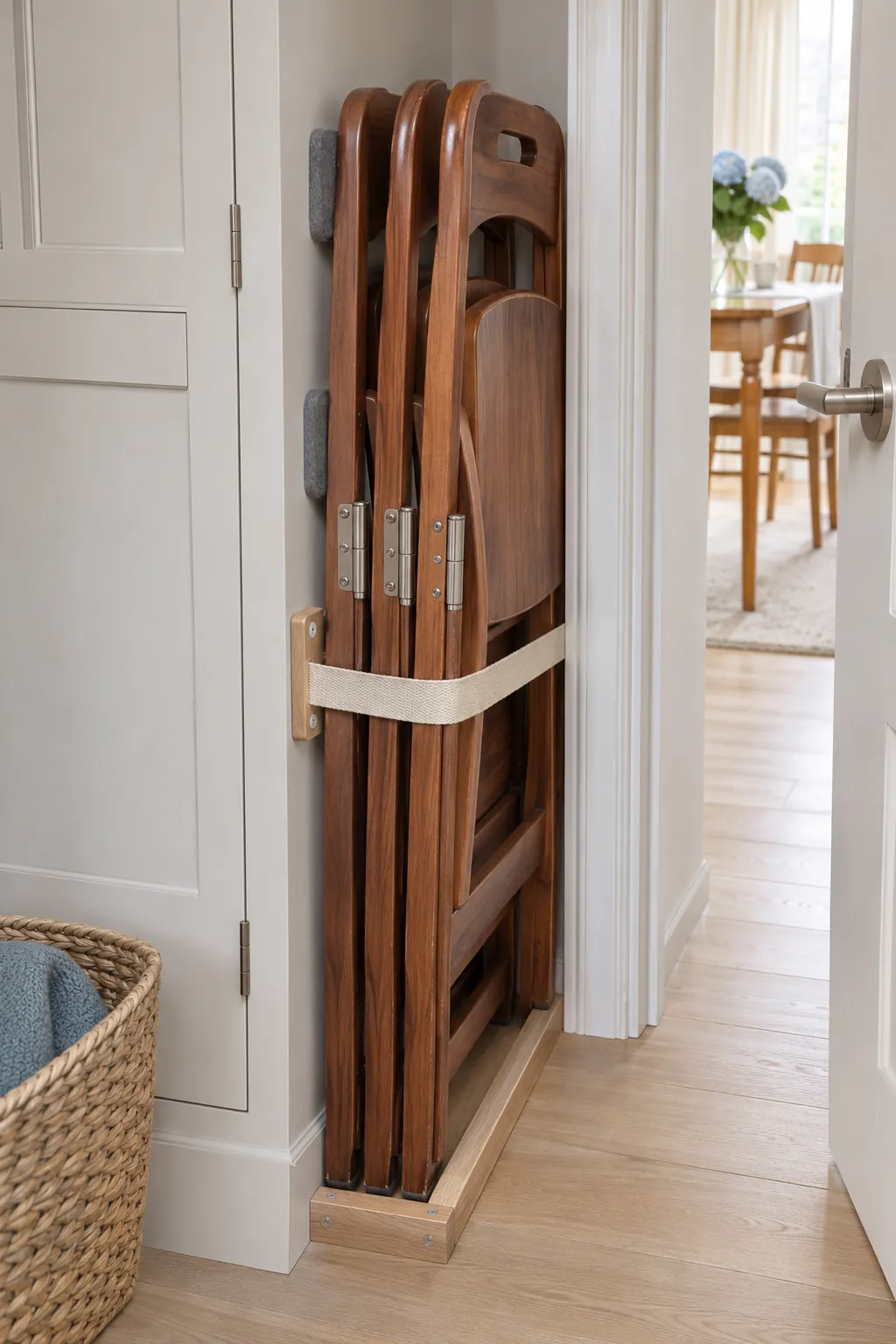
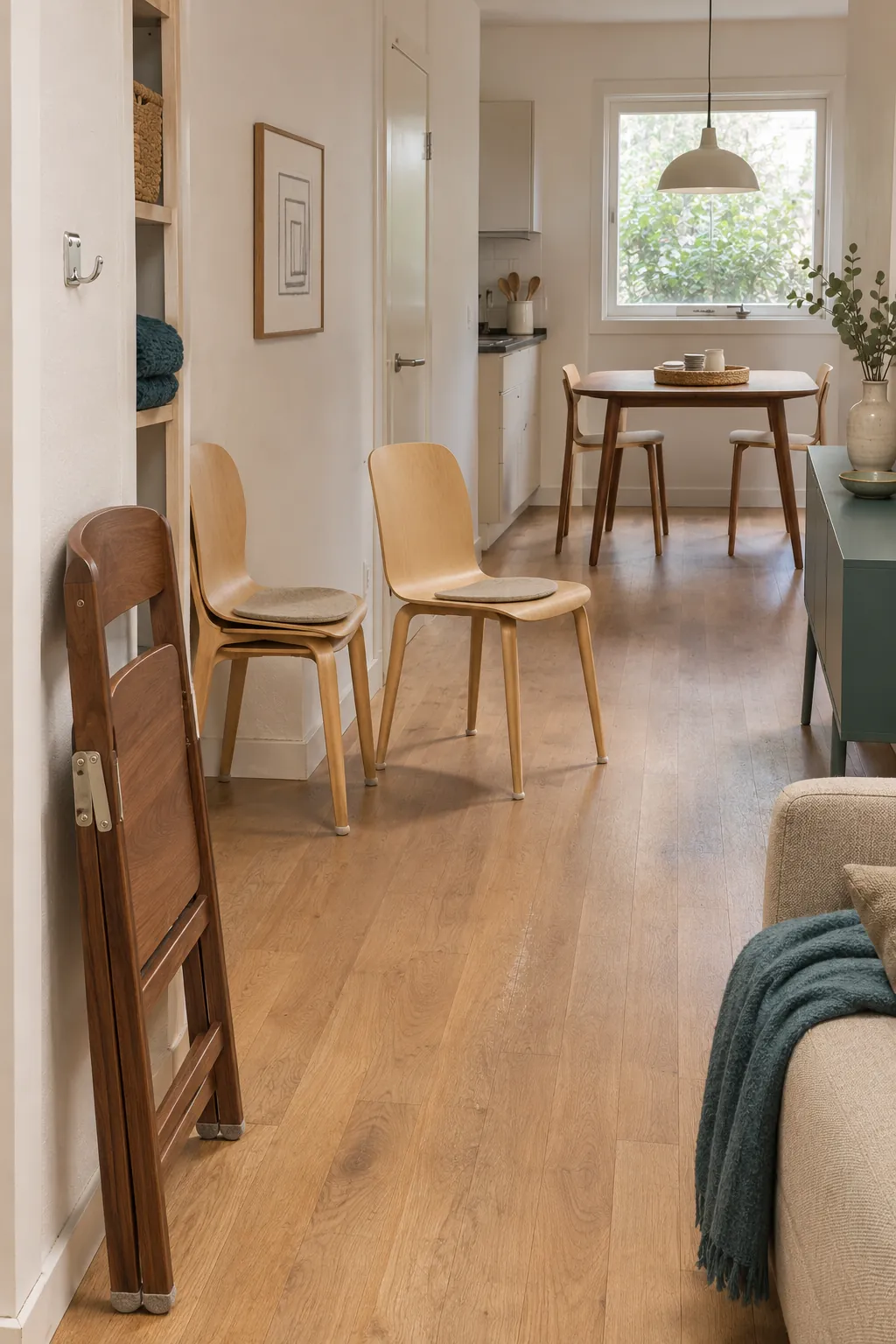
A slim folding chair can disappear behind a door, beneath a bed, or on sturdy wall hooks. It is useful when the apartment has almost no spare floor area. A pair can also travel easily to another room when the dining layout changes.
Check the folded package before buying several. Hinges, seat edges, and curved backs can create a thicker bundle than the product image suggests. Add a strap or wall stop so stored chairs do not slide, tip, or mark the wall.
Stackable Chairs Feel More Like Daily Furniture
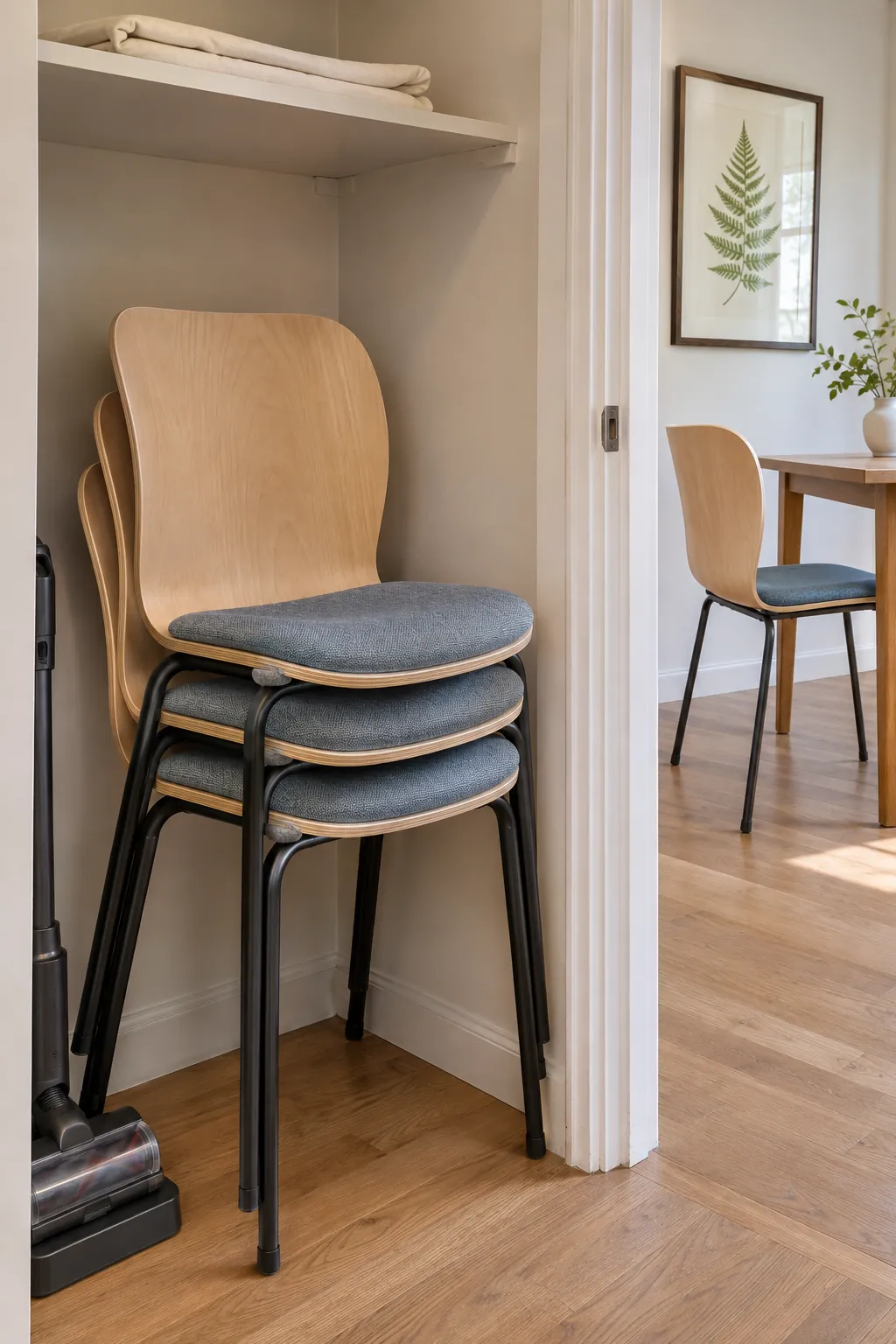
Stackable chairs can use a rigid seat and back without folding joints. Many feel closer to ordinary dining chairs and look natural when one or two remain at the table. They suit homes with a closet corner, utility room, or open wall where a short stack can stand.
The stack still occupies floor space and becomes harder to move as it grows. Confirm the manufacturer approved stacking count and inspect contact points that protect the finish. A stable stack should remain upright when one chair is removed.
Comfort Matters More as Visits Get Longer
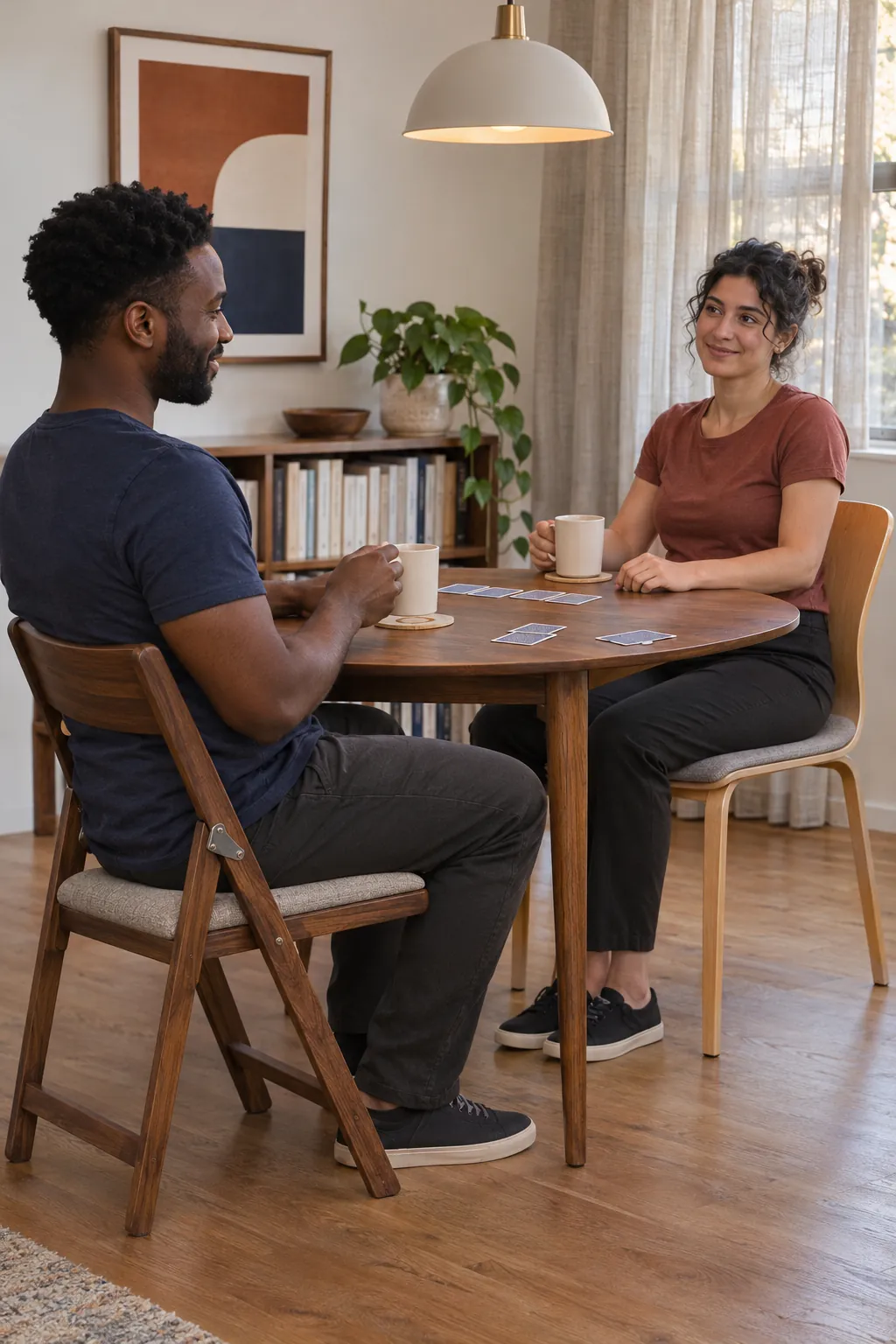
A chair for a quick meal can use a firmer seat than a chair for games or a long dinner. Sit for at least the length of a normal visit. Check seat depth, front edge pressure, back support, and stability when you shift position.
Folding designs need strong locks and hinges that stay away from fingers and clothing. Stackable designs need a shape that nests without making the seat too flat or narrow. A thin removable cushion can help, but it creates another item to store.
Count the Steps Between Storage and Table
The chair you can retrieve with one hand is more likely to be used. Folding chairs usually move individually and open quickly. Stackable chairs may require moving several chairs to reach the one you need.
Practice the full routine, including clearing the storage path, carrying the chair, setting it safely, and returning it after guests leave. Consider noise, weight, and wall contact. The most compact option on paper may be frustrating in the actual route.
Choose for the Storage You Actually Have
Choose folding chairs when storage is tall and narrow, guest seating is occasional, and minimal floor use matters most. Choose stackable chairs when comfort and everyday appearance matter more and a stable floor area is available for the stack.
Buy one chair first when possible. Test comfort, movement, storage, and table fit before ordering the rest. The right extra dining seating should be simple to retrieve, pleasant to sit on, and nearly invisible when the apartment returns to daily use.