
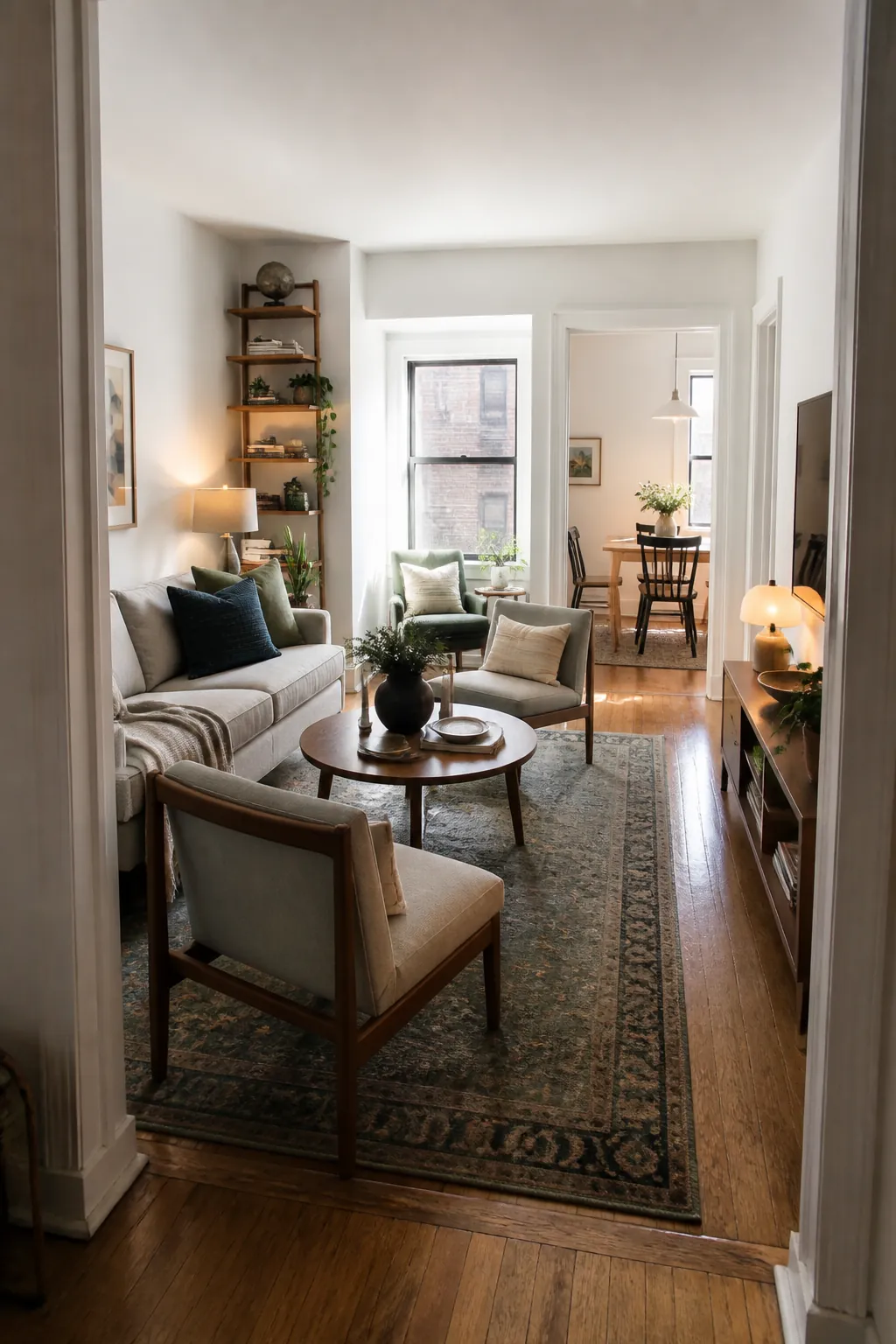
A small apartment living room has to carry more jobs than its square footage suggests. It may be a walkway, TV room, guest space, office, and dining overflow at once. The most useful decorating choices begin with circulation and scale, then add light, color, and personality without blocking how the room works.
Map the Main Walkway First
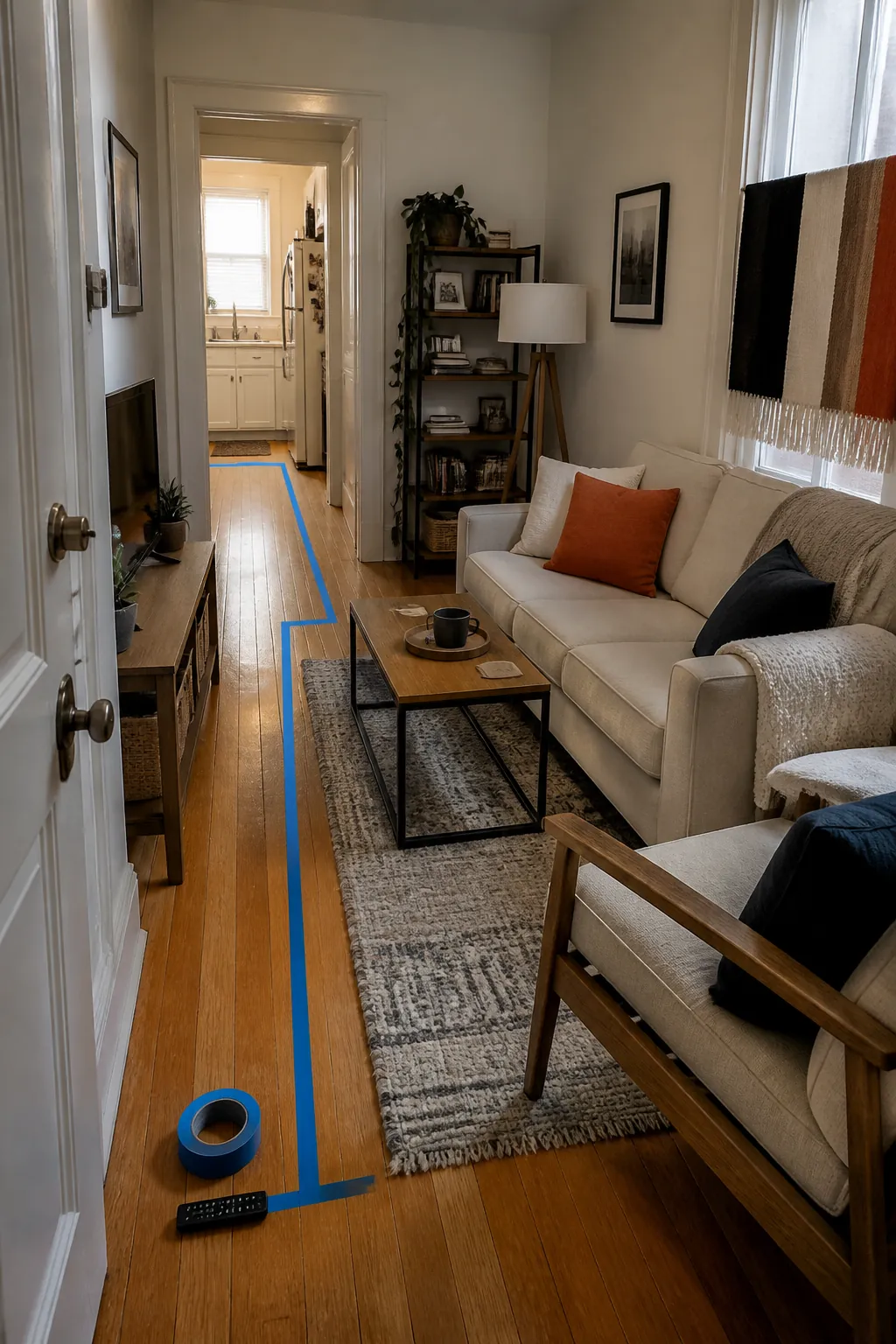
Before choosing a sofa wall or styling a shelf, trace the route from the entry to the kitchen, bedroom, and windows. Use painter’s tape to reserve that path and keep furniture corners outside it. People notice effortless movement before they notice decorative details.
A narrow apartment living room often functions as a hallway, so every chair must respect door swings and daily traffic. A clear route makes the room feel larger because your body no longer anticipates obstacles.
Choose a Sofa With the Right Depth
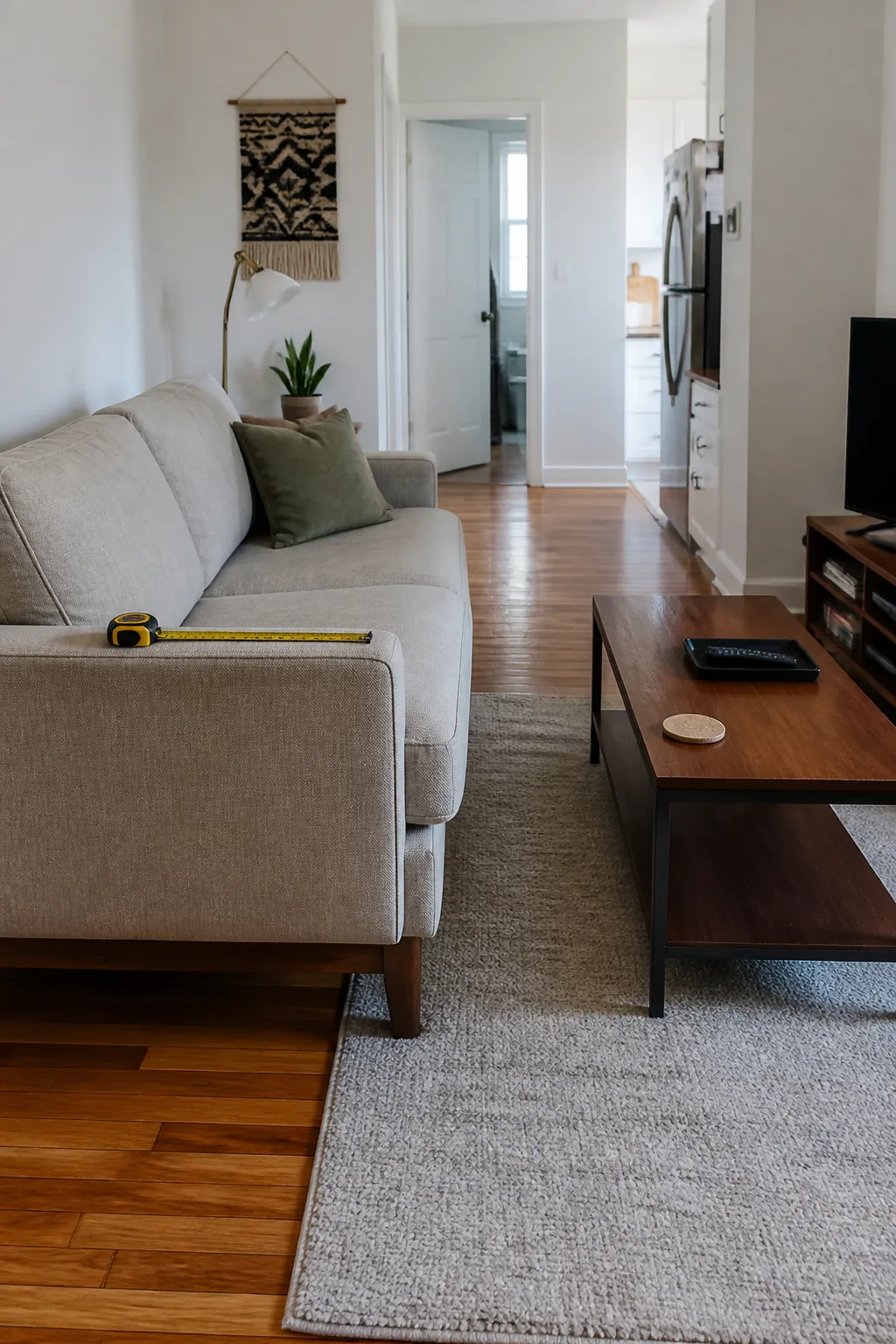
Overall width is only half the sofa equation. A deep lounge sofa can consume the center of a small room even when it technically fits the wall. Compare seat depth, arm thickness, back angle, and delivery clearance before buying.
Slim arms and raised legs usually preserve more usable seating per inch, but comfort still matters. Mark the exact footprint on the floor and live around it for a day. The right sofa is the one that supports your posture without stealing the walkway.
Float One Piece Away From the Wall
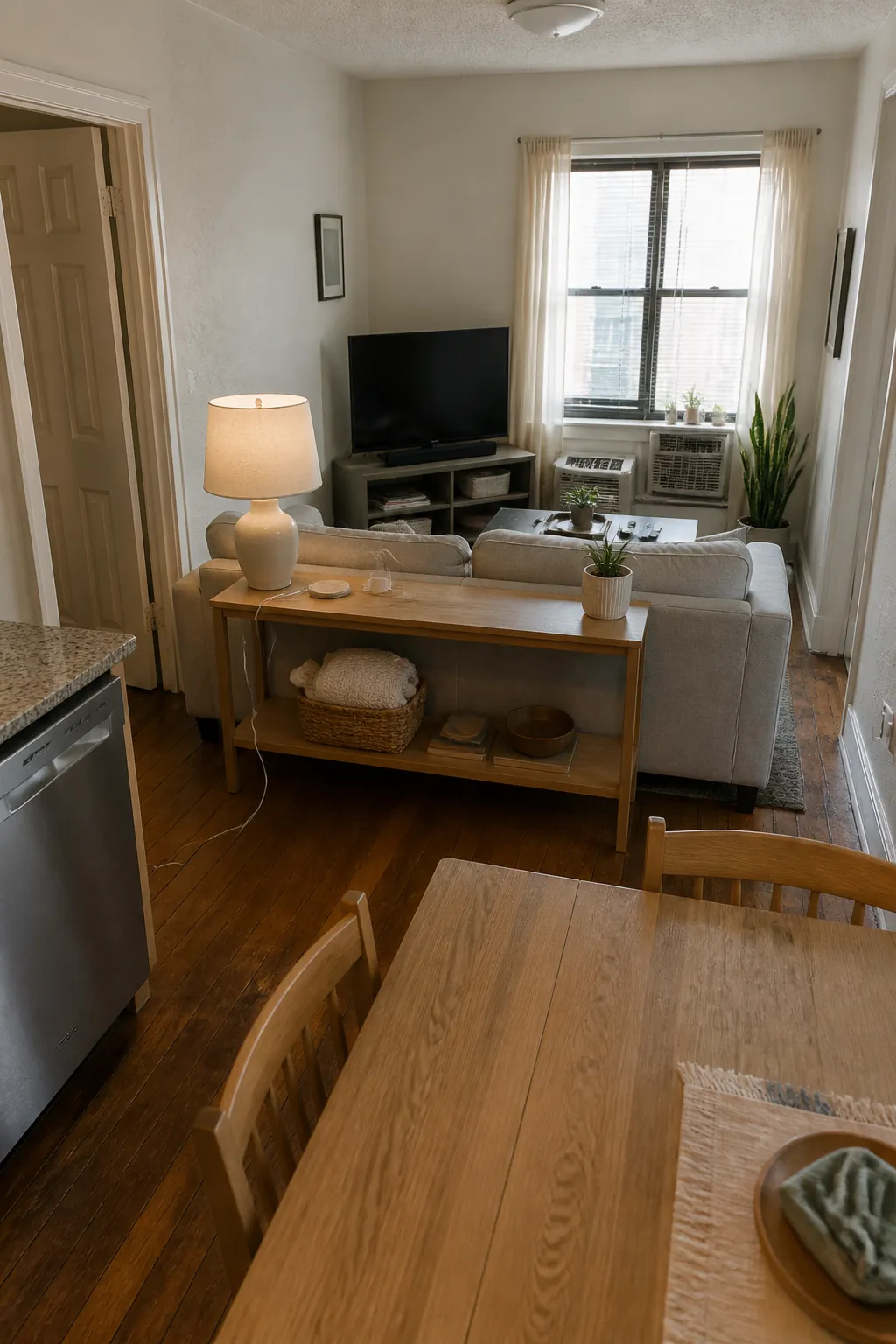
Pushing everything to the perimeter can leave a useless void in the middle and weaken conversation. Try floating the sofa or a single chair just far enough from the wall to define the seating zone while maintaining the main route.
A narrow console behind a floated sofa can hold a lamp, charging point, and keys without demanding another wall. Check that the back looks finished and that cords are secured. Floating one piece creates structure; floating every piece creates congestion.
Angle the TV Away From Window Glare
A television should not automatically occupy the longest wall. Observe reflections at the times you watch most, then test the screen on a short wall or a low swivel stand. The goal is comfortable sightlines without sacrificing daylight.
Choose a console only slightly wider than the screen and hide excess electronics in ventilated storage. If wall mounting is allowed, verify structure and cable routing. A smaller, correctly placed screen often feels better than a large screen fighting the room.
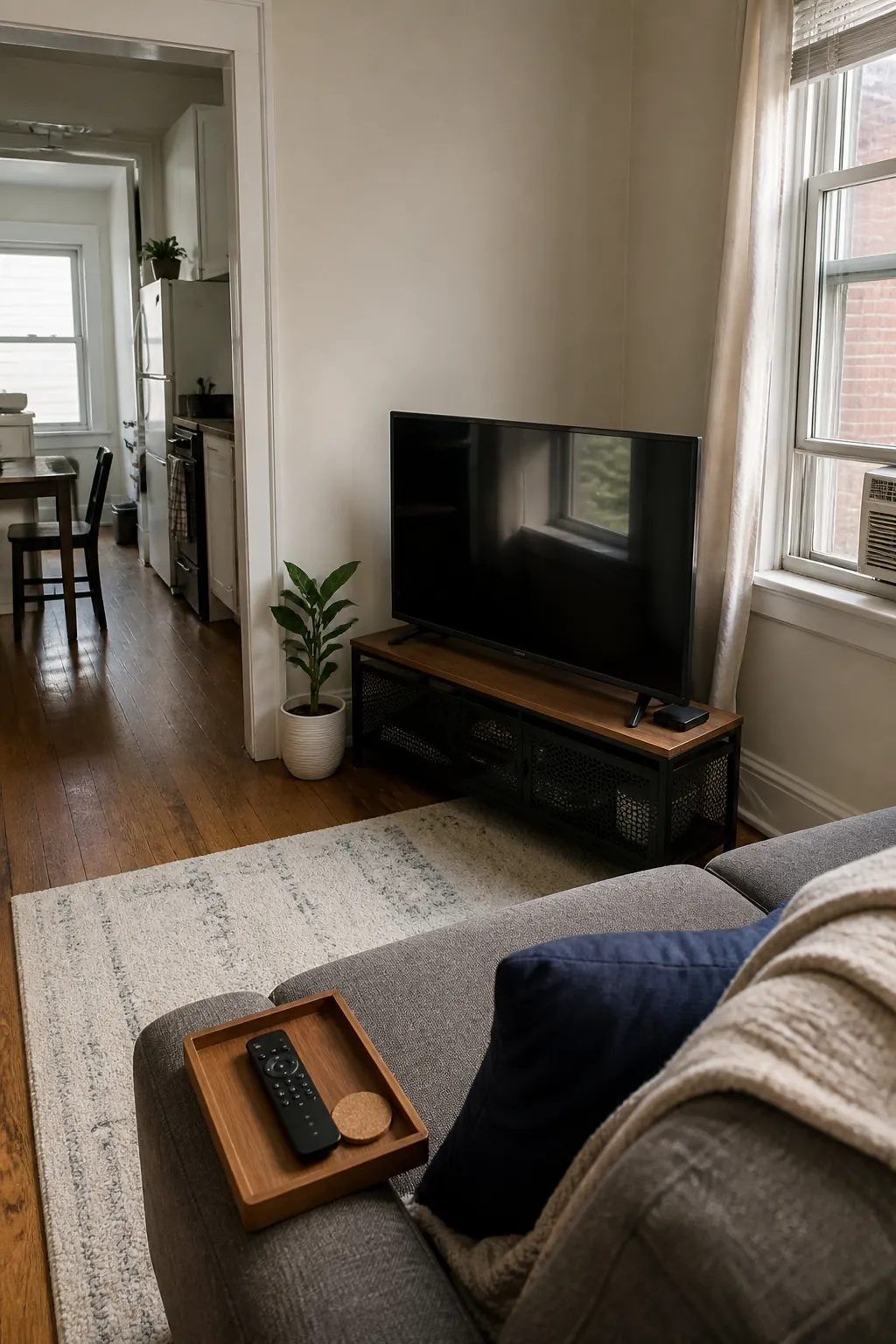
Use a Round Coffee Table
Sharp corners become irritating when circulation squeezes between a sofa, door, and media unit. A round or softly oval coffee table lets people move diagonally and can make guest seating easier to pull close.
Select a diameter that leaves reachable space without filling the rug. A pedestal base or three stable legs may offer more foot room than a bulky lower shelf. Curves are useful when the room asks people to change direction.
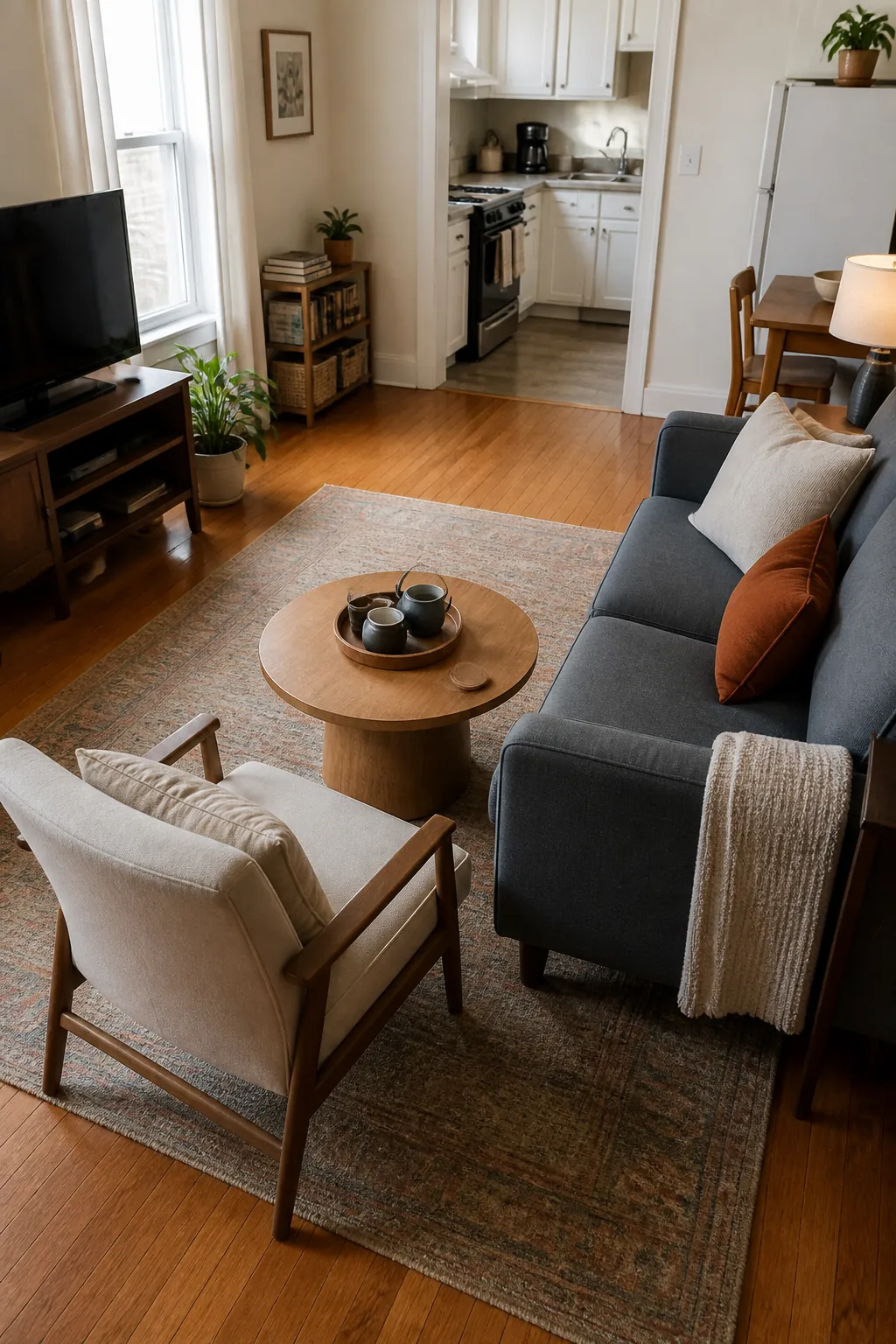
Trade a Second Sofa for Two Chairs
Two sofas can overwhelm a compact living room and lock the layout into one arrangement. A pair of lightweight chairs gives guests individual seats and can move toward the table, window, or dining zone as needed.
The chairs do not need to match. Repeat one color, wood tone, or cushion fabric to connect them. Test their pulled-out position as well as their resting position. Flexible guest seating earns space by adapting after the guests leave.
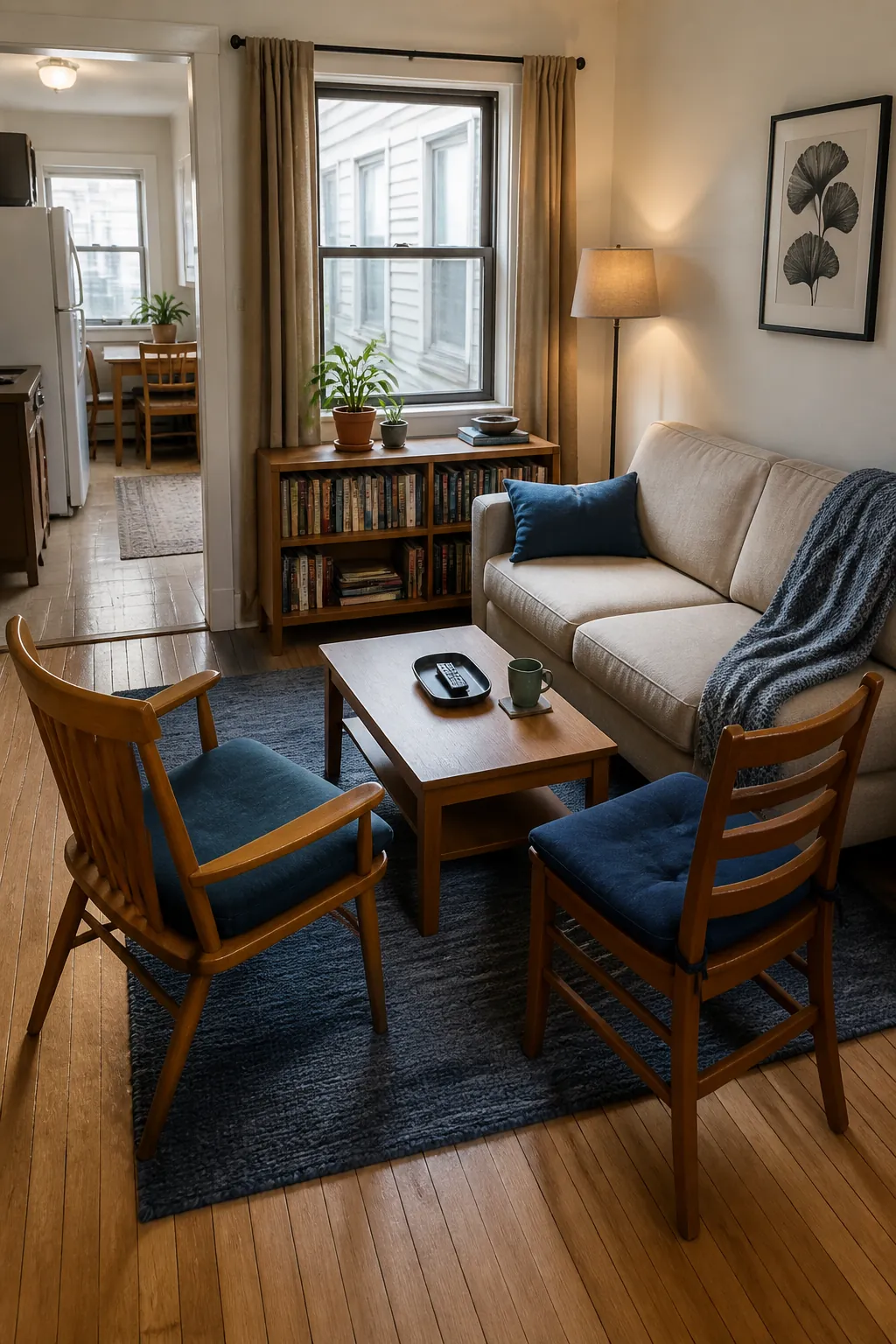
Let the Rug Define the Conversation
In an open apartment, a rug can mark the living zone without a divider that blocks light. Choose a size that reaches beneath the front legs of the primary seating and follows the conversation group rather than the room’s outer walls.
Keep the rug edge out of the main trip path and use an appropriate pad. A simple, low-contrast pattern handles mismatched furniture without becoming visual noise. The rug should explain where the living room begins and ends.
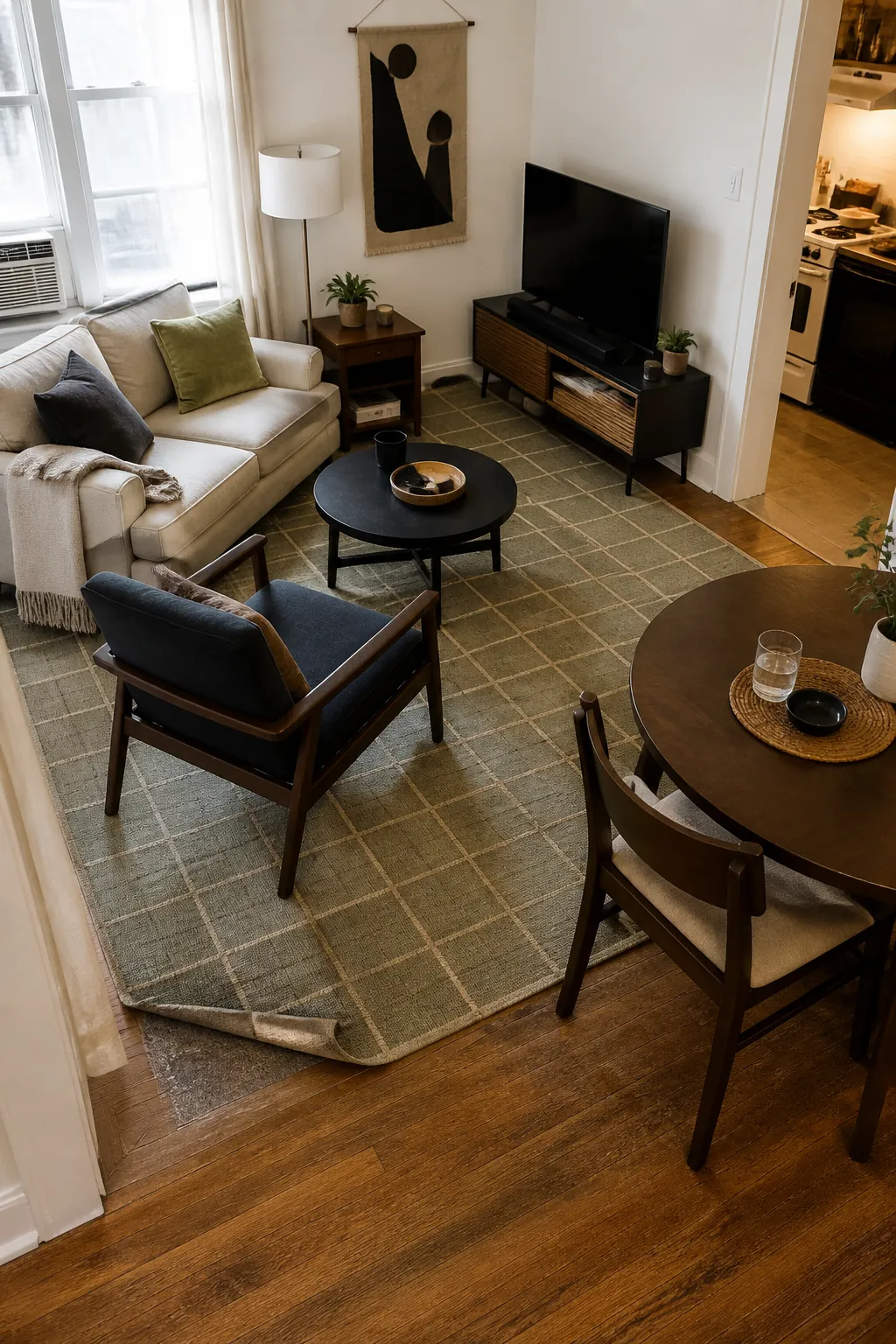
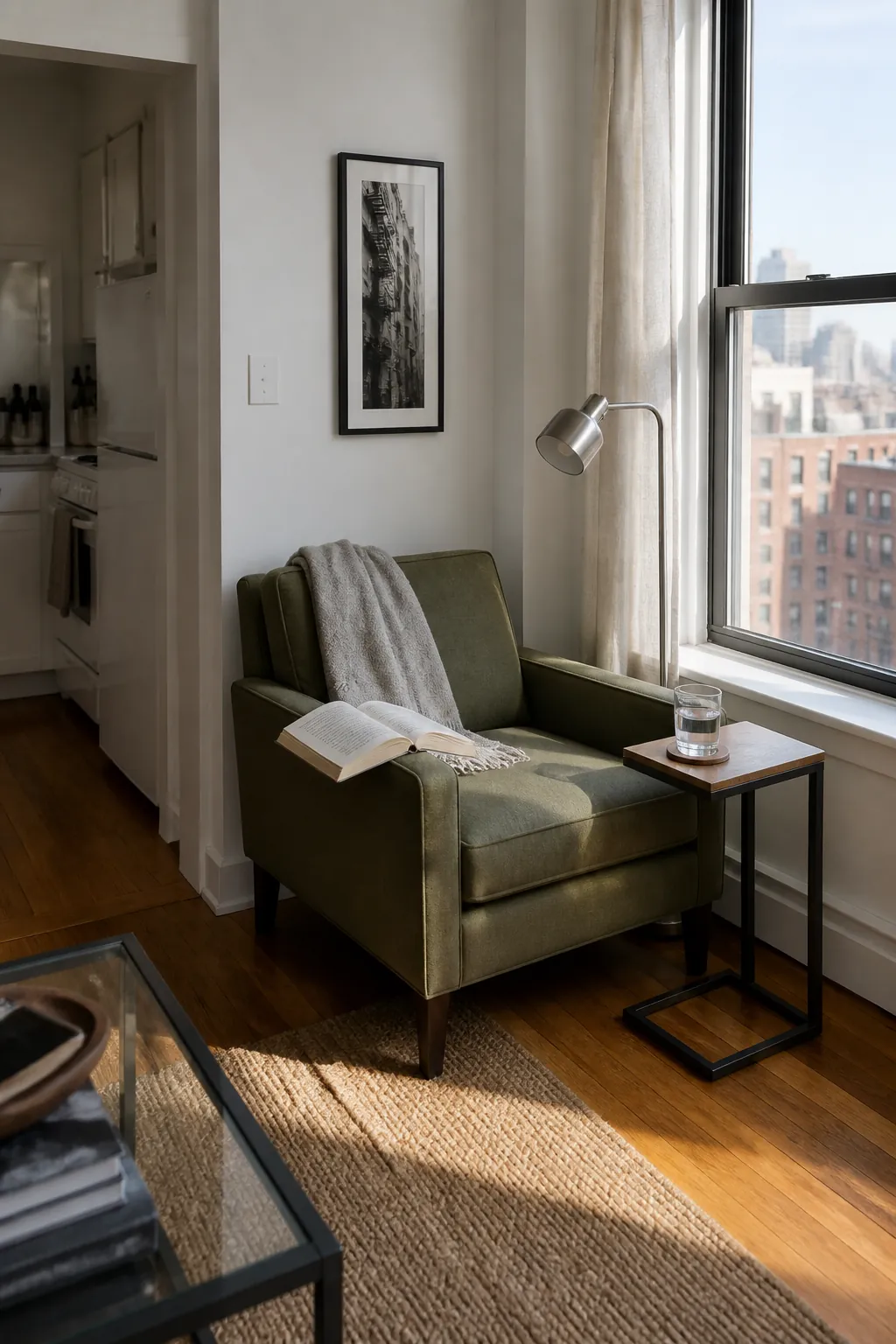
Build a Window-Side Reading Seat
The brightest corner deserves a useful activity. Place a compact chair beside the window with a lamp for evenings and a small surface for a cup. Preserve curtain movement, radiator clearance, and access to the latch.
Avoid filling the window with tall storage or too many plants. One comfortable seat creates a destination and spreads activity beyond the sofa. A reading corner makes a small living room feel like it contains more than one experience.
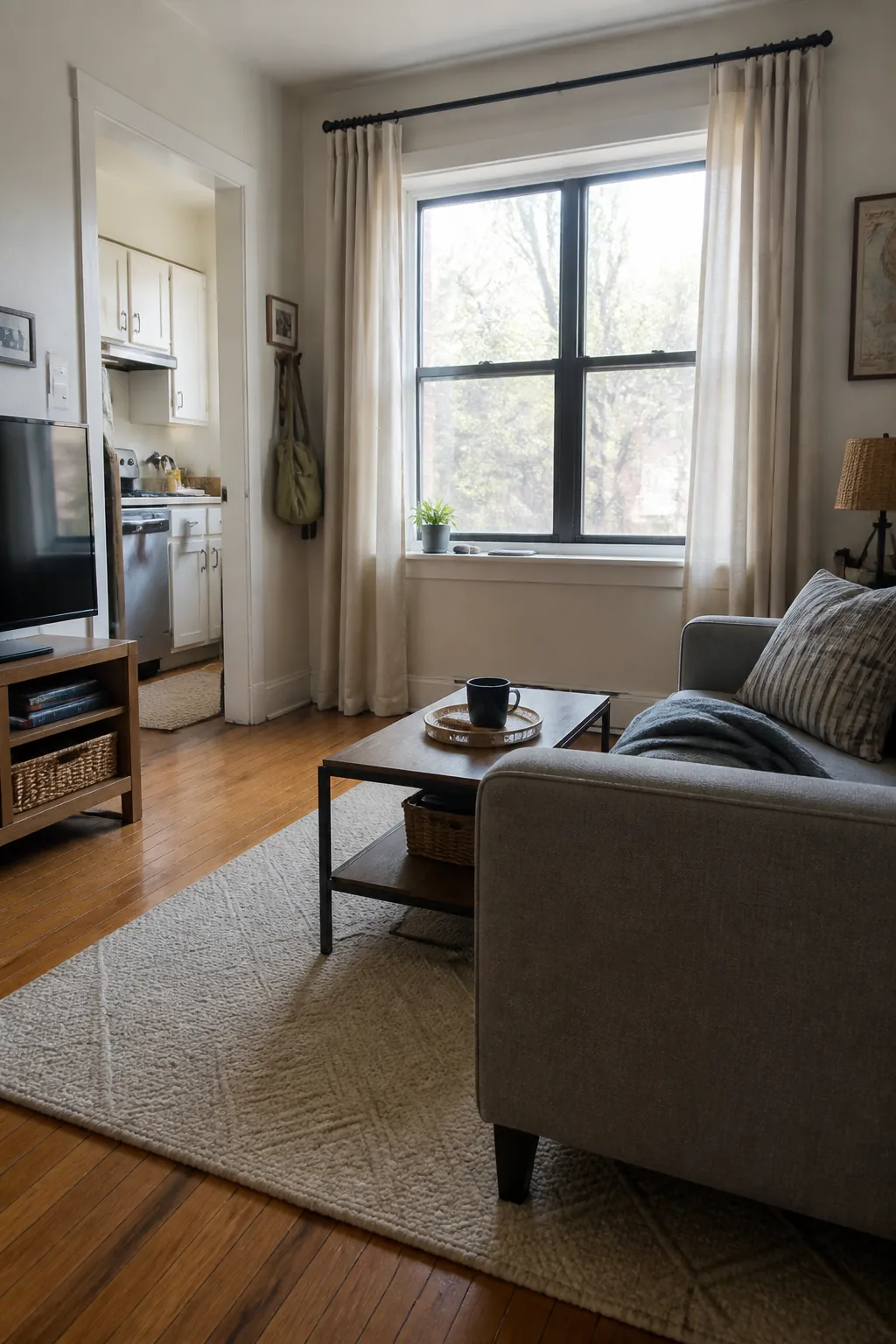
Mount Curtains Beyond the Glass
Curtains that cover part of a small window reduce both light and apparent width. Extend a renter-approved rod beyond the frame so panels stack mostly against the wall, and hang them close to the ceiling for a longer vertical line.
Use full-length fabric with enough body to fall cleanly, then account for radiators and baseboard heaters. Exposing more glass is a practical small living room idea, not merely a styling trick.
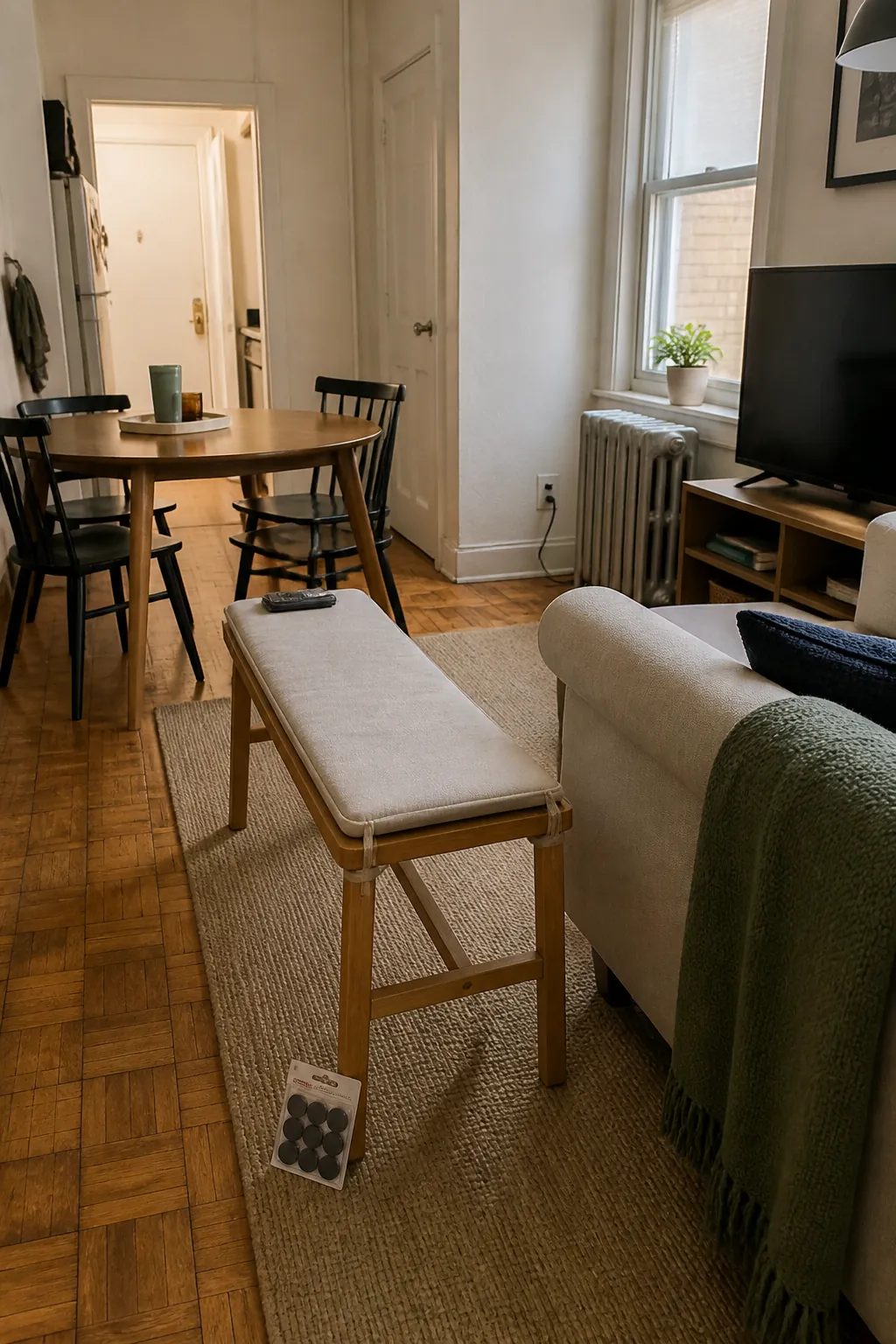
Turn the Dining Bench Into Extra Seating
When a living room shares space with dining, a backless bench can serve the table most days and move into the conversation area for guests. Choose a weight one person can safely shift and add a washable pad only if needed.
Store the bench parallel to the table so it does not narrow the walkway. Felt pads protect the floor and make repositioning quieter. Furniture that crosses zones reduces the need to furnish each zone twice.
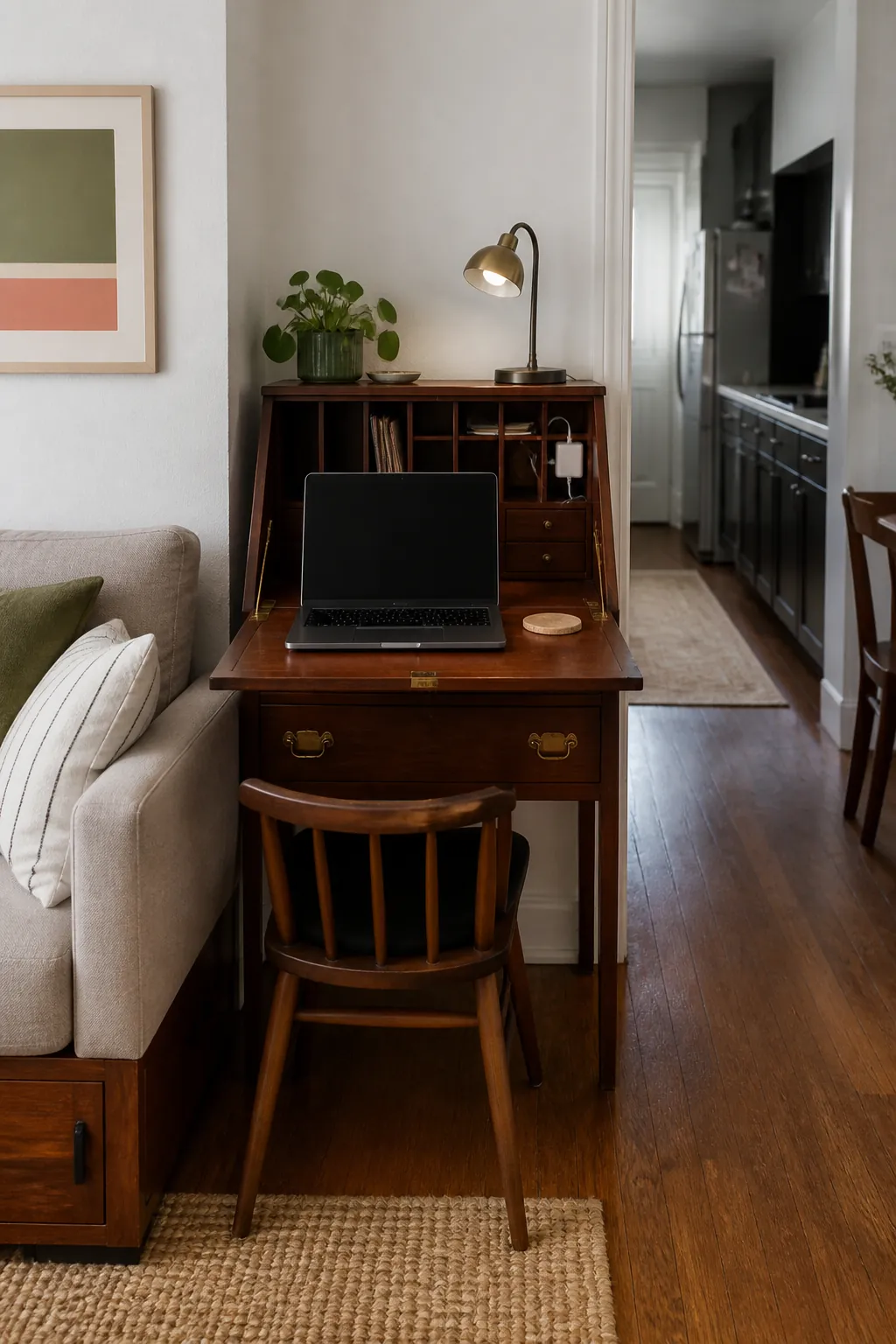
Hide Work Gear in a Closing Desk
A living-room office feels calmer when work can visibly end. A secretary desk, wall cabinet, or shallow console with a closing front stores the laptop, charger, and notebook without turning the whole room into an office.
Check knee room, screen height, ventilation, and outlet access before committing. Keep only current work inside so the mechanism closes easily. The most valuable feature is not a tiny desk; it is a tiny desk that disappears after hours.
Use Wall Storage Above Eye Level Carefully
High shelves can hold infrequently used books or boxes while leaving the floor open, but only when they are securely installed and visually restrained. Renters should obtain approval and use suitable anchors or choose a freestanding alternative.
Keep heavy objects low, avoid shelves above heads, and repeat a few containers instead of lining the wall with clutter. Vertical storage works when it relieves the room rather than looming over it.
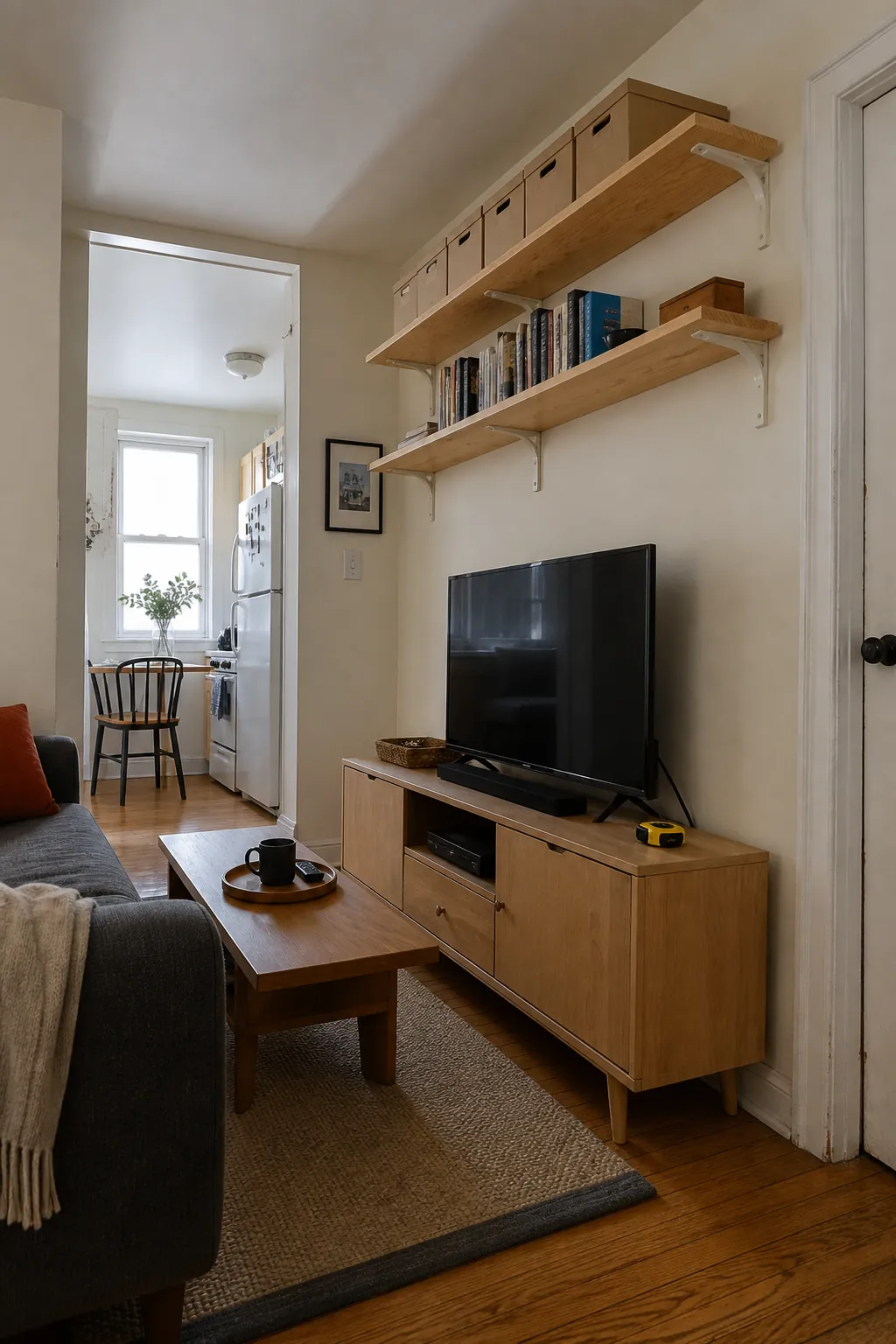
Create One Strong Focal Point
Several competing features can make a compact room restless. Choose the window, a specific textile, a fireplace, or one artwork as the visual destination, then lower the contrast of surrounding objects.
A single focal point does not mean leaving the room blank. Repeat one of its colors in a cushion or small object and keep neighboring wall space quiet. Attention needs hierarchy even when square footage is limited.
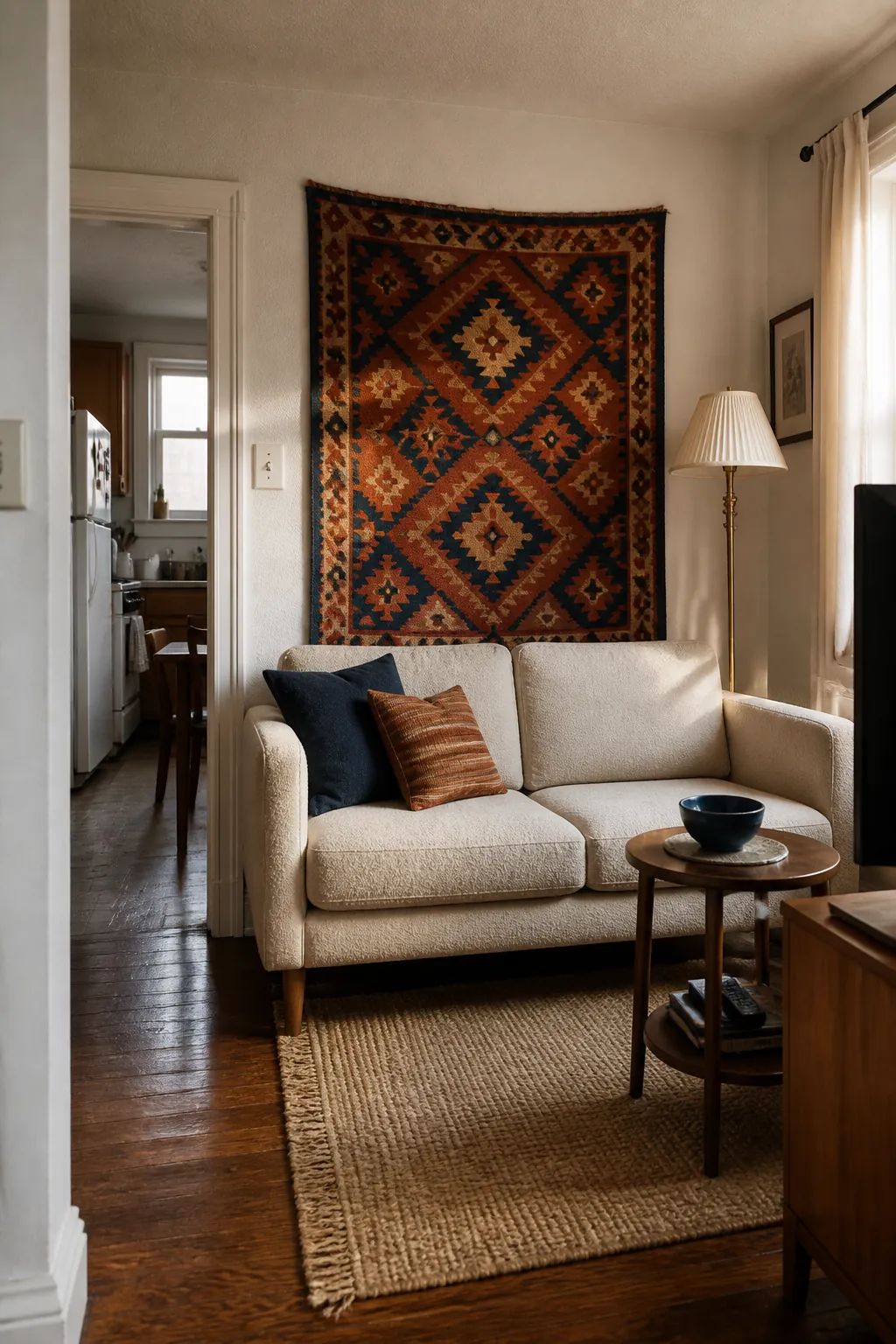
Layer Three Small Light Sources
A ceiling fixture alone creates hard contrast and leaves corners visually disconnected. Combine a reading lamp, a shaded table lamp, and a low accent light, placing each near an actual activity rather than scattering lamps for symmetry.
Match bulb color temperatures and route cords along safe edges with removable clips. Dimmers or smart plugs can simplify the evening routine. Multiple low sources make the living room feel deeper without adding furniture.
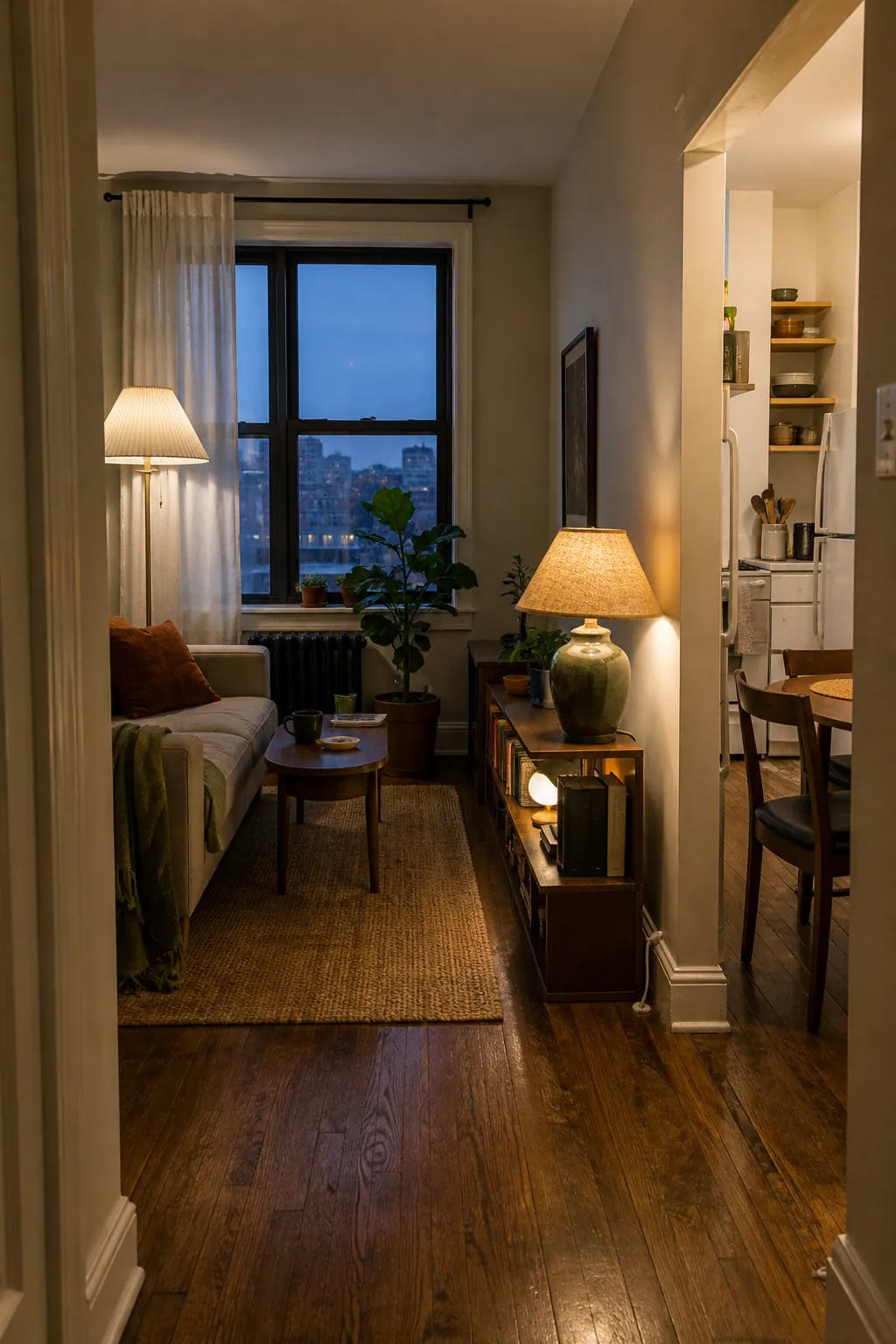
Repeat a Color in Three Places
A small apartment living room becomes cohesive when one accent appears at different heights and scales. Pull a color from the rug, then repeat it in a cushion and one modest object across the room.
Keep the rest of the palette quieter and resist buying a full matching set. Natural variation makes repetition feel collected. Three echoes are enough to create connection without turning the room into a theme.
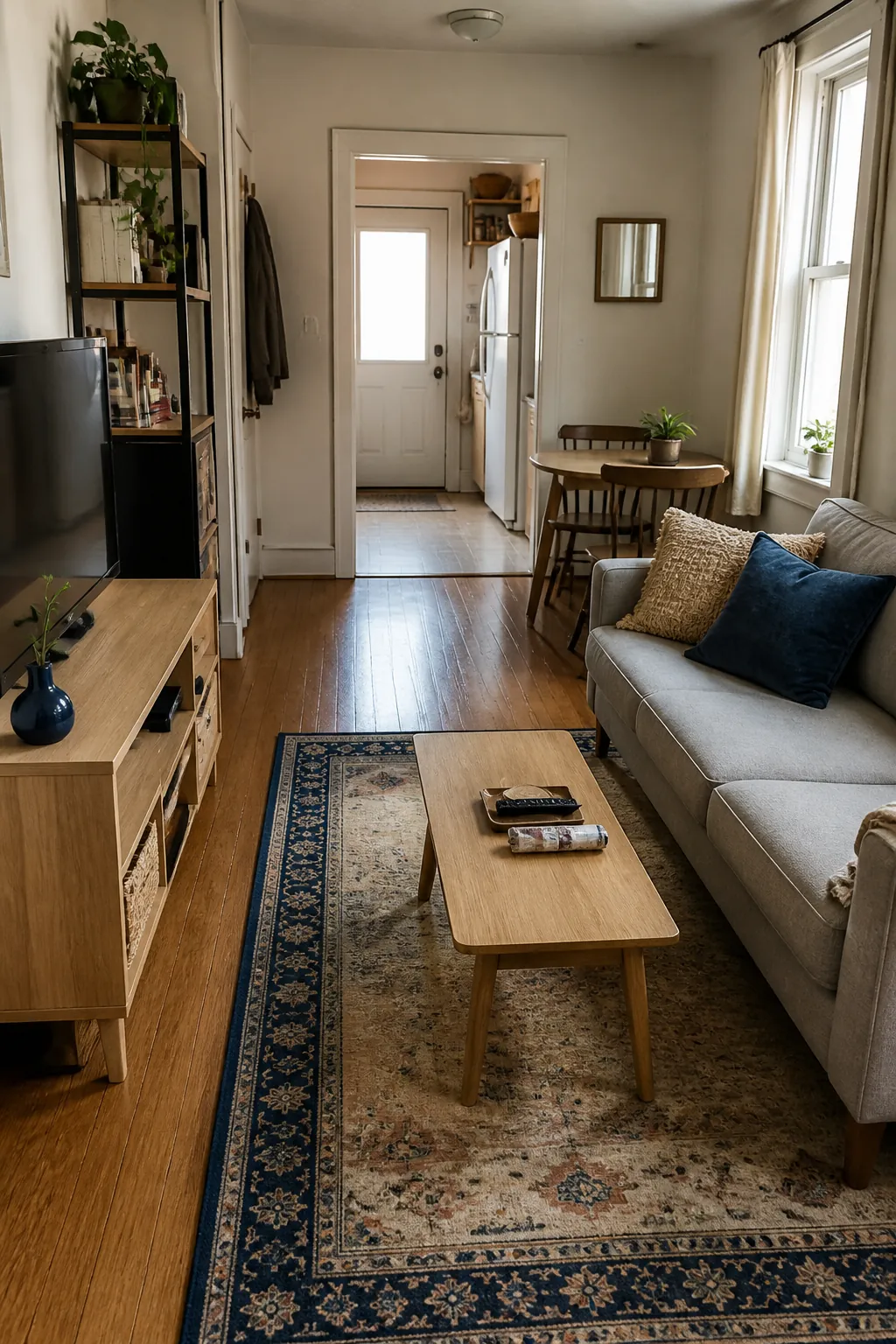
Leave One Surface Mostly Empty
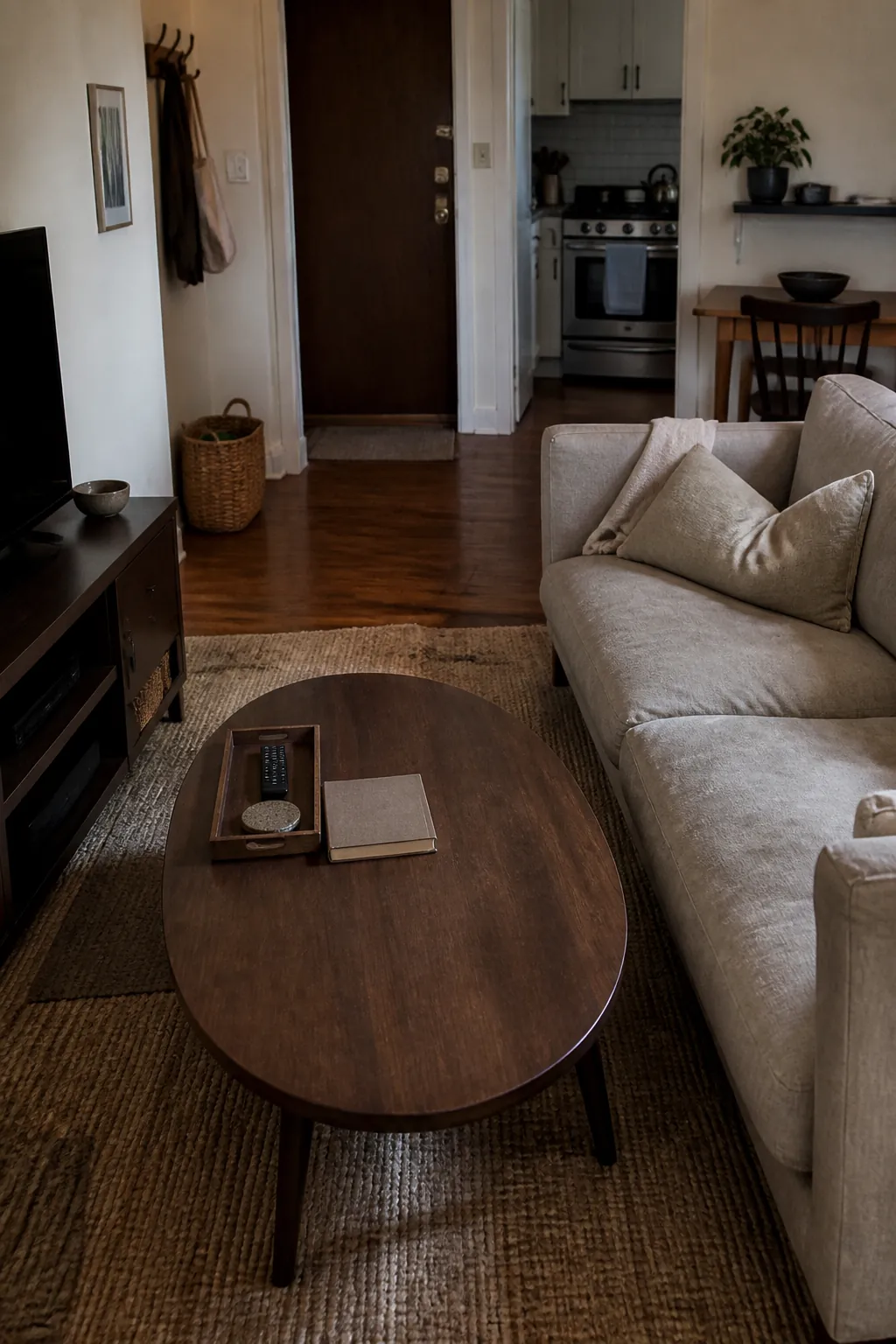
The final decorating move is subtraction. Clear one coffee-table quadrant, one shelf, or the top of a media unit and protect that space from becoming a permanent drop zone. Empty area reveals the shapes and textures you deliberately chose.
Use a tray for the remote and one everyday object, then relocate paperwork, cables, and duplicates. A room can be personal without displaying everything at once. Visible breathing room is functional storage for tomorrow’s activity.