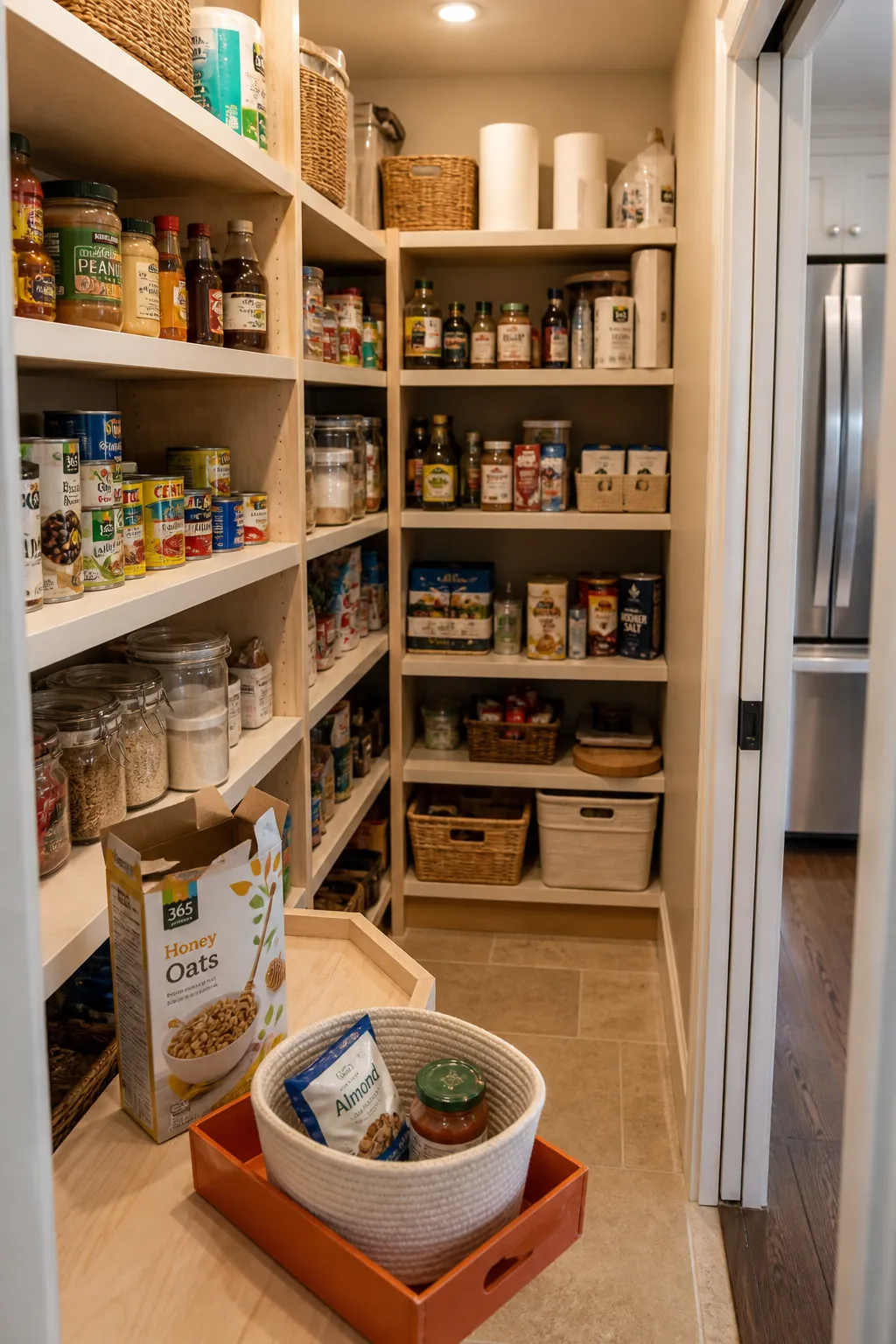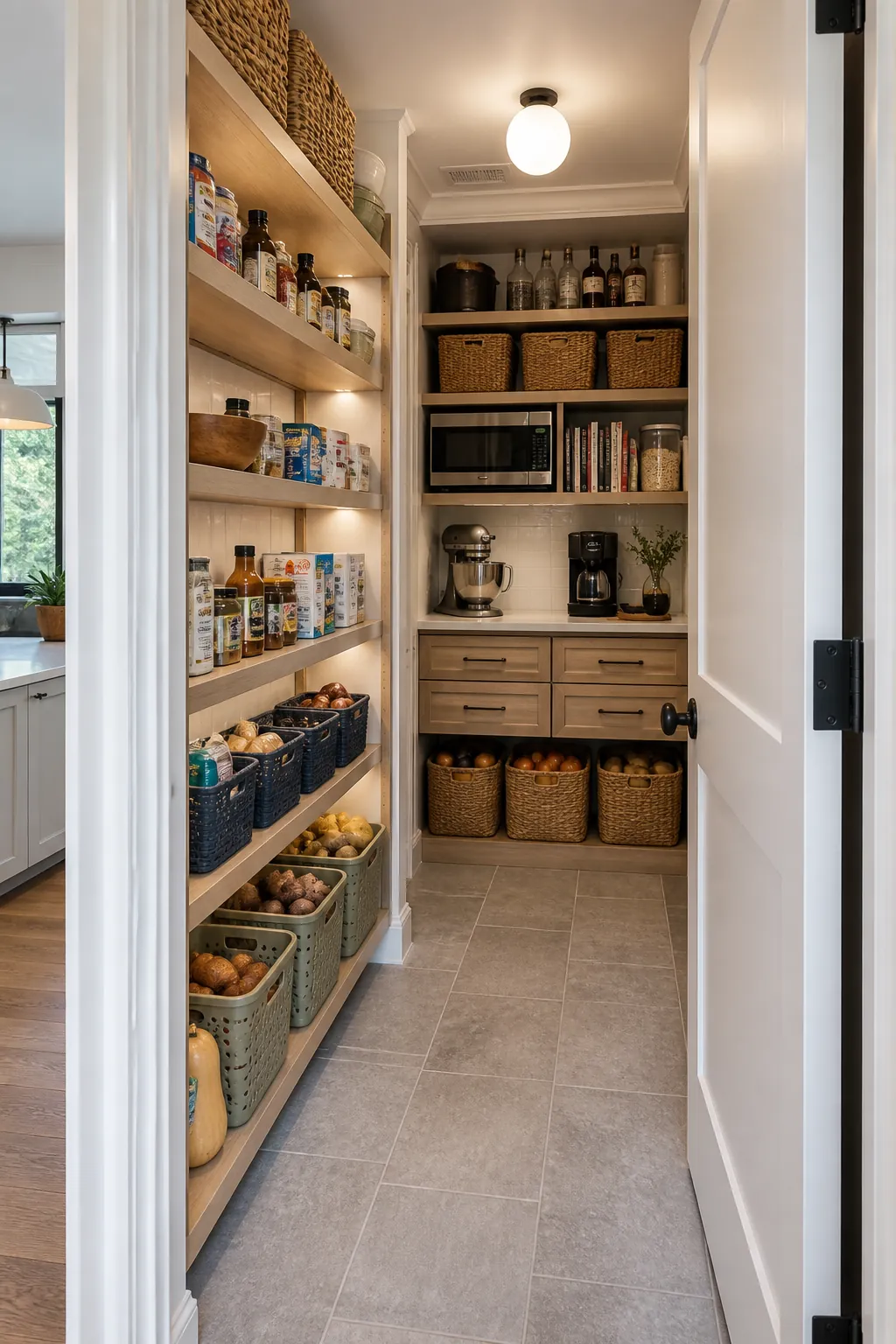
A beautiful pantry is useful only when you can step inside, see what you own, and put groceries away without starting a game of shelf Tetris. These 30 walk in pantry ideas focus on the choices that make that daily rhythm easier: sensible shelf depths, clear walking space, flexible zones, good light, and storage sized for real packages rather than matching containers alone.
Use Shallow Shelves for Everyday Food
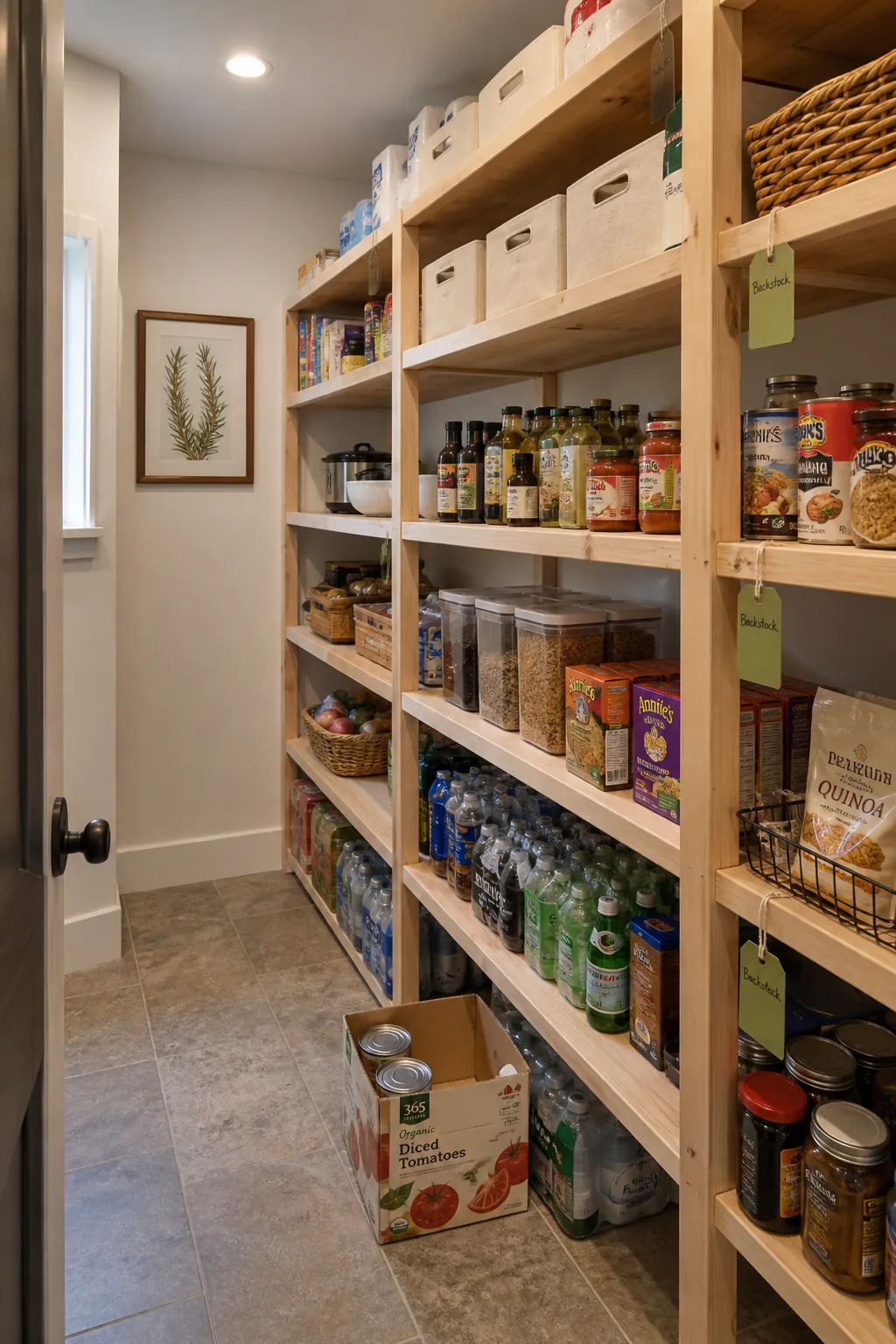
Start with shelves roughly 8 to 10 inches deep for cans, jars, pasta, and snacks. Single-depth storage keeps labels visible and prevents duplicate buying because nothing disappears behind a second row.
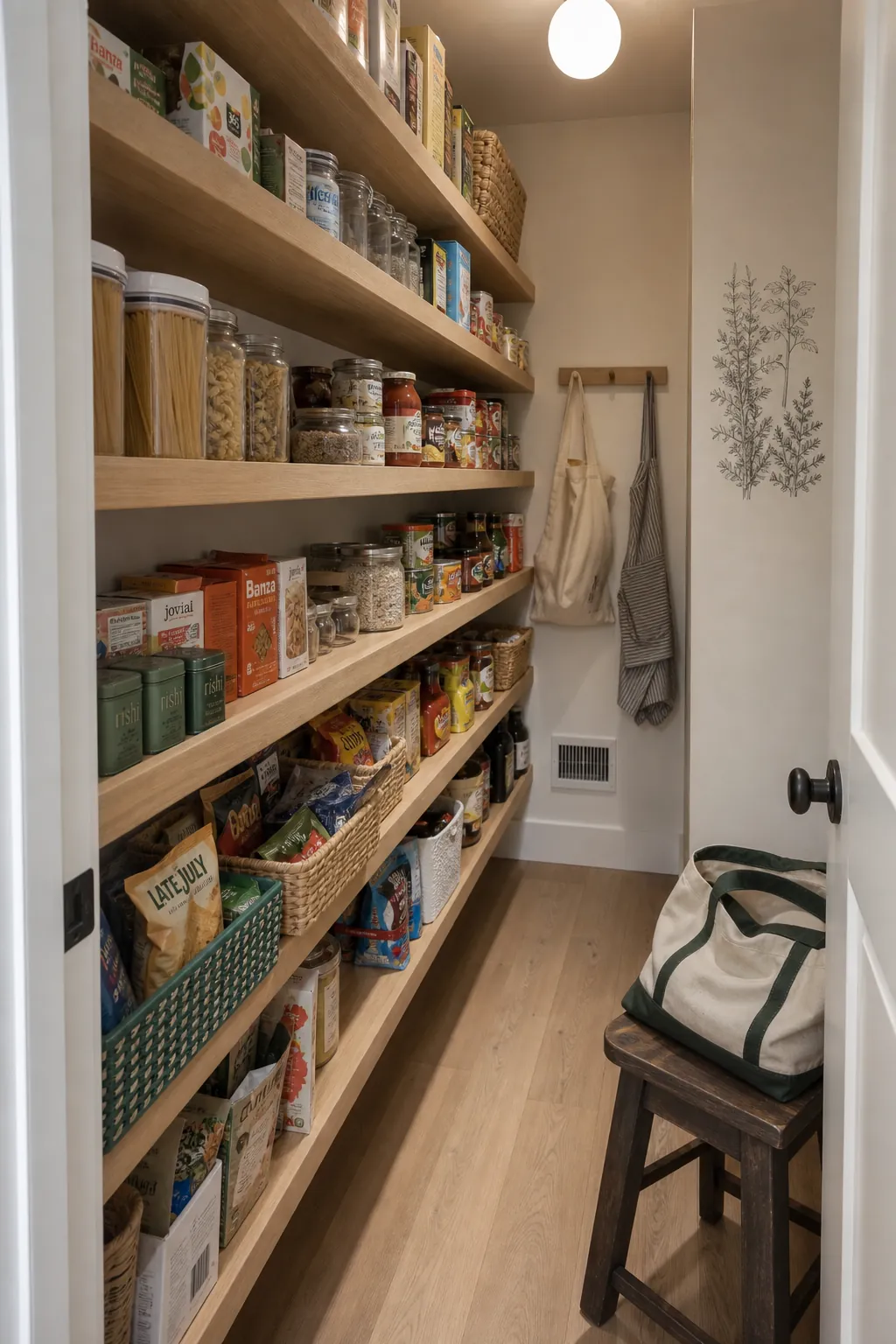
Reserve One Deep Zone for Appliances
A short run of 16- to 20-inch-deep shelving earns its space when it holds a stand mixer, pressure cooker, Dutch oven, or bulk paper goods. Keep it separate from daily groceries so smaller packages do not get lost behind equipment.
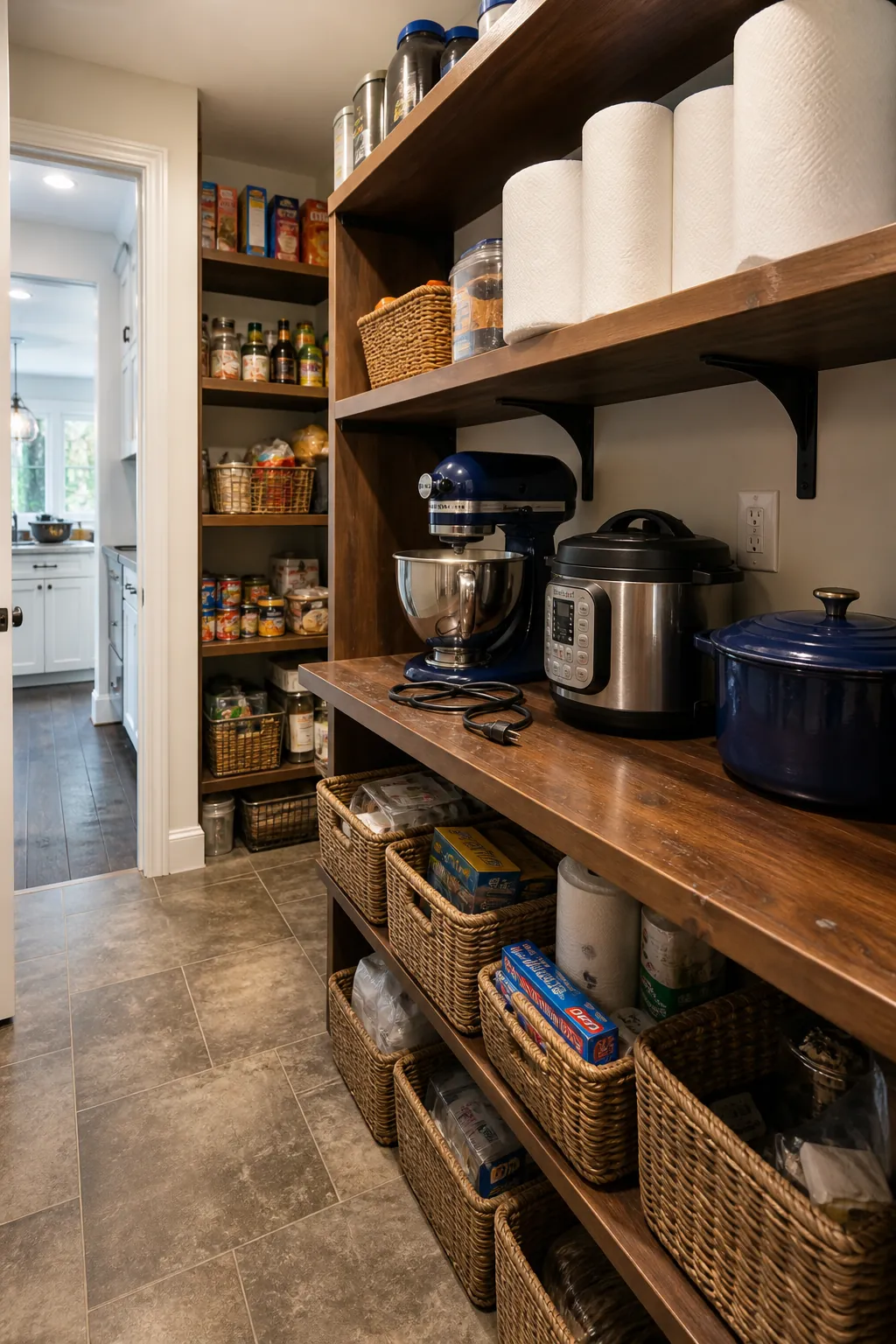
Protect a Comfortable Center Aisle
Measure the finished room after shelves, trim, and door casing are deducted. Aim for about 36 inches of clear passage where possible; in a narrow walk in pantry, fewer or shallower shelves often create more useful storage than a cramped double-sided layout.
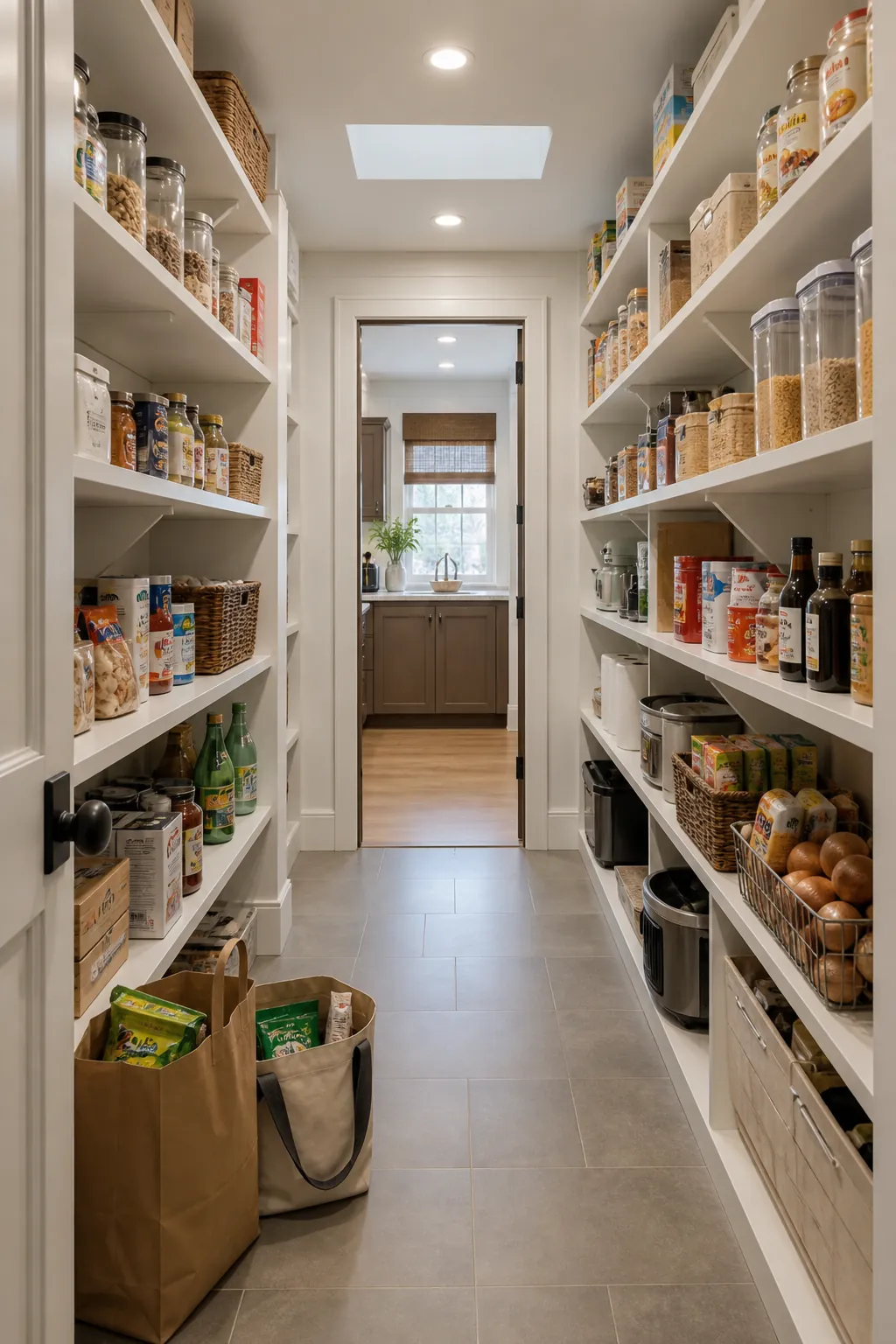
Wrap an L-Shaped Corner
An L-shaped run uses two walls without pinching the entry. Stop one shelf run short of the corner or use a curved corner shelf so packages remain reachable instead of creating a dark, inaccessible triangle.
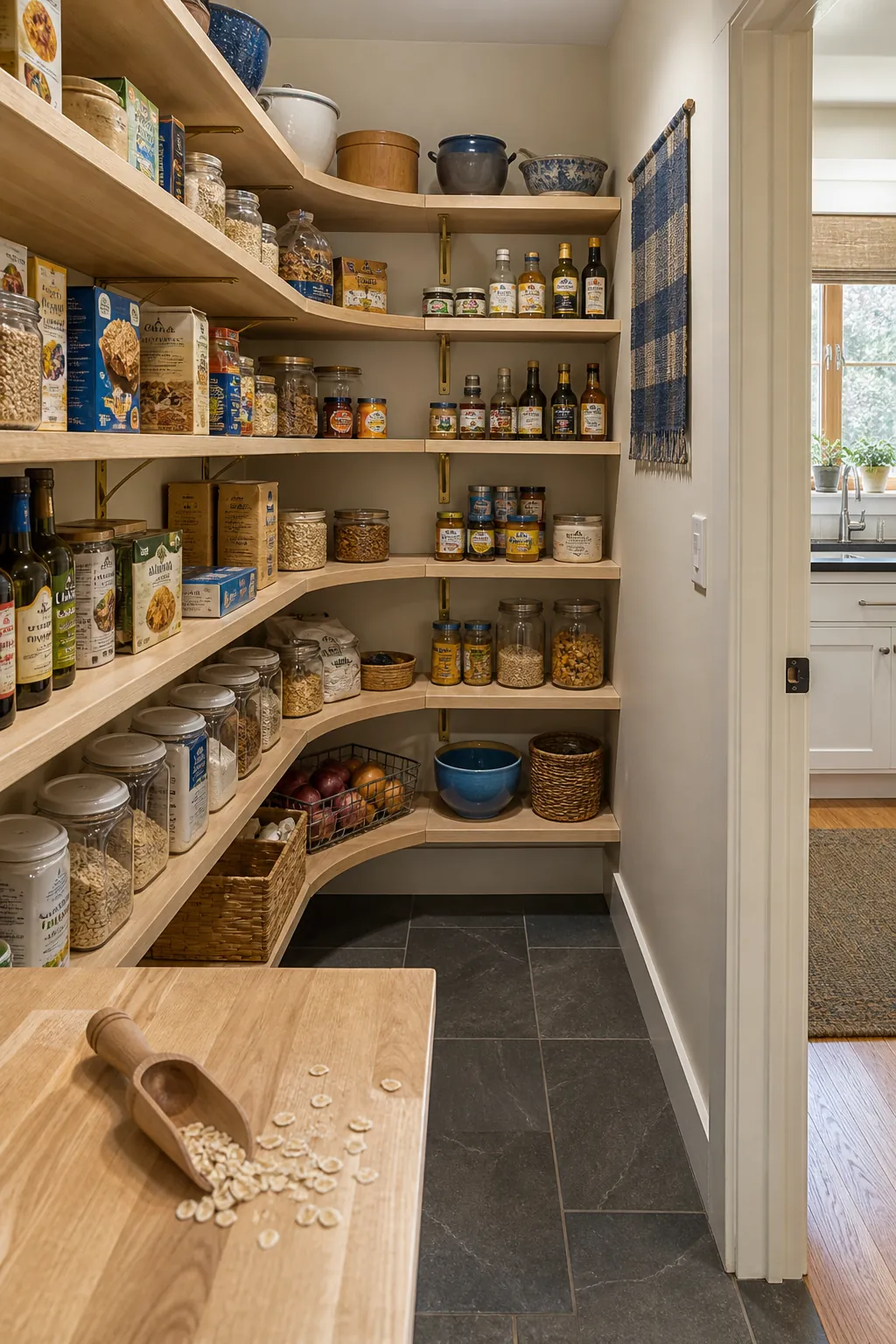
Build a U-Shaped Storage Wall
In a wider room, a U-shaped layout turns the back wall into a focal work zone while keeping side shelves shallower. This arrangement suits a dream pantry walk in design when the clear floor area stays generous enough to turn and carry grocery bags.
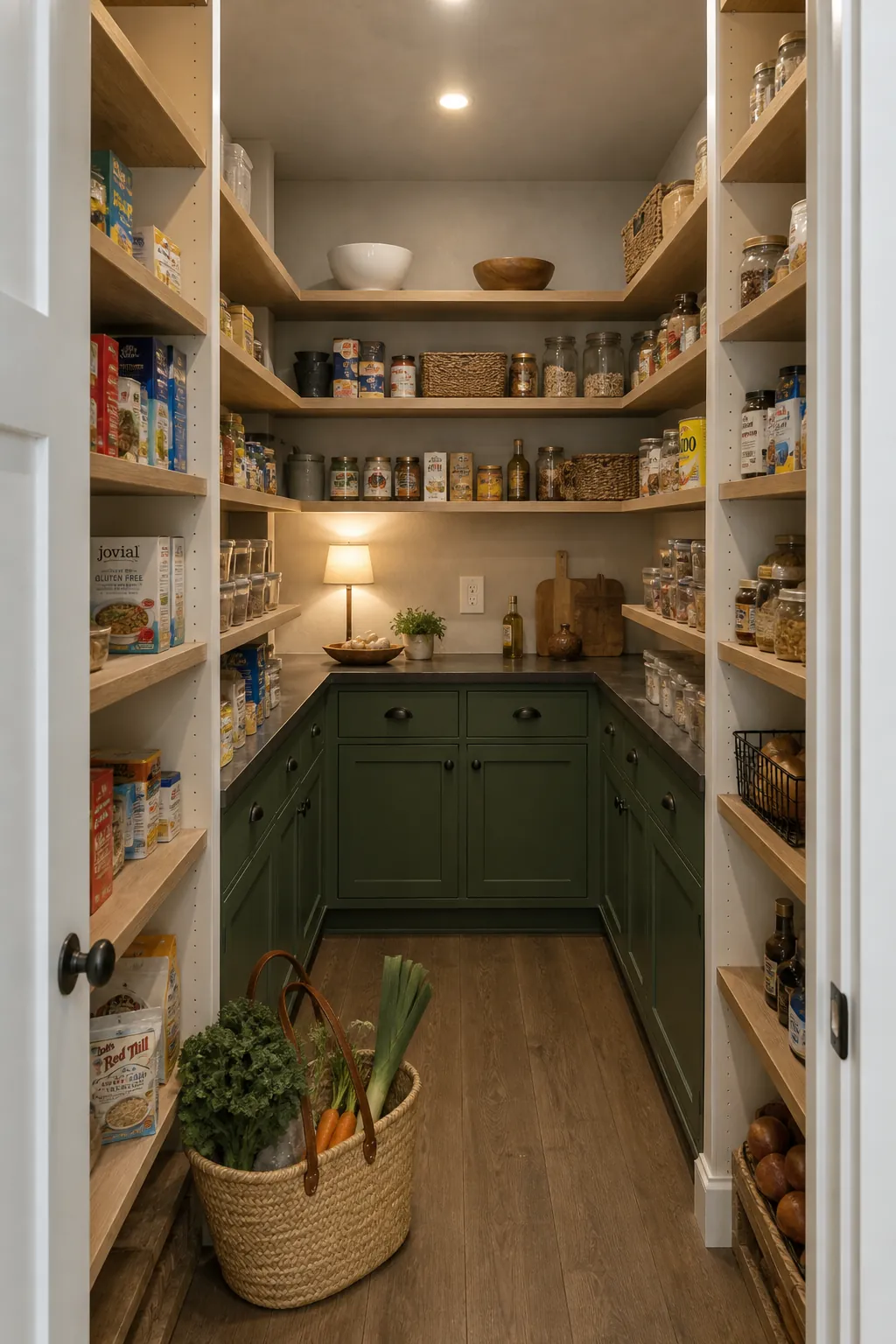
Add a Counter for Small Appliances
A counter-height shelf with a properly installed outlet can become a coffee, toaster, or baking station. Leave breathing room around heat-producing appliances and follow manufacturer clearances rather than treating every plugged-in item as safe for enclosed use.
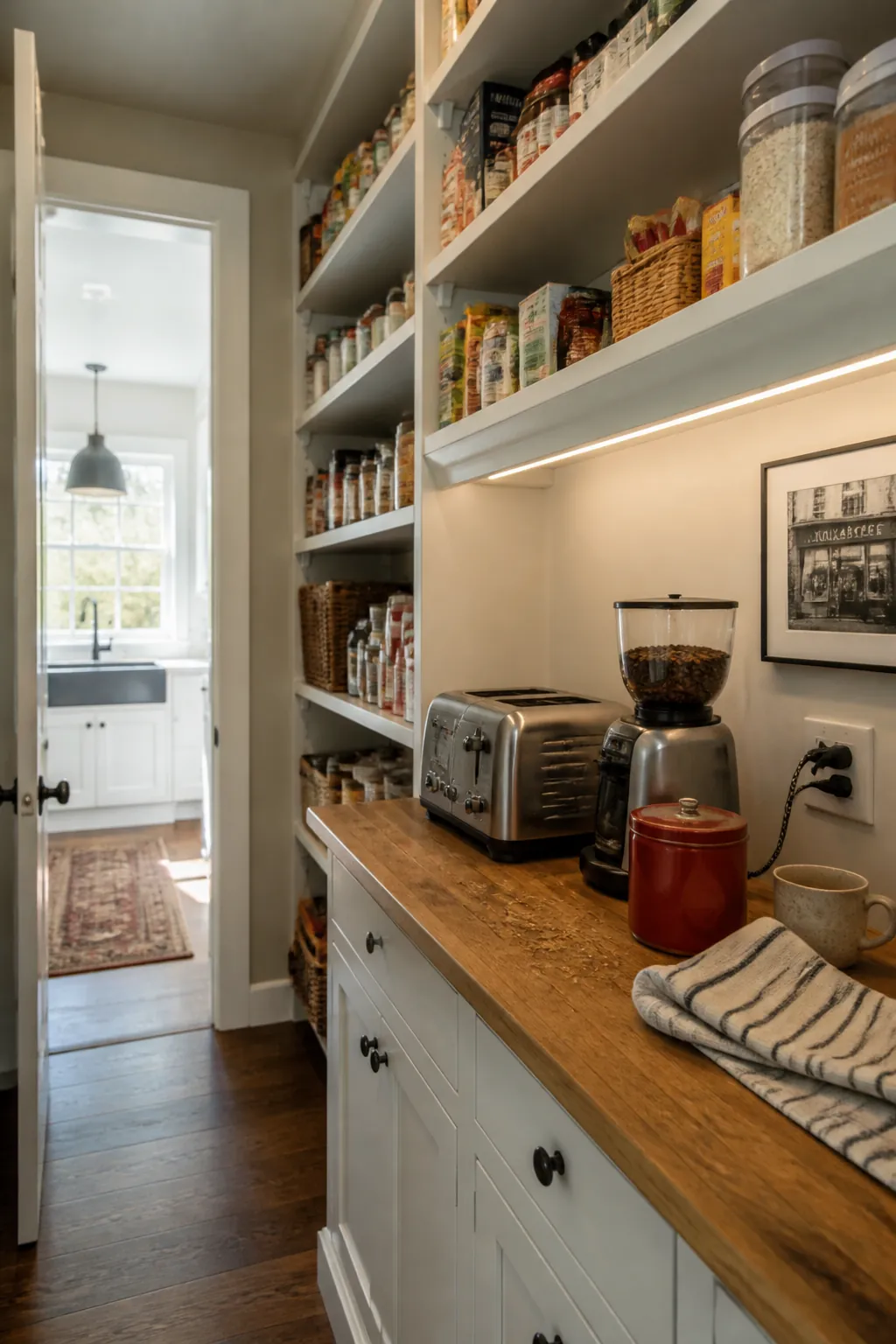
Choose Adjustable Shelf Standards
Groceries change, so fixed spacing ages badly. Adjustable standards let you lower a shelf for canned food, raise another for cereal, and revise the system after you discover what the household actually buys.
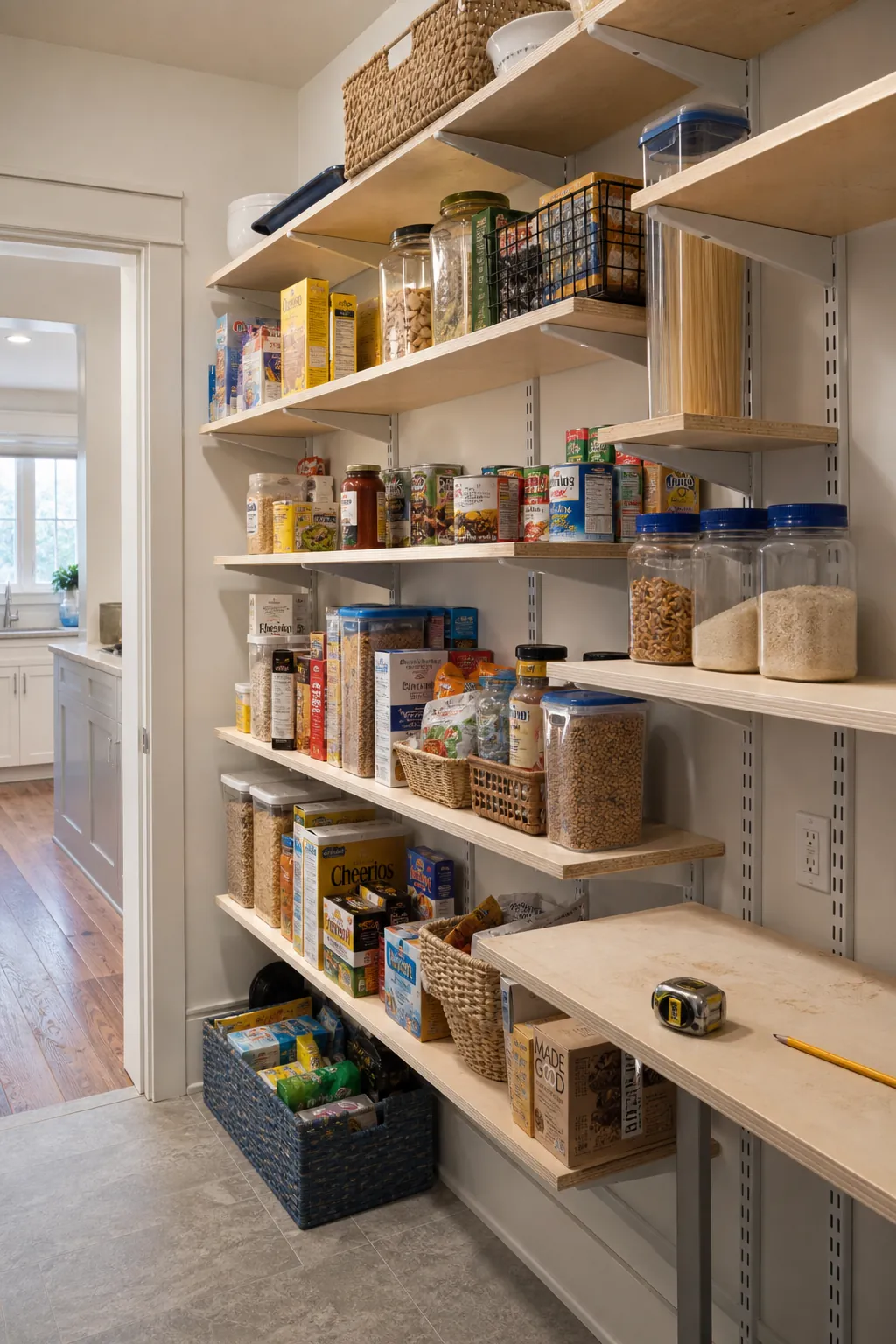
Fit Shelves to Package Heights
Measure the tallest cereal box, oil bottle, storage jar, and appliance before setting shelf intervals. Several closely spaced shelves for short goods usually hold more than evenly spaced shelves with wasted air above every can.
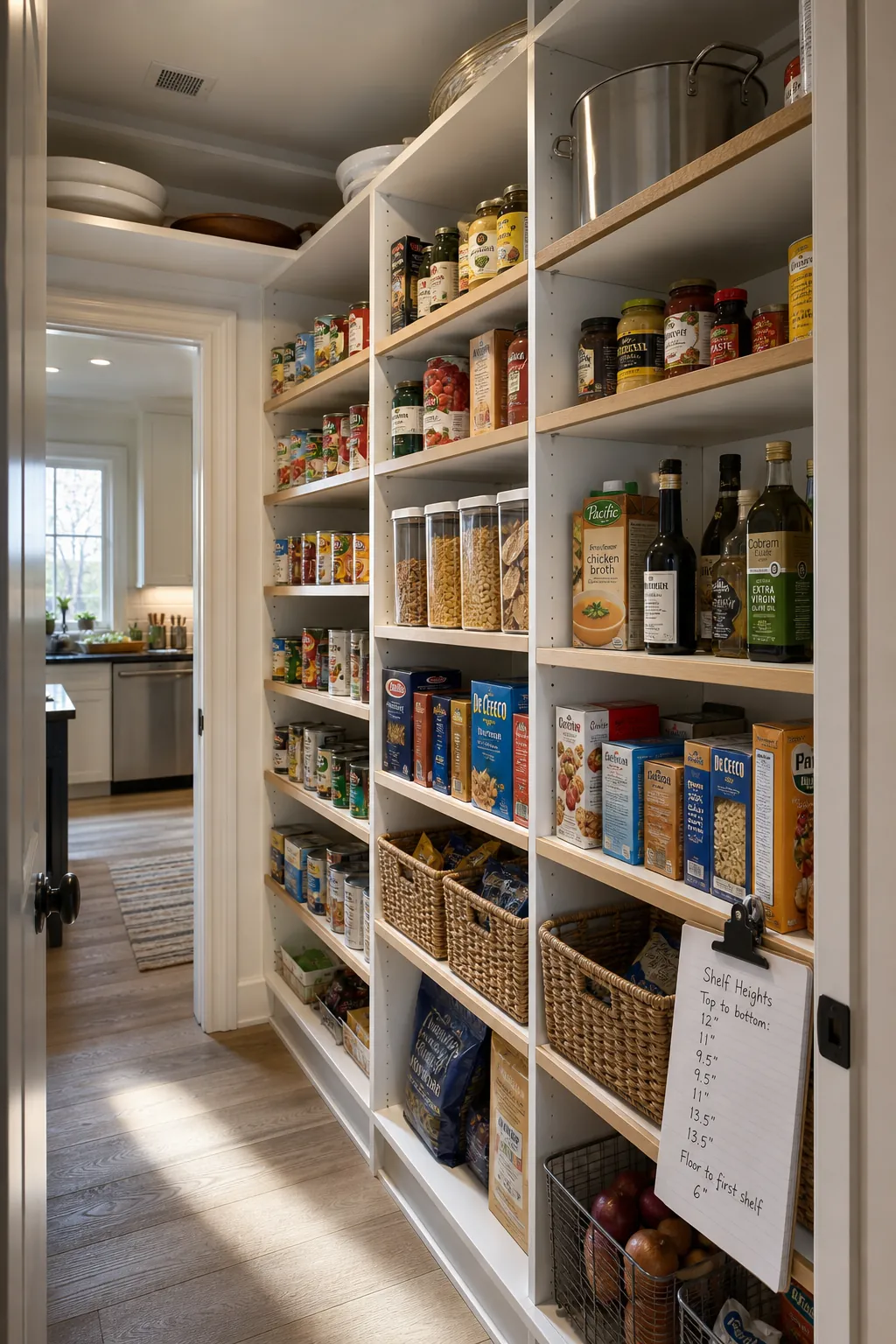
Create a Family Snack Station
Give children a low, clearly defined basket or drawer for approved snacks and lunch supplies. Place medicines, alcohol, sharp tools, and cleaning products in high or latched storage so independence does not compromise safety.
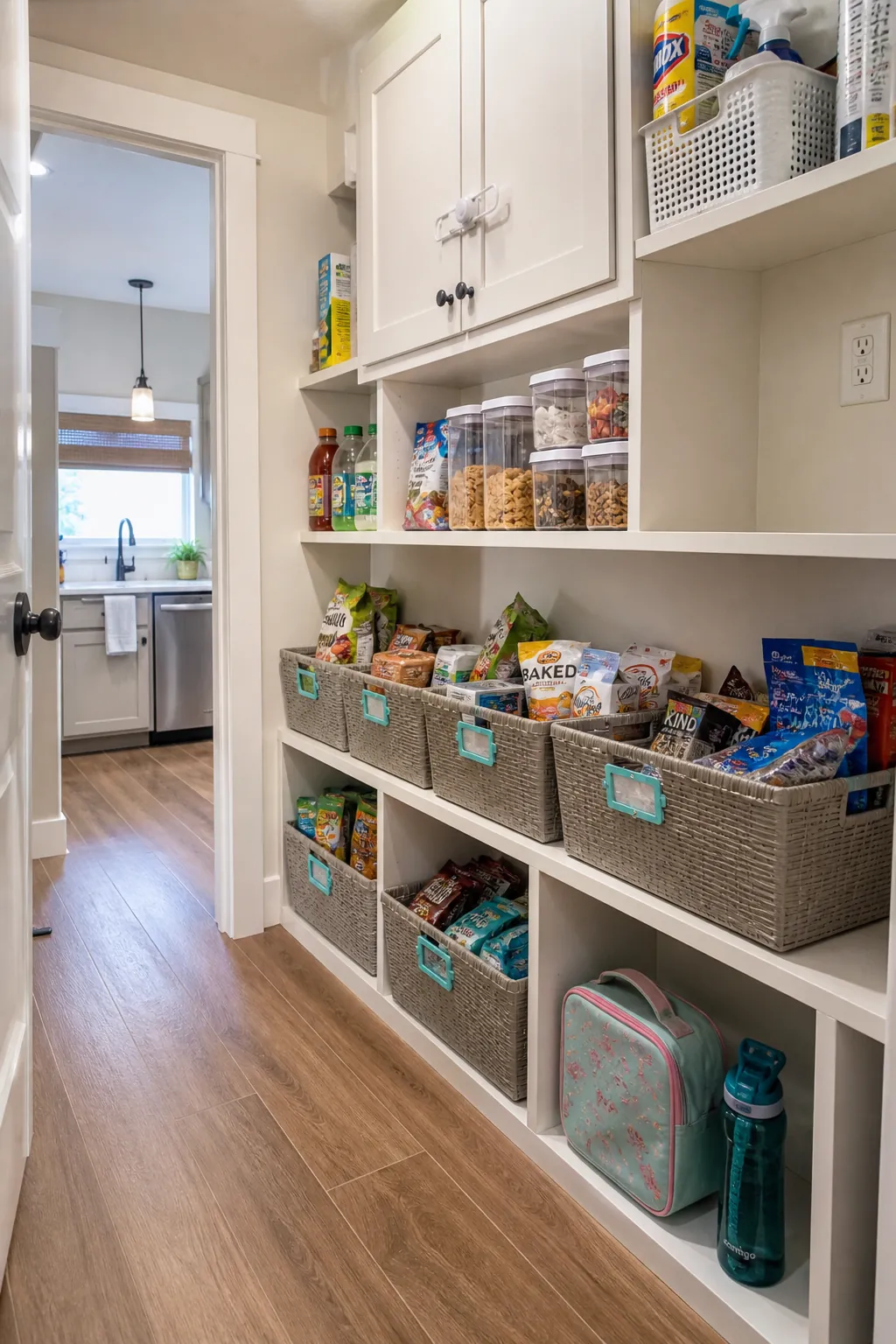
Group Food by the Way You Cook
Generic labels can be less useful than routines. Build zones for weeknight pasta, baking, breakfast, lunch packing, and quick-prep meals so the ingredients you reach for together live together.
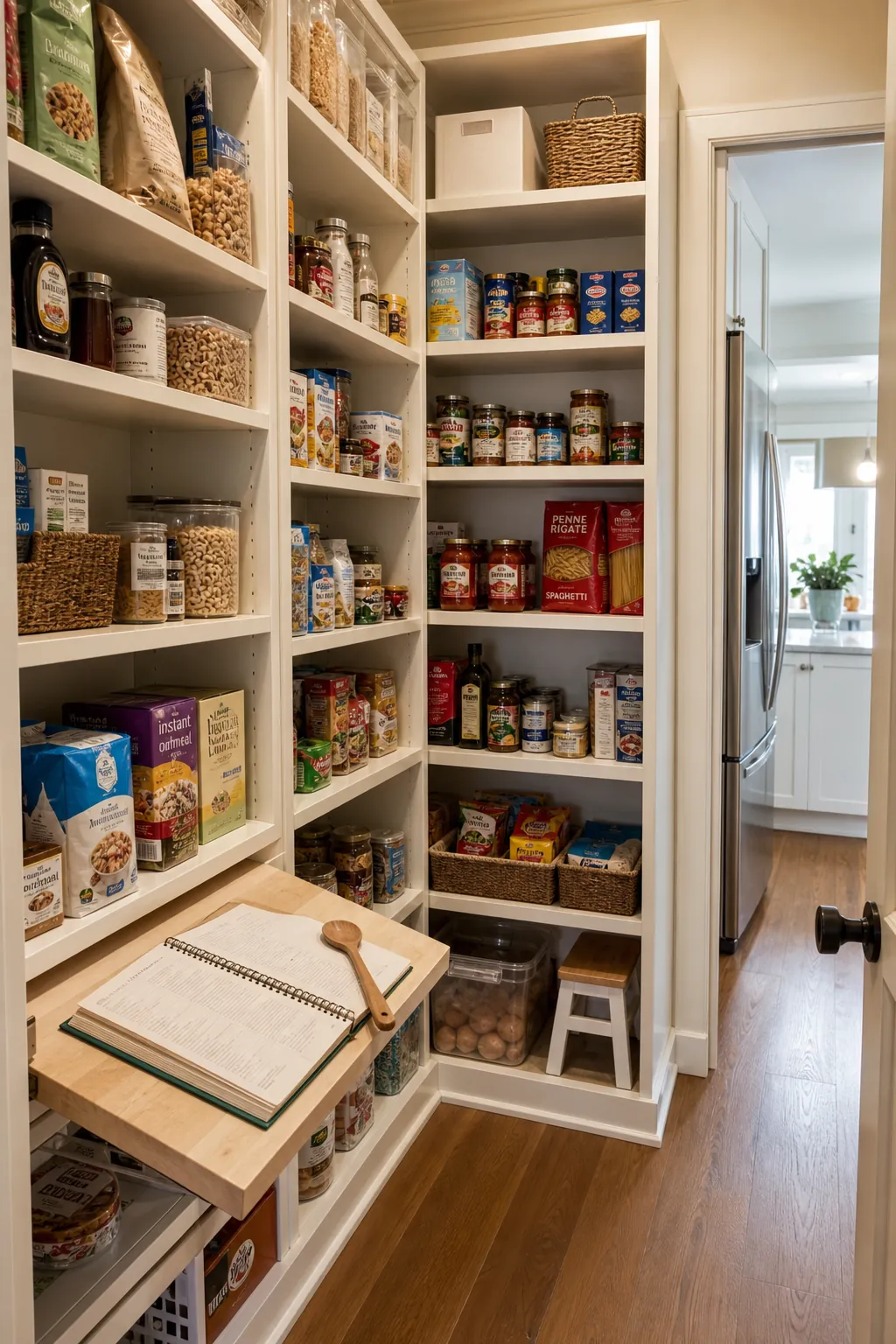
Keep Backstock Separate
Reserve a high or low shelf for unopened duplicates and refill supplies. A distinct backstock zone makes the active shelf easier to scan and reveals when bulk buying has exceeded the room’s capacity.
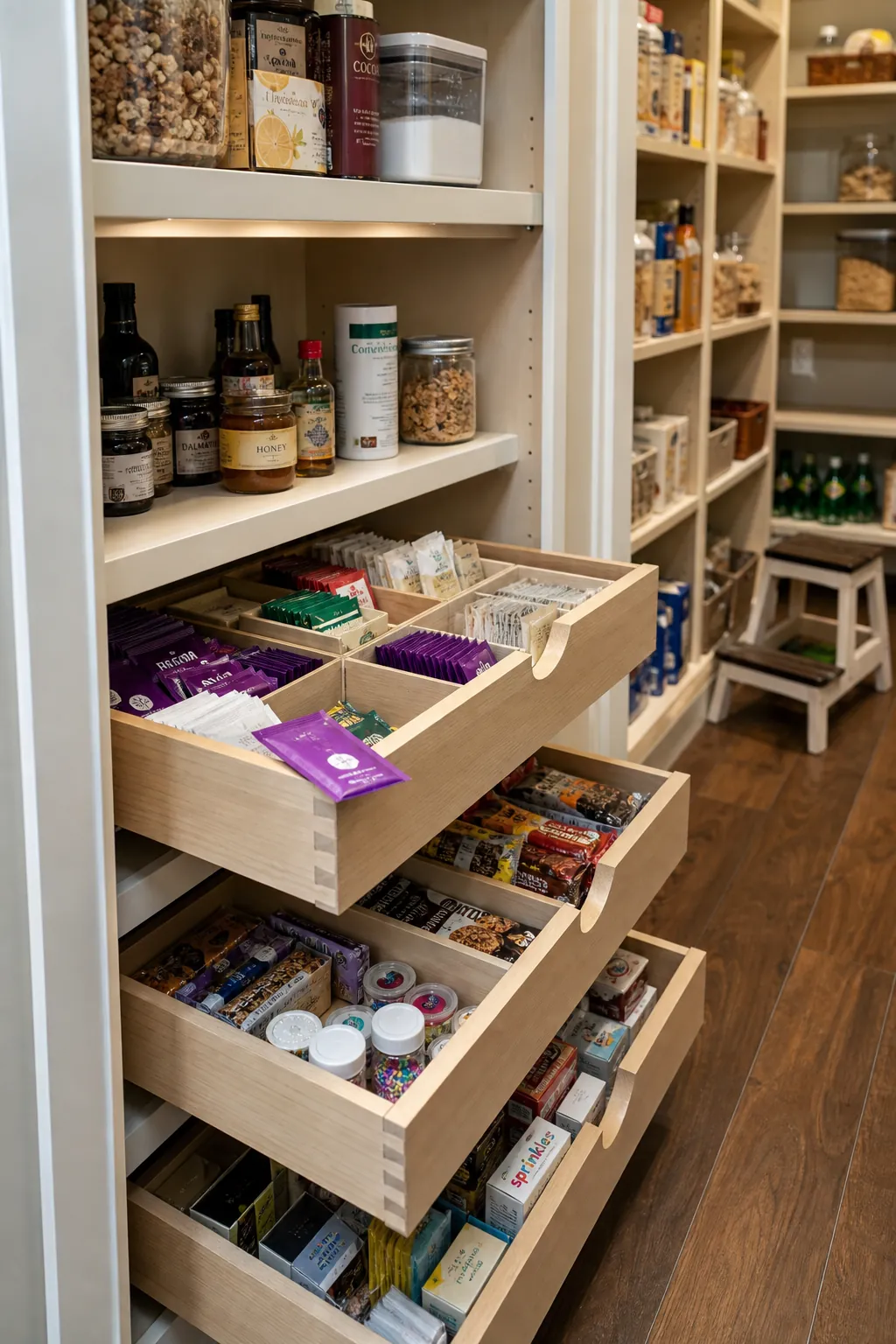
Use Drawers for Loose Small Items
Packets, snack bars, tea, and cake decorations migrate across open shelves. Shallow drawers or pull-out bins contain them without forcing every ingredient into a decanted jar.
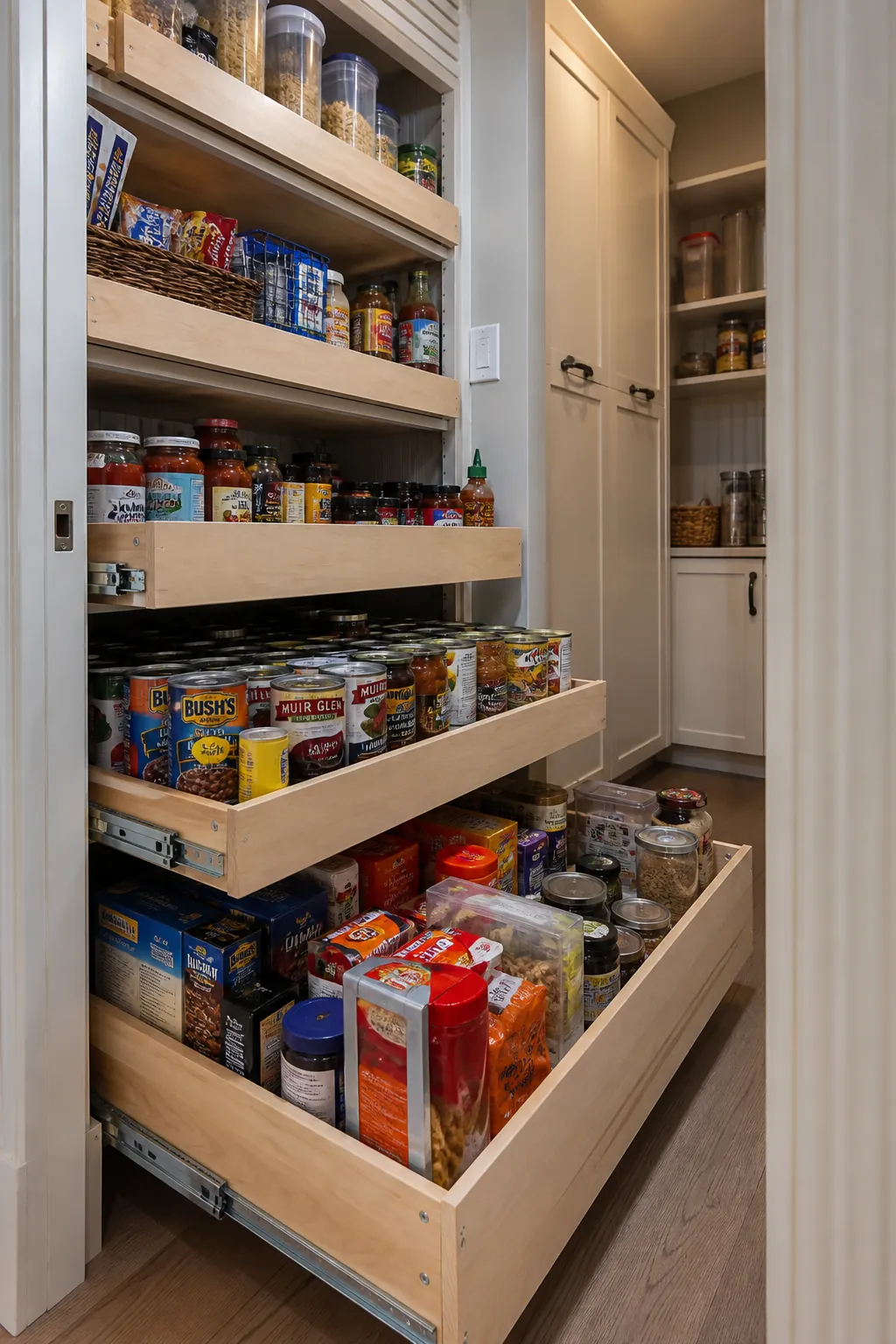
Install Pull-Out Shelves in Deep Bays
Where existing cabinetry is too deep to change, full-extension pull-outs bring the back into view. Check weight ratings before loading canned goods, and keep the heaviest items on lower hardware.
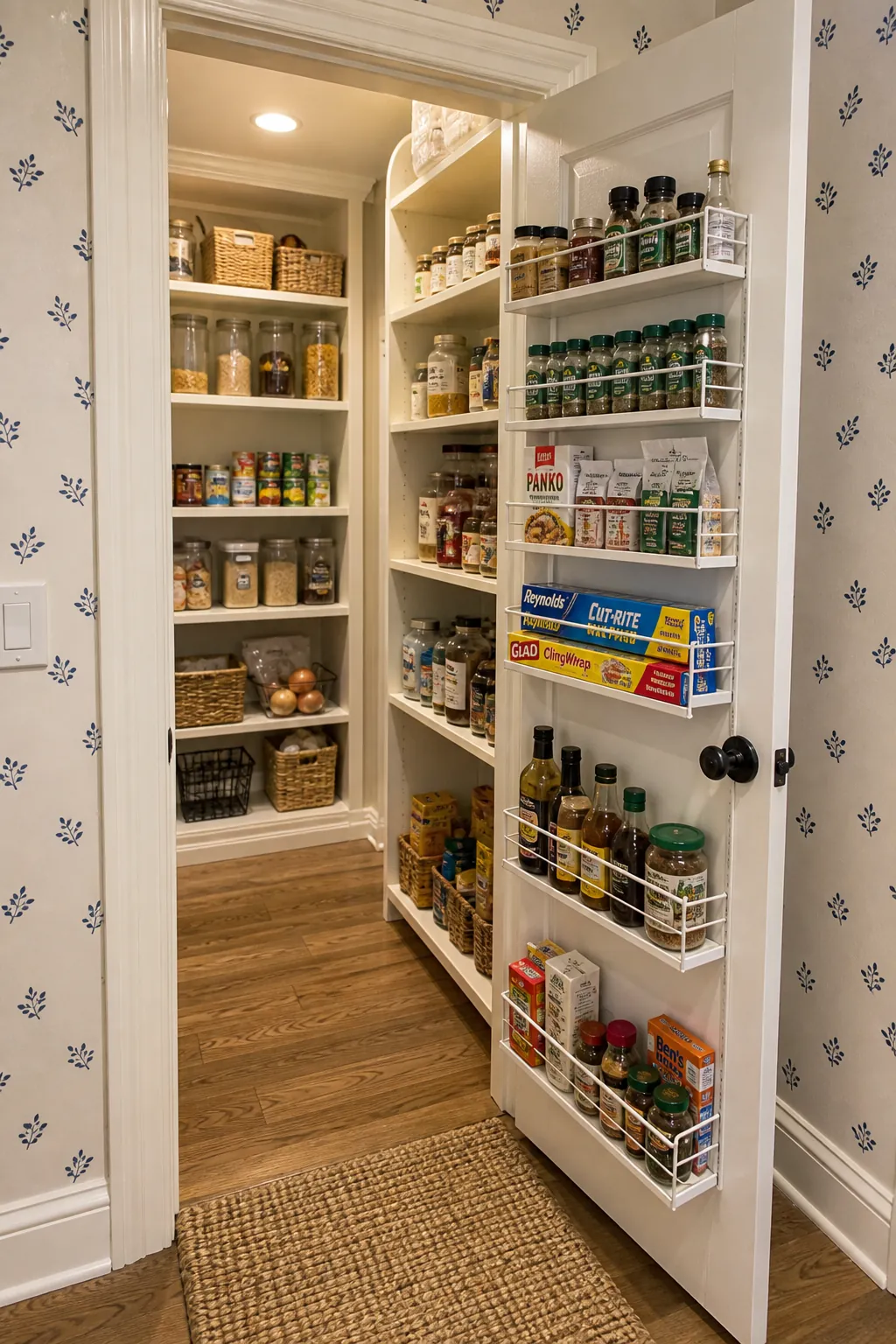
Turn the Door Into Slim Storage
A sturdy over-door rack can hold wraps, spices, or light packets, but confirm hinge capacity and clearance first. Nothing should collide with side shelving or make the door difficult to operate.
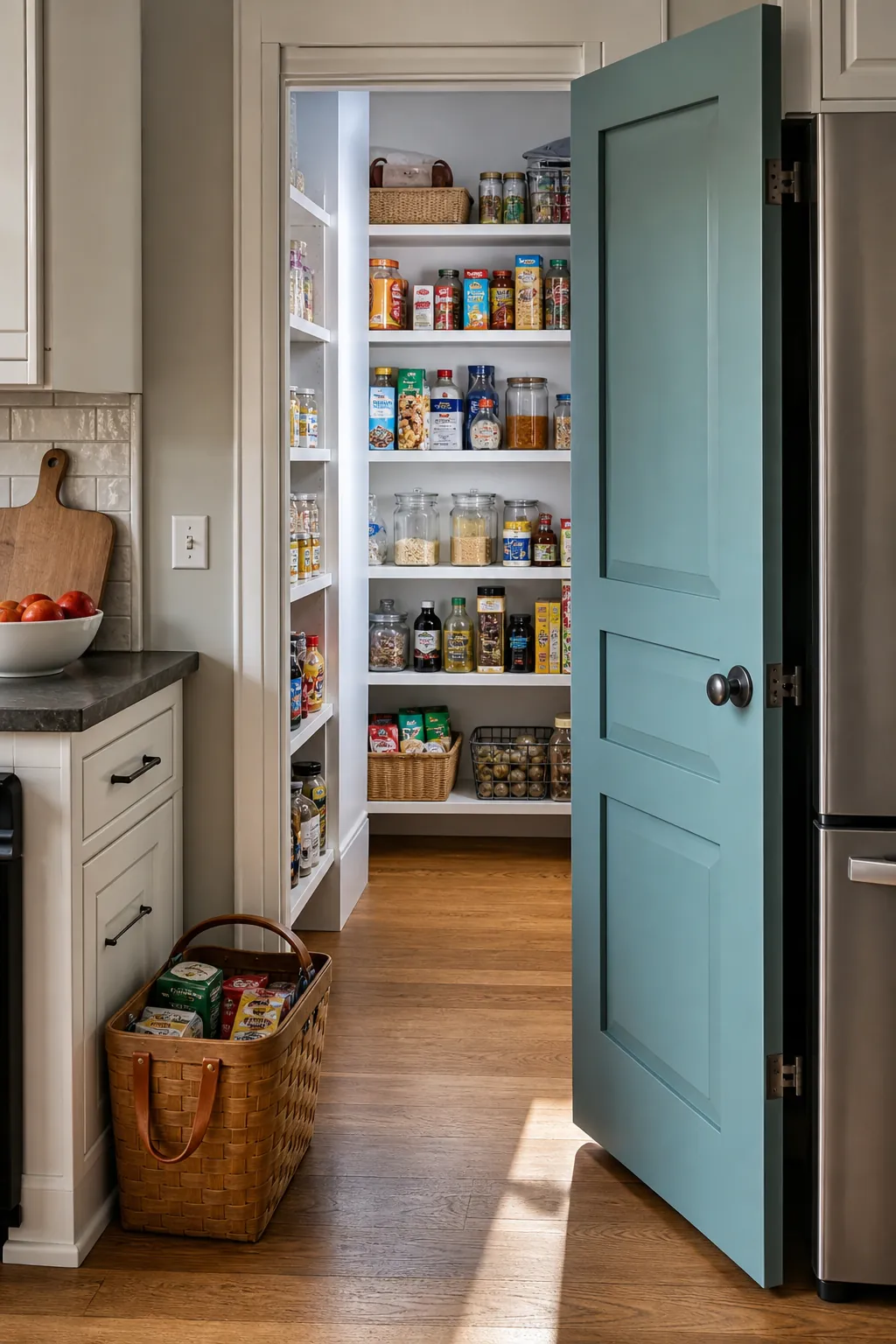
Switch to an Out-Swing Door
An inward swing can erase a surprising amount of shelf access in a small pantry room. Where the surrounding kitchen circulation permits, an out-swing or code-compliant pocket door frees the inside corners.
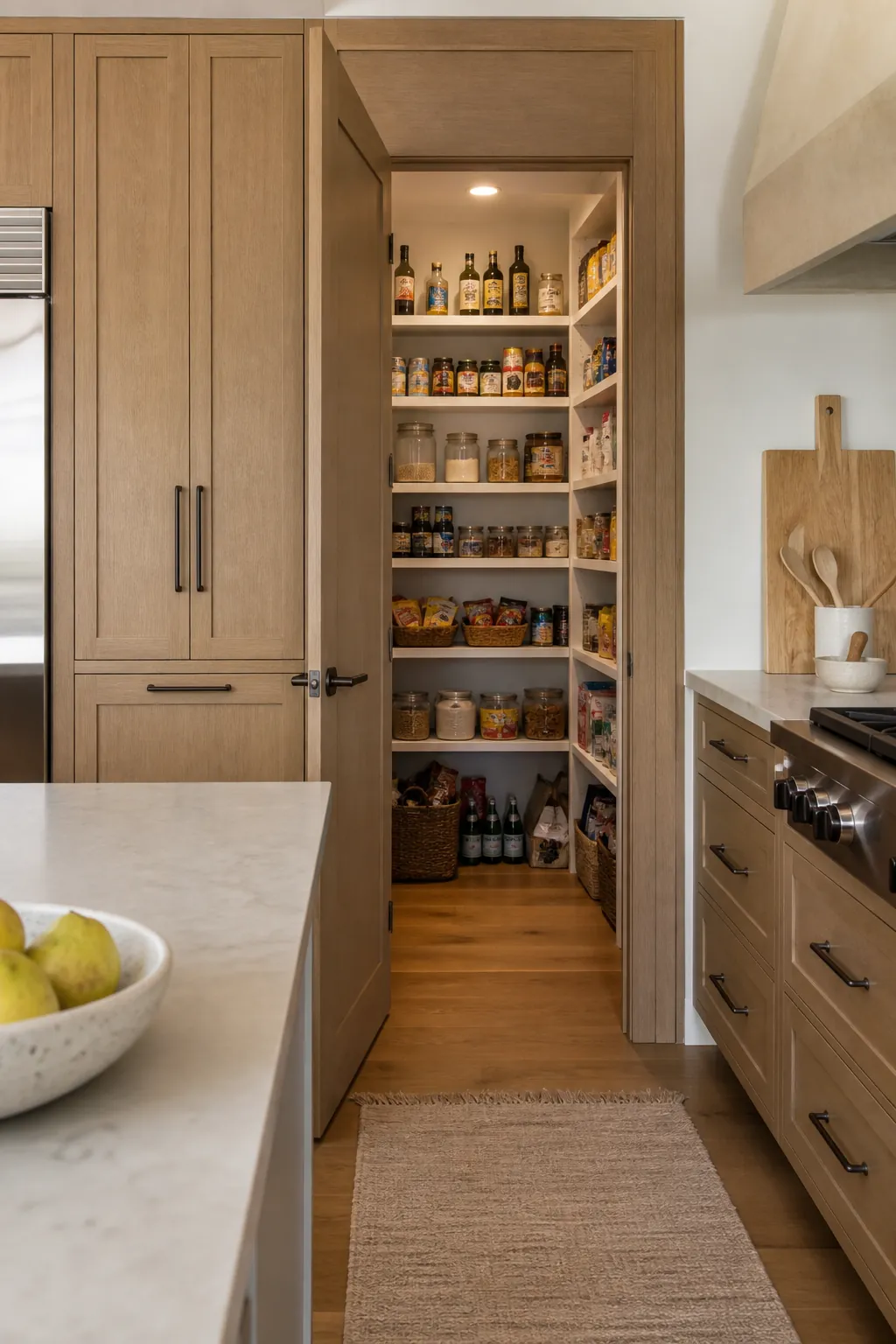
Hide the Entry in Kitchen Cabinetry
A cabinet-matched door gives a hidden pantry walk in entrance a quiet, integrated look. Use obvious interior lighting and hardware that remains easy to locate and open; visual drama should never make access awkward.
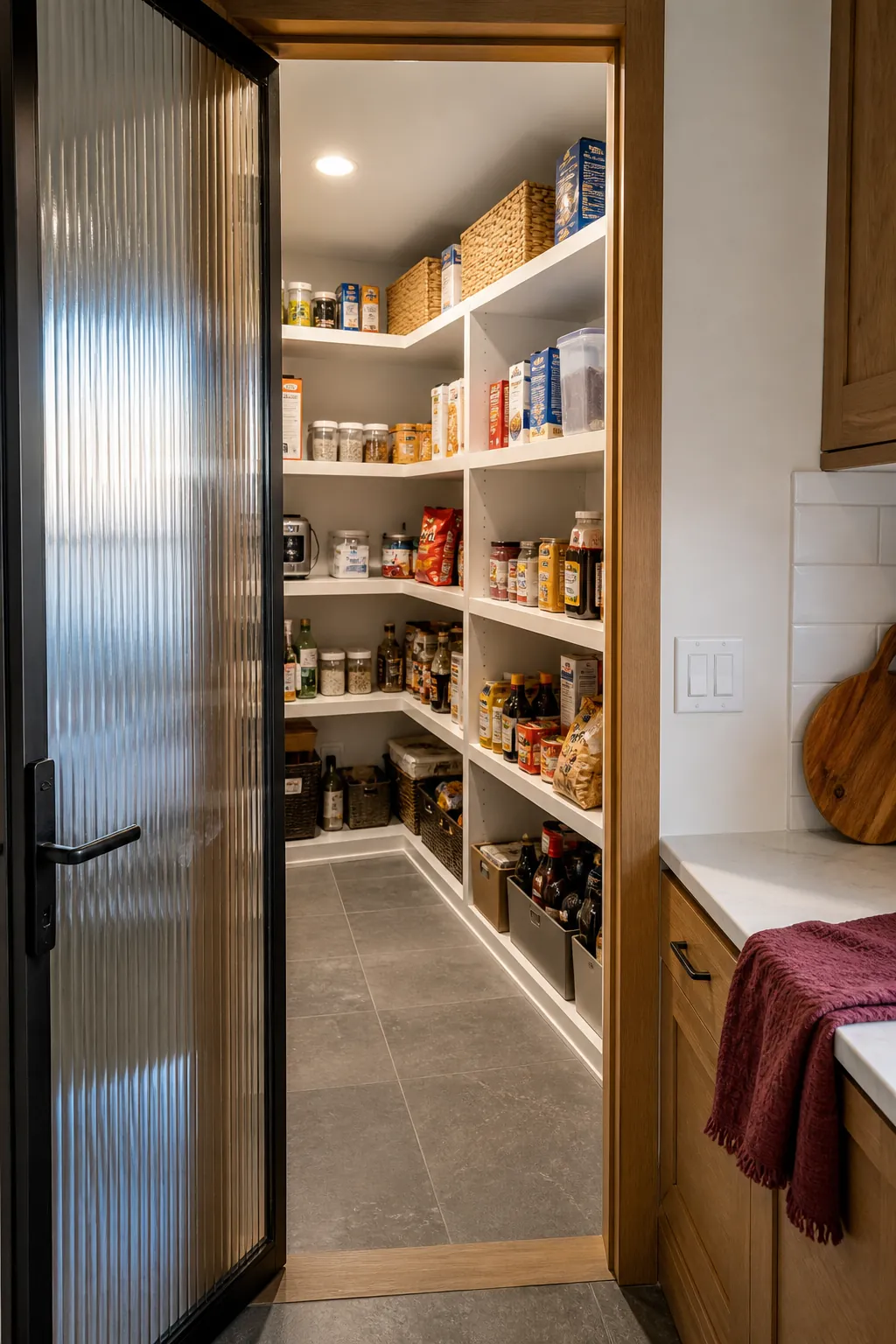
Bring In a Glass Pantry Door
Reeded or frosted glass borrows light without exposing every label. It also signals that a door is present, which can be safer than a crystal-clear panel in a busy kitchen path.
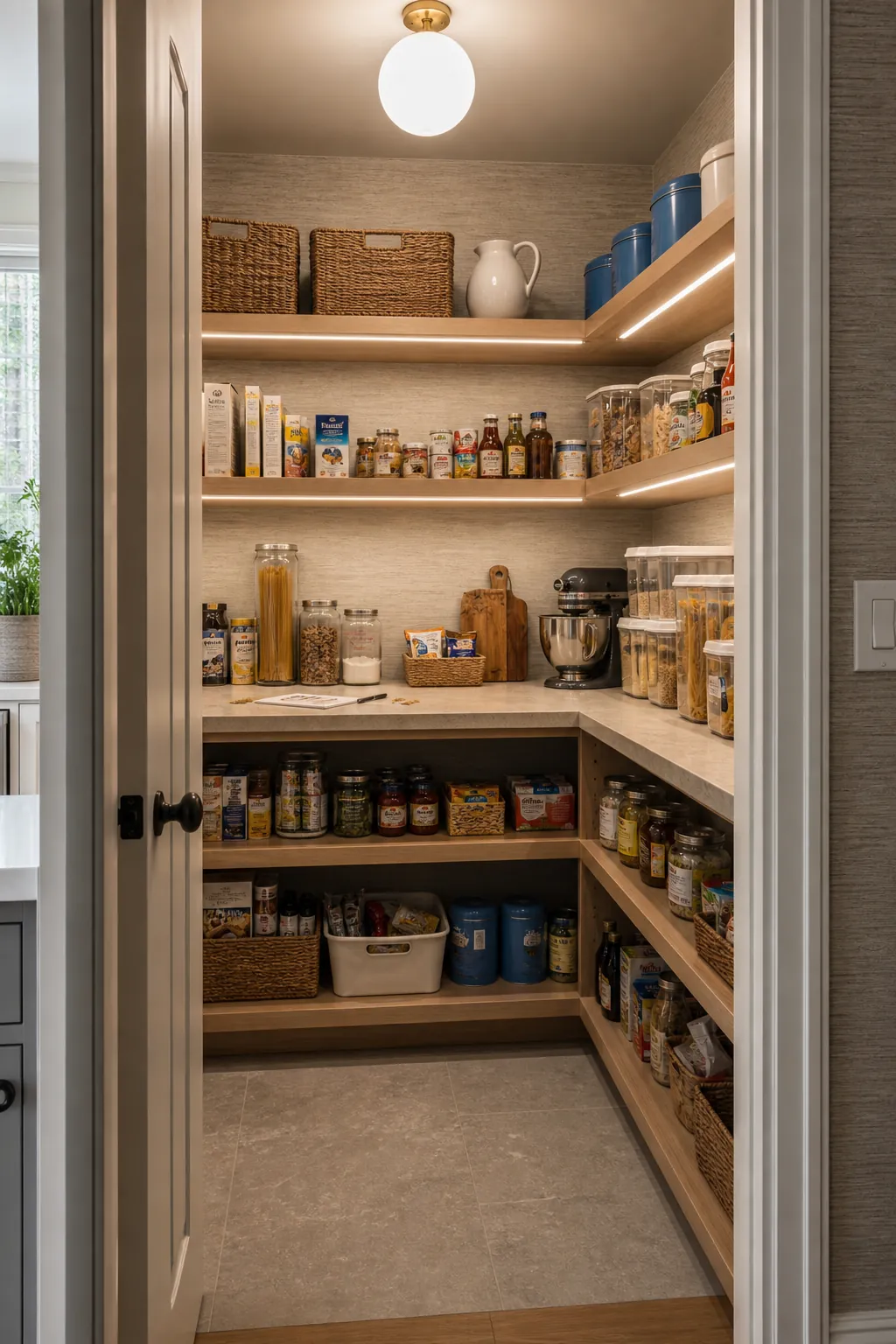
Layer Ceiling and Shelf Lighting
A bright ceiling fixture supplies general light; shielded LED strips under shelves remove shadows from labels. Choose a neutral color temperature and high color rendering so food looks natural rather than gray or yellow.
Add a Washable Floor
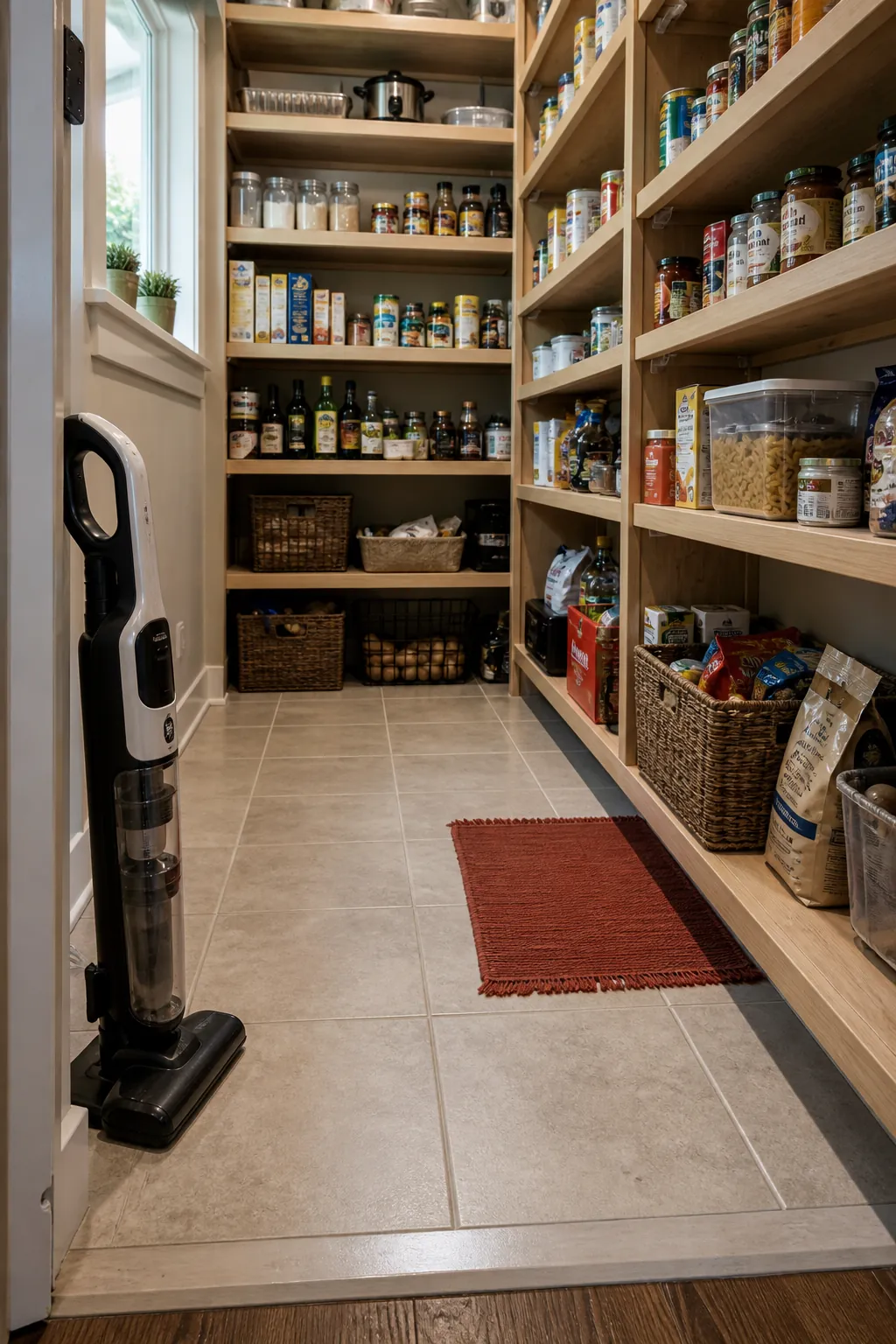
Crumbs, oil drips, and broken jars make easy cleaning more important than softness. Continue the kitchen tile, sealed wood, or durable resilient flooring into the pantry and keep the threshold level for carts and vacuums.
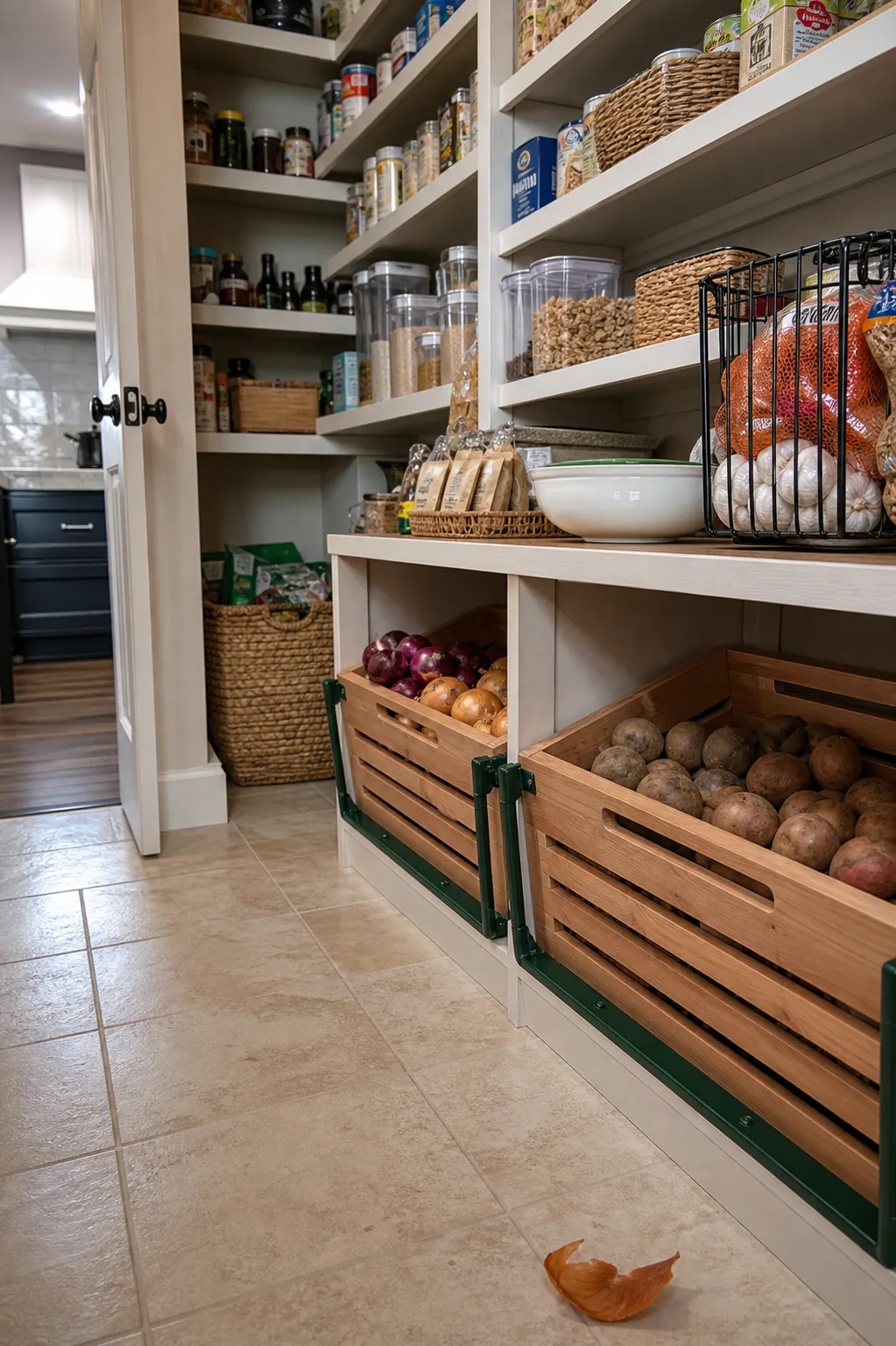
Store Produce in Ventilated Bins
Onions and potatoes need airflow and should be kept apart in a cool, dark location appropriate to each food. Use washable wire or slatted bins, inspect them often, and avoid trapping produce in decorative closed baskets.
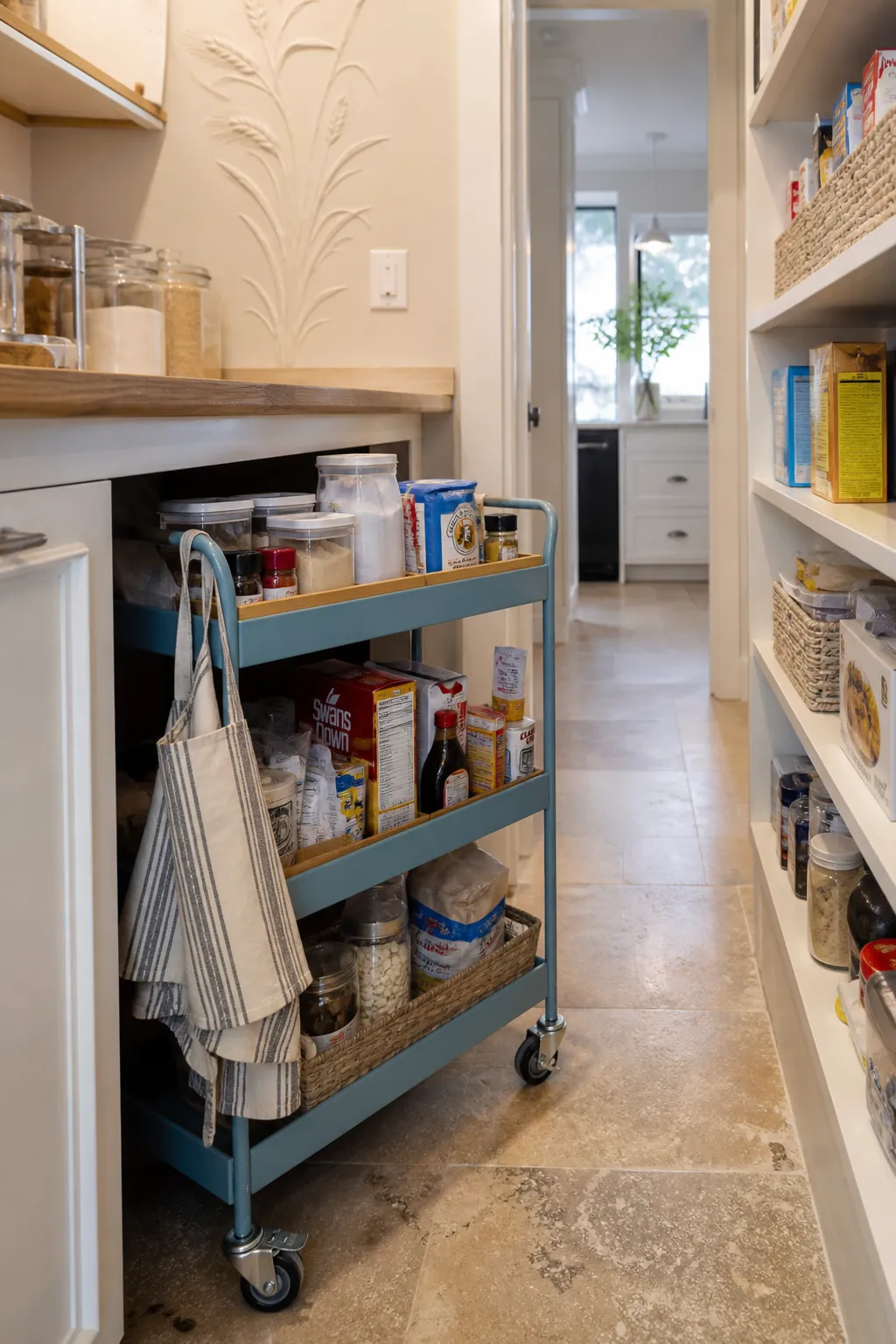
Park a Rolling Cart Below the Counter
A narrow cart can hold baking supplies, breakfast ingredients, or pantry overflow and roll to the kitchen when needed. Measure wheel clearance and include a stop so it does not drift into the aisle.
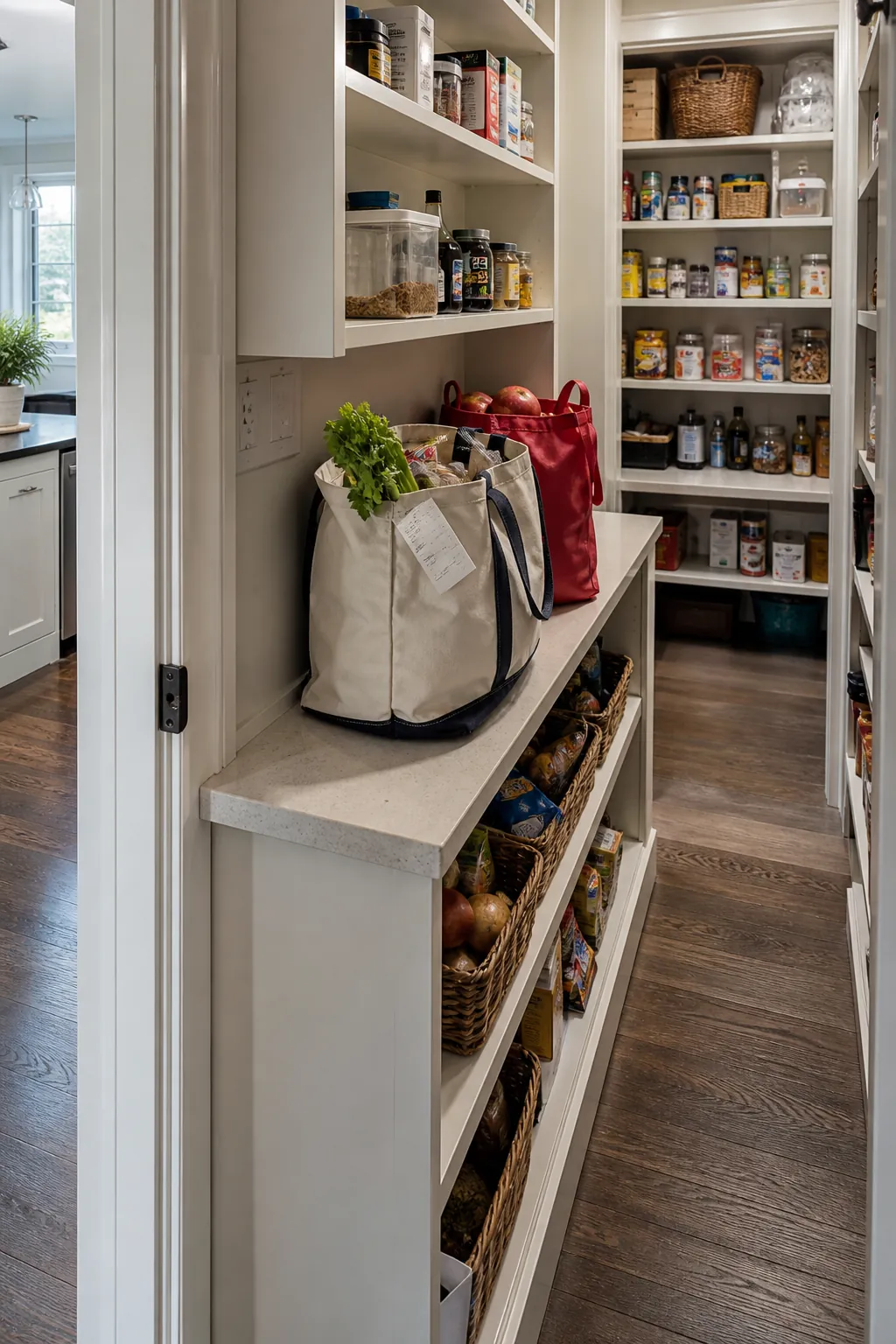
Make Room for Grocery Drop-Off
Leave one clear counter or waist-high shelf near the entrance for grocery bags. This landing zone turns unloading into a simple sort-and-store process rather than placing bags on the floor and blocking the aisle.
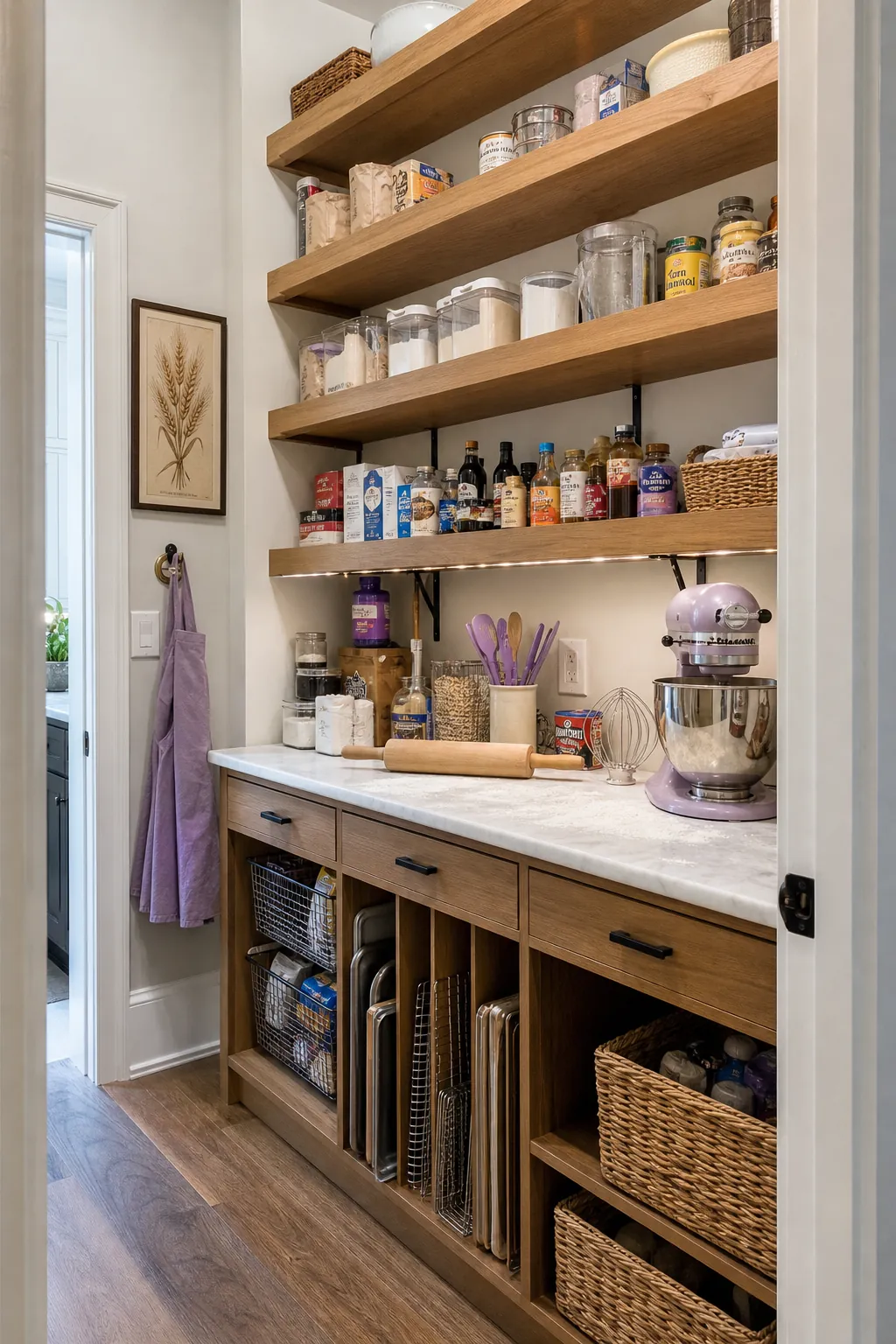
Create a Baking Supply Wall
Keep flour, sugar, extracts, decorating tools, trays, and the mixer within one arm’s reach. Clear containers are helpful only for ingredients you reliably refill; original packages remain the better choice when cooking directions or allergen labels matter.
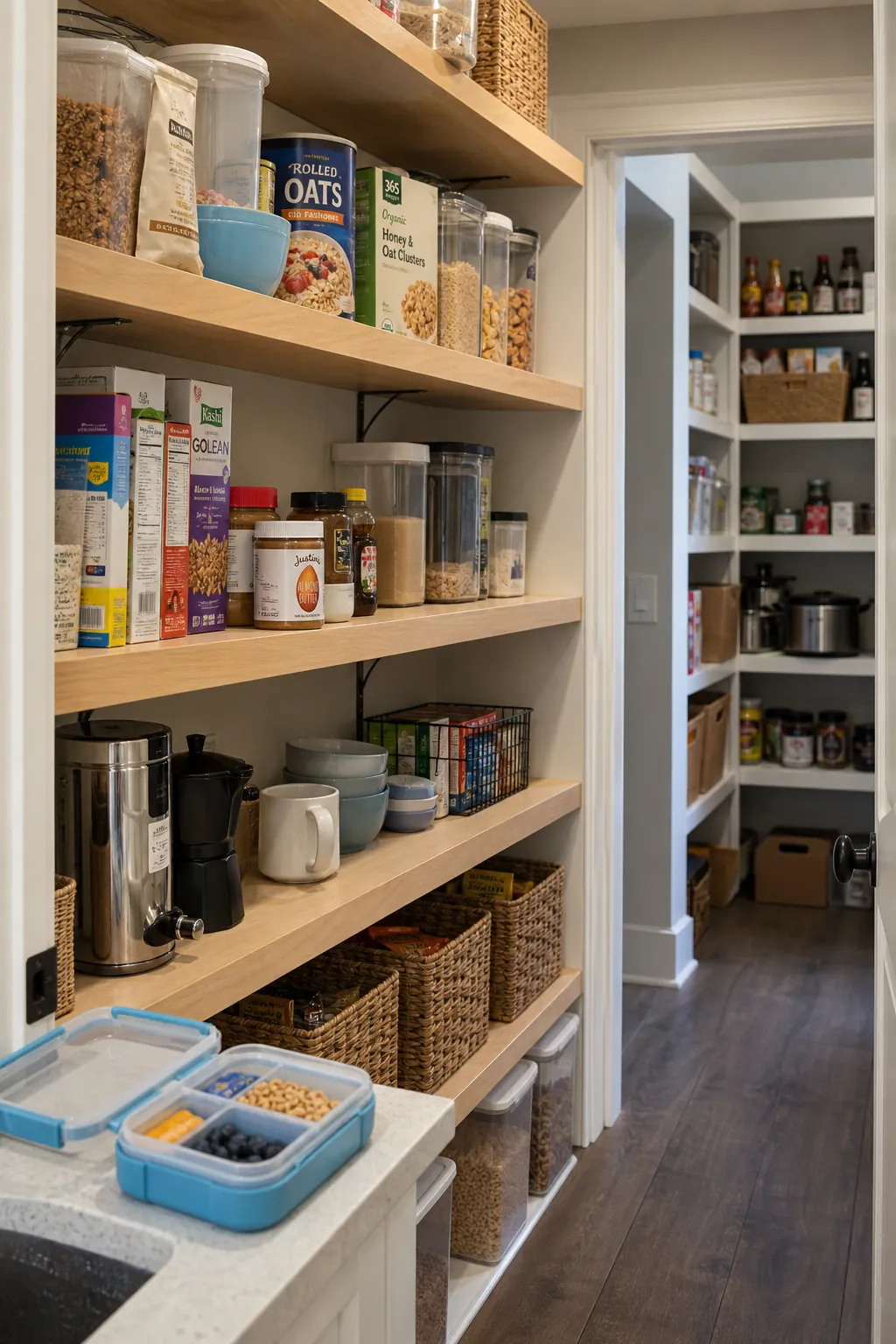
Set Up a Breakfast Shelf
Group cereal, oats, nut butter, coffee, and reusable lunch pieces near the kitchen-facing side. A morning zone reduces cross-traffic and makes it easier for several household members to find what they need.
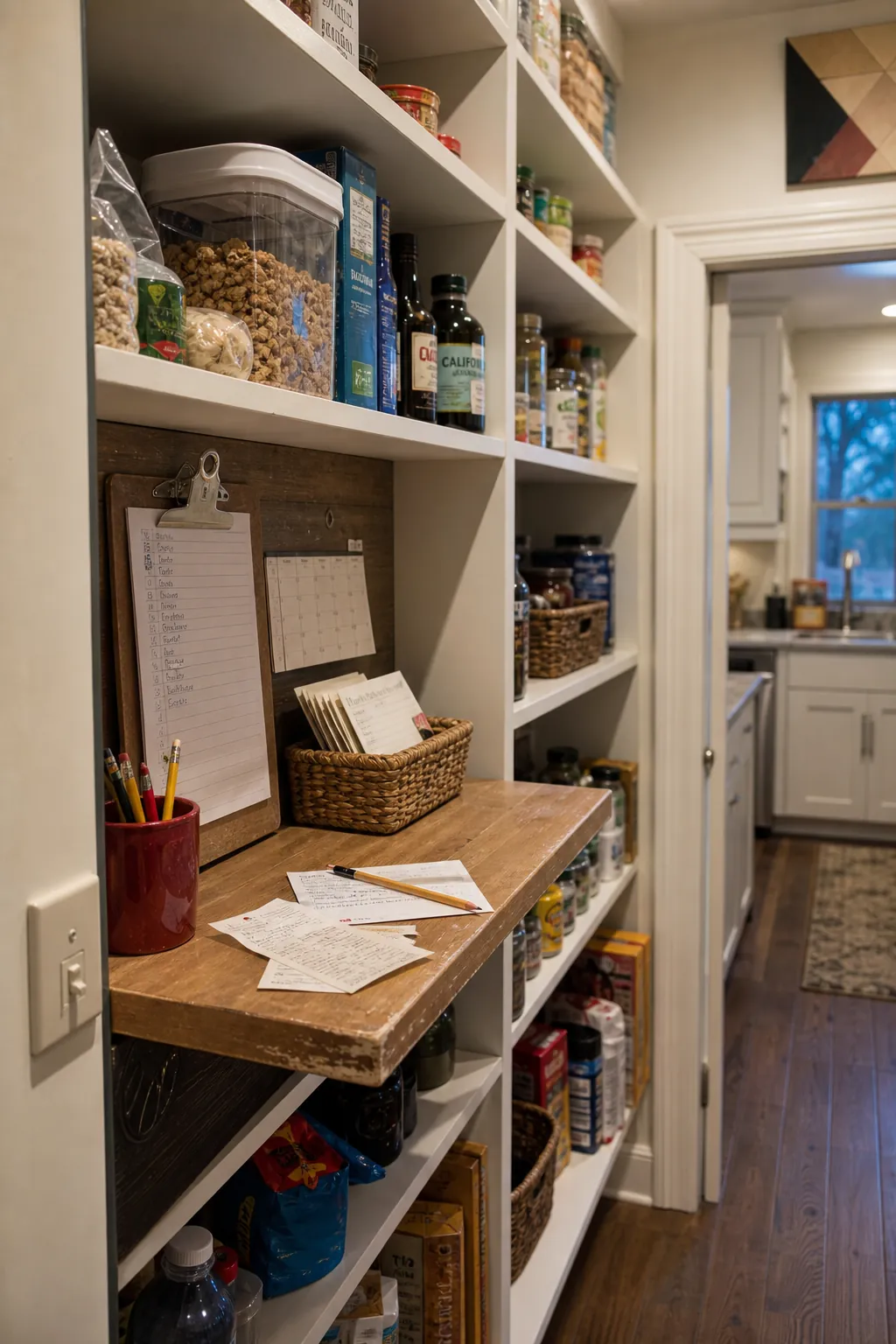
Dedicate a Shelf to Meal Planning
A small dry-erase board, clipboard, or paper list near the entrance can track meals and items that run out. Keep the system quick enough to update while cooking or it will become decoration.
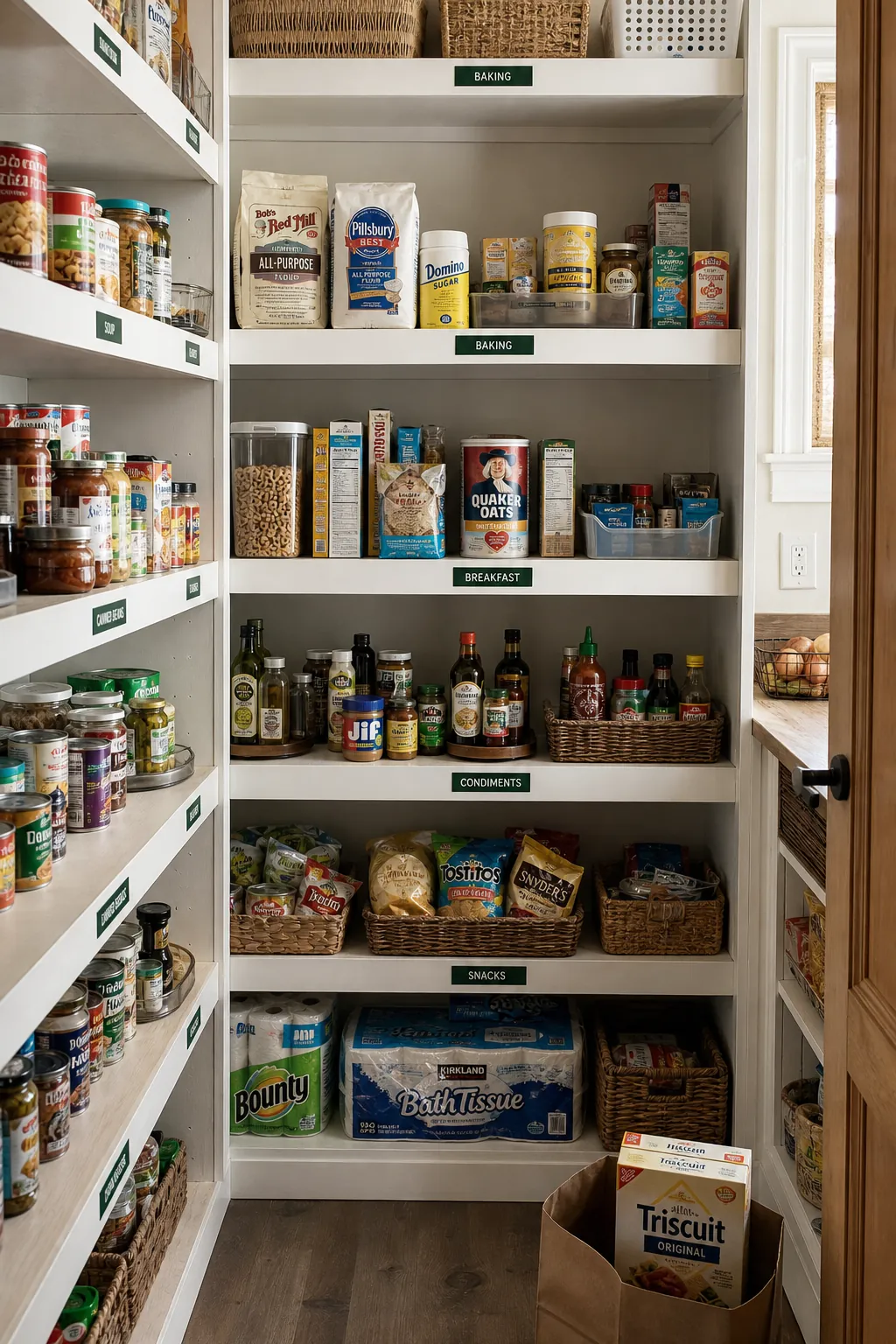
Use Labels as Location Cues
Label the shelf or basket category rather than every identical container. The goal of pantry organization ideas is to make the correct return location obvious to everyone, even when brands and package sizes change.
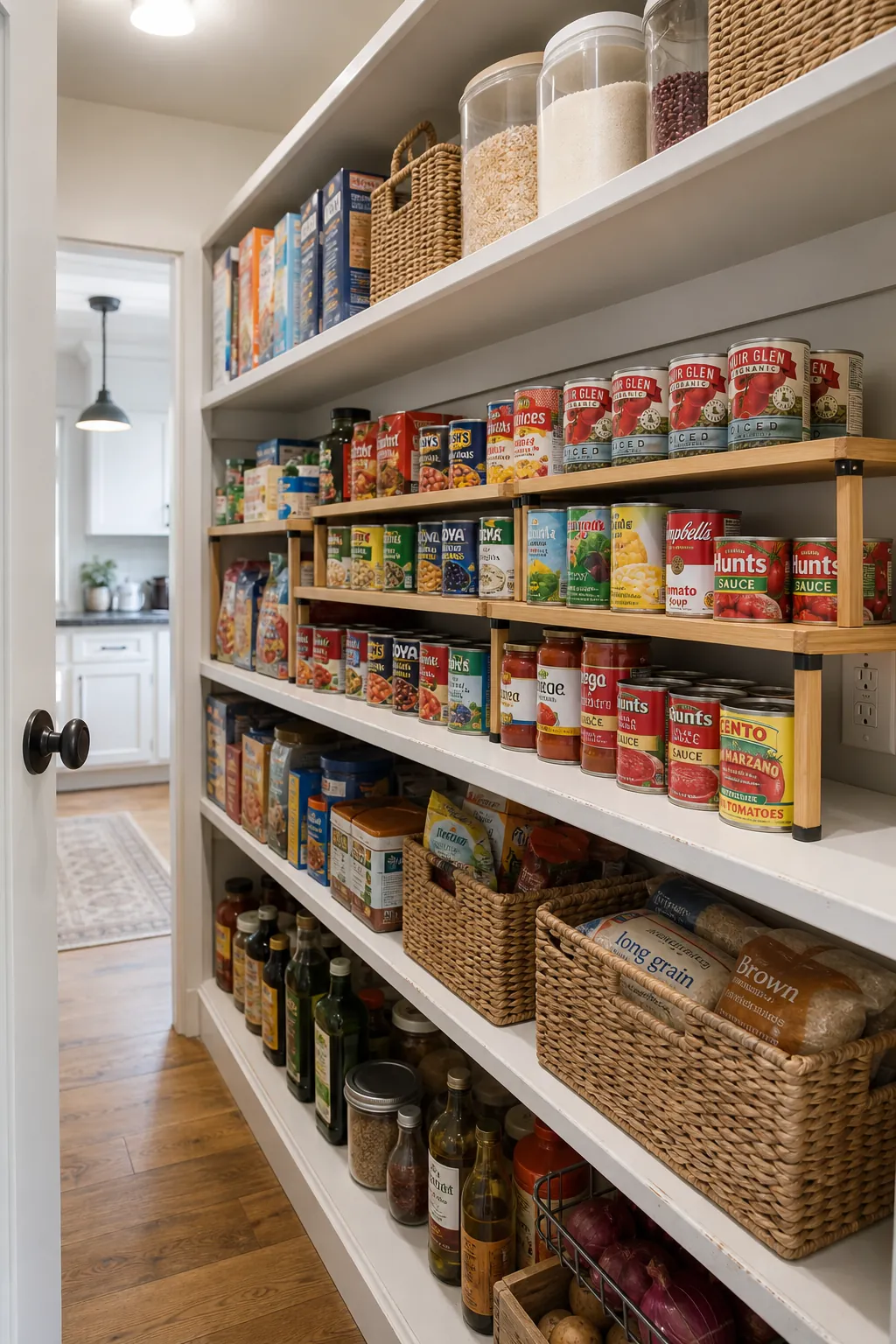
Add Shelf Risers for Cans
Tiered risers reveal the labels in the second and third rows when deep shelves cannot be replaced. Test that the highest tier remains stable and reachable before loading it with glass jars.
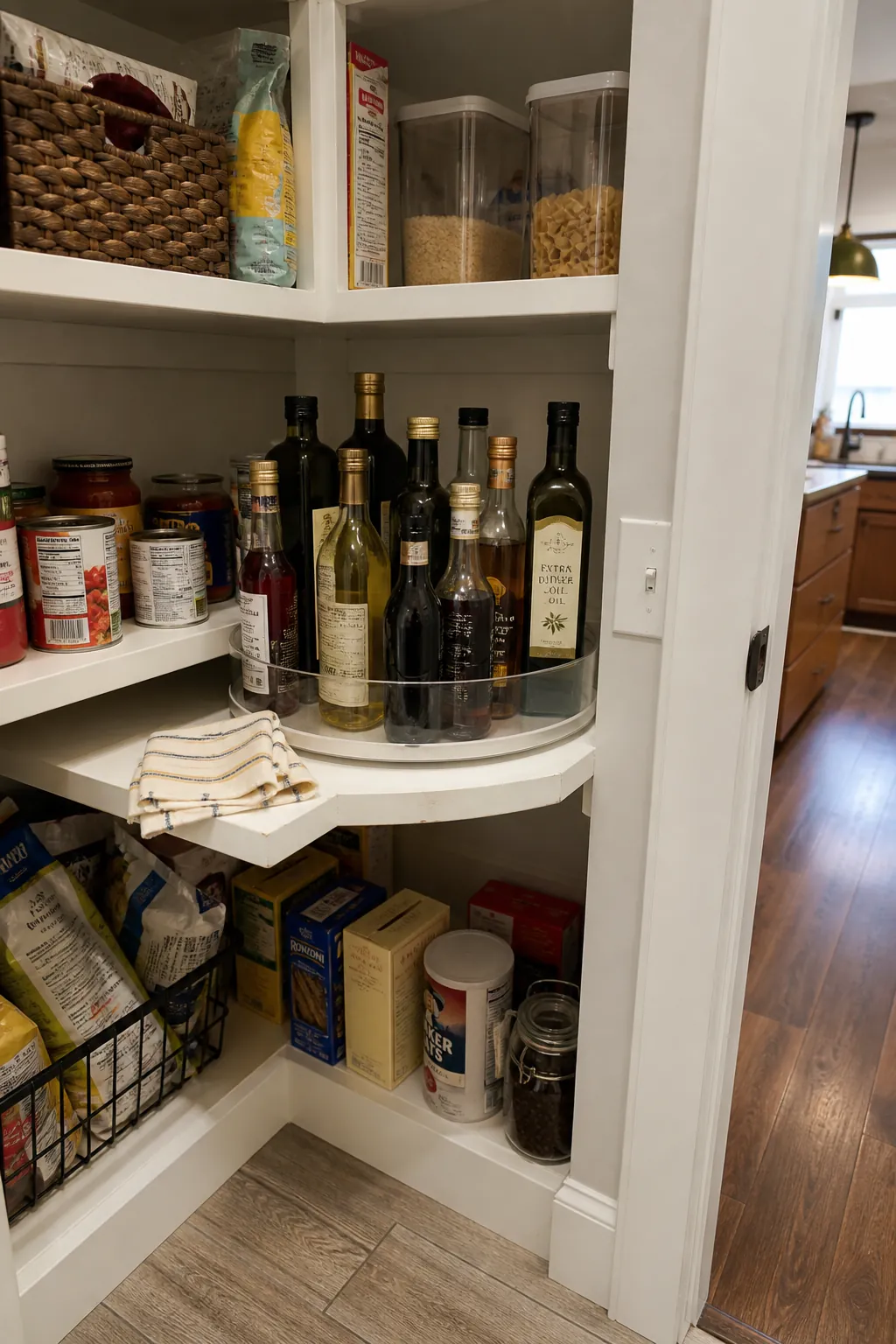
Use Turntables for Bottles and Condiments
A turntable works well for oils, vinegars, and sauces in a corner or deep shelf. Choose one with a raised rim, avoid overloading it, and leave enough vertical clearance to lift bottles out safely.
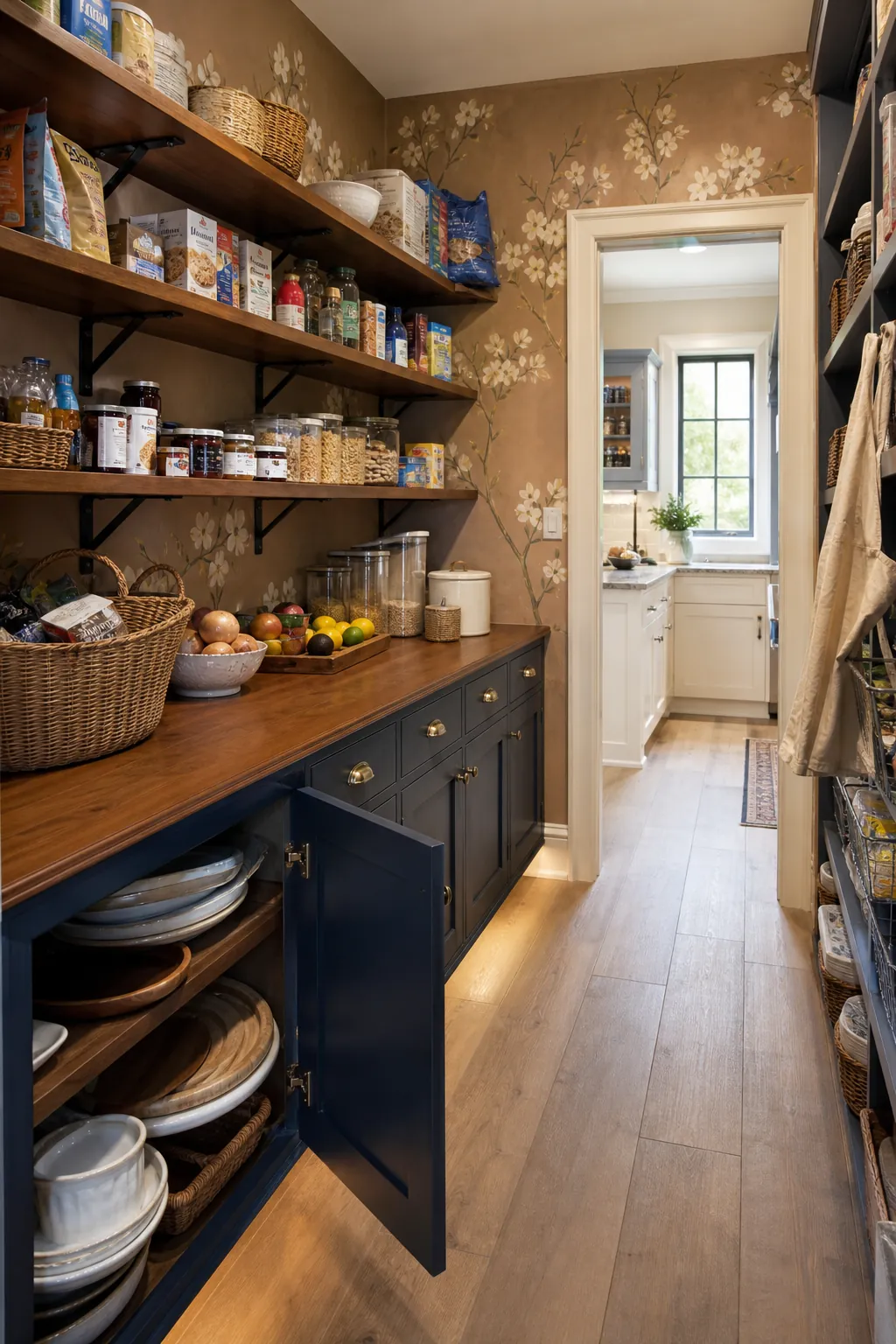
Blend Open Shelves With Closed Cabinets
Open shelves serve fast-moving food; closed cabinets hide entertaining pieces, cleaning supplies, and visual clutter. This mix gives a pantry remodel a calmer appearance without sacrificing the visibility that makes open storage efficient.
Finish With a Five-Minute Reset Zone
Leave a small basket for items that belong elsewhere and a visible spot for products nearing their use-by date. The best walk in pantry is not the one with the most containers; it is the one the household can restore in five minutes. When every shelf has a clear job, everyday mess becomes a quick reset instead of a weekend overhaul.