
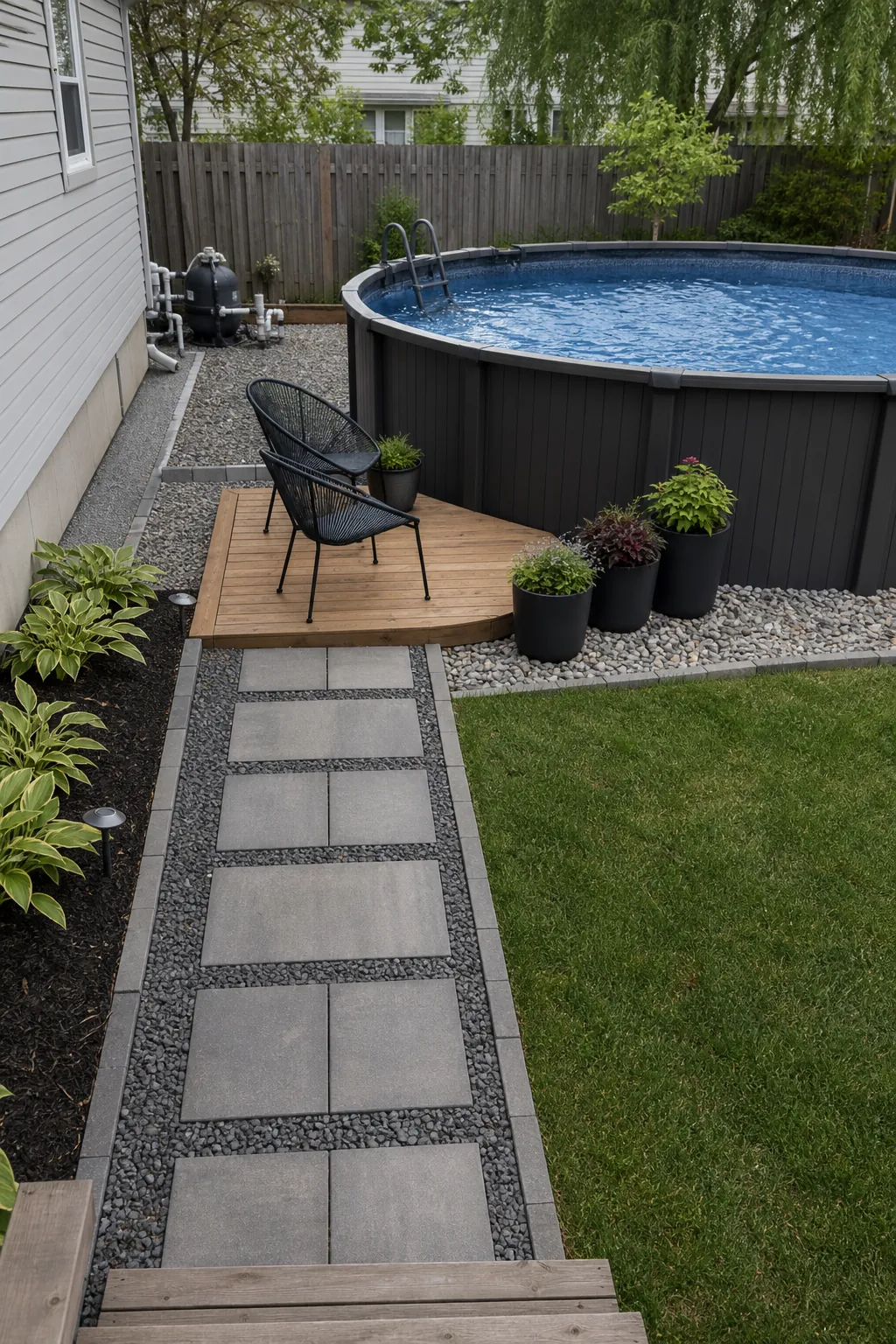
An above-ground pool can be affordable; the surround is where budgets often disappear. The good news is that expensive-looking design usually comes from alignment, repetition, and clean edges, not the priciest material.
Before building, solve level ground, drainage, safe footing, structural loads, electrical clearances, barriers, and access to the pump. Follow the pool manufacturer’s instructions and local code, and bring in a qualified professional for decks, retaining work, plumbing, or electrical changes. These 17 DIY pool surround ideas focus on finishes you can scale without disguising a safety problem.
Lay a Tailored Gravel Ribbon
A narrow, crisply edged gravel ribbon is one of the cheapest pool surround ideas that can still look custom. Use washed stone in one consistent color, hold it with a smooth mower-friendly edge, and preserve the manufacturer-required gap around the wall and supports.
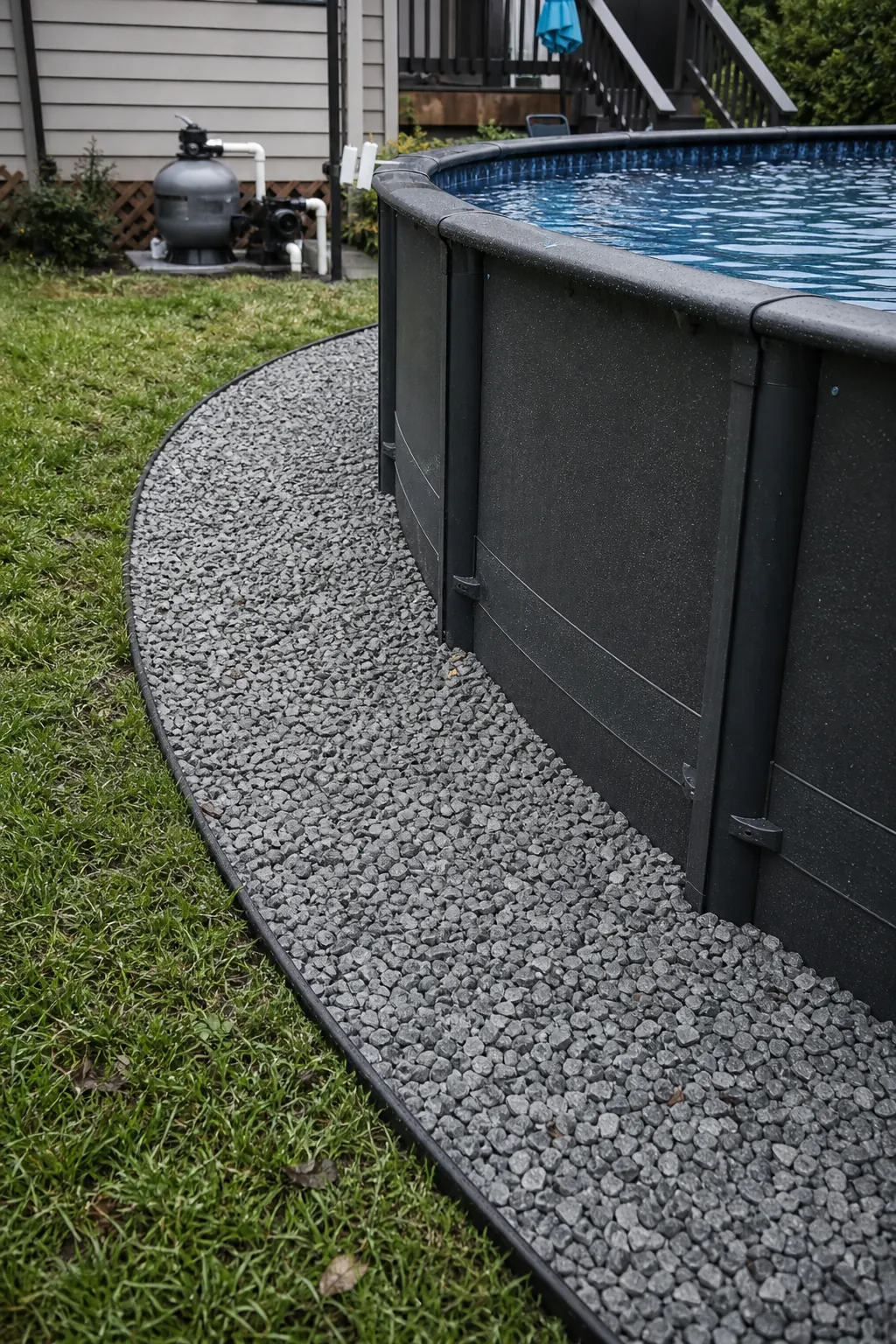
The expensive-looking detail is restraint: a uniform width, clean curve, and a surface graded away from the pool. Do not pile stone against a liner or frame, and correct drainage problems before treating the gravel as decoration.
Build a Proper Paver Landing
Give the ladder a real destination with a compact paver landing instead of one loose block. A prepared base, textured pavers, and a broad pause area instantly make the entry feel intentional while keeping muddy feet out of the water.
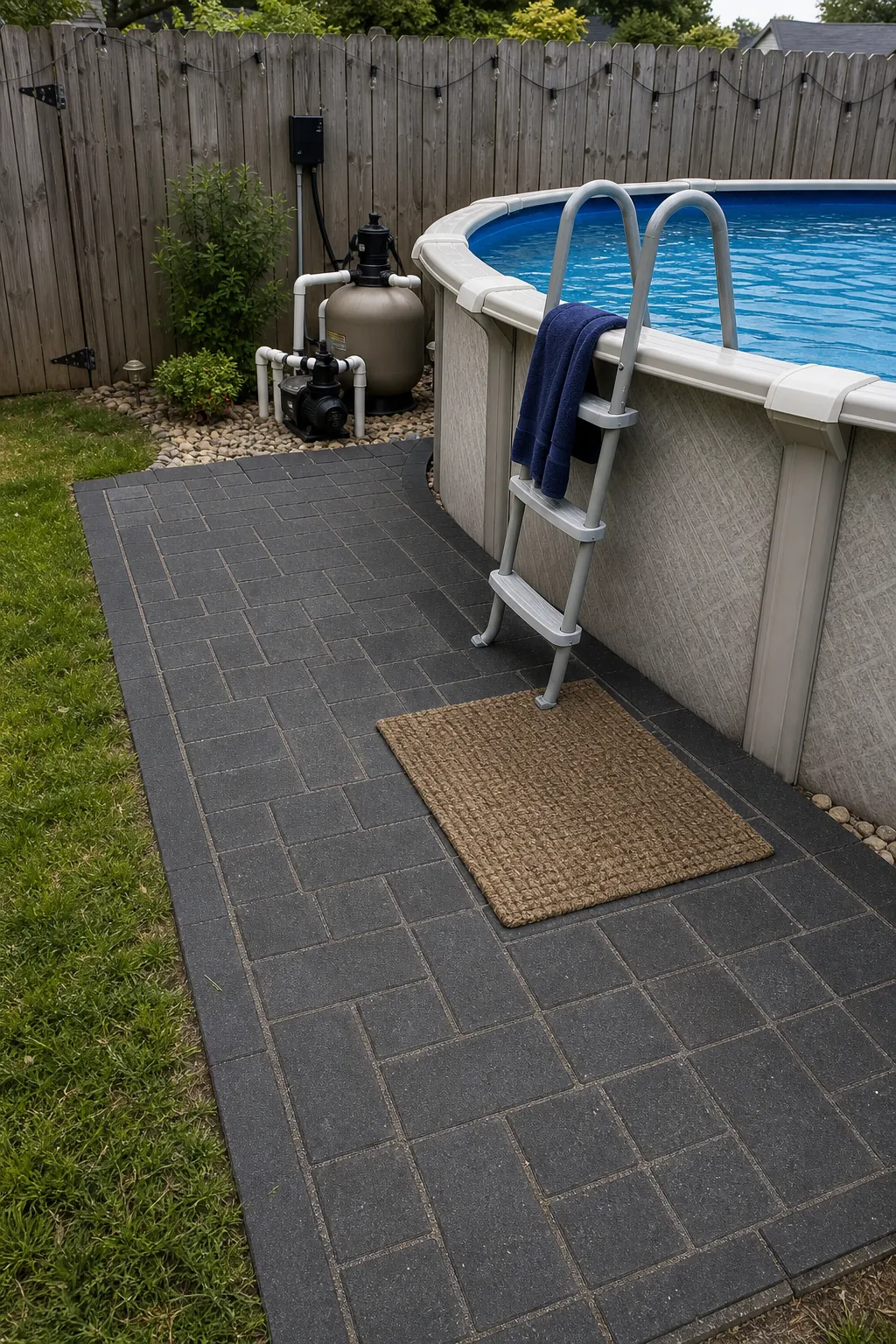
Keep the landing independent of the pool and slope it away from the wall. Seat every paver firmly, leave ladder clearance, and use regional freeze-thaw guidance where needed. Good alignment and a simple soldier-course edge create the high-end effect.
Create a Scrap-Wood Boardwalk
Short lengths of sound, exterior-rated lumber can become a narrow boardwalk over a prepared base. Repeating boards disguise mixed lengths and provide a cleaner route than worn grass. Use only structurally suitable material, smooth every edge, and keep the walkway separate from the pool.
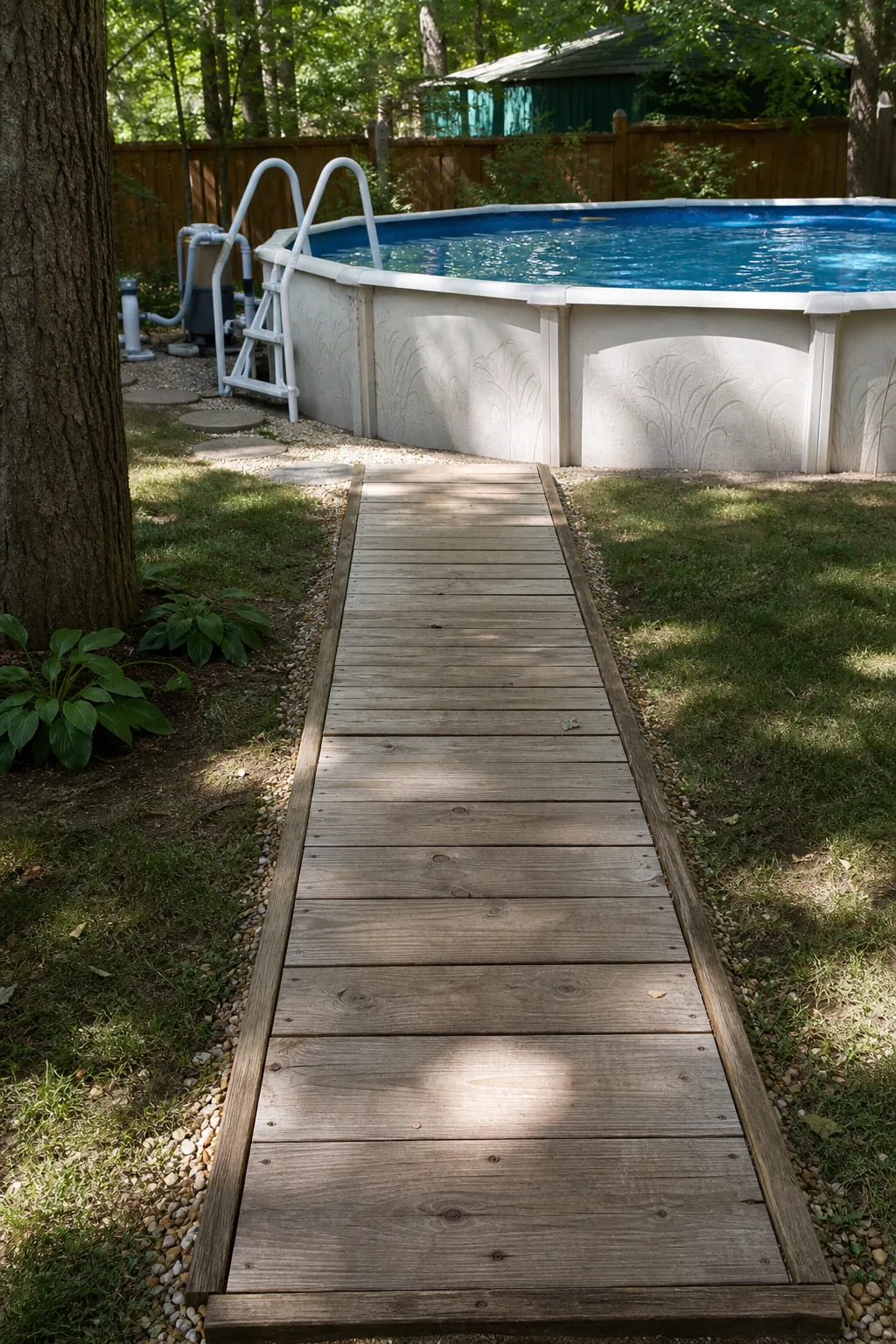
Set consistent gaps for drainage and align fasteners with a simple jig. A dark penetrating finish can unify boards from different batches, but follow product directions and keep slippery coatings out of wet traffic areas.
Add a Compact Entry Deck
A small entry deck concentrates lumber and labor where it matters most. It can support safer stairs, a gated landing, and a place to set towels without paying for a full wraparound structure.
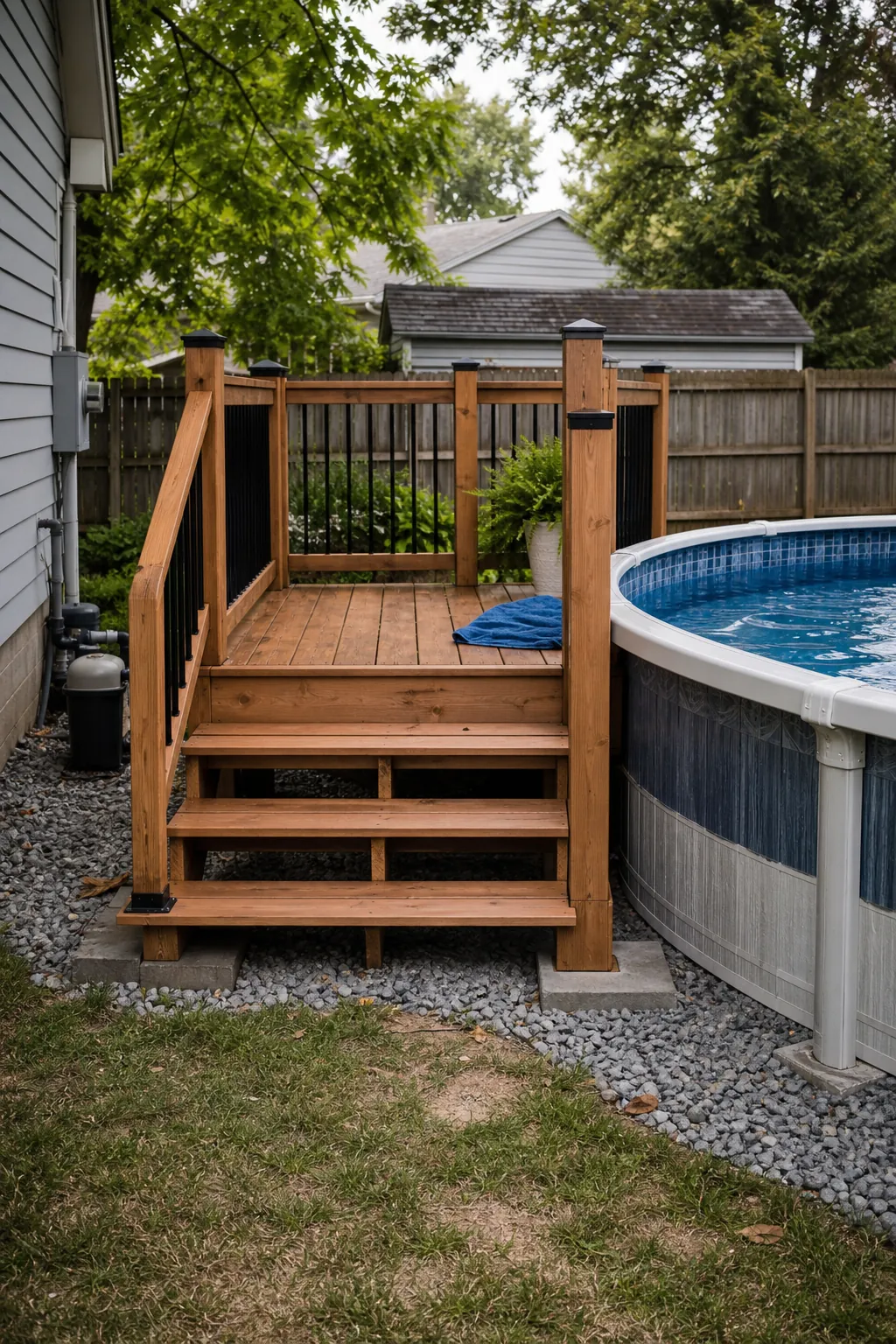
This is structural work, not decorative carpentry. Confirm permits, guards, gates, footings, manufacturer clearances, and local pool rules. Build the deck independently so it does not impose loads on a pool that was never designed to carry them.
Frame the Wall With Freestanding Slats
Freestanding slat panels can interrupt a long expanse of pool wall without drilling into it. Use them selectively near a seating viewpoint, anchor them independently, and leave open gaps for airflow and inspection.
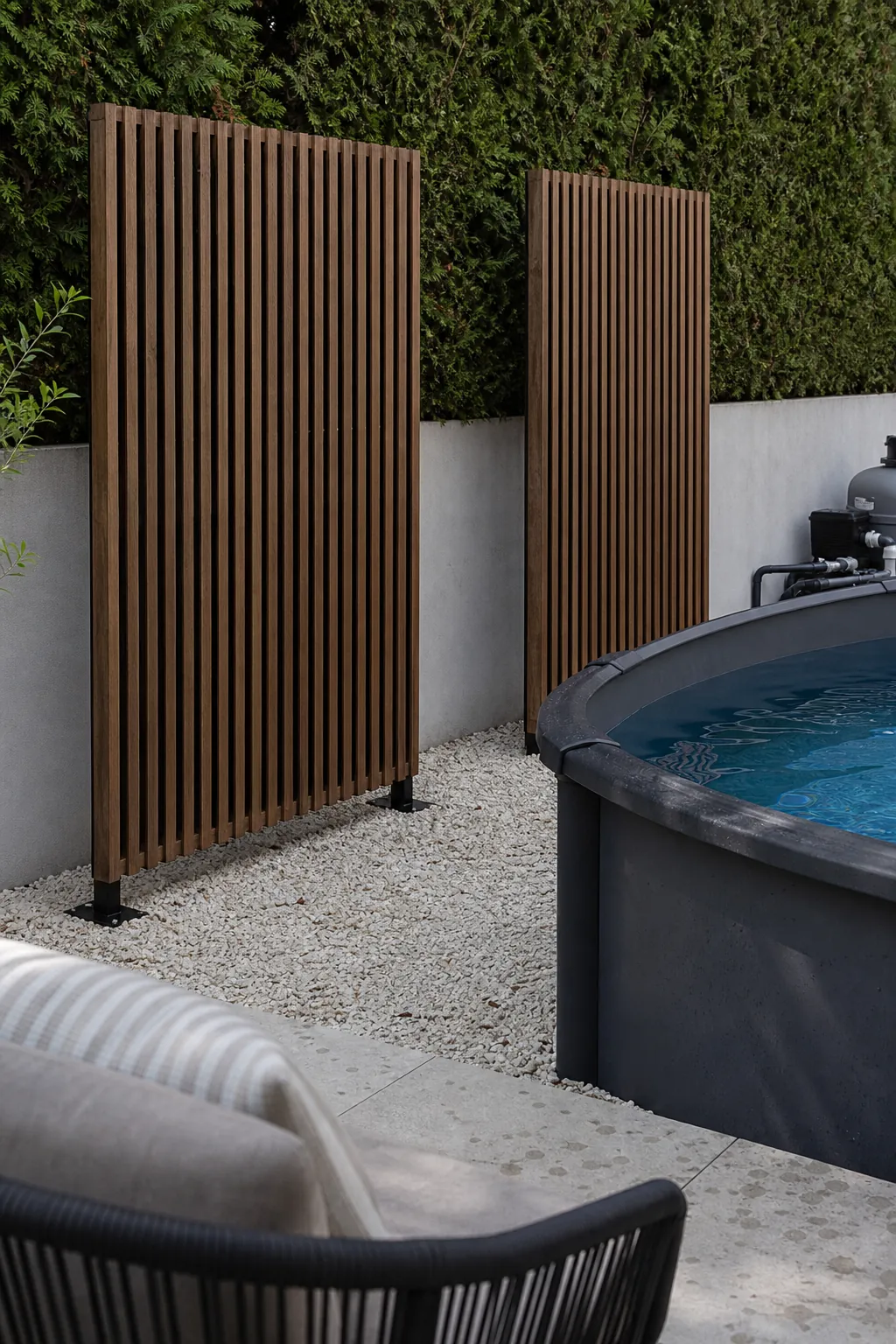
Narrow vertical or horizontal battens look refined when their spacing is exact. Match the timber tone to a deck or bench, then stop before the screen becomes a sealed enclosure that traps moisture or blocks equipment.
Use Reed Panels as a Distant Backdrop
Affordable reed or willow panels look more convincing when attached to a proper boundary fence several feet behind the pool—not wrapped around the pool itself. Their repeated vertical texture softens a plain fence and creates a warm backdrop.
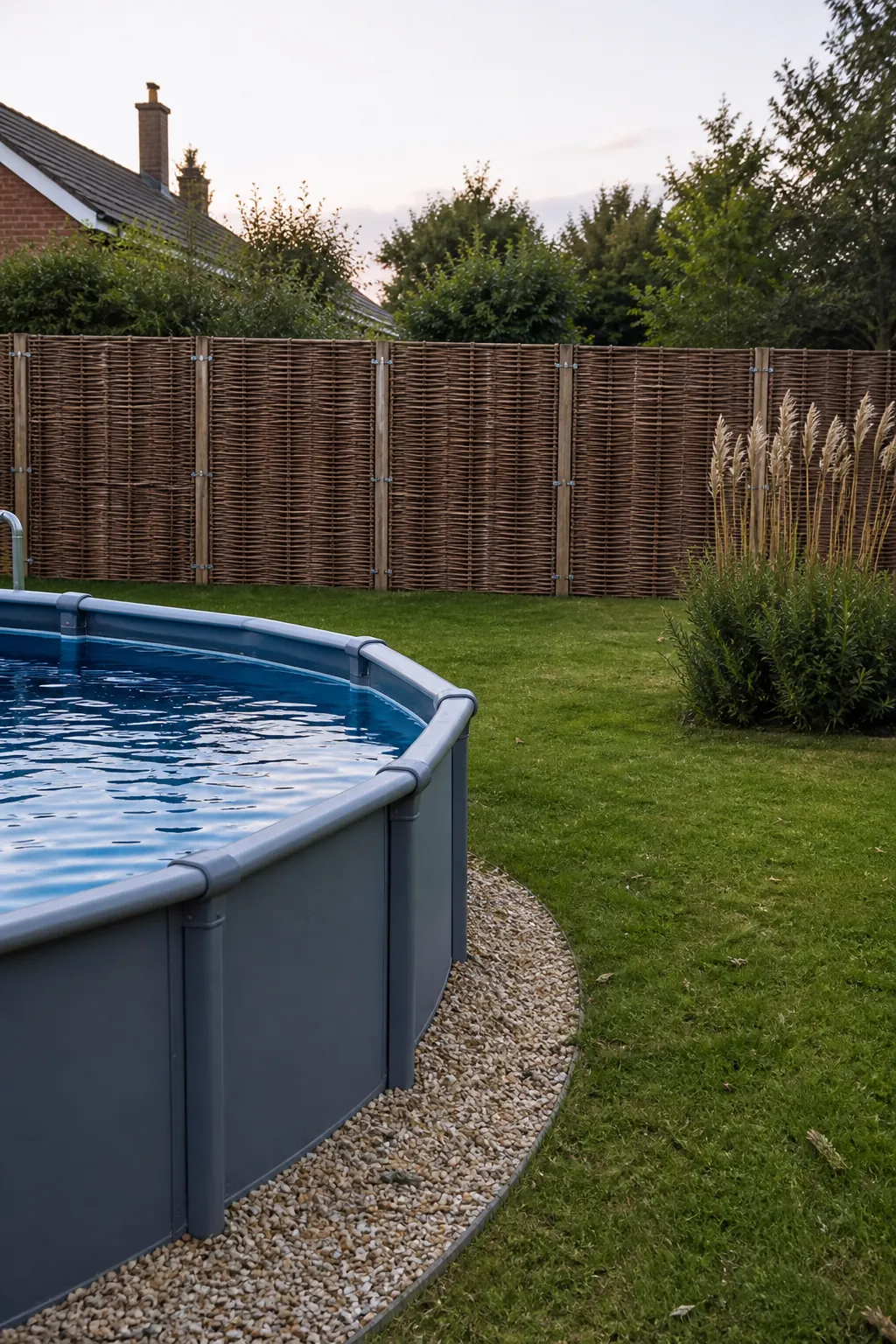
Secure every edge for wind, trim the top evenly, and keep the material out of wet service areas. Because natural screening weathers, plan for repair or replacement rather than treating it as permanent cladding.
Make a Modular Stone-Look Screen
A short independent screen faced with lightweight exterior-rated stone-look panels can give one seating corner architectural weight. Keep it well away from the pool, build it on a stable frame, and use it as a backdrop rather than false pool skirting.
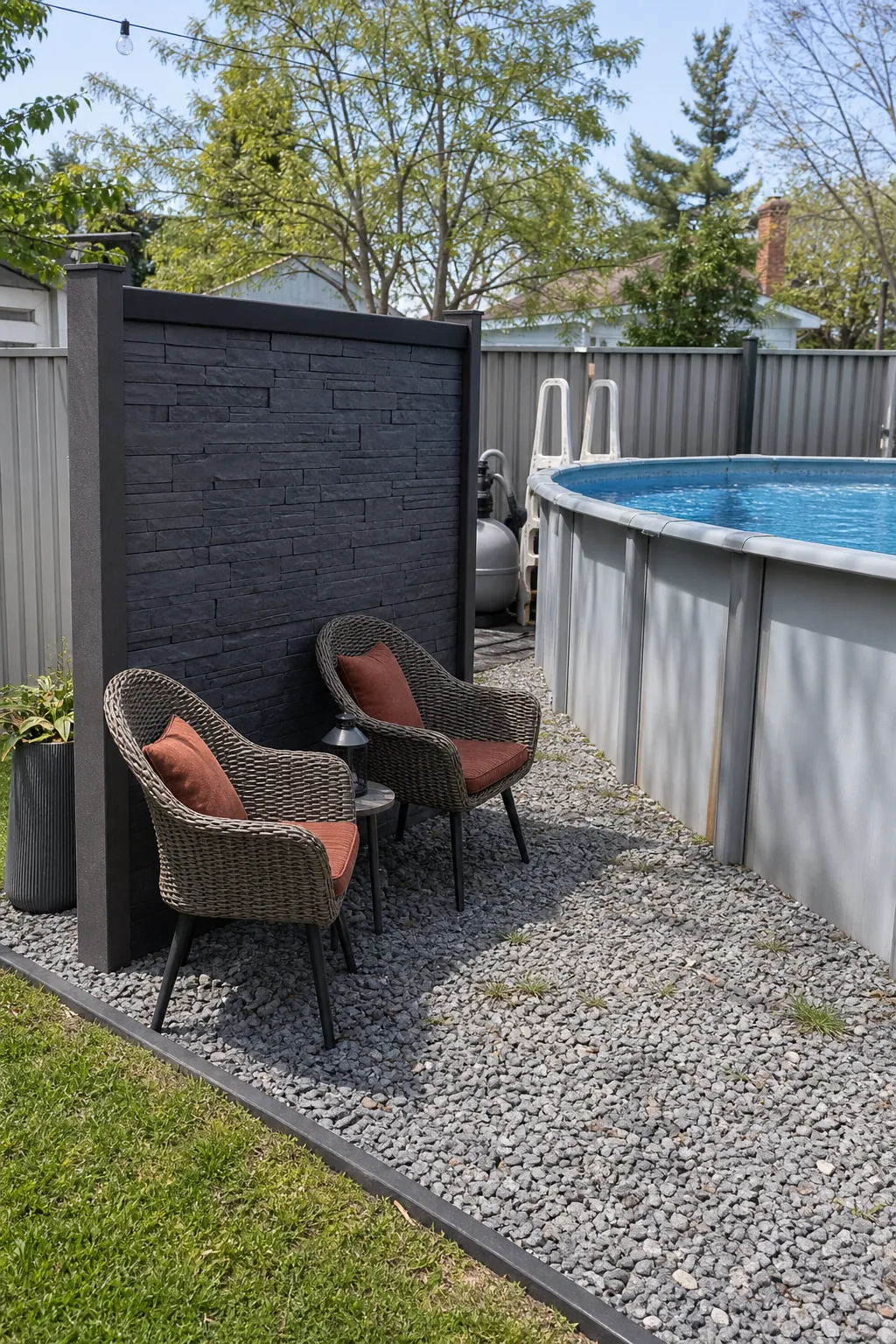
Choose one subdued stone tone and finish corners carefully; obvious unfinished edges are what make budget panels look cheap. Preserve drainage, service access, and all required barriers.
Repeat One Timber Tone
A pool surround feels expensive when the deck, bench, planter boxes, and screen share one timber tone. They do not need to be the same product; a carefully tested exterior stain can visually connect compatible wood elements.
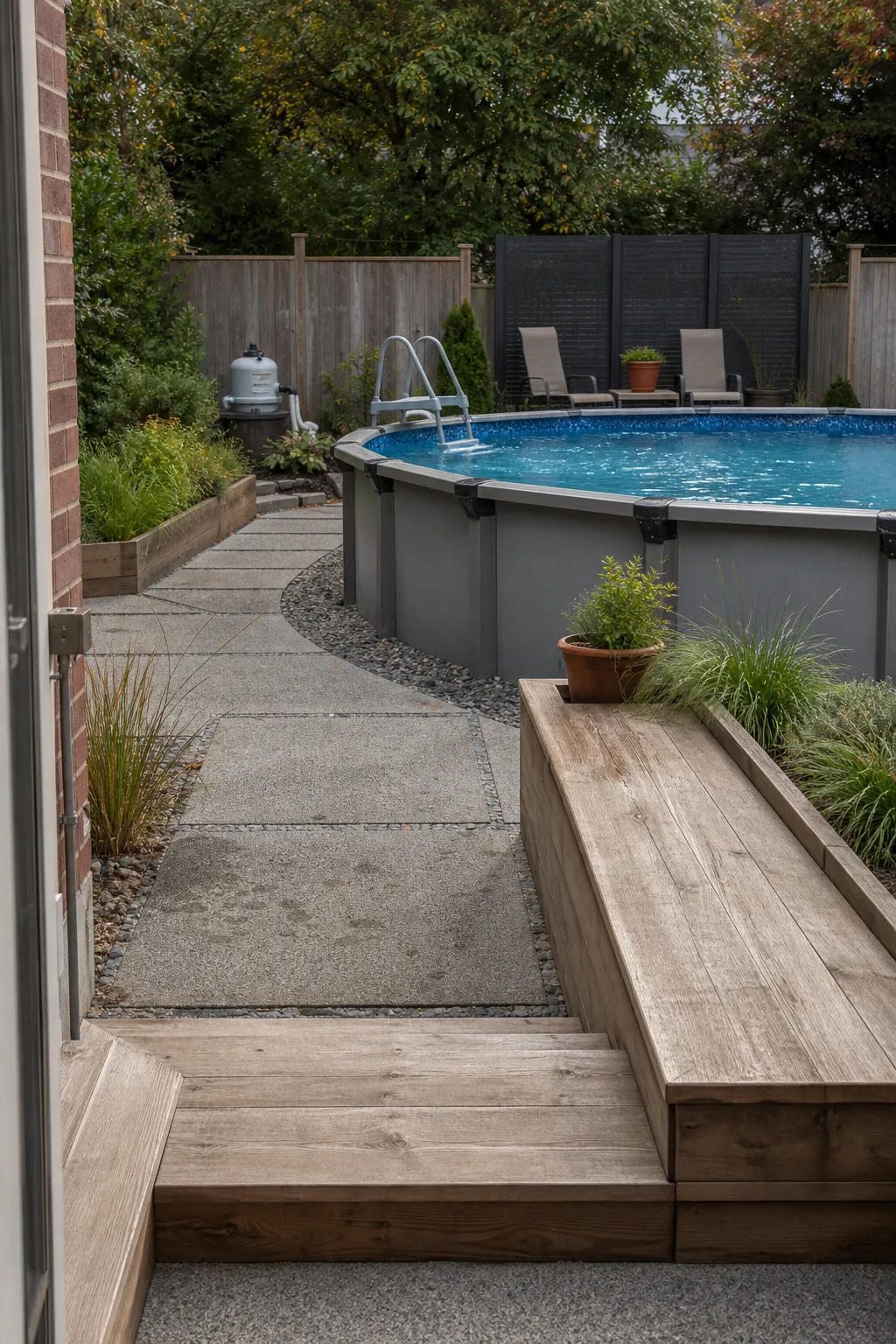
Never paint or attach finishes to the pool unless its manufacturer allows it. Coordinate the movable and independent pieces around the shell instead, and avoid glossy coatings that exaggerate imperfections or become slick.
Cluster Three Oversized Planters
Three large planters usually look more intentional than a dozen small pots. Group them in different heights on a mineral surface, repeat one foliage shape, and keep roots contained and movable.
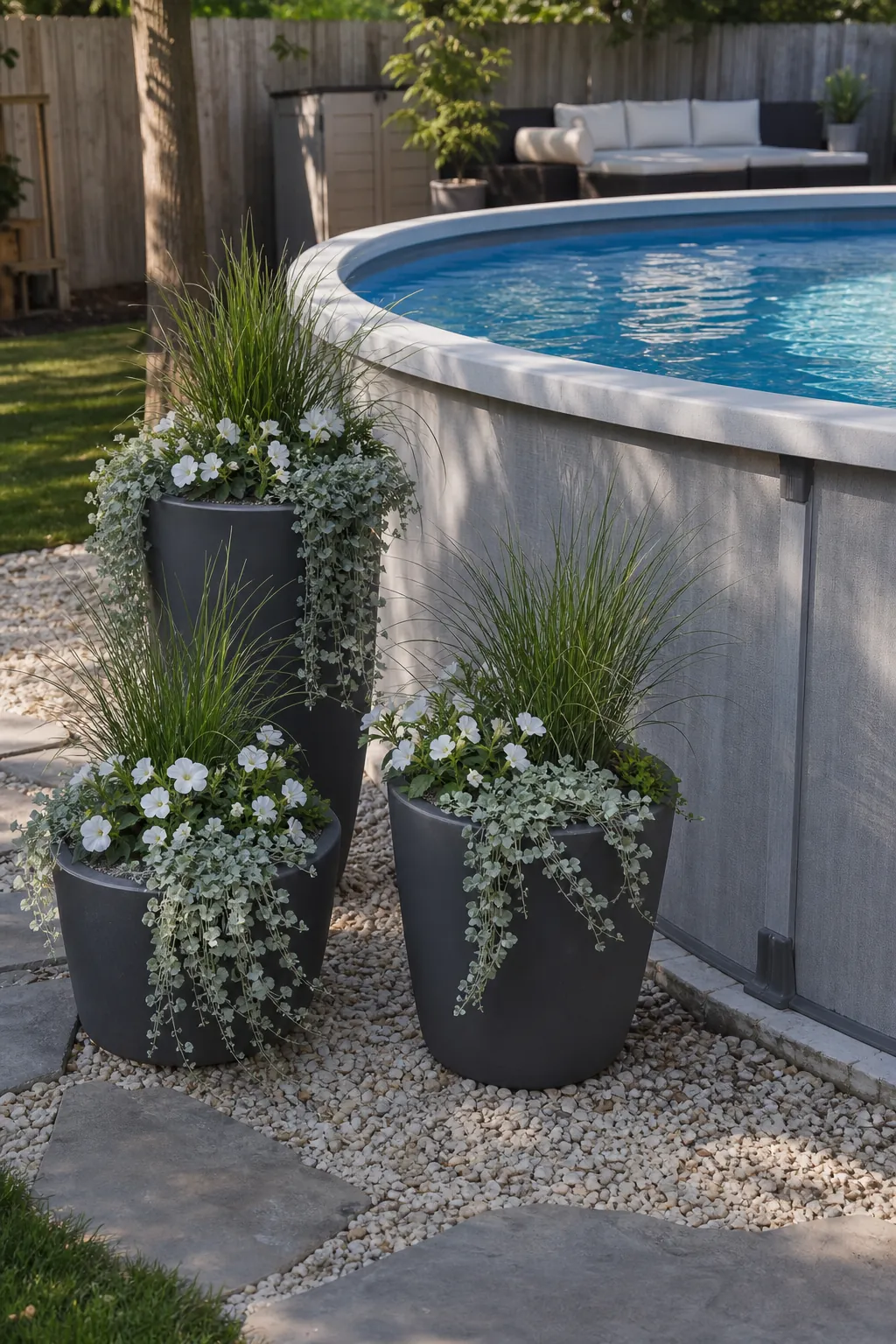
Support every pot on a level draining pad and place the cluster outside the wall inspection zone. One tall plant, one mounding plant, and one trailing plant provide the layered look without filling the yard with accessories.
Paint the Fence a Receding Color
A dark charcoal or deep green fence can make foliage stand out and visually calm a busy pool corner. The effect comes from one continuous background color, not from adding more decoration.
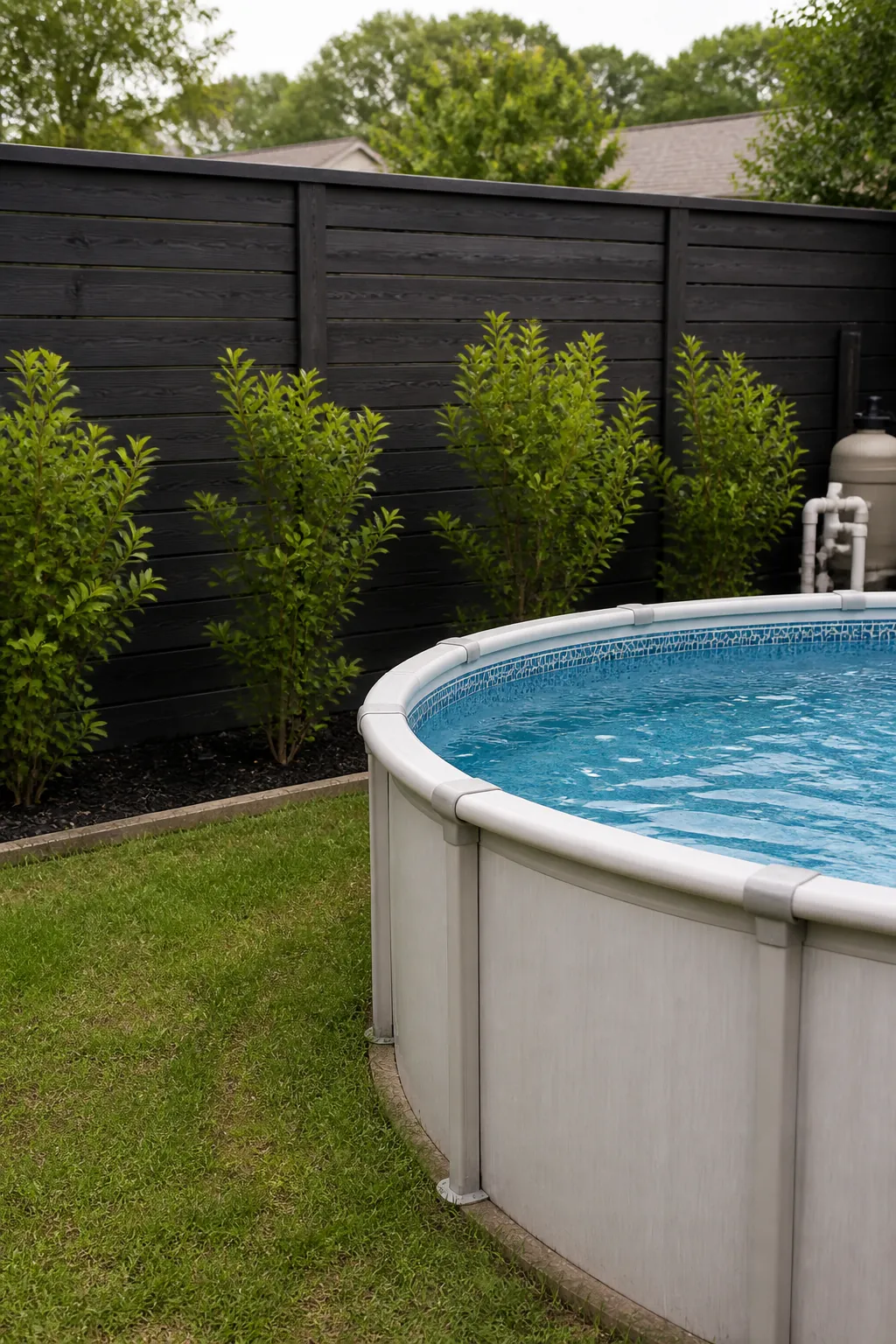
Test paint or stain on the actual fence, prepare the surface properly, and choose an exterior system compatible with its material. Keep paint work away from the pool shell and protect water and equipment from debris.
Carve Out an Outdoor-Rug Lounge
On an existing dry patio, an outdoor rug can define a poolside lounge for less than new hardscape. Choose a flat, quick-drying weave, anchor it with stable furniture, and keep it outside the splash-heavy walking route.
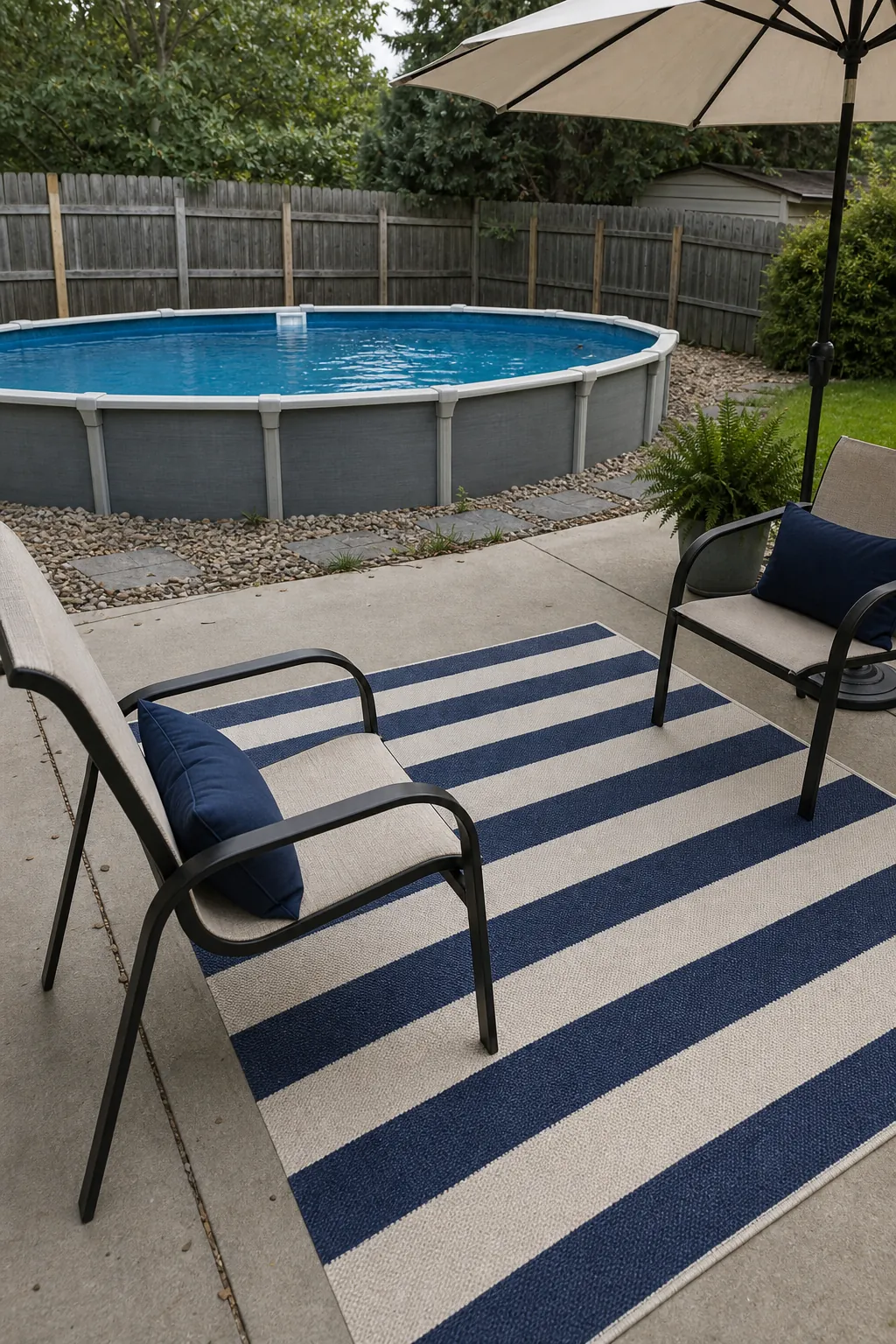
A simple stripe or small geometric pattern reads more tailored than a novelty print. Lift and clean the rug regularly so moisture and grit do not remain trapped beneath it.
Turn a Bench Into Hidden Storage
A storage bench earns its footprint twice: it gives adults a place to sit and hides goggles, toys, and rolled covers. Slatted or vented construction helps damp items dry instead of turning the box musty.
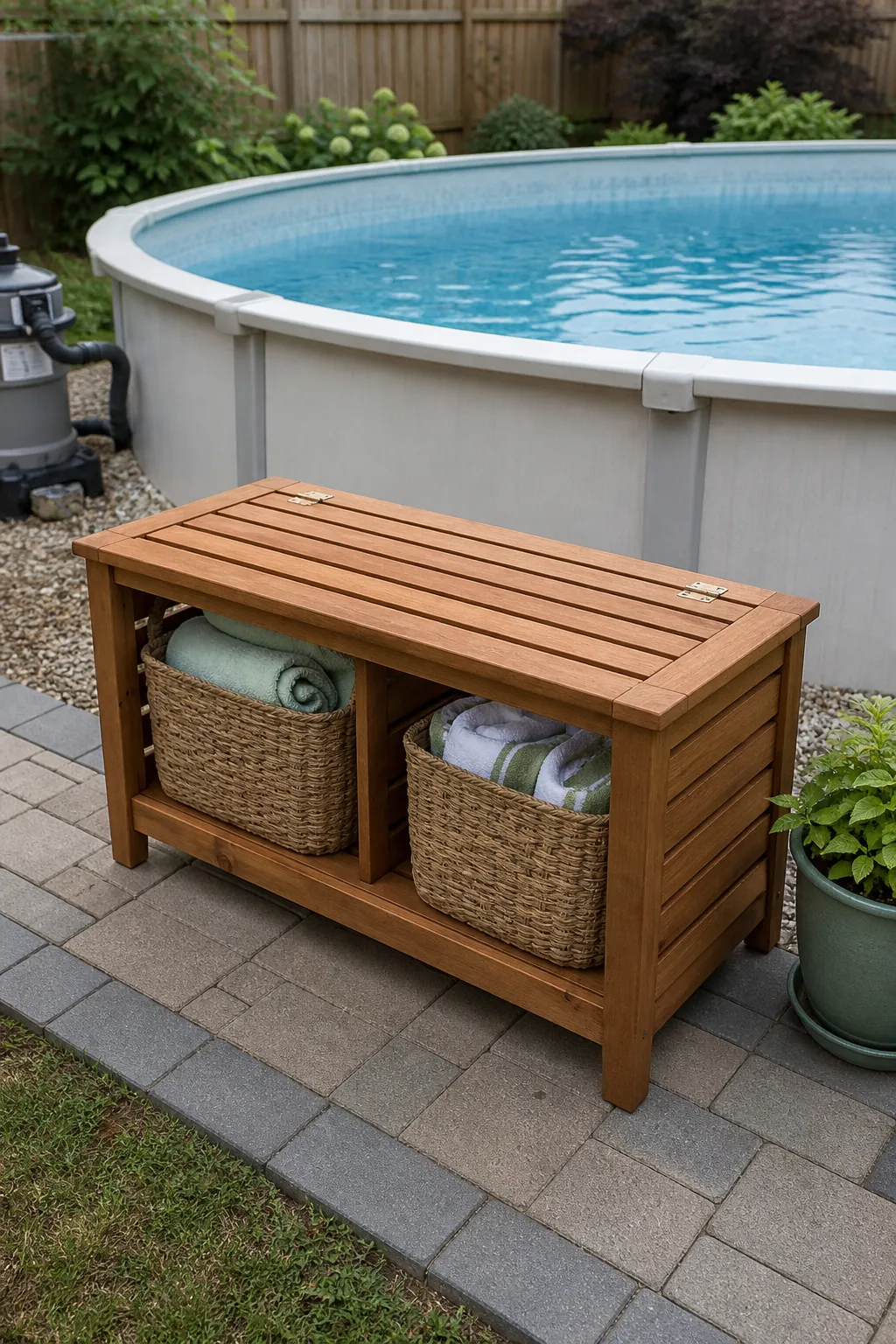
Place it on a stable landing outside circulation, use corrosion-resistant hardware, and store pool chemicals elsewhere according to their labels. Matching the bench finish to another wood element makes the simple build feel custom.
Line the Approach With Low Solar Lights
Low shielded solar lights make an inexpensive path feel finished after dusk. Space them to guide movement, not to create a bright runway, and aim the light at the ground rather than the water.
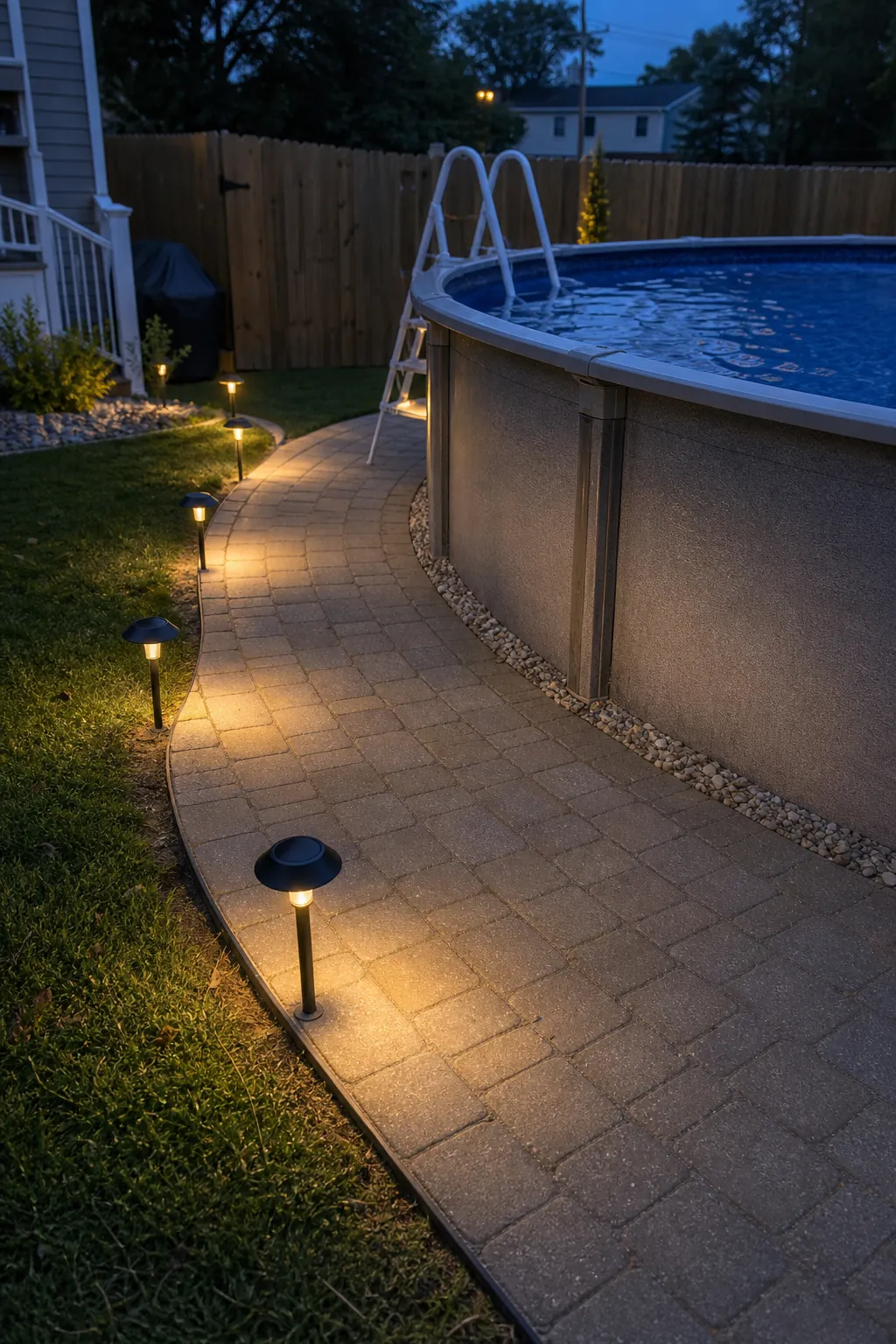
Solar fixtures do not replace code-required electrical safety or task lighting. Keep them out of the walking surface, give panels reliable sun, and choose warm light that reduces glare.
Build a Cedar Towel Rail
A freestanding cedar rail gives wet towels a deliberate place to dry and costs far less than a cabana. Use smooth rounded edges, strong joinery, and enough spacing that fabrics can breathe.
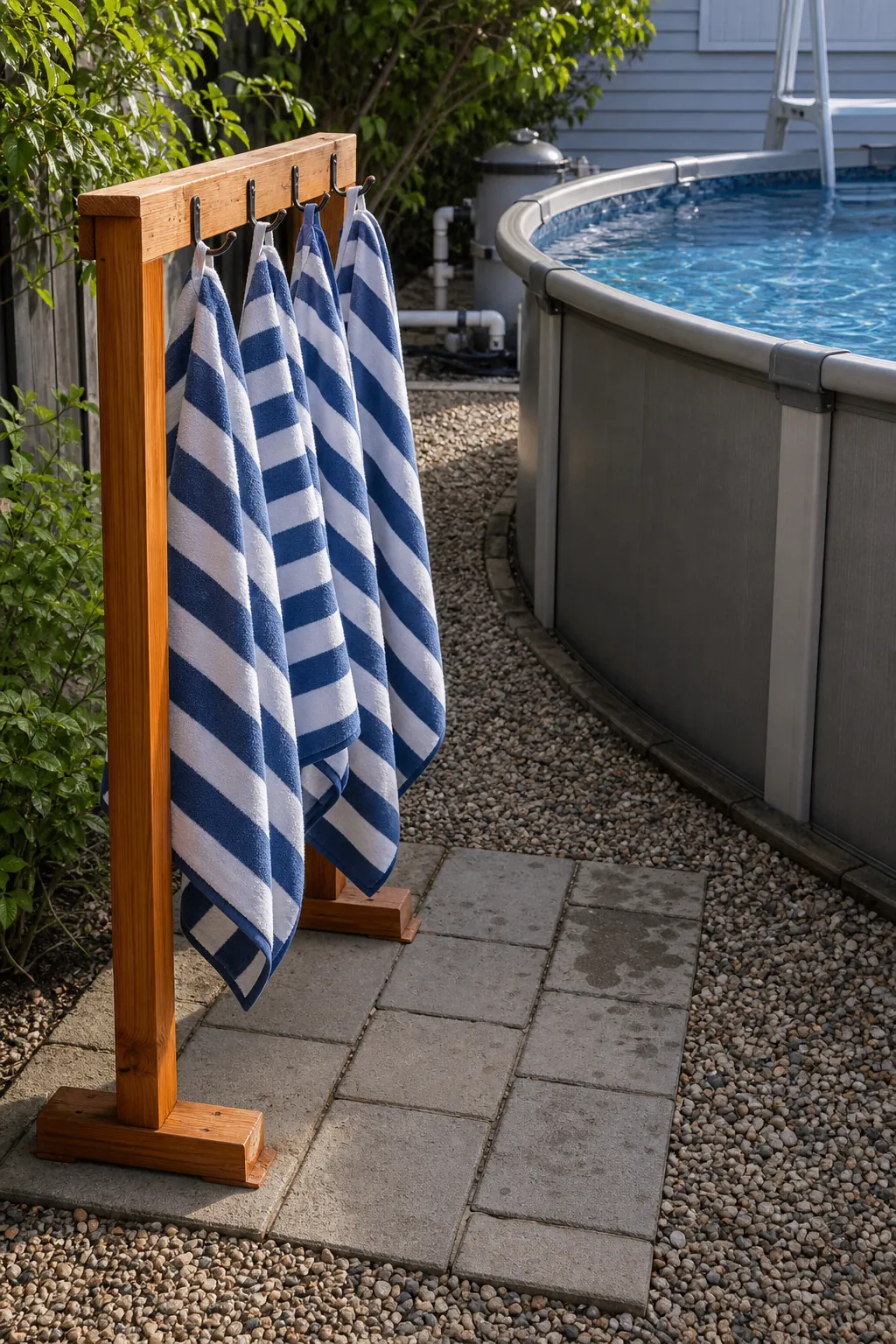
Anchor the rail on a dry paver spur outside the path, and keep it separate from the pool structure. Four hooks and one lower rail are usually enough; more hardware quickly turns a useful station into clutter.
Add a Rinsing Platform
A small slatted rinsing platform can keep grass, sand, and gravel out of the water. Pair it with an outdoor-rated rinse fixture only where plumbing, drainage, and local rules allow.
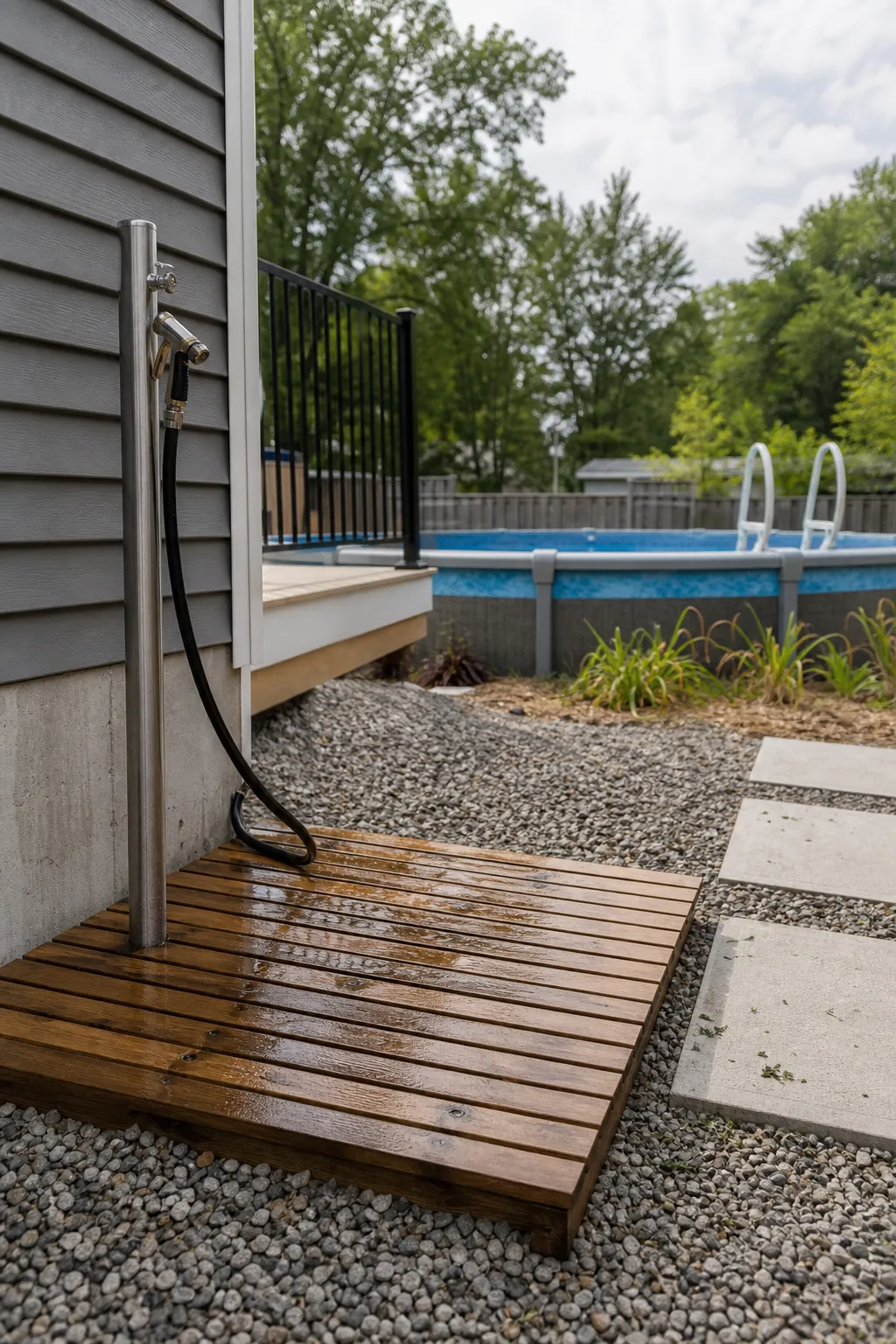
The platform should drain freely, resist slipping, and sit away from electrical equipment and the pool wall. A handheld hose nozzle may be the simplest option; the polished look comes from a defined base and tidy hose storage.
Edge a Mini Lounge With Planter Boxes
Two low planter boxes can frame a seating pocket and hide its raw gravel edge. Keep them outside the pool service zone and fill them with compact, low-litter plants rather than thorny or aggressive species.
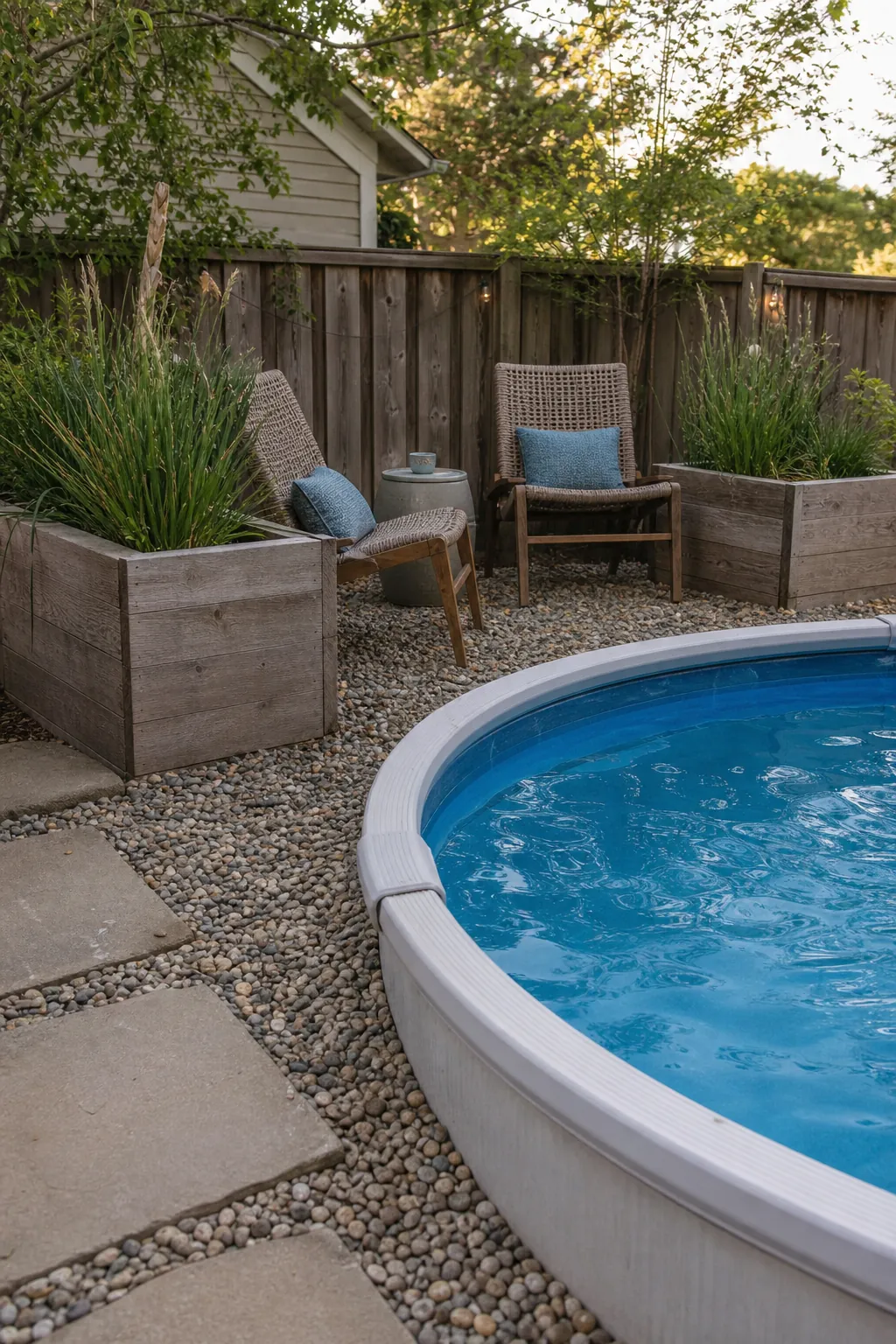
Use the same board width and finish as a nearby deck or bench. Crisp square corners, a concealed liner, and level placement create the built-in appearance without permanently attaching anything to the pool.
Connect the Surround With One Border
The fastest way to make several DIY pool surround ideas look planned is to repeat one border material. Carry the same charcoal edge around the gravel collar, paver landing, planter zone, and lounge pocket.
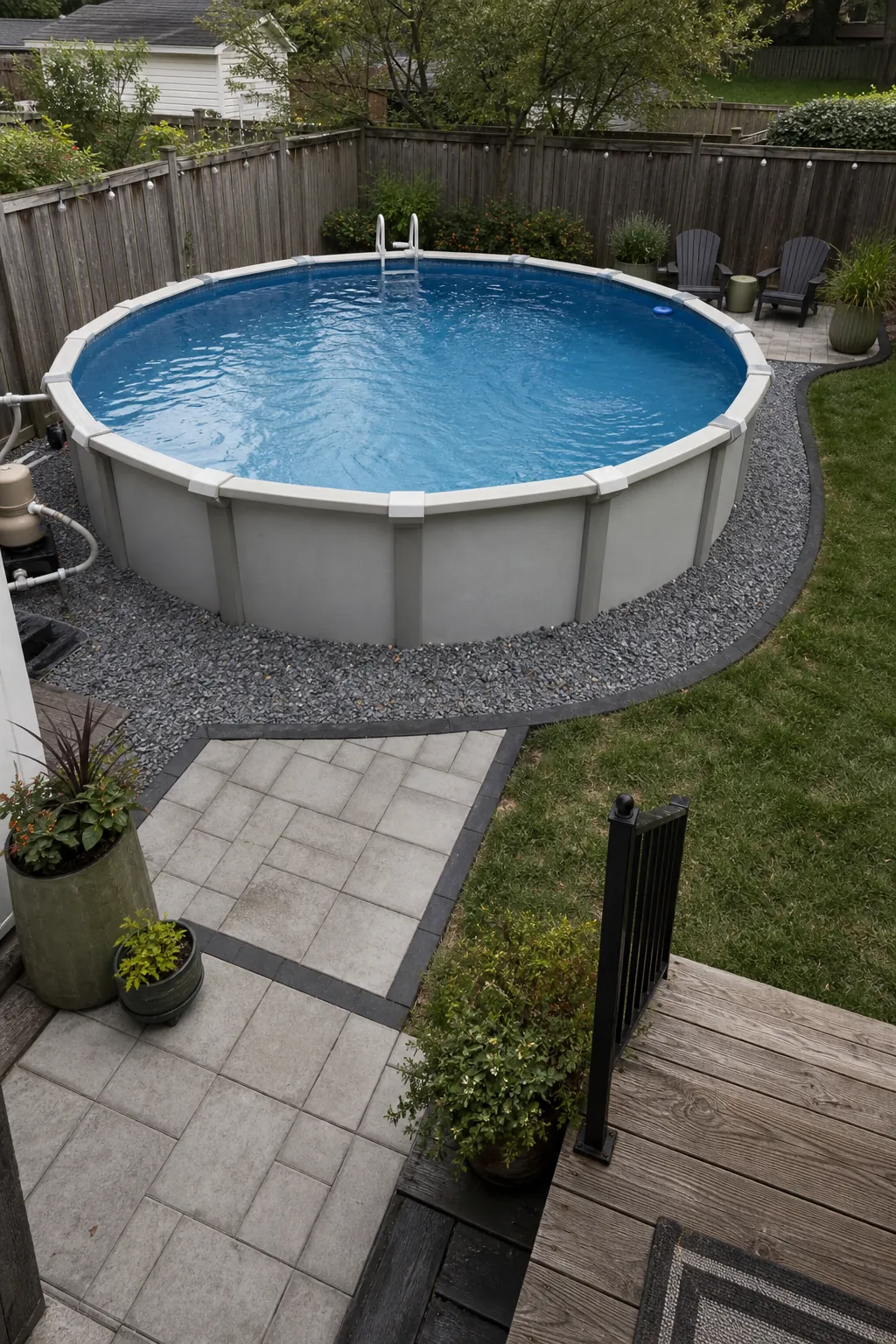
Start with level ground, drainage, safe clearances, and firm footing; the border is the visual finishing line, not a substitute for those basics. When every zone shares one clean edge, modest materials read as a coherent outdoor room.