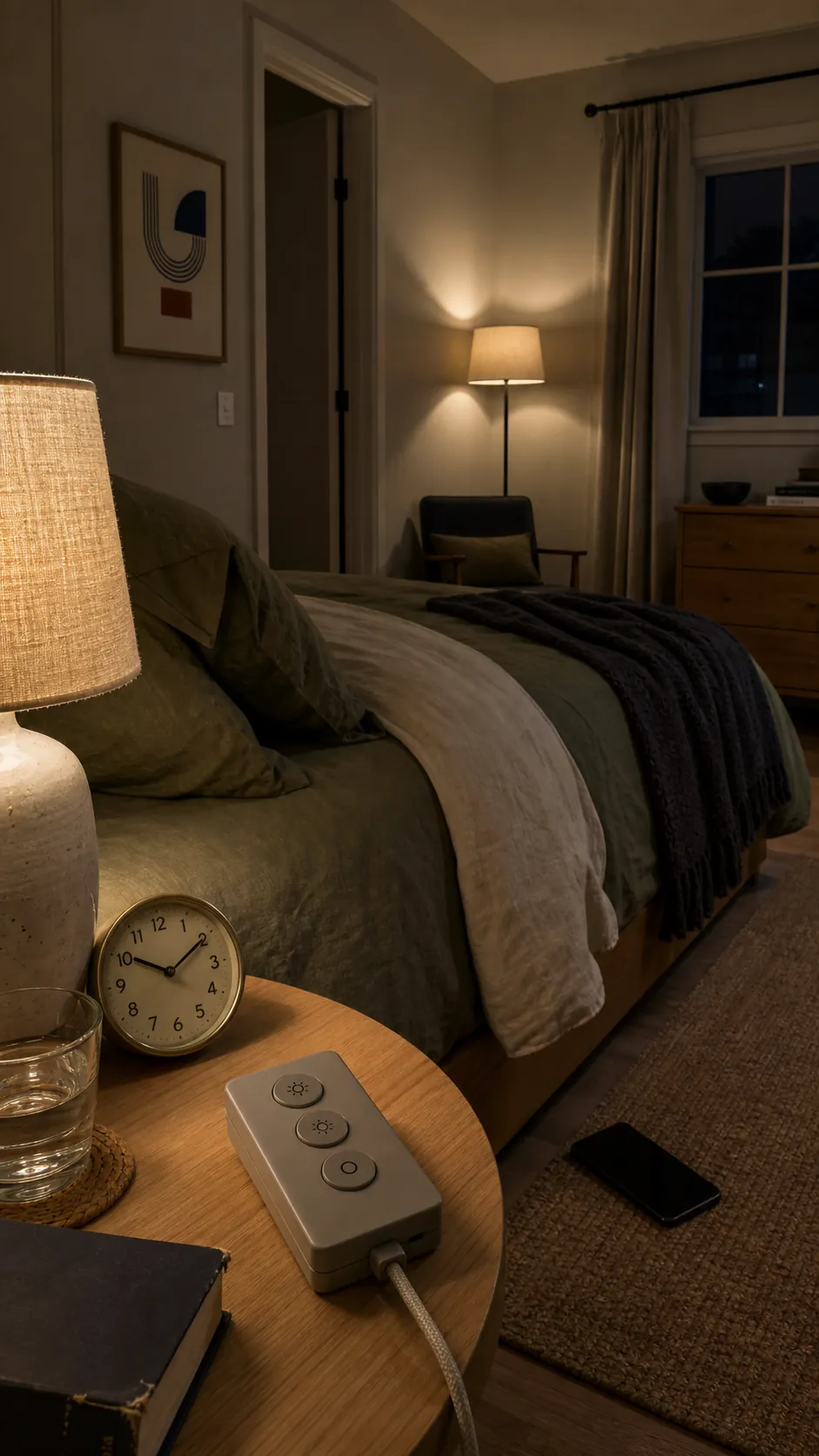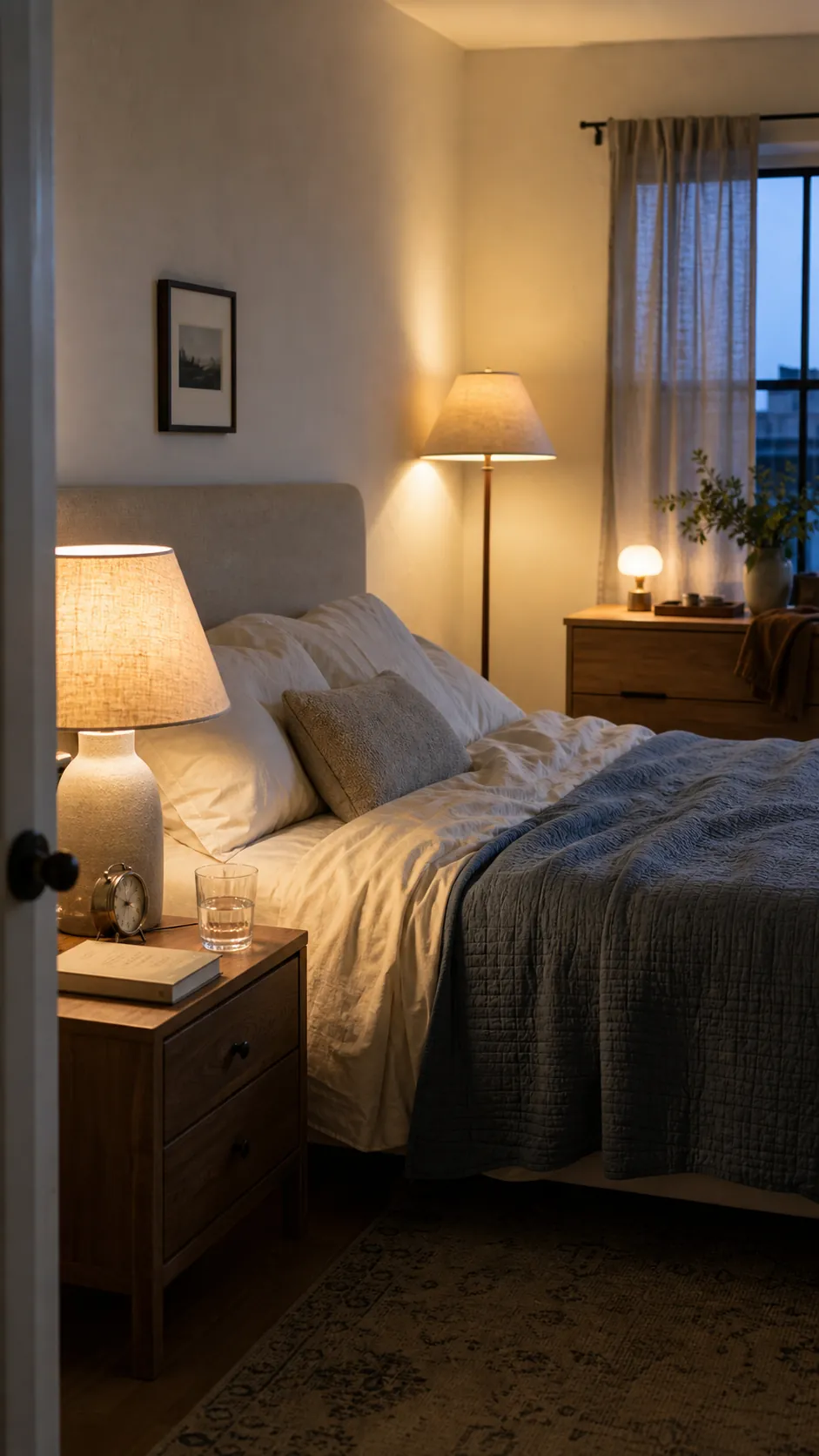
A bedroom can be beautifully furnished and still feel strangely hard at night. The culprit is often not the paint or bedding but a single bright ceiling fixture trying to do every job. Softer bedroom lighting comes from spreading small pools of light around the room, controlling glare, and matching each lamp to a real activity. These bedroom lamp ideas focus on what happens after dark: reading without waking a partner, finding clothes without flooding the room, and creating a warm bedroom that still feels usable.
Choose Linen Shades That Blur the Bulb
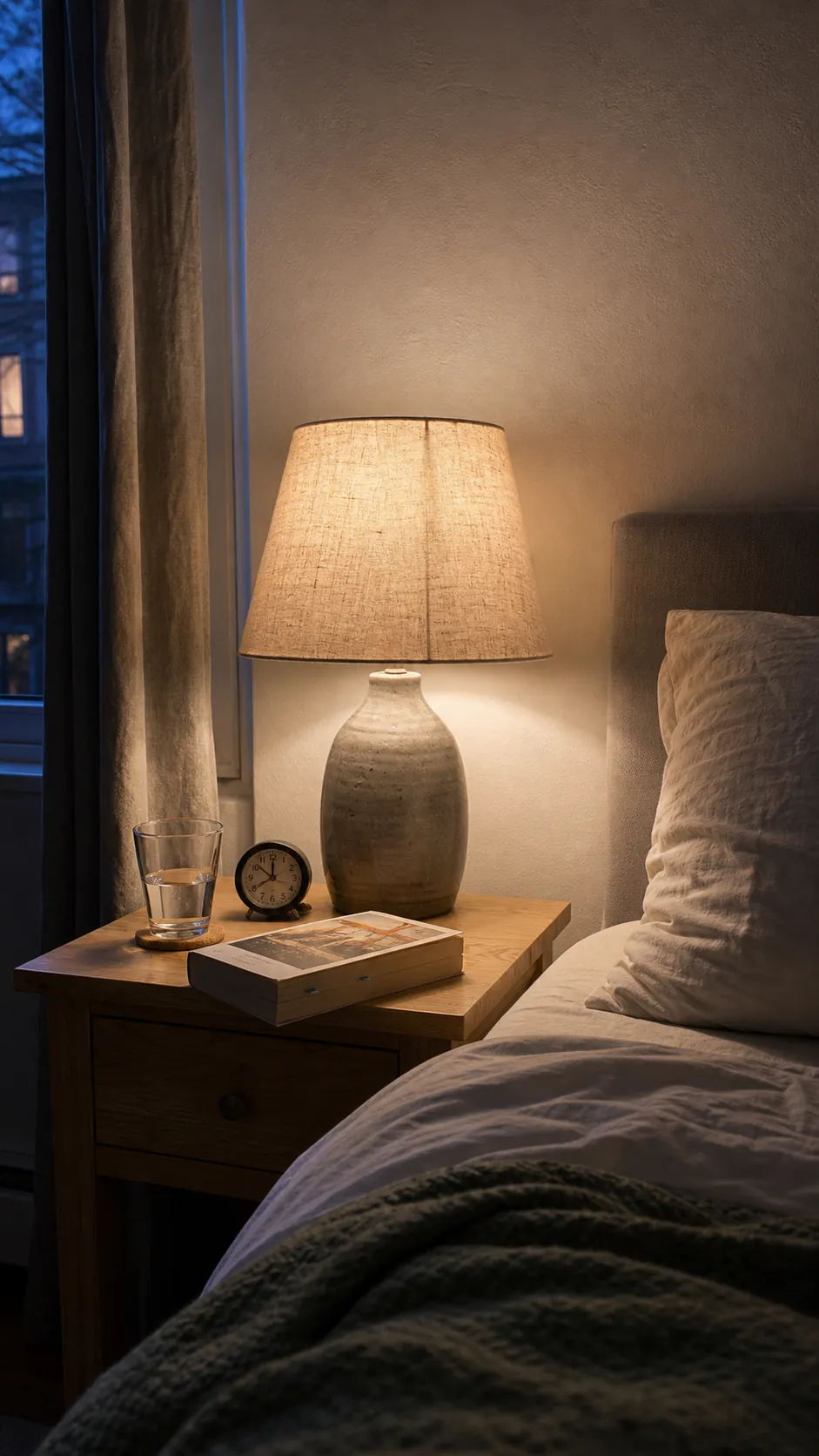
A linen shade is one of the simplest ways to soften a bedside lamp because its weave breaks a concentrated beam into a broad glow. Look for a shade that hides the bulb at normal eye level, especially when you are sitting in bed. An off-white or oatmeal fabric keeps the light warm without turning the whole room orange.
Scale matters as much as material. A shade that is too short exposes the bulb; one that is too narrow creates a hot spot on the table. Pair a gently tapered shade with a low-contrast ceramic base so the lamp feels like part of the nightstand decor rather than a bright object placed on top of it.
Float Plug-In Sconces Above Small Nightstands
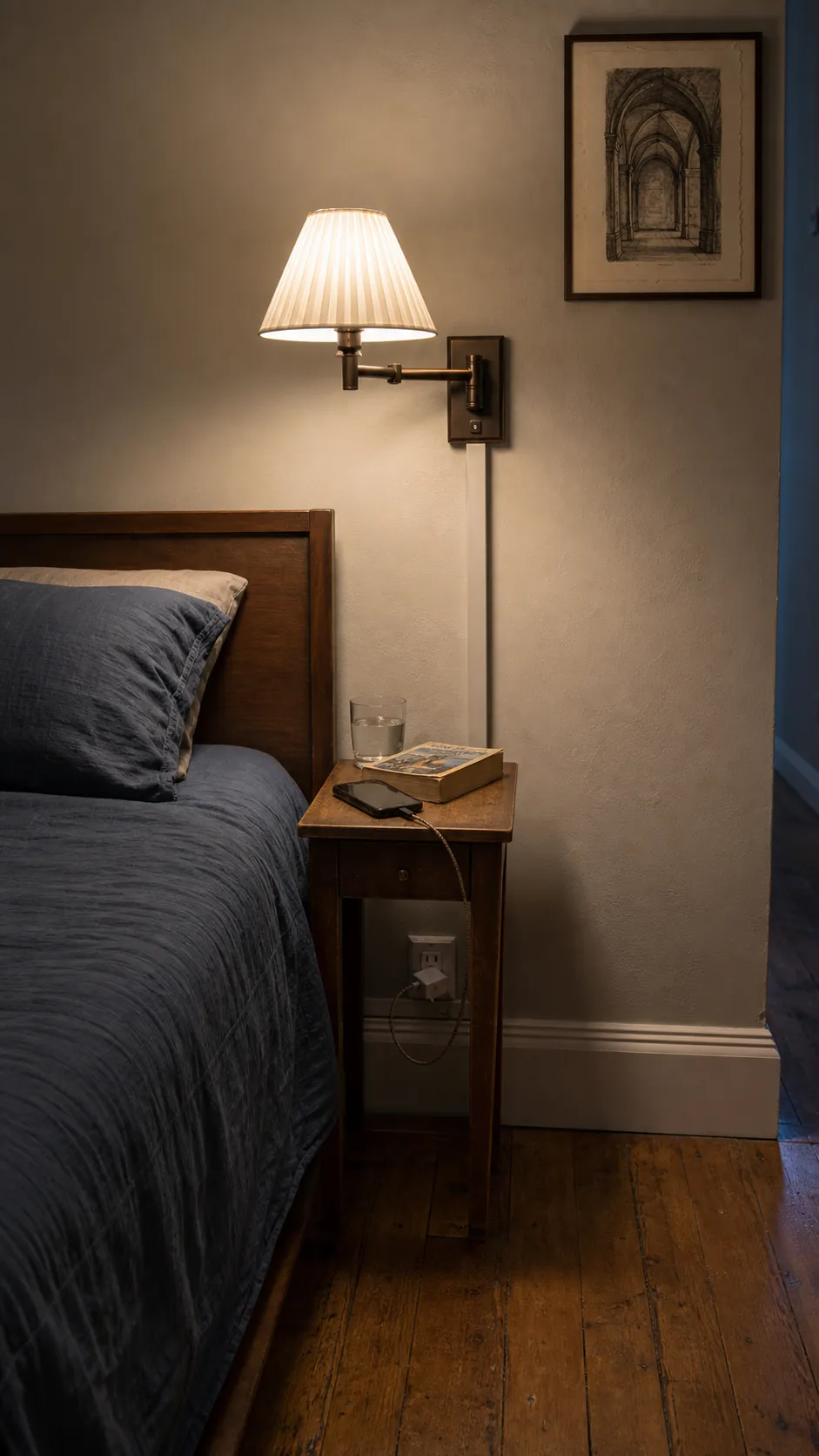
When a table barely has room for a glass and a book, a plug-in sconce gives the light its own territory. It delivers the visual calm of built-in bedroom lighting without opening the wall, which makes it practical for renters as well as homeowners. A cord cover painted to match the wall keeps the installation intentional.
Mount the shade high enough that its lower edge is near shoulder level when you sit up. A swing arm is useful for reading, but choose a model that folds close to the wall during the day. Clearing the nightstand is what makes the whole bedside zone feel quieter.
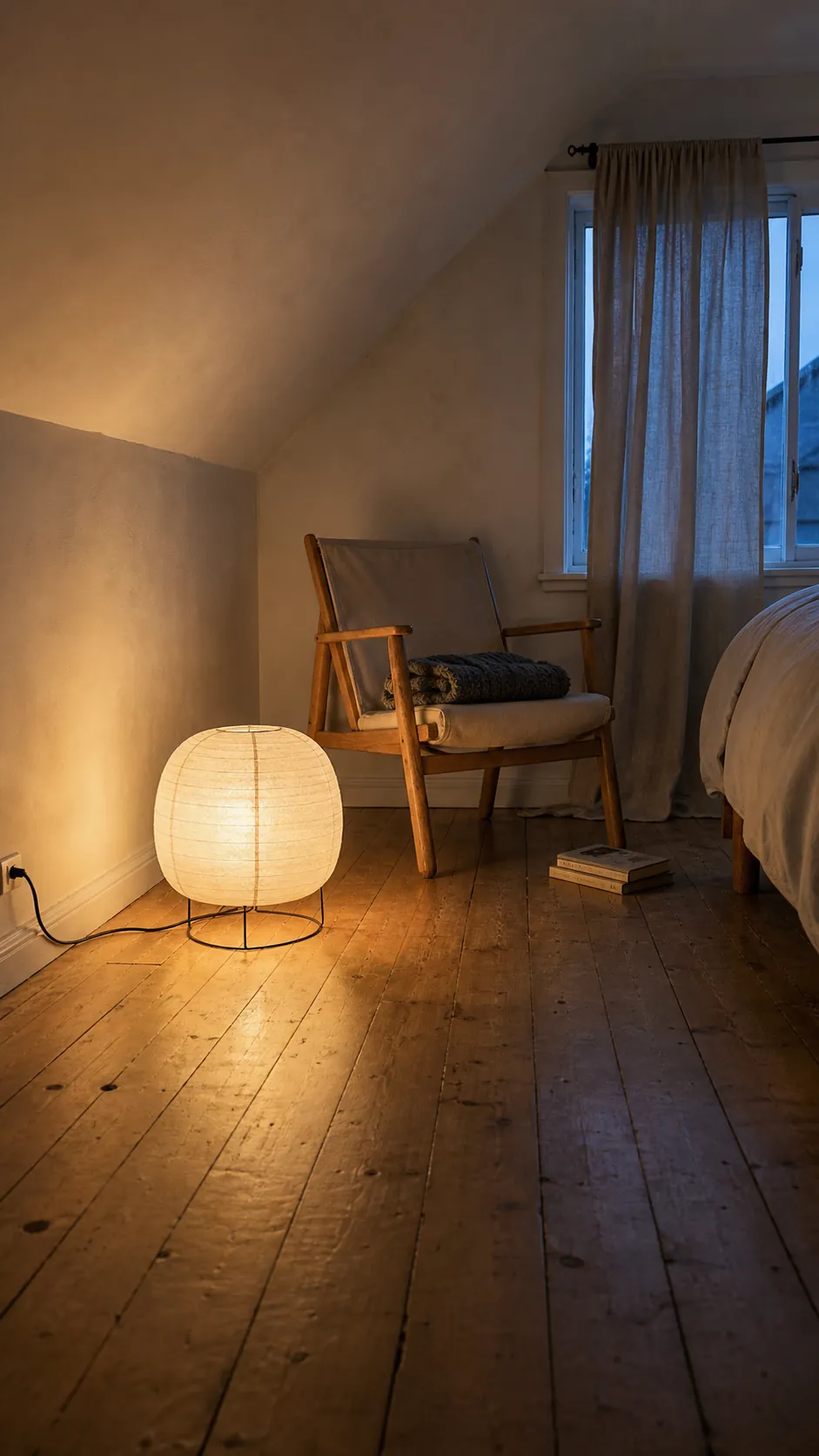
Let a Rice-Paper Lantern Glow Near the Floor
A low paper lantern turns an empty corner into a calm source of ambient light. Its broad surface glows instead of projecting a sharp beam, and the low placement leaves the ceiling visually quiet. This works particularly well in a bedroom with strong furniture lines that need one rounded, weightless form.
Choose a lantern with a stable base and enough space around it for airflow. Keep it away from bedding and walking paths. The paper should look softly illuminated, not visibly yellow; a dimmable warm-white LED lets you find that balance.
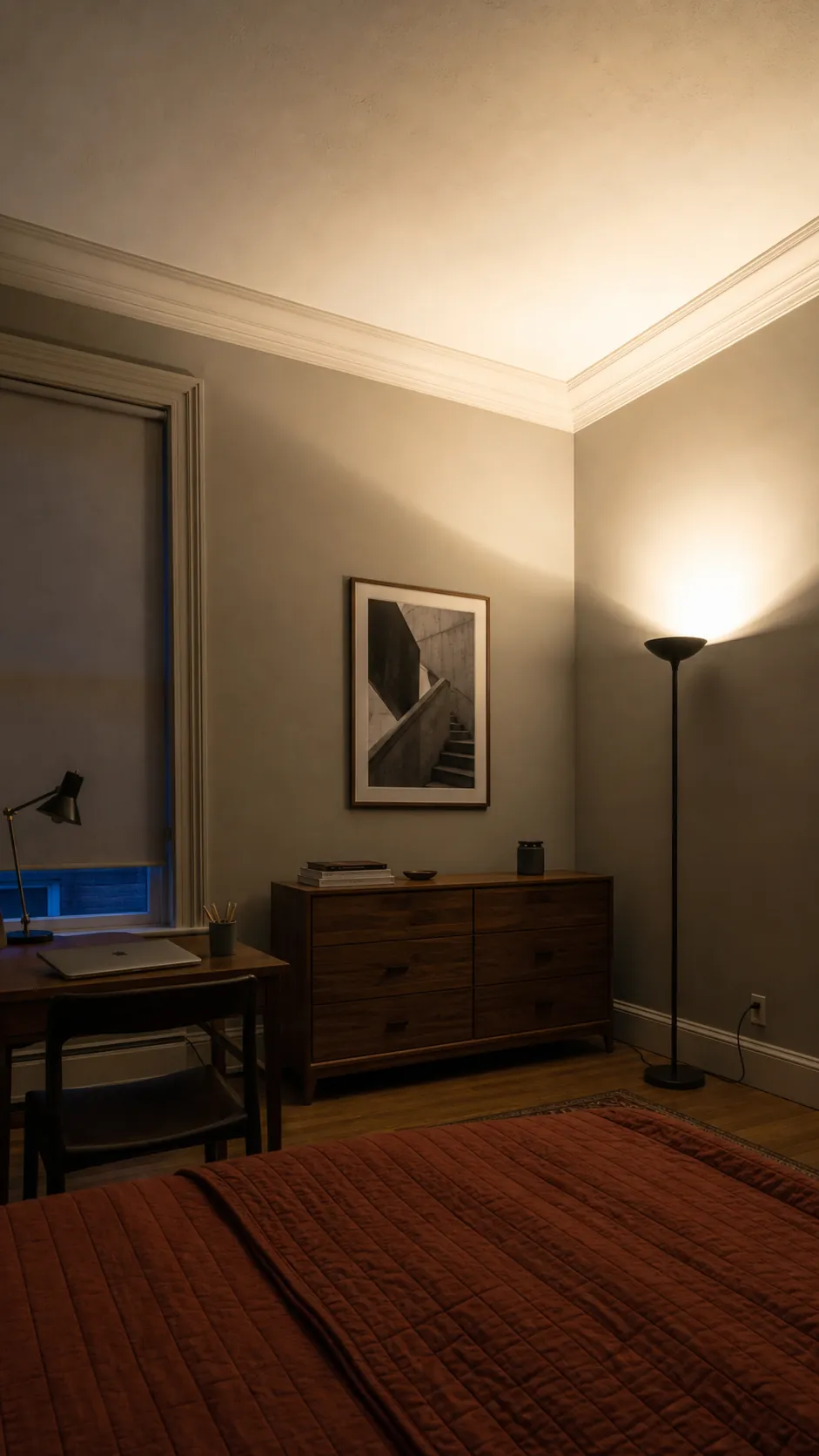
Aim an Uplight at the Ceiling
If the room feels dim above eye level, an uplight solves a different problem than another table lamp. It bounces light off the ceiling, expanding the apparent source and filling the upper half of the room without visible glare. That reflected layer makes a dark bedroom easier to use while preserving a relaxed mood.
Place the lamp where the ceiling is plain and light in color. A corner usually works well because two walls help spread the reflection. Use the uplight for general ambience and keep a separate focused lamp for reading rather than forcing one fixture to perform both tasks.
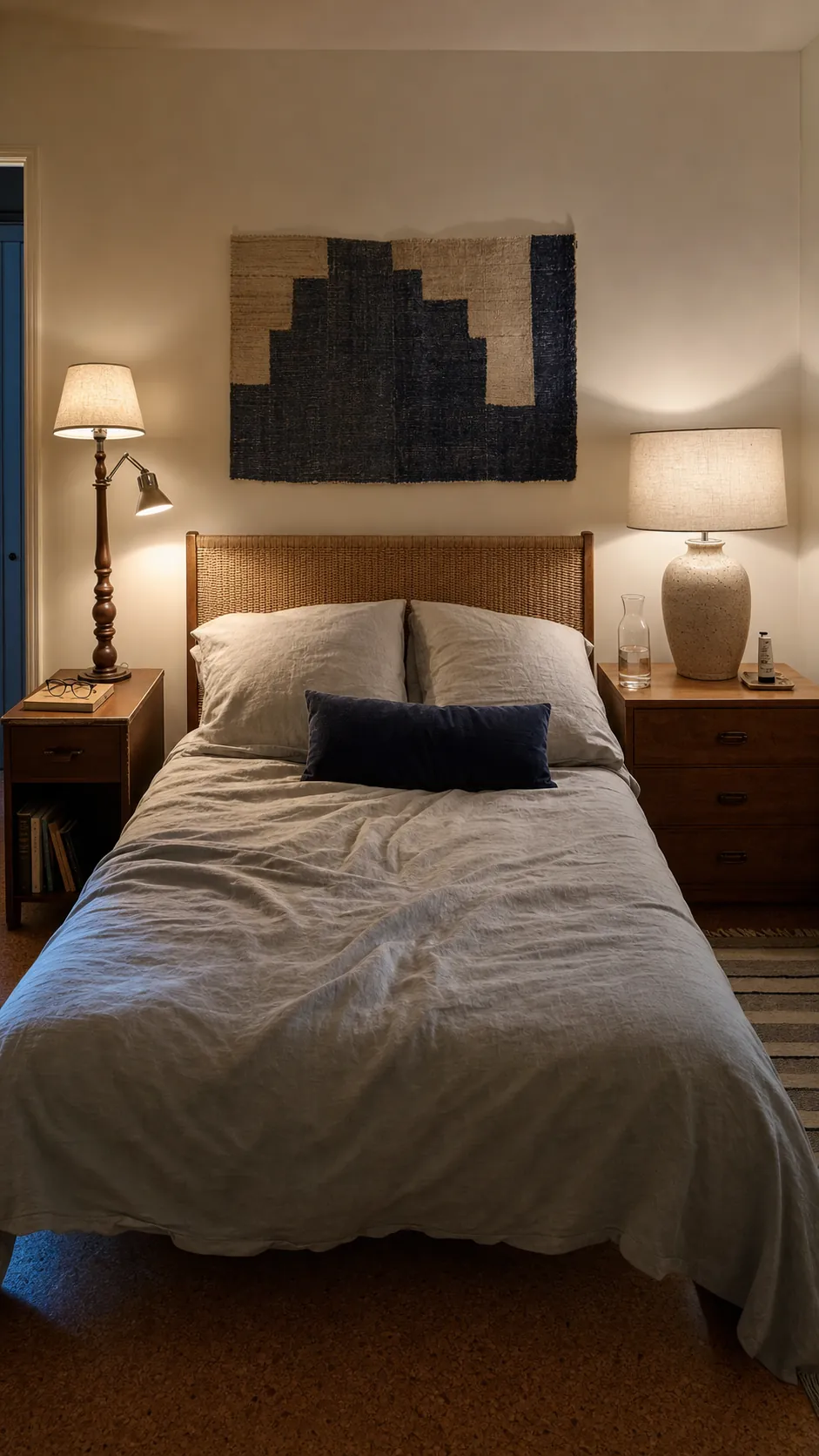
Pair Mismatched Lamps by Visual Weight
Matching bedside lamps are tidy, but they are not mandatory. One person may need a taller reading lamp while the other prefers a compact glow. Make mismatched table lamps feel related through equal visual weight: similar shade colors, comparable overall mass, or bases that share one material.
Aligning the light centers matters more than aligning the lamp tops. When both shades cast light at roughly the same height, the bed still feels balanced. This approach supports different routines without turning the room into a showroom set.
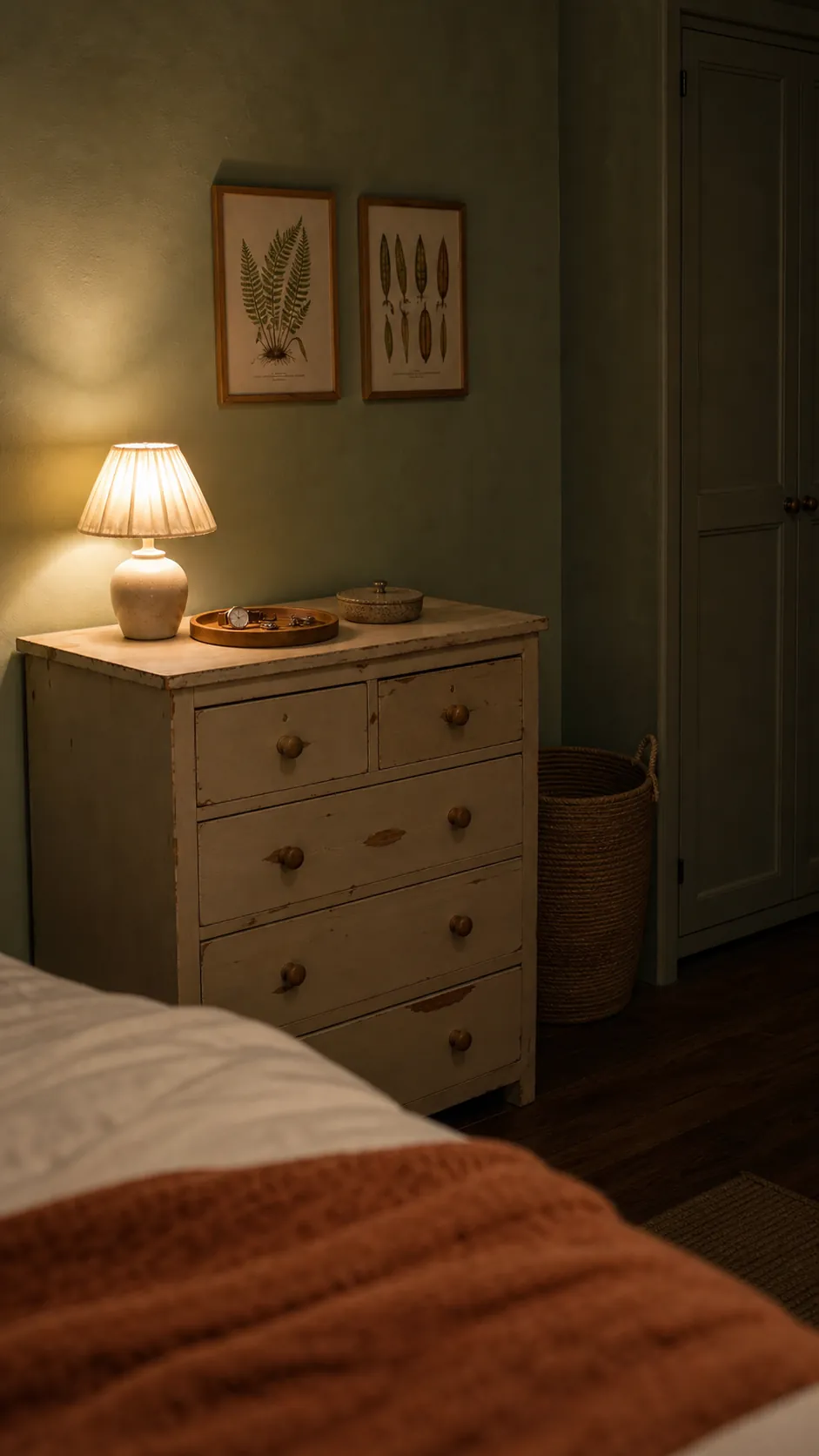
Add a Tiny Lamp to the Dresser
A small dresser lamp creates a second pool of light away from the bed, which is often the missing ingredient in a cozy bedroom. It gives the eye a destination across the room and makes the space feel deeper. The lamp does not need to be bright; its job is to prevent one side of the room from disappearing after sunset.
Leave breathing room around the base and group it with only one or two useful objects, such as a tray and a small dish. A crowded vignette blocks light and makes evening tidying harder. Think of this as a background glow, not another task station.
Use an Adjustable Reading Lamp With a Narrow Beam
Soft lighting does not mean every lamp must be vague. A narrow, adjustable beam can be kinder to a sleeping partner because it illuminates the page instead of the entire room. Look for a shade deep enough to conceal the bulb and an arm that holds its position without drifting.
Aim the light over your shoulder and onto the center of the book, not toward your face. The rest of the room can remain gently lit by a second ambient source. This separation between task and mood lighting is more comfortable than making a single bedside lamp excessively bright.
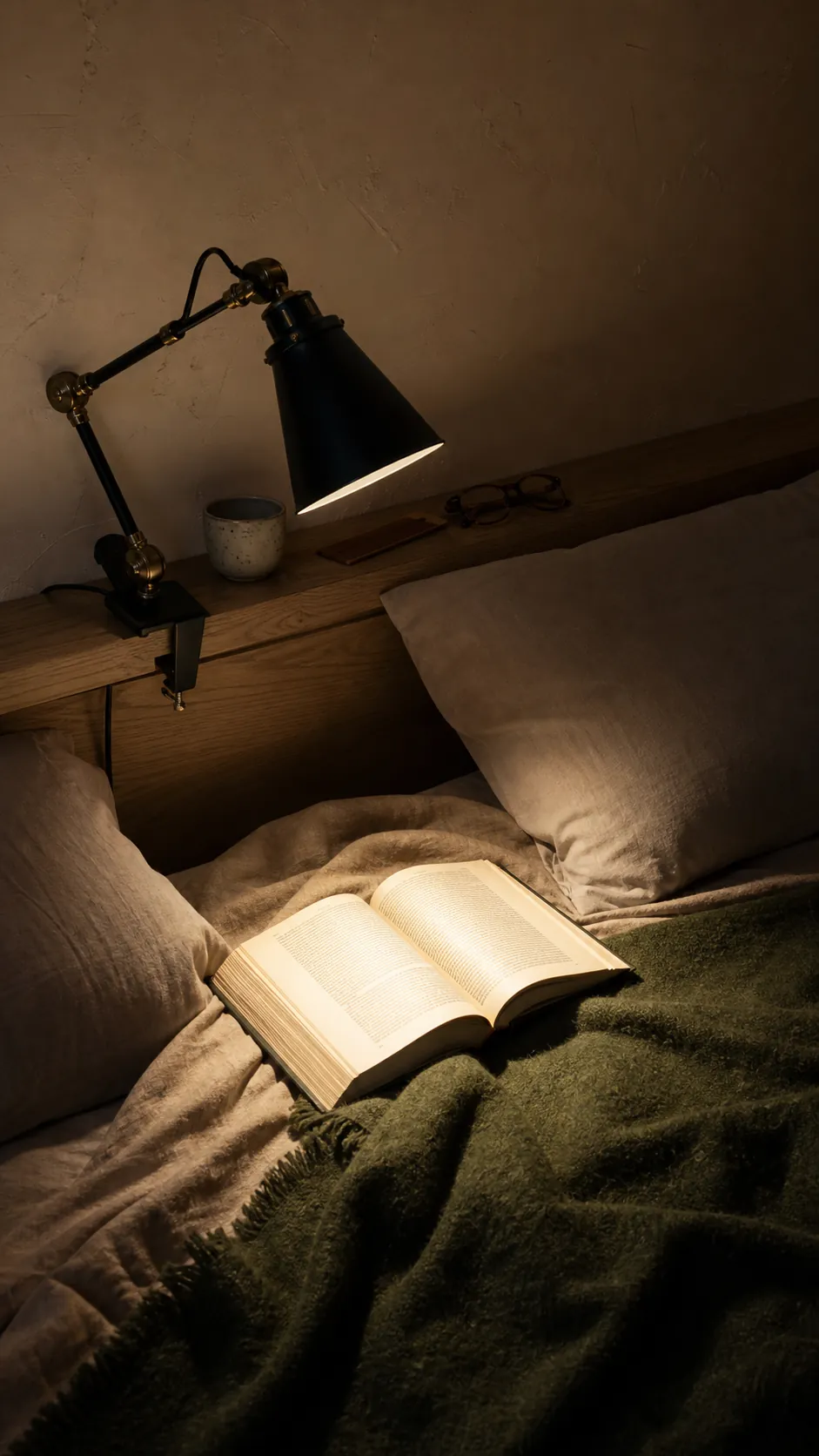
Warm a Dark Corner With a Pleated Shade
Pleated fabric catches light in alternating highlights and shadows, giving a corner more texture than a smooth shade. On a slender floor lamp, it can soften a hard architectural edge without taking much floor space. Choose restrained pleats so the lamp reads as tactile rather than fussy.
The best placement is beside a chair, tall plant, or low chest where the lamp feels connected to something. A lone floor lamp can look stranded. A small neighboring object anchors it while leaving enough clearance for the shade to glow freely.
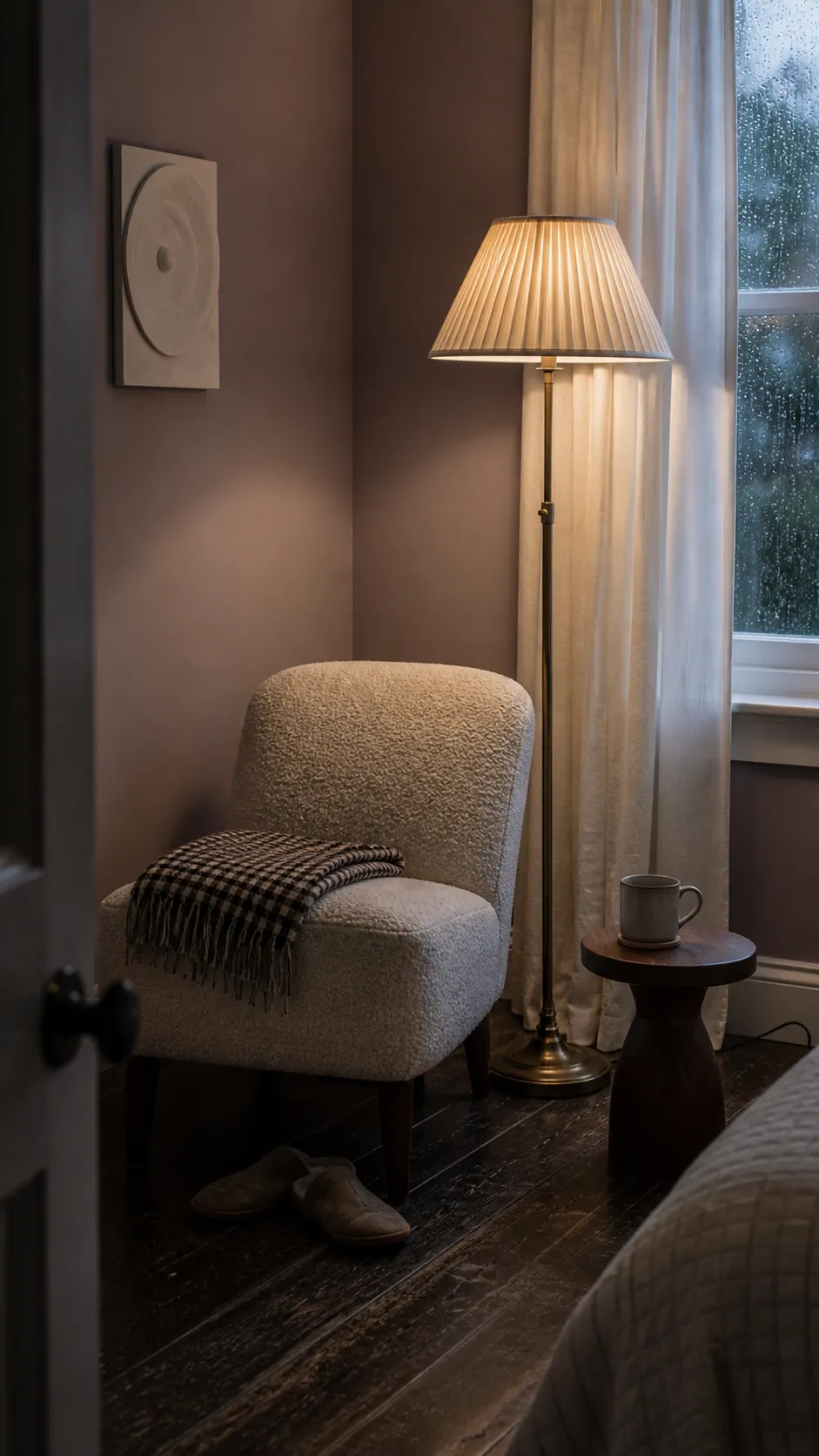
Hang Pendants to Free Both Bedside Tables
Bedside pendants create vertical rhythm and leave the tabletop completely open. They work best when their shades are opaque or heavily diffused, since an exposed bulb at eye height can feel harsher than a ceiling light. A long cord or plug-in pendant can achieve the look without permanent rewiring.
Center each pendant over the usable part of the nightstand rather than blindly centering it on the wall panel. Keep the bottom of the shade safely above seated head height. The result should frame the bed while still making everyday reach and cleaning easier.
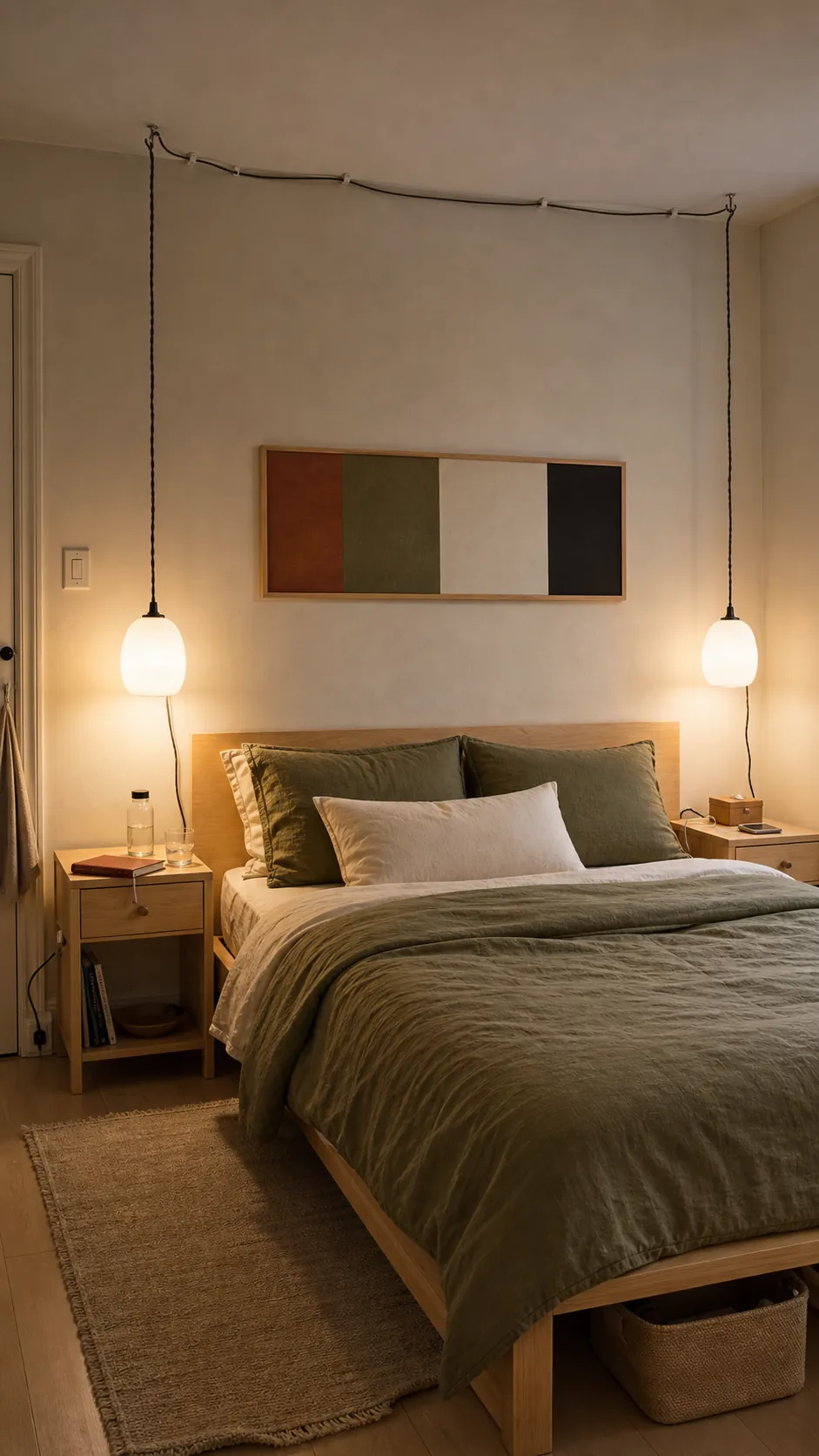
Try a Milk-Glass Globe for Even Light
Milk glass hides the bright point of an LED and turns the whole globe into a luminous surface. That evenness is useful on a dresser or wide nightstand where the lamp can be seen from several angles. A matte globe feels softer than clear glass and avoids the sparkle of exposed filaments.
Choose a simple base in aged brass, dark wood, or stone to keep the globe from looking clinical. Dust it regularly because fingerprints and lint become more visible when the lamp is on. Its compact silhouette makes it an easy layer in rooms where a fabric shade feels bulky.
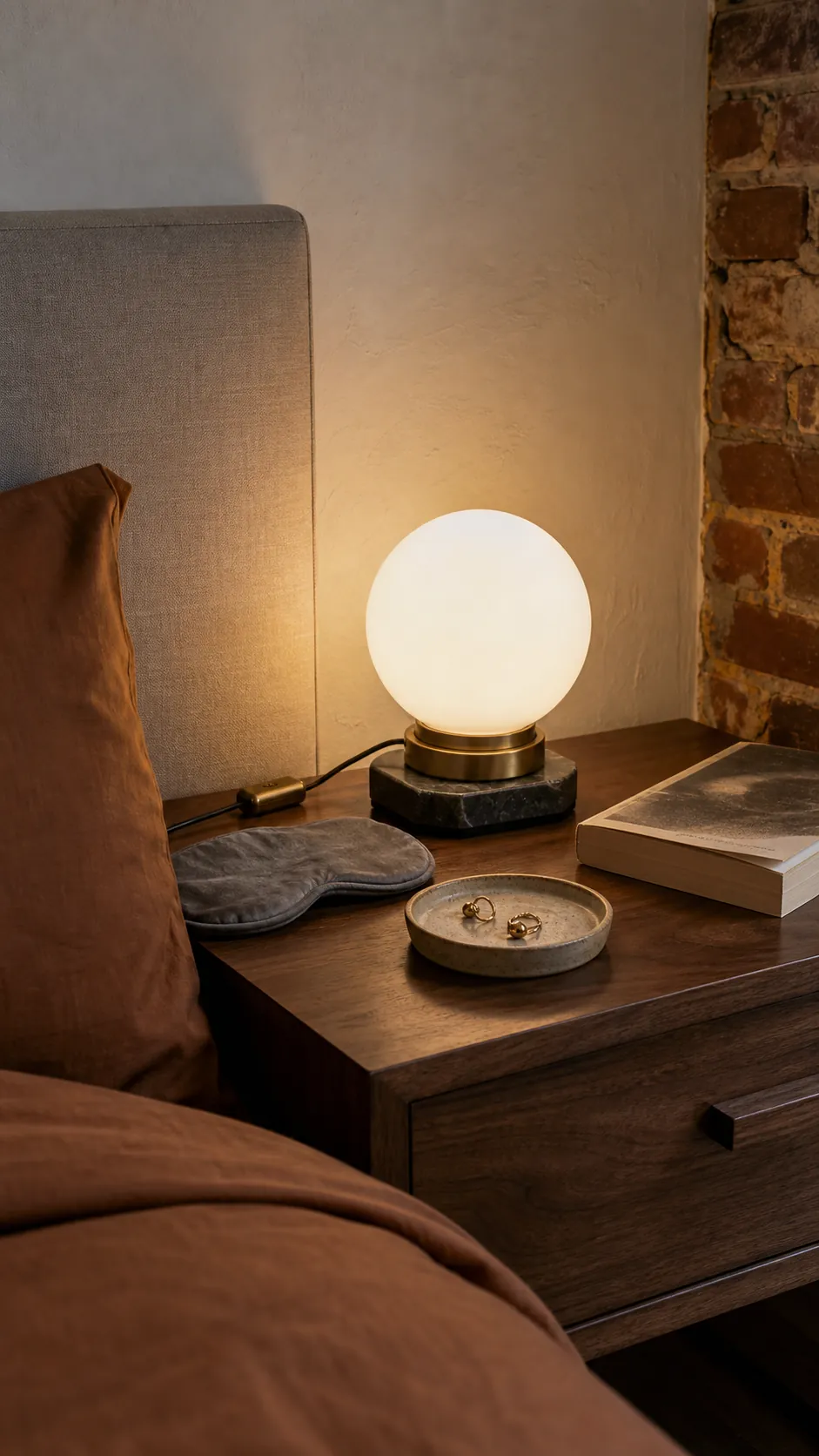
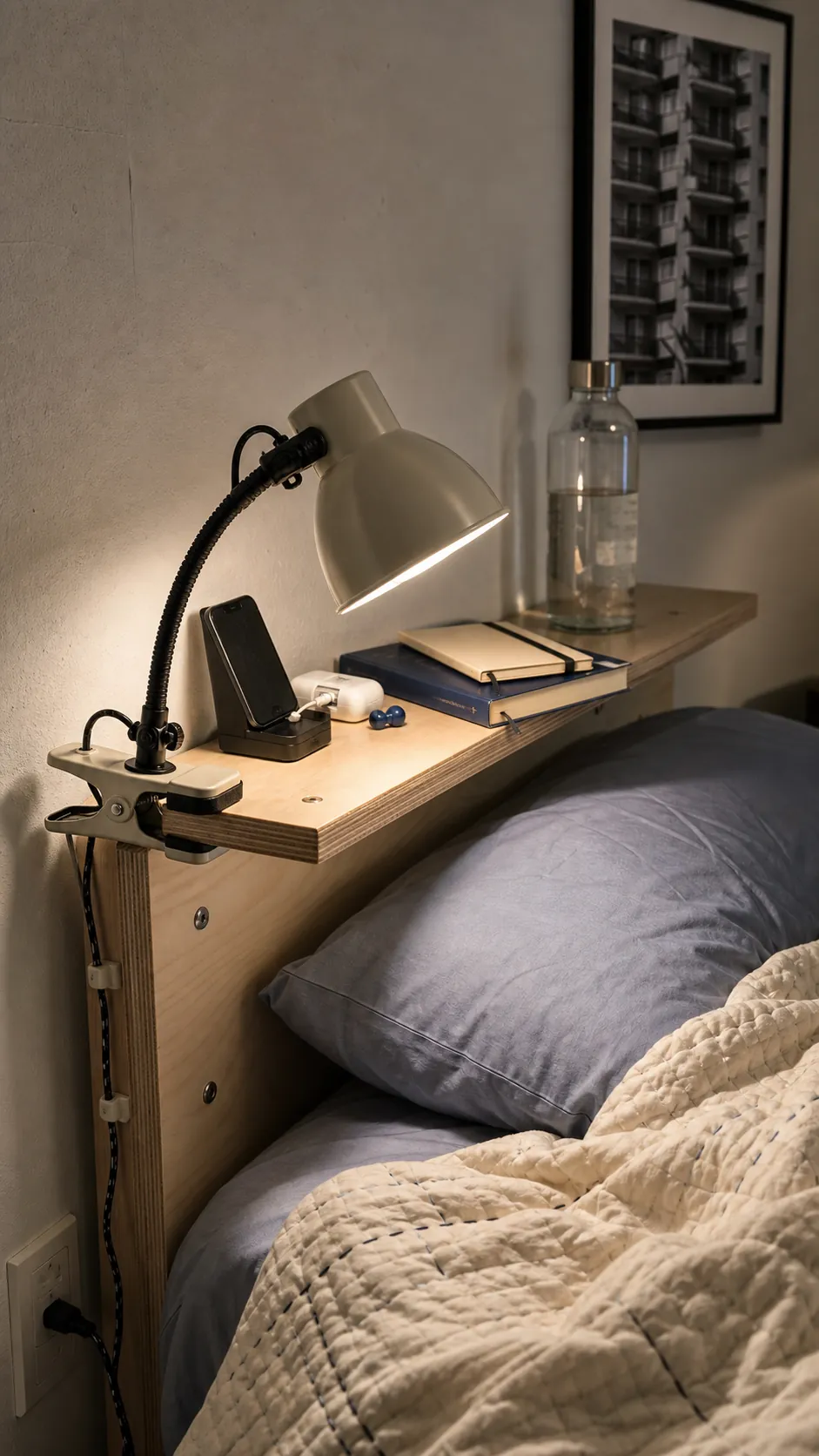
Tuck a Clip Lamp Into a Headboard Shelf
A sturdy clip lamp can turn a headboard shelf into a flexible reading zone without consuming surface space. This is especially useful in a rental or a narrow room where drilling is not an option. Select a clamp with padded jaws and verify that the shelf is thick and stable enough to hold it.
Route the cord down the back of the headboard and secure it so it cannot snag on bedding. A small metal shade keeps the beam controlled, while a low-lumen warm bulb prevents the focused light from feeling severe. It is a practical solution that can still look deliberate.
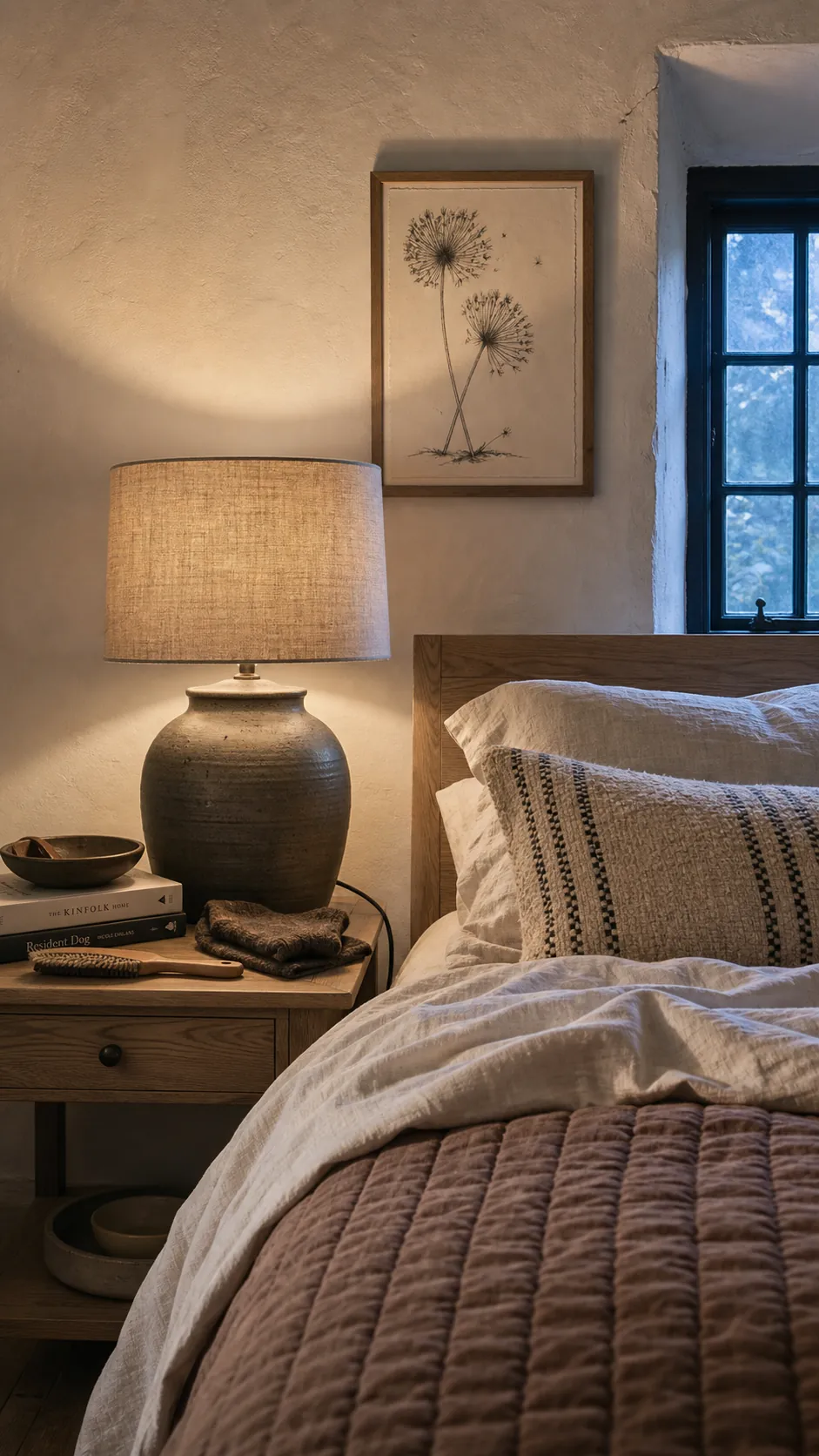
Place a Stoneware Lamp Beside Textured Bedding
A matte stoneware base brings visual weight to rumpled linen, quilted cotton, and woven throws. Those tactile surfaces catch low light differently, so the bedside scene feels layered even in a neutral palette. Look for hand-finished variation rather than a glossy, perfectly uniform glaze.
Repeat one tone from the lamp in a pillow seam or blanket stripe, but avoid matching every object. Lamp styling feels softer when the materials relate without becoming a set. A short stack of current books can raise the lamp slightly if the shade sits below a comfortable reading height.
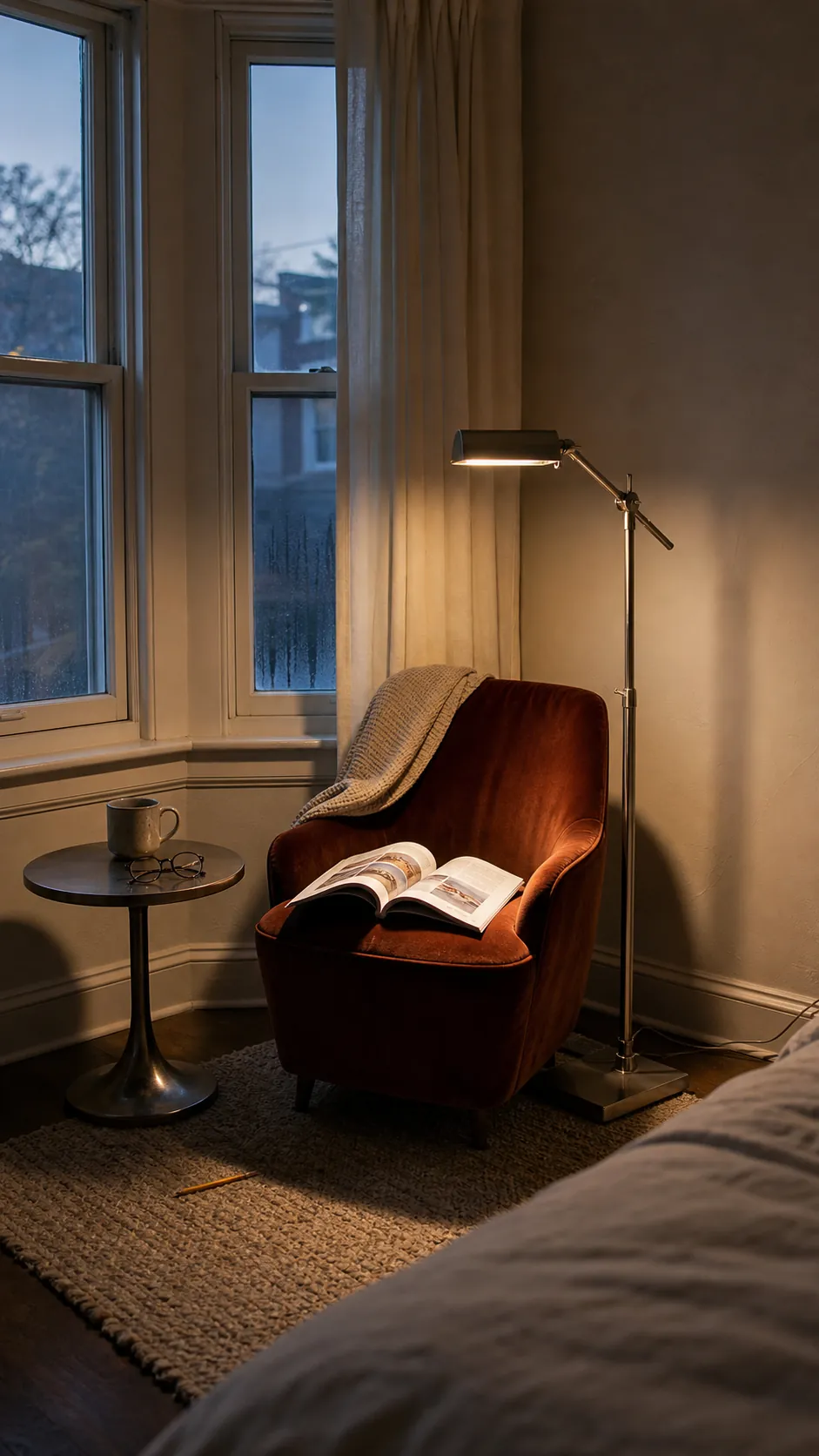
Use a Slim Pharmacy Lamp at a Reading Chair
A pharmacy-style floor lamp directs light downward with very little visual bulk. Beside a compact reading chair, it creates a separate evening destination without flooding the bed. The narrow stem is helpful in small rooms, but the base should slide partly under the chair or side table without creating a trip hazard.
Position the shade just behind the reader’s shoulder and test it from the chair before finalizing the layout. A dimmer makes the lamp useful for both focused reading and low ambient glow. This extra zone can make a bedroom feel more generous without adding large furniture.
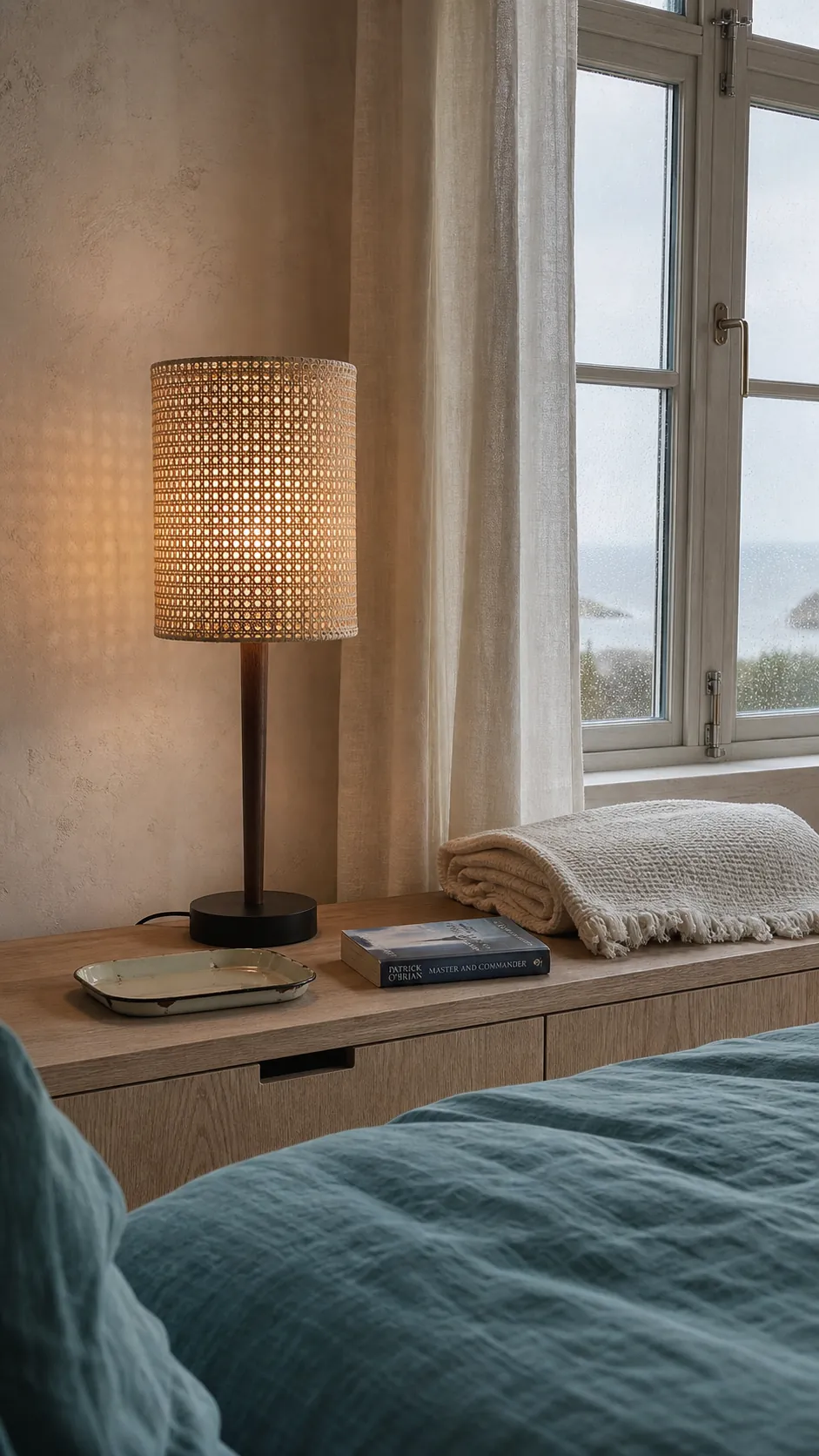
Diffuse Light Through a Woven Cane Shade
A cane shade casts a subtle pattern while allowing light to escape in every direction. It adds warmth through texture rather than through an overly amber bulb. Use it where the faint shadow pattern can fall on a plain wall or curtain, and choose a weave tight enough that the bulb never dominates the view.
Natural cane varies in color, which helps it sit comfortably beside wood furniture and cotton bedding. Keep other woven accessories limited so the room does not become theme-heavy. One well-scaled shade is enough to introduce the material.
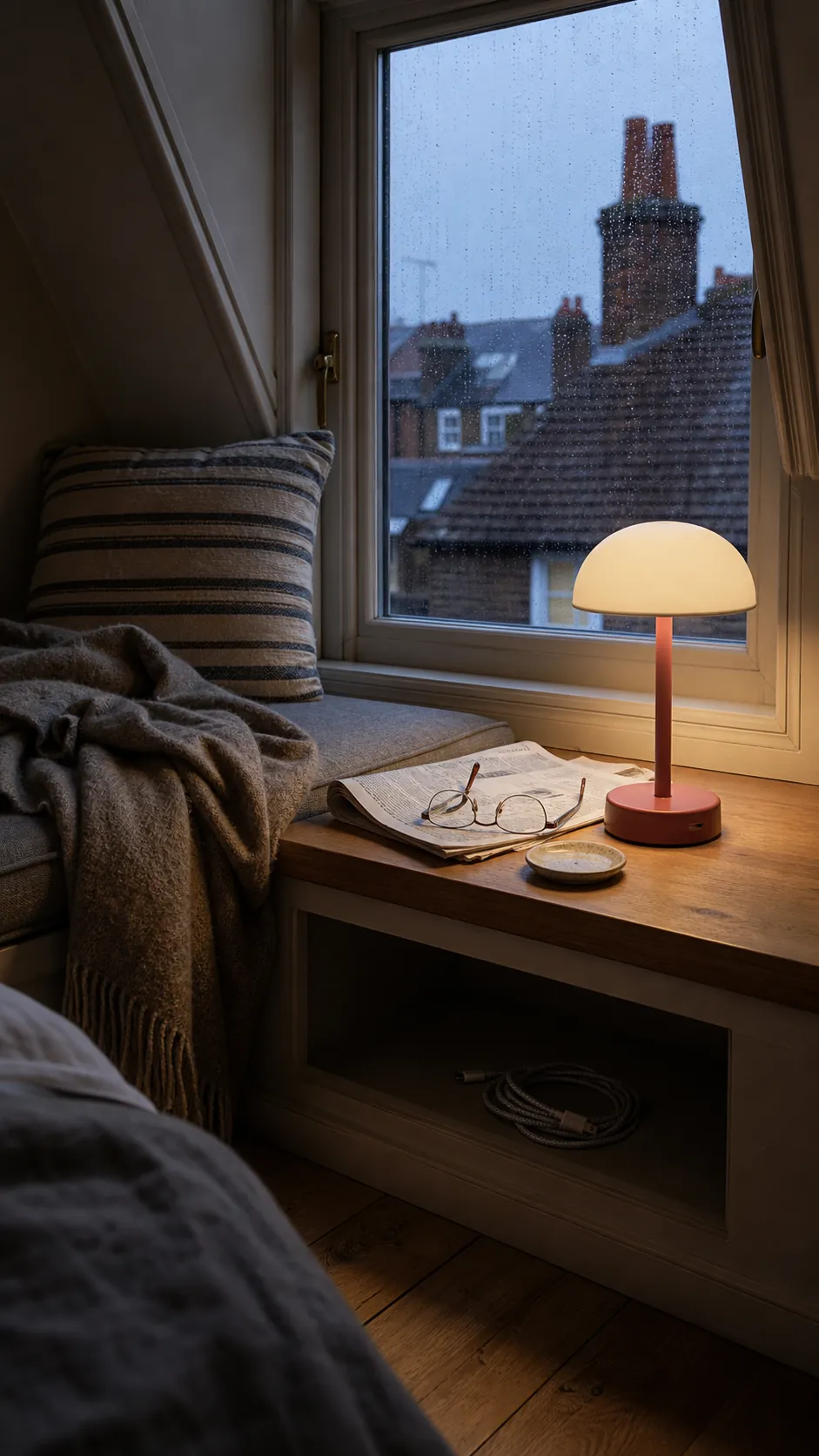
Add a Cordless Lamp to a Window Seat
A rechargeable cordless lamp can bring a gentle evening glow to a window seat, shelf, or awkward corner with no nearby outlet. It is best treated as an accent layer rather than the main bedroom light because small batteries and compact shades limit output.
Choose a model with a weighted base, a dimmer, and a warm setting that does not shift green or orange. Charge it during the day and return it to the same spot each evening. Its value is flexibility: you can move light to where the room actually needs it.
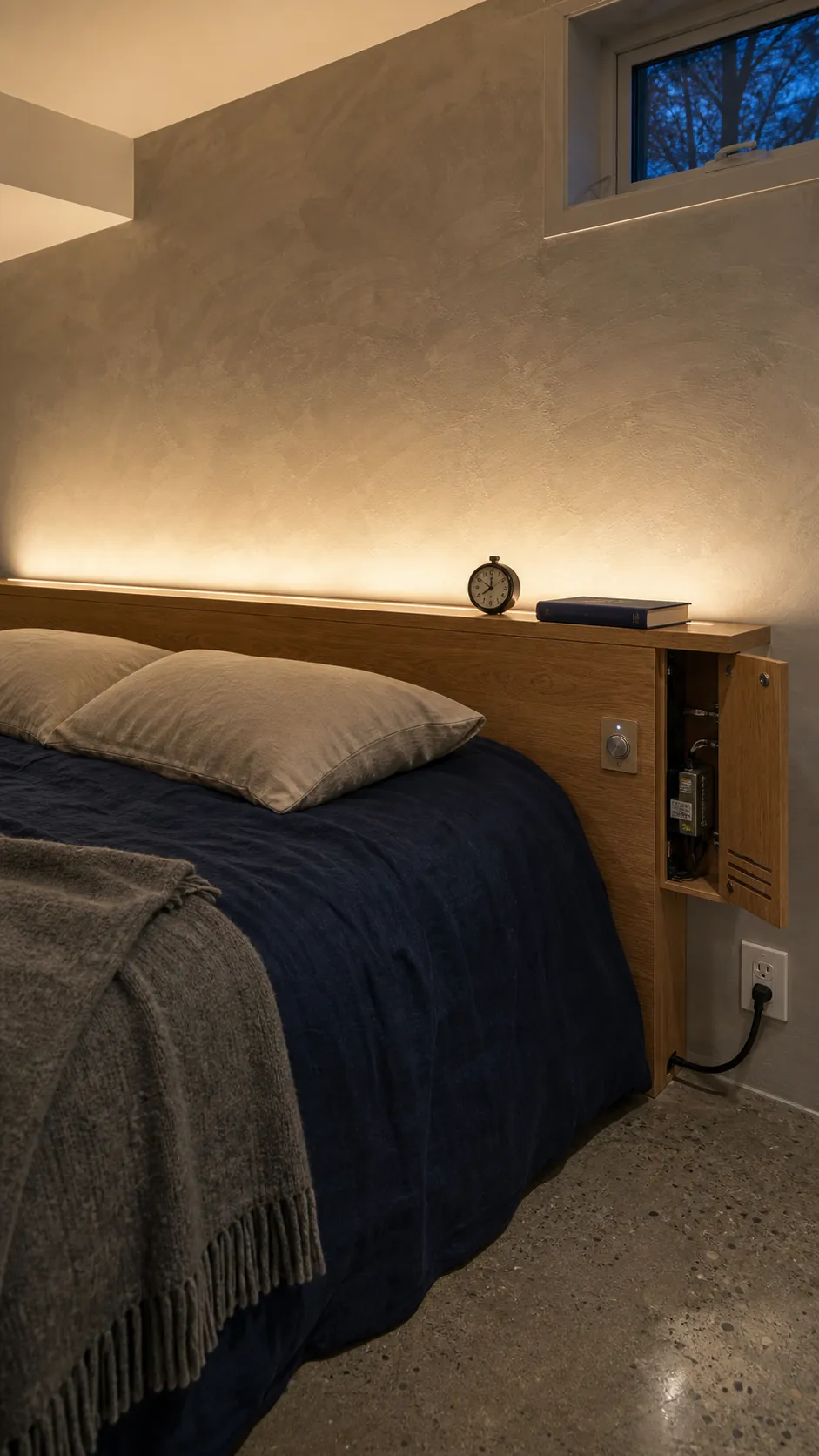
Hide an LED Lamp Behind a Headboard Ledge
Indirect light from behind a shallow headboard ledge washes the wall instead of shining into the room. The effect is soft because you see the reflection, not the source. Use a purpose-made, diffused LED lamp or bar so individual points of light do not appear on the wall.
Keep the color fixed to a natural warm white and dim it low. Bright color-changing strips can make a restful bedroom feel more like a display. Conceal the cable, power supply, and controls inside a ventilated channel that remains accessible for maintenance.
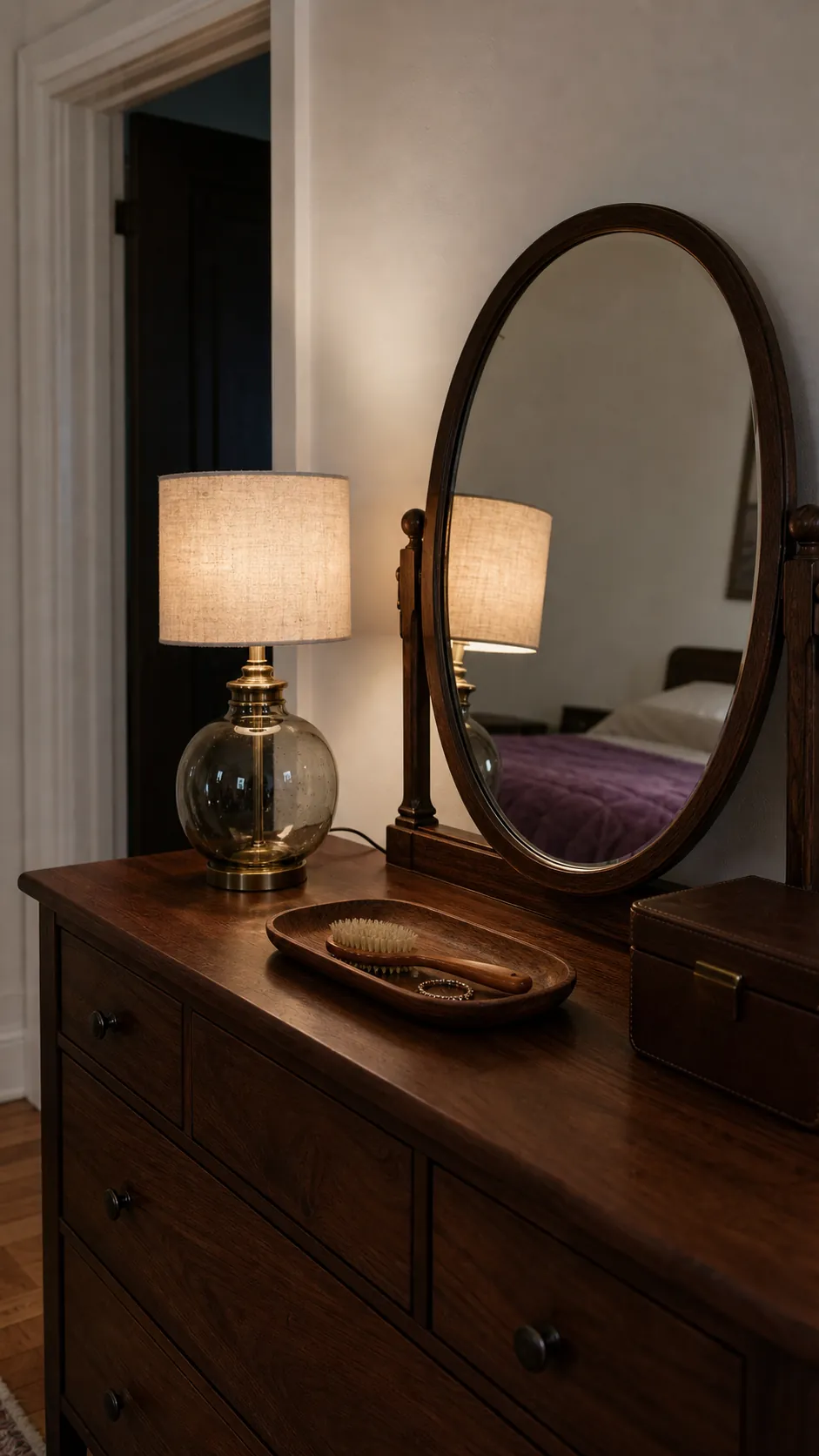
Set a Glass Lamp Near a Mirror
A clear or lightly smoked glass lamp keeps a dresser from feeling heavy, while a nearby mirror repeats its low glow. Angle the mirror so it reflects the shade rather than the bare bulb. This doubles the sense of illumination without doubling the brightness.
Use restraint with reflective surfaces. One mirror and one glass base are enough; too many highlights can feel busy at night. A linen shade, aged metal fittings, and a simple wooden tray give the arrangement the texture it needs.
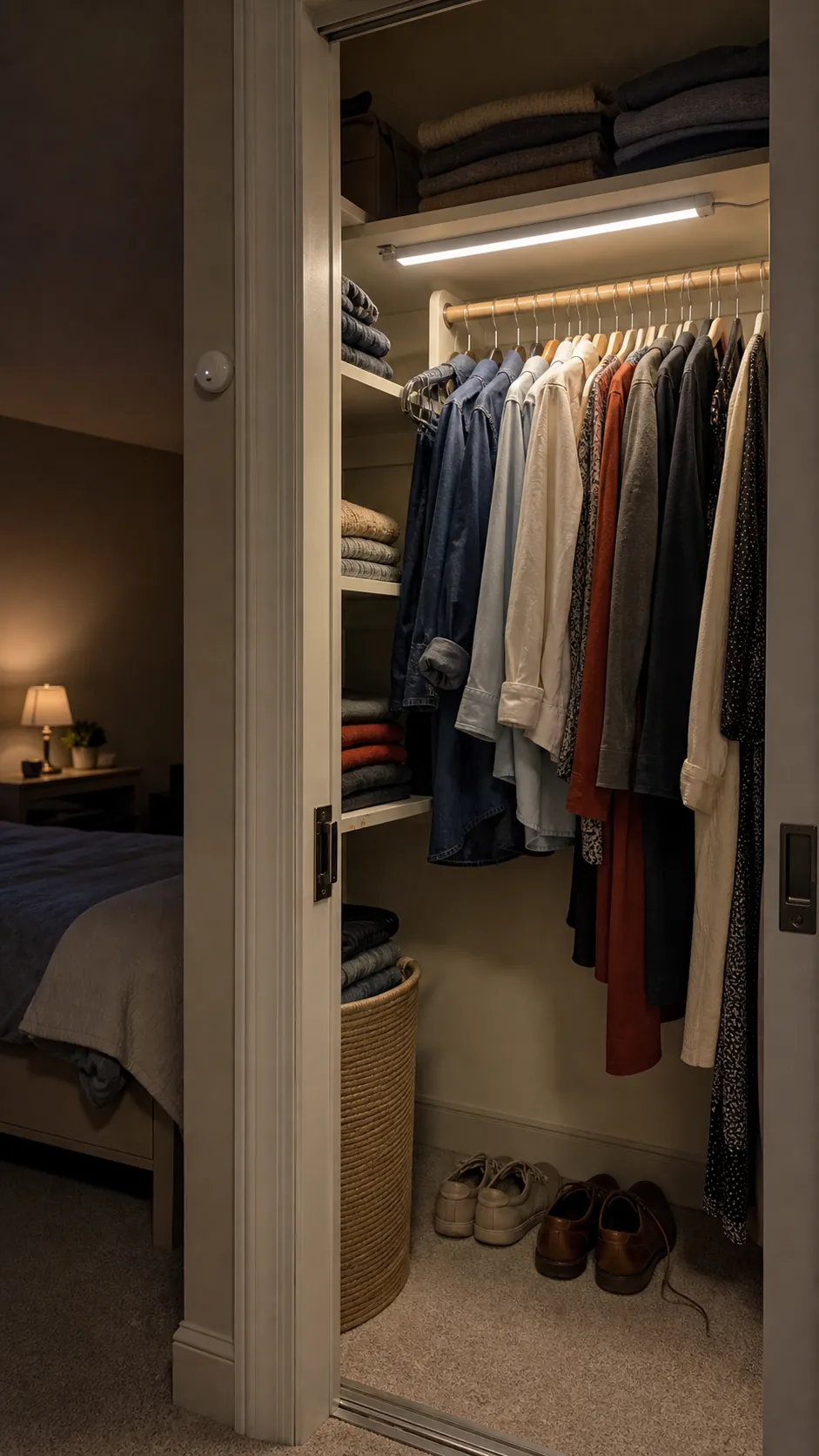
Create a Gentle Closet Light Layer
A small motion-activated lamp inside the closet prevents the ceiling fixture from coming on during early mornings or late nights. Choose a diffused bar or puck that illuminates clothing faces rather than throwing sharp shadows from above. Mount it where hangers and folded items cannot touch it.
This layer is practical, but it also protects the room’s mood: the main lamps can stay dim while you still see colors and details. A neutral-to-warm setting works better here than very amber light, which can distort clothing colors.
Put Every Lamp on an Easy Dimmer
The most attractive lamp is frustrating if its switch is hard to reach. Plug-in dimmers, smart plugs, or bulbs with simple bedside controls let you change the room without getting up. Group controls by routine: an entry setting for getting ready, a lower reading setting, and a final night light.
Check compatibility before pairing LEDs and dimmers, and avoid systems that require a phone for every adjustment. Physical buttons remain useful when you are half asleep. A soft bedroom is not just about how light looks; it is about how naturally it follows your evening. Once each lamp has a clear job and an effortless control, the room stops feeling either glaring or unusably dark.