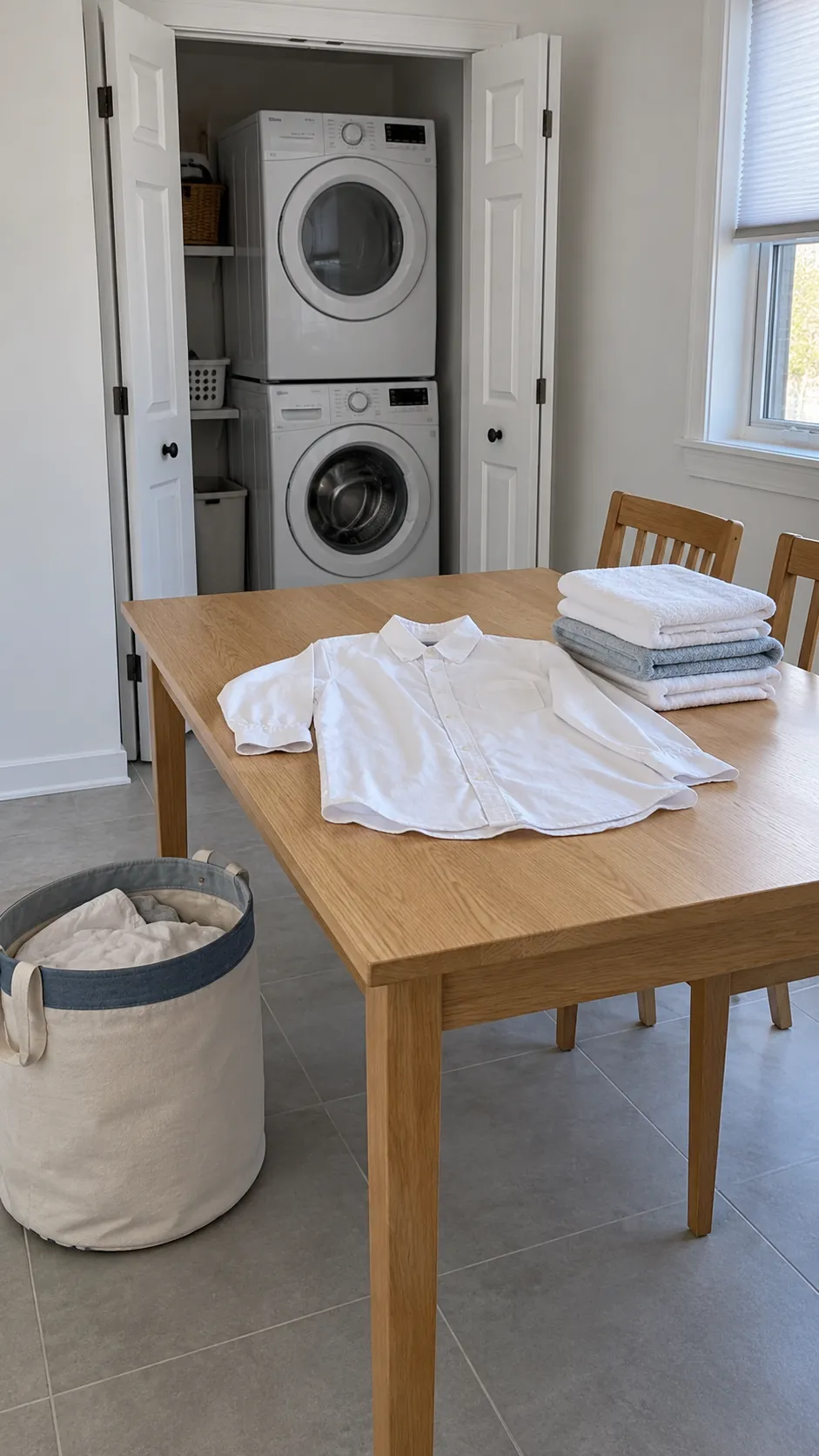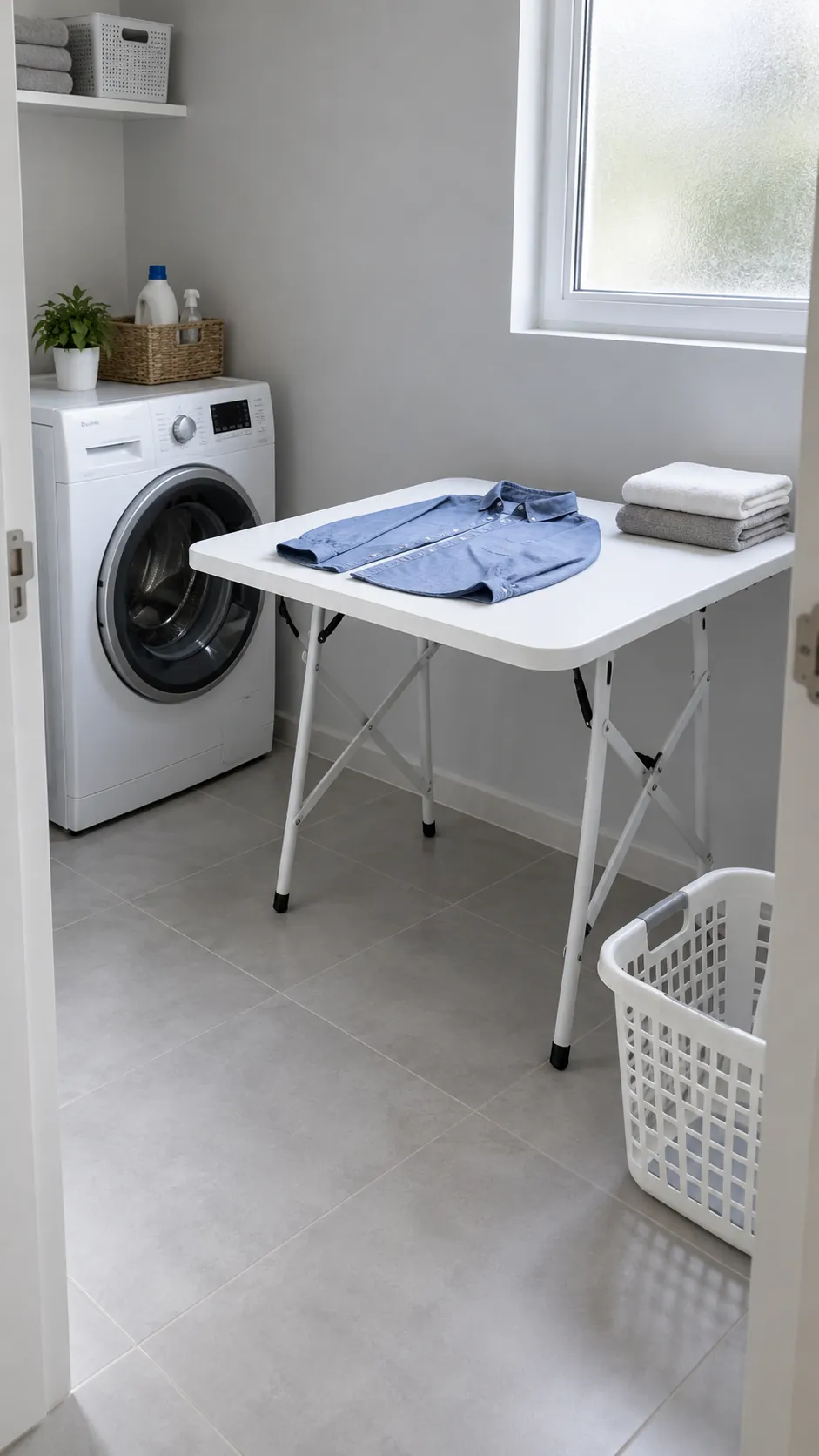
A basket of clean clothes needs a usable surface, but a permanent counter can consume the same space you need to open the machines. Start by measuring a station in both positions: ready for folding and put away. A table that disappears easily is only helpful if it also opens without blocking the room.
Check door and lid travel, appliance clearances, stable supports, and where you will stand with a basket. For wall mounted furniture, follow the fixing instructions and get permission before drilling in a rental. Use surfaces for light folding work within their rated limits, and keep clean clothing away from chemicals, wet areas, and hot equipment.
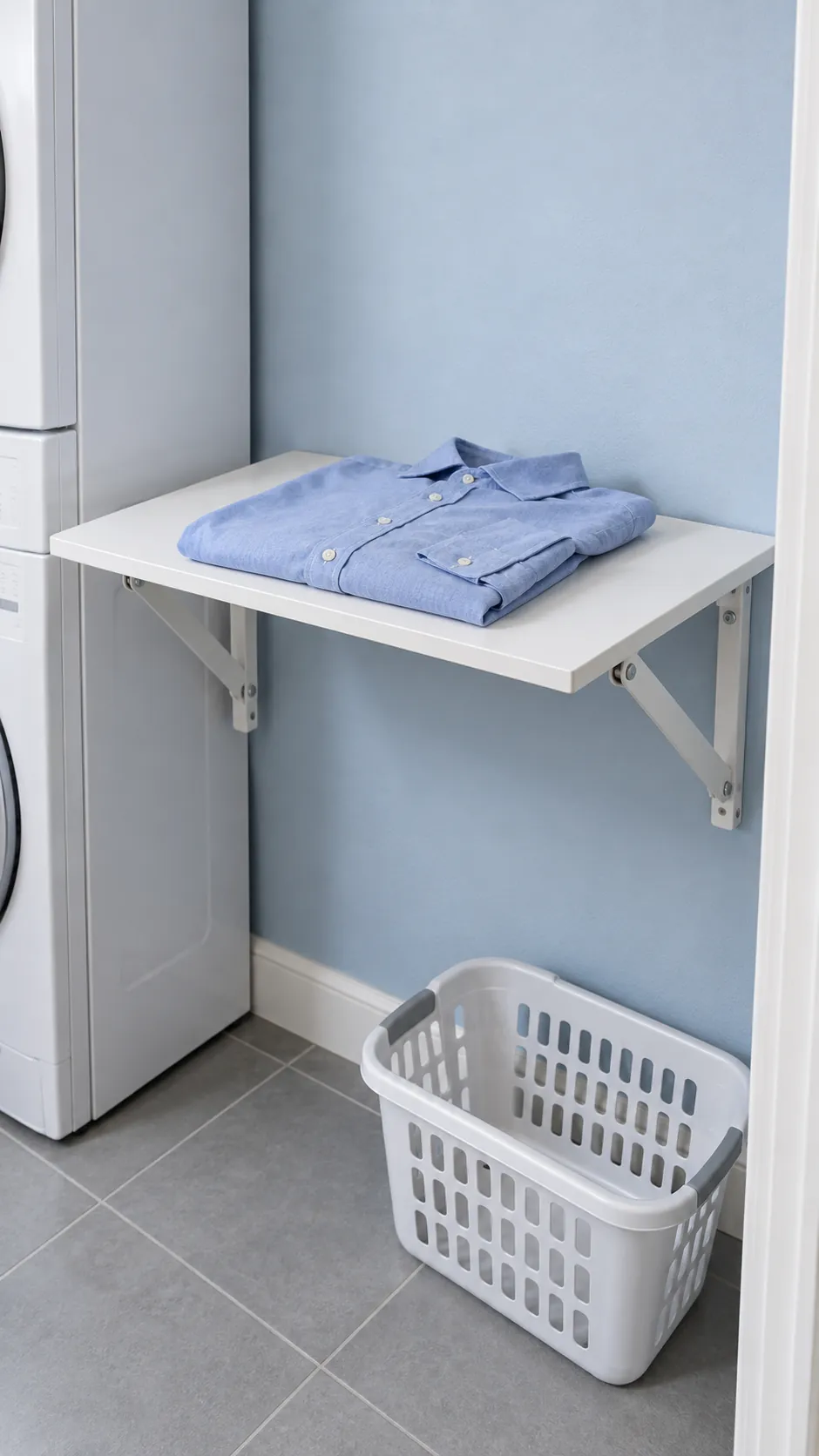
A narrow wall flap for one garment at a time
A shallow folding wall table works when the room has an empty side wall but little spare floor space. Check the table's open footprint against appliance doors and your standing position before mounting it. Follow its fixing requirements for the actual wall construction, and test that the folding supports lock fully before placing laundry on top. Fold and put away one garment at a time if a wider surface would block the aisle.
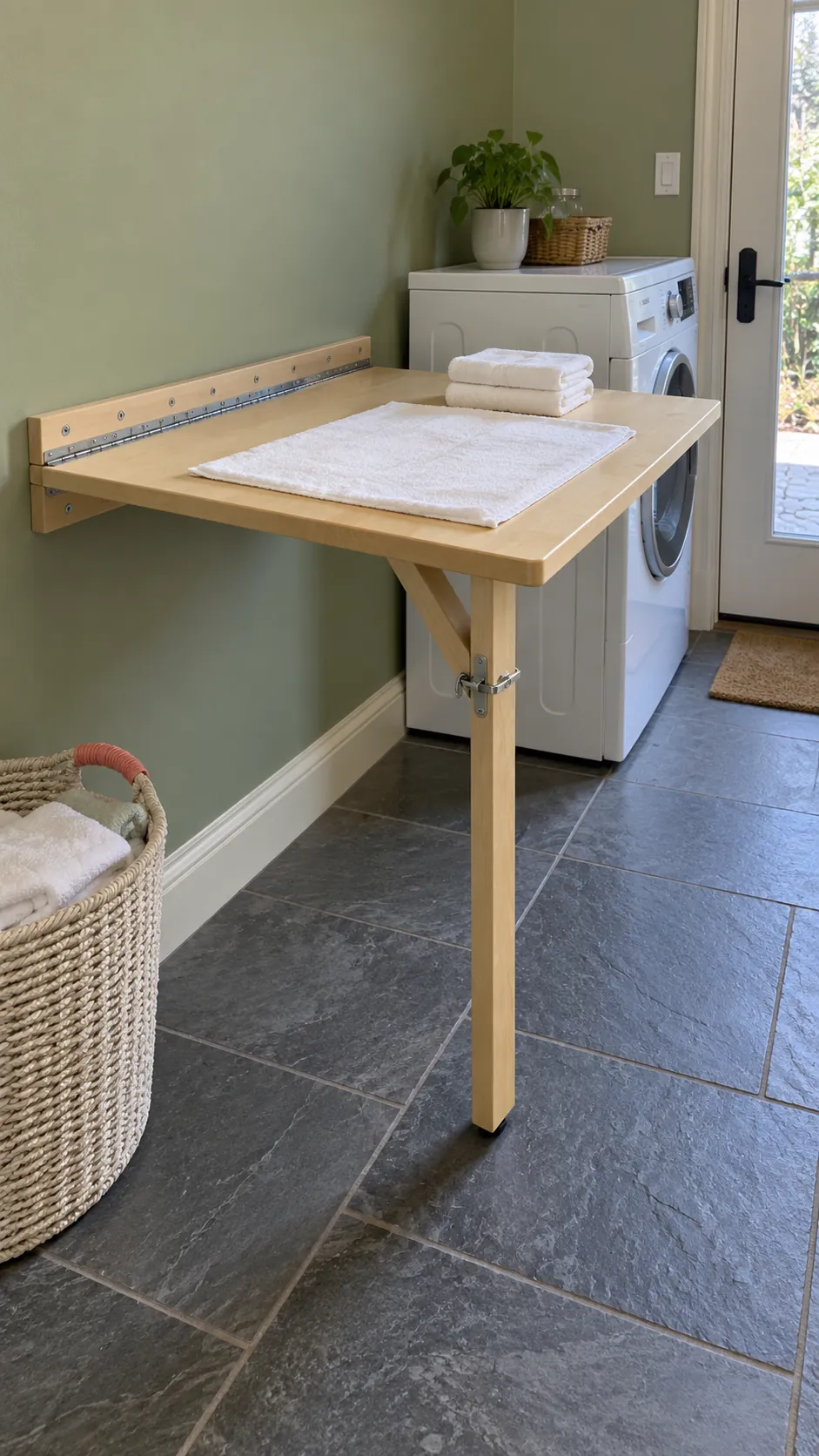
A wider drop leaf with a folding support leg
A wall attached leaf with its own folding leg can offer a larger work area than a small bracket supported flap. Its leg needs a stable level floor position that does not trap you against the washer. Choose a purpose made assembly and observe its load limits rather than improvising a support from a hamper.
Check the space needed to swing the leg out before lowering the leaf. A lightweight basket can wait beside the table while you fold, leaving the main surface for the garment. When finished, clear the top before following the table's folding sequence so fabric does not get caught in the hinge.
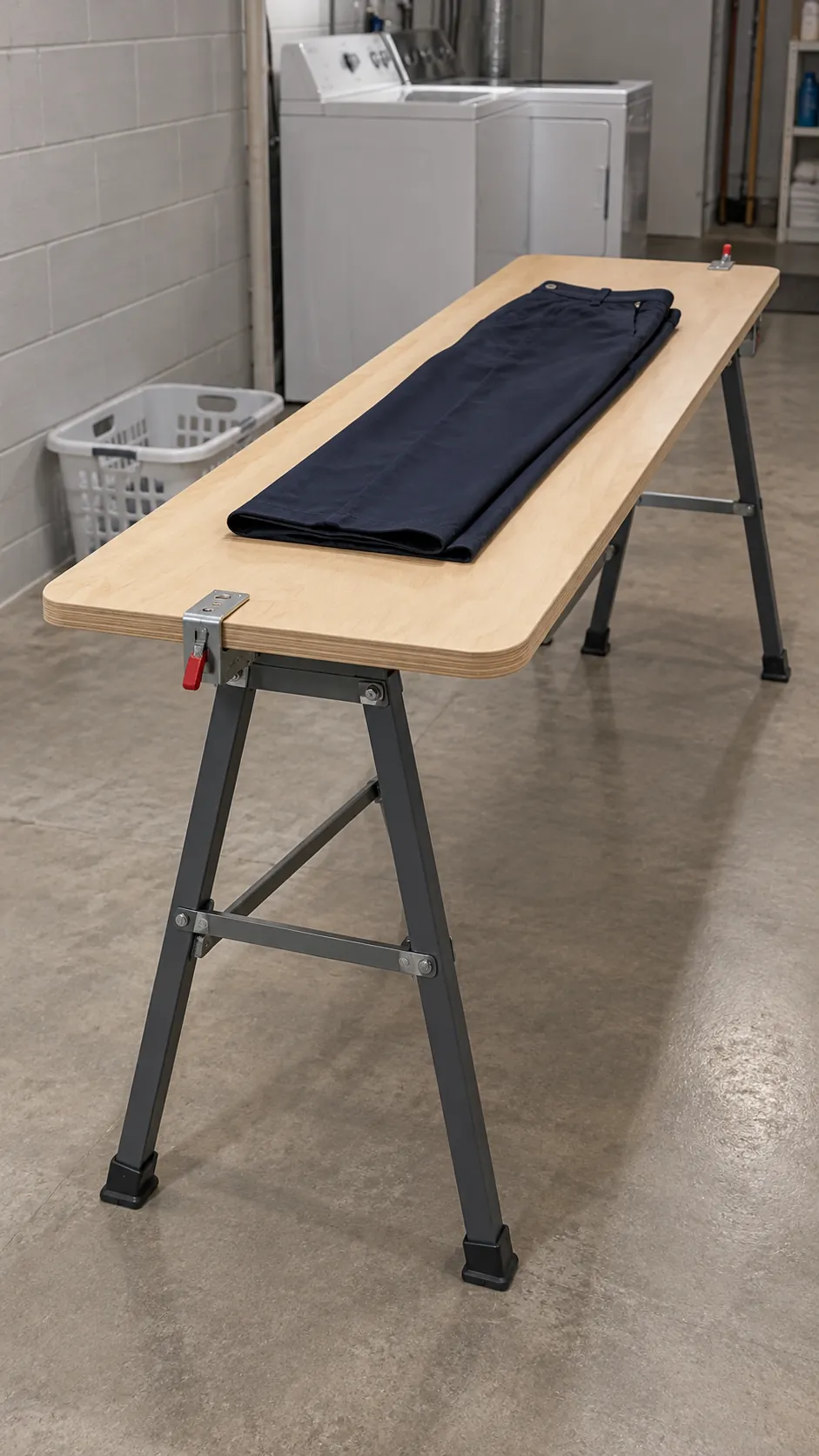
A removable board on folding trestles
Two folding trestles and a suitable smooth board create a station that can be dismantled after laundry day. Secure the board to its supports as the product or build design requires; a loose board that can slide is not a usable work surface. Check the complete arrangement's stability and rated capacity before relying on it. Store the board upright only in a secured position where it cannot fall into a door or appliance.
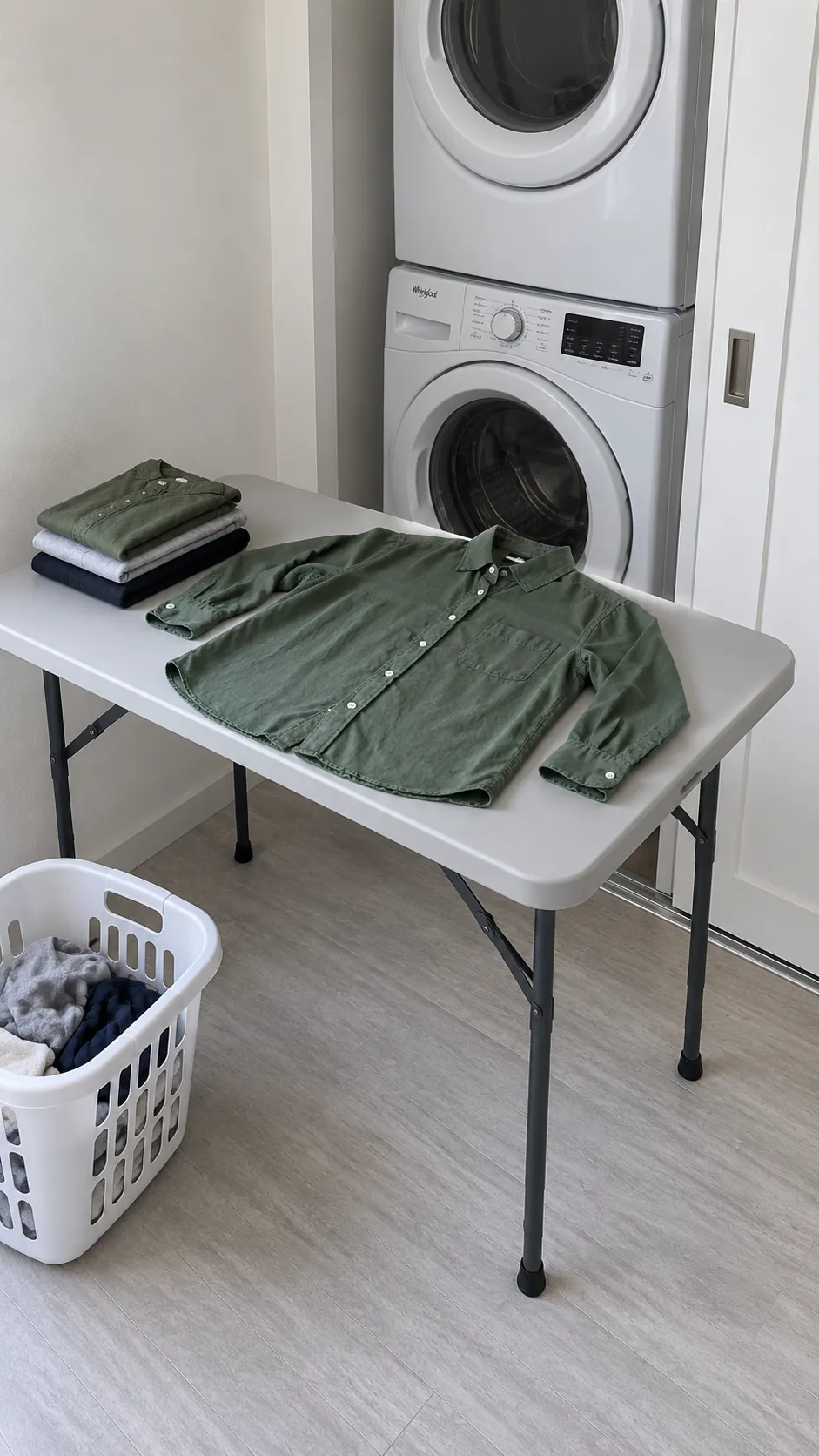
A compact folding utility table
A plain folding table is useful in a rental where wall drilling is not permitted. Measure its folded size as carefully as its open footprint, including the legs and carrying handle. Lock the legs in their working position, then check for rocking on the laundry floor. Choose a smooth top without a raised rim that catches shirt sleeves.
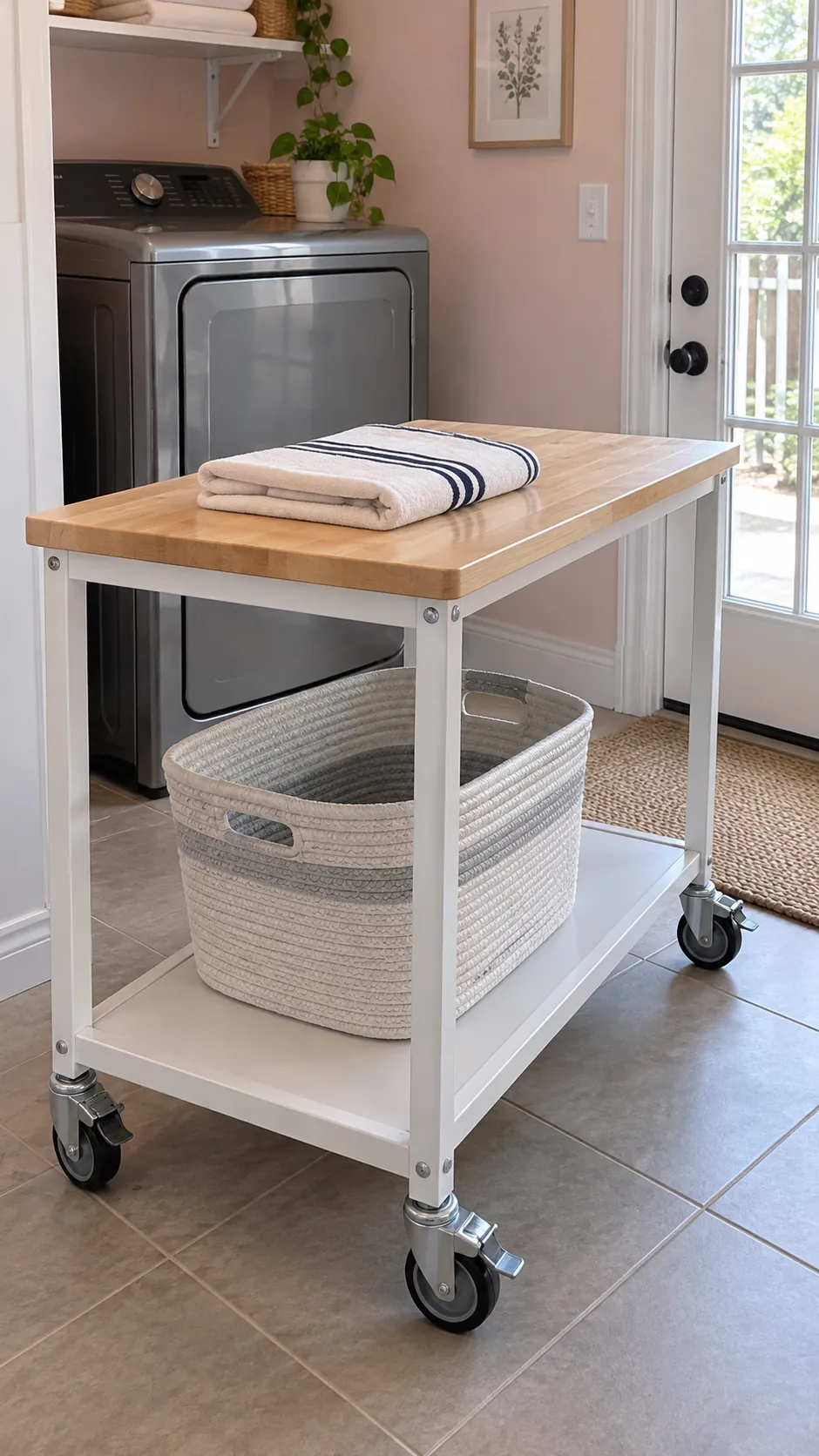
A cart with a firm top and locking wheels
A rolling cart lets the folding station move toward the dryer when the load is ready. Use a cart designed to carry work on its top, with a stable base and wheel locks that hold it in place. Keep folded stacks low and centered so they do not encourage tipping.
Measure the route to its parking space, including thresholds and door hardware. The cart must leave appliance ventilation and service clearances available when parked. A shelf underneath can hold an empty basket, but loading it with bottles may make the cart harder to move safely.
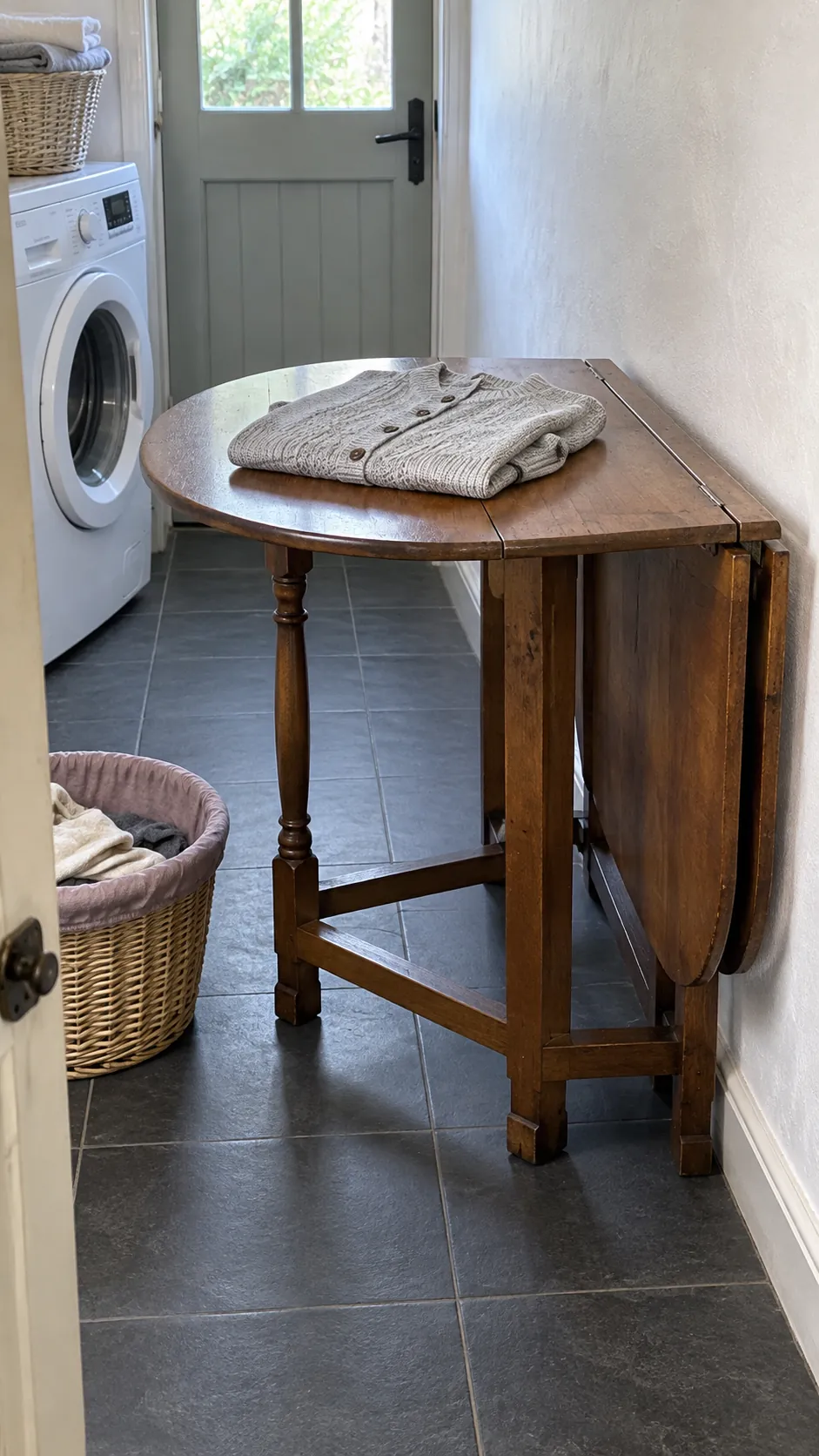
A gateleg table with a small closed footprint
A gateleg table expands only while you are folding, then returns to a narrow shape. Check that each supporting leg sits fully beneath its opened leaf. Its closed width matters in a passage room, where even a slim piece can reduce the walking route. A single opened leaf often provides enough space without turning the whole room into a table.
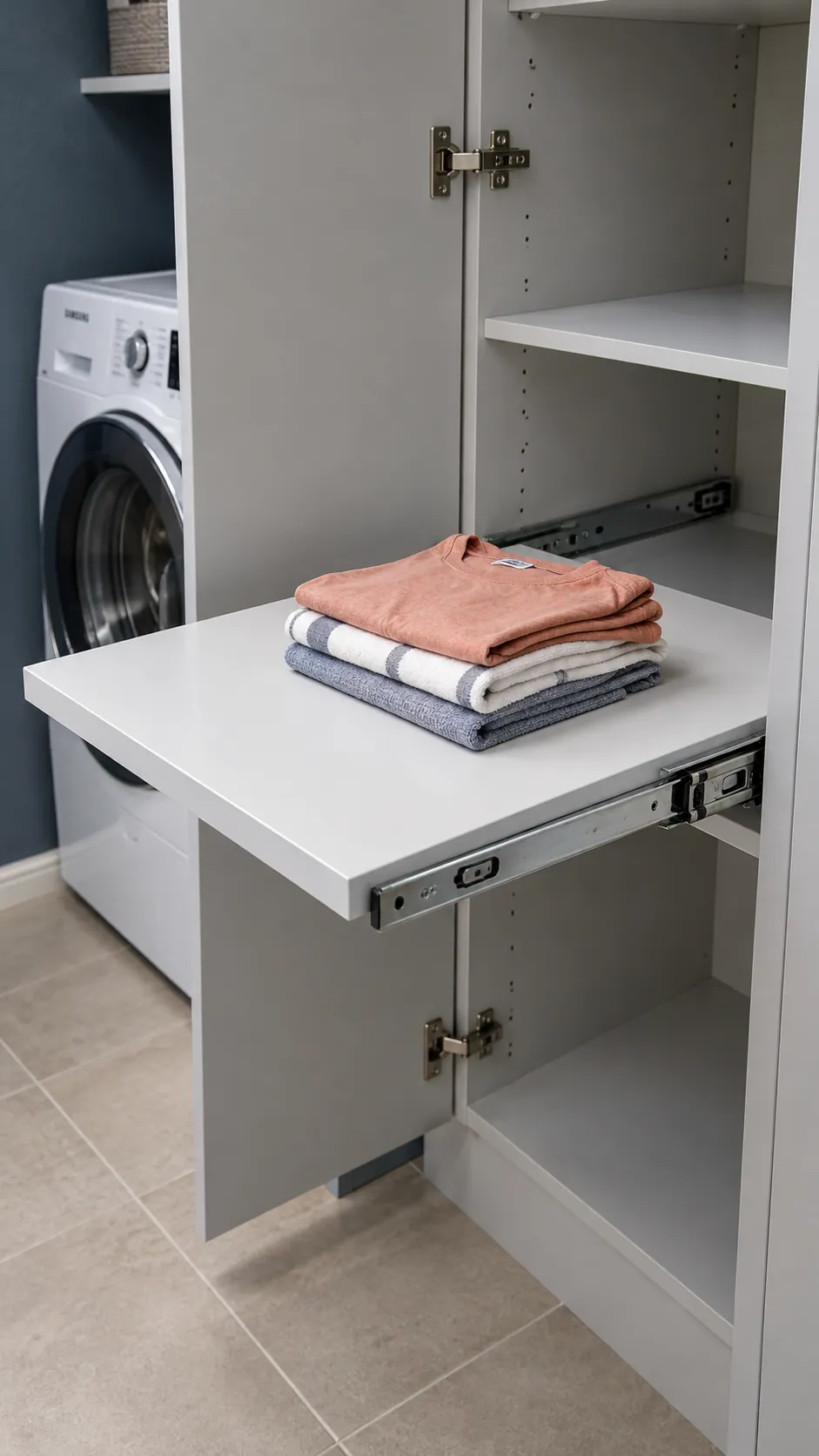
A pullout work shelf in an existing cabinet
An existing cabinet may accept a purpose designed pullout shelf for folding small items. The cabinet, slides, and shelf all need to suit the intended load and extension. Measure the door hinge clearance before selecting hardware, since a shelf can fit inside the cabinet yet fail to slide past the door.
Keep the shelf free of permanent storage so it is ready when laundry arrives. Do not lean on an extended shelf or use it as a seat. If the cabinet cannot safely support the proposed assembly, choose a freestanding table instead of treating any drawer slide as a worktop mechanism.
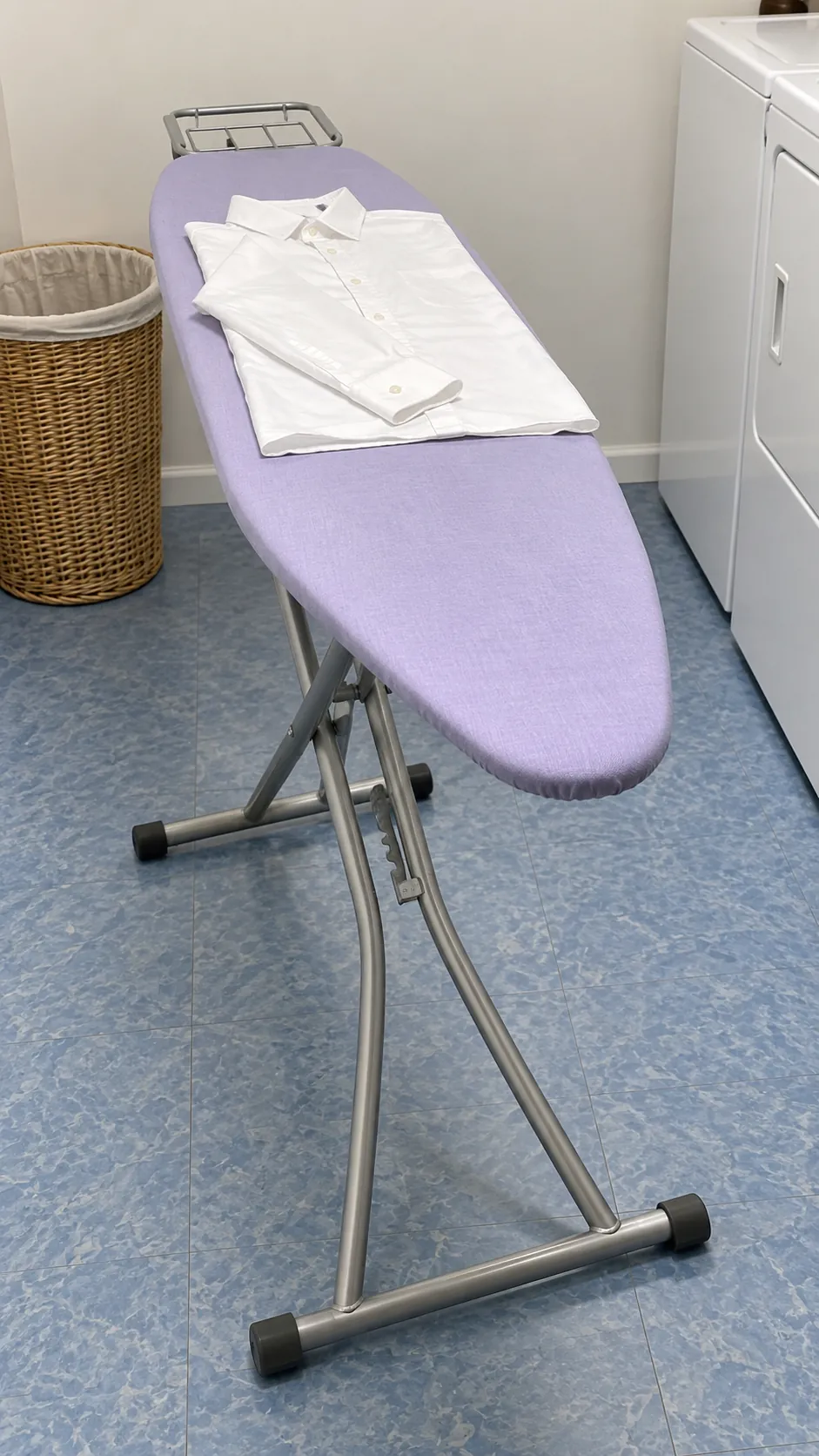
An ironing board used for shirts and small batches
A full size ironing board can double as a temporary folding station when it is already part of the household. Its narrow end suits sleeves and small garments better than broad bedding. Lock the height adjustment and make sure the cover is clean and dry. Remove the iron and let the board cool before handling freshly cleaned clothes on the surface.
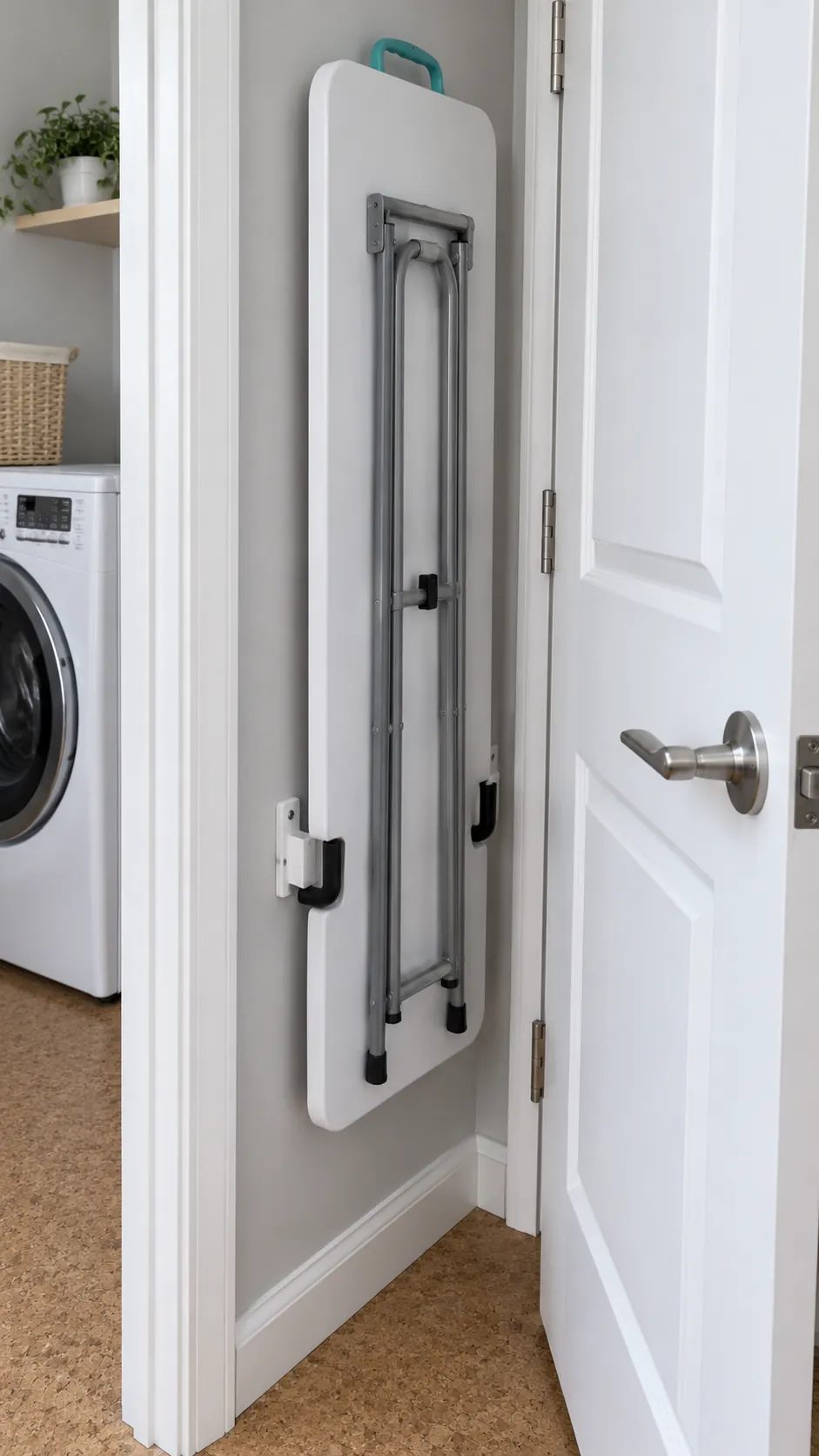
A folding table that parks behind the door
A slim portable table can live behind a laundry door when there is a genuine storage gap. Check the entire door swing and latch position with the folded table in place. Secure it with a suitable storage holder so it cannot tip toward the doorway. Set it up on its own locked legs in an open working area, rather than hanging the working surface from the door.
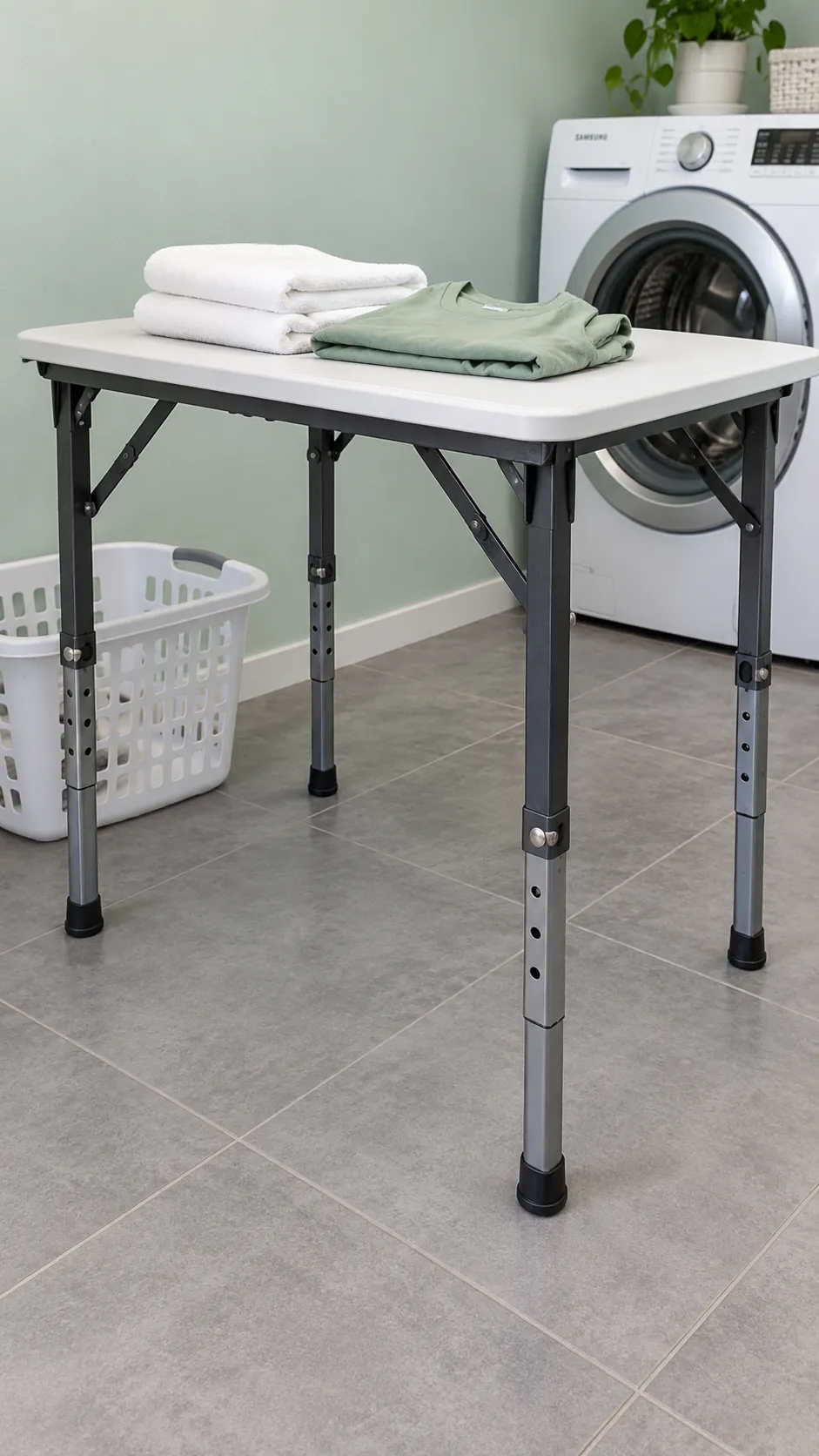
An adjustable height folding table
A table with adjustable legs lets you choose a folding height that avoids prolonged stooping. Set all legs to their matching positions and check every lock before using it. The useful height is one you can work at with relaxed shoulders, not the tallest setting available.
Try folding a towel on the candidate table before committing to its size if a demonstration is possible. Check whether your knees or feet meet the leg braces while you work. Height adjustment is only useful when the base stays stable throughout the permitted range.
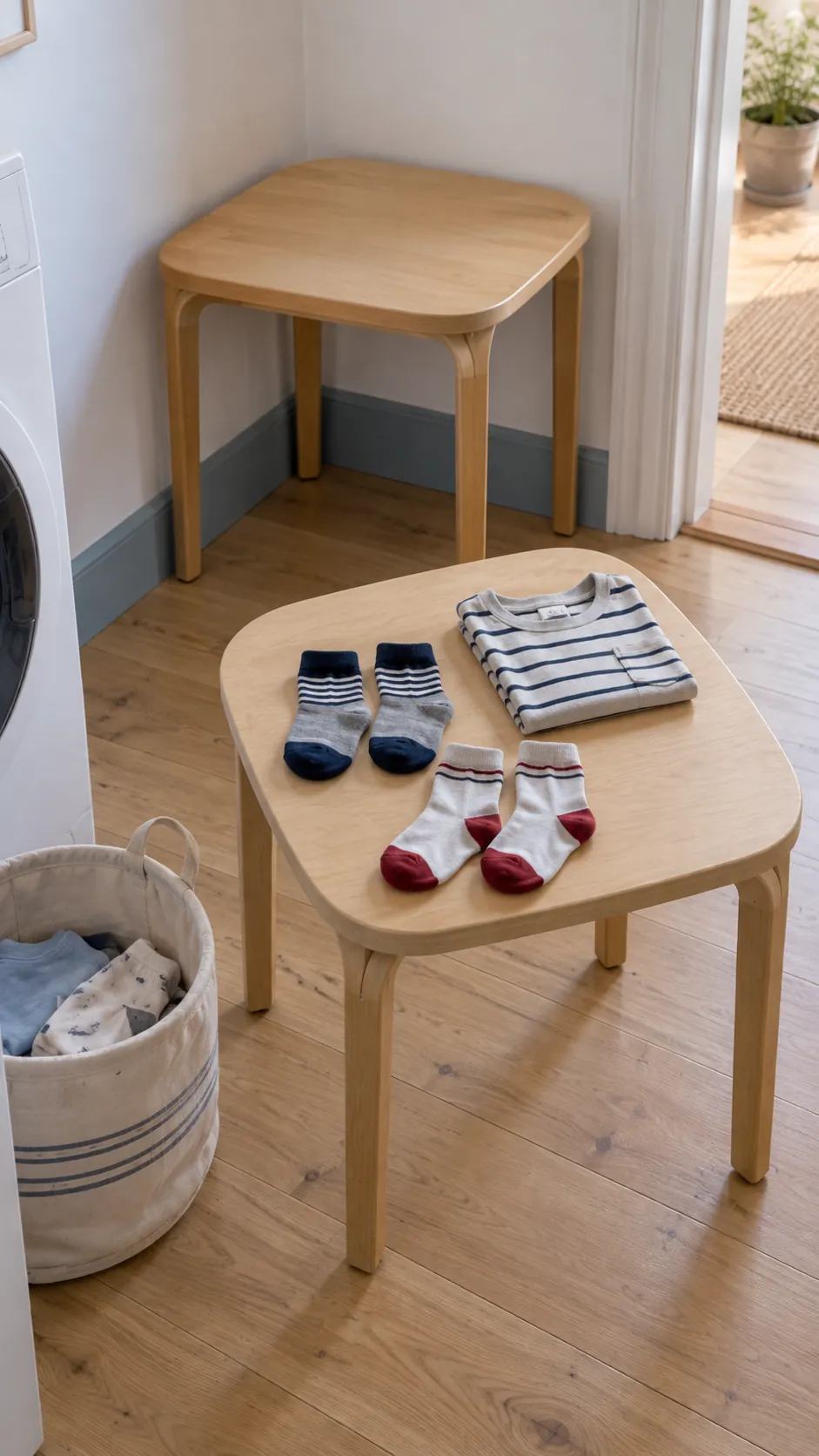
A small nesting table for socks and children's clothes
A small table pulled from a nesting set can handle the items that need little spreading space. Use it for socks, underwear, or children's clothes while larger garments wait for a broader surface. It should stand firmly on its own base without resting against an appliance. Keep the folded pile small so the limited top does not become another crowded storage spot.
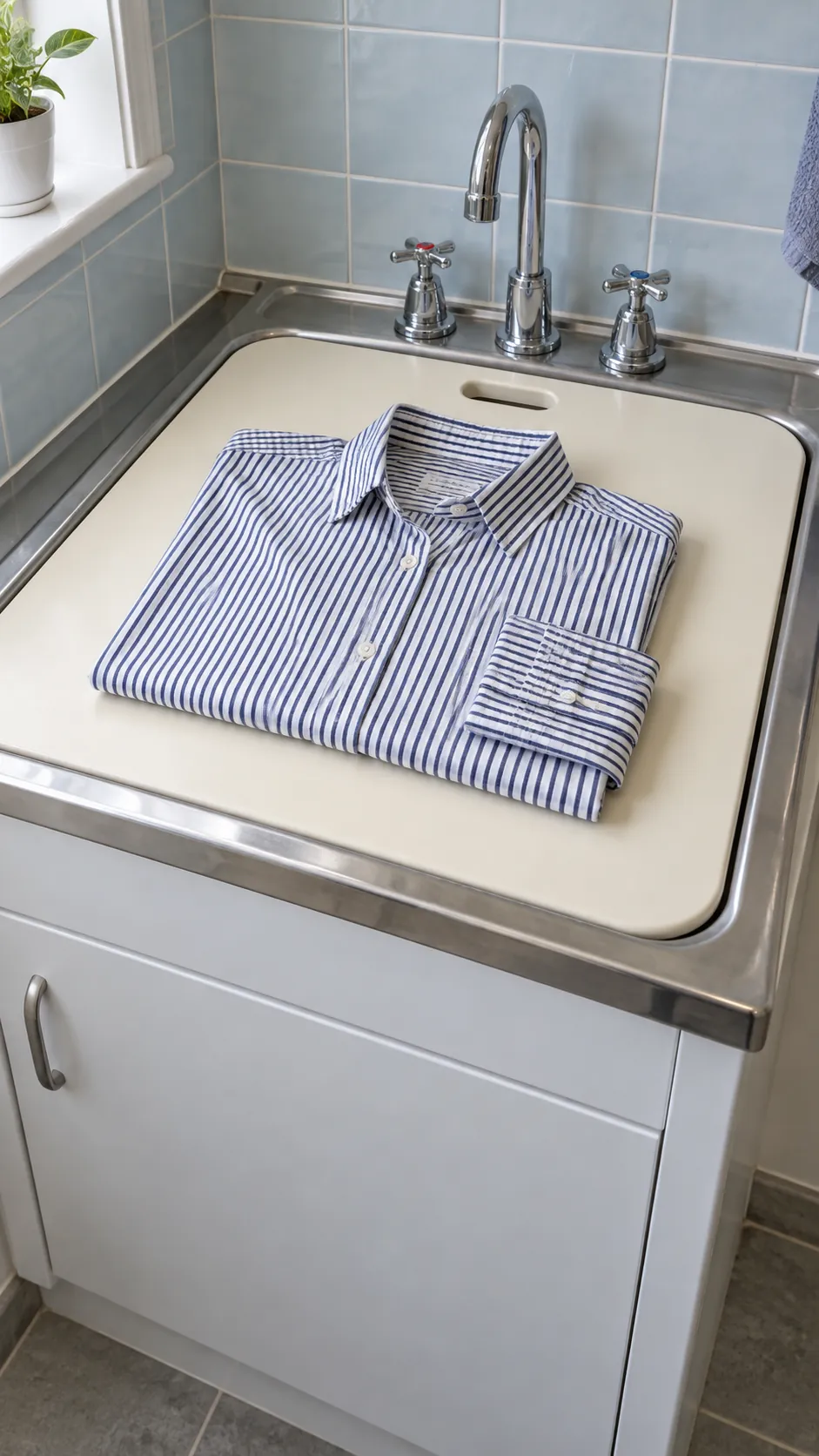
A fitted removable board over a utility sink
A purpose designed sink cover can turn a dry utility basin into a temporary folding area. It needs a secure fit, suitable support, and a surface that will not slip or damage the sink. Do not bridge a basin with an unsecured scrap board or assume the tap will hold it in place.
Clean and dry the basin area before setting out clean clothing. Remove the cover whenever the sink is needed and store it where both sides can dry. This option suits small batches rather than a heavy laundry basket unless the cover is expressly designed for that load.
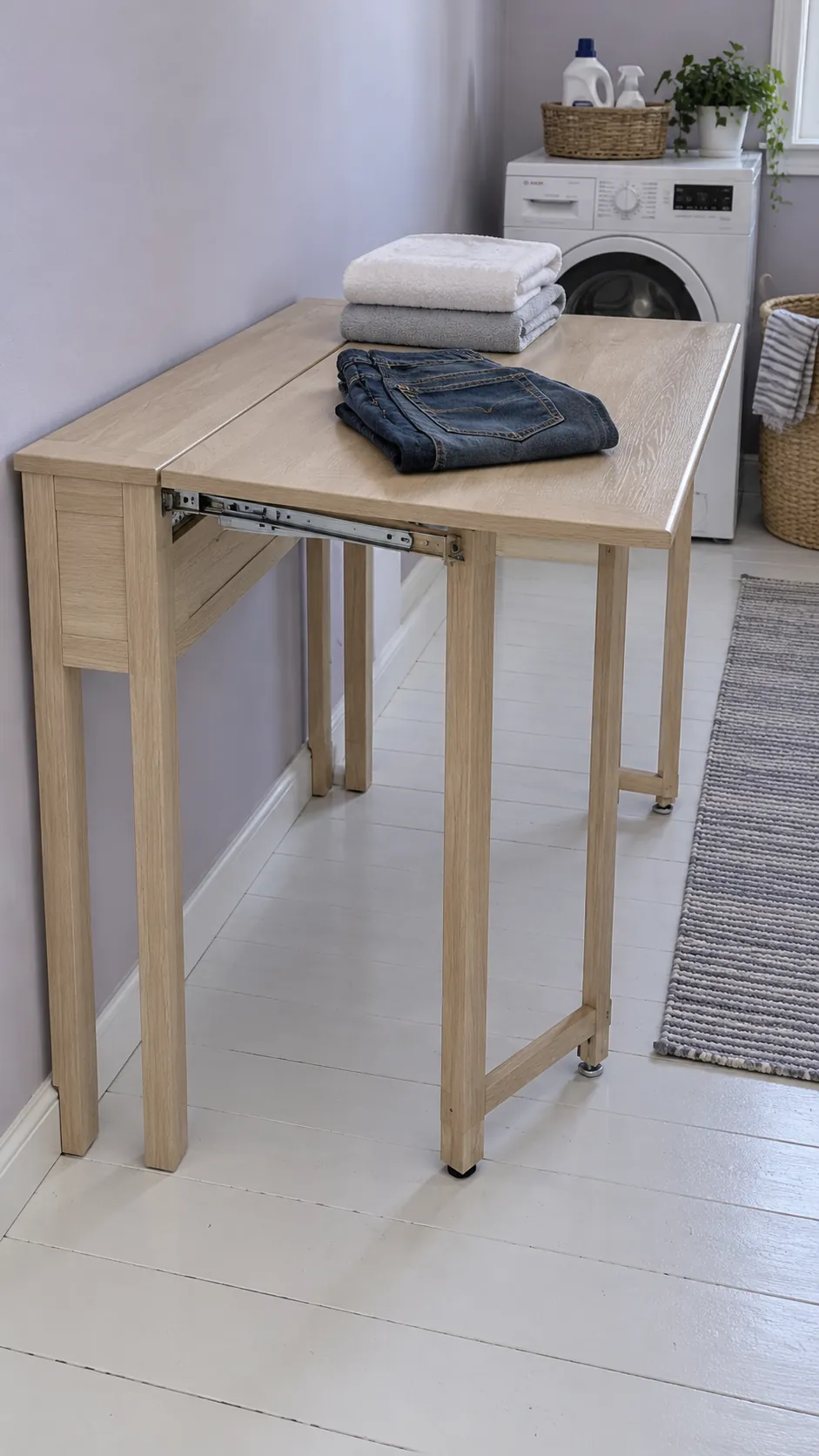
A console table with an extending top
An extending console can provide a narrow everyday footprint and more depth for laundry when opened. Choose a mechanism with proper supports for the extended sections, rather than unsupported leaves. Check that extending it leaves a usable route through the utility room. Close it only after clearing folded clothing so fabric does not enter the moving joints.
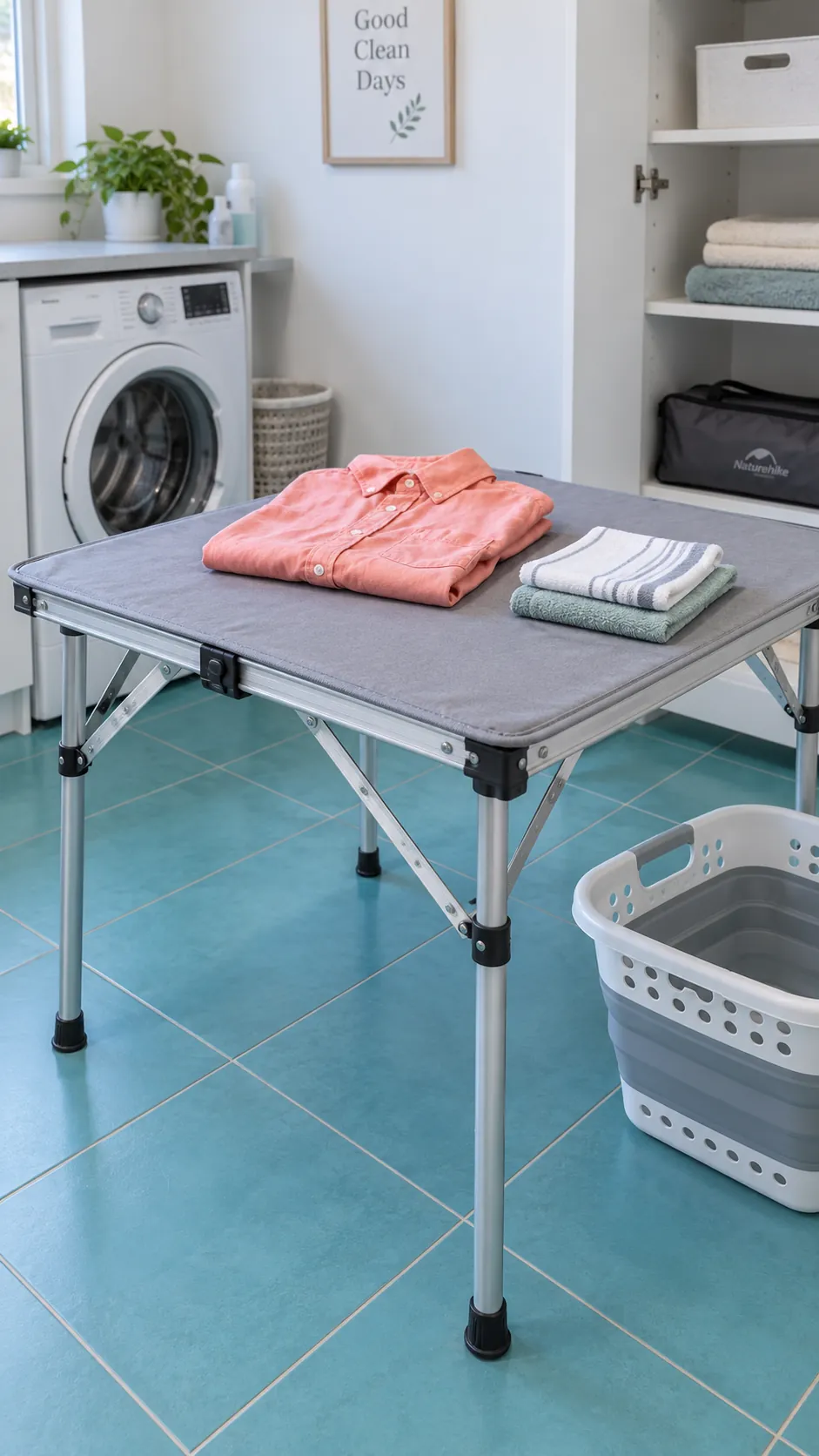
A lightweight folding camp table
A sturdy portable camp table can be useful when the laundry station must move between rooms. Inspect its jointed top for gaps that could catch delicate fabric and use a suitable smooth cover if needed. Follow its setup instructions and lock the braces on a level floor. Avoid treating a light table's advertised portability as proof that it can support a full heavy basket.
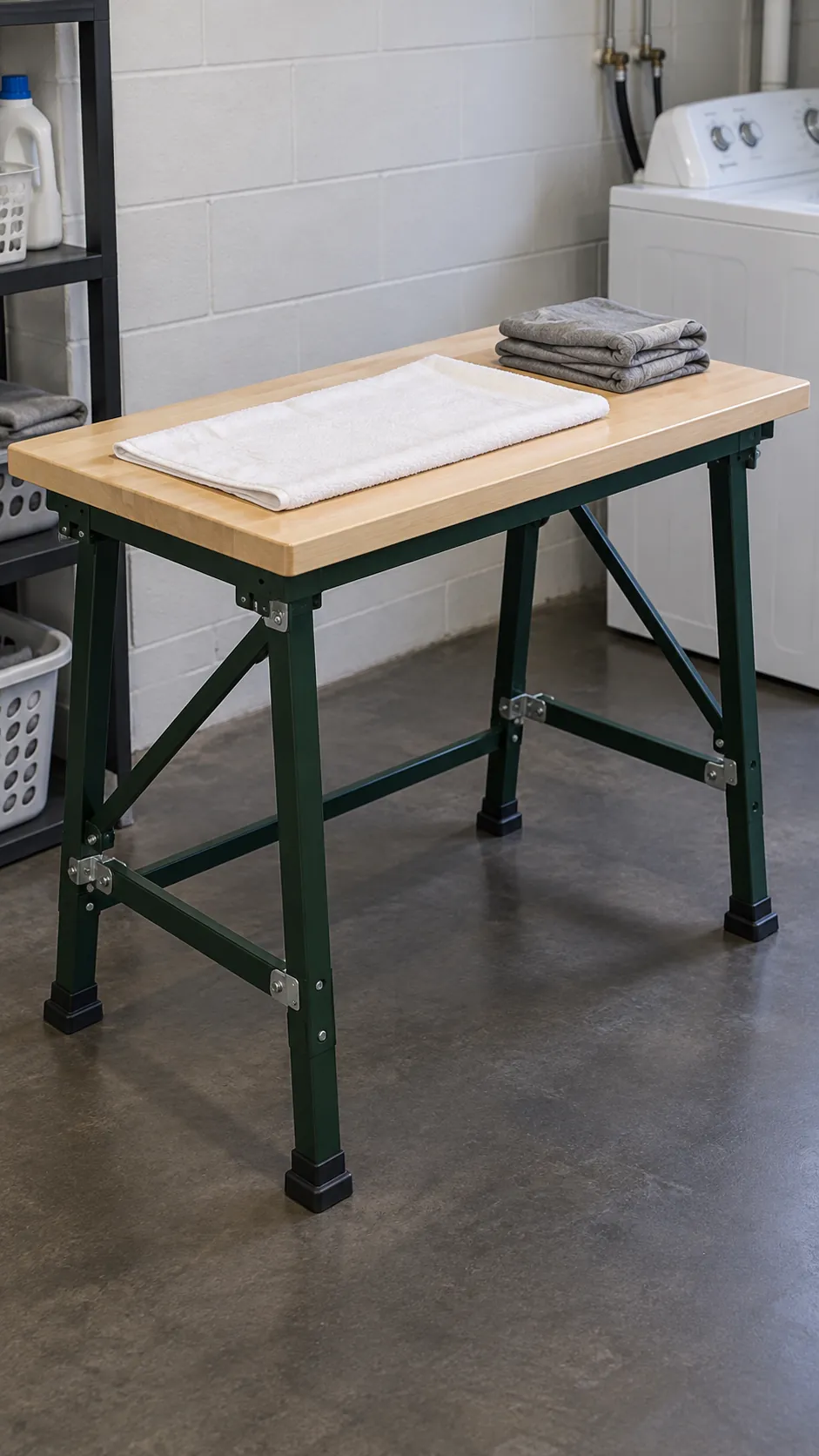
A folding workbench with a clean solid top
A portable workbench can offer a stable temporary surface if its top is clean, smooth, and suitable for clothing. Use a design with a continuous supported work area rather than exposed clamping gaps. Remove tools, sawdust, oil, and sharp hardware before bringing it into the laundry routine.
The folded bench may be heavier than a household table, so check whether moving and storing it will be comfortable. Keep its feet clear of wet areas and inspect the locking mechanism each time it opens. This is most useful when the bench already exists and can be reserved cleanly for the task.
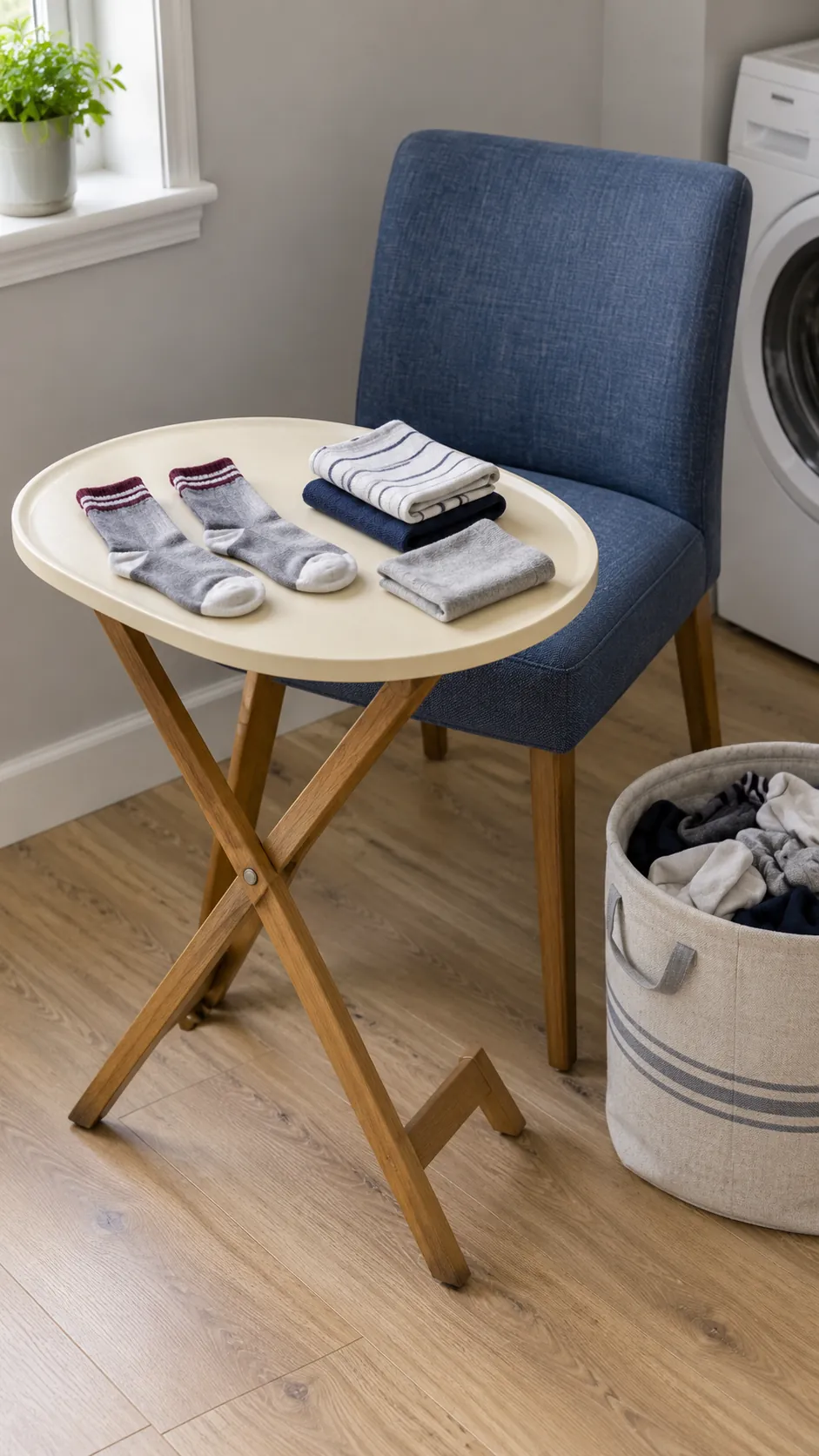
A sturdy tray table for folding while seated
A stable folding tray table can make a seated station for socks, cloths, and other small pieces. Choose a level surface that stays secure when you move your hands across it. Position the clean laundry basket beside the chair so you do not twist repeatedly to reach the next item. Move larger sheets and towels to a broader surface instead of letting them drag across the floor.
An existing table just outside the laundry closet
When no station can open without blocking the machines, use an existing clean table in the next room. Carry a manageable basket to it, fold the load, and return the table to its normal use. Wipe and dry the surface first, and keep laundry separate from food preparation. The best compact laundry workspace may be the one that leaves the laundry closet free to do its actual job.