
Choosing a paint color often feels like a high-stakes gamble. You want something that feels warm and inviting, but you don’t want your home to look like everyone else’s beige box. Olive green has become a favorite for homeowners because it acts as a neutral while still adding a punch of personality. It brings the calm of the outdoors inside, making it a solid foundation for a cozy green living room.
This list covers practical ways to use olive green, from bold accent walls to subtle color blocking. Whether you prefer a modern look or a more traditional feel, these living room designs green will help you find the right balance. You will see how to pair this earthy tone with furniture and textures you likely already own, helping you create a space that feels grounded and lived-in.
Matte Olive Walls with Natural Oak Shelving

A matte finish on olive walls absorbs light and creates a soft, velvety look that hides wall imperfections. This flat texture works well when you want the color to feel deep and immersive rather than shiny. It provides a quiet backdrop that lets other elements in the room stand out without competing for attention.
Adding natural oak shelving against this flat green surface creates a beautiful contrast. The light, warm tones of the wood pop against the darker green. You can use these shelves to display books or small plants, which reinforces the organic feel of an earthy living room. It’s a simple way to bring warmth into the space without needing a lot of extra decor.
Deep Olive Accent Wall Behind a Charcoal Grey Sofa

If you aren’t ready to commit to a full room of color, a dark olive accent wall is a great starting point. This deep shade creates a sense of depth and makes a large room feel more intimate. It works particularly well behind your main seating area to anchor the space and create a focal point.
Pairing this wall with a charcoal grey sofa creates a sophisticated green and gray living room. The dark grey fabric grounds the space, while the olive wall provides a hint of color that keeps the room from feeling too cold. This combination is practical because charcoal is excellent at hiding wear and tear, making it a smart choice for a busy family home.
Full Room Olive Paint with Matching Trim and Baseboards

Painting your walls, trim, and baseboards the same shade of olive is a technique known as color drenching. This approach removes the visual breaks in a room, which can actually make a small space feel larger and more cohesive. It creates a seamless look that feels intentional and high-end without costing more than a few extra cans of paint.
When you use this method, the shadows in the room provide the contrast instead of white trim. It results in a very cozy room design because the color wraps around you. To keep it from feeling too heavy, use different finishes, like matte for the walls and a satin or semi-gloss for the trim, to catch the light in different ways.
Sage Green and Grey Living Room Color Blocking

Color blocking is a straightforward way to add visual interest to a sage green and grey living room. You can paint the bottom third of the wall a darker grey and the top two-thirds a soft sage green. This creates a faux wainscoting effect that adds structure to the room without the need for expensive carpentry.
This technique helps balance the proportions of a room with high ceilings. It keeps the darker color at eye level or below, which makes the seating area feel more grounded. Use a simple piece of painter’s tape to get a crisp line between the two colors for a clean, modern finish.
Textured Olive Lime Wash for an Earthy Living Room
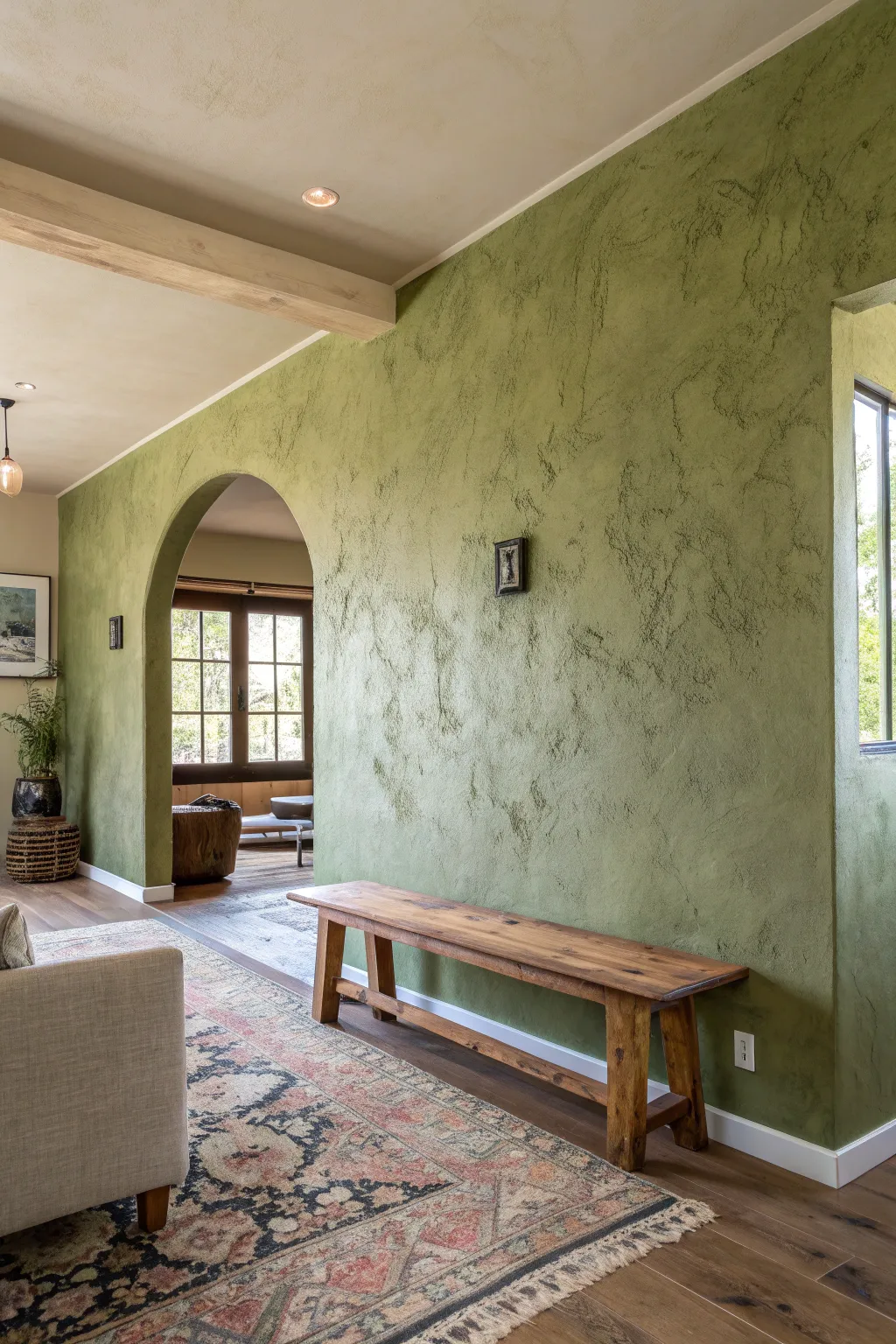
Lime wash paint offers a mottled, chalky appearance that standard latex paint can’t replicate. It adds a sense of history and movement to the walls, making them look like they are made of stone or plaster. In an olive tone, this texture enhances the earthy living room vibe and makes the space feel more connected to nature.
Applying lime wash is different from regular painting as it requires a large brush and a random, sweeping motion. The result is a finish that changes slightly depending on the light throughout the day. It’s a great choice if you want your walls to have character and depth without using wallpaper or complicated stencils.
Olive Green Board and Batten Paneling with White Upper Walls

Board and batten adds architectural interest to plain drywall. By painting the lower paneled section a rich olive green and keeping the top portion a crisp white, you get a look that is both traditional and fresh. This style is very effective in hallways or living rooms where you want to protect the lower half of the walls from scuffs.
This setup provides great living room inspiration green because it balances color with brightness. The white upper half keeps the room feeling airy, while the olive lower half adds the necessary weight for a cozy feel. You can even add a small ledge at the top of the paneling to lean small pieces of art or framed photos.
Dark Olive Backdrop for Brass Picture Frames and Sconces
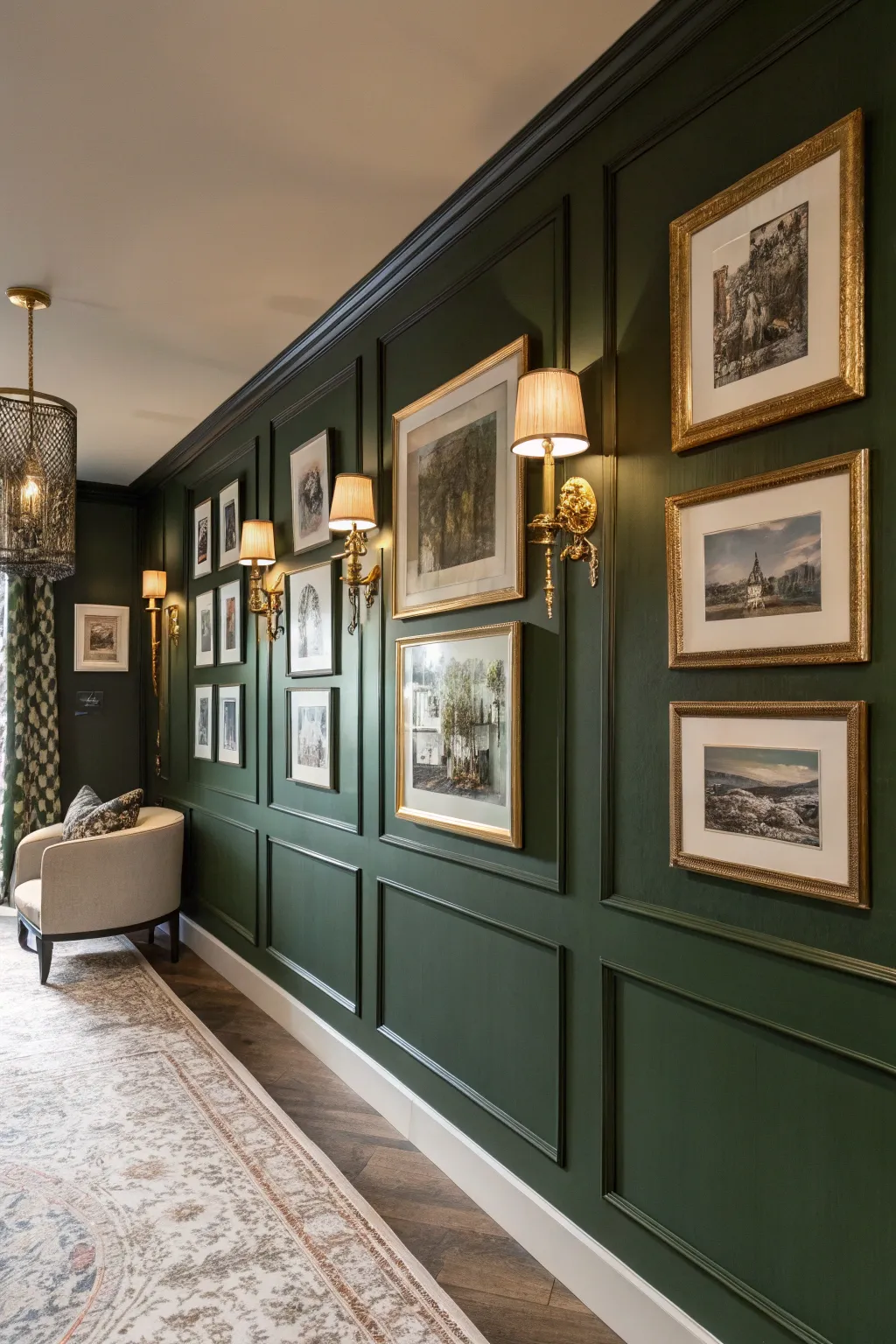
Dark olive green is a fantastic color for highlighting metallic accents. Brass and gold tones stand out beautifully against the green, as the warmth of the metal complements the yellow undertones in the paint. This combination feels classic and polished without being overly formal.
You can hang a gallery wall of brass frames or install gold-toned wall sconces to break up a large expanse of green. The light from the sconces will catch the metallic finish and create a warm glow against the dark walls. It is an easy way to make your green living room aesthetic feel more curated and thoughtful.
Muted Green Walls Paired with Tan Leather Furniture
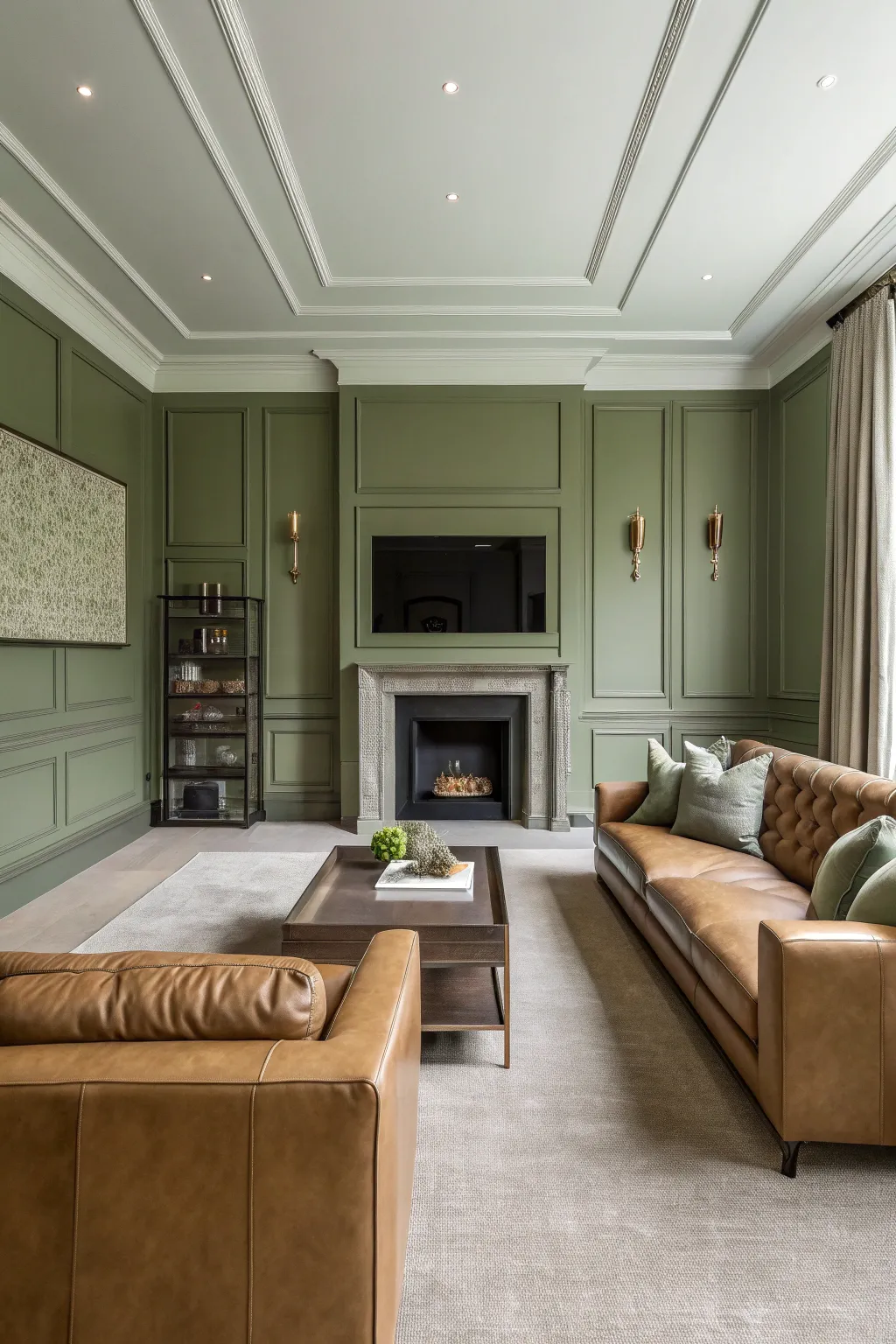
Muted olive greens have a lot of grey in them, which makes them very easy to live with. These shades don’t feel overwhelming and act as a soft neutral. When you pair these walls with tan or cognac leather furniture, the room immediately feels warm and established.
The orange and brown tones in the leather provide a natural contrast to the green. This is a classic color palette that works well for a cozy room design. Since both colors are inspired by nature, they create a relaxing environment that doesn’t go out of style as trends change.
Olive Green Vertical Shiplap in a Reading Nook

Vertical shiplap is a modern twist on the classic horizontal farmhouse style. Installing it in a small corner or a reading nook helps define that specific area of the living room. Painting the wood a deep olive green makes the space feel like a separate, snug retreat within a larger room.
The vertical lines draw the eye upward, which can make a small nook feel taller. It’s a manageable weekend project that adds a lot of texture to the wall. Pair it with a comfortable chair and a floor lamp to create a dedicated spot for relaxing or catching up on work.
Light Olive Paint with Creamy Off-White Ceilings

If you are worried about olive green being too dark, choose a lighter, more diluted shade. This keeps the room bright while still offering more personality than a standard white or beige. It’s a safe way to introduce color if your living room doesn’t get a lot of natural sunlight.
Instead of a stark white ceiling, use a creamy off-white or a very light biscuit color. This softens the transition between the walls and the ceiling, making the room feel more cohesive. It avoids the harsh contrast that bright white can sometimes create against green tones, contributing to a more comfortable and cosy living room idea.
Grey and Green Living Room with Slate Tile Accents
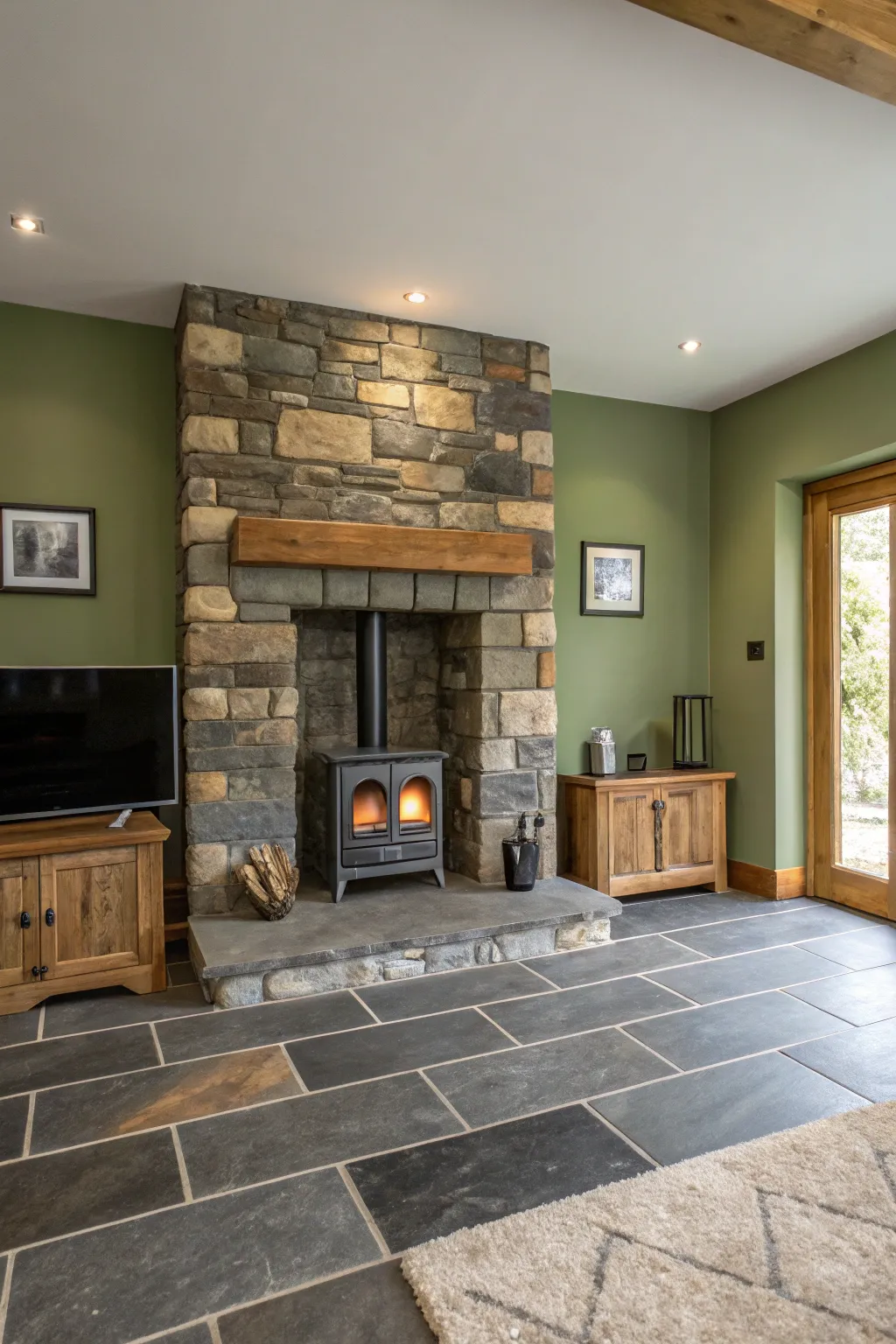
Incorporating natural stone is an effective way to ground a grey and green living room. Slate tiles, with their natural variations of blue, grey, and charcoal, look excellent next to olive walls. You could use slate for a fireplace hearth or even as a feature wall behind a wood-burning stove.
The cool tones of the slate balance the warmth of the olive green. This mix of materials adds a layer of ruggedness to the room that feels authentic. It’s a practical choice for high-traffic areas because stone is durable and easy to maintain, while the green walls keep the overall look from feeling too industrial.
Olive Green Walls with Black Metal Industrial Fixtures
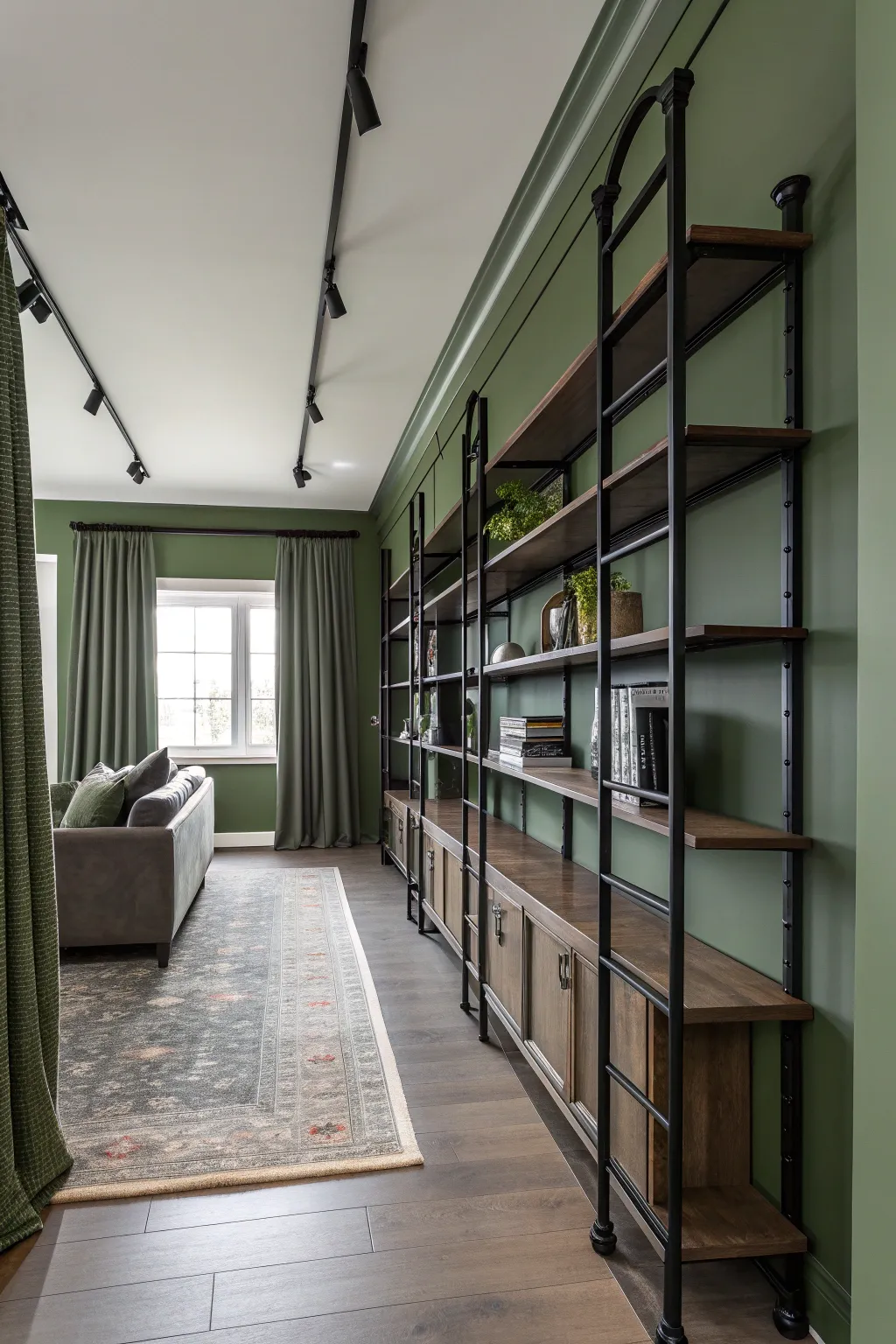
Olive green and black metal create a sharp, modern look. The black provides a strong contrast that makes the green look more vibrant. This works well with industrial-style lighting, curtain rods, or even thin metal bookshelves.
This combination is ideal for those who want a green living room aesthetic that isn’t too soft or floral. The black accents add a bit of an edge to the room, making it feel contemporary. To keep it from feeling too cold, you can add soft rugs or throw blankets in neutral tones to maintain that cozy atmosphere.
Soft Olive Paint Behind Layered Neutral Textiles
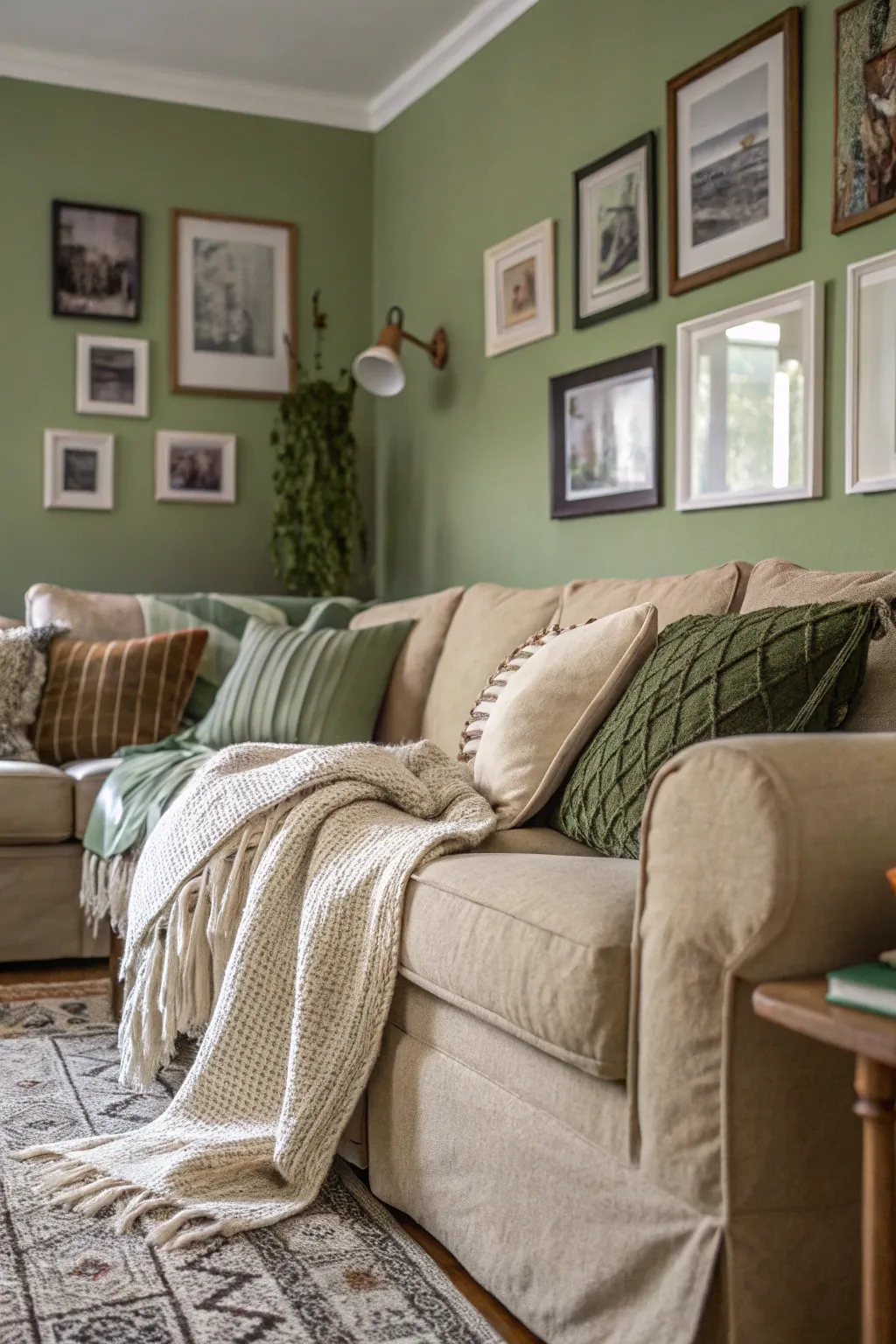
A soft olive wall serves as a great backdrop for a variety of textures. By layering different neutral fabrics—like a linen sofa, a wool rug, and cotton pillows—you create a rich, tactile environment. The green wall behind these pieces gives them a sense of place and makes the neutrals look more intentional.
This approach is perfect for creating a cozy green living room without needing a lot of bright colors. The focus is on how the room feels rather than just how it looks. Mixing different weaves and weights of fabric keeps the space interesting and makes it a place where you actually want to spend time.
Olive Green Half-Wall with Botanical Wallpapers
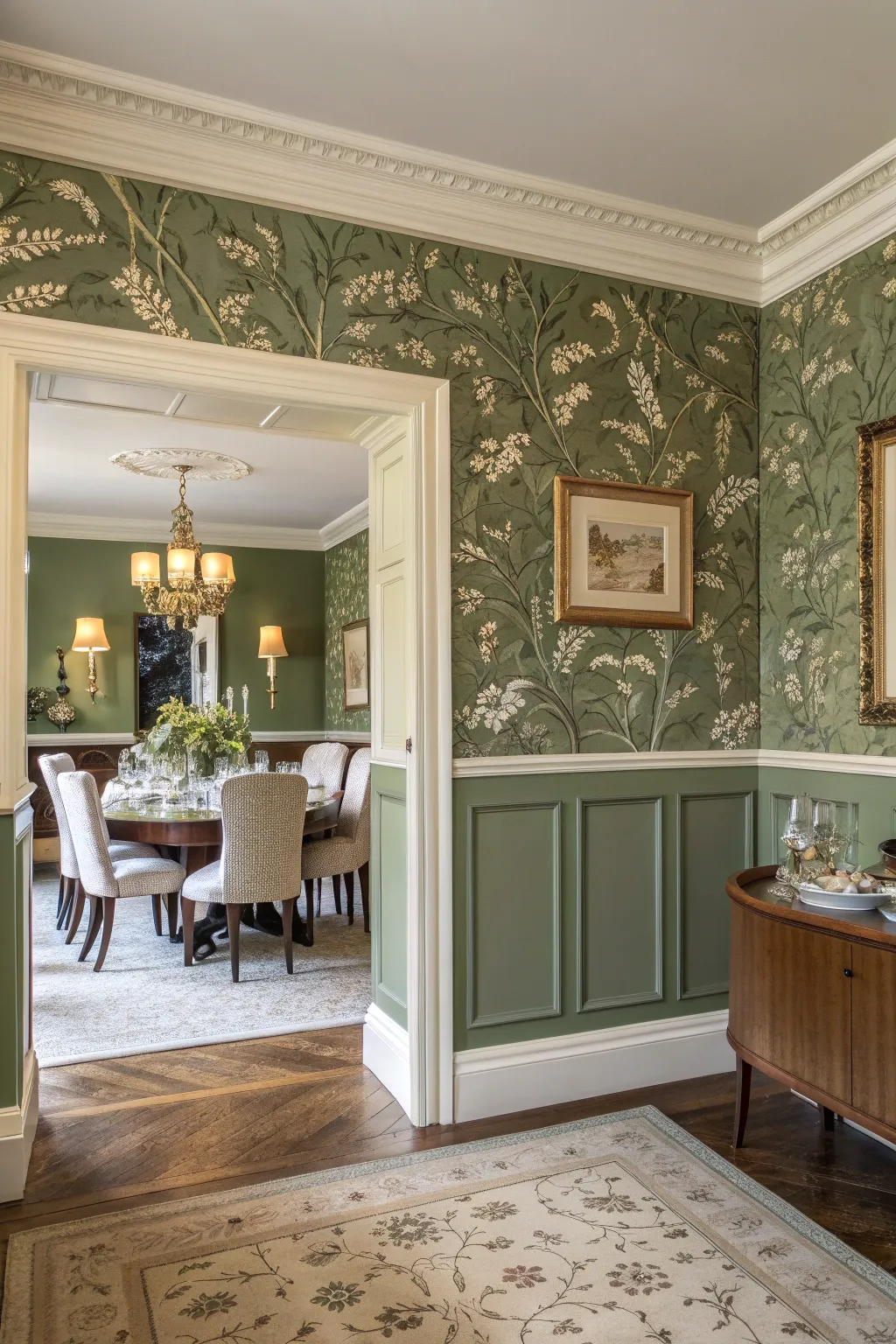
Using a half-wall of olive green paint topped with botanical wallpaper is a classic way to bring patterns into your home. The solid green bottom grounds the room, while the wallpaper adds movement and visual interest at eye level. This works especially well in living rooms that double as dining spaces.
Look for wallpapers that feature sage, forest green, or even small hints of grey to tie the whole look together. This creates a cohesive sage green and grey living room feel. It’s a great way to use a bold pattern without it becoming distracting or making the room feel cluttered.
Green and Gray Living Room with Stone Fireplace Surrounds
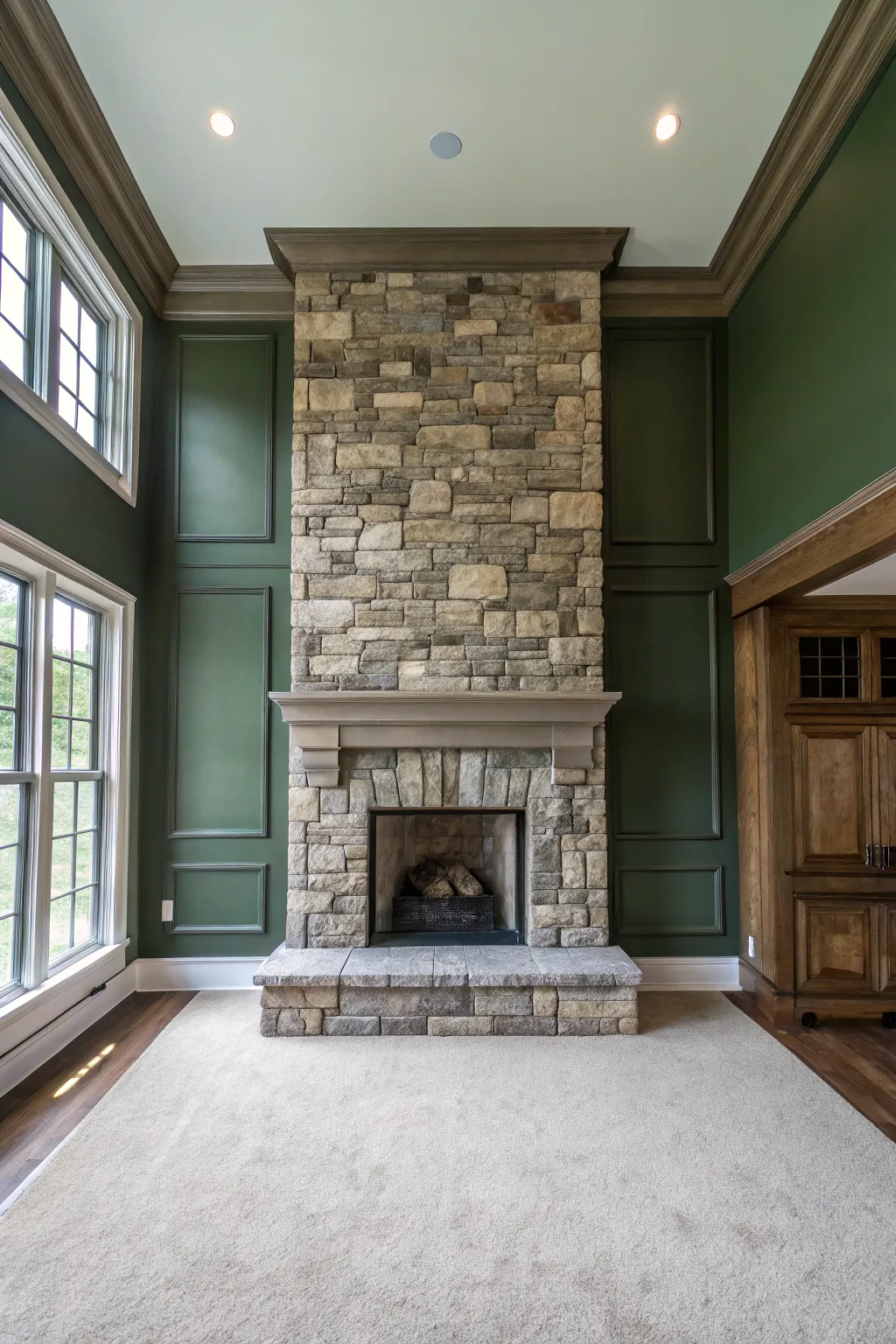
A stone fireplace is often the heart of a home, and olive green walls can make it stand out even more. Whether the stone is fieldstone, limestone, or a modern ledger stone, the green paint highlights the natural colors found within the rock. This creates a very balanced green and gray living room.
If your fireplace has a lot of grey tones, the olive green will make those greys look cooler and more defined. It’s a timeless look that feels both sturdy and welcoming. You can style the mantel with simple items like glass vases or wooden bowls to keep the focus on the beautiful combination of stone and paint.
Dusty Olive Walls with Woven Rattan Decor
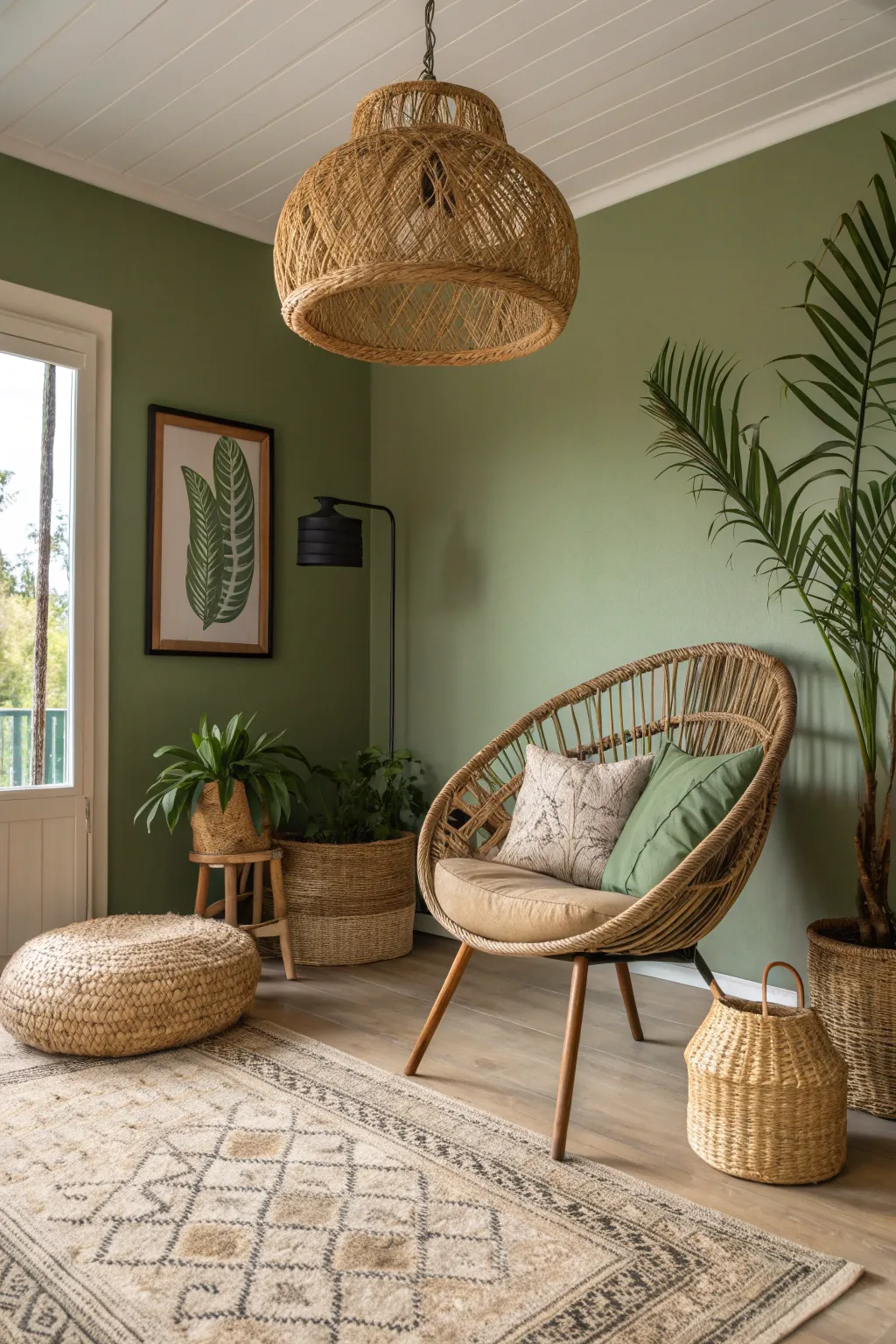
Dusty olive is a shade that has a muted, slightly aged look. It feels relaxed and unpretentious. Pairing this color with woven rattan or wicker decor adds a layer of texture that feels casual and breezy. It’s a great way to achieve a comfortable, lived-in feel.
You can use rattan in light fixtures, baskets, or even a side chair. The light tan of the woven material stands out against the dusty green without being too loud. This combination is a staple of the earthy living room style because it relies entirely on natural-looking colors and materials.
High Gloss Olive Paint for a Small Den or Library

While matte is popular, high gloss olive paint can be a stunning choice for a smaller, more enclosed space like a den or a home library. The shiny finish reflects light around the room, which can make a dark color feel more energetic. It also adds a touch of luxury and drama to the space.
High gloss paint requires very smooth walls, so take the time to prep the surface properly. Once finished, the walls will have a liquid-like appearance that looks incredible under lamplight in the evening. It’s a bold move that makes a small room feel like a special jewel box within your home.