
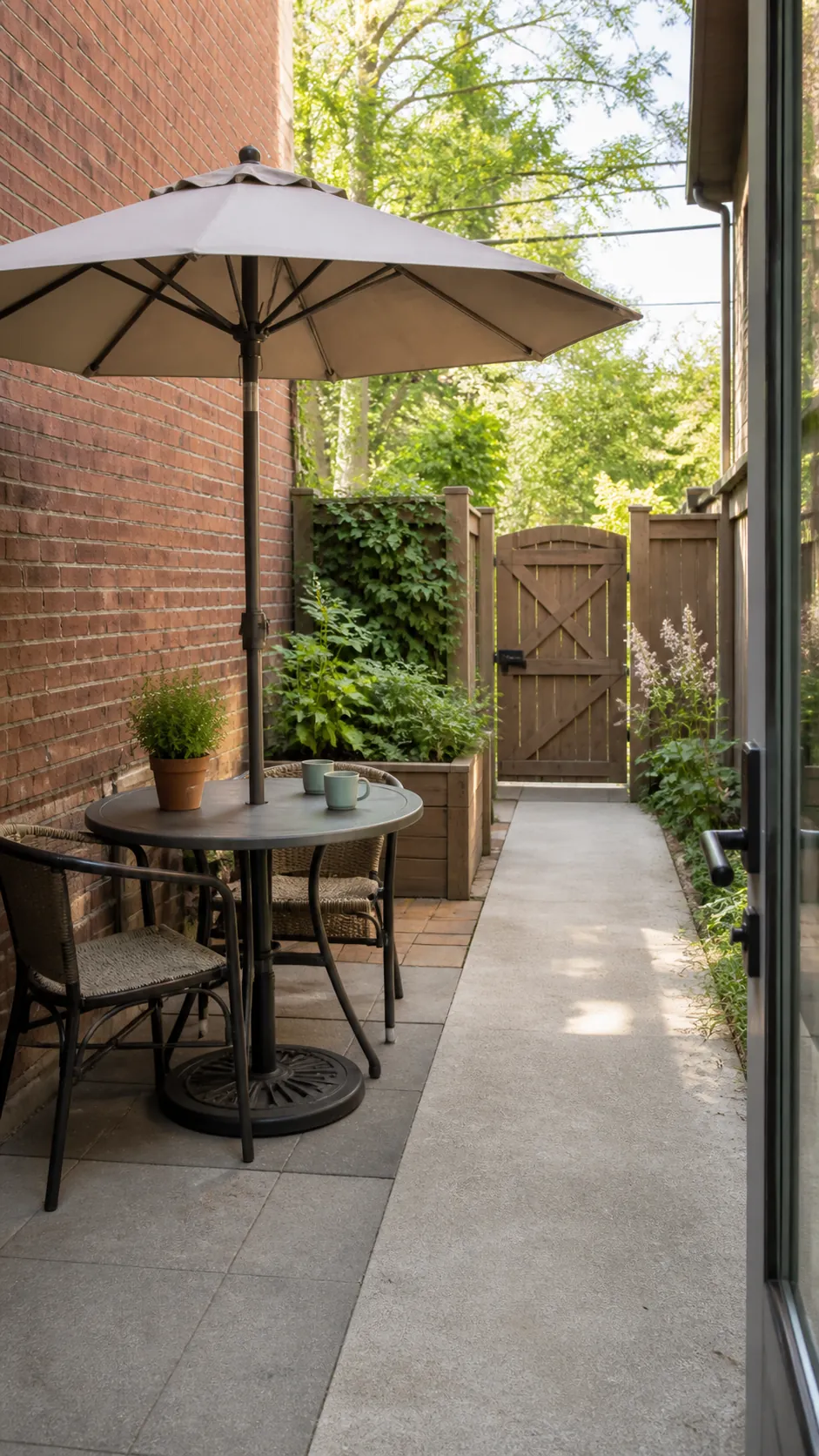
The umbrella is often the largest object on a small patio, even when its pole looks slim. Its canopy occupies headroom, its base competes with feet, and its shade moves while your furniture does not. That is why the best small patio ideas with umbrella start with circulation and sun direction—not a pretty canopy seen in isolation.
Before buying, mark the door swing, chair pullout, route to the yard, and the shadow you actually need at the hours you use the patio. Follow the umbrella manufacturer’s base, clearance, and weather guidance. Close and secure the umbrella when it is unattended or when wind approaches the product’s limit; extra weights are not permission to leave an open canopy in unsafe conditions.
A Slim Center-Pole Bistro Setup
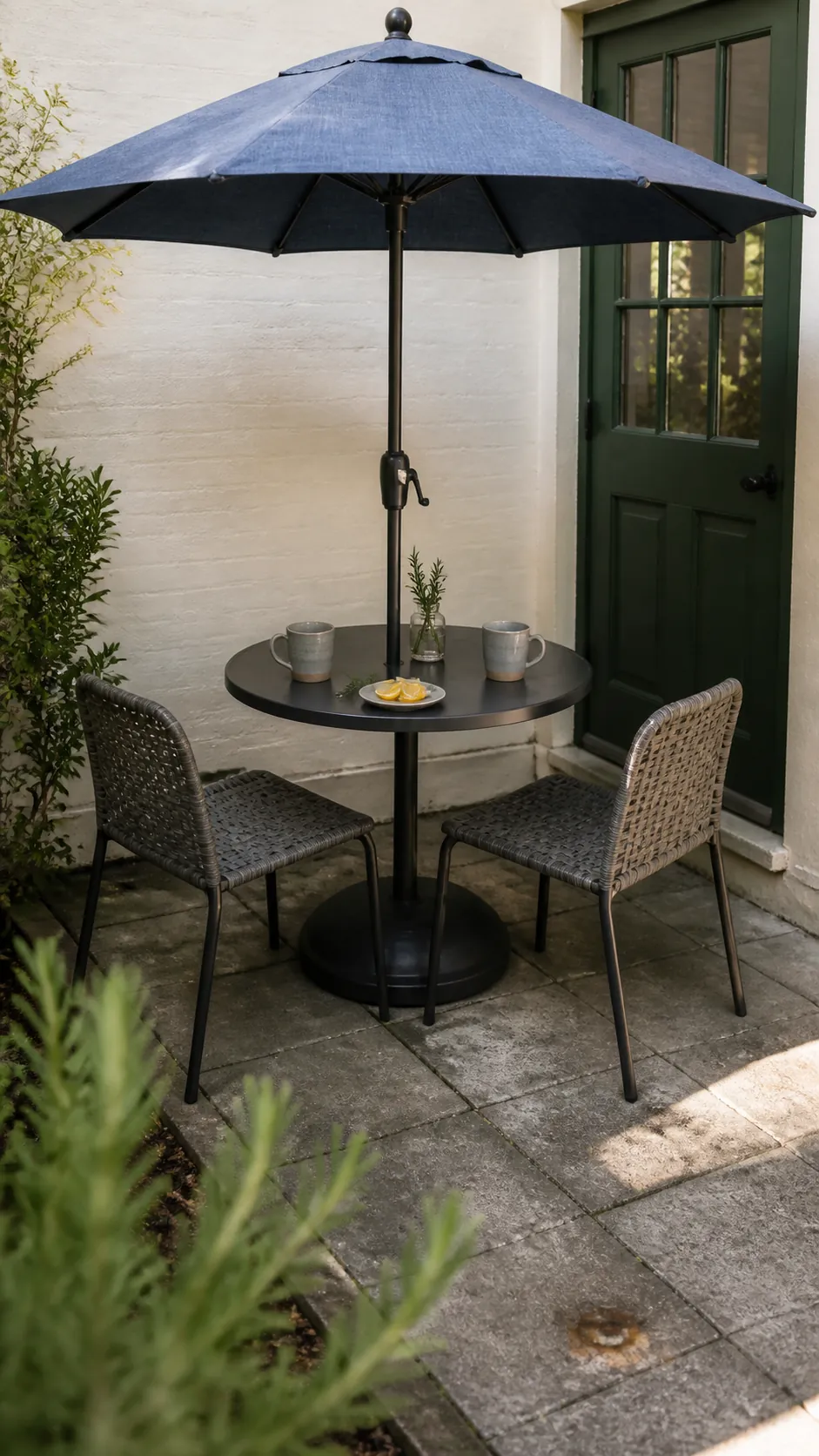
For two people, a small round table with a purpose-made umbrella hole is hard to beat. The pole and table share one footprint, the table helps control lateral movement, and a correctly specified base sits underneath rather than beside the chairs.
Choose chairs that tuck fully under the top and verify that knees clear the base. A modest canopy sized to the table usually feels calmer than a broad cantilever arm crossing a tiny view.
A Half-Round Umbrella Against the Wall
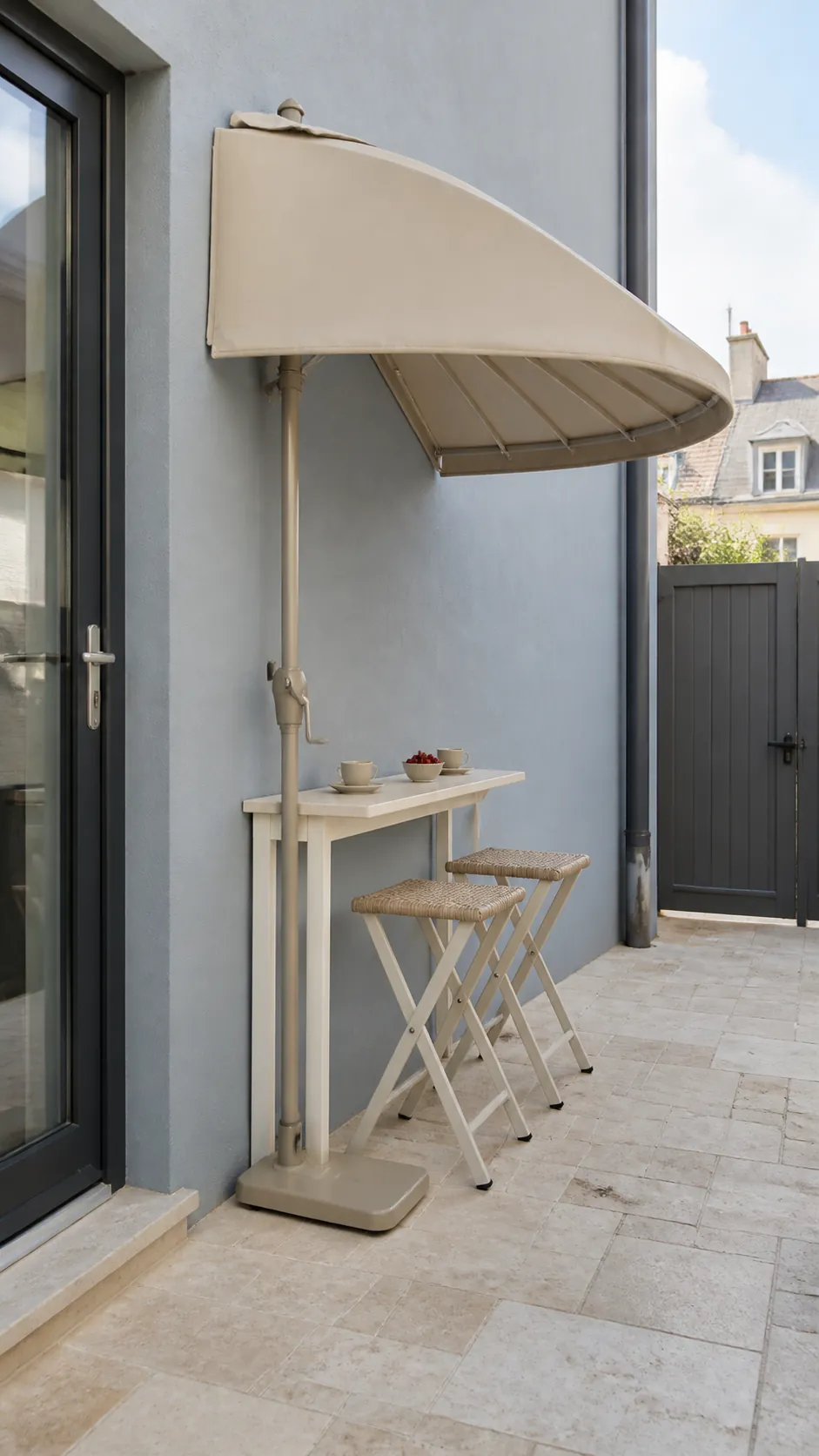
A half canopy removes the unused rear portion that would otherwise press against siding or waste space. It works well over a narrow console table, a wall-side bench, or a tiny breakfast ledge.
Freestanding does not mean casually propped up. Use the matching flat-back base and maintain the maker’s wall clearance so ribs, crank, and fabric can open without scraping the building.
A Corner Cantilever Over a Loveseat
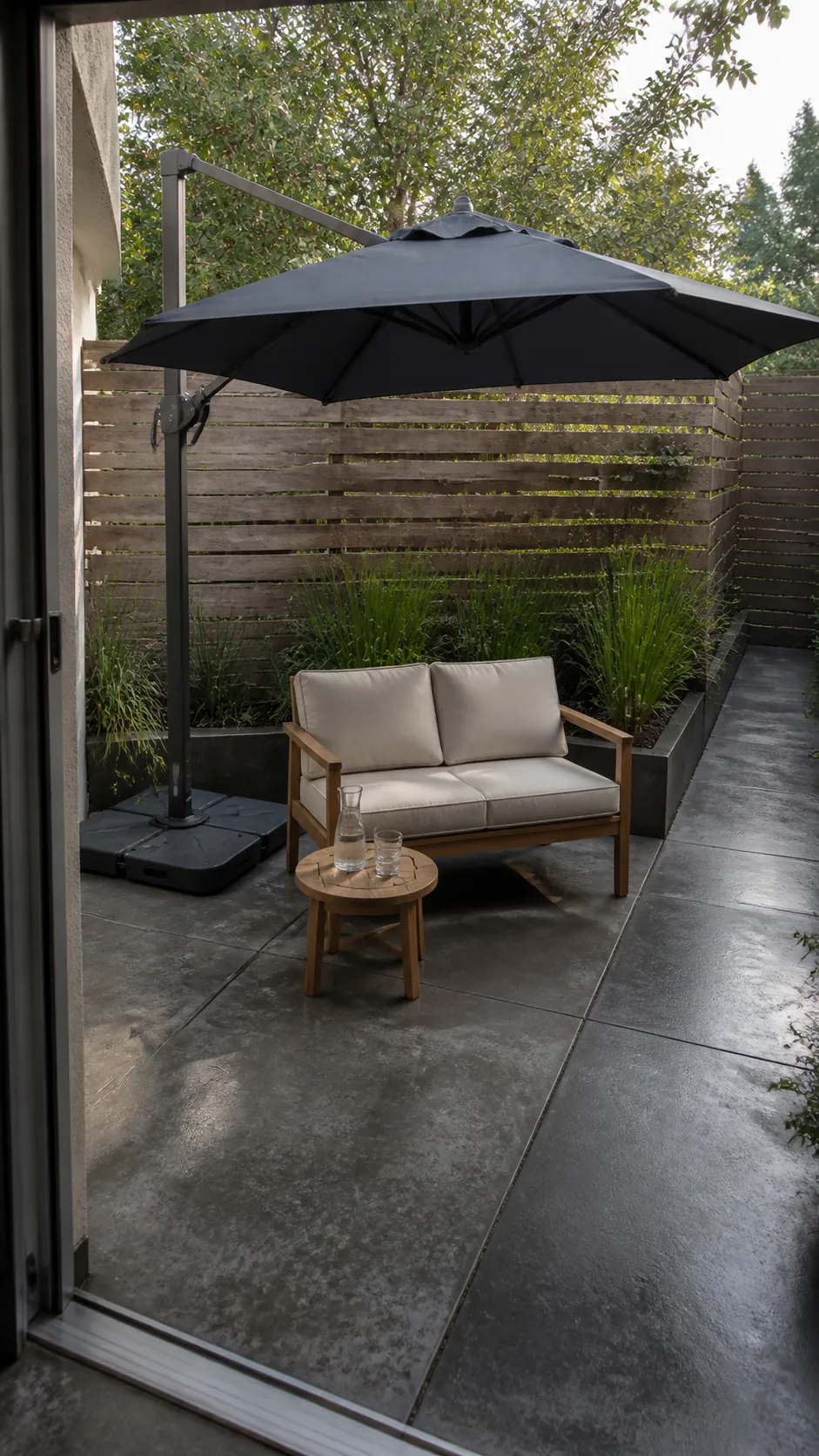
An offset umbrella earns its footprint when the heavy base can occupy a dead corner and the canopy reaches over a loveseat. Measure the entire swept path—not just the shade circle—so the arm cannot strike a wall, branch, or door.
This is best for patios with one truly unused corner. If the base lands in the main route, a center-pole model will usually function better even if the cantilever photograph looks cleaner.
A Rectangular Canopy for a Narrow Patio
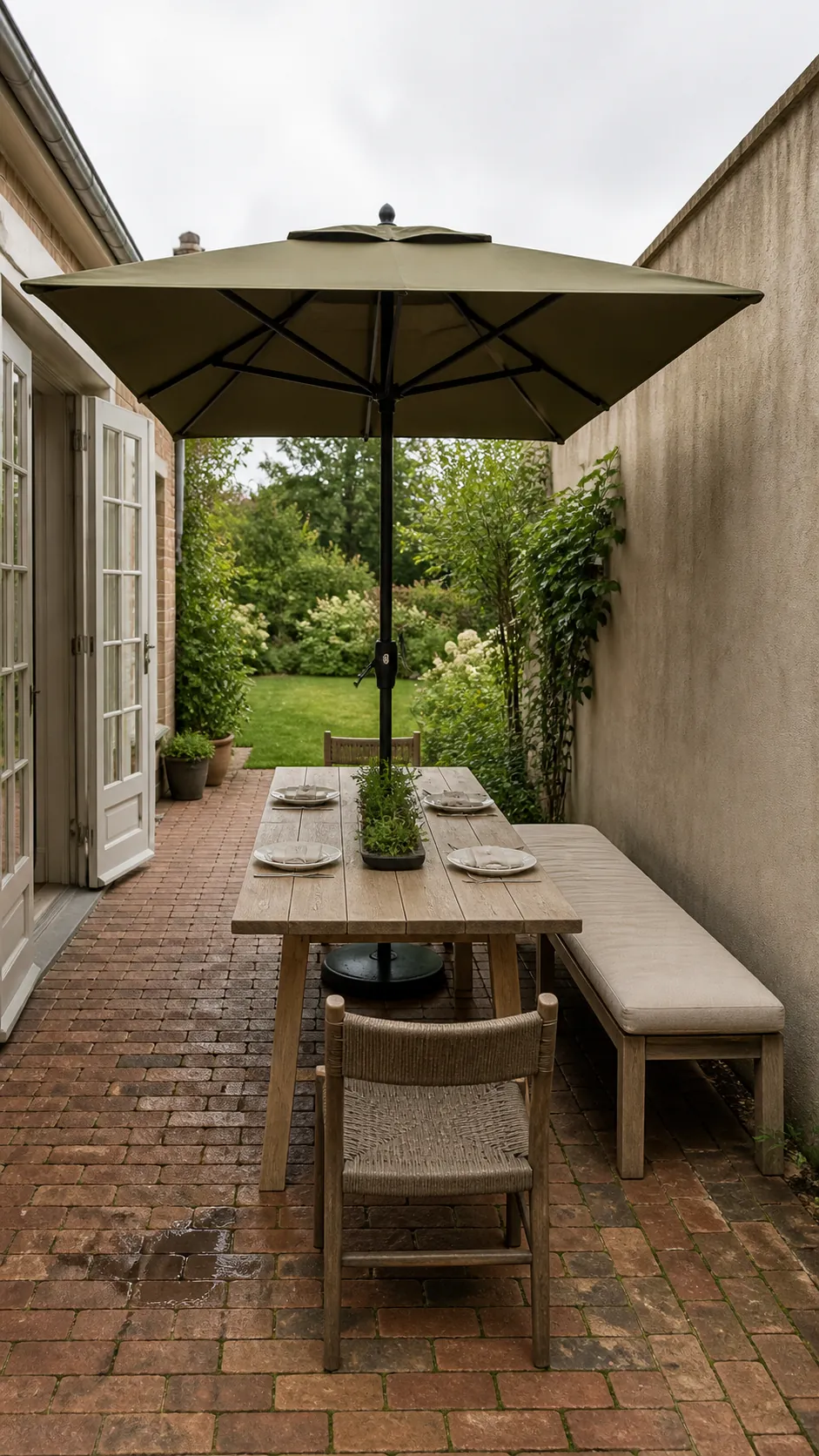
A rectangular canopy follows the geometry of a narrow table and can provide useful coverage without pushing excess fabric toward the path. Align its long edge with the long edge of the patio.
Check rib-tip clearance in the fully open and closed positions. A shape that fits beautifully when open can still collide with a fence while cranking down.
A Tilt Umbrella for Western Sun
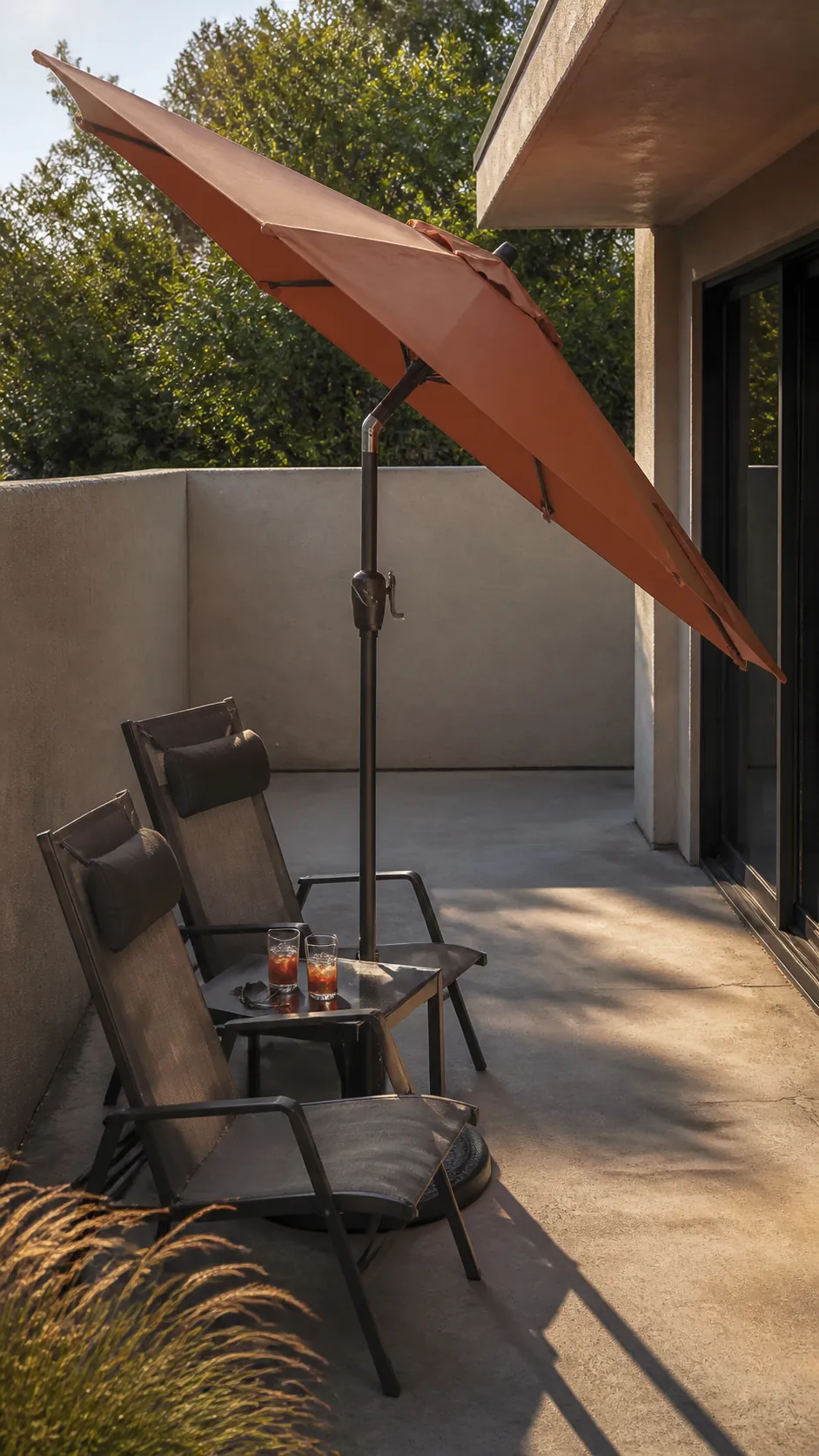
Low afternoon sun enters from the side, so an oversized horizontal canopy may barely help. A controlled tilt can shade faces and chair backs without adding diameter.
Test the tilted edge at head height and keep it out of the route. Choose a mechanism you can operate easily; an awkward button or crank discourages adjustment and makes the feature pointless.
A Wheeled Base for Moving Shade
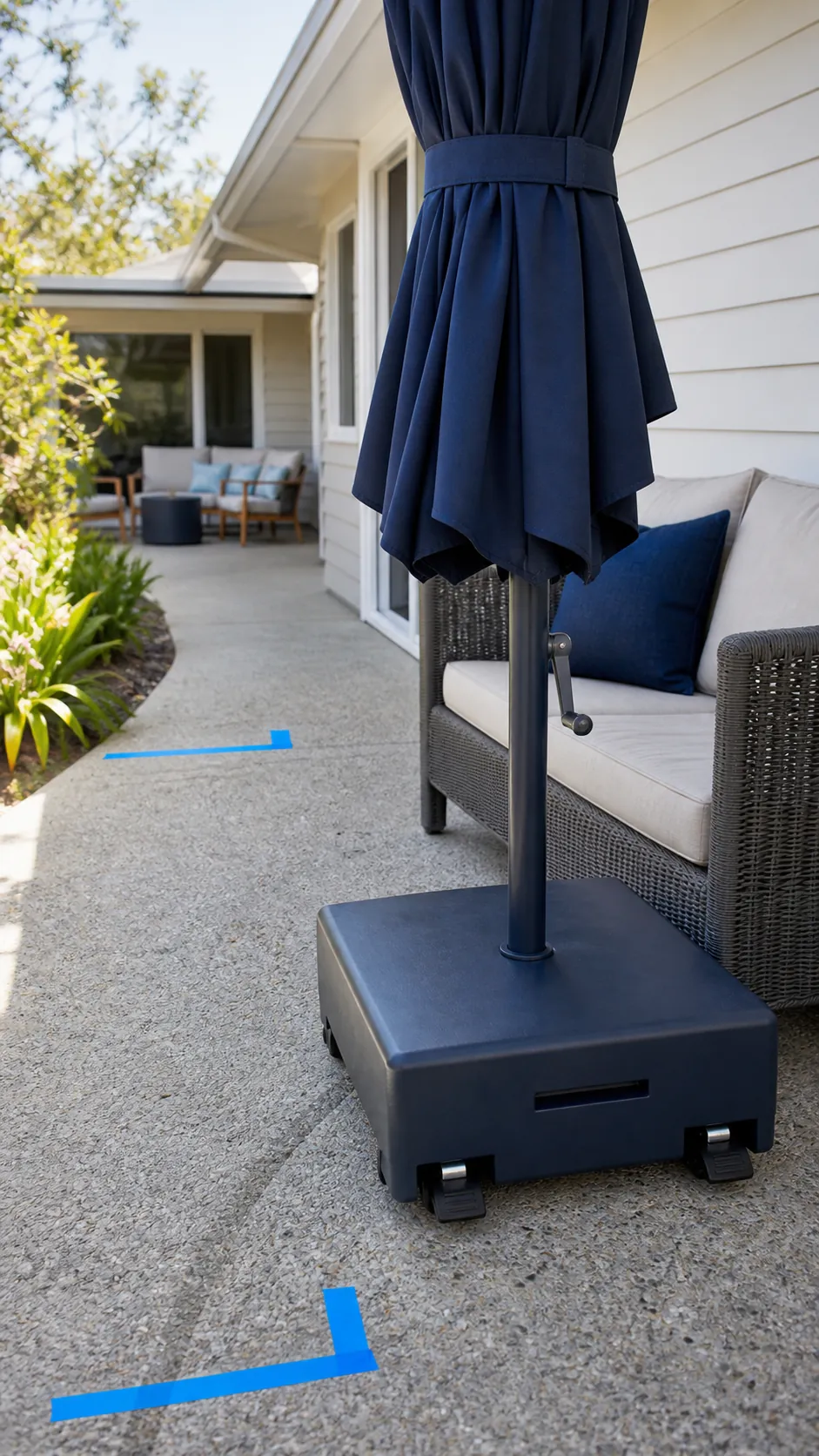
If shade needs change between breakfast and dinner, a base designed with locking wheels can be more useful than moving chairs. Roll it only with the canopy closed and follow the maker’s handling directions.
Park it in two preplanned locations that both preserve circulation. Avoid improvised dollies, which can raise the center of gravity or allow an umbrella to move unexpectedly.
A Bench That Shares the Base Zone
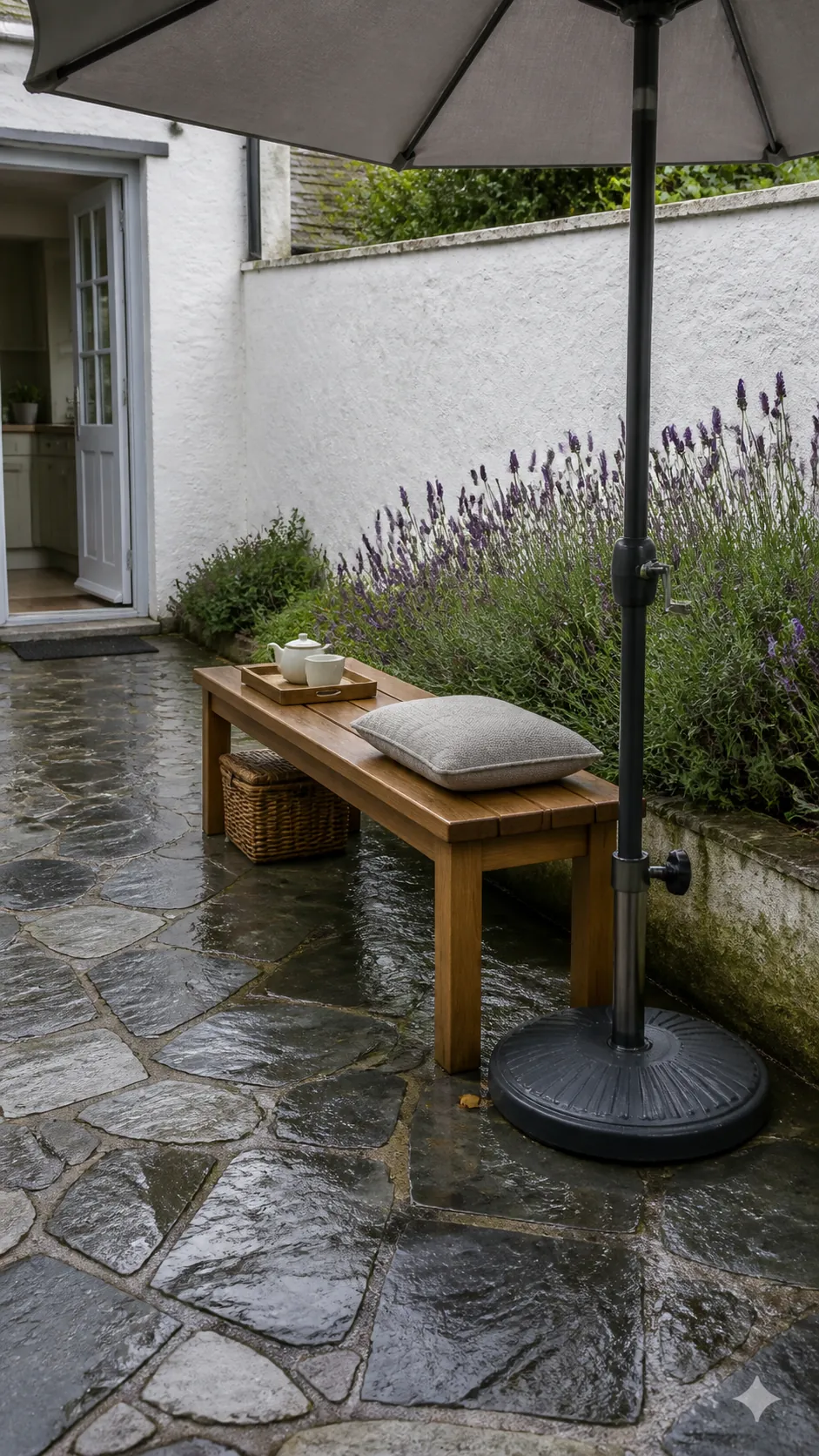
A backless bench needs no chair-pullout space. Place it beside—not on top of—an approved umbrella base so both occupy the same edge zone while feet and the main aisle remain clear.
Do not conceal the base so completely that you cannot inspect it. A deliberate gap makes cleaning, bolt checks, and closing the umbrella easier.
A Built-In Table Sleeve
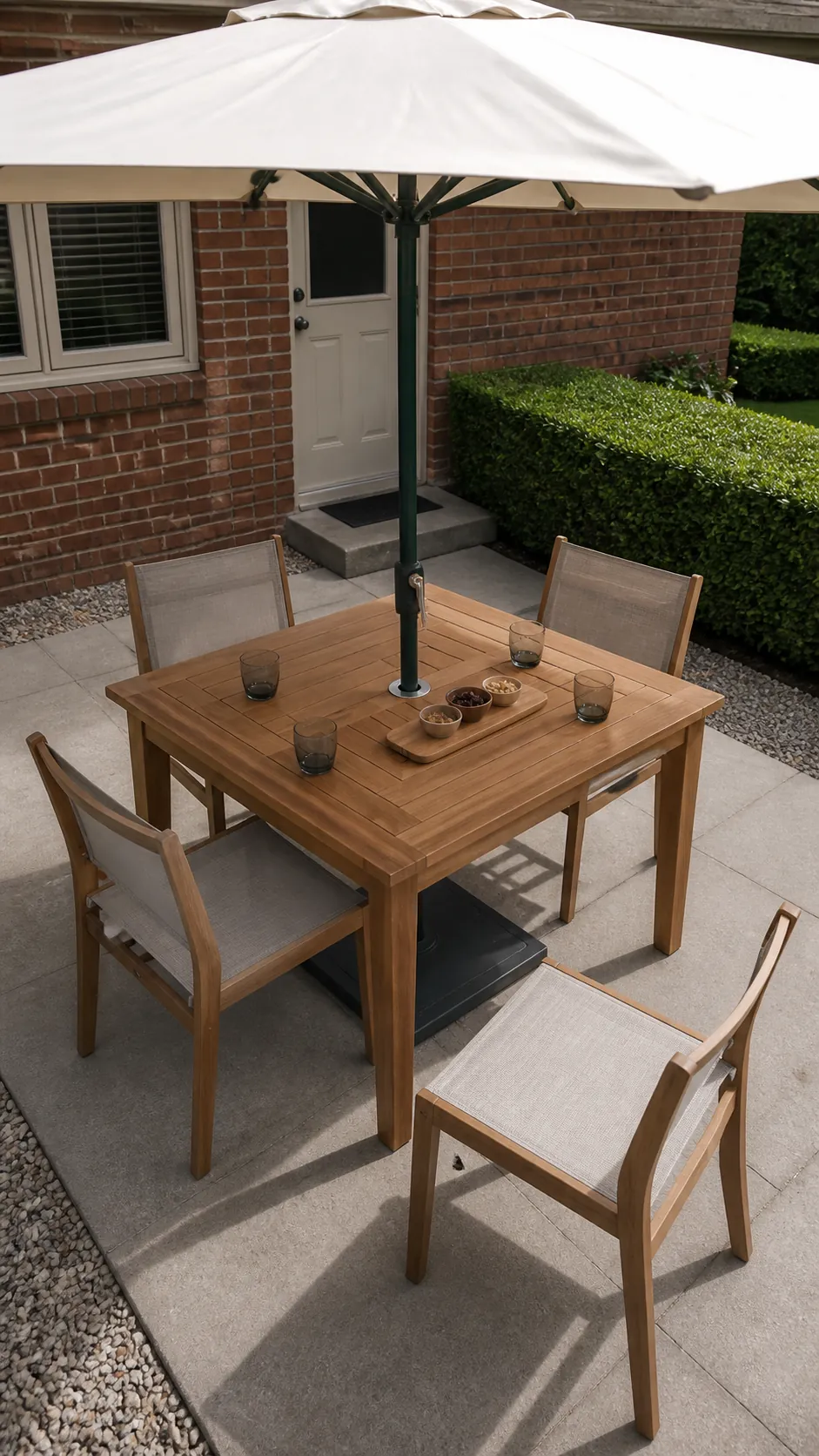
A table sleeve keeps the pole centered and turns the shade into part of the dining plan. Pair it with the required base beneath; the table sleeve alone is not an anchor.
Keep the tabletop simple. A narrow tray and two settings are enough, leaving access to the crank and a clear view of any movement in the pole.
A Square Canopy Over a Corner Banquette
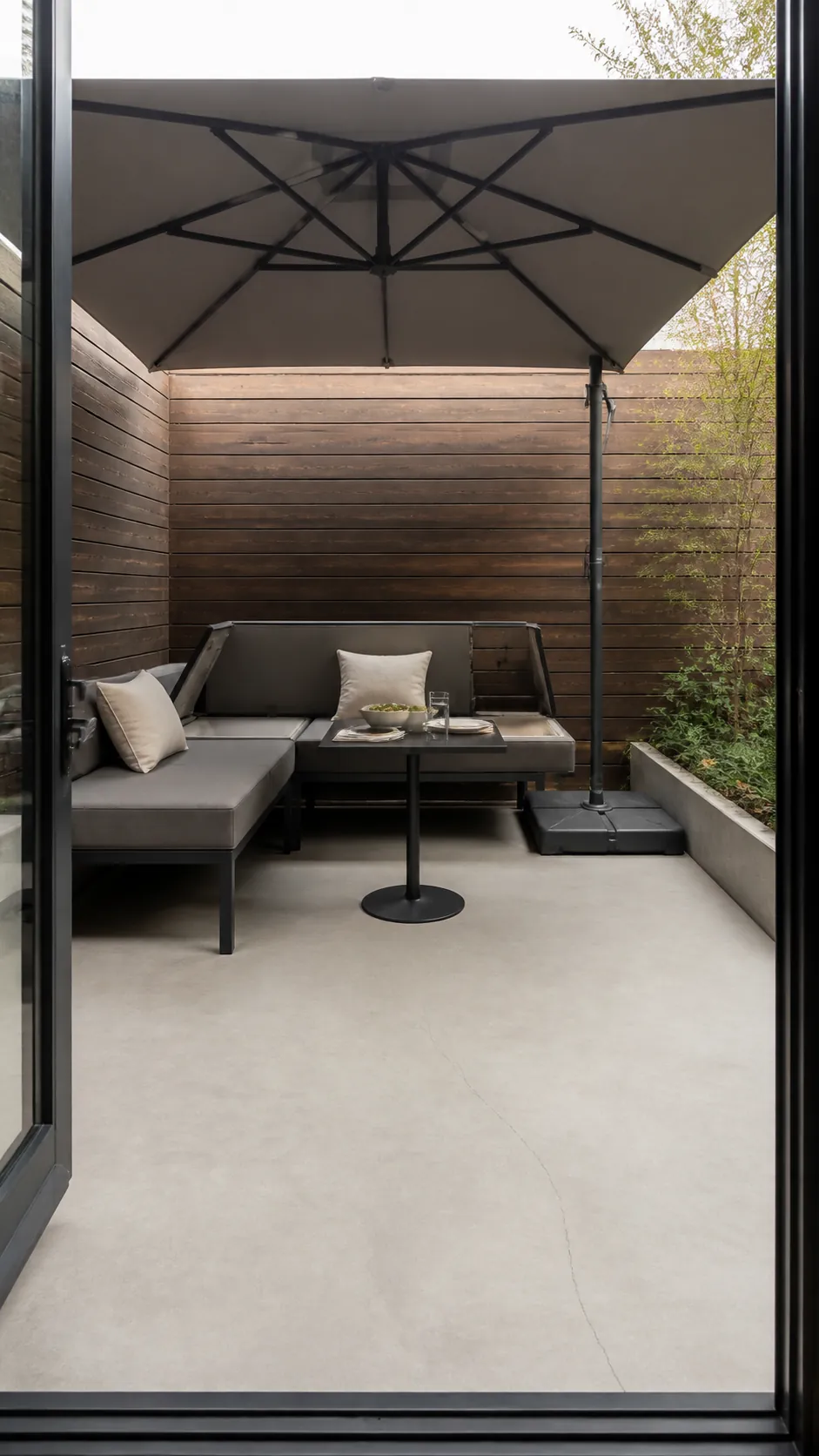
A square canopy visually aligns with an L-shaped corner seat and reduces the awkward gaps a round canopy can leave at the corners. Keep the support on the open side where it can be reached for closing.
Use seat cushions that lift for storage, but never count the storage box as ballast unless the umbrella manufacturer specifically designs it that way.
A Petite Market Umbrella for Two Loungers
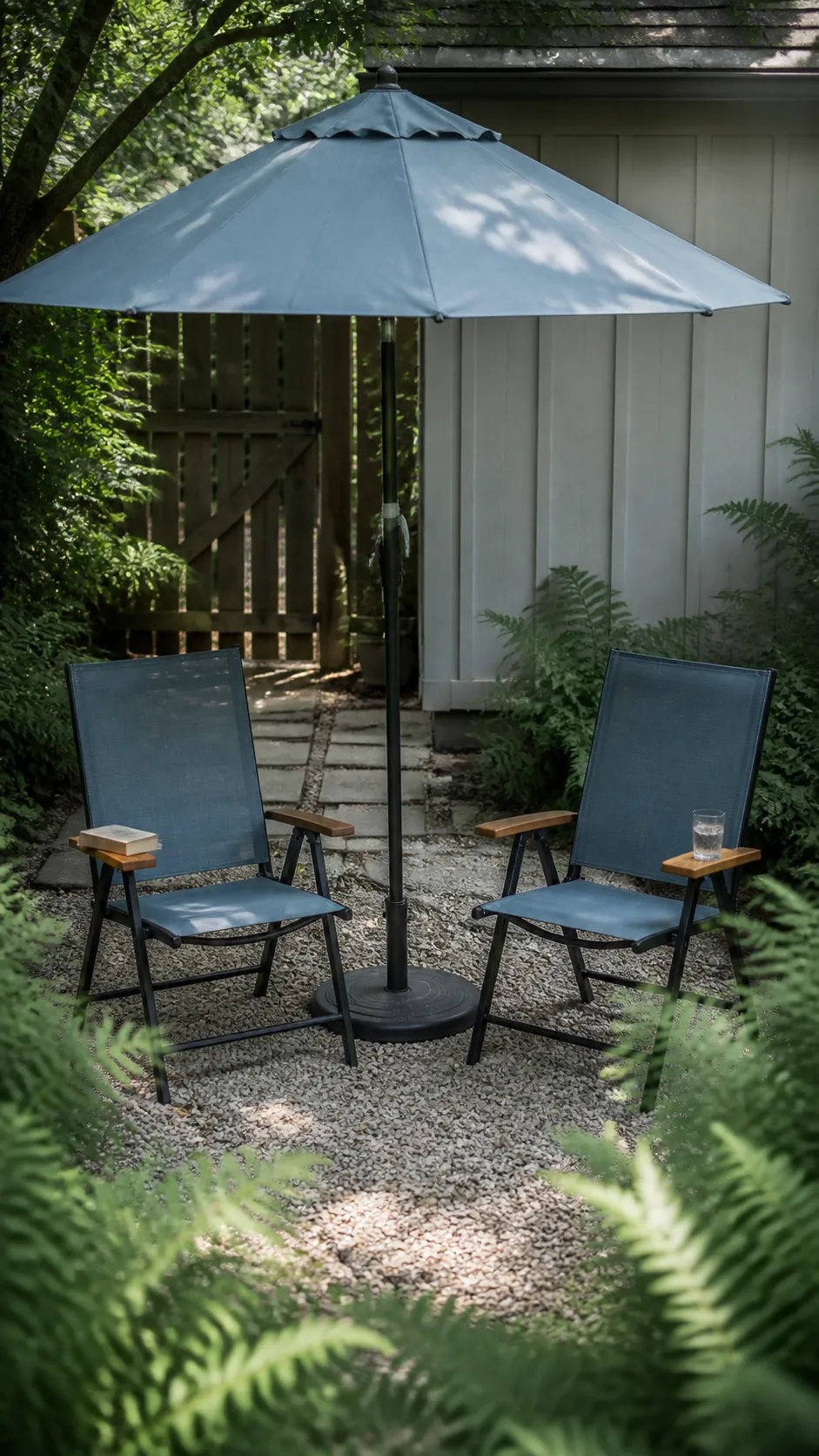
Place a small market umbrella between two upright lounge chairs instead of covering a full sofa. The pole becomes a visual divider, and each person retains a slim side surface.
Choose upright chairs with modest depth. Deep recliners can push users beyond the shade footprint and turn a tiny patio into a furniture puzzle.
A Monochrome Umbrella to Quiet the View
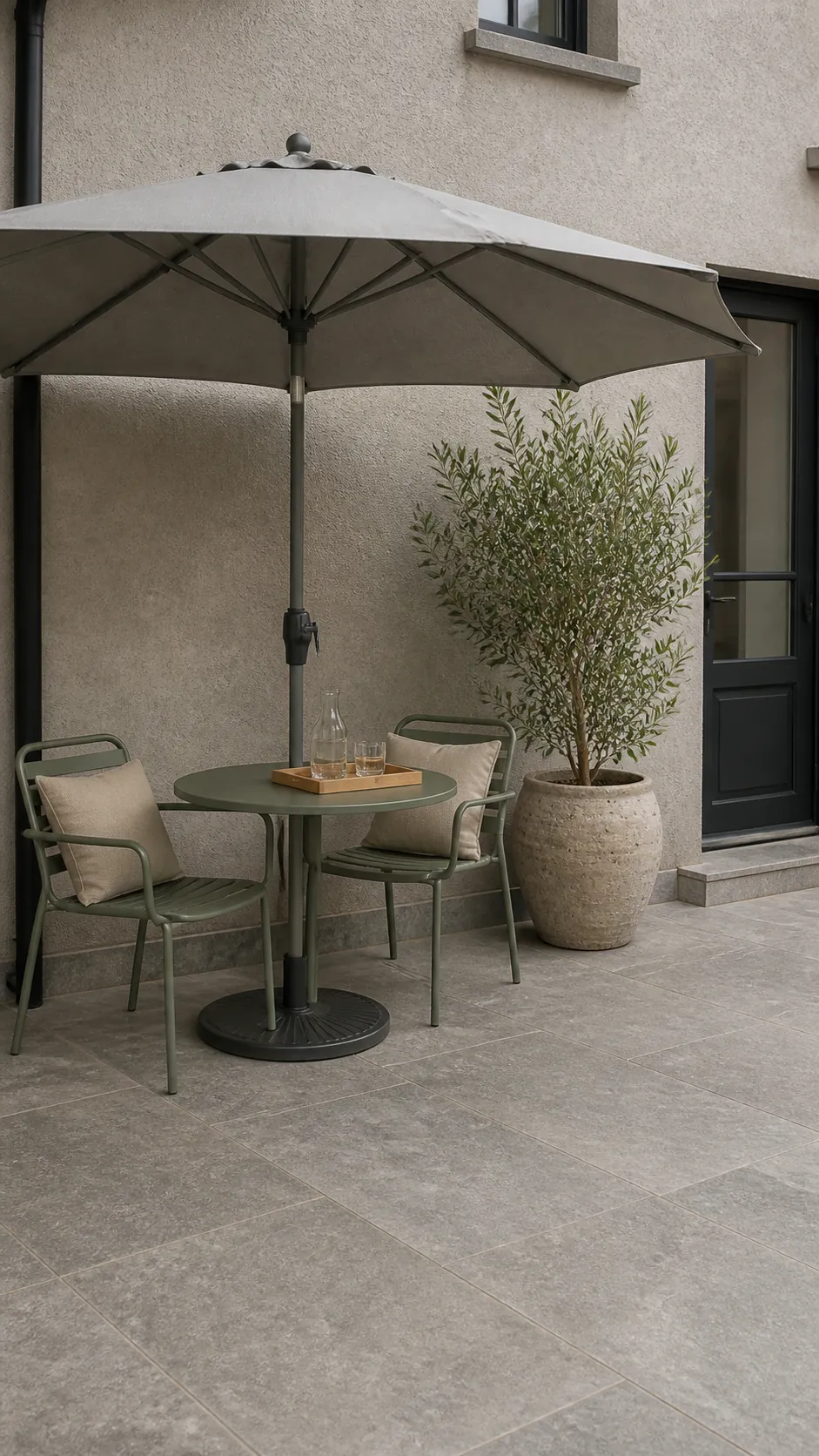
When the canopy dominates the sightline, match it loosely to the exterior wall or paving. Sand, stone, gray-green, or muted navy can make a large surface feel integrated rather than added.
Texture keeps a quiet palette from becoming flat. Combine matte canopy cloth, woven seats, rough pots, and natural wood instead of introducing more colors.
A Striped Canopy as the One Pattern
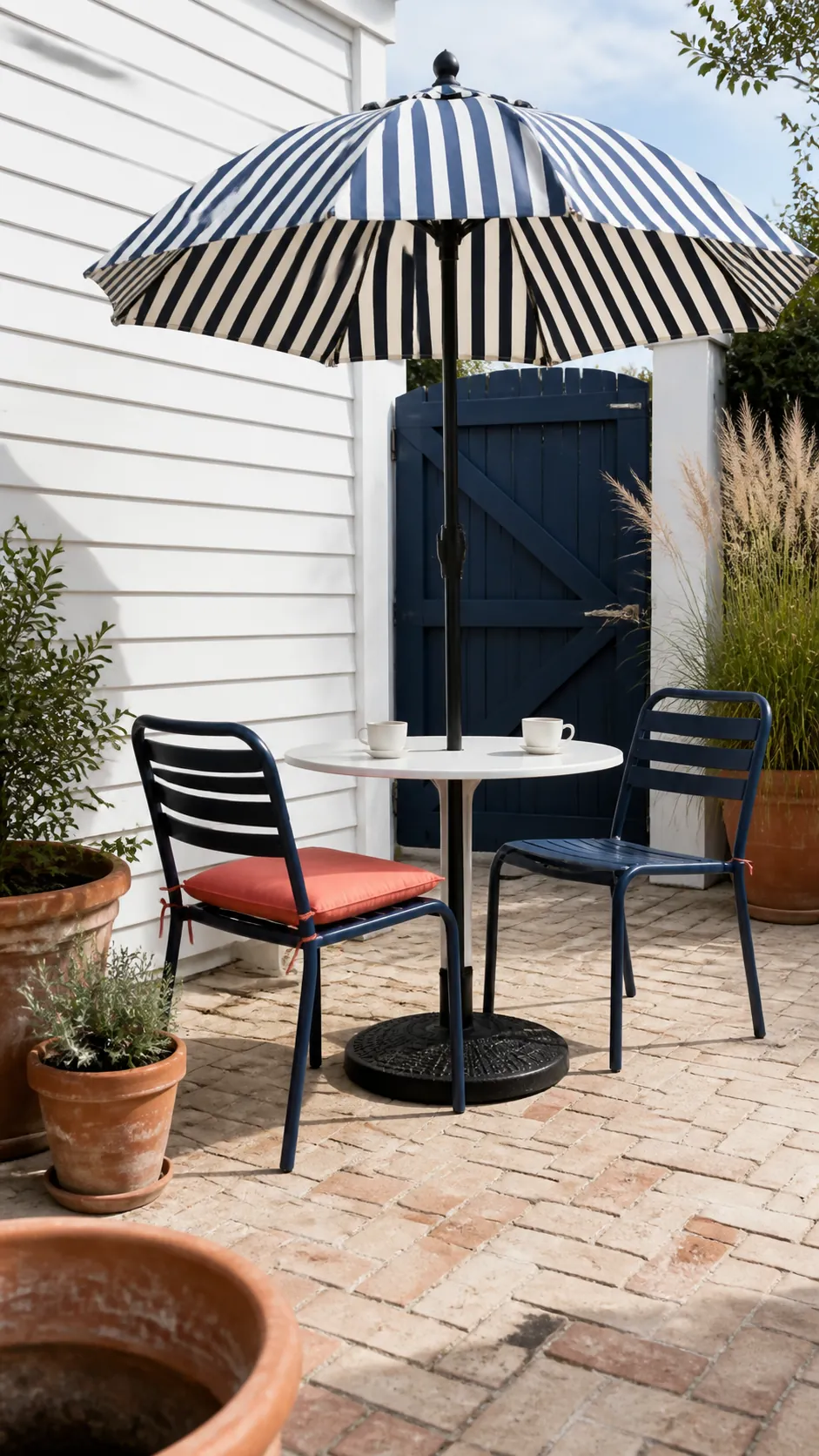
A narrow stripe can give a simple patio character without adding floor decor. Let the umbrella carry the pattern, then keep cushions and planters mostly solid.
Orient stripes consistently with the canopy seams and choose two restrained colors. Busy multicolor styling makes the overhead plane feel lower in a confined space.
A Café-Style Red Umbrella for a Brick Patio
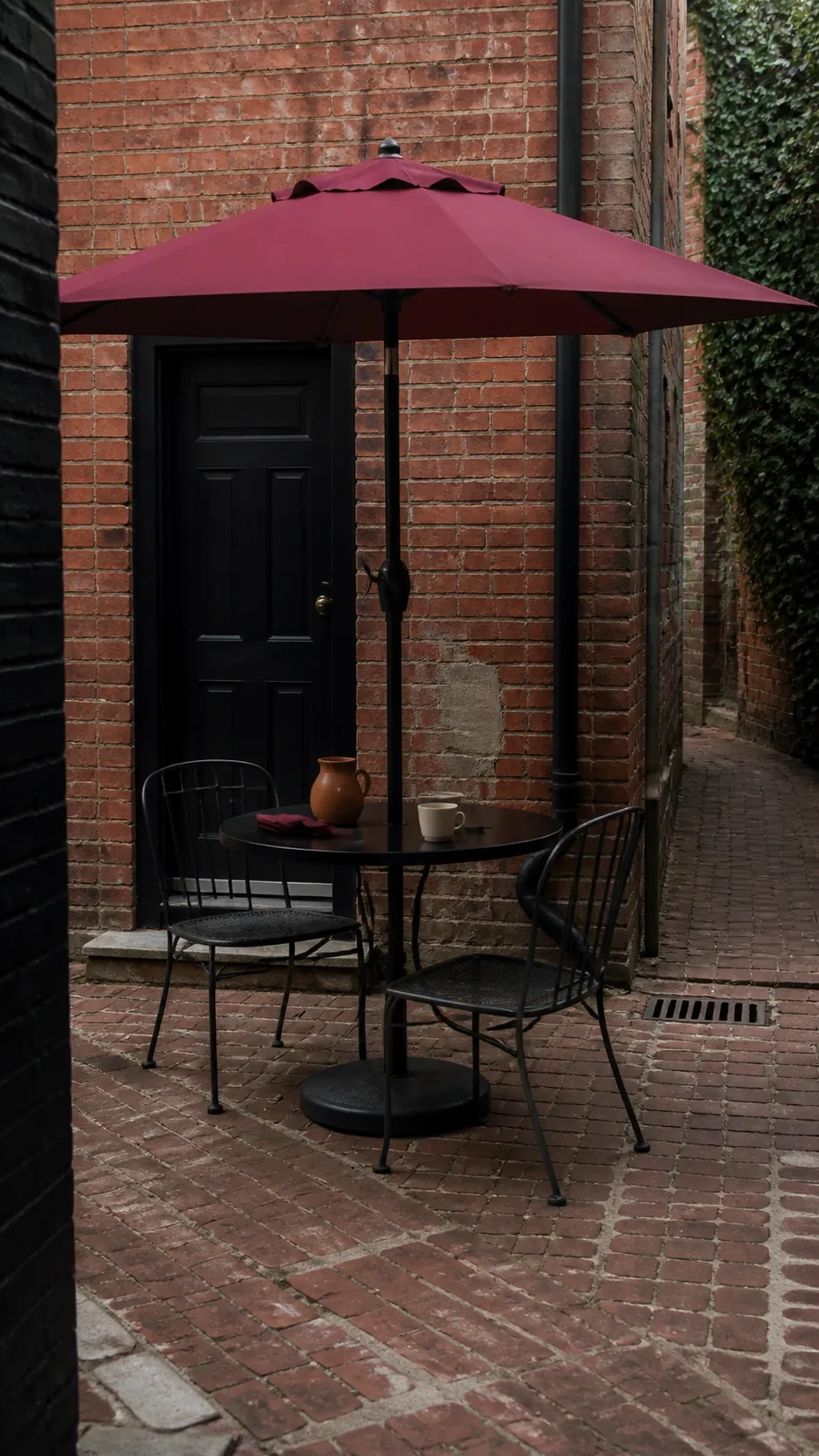
Muted oxblood or clay red can look intentional against old brick and weathered terracotta. Repeat the color once in a napkin or small cushion, not in every accessory.
This approach suits an intimate outdoor entertaining area because it creates identity with one overhead element, leaving the ground visually simple and easy to clean.
A Leaf-Green Umbrella Beside Container Plants
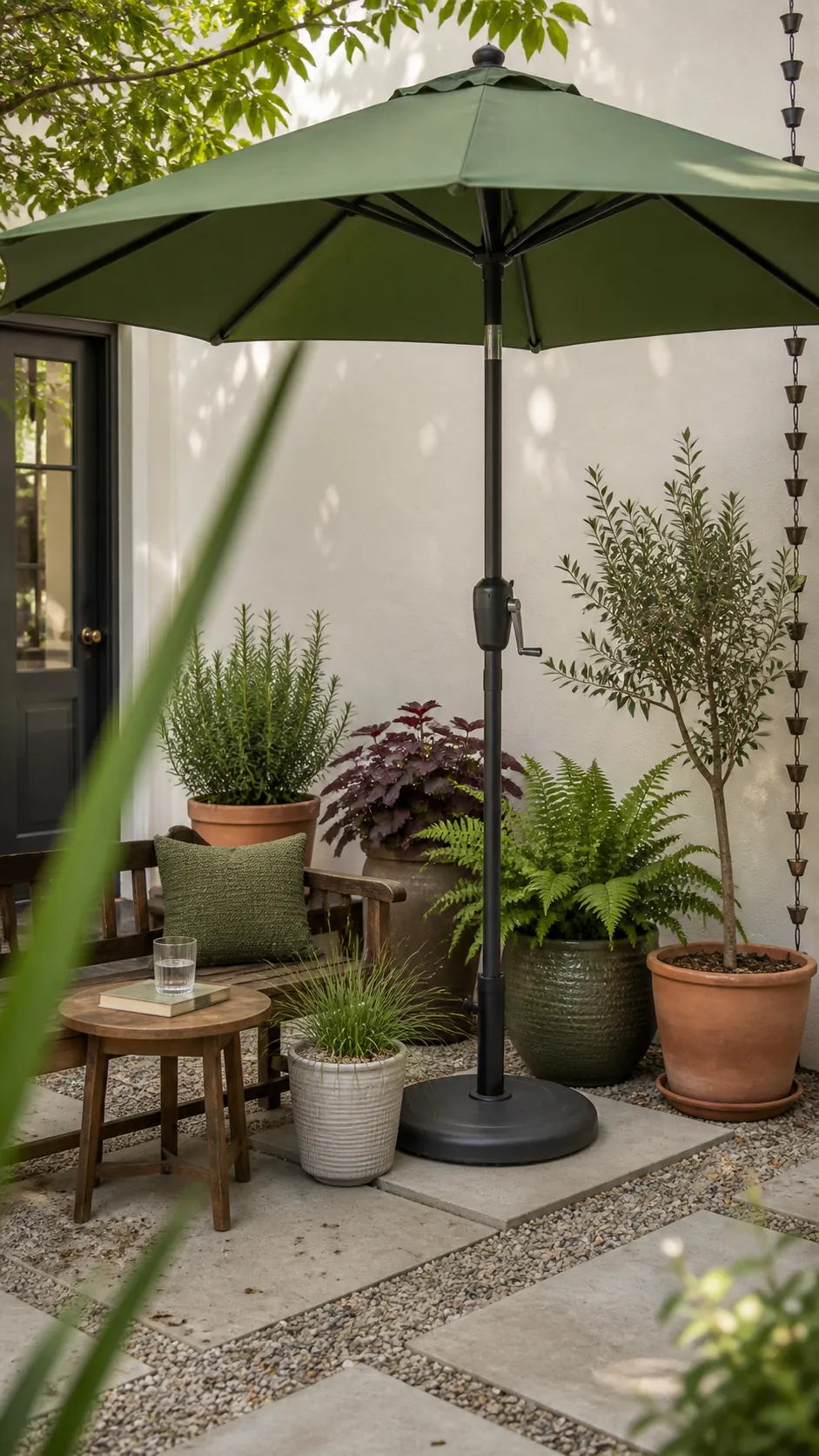
A green canopy can visually join a cluster of containers and make the umbrella feel part of the garden. Vary leaf shapes and pot heights while keeping the base accessible.
Do not crowd plants around moving mechanisms. Leave room for the crank, tilt joint, and fabric to dry fully before the umbrella is covered.
A Neutral Umbrella With a Bright Rug
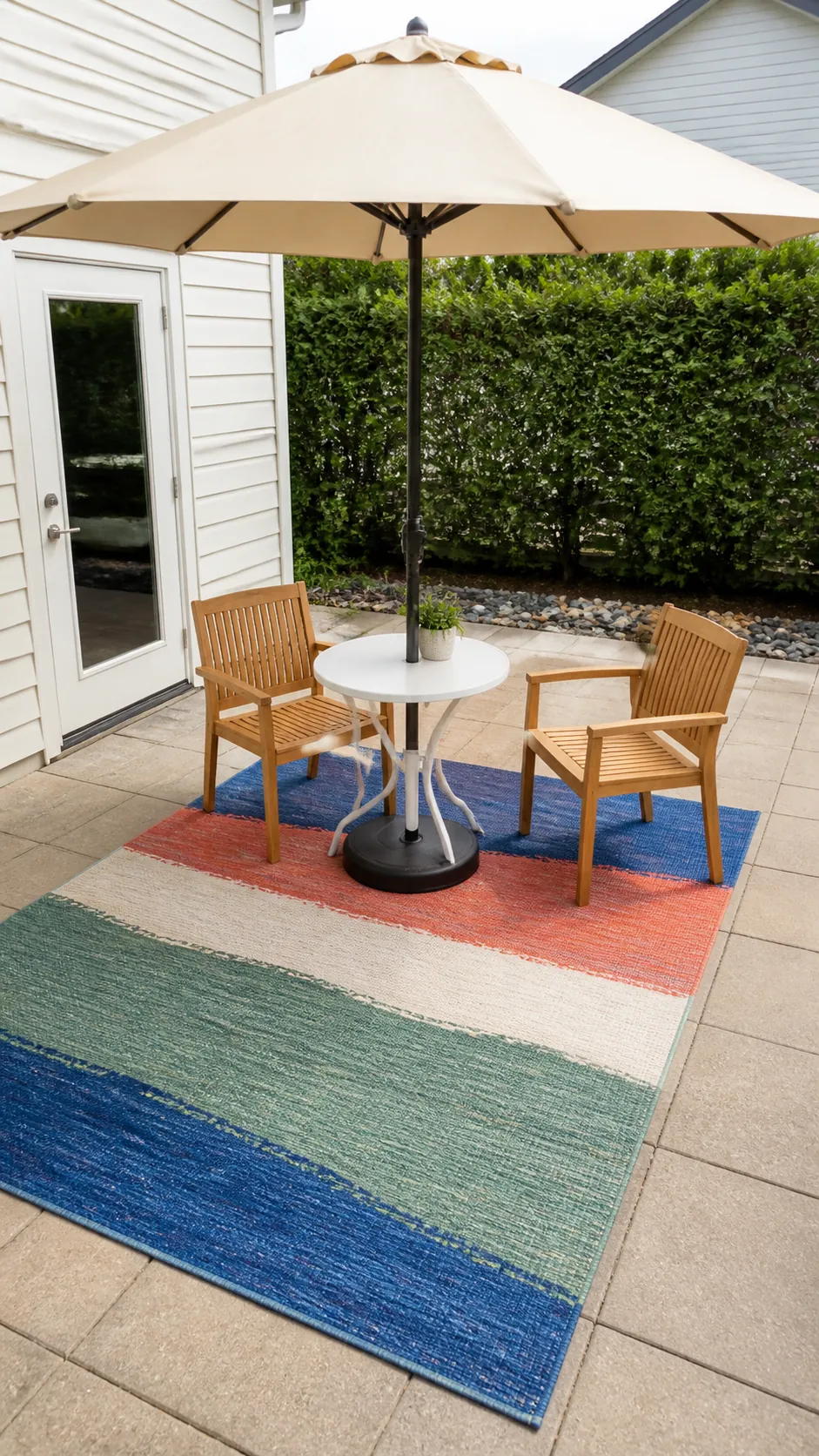
If the floor needs energy, keep the canopy quiet. A sand-colored umbrella above a flatwoven blue-and-coral rug creates hierarchy: calm overhead, detail underfoot.
Choose a quick-drying rug that lies flat and stops before the umbrella base. The base needs full, stable contact with the surface specified by its manufacturer.
A Closed Umbrella Parking Spot
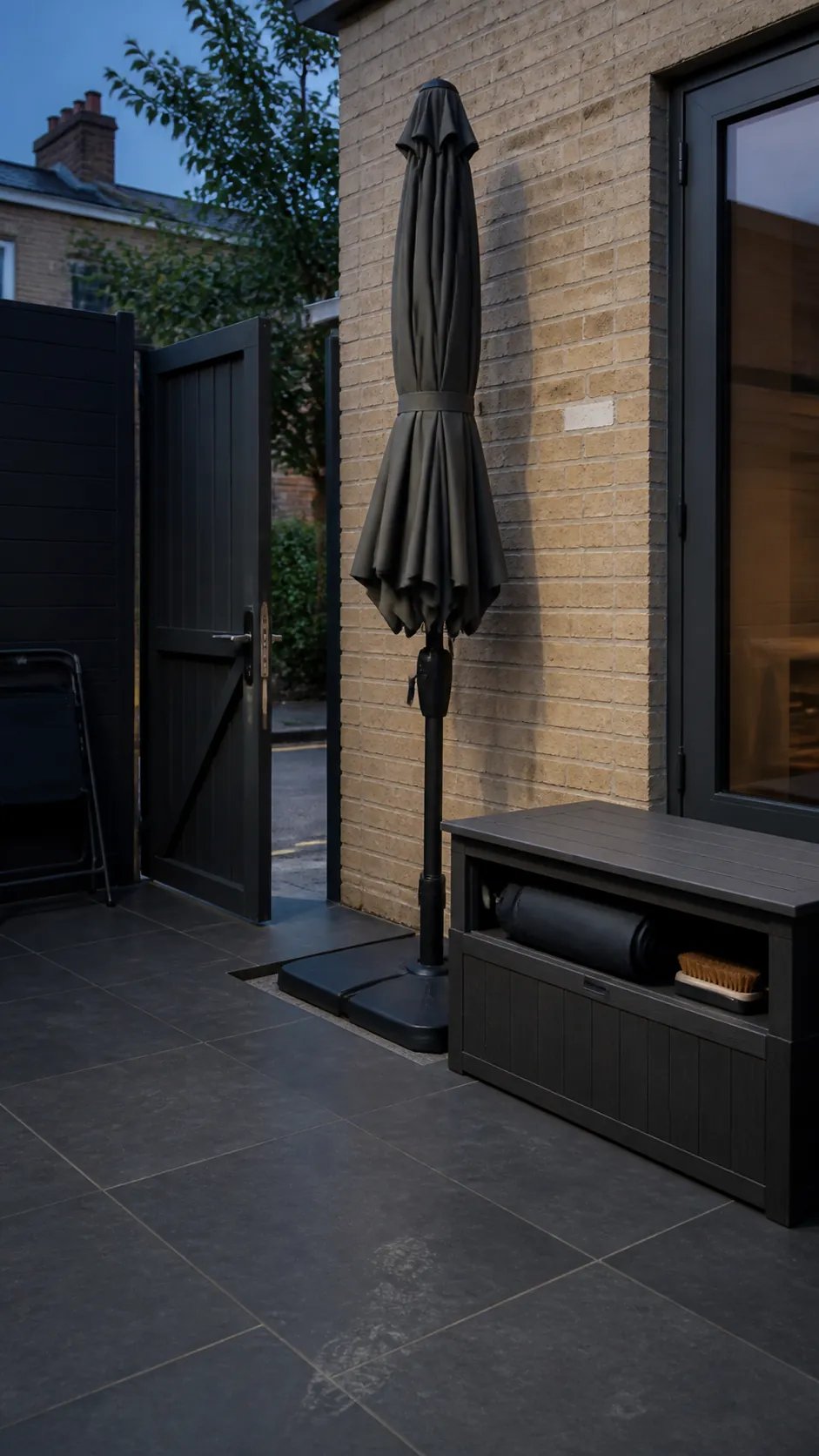
Design the patio for the umbrella when it is closed, too. A strapped canopy needs a dry, reachable parking position that does not lean across the door or block a chair.
Store the crank, cover, and cleaning brush together in a bench compartment. The easier closing feels, the more likely it becomes part of the daily routine.
A Shade-First Layout With an Open Walkway
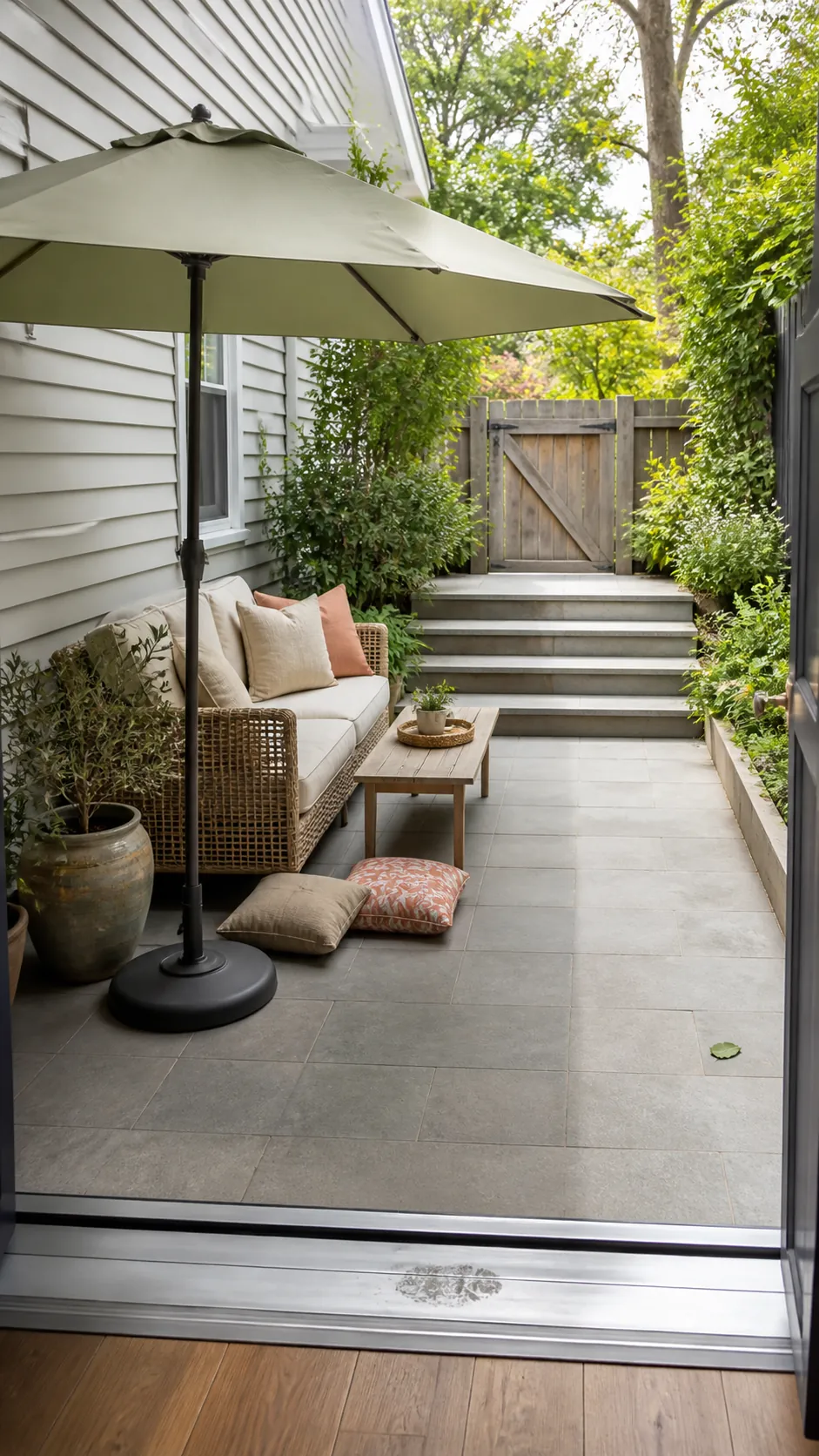
The strongest layout is the one that still works while someone walks through it. Put the shaded seating on one side, keep the umbrella support within that furniture zone, and preserve a continuous route from the house to the gate or garden.
Observe the patio at the time you actually use it, mark the canopy reach and base before purchasing, and test every chair in its pulled-out position. Then close the umbrella and test the route again. A compact patio does not need total shade; it needs shade that lands where people sit without turning hardware into an obstacle. When those measurements work, color and cushions become enjoyable choices rather than attempts to disguise a flawed plan.