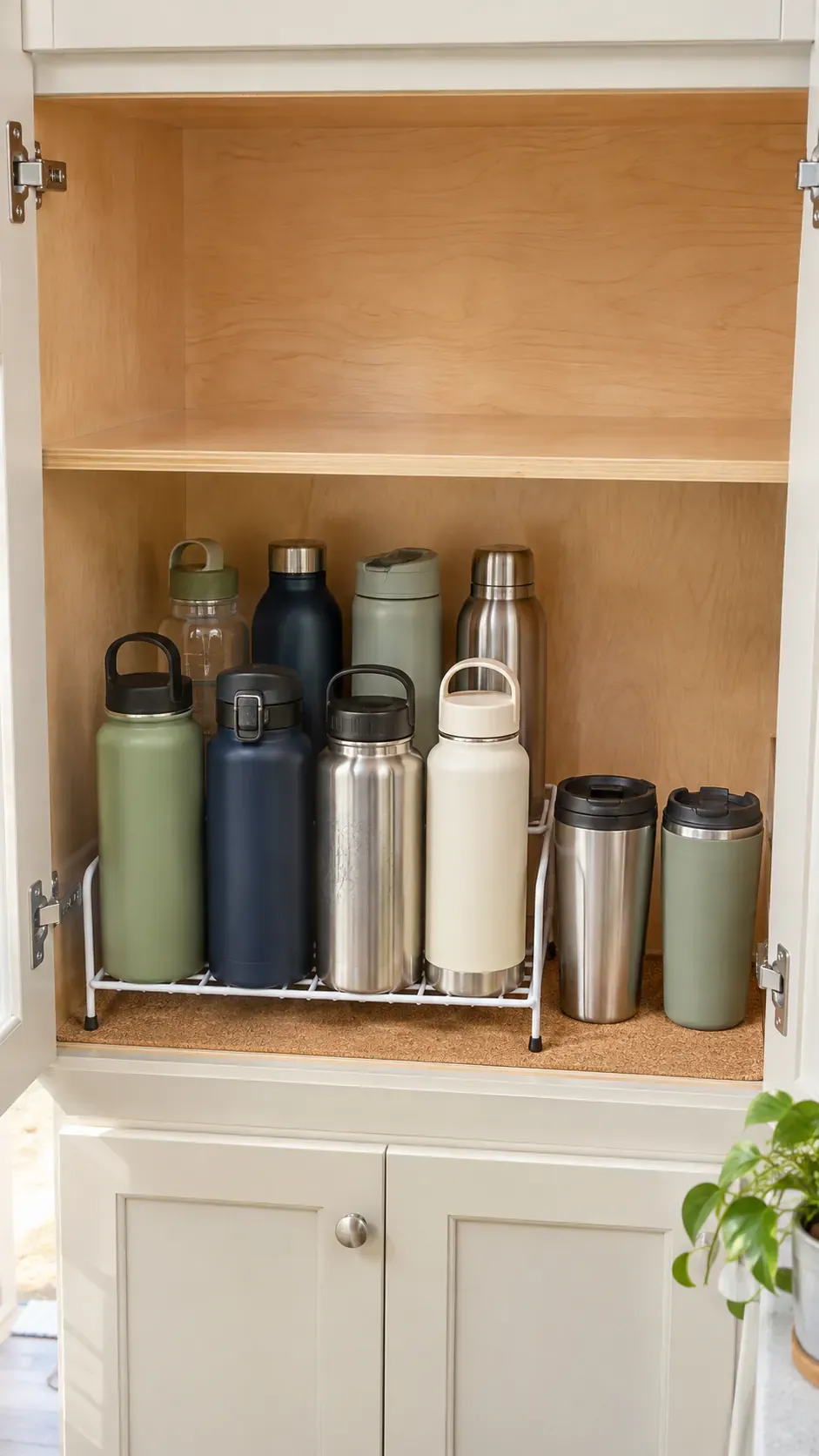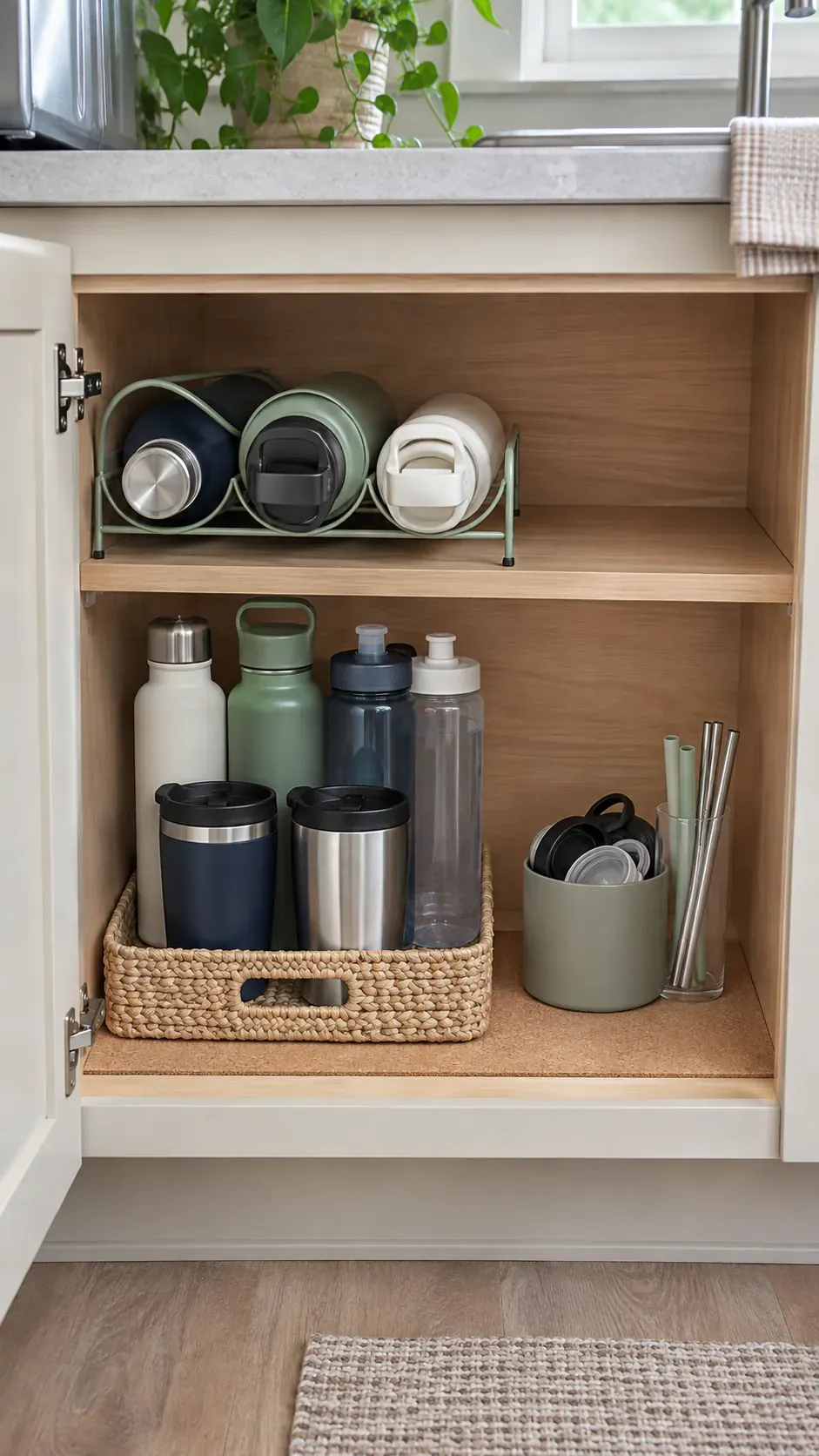
Reusable bottles save disposable waste, but a mixed collection can consume an entire cabinet and still hide the one lid you need. Stable storage starts with bottle height, diameter, and drying needs rather than a pretty organizer. Measure the cabinet, match every loose part, and give the most used bottles the easiest positions.
Add a Stackable Horizontal Bottle Rack
A stackable bottle rack gives each bottle a curved cradle and prevents rolling. Build only as high as the cabinet and rack instructions safely allow. Keep frequently used bottles in the lowest front cradles so removal does not disturb the upper rows.
Repurpose a Compact Wine Rack
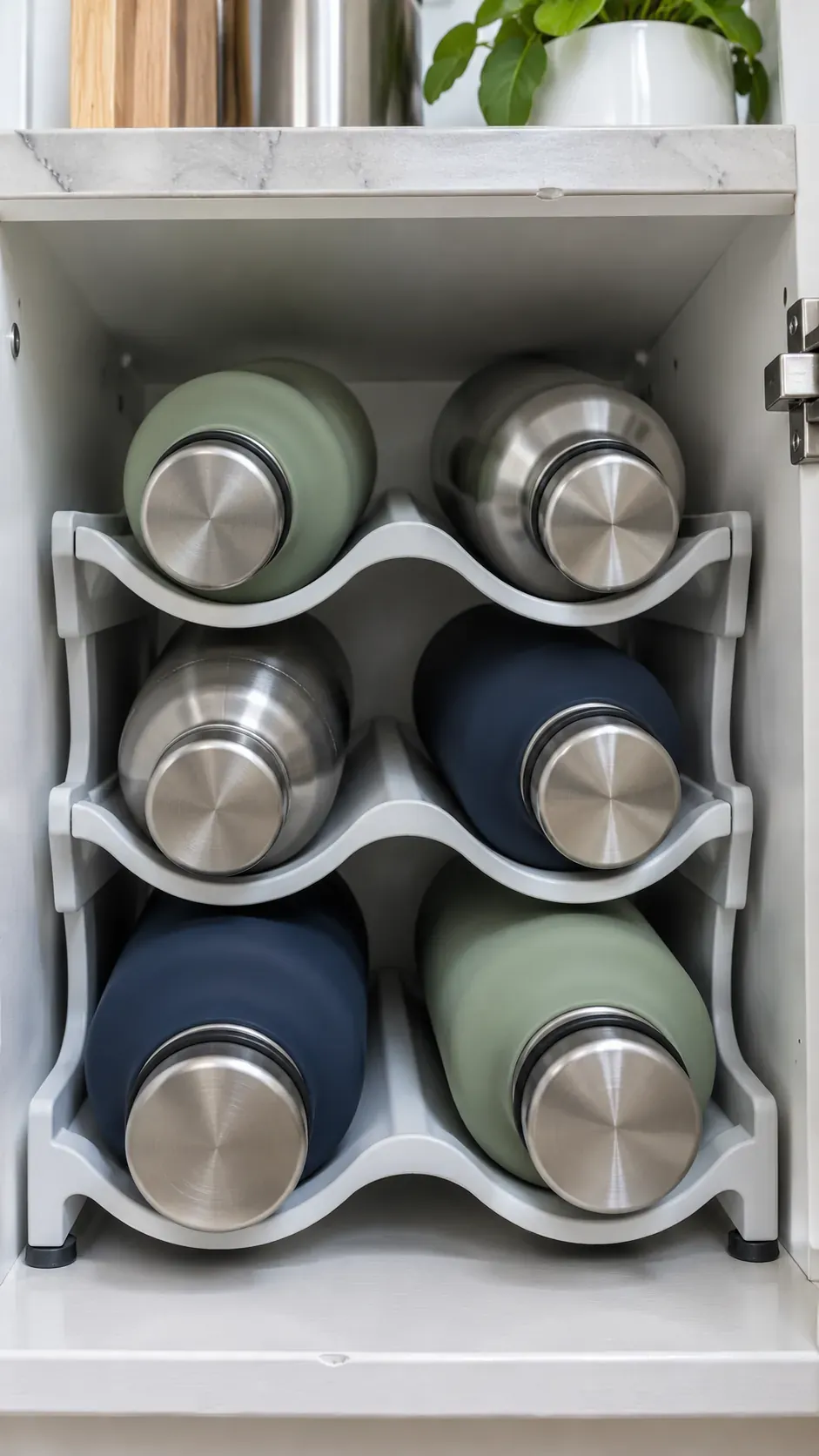
A small wine rack can support wide insulated bottles that do not fit narrow organizers. Check every opening against the bottle diameter and confirm that tapered bottles cannot slide through. Use a rack with nonslip feet so the whole unit stays stable during removal.
Stand Slim Bottles in a Magazine Holder
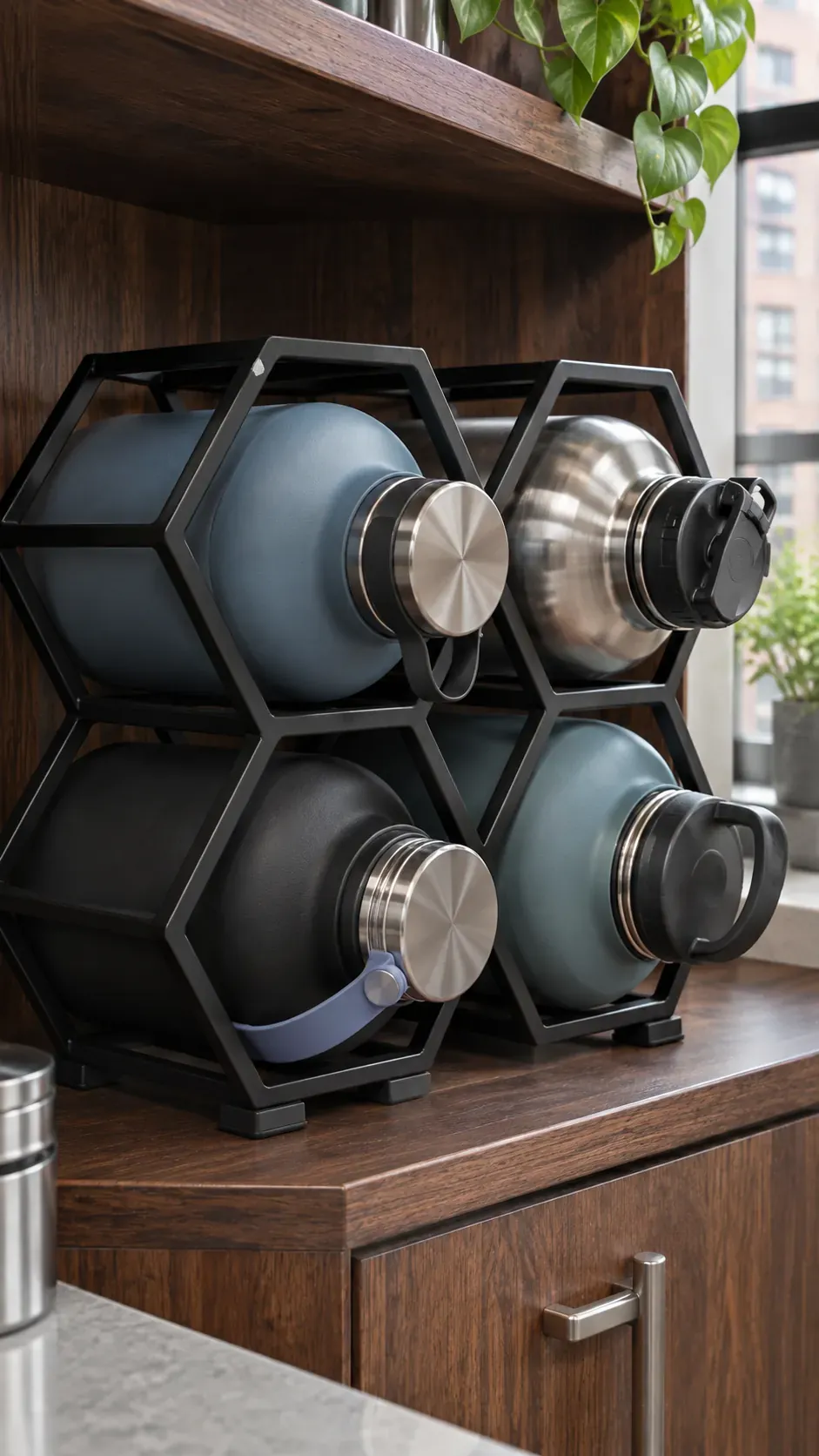
A sturdy magazine holder turns a loose cluster of slim bottles into one contained row. Place the opening toward the cabinet front so each bottle can lift straight out. Choose washable plastic or sealed metal, and avoid sharp edges that can scratch painted finishes.
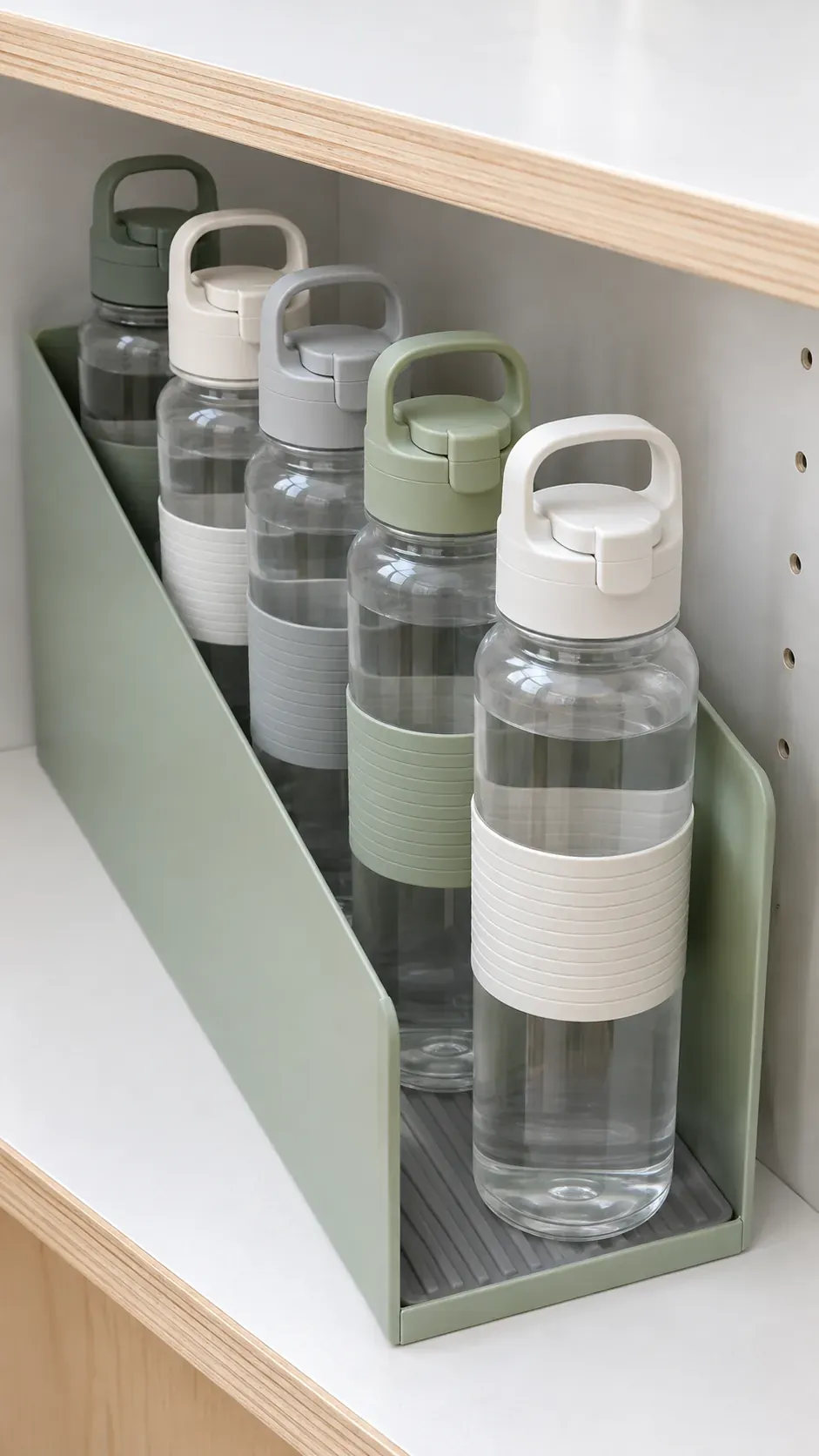
Use a Pull Out Bin for Deep Cabinets
A straight sided pull out bin brings bottles at the cabinet back into view. Arrange bottles in one layer whenever possible so heavy pieces do not fall against one another. Select a bin with a comfortable front grip and enough strength for the combined bottle weight.
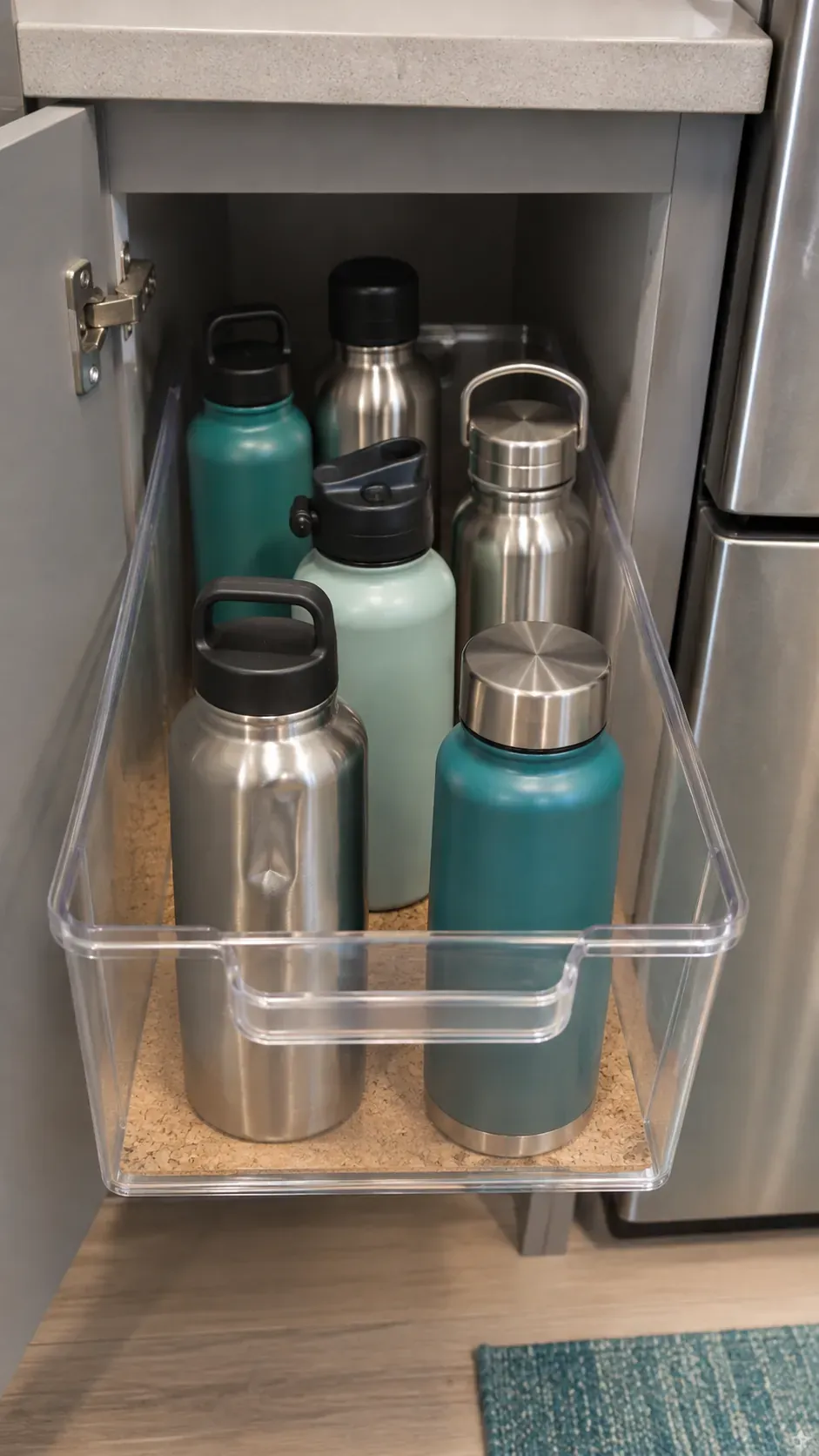
Create Lanes with Tension Rods
Short tension rods can create removable lanes for lightweight bottles stored on their sides. Position pairs close enough to support the body without pressing buttons or spouts. Test the end pressure gently because thin cabinet walls may mark or flex.
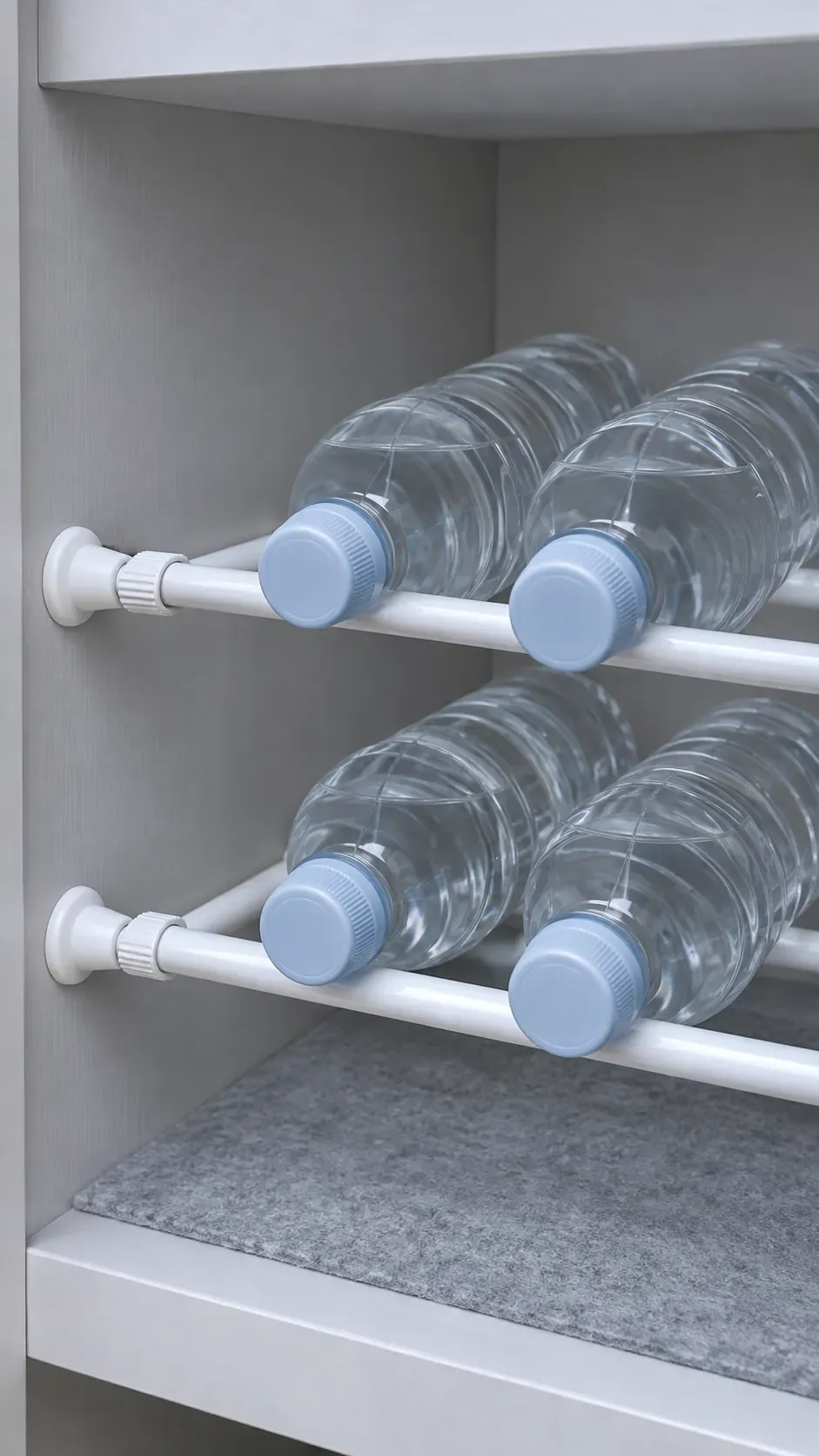
Double Short Bottle Space with a Shelf Riser
A low shelf riser uses empty height above short bottles and cups. Put sturdy bottles below and lighter pieces above so the arrangement stays easy to handle. Measure the riser legs and shelf thickness before buying because both reduce the opening below.
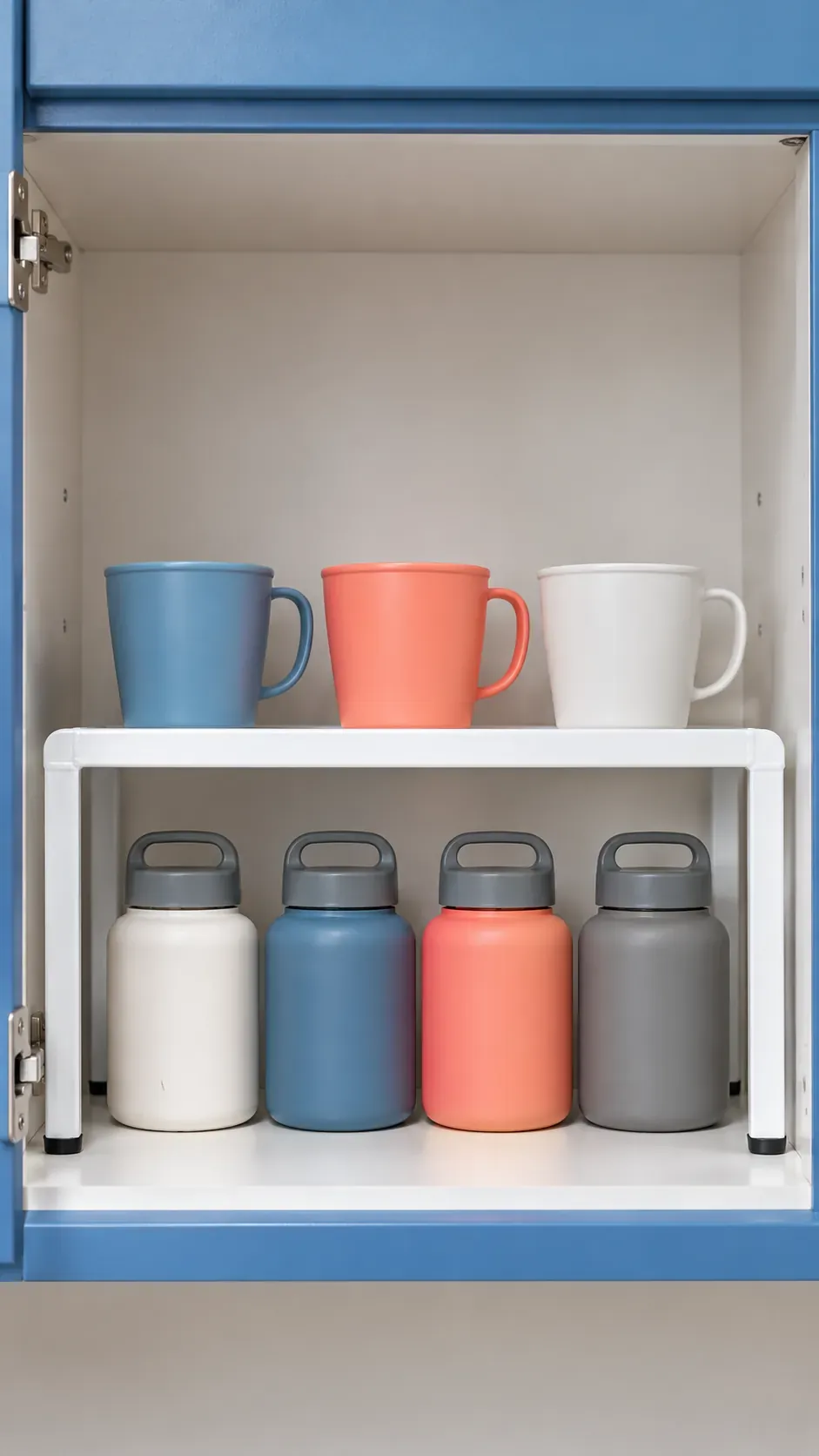
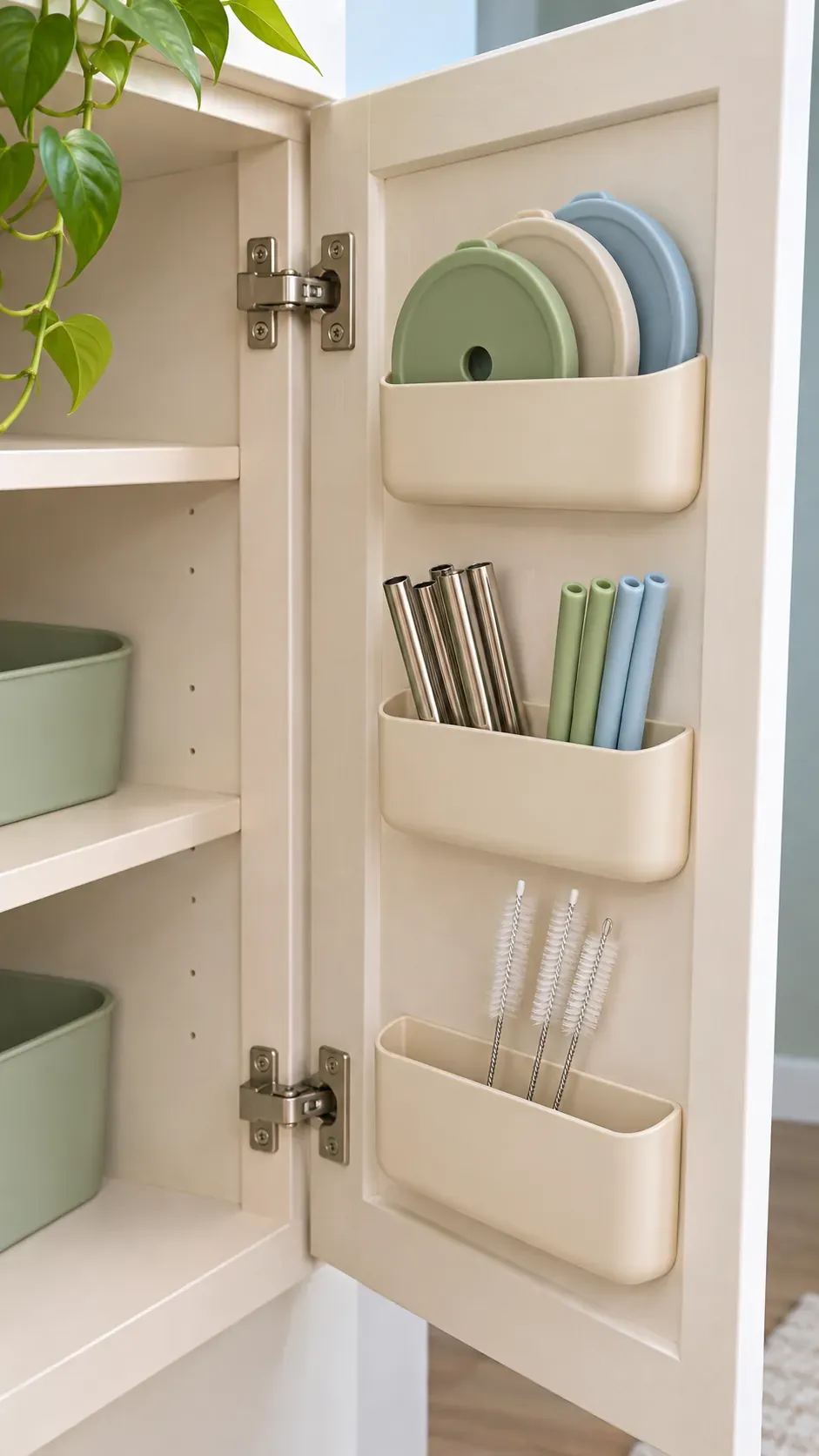
Add Shallow Pockets to a Cabinet Door
Shallow door pockets can hold flat lids, straw brushes, and light bottle caps. Close the door slowly during setup to confirm that pockets clear the shelves and hinges. Keep heavy insulated bottles off the door unless the cabinet hardware and organizer are designed for that load.
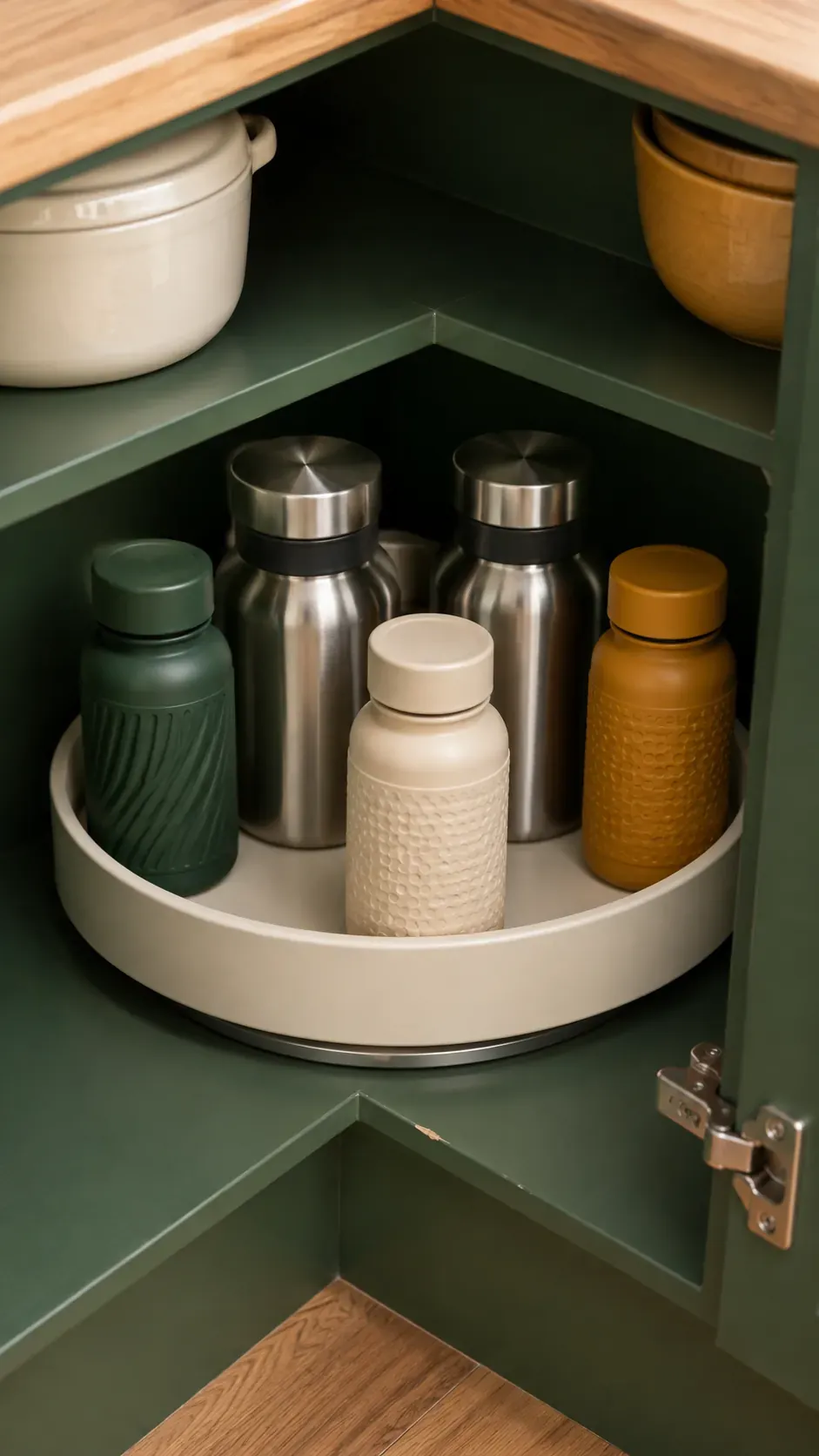
Use a Turntable for Upright Bottles
A raised edge turntable makes a cabinet corner useful for upright bottles. Choose bottles short enough to rotate below the shelf above and place heavier pieces near the center. Spin the tray gently to avoid knocking tall bottles against the door frame.
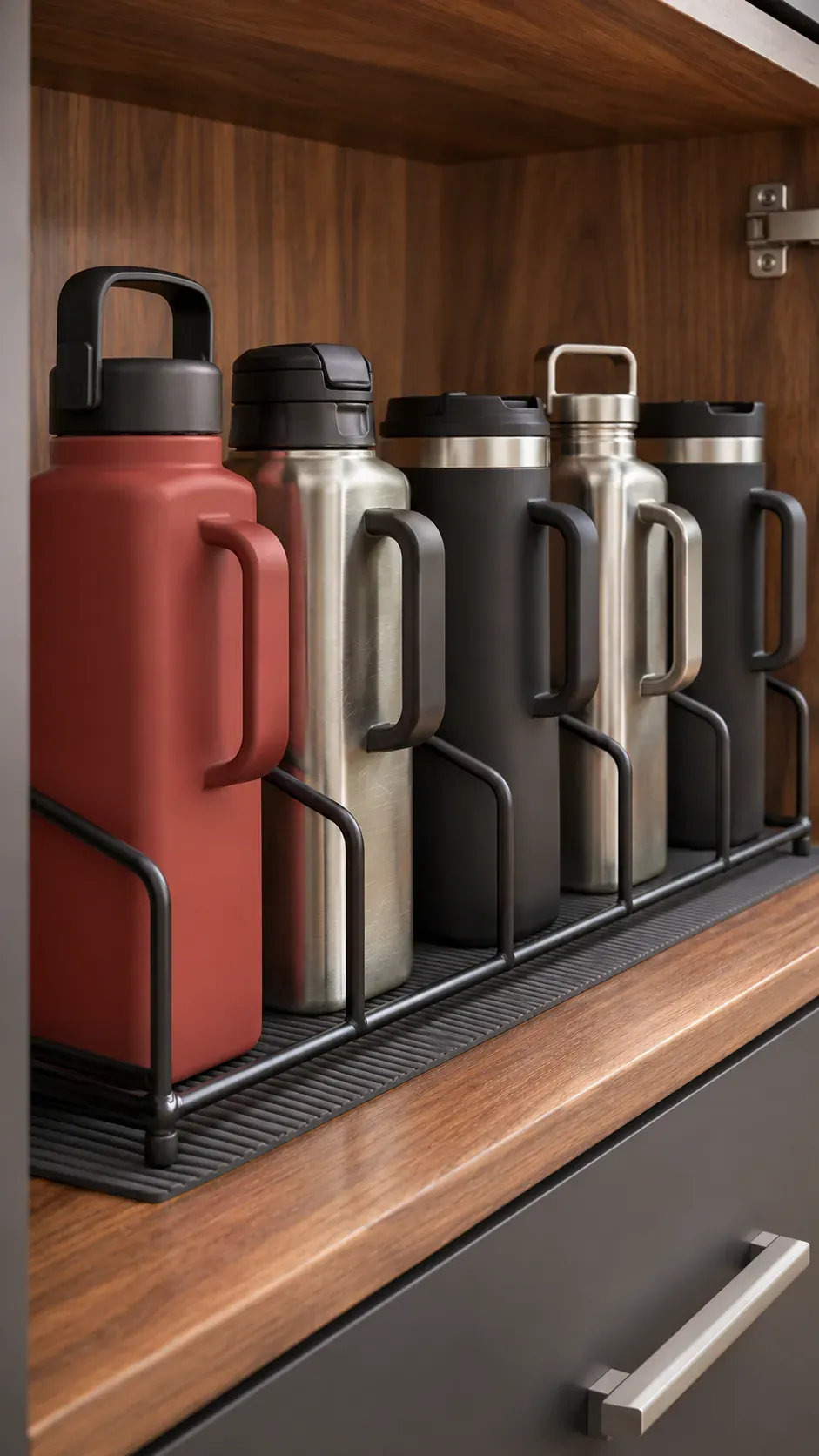
Separate Bottles with a File Sorter
A low file sorter creates individual slots for flat sided bottles and travel mugs. Set it lengthwise when cabinet depth is generous or crosswise when front visibility matters more. Add a nonslip liner underneath if the sorter shifts during use.
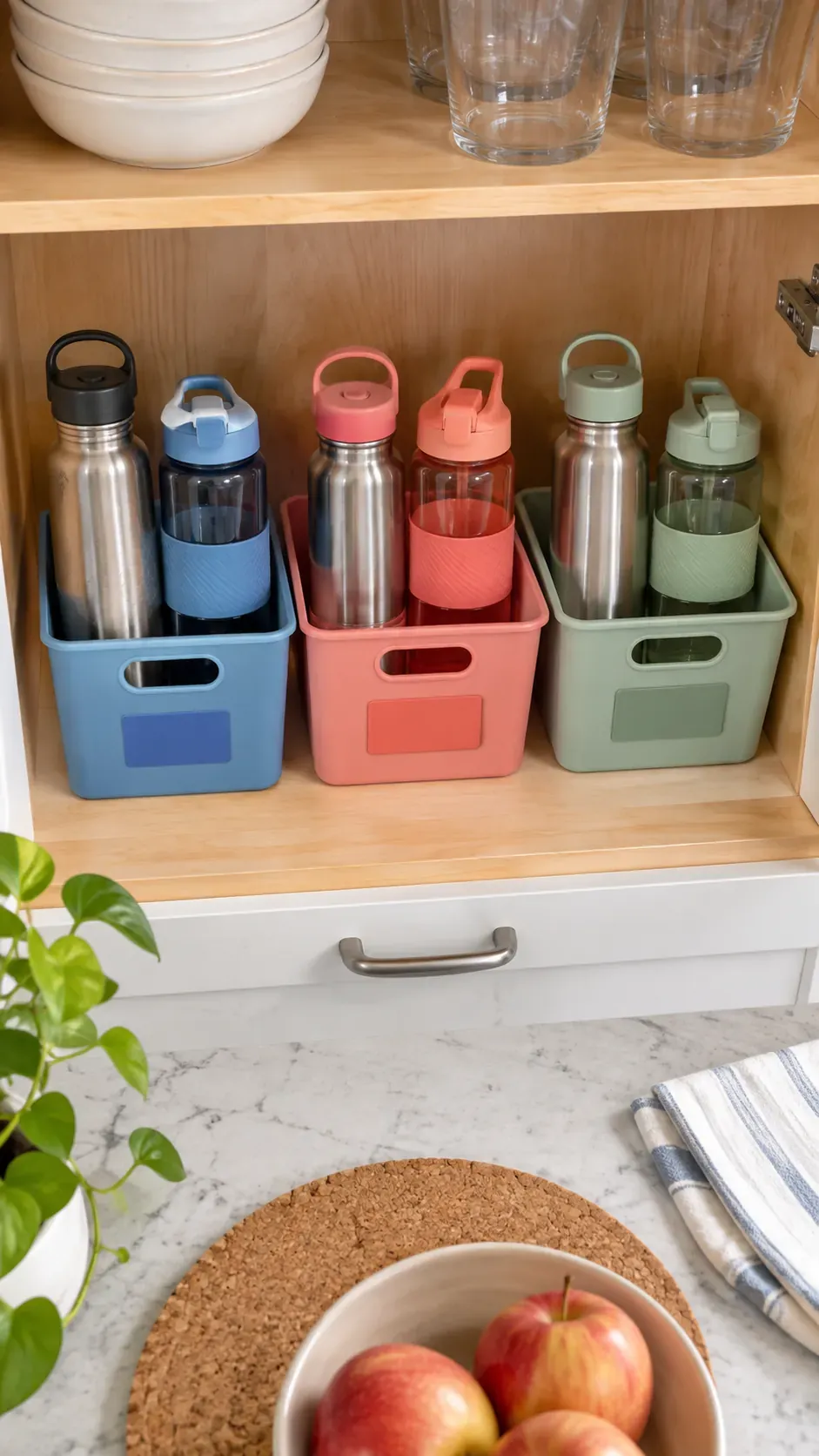
Assign One Bin to Each Family Member
Small labeled bins reduce confusion when several people own similar bottles. Give each person a fixed space for one or two complete daily bottles rather than an unlimited collection. Keep the labels on the bins so bottle surfaces remain easy to wash.
Keep Each Lid with Its Bottle
Store a dry lid loosely on its matching bottle when pieces are unique and easy to confuse. Leave the opening unsealed until every surface is completely dry. This approach uses more height but removes the daily search for a matching thread or gasket.
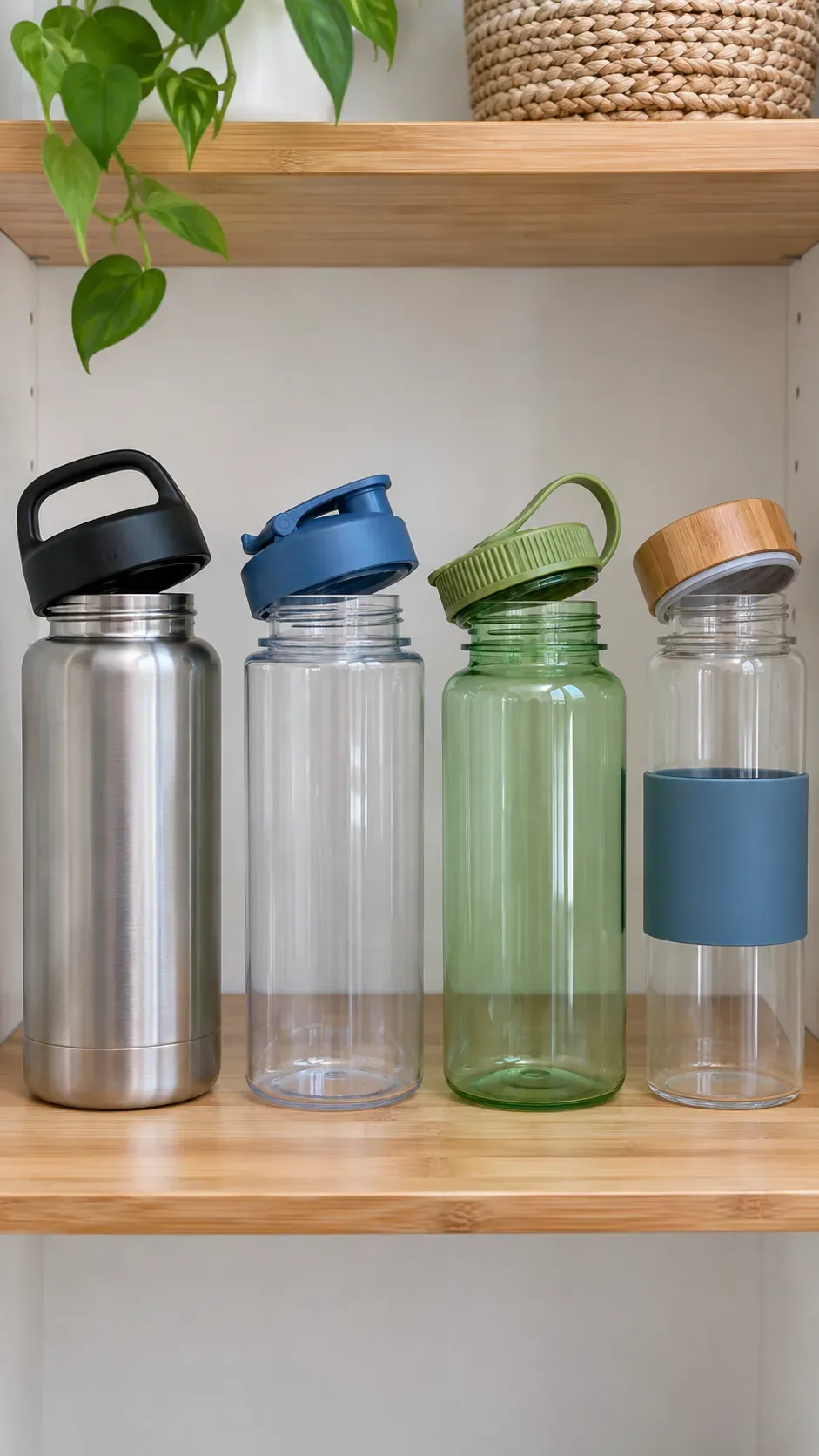
Collect Shared Lids in a Small Cup
If several bottles use interchangeable lids, gather those dry lids upright in one washable cup. Place the cup beside the compatible bottle group rather than in a distant drawer. Limit the cup to complete working parts so damaged straws and spare pieces do not accumulate.
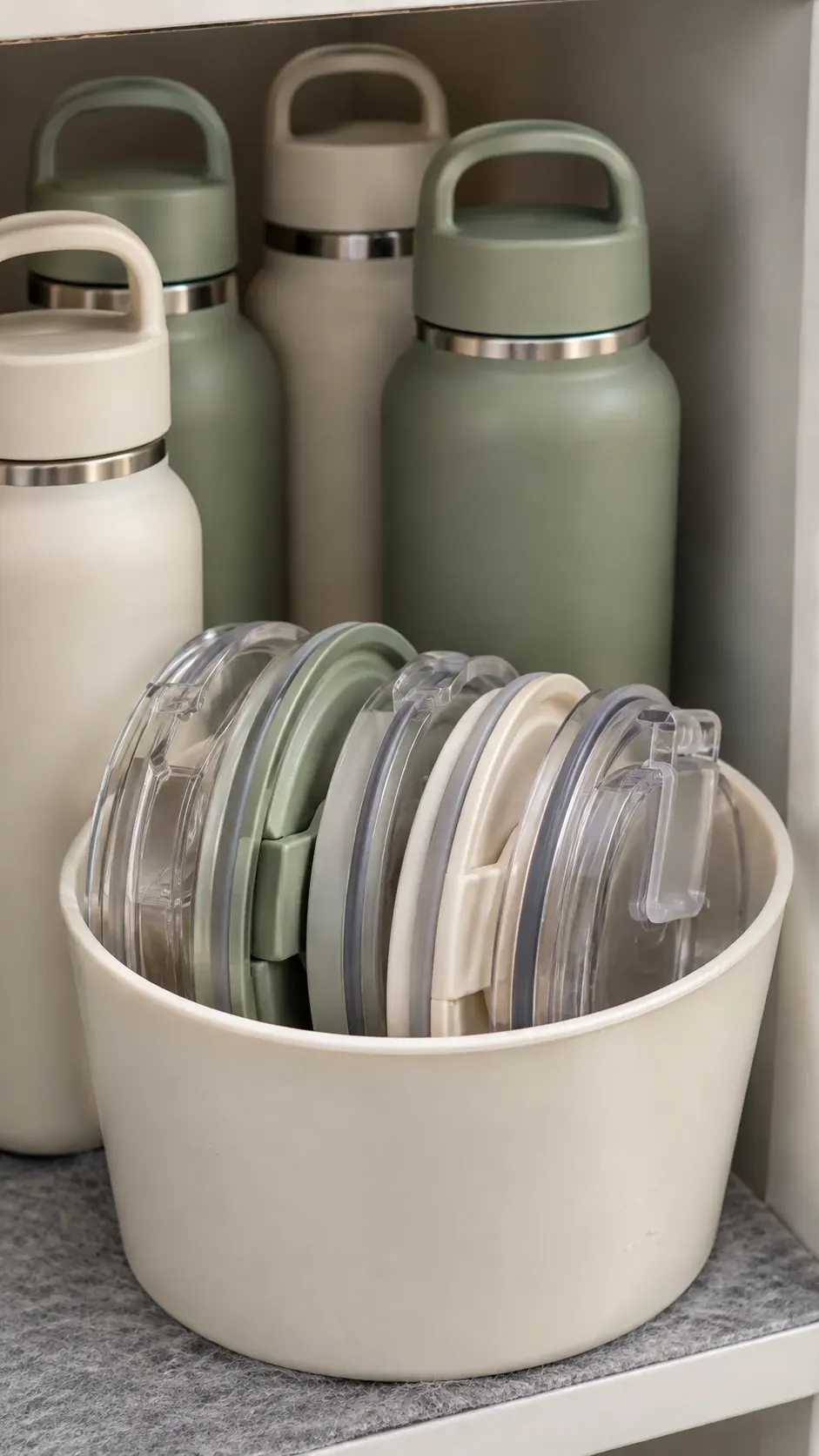
Place Tall Bottles at the Back
Arrange upright bottles by height when the whole shelf remains visible. Tall pieces at the back create a stepped view of shorter bottles at the front. Keep enough overhead clearance to lift every tall bottle without tilting it into the shelf edge.
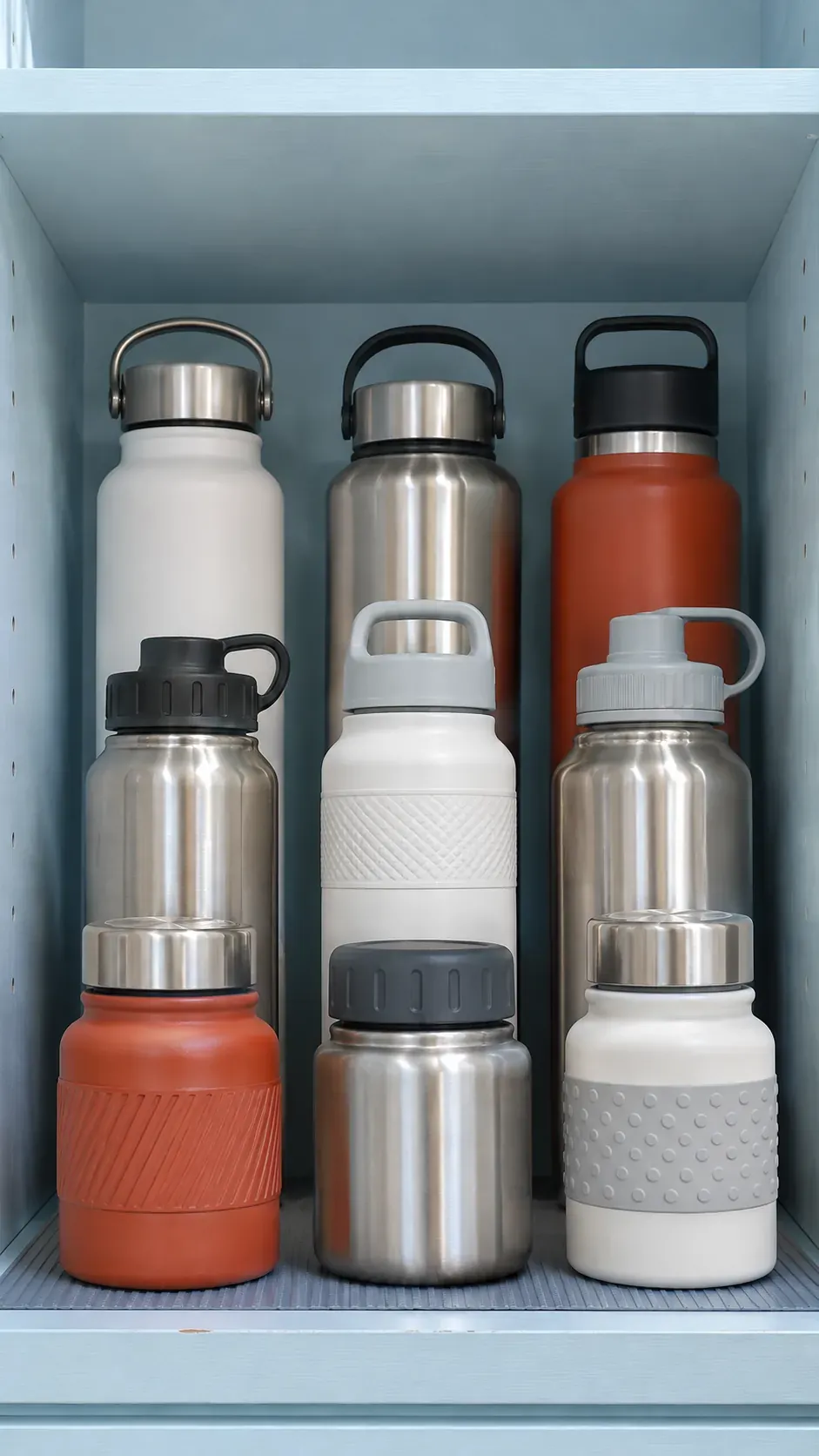
Reserve the Front Row for Daily Bottles
Put school, work, and exercise bottles in the front row where they can leave the cabinet quickly. Move event bottles and infrequently used flasks toward the back. Return each daily bottle to the same opening so the system works without rearranging.
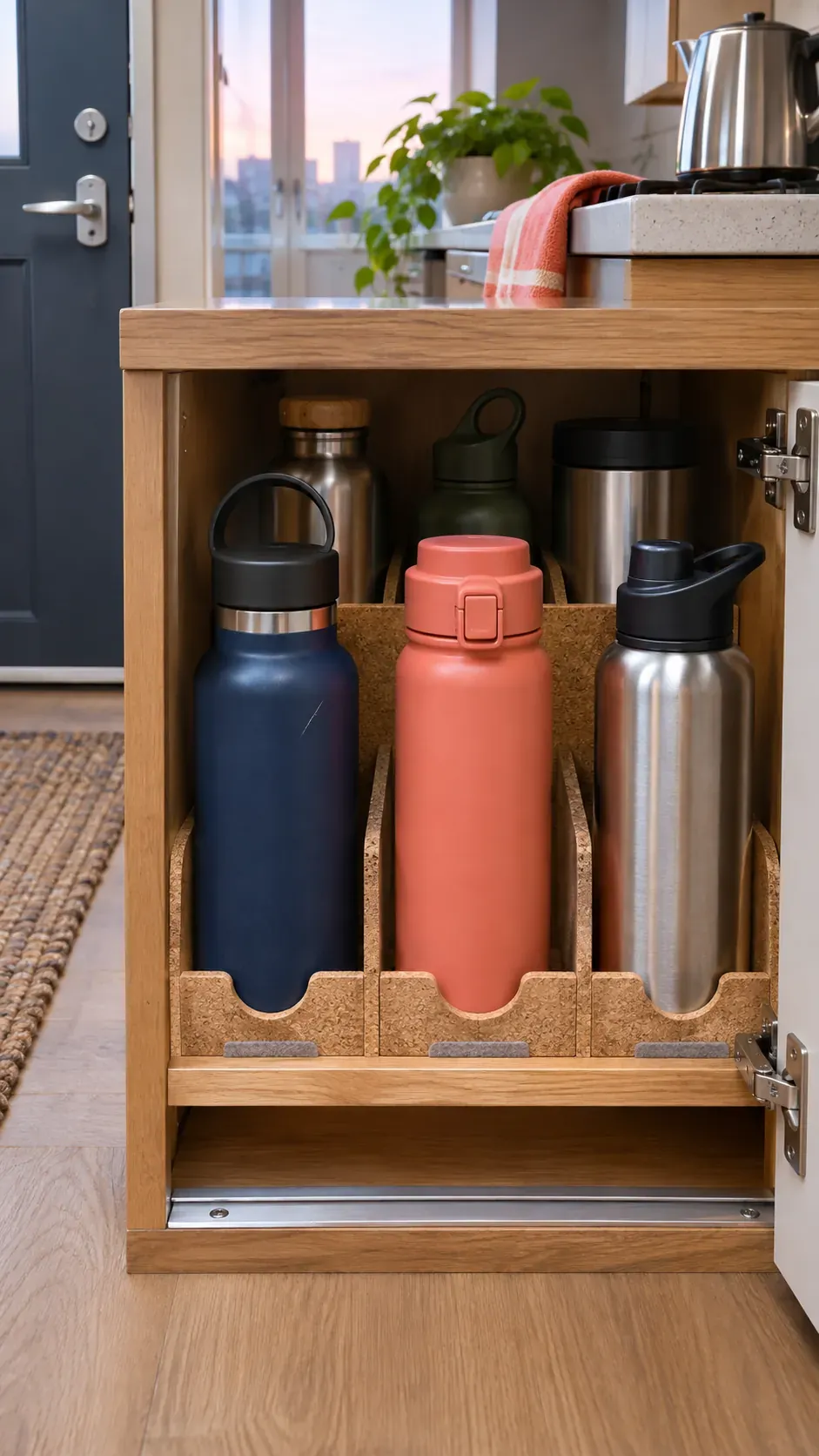
Give Travel Mugs a Separate Zone
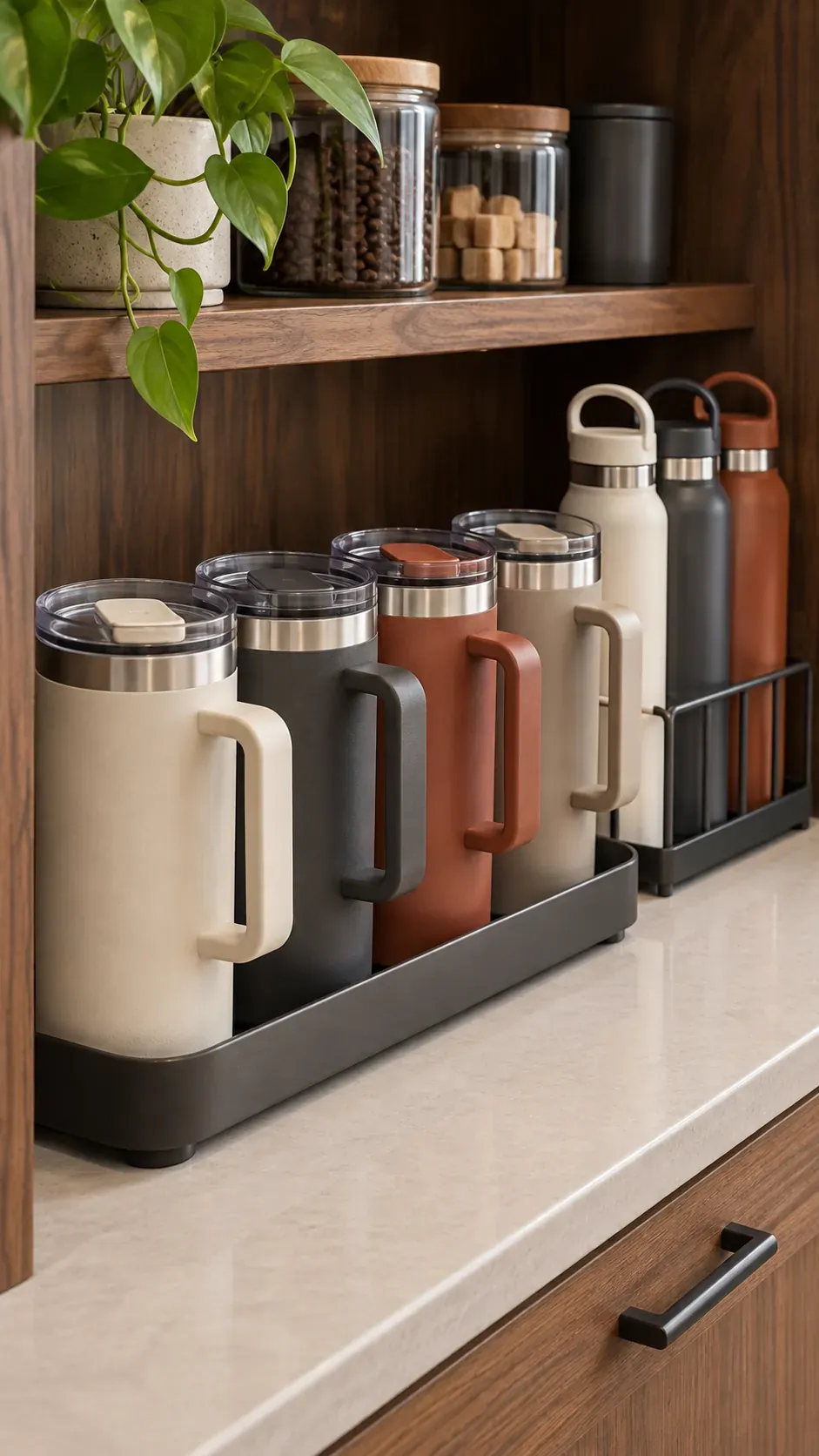
Travel mugs are often wider than water bottles and can destabilize a narrow rack. Store them upright in a separate tray with their handles facing the same direction. Keep splash guards and sliders with their original lids so small parts do not migrate into the bottle area.
Create an Open Drying Space
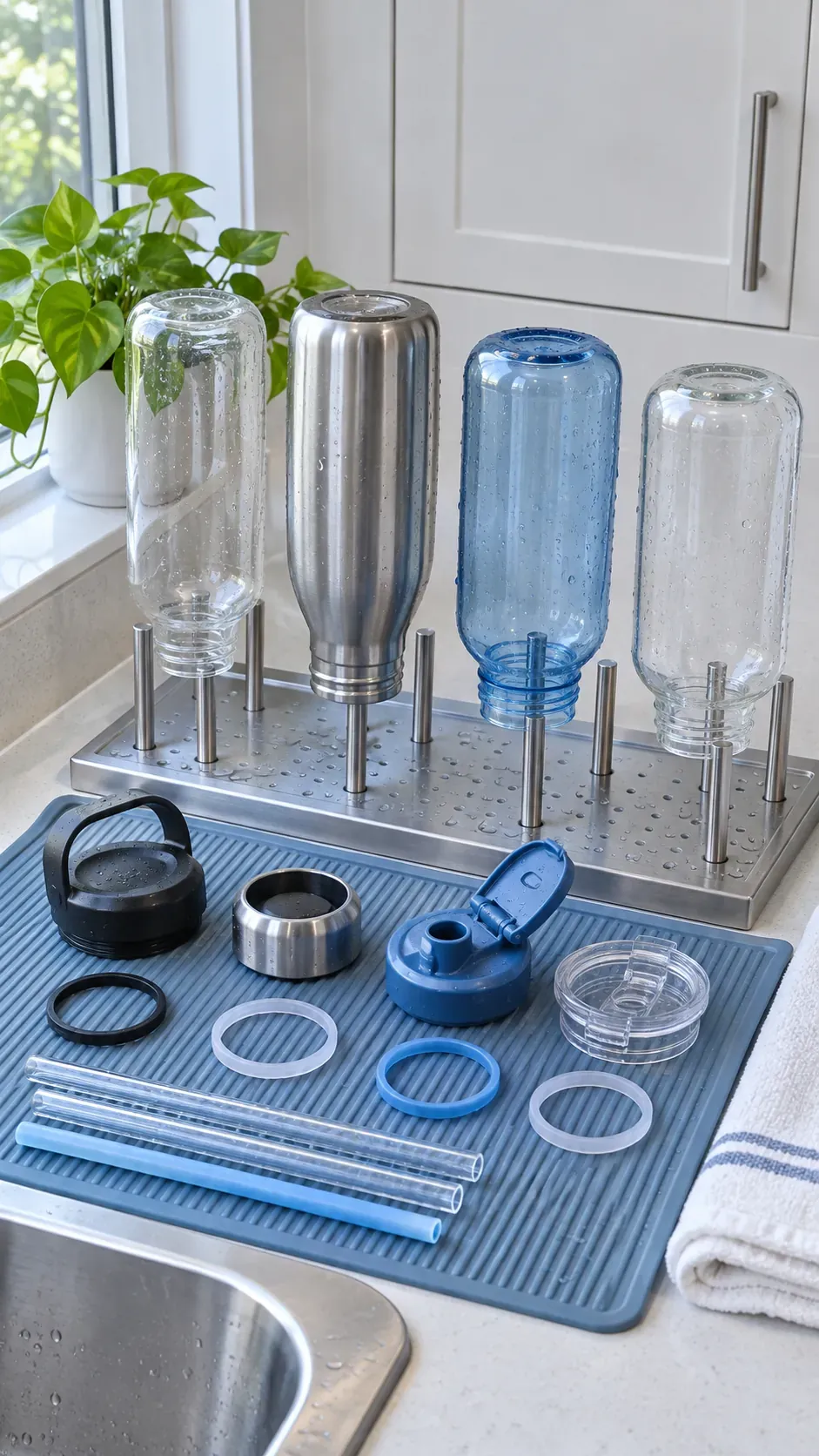
Wet bottles do not belong in a closed storage system. Reserve a small drying mat or rack outside the cabinet and return pieces only when interiors, straws, seals, and threads are dry. Store bottles open or loosely assembled when the manufacturer guidance supports that approach.
Set a Cabinet Based Bottle Limit
Let the measured cabinet define the size of the bottle collection. Keep complete bottles that fit current routines, then remove pieces with damaged seals, missing lids, persistent odors, or uncomfortable shapes. A smaller working set is easier to dry, match, and return than a crowded assortment that falls forward.