
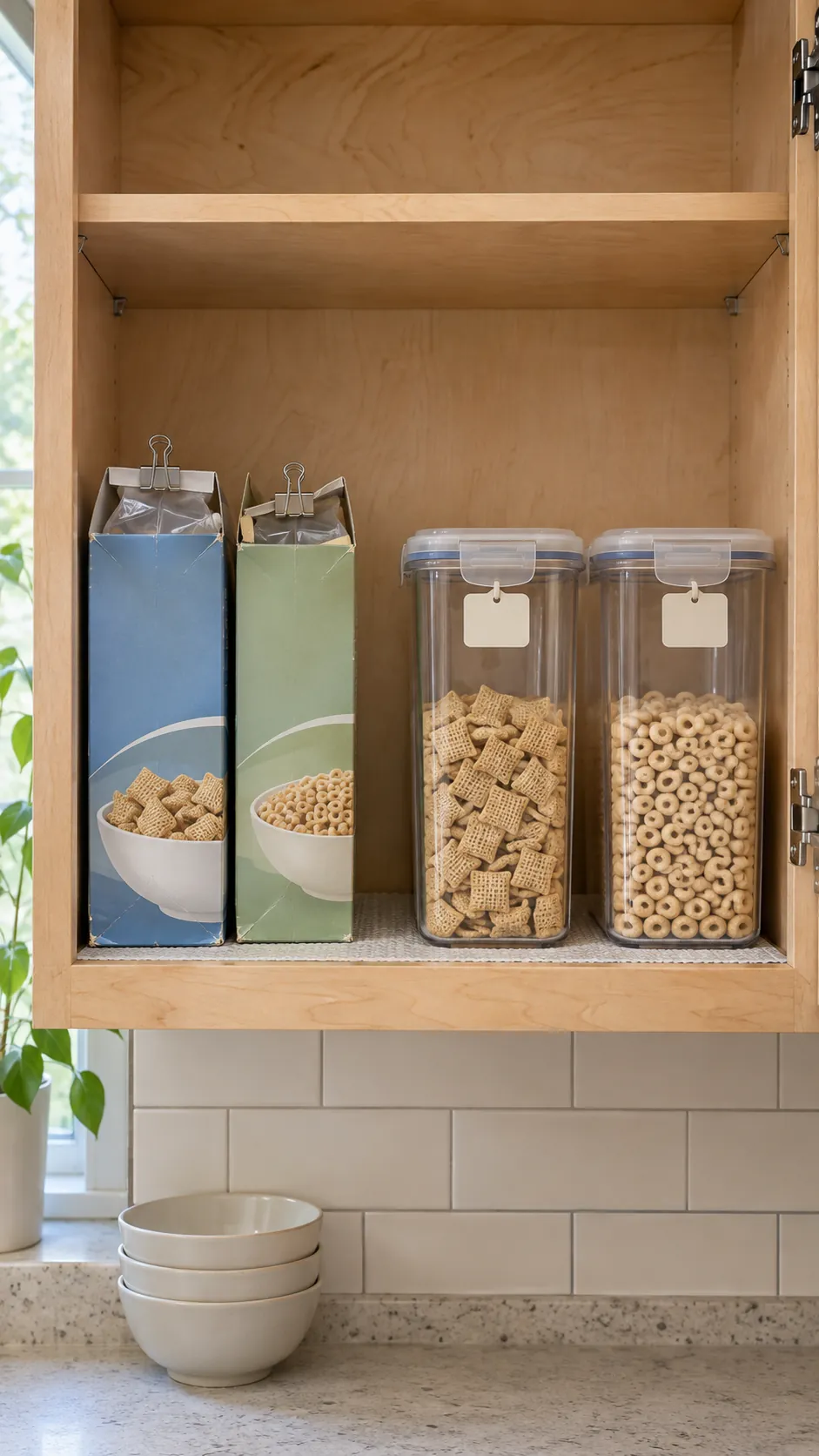
A cereal box can waste height and leave a crumpled bag open, but a container can consume money and precious cabinet width. The useful answer depends less on appearance and more on how your shelves, shopping habits, and mornings actually work.
For most small kitchens, a mixed system works best. Decant the cereals that your household eats often, that go stale quickly, or that arrive in awkward packaging. Keep occasional cereals in their boxes when the label, date, and serving information matter more than a perfectly uniform shelf.
Start With Shelf Measurements, Not Container Sets
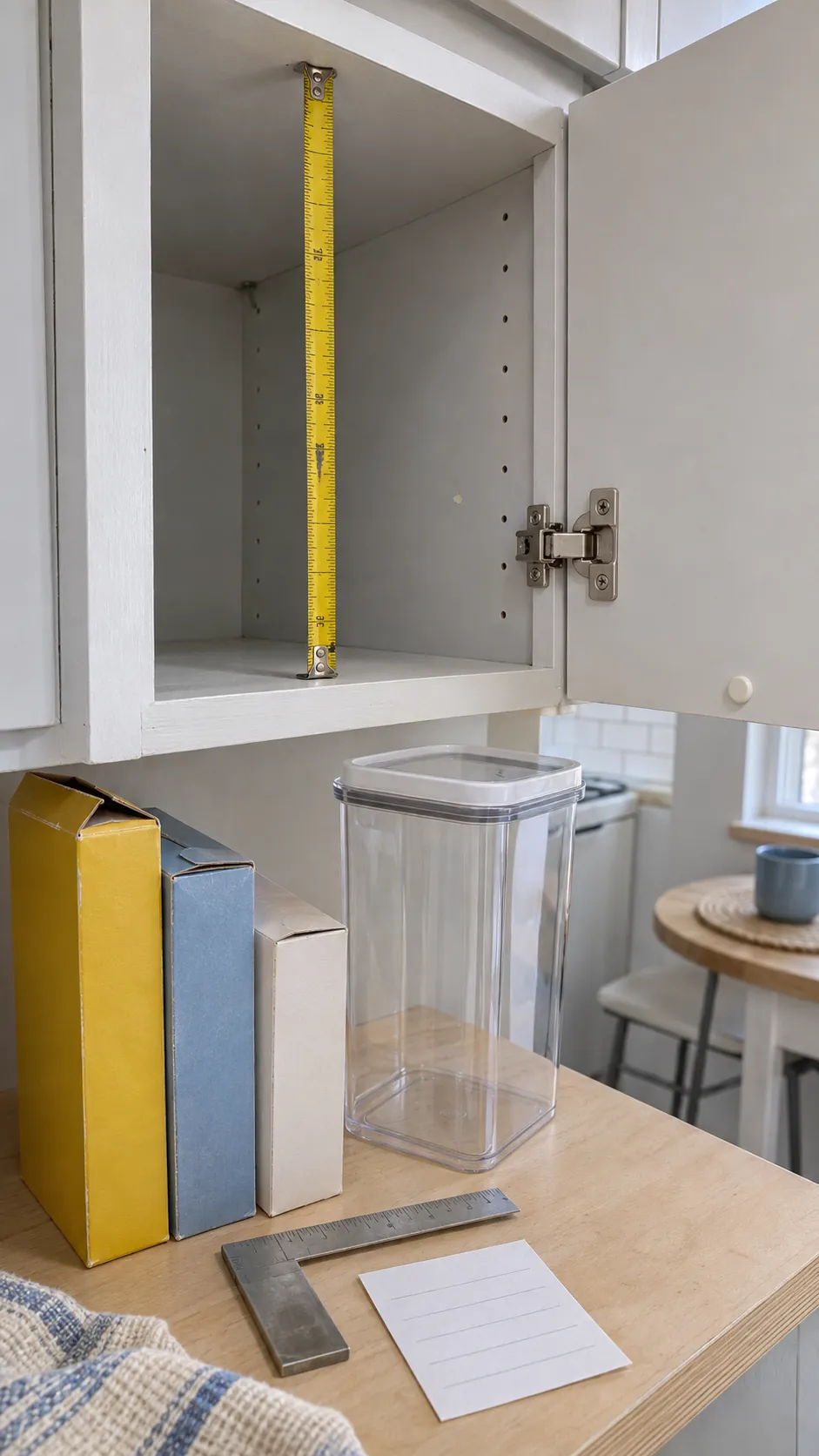
Measure the clear shelf width, depth, and height with the cabinet door closed. Also measure the narrow opening between hinges, face frames, or door hardware. A container that fits the shelf can still be annoying if it must tilt or scrape past the opening every morning.
Then measure the cereal boxes you buy most often. Compare their real footprint with one or two candidate containers. Square containers often use a shallow shelf more efficiently than round ones, but only when their lids open below the shelf above and your hand can still grip the sides.
Decant When Freshness Is the Real Problem
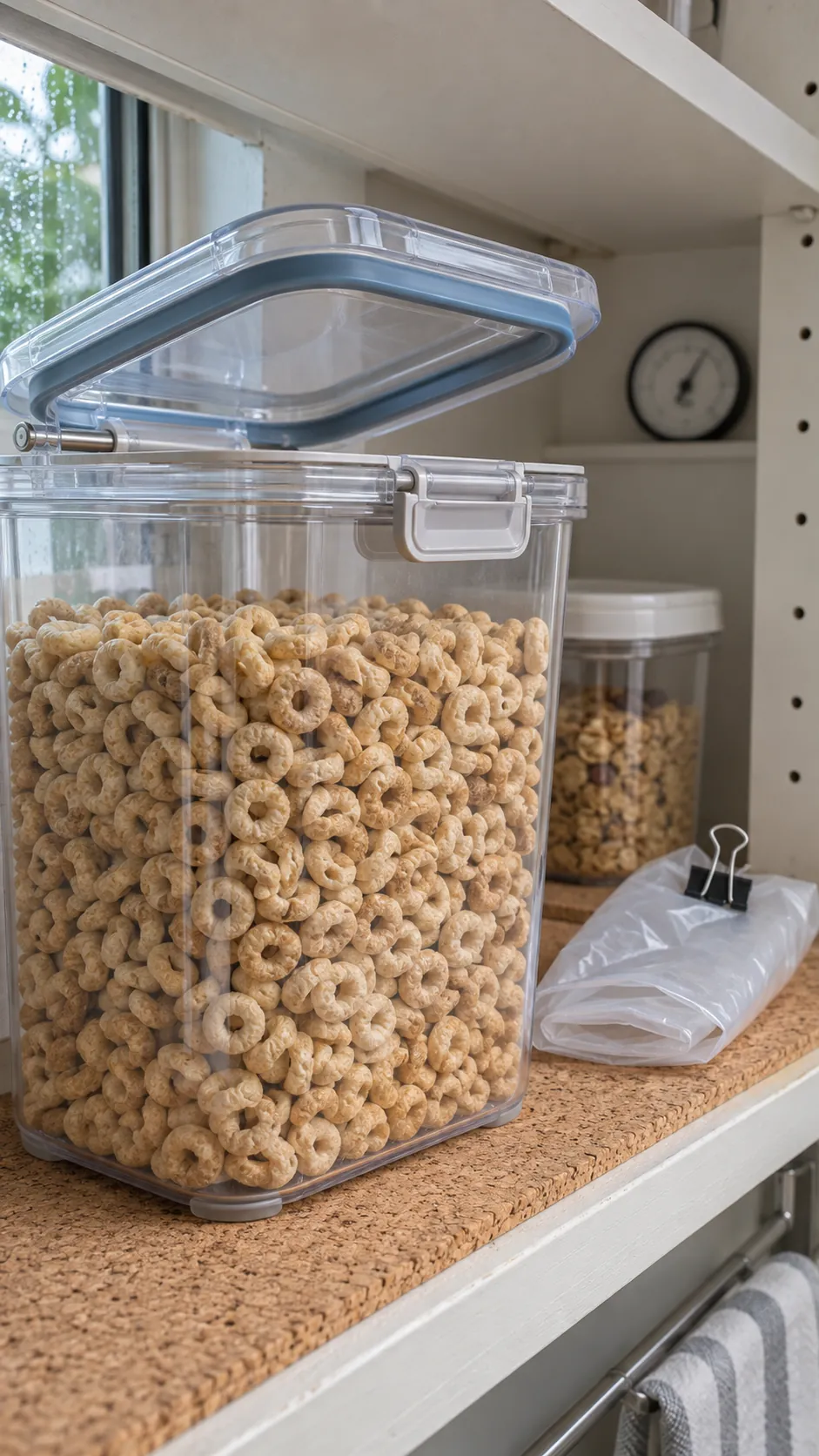
An airtight container is useful when a cereal bag never closes well, when several people reach into it, or when humid air softens the cereal before the box is empty. The seal matters more than the container shape. A loose decorative lid will not improve freshness.
Choose a container that holds one normal purchase with a little space at the top. If the full bag does not fit, do not pour new cereal over old cereal. Finish the older amount first, wash the container, dry it completely, and then refill it. This simple rotation keeps crumbs and old product from collecting at the bottom.
Keep the Box When Information Matters
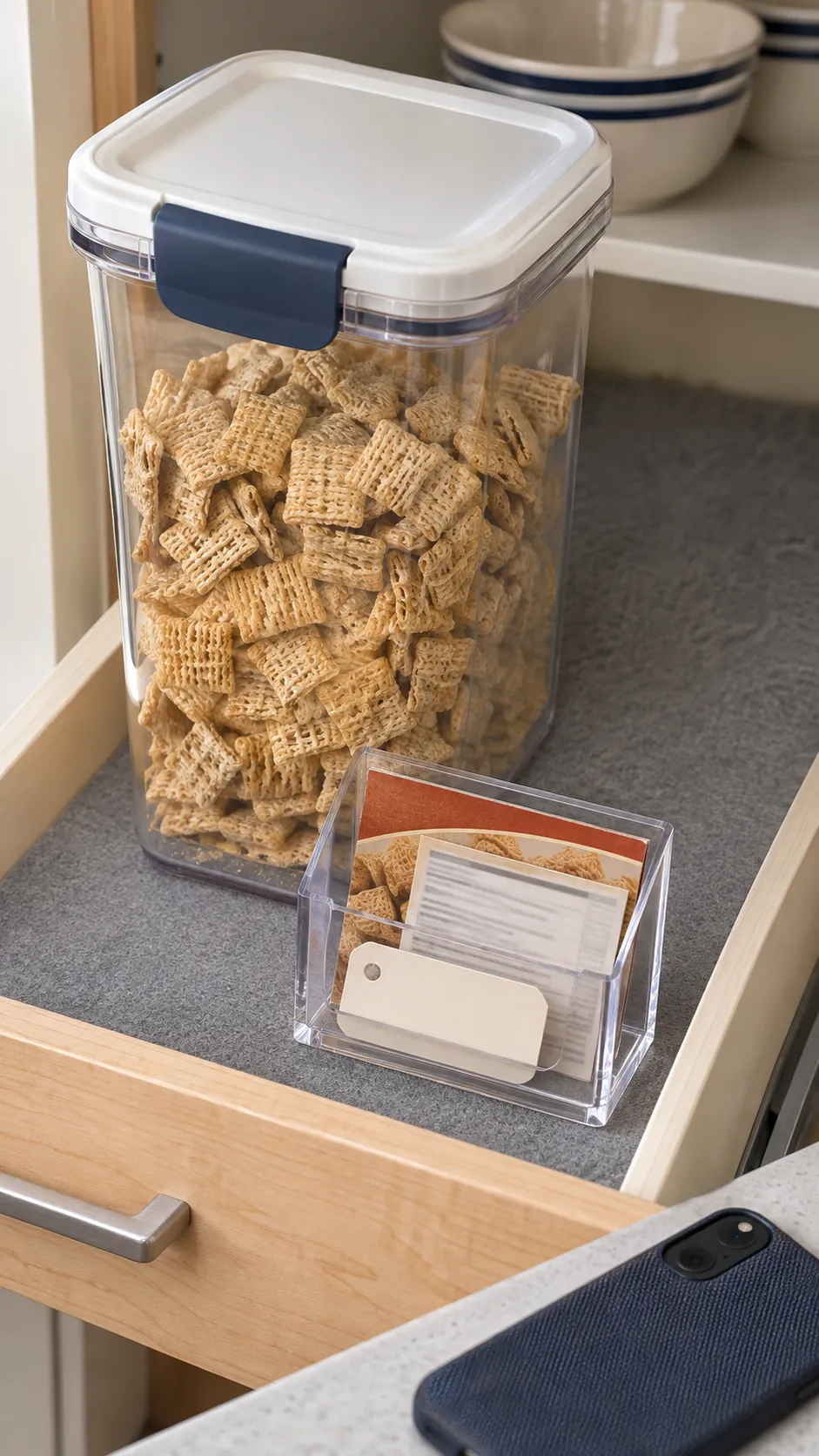
The original box carries the ingredient list, allergy statement, nutrition details, preparation directions, and product code. That information can be important in a shared home or when a manufacturer announces a recall. If you discard the box, preserve the useful details before you pour.
Cut out the product name, allergy panel, and date, then place the card in a dry holder beside the container. You can also photograph the full label and write the date on a removable tag. Never rely on memory when two cereals look similar or when someone in the household manages an allergy.
Compare the Whole Morning Routine
A tall pour container can make breakfast faster if it is light enough to lift and its opening gives you control. It can also make a shelf worse if a child cannot grip it, the lid takes two hands, or the container must be moved around another item. Test the motion with water before you commit a full bag of cereal.
Boxes have their own advantages. They show the cereal at a glance, they collapse as the food is used, and they cost nothing extra. A simple spring clip on the inner bag may solve the freshness problem without adding a permanent object to a limited cabinet.
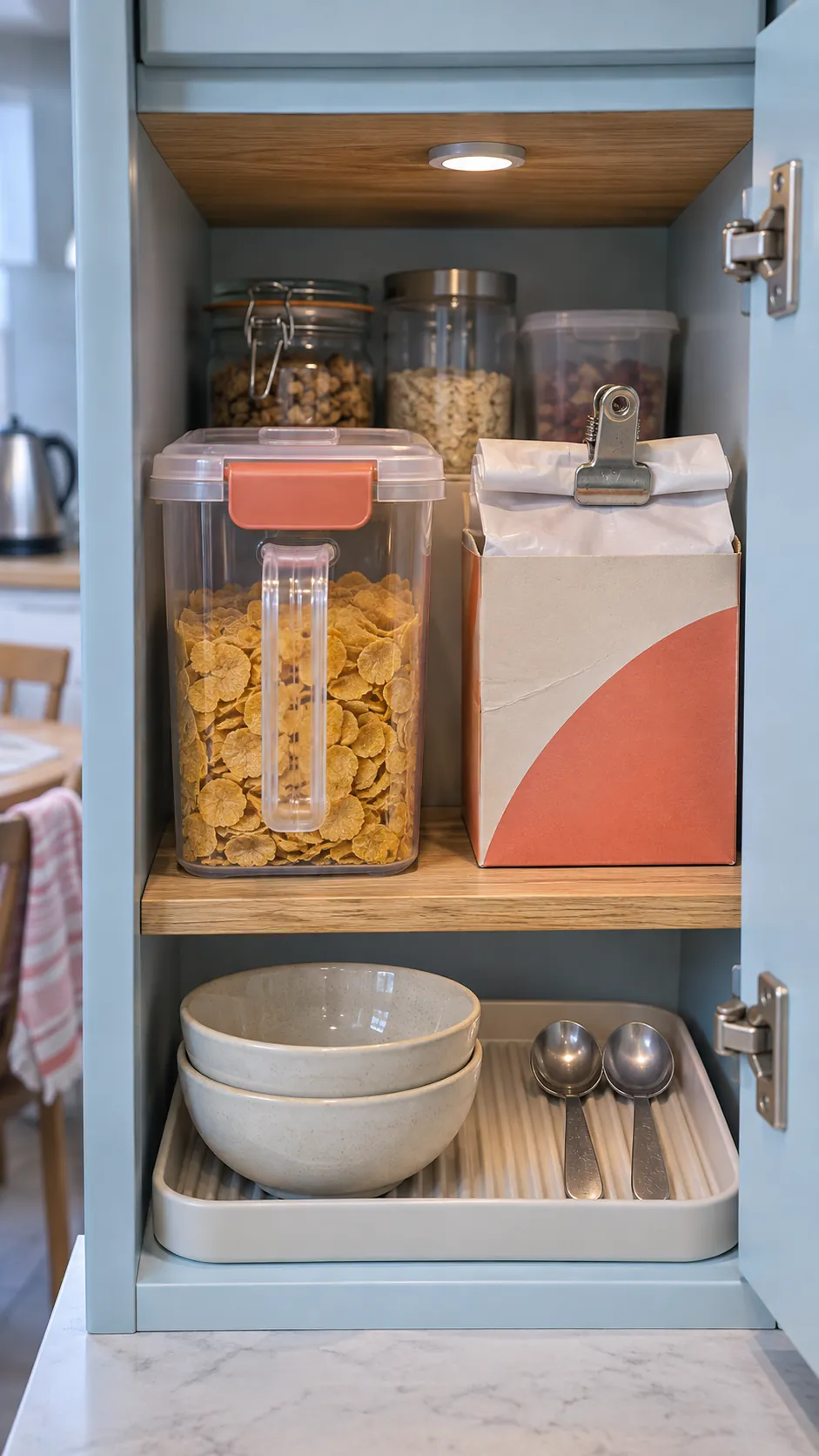
Use Containers Only Where They Earn Their Space
Uniform containers do not automatically create more capacity. Thick walls, wide lids, handles, and gaps between shapes can use more room than the original packaging. Buying a large matching set before testing one piece can leave you with attractive containers that do not suit your cereal or cabinet.
Begin with the cereal that creates the biggest daily problem. Use one container for two weeks and notice whether it pours cleanly, seals reliably, washes easily, and fits a complete purchase. Add another only when the first one proves useful. This approach controls cost and prevents a second storage problem made of empty containers.
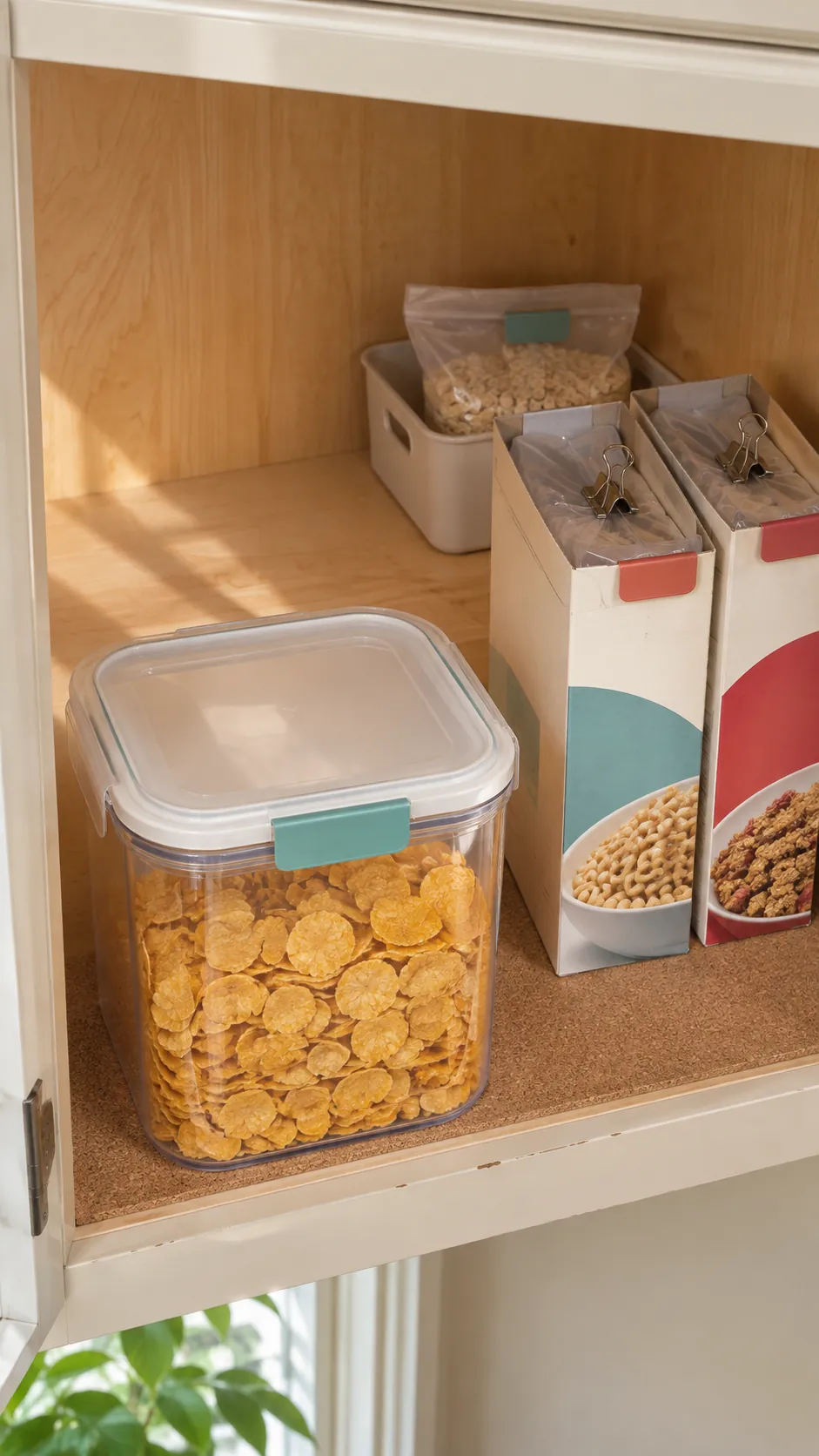
Plan for Cleaning, Crumbs, and Pests
Containers help only when the lid closes and the vessel stays clean. Cereal dust around a gasket can interfere with the seal. Wash the container between products, follow its care instructions, and let every groove dry before refilling. A damp container creates a larger problem than a folded cereal bag.
If insects are a concern, inspect new packages before they join the cabinet. A sound container can limit spread, but it cannot repair contaminated food. Keep the shelf free of crumbs, check nearby dry goods, and discard affected products according to local food safety advice.
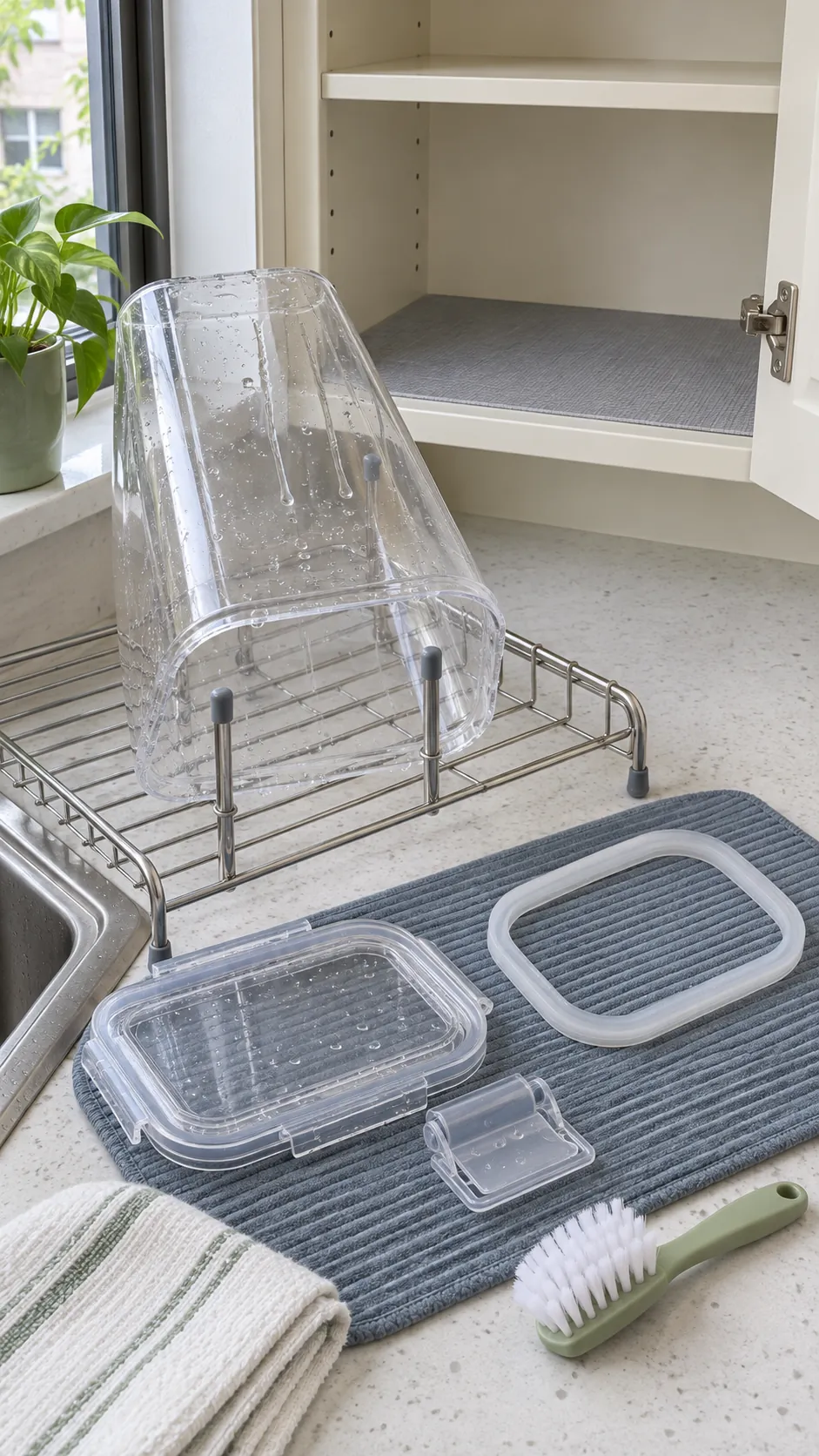
Choose the System You Can Maintain
Decant cereal when a tested container improves freshness, access, and shelf fit at the same time. Keep the box when you buy the cereal rarely, need the printed information, or have no container that accepts the full purchase. Use both methods when different cereals create different problems.
The best small kitchen food storage system leaves enough open space to lift each item without rearranging the cabinet. It also makes dates visible and refilling simple. If a system looks orderly but adds extra steps that your household avoids, it is not saving space in a useful way.