The mirror may still be the right size and perfectly useful, even when the entrance around it feels dated. Decide first whether you want to change its finish or simply change what sits beside and reflects in it. Renters, heirloom owners, and anyone with a heavy wall mounted piece can start with the options that leave the mirror untouched.
Clean the glass and frame before changing the finish
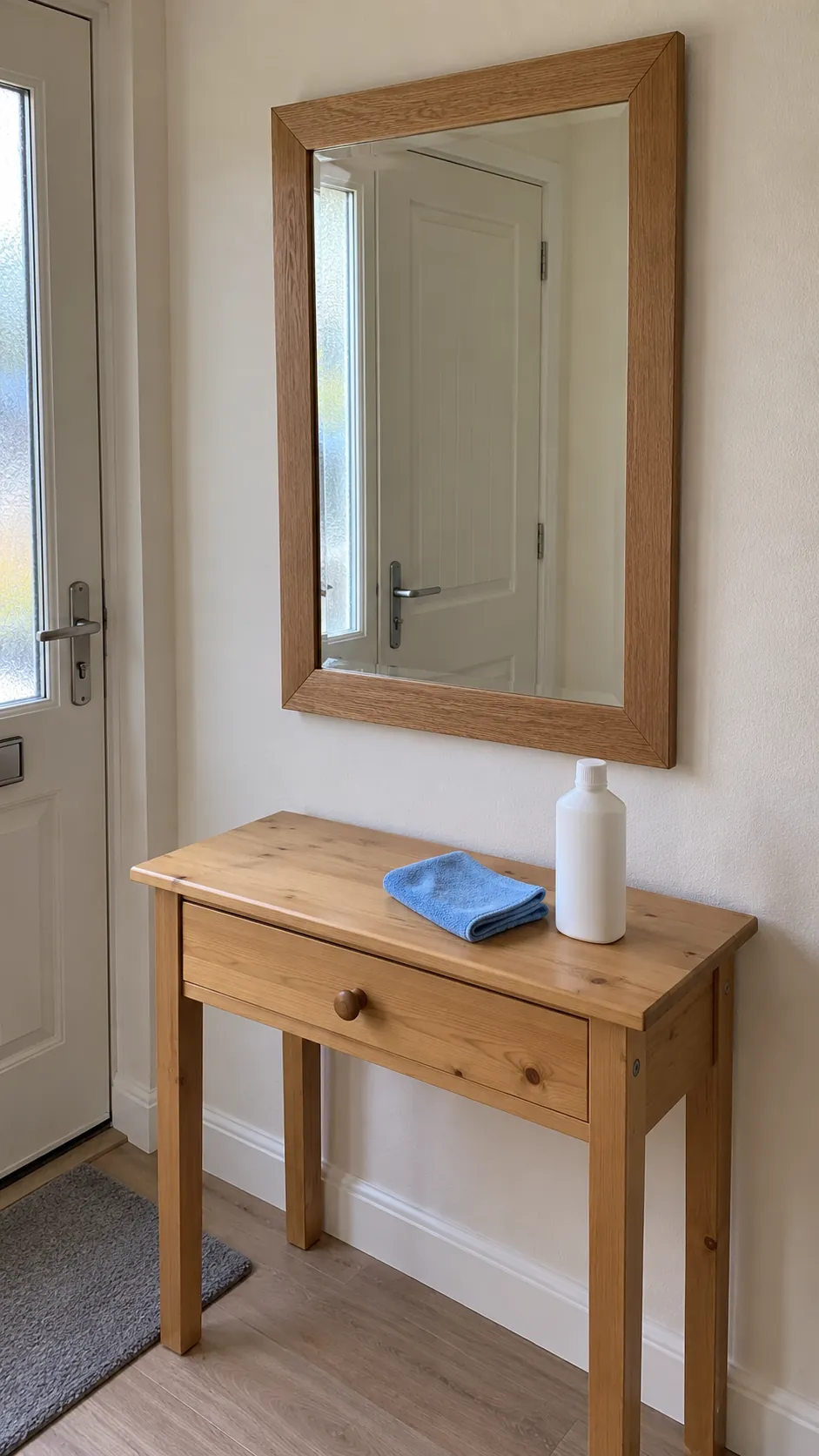
A dull surface can make a useful mirror look older than it is. Clean the glass with the maker’s recommended method and wipe the frame separately with a product suitable for its material. Spray onto the cloth when appropriate so cleaner does not run behind the frame or soak the edges. Let everything dry before you judge the color, because a clean reflection may be the entire entryway mirror makeover you need.
Repair small finish chips with a matching touchup
A few exposed spots can draw more attention than the overall frame shape. Identify the frame material and use a compatible touchup product on a hidden test area first. Match the sheen as well as the color, and keep the product off the glass. This approach suits minor cosmetic damage; loose joints, cracked glass, or failing supports need proper repair before the mirror goes back on the wall.
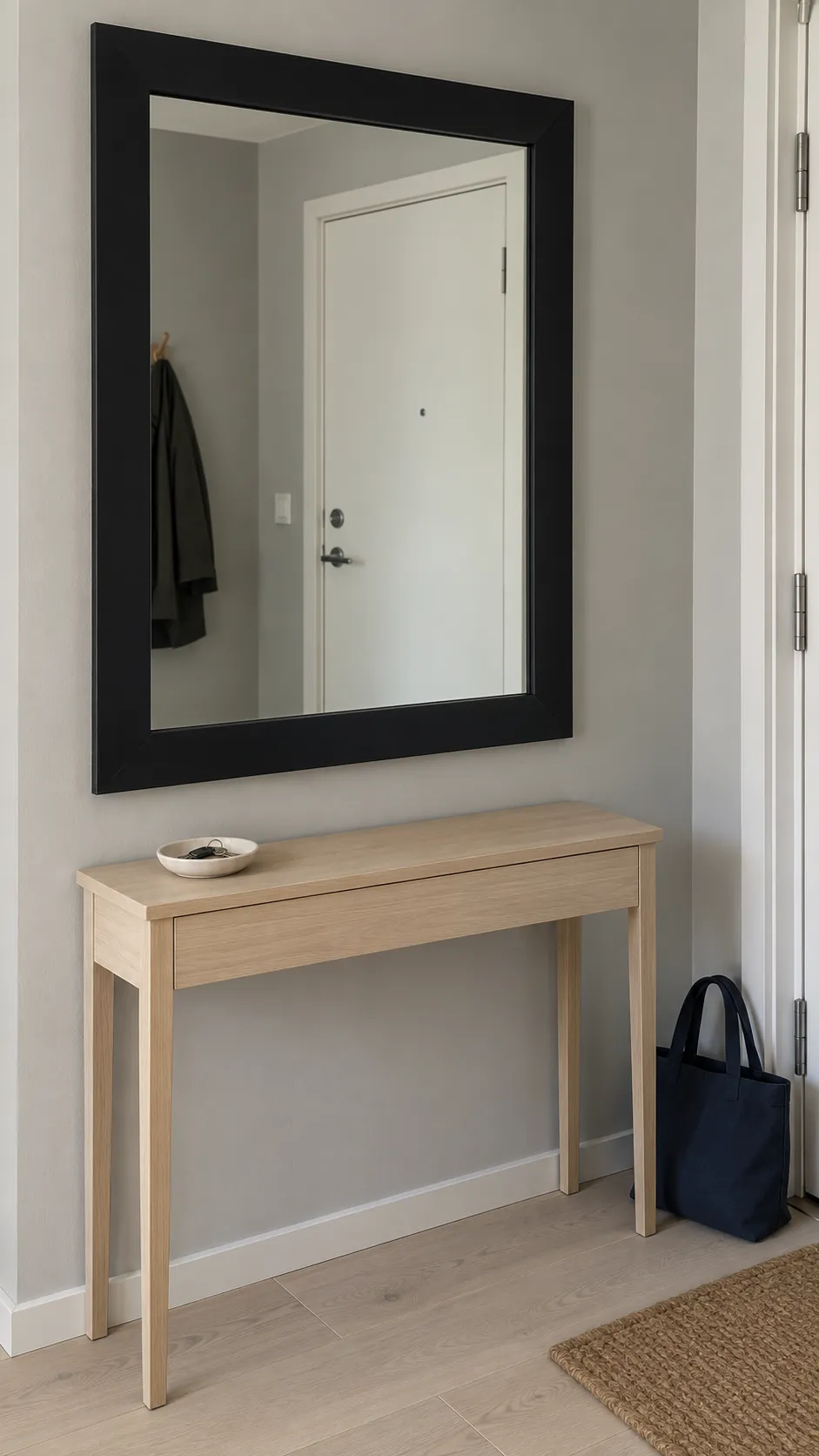
Paint an owned frame matte black
A black frame can give a pale entrance a clear focal point without changing the mirror itself. For a mirror you own, remove it safely and prepare the frame according to the coating and substrate instructions. Mask the glass carefully and apply the appropriate primer and thin finish coats rather than covering grime with paint. Keep this permanent mirror frame update off a landlord’s property unless you have permission.
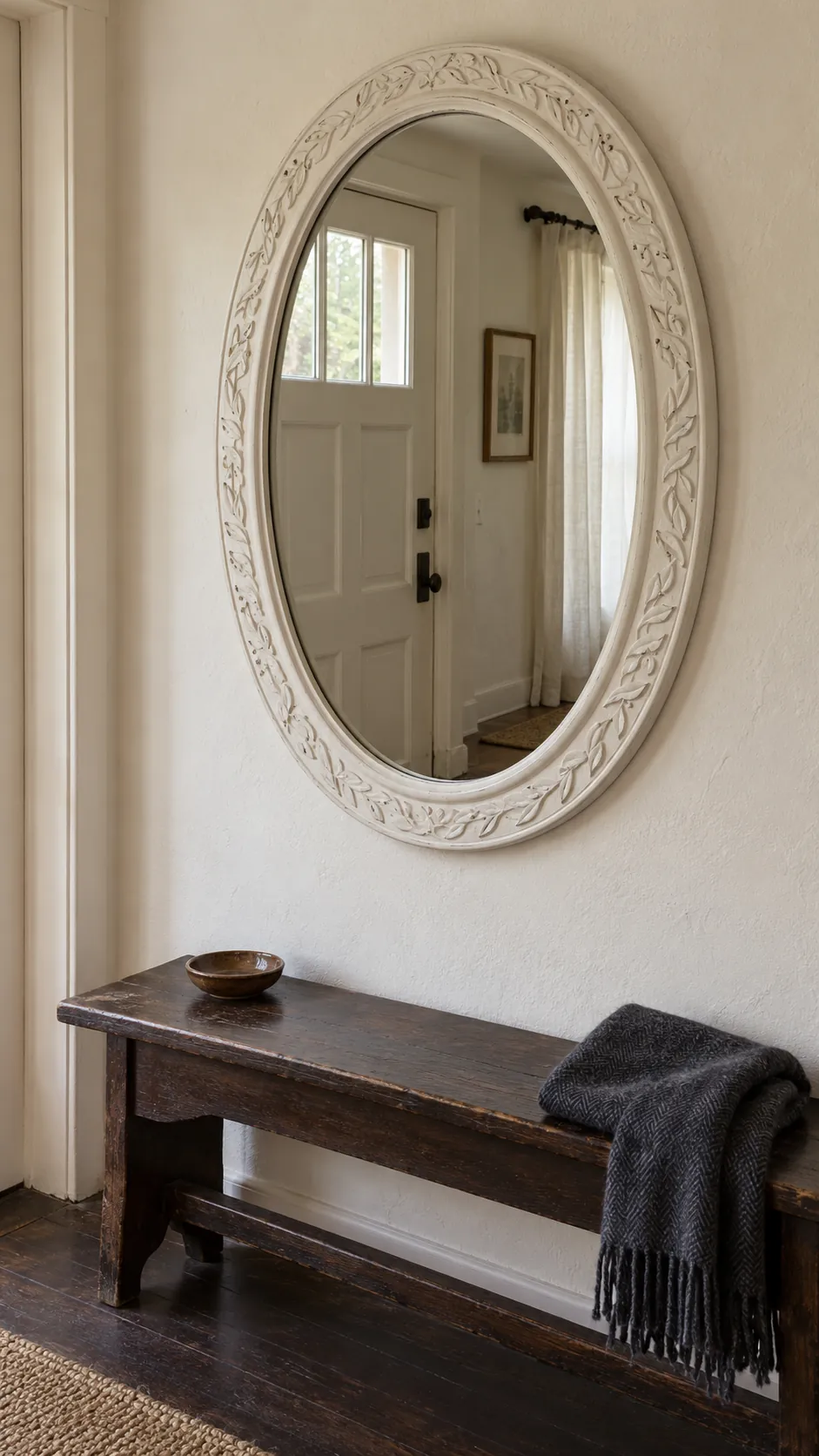
Choose a soft white frame to lighten a dark border
A thick dark surround can dominate a small hallway even when the glass is a useful size. A soft white finish reduces that contrast and lets the outline blend with pale walls. Compare a sample beside the wall in daylight before painting, since a bright white may look harsh against cream. Preserve carved detail with careful preparation and thin compatible coats instead of filling the recesses.
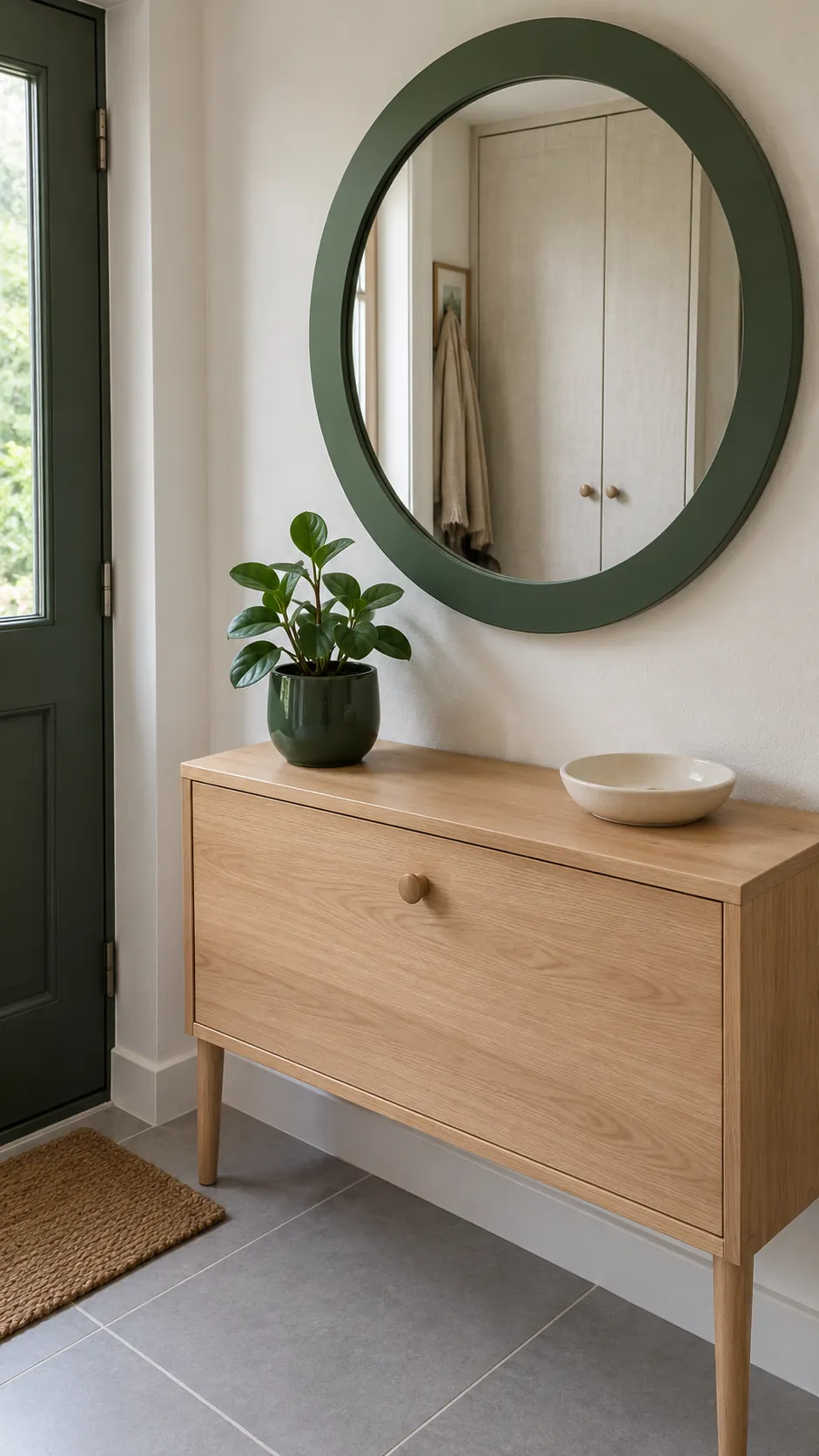
Use a muted green finish to connect nearby objects
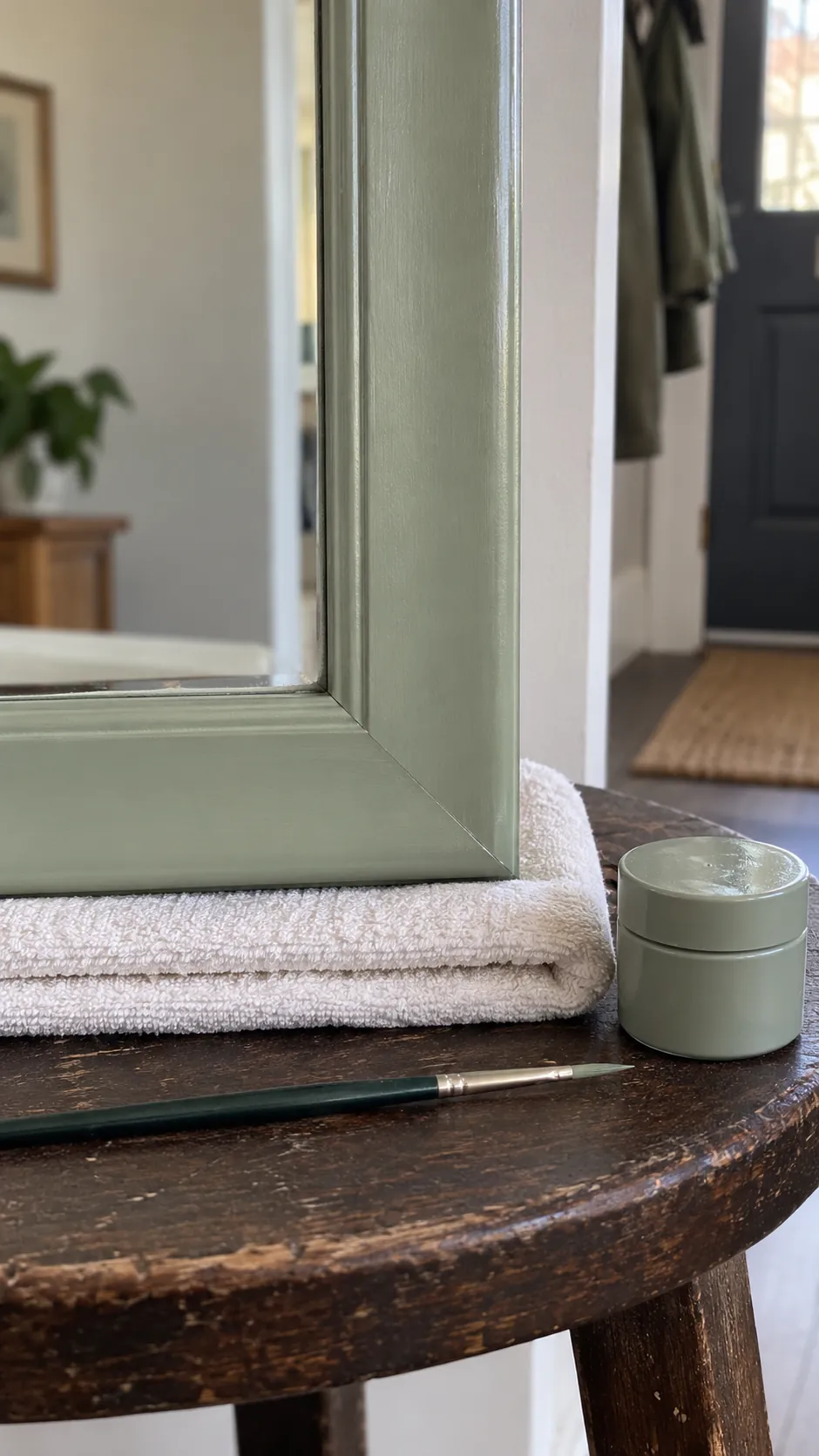
A quiet green frame can link a mirror to a lamp base, plant pot, or fabric already in the entryway. Select one existing color as your reference instead of introducing several new shades. Test the finish near the mirror under both daytime and evening light, then use a paint system suitable for the frame. If the mirror is rented or valuable, bring the green into nearby accessories and leave its finish intact.
Add metallic wax to raised details
Metallic highlights can make an ornate frame feel intentional without covering every recess. On a suitable owned frame, test a finishing wax on a concealed area and follow its application and curing instructions. Keep the treatment on raised carving where light would naturally catch it, rather than turning the entire surround into a bright metallic block. Do not use it to disguise a valuable antique finish; ask a conservator before altering a significant piece.
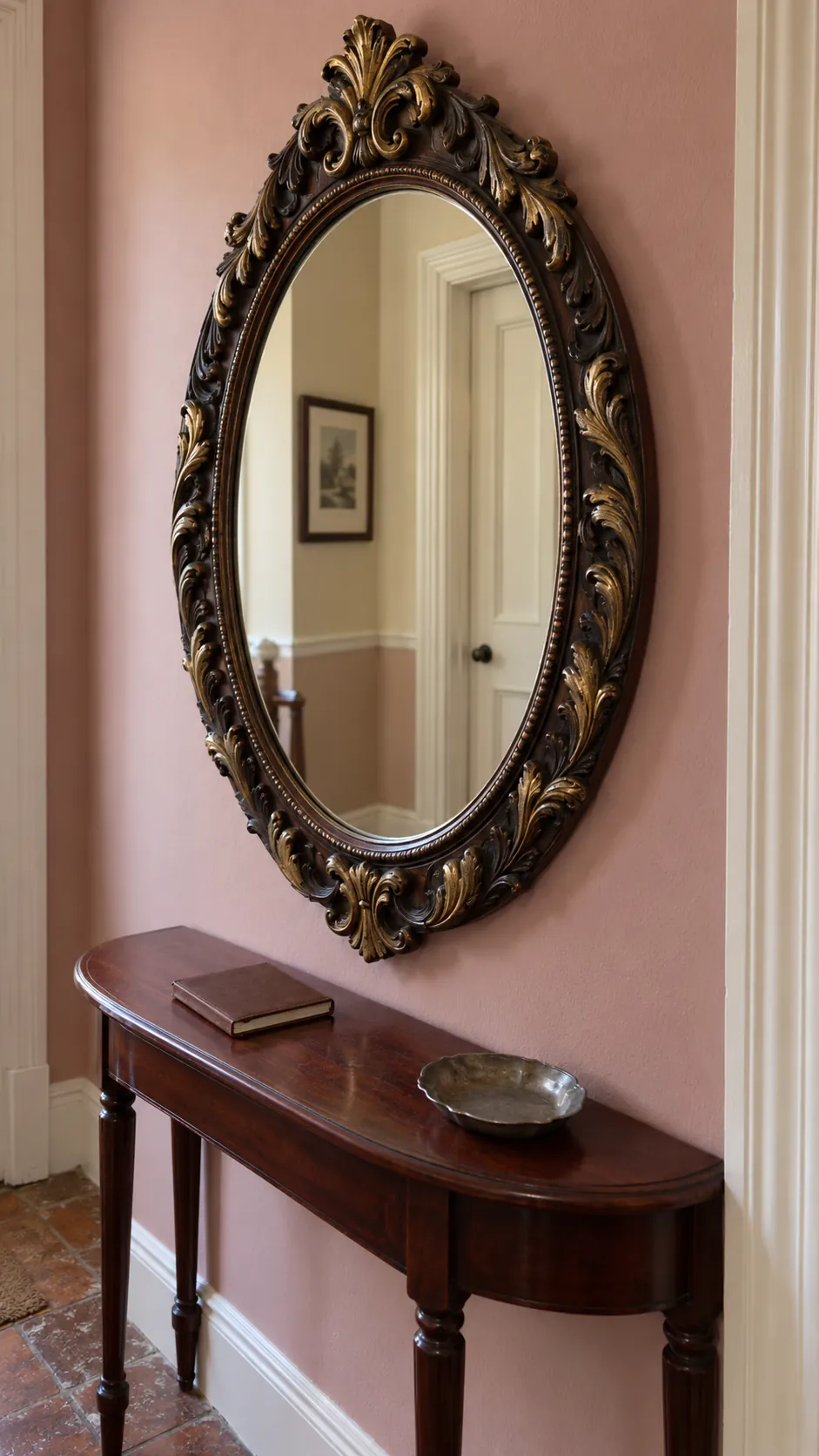
Restore the warmth of a wooden surround
Natural wood can be worth keeping even when its surface looks dry or uneven. Identify the existing finish before choosing a compatible cleaning or restoration product, and test where the result will not show. Avoid stripping a veneered frame aggressively or assuming every dark mark is removable dirt. A careful refresh that keeps the grain visible can coordinate the mirror with a wooden console better than a new painted color.
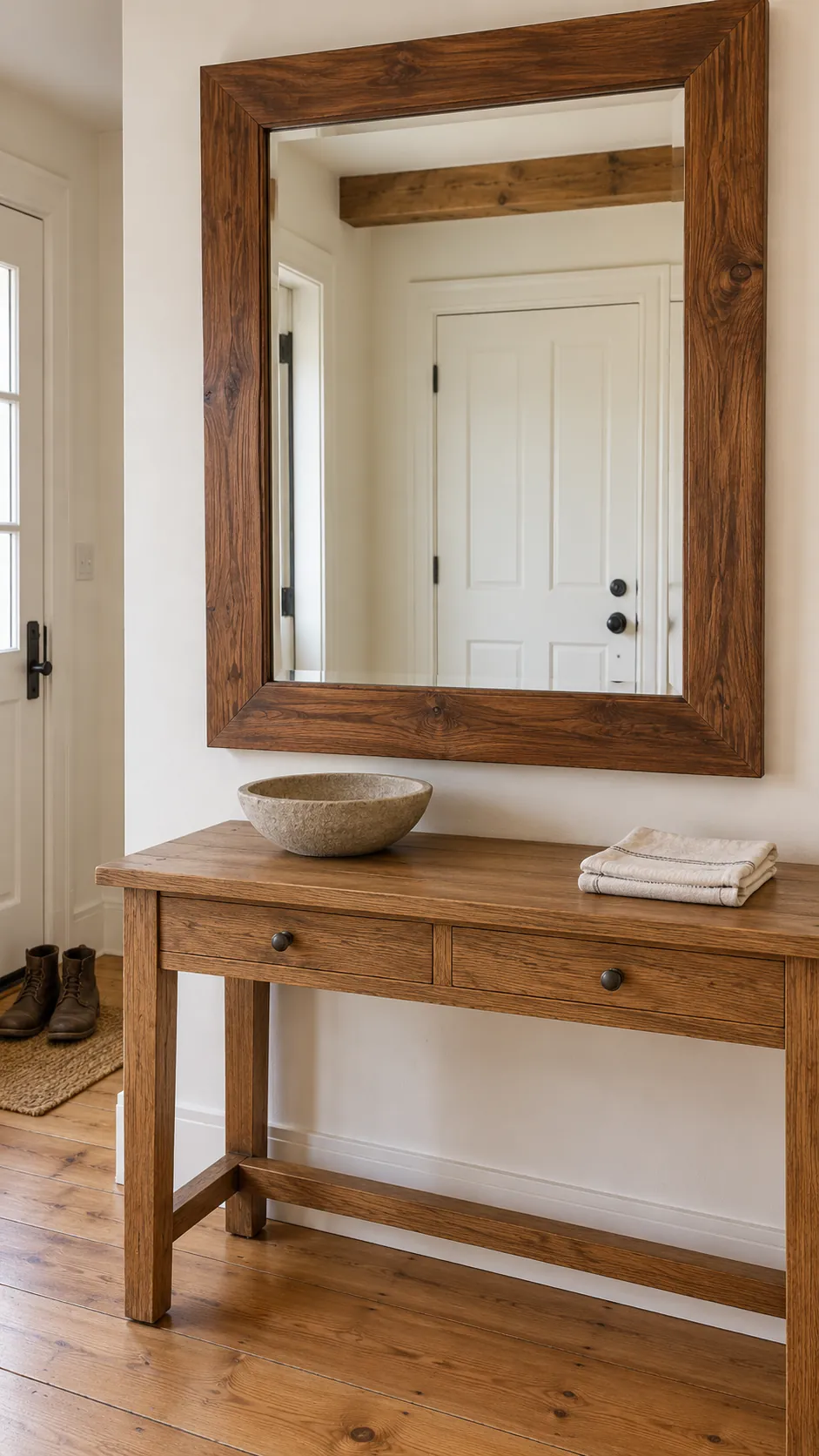
Fit a removable cover over a plain frame
A separate lightweight frame cover can change the look while keeping the original surround intact. Plan a cover that attaches to the existing frame with a safe, reversible method suitable for that specific construction, and check the added weight against the mounting system. Do not glue trim onto the reflective surface or treat decorative tape as a mirror hanger. Ask the owner first, and abandon the idea if removal could damage the finish or conceal necessary clips.
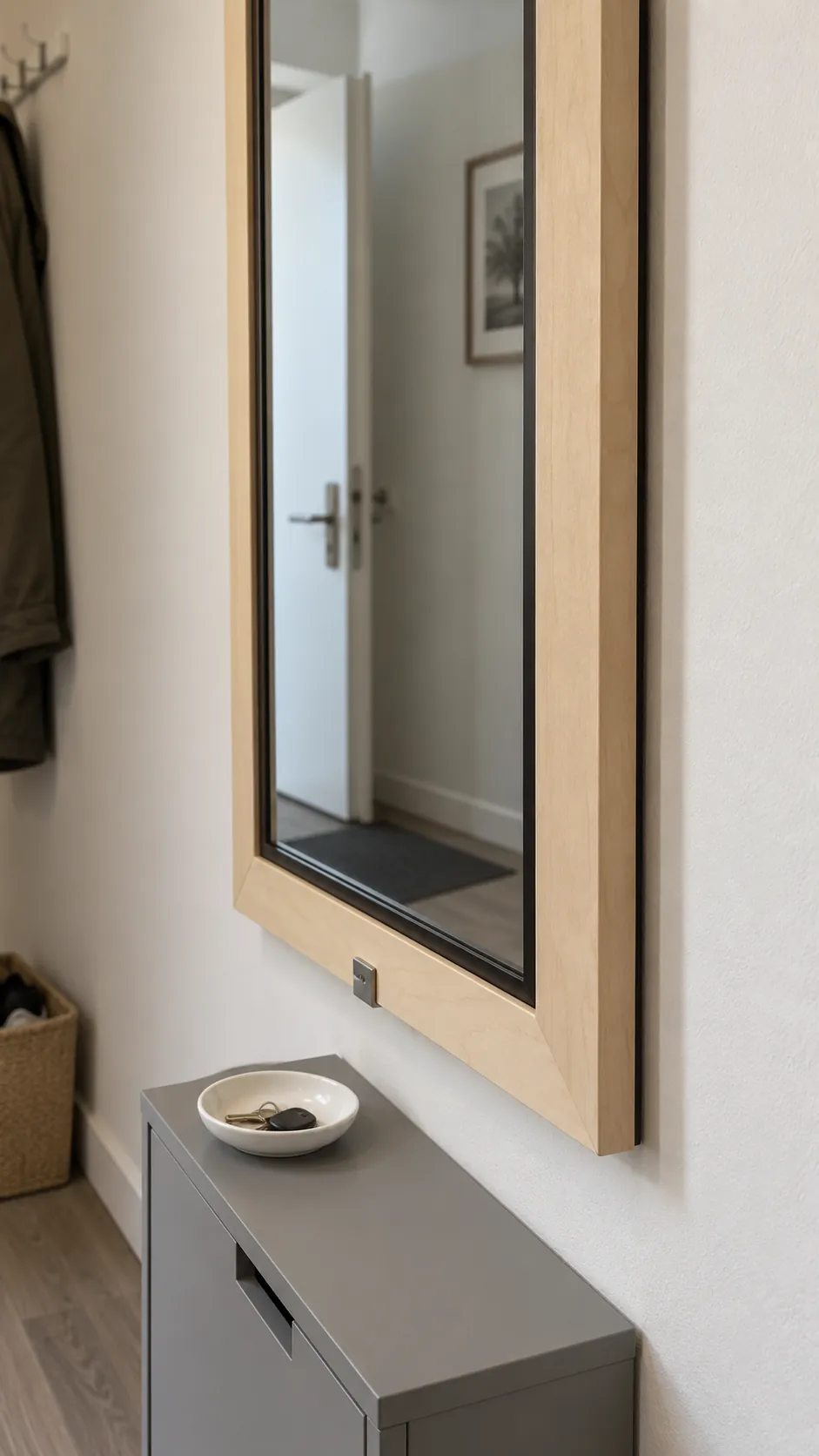
Wrap a small owned frame with cord
Cotton cord can soften a small plain frame and introduce texture beside a smooth console. Work only on a frame that can support the added material, keeping the cord clear of the glass and all mounting points. Secure the ends with a method compatible with the frame and test the result before hanging. This treatment is permanent when adhesive is involved, so reserve it for your own modest piece rather than an heirloom or rental fixture.
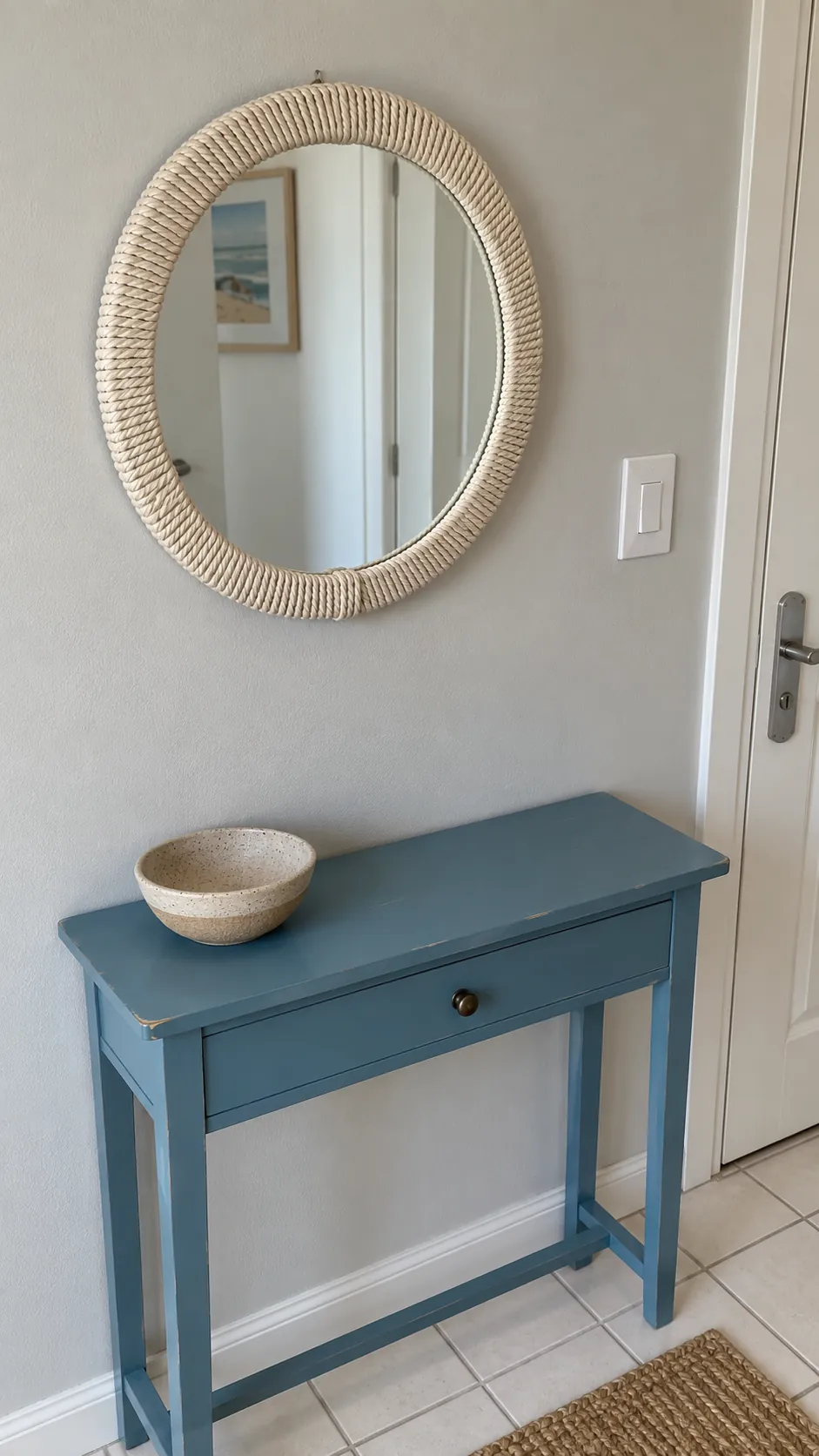
Add wood trim around a frameless mirror
A frameless mirror can look more finished with a separately supported wooden surround. Measure the glass, clips, and clearances so the trim does not cover fixings or press on the edges. Choose a mounting method designed for your wall and assembly, and get help if the mirror is large or heavy. The trim is decorative; it must not replace the hardware that safely holds the glass.
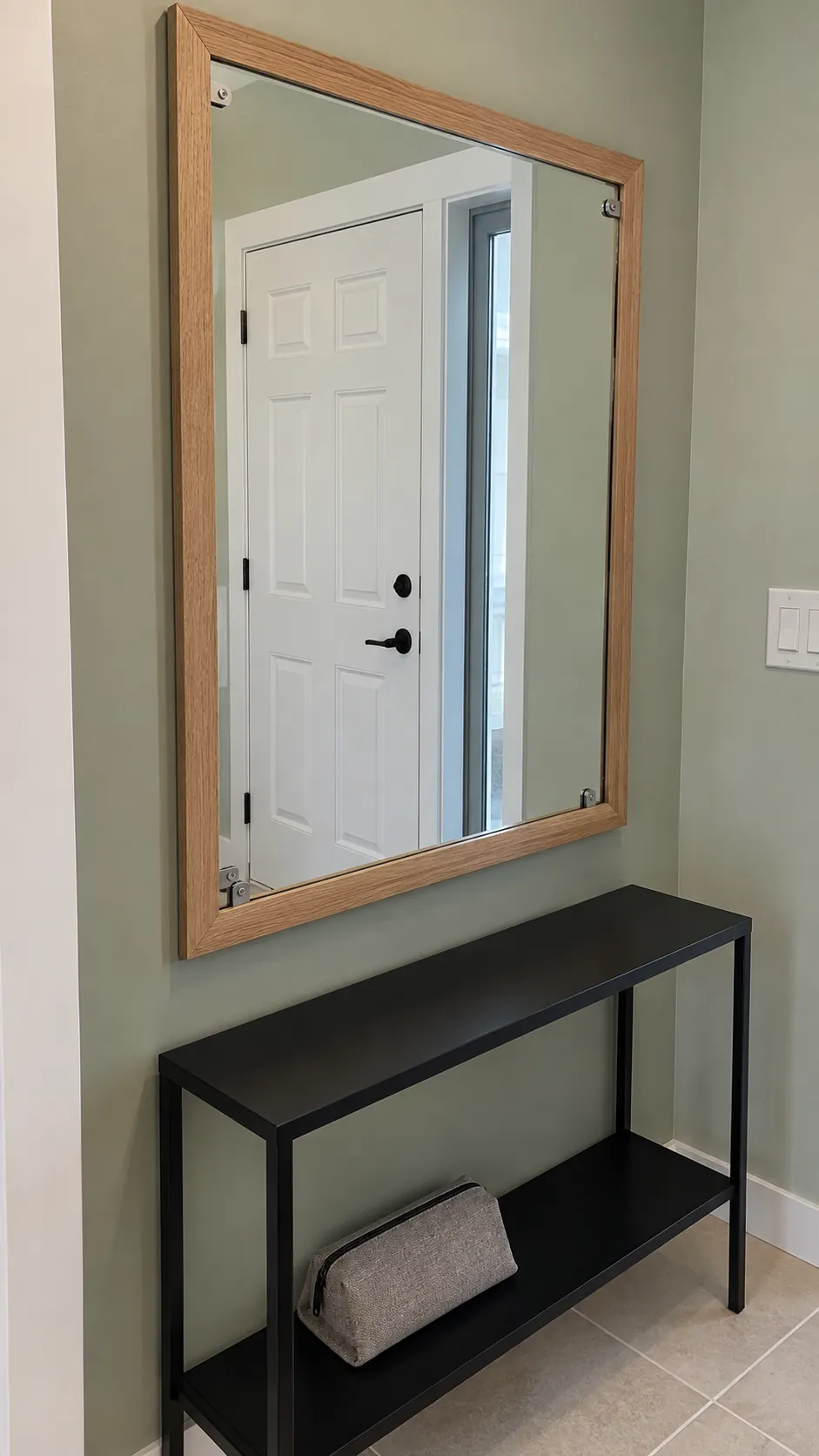
Give a rectangular frame neat corner accents
Small corner details can update a straight frame without changing its full profile. Use light decorative pieces sized to the existing border and check that their attachment will not split or damage it. Repeat the same treatment at each chosen corner so the result reads as a deliberate detail. Leave safety hardware accessible, and avoid this alteration when the frame has an original finish you want to preserve.
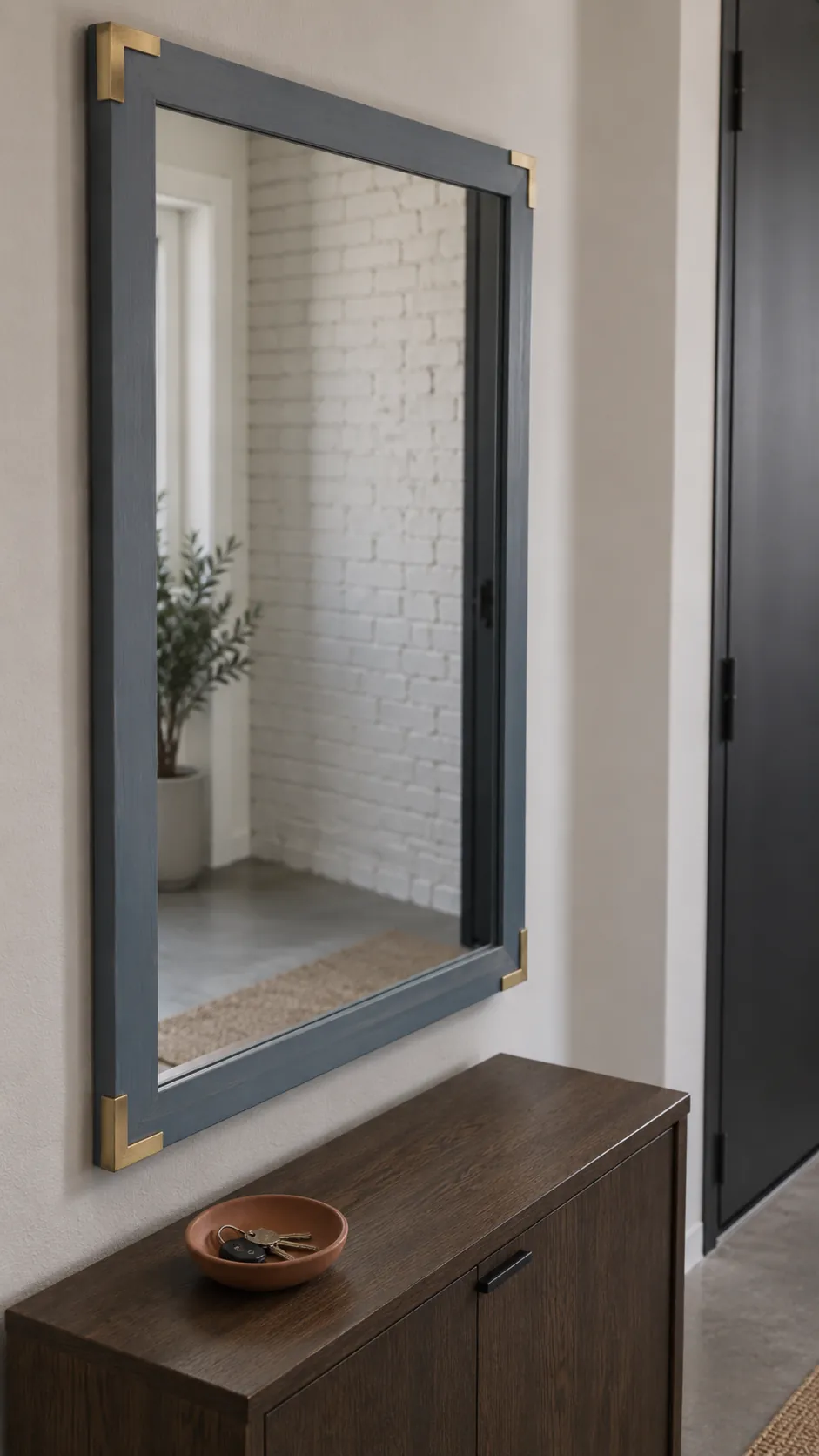
Change the wall color behind the mirror
Sometimes the frame works well and the wall makes it look flat. A deeper wall color can bring out a pale or silver border, while a lighter background can quiet a dark surround. Test a generous color sample beside the mirror before committing, and check the reflection as well as the wall itself. This is a useful mirror decor update when you own the wall or have permission to paint it.
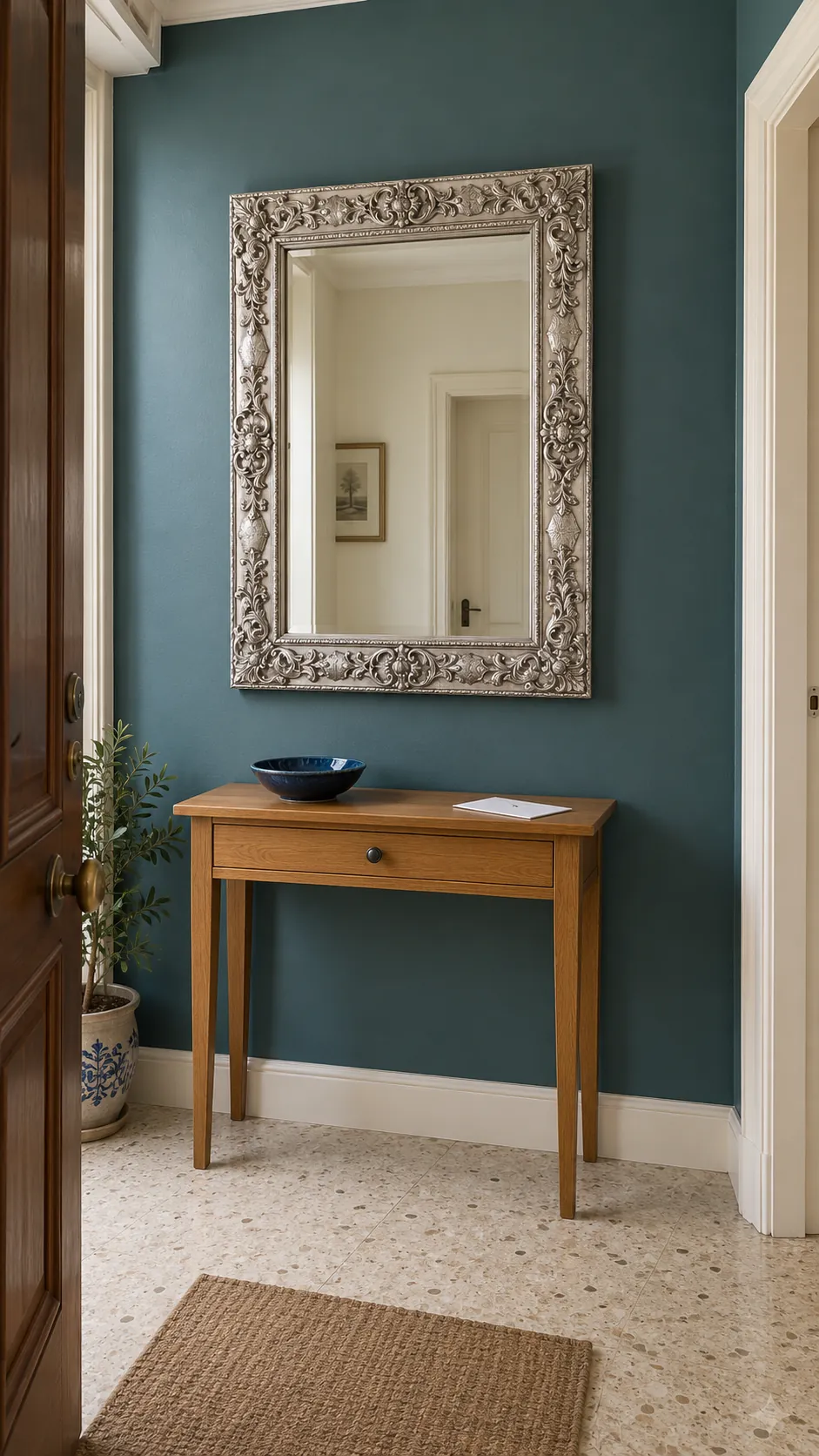
Center the console arrangement under the glass
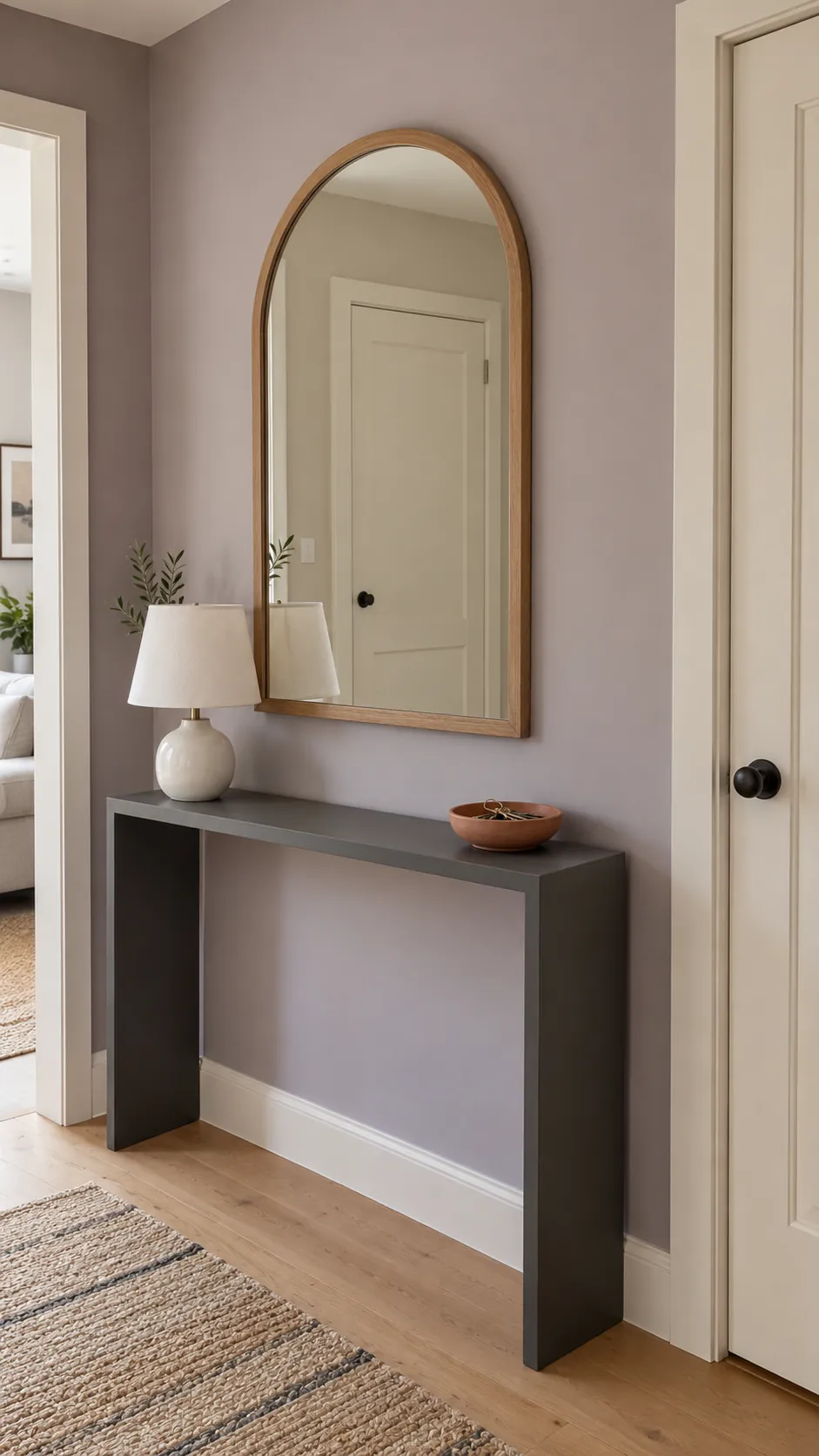
The mirror can feel misplaced when every accessory below it leans to one side. Keep the mirror where it is and adjust the console arrangement so its visual center relates to the glass. A lamp on one side can be balanced by a lower group on the other without making both sides identical. Console mirror coordination often improves with fewer objects, especially when a busy reflection is already part of the view.
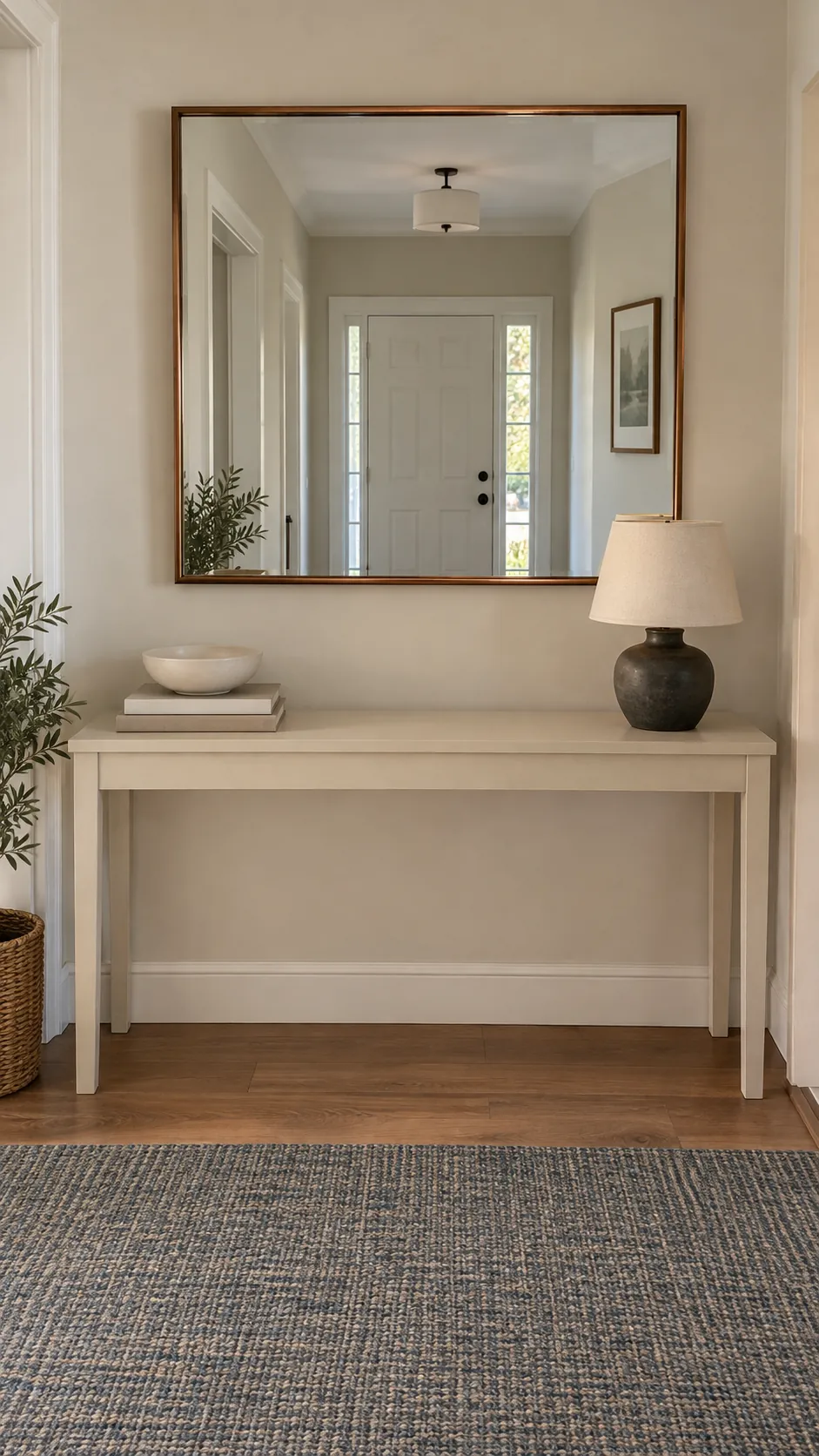
Lower the visual clutter in its reflection
A mirror reflects a second part of the room, so the view opposite it matters as much as the frame. Look from the doorway to see whether coats, packaging, or an overcrowded shelf fill the glass. Move those items into suitable storage and keep one calm feature in the reflected view when possible. You have updated the mirror’s appearance without attaching anything to it or changing its position.
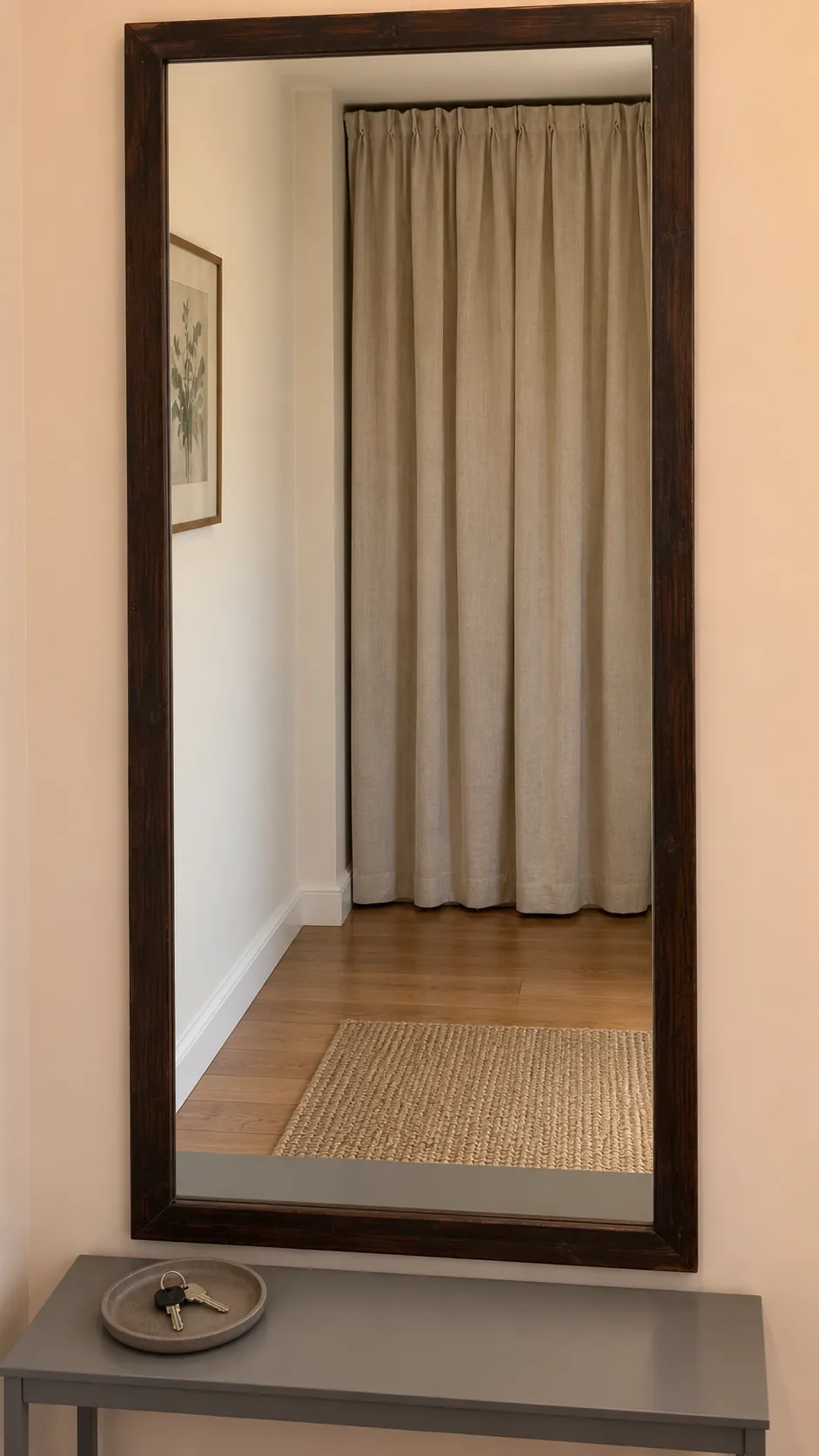
Bring a lamp beside the mirror
A table lamp can make an existing mirror feel warmer during the evening. Use a stable lamp on a console that can support it, leaving its shade clear of passing shoulders and the door swing. Check the reflected bulb from the entrance and choose a shade that softens direct glare. Route the cable behind the furniture with suitable clips and keep the plug accessible rather than hiding the lead under a rug.
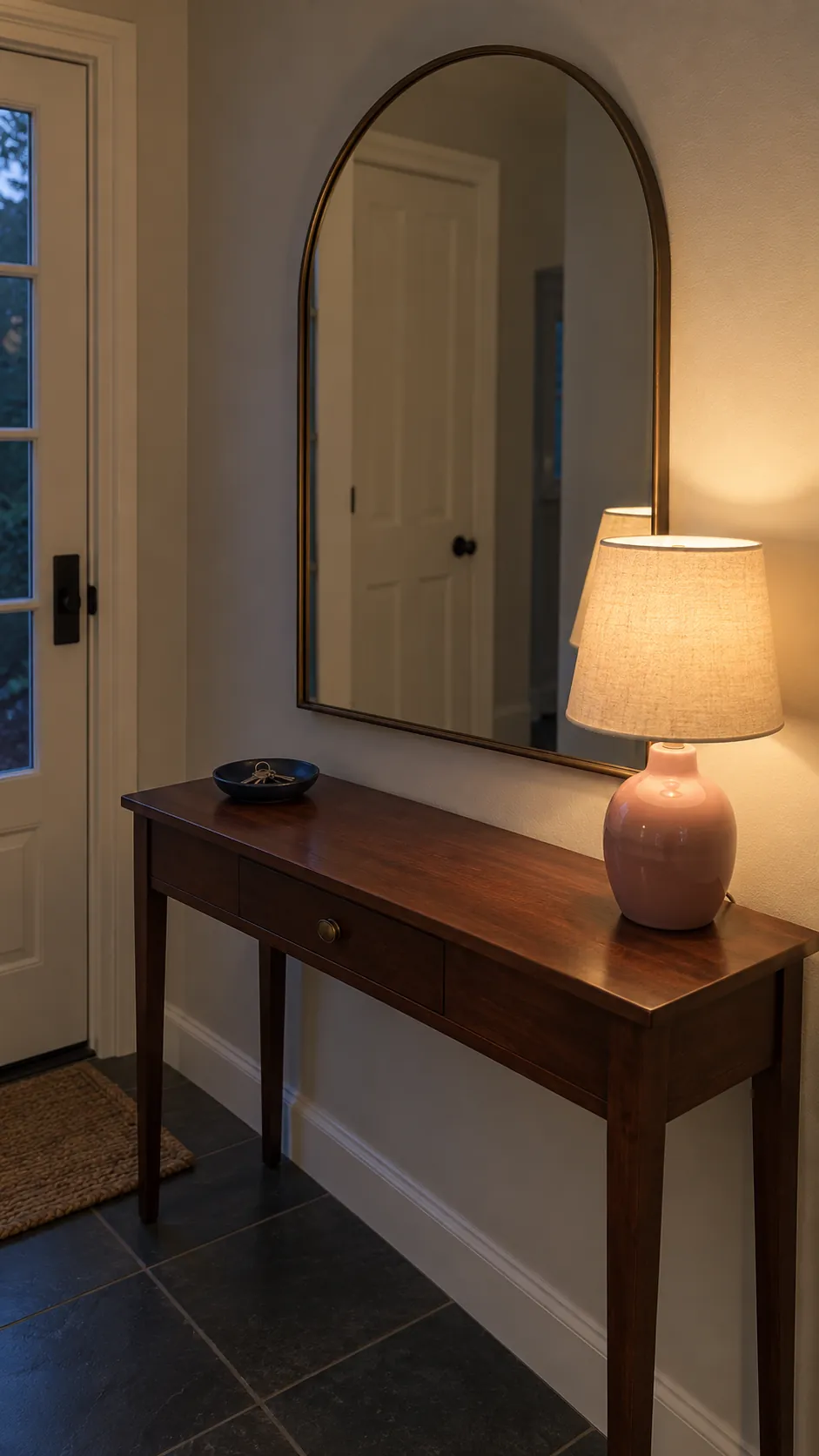
Place a plant beside the frame
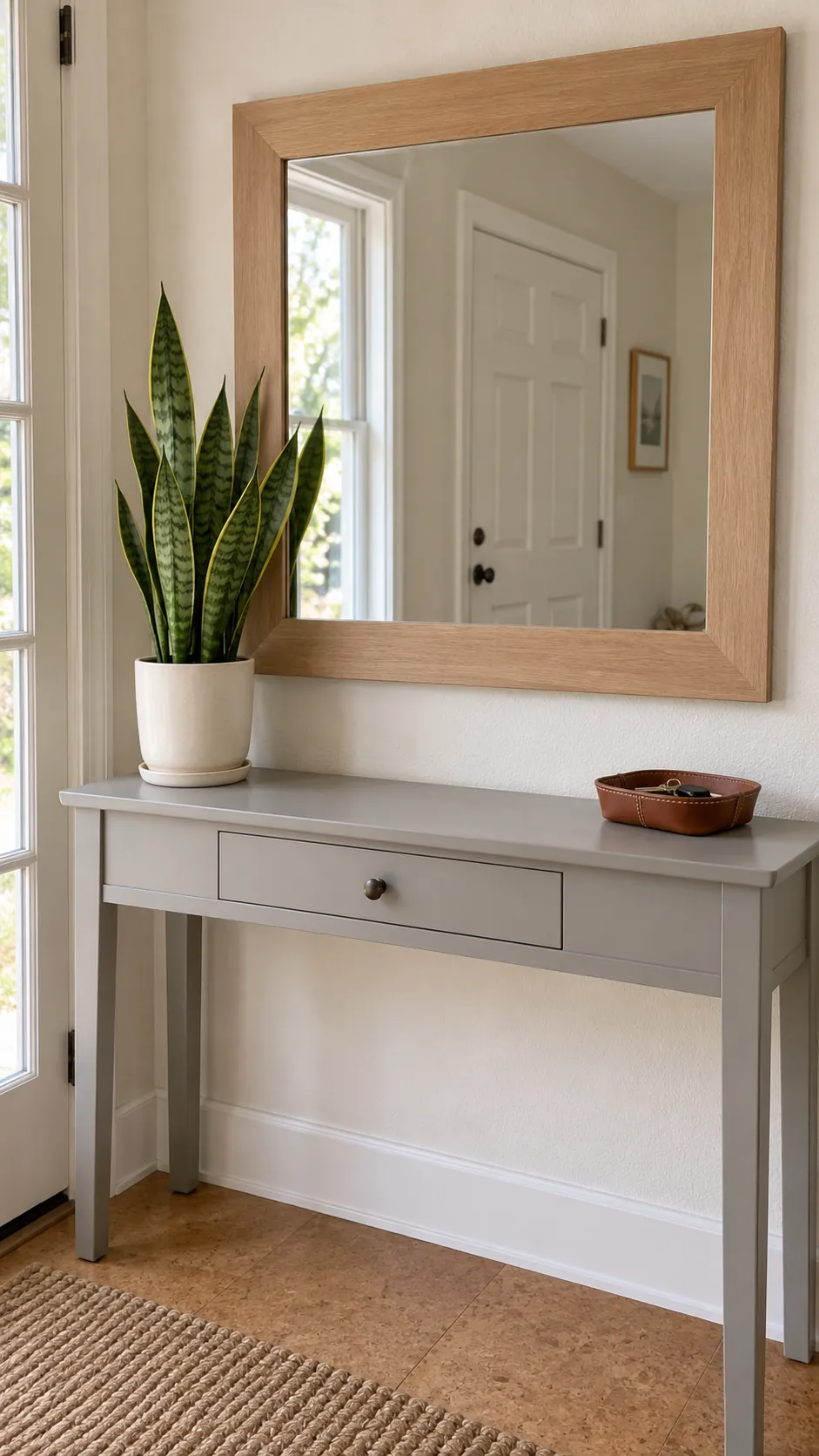
A plant introduces a softer outline beside a rigid mirror border. Choose a position with light suitable for the plant, and keep leaves from covering the useful part of the reflection. Protect the console from water with an appropriate saucer or lined outer pot. A modest plant that fits the space is better than a tall specimen that blocks the route or presses against the glass.
Add a seasonal accent beside the mirror
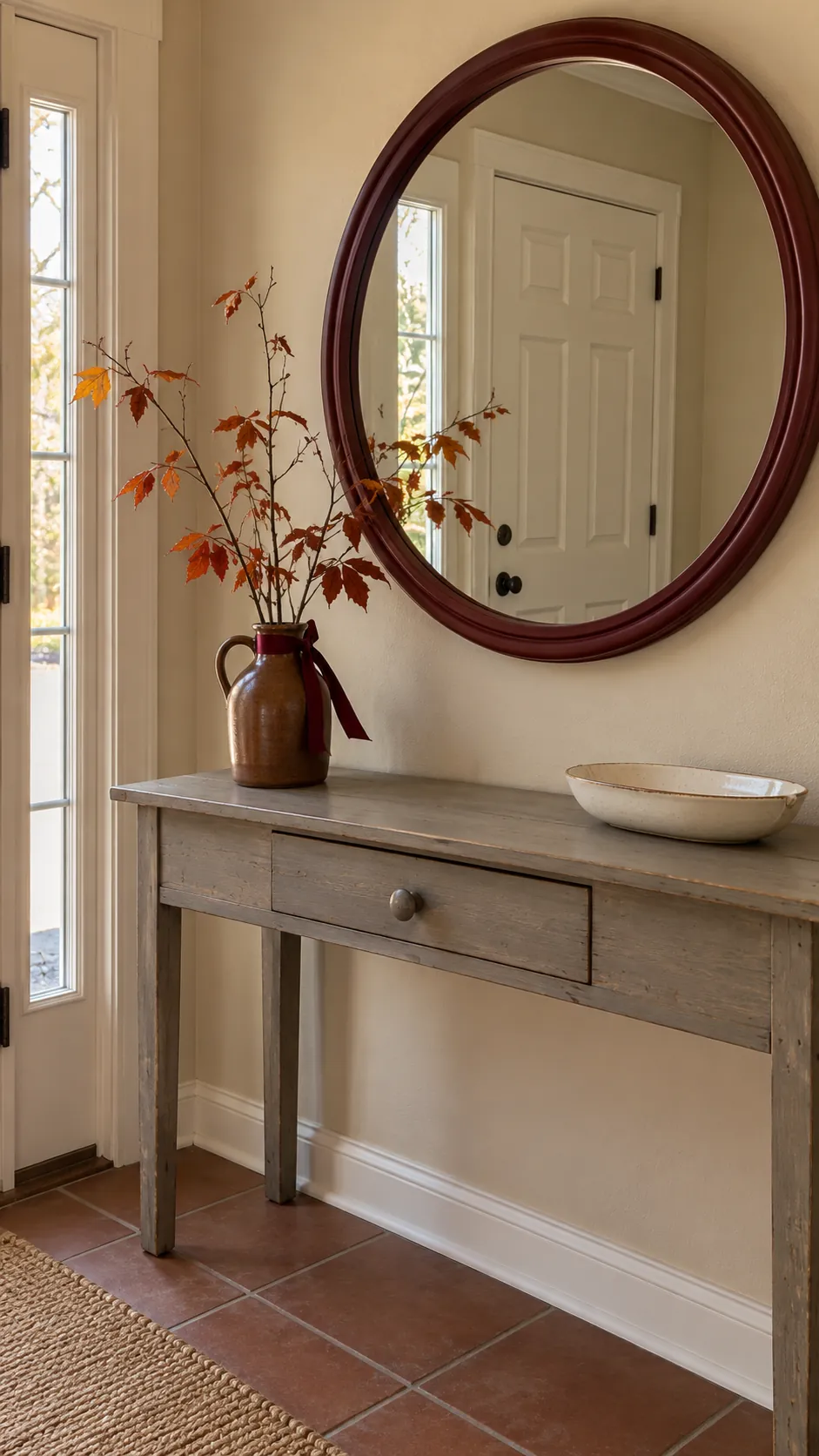
A small seasonal arrangement can change the entryway focal point while leaving the mirror untouched. Put a restrained cluster of branches, ribbon, or flowers in a stable vessel beside the frame rather than fastening heavy decor to the glass. Keep the material away from bulbs, heat sources, and the door path. Remove the arrangement when it starts to feel crowded, since the mirror still needs to work for a quick check before you leave.
Repeat the frame finish in one useful accessory
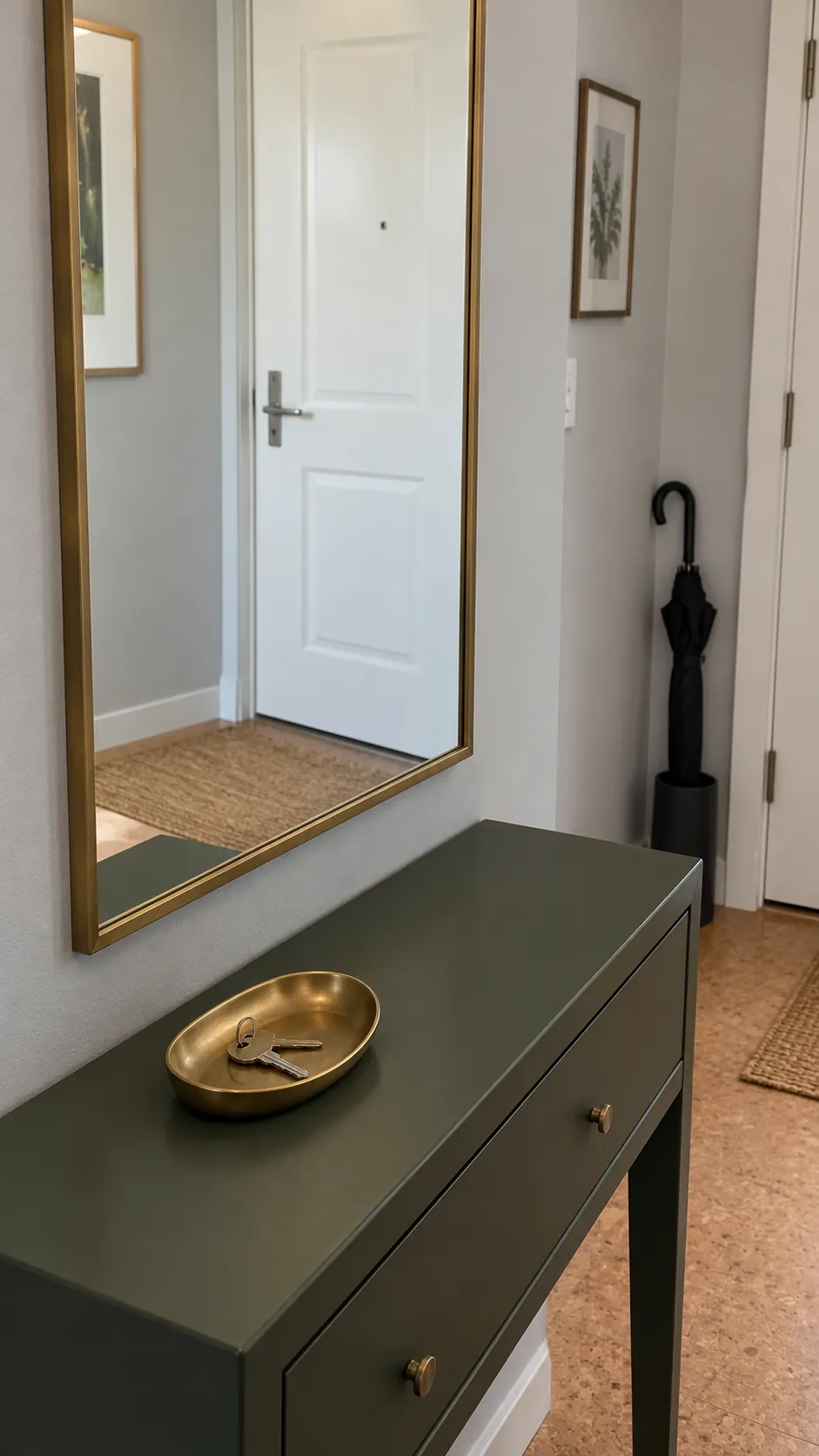
A mirror can seem disconnected when its finish appears nowhere else in the entryway. Echo that finish in one useful piece, such as a brass key dish beside a brass frame or a black tray beneath a black border. The shapes can differ; a small shared finish is enough to make the pairing feel considered. Keep the remaining accessories simple and choose the one you will actually use every day.