
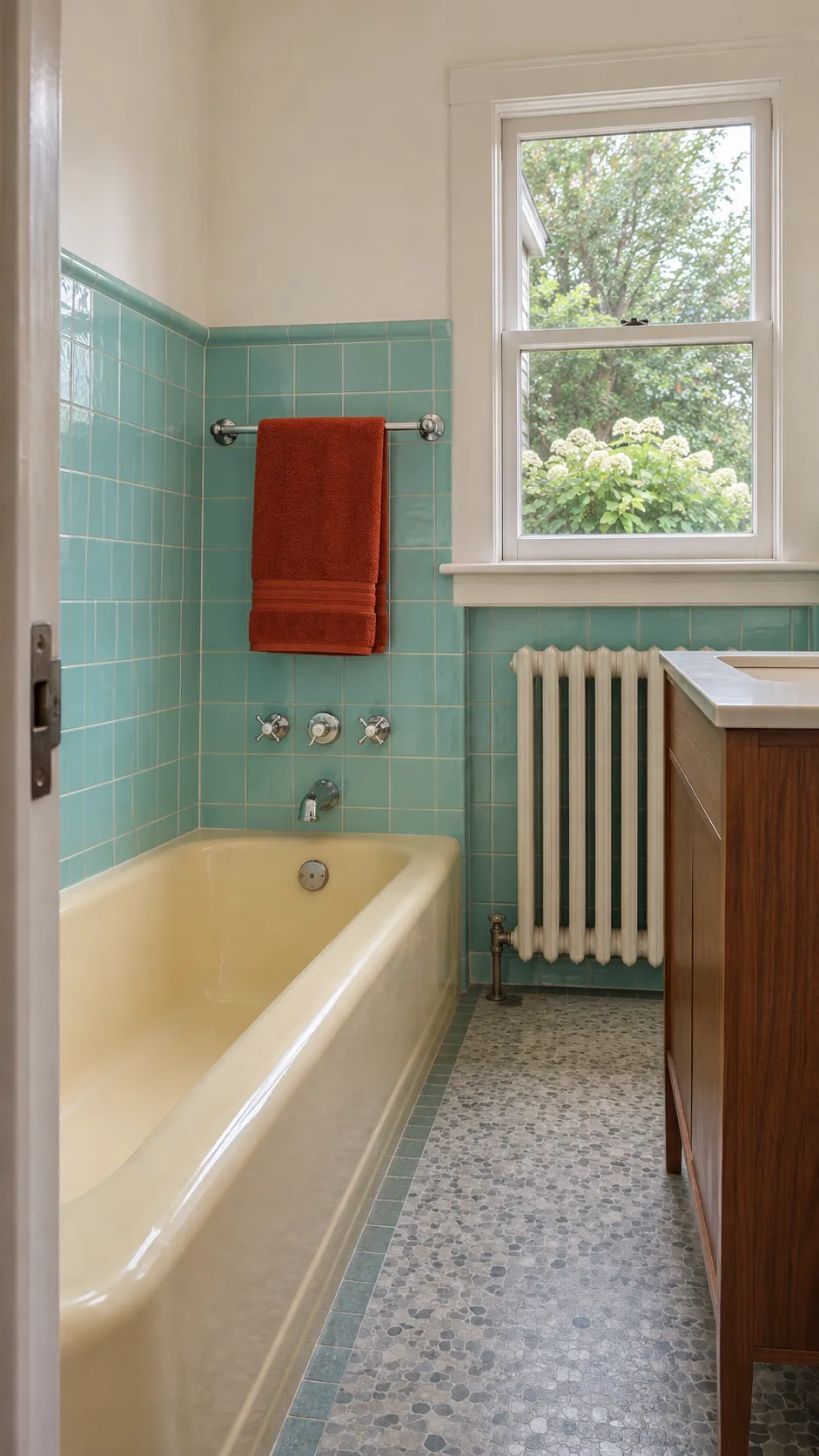
If you like your old tile but struggle to choose anything that goes with it, start with the surface that would be hardest to replace. The color of a porcelain tub or a strip of original trim often gives you enough to pick the next finish. You can try several of these pairings with a towel, a paint sample, or a shower curtain before spending money on tile.
Set Off Jade Tile With Cream Walls
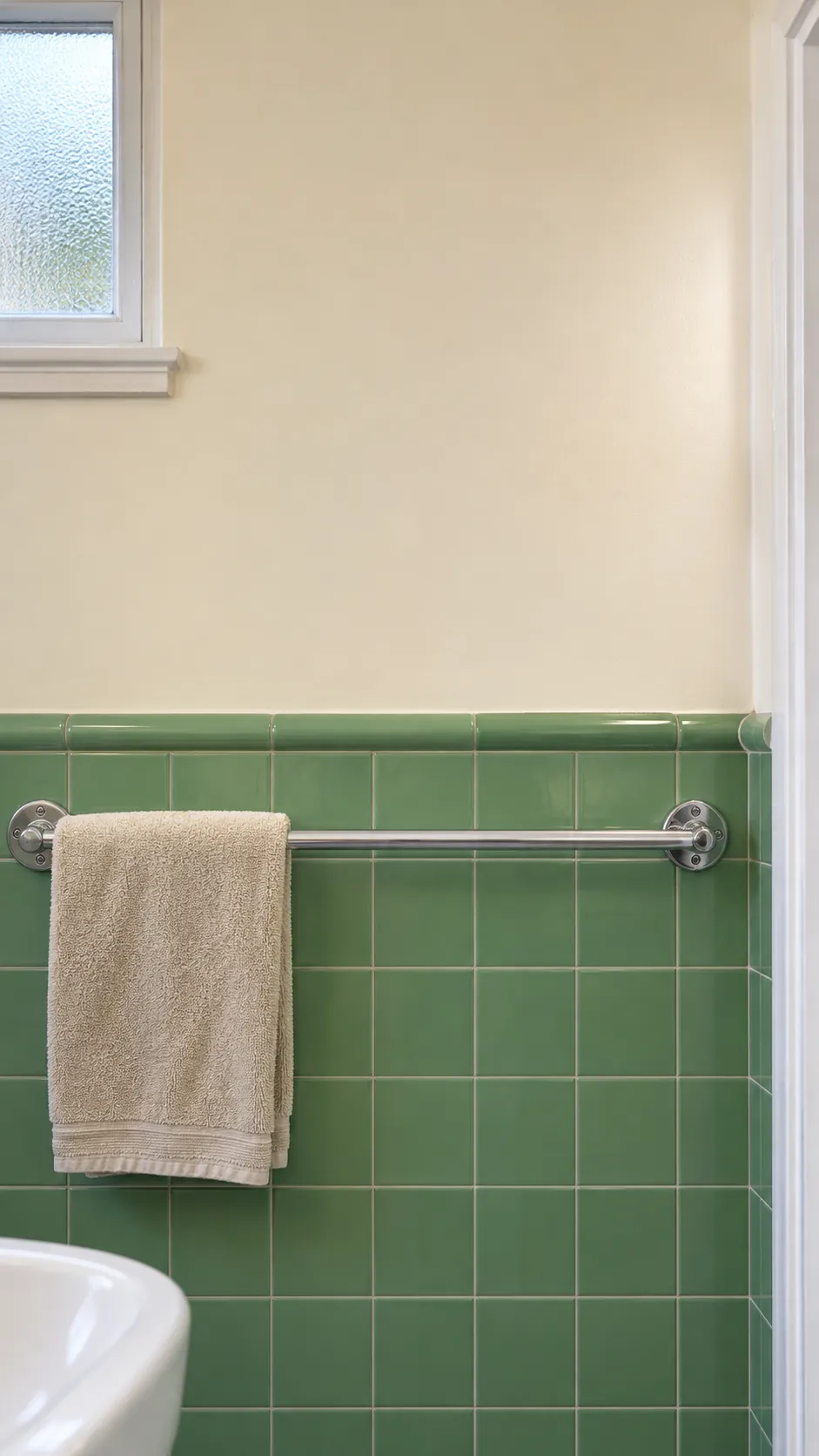
A jade green half wall can carry the color of the whole room. Bring warm white and cream paint samples home and prop them right above the tile, then check them again under the vanity light after dark. A pale bone shade often sits comfortably with aged grout, while a bright blue white can make the grout look dingy. A plain chrome towel bar keeps the line across the room easy to see.
Give Sky Blue Tile a Black and White Floor
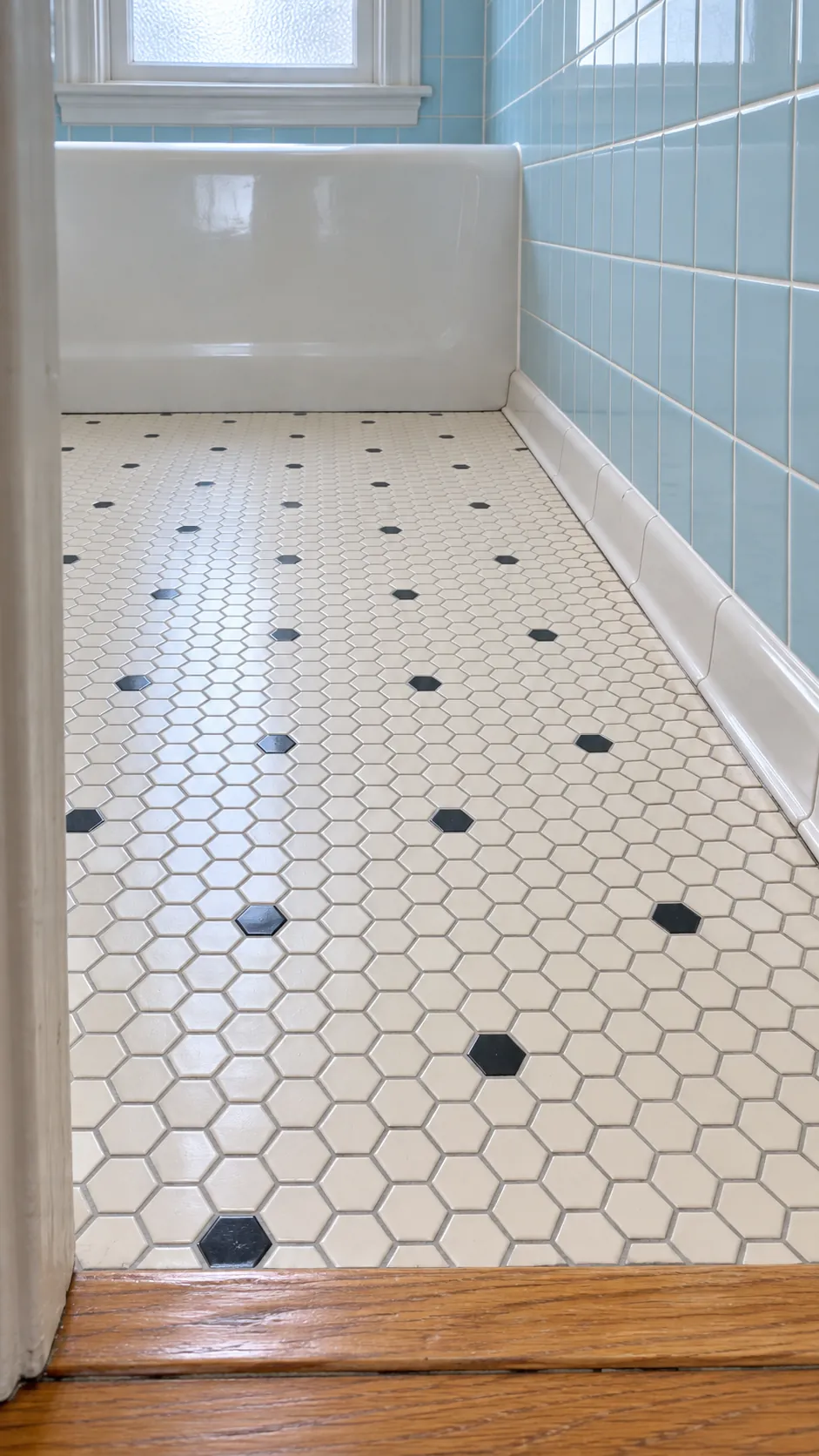
A small black and white hex mosaic gives pale blue bathroom tile something crisp to play against. Limit black to scattered tiles if the bathroom has a narrow footprint, where a heavy border can break up the walking area. When the old floor is sound, try a sample of the pattern beside the tub before deciding whether replacing it would change the room enough to justify the work.
Check the larger features from the hall, where the floor and wall first come into view together. A small black detail in the towel hardware or cabinet can tie in the dots without making the room darker. If you need to keep the existing floor, that single hardware change can still sharpen the blue.
Put Lilac Next to a Butter Yellow Tub
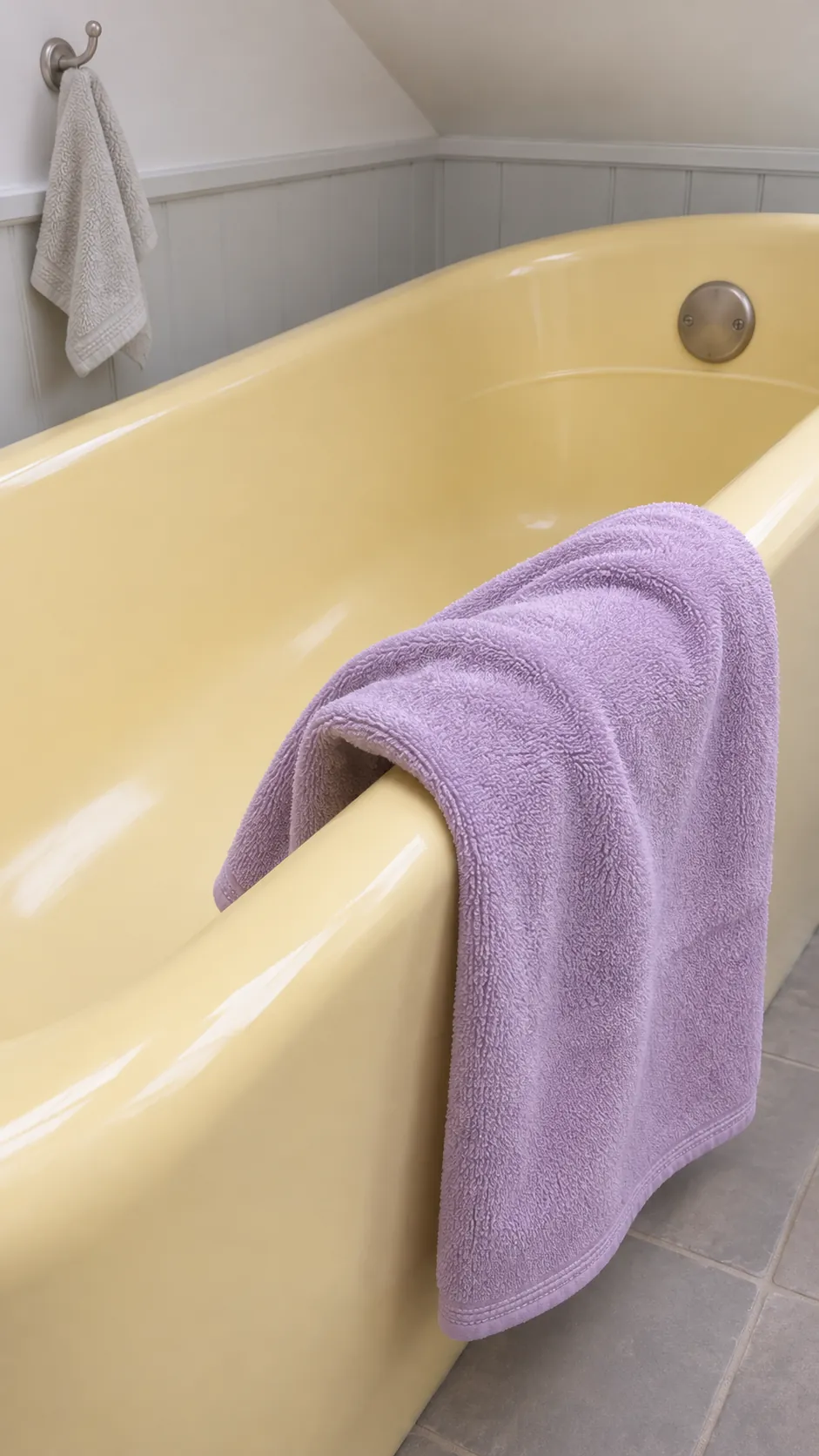
A muted lilac towel can soften the strong warmth of a butter yellow tub without adding another permanent finish. Look for a slightly dusty purple at the store, then hold it against the porcelain to see whether the contrast feels too sharp. Keep larger textiles like the bath mat quiet so the two colors stay easy to see from the doorway. This is a simple pairing to change if it wears out its welcome.
Bring Forest Green to a Salmon Pink Bath
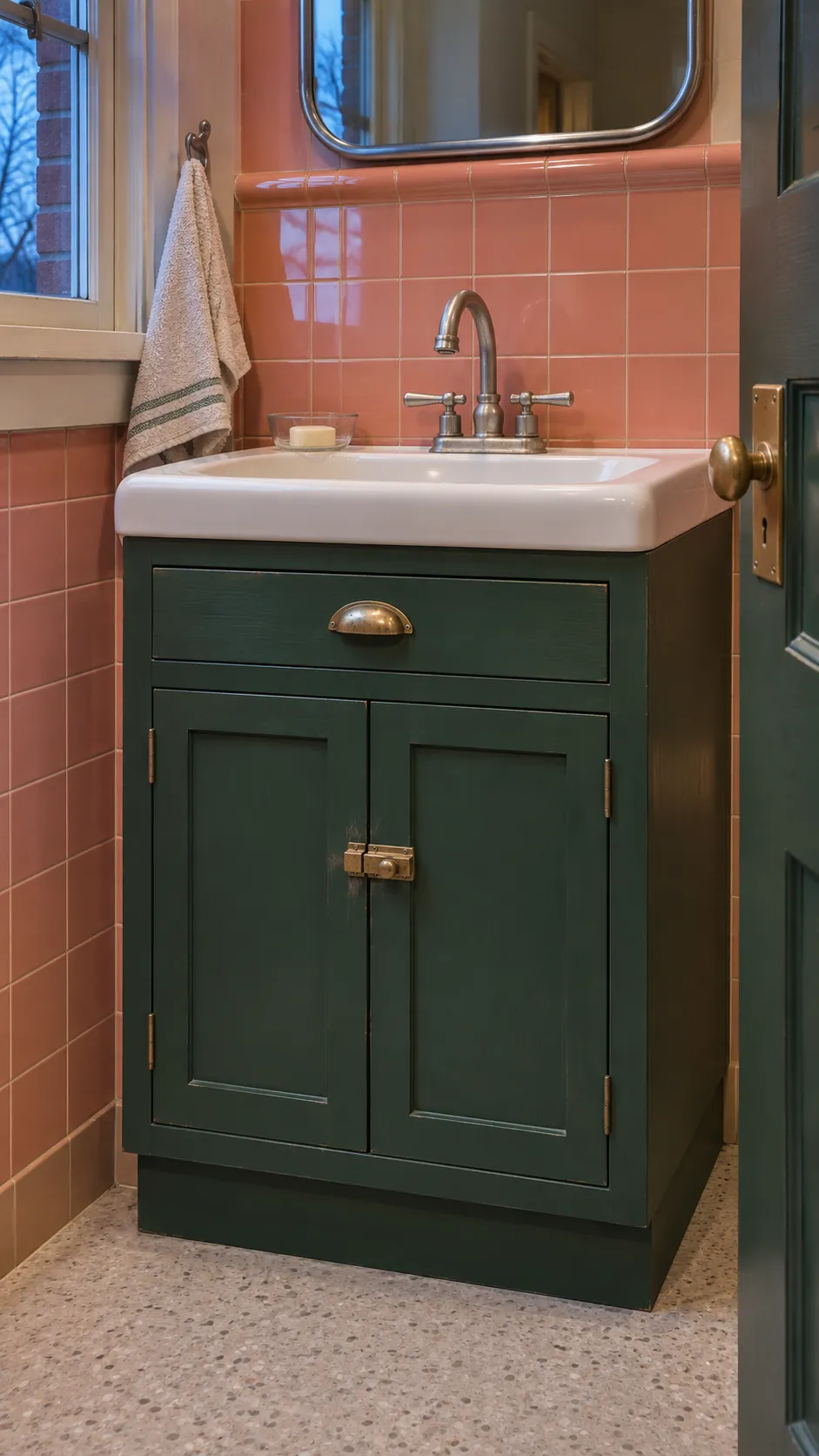
A dark green vanity gives salmon tile a sober counterweight, especially when the room has a pale floor. Paint a removable sample board the size of a cabinet door so you can judge how much light the green absorbs at knee height. If the cabinet sits close to the tub, choose a finish intended for painted cabinetry and follow its cure time before using the room normally.
Bridge Two Existing Colors With a Striped Curtain
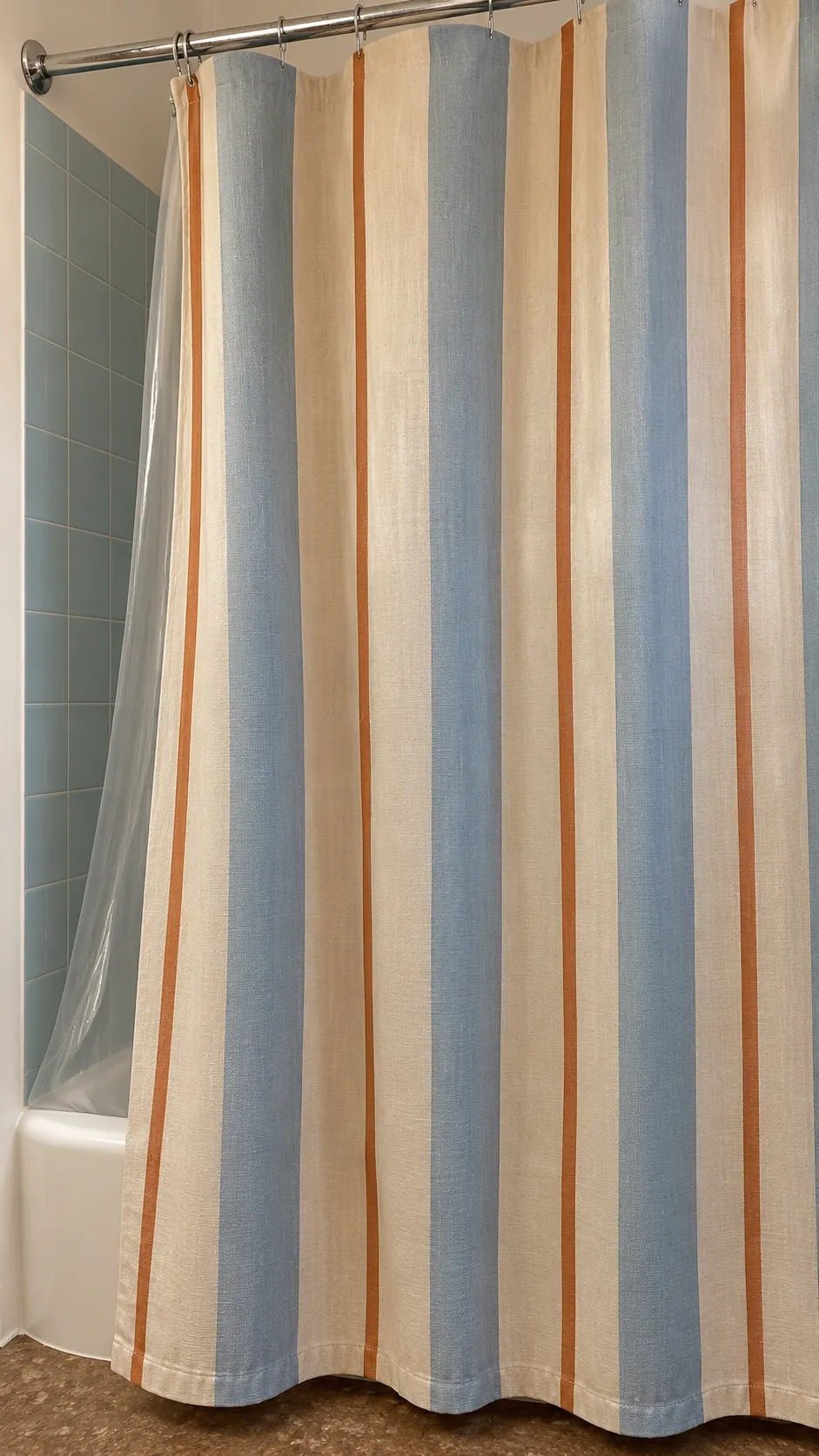
With powder blue tile and a warm brown floor, a striped shower curtain can make the two surfaces feel related. Look for one stripe that picks up the blue and another that comes close to the warmer tone. Hang the curtain so it clears the floor and use a separate liner that falls inside the tub. Set the old curtain aside if your rental came furnished.
Echo Apricot Tile in the Paint Above It
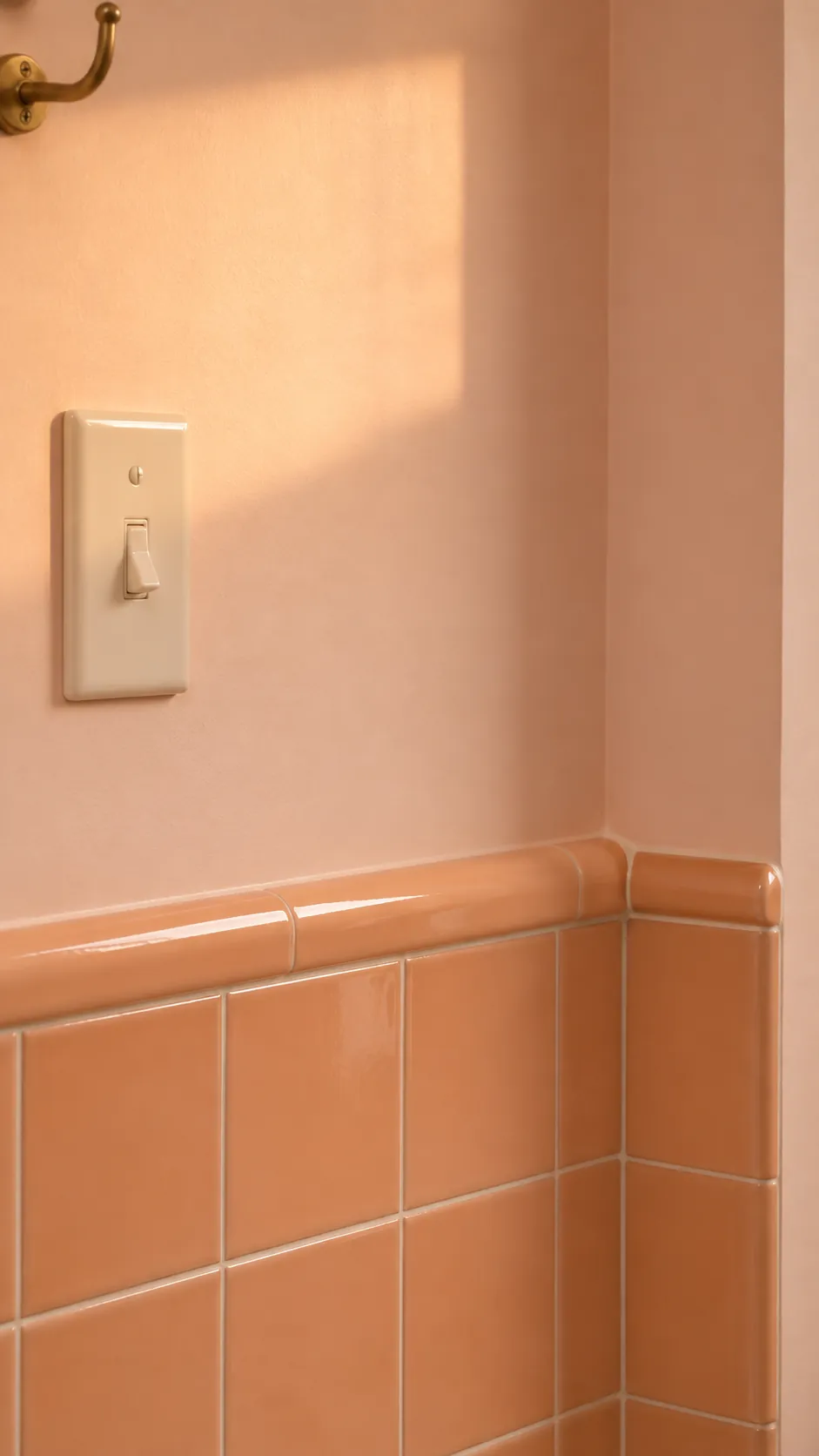
A peach wall can make an apricot tile border feel like part of a single color field. Choose a paint sample with the same family of undertones and a lighter value so the tile cap still reads as a seam. Check the sample where the afternoon light hits and where the door casts a shadow. Use a coating suitable for a humid room and keep the painted area outside direct splash.
Hang a Cherry Red Mirror Over Lavender
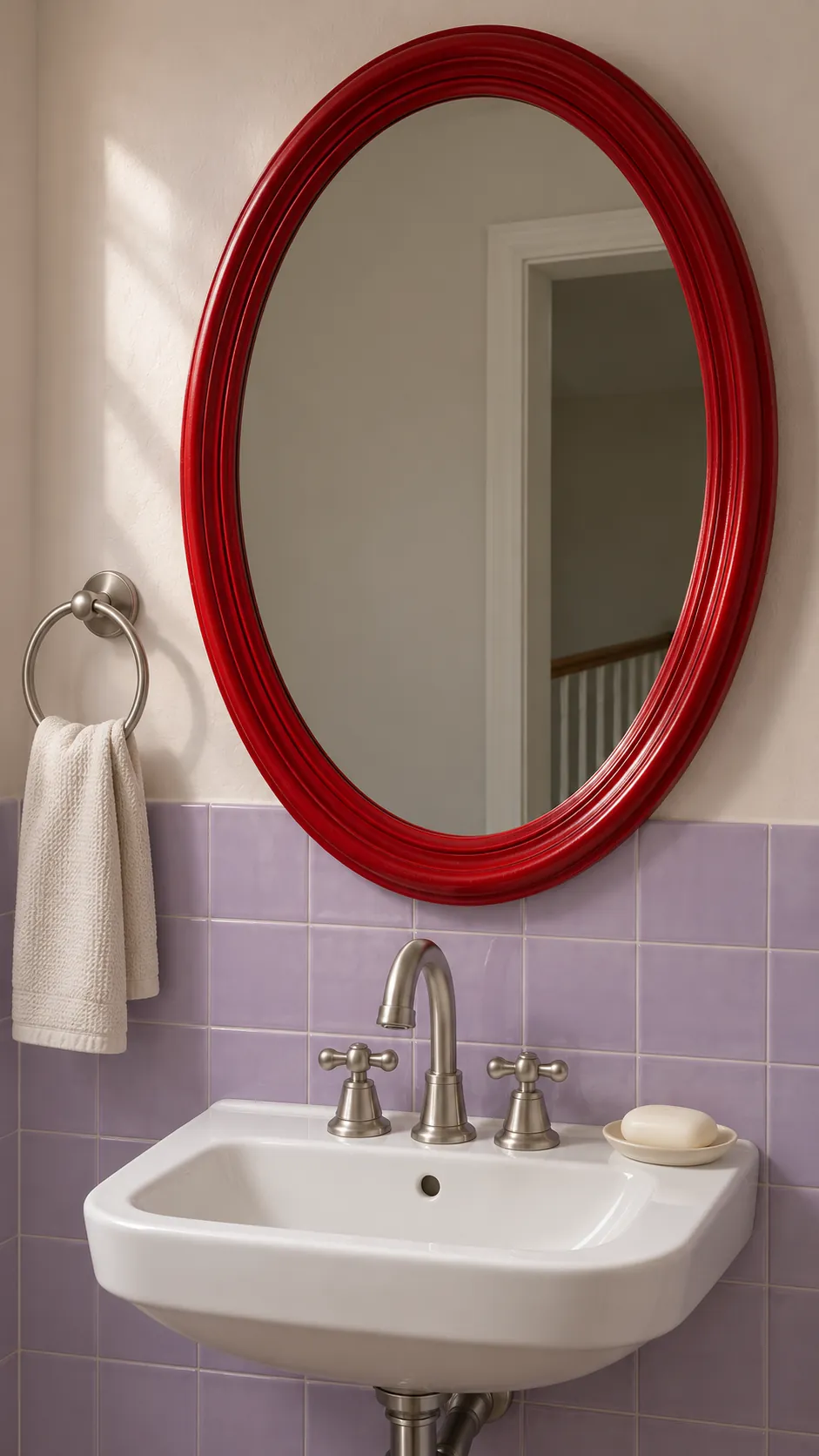
Lavender wall tile has a cool cast that a cherry red mirror frame can perk up in a small dose. Try an outline the size of the mirror in colored paper at eye level before committing to the frame. If the old medicine cabinet is your only storage, put the color on its frame or door surround where the design allows. Check the swing of nearby doors and the clearance under any light before mounting a larger mirror.
Put a Stronger Teal Inside a Shower Niche
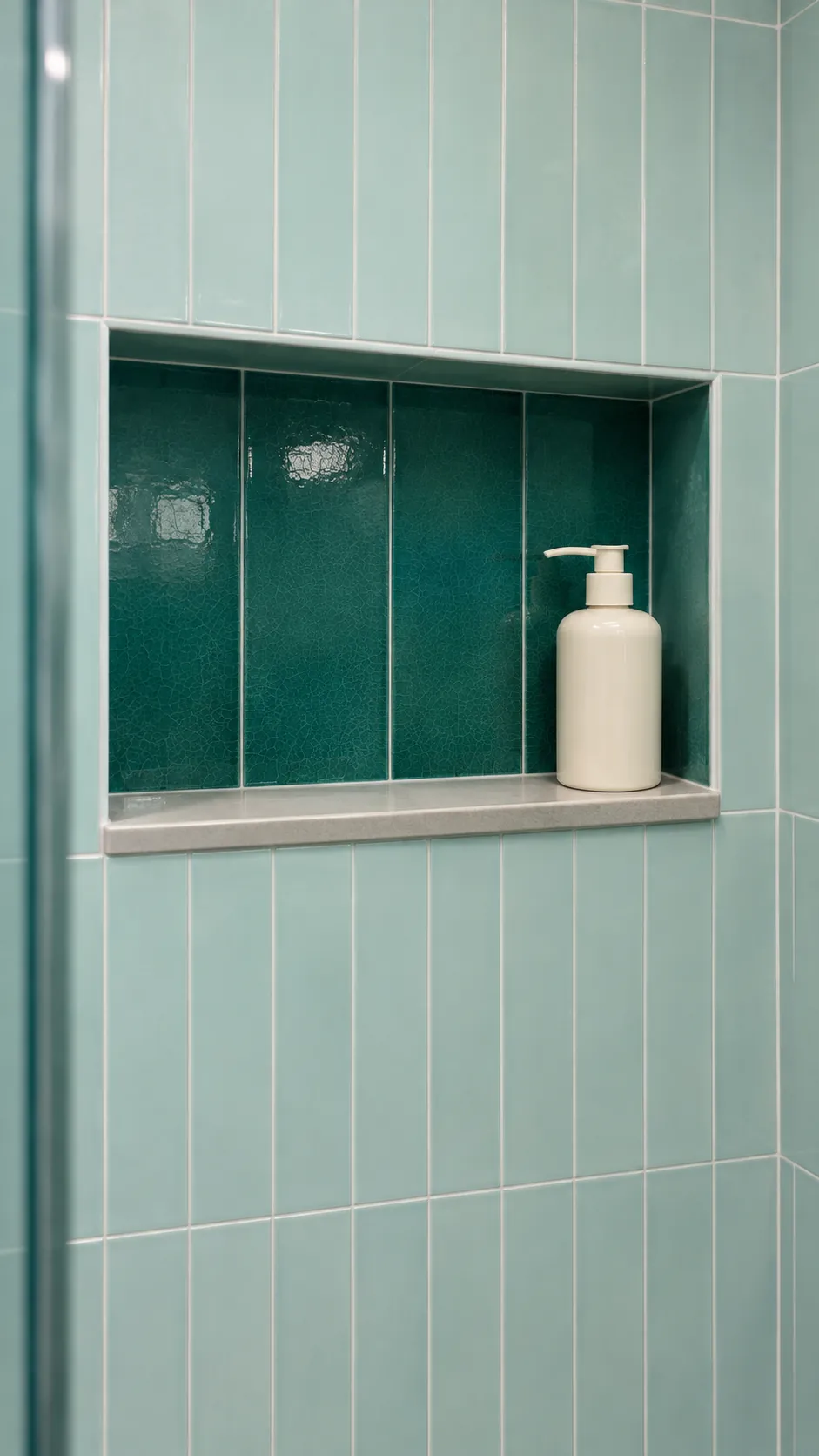
A pocket of deeper teal can give a pale aqua shower a clear focal point. Order the accent and field tiles together so you can check thickness, edge treatments, and how the joints align at the opening. Coordinate the niche with the full shower waterproofing system, including a shelf that drains toward the shower. One bottle is enough to keep the depth of color visible.
Check where the niche falls in the tile layout before cutting into the wall. Moving it by a single course can save a row of awkward slivers. Set a bottle on a sample of the shelf so you know how much useful depth you need.
Use Oxblood as a Narrow Tile Border
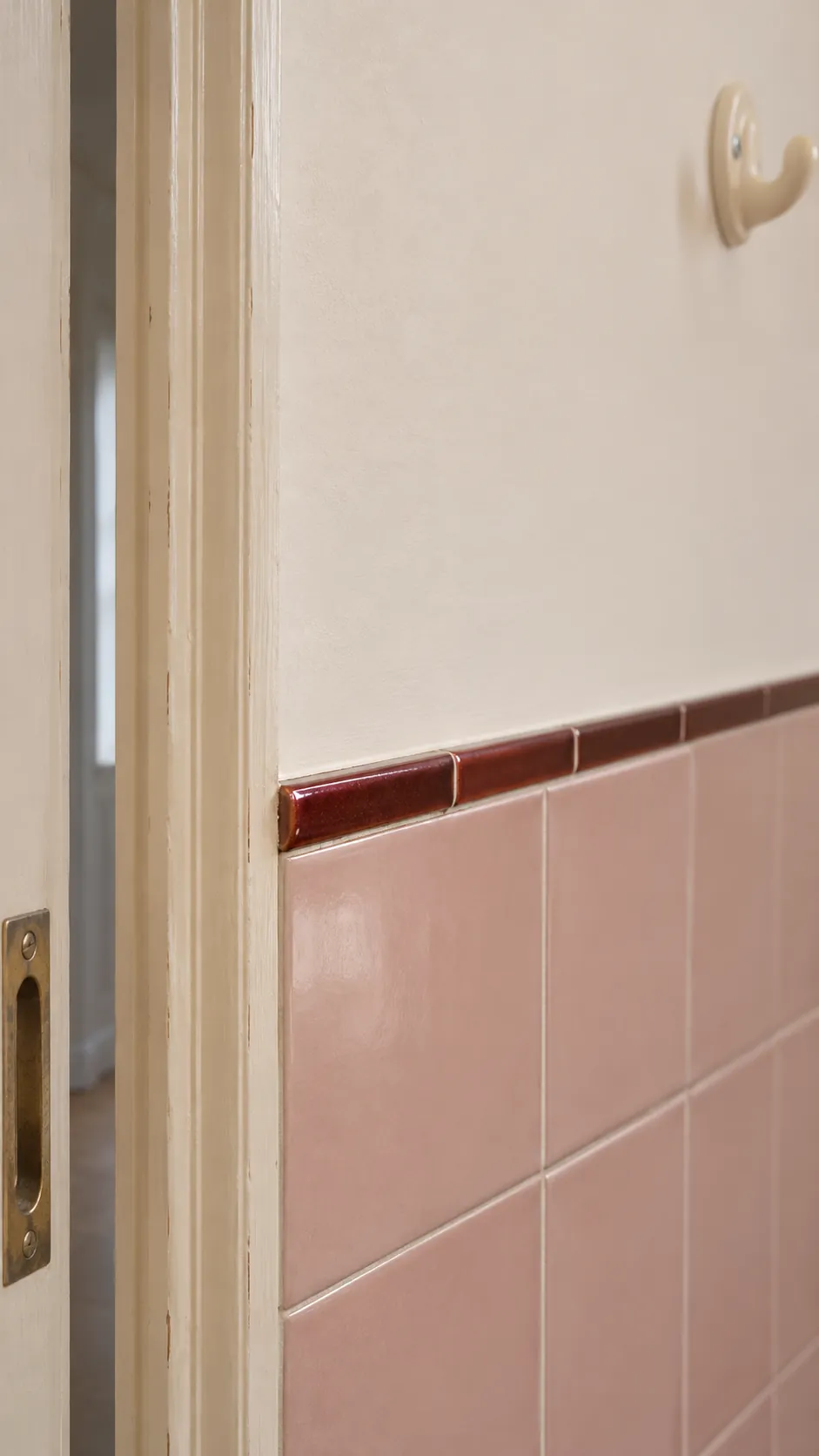
A single band of oxblood tile lets pale rose fill the room without leaving the top of the tilework undefined. Use a full dry layout to decide where the band starts and ends at corners and door trim. A thin line is usually enough in a tight room because you see it on several walls at once. If you are matching an original installation, check the actual thickness of the trim as well as its face size.
Pick Up a Yellow Fixture in the Floor
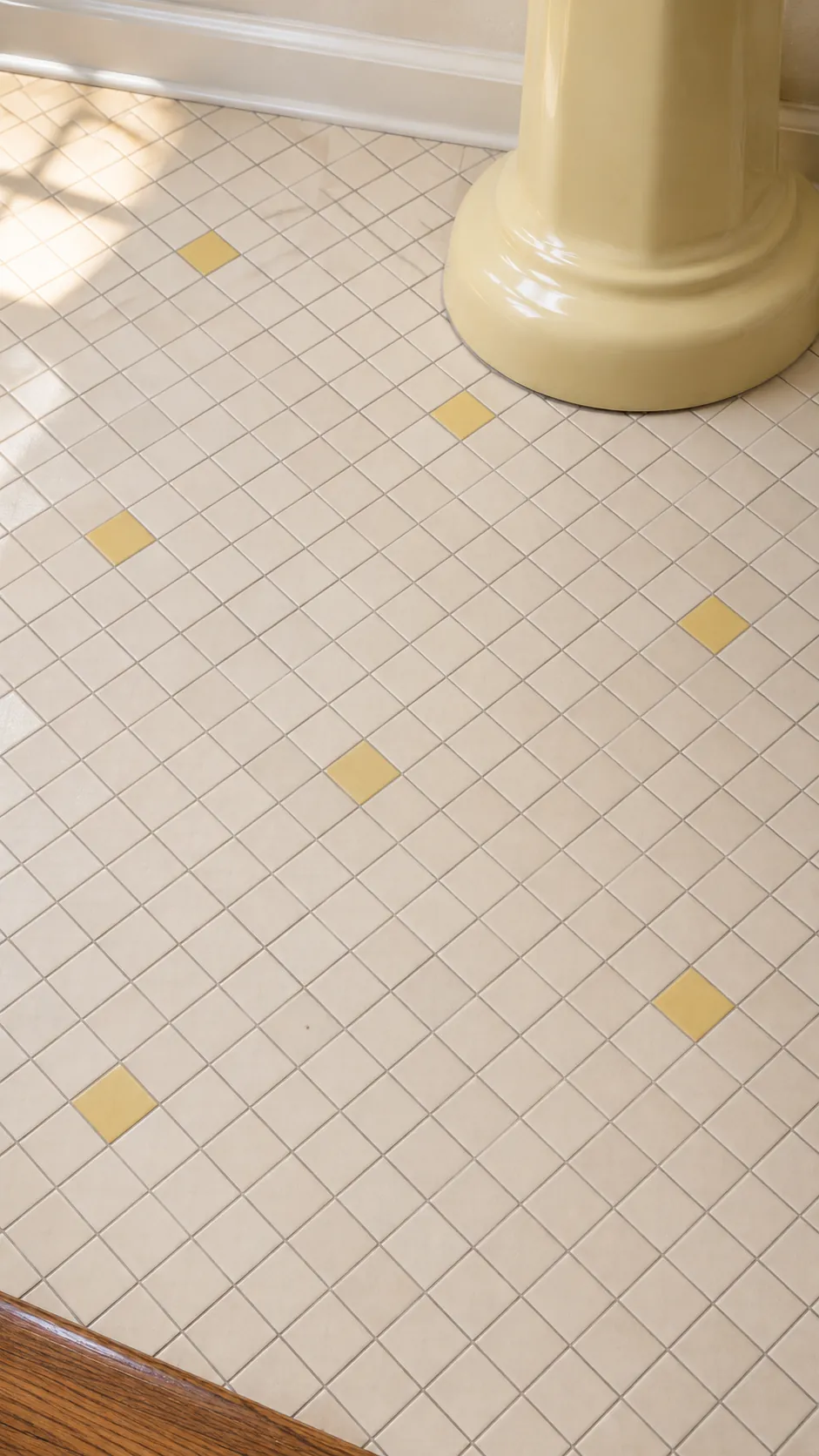
An ivory mosaic with occasional yellow diamonds ties a butter yellow sink back to the floor. Keep the dots far enough apart that you can still see the ivory field between them. Check the floor rating and look at a sample at standing height, because tiny accent tiles read differently once you step back. Save a few spare sheets or pieces in case you ever need a small repair.
Try a Coral Backplate With an Opal Globe
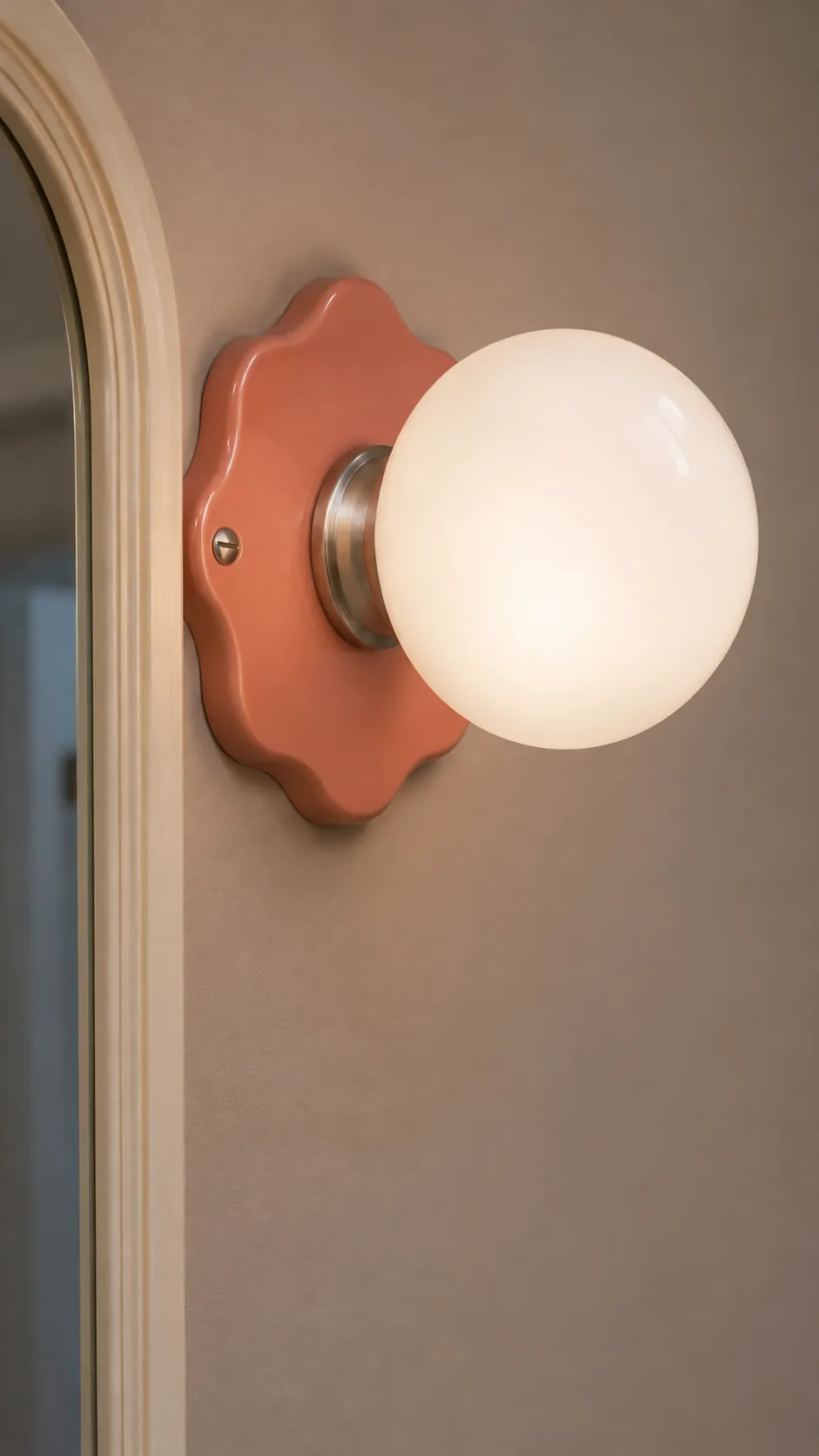
A coral backplate adds color right at the mirror, where a small accent is easy to notice. Frosted glass softens the light from an exposed globe and keeps the bulb itself out of view. Look for a fixture rated for its location, and ask an electrician to check the existing box if you change the fixture. Check a color sample against the tile with the light on as well as off.
Put a Fern Print Above Green Tile
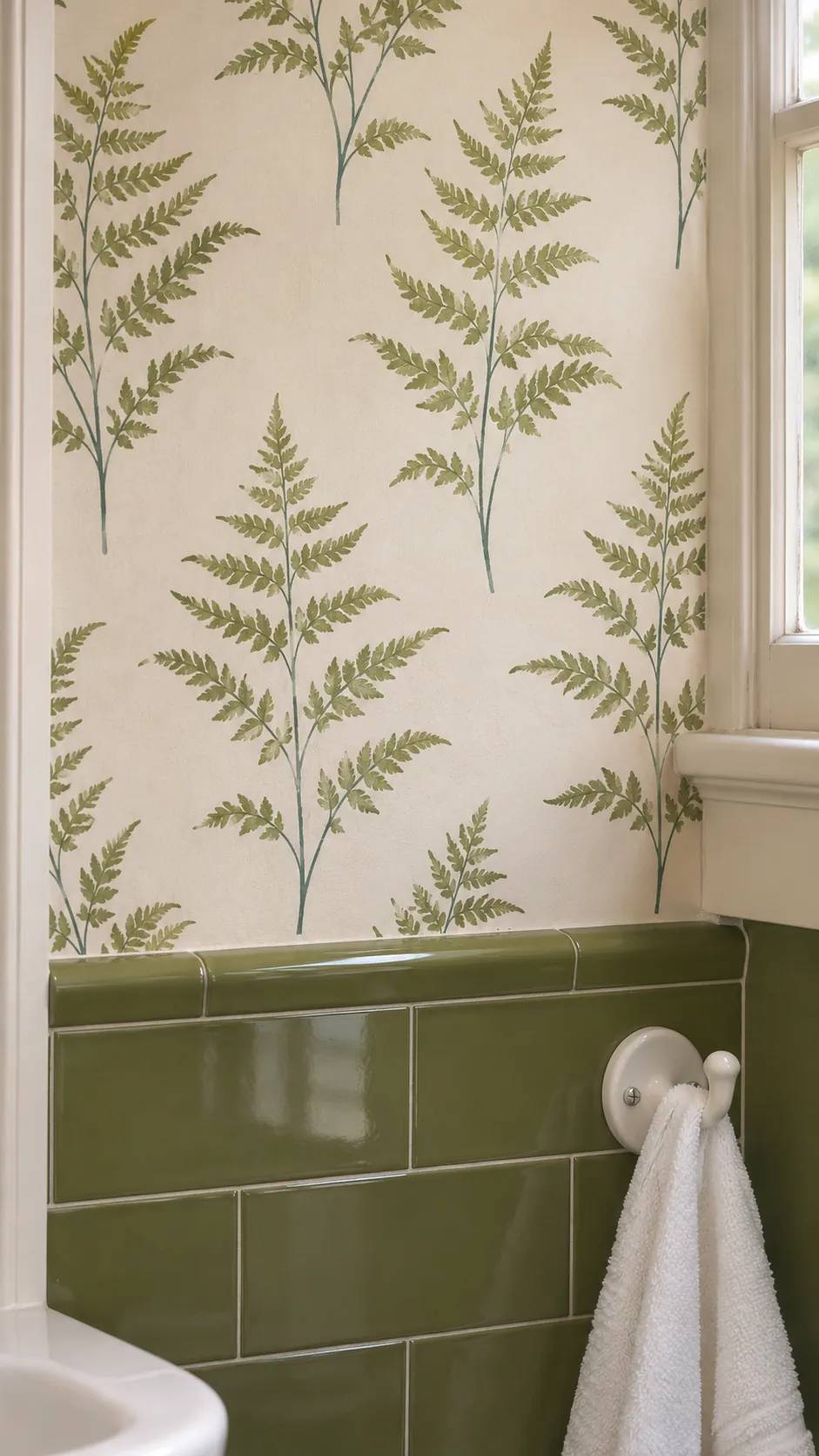
A fern block print lands well above an olive tile wainscot when its leaves pick up the green and its background leaves some breathing room. Tape a full repeat to the wall so you can judge how much pattern fits between the tile cap and the ceiling. Choose a product suitable for the room conditions and keep it away from direct spray. A tiny, poorly ventilated bath is a better place to test a washable painted treatment first.
Group Cobalt Accessories on One Tray
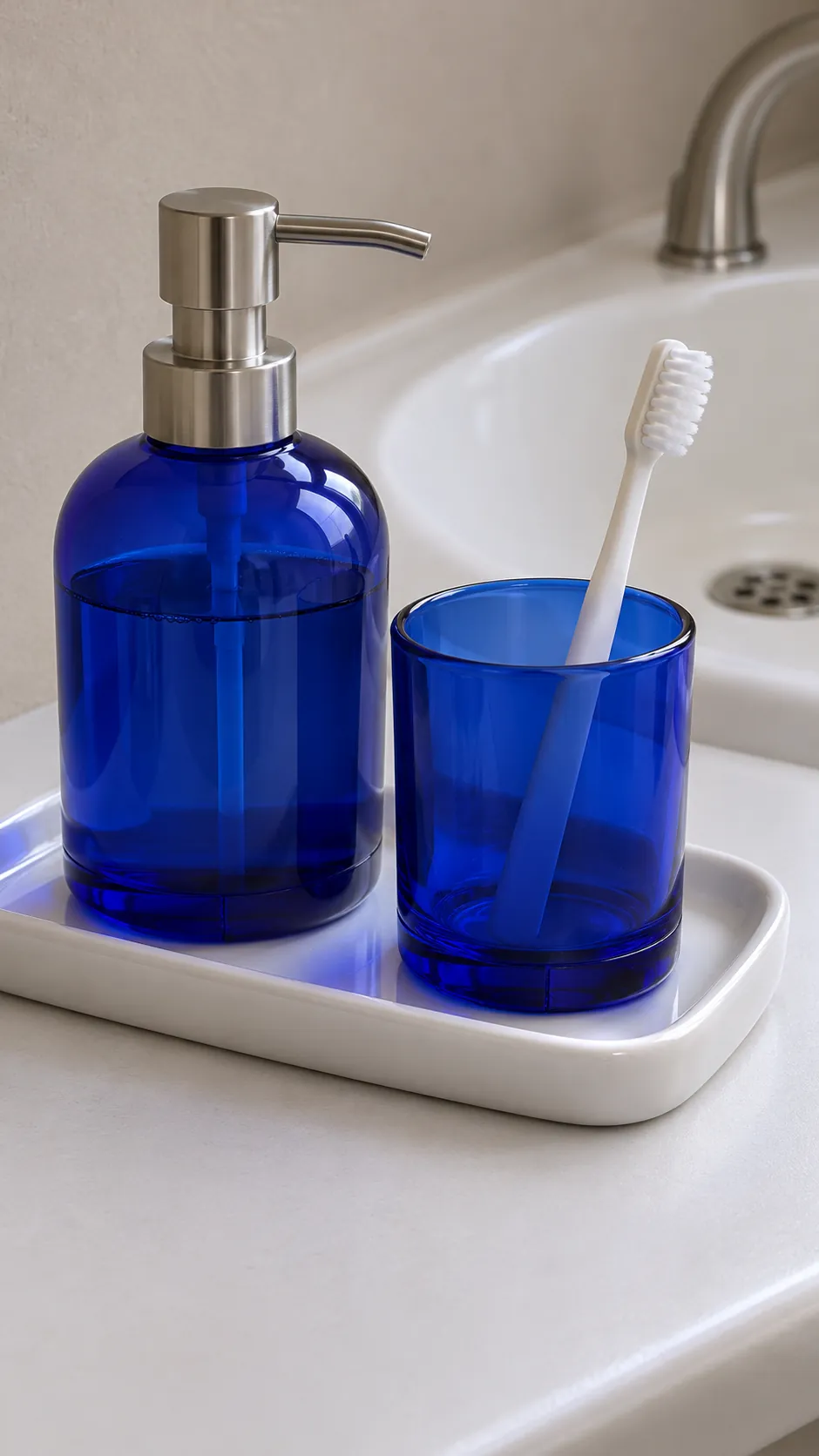
A pair of cobalt accessories can give a white sink some of the spirit of a colorful retro bathroom in an afternoon. Give the soap pump and toothbrush tumbler a shallow tray so they read as one group and you can lift them when wiping the counter. On a narrow basin ledge, use a stable dispenser and give the faucet handle room to turn. Move the group to an open shelf if the sink gets splashed constantly.
Swap to Amber Glass Vanity Knobs
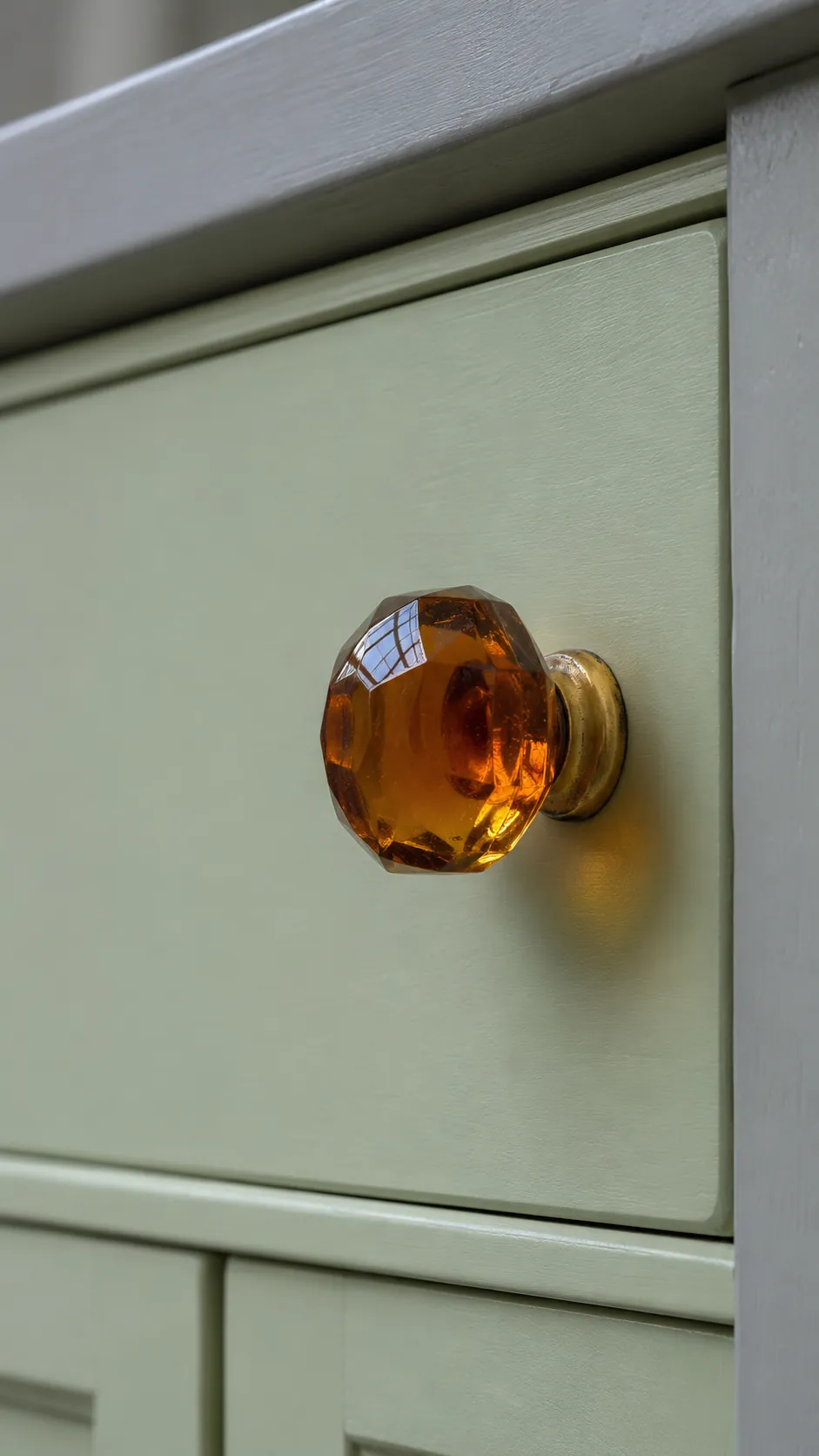
Amber glass knobs warm up sage or grey green cabinetry without adding a painted accent. Measure the current screw spacing before replacing pulls, since a single knob will leave a second hole behind. Test one sample on the drawer you use most and check whether the shape is easy to grip with damp hands. Keep the old hardware together if you need to put it back at move out.
Repeat Mint Once Around a Pink Tub
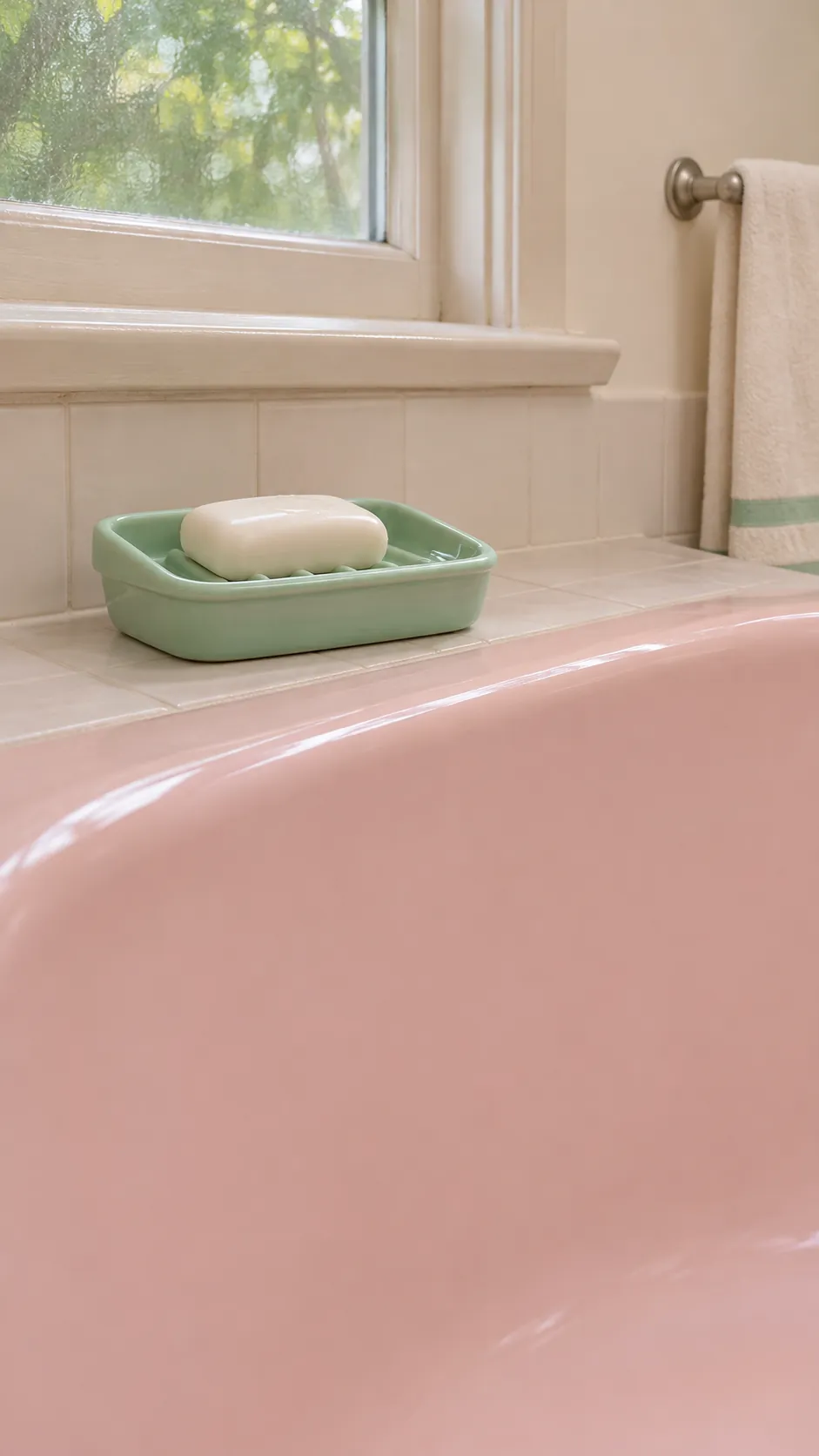
A mint soap dish can bring out the warmth in a pale pink tub without starting a full pastel scheme. If you add another note of mint, put it somewhere you can see at the same time as the tub, such as the edge of a small towel. Check that the dish drains, so the bar of soap stays out of standing water. Leave the sink area quiet if the room is small enough to see every surface at once.
Add Mustard on a Freestanding Stool
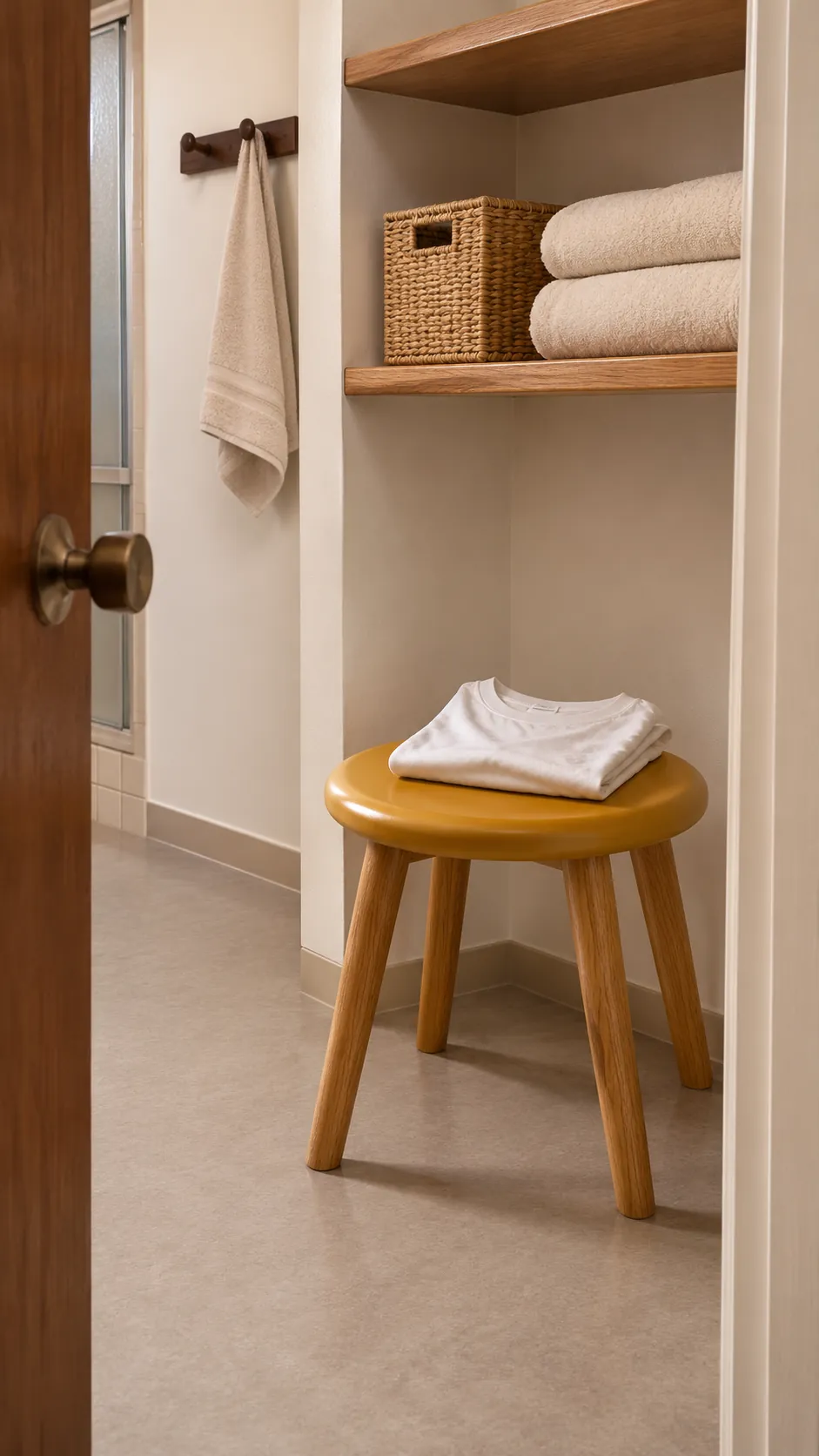
A mustard stool adds color below eye level and gives you a place to set clean clothes when the bathroom has no counter space. Measure the door swing and the route to the shower before you pick a seat size. Choose a stable design that can handle bathroom humidity and place it on a level, dry patch of floor. A painted stool is easy to shift into the hallway if the room gets crowded.
Paint the Inside of a Linen Cabinet Plum
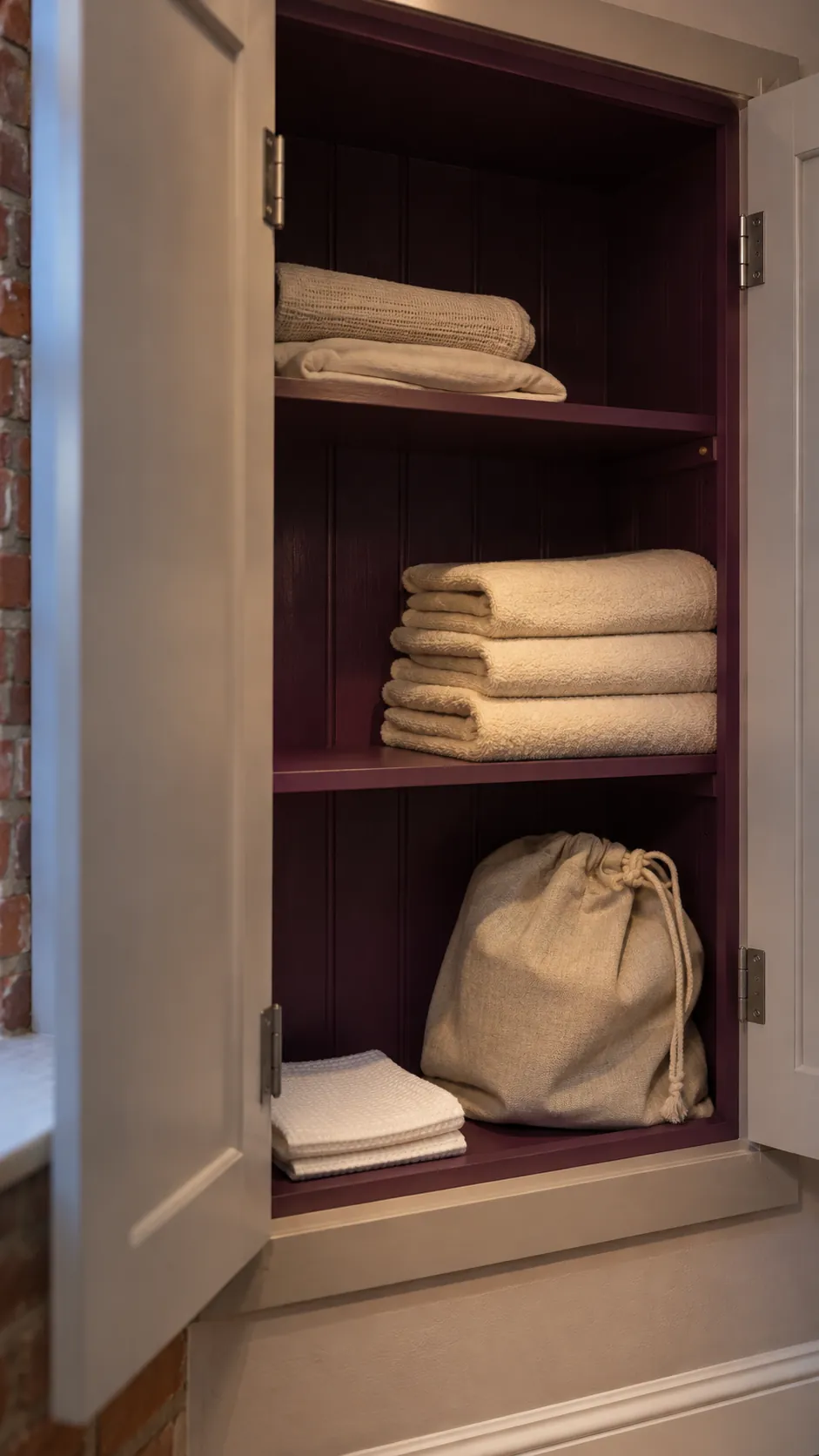
Painting the inside of a linen cabinet lets you use plum even if the rest of your bathroom is already busy. Lift out adjustable shelves so you can coat them evenly and check how the paint will look behind the towels you actually use. Let the finish cure as directed before loading the shelves, since folded fabric can stick to fresh paint. Keep the shelf edges clear so the doors still close freely.
Try the Checkerboard Look With a Bath Mat
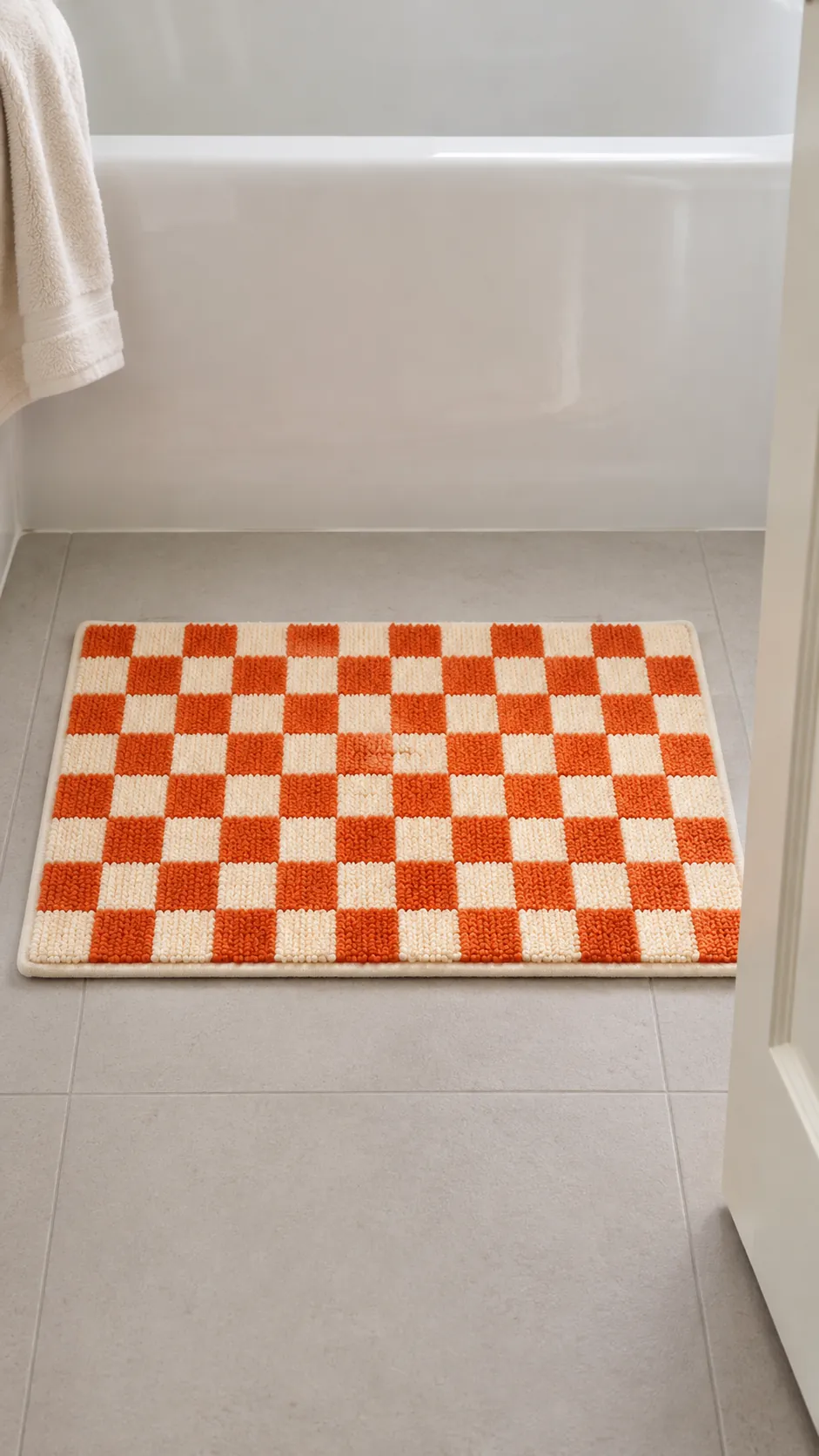
An orange and cream checkerboard mat brings the rhythm of a vintage floor to a room where you cannot change the tile. Pick a size that sits clear of the door and check how it grips the existing floor. A smaller repeat leaves enough squares visible to read as a pattern on a narrow mat. Hang it up to dry after use if the room holds moisture.
Test the Palette Where the Light Changes
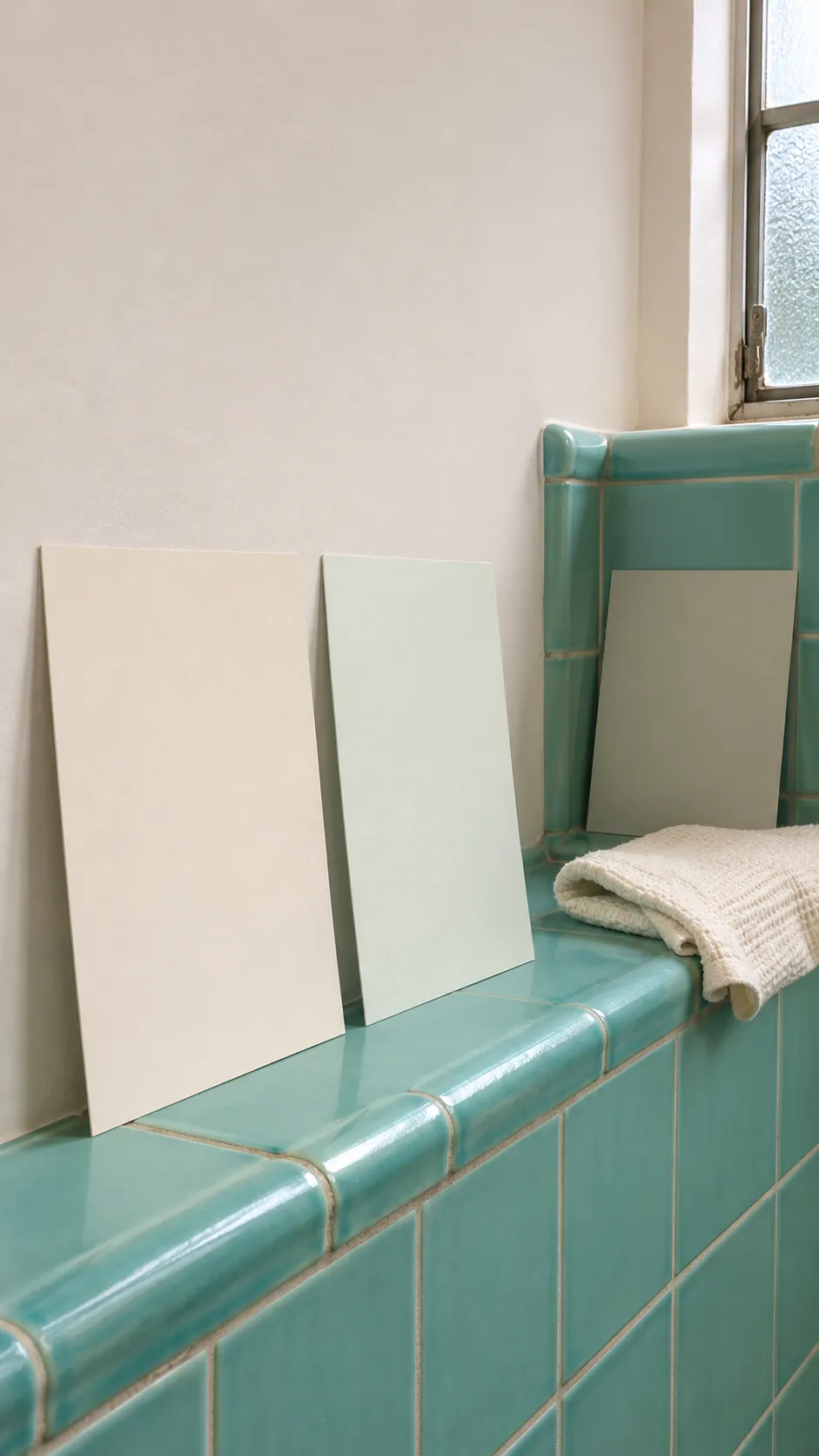
A paint chip that looks calm in the store can turn surprisingly green beside turquoise tile. Set up two or three large painted sample cards in different parts of the room, then look at them in the morning and with the bathroom lights on at night. Keep a sample of any curtain or towel you plan to use beside the cards so you can see the colors together. Start with the pairing that works in the light you use most often and buy the larger pieces after that check.