
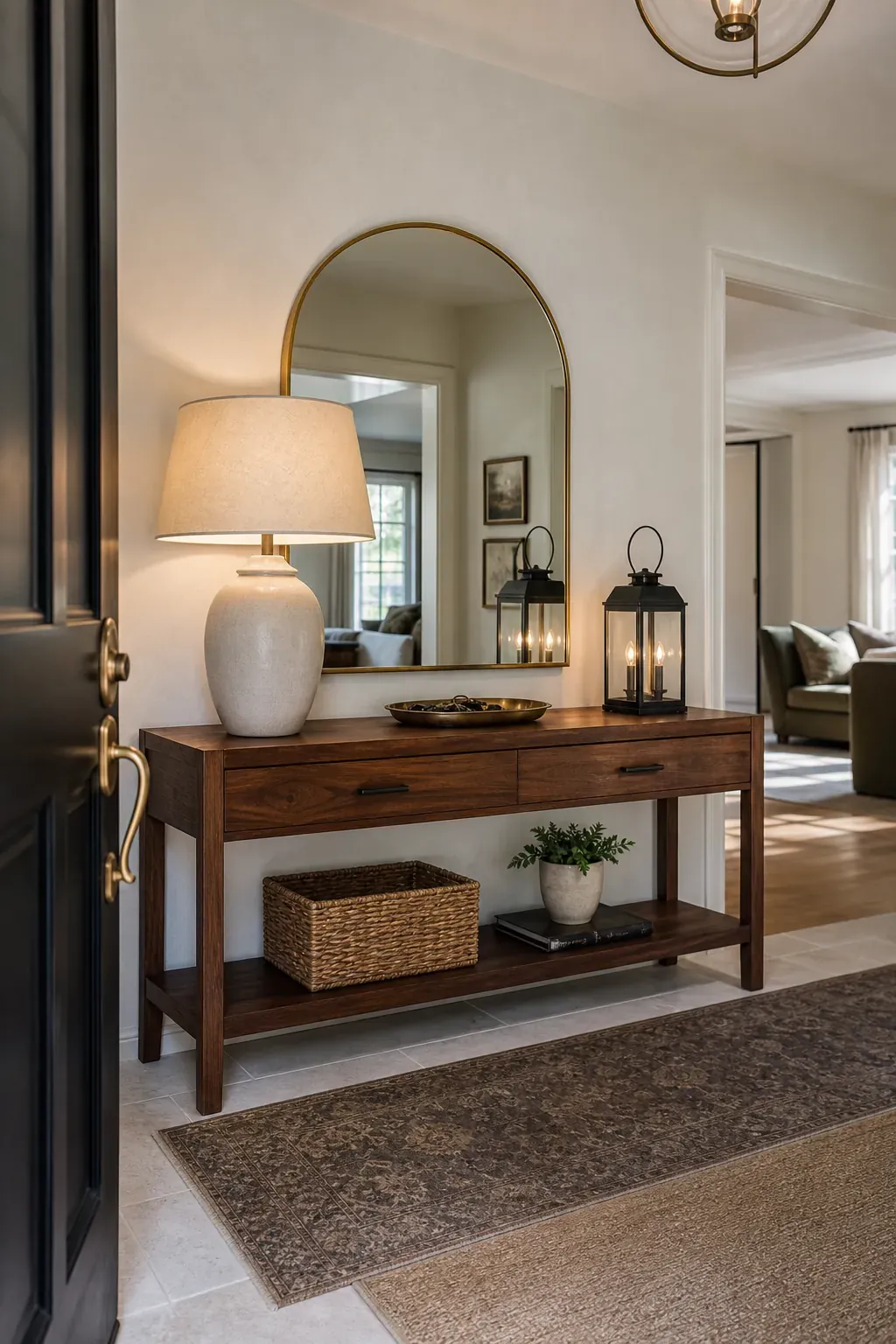
A mirror can brighten an entryway, but it only reflects what you give it. If it faces a dim wall, catches a bare bulb, or sits beneath an undersized fixture, the glass repeats the problem. The strongest foyer lighting plans treat the reflection as a second view of the room.
Homeowners repeatedly struggle with dark windowless halls, tall ceilings that swallow small lights, and tiny entrances where a lamp looks awkward. These ideas begin with circulation and daily use—keys, shoes, coats, and a final check—then use the mirror to multiply useful light without multiplying clutter.
A Console Lamp That Doubles Its Glow
A substantial moss-green lamp gives a windowless rental foyer a welcoming pool of light without new wiring. Set it toward one end of the shallow oak console so the leather key tray still has a clear landing spot; the wide walnut mirror should catch the illuminated shade and a pale side wall, not expose the bulb to someone opening the door.
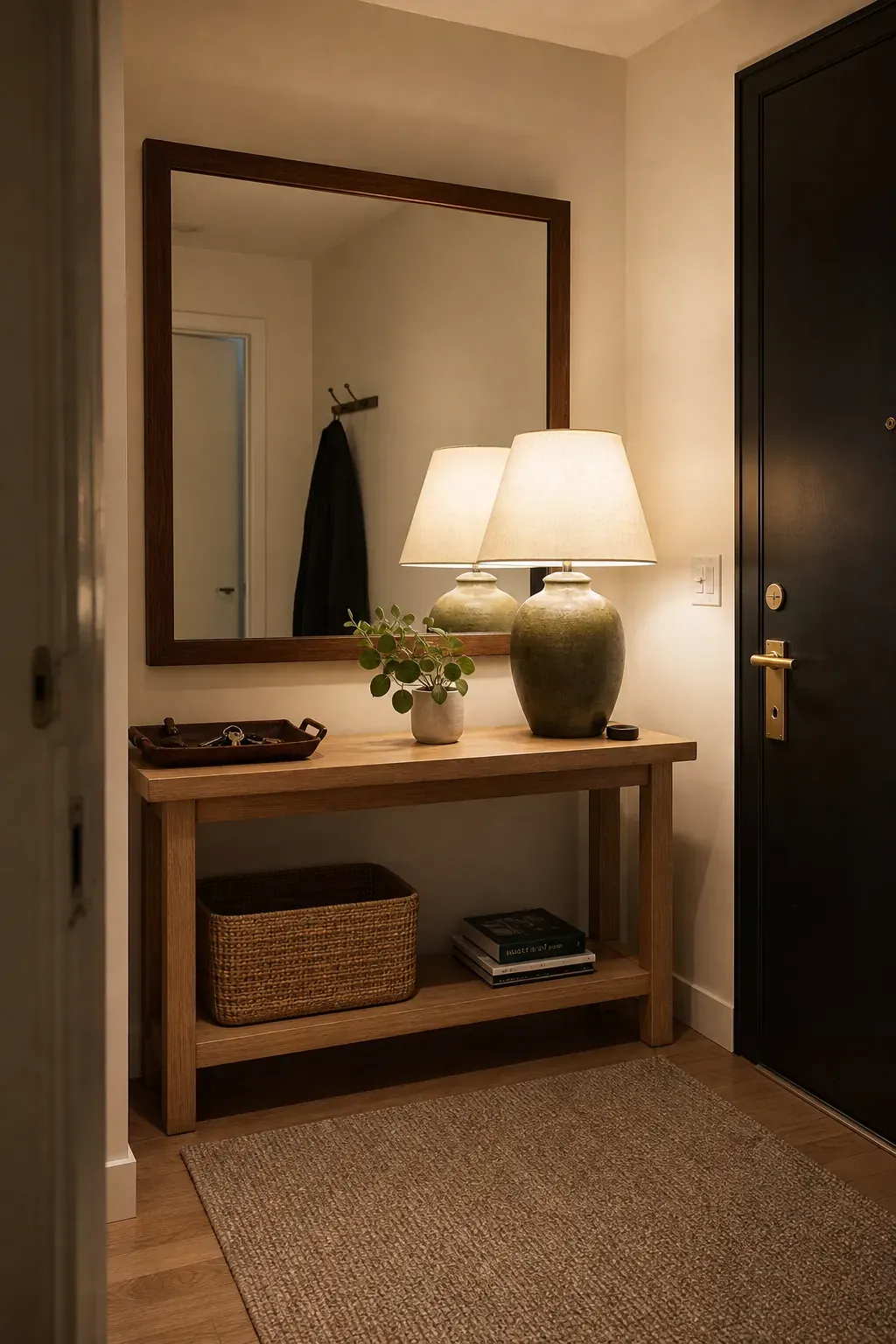
Choose a console deep enough to support the ceramic base, then route the cord behind it where shoes and bags cannot catch it. Check the composition from the open doorway after dark and turn the mirror slightly if the reflection feels harsh. A switched outlet or an accessible inline control makes this modest layer far more useful during daily arrivals.
Paired Sconces Around a Round Mirror
Slim opal sconces on both sides of a round brass mirror provide more even face light than a single source above it. Let the fixtures follow the mirror’s scale while leaving enough space for the shades, mounting plates, and any nearby trim. Their diffused glow also softens the stair newel and daylight that appear in the glass behind the viewer.
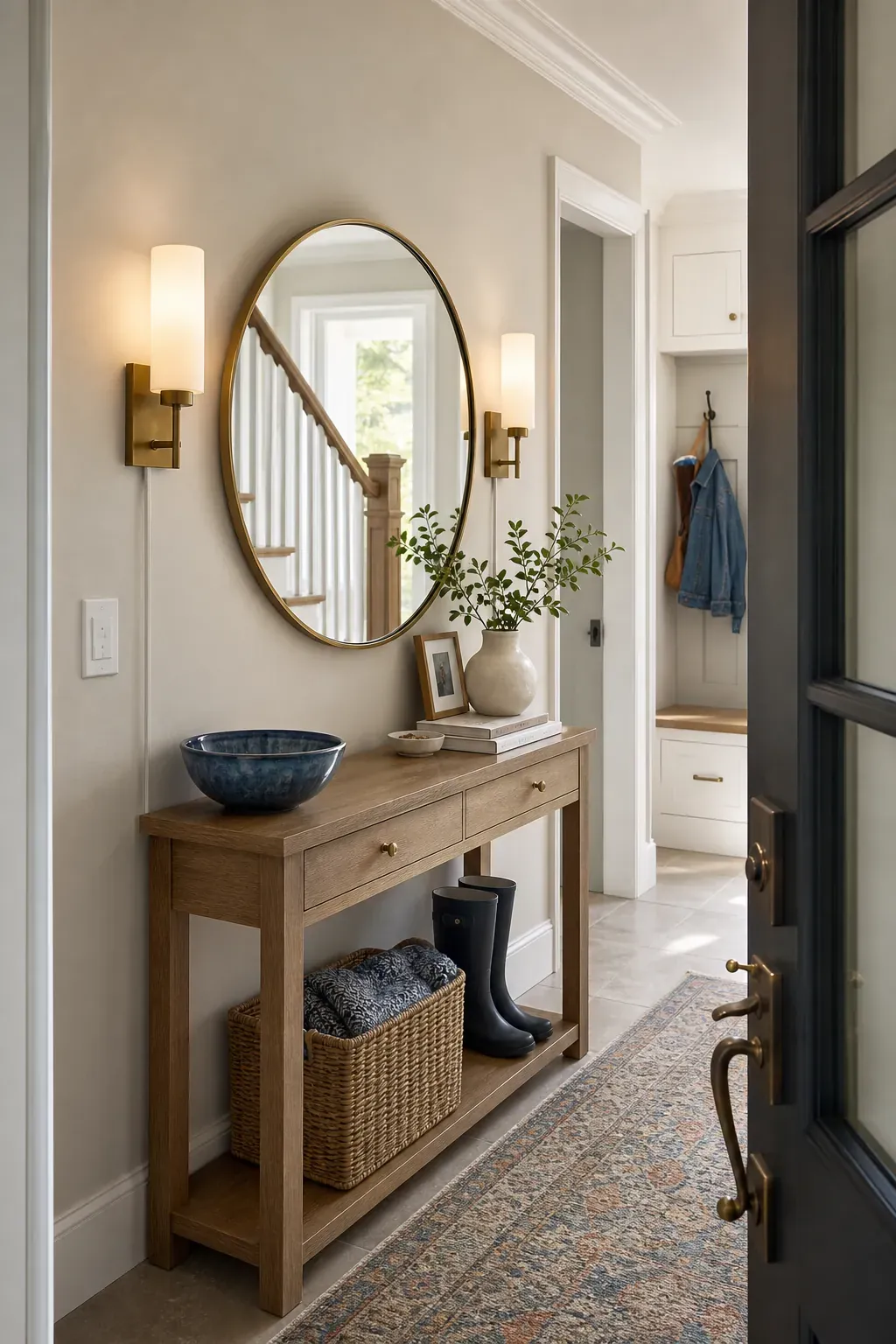
Mock up the complete widths before electrical work begins, because a balanced drawing can still crowd a door casing in a real hall. Select shaded fixtures and compatible lamps that remain comfortable at eye level, then add dimming if the chosen equipment supports it; wiring and boxes should be installed in accordance with the fixture instructions and applicable requirements.
A Pendant Reflected Above the Console
A compact pleated pendant can mark the center of a narrow townhouse entrance without consuming wall or console space. A tall racetrack mirror nearby stretches that vertical gesture and shows the complete shade from farther down the hall. Keep the reflection slightly off-axis so the pendant adds depth without becoming a bright target in the glass.
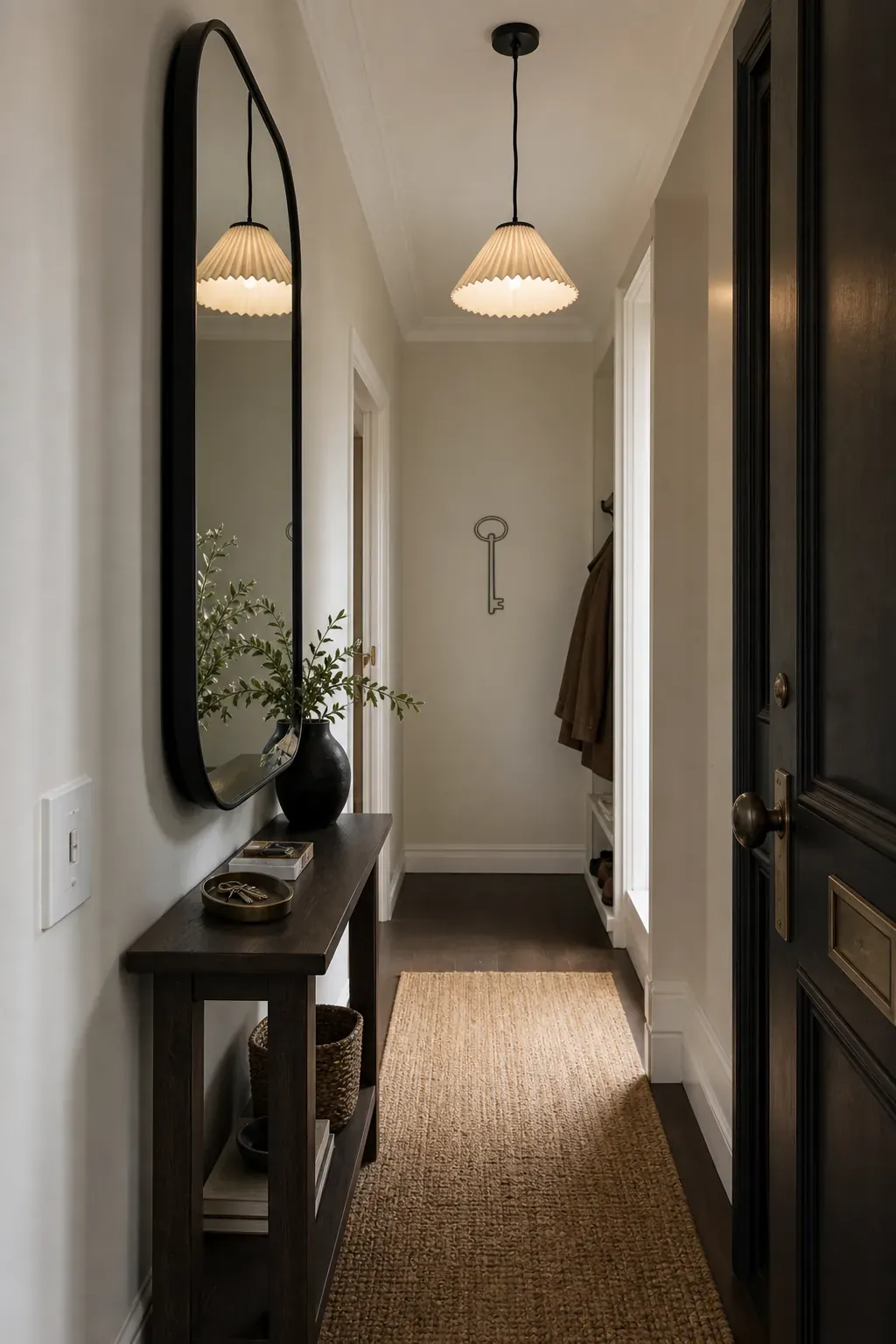
Measure the ceiling drop against the tallest regular user and the full door swing, not only against the console below. The shade needs to conceal or soften the lamp from the approach that appears in the mirror. Have a suitable ceiling box and electrical connection confirmed during installation, and protect the clear walking strip that makes this layout worthwhile.
A Flush Mount for a Low Ceiling
A broad opal drum spreads light across a low vestibule while keeping the ceiling plane visually calm. Its width matters more than a decorative drop here: the larger luminous surface feels intentional and avoids competing with the door below; a pale-oak mirror can return the frosted-door glow and brighten the wall without reflecting a visible lamp.
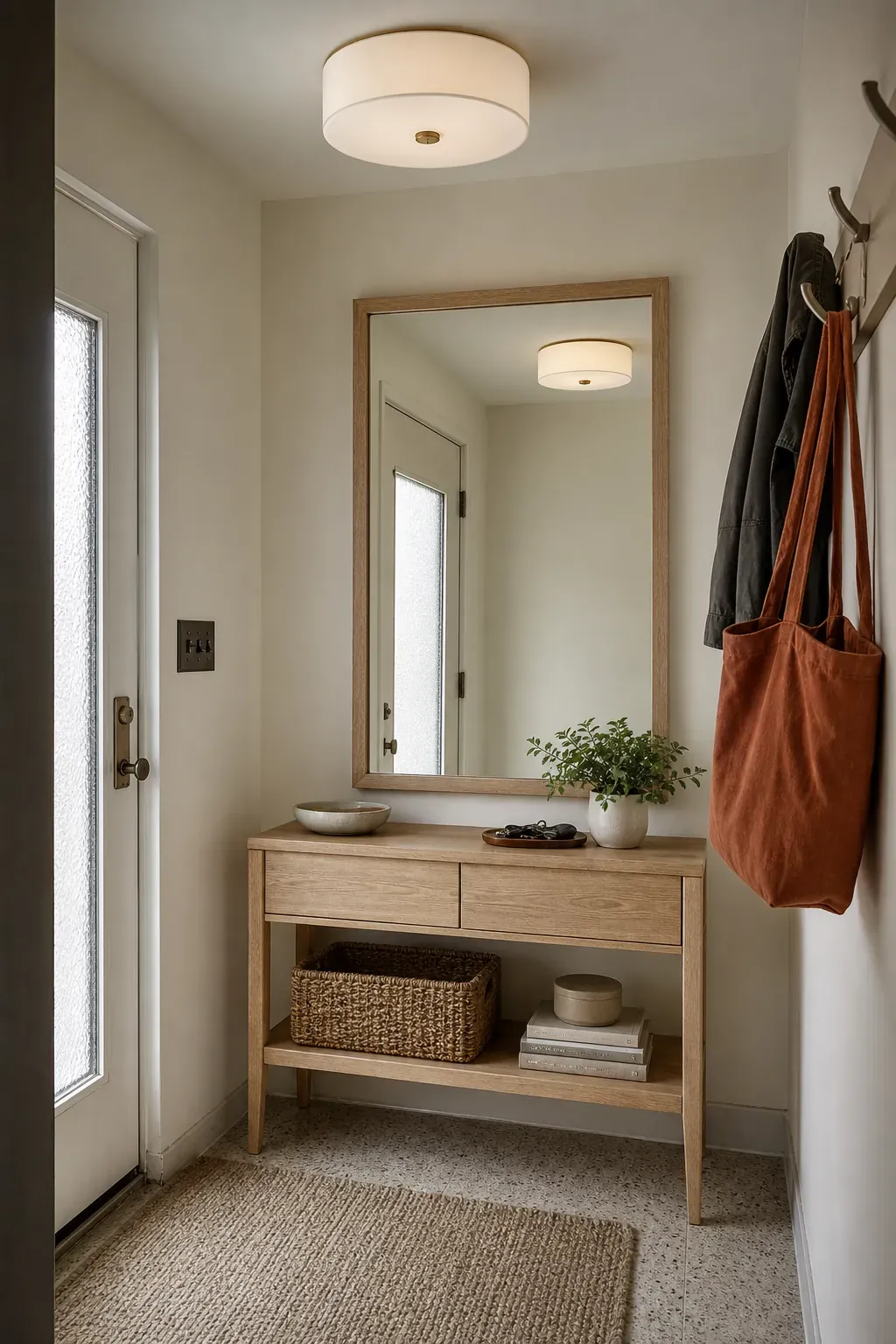
Compare the fixture diameter with the actual ceiling, smoke alarms, trim, and open door before ordering. An opal diffuser should hide the individual lamps from both the threshold and the mirror. Use equipment suited to the location and arrange proper electrical installation; a simple budget refresh still depends on a sound connection and secure mounting.
A Lantern That Frames the Reflection
An aged-bronze lantern belongs naturally among walnut, bevelled glass, and traditional millwork, but its proportions should answer the foyer rather than imitate a grander house. Hang it where the tall mirror repeats the frame once and preserves a view of the hall beyond. Restrained lamps keep that reflection atmospheric instead of turning four small points into eight sources of glare.
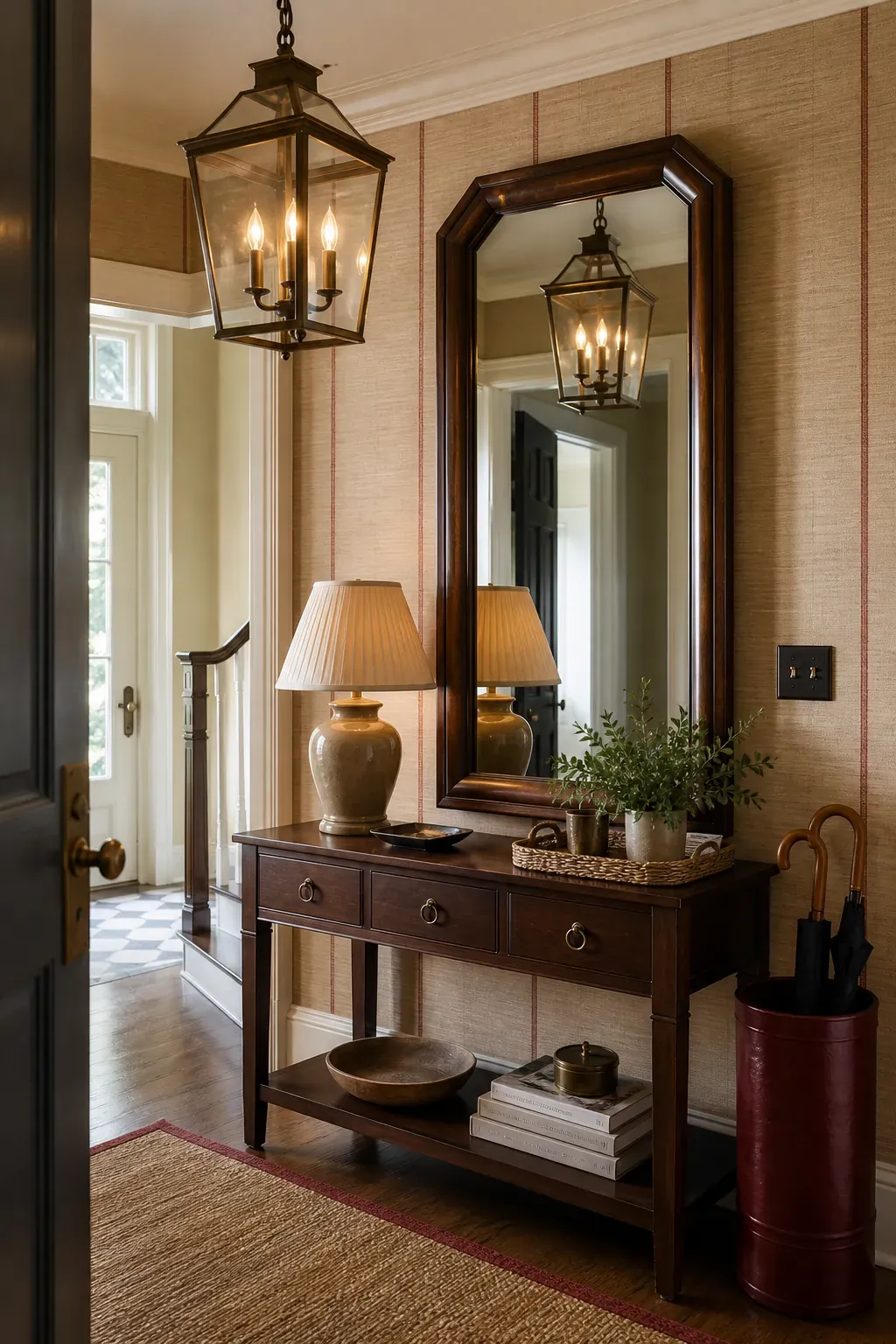
Use a cardboard profile to judge the lantern’s body and drop against ceiling details, the umbrella stand, and the route through the center hall. Check sightlines from both adjoining rooms because a fixture that looks centered at the door may collide visually with an arch or stair; a compatible dimmer can widen the useful range, provided the lamps, control, and fixture are selected and installed correctly.
A Cascading Fixture for a Two-Story Foyer
A staggered globe cluster uses the height of a two-story foyer instead of leaving one small fixture stranded at the ceiling. Frosted shades create a sequence of soft forms, and the oversized bronze-edged mirror brings a portion of that sequence down toward the entry bench. The upper railing should remain visible in the reflection so the glass still communicates the room’s real depth.
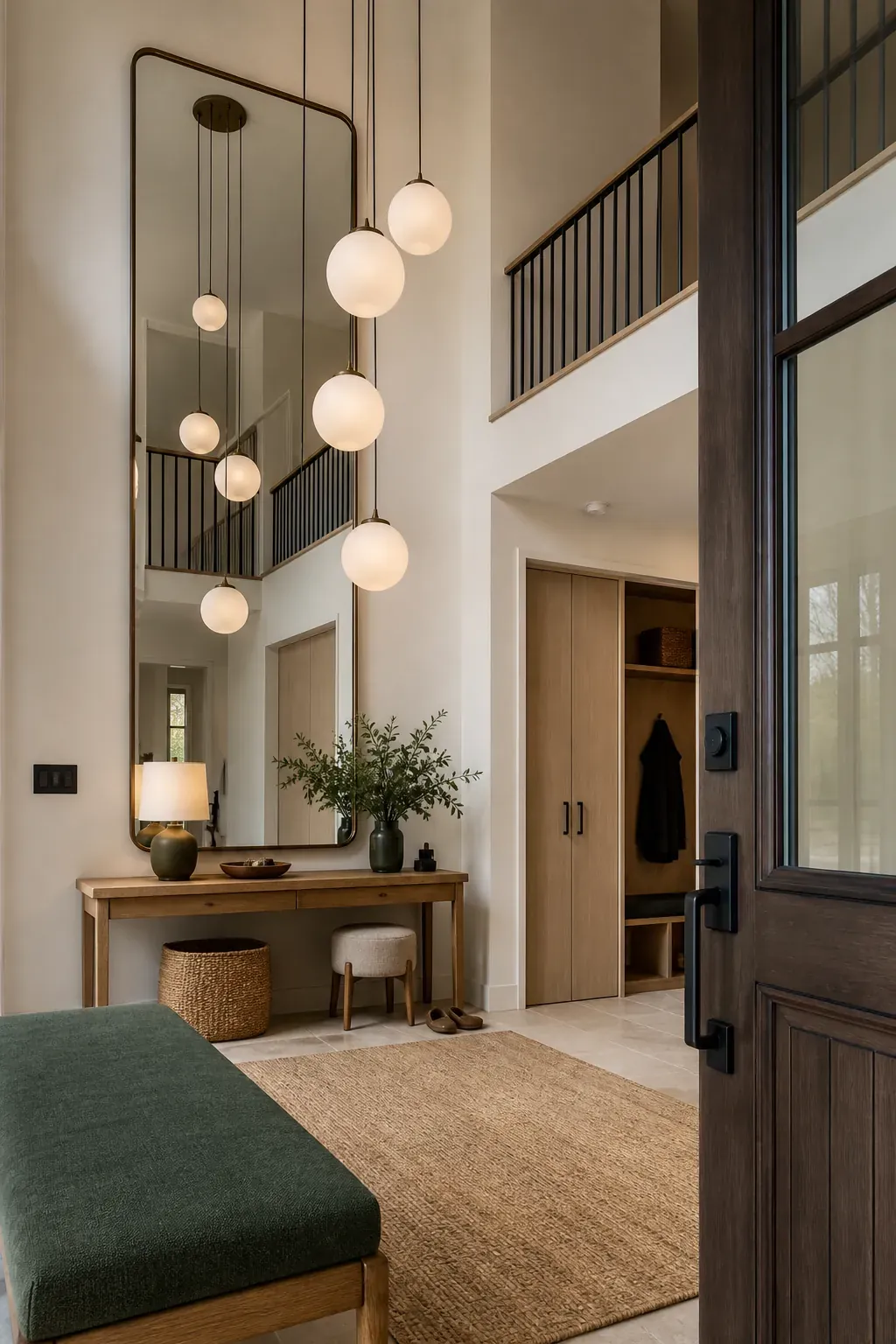
Plan every suspension length on an elevation that includes the door, landing, mirror, and normal circulation below. The canopy, support, and electrical work must be suitable for the complete assembly, with future shade cleaning and lamp service considered before installation. Keep the lowest globe comfortably outside the occupied path rather than lowering it simply to make the cluster look fuller.
A Picture Light Above an Entry Mirror
A slim brass picture light can wash the wall and top edge of a horizontal black mirror without occupying console space. Aim the beam downward so it skims the frame and leaves the viewer’s reflection free of a bright lamp image; the burgundy-and-cream abstract above can share the vertical composition, but the mirror should remain the practical focus at arrival height.
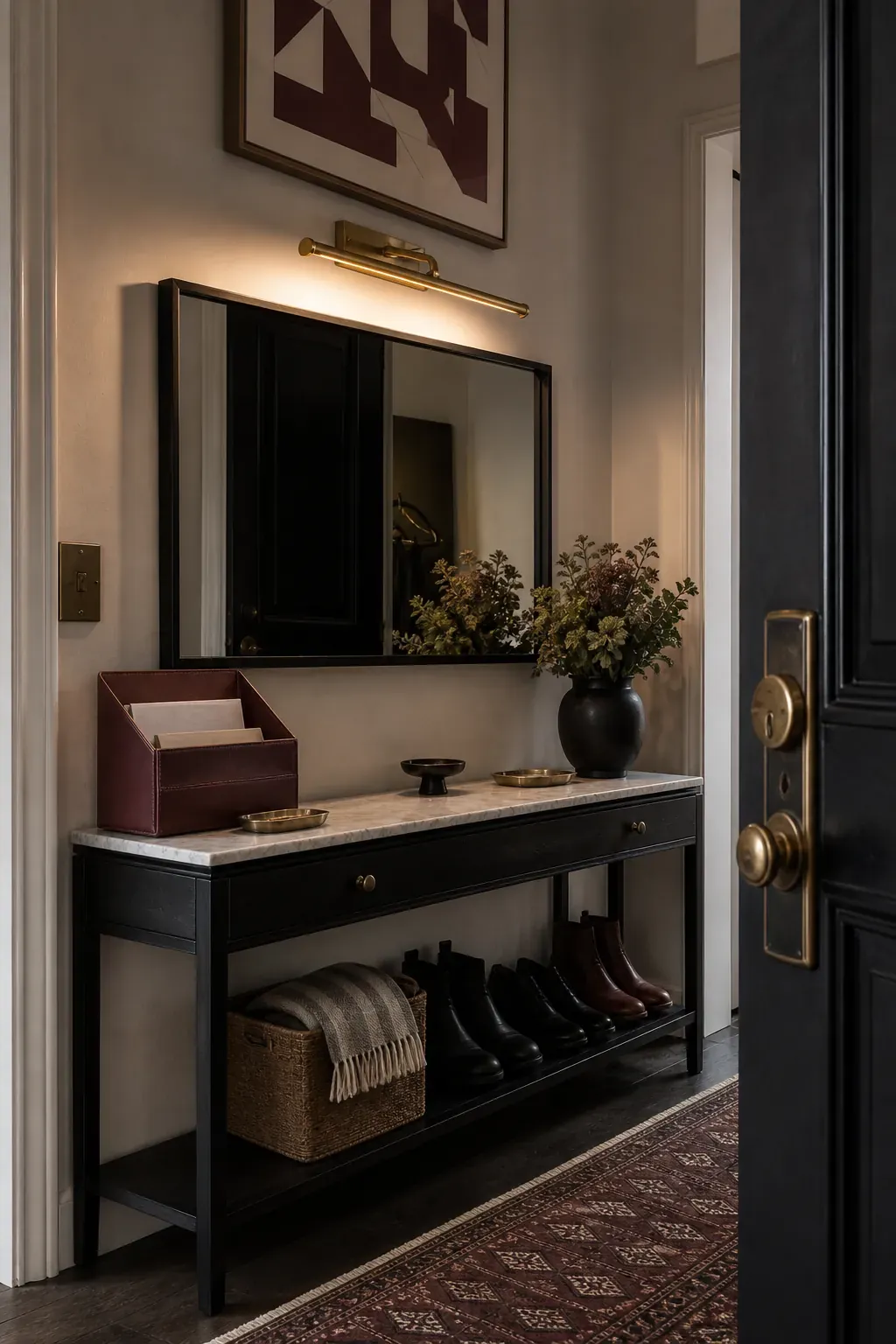
Test the light angle with the actual frame depth because a shallow arm may create a hot stripe on the glass instead of useful illumination. Treat this as an accent layer rather than the corridor’s only functional light. Concealed wiring and secure mounting should follow the product instructions, while a reachable control keeps the fixture from becoming decorative hardware that is rarely switched on.
A Rechargeable Lamp for a Rental Drop Zone
A matte terracotta mushroom lamp adds a warm, self-contained glow where a rental entry has no convenient outlet. Its low profile fits a narrow shelf beneath an arched oak mirror and leaves room for the leash or keys used every day. Angle the lamp and glass so the plain closet door, rather than the bright diffuser, occupies most of the reflection.
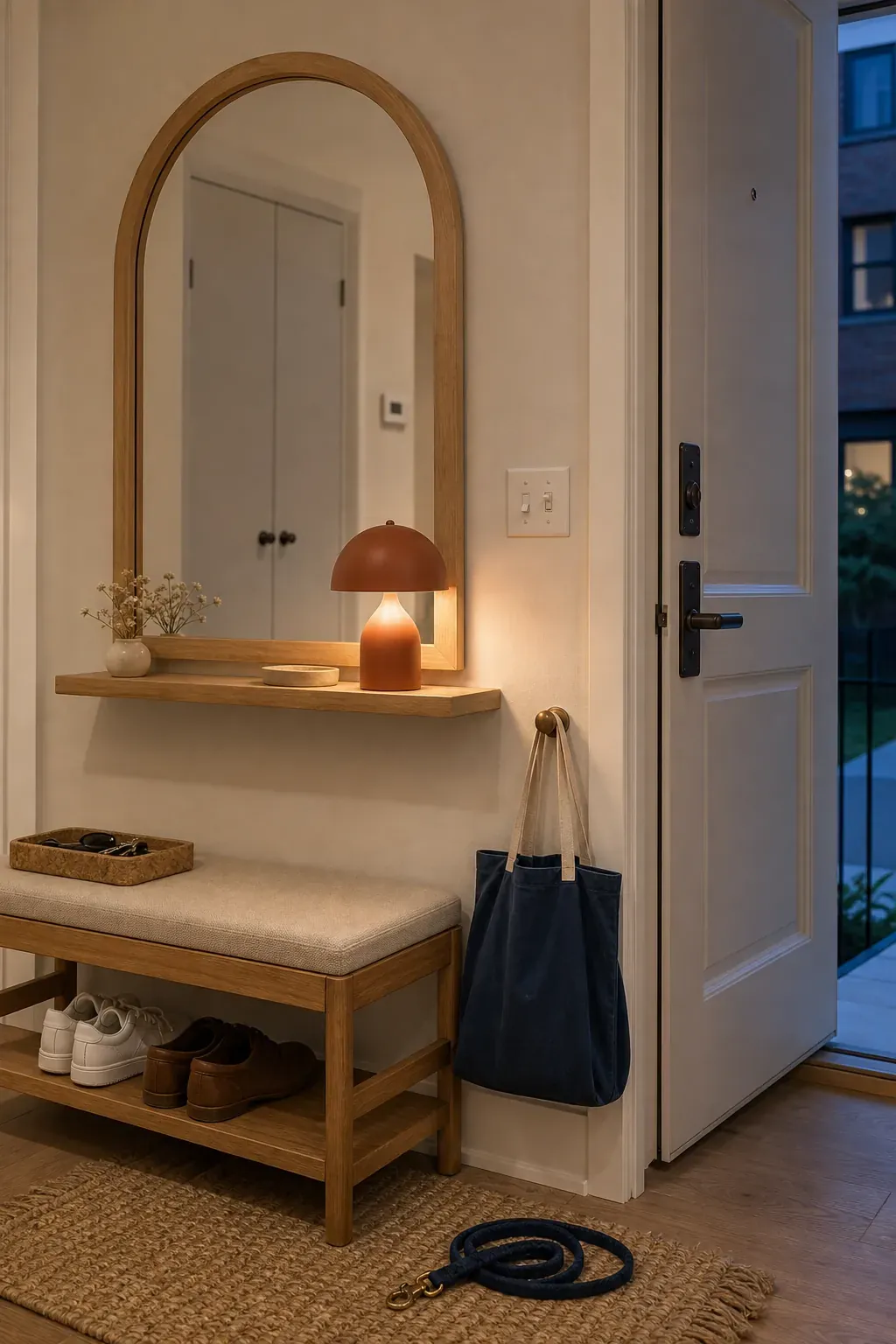
Choose a stable shelf and leave the lamp far enough from the edge that a bag cannot sweep it onto the floor. Battery life and controls should suit the household’s real arrival routine, not just occasional styling; recharge it according to the manufacturer’s guidance on an appropriate surface, then return it only after the cable is removed from the doorway.
Door Glass and a Mirror for Daylight
Frosted door glass can admit useful daytime brightness while keeping the exterior view indistinct. Place a large oval mirror on the perpendicular wall, where it can return that pale strip deeper into the entry instead of sending the arriving viewer’s image straight back. The shaded console lamp may remain off during the day, giving the space a practical second layer for evening.
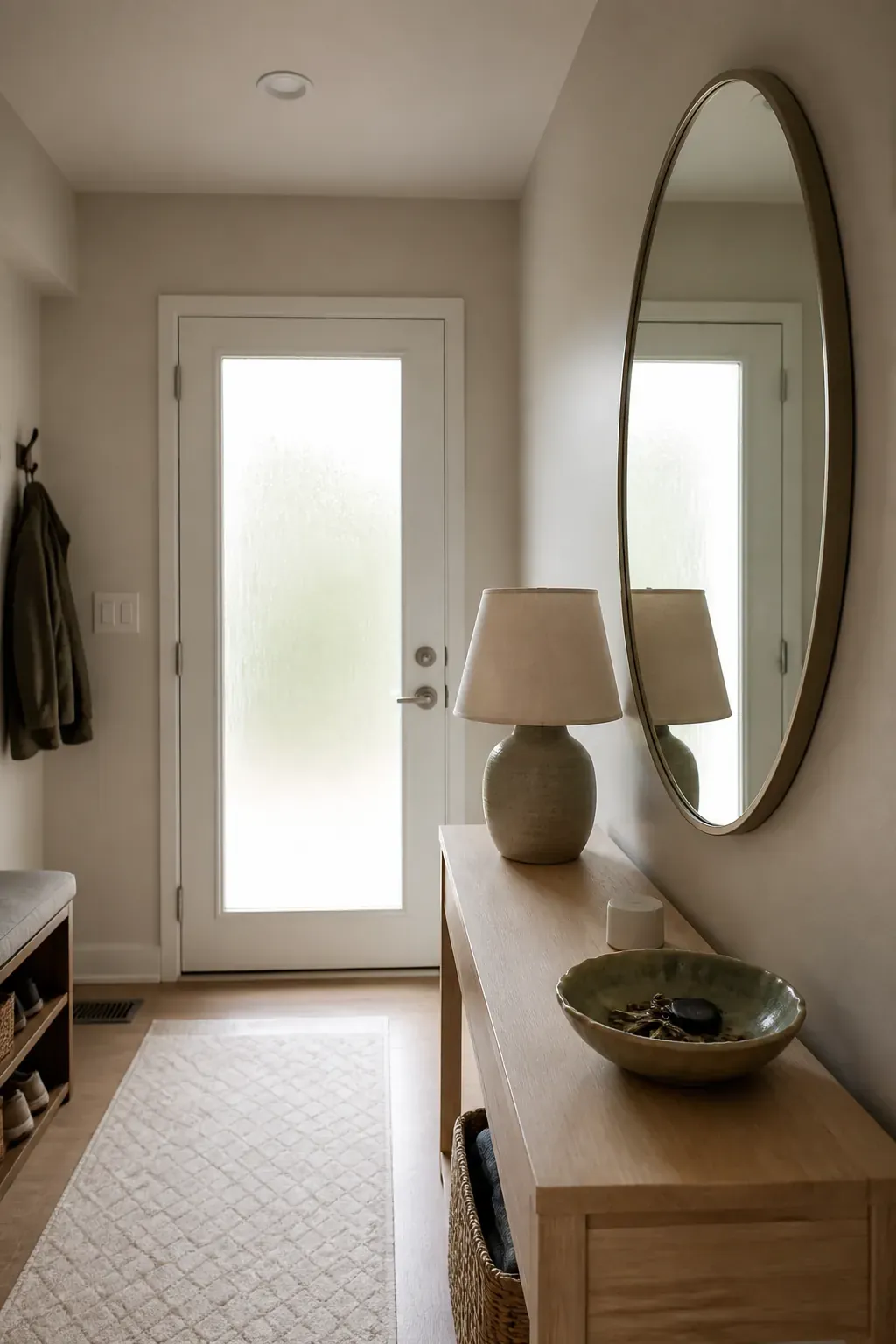
Observe the doorway at different times before fixing the mirror, since the useful reflection will shift as exterior light changes. Confirm that the chosen glazing provides the privacy and door performance the household expects. Keep the oval clear of the swing and avoid positioning it where low sun, even diffused through glass, becomes uncomfortable from an adjoining room.
Stair Sconces Repeated in the Mirror
Shielded stair sconces produce a low sequence of light that guides the eye upward without flooding the whole entry. A narrow bronze mirror above the shoe cabinet repeats that rhythm and makes the staircase feel connected to the arrival zone; keep the fixture faces out of the mirror’s direct angle so the reflected steps remain legible rather than dotted with glare.
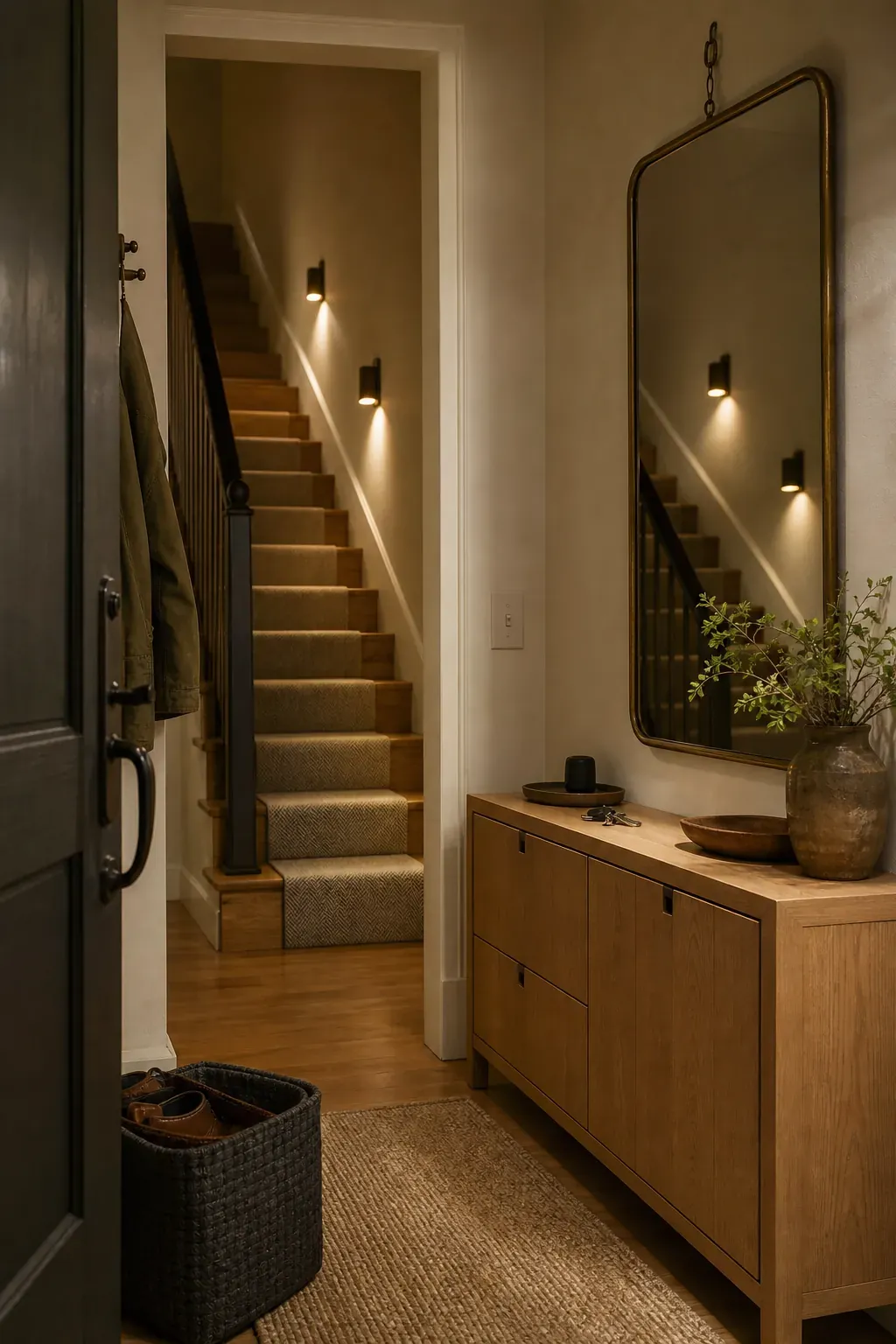
Walk the route in darkness with temporary low lights to identify where a change in direction or level actually needs support. Recessed or wall-mounted equipment must suit the stair construction and be placed where hands, coats, and furniture will not strike it. Have the electrical layout completed to applicable requirements, with controls that make the layer convenient for late-night movement.
Low-Level Light for Late Arrivals
Late arrivals need enough light to find hooks and cross the floor, not the full brightness used for morning cleanup. Two discreet low-level lights can define the baseboard route while a shaded shelf lamp picks out the key and coat zone. In the sturdy rectangular mirror, that quiet shelf glow should appear beside the closed door rather than as an exposed point source.
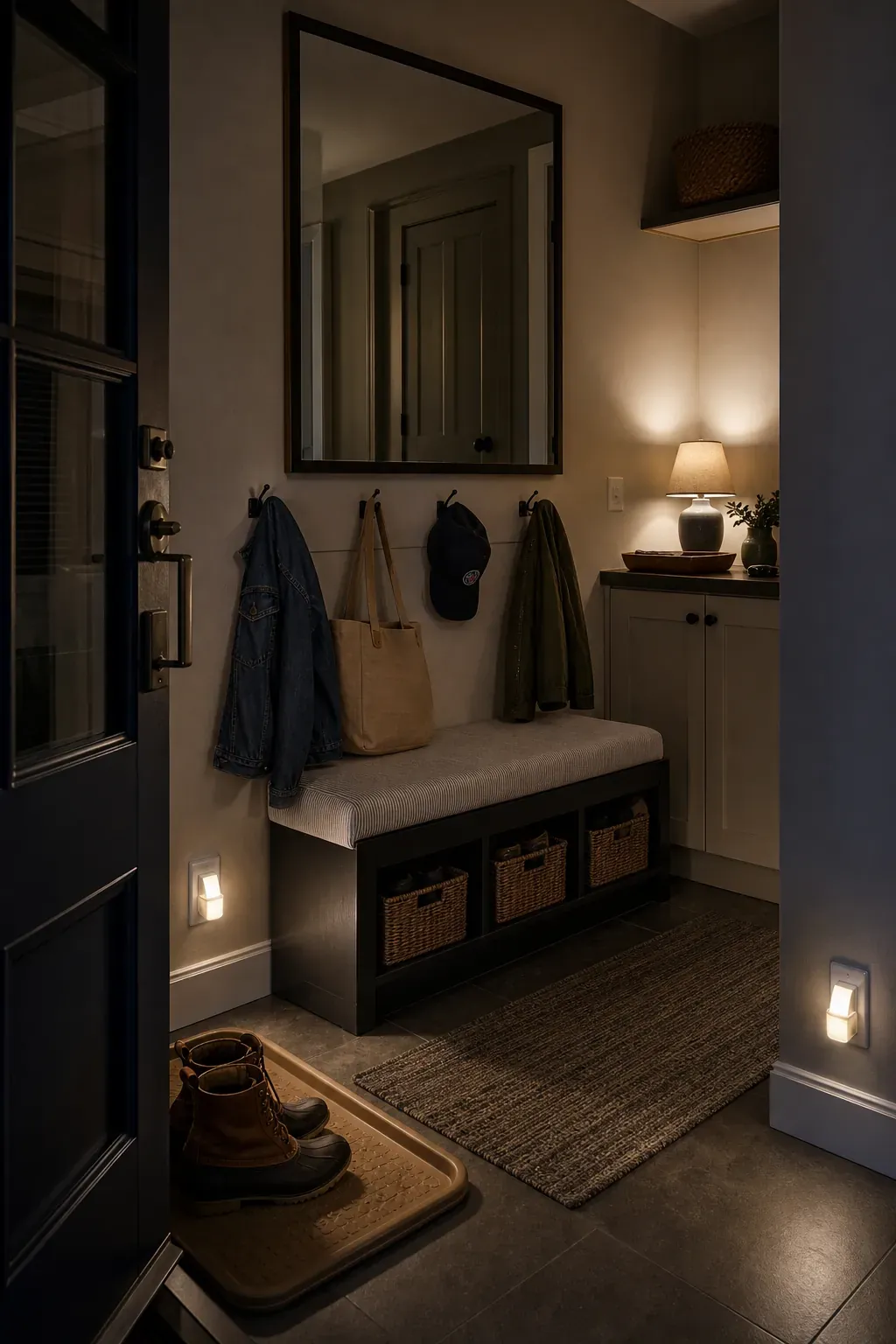
Use listed plug-in devices that leave the receptacle and walkway unobstructed, and do not trail cords across the boot area. A sensor or simple reachable switch can keep the low layer convenient without leaving every fixture on continuously; check from floor level that shoes, baskets, or an open door do not hide the light where the path changes direction.
A Side-Wall Mirror Instead of Facing the Door
Moving the mirror to a side wall changes the first view from a direct self-reflection to a calmer glimpse of the interior. A rounded vertical frame can pick up the plaster lamp and facing console while leaving the exterior door outside the glass. This placement also gives an olive cap and key tray a practical foreground instead of turning the entry into an empty symmetrical vignette.
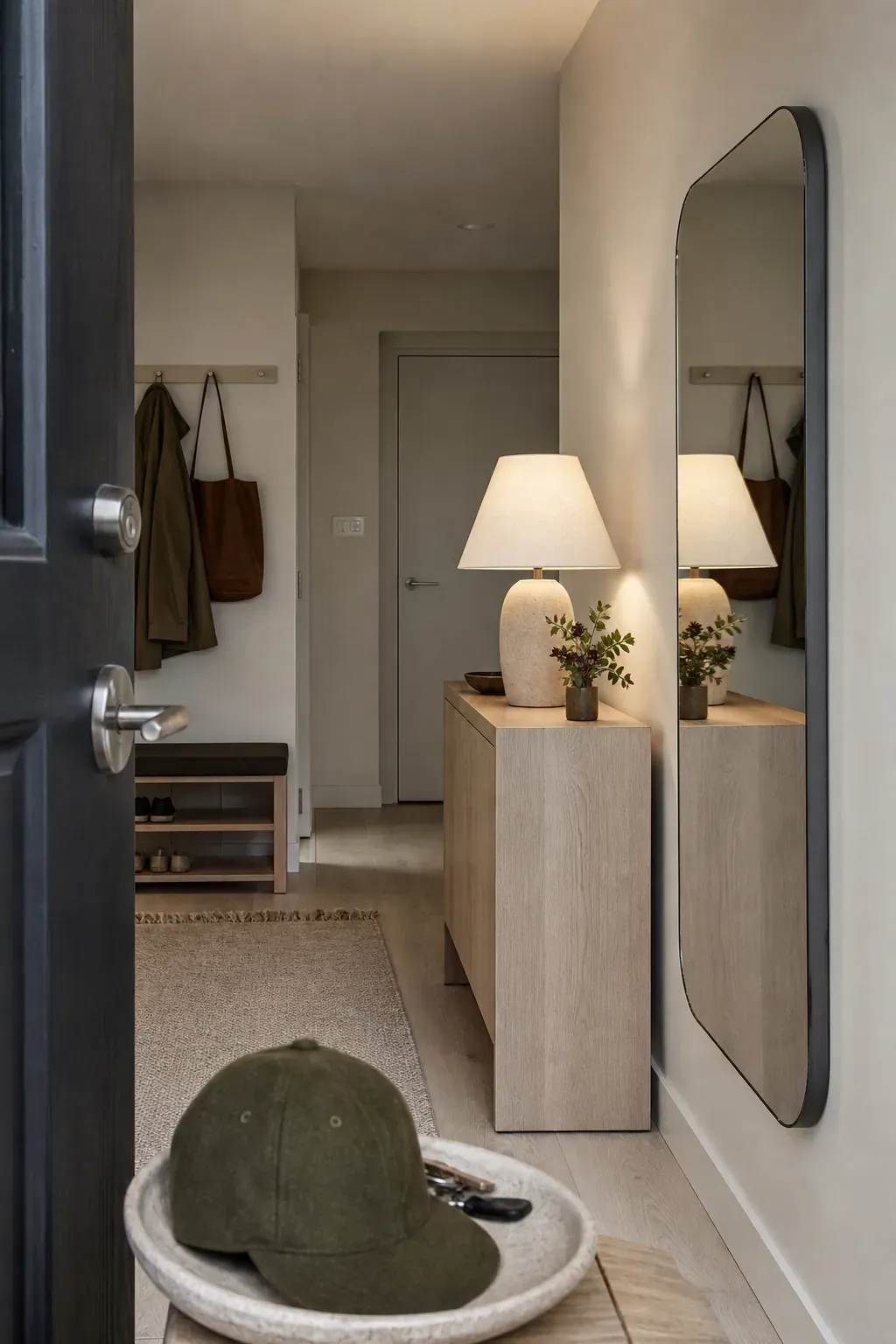
Stand at the threshold and slide a temporary mirror along the return wall until its view includes the lamp but not the bare bulb. Verify that the frame depth clears passing shoulders and that its hanging system suits the finished weight. The lamp still needs a stable base and tidy cord route, because the side-wall arrangement exposes the console from more than one direction.
A Bench Sconce for Shoes and Final Checks
An adjustable sconce above a built-in bench puts light where hands are tying laces instead of wasting it at the ceiling. Aim its shaded beam across the seat, keeping the source outside the adjacent full-length mirror’s direct reflection; the mirror can then show the mustard cushion, basket, and coat edge as useful evidence of the family routine.
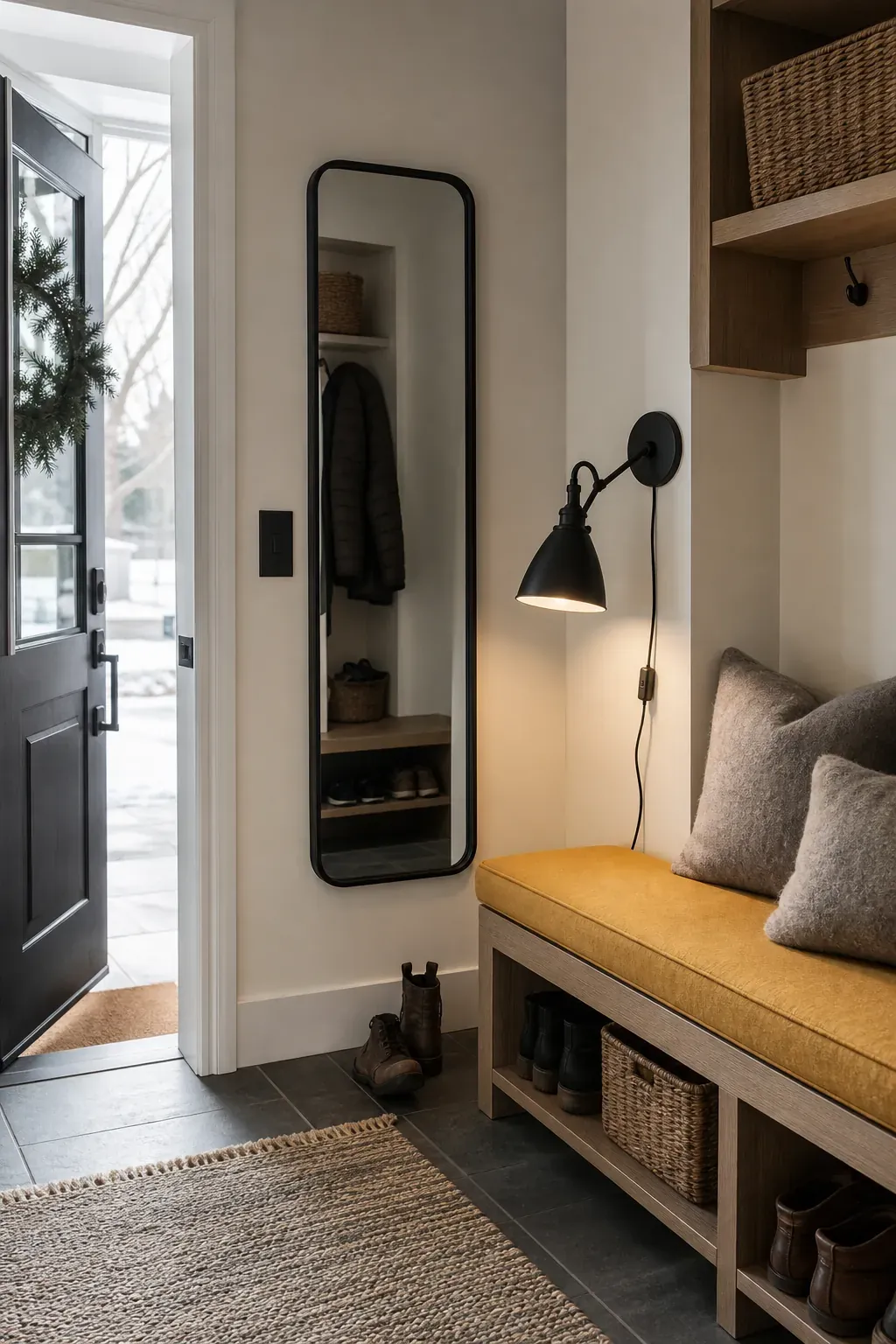
Swing or tilt the fixture through its complete range on a wall mockup so it cannot meet a standing person, hook, or open cabinet. Place the control where someone seated can reach it without stretching behind the shade. Whether plug-in or hardwired, the installation should secure cords and connections away from bags, damp footwear, and moving doors.
A Sculptural Lamp as the Foyer Focal Point
A large hand-thrown blue lamp can carry an eclectic foyer when its scale is supported by a substantial vintage chest. The irregular bronze mirror should return the lamp’s silhouette and the simple archway beyond, giving both objects room to look sculptural. Limit the remaining surface to a stone key bowl so the collector’s eye feels edited rather than unfinished.
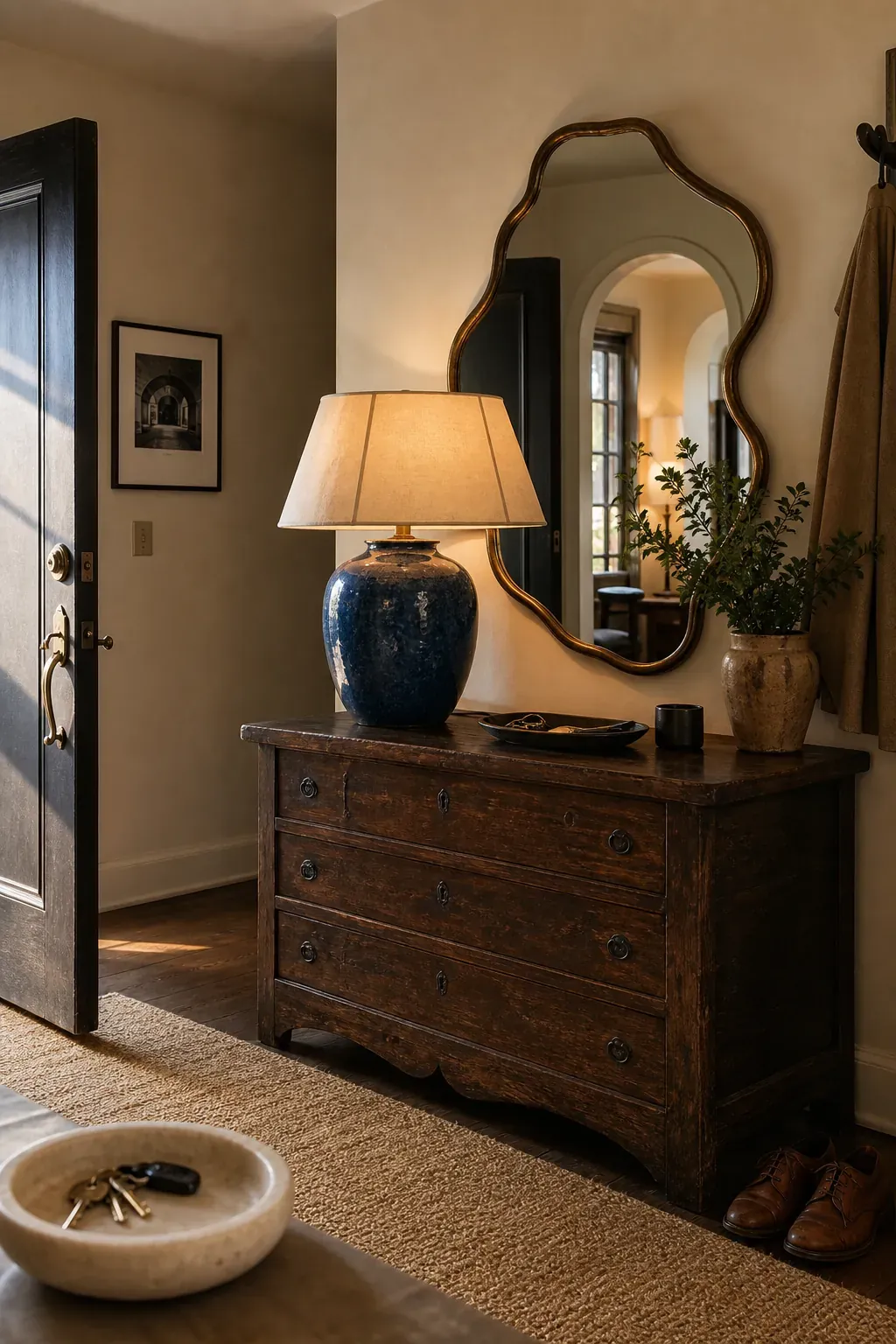
Check that the chest is deep and level enough for the ceramic base, especially if drawers are opened forcefully. A parchment shade must conceal the lamp from normal approach angles while remaining clear of the mirror frame; route the cord down the least visible rear corner and secure the mirror for its weight rather than leaning a heavy piece in an active entrance.
A Globe Cluster in a Small Square Foyer
Three compact globes can spread light around a square apartment foyer without the long stem of a pendant. Their clustered shape gives the center of the ceiling definition, while a circular silver mirror repeats only part of the group at an oblique angle. A floating drawer below preserves the clear floor that makes this central crossing feel larger.
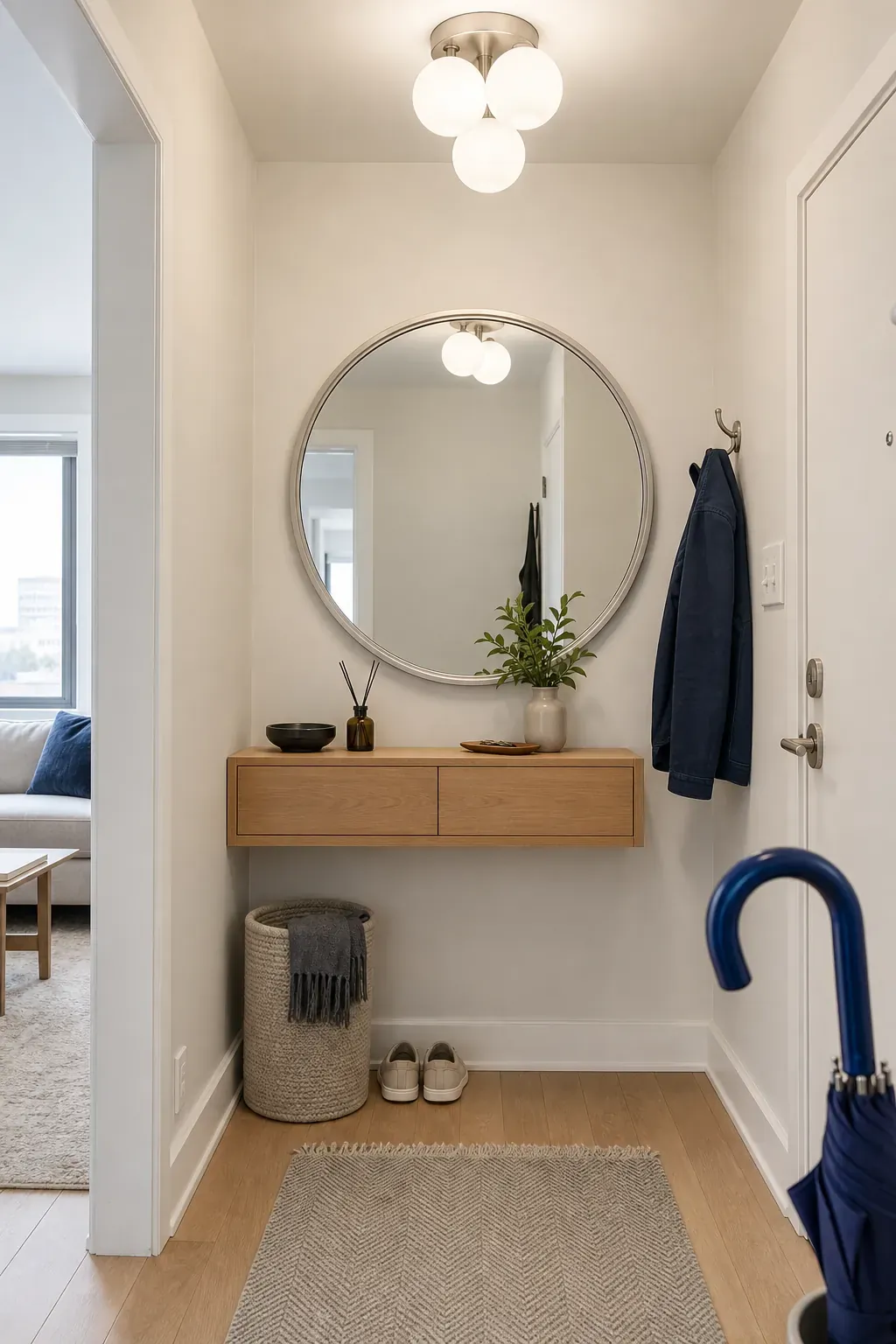
Choose diffusers that hide individual lamps and compare the fixture’s full width with all doors that open into the square. The ceiling assembly and electrical connection must support the specified unit, not a lighter display sample. Once installed, rotate or shift the mirror slightly if all three globes stack into one distracting reflection.
Soft Backlight Around a Mirror Edge
Concealed light behind a rounded mirror creates a soft outline that separates the glass from a dark entry niche. It is ambient rather than strong face lighting, so a tiny shaded console lamp supplies the warmer pool needed at the valet tray; the most convincing result shows an even halo on the wall with no visible diode points in the mirror or hallway reflection.
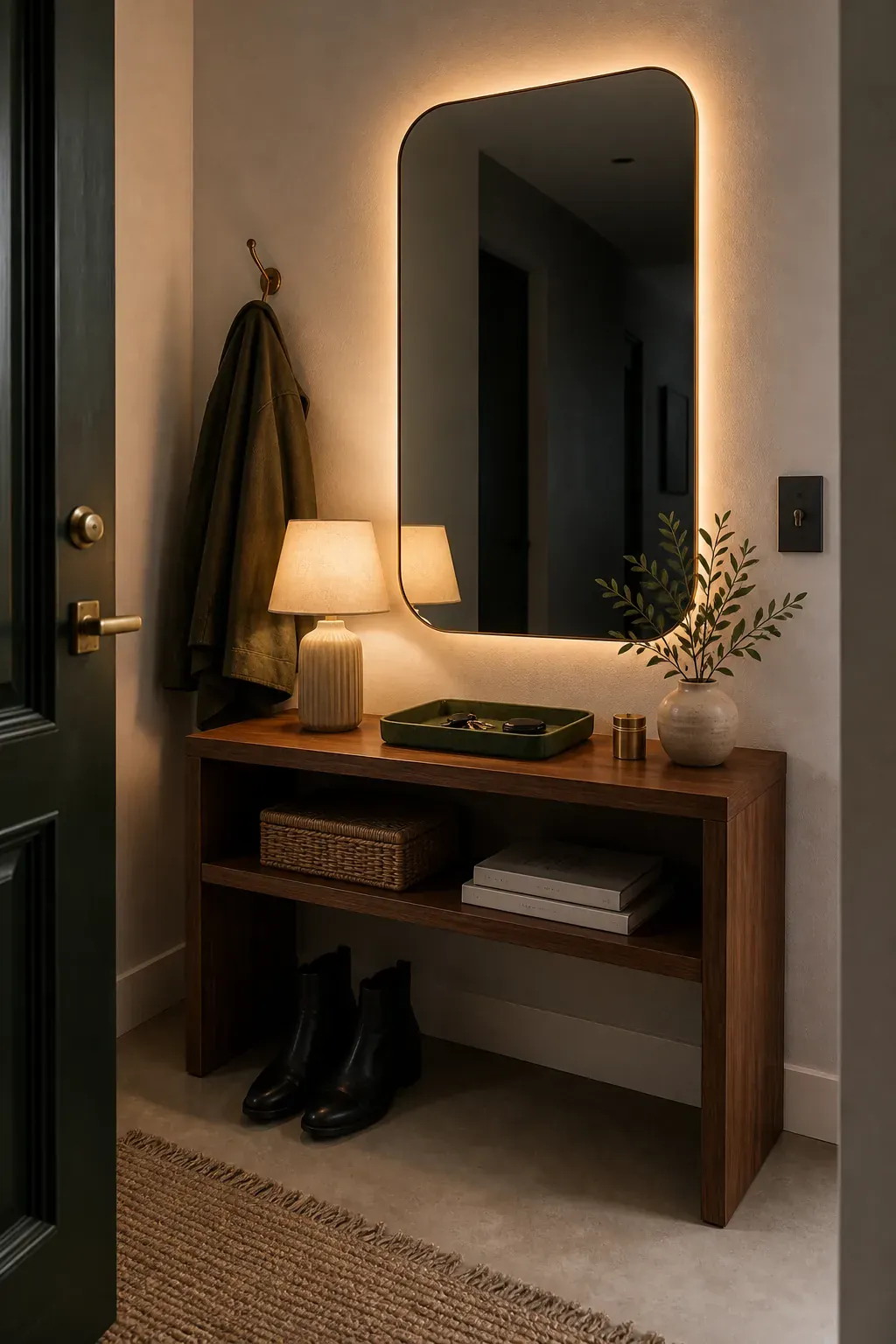
The mirror needs enough stand-off for light to spread, plus ventilation and service access specified for the lighting system and driver. Test color and dimming compatibility before building the hardware into the niche. Electrical components and concealed wiring should be installed appropriately, with the little table lamp kept stable and clear of the mirror edge.
A Table Lamp and Pendant on Separate Dimmers
A woven pendant and shaded table lamp serve different moments in an entry that opens directly to the living room. The pendant can light the shared route for guests, while the lamp leaves a smaller pool on the long console during quiet evenings. An arched black mirror links them visually, but its angle should soften the pendant reflection above the surface rather than duplicate a bright lamp.
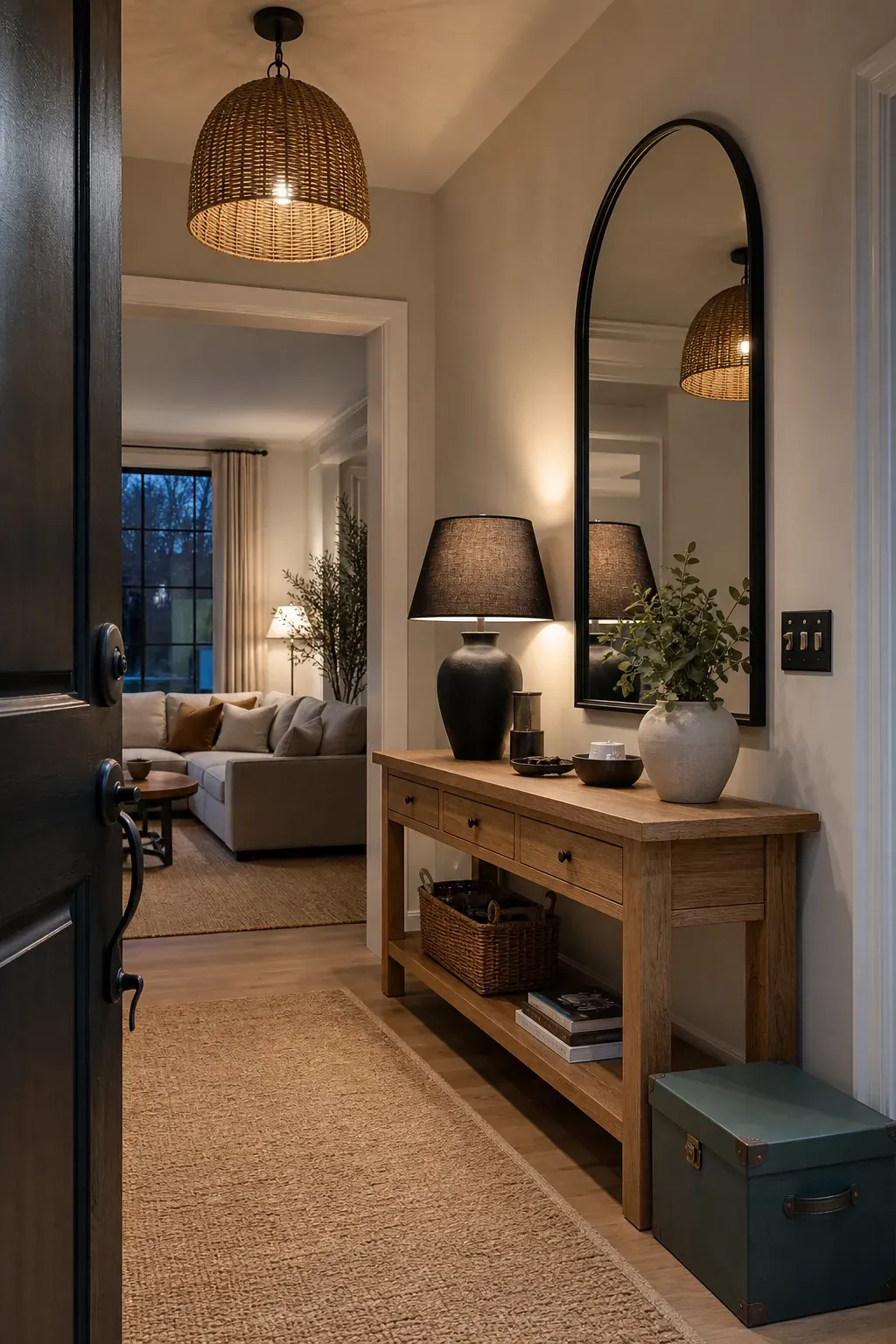
Separate controls make the layers genuinely flexible, provided each dimmer is compatible with its lamps and load. Decide which switch belongs at the door and which can remain near the console based on how the family enters the room; have the fixed wiring arranged correctly, then mark the useful settings so welcoming light does not require trial and error each night.
A Slim Mirror on the Back of the Door
The back of an interior door may be the only uninterrupted surface in an entry squeezed between a heater and another doorway. A narrow mirror there provides a final check without adding a console, while a rechargeable wall light on the return wall keeps the floor free. Aim the light across the glass so the reflected clear floor remains visible and the luminous face stays out of view.
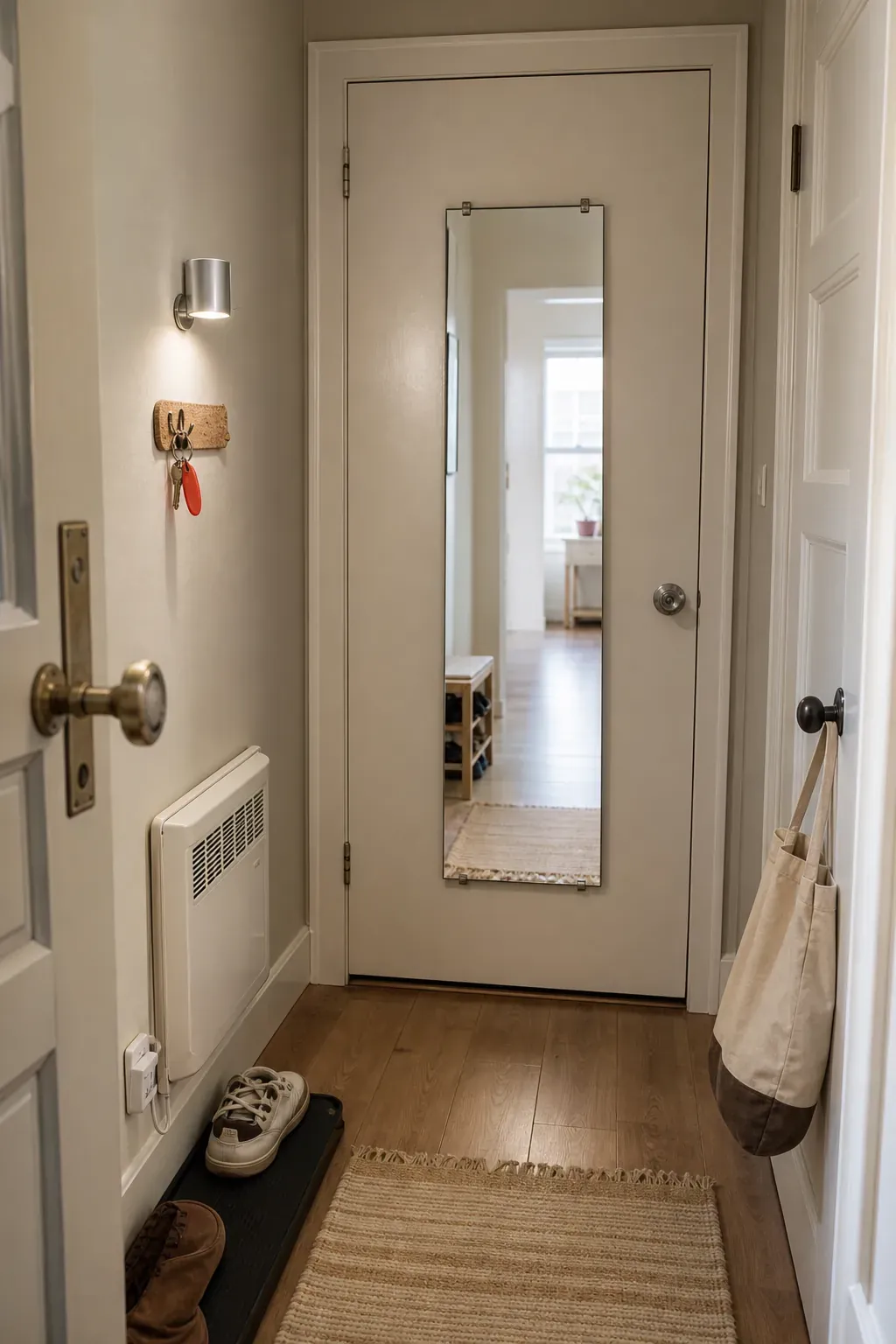
Select a mirror and mounting system explicitly suited to the door material, movement, and finished weight. Confirm that hinges, latch, handle, and full swing still operate normally, and maintain the heater clearances required for that appliance. The rechargeable light also needs a secure attachment and a charging routine that never leaves a cable across either doorway.
A Dimmable Layer for Every Time of Day
A busy foyer benefits from distinct layers because bright morning departures and late-night returns ask for different light. Let the lantern handle general circulation, the shaded sconces support the mirror, and the small console lamp create a low welcoming pool; the generous brass frame can gather those sources into one view as long as shades, not bare lamps, dominate the reflection.
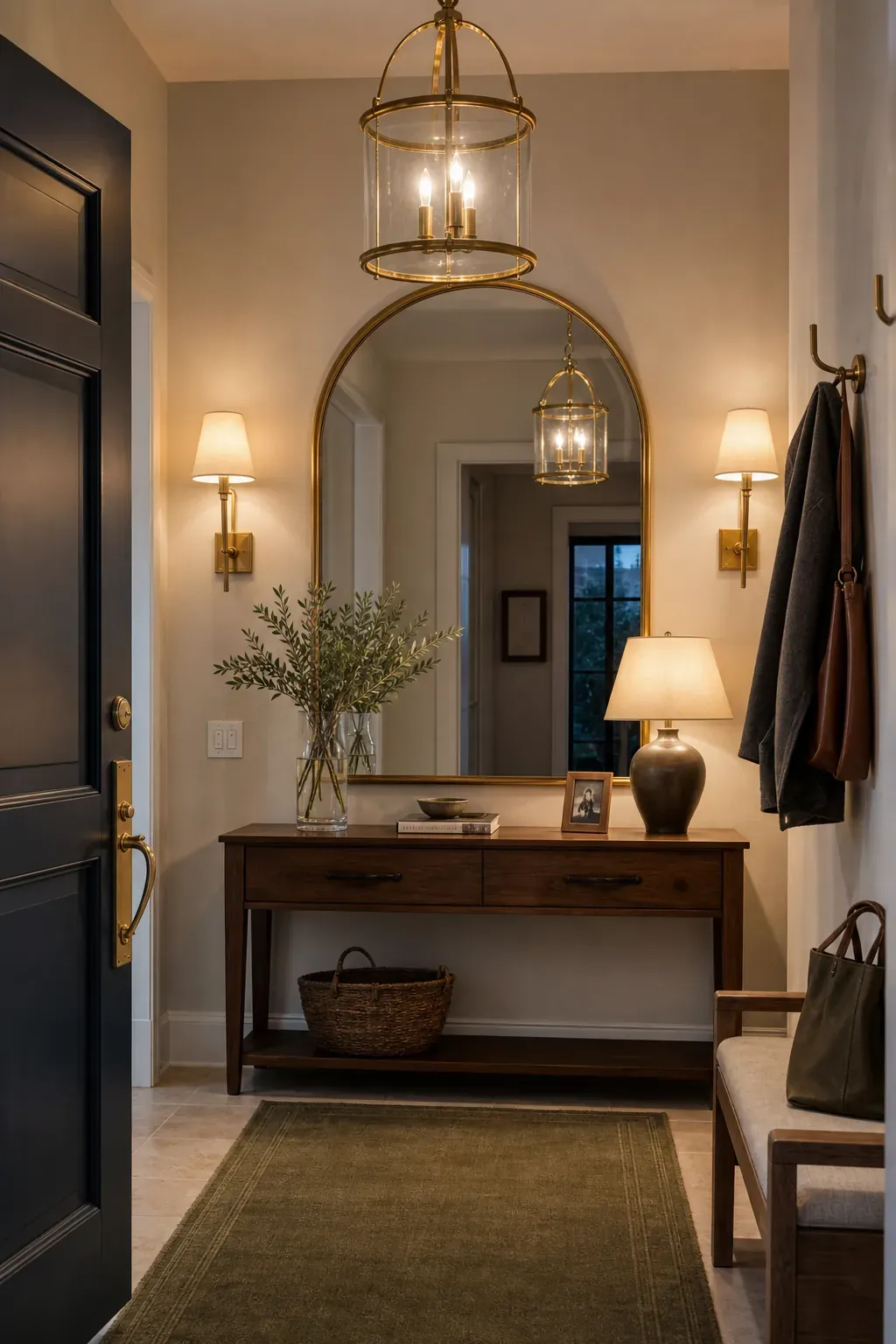
Assign each layer a purpose before selecting controls; otherwise three fixtures merely create a brighter version of the same scene. Verify lamp and dimmer compatibility, group switches in a logical order, and retain independent control where quiet use matters. A qualified installation and an after-dark check from the threshold will reveal whether any reflected source needs a different shade, output, or angle.