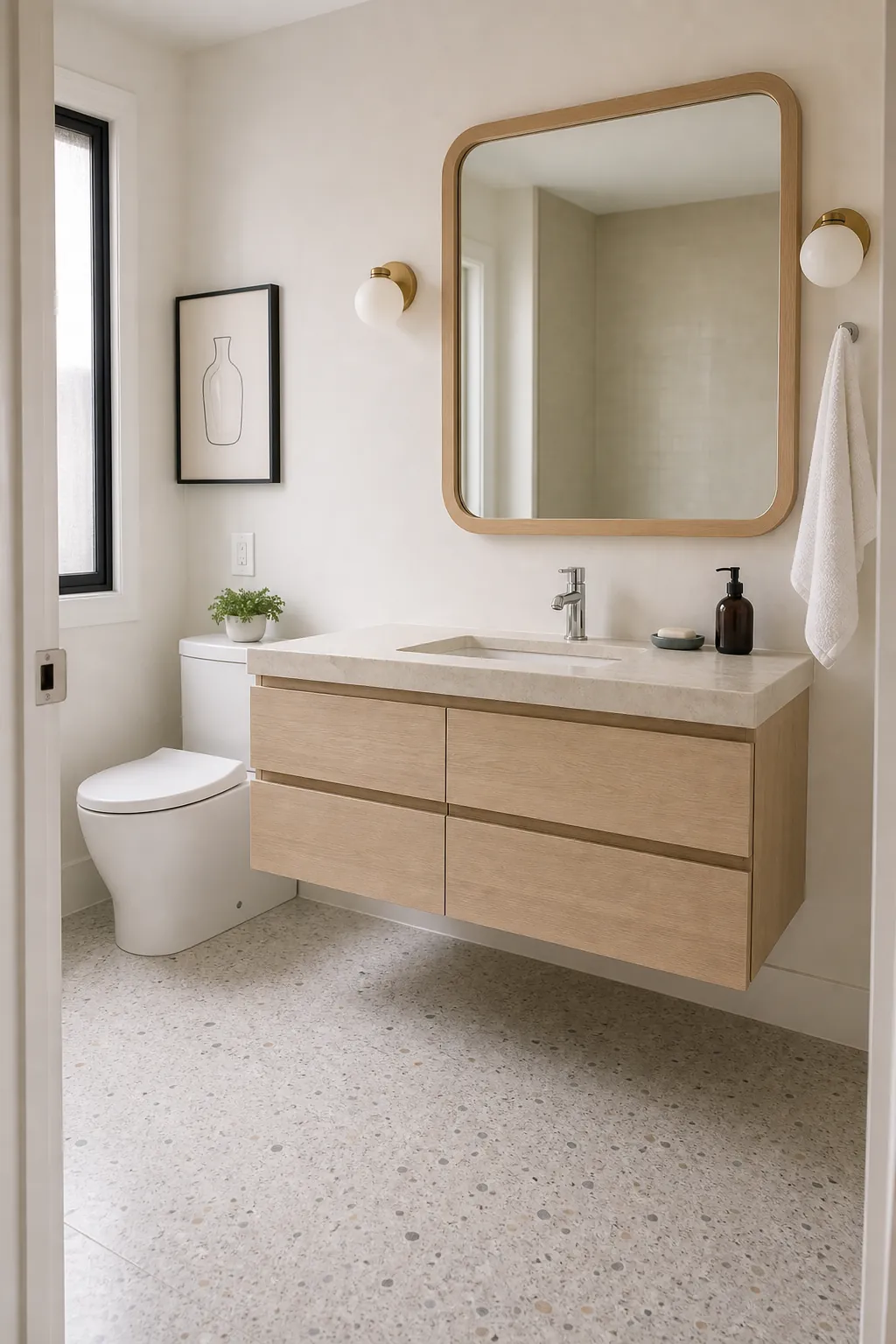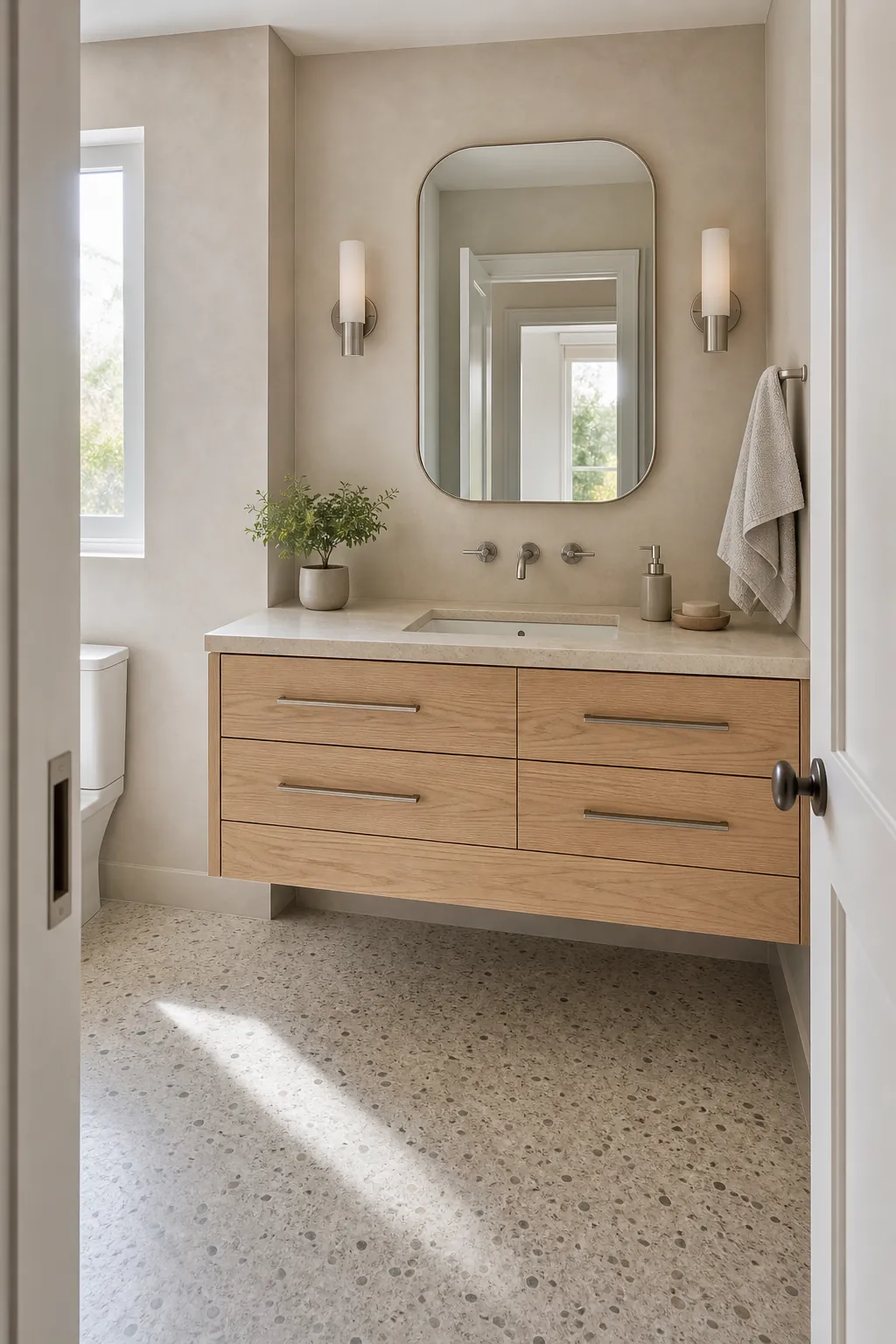
A floating vanity can make a bathroom look cleaner because the floor continues underneath it, but the effect depends on more than removing legs. The cabinet needs a believable mounting height, drawers that work around plumbing, and enough clearance to clean without creating a useless dust slot. These ideas pair visual openness with practical bathroom storage.
Float a White Oak Drawer Vanity
White oak keeps a wall-mounted cabinet light and warm. Choose deep drawers with U-shaped plumbing cutouts rather than one empty box, and leave enough floor clearance for your usual mop or vacuum head.
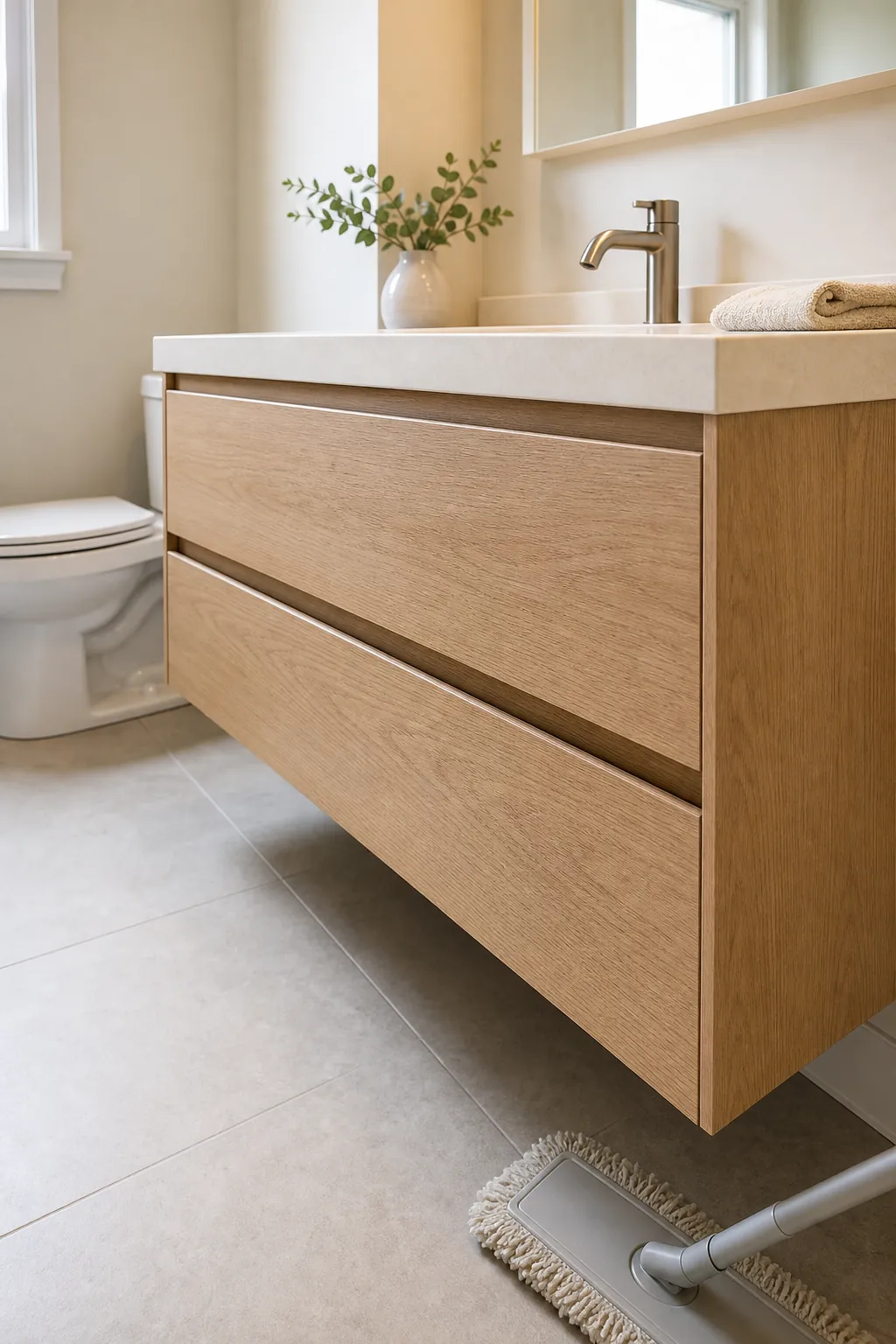
Use a Slim Black Wall-Mounted Cabinet
A shallow black vanity gives a small bathroom definition without consuming the floor. Pair it with a pale counter and mid-tone wall so the cabinet reads as a precise line, not a heavy block.
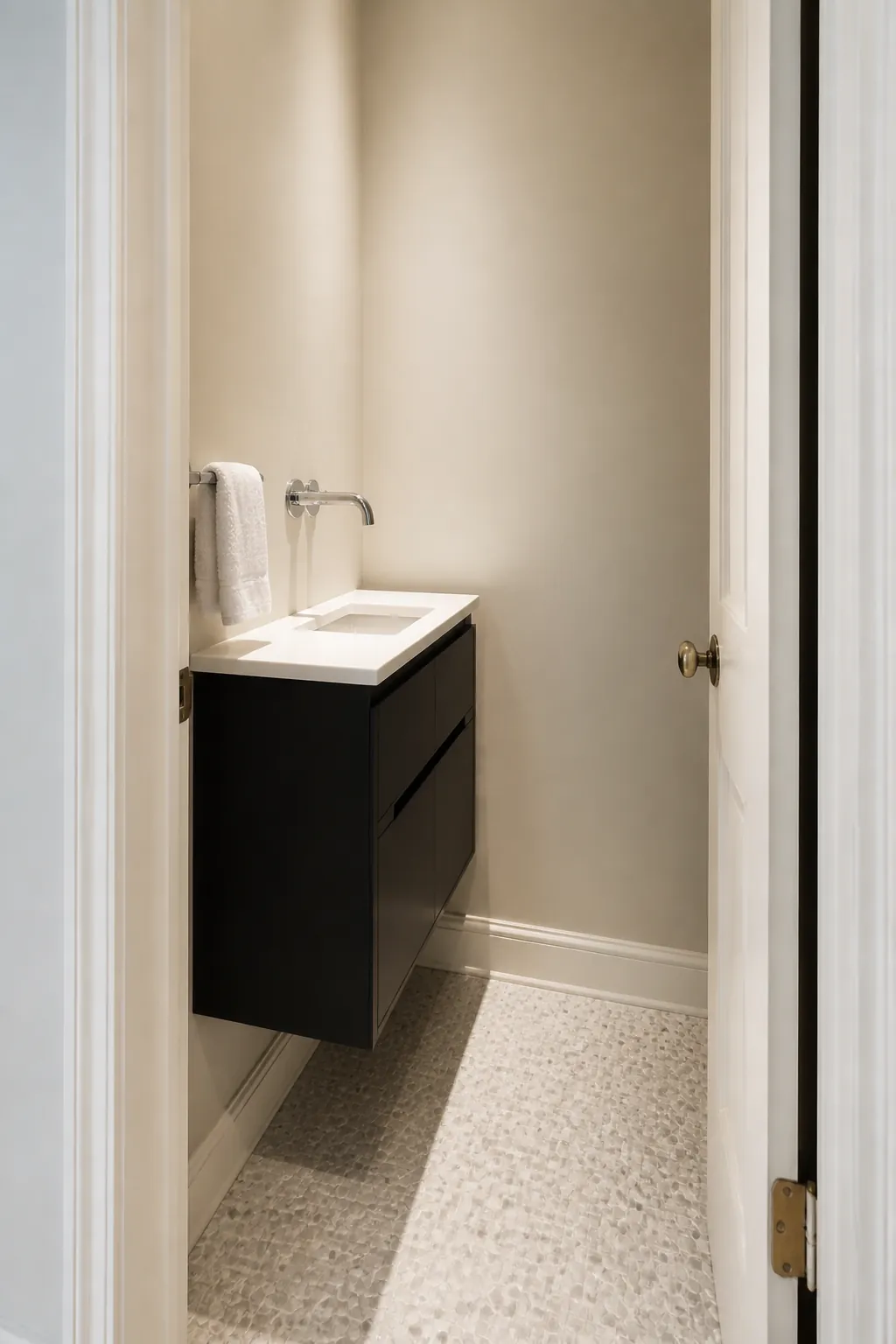
Run the Vanity Wall to Wall
A custom wall-to-wall cabinet eliminates narrow gaps that trap dust and bottles. Use filler panels or carefully scribed ends, then keep the underside open and continuous for easy floor cleaning.
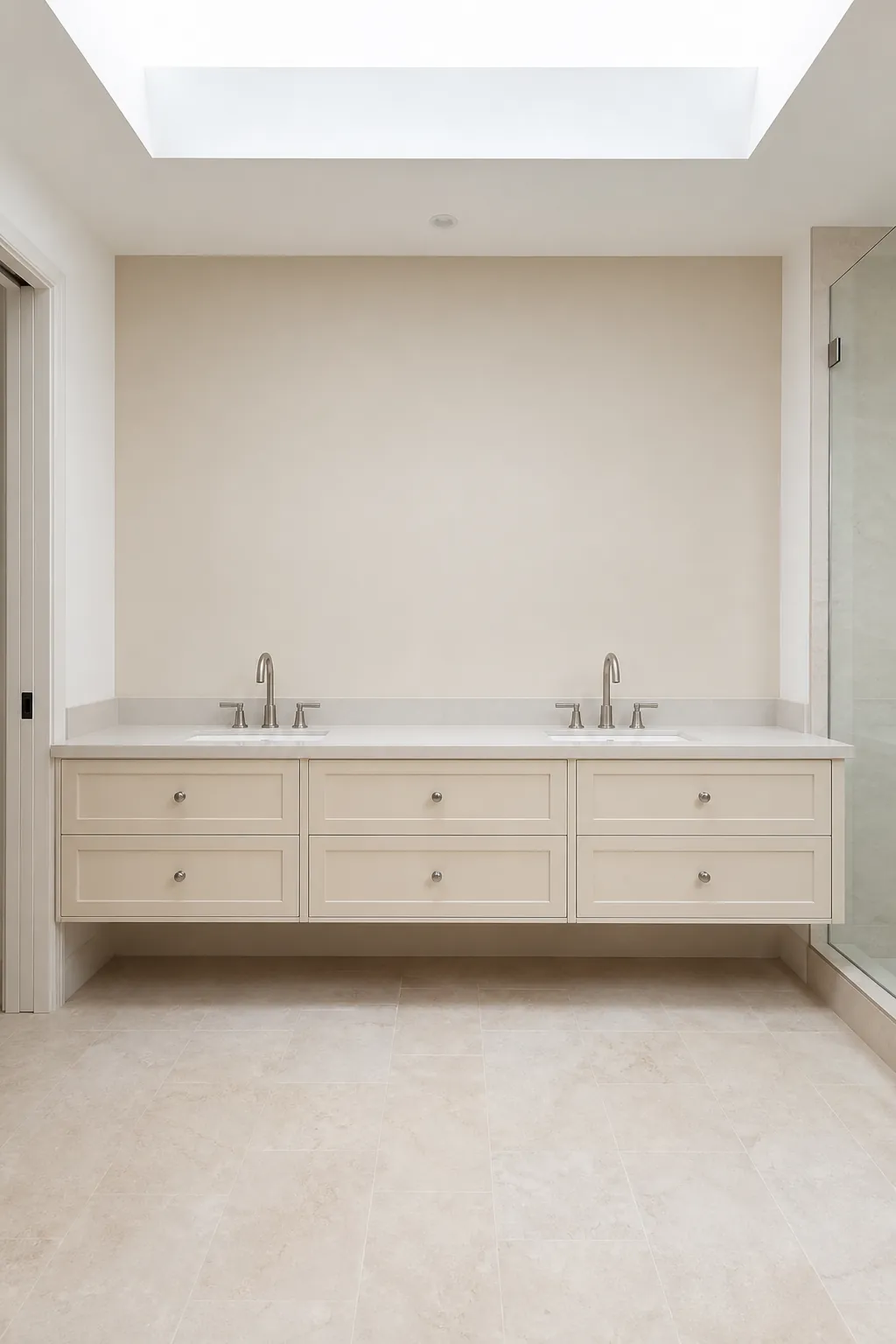
Choose a Rounded Floating Vanity
Rounded end panels soften traffic through a tight bathroom and reduce the number of sharp corners near hips and doorways. Curved drawer fronts cost more, but a single rounded exposed end can deliver most of the benefit.
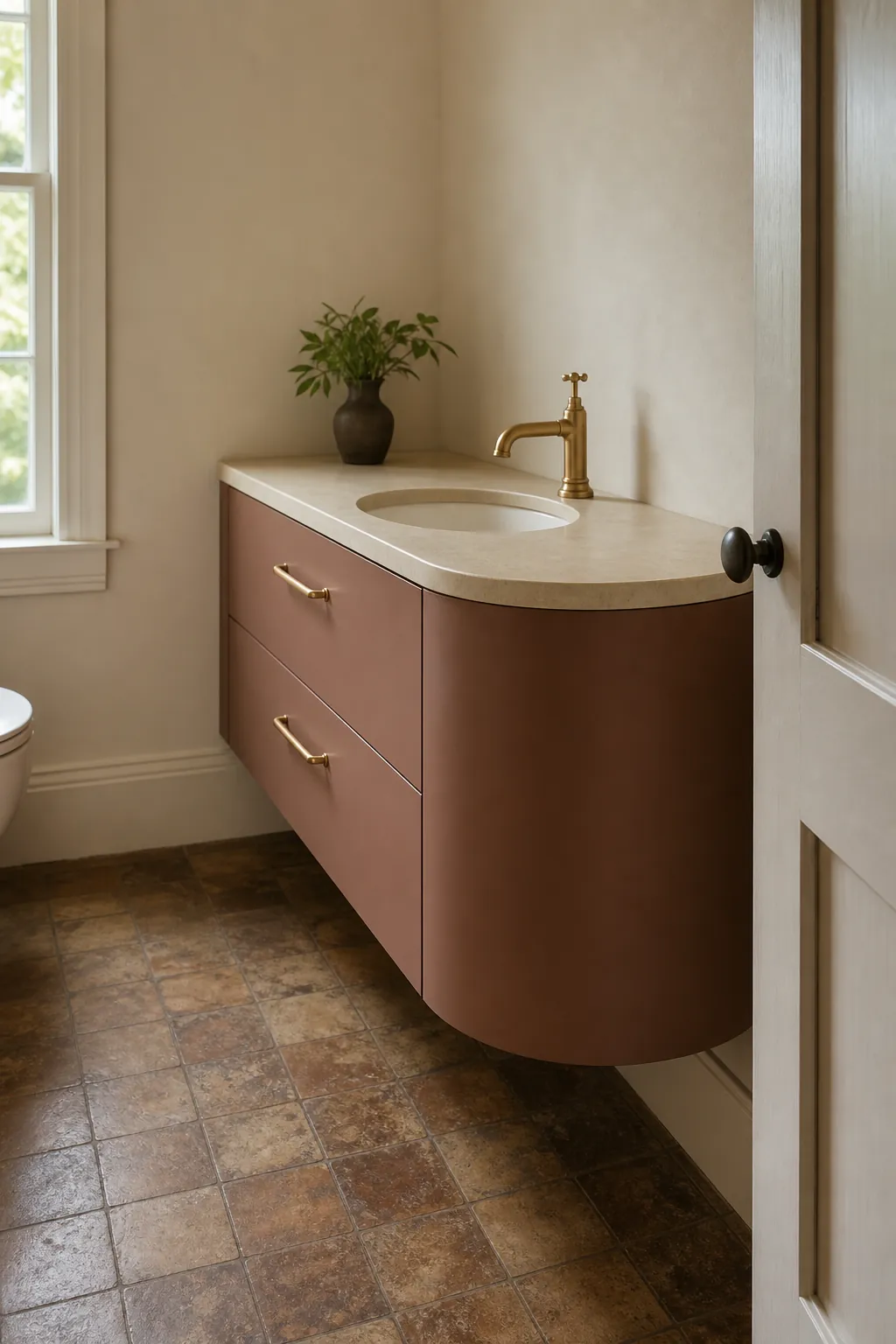
Pair a Concrete Trough With Oak
A slim concrete-look trough basin creates one clean horizontal plane over warm oak drawers. Confirm the basin has adequate slope and usable faucet reach; minimal lines should never mean standing water.
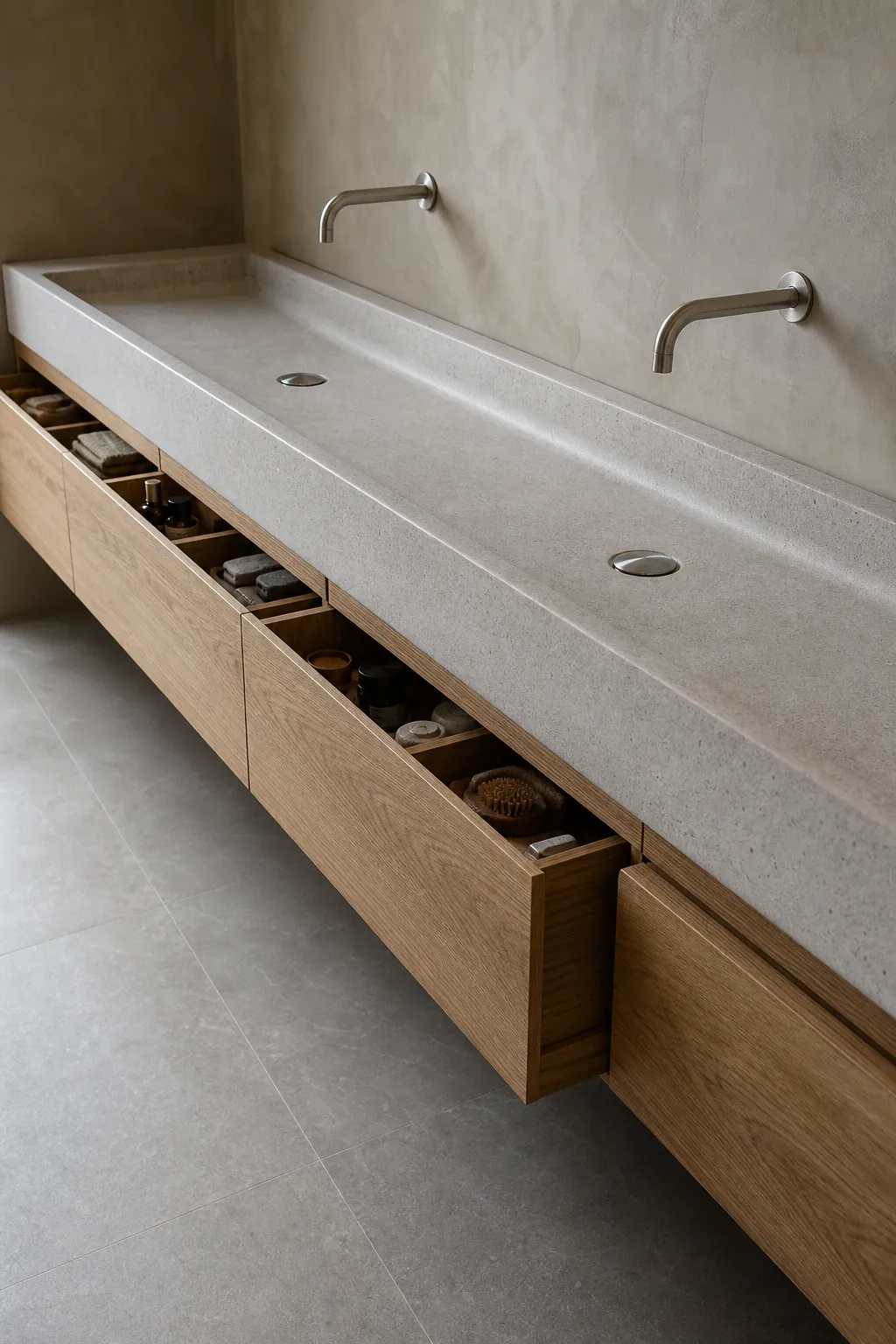
Add an Open Towel Shelf
A narrow shelf beneath the main drawer keeps two folded towels accessible while preserving the floating outline. Stop before it becomes a display ledge: backup toiletries and cleaning products are calmer behind a closed front.
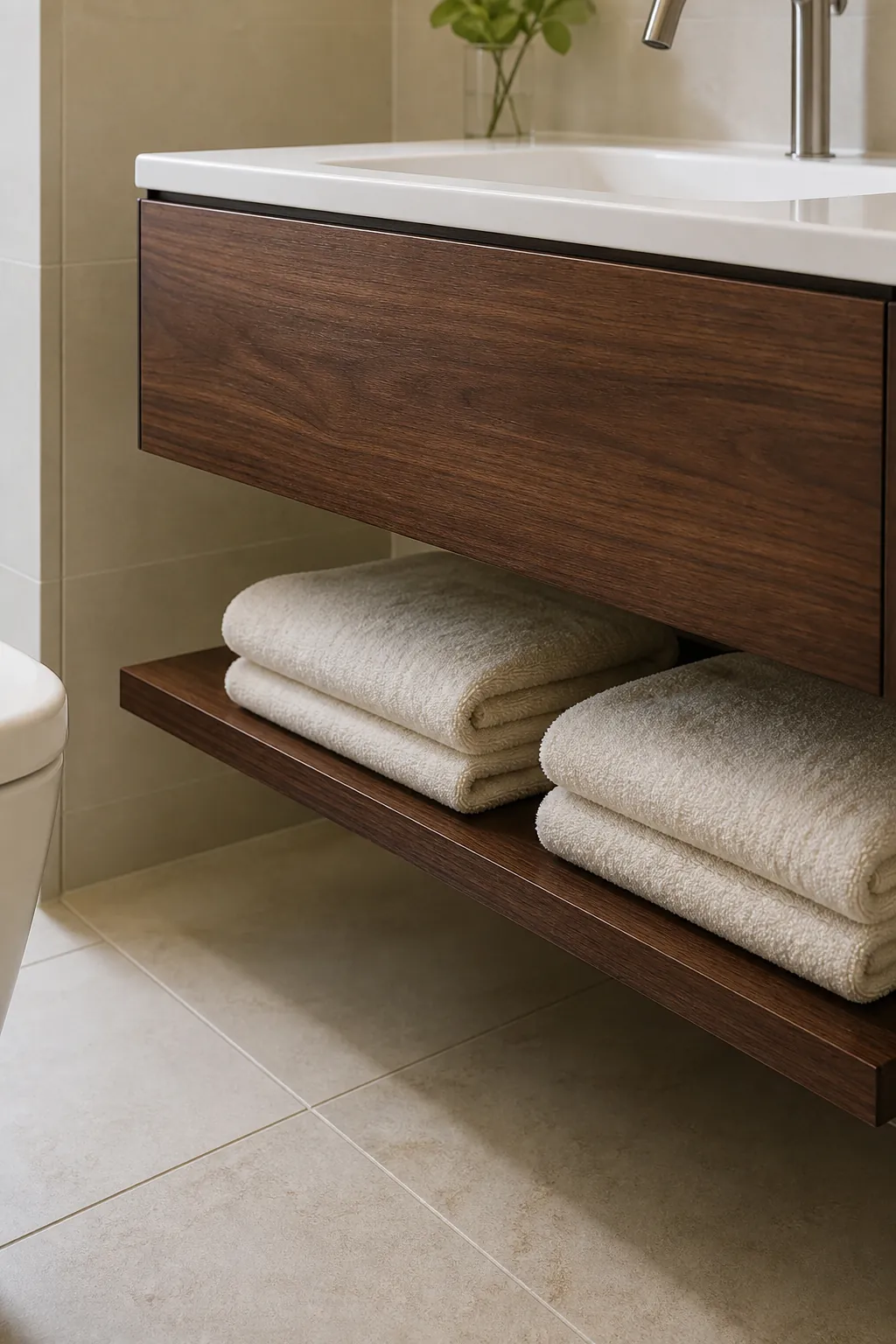
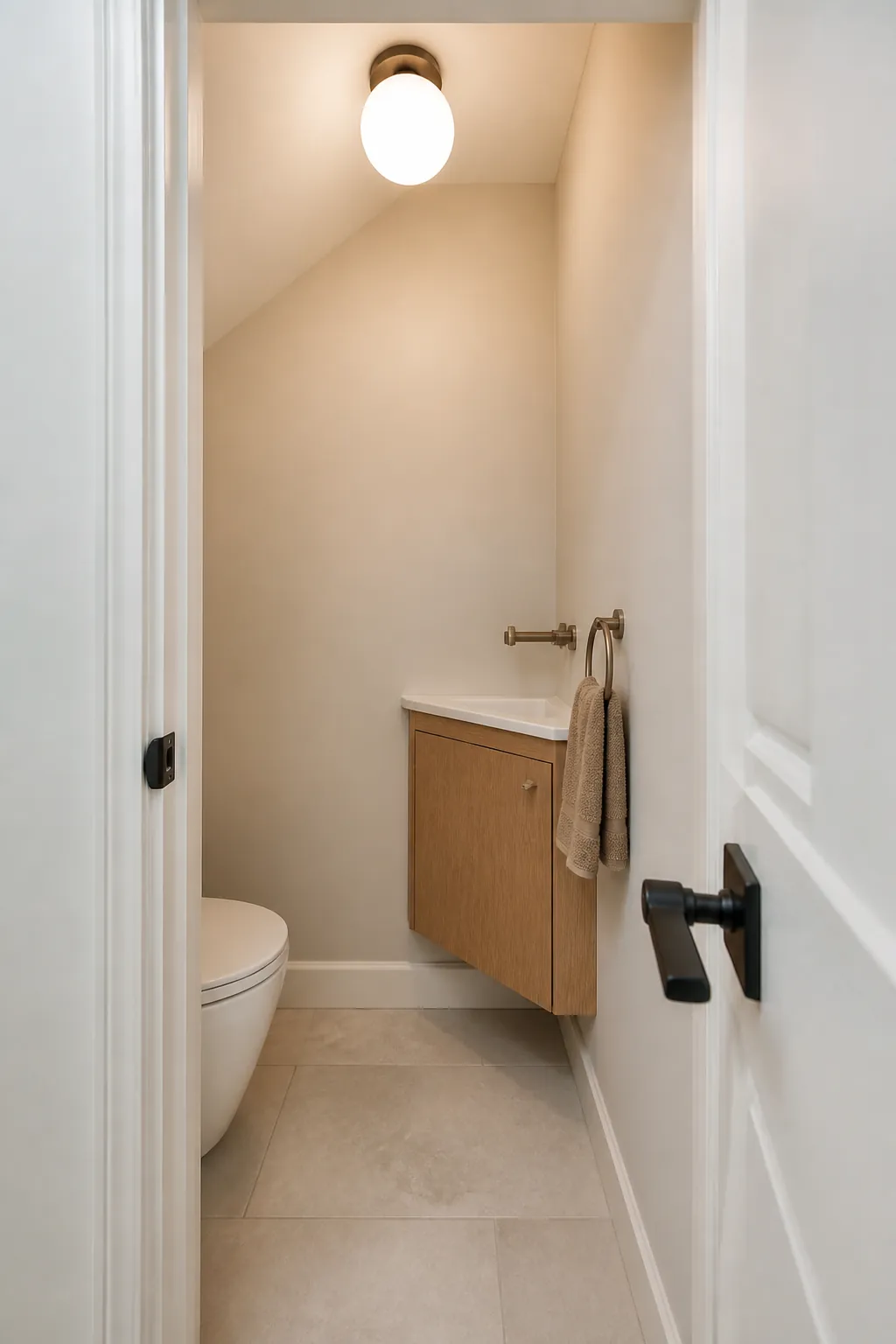
Mount a Corner Floating Vanity
A corner vanity can release the center of a tiny powder room, especially when the door and toilet create awkward circulation. Use a purpose-built basin and verify knee, door, and faucet clearances before ordering.
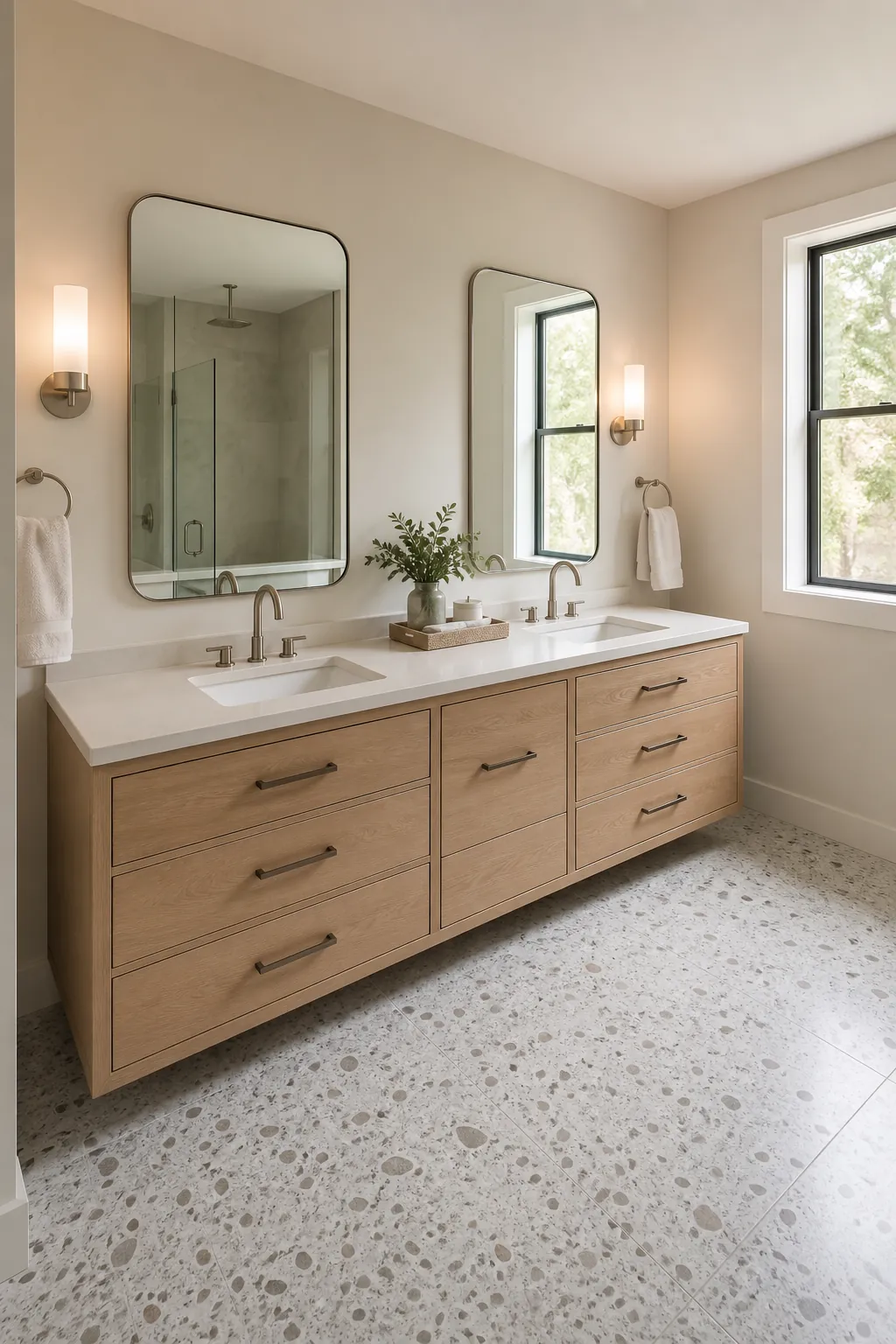
Create a Double Floating Vanity
A long double vanity looks lighter when one continuous cabinet floats above the floor. Give each person a drawer stack and leave a shared center zone for less-used supplies so the countertop can remain clear.
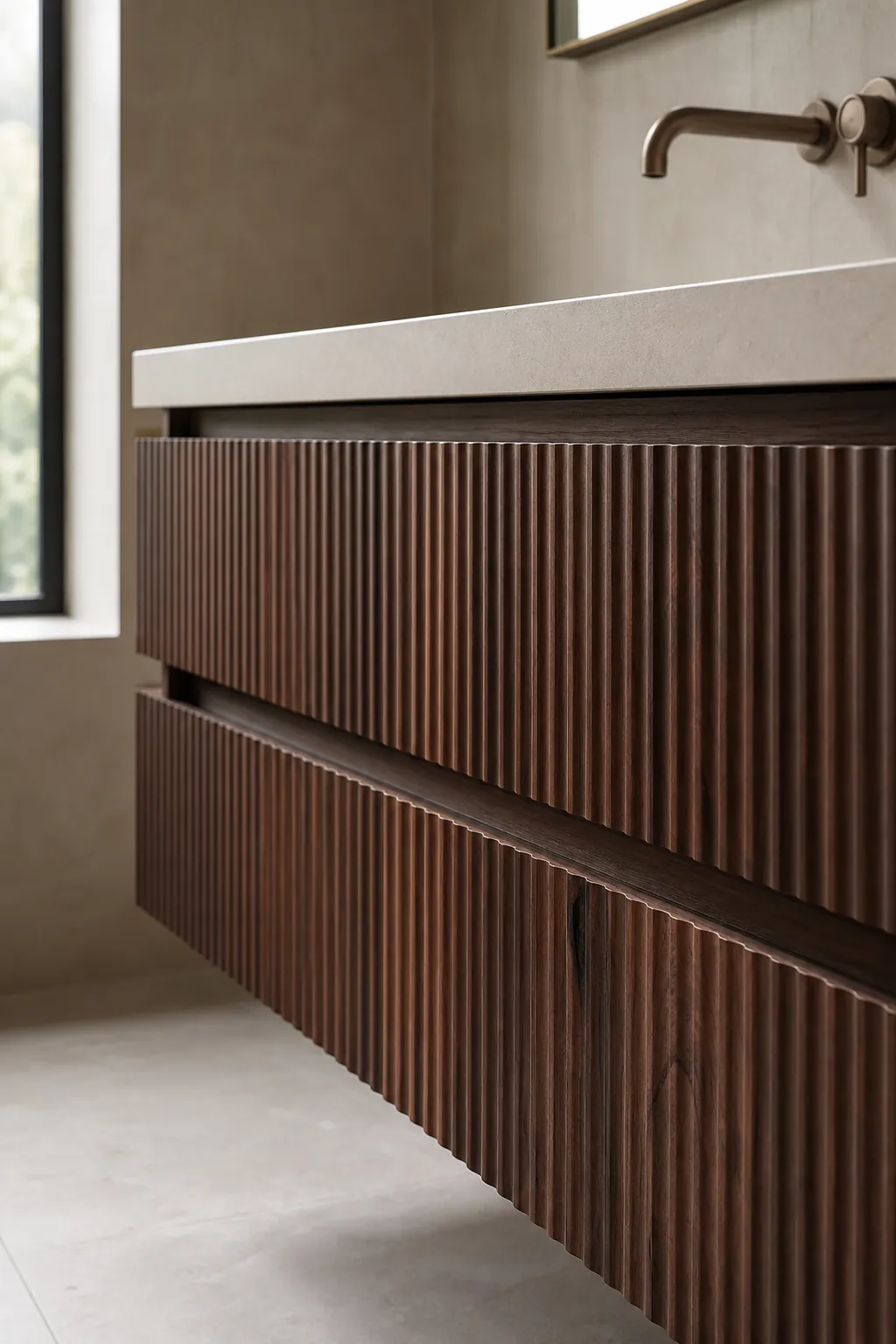
Use Fluted Walnut Fronts
Fluted walnut catches side light and gives a floating cabinet depth without visible handles. Specify touch latches rated for frequent use, or hide a finger pull along the top edge for easier daily access.
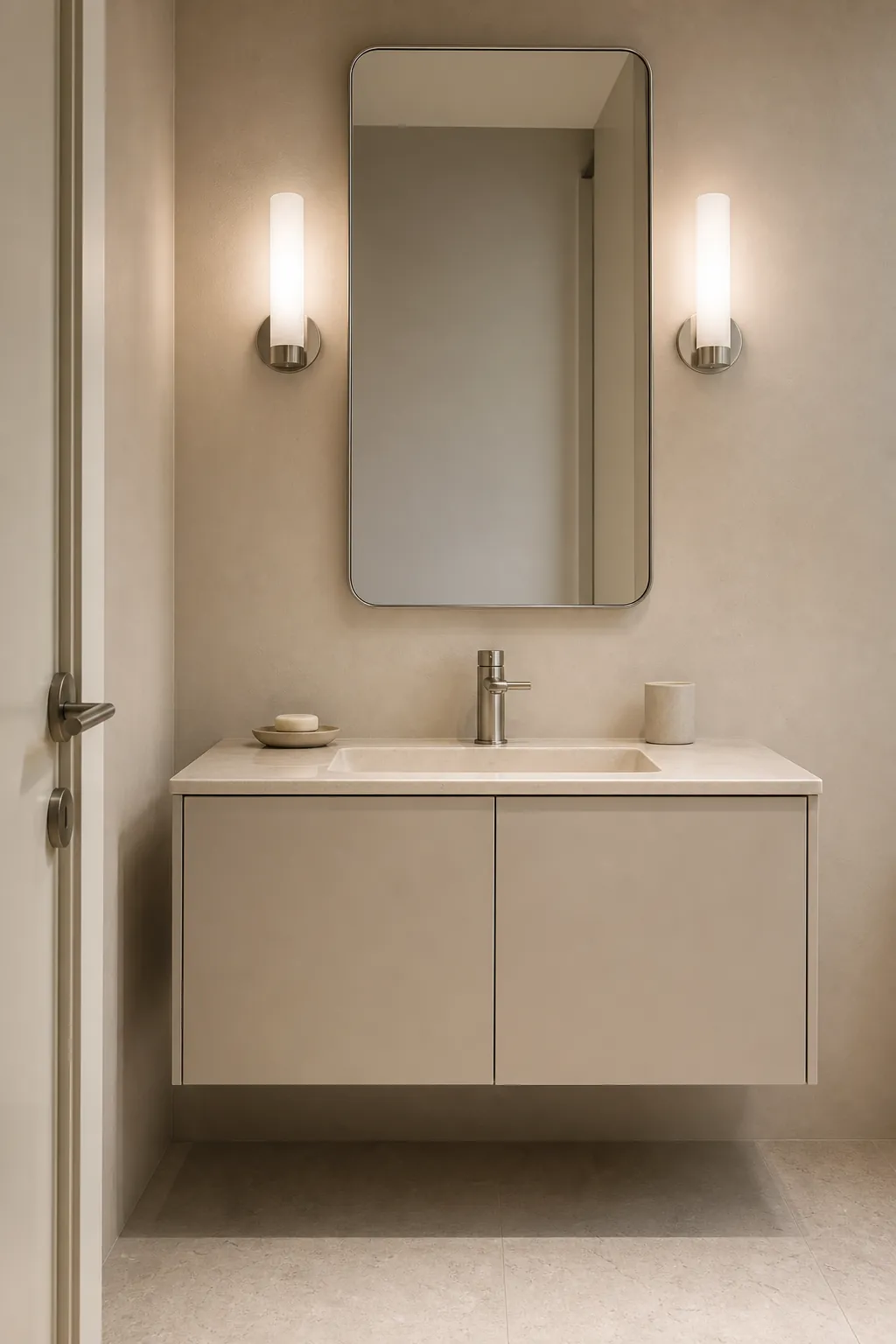
Match the Vanity to the Wall
Painting a floating vanity the same putty or clay tone as the wall makes it recede while its shadow line preserves depth. Use a durable cabinet finish rather than wall paint so wet hands do not quickly mark the drawers.
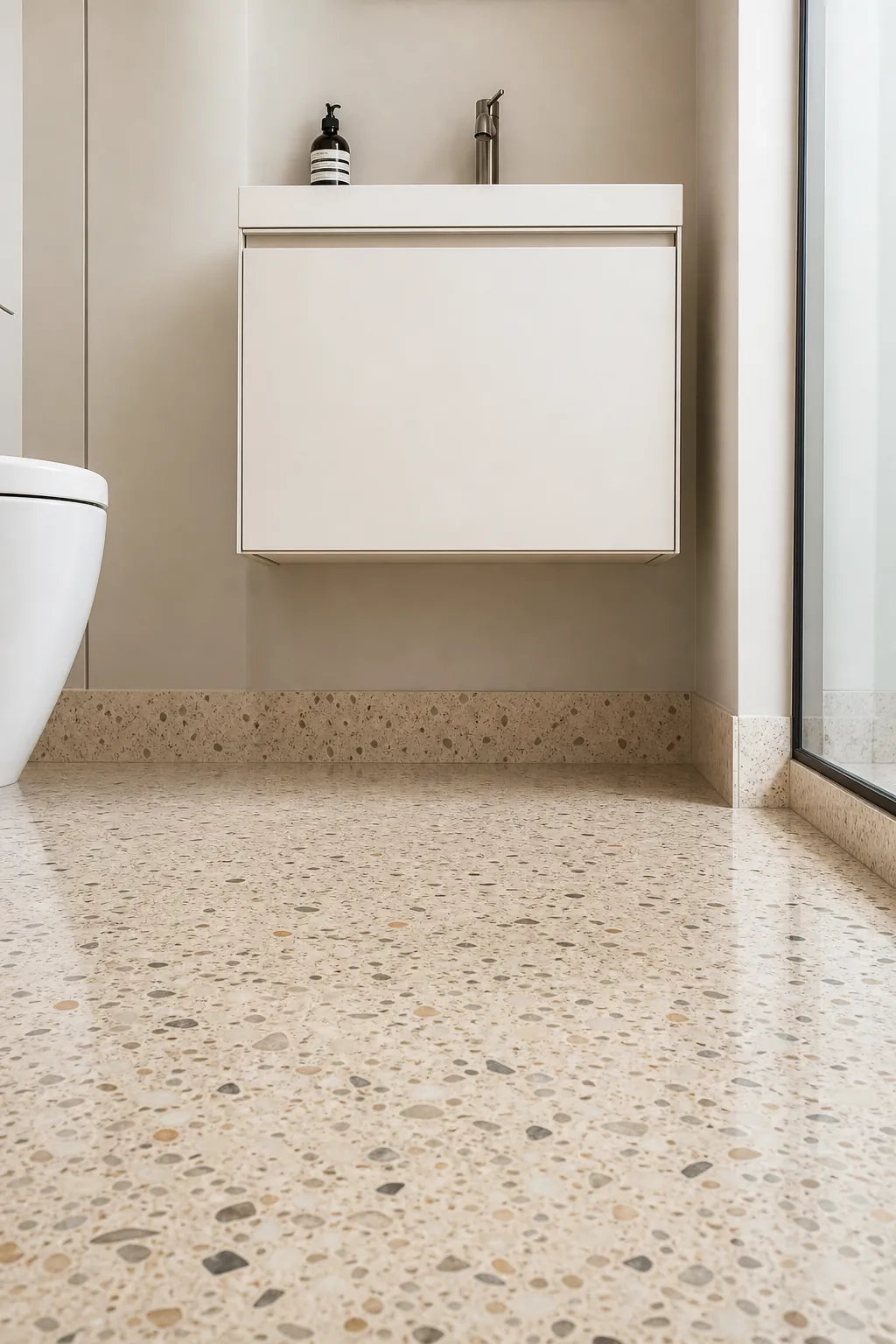
Let Terrazzo Continue Underneath
Continuous terrazzo emphasizes the open floor below a wall-mounted vanity. Select a small-scale aggregate for a compact room and keep baskets off the floor, or the visual benefit disappears.
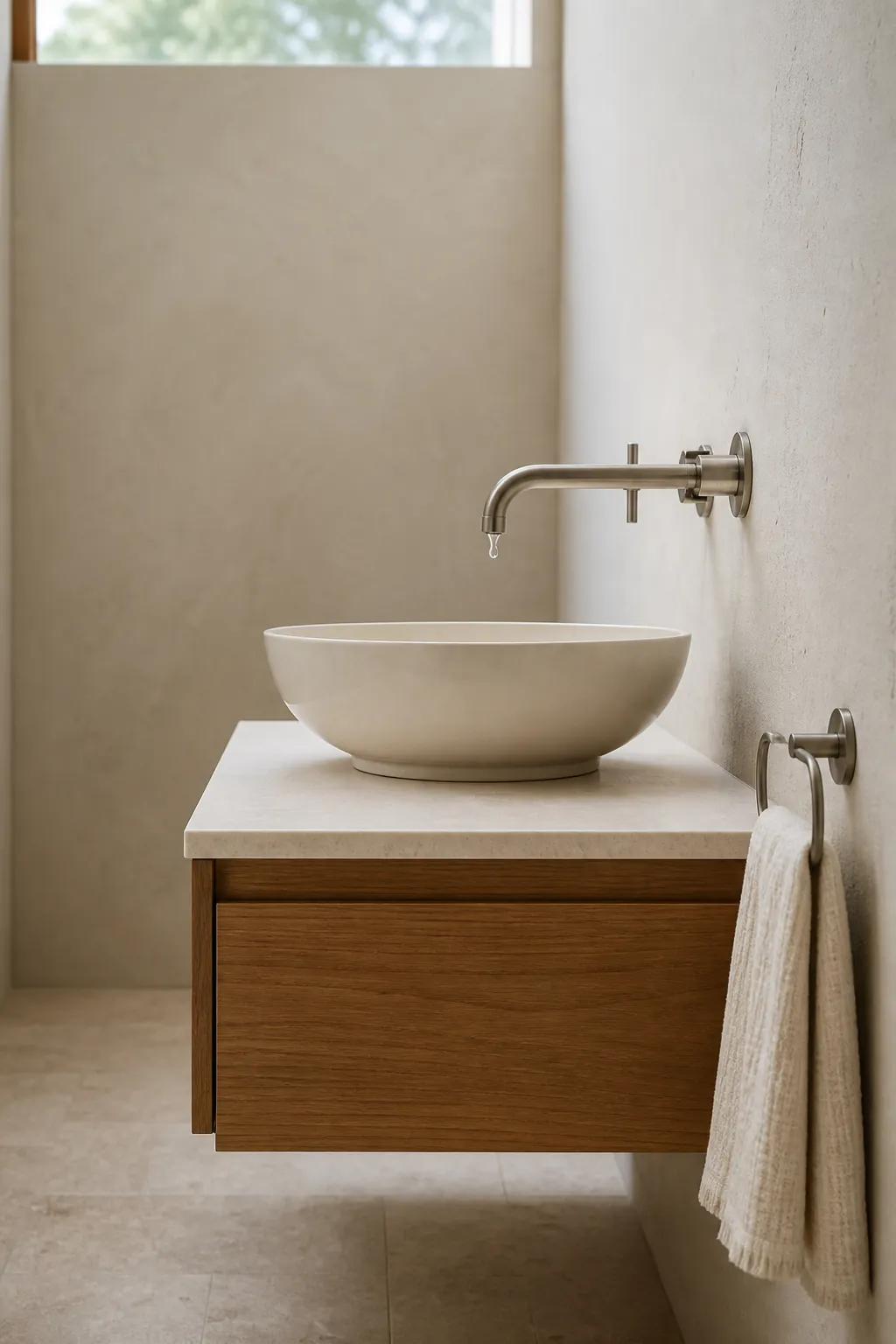
Use a Vessel Sink on a Thin Slab
A vessel basin allows a thinner-looking vanity box, but the combined counter and bowl height must remain comfortable. Choose a shallow, broad bowl and a faucet that lands water near the drain to reduce splashing.
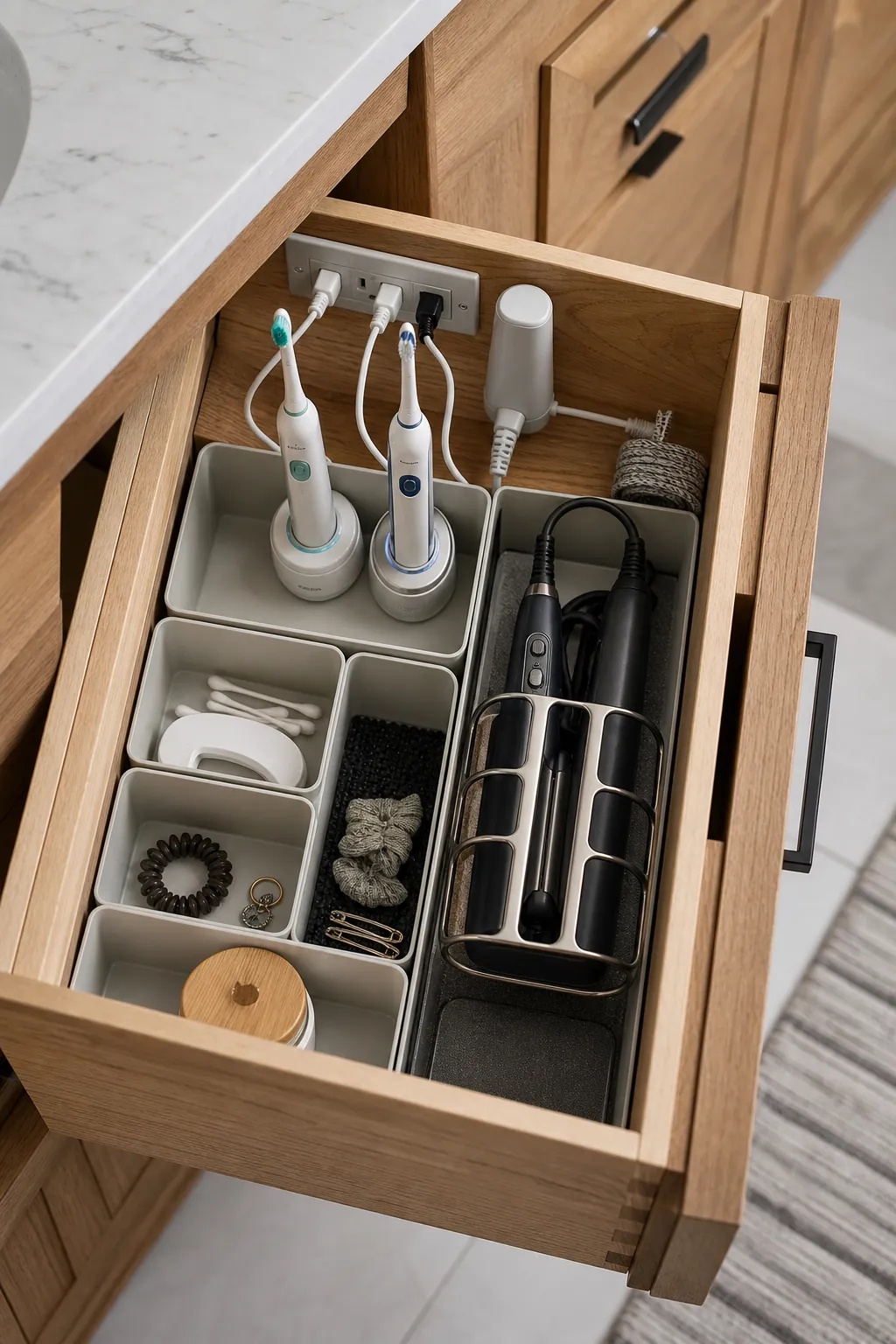
Hide Power Inside a Drawer
A code-compliant in-drawer outlet keeps toothbrushes and hair tools off the counter. Use a listed system installed by a qualified electrician, with cord management and heat-safe holders rather than a loose extension lead.
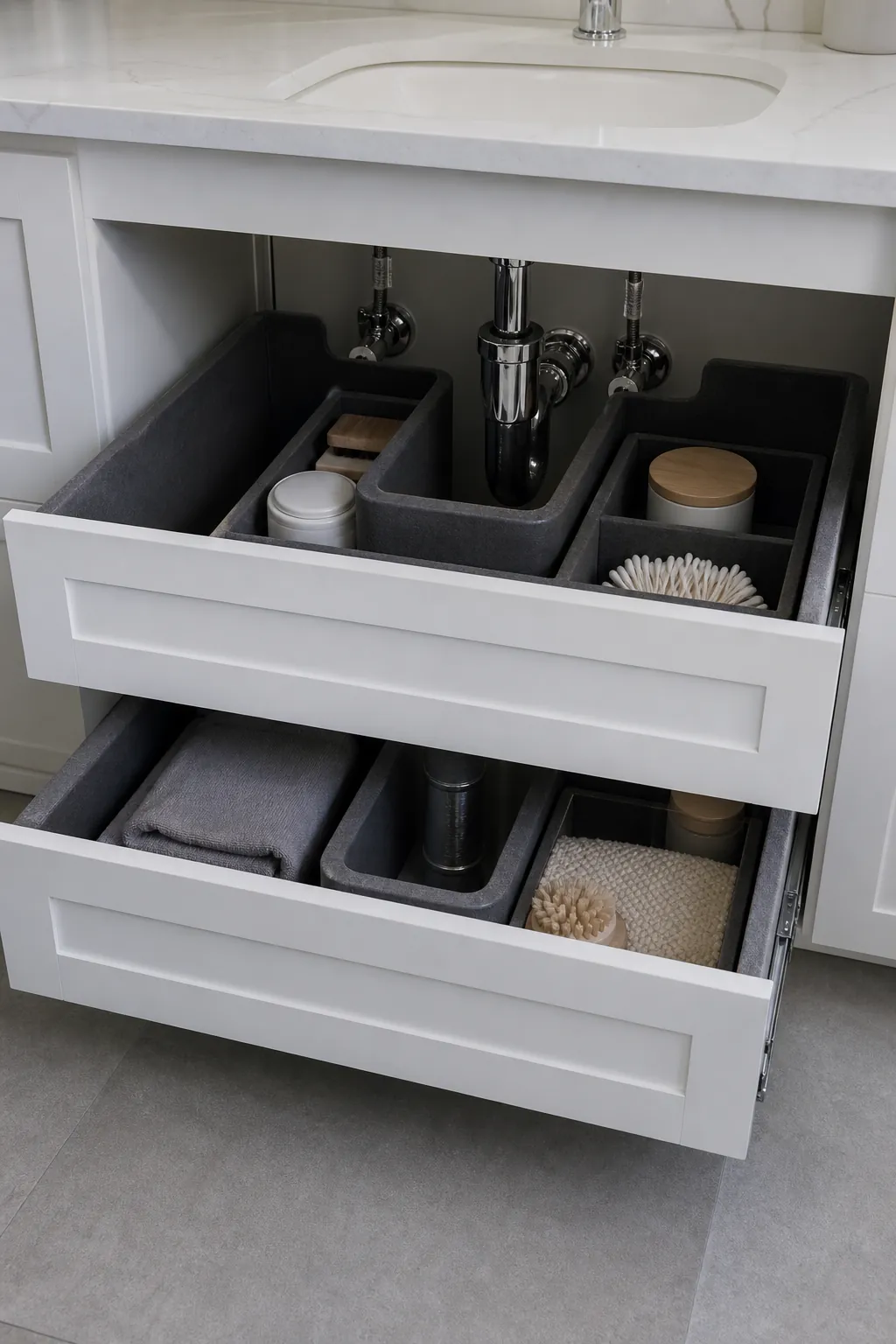
Build Around Exposed Plumbing
When a renovation cannot move the drain, use stepped drawers or a neat central plumbing chase. Planning the cutouts first preserves more storage than discovering the trap location after the cabinet arrives.
Extend a Makeup Ledge
A lower floating ledge beside the basin creates a seated grooming spot without making the whole vanity too low. Keep the stool tucked beneath it and use shallow drawers for brushes and small daily items.
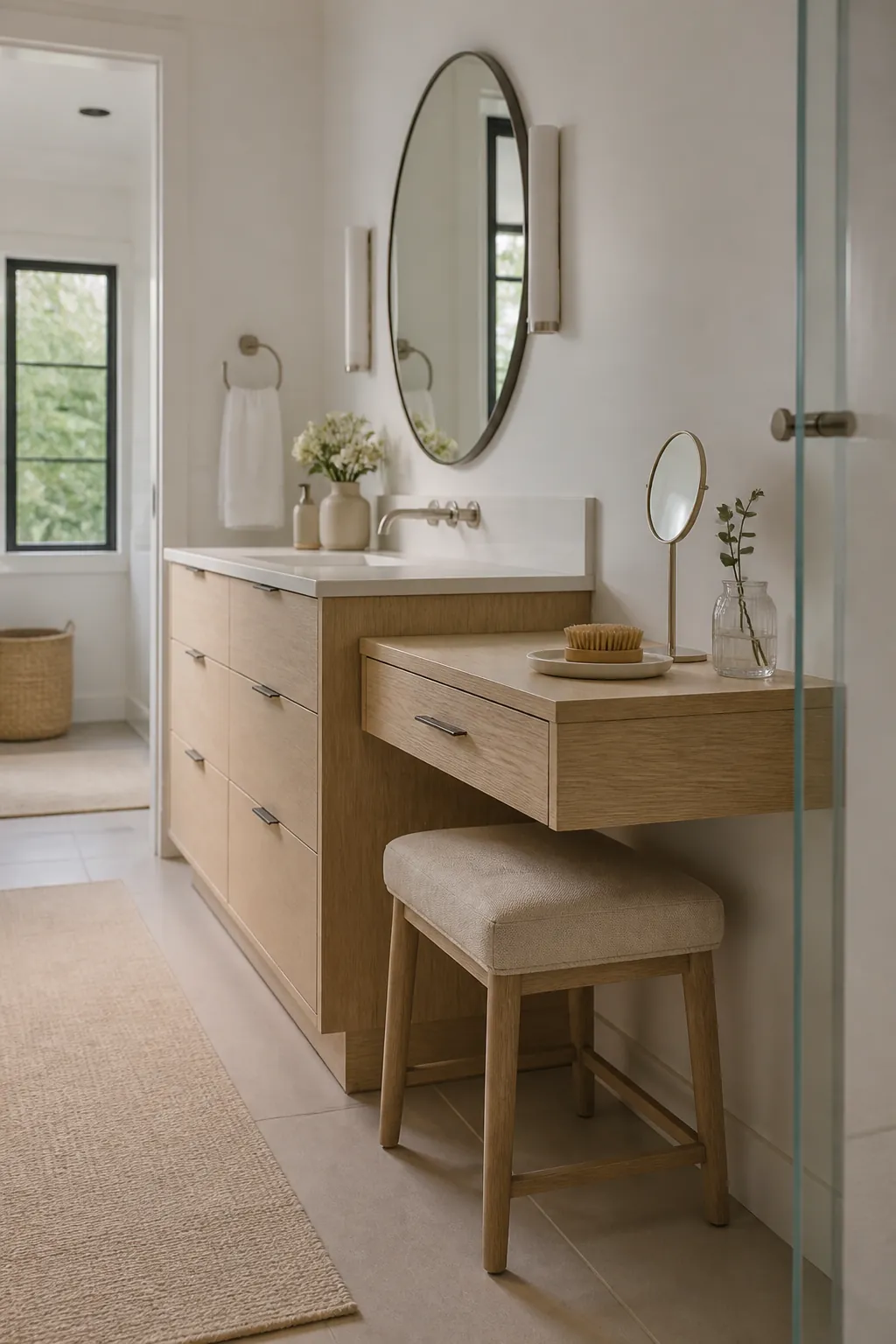
Center a Floating Vanity in an Alcove
Leaving equal breathing room on both sides of a floating cabinet can make an alcove feel intentional. Make the gaps wide enough to clean; two narrow slivers are worse than a properly scribed wall-to-wall fit.
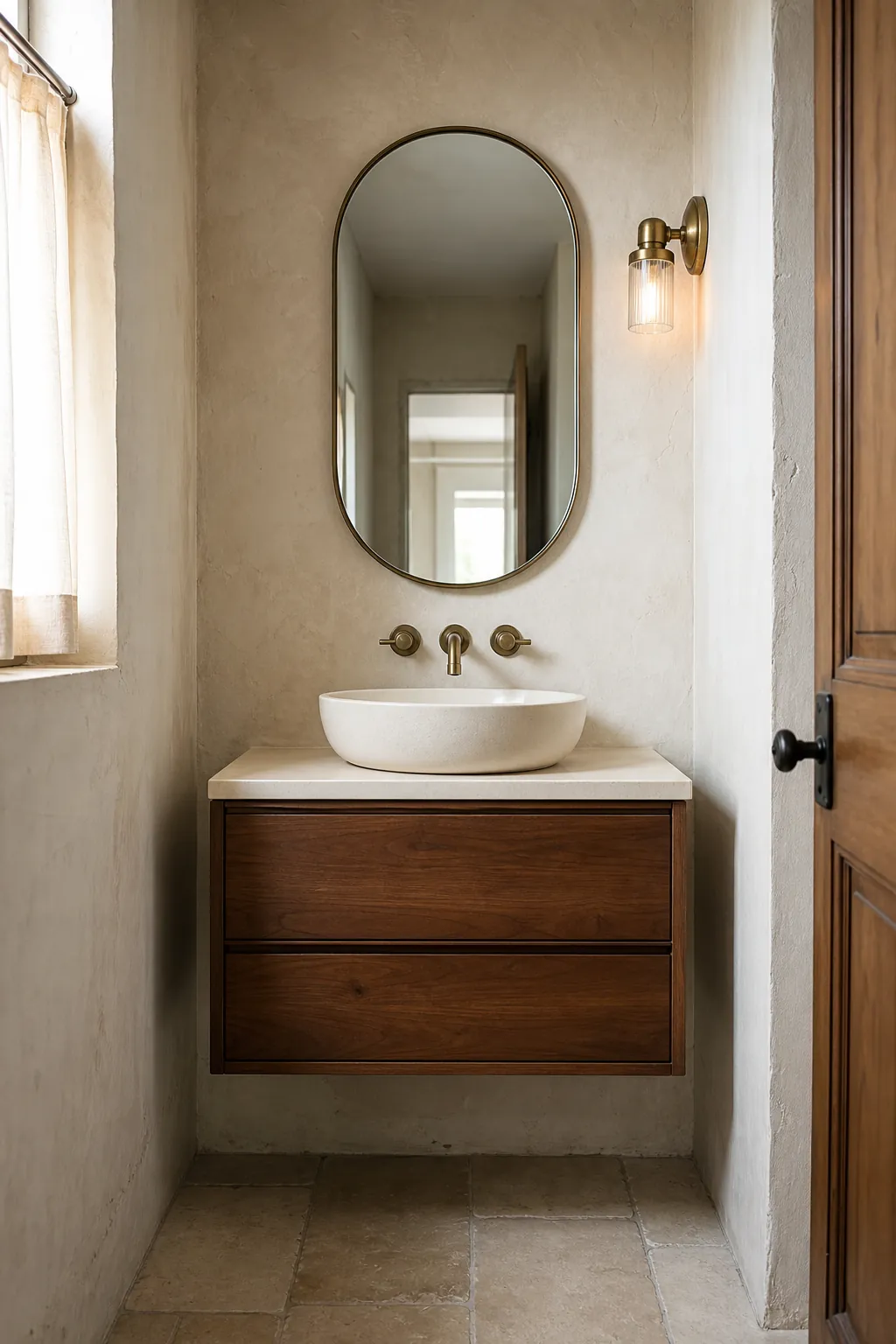
Add Soft Under-Vanity Night Lighting
A concealed low-output strip can provide safe nighttime navigation without flooding the bathroom. Use a warm, dimmable, bathroom-rated system in a proper channel so individual dots and harsh glare are not visible.
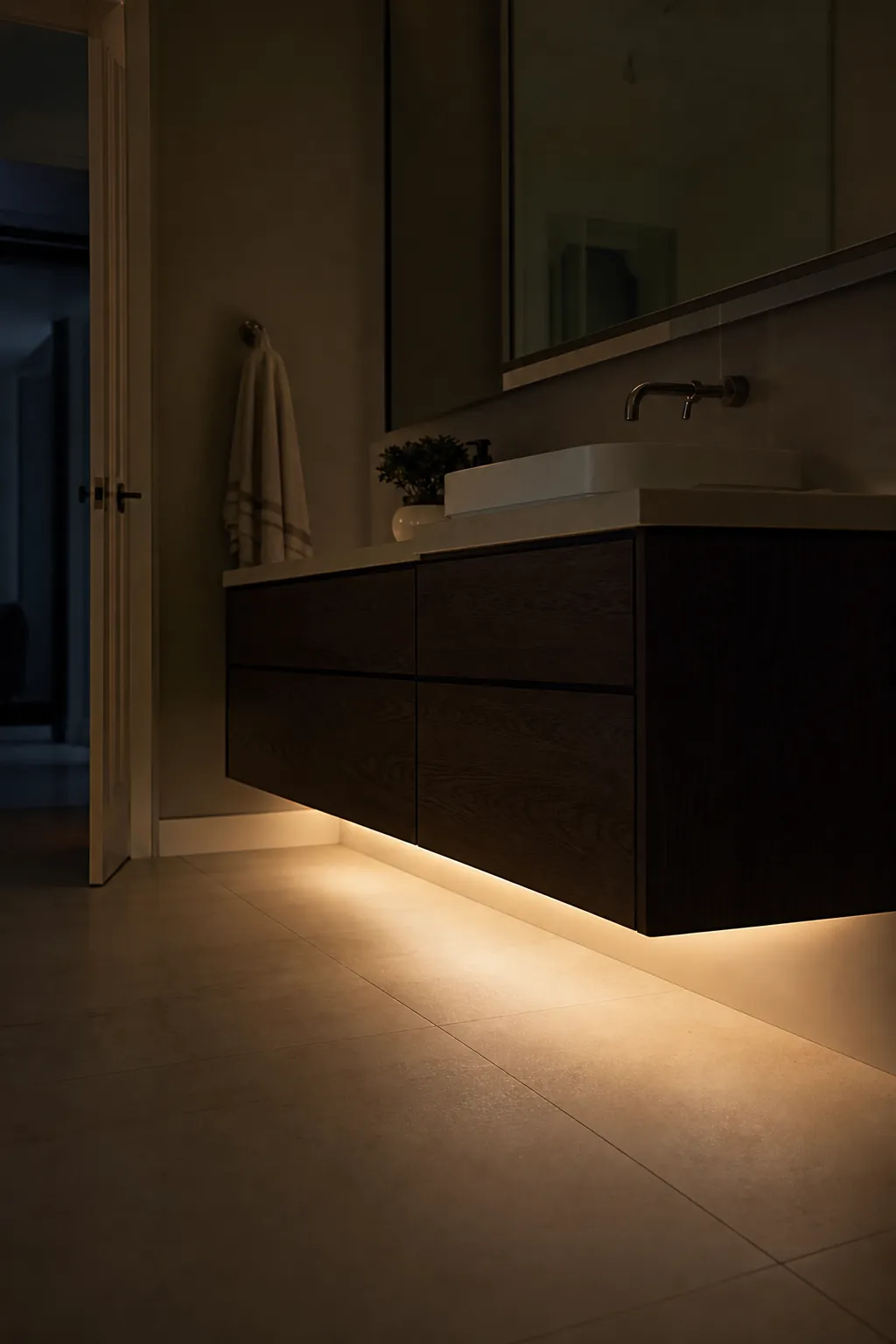
Pair It With a Full-Width Mirror
A mirror aligned to the vanity width strengthens the clean horizontal composition and reflects light through a narrow room. Leave enough space for sconces or choose an integrated bathroom-rated light rather than squeezing fixtures at the edges.
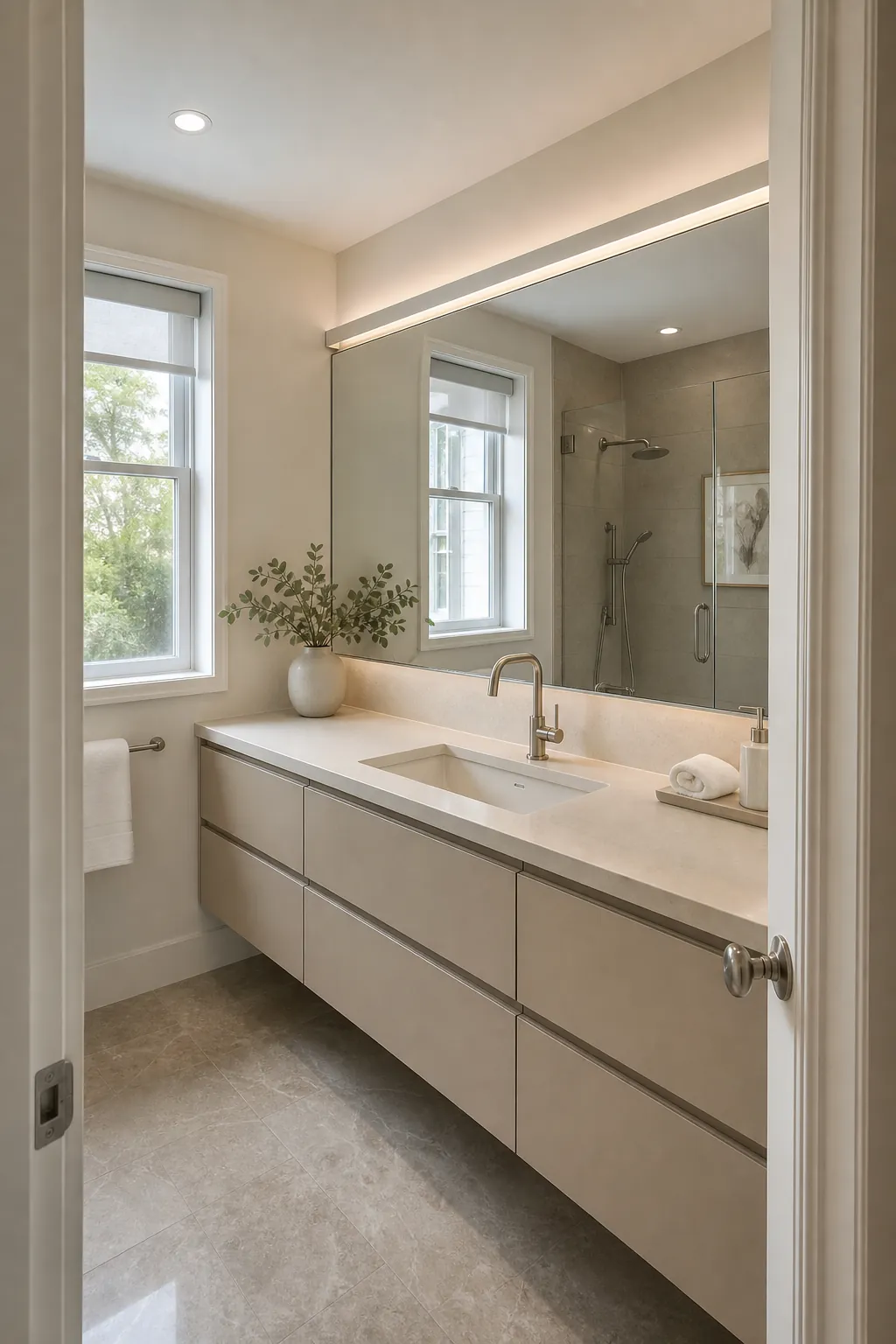
Keep the Floor Truly Clear
The final styling decision is often subtraction. If bins, scales, spare toilet paper, and stools permanently fill the space below the cabinet, the floating design no longer makes the bathroom feel clean. Give those items a drawer, wall hook, or nearby closed cupboard.
Before installation, mark the vanity outline on the wall and test the height with every regular user. The best floating vanity is not the highest or thinnest one—it is the cabinet that cleans easily, stores what you own, and leaves a convincing band of open floor.