
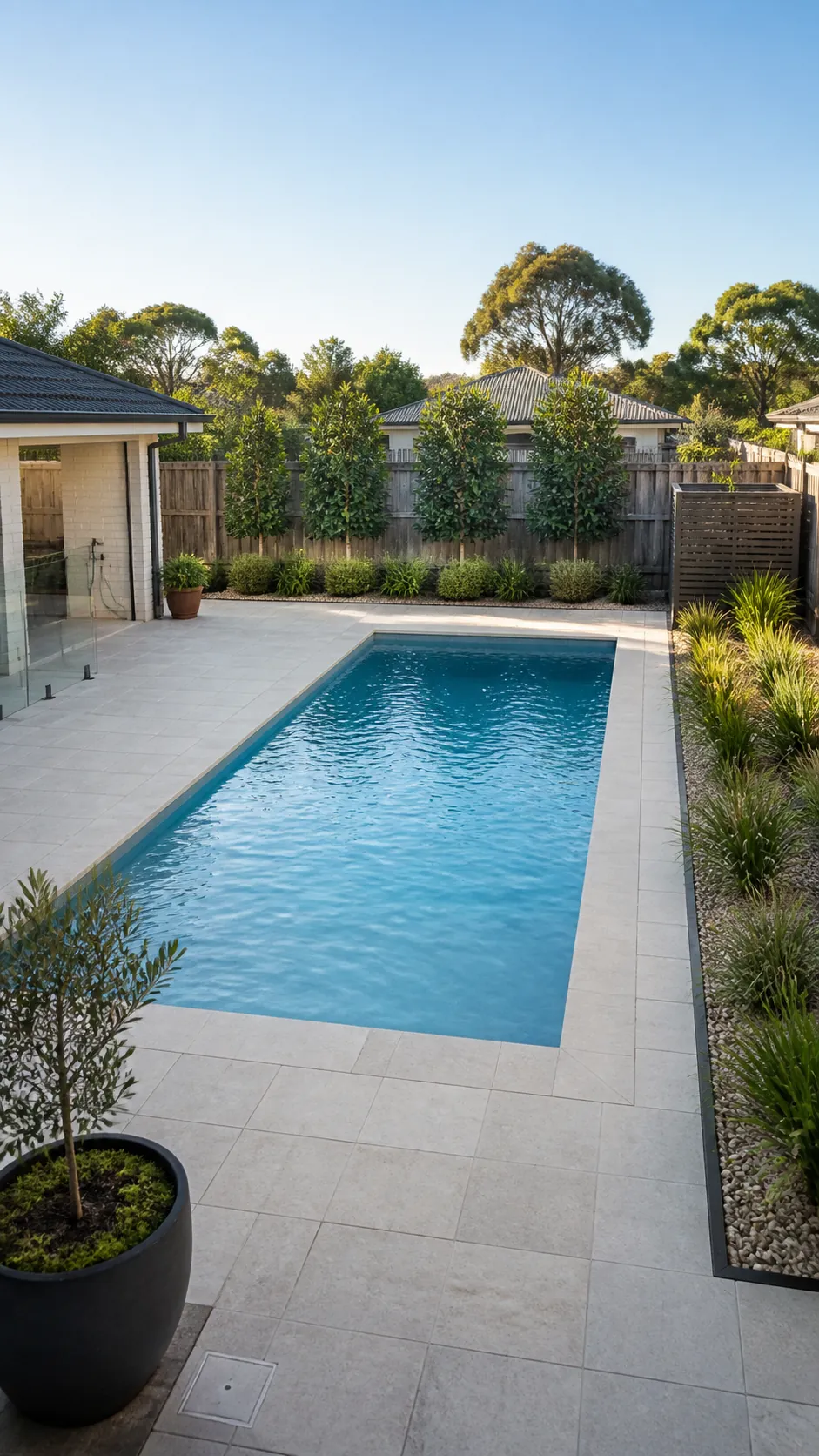
A pool should make weekends easier, yet the wrong landscape can turn every swim into a round of skimming, sweeping, watering, and weeding. The most successful low-maintenance pool landscaping is designed around the chores you want to avoid: leaf litter, muddy splash zones, thirsty lawn, blocked equipment access, and plants that quickly outgrow their space. These 19 ideas favor durable materials, climate-smart planting, and simple layouts that still feel lush.
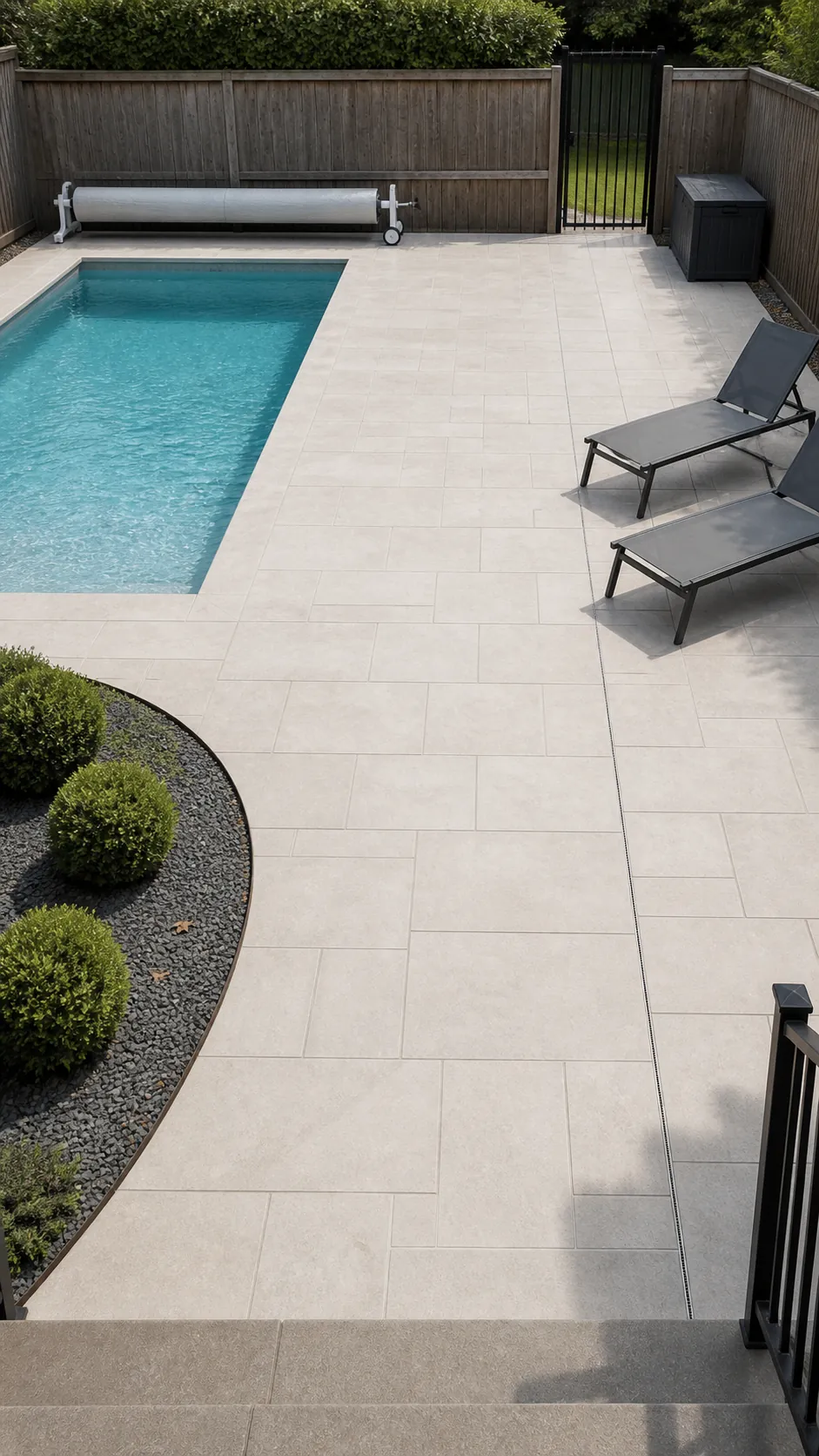
Start With a Wide, Clean Pool Edge
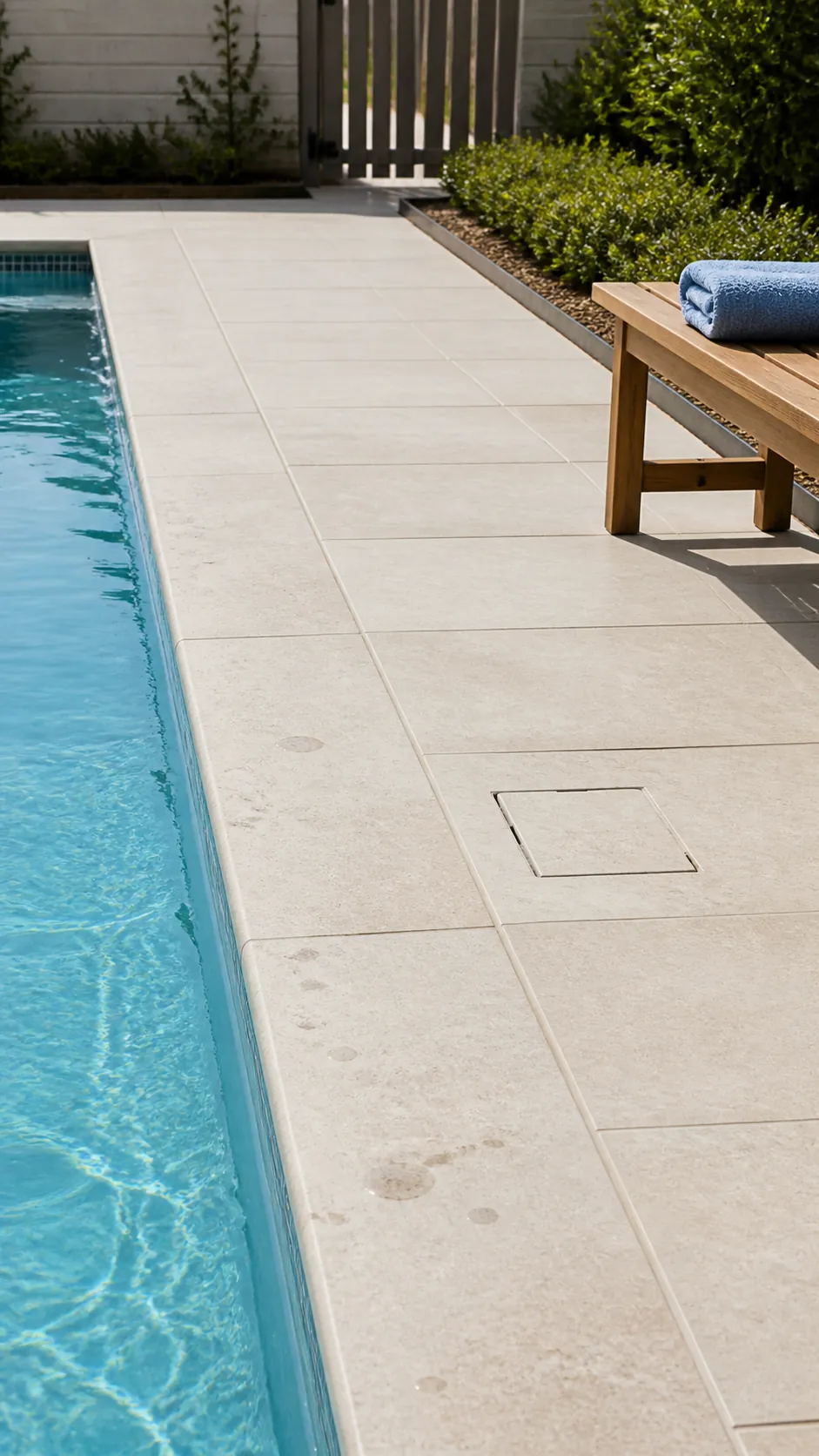
A generous band of continuous paving immediately around the water catches splashes and keeps soil, mulch, and clipped grass away from the pool. It also gives swimmers a stable route that does not cut through planting beds. Choose a slip-resistant, light-to-medium-toned surface that stays more comfortable under bare feet than very dark stone.
Keep joints tight and repair low spots before they become puddles or algae-prone seams. A simple edge is easier to blow clean than an intricate border with dozens of dirt-catching gaps. Leave enough clear width for a cover, cleaning tools, and safe circulation rather than squeezing plants against the coping.
Replace Thirsty Turf With Planted Gravel Beds
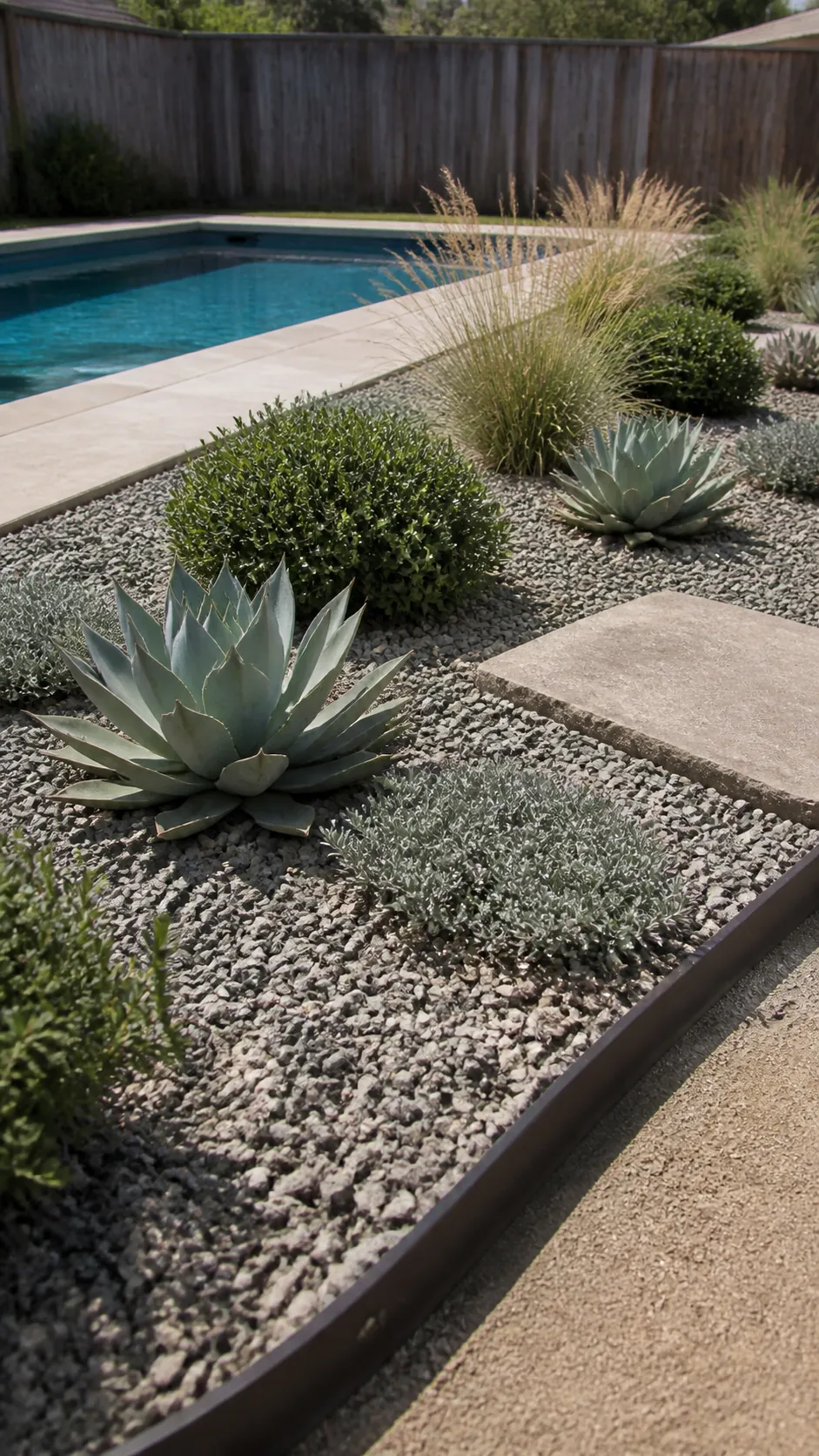
A no-grass pool landscape can remove weekly mowing, edging, and fertilizer near the water. Use angular gravel or compacted decomposed granite in broad beds, then break up the mineral surface with well-spaced drought-tolerant plants. The result feels intentional rather than barren when foliage overlaps the gravel in a few controlled pockets.
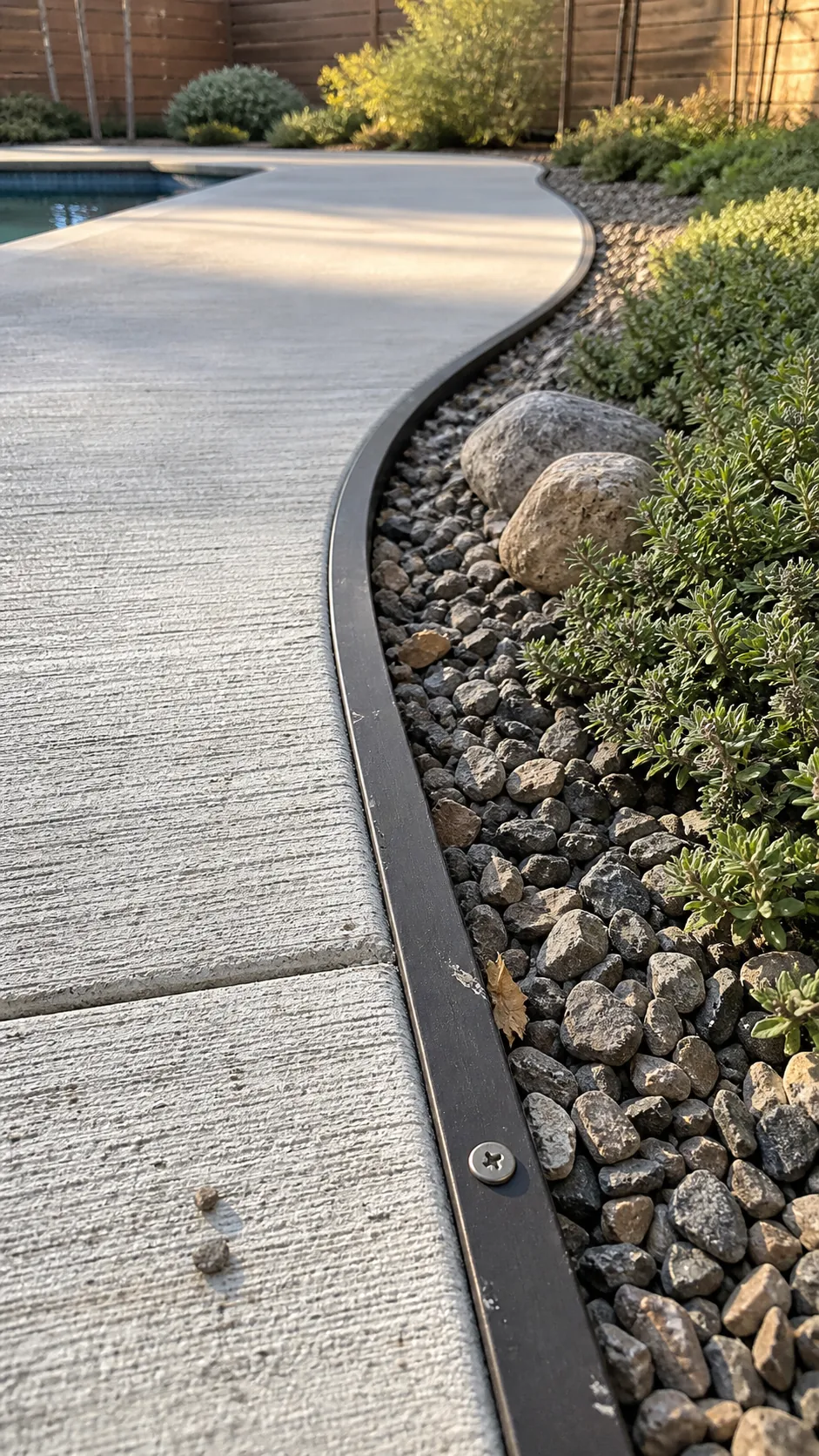
Install a properly prepared, free-draining base and a crisp metal, stone, or concrete edge. Gravel still needs occasional leaf removal and weed control, because windblown organic matter eventually settles between stones. Avoid loose round pea gravel on walking routes, where it migrates easily and feels unstable under chairs.
Group Plants by Water Needs
Hydrozoning means placing plants with similar watering needs on the same irrigation line. It prevents a thirsty accent plant from forcing you to overwater an entire bed of drought-tolerant shrubs. Near a pool, that also reduces runoff, soggy soil, and staining on nearby paving.
Create one restrained, slightly higher-water zone where it delivers the most visual impact, then use low-water planting elsewhere. Position emitters at the root zone and adjust them as plants establish. A coherent watering plan saves more labor than a random collection of supposedly easy-care plants.
Run Drip Irrigation Under the Planting Beds
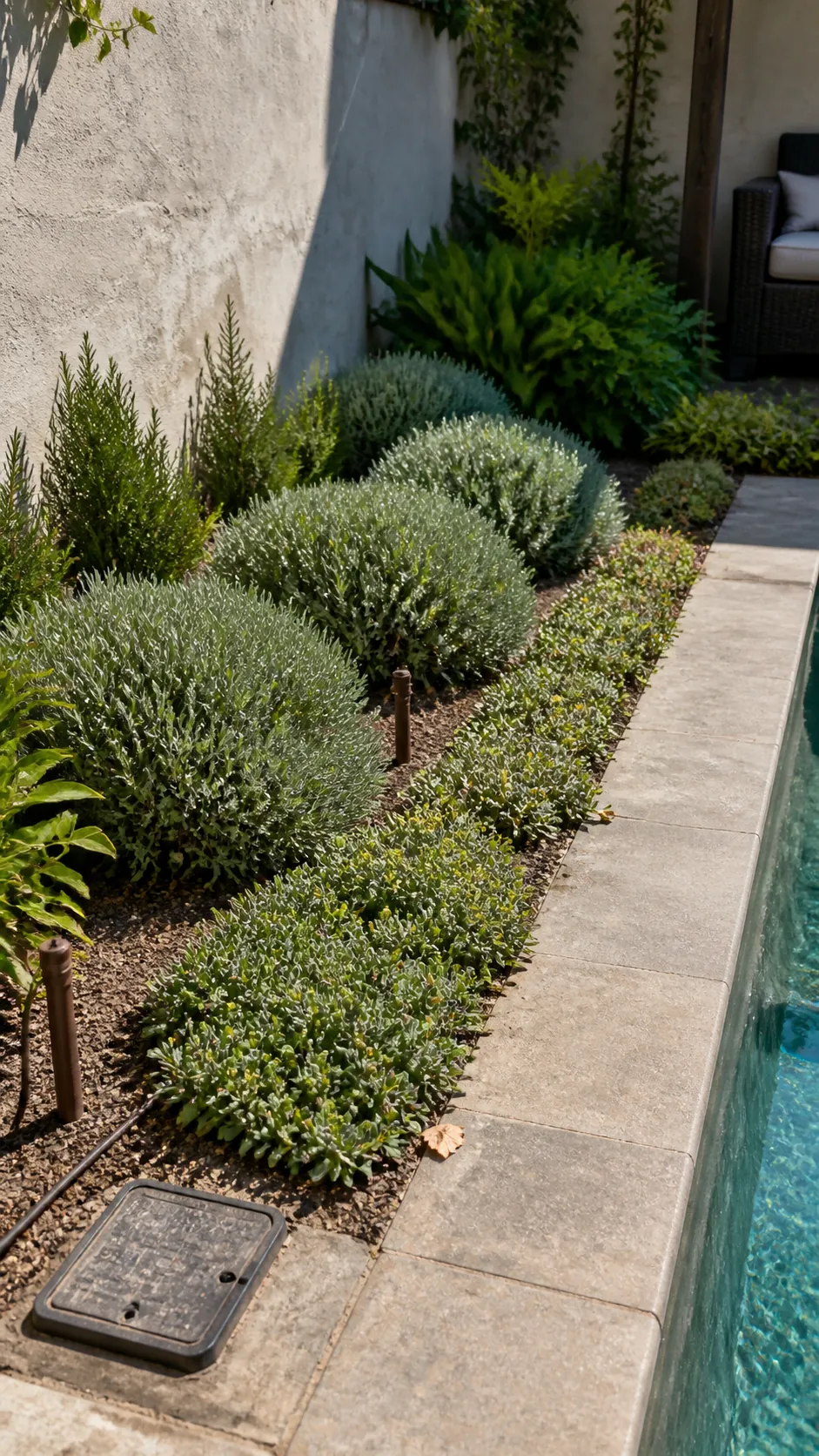
Drip irrigation delivers water slowly near roots instead of spraying the deck, furniture, and pool. That means less evaporation, fewer mineral spots, and fewer damp leaves that invite disease. Use pressure-regulated lines with accessible flush points so the system can be checked without digging.
Cover tubing with the bed material but mark valve locations and keep them reachable. Inspect emitters at the beginning of the warm season, then adjust runtimes for weather and plant maturity. Once established, many adapted plants need deeper but less frequent watering, which is both simpler and healthier.
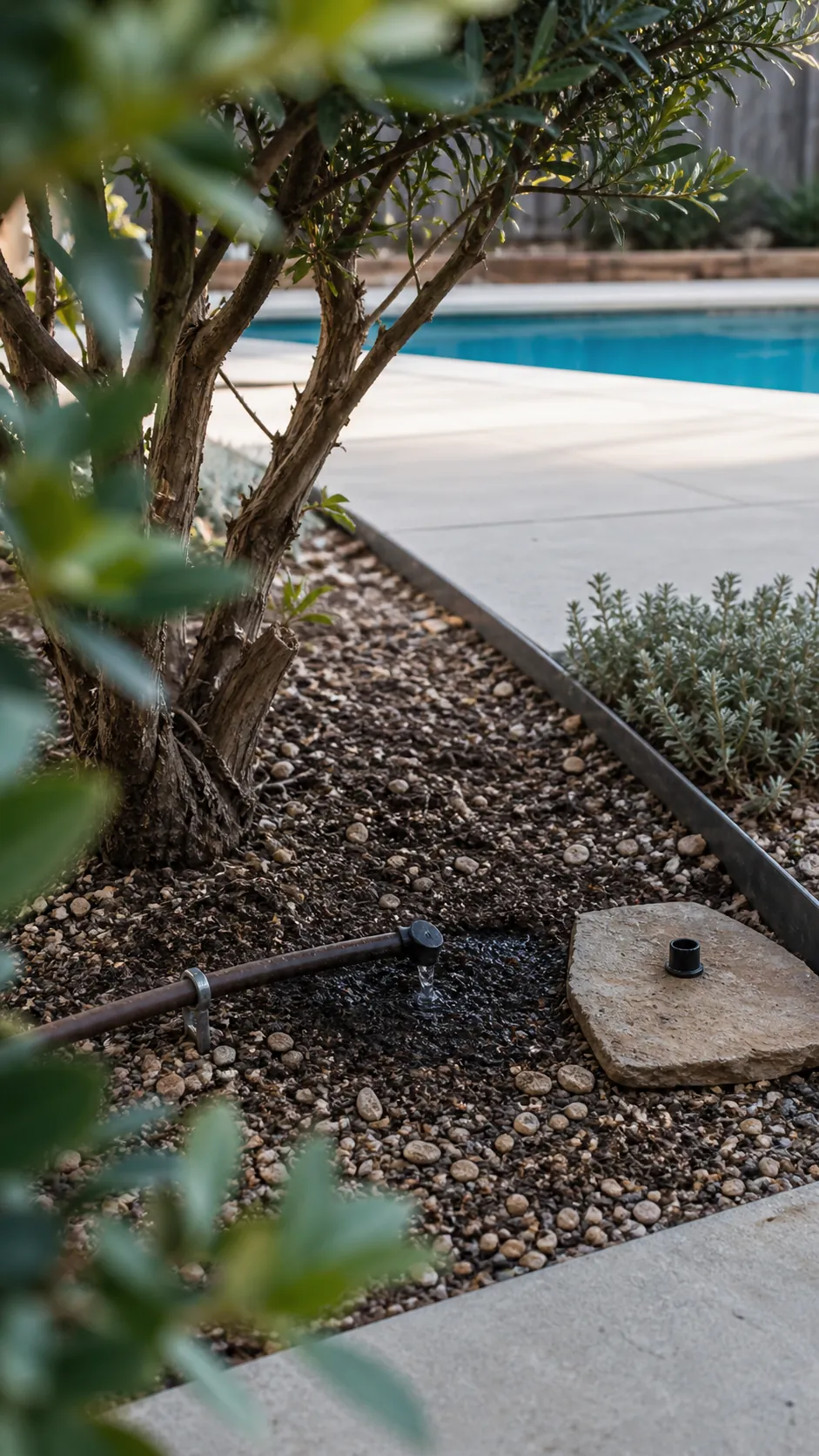
Choose Low-Litter Evergreen Structure
Evergreen shrubs can give the pool area year-round form without a dramatic seasonal leaf drop. Look for compact cultivars suited to your climate, sun exposure, and mature space rather than buying whatever looks small at the nursery. Dense foliage also screens utility views and softens hard paving.
No living plant is completely litter-free, so compare flowers, berries, seedpods, bark, and normal leaf turnover before choosing. Avoid species known for aggressive roots or constant shedding close to coping and plumbing. One correctly sized evergreen is easier than a fast grower that needs monthly clipping.
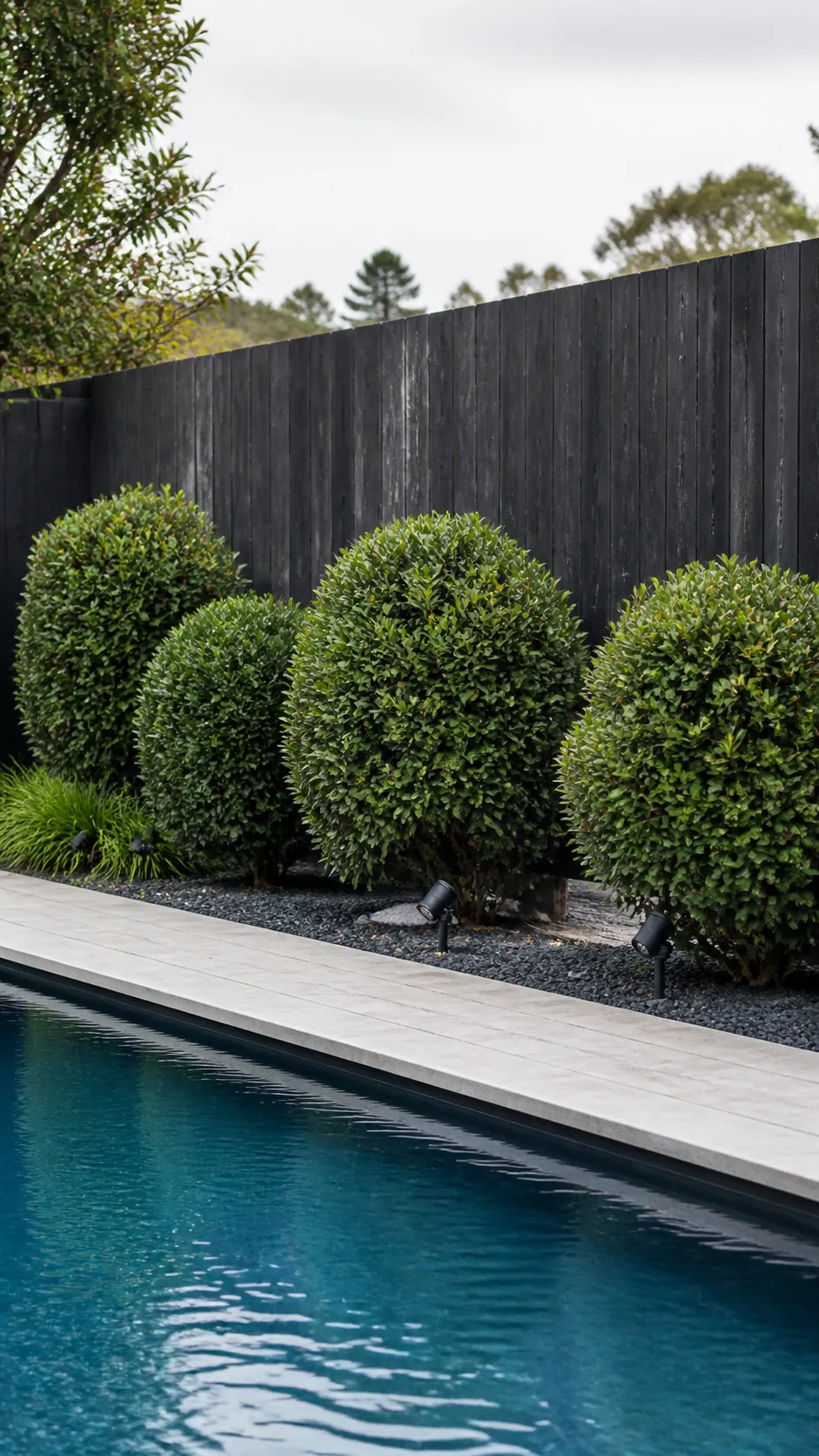
Plant Tough Architectural Accents
Architectural plants such as soft-tipped agaves, aloes, cordylines, or bird of paradise can provide strong shape with relatively few specimens. Their bold silhouettes make a simple pool garden design look finished without layers of fussy flowers. Match the selection to local cold tolerance, humidity, and reflected heat.
Place sharp or spiny foliage well beyond circulation routes, towels, inflatables, and children’s play areas. Confirm whether the plant is toxic to pets before it enters a family yard. A single large-form accent surrounded by open groundcover is easier to maintain than a crowded tropical thicket.
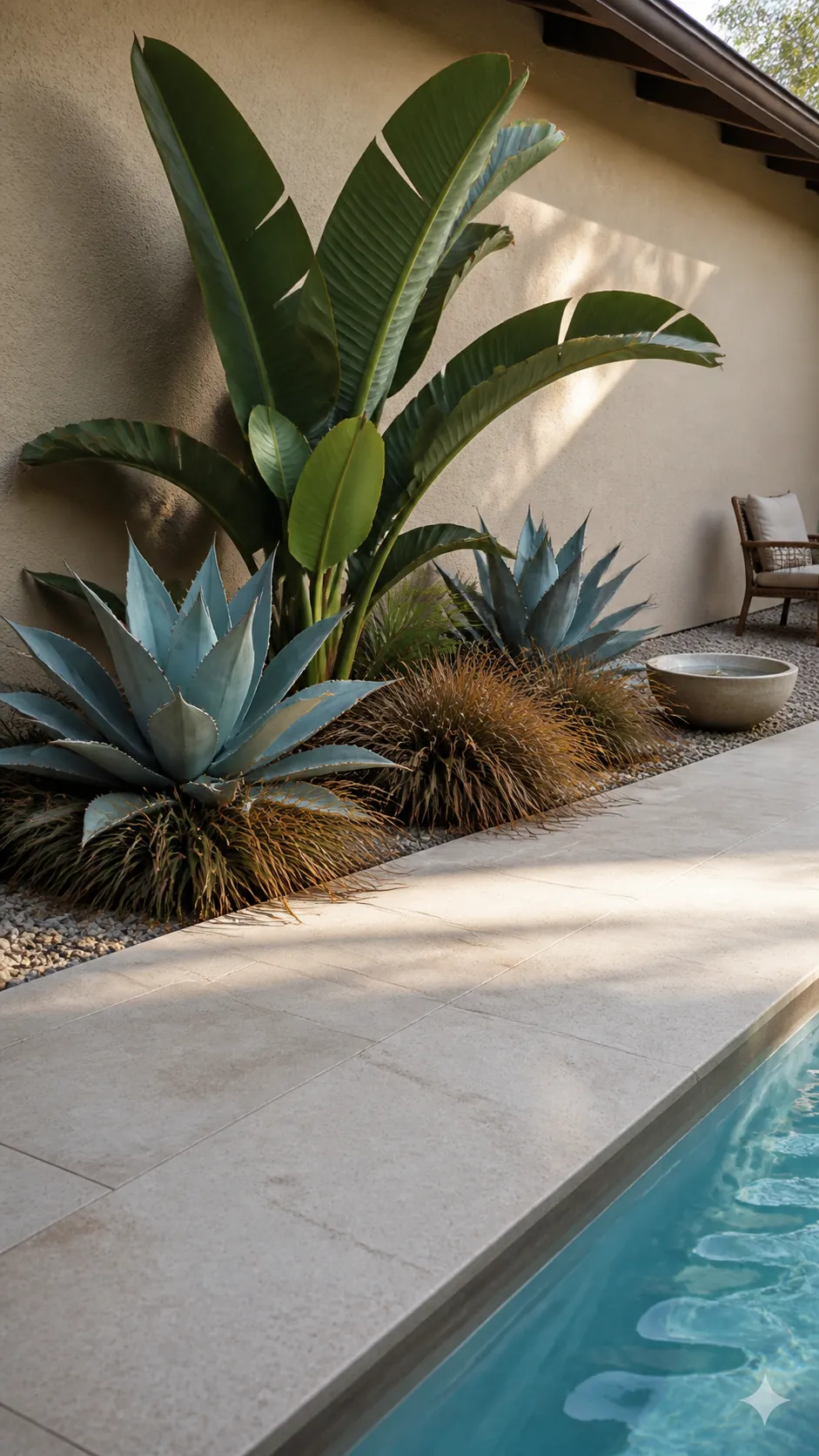
Use Clumping Grasses for Movement
Clumping ornamental grasses bring softness and motion to a hard pool deck without needing precise shaping. Select noninvasive varieties that remain in a tidy mound and tolerate your site’s sun and moisture. Their fine texture looks especially effective against concrete, large pavers, or gravel.
Check whether a variety drops abundant seed or dry blades before placing it close to the water. Many grasses need only one cutback each year, but that task can create debris, so schedule it before opening the pool. Keep mature clumps far enough from the walkway that leaves do not flop across wet feet.
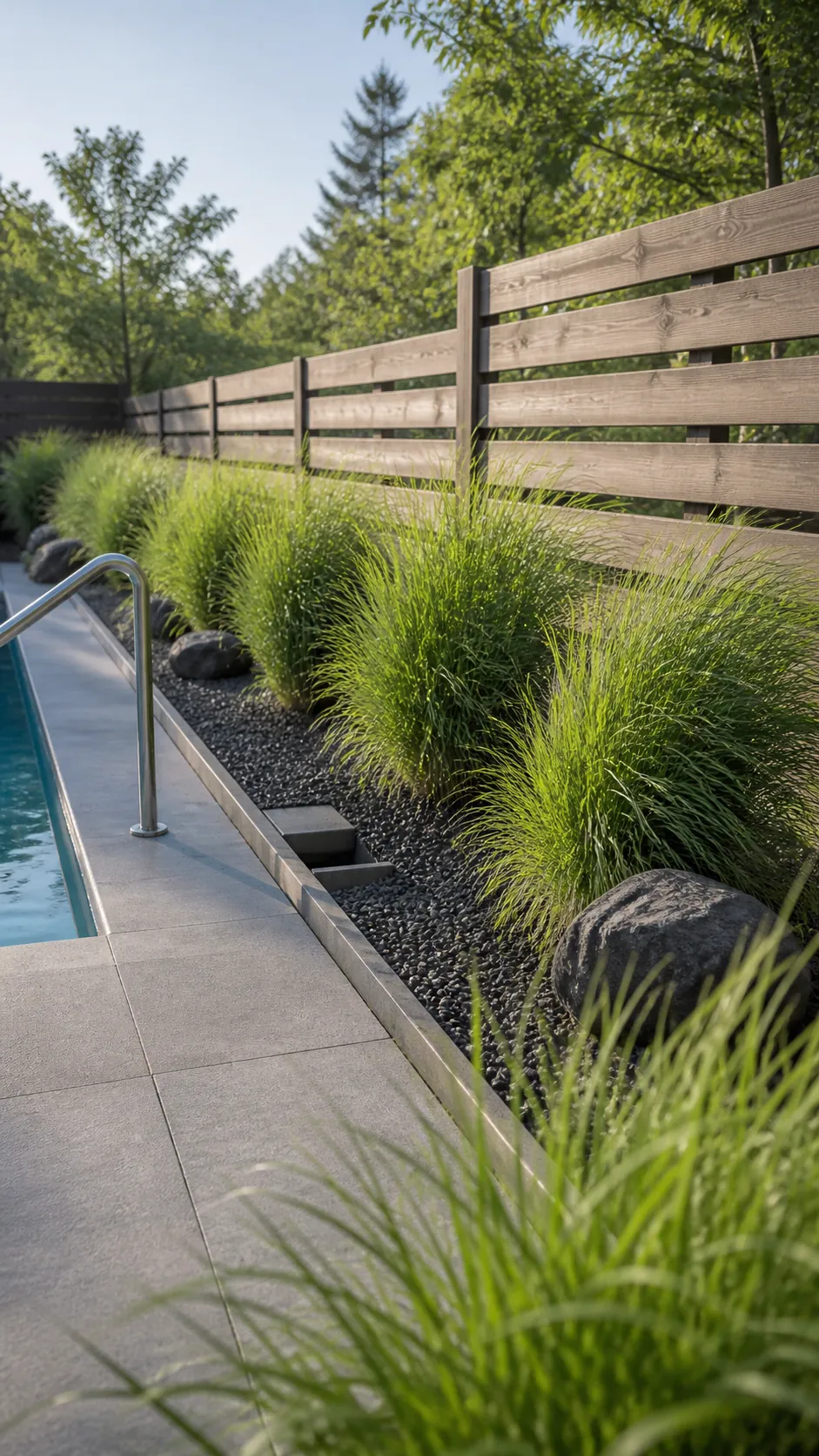
Fill Gaps With Climate-Adapted Groundcover
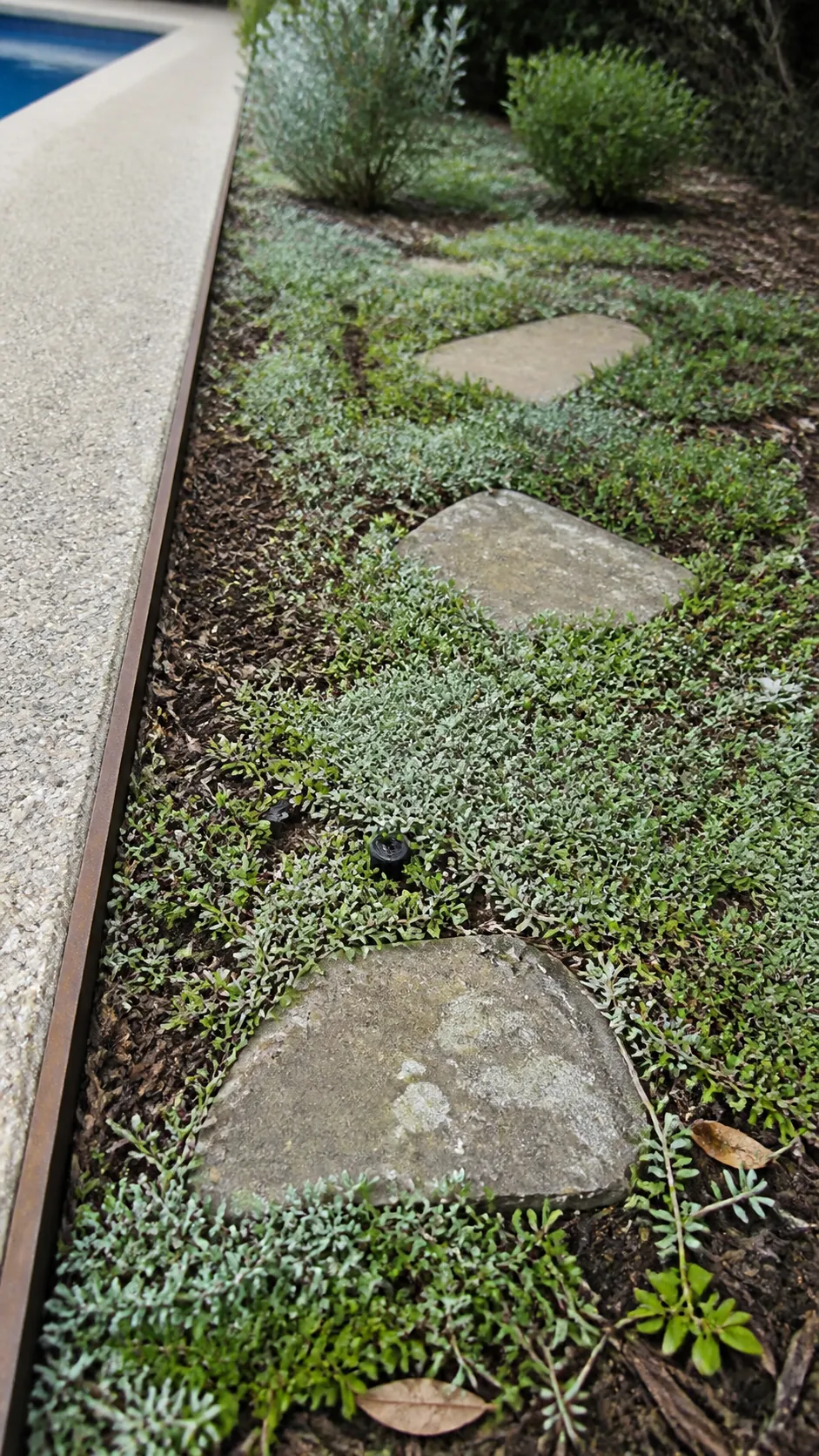
A dense groundcover shades soil, reduces open spaces for weeds, and visually joins larger plants. Choose a walkable or nonwalkable type according to its location, and verify that it is not invasive in your region. Low-growing succulents suit many dry sites, while other climates may call for native sedges or spreading perennials.
Plant at realistic mature spacing rather than packing small pots together for instant coverage. Use temporary mulch while the plants knit, then reduce it as foliage closes over the bed. The right groundcover replaces repeated hand-weeding with one defined seasonal trim.
Keep Messy Shade Trees at a Distance
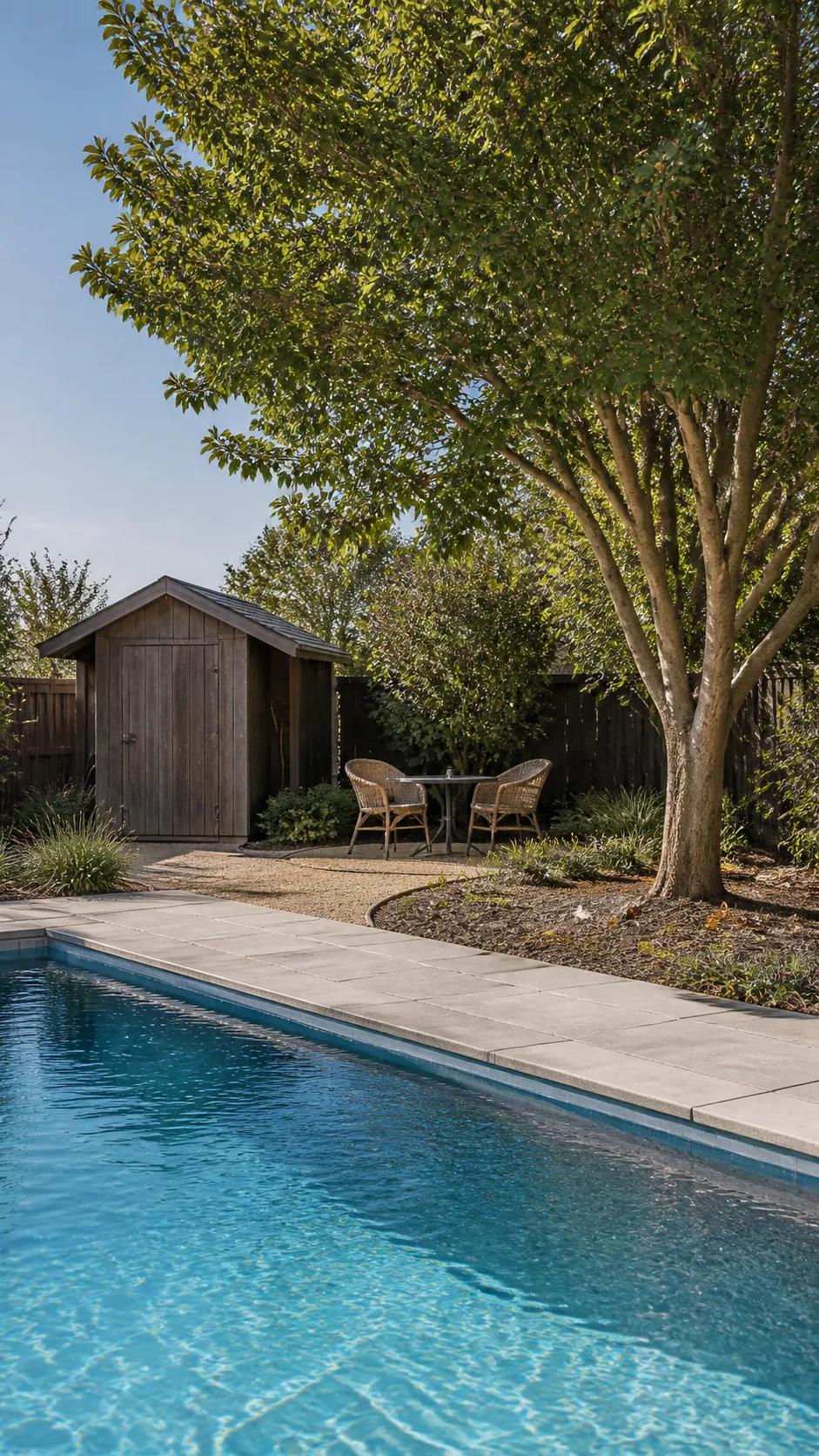
Shade is valuable, but a tree directly over the pool can drop leaves, flowers, fruit, twigs, pollen, or needles into the water for months. Mature roots may also lift pavers or complicate underground services. Before planting, map the canopy spread and root zone at maturity rather than judging the nursery container.
Set appropriate trees where they can shade a seating zone or western wall without hanging over the pool. Ask a local arborist or extension specialist about low-litter, noninvasive choices for your soil and climate. If the yard is tight, a well-anchored shade sail or umbrella may deliver easier shade than forcing in a tree.
Contain Accent Plants in Oversized Pots
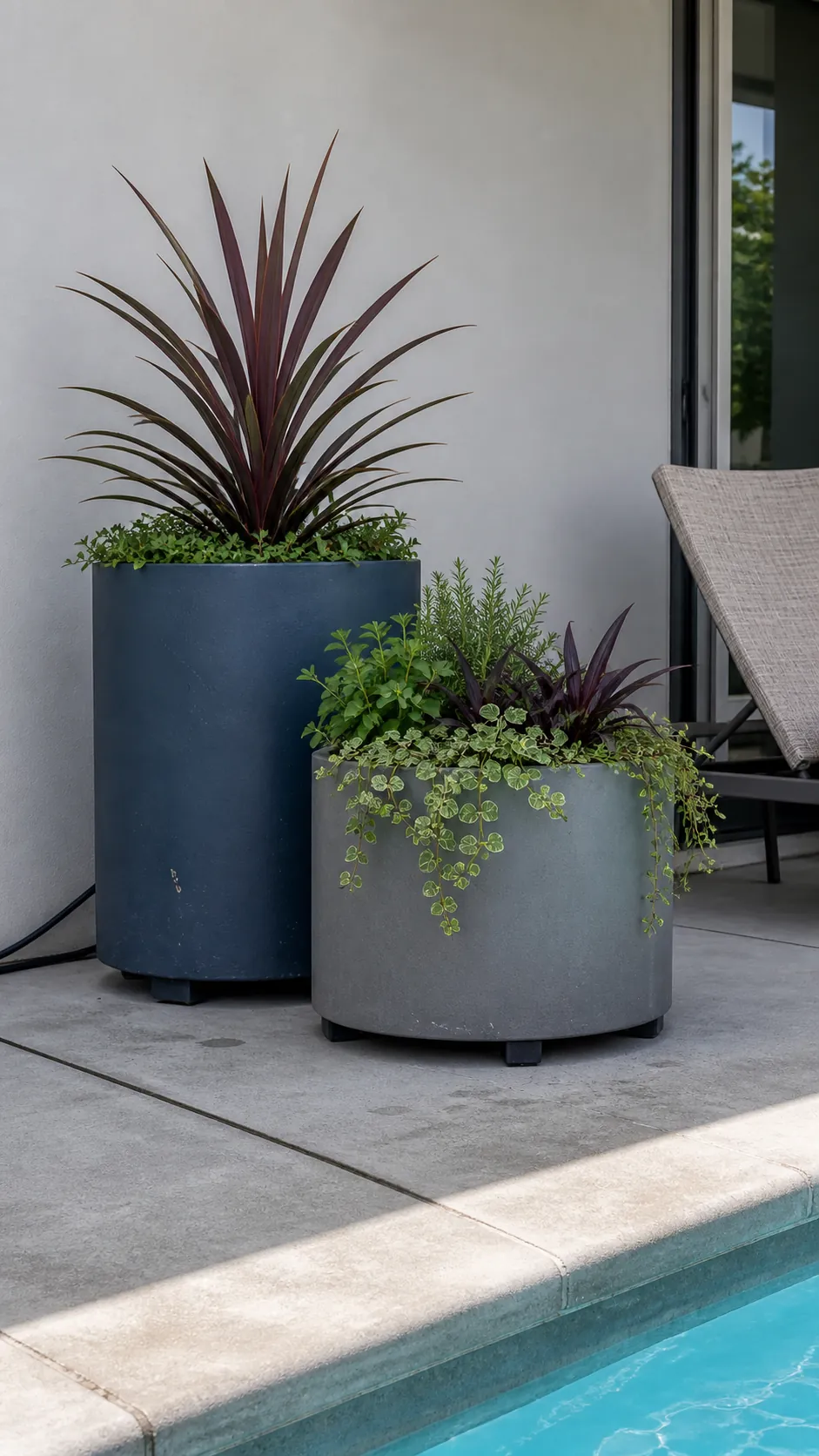
Large containers let you add color or tropical foliage without committing roots to a narrow bed beside the pool. They are especially useful on existing concrete where demolition would add cost and complexity. Choose frost-proof, UV-stable pots with drainage holes and enough soil volume to slow drying.
Use fewer large pots instead of many small ones, because small containers need more frequent watering and are easier to tip. Add drip emitters, saucer-free drainage, and pot feet where appropriate so water does not stain the deck. Position containers outside the splash path and keep their weight within the deck’s capacity.
Build Crisp Raised Planters
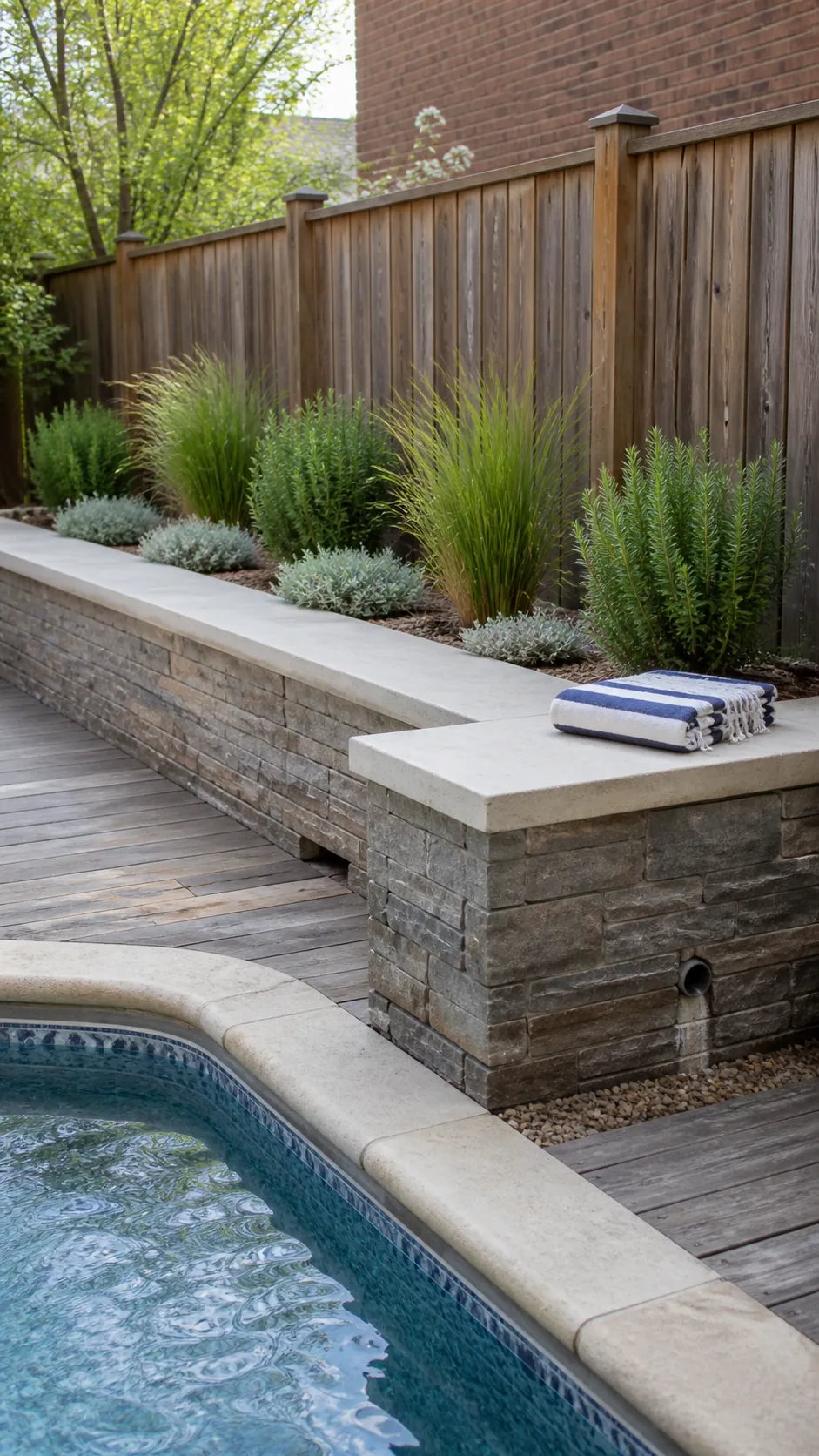
A raised planter creates a firm boundary between swimming space and soil, helping contain mulch and irrigation. The added height makes a modest planting feel substantial and can reduce bending during maintenance. Use durable masonry, concrete, metal, or rot-resistant construction that suits the pool materials.
Include drainage outlets that direct water away from the pool structure and walking surface. Keep the planter wall low enough to preserve sightlines if adults supervise children in the water. A broad cap can double as casual seating, reducing the need for extra furniture in a compact yard.
Define Every Bed With Durable Edging
Edging prevents gravel, soil, and groundcover from drifting onto the deck. It also creates a clean line that makes a sparse, low-water planting scheme look deliberate. Steel, aluminum, brick, stone, or a poured curb can all work if the edge is installed level and securely anchored.
Avoid thin plastic edging that heaves, cracks, or surfaces under foot traffic. Coordinate the edge height with drainage so it does not trap water against the deck. One continuous boundary is faster to sweep and inspect than a scalloped border with constant interruptions.
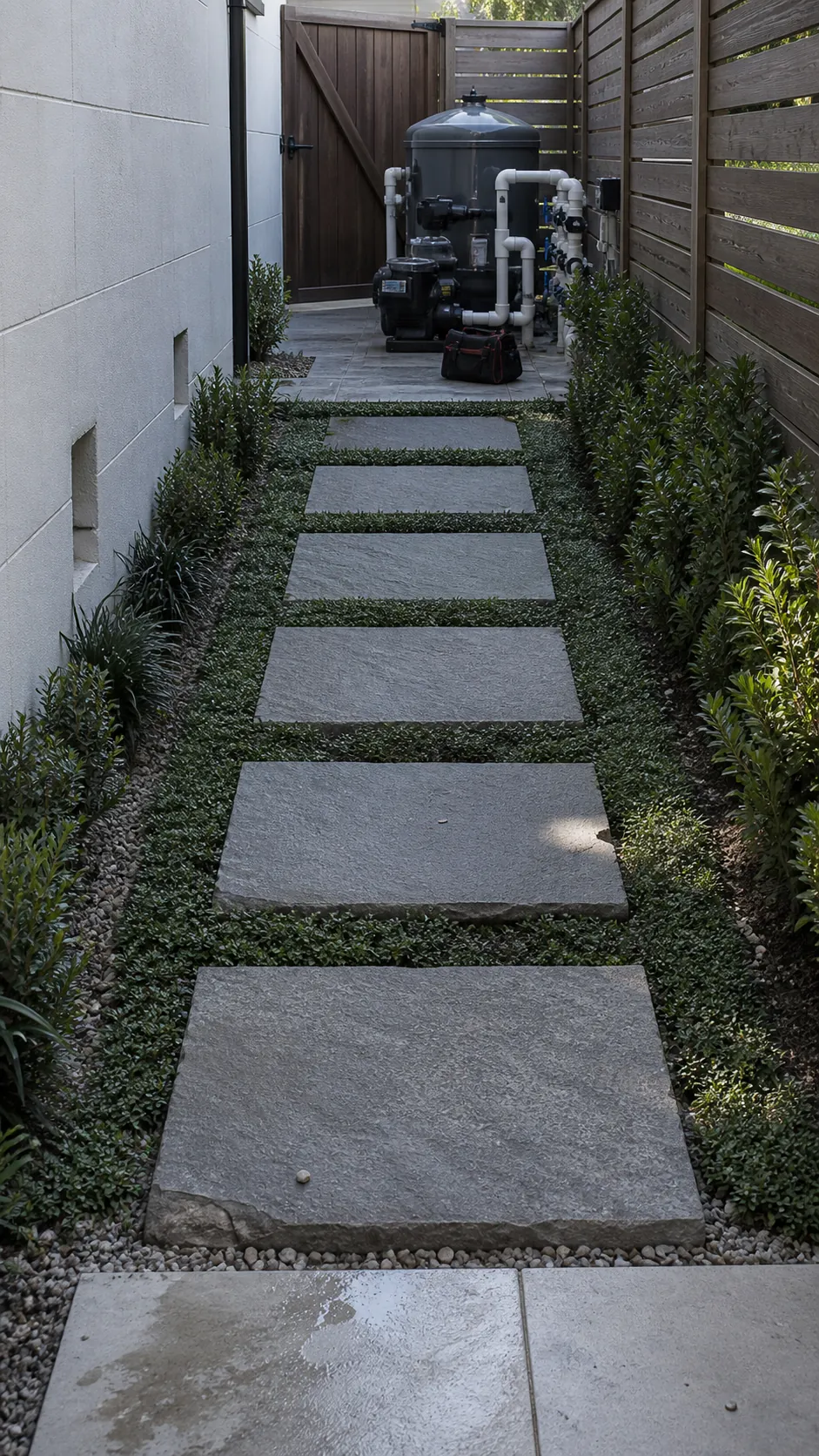
Create a Stepping-Stone Service Route
Pool equipment, filters, valves, and fence gates need reliable access in every season. A short path of large, stable stepping stones prevents technicians and homeowners from trampling plants or tracking mud across the deck. Set each stone on a compacted base so it does not rock under a heavy tool bag.
Follow the route people already use rather than forcing a decorative curve around obstacles. Maintain comfortable spacing and avoid loose gravel where equipment must be rolled. Keeping shrubs below valves and away from panels saves pruning and makes routine service safer.
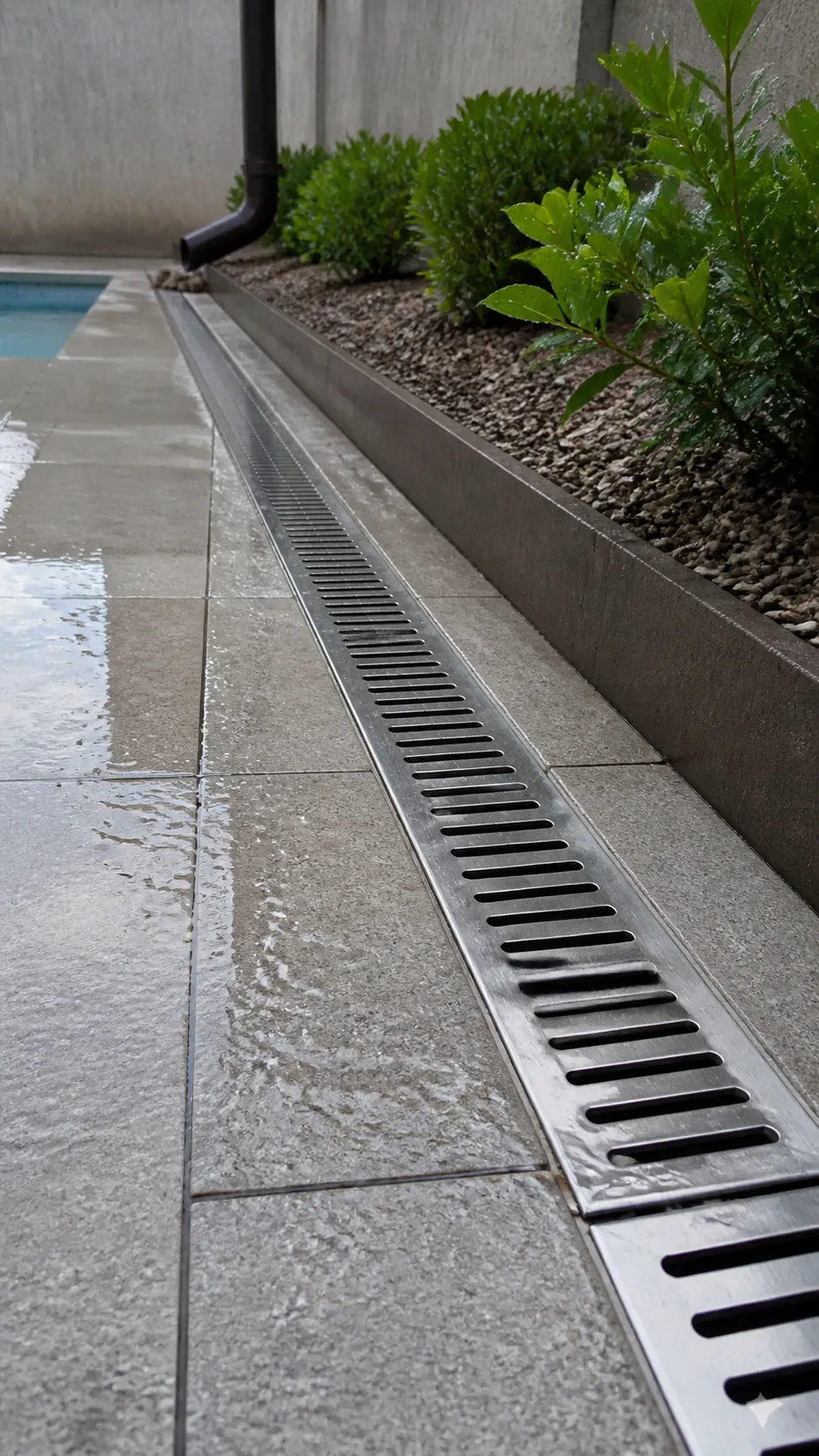
Install a Simple Linear Drain
Good drainage keeps stormwater, soil, and lawn runoff from washing into the pool. A linear channel at the low edge of the deck can intercept water without creating a fussy visual break. The deck must slope toward the drain while still directing contaminated runoff away from the pool shell.
Select a grate that is heel-safe, removable, and compatible with pool chemicals and outdoor exposure. Clean the channel after major storms and before the wet season instead of waiting for it to overflow. Drainage design is site-specific, so consult a qualified contractor where grades, retaining walls, or local codes are involved.
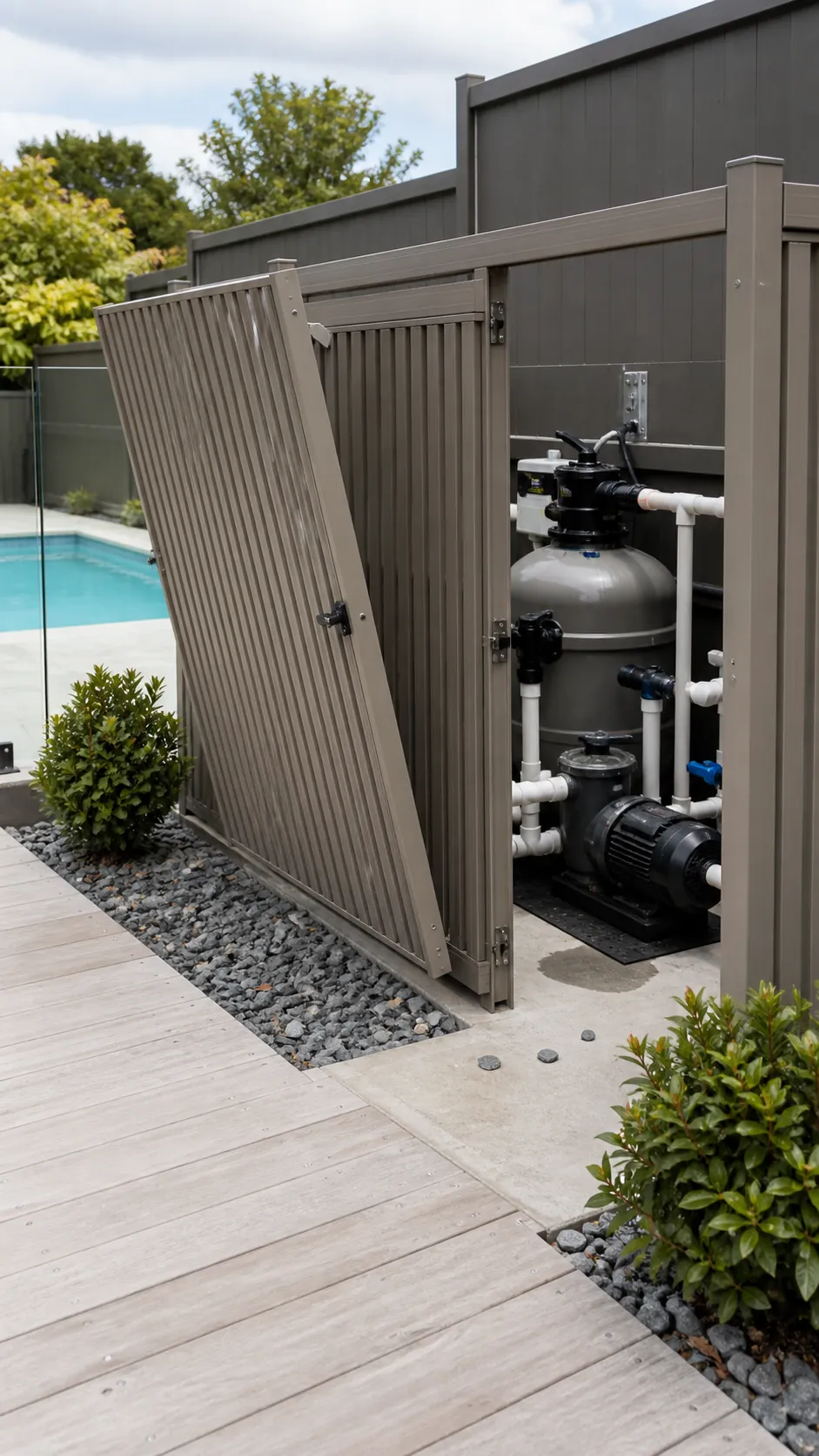
Screen Equipment With a Slatted Panel
A freestanding slatted screen can hide pumps and plumbing without adding a hedge that needs clipping. Vertical timber-look composite, powder-coated aluminum, or another outdoor-rated material keeps the solution visually quiet. Match the screen to the fence or architecture so it reads as part of the yard.
Preserve the clearances, ventilation, drainage, and working space required by the equipment manufacturer and local code. Use a removable panel or full-width gate rather than a tiny access door. Never trade serviceability for a cleaner photograph, because awkward access makes every future repair slower.
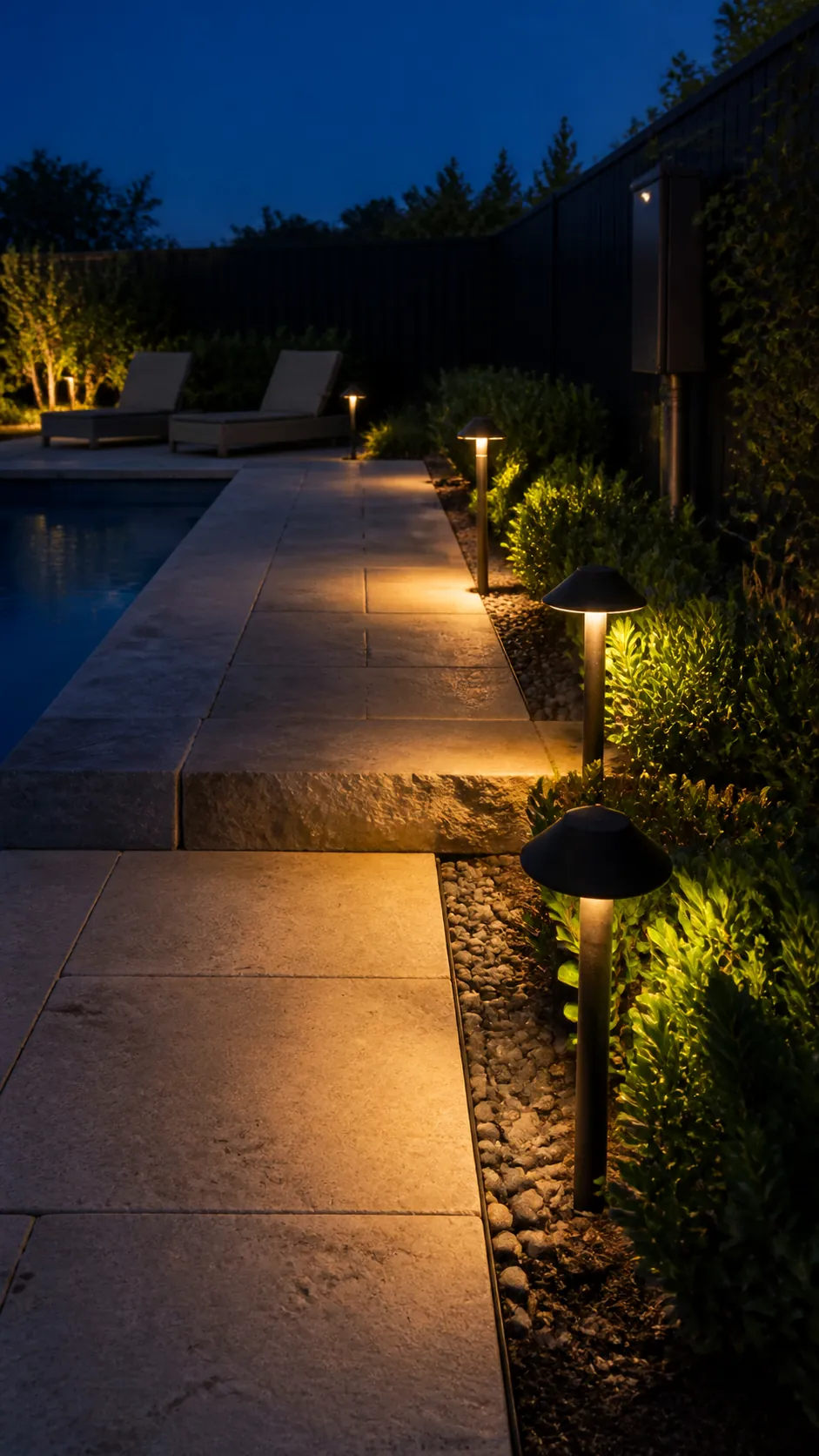
Add Permanent Low-Voltage Lighting
Well-placed low-voltage fixtures make steps, paths, and level changes easier to read after sunset. Permanent lighting removes the weekly fuss of charging or repositioning small solar stakes, while warm, shielded beams feel more comfortable around water. Use a modest number of fixtures rather than illuminating every plant.
Locate wiring and transformers away from irrigation work and document their routes before planting. Choose outdoor fixtures rated for the setting and have electrical work near the pool completed to applicable safety codes. Aim light downward and away from neighbors to reduce glare and preserve the relaxed atmosphere.
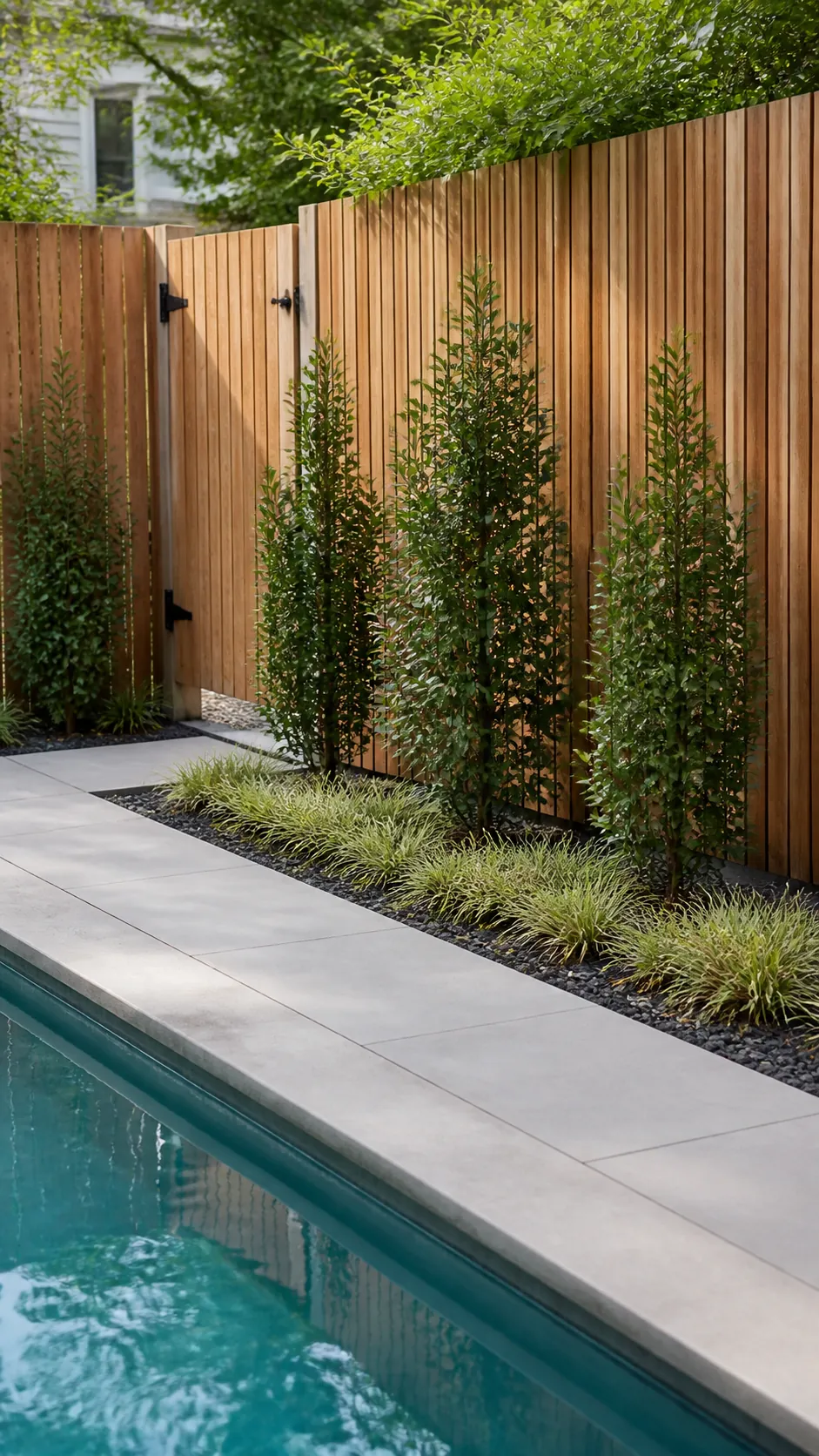
Use One Easy-Care Privacy Layer
Privacy planting becomes high maintenance when several fast-growing species are squeezed into a narrow boundary. Instead, choose one climate-appropriate hedge or a screen paired with a single row of relaxed plants. The built structure provides immediate coverage while greenery softens it without carrying the entire screening job.
Allow the hedge’s mature width and keep it clear of fences, drains, and pool equipment. Select a naturally dense cultivar that reaches the required height with minimal shearing. Avoid invasive bamboo and other aggressive spreaders unless a proven containment system and ongoing inspection are part of the plan.
Leave Intentional Open Space
Not every strip around a pool needs a plant, pot, or ornament. Open deck and breathing room make a compact yard feel larger, improve sightlines, and reduce objects that must be moved for cleaning. A quiet expanse also gives the strongest plant or material choice more visual weight.
Plan empty areas around chair pullback, cover reels, gates, skimmer access, and the path between the house and water. Use furniture footprints to test the layout before building new beds. Deliberate emptiness is one of the most effective low-maintenance design tools.
Design for One Seasonal Reset
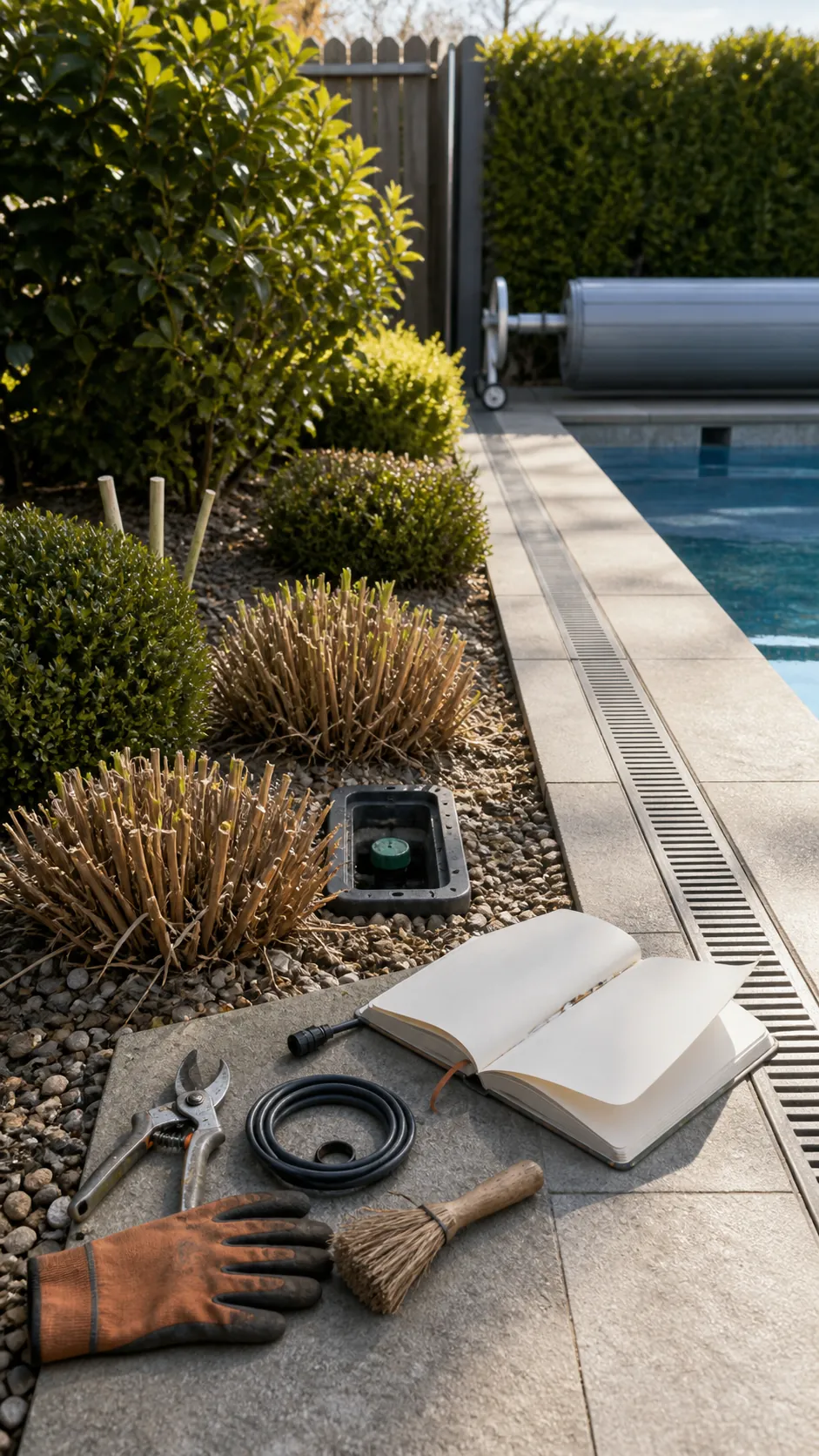
Low maintenance does not mean no maintenance; it means concentrating the work into predictable sessions. Choose plants that can be cut back, checked, or lightly shaped at the same time, then schedule that reset before the main swimming season. Inspect irrigation, clear drains, refresh thin bed material, and tighten edging during the same visit.
Keep a simple note of mature plant sizes, valve locations, fixture routes, and the products used on stone or paving. That record prevents accidental damage and makes future care faster for you or a contractor. When every element has a clear purpose and an accessible maintenance path, the landscape stays attractive without taking over the reason you wanted a pool in the first place.