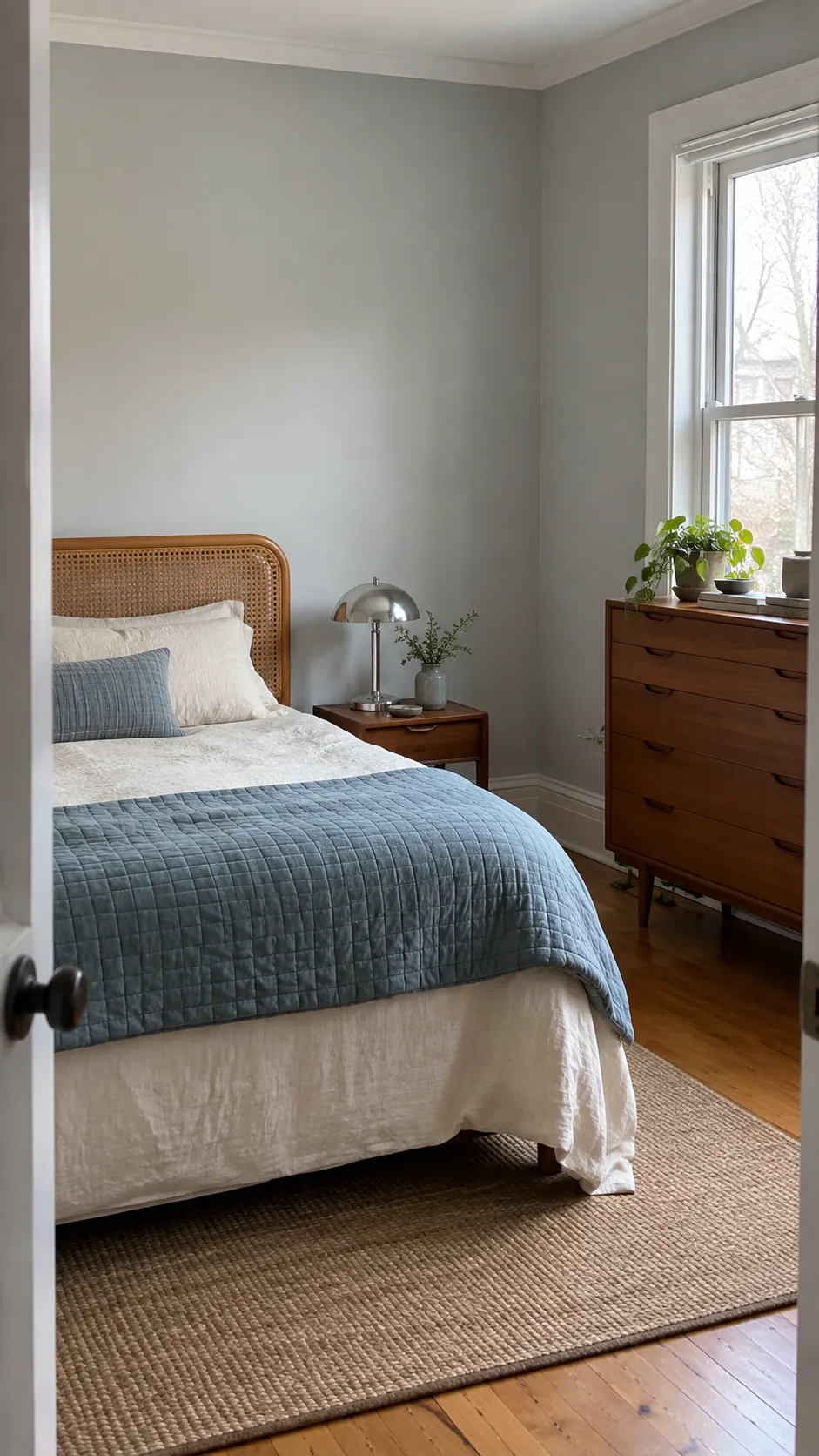
A room can feel flat even when every essential piece is already in place. A curved frame, a useful old cabinet, or a fabric with some history can give it character without a complete makeover. Choose the details that suit your space and routines, then leave enough room for them to be noticed.
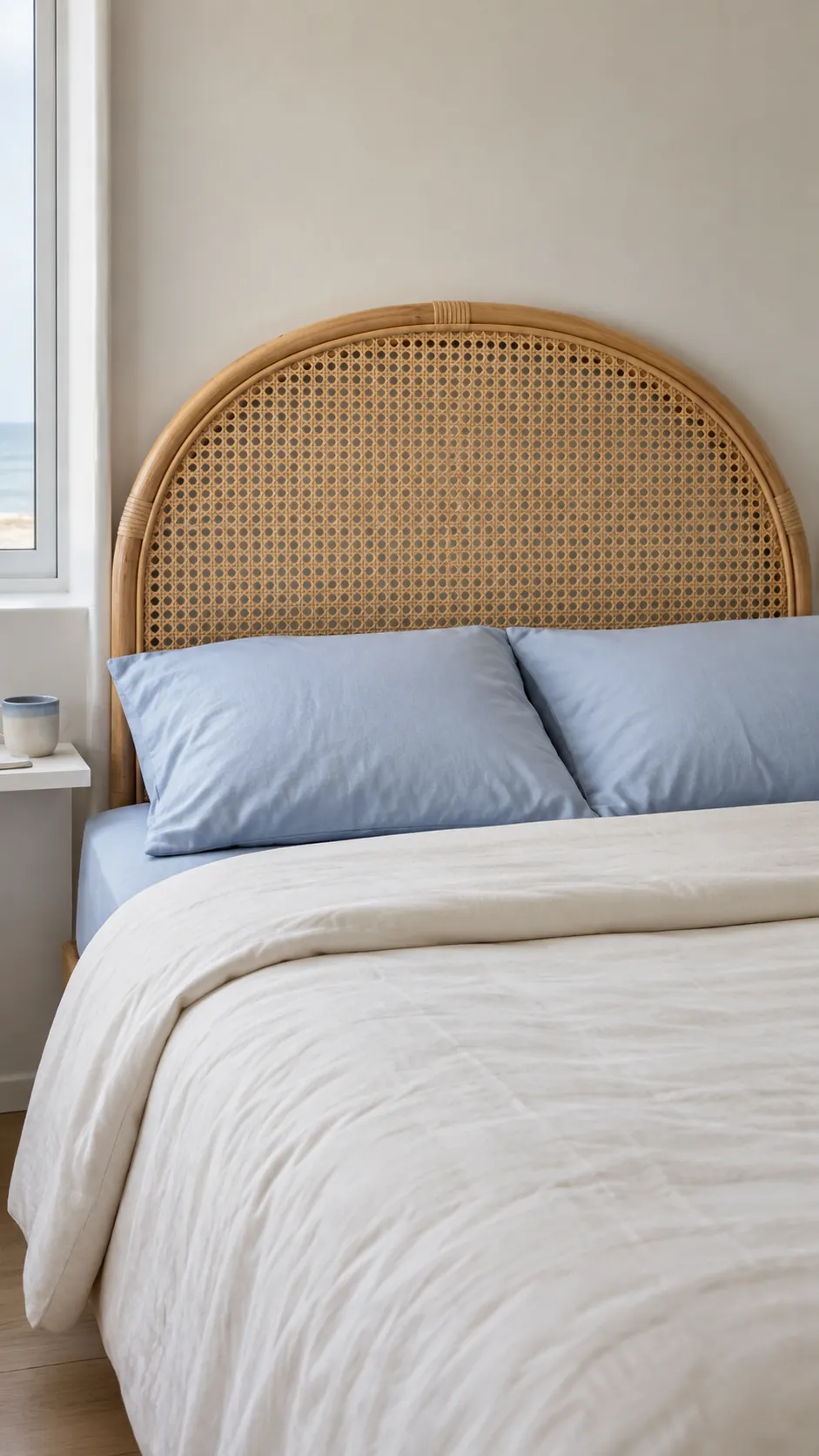
A cane headboard with breathing room
Woven cane adds a light, open pattern behind the pillows without needing a patterned wall. Pair it with plain bedding so the weave remains the focal point. Check the frame, bindings, and woven panel for splits before buying secondhand, and use the fixing method specified for the headboard.
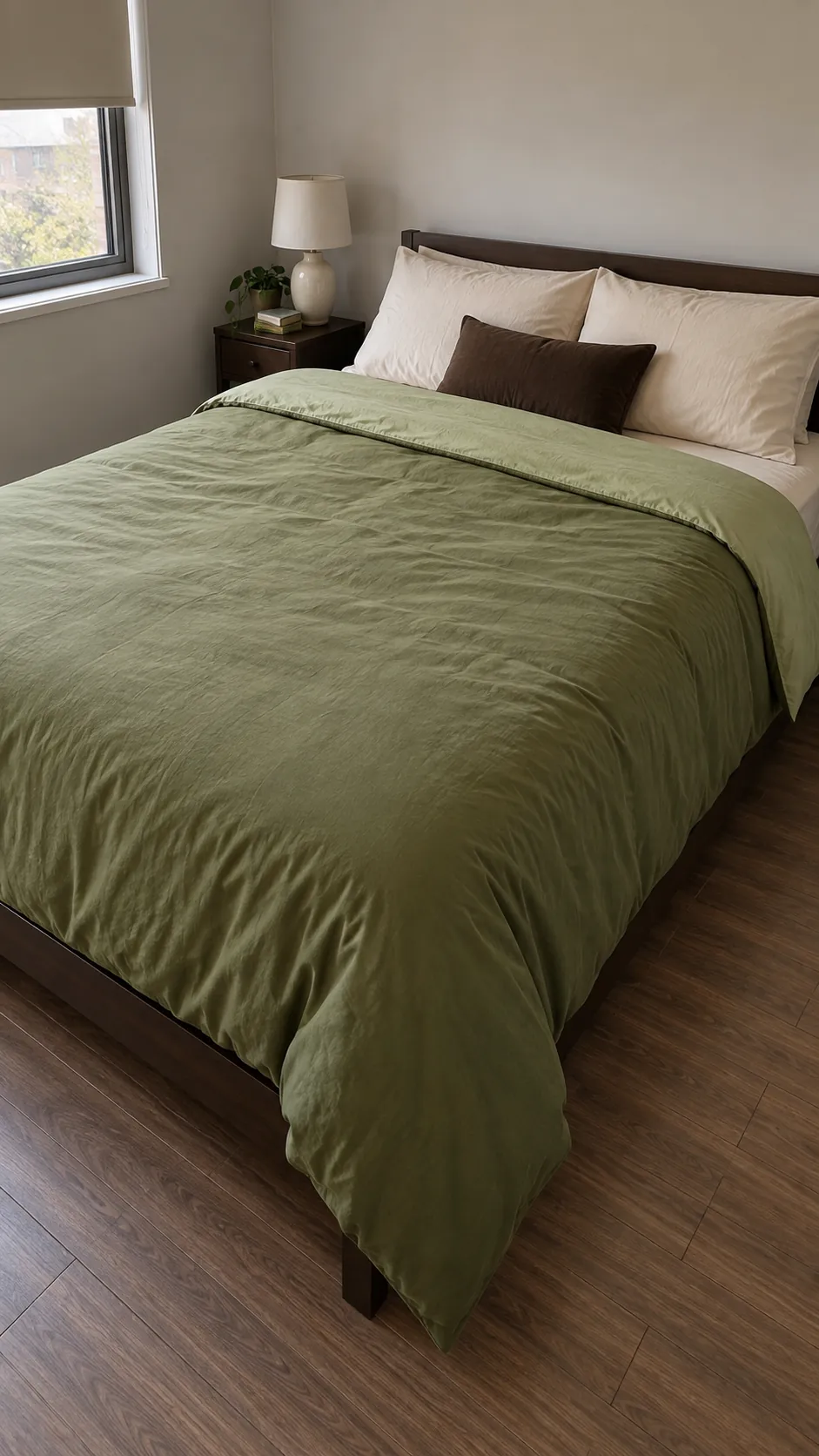
Avocado bedding against pale walls
A muted green duvet can suggest a 70s bedroom while leaving the room easy to change later. Compare the fabric with your flooring before purchasing, since some greens turn muddy beside strongly orange wood. Cream pillowcases give the color a softer edge, and a small dark brown cushion adds definition without another large pattern.
Choose the warmth of the bedding for your sleeping conditions rather than the look of a photograph. A lightweight cover may suit a warm room better than several decorative throws. Keep the green concentrated on the bed if the rest of your furniture already has plenty of character.
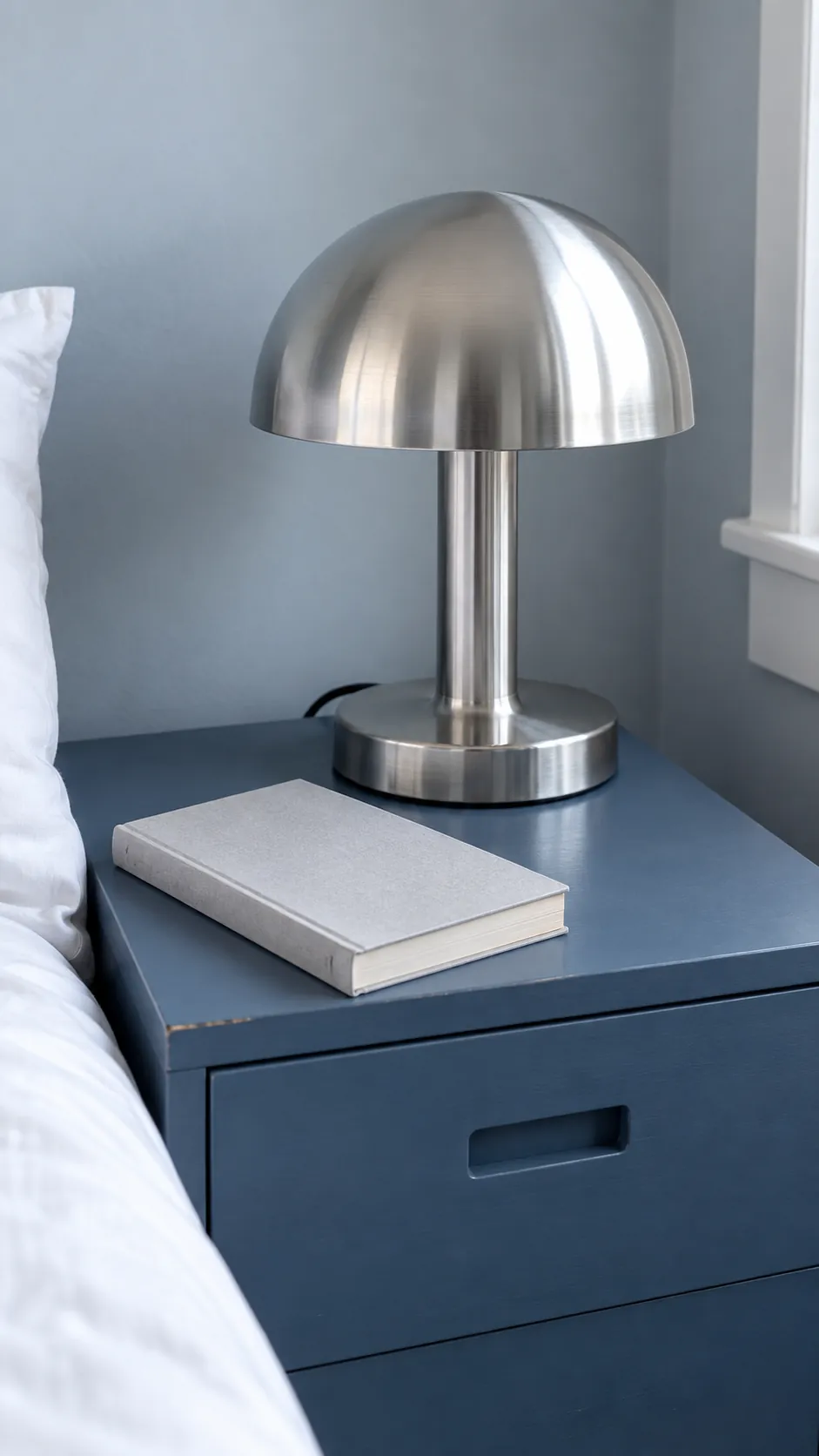
A chrome lamp beside matte surfaces
Chrome introduces a cooler, sharper note to a retro modern bedroom. Set a compact lamp beside matte painted furniture or soft fabric so its reflection feels intentional. Inspect used electrical fittings before use, and have damaged or uncertain wiring checked by a qualified professional. The shade should hide the brightest part of the bulb from your usual reading position.
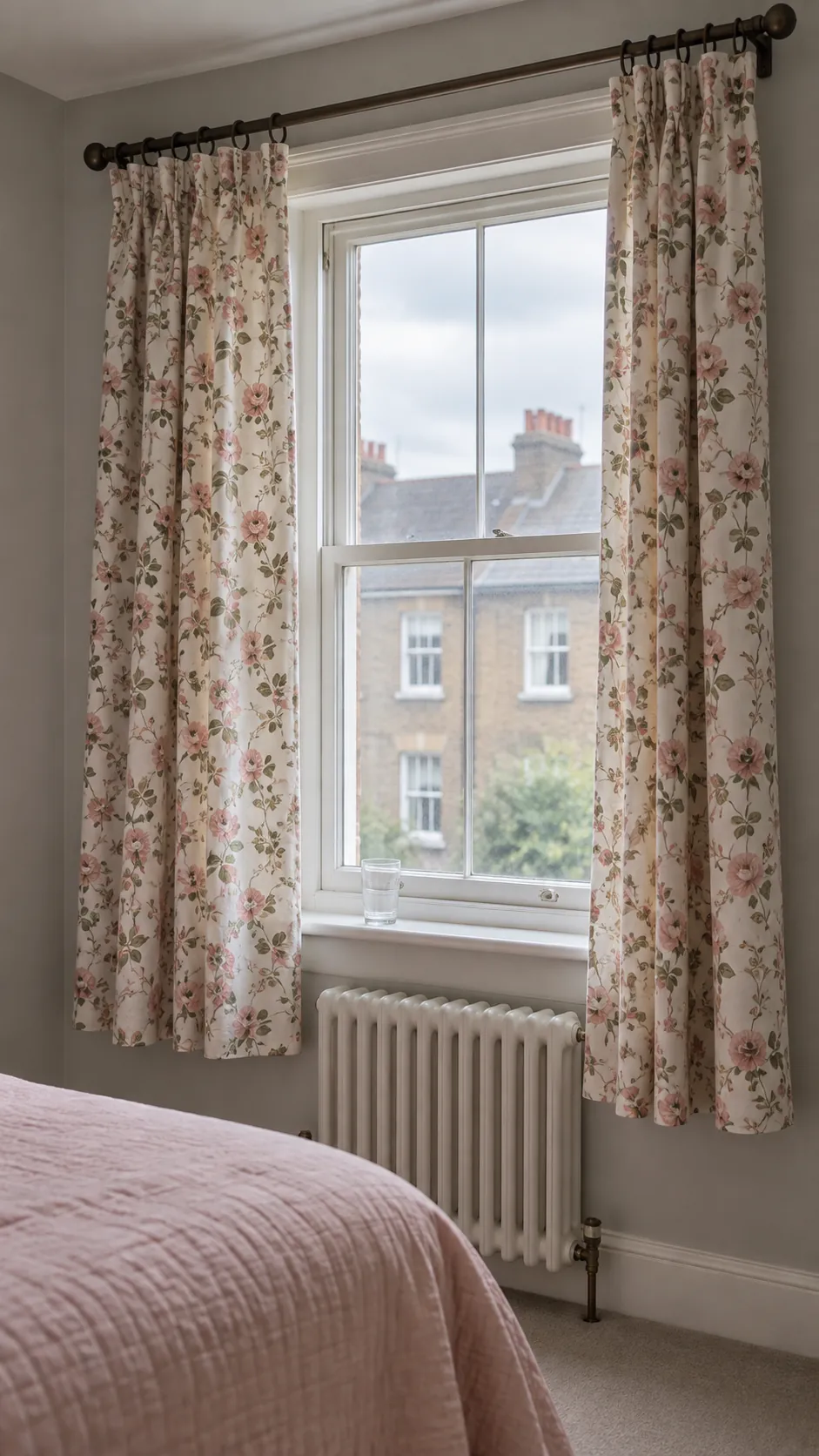
Floral curtains that carry the color scheme
Small floral curtains can bring vintage bedroom decor ideas into an otherwise plain room. Pull one quiet color from the print for the bed instead of introducing another unrelated floral. Measure the rod position and finished drop carefully so the curtains open fully and avoid heaters. For rented rooms, use fittings allowed by your lease and do not assume an adhesive solution will leave every surface untouched.
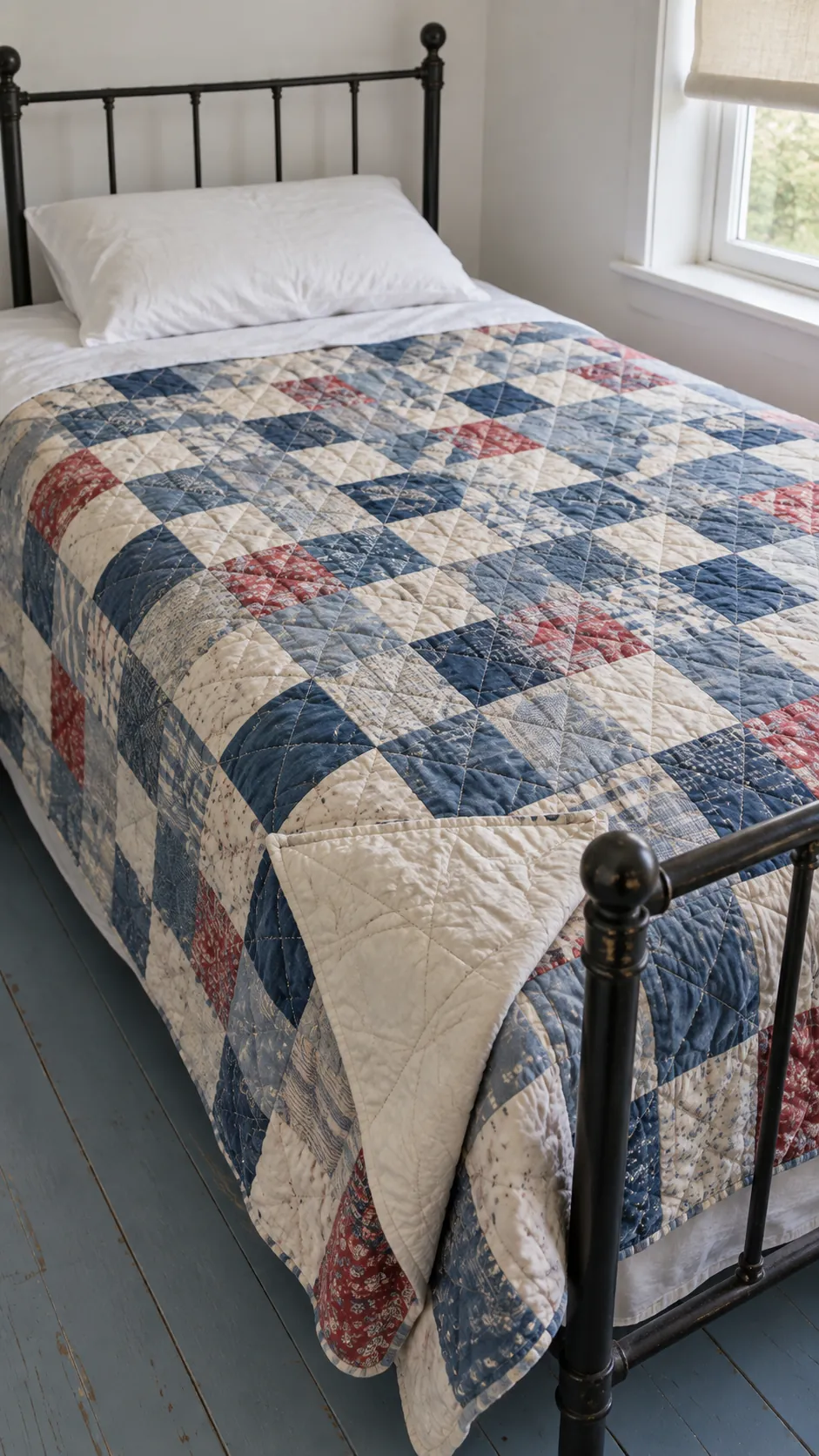
A patchwork quilt over simple sheets
A patchwork quilt brings several colors together in a single useful piece. Lay it over plain sheets and let the patches supply the variety instead of adding competing patterned cushions. Inspect an older quilt for fragile seams and follow appropriate care advice before washing.
If the fabric is too delicate for nightly use, fold it across a chair rather than placing it where it will be pulled and stretched. A contemporary quilt can offer the same visual direction with more predictable care instructions. Choose the version that suits your household, not just the oldest one you can find.
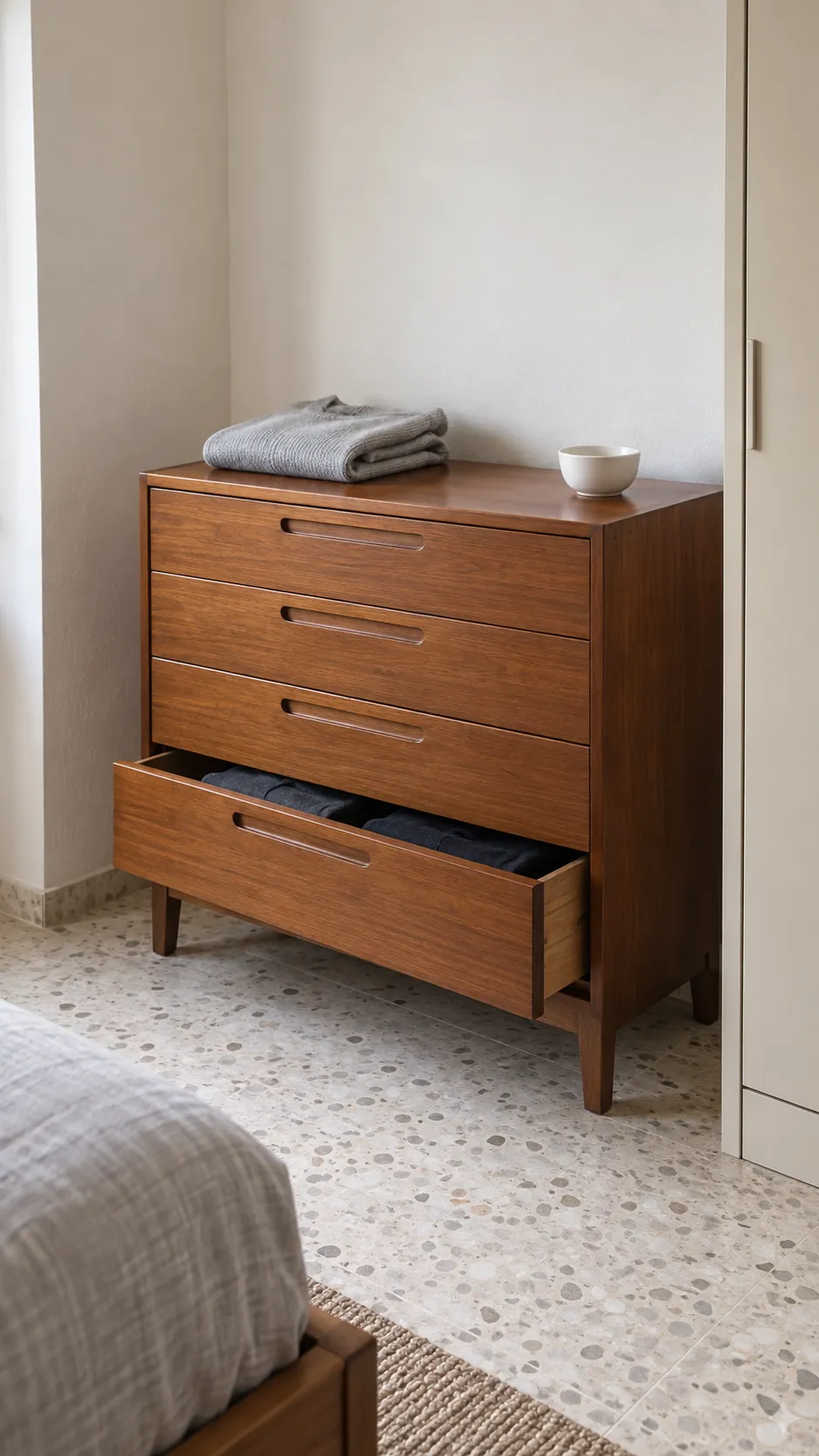
A teak dresser that replaces clutter
A compact teak dresser gives folded clothes a home while adding the long lines associated with mid century furniture. Check the drawers, back panel, and legs as carefully as the attractive front. Measure both the bedroom space and the delivery route before arranging collection. Keep the top mostly clear so the grain and drawer details can be seen, and anchor the unit as recommended.
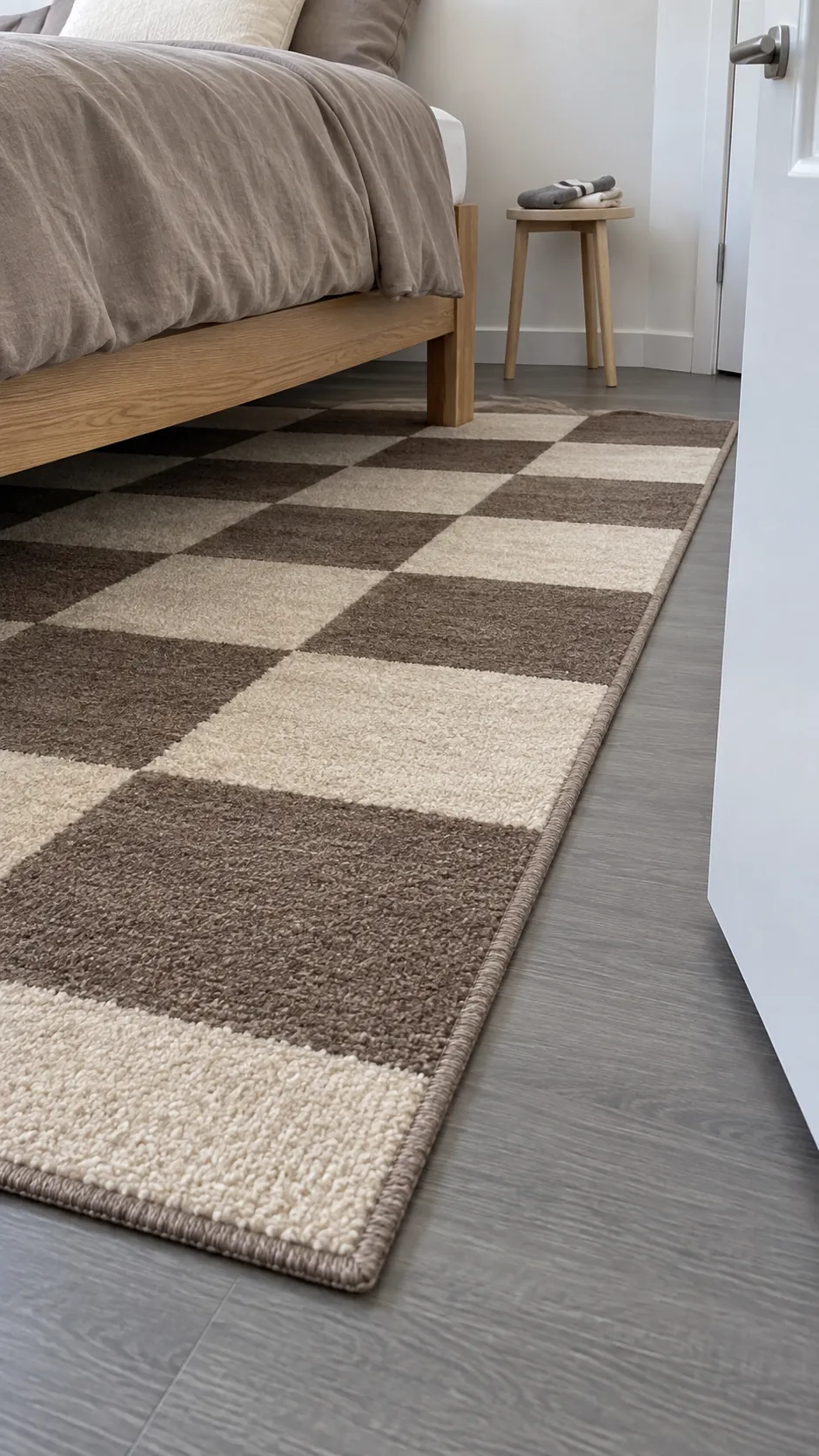
A checker rug in a quiet palette
A checker rug adds graphic rhythm without requiring a wall treatment. Cream with muted brown feels gentler than a high contrast black and white combination, particularly beside patterned bedding. Position it where it provides useful footing and use a floor compatible pad when needed. Check that doors clear it and that its corners remain flat.
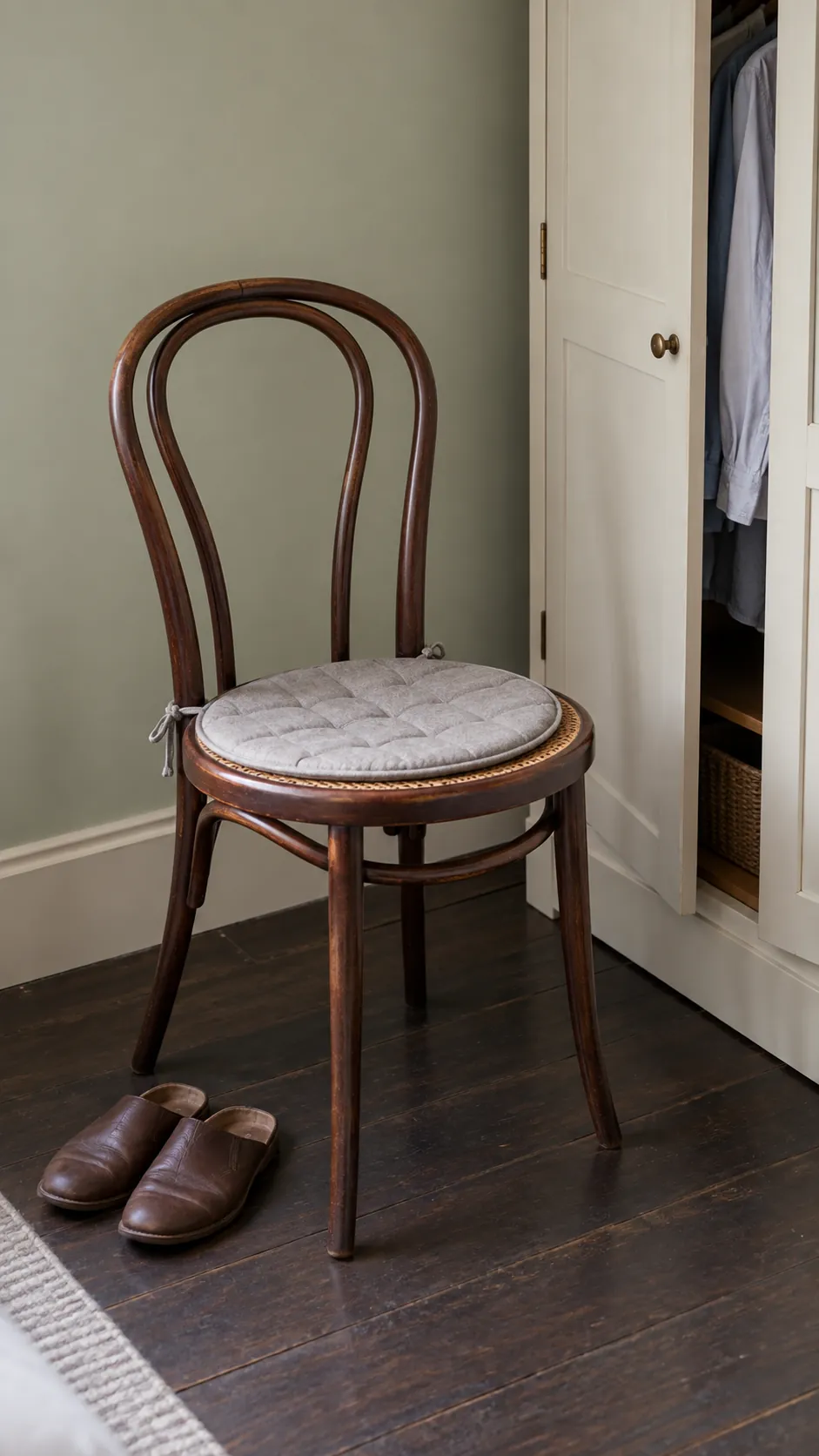
A bentwood chair with a real purpose
A curved bentwood chair can serve a small dressing or desk corner without the bulk of an armchair. Sit on a secondhand chair and check for movement at the joints before bringing it home. A slim washable seat pad adds comfort while keeping the outline visible.
Give the chair a defined job, such as a place to sit while putting on shoes. If it becomes a permanent clothing pile, move storage closer to the routine that creates the pile. A chair earns its floor space through use as well as appearance.
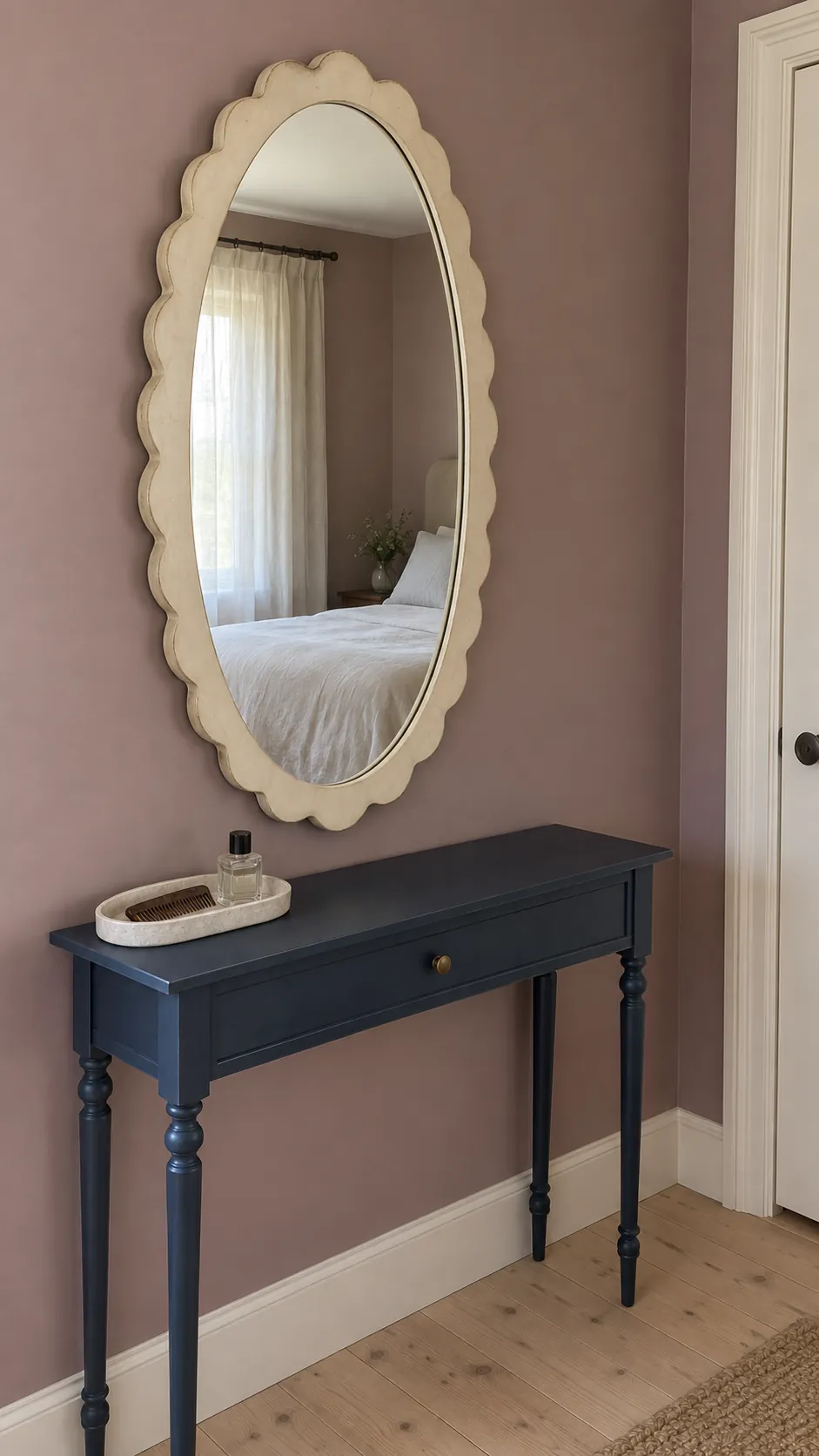
A scalloped mirror over a dressing surface
A scalloped mirror introduces a softer contour among rectangular cabinets and doors. Hang it where it reflects daylight or a calm part of the room rather than a crowded storage corner. Use hardware rated for its weight and appropriate to the wall, and keep it away from positions where direct reflected sunlight could concentrate on vulnerable materials.
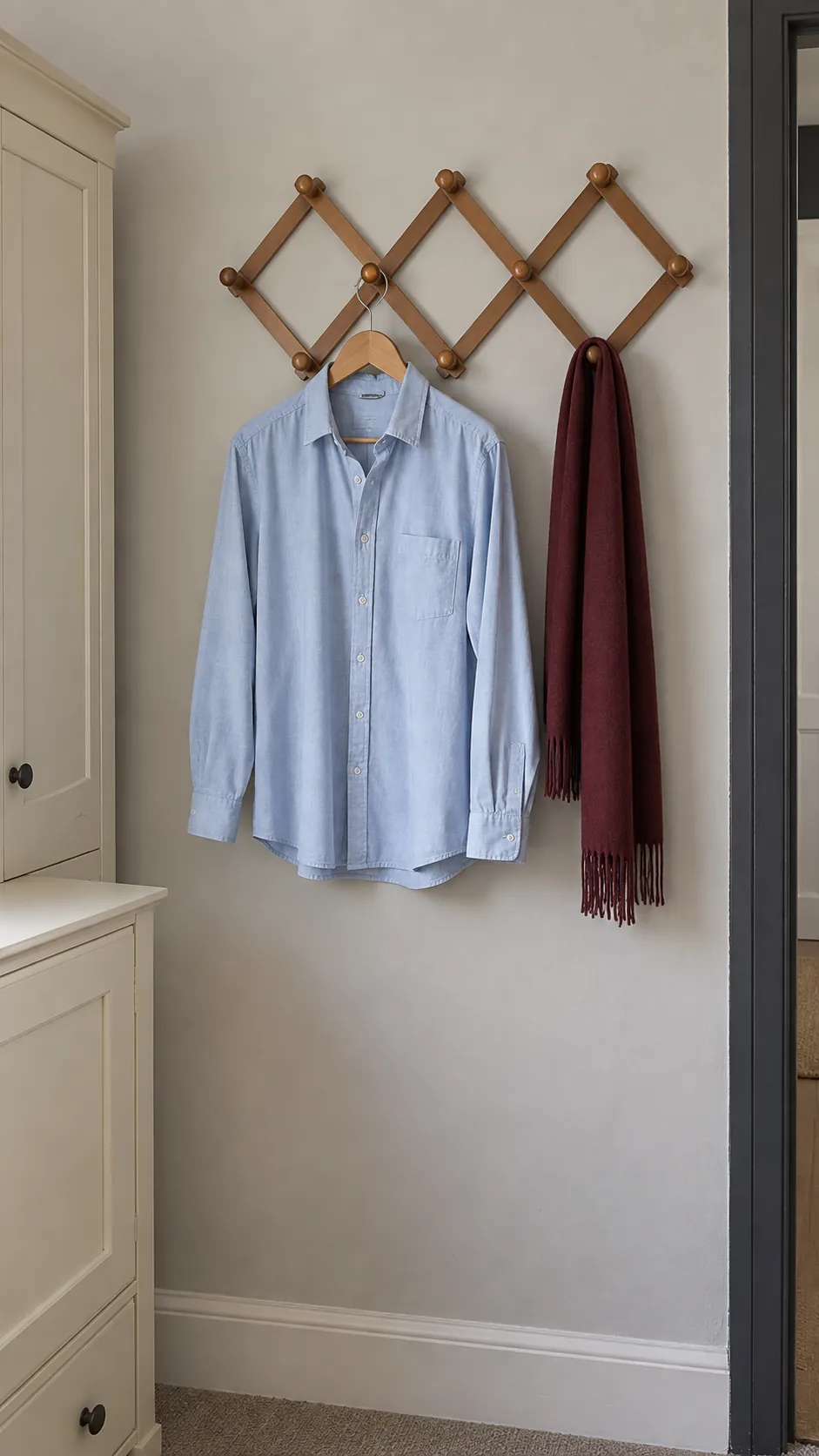
An accordion rack for tomorrow’s clothes
A wooden accordion rack can organize a light scarf or the next day’s shirt near the wardrobe. Expand it to a useful width rather than stretching it as far as it goes. Attach it securely according to its load rating and wall type, and keep heavy bags elsewhere. Leaving some pegs empty makes the shape visible and prevents a dressing corner from feeling crowded.
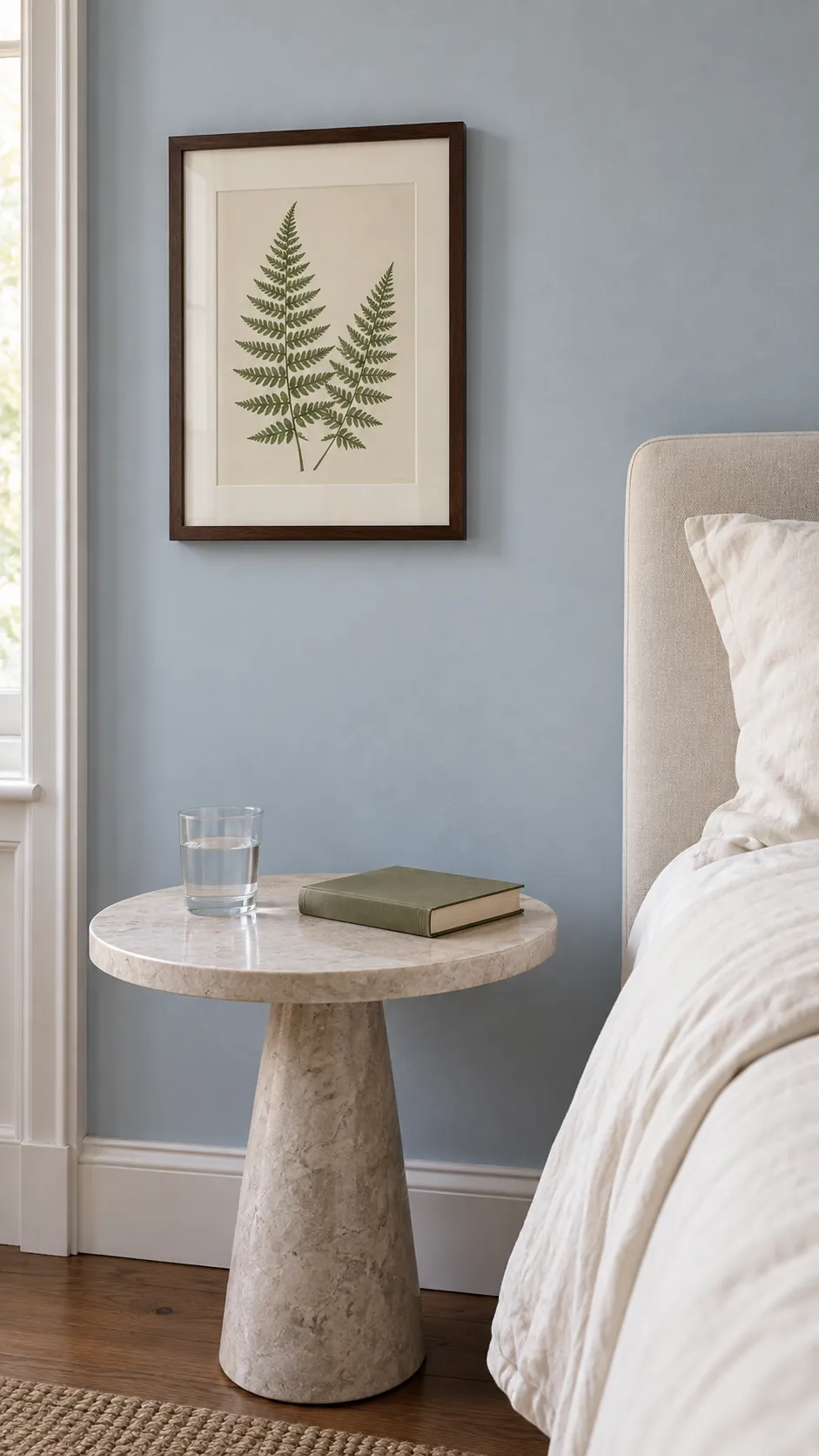
A botanical print with generous margins
A botanical study offers quieter bedroom inspiration than a wall full of unrelated pictures. Choose a plant drawing with colors that work with an existing textile, then give it a simple frame and enough blank wall around it. Hang it at a height that makes sense beside nearby furniture rather than automatically centering it between floor and ceiling.
A reproduction is a valid choice when you want the image rather than a collectible object. Confirm the print dimensions before ordering a frame, including any mat opening. Keep the glass clean and avoid placing the paper where strong direct sunlight will repeatedly hit it.
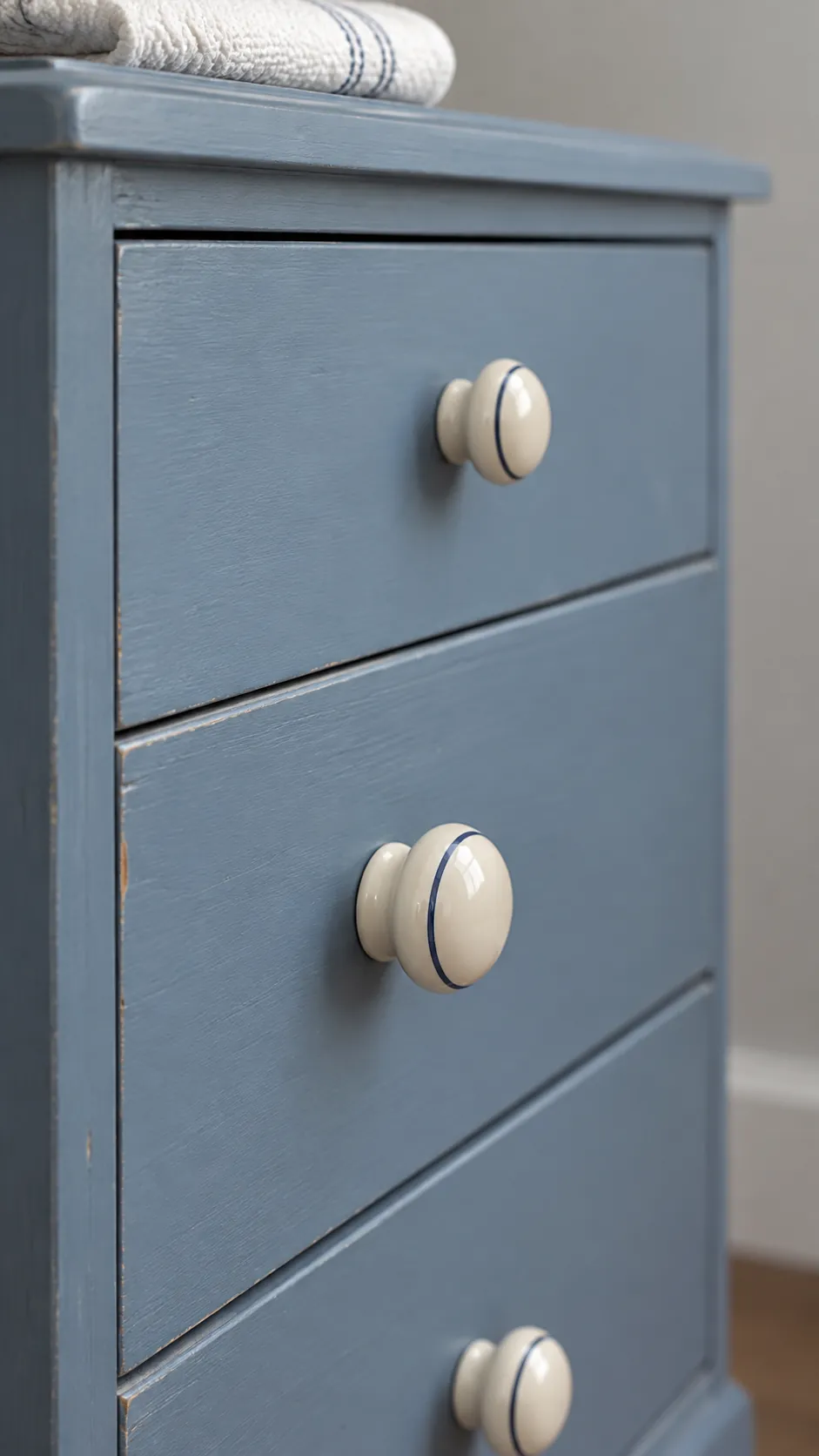
Ceramic knobs on a plain cabinet
Small ceramic knobs can change the mood of a basic chest without replacing the whole piece. Measure the fixing size and check that the new hardware suits the drawer thickness. Keep the original hardware if you may need to reverse the change, particularly with rented furniture. Use one coherent knob style so the cabinet remains calm rather than becoming a sample display.
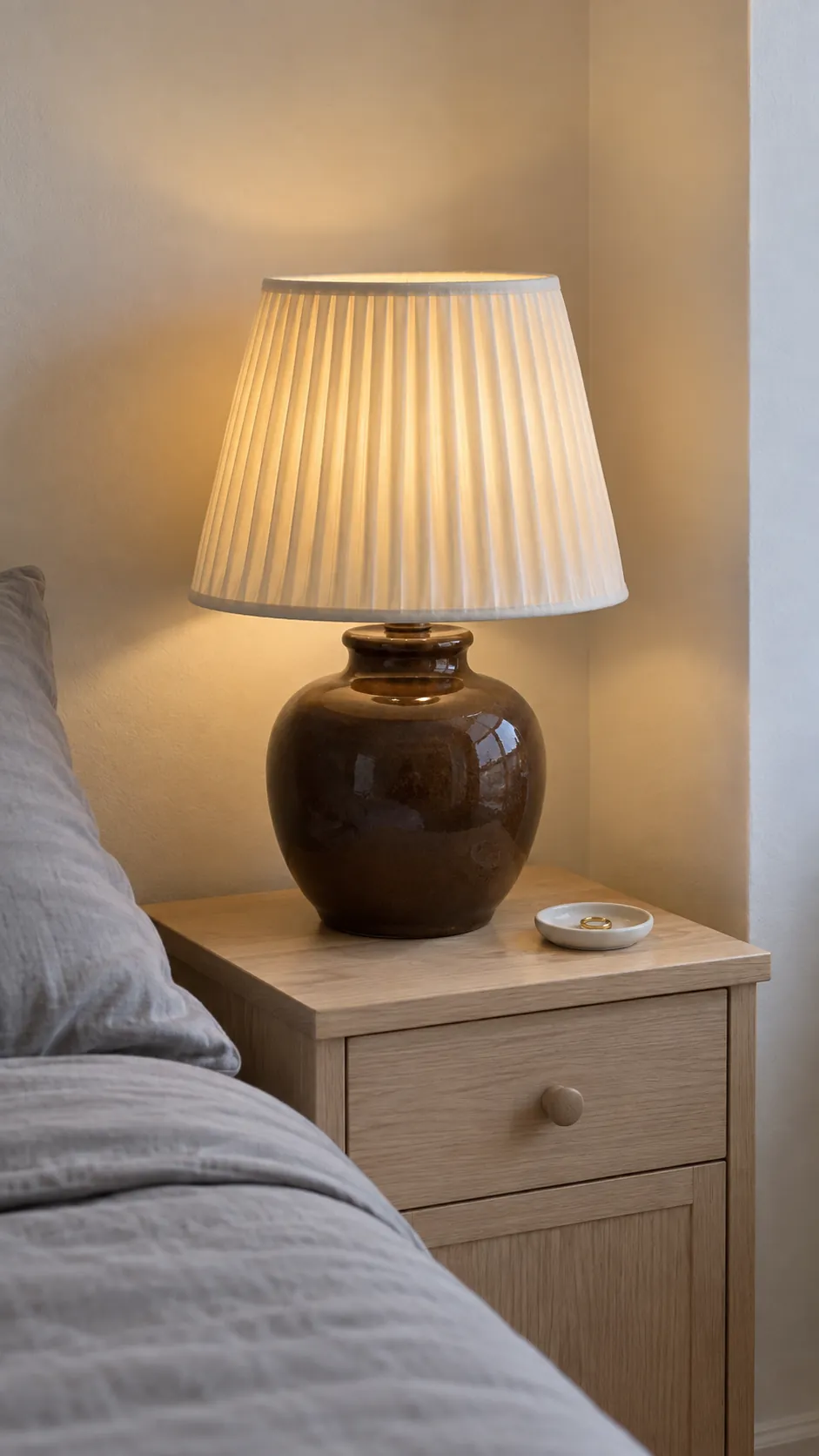
A pleated shade that softens a corner
A pleated lampshade adds texture at eye level while keeping the floor free. Match the shade fitting and size to the lamp, and follow the fixture’s bulb and clearance requirements. An opaque or lined shade can reduce glare more effectively than a thin decorative cover. Never drape fabric over a lamp to imitate this effect.
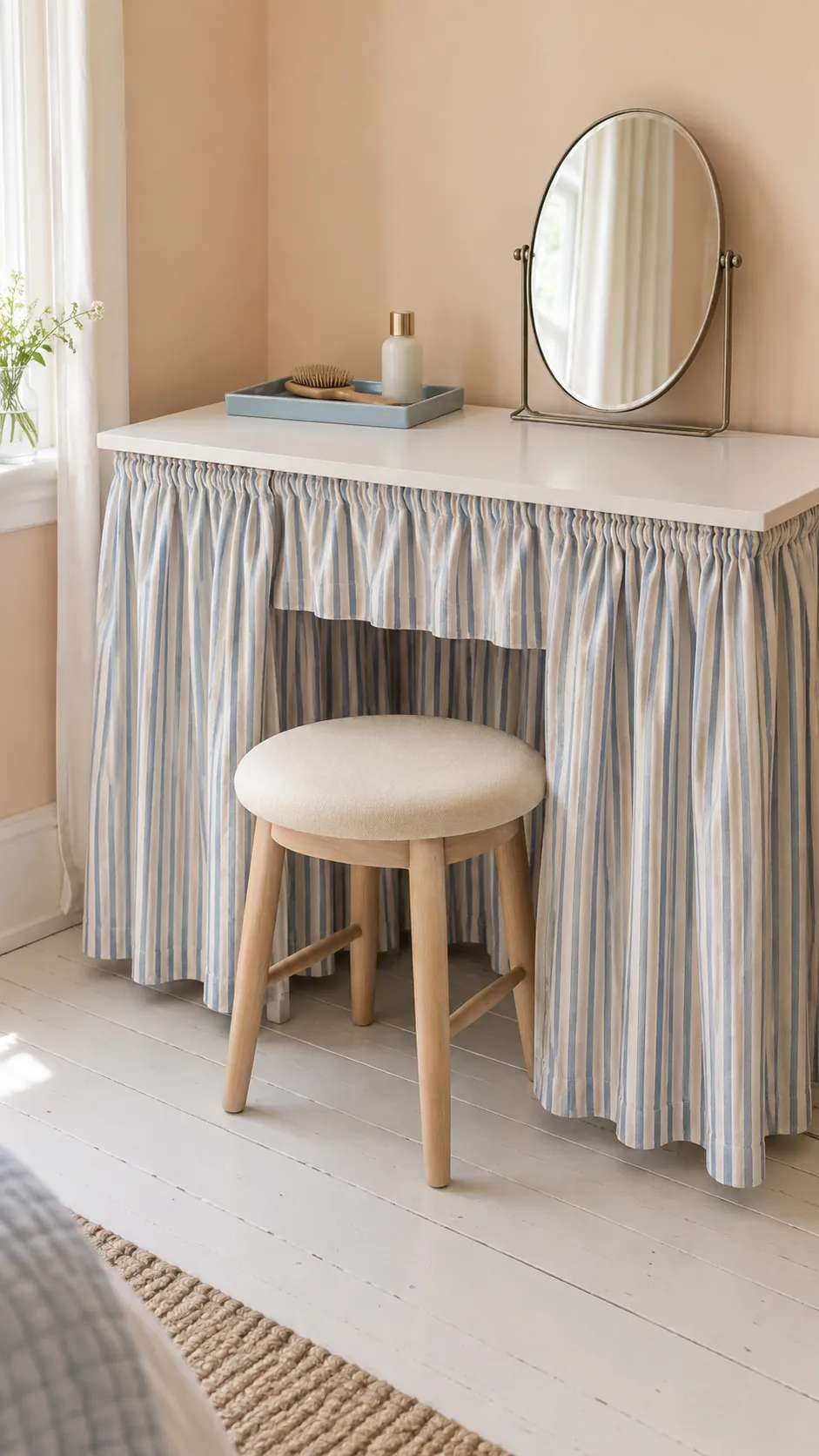
A skirted vanity with useful storage
A fabric skirt beneath a small vanity can soften the dressing area and conceal a few neatly stored items. Choose fabric that hangs clear of your feet and can be removed for cleaning. Keep the stool easy to pull out and avoid storing electrical equipment behind loose cloth.
A narrow stripe creates a different effect from florals without adding much visual weight. Repeat one stripe color in a small tray or towel, then keep the tabletop simple. The hidden space works best for a limited category, such as spare toiletries, rather than anything that lacks a home.
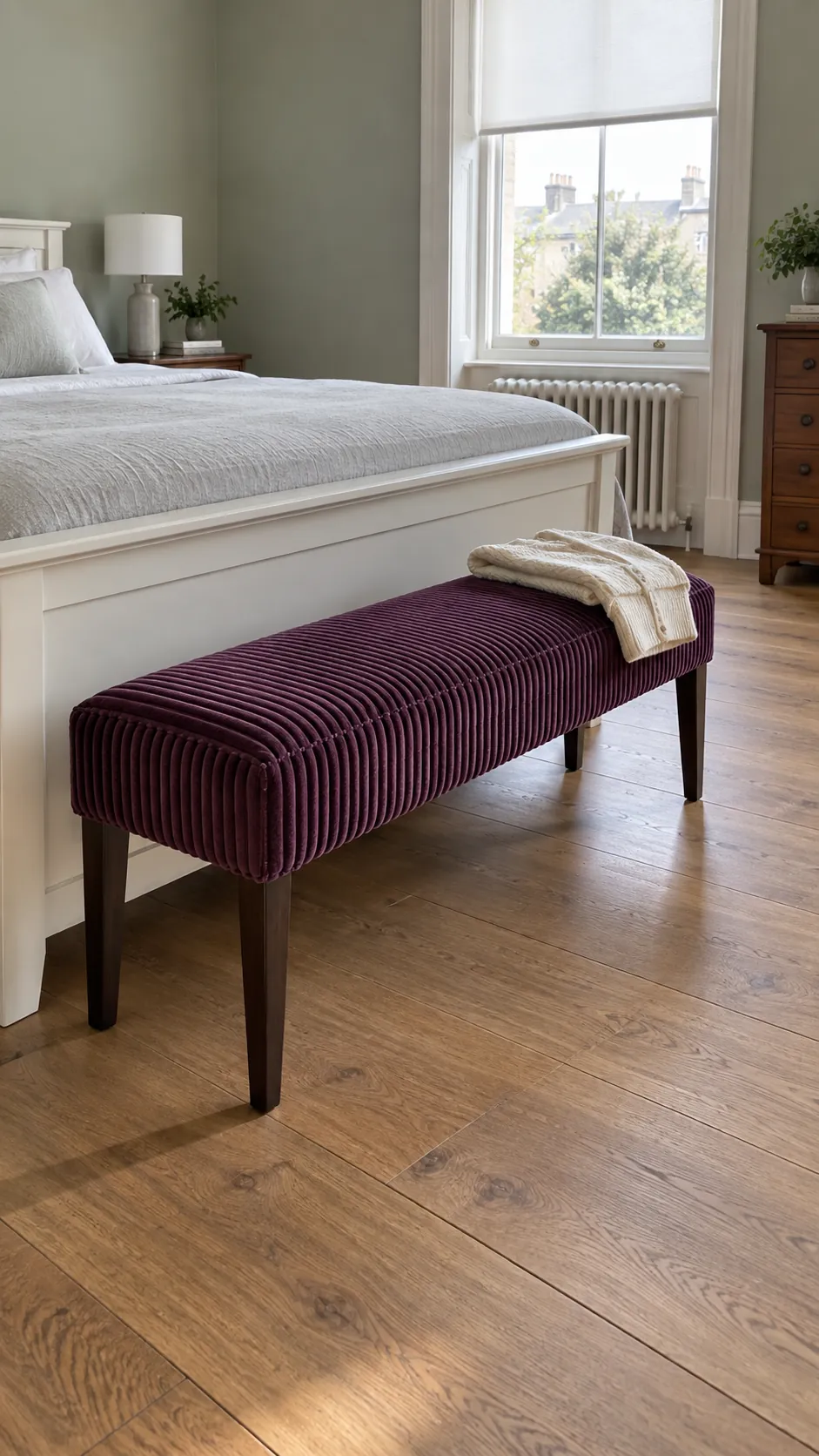
A corduroy bench at the foot of the bed
Corduroy brings a tactile retro boho bedroom detail without relying on fringe or several woven accessories. A small bench is useful for dressing when the room has enough clearance beyond the bed. Check its seat height, stability, and upholstery condition before buying. In a tight room, skip the bench and use the same fabric on a cushion instead.
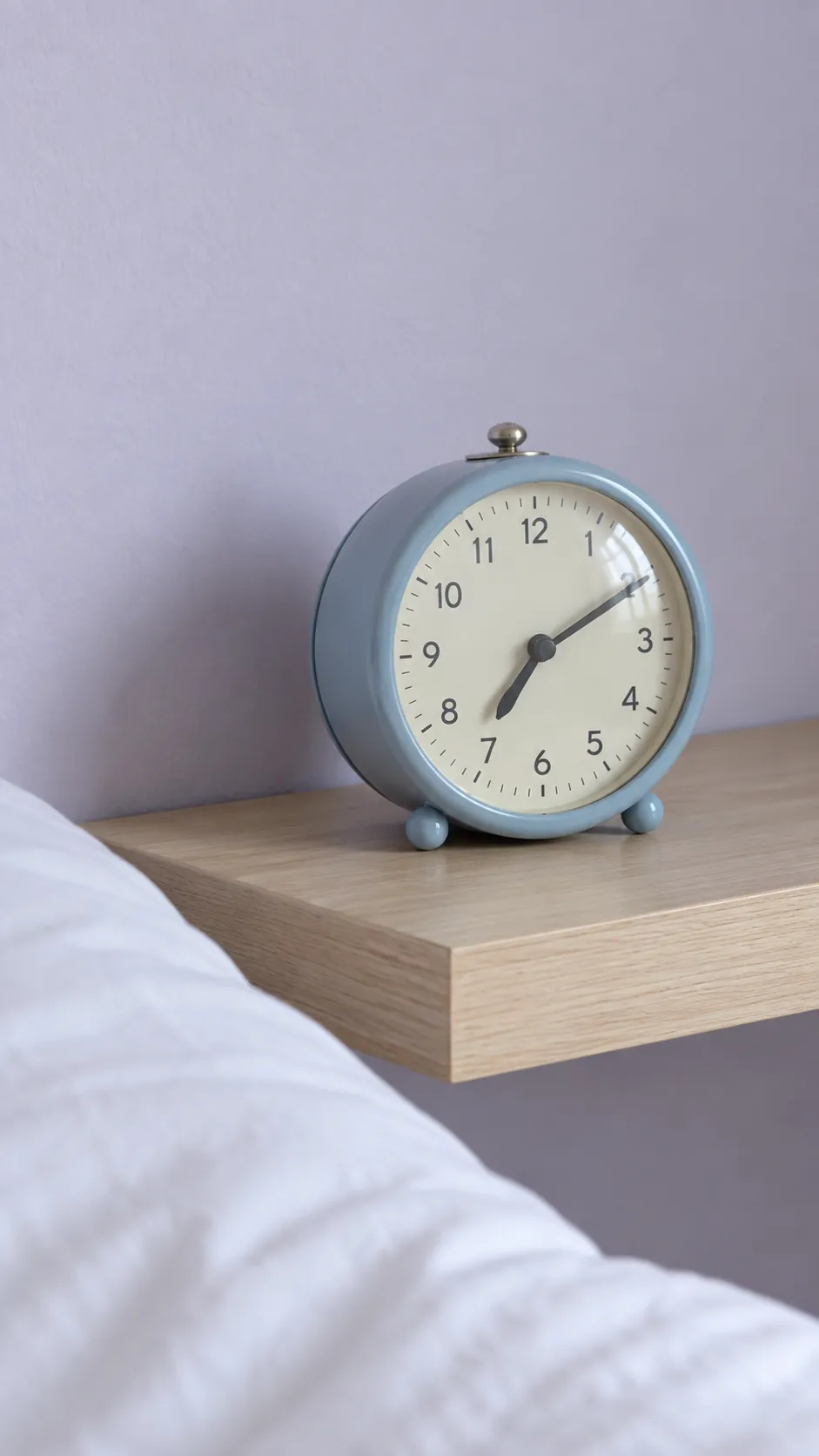
An enamel clock with a readable face
A compact enamel alarm clock offers a useful nostalgic detail on a bedside shelf. Choose a face you can read from the pillow and check whether its ticking will bother you. Place it where you can reach the controls without balancing it on a stack of books. A single clock can provide enough character for a very small nightstand.
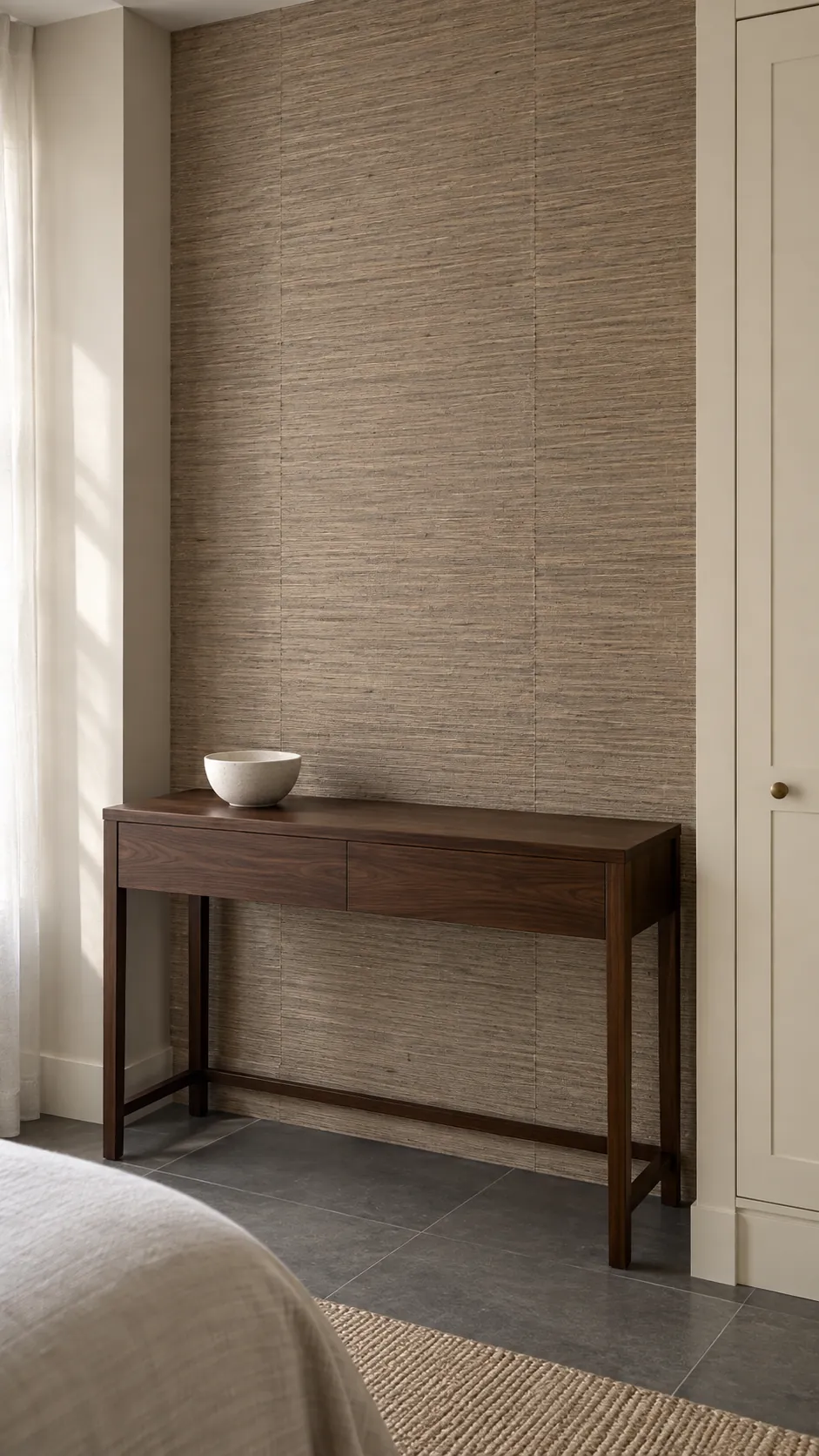
Grasscloth texture on one contained surface
Grasscloth can give a room the tactile depth associated with vintage interiors while staying visually quiet. Consider a contained dressing wall instead of covering every surface, and expect natural variations and visible seams as part of the material. Check the product’s cleaning limits and installation requirements before choosing it.
For a rental, obtain permission for permanent wallcovering or explore an approved removable alternative with a similar texture. Test samples against the existing paint and lighting, since warm fibres can change the perceived color of nearby furniture. Keep artwork minimal so the texture has room to work.
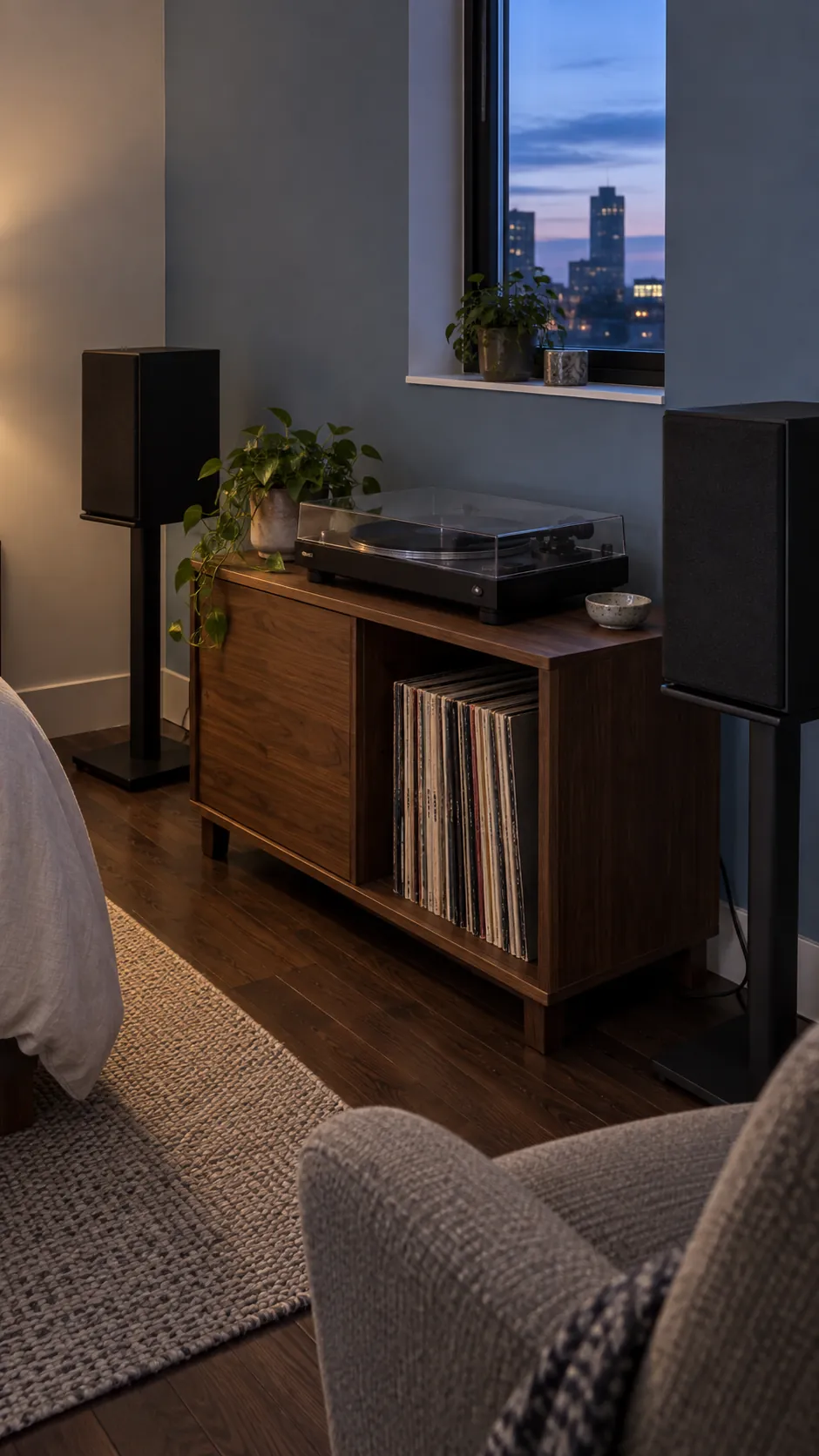
A listening nook that stays organized
A small record setup can make a bedroom feel personal when music is part of your routine. Put the turntable on a stable level surface and give equipment the ventilation its manufacturer requires. Store records upright in suitable support and keep speakers positioned to reduce vibration reaching the player. Avoid placing the setup where cables cross the path to the bed.
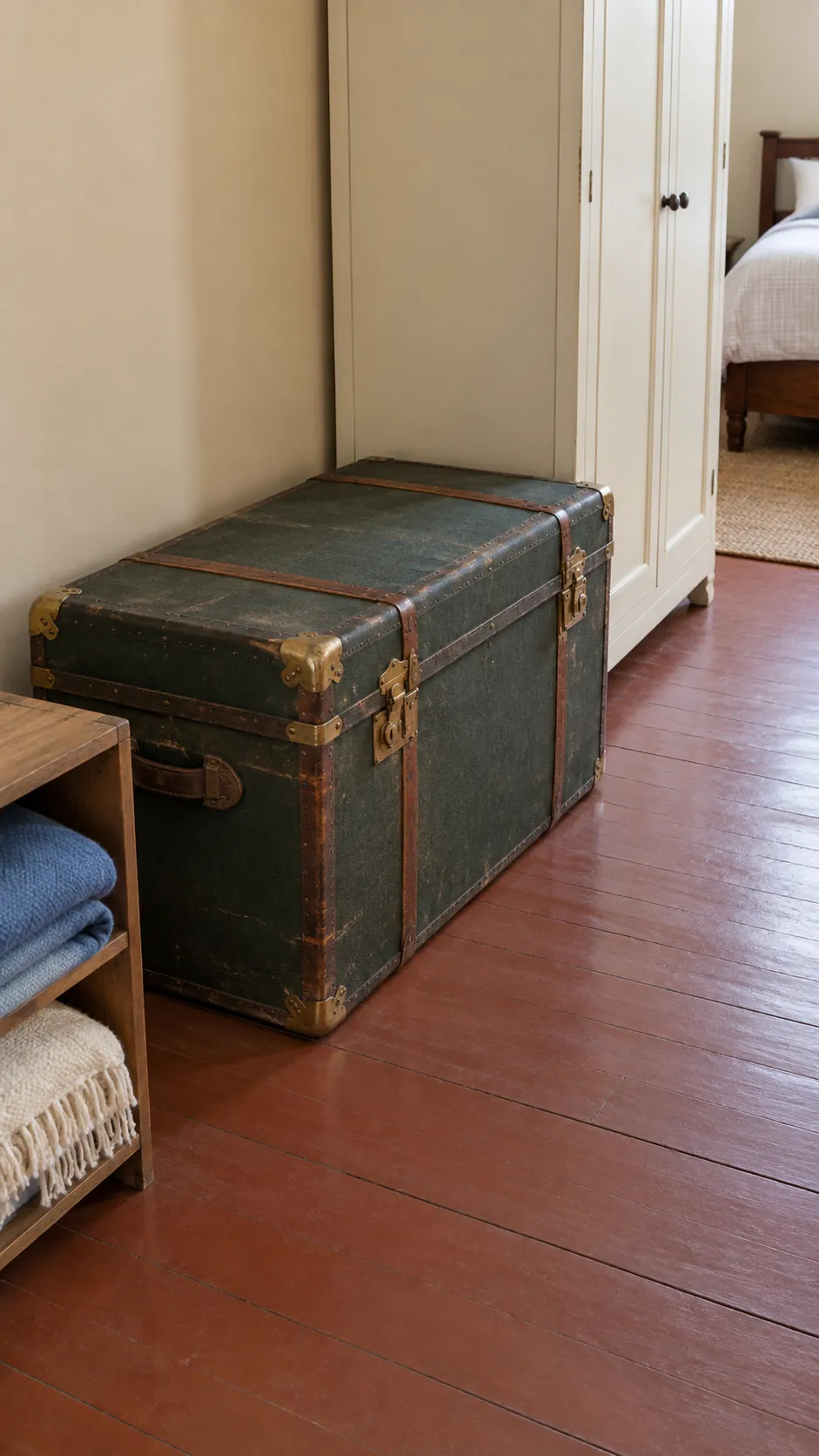
A storage trunk used within its limits
A vintage trunk can hold spare blankets while adding a different material to the room. Check for sharp edges, musty smells, and a lid that could fall or trap fingers before using it. Do not treat it as a seat unless it is designed and rated for that purpose. Place it where the lid opens freely and the route around the bed stays clear; useful storage is a better finishing touch than another object to step around.