
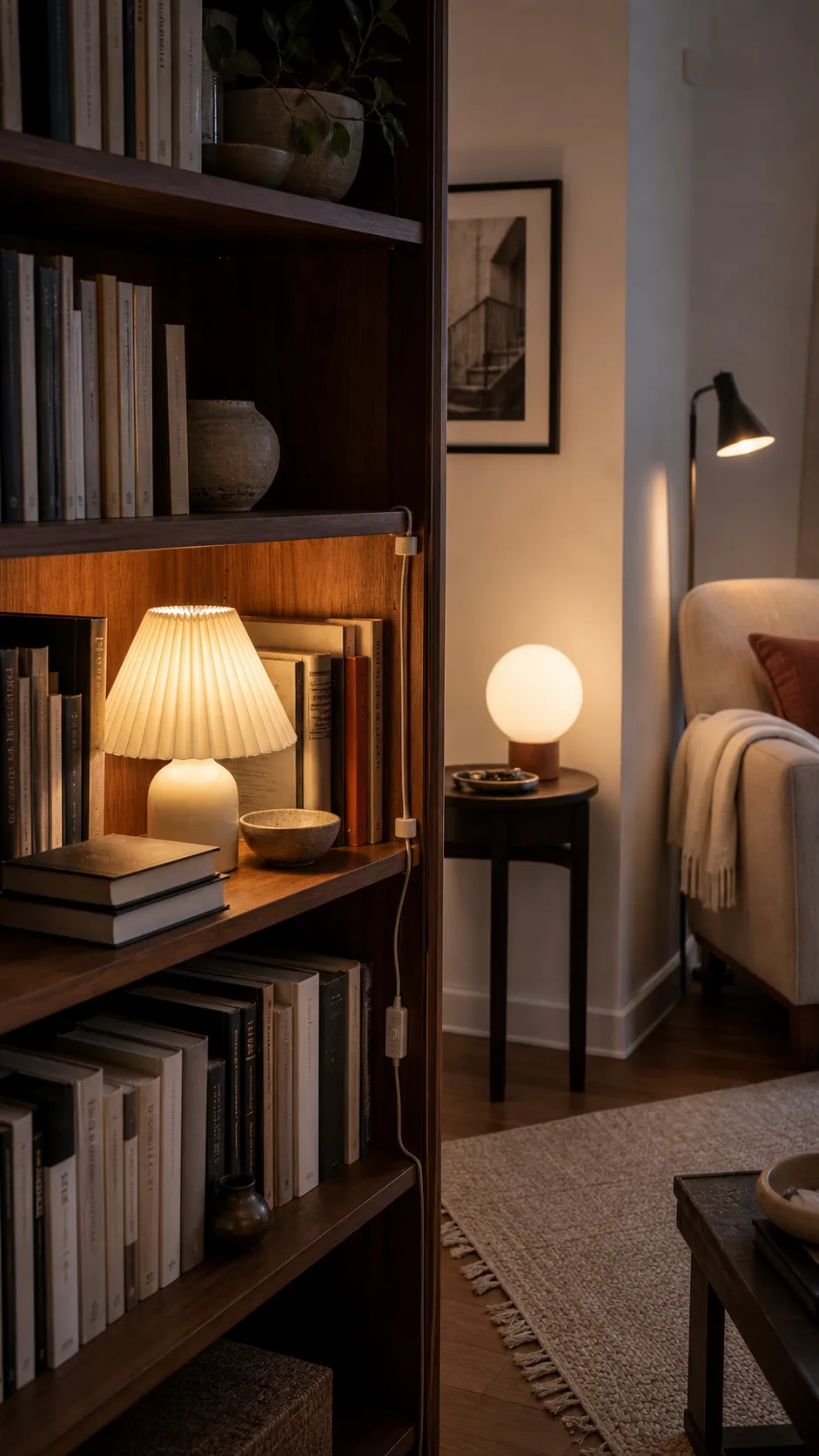
A small lamp can do something a ceiling fixture rarely manages: make one shelf or forgotten corner feel intentional. The best small lamp decor ideas are not simply about filling an empty spot. They solve a specific problem—flat light, an awkward gap, a shelf with no focal point, or a reading chair that never feels inviting after dark.
People wrestling with these spaces often describe the same frustrations: the room feels harsh with only the overhead light on, a lamp and table look stranded from the rest of the layout, or decorative objects multiply until the shelf becomes cluttered. The answer is usually better scale, warmer light, and fewer supporting pieces. These 19 ideas show how to build that balance with ordinary shelves, corners, outlets, and renter-friendly options.
Tuck a Pleated Lamp Between Book Stacks
A petite pleated-shade lamp makes a bookcase feel like a place you use rather than a storage wall you happen to own. Set it beside one horizontal stack and one short row of upright books, leaving enough open shelf around the shade for the glow to register. The varied book directions create an easy visual frame without boxing the lamp in.
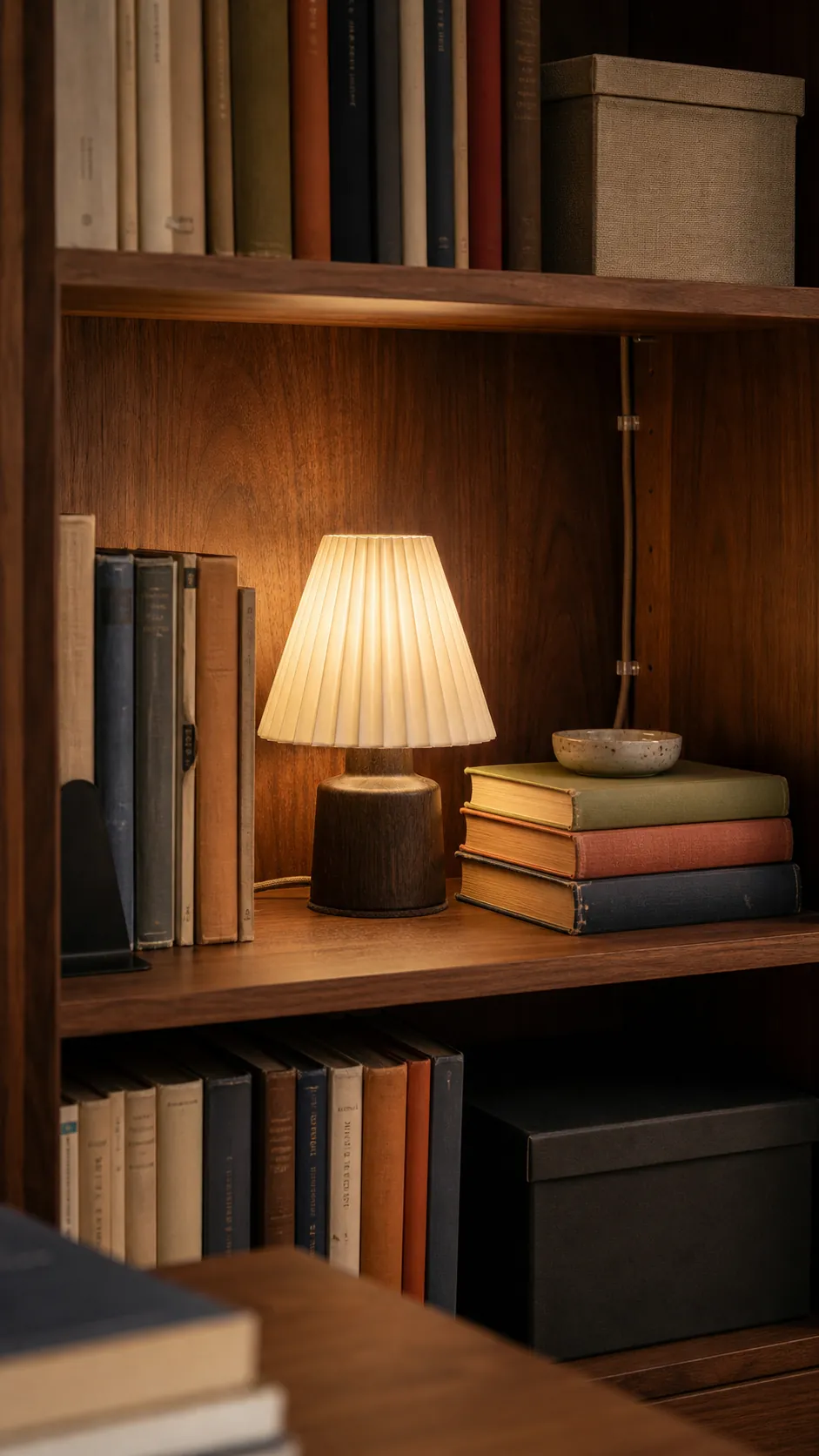
Keep the shade narrower than the empty opening above it and route the cord down a rear corner with a paintable cable clip. A warm-white bulb gives paper, linen, and timber a richer appearance than a cool bulb. This arrangement works especially well where overhead lighting makes a living room feel flat.
Give a Floating Shelf a Cordless Glow
A rechargeable lamp is the cleanest answer when a floating shelf has no nearby outlet. Choose a low, stable base and keep it well inside the shelf edge. Pair it with only one tactile object—a small stoneware bowl or a trailing plant—so the lamp reads as the anchor instead of another piece of clutter.
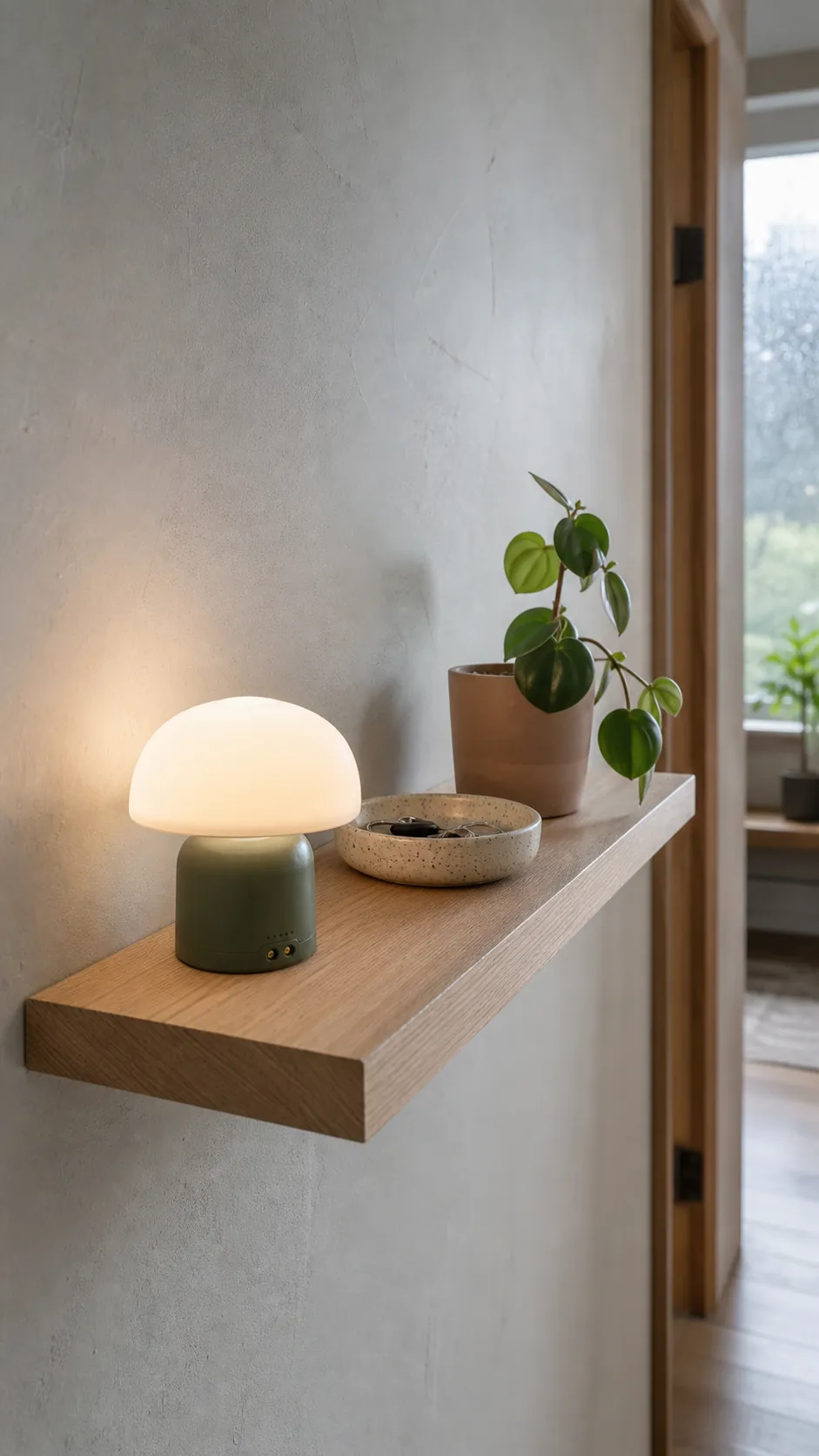
This is a particularly useful renter solution because it avoids hardwiring and dangling extension cords. Check the lamp’s real run time before treating it as everyday ambient lighting, and give it a regular charging place. The small maintenance habit is worth the freedom to light a shelf that would otherwise remain dark.
Build a Ceramic Lamp and Branch Vignette
On a console or deep shelf, a rounded ceramic lamp looks more composed beside something tall and irregular. A few bare branches in a narrow vase provide that height while keeping the palette calm. Let the lamp be the solid form, the vase the vertical form, and a shallow tray the low form; three clear levels are usually enough.
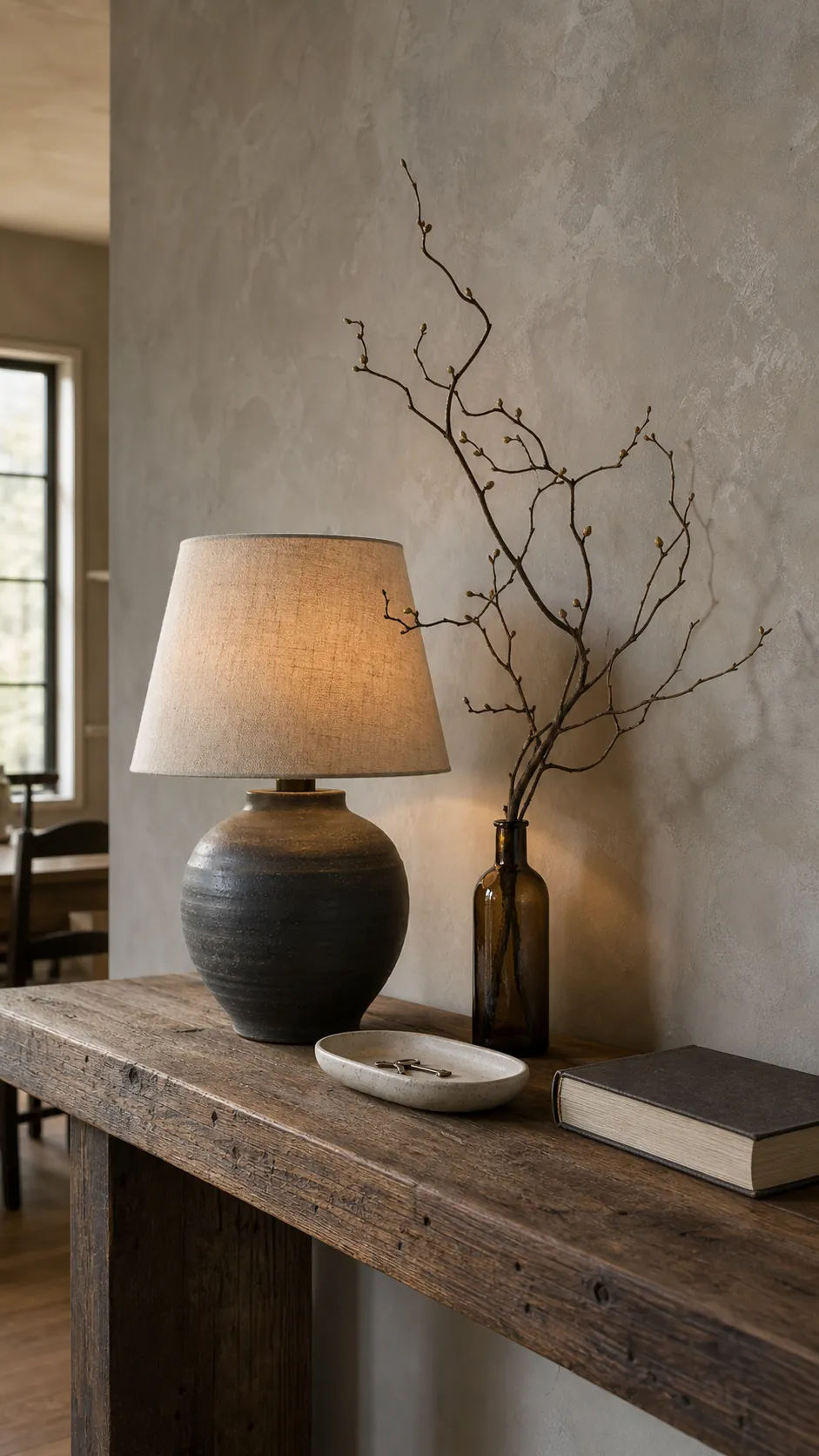
Do not center every object or match the gaps perfectly. Slight overlap makes the group feel connected, while a clear patch of surface stops it looking staged. Matte pottery is forgiving near a bulb because it catches soft gradients rather than sharp reflections.
Turn an Empty Corner Into an Evening Landing Spot
A narrow table and small lamp can give an entry or bedroom corner a job: holding keys, a phone, or the book you are currently reading. The practical use matters. Corners often look awkward when furniture is added solely to occupy them, but a repeated daily action makes the arrangement belong.
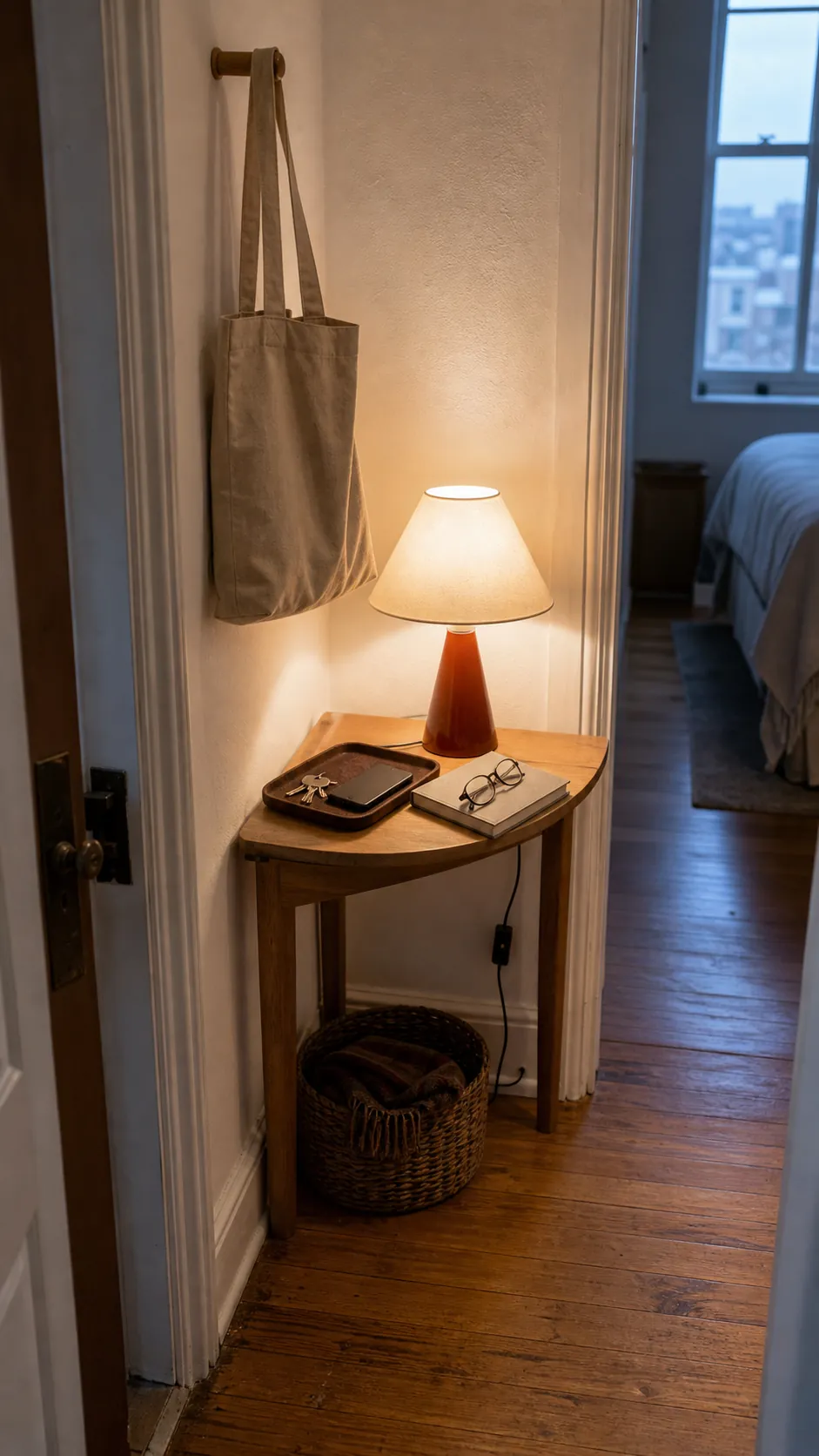
Choose a table that fills most of the available width without blocking the walkway, then place a lidded box or tray under the light. A wall hook above can handle a tote without adding another floor object. The result is useful ambient lighting and a calmer drop zone in the same footprint.
Use an Opal Globe to Soften a Dark Niche
An opal glass globe spreads light in every direction, which makes it effective in a deep alcove where a conventional shade would leave the upper wall dark. Put the globe toward the back third of the shelf so light washes the rear surface and reveals the niche depth rather than blasting the front edge.
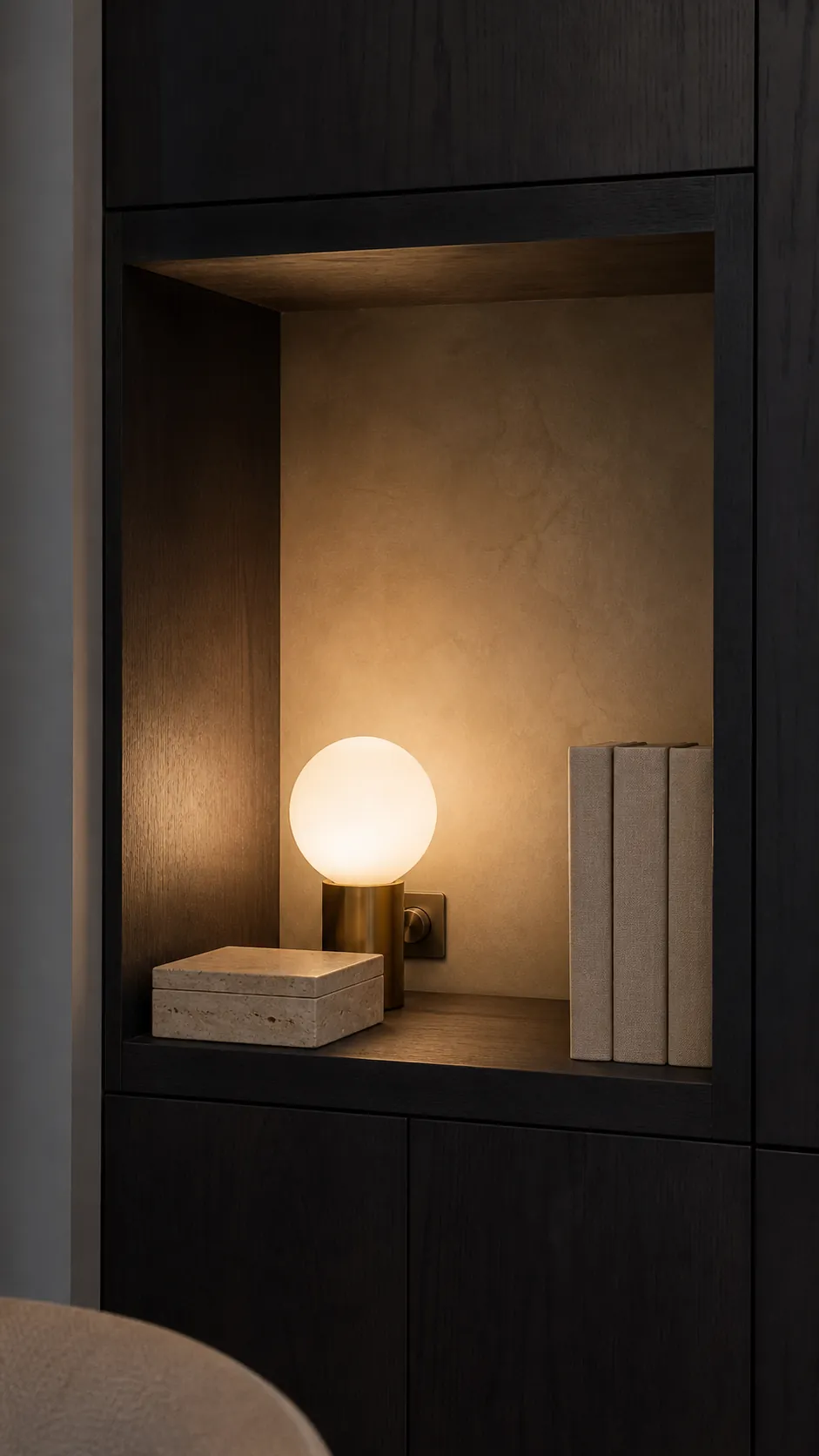
Use a dimmable bulb if the globe is visible at eye level. The goal is a luminous object, not a glaring white circle. Dark wood and painted niches absorb more light than pale walls, so judge brightness in the evening and adjust downward from there.
Clip a Task Lamp Onto a Reading Shelf
A clip lamp preserves surface space and puts the light where a reader needs it. Attach it to a strong shelf, aim the beam over the shoulder, and sit in the chair before tightening the angle. If you can see the bare bulb or bright LED directly, move it higher or rotate the shade away.
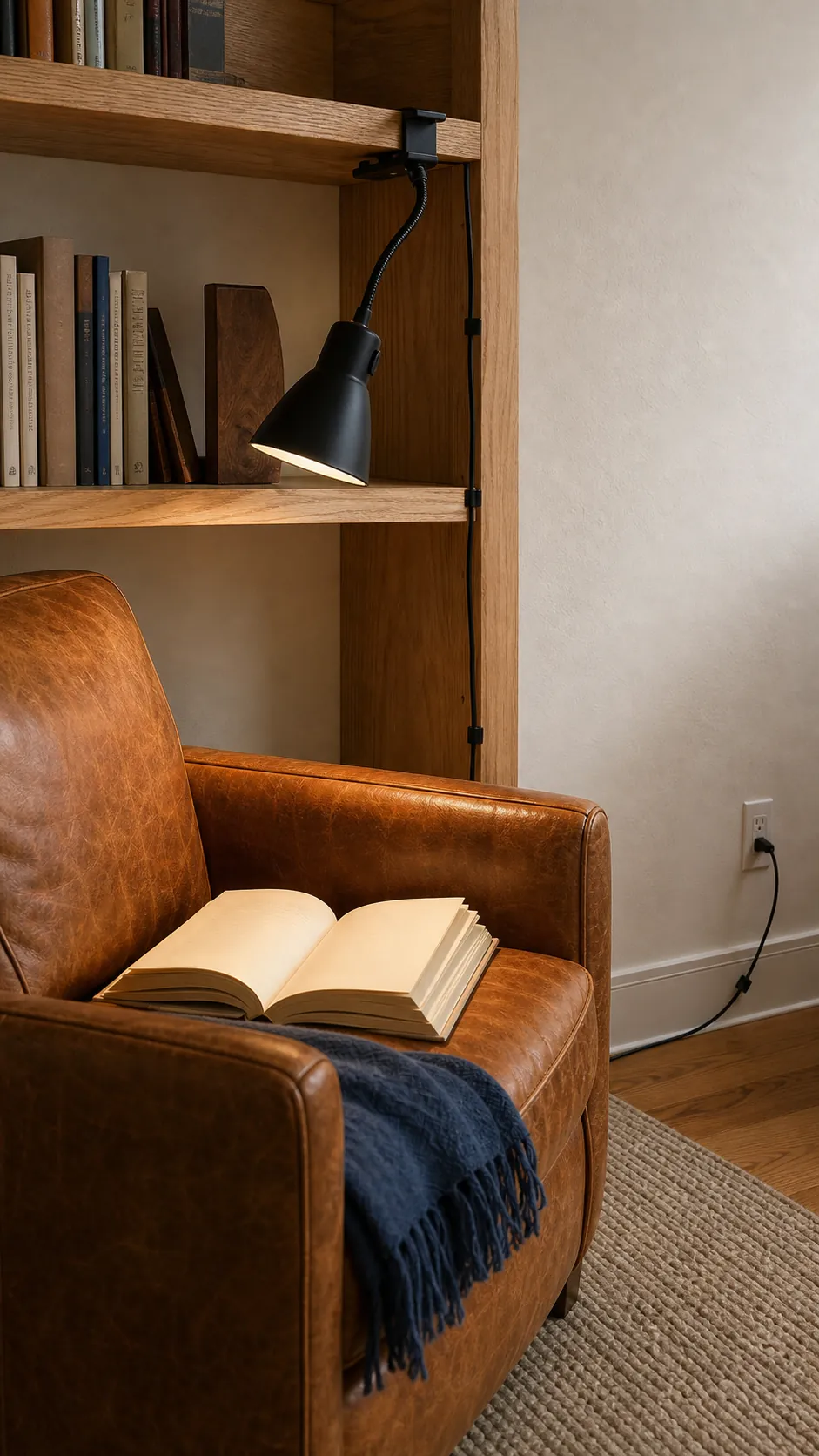
This idea works when a corner needs function but cannot fit another side table. Protect delicate shelf finishes with the clamp pad, confirm the shelf can handle the pressure, and gather the cord neatly behind the bookcase. A focused lamp can coexist with softer room lighting without competing with it.
Pair a Mushroom Lamp With Low Objects
A compact mushroom lamp already has a strong silhouette, so it needs quiet company. Style it with a shallow dish, one closed book, or a small sculptural stone rather than another tall object. Keeping everything else below the lamp’s widest line lets the curved shade remain the focal point.
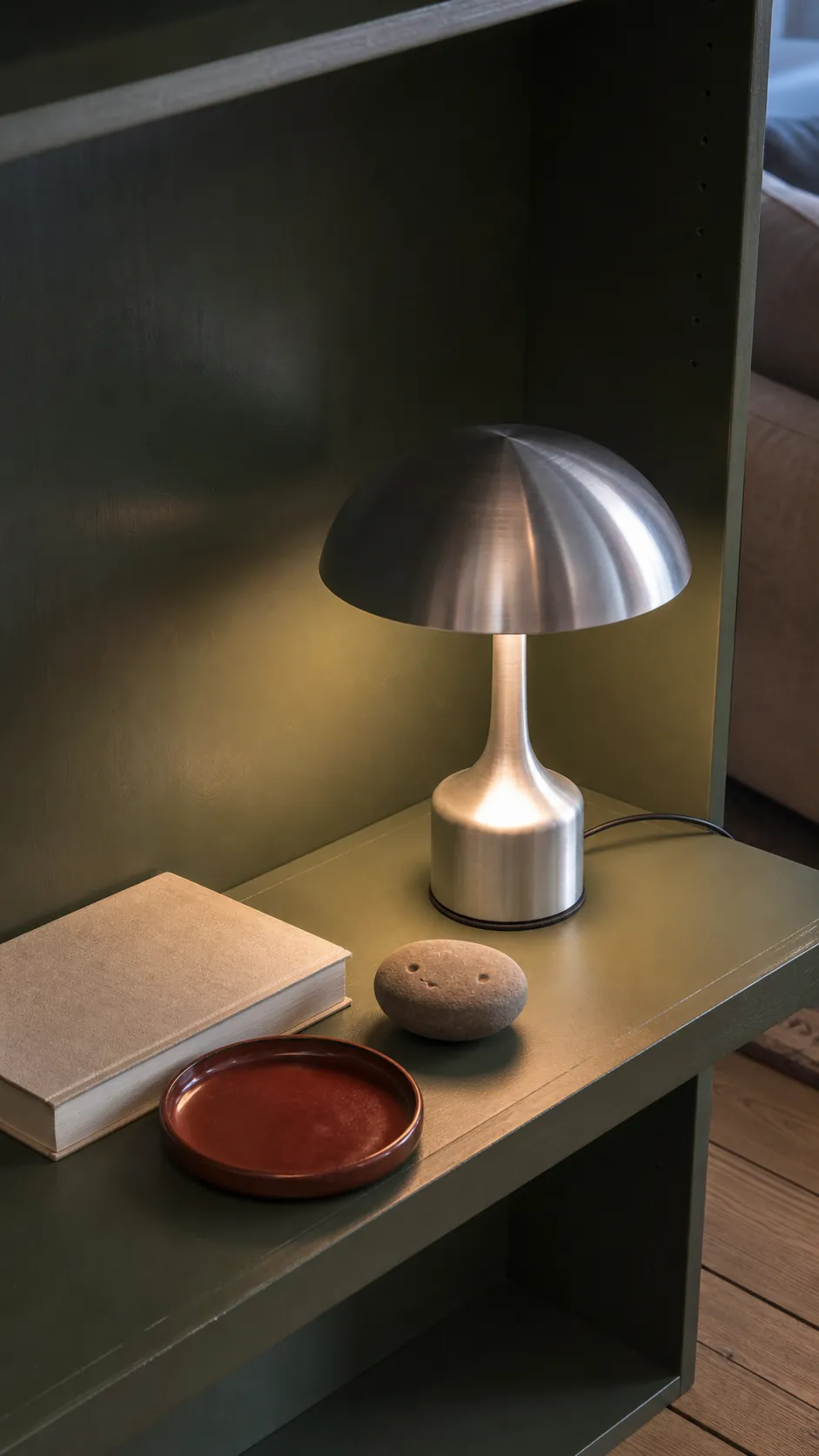
The downward glow is well suited to glossy book jackets and textured tabletops, but avoid placing heat-sensitive objects directly beneath the shade. A low-output LED creates atmosphere without turning the shelf into a task station. This is lamp decor at its simplest: one memorable shape and enough breathing room to appreciate it.
Warm Up a Metal Shelf With Linen
Industrial shelving can feel cold when every surface is metal, glass, and hard-edged. A tiny lamp with a linen shade introduces weave, softness, and warm diffusion. Echo that texture once with a fabric-covered box or a folded throw on a lower shelf, rather than scattering woven accents everywhere.
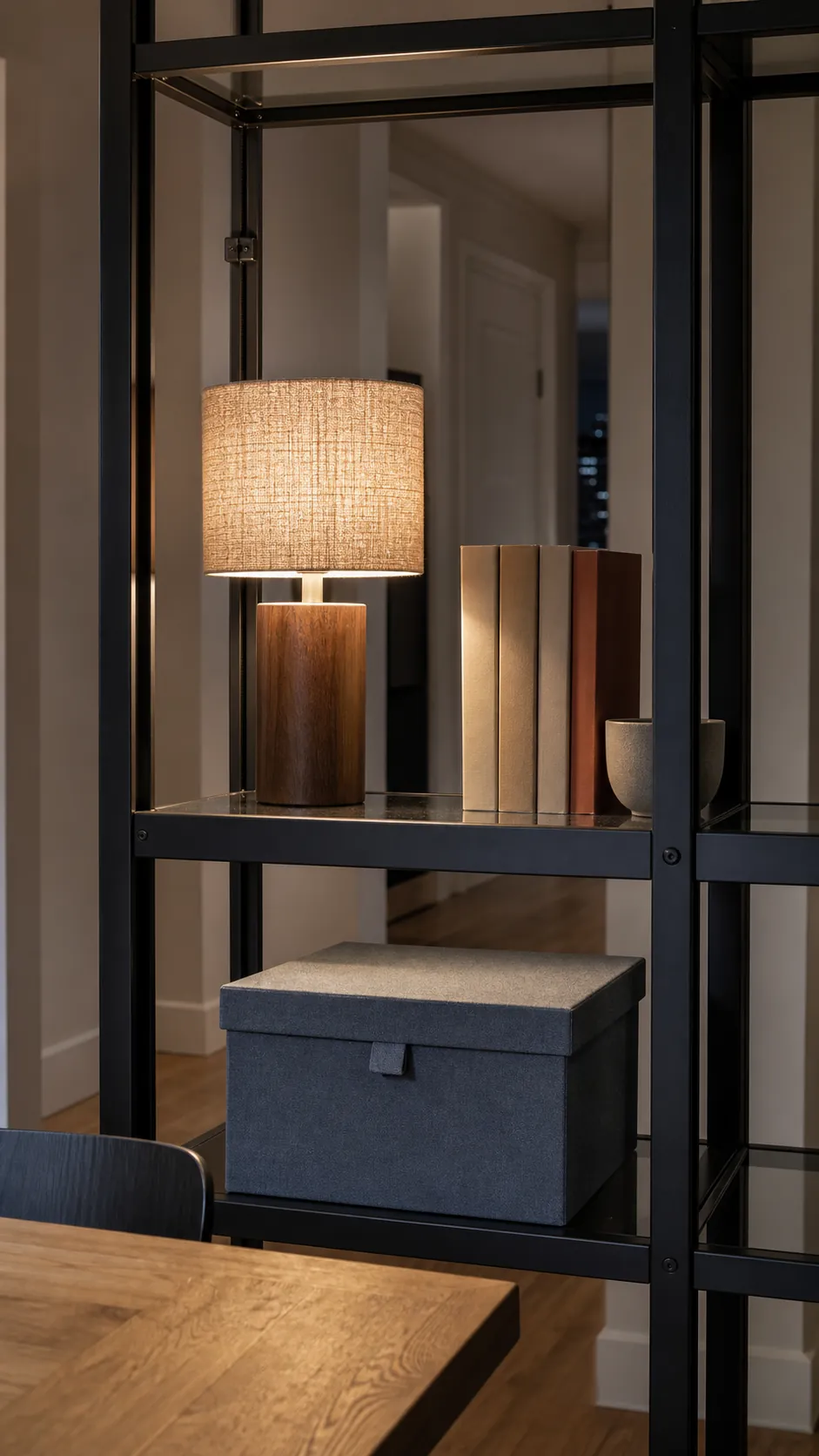
Keep a safe gap between the shade and the shelf above, even with an LED bulb. The fabric should glow gently instead of showing a harsh hotspot. Warm light reflecting from black uprights creates depth and prevents the shelving from reading as a dark grid after sunset.
Make a Tiny Library Lamp the Desk-Shelf Bridge
Where a desk meets shelving, a small library-style lamp can visually join the two zones. Position it on the lowest shelf or raised hutch, with its light directed toward a notebook rather than the computer screen. Brass, aged nickel, or dark bronze gives the practical setup a finished furniture-like quality.
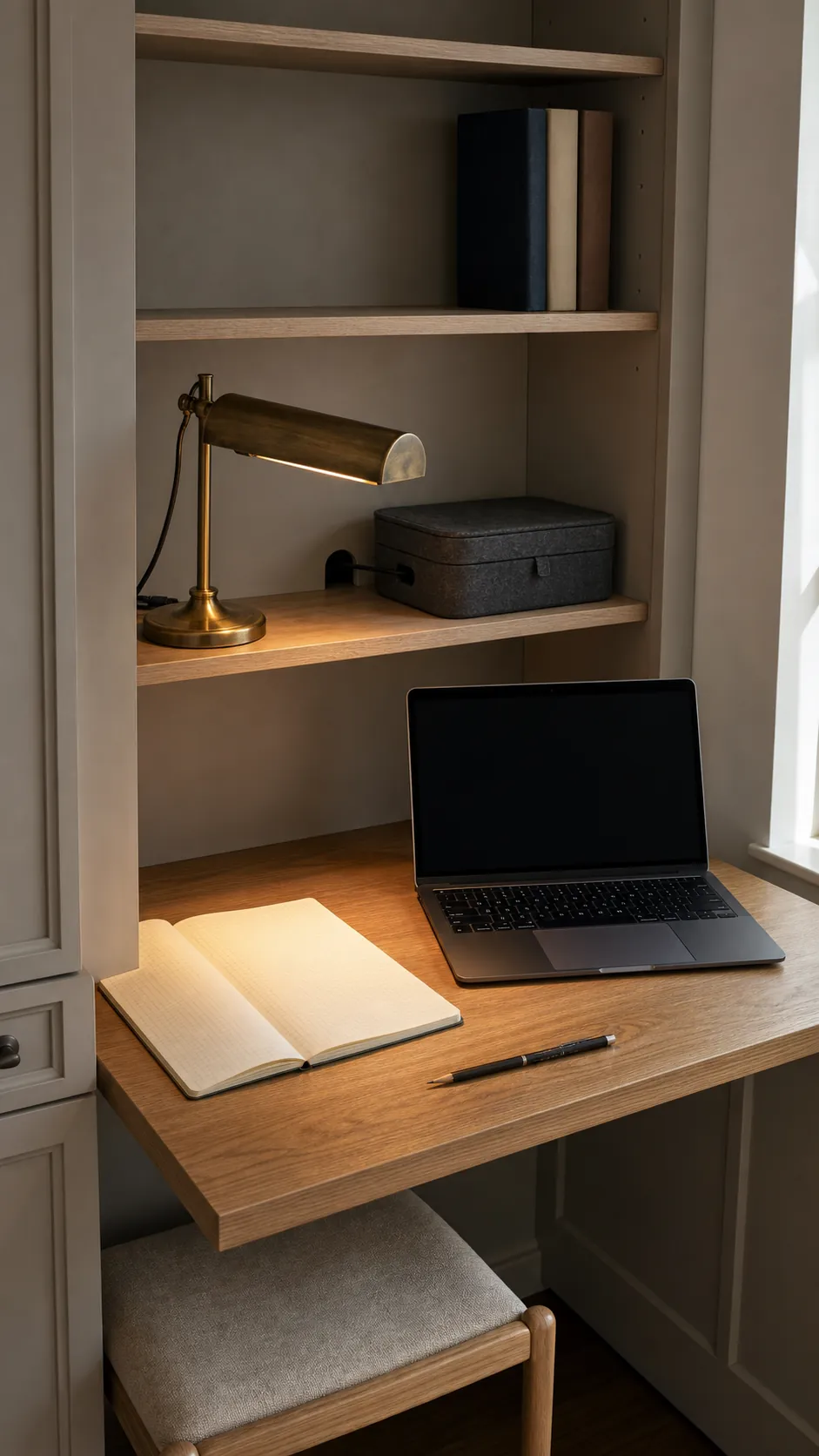
Test for screen reflections before committing to the placement. A narrow beam and adjustable shade are more useful here than a decorative all-over glow. Store chargers in one box and leave the area around the lamp uncluttered, so the eye reads a deliberate work corner instead of a collection of electronics.
Light a Plant Shelf Without Pretending It Is Sunlight
A decorative lamp can make plant leaves look beautiful at night, but it is not automatically a grow light. Use it to graze a hardy plant from the side, revealing leaf texture and casting soft shadows on the wall. If the corner is genuinely dark, give the plant proper daylight elsewhere or add a purpose-built grow bulb.
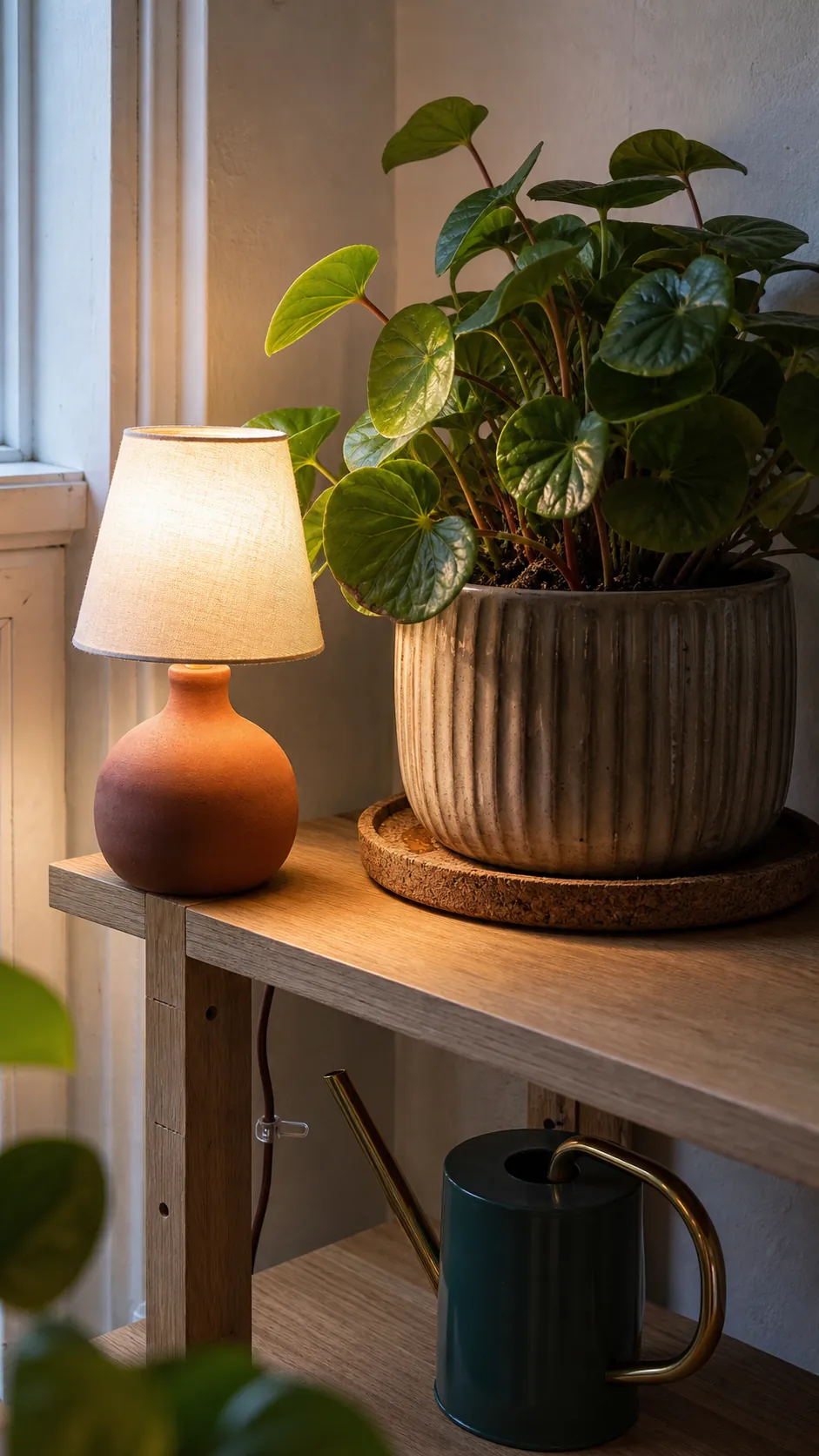
Keep watering away from plugs and fabric shades, and place heavier pots near the shelf supports. The strongest styling comes from contrast: luminous leaves, a matte lamp base, and one patch of open wall. Avoid packing the shelf with multiple tiny planters that disappear into visual noise.
Reflect a Small Lamp in a Tabletop Mirror
A compact mirror can double the sense of glow on a dim shelf, but the angle determines whether it looks atmospheric or uncomfortable. Place the mirror slightly behind and off-axis from the lamp so it catches the shade and nearby wall, not the exposed bulb or the viewer’s face from the main seat.
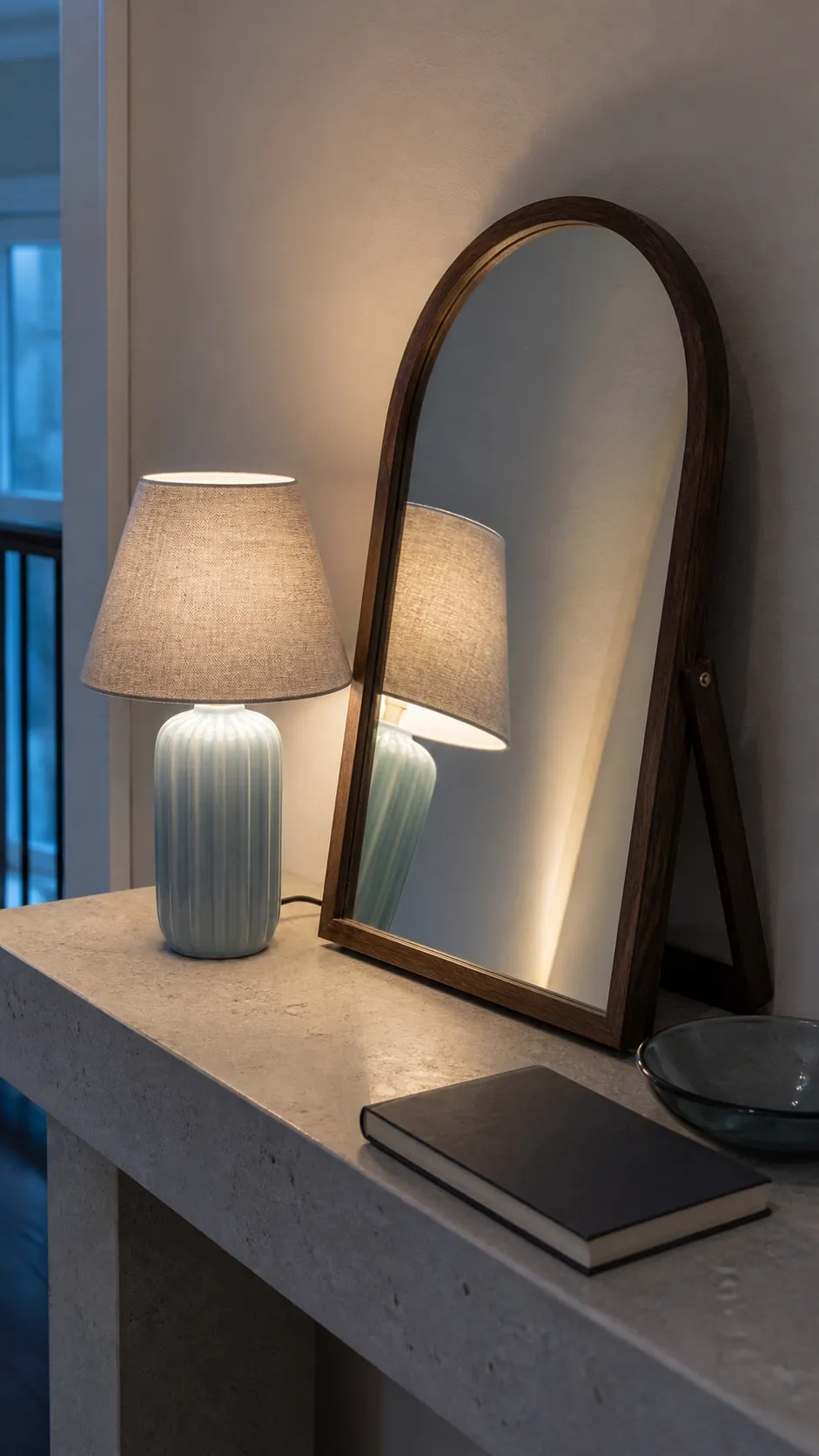
Choose a mirror with enough visual weight to stay stable, particularly on a narrow console. A rounded or arched frame balances a square shelf opening. This technique brightens a corner without adding another electrical fixture and gives the vignette a convincing sense of depth.
Use a Paper Lantern Lamp for Featherlight Volume
A small paper lantern lamp fills vertical space without looking heavy. It is useful on a low corner cabinet where a solid ceramic base might feel blocky. Let the ribbed paper shade stand against a relatively plain background and repeat its warm tone in one wood or woven detail nearby.
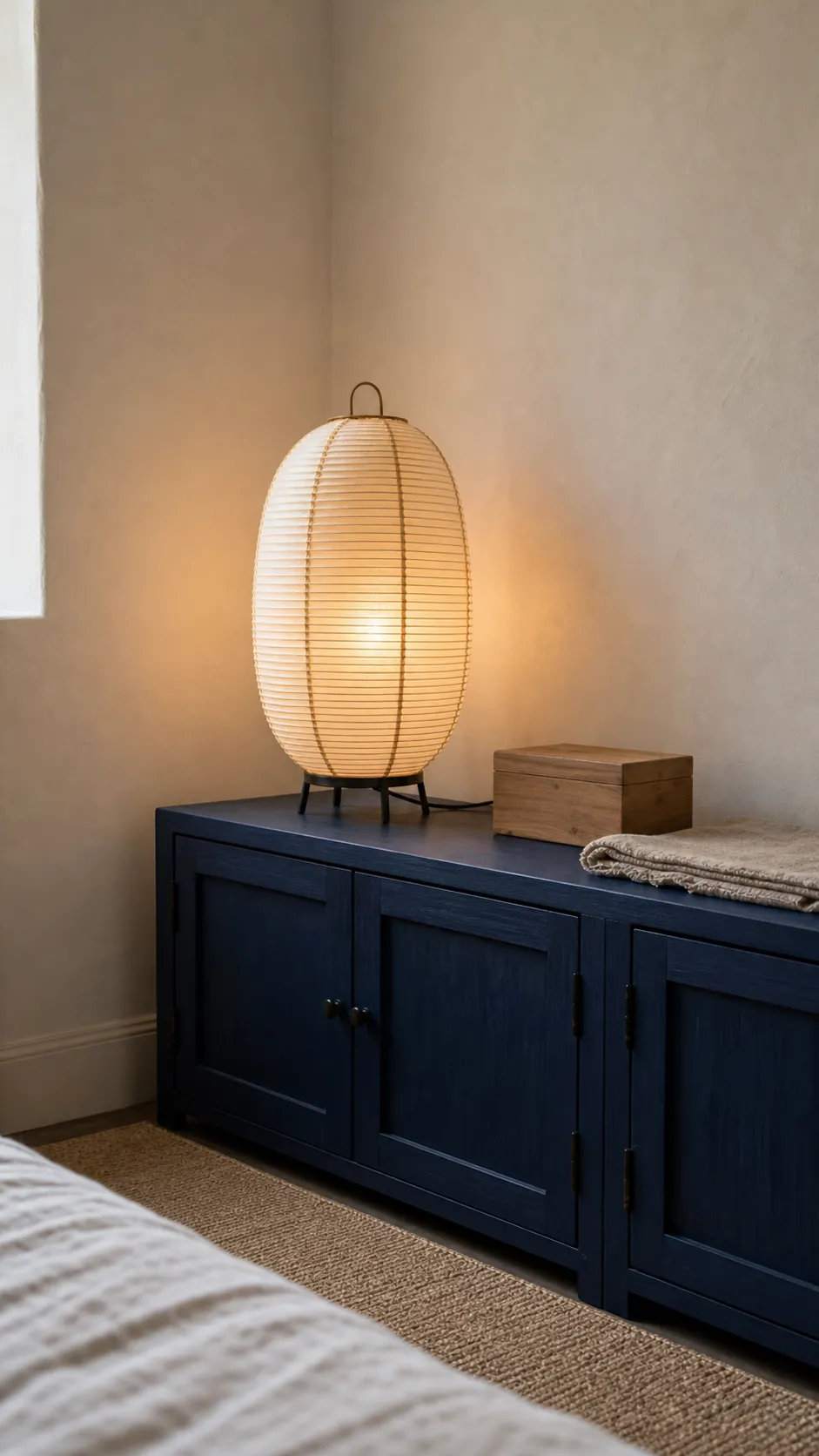
Use only the recommended cool-running LED and keep paper clear of curtains, branches, and stacked objects. The soft sphere produces broad ambient light rather than reading light, so combine it with a focused fixture elsewhere if the corner includes a chair. Its purpose is to soften the room’s edges.
Anchor Open Shelves With a Dark Lamp Base
Pale open shelves can look visually weightless, especially when filled with light books and ceramics. A small lamp with a charcoal, espresso, or blackened-metal base adds a needed dark note. Place it in the lower half of the unit, where the visual weight feels grounded rather than perched.
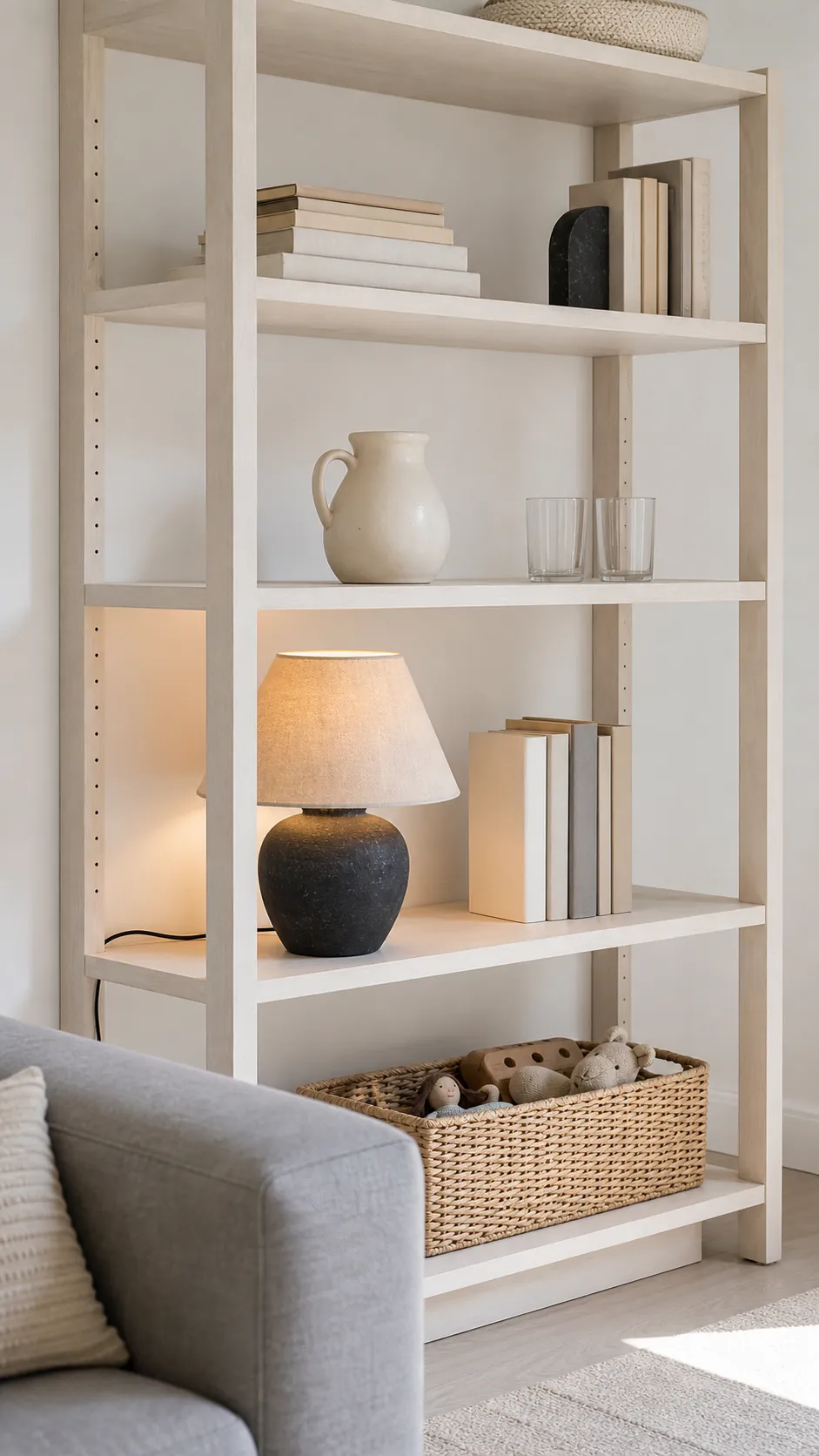
Repeat the dark finish just once in a bookend or thin frame on another shelf. Too many matching accents turn the styling into a set. The lit shade keeps the contrast from feeling severe and makes the shelf arrangement legible across the room at night.
Create a Bedside Shelf Without a Nightstand
In a tight bedroom, a wall shelf and petite lamp can replace a bulky nightstand. Mount the shelf where you can reach the switch without stretching, use a lamp with a broad stable base, and reserve enough clear surface for a phone and glass. A raised lip adds welcome security beside the bed.
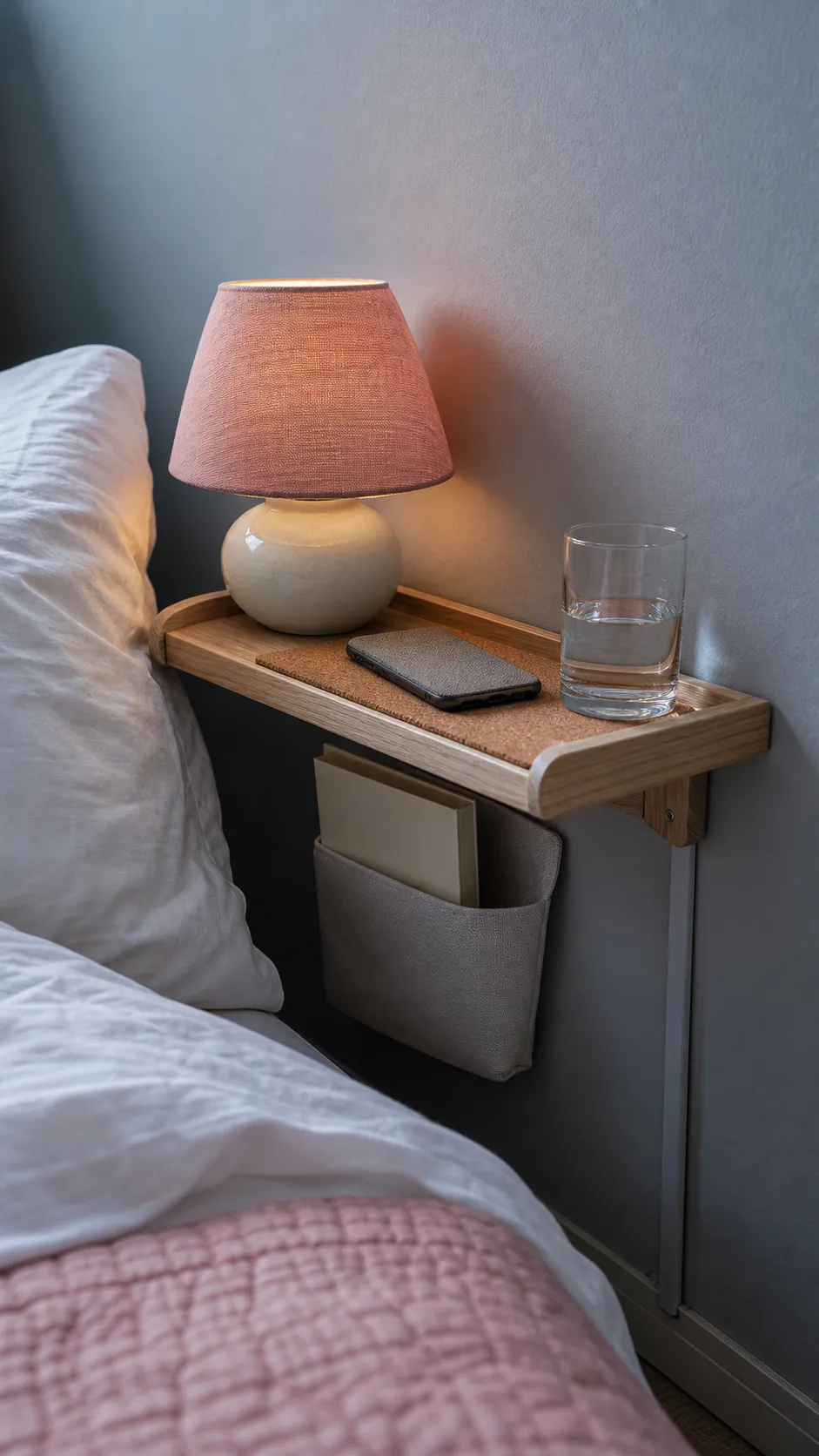
Use cord clips in the wall color or choose a rechargeable model if the outlet route crosses a walkway. The bulb should feel restful but still let you identify objects clearly. A simple shade and restrained surface styling make this compact arrangement feel calm rather than improvised.
Let a Vintage Lamp Break Up Modular Shelving
Uniform cube shelving benefits from one object that does not share its straight lines. A small vintage lamp—milk glass, turned wood, or softly aged metal—adds history and a rounder silhouette. Give it a cube of its own, then use neighboring sections for books and baskets rather than more decorative competition.
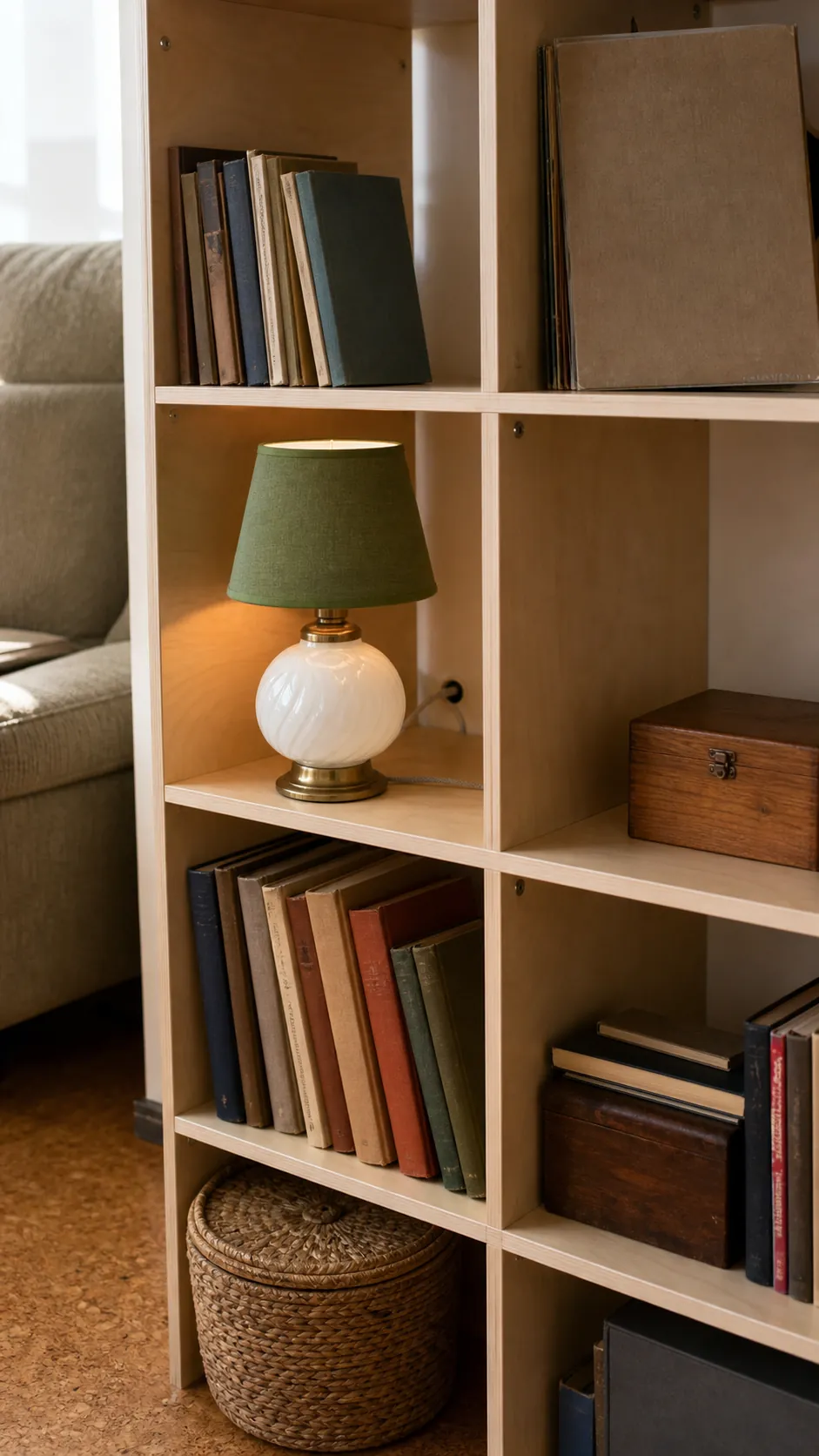
Have old wiring inspected and use an LED that stays within the fixture rating. Patina should look genuinely varied, not artificially distressed on every object around it. One aged piece among useful everyday storage feels collected; an entire shelf of faux-vintage accents feels themed.
Hide a Puck-Style Lamp Behind a Sculptural Object
A tiny directional lamp can disappear behind a stoneware vessel, carved wood form, or leafy branch while throwing light up the wall. This makes the corner itself appear brighter without introducing another obvious lampshade. Keep the fixture accessible and leave airflow around it.
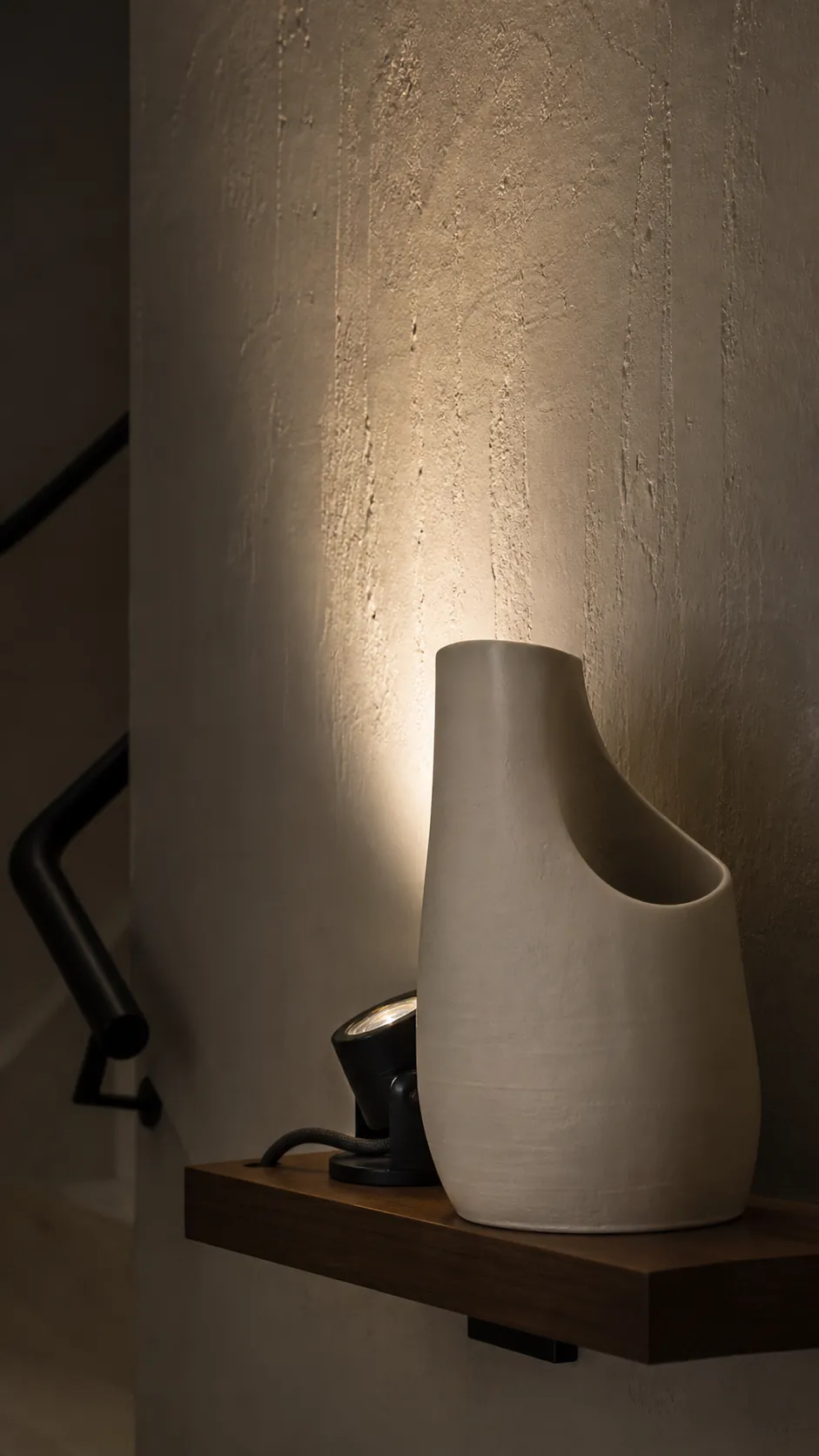
Aim the beam so it fades before reaching the ceiling and does not reveal a hard bright circle. Textured plaster, brick, and wood paneling catch grazing light especially well. The object in front should be stable and opaque enough to shield the source from the room’s usual viewpoint.
Balance a Corner Bookcase With Two Different Lamps
Two lamps can work on a tall corner bookcase when they do different jobs. Put a softly glowing mini lamp on an upper shelf and a directional reading lamp lower down near the chair. Vary their shape and height, but connect them through one shared finish or similar warm color temperature.
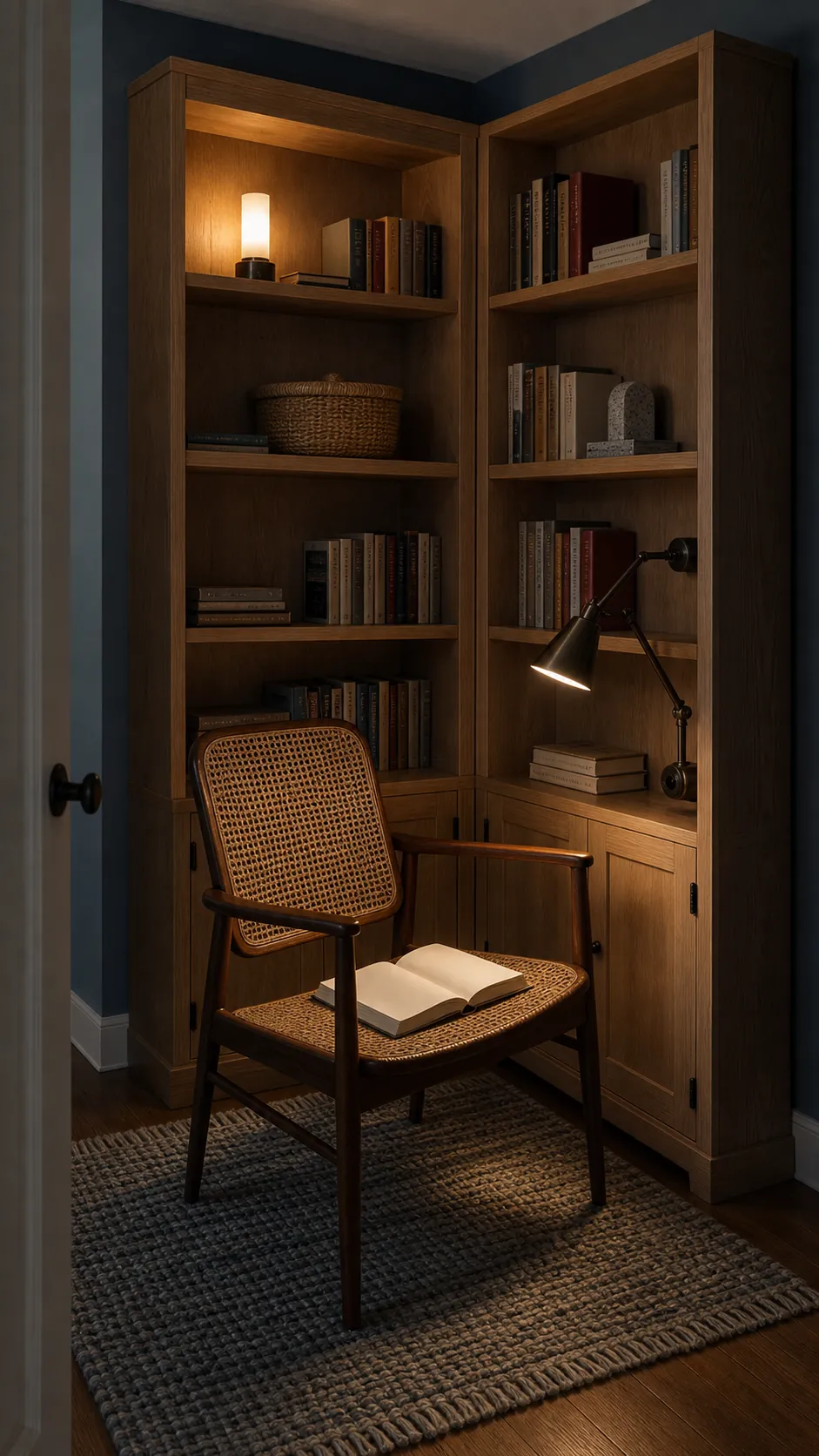
The common mistake is duplication: two bright lamps at the same level compete and flatten the shelving. Use dimmers or lower-lumen bulbs so one acts as a background glow. Switch both on at dusk and remove any decorative pieces that get lost between the light sources.
Style a Kitchen Corner Shelf With a Washable Lamp
A small lamp can make a kitchen feel welcoming after task lights go off, provided it suits the environment. Choose a wipeable metal, glass, or glazed ceramic base and place it well away from the sink, hob, steam, and food-prep splash zone. A corner shelf near a breakfast area is safer than the main counter run.
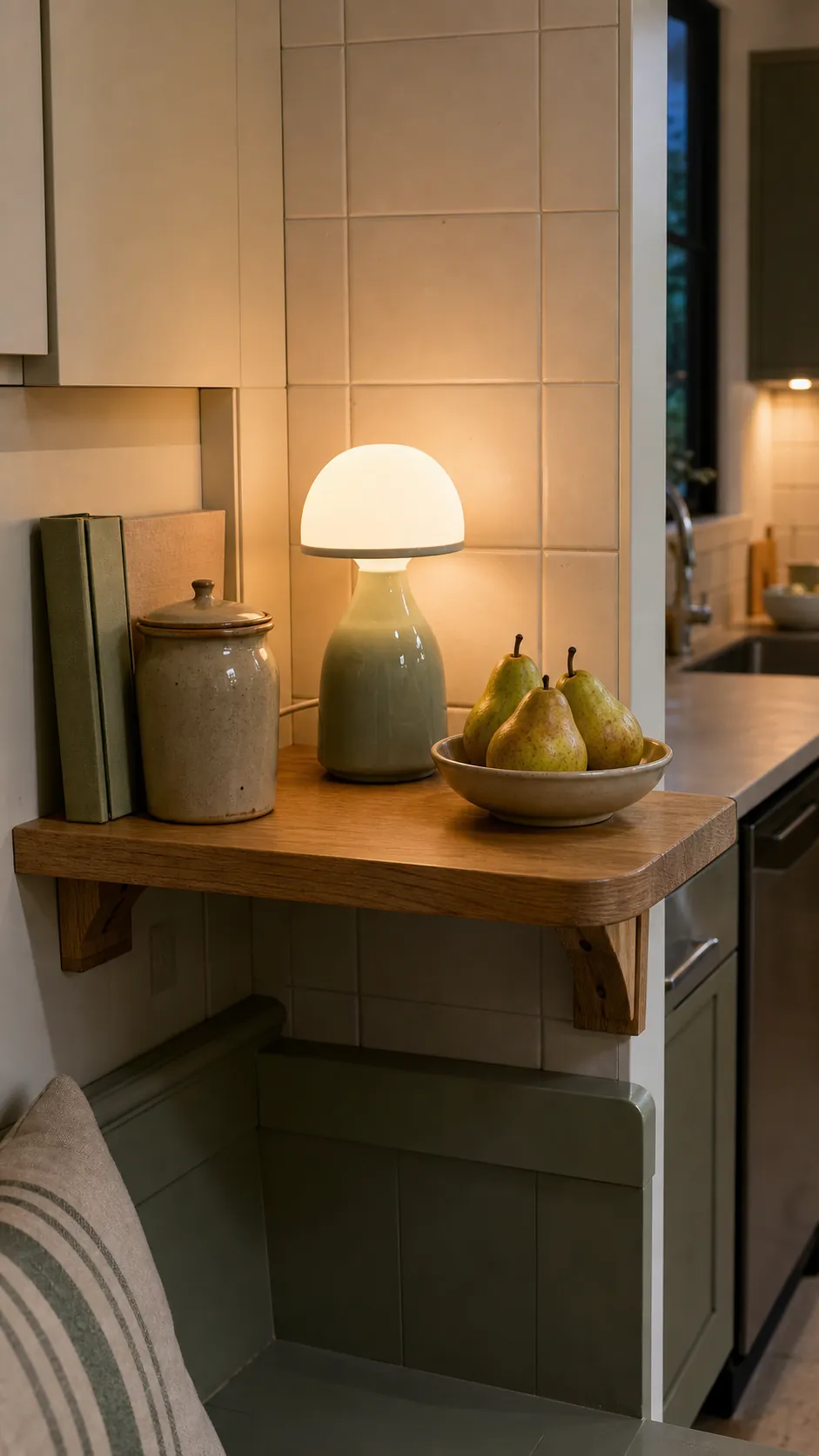
Keep styling edible and useful: a bowl of fruit, a lidded tea jar, or two cookbooks are enough. Avoid a fabric shade where grease settles quickly. The low evening glow should make the kitchen pleasant to pass through without pretending to replace properly rated work lighting.
Finish the Room With a Sunset-Timer Lamp
The most effective small lamp is the one you actually turn on. Put a favorite lamp in the corner that feels dead after sunset and connect it to a safe smart plug or timer. Schedule it to come on before the room becomes gloomy, then let that steady pool of light draw you into the space.
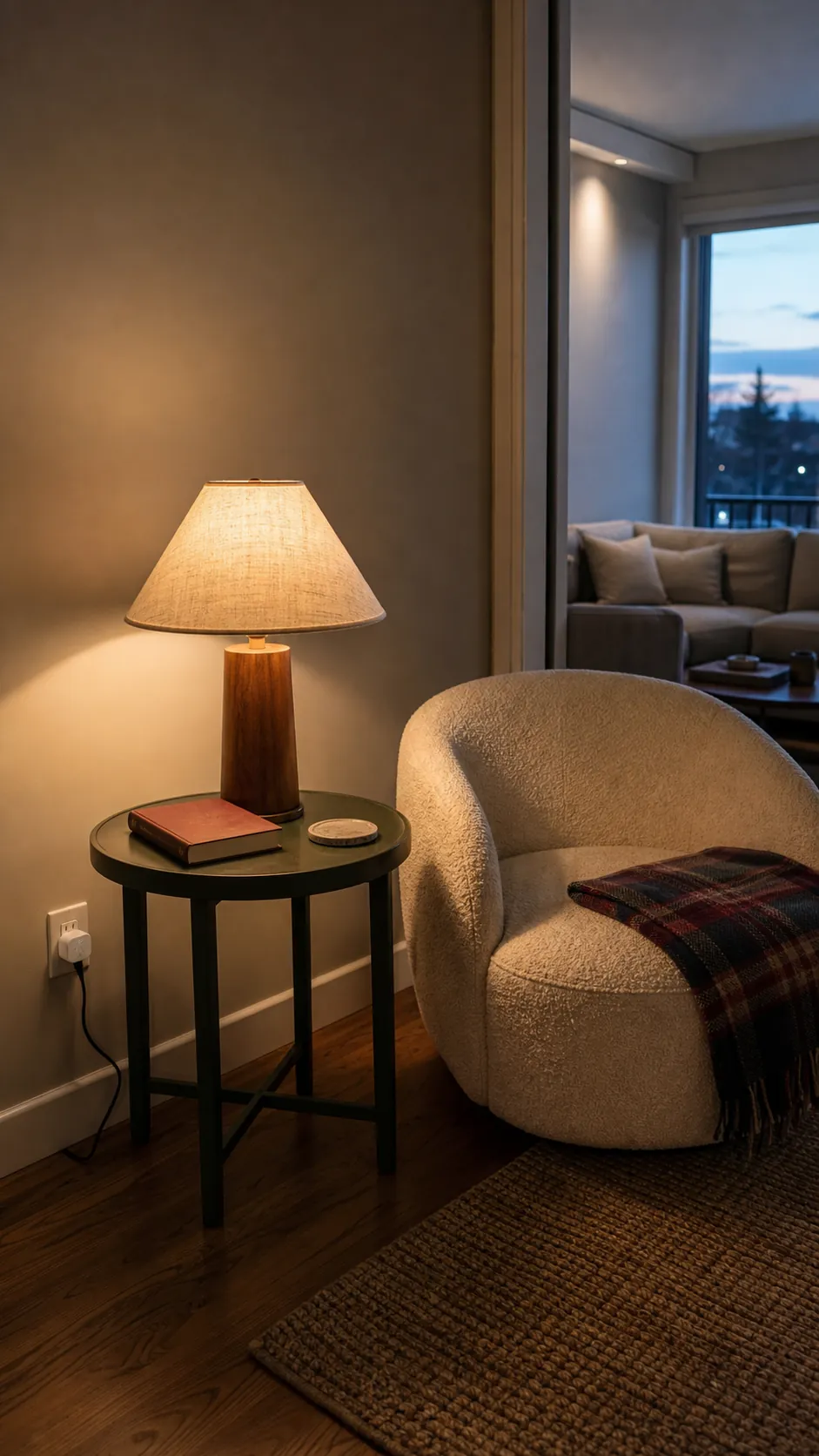
Start with a warm 2700K bulb, reduce the brightness until the shade is comfortable to look toward, and observe how it relates to the other fixtures. Good ambient lighting is a layer, not a spotlight. When the lamp’s scale suits its shelf, the cord is controlled, and the surrounding objects earn their place, even the smallest corner can feel connected to the whole room.