
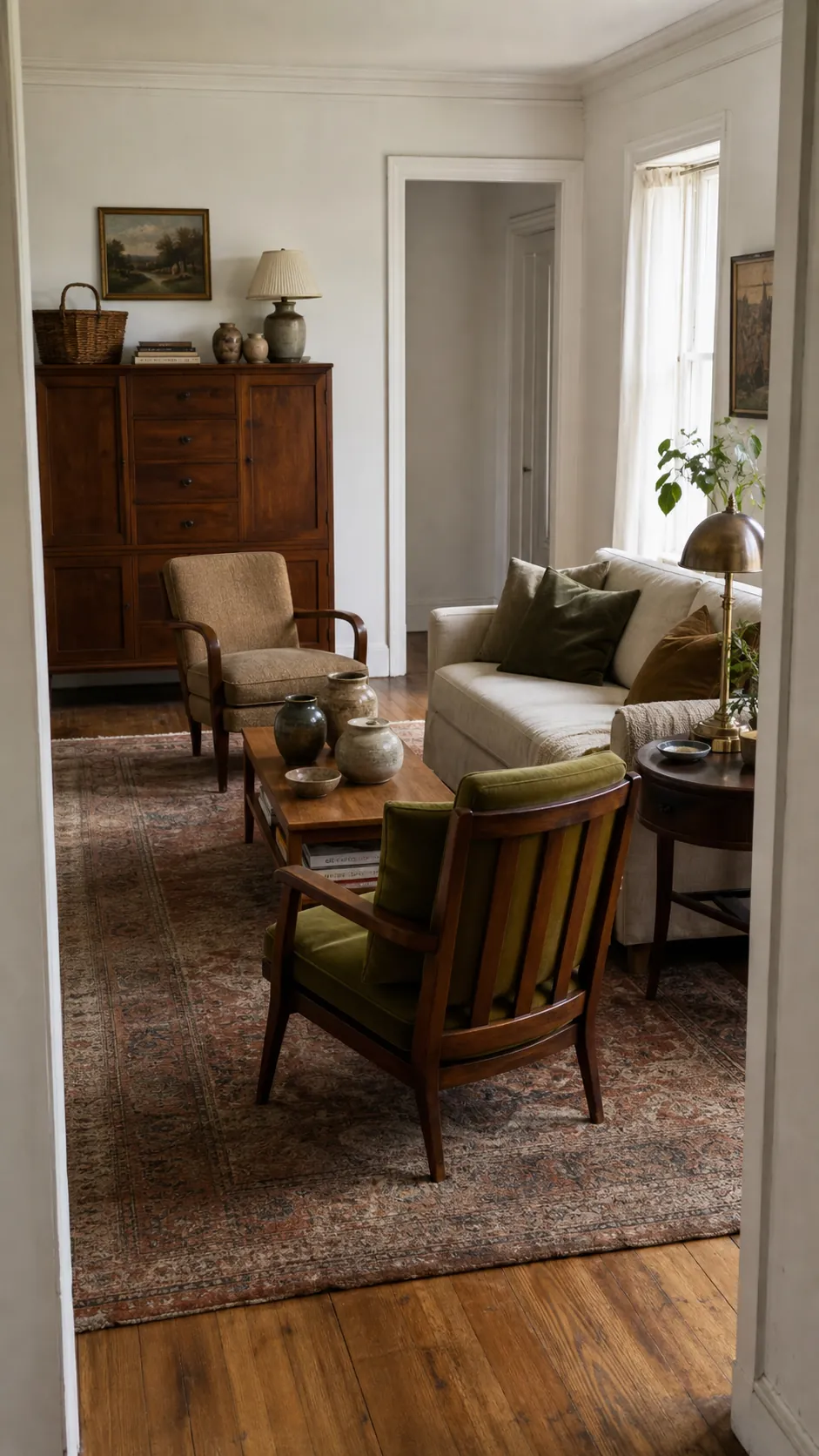
The difference between a home that feels collected and one that feels randomly thrifted is rarely price or design knowledge. It is editing. A beautiful object can still look misplaced when it has no relationship to the room, while an ordinary secondhand find can look remarkably right when its scale, color, and purpose connect to what is already there.
The practical rule is simple: do not buy a thrifted object until you can name its job, its location, and at least one visual cue it will repeat. That pause turns treasure hunting into a decorating process instead of an accumulation habit.
Shop With a Specific Place and Purpose
Before entering a thrift store, photograph the room you are working on and measure the open spaces. Keep a note with the maximum width for a side table, the height available above a cabinet, and the colors already present. A short needs list—reading lamp, entry tray, eight-inch vase—is more useful than a broad intention to “find decor.”
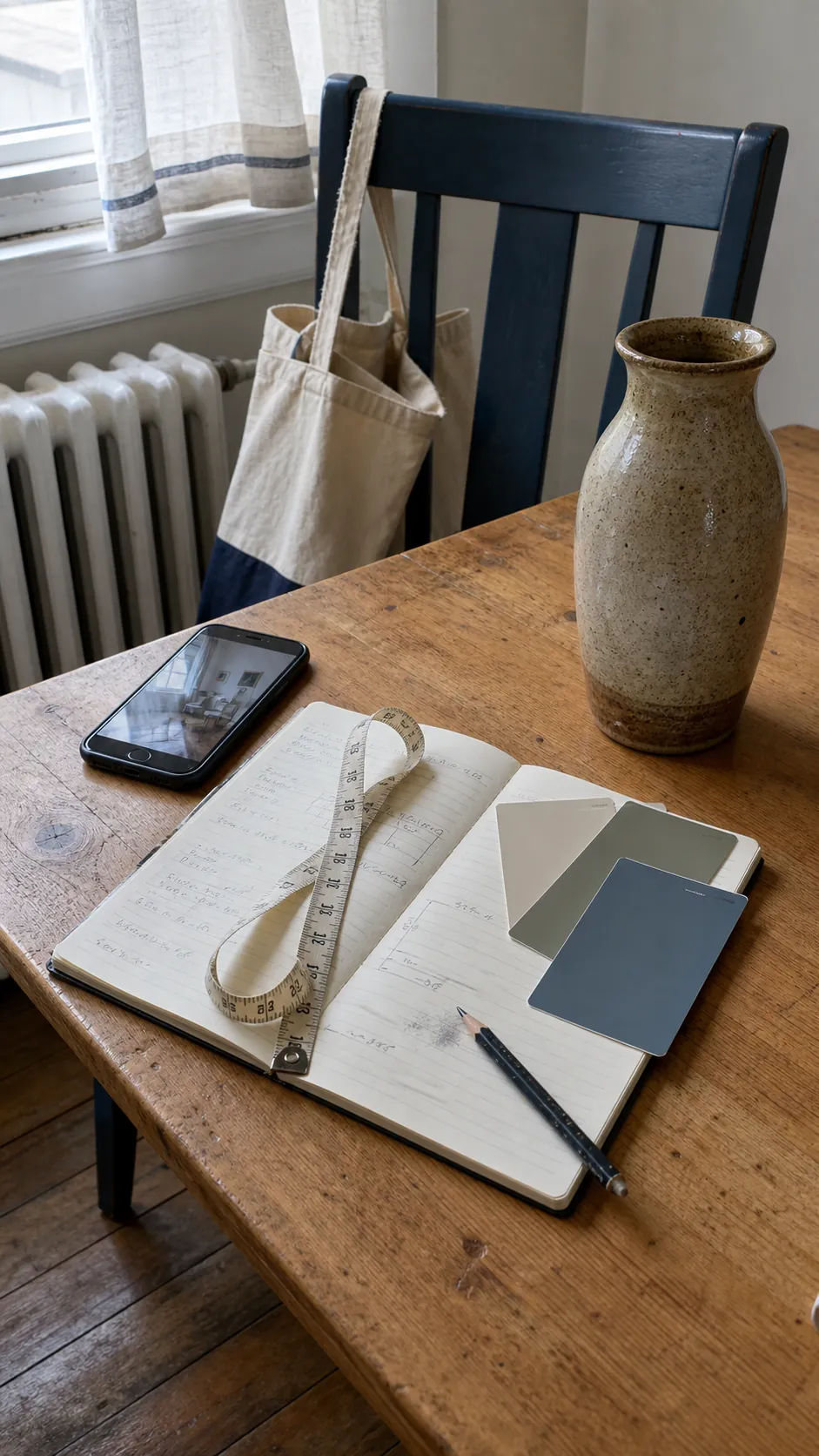
Ask three questions while holding a find: Where will it live? What will it do? What does it connect to? If the answers are vague, take a photo and leave it. A bargain that creates a storage problem is not budget decor. This rule is especially important with glassware, baskets, frames, and small ceramics because their low prices make overbuying feel harmless.
Anchor the Room With the Largest Pieces First
Intentional rooms are organized from large to small. Start with the rug, seating, table, cabinet, and lighting before deciding where the little objects go. A common problem in thrifted rooms is a collection of charming details sitting on top of a weak layout. No amount of styling fixes a rug that is too small to connect the furniture or a chair that blocks the main walkway.
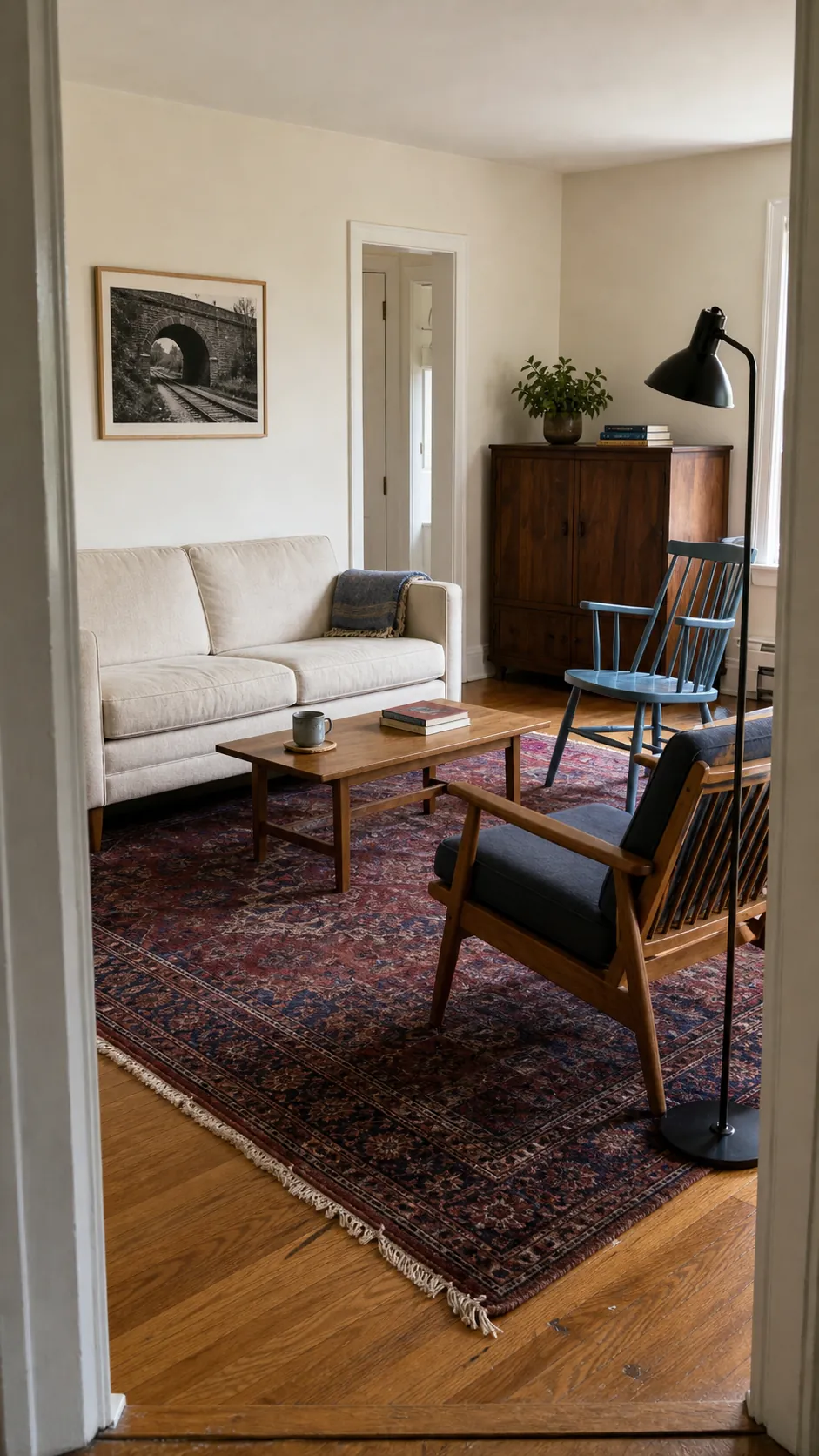
Place at least the front legs of the main seating on the rug, preserve comfortable paths through the room, and give doors and drawers room to open. Then add smaller secondhand decor. This sequence makes mismatched furniture look related because it shares one clear zone.
Repeat Three Cues to Create Cohesion
Matching everything erases the charm of thrifting, but repeating nothing creates visual static. Choose three cues to carry around the room: one color family, one metal, and one wood temperature. For example, olive textiles, aged brass, and medium warm wood can appear in objects from completely different decades while still creating a coherent collected home.
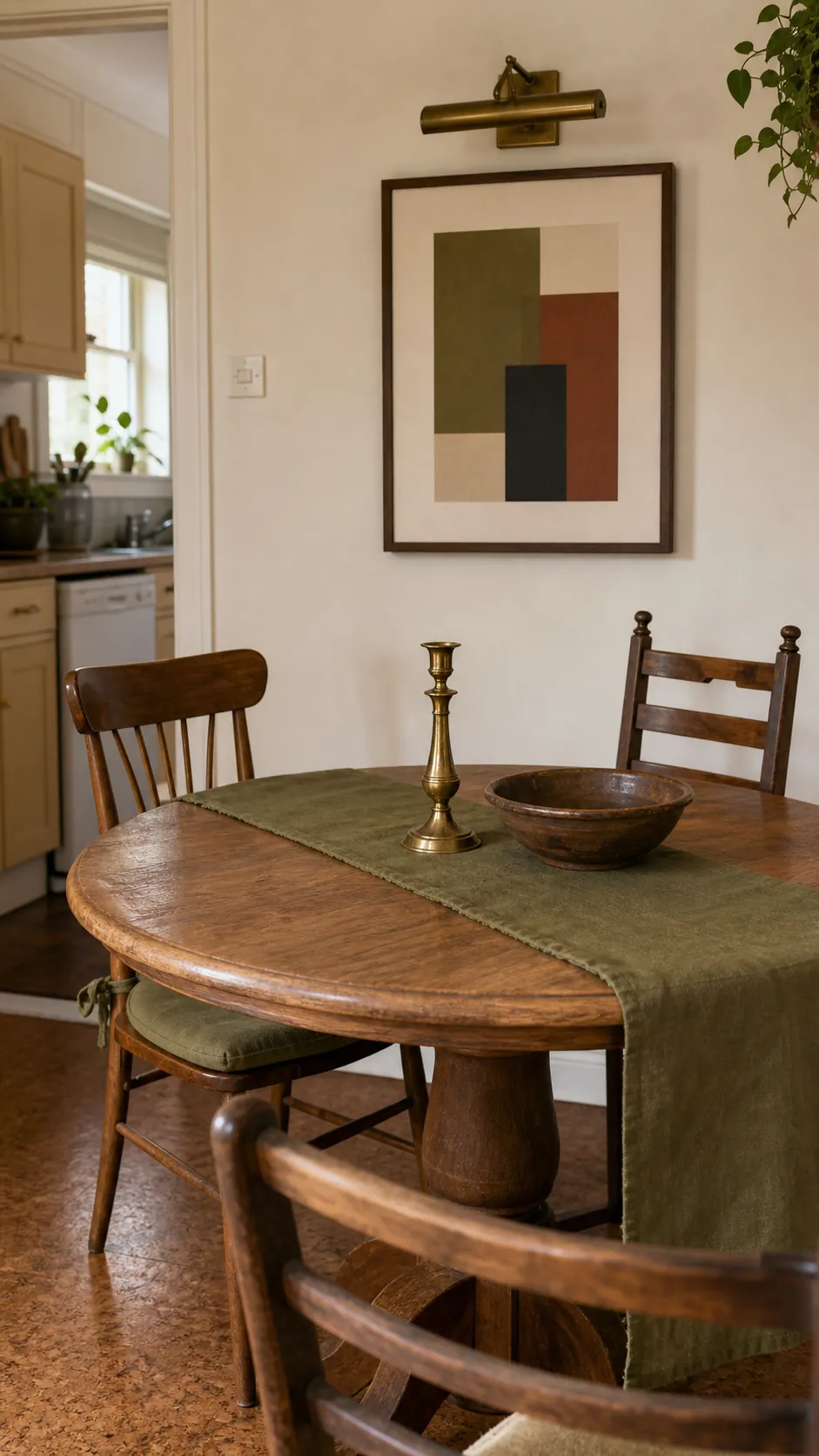
The finishes do not need to match exactly. Brass can range from dark and aged to softly brushed; woods can vary as long as most lean warm or cool together. Repetition should feel like a rhythm, not a furniture set. Two or three appearances of a cue are enough to make it look deliberate.
Style in Groups and Leave Quiet Space
Gather related pieces instead of distributing them evenly across every surface. Three stoneware vessels read as a collection; the same vessels separated among books, candles, frames, and figurines can disappear into clutter. Vary height, overlap slightly, and leave a visible stretch of empty surface beside each group.
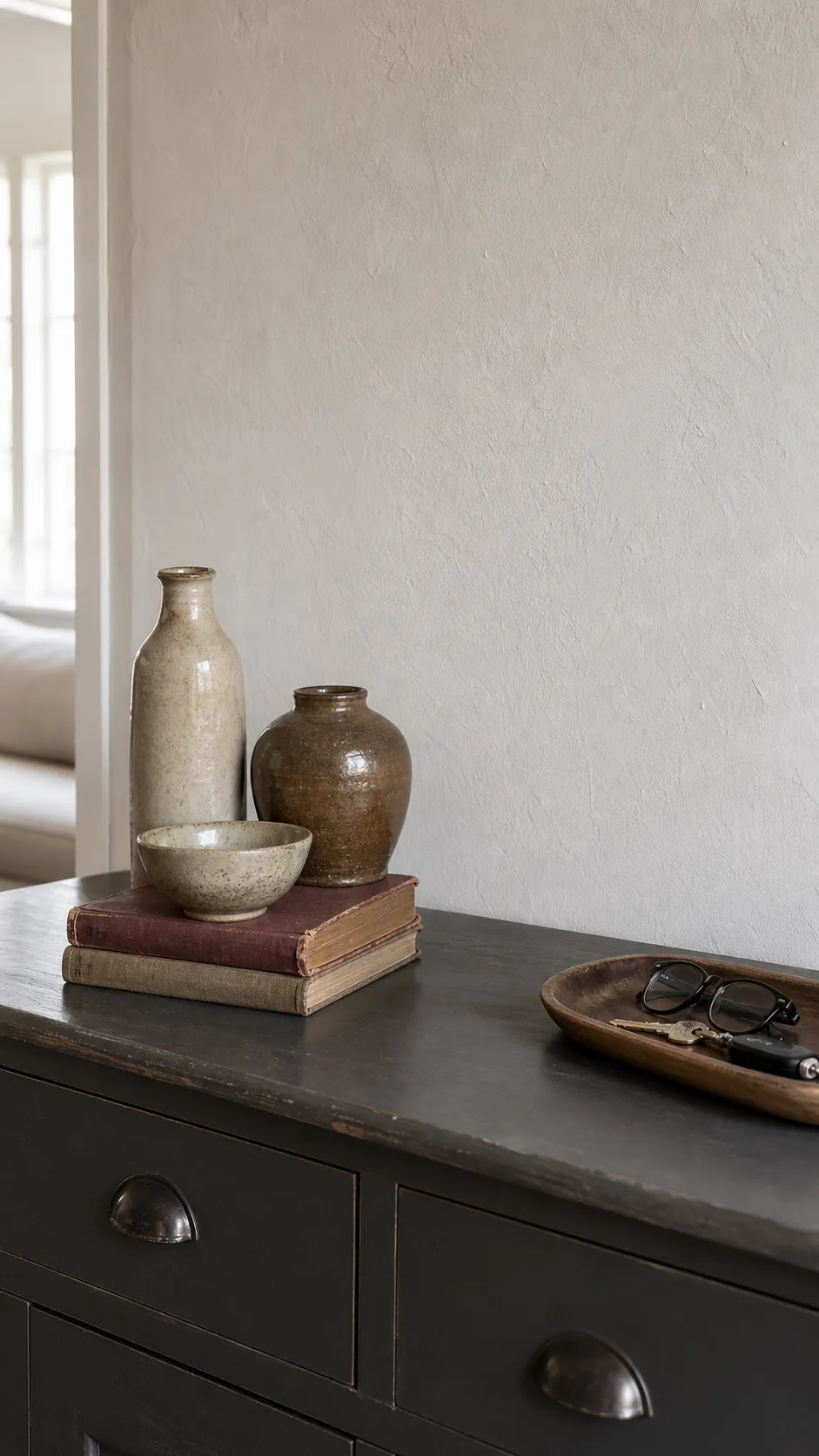
Use trays only when they support a real routine, such as collecting keys or protecting a table from drinks. A tray filled with objects that nobody touches is simply a smaller clutter zone. Keep the useful item in front and the decorative layer behind it, so the surface remains easy to live with and easy to clean.
Repair, Reframe, and Upgrade the Details
Secondhand does not need to mean untouched. Clean wood carefully, tighten loose hardware, rewire old lamps professionally, and replace damaged mats in good frames. These small repairs signal care. Preserve patina that tells a story, but correct grime, instability, and unsafe construction.
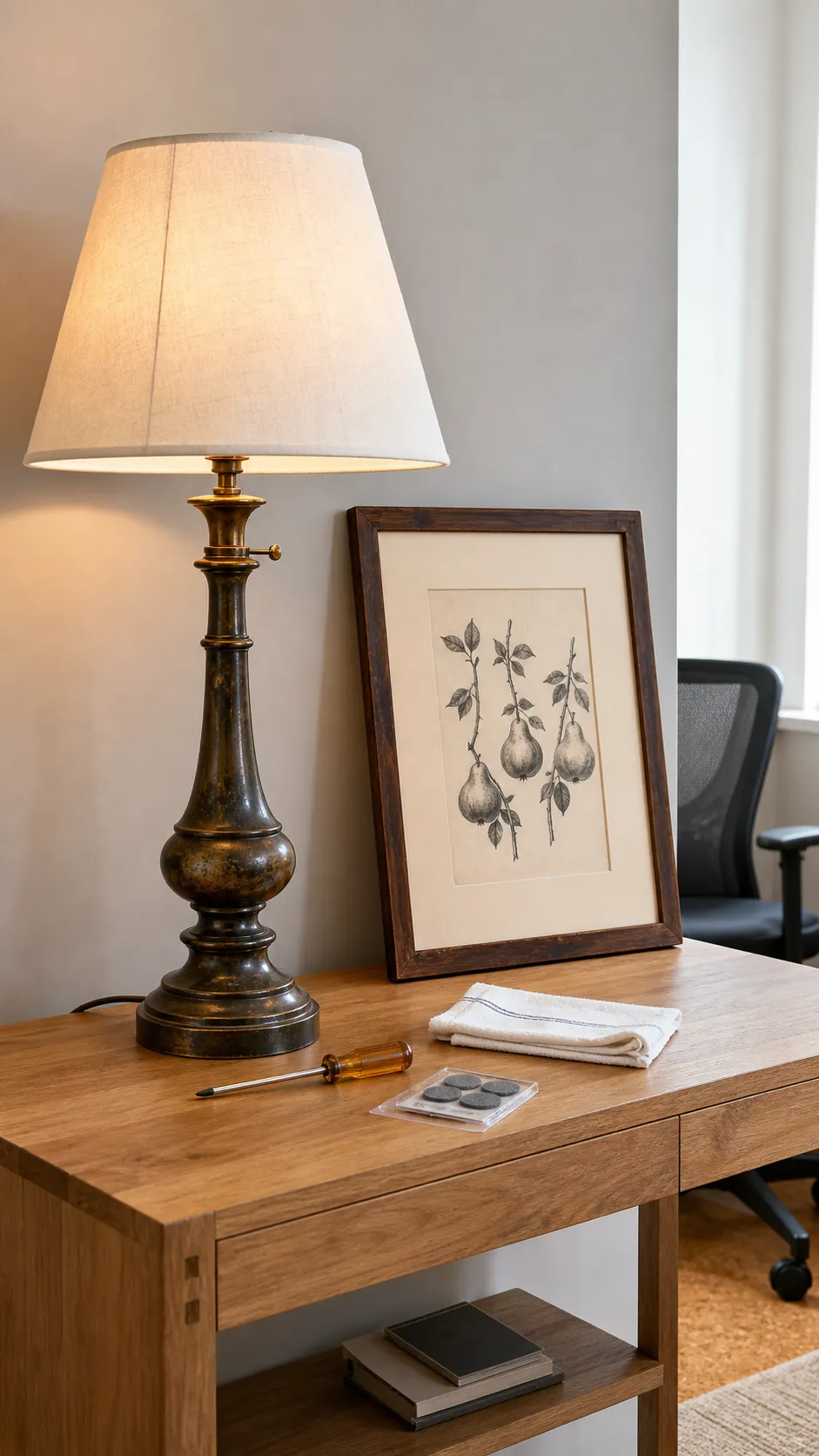
A new linen shade can make a sculptural vintage lamp work beside contemporary furniture. A consistent cream mat can connect mismatched frames without erasing their character. Fresh felt pads protect floors, and a simple cord cover keeps an old light from making a room feel visually messy. The finishing details tell the eye that each piece was chosen, not merely acquired.
Edit Before You Add Anything Else
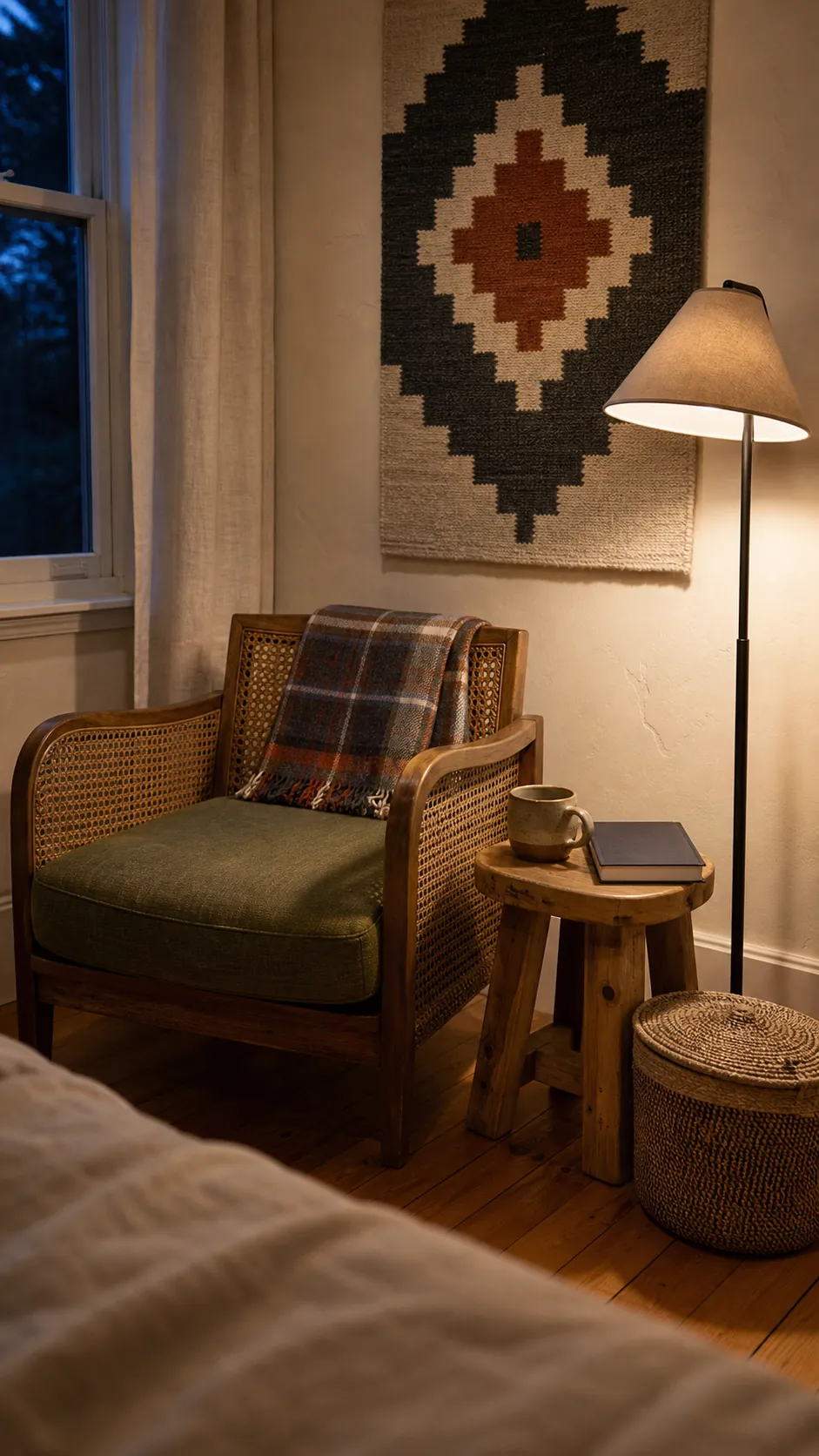
When a room feels off, remove a third of the small objects before shopping for solutions. Put them in a box for a week, then notice what the room misses. Often the missing element is not another accessory but a larger lamp, better storage, or more open surface.
Rotate sentimental items rather than forcing every favorite into view at once. This keeps a vintage living room personal without demanding constant dusting or sacrificing daily function. Children’s supplies, charging cables, and paperwork can stay convenient inside lidded baskets or drawers instead of becoming part of the display.
The thrift store will always offer another charming object. The intentional home is built by knowing when the room already has enough—and by waiting for the piece that solves a real need while looking as though it has always belonged there.