A house can lose its identity when every dated surface is treated as a defect. The more useful approach is to keep the materials and proportions that still work, then correct the lighting, comfort, and contrast around them. This makes the result feel intentional instead of trapped in time.
Start With The Original Architecture
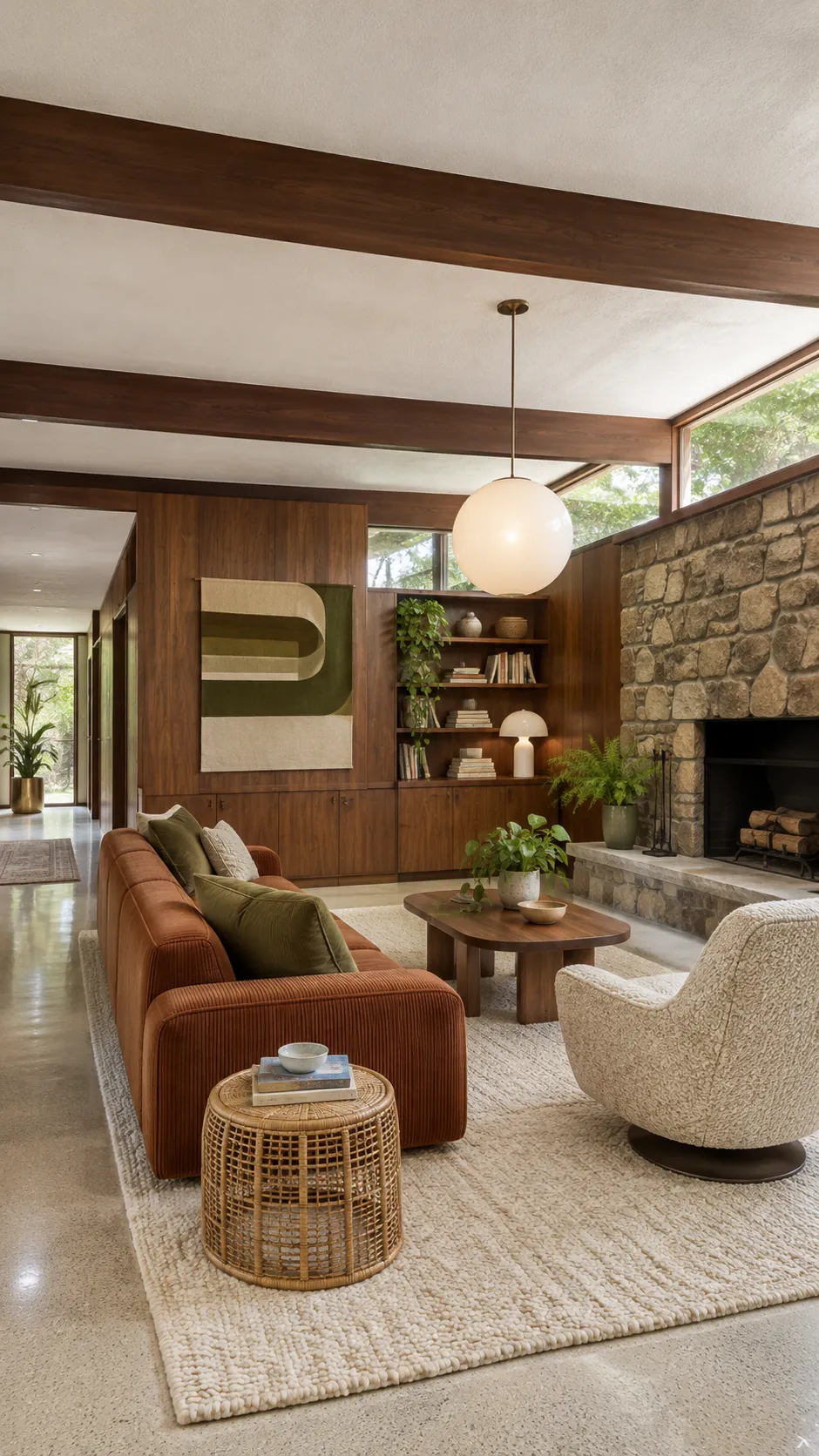
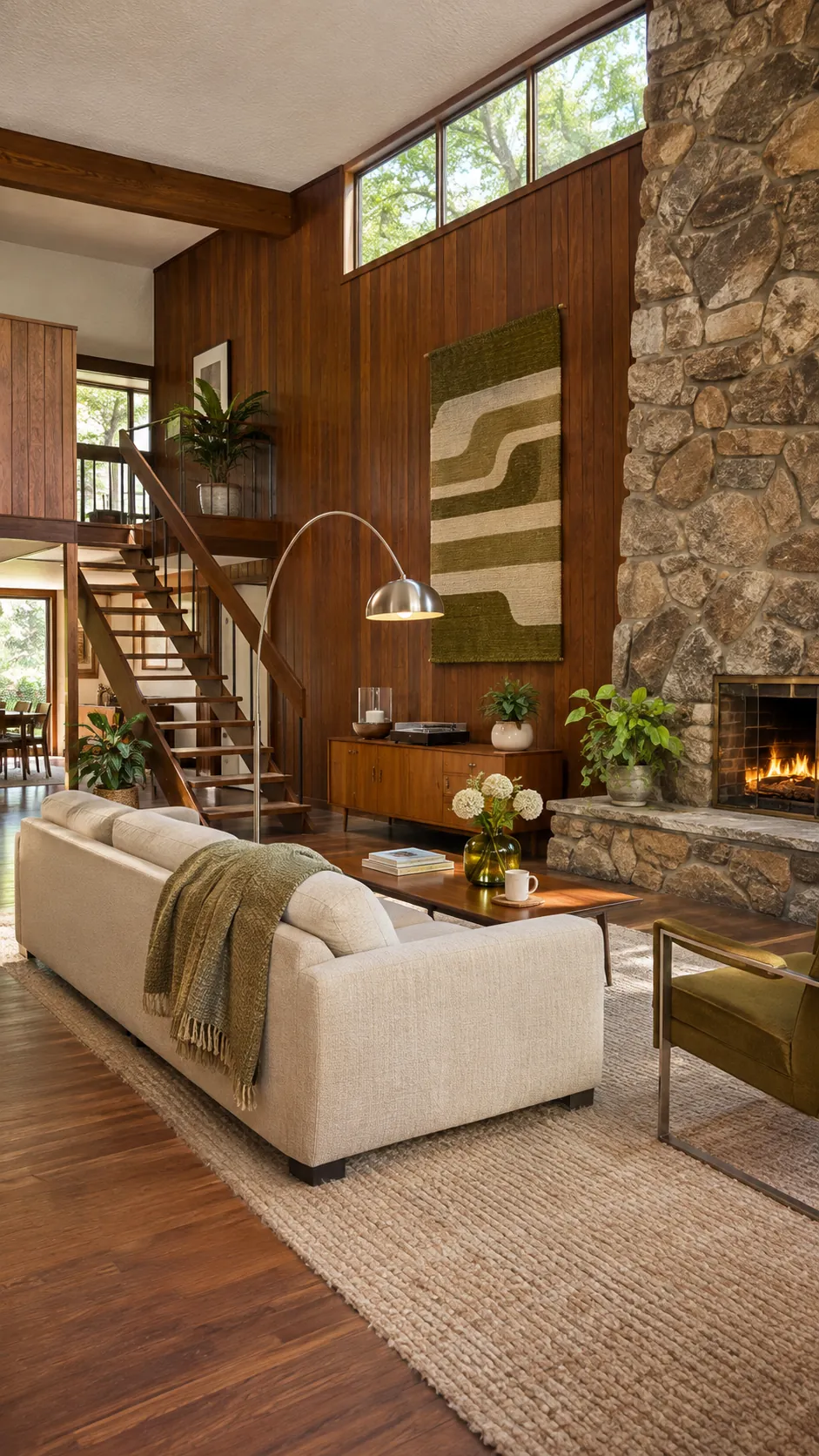
A successful update begins by separating durable character from worn finish. Walnut paneling, stone hearths, clerestory windows, and built in storage can still organize a modern home, while failing carpet and unsafe wiring deserve replacement. Photograph the room in daylight, list what is solid, and make changes only after the valuable features are clear. This prevents an expensive renovation from flattening the very details that make a 1970s house appealing.
Lighten Dark Wood Without Erasing It
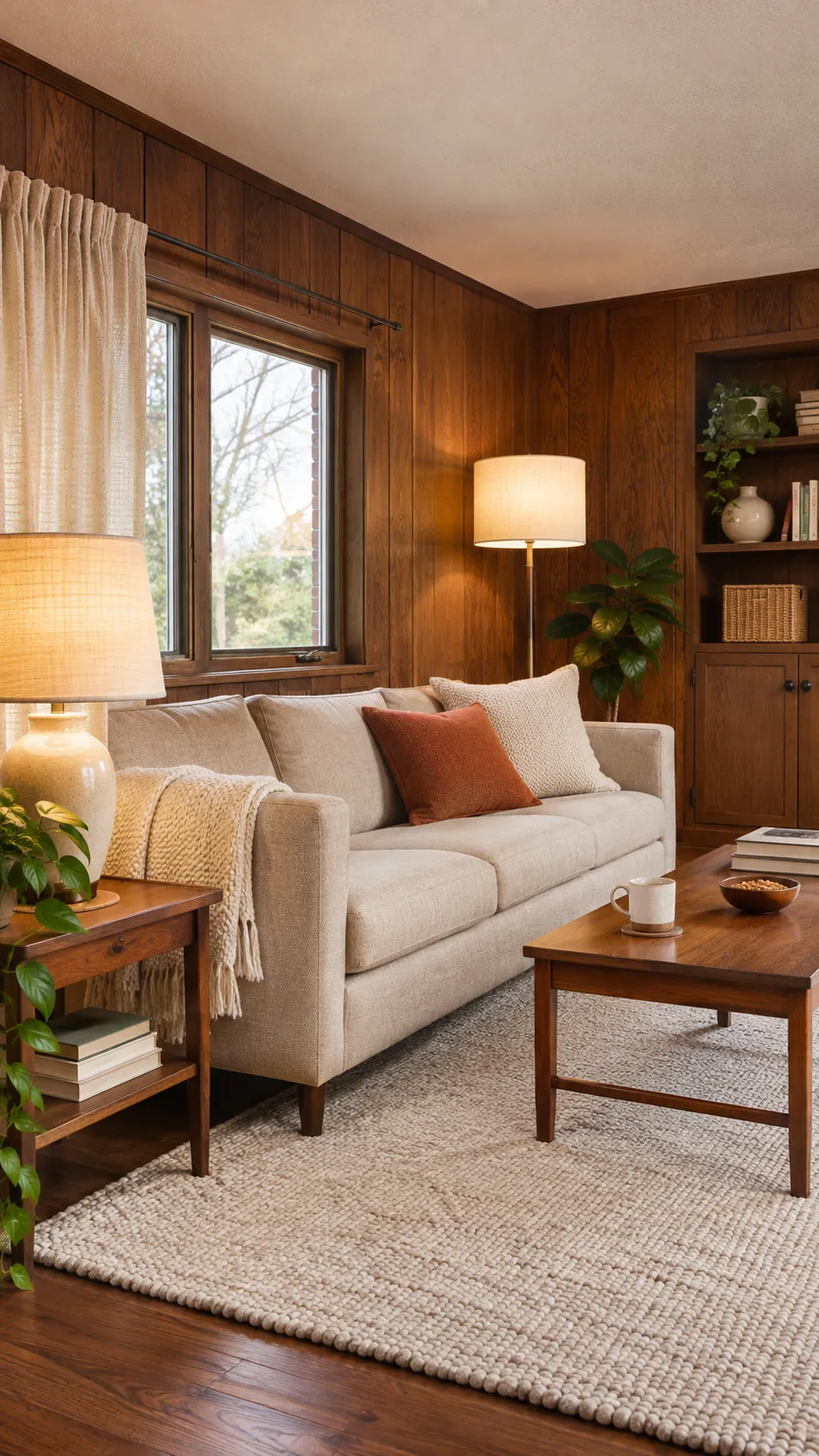
Dark wood often feels oppressive because the room lacks contrast, not because every board is wrong. Clean the surface, improve the bulbs, and place light upholstery or a pale rug beside it before reaching for paint. If one area still dominates, paint a secondary wall or cabinet interior while leaving the best grain visible. The mix keeps warmth and makes the original material easier to appreciate.
Build A Controlled Earth Palette
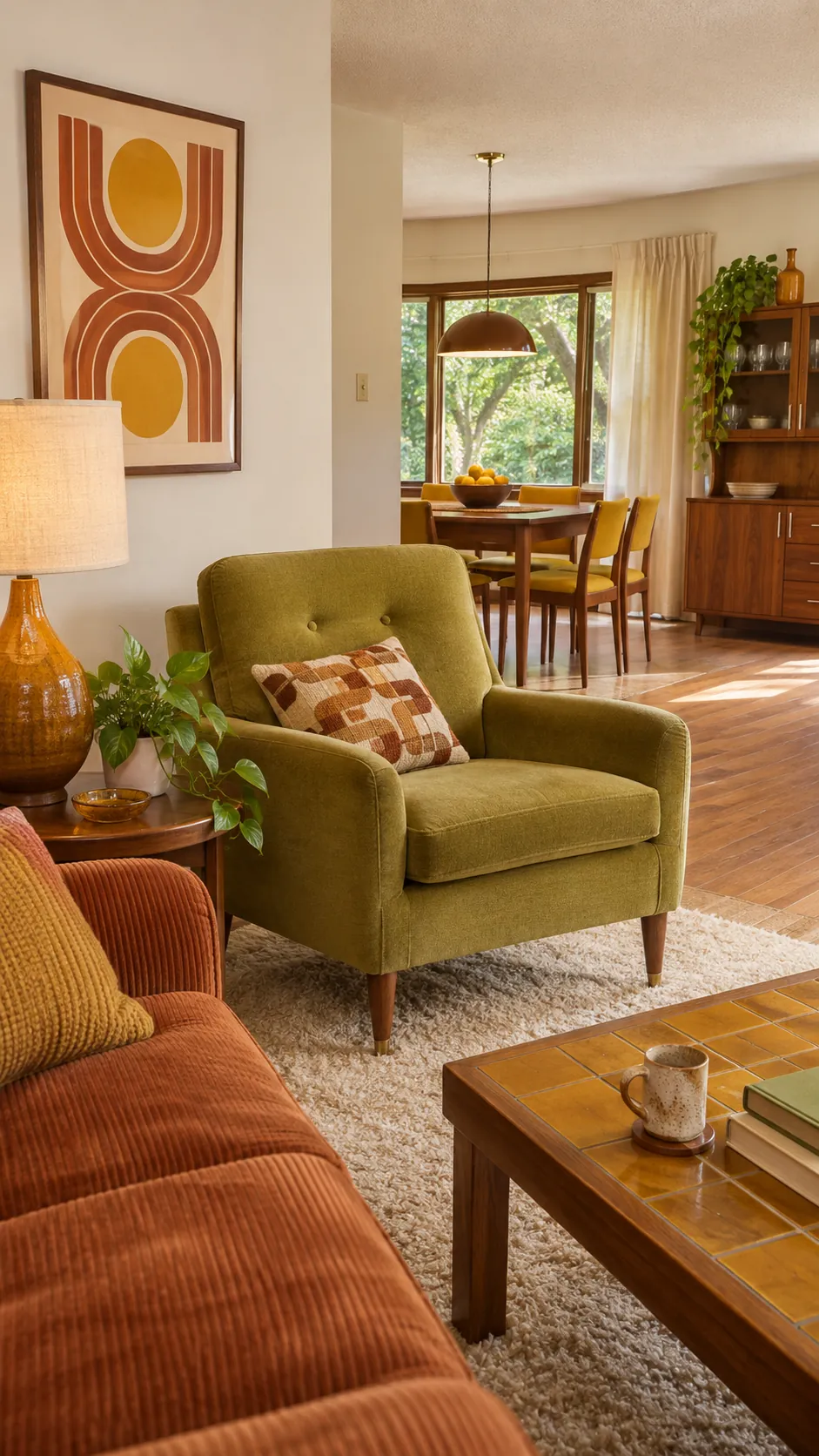
Avocado, rust, brown, mustard, and cream can work together when one color leads and the others appear in smaller amounts. Begin with an existing fixed finish such as tile or wood, then choose one supporting upholstery color and one brighter accent. Repeat each color at different heights so the room feels connected. Leave enough quiet cream or warm white to stop the palette from becoming muddy.
Use Lighting As Functional Sculpture
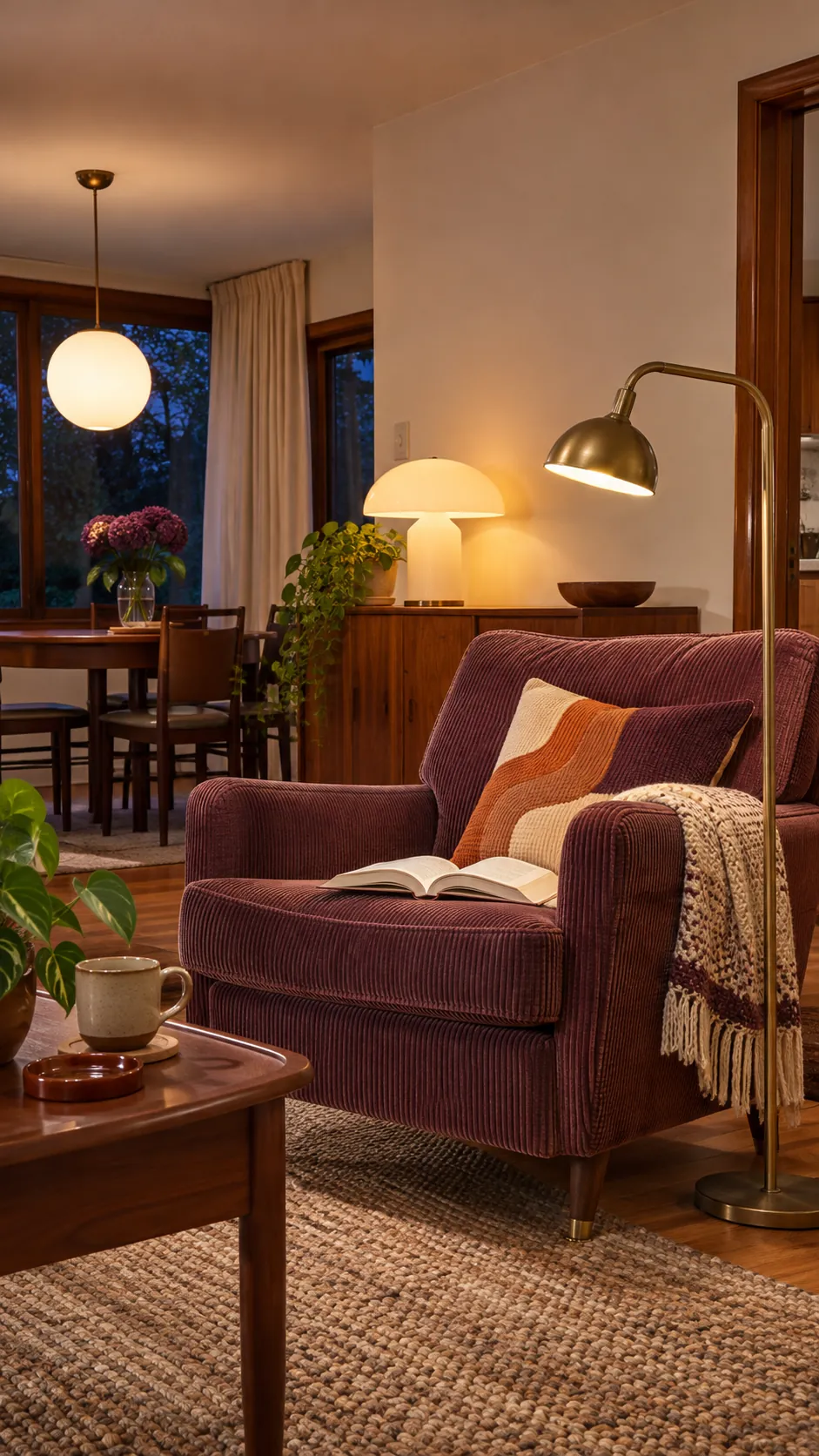
The decade produced memorable dome, globe, mushroom, and arc lamps, but a room still needs light where people read, cook, and move. Combine a diffuse ceiling or wall source with a focused task lamp and a lower pool of ambient light. Put dimmers on compatible fixtures and use consistent warm bulbs. The shapes then contribute to the design without leaving the home dim or theatrical.
Mix Curves With Straight Cabinetry
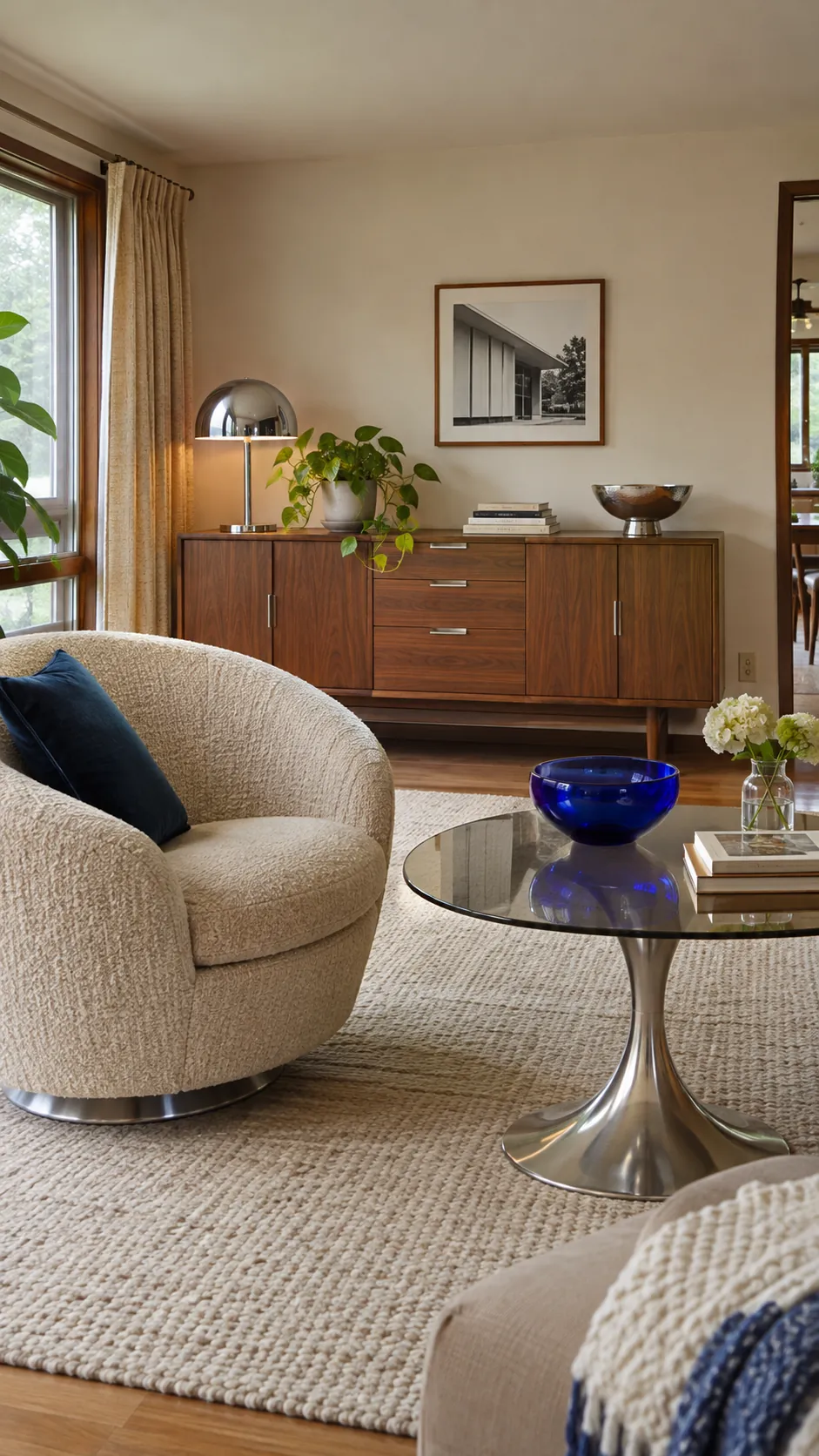
Rounded seating and pedestal tables soften the strong horizontal lines of low cabinets and panel walls. Choose one or two curves with enough space around them instead of filling the room with novelty shapes. A straight credenza can handle storage, while a rounded chair or table keeps circulation comfortable. This contrast feels recognizably seventies without requiring a complete vintage furniture set.
Update The Home In Reversible Layers
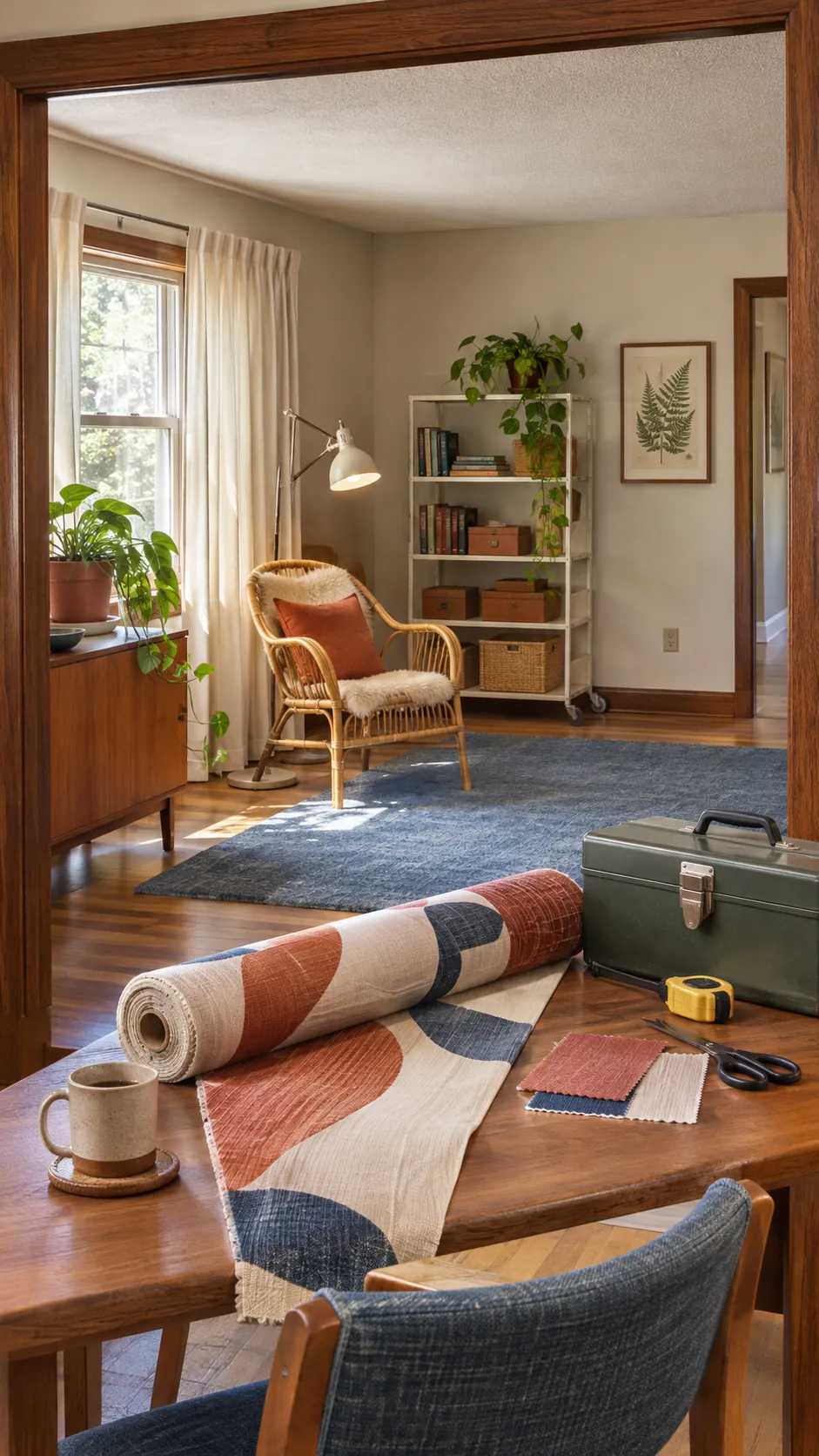
Rugs, curtains, lamps, hardware, and movable storage can correct comfort and color before demolition begins. These changes are especially useful when the budget is limited or the household is still learning how it uses each room. Test the layout for several weeks, then commit to permanent work only where daily problems remain. A layered process protects good original features and produces a more personal modern 70s home.