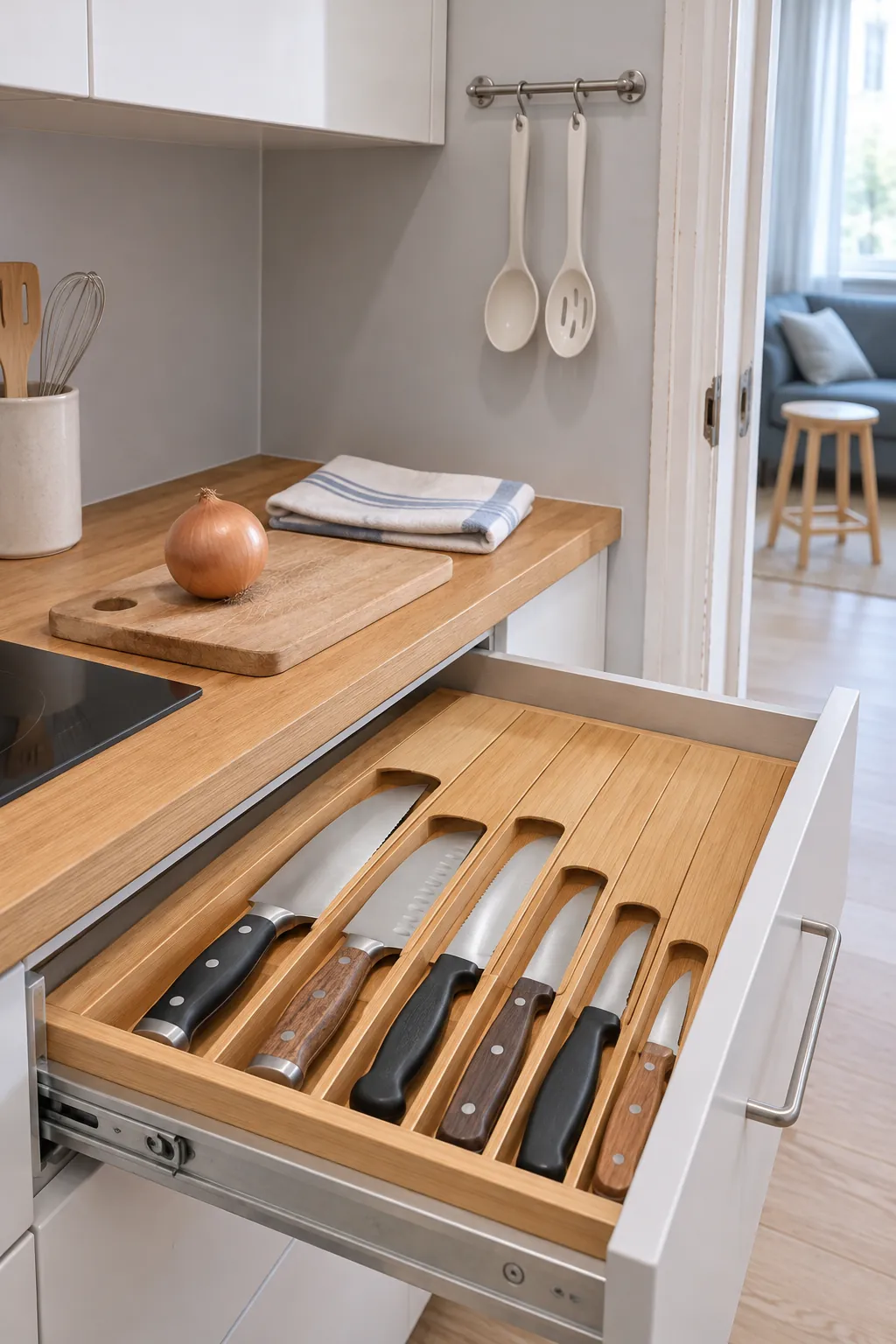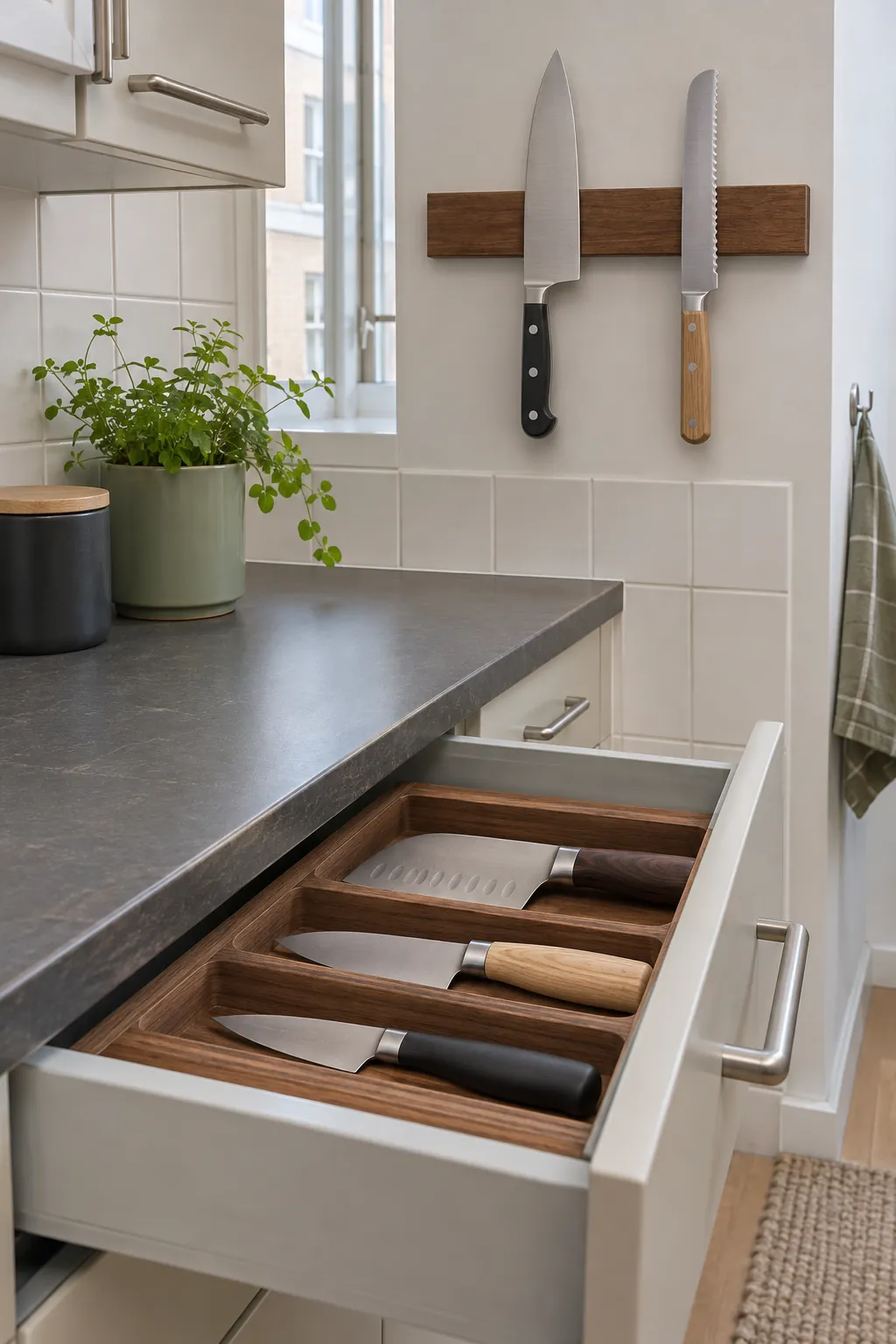
A knife block can consume valuable counter space in a small kitchen, but removing it creates a more important question: where can sharp blades stay secure, dry, and easy to reach? A drawer insert and a magnetic strip both free the counter, yet they solve the problem in very different ways.
The best choice depends on the space you can safely give up. A drawer insert hides blades and needs no wall work. A magnetic strip preserves drawer capacity, but it requires a suitable mounting surface and a location where nobody can brush against the knives.
Start with the safety decision
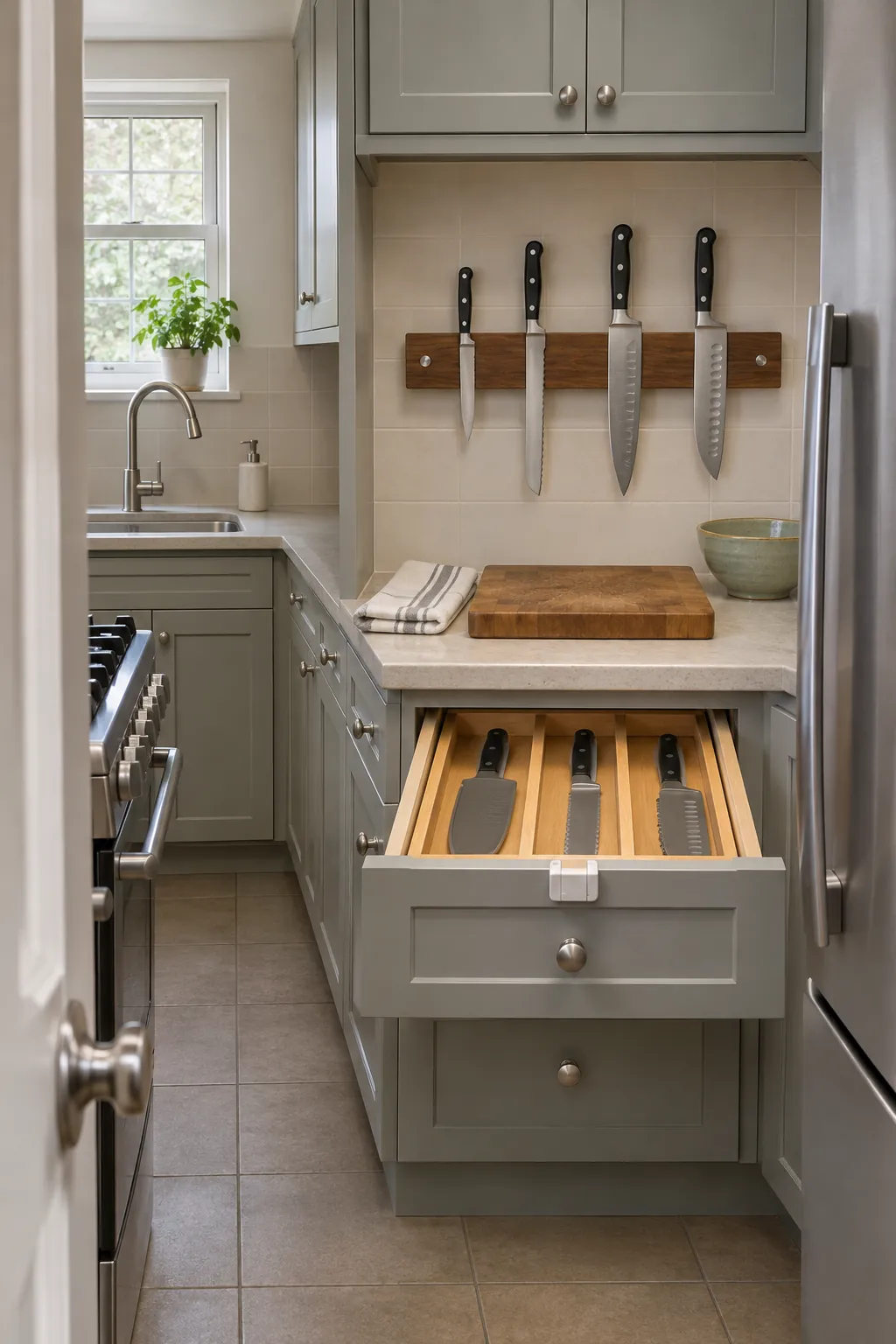
Choose concealment first when young children, frequent guests, or a tight kitchen walkway make exposed blades uncomfortable. A drawer insert keeps the cutting edges out of sight and protects hands from loose knives, provided the drawer has a secure latch when children can reach it. The drawer should contain knives only, or knives plus tools that cannot slide into the blades.
A magnetic strip can be safe when it is mounted firmly, away from a doorway, stove, sink splash zone, and normal shoulder traffic. Every knife must attach with enough magnetic contact to stay stable. The strip should also sit at a height where the handles are easy for the intended cook to grasp but inaccessible to children.
Measure the drawer before choosing an insert
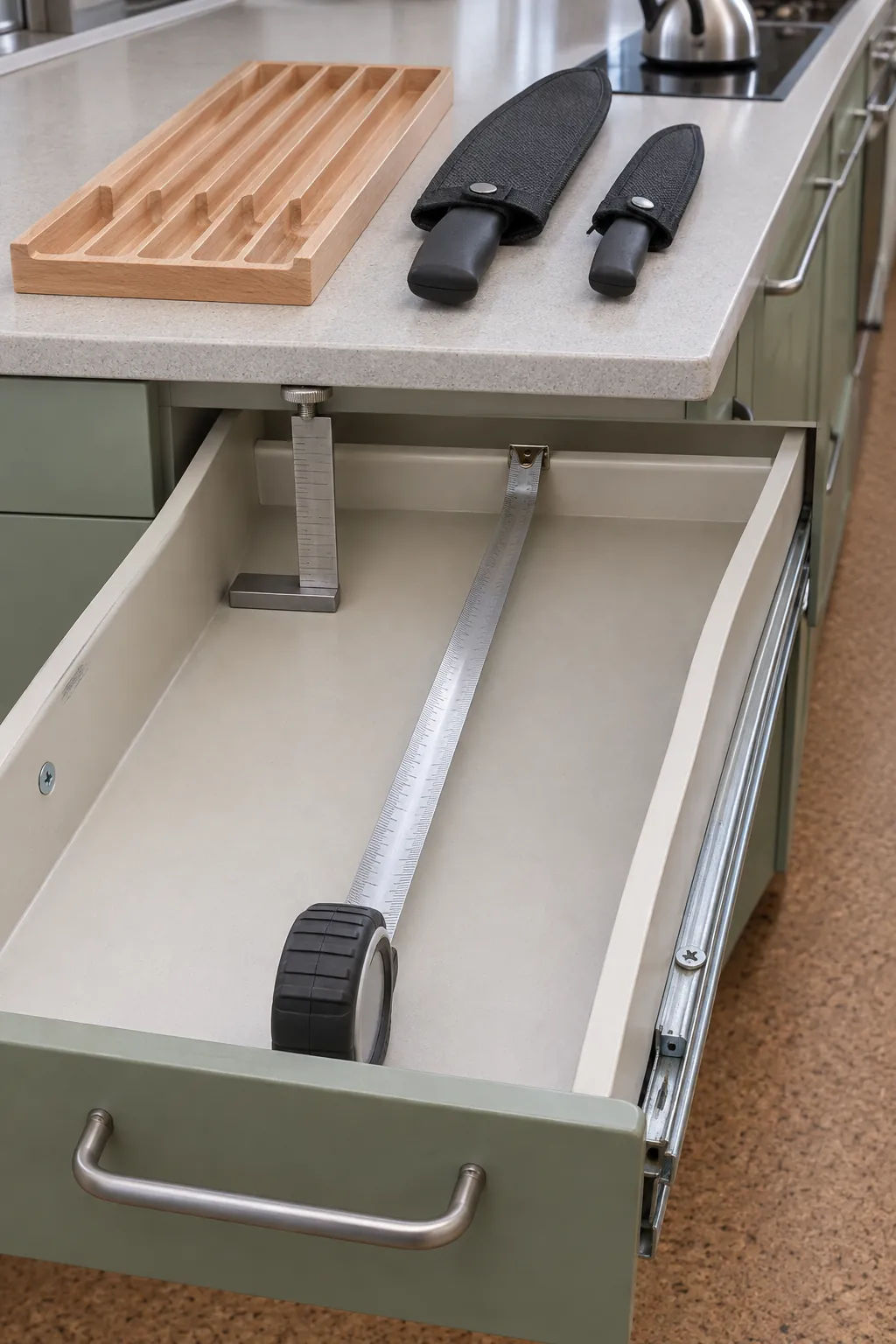
Measure the clear internal width, depth, and height of the closed drawer. Account for screw heads, side rails, curved drawer walls, and any handle hardware that projects inside. Compare those dimensions with the insert itself and with the longest knife, including its handle.
Many inserts hold blades on a slight angle, so the total height can exceed the thickness of the knife. Check that the drawer closes without pressing on a handle or lifting a blade from its slot. Leave enough space to grasp each handle without reaching across an exposed cutting edge.
Check whether the wall can support a strip
A strip needs more than an empty patch of wall. Confirm the mounting method, wall material, fastener position, and weight rating. A renter should not assume that adhesive alone is suitable for sharp tools, since heat, steam, grease, paint condition, and time can weaken a bond.
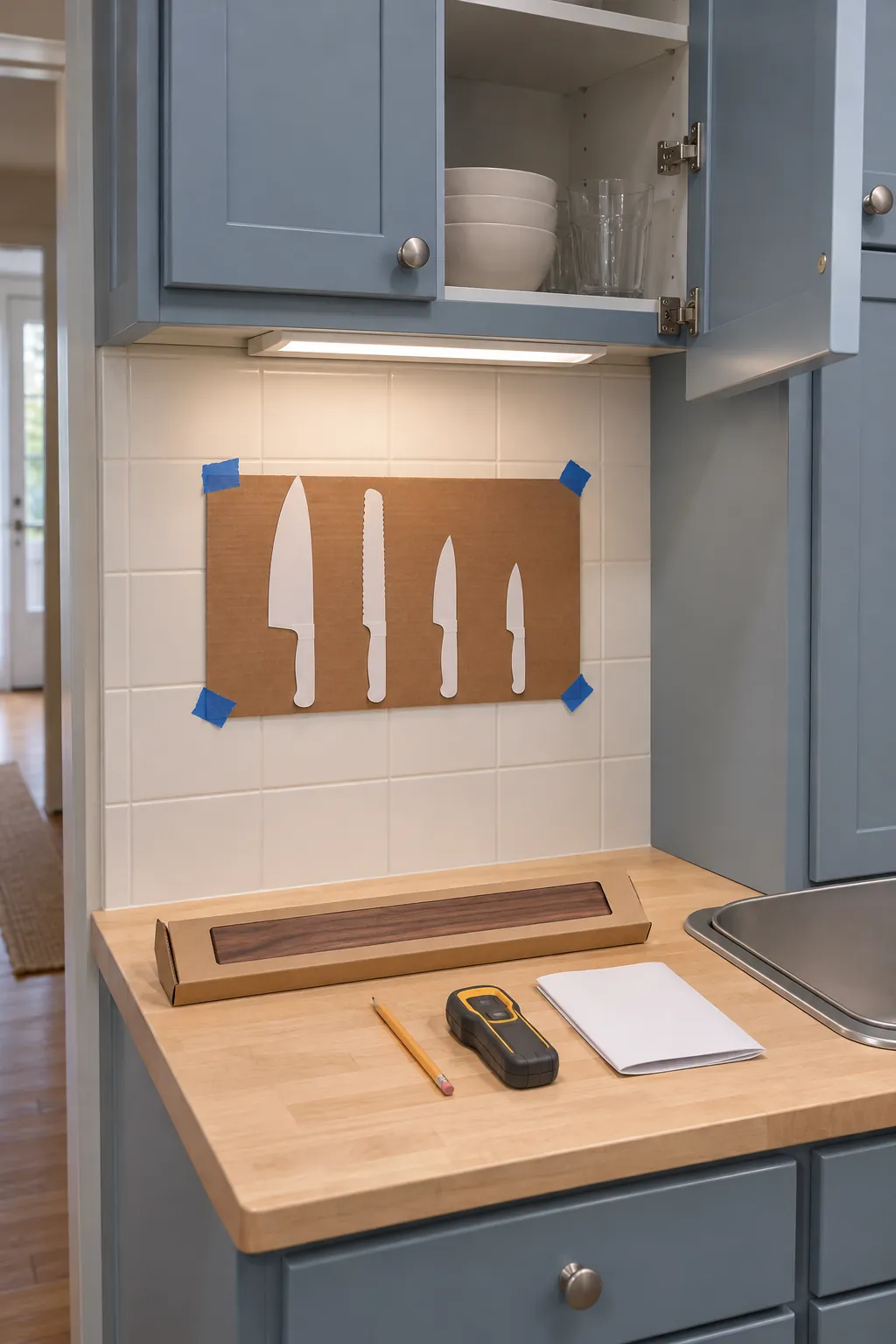
Place the proposed strip with painter tape first, then move through a normal cooking routine. Open nearby cabinets, carry a pan, use the sink, and stand at the counter. If an elbow, shoulder, towel, or cabinet door enters the knife zone, choose another location or use the drawer.
Compare daily access and capacity
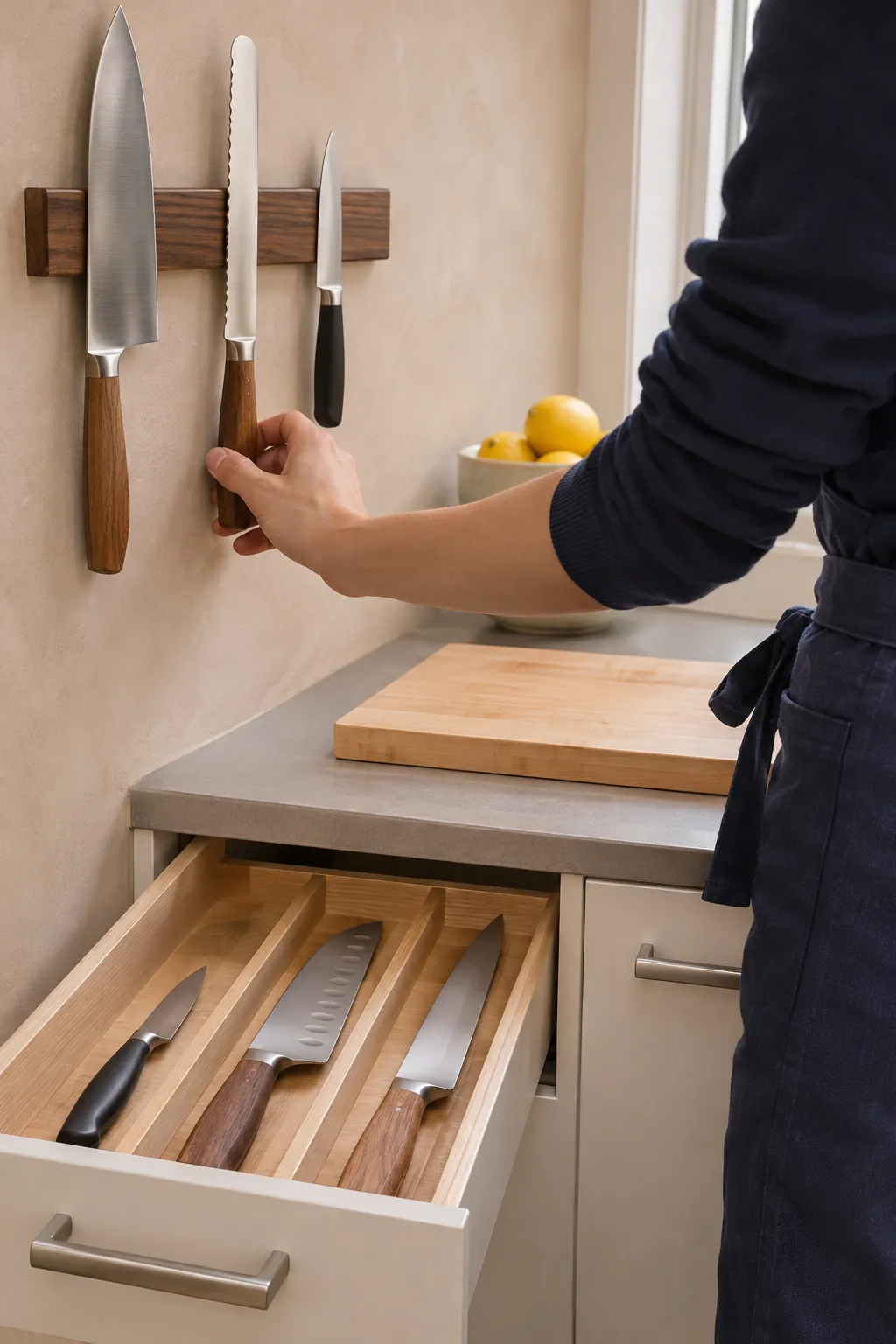
A drawer insert is visually calm and protects knives from airborne grease, but it gives one valuable drawer to a fixed set of slots. Wide handles or long blades may not fit, and a crowded insert can make the rear knives awkward to lift. It works best for a small stable collection that already fits the measured space.
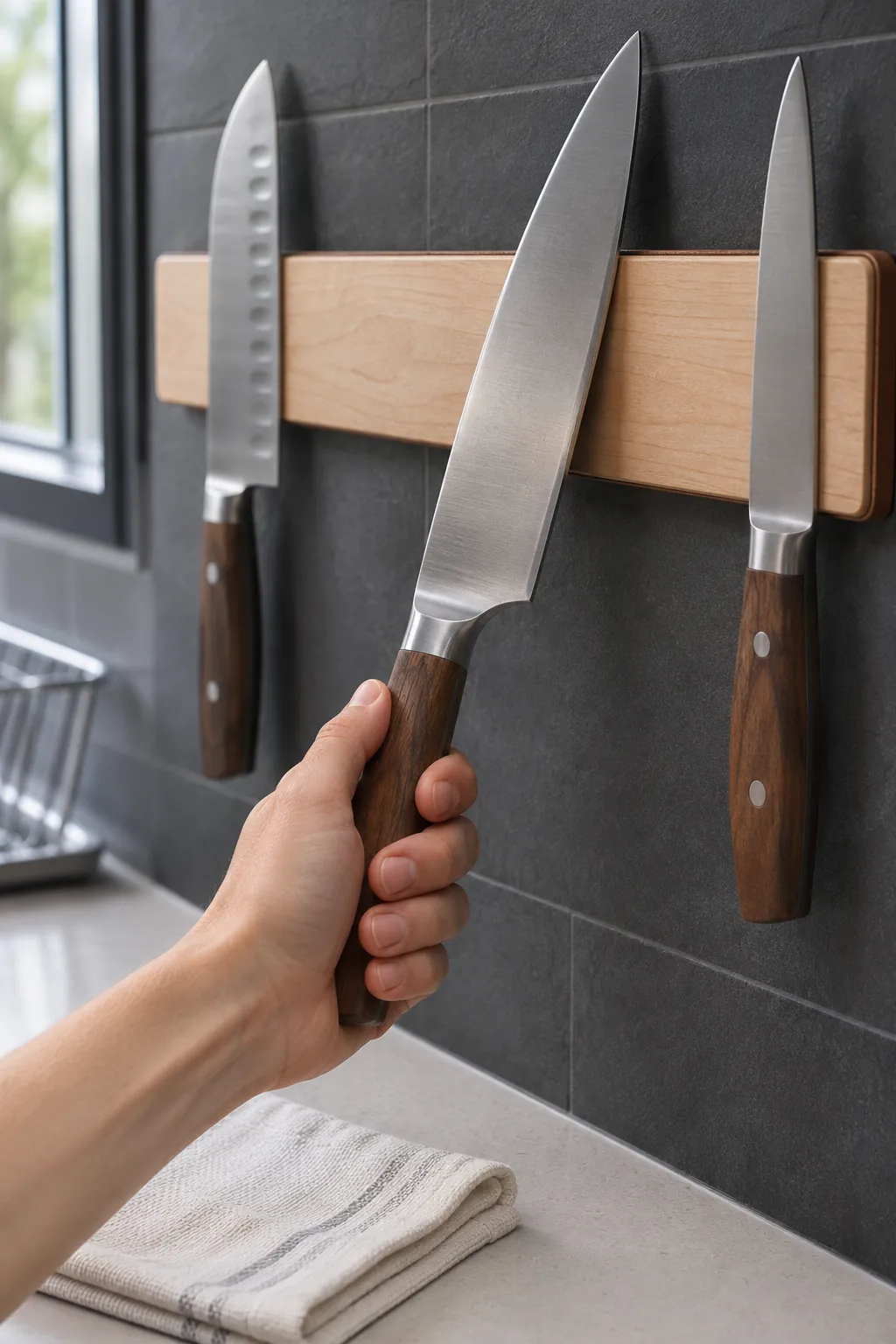
A strip makes every knife visible and can use a narrow wall zone that would otherwise stay empty. It adapts more easily when blade shapes vary, although knives still need separation so edges do not touch. The cook must also learn to lift or rotate the spine away from the strip rather than pulling the sharp edge across the surface.
Protect the blades in either system
Wash and dry every knife before storage. Moisture trapped in an insert can affect the blade, handle, and organizer, while a wet knife on a strip can mark the wall below. Clean crumbs and dust from a drawer insert, and wipe the strip according to its material and mounting instructions.
In a drawer, each edge should sit inside a dedicated slot without rubbing another knife. On a magnetic strip, place the flat side of the blade against the surface and remove the knife with controlled pressure at the spine. A wood faced or otherwise blade friendly strip can reduce direct metal contact, but correct handling still matters.
Choose the option that removes the real constraint
Use a drawer insert when you have a correctly sized drawer and value concealed storage, simple installation, and a quieter visual field. It is usually the more comfortable choice for a rental, a family kitchen, or a room where visitors move close to the preparation area.
Use a magnetic strip when drawer space is scarce, the wall can accept reliable fasteners, and a safe reach zone exists away from traffic and splashes. It suits a cook who wants immediate visual access and can mount and use the strip correctly. If either option forces a compromise on secure mounting, blade clearance, or safe reach, the other option wins regardless of its space advantage.