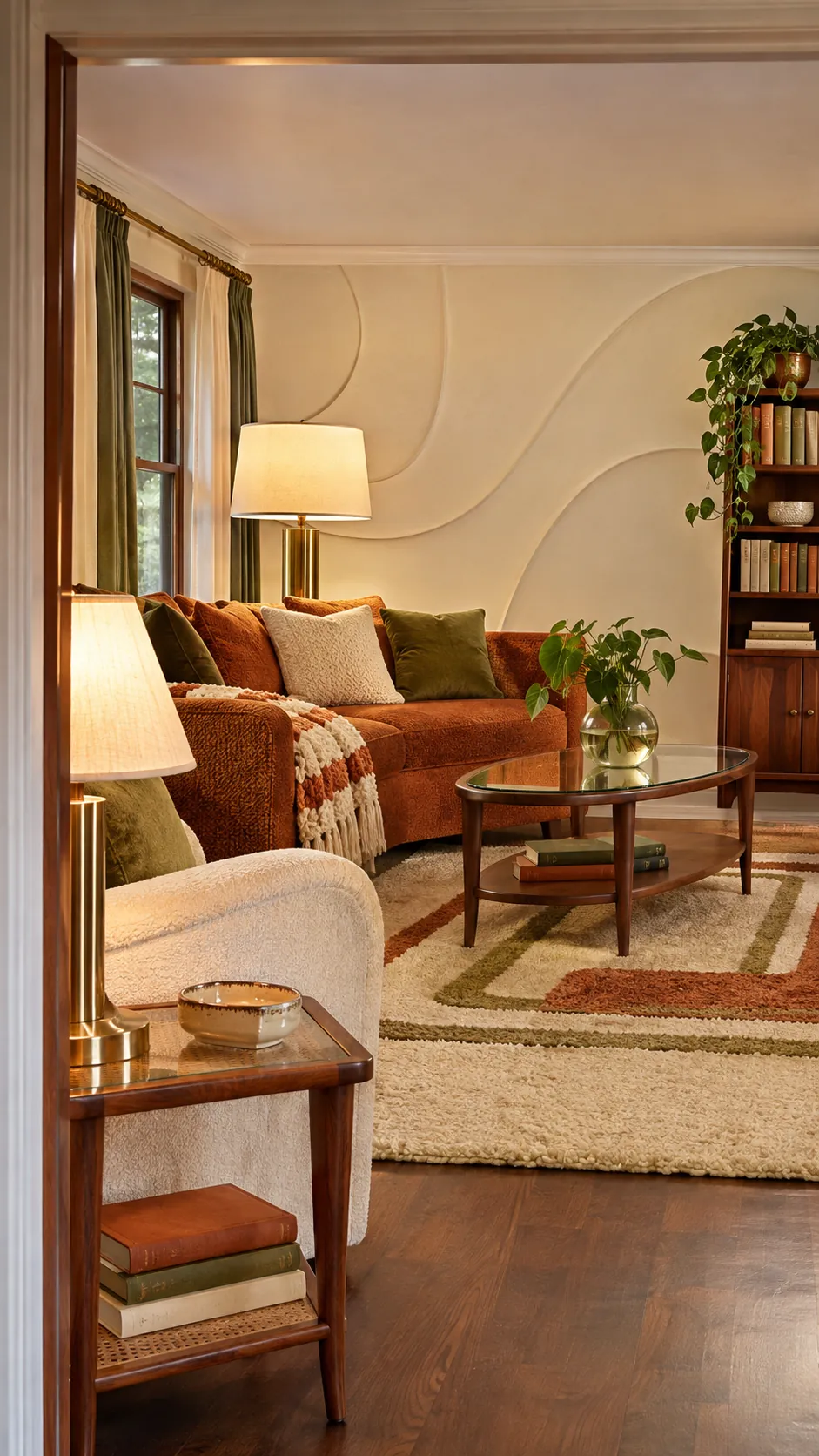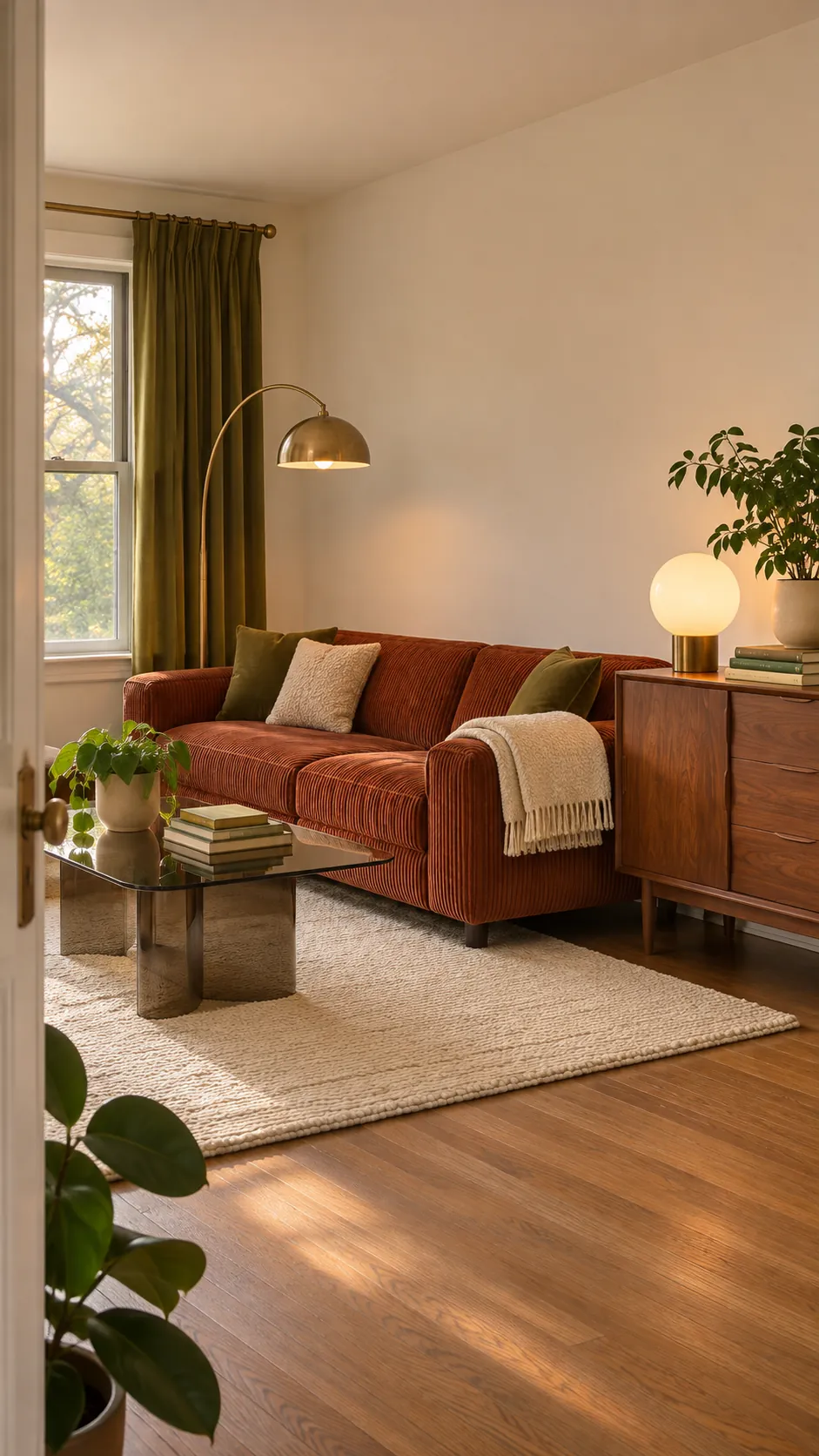
A convincing retro room needs more than a few orange accessories. The strongest spaces choose one period detail as an anchor, repeat its colors and shapes with restraint, then leave enough quiet space for ordinary life. This approach also helps renters and careful shoppers build the look in stages without filling the room with unrelated nostalgia.
Build Around a Low Modular Sofa
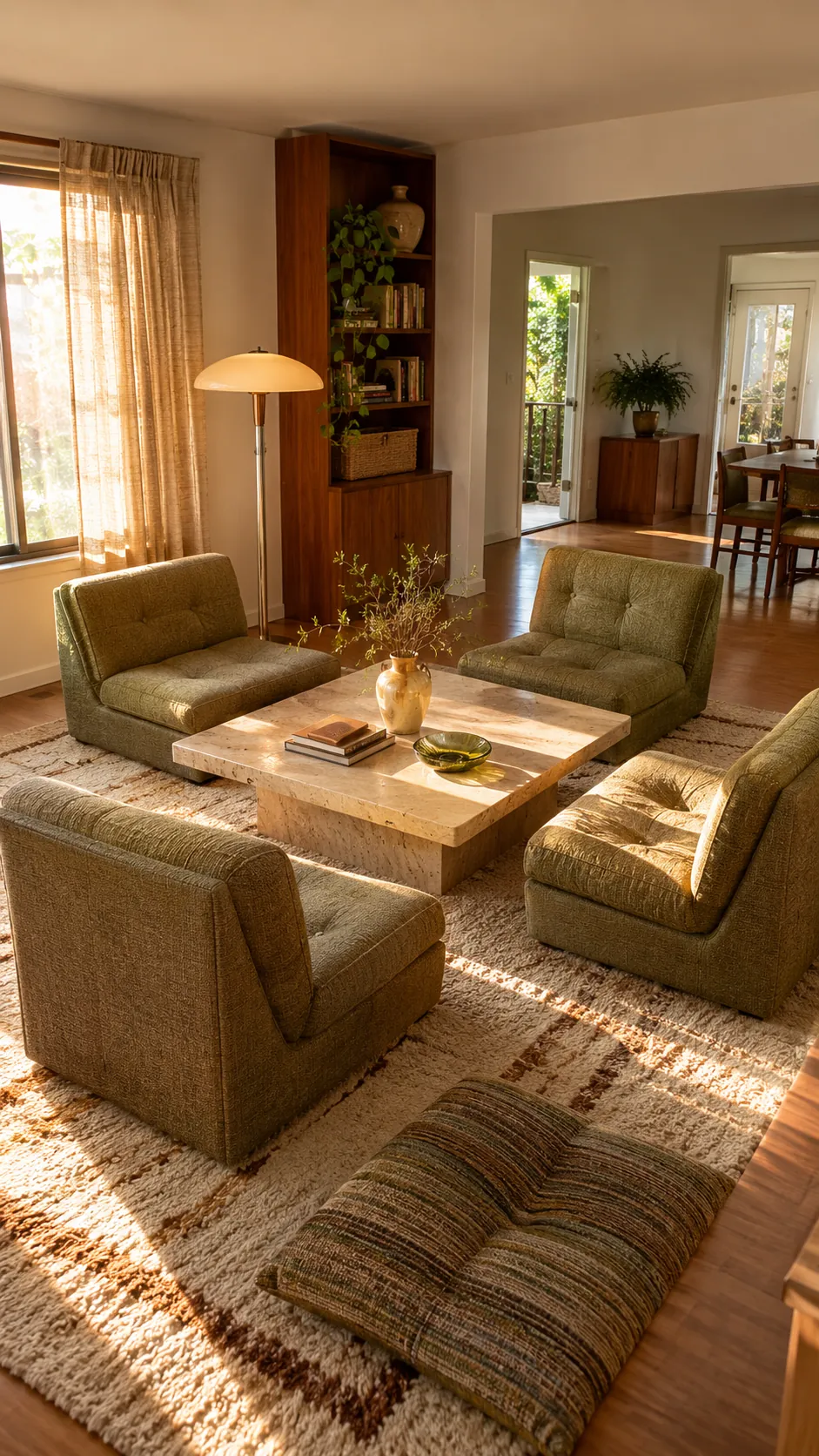
A low modular sofa gives a living room the relaxed profile associated with the decade. Choose rust, olive, tobacco, or warm cream upholstery, then keep the surrounding tables visually light so the seating does not feel bulky. A washable textured throw makes an older sofa more practical and lets you test the palette before committing to new upholstery.
Layer a Shag Rug With Cleaner Edges
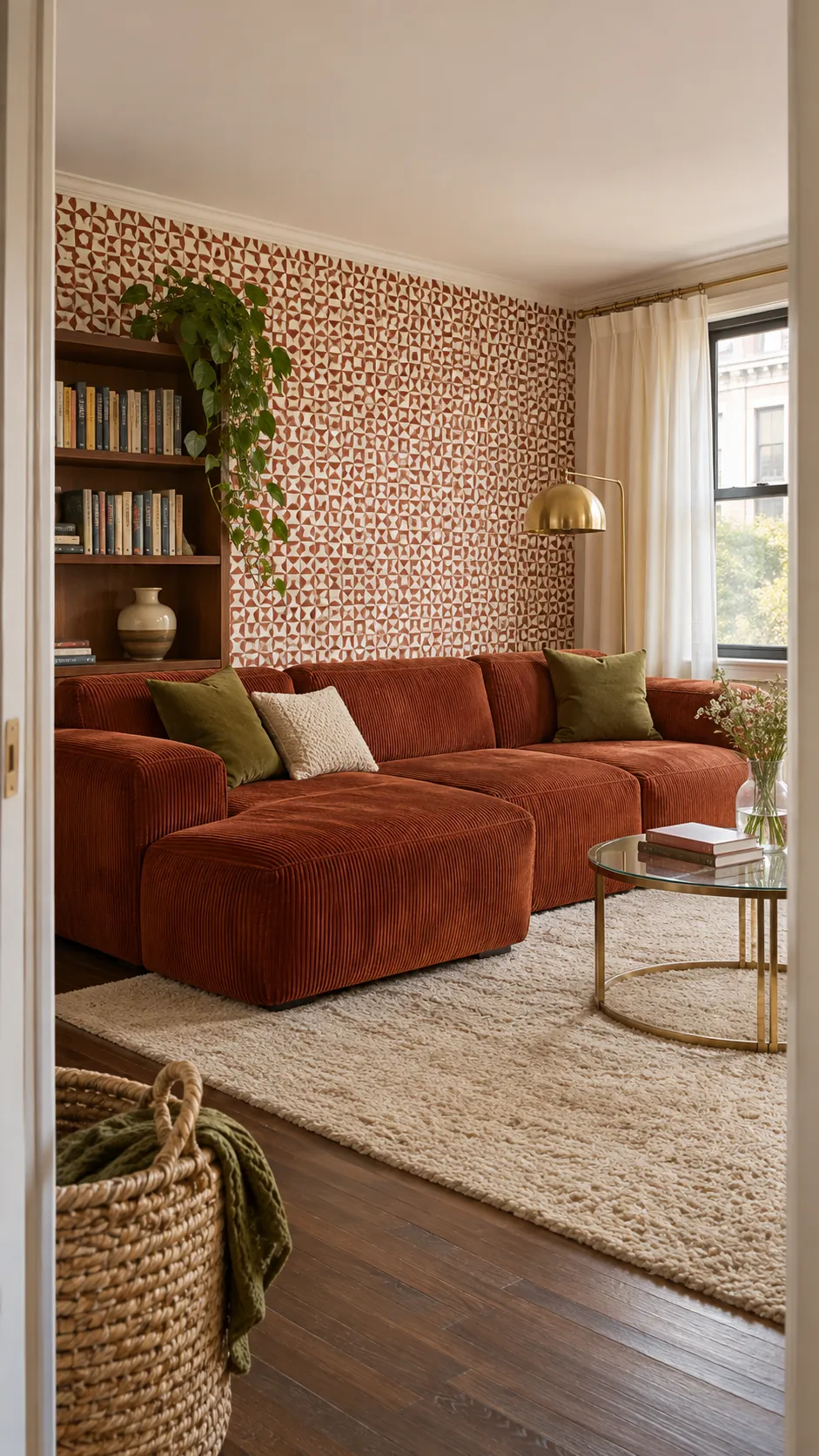
A deep pile rug brings softness and unmistakable period character, but it works best when the rest of the floor remains visible. Place it beneath the front legs of the main seating rather than covering every inch of the room. A simple coffee table and uncluttered walking path keep the texture inviting instead of visually heavy.
Use Walnut as the Unifying Material
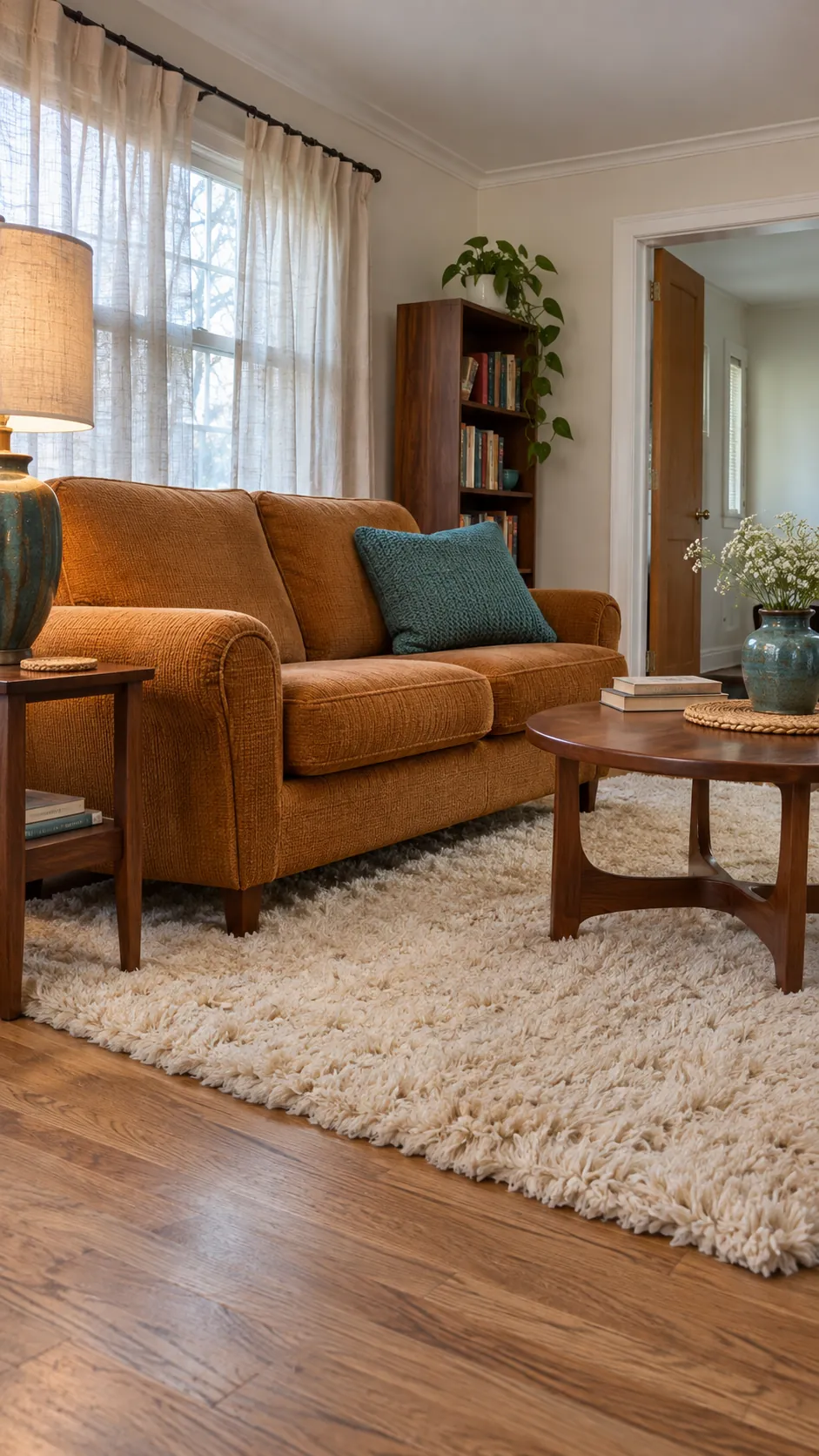
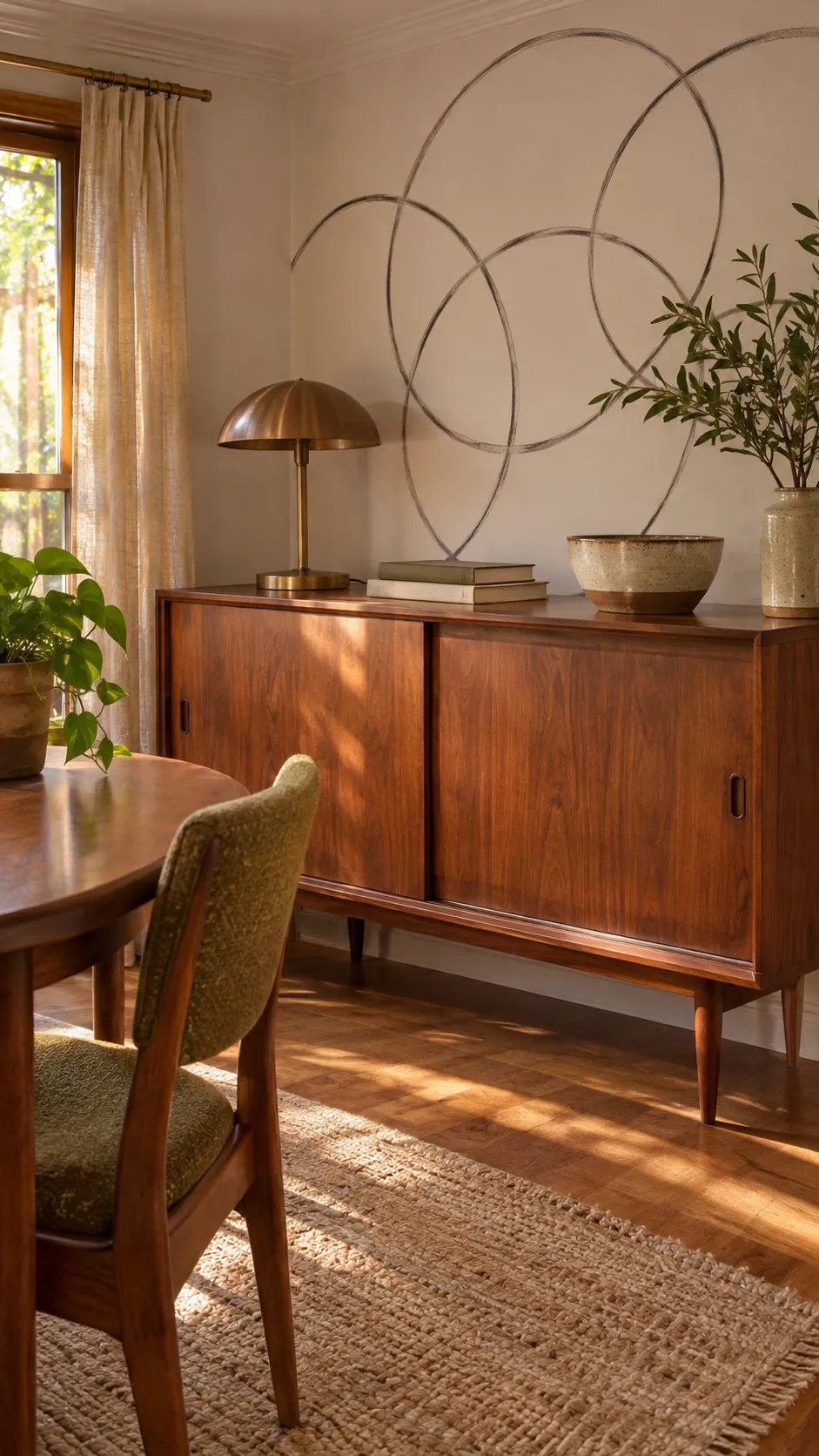
Walnut furniture can connect pieces found at different times because its deep brown grain reads as one consistent material story. Start with a credenza, nightstand, or compact desk that has useful storage rather than buying decorative furniture with no purpose. Repeat the wood once or twice in a lamp base or picture frame, then stop before the room becomes uniformly brown.
Frame the Bed With a Curved Headboard
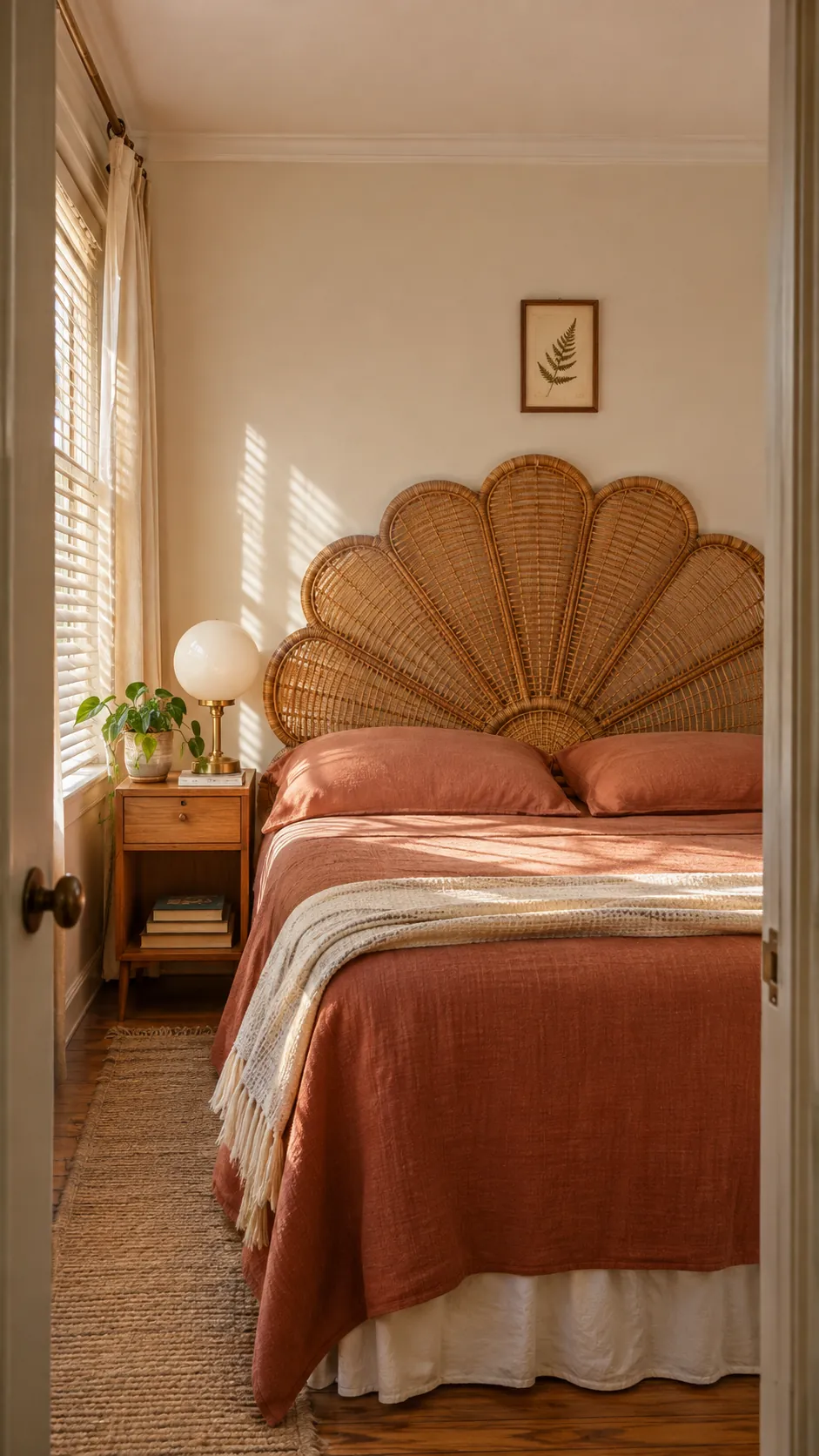
A rounded upholstered or rattan headboard creates a strong focal shape without requiring permanent construction. Let the curve stand against a plain wall and echo it with one globe lamp or circular cushion. Keeping the bedding mostly solid allows the silhouette to carry the vintage room aesthetic retro theme without making sleep space feel busy.
Create a Conversation Corner
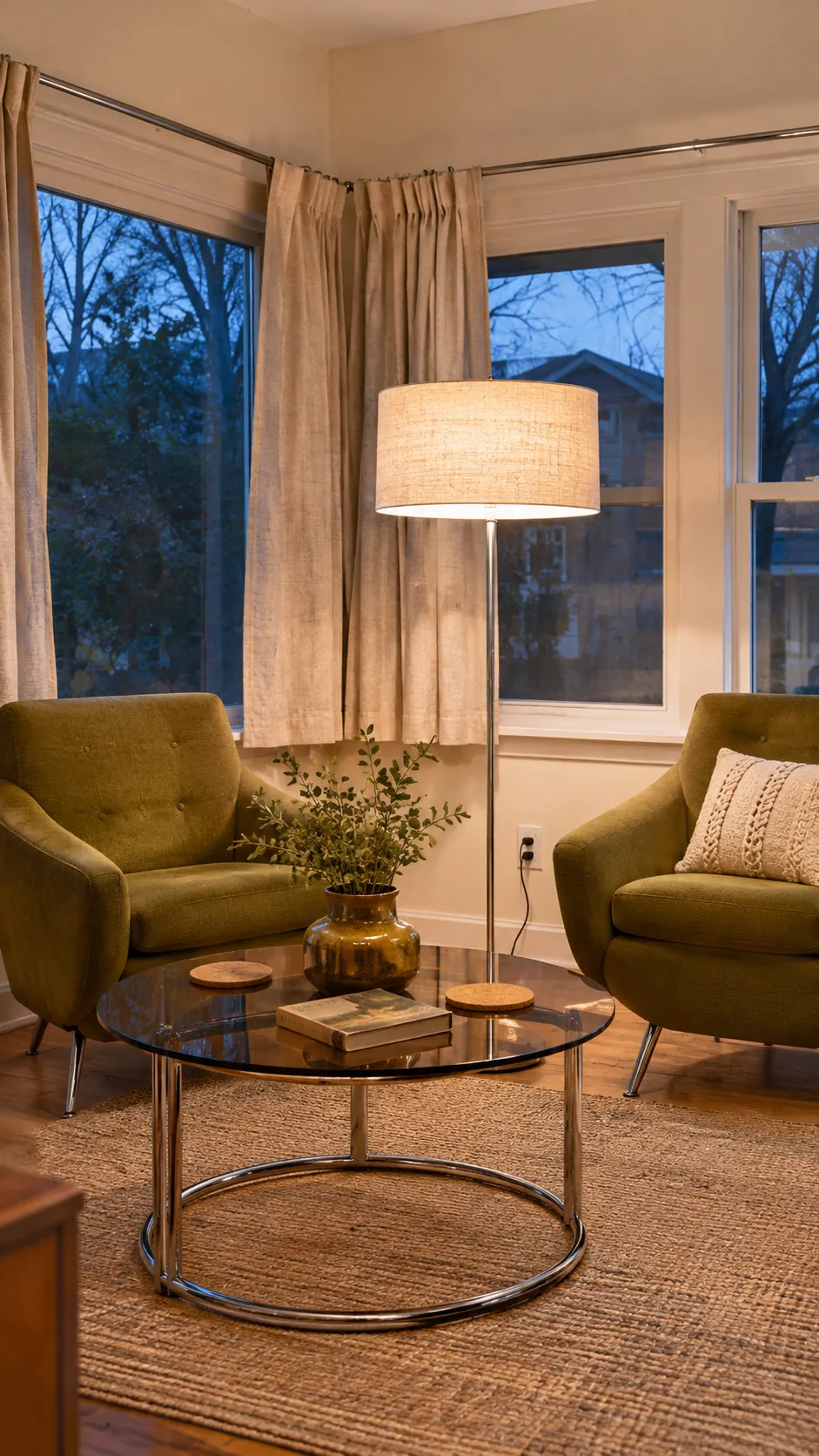
Two compact lounge chairs angled toward each other can make an unused corner feel intentional. Add a small table that can hold drinks and a shaded lamp that produces warm light at seated height. The arrangement works in a vintage apartment because it uses less space than another sofa and gives the room a social purpose.
Choose One Graphic Wallpaper Wall
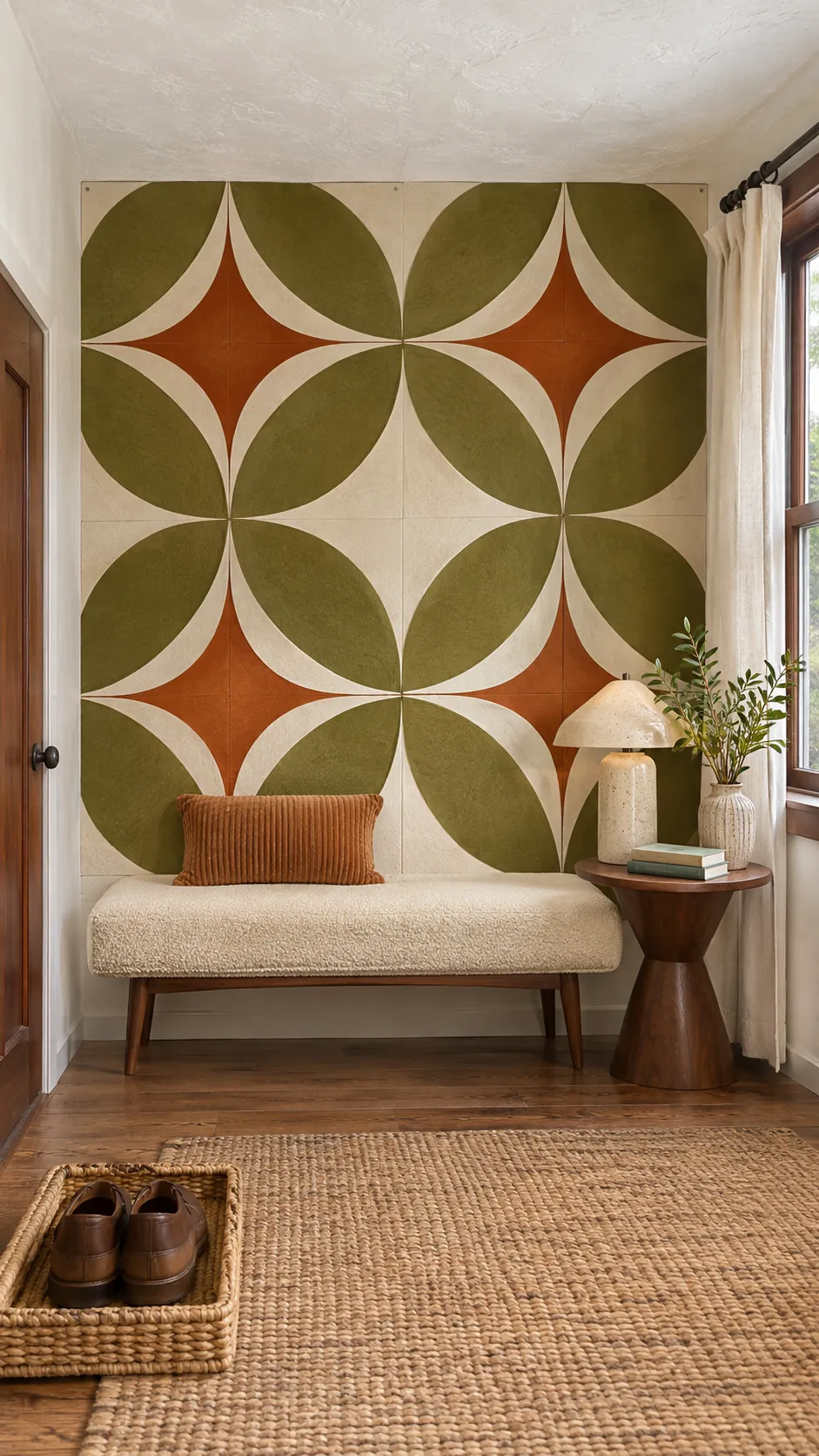
A single wall with a precise geometric pattern can establish the era without surrounding you in print. Renters can use removable paper on a clean wall or apply it to large lightweight panels that move with them. Pull two colors from the pattern into small objects so the wall relates to the room instead of looking like a separate set.
Add a Smoked Glass Table
Smoked glass introduces a darker reflective surface while preserving sight lines through a small room. Look for a side table with stable joints and rounded edges, especially in a busy household. Pair it with soft fabric, wood, and a simple ceramic object so the glossy material feels balanced rather than cold.
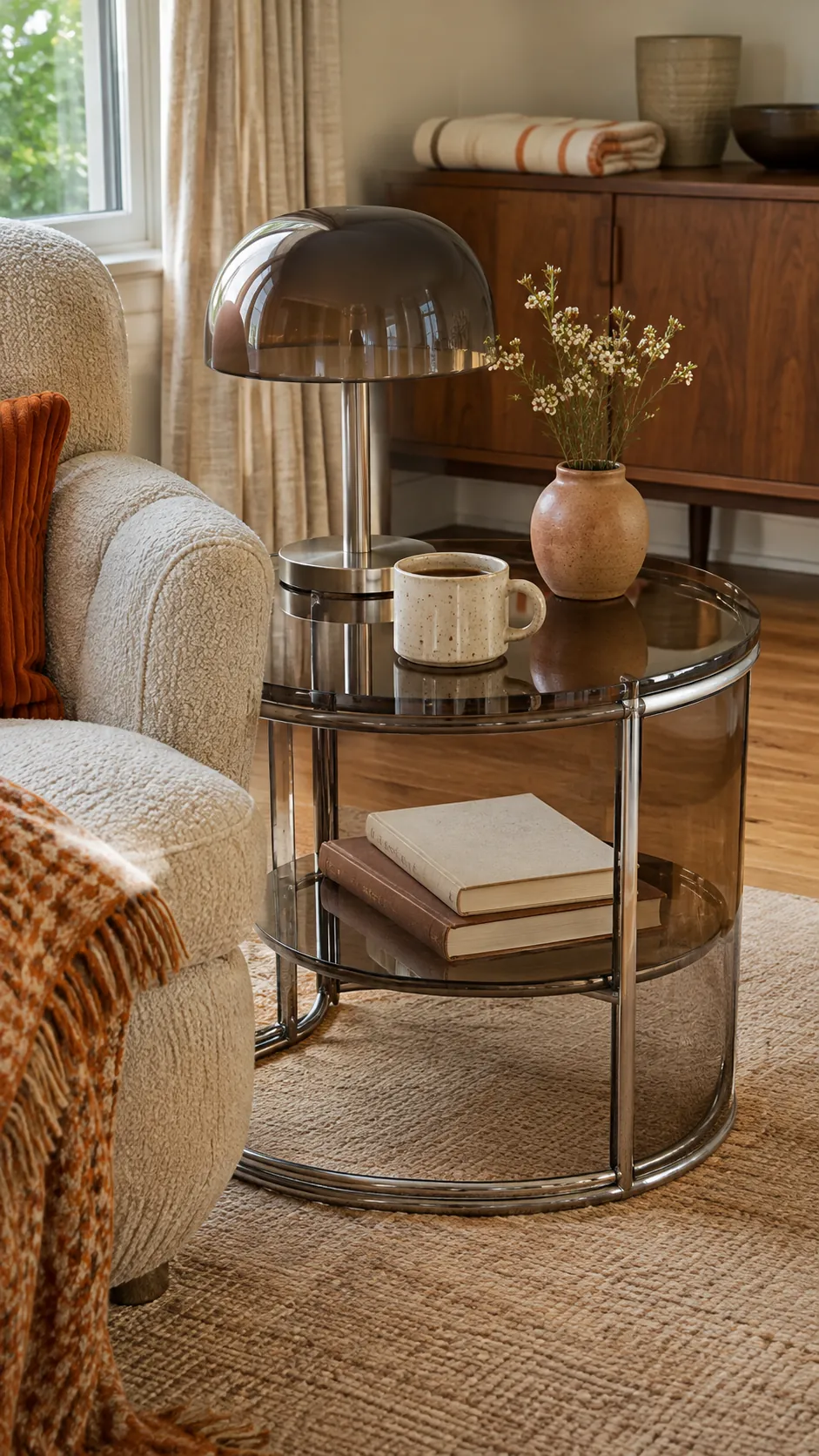
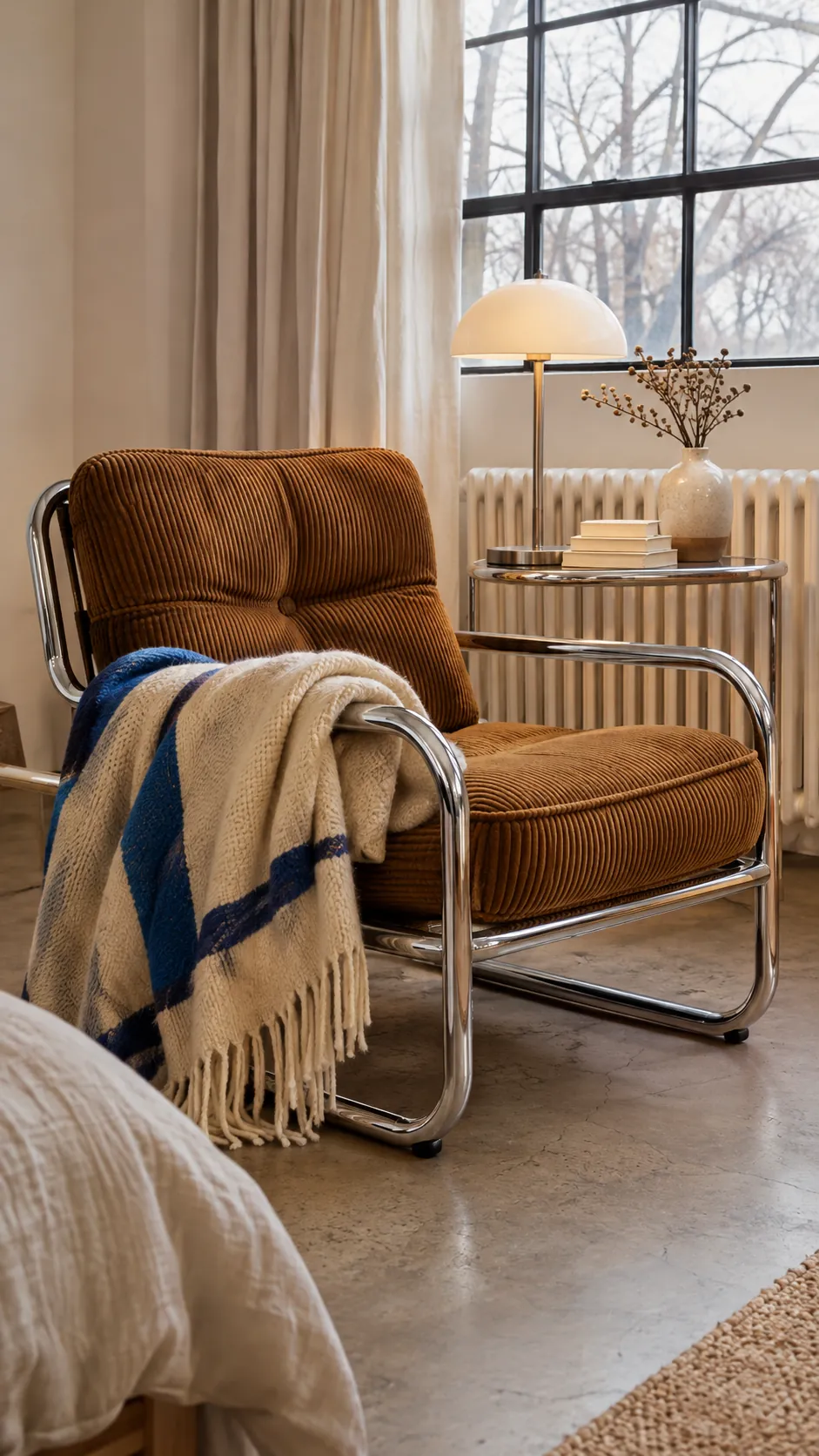
Mix Chrome With Warm Textiles
Chrome shelving or a tubular chair adds the sharper side of 1970s design. Temper the shine with a wool blanket, corduroy cushion, or thick curtain in a warm earth color. This contrast gives retro room inspo more depth than a space that relies only on rustic wood and orange fabric.
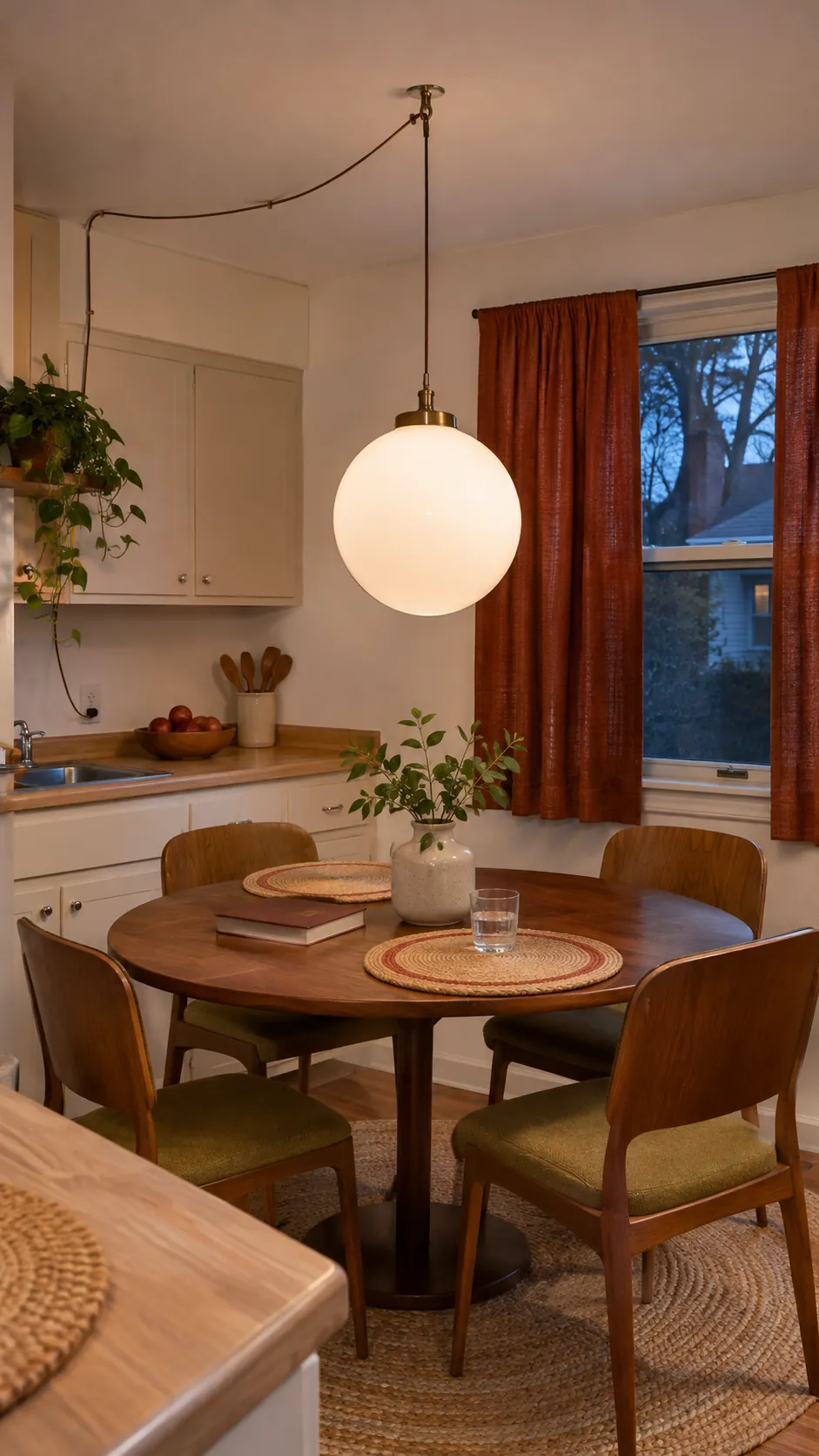
Hang a Sculptural Globe Pendant
A milk glass globe pendant can change the mood of a room even when the furniture is simple. Choose a fixture sized for the ceiling height and use a warm bulb that does not cast harsh glare. If wiring changes are not possible, a plug in pendant suspended from a secure ceiling hook can create a similar focal point.
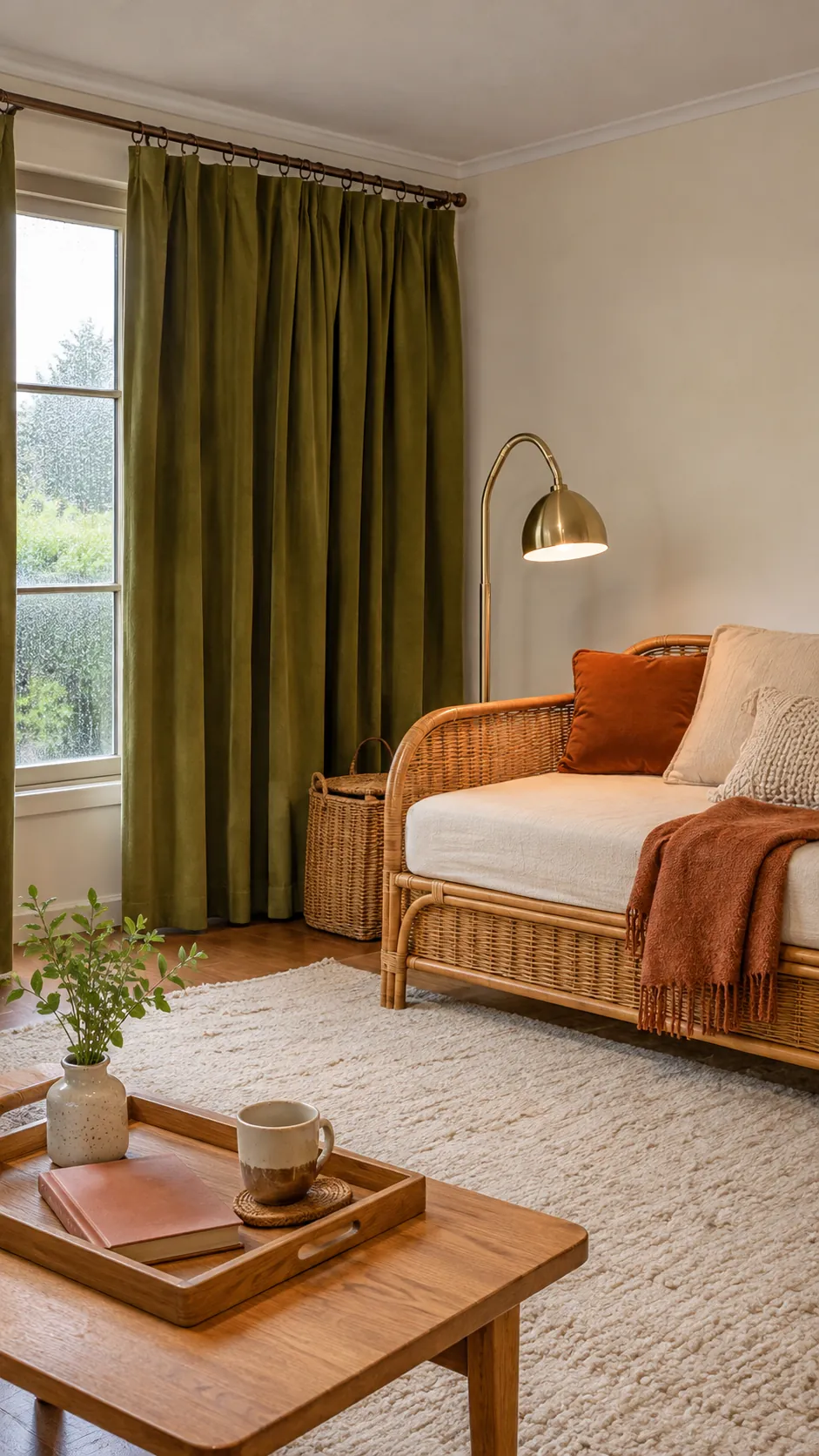
Make Olive Green the Grounding Color
Olive green has enough gray and brown in it to support brighter rust, mustard, and cream accents. Use it on the largest movable element, such as curtains or a bed cover, when you cannot paint. Natural cane, medium wood, and off white walls prevent the palette from becoming dark.
Try a Sunken Lounge Feeling Without Remodeling
You can suggest the intimacy of a conversation pit without changing the floor. Arrange low seating around a large rug, place a broad coffee table in the center, and keep tall furniture outside the group. Floor cushions can add flexible seats, but leave a clear route through the room so the layout remains safe.
Style a Record Listening Station
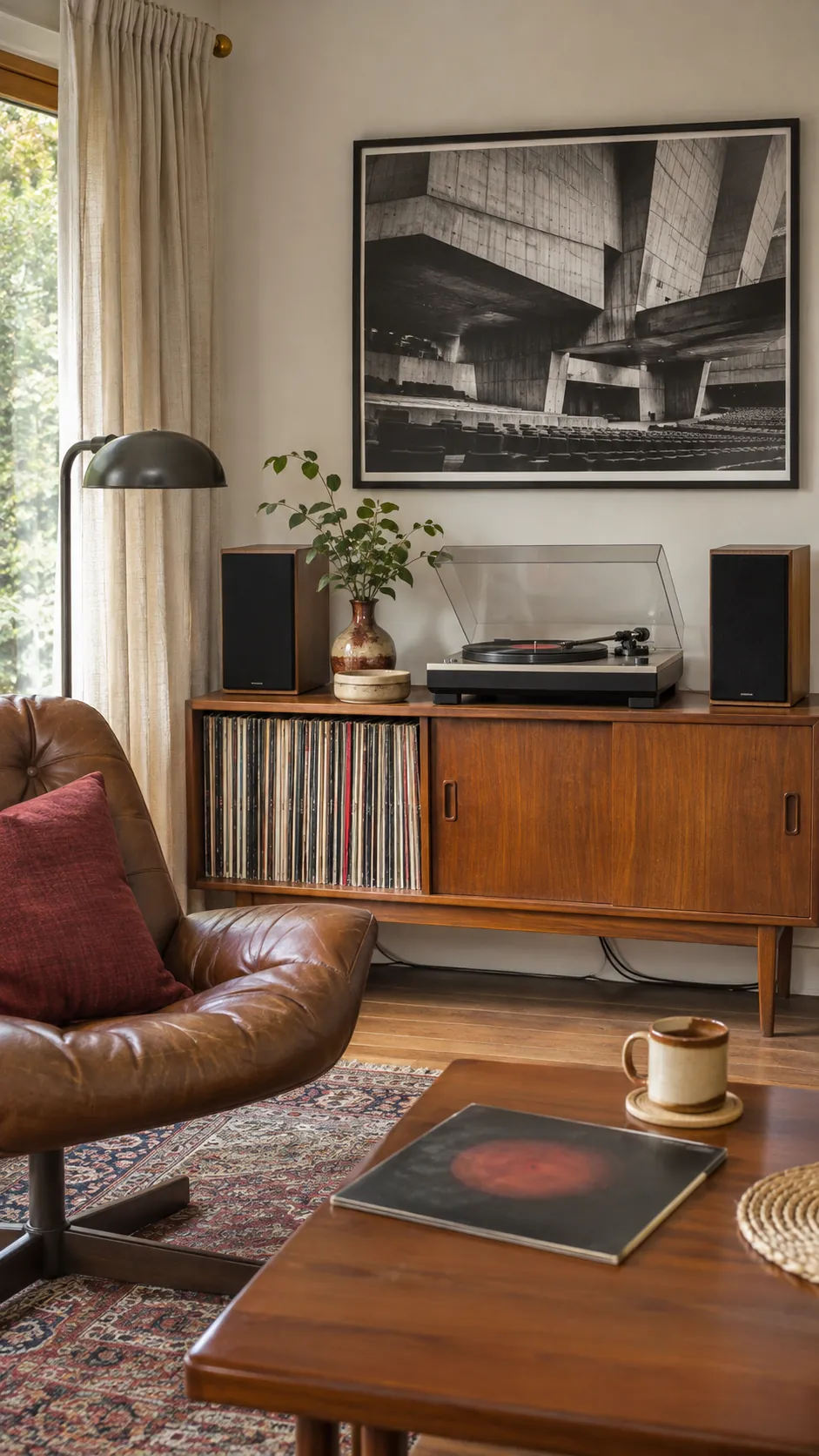
A record player and organized vinyl collection give a retro room an activity rather than a purely decorative theme. Place the turntable on a stable cabinet away from direct vibration and strong sunlight. One comfortable chair, a focused lamp, and a small place for the current album complete the station without turning every shelf into a display.
Use Amber Glass as a Light Accent
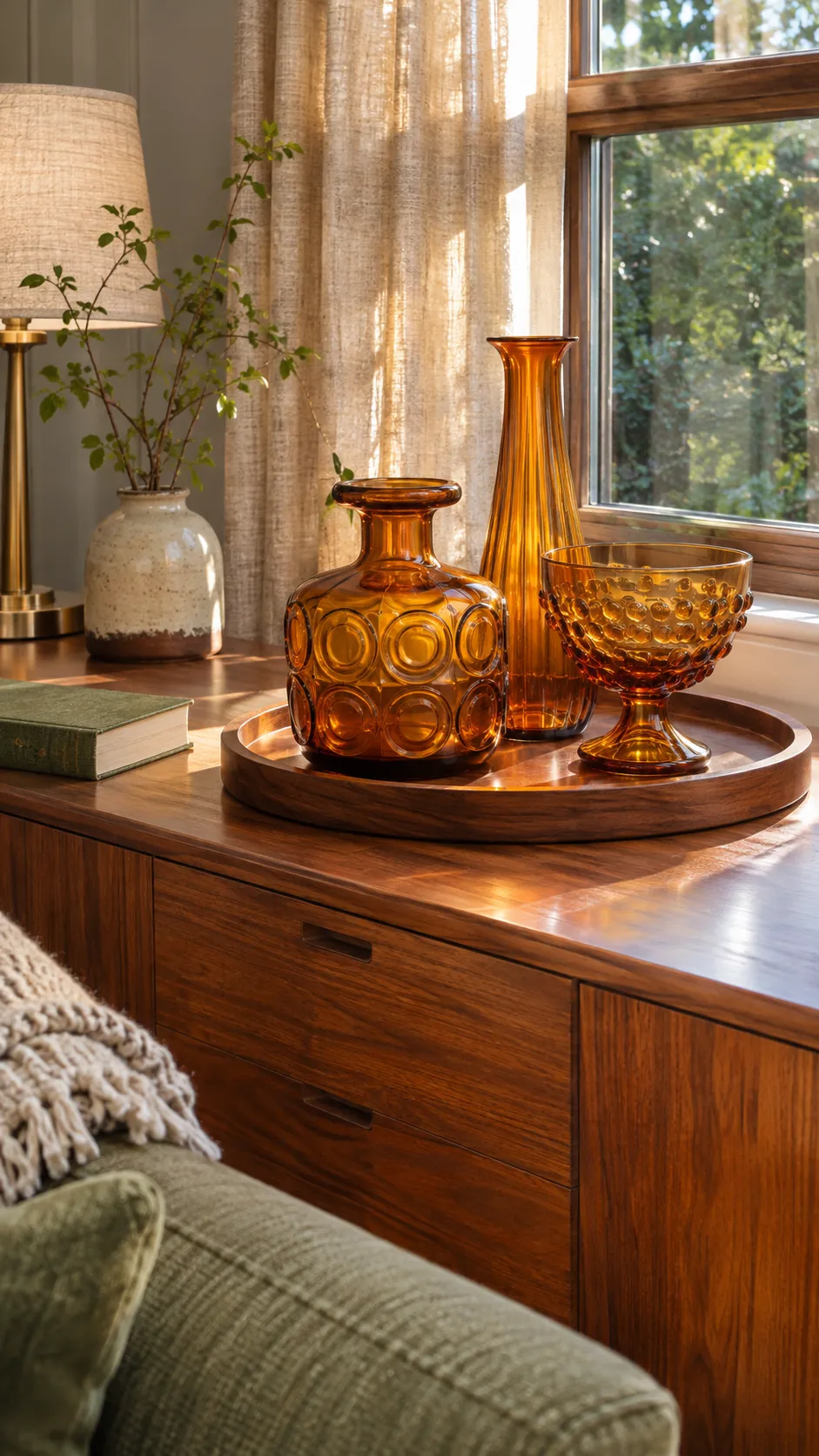
Amber glass catches daylight and adds period color without taking over a small surface. Group two or three pieces with different heights on a tray rather than scattering them across the room. Keep them away from busy edges, and use a branch or a few simple stems instead of an oversized arrangement.
Balance a Bold Floral Bedspread
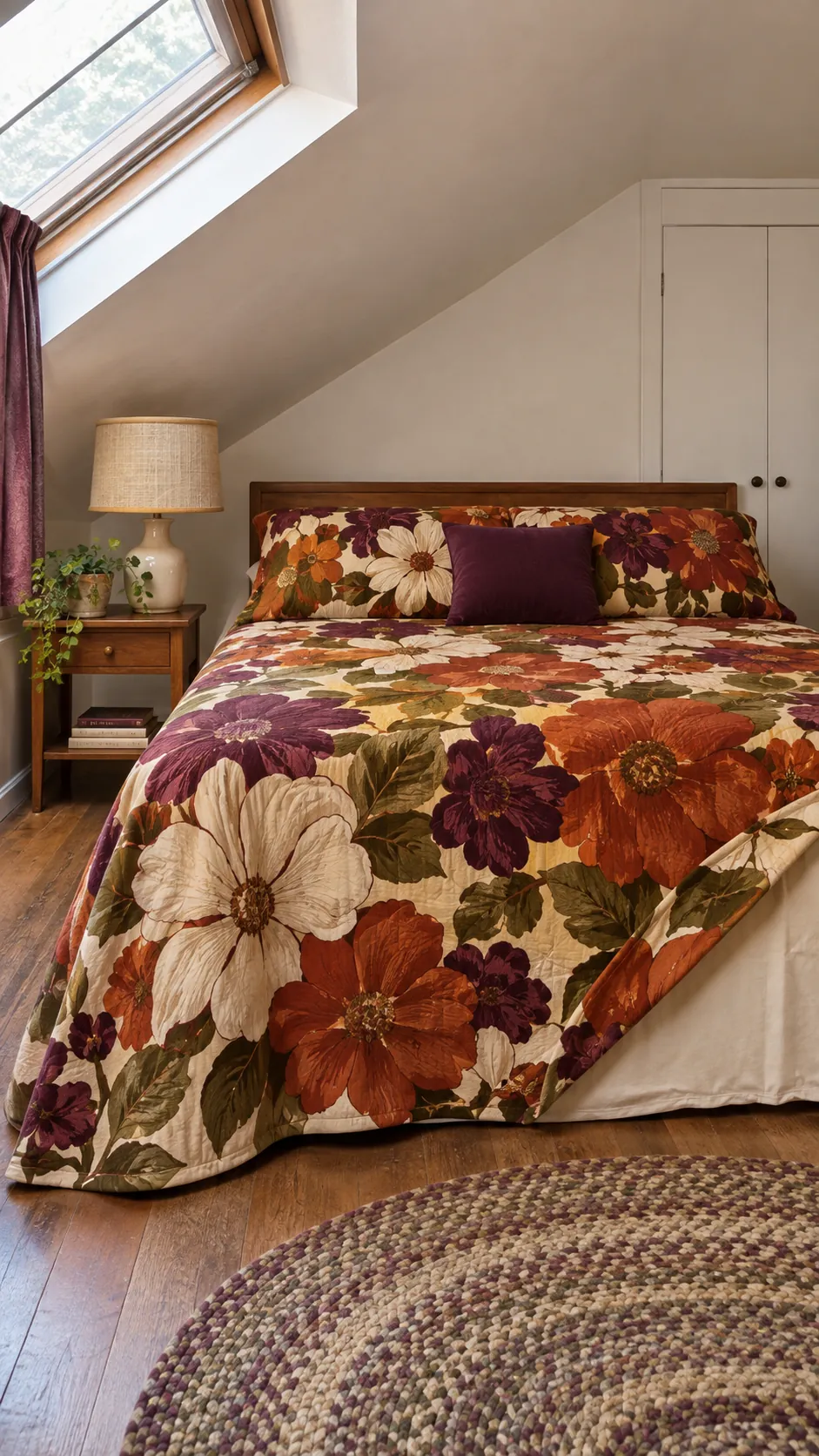
A large floral bedspread can carry the entire 1970s bedroom palette in one useful piece. Match it with plain sheets, a quiet wall, and no more than two solid cushion colors. The restrained surroundings keep the pattern joyful while giving the eye a place to rest.
Turn Paneling Into an Intentional Backdrop
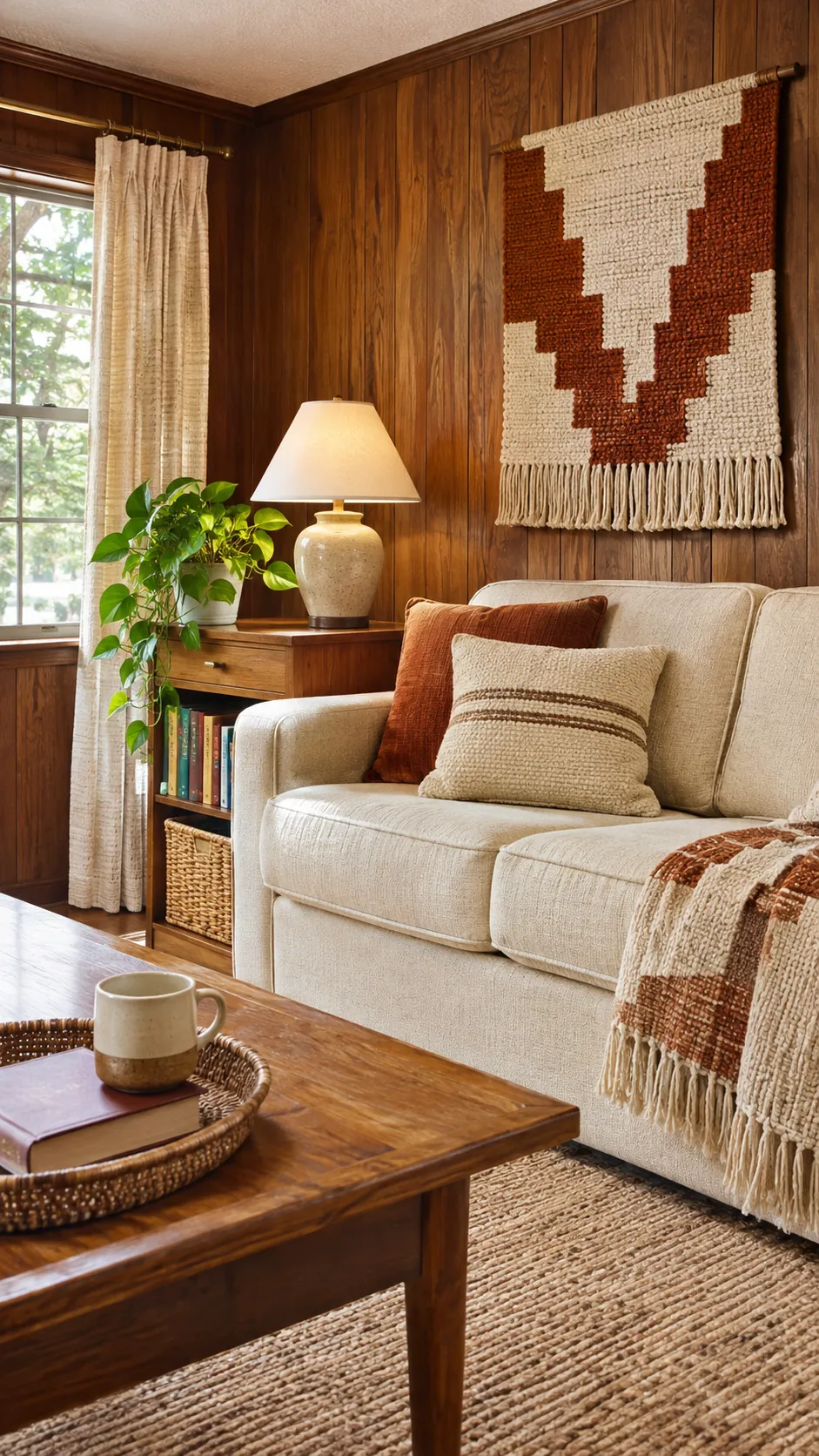
Existing wood paneling can support the look when its brown tone is treated as part of the palette. Brighten it with cream upholstery, pale lampshades, and a large woven textile panel with an abstract rust and ivory pattern. Clean the surface first and improve the lighting before deciding whether the wood actually needs paint.
Add a Mushroom Lamp for Soft Light
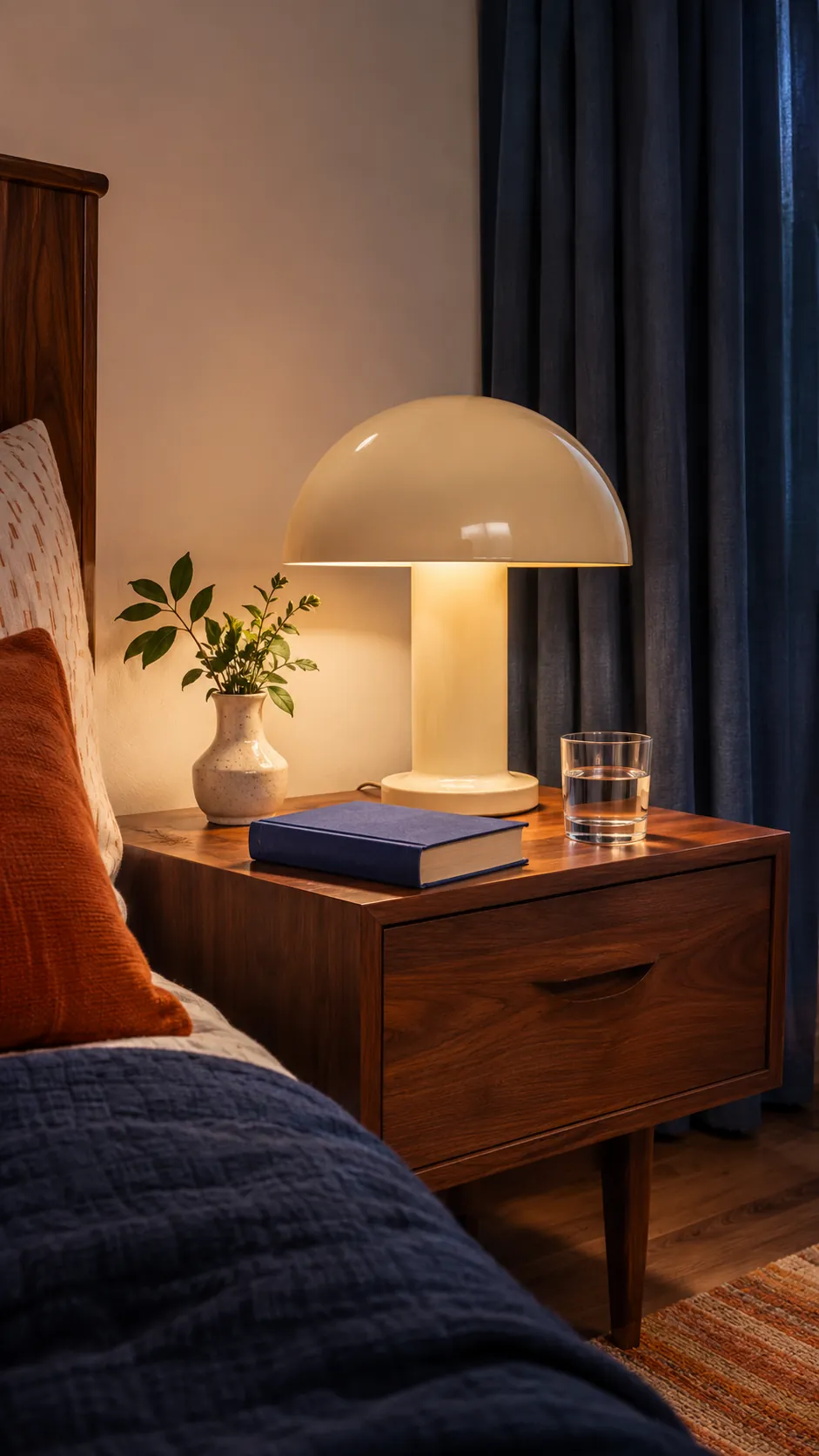
A mushroom lamp brings a recognizable curved form and produces gentle light across a side table. Use one as a focal object rather than repeating the same shape throughout the room. A dimmable warm bulb helps the lamp serve both evening atmosphere and practical bedside use.
Arrange a Rattan Reading Nook
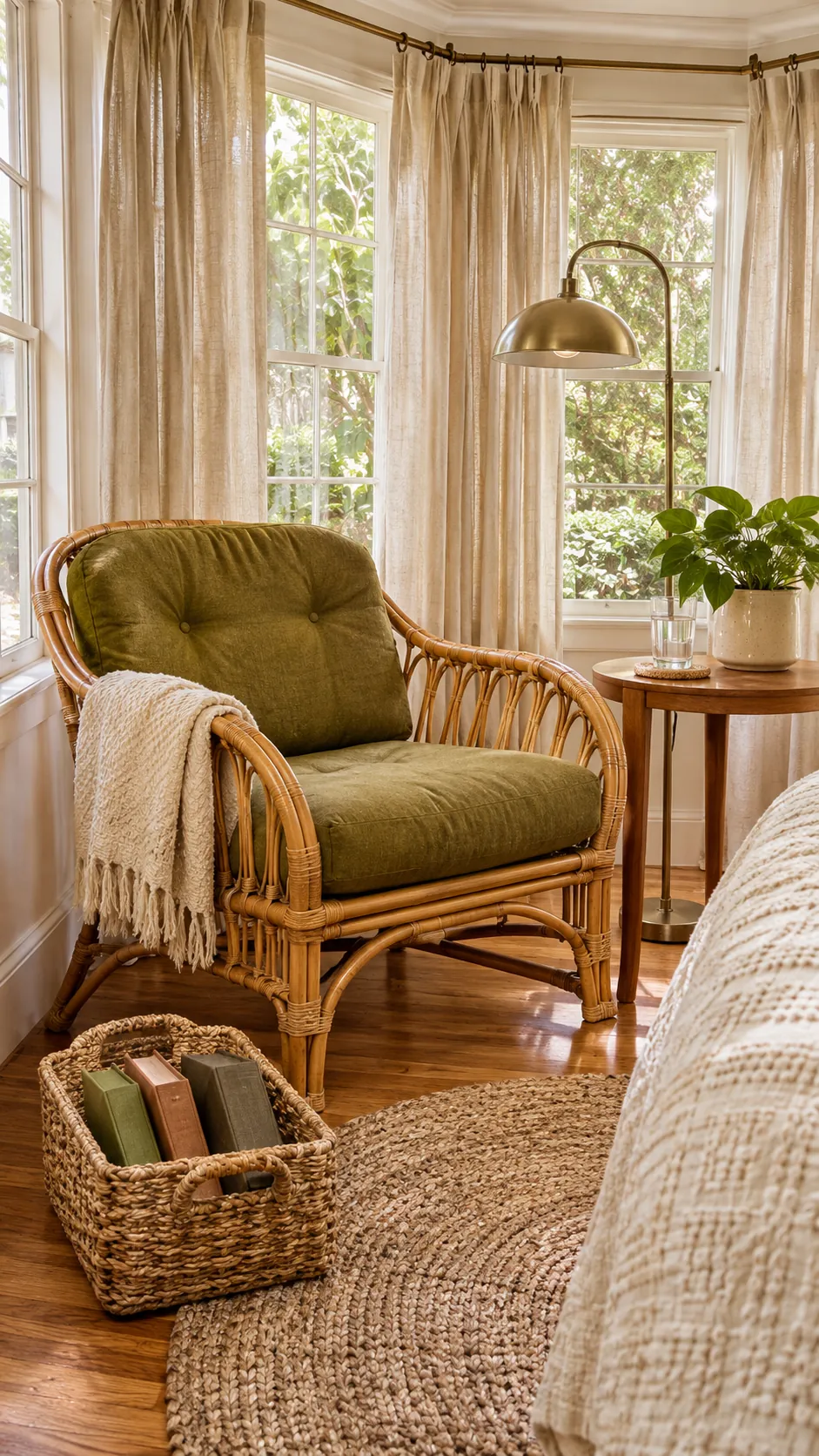
A rattan chair brings an open woven texture that feels lighter than a large upholstered seat. Give it a supportive cushion, place it near natural light, and add a small table within easy reach. One floor lamp and a basket for current books make the nook useful while preserving the relaxed retro bedroom aesthetic.
Paint a Wide Color Block
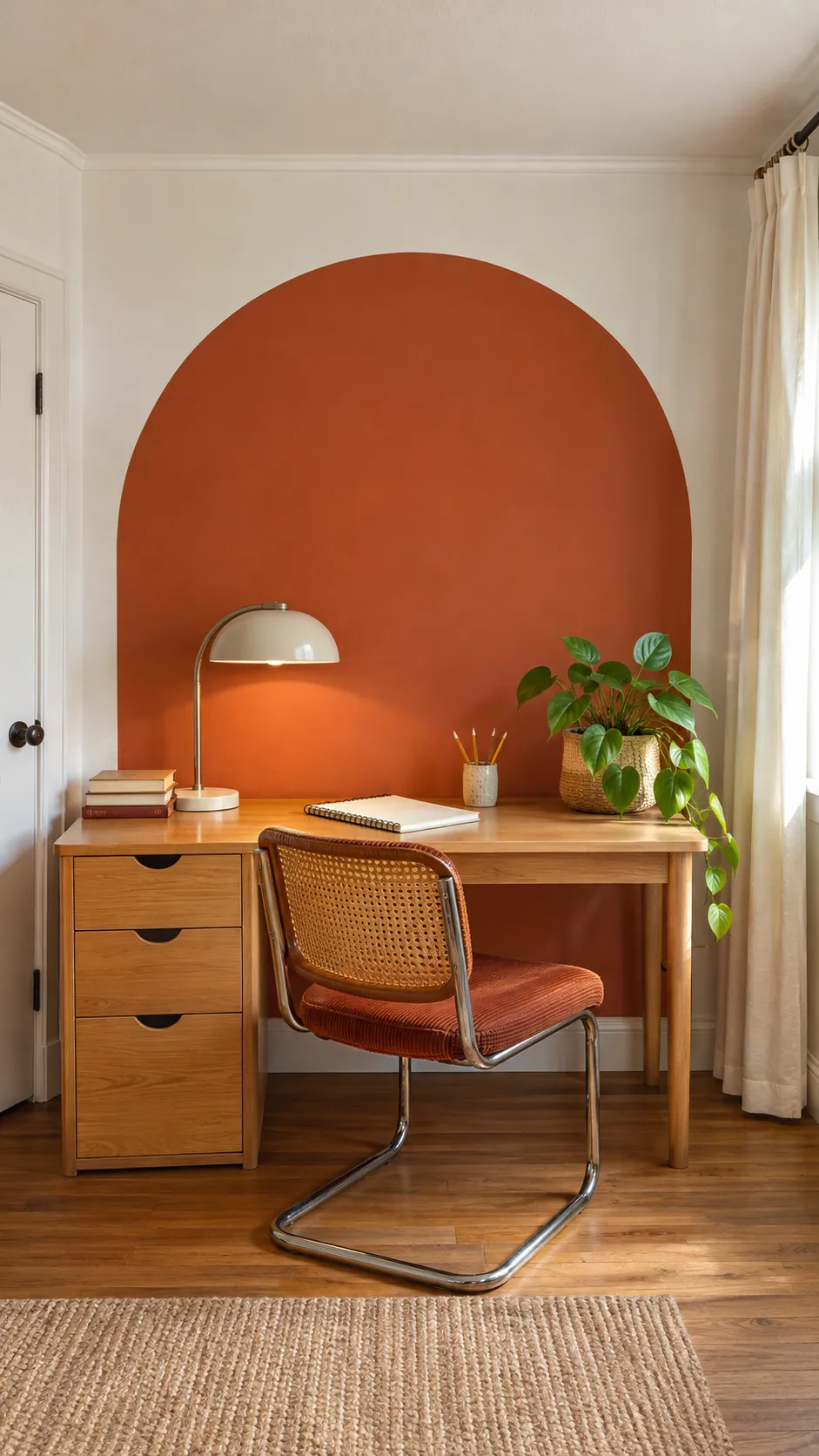
A broad painted arch or horizontal band can add graphic impact with less work than covering every wall. Choose one muted period color and align the shape with a bed, desk, or low cabinet so it has a visual reason. Test removable wall material if the lease prevents paint, and keep the edges crisp for a deliberate finish.
Pair Cork With Practical Storage
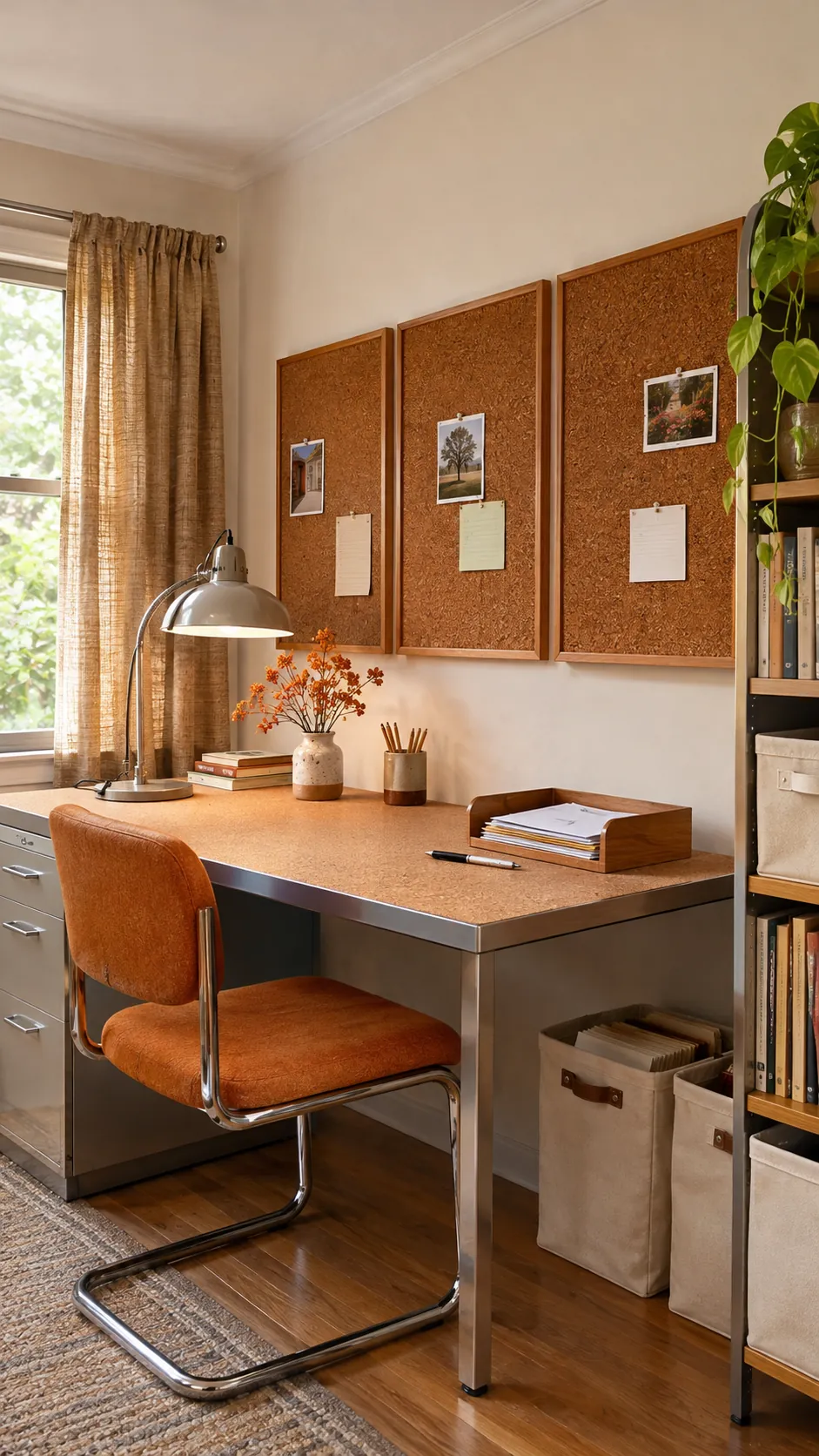
Cork adds warmth, sound absorption, and a tactile surface that suits a home office or creative corner. Use framed cork panels above a desk for notes and small photos, then keep the desktop storage simple and easy to reach. The material looks best when it has breathing room and is not covered from edge to edge.
Finish With a Focused Earth Tone Palette
Choose three main colors before adding the final accessories, such as rust, olive, and cream. Repeat each color in at least two places while varying the material, then remove objects that introduce unrelated bright shades. The room will feel personal rather than like a theme set because the palette connects useful pieces collected over time.