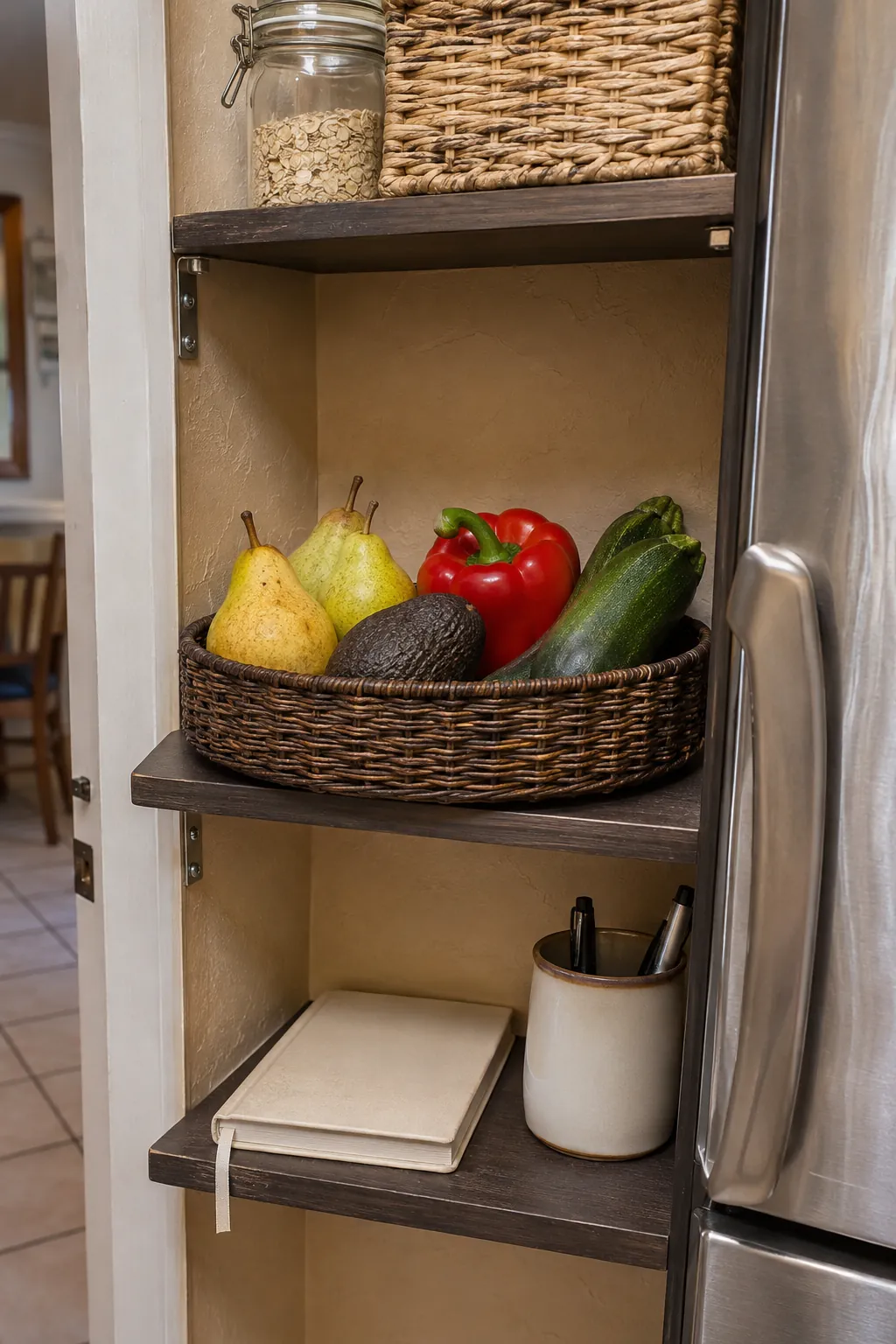
When every work surface is needed for cooking, a fruit bowl becomes an obstacle rather than a convenience. The better system moves produce into vertical, hidden, or refrigerated zones while still giving each food the air, darkness, or humidity it needs.
Before choosing containers, notice what you buy each week and where it keeps best. Keep produce visible enough to use, separate items that affect one another, and leave room for air around anything stored at room temperature.
Slim rolling produce cart
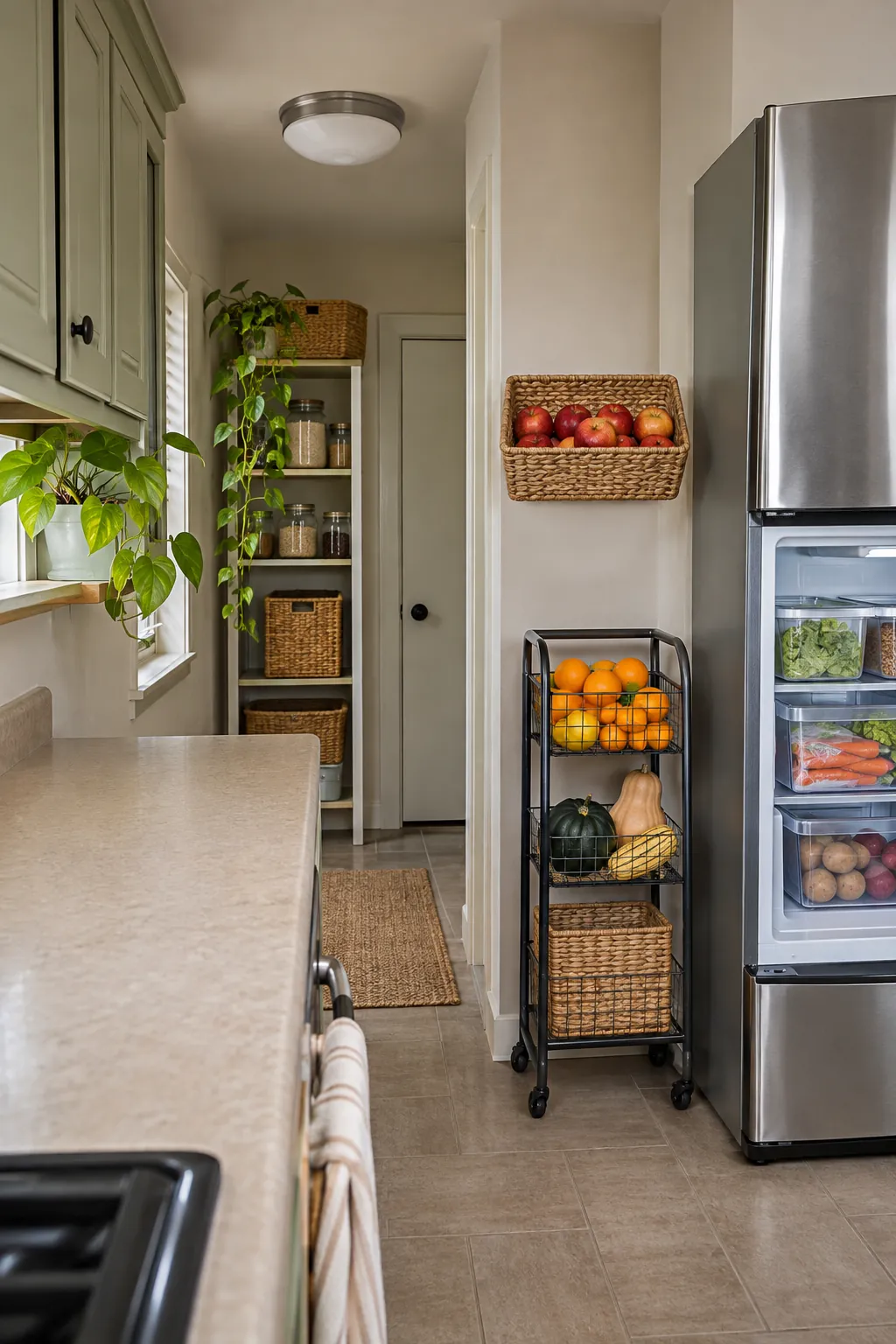
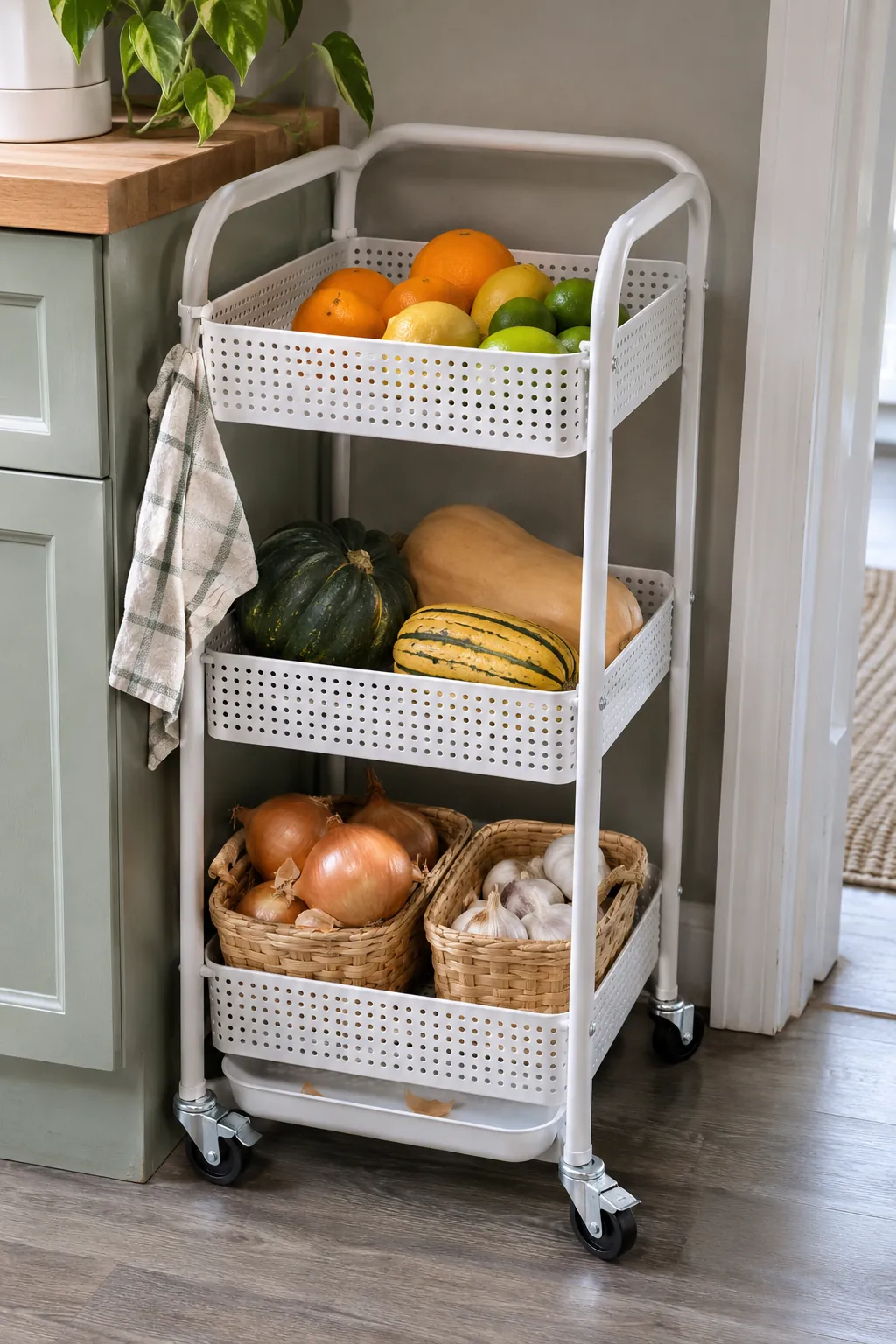
A narrow cart can use the gap beside a cabinet without occupying the worktop. Choose open wire shelves so air reaches onions, citrus, and firm squash, then give each shelf one produce group. Pull the cart into the light for a quick check, but park it away from the oven and direct sun.
Wall mounted fruit baskets
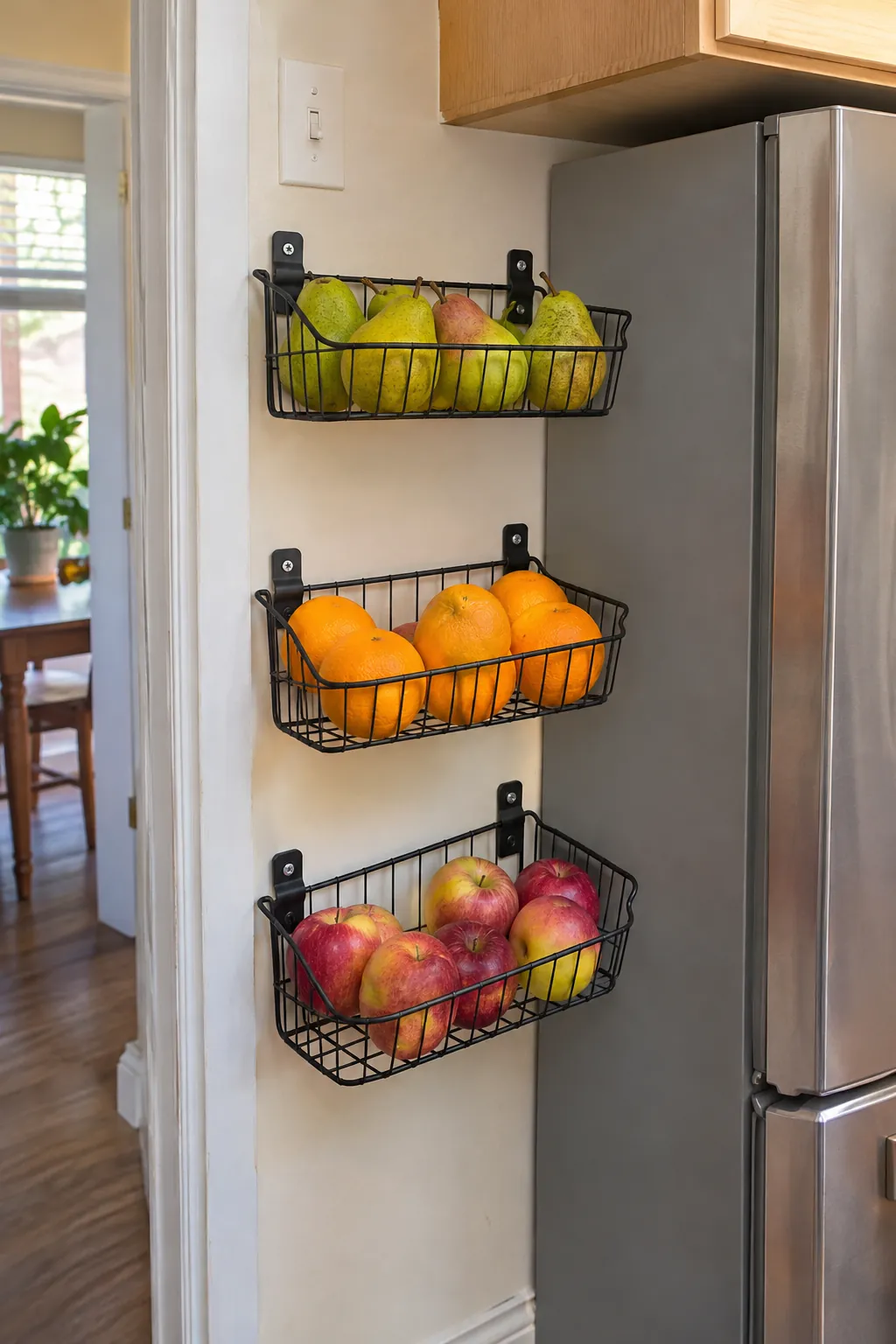
Wall baskets turn an unused vertical strip into accessible fruit storage. Mount them into suitable support, keep heavy produce on the lowest level, and leave enough space to lift items out without bruising them. Use shallow baskets so ripe fruit cannot disappear beneath a deep pile.
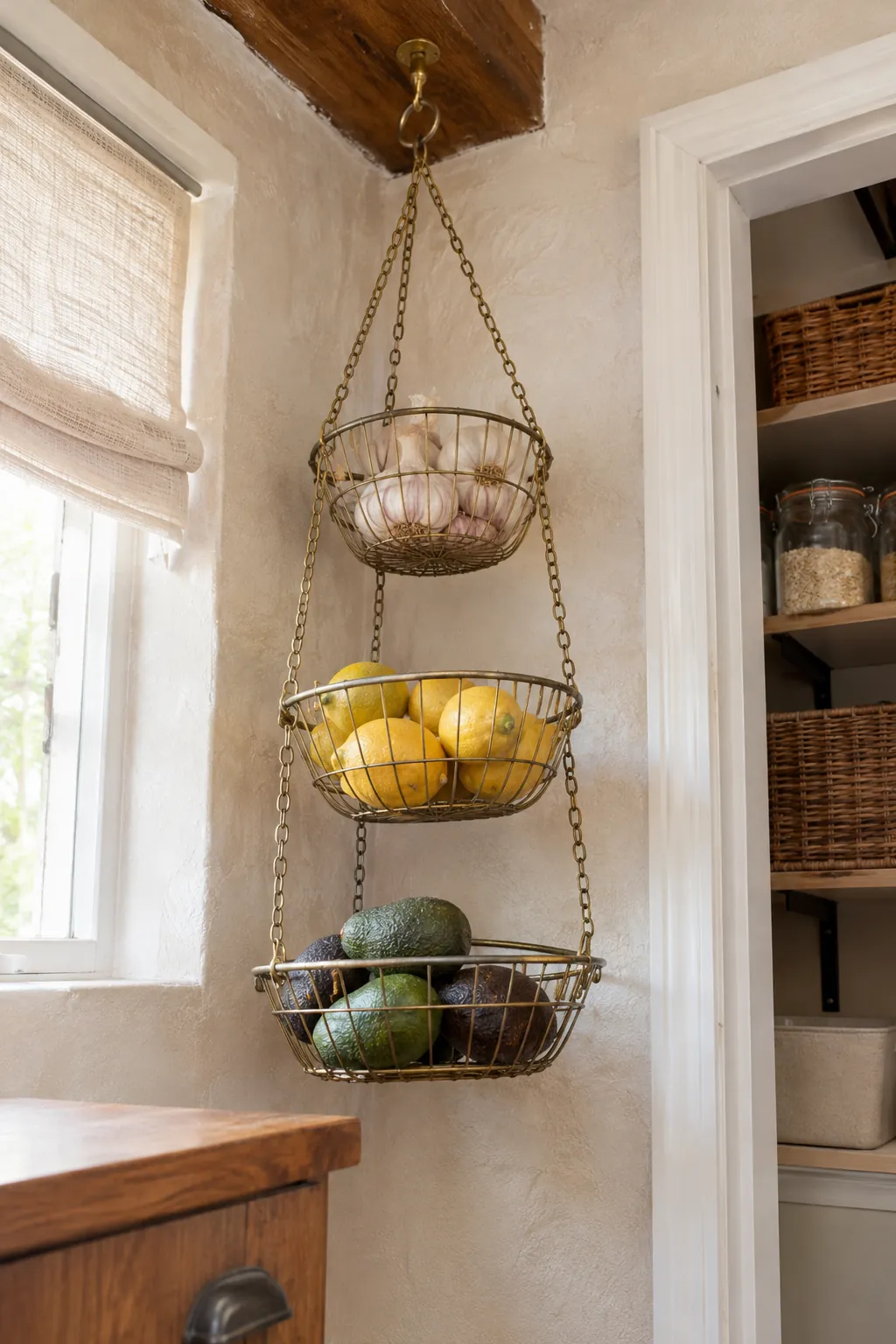
Hanging tiered basket
A ceiling or bracket hung basket can hold light produce where no shelf fits. Secure it properly, keep it away from the cooker, and place delicate fruit in the upper shallow tier so it is not compressed. Check the chain height so no one walks into it and each basket can be cleaned easily.
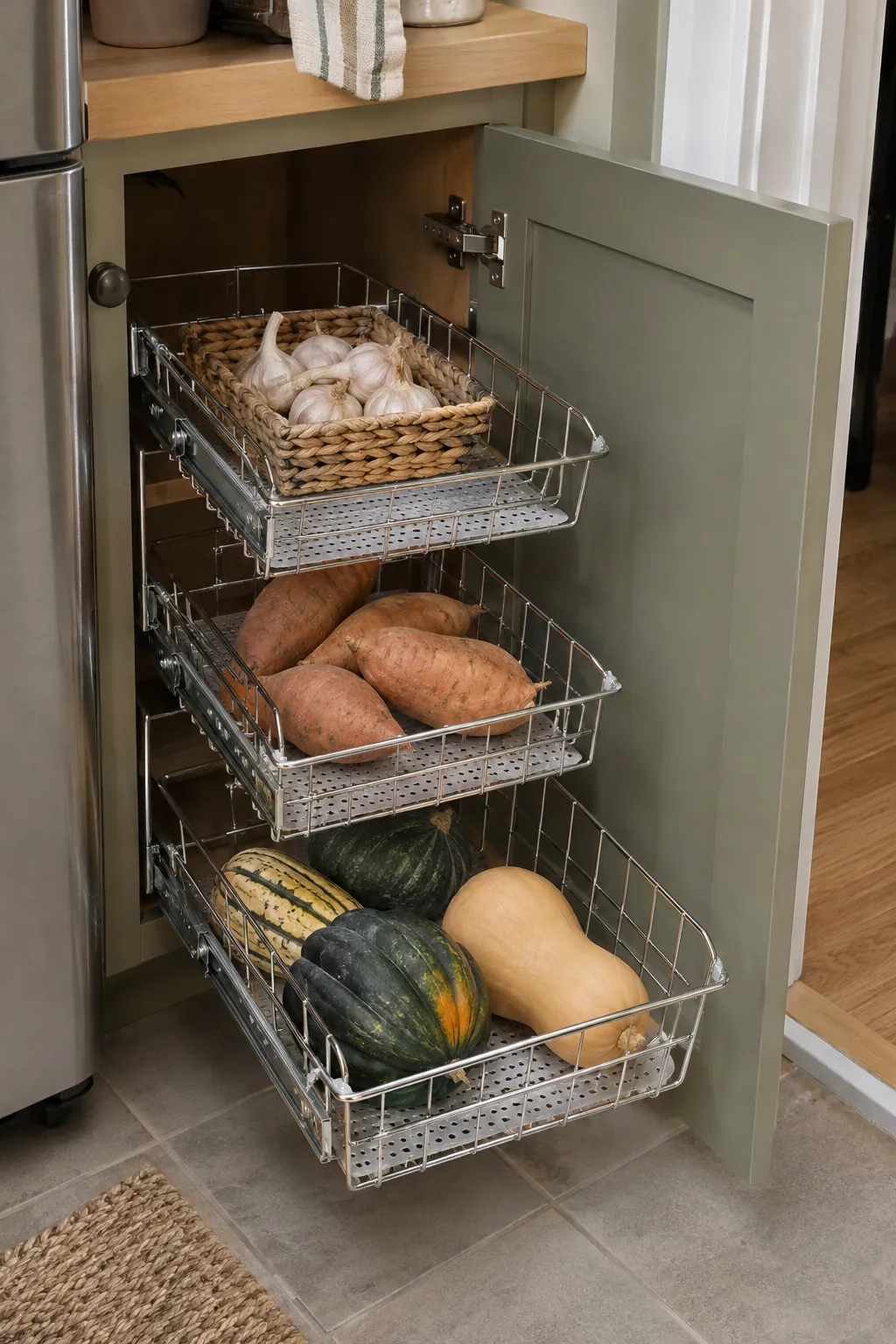
Ventilated cabinet pullout
A lower cabinet can become produce storage when a wire pullout replaces a crowded stack of supplies. Use it for firm room temperature items and avoid any cabinet beside a hot appliance or damp plumbing. The pullout should open fully so older produce at the back remains visible.
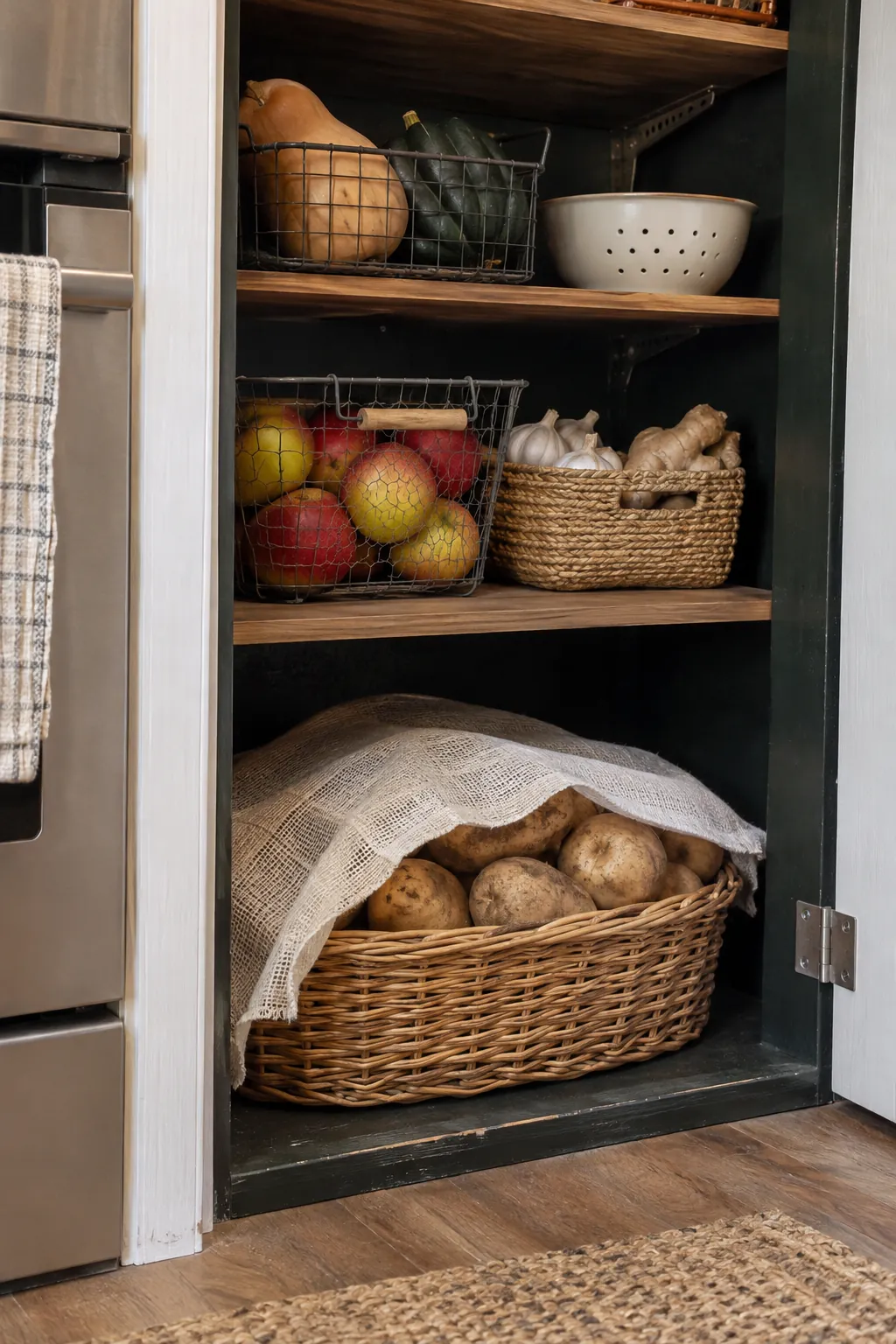
Dark potato basket
Potatoes last better in a cool, dark, ventilated place than in a bright display. A breathable basket inside a shaded cupboard or nearby pantry zone protects them from light while allowing air movement. Inspect the basket often and remove any soft, green, or badly sprouted potato.
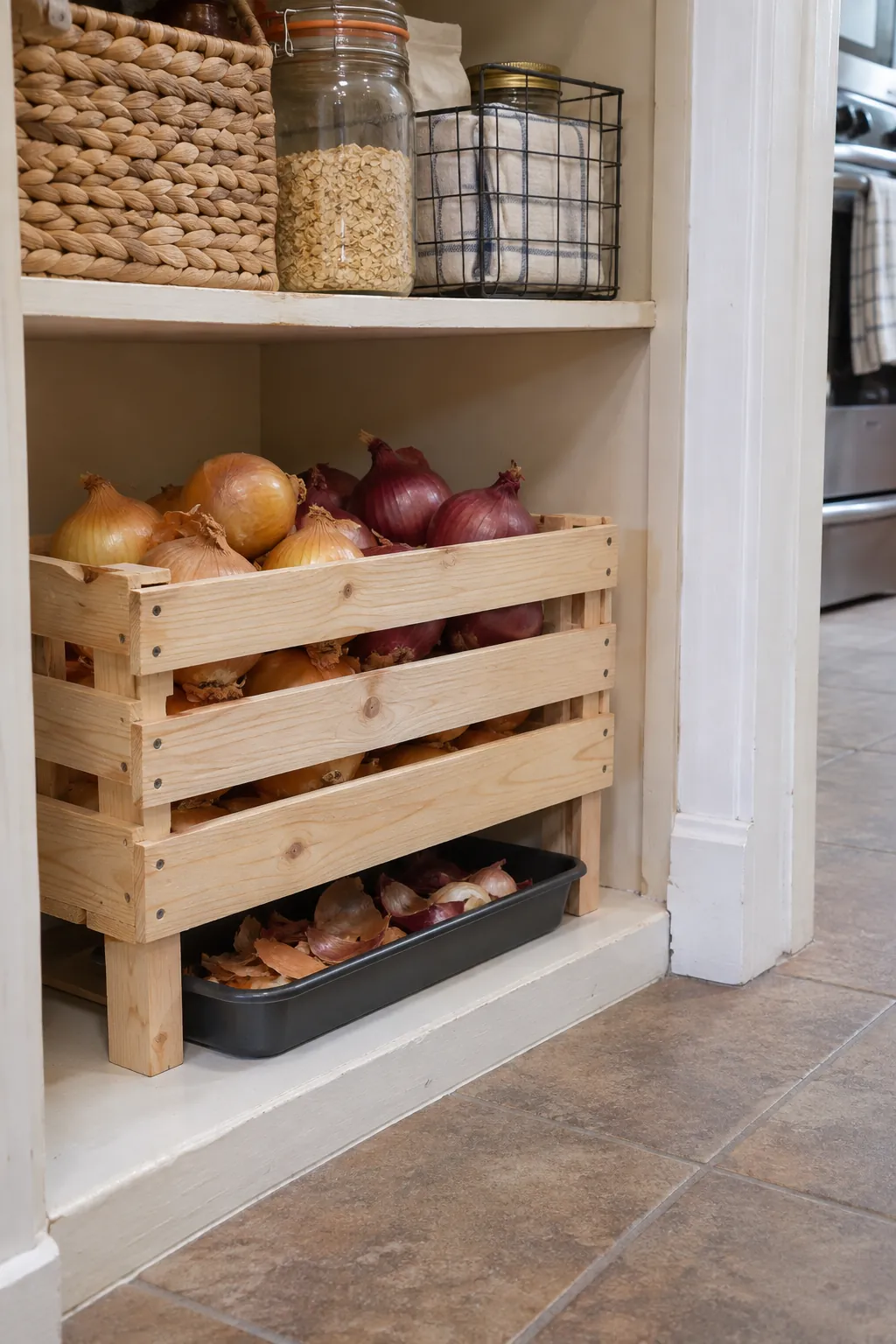
Separate onion crate
Give onions their own dry ventilated crate instead of mixing them with potatoes. The separation reduces crowding and makes loose skins easier to contain. Line the area beneath the crate with a removable tray, then sweep or wipe it before the skins spread across the floor.
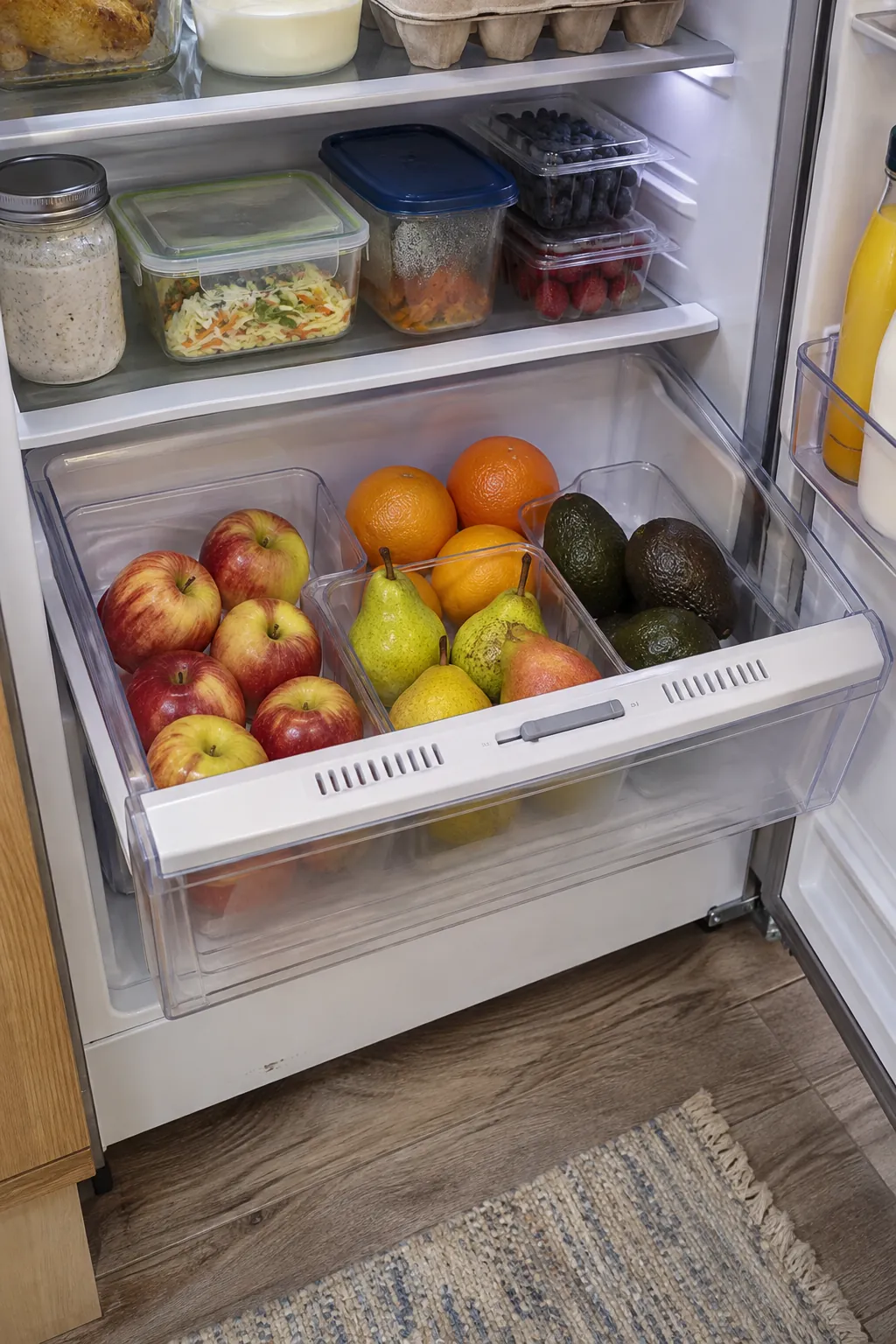
Refrigerator fruit drawer
Apples and other fruit that you want to keep longer can move into a refrigerator drawer. Keep the drawer loose enough for circulation, remove damaged pieces, and follow the appliance setting intended for fruit when available. Store fruit separately from vegetables that wilt easily so each group gets a suitable humidity level.
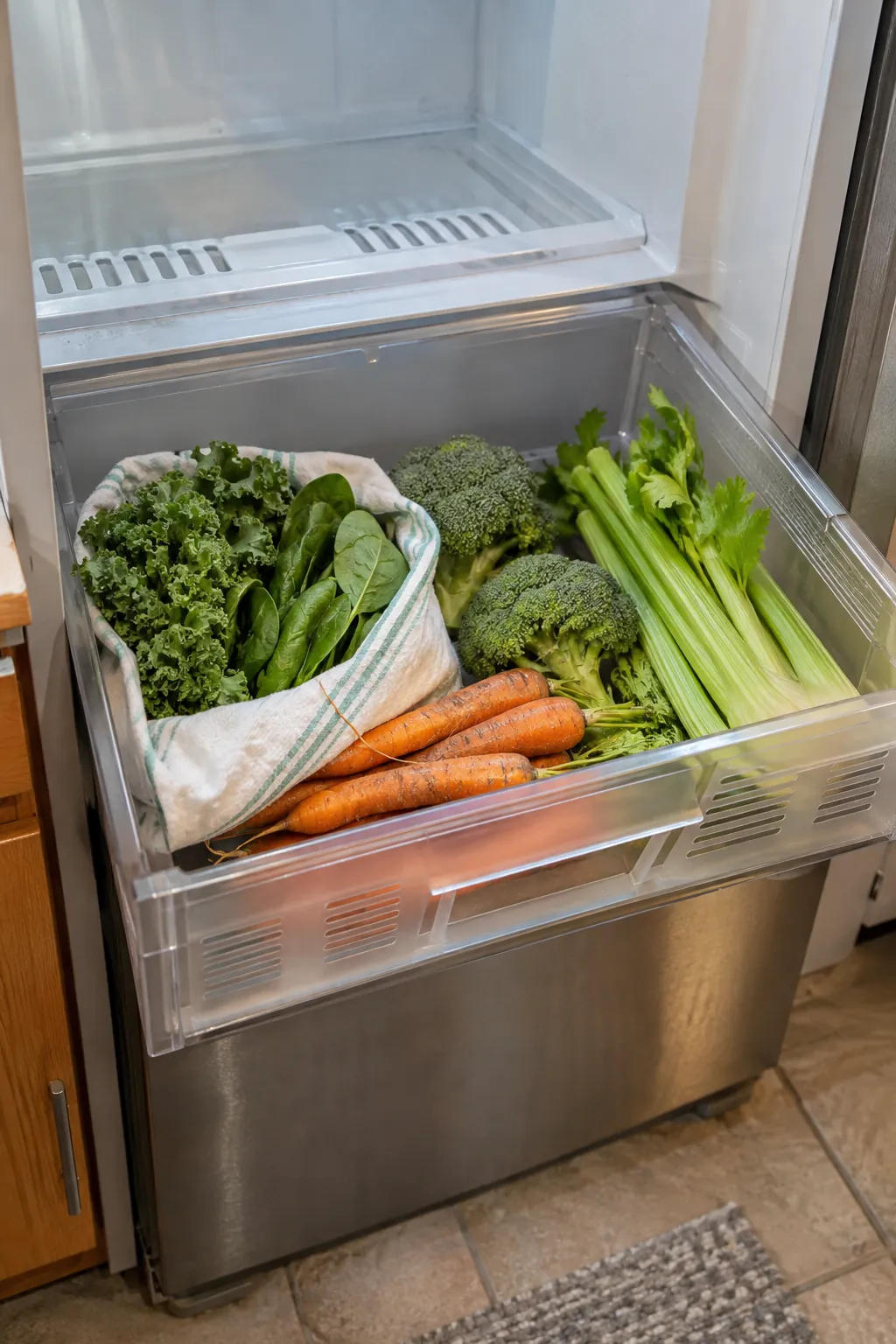
High humidity vegetable drawer
Leafy greens, carrots, and other vegetables that lose water benefit from a higher humidity drawer. Keep leaves dry on the surface, use a clean breathable wrap when helpful, and avoid crushing tender items under dense roots. Put the vegetables you need first near the front so they are used before they fade.
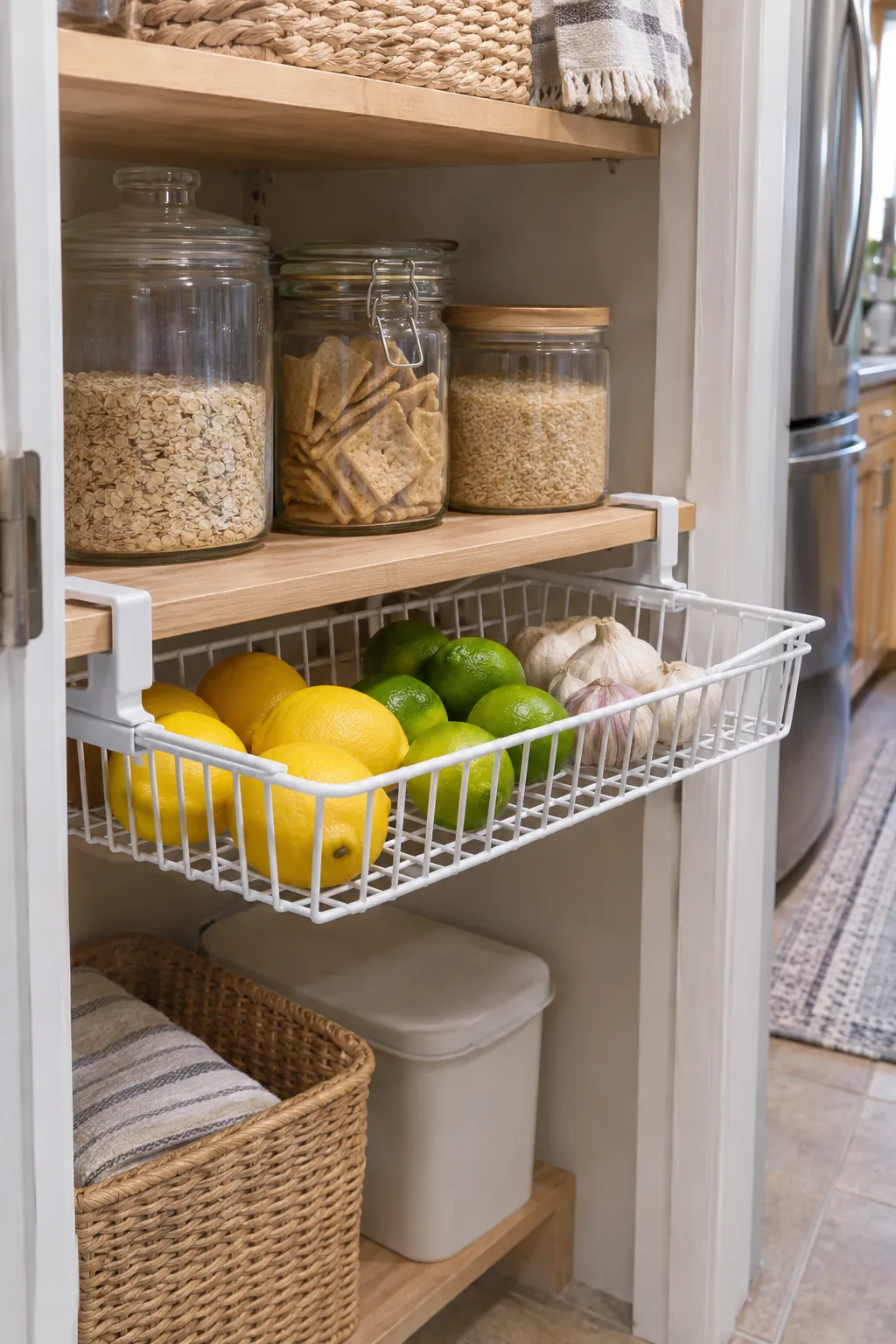
Under shelf produce basket
An under shelf basket captures the empty air below a sturdy pantry shelf. Use it for light firm produce such as lemons, limes, or garlic, and confirm that the attachment can carry the load. Do not overfill it, since the basket must slide freely and cannot press against food stored below.
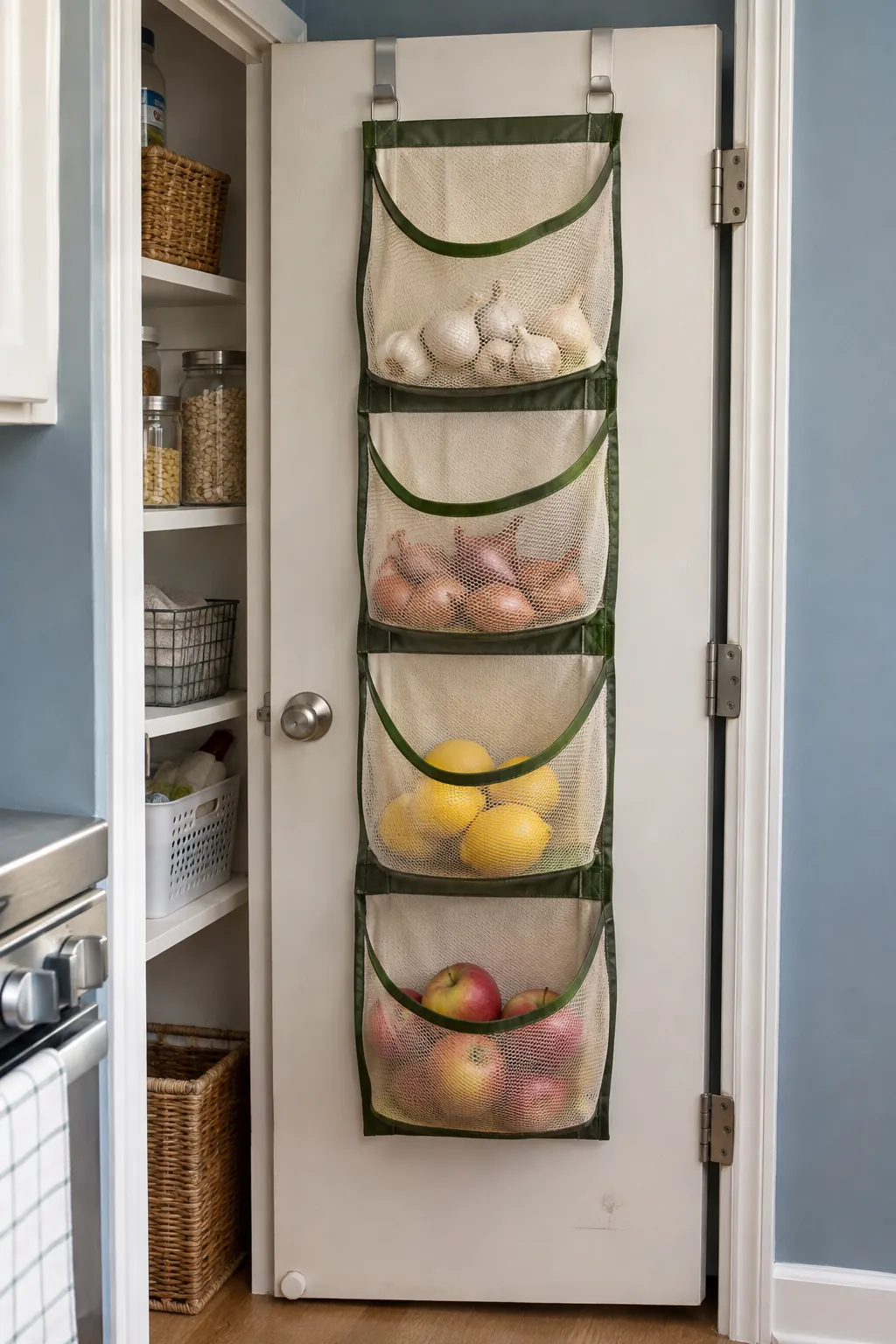
Door mounted produce pockets
Strong fabric or wire pockets on a pantry door can hold small light produce without using a shelf. Reserve them for garlic, shallots, citrus, or other items that will not bruise from the door movement. Check hinge capacity and keep the pockets shallow so the door closes without squeezing their contents.
Freestanding pantry shelf
A narrow open shelf can act as a pantry when the kitchen has no built in produce zone. Place it near the kitchen but away from heaters and strong sun, then use separate breathable baskets for different foods. Keep the lowest basket raised above the floor and leave the walkway clear.
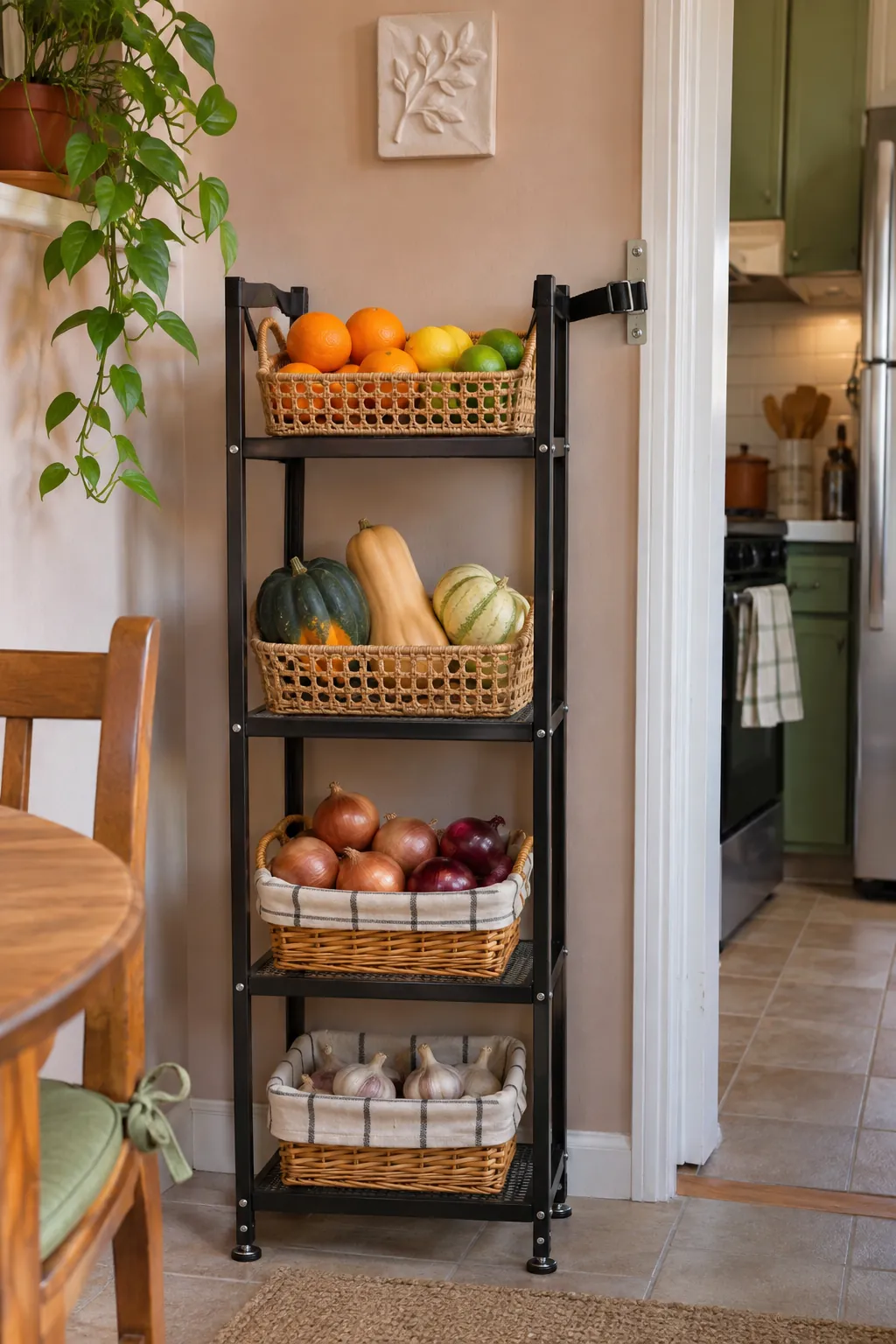
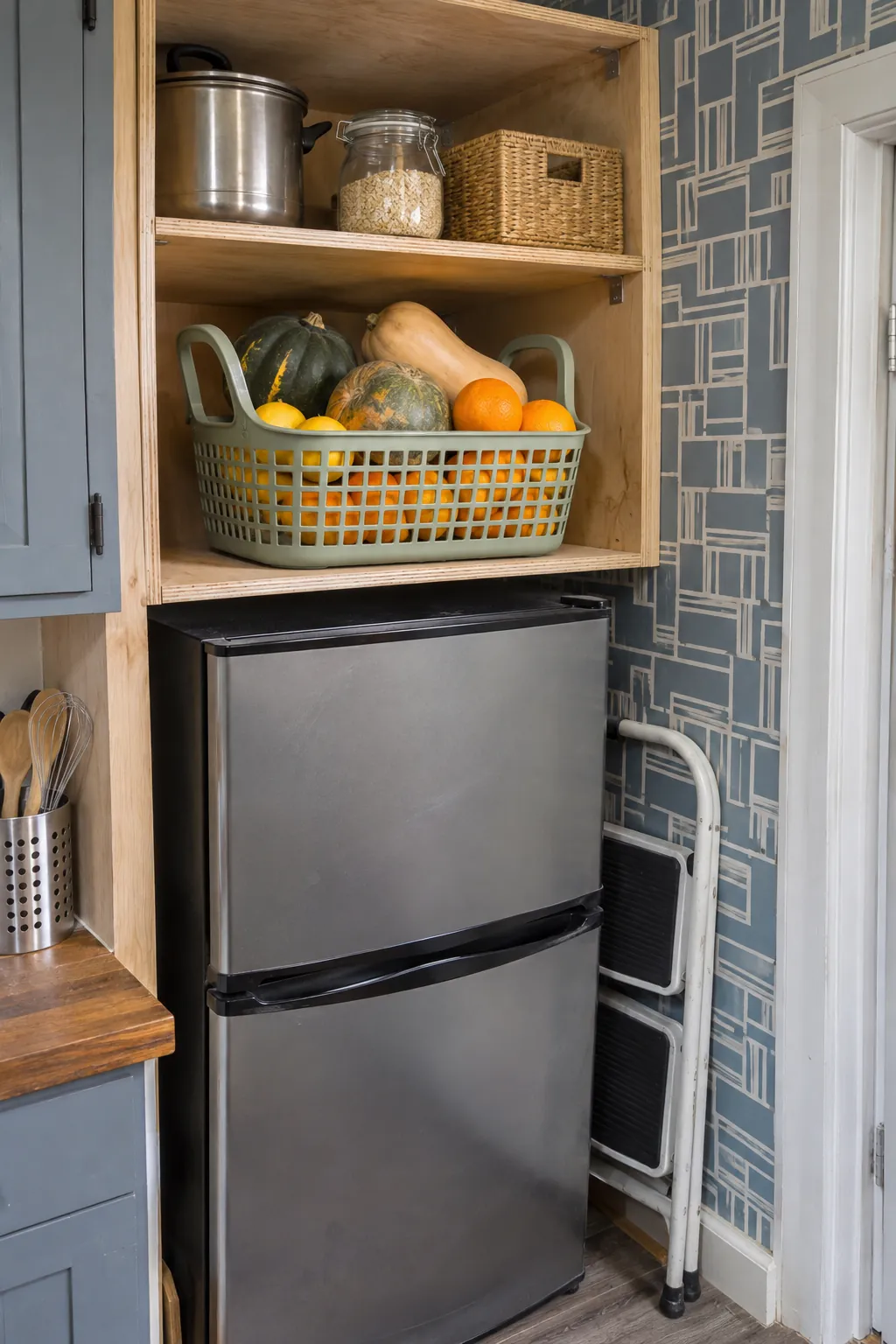
Over refrigerator produce shelf
The space above a refrigerator can hold empty baskets or produce only when it stays cool enough. Test the area after the appliance has run for several hours, since some refrigerators release noticeable heat there. If it remains cool, use a handled basket for firm produce and bring the whole basket down for inspection.
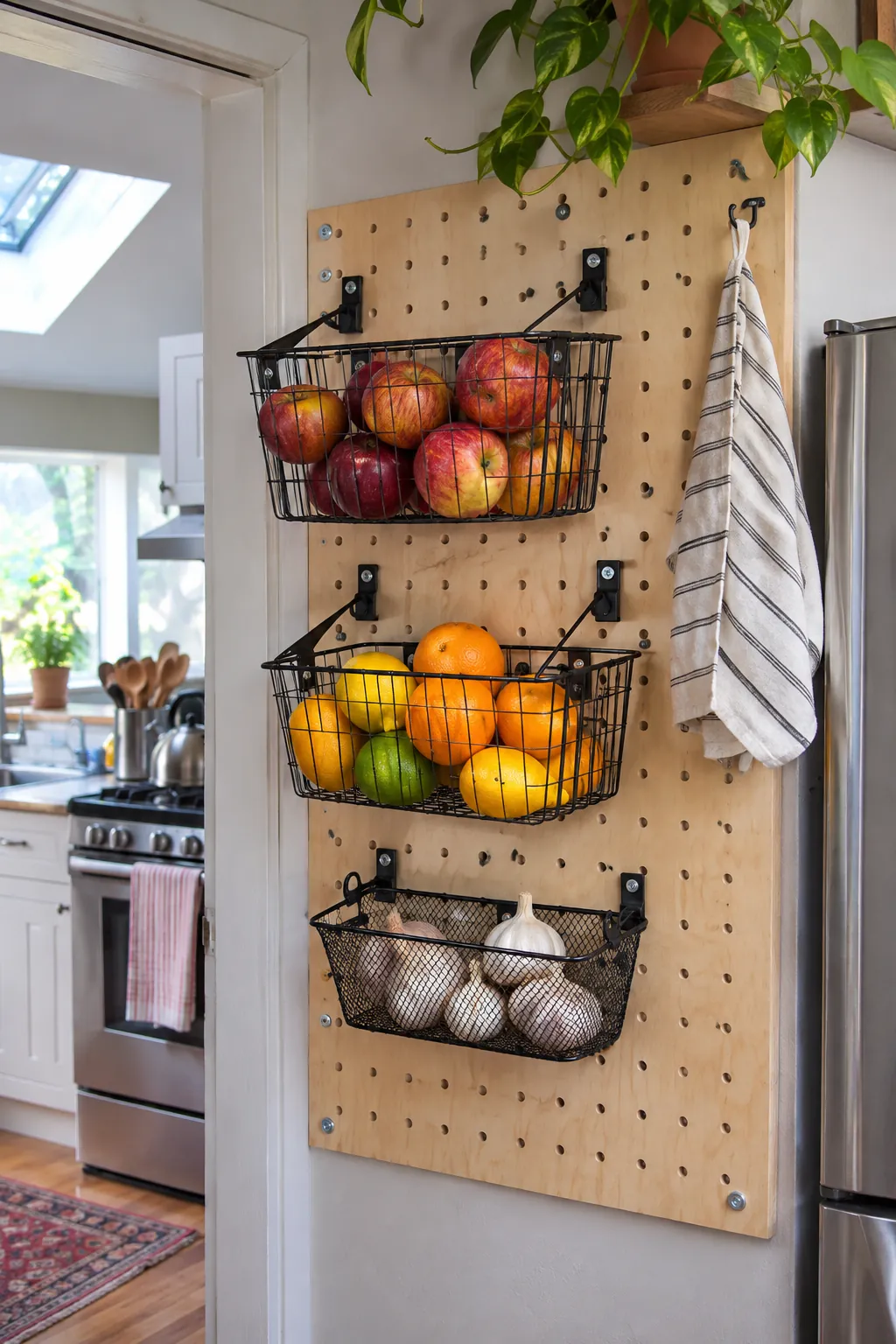
Pegboard basket station
A properly anchored pegboard can support small removable produce baskets and adapt as buying habits change. Spread the load across suitable hooks, keep heavier items low, and leave space between baskets for air and access. Remove each basket for cleaning rather than trying to wipe around fixed produce.
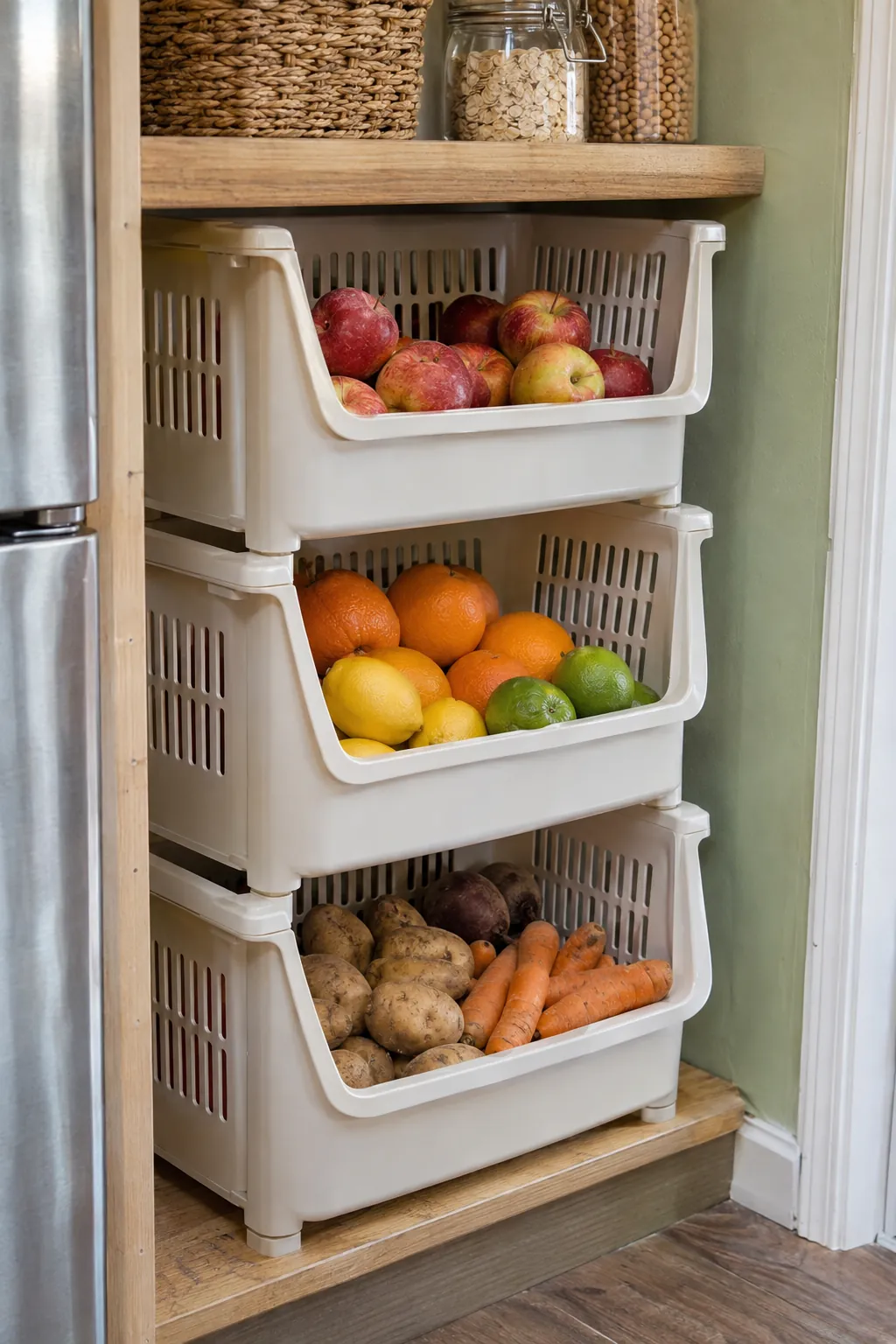
Stacked ventilated bins
Stackable bins use floor or shelf height while keeping each produce group separate. Select bins with large openings and stable feet, then place dense roots below and lighter fruit above. Stop the stack at a height where you can see inside every bin without lifting the whole tower.
Weekly use first produce basket
One small basket near the refrigerator can hold produce that should be eaten next. Move ripe or older items into it during a brief daily check, then plan the next meal around what you find. This simple rotation prevents a clever storage system from hiding food until it spoils.