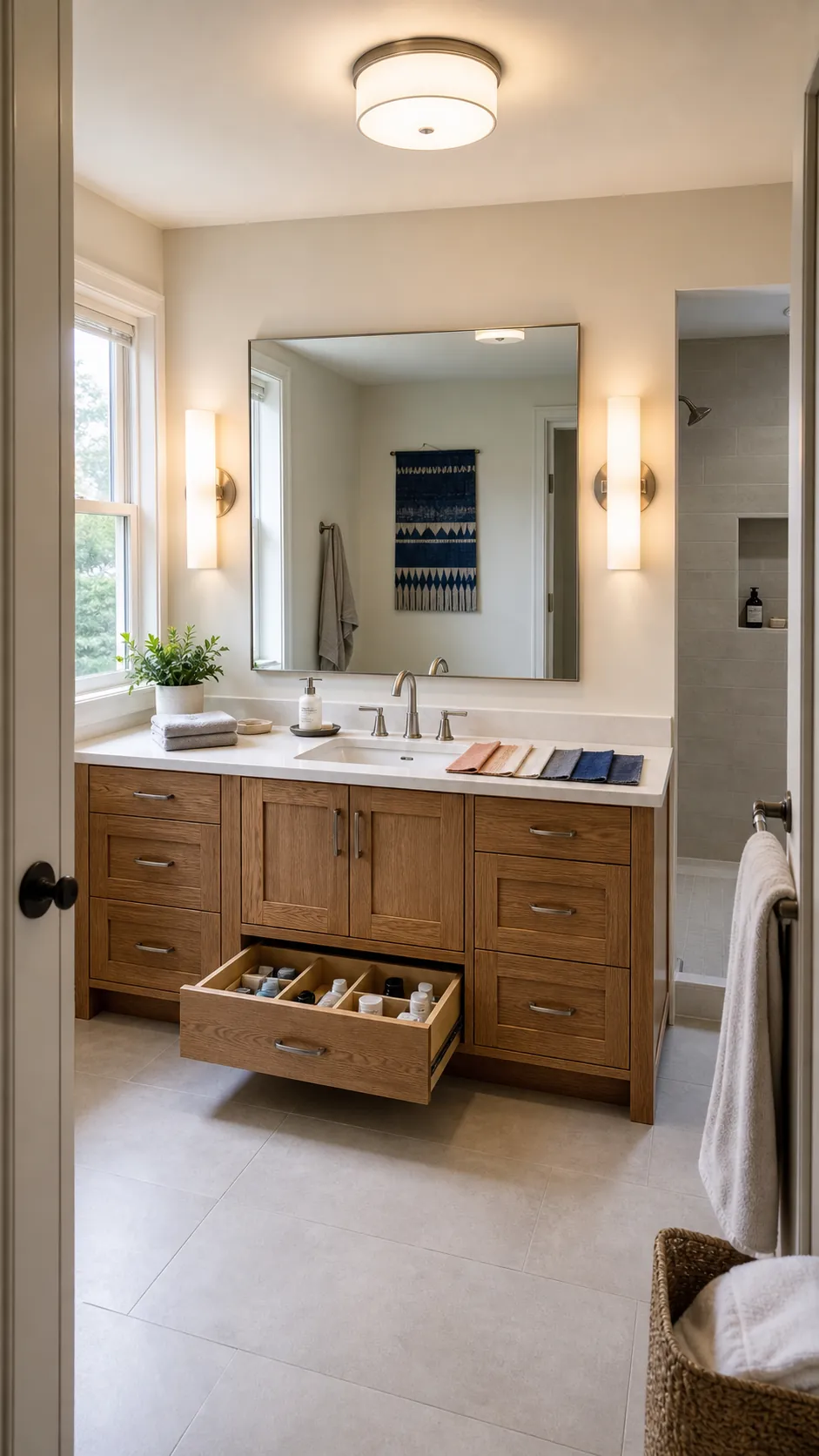
A beautiful bathroom vanity mirror can still be miserable to use. The usual culprit is not the mirror itself but the way light reaches your face: a bright ceiling downlight creates eye-socket shadows, a bare bulb produces glare, and an undersized fixture leaves the edges of a wide vanity dim.
The most useful vanity setups treat the mirror and lighting as one composition. That means choosing the mirror shape, fixture position, diffusion, color quality, and controls together. The ideas below range from renter-friendly swaps to renovation-level layouts, but each one has a practical reason for working better during shaving, skin care, hair styling, and makeup.
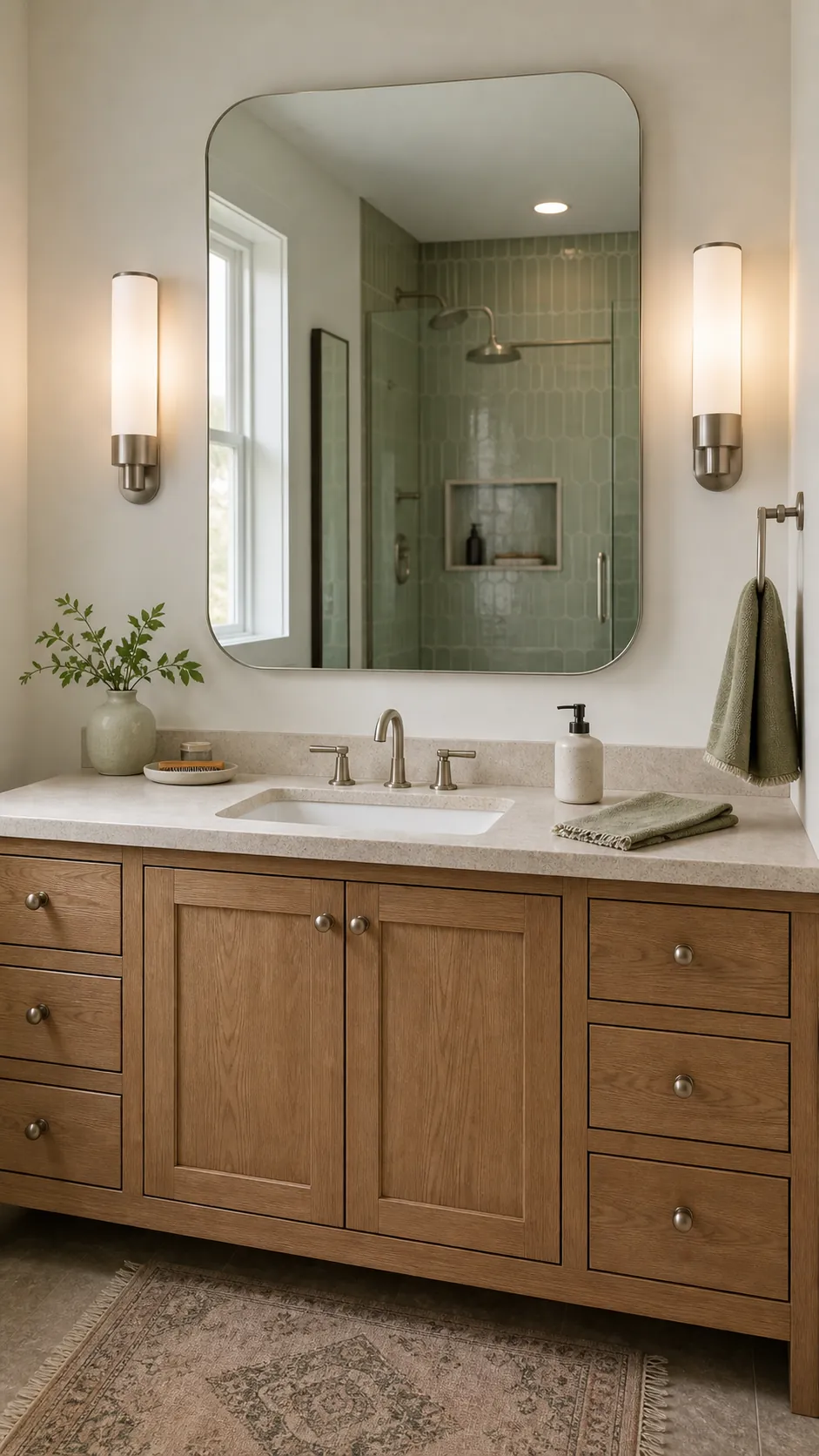
Twin Sconces Beside a Rounded Rectangle Mirror
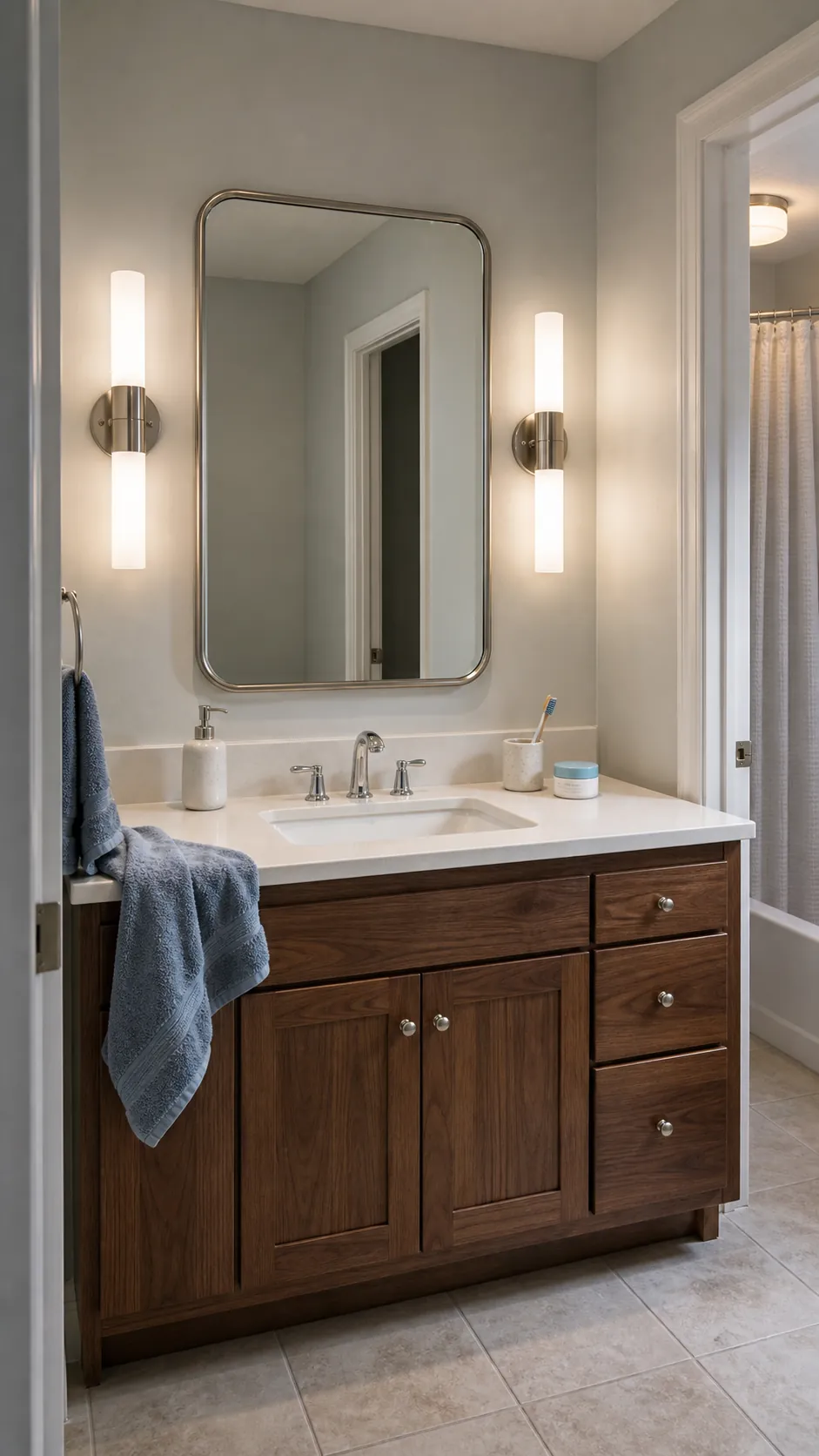
Place one diffused wall sconce on each side of a softly rounded rectangular bathroom mirror. Light arriving from both sides fills the shadows that an overhead fixture creates beneath the brow, nose, and chin. This is the dependable choice when accurate, even facial light matters more than dramatic atmosphere.
Keep the glowing portion of each sconce roughly near face height and leave enough clearance for cabinet doors and towel rings. A simple frame and vertical fixtures make the whole vanity read taller without forcing the mirror to become a decorative statement.
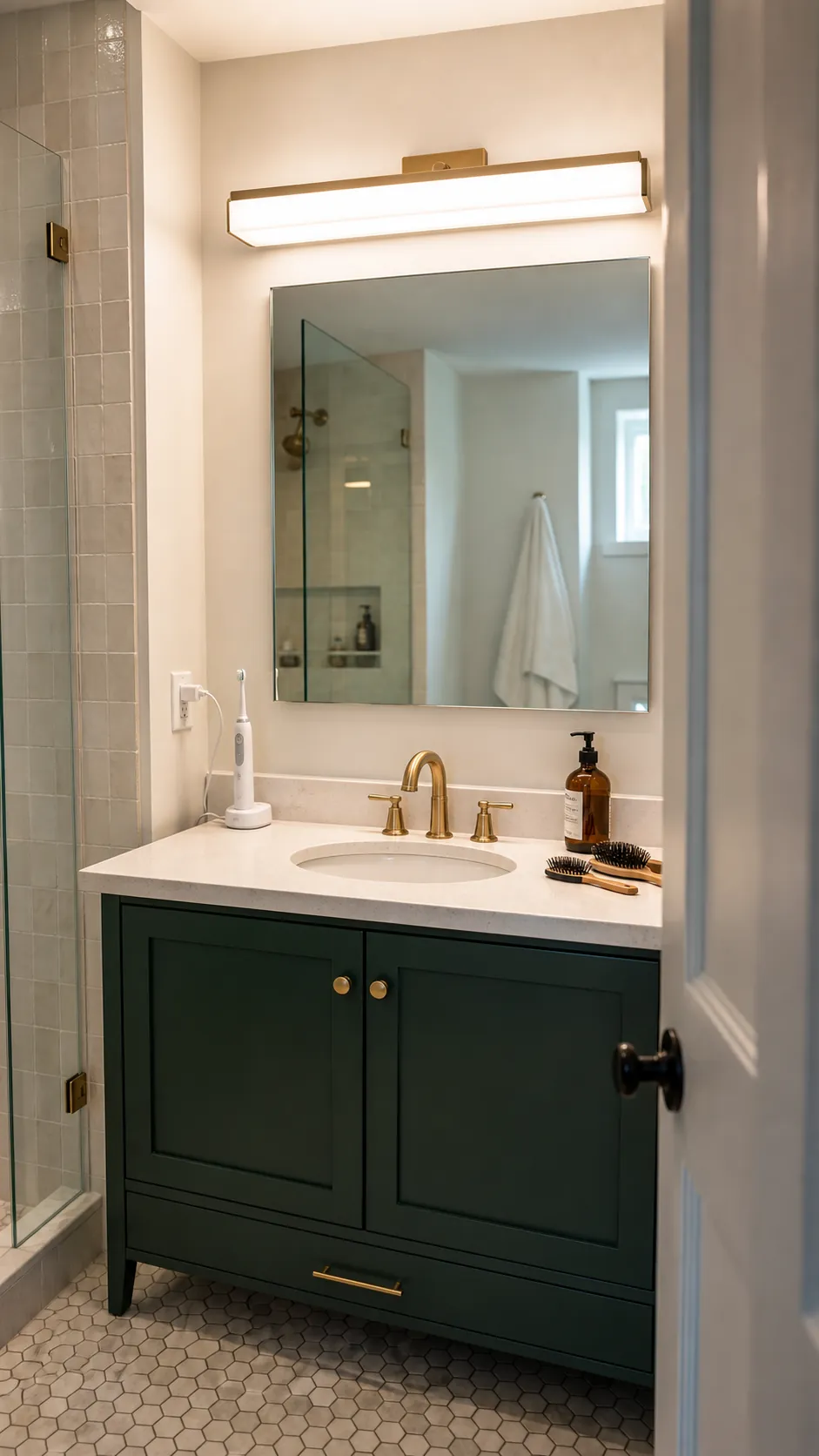
A Wide Light Bar Over a Single Mirror
When side-wall space is tight, use a wide, well-diffused vanity light above the mirror rather than a small fixture centered over the sink. A bar that visually relates to the mirror width spreads light across more of the counter and avoids the bright-center, dark-edge effect.
Choose an opaque or frosted diffuser that hides individual hot spots. Mounting the fixture slightly forward of the mirror plane also helps the light reach the face instead of simply washing the wall.
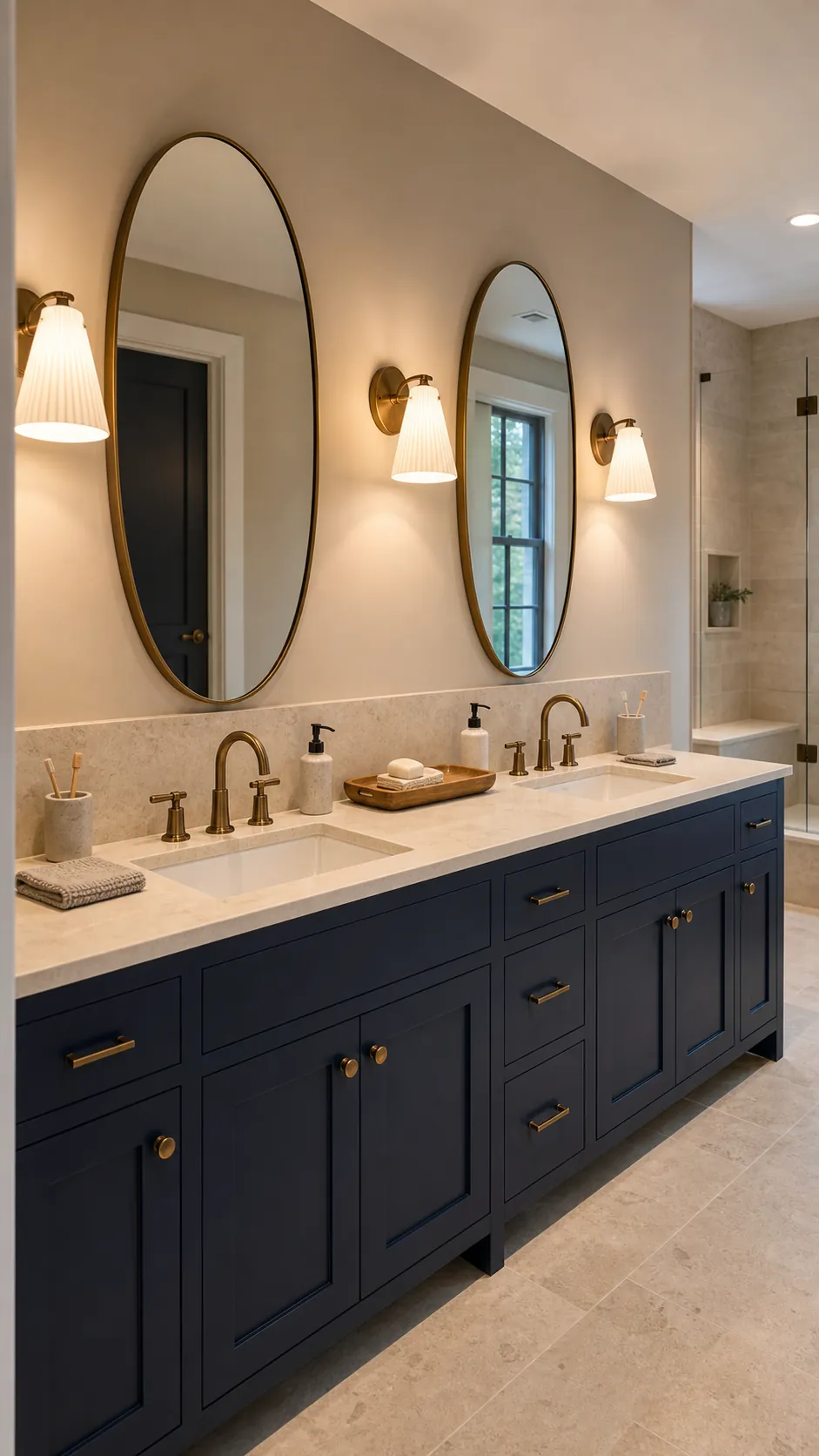
Three Sconces Across a Double Vanity
A double bathroom vanity often looks balanced with two mirrors and three sconces: one on each outer side and one between the mirrors. More importantly, this arrangement gives both people light from two directions instead of leaving the center of each face in shadow.
Repeat the same fixture at all three points and align the mirrors carefully with the basins. This layout is especially effective when one long mirror would feel bulky or conflict with separate medicine cabinets.
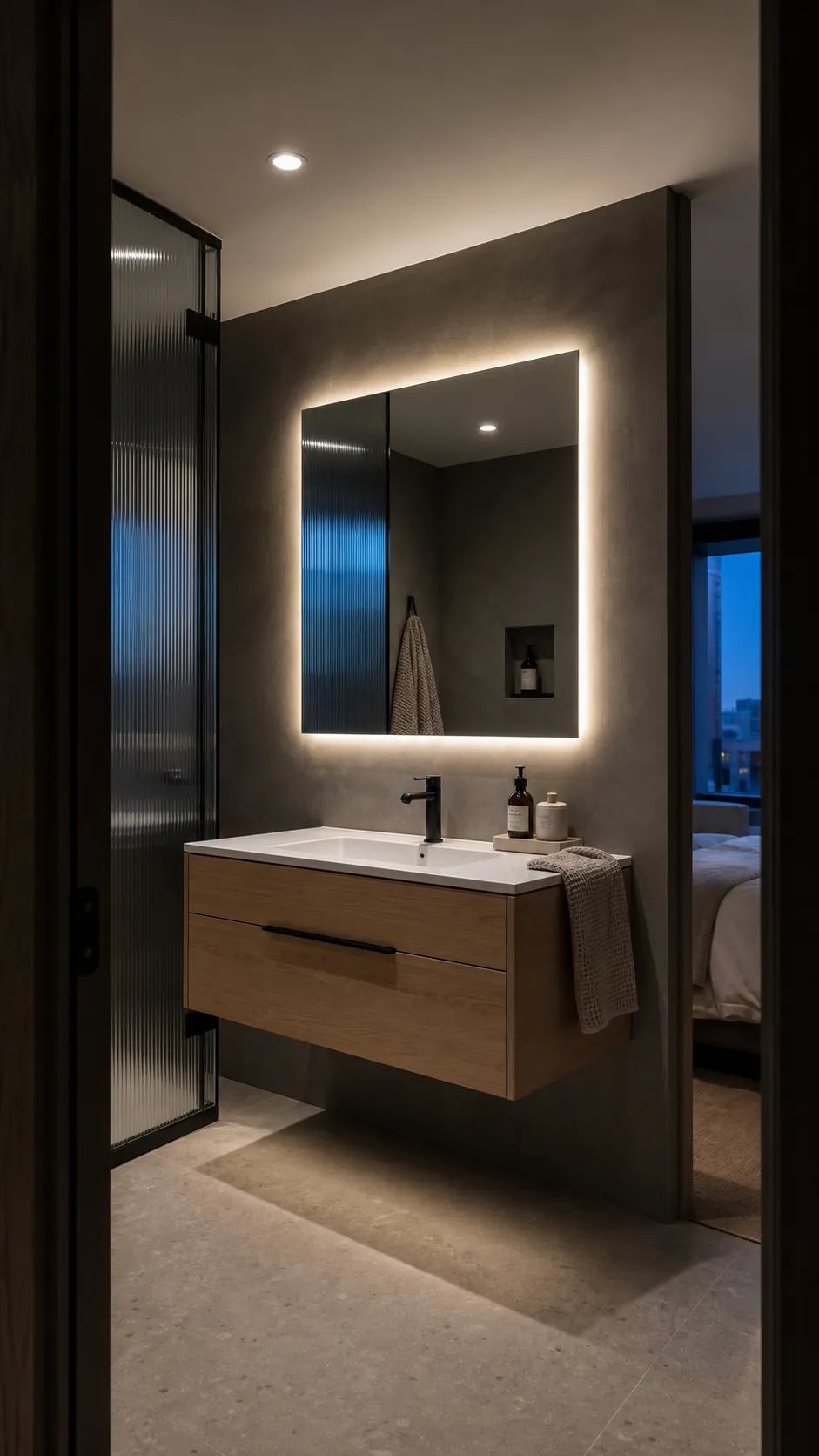
A Backlit Mirror Paired With Ceiling Light
A backlit bathroom mirror creates a soft halo that makes a small room feel deeper and calmer. Treat that glow as an accent layer, not the only working light. Pair it with a ceiling fixture or discreet downlights so the room remains safe and usable after dark.
Look for dimming and a high color-rendering specification. Integrated LEDs can be harder to service than replaceable lamps, so confirm the warranty and expected component life before building the mirror into tile.
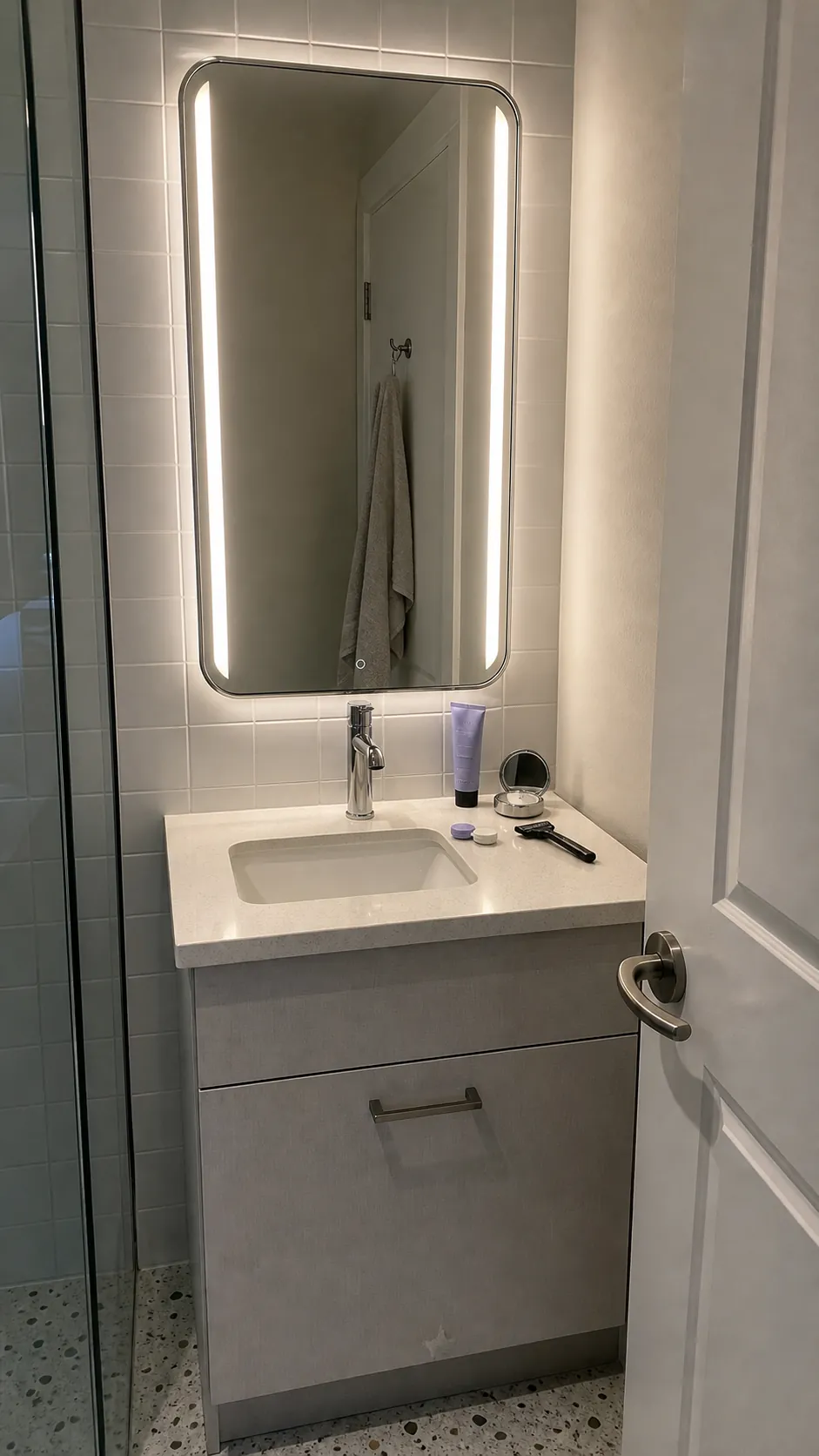
Front-Lit LED Mirror for Close Grooming
A front-lit LED mirror sends light toward the person instead of only onto the wall. It works well for a compact bathroom vanity where separate sconces will not fit, particularly when the illuminated band runs around most of the perimeter rather than across the top alone.
Test brightness in person if possible. The light needs to be strong enough for detailed grooming without creating a harsh luminous frame in your peripheral vision. A memory dimmer makes the mirror much less annoying during early mornings.
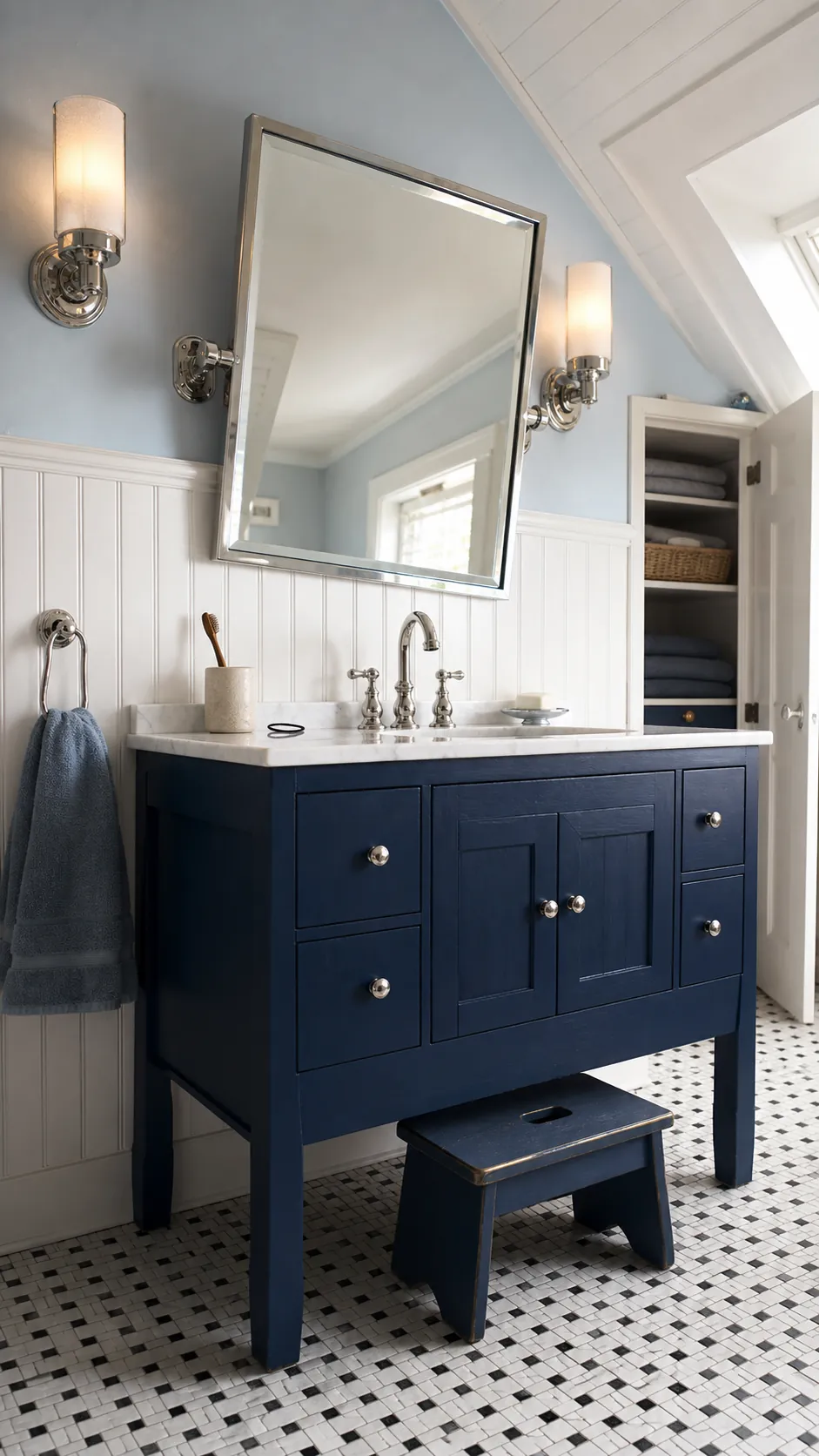
A Pivot Mirror That Aims Toward the Light
A wall-mounted pivot mirror can tilt to suit people of different heights and redirect reflections away from glare. This is useful in a shared bathroom or a vanity tucked under an awkward sloped ceiling where a fixed mirror never feels quite right.
Choose sturdy, moisture-resistant brackets and check that the lower edge will not strike the faucet when tilted. Pair the moving mirror with fixed diffused wall sconces so adjusting the angle does not change the quality of the task light.
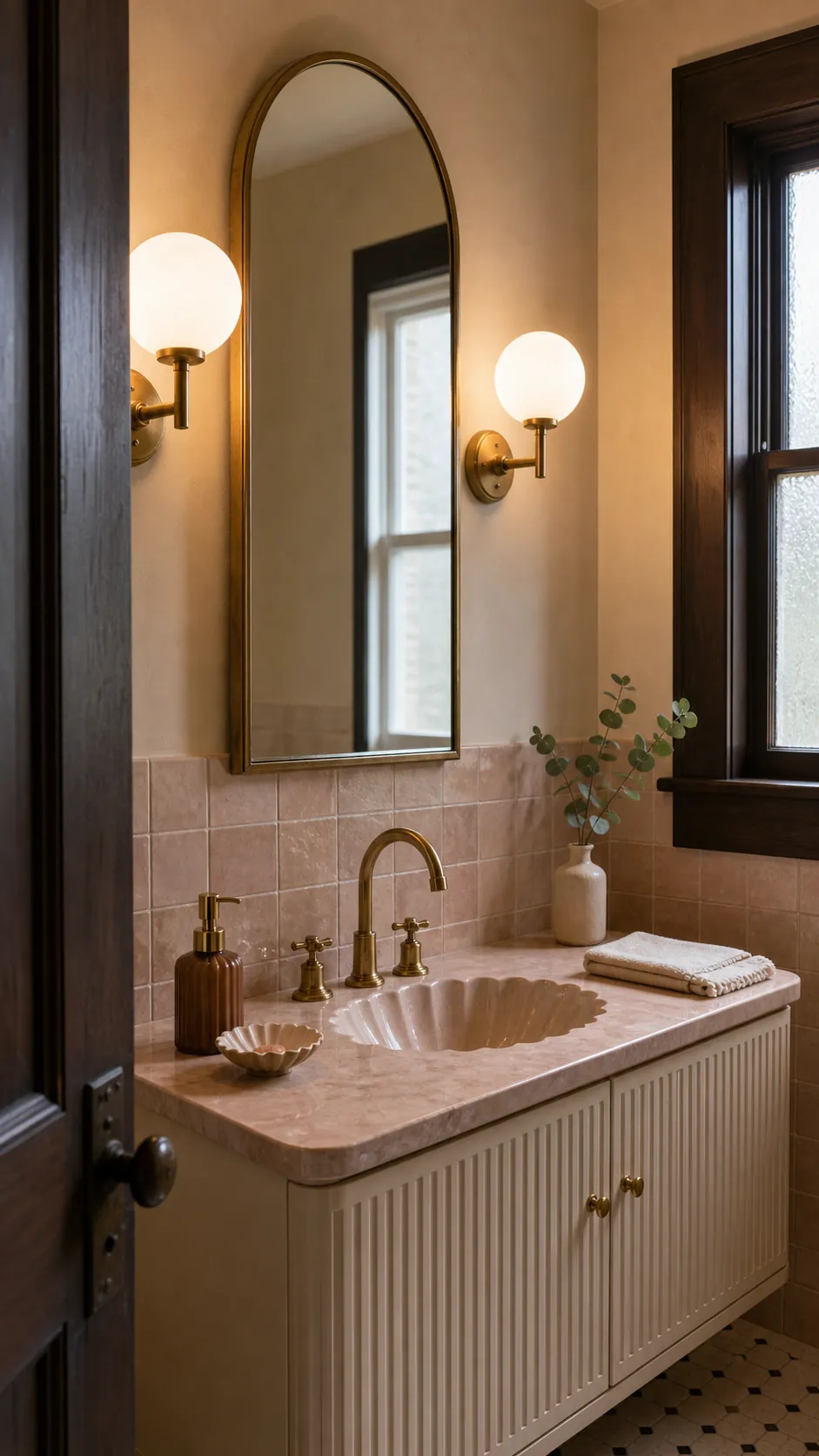
An Arched Mirror With Globe Sconces
An arched mirror softens the straight lines of a vanity, tile grid, and shower enclosure. Round opal-glass sconces echo that curve while diffusing the bulbs, turning a classic mirror styling move into useful bathroom lighting.
Keep the globes modest in scale so they do not crowd the arch. The combination looks most intentional when the faucet, frame, and sconce finish share a visual relationship, but they do not need to match exactly.
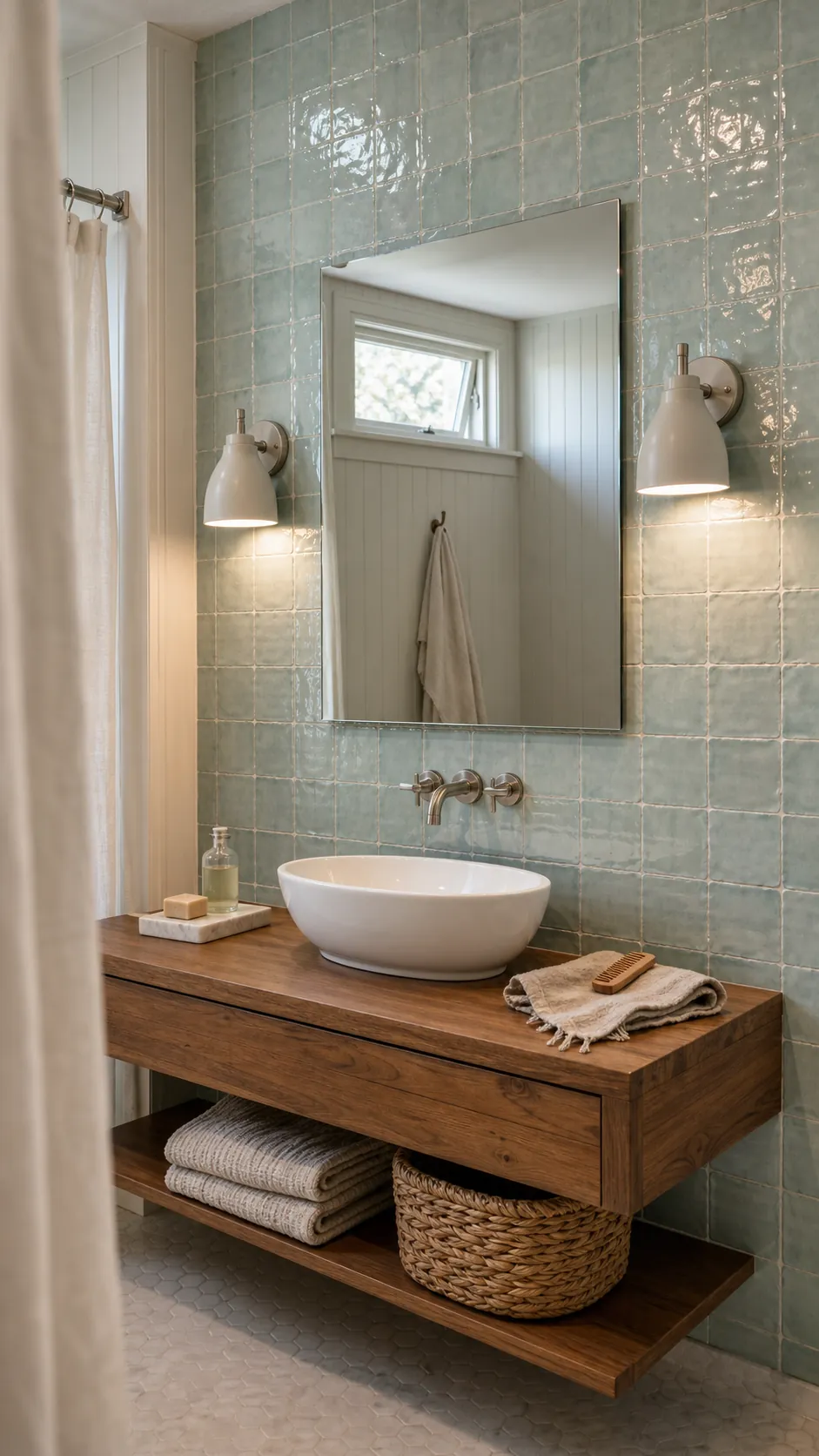
A Frameless Mirror on a Reflective Tile Wall
A frameless mirror keeps the visual field quiet when the backsplash already has movement. Softly reflective glazed tile can bounce daylight and sconce light around the vanity, making the area feel brighter without adding another conspicuous object.
Avoid aiming bare bulbs directly at glossy tile because repeated reflections can become distracting. Frosted shades and warm-neutral finishes let the texture show while controlling glare.
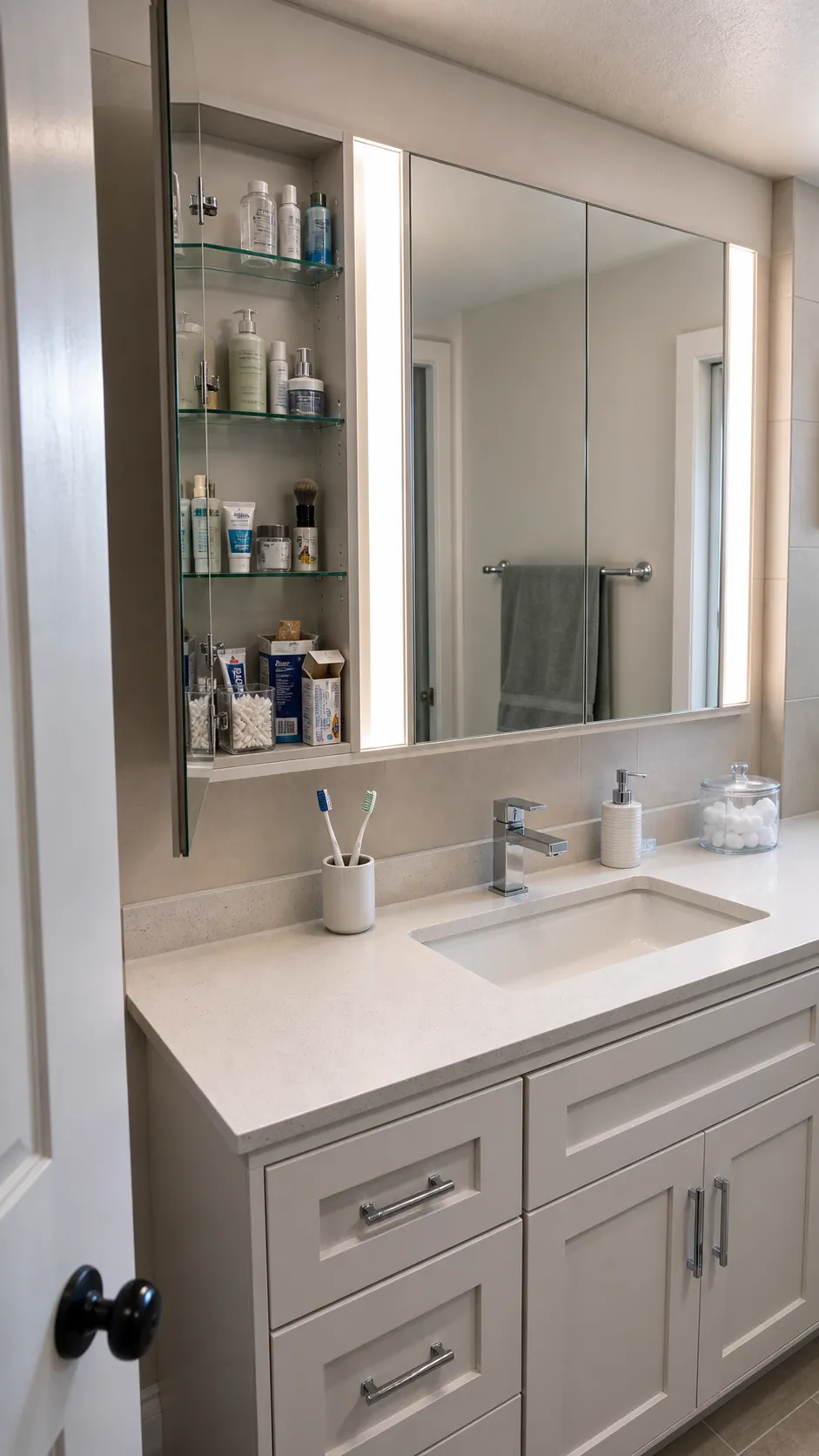
A Medicine Cabinet With Vertical Light Strips
A recessed medicine cabinet can deliver storage, reflection, and task light in one compact zone. Vertical light strips near the sides produce more even facial illumination than a short top strip, while the mirrored door hides everyday toiletries.
Confirm the wall cavity, hinge swing, and electrical access before buying. If the integrated light cannot be serviced separately, balance the convenience against the cost of replacing the whole cabinet later.
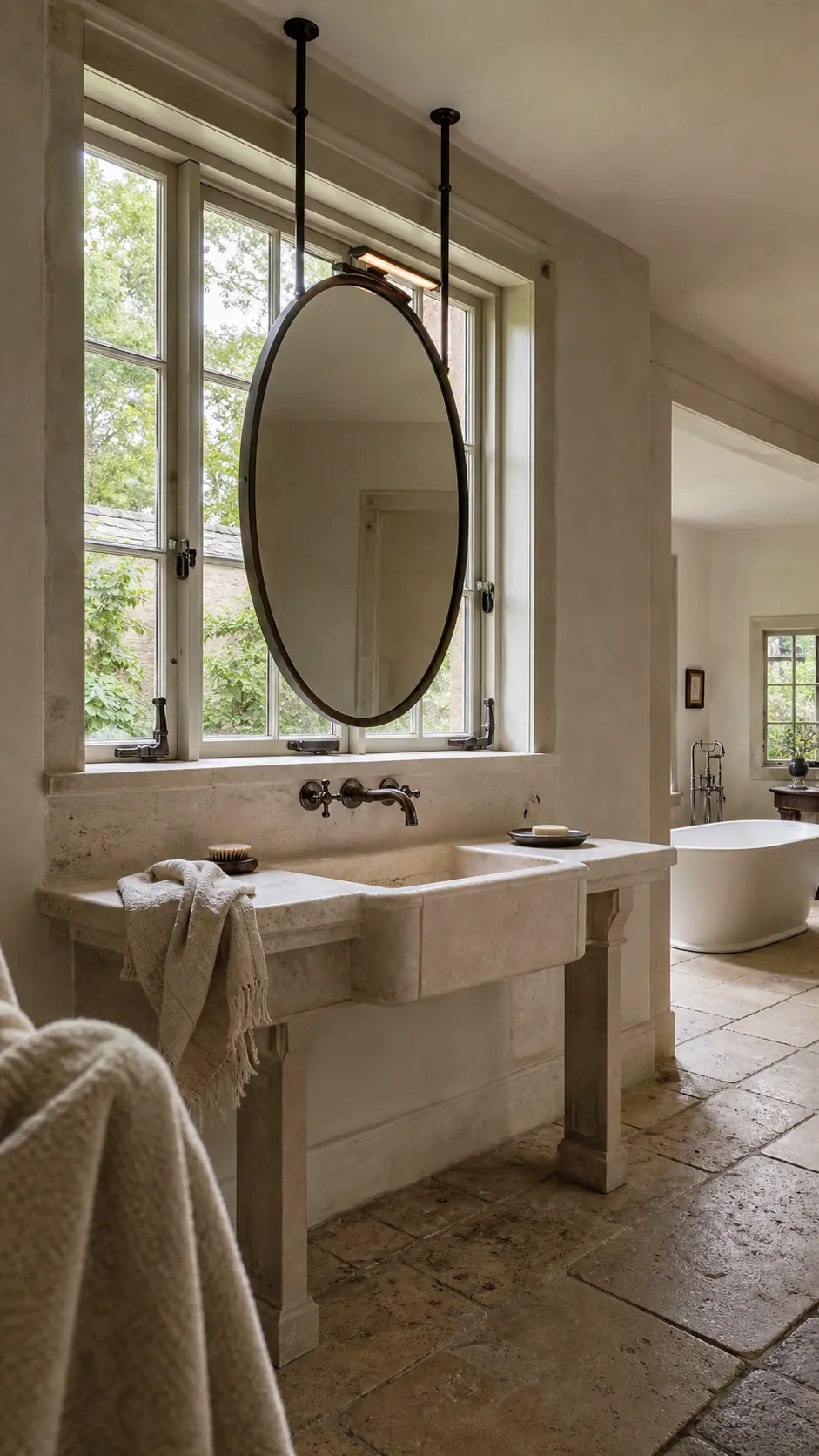
A Ceiling-Hung Mirror in Front of a Window
If the only sensible sink position is in front of a window, suspend a mirror from the ceiling or upper wall on slim supports. Daylight wraps around the mirror during the day, providing flattering broad illumination and preserving more glass than a solid wall would.
Add concealed or low-profile evening light so the vanity does not become unusable after sunset. The supports must be designed for the mirror’s weight and anchored correctly; this is a professional-installation idea, not a casual hook-and-wire project.
A Full-Width Mirror With Pendant Lights
A full-width mirror visually doubles a narrow bathroom and gives multiple users room to get ready. Slim pendants dropped in front of the glass can supply side-oriented light when there is no wall space for sconces.
Keep the pendants outside the faucet and head-clearance zones, and use diffused shades so reflected bulbs do not multiply into glare. Because electrical safety zones vary, have a qualified installer confirm suitable fixtures and positions.
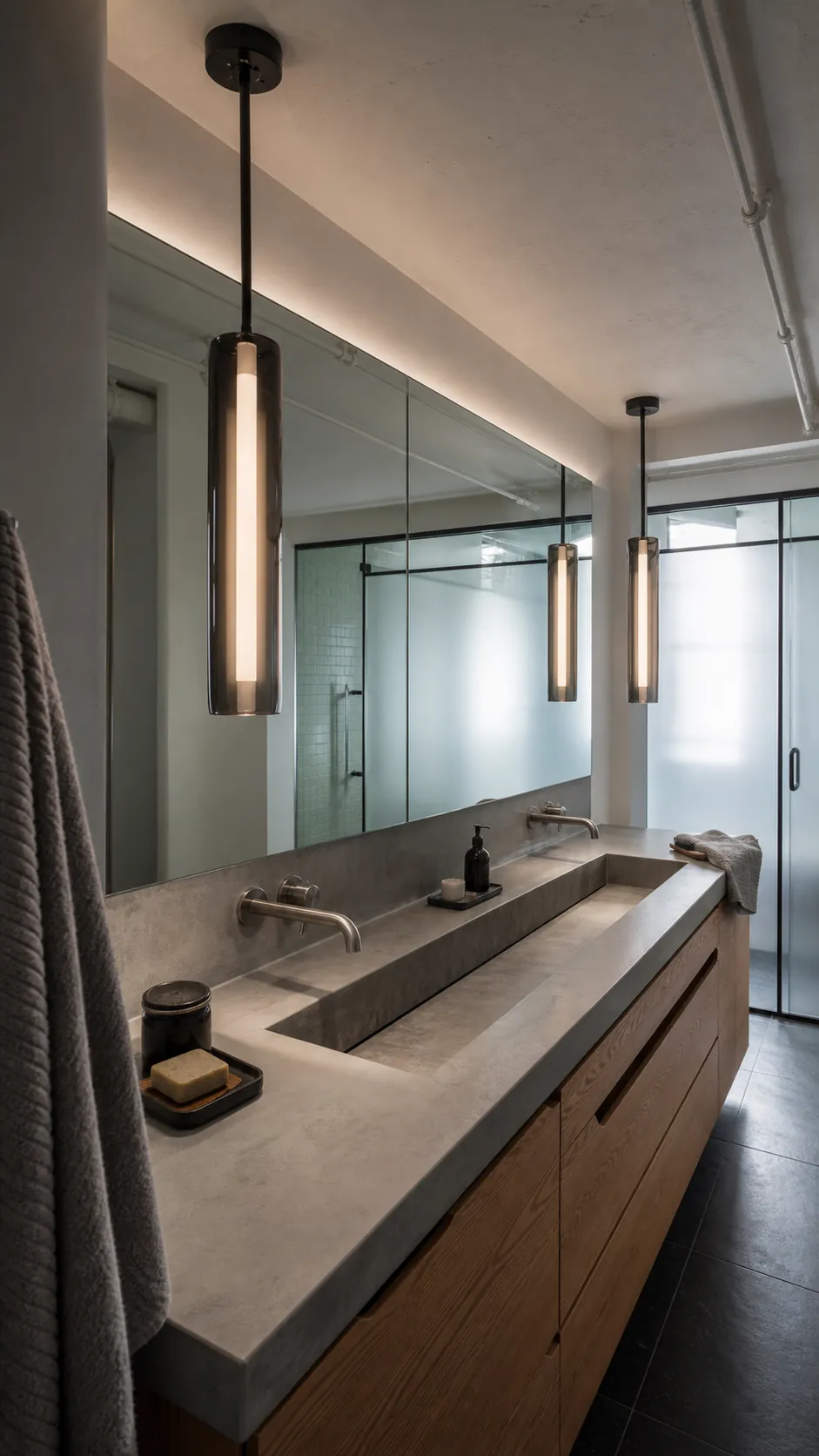
An Off-Center Sink With a Centered Vanity Composition
An offset sink creates a common styling dilemma: center everything on the basin or on the cabinet? When the counter is read as one furniture-like piece, centering a broad mirror and light on the vanity usually feels calmer, while the sink remains a functional element within that composition.
The exception is a deliberately zoned counter with shelving or tall storage on one side. Tape the proposed mirror outline to the wall before moving an electrical box; small asymmetries become much more obvious once a light is hardwired.
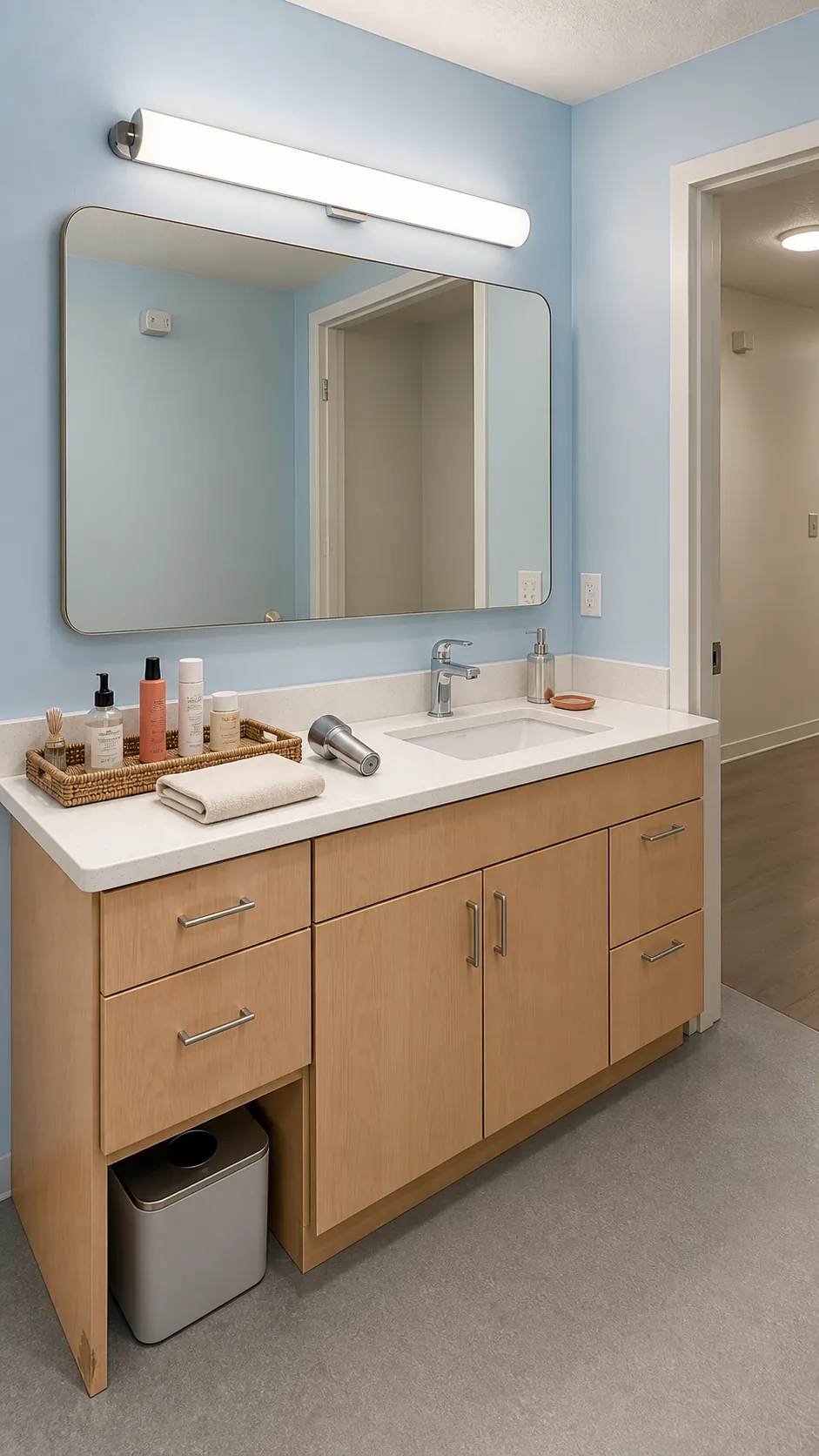
A Corner Vanity With a Side-Wall Sconce
In a tiny bathroom, a corner vanity often leaves only one usable side for lighting. A diffused sconce mounted on the adjacent wall can throw soft light across the face, while a compact ceiling fixture fills the opposite side.
Use a mirror with a shallow frame and avoid an oversized shade that projects into the doorway. This is one place where layered lighting matters more than perfect symmetry.
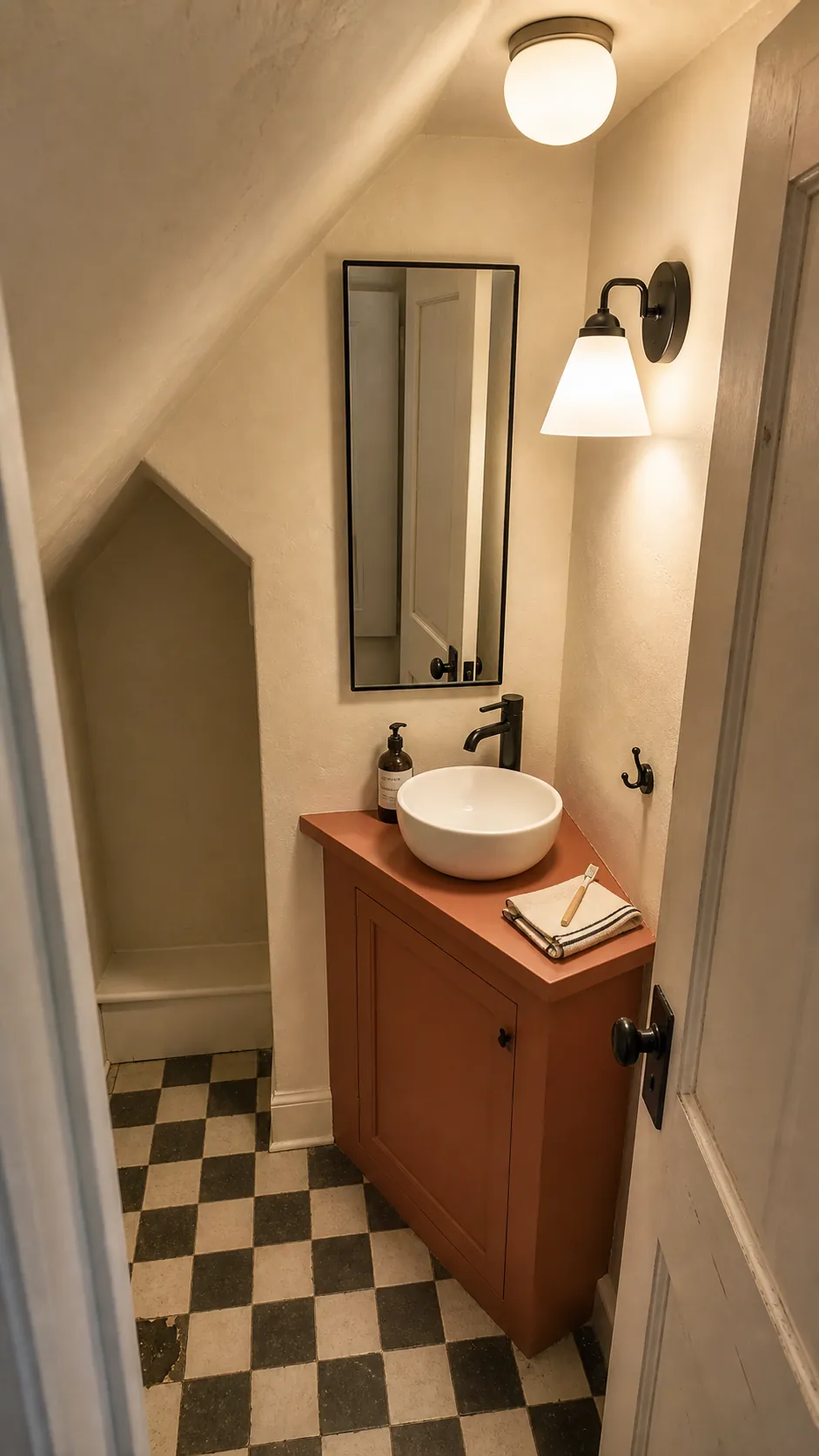
A Wood-Framed Mirror With Warm Diffused Light
A real wood mirror frame brings warmth to stone, porcelain, and painted cabinetry. Pair it with warm-neutral, high-color-quality bulbs behind linen-look glass or opal shades so skin tones stay natural rather than orange.
Seal the frame appropriately for humid conditions and keep it clear of standing water. Repeating the wood tone once—in a tray, stool, or cabinet detail—makes the bathroom decor feel connected without turning it into a themed room.
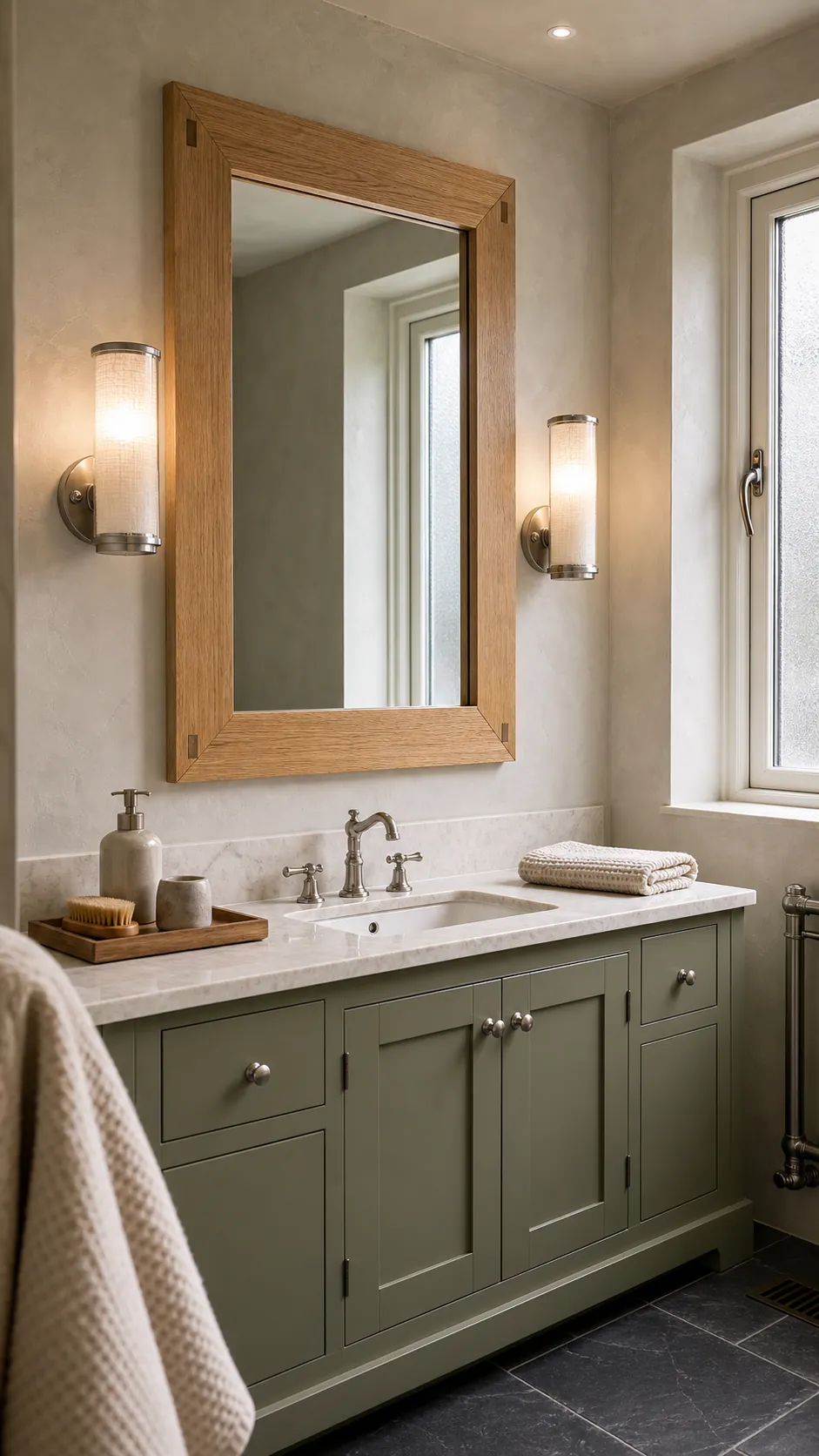
An Antique Mirror With Modern Task Lighting
An antique or vintage-style mirror gives a new vanity age and personality. Keep the lighting modern and optically useful: simple shaded sconces let the ornate frame remain the focal point while providing the even task light that old decorative fixtures often lack.
Check the reflective surface before committing. Gentle foxing at the edges adds character, but clouding across face height makes a mirror frustrating for makeup or shaving.
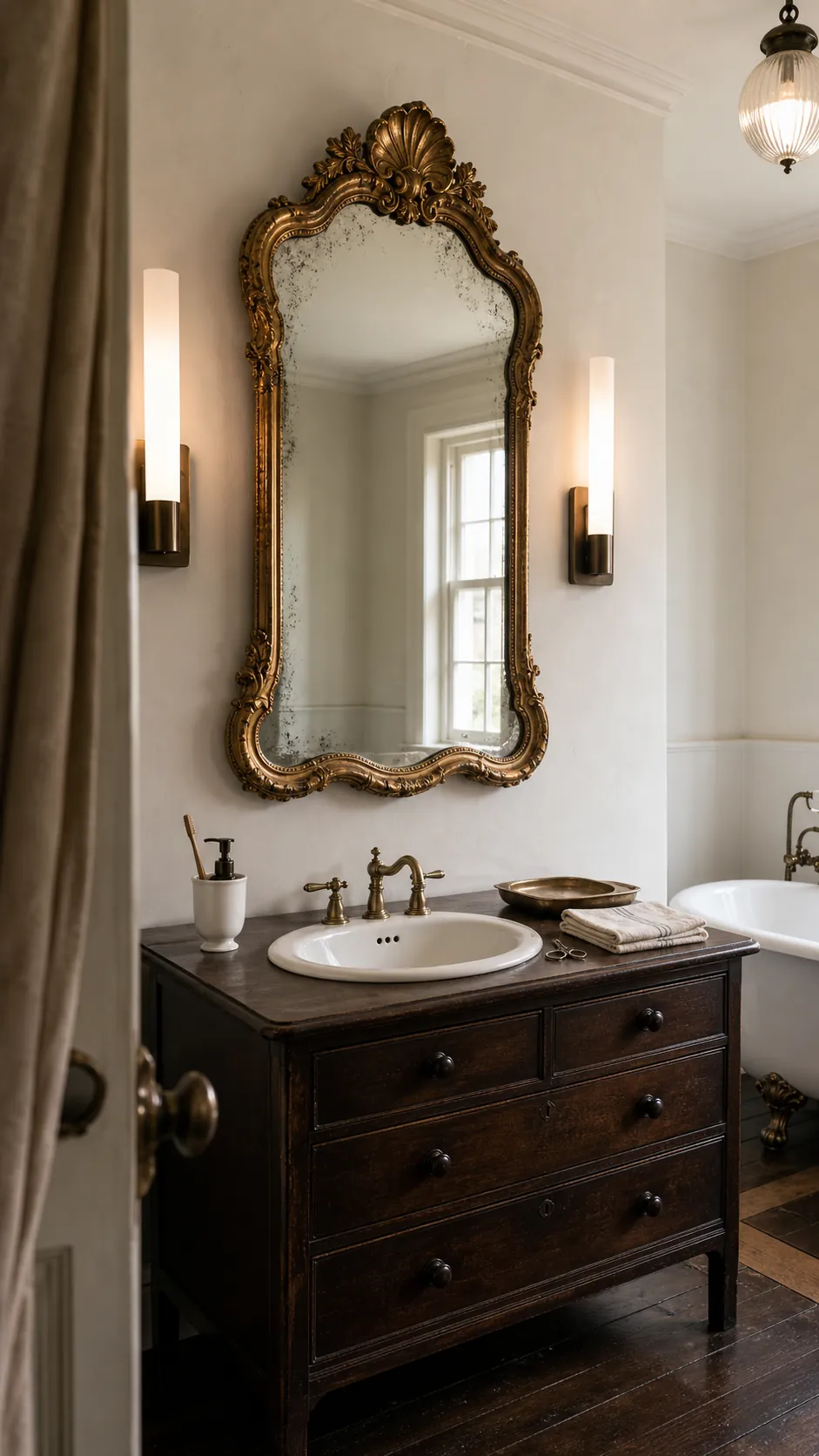
A Round Mirror With an Overhead Arc Light
A round mirror fits a narrow vanity and breaks up a wall of rectangular tile. An arcing fixture mounted above can follow the mirror’s curve and push light slightly forward, which is more useful than a flush bulb aimed straight down the wall.
Choose a shade wide enough to soften the source and check the visual gap between fixture and mirror. Too much space disconnects the pair; too little makes the top edge feel pinched.
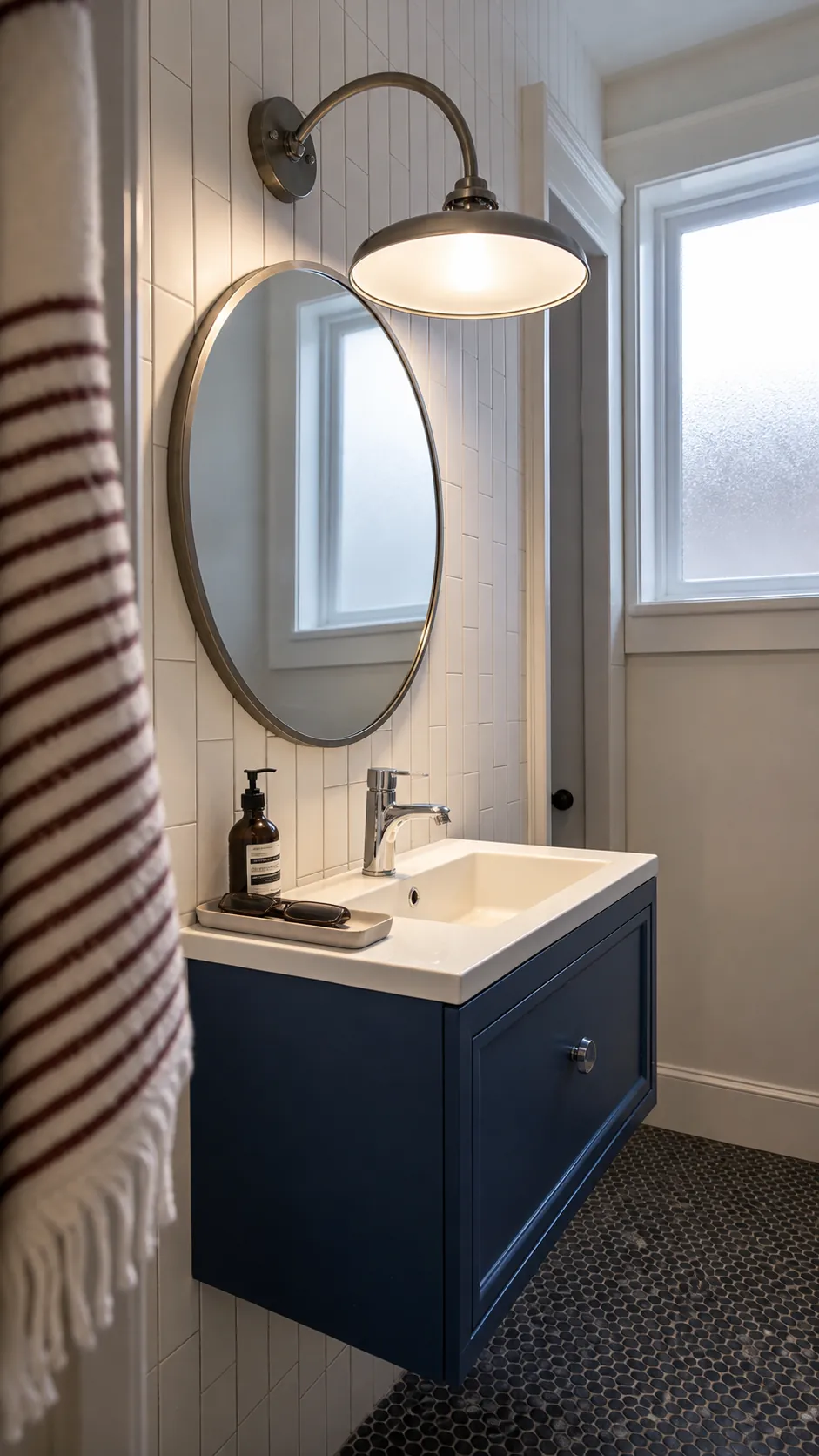
A Mirror Shelf With Concealed Lighting
A slim shelf below the mirror can hold the few items used every day while a concealed LED channel adds a gentle glow across the backsplash. The hidden strip is excellent for nighttime wayfinding and atmosphere, but it should supplement—not replace—face-level vanity lighting.
Use a proper diffuser channel so individual LED dots do not reflect in the mirror. Keep cords, drivers, and connections accessible for maintenance and rated for the bathroom location.
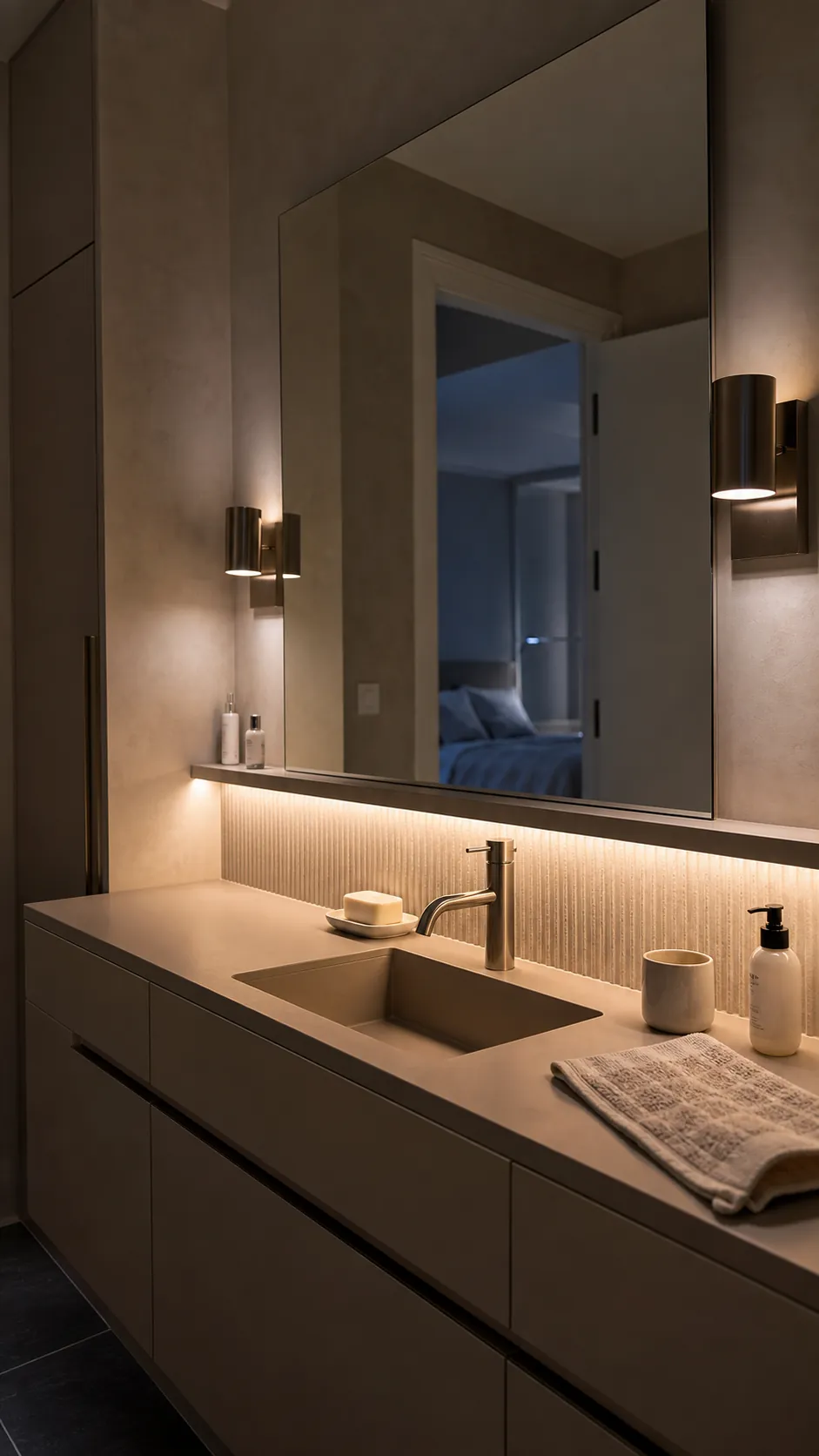
A Dimmable Mirror Zone With Separate Controls
Put vanity task lights and general bathroom lighting on separate controls. Full brightness can serve morning grooming, while a dimmed mirror zone keeps evening routines calm without turning the entire room into a cave.
Make sure the lamps and dimmers are compatible to prevent flicker or buzzing. A remembered low setting is especially useful in an ensuite where harsh light can disturb someone still sleeping.
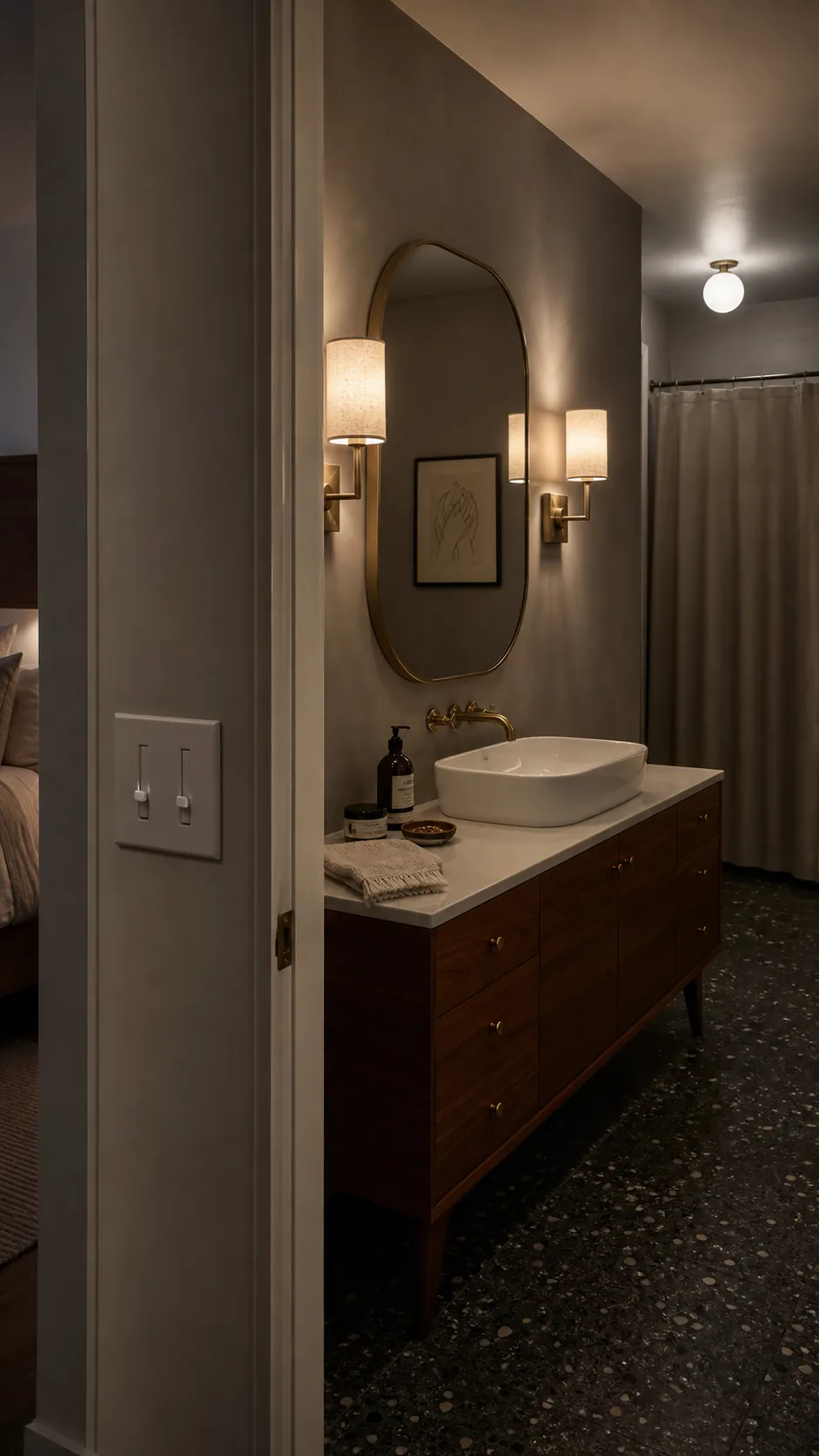
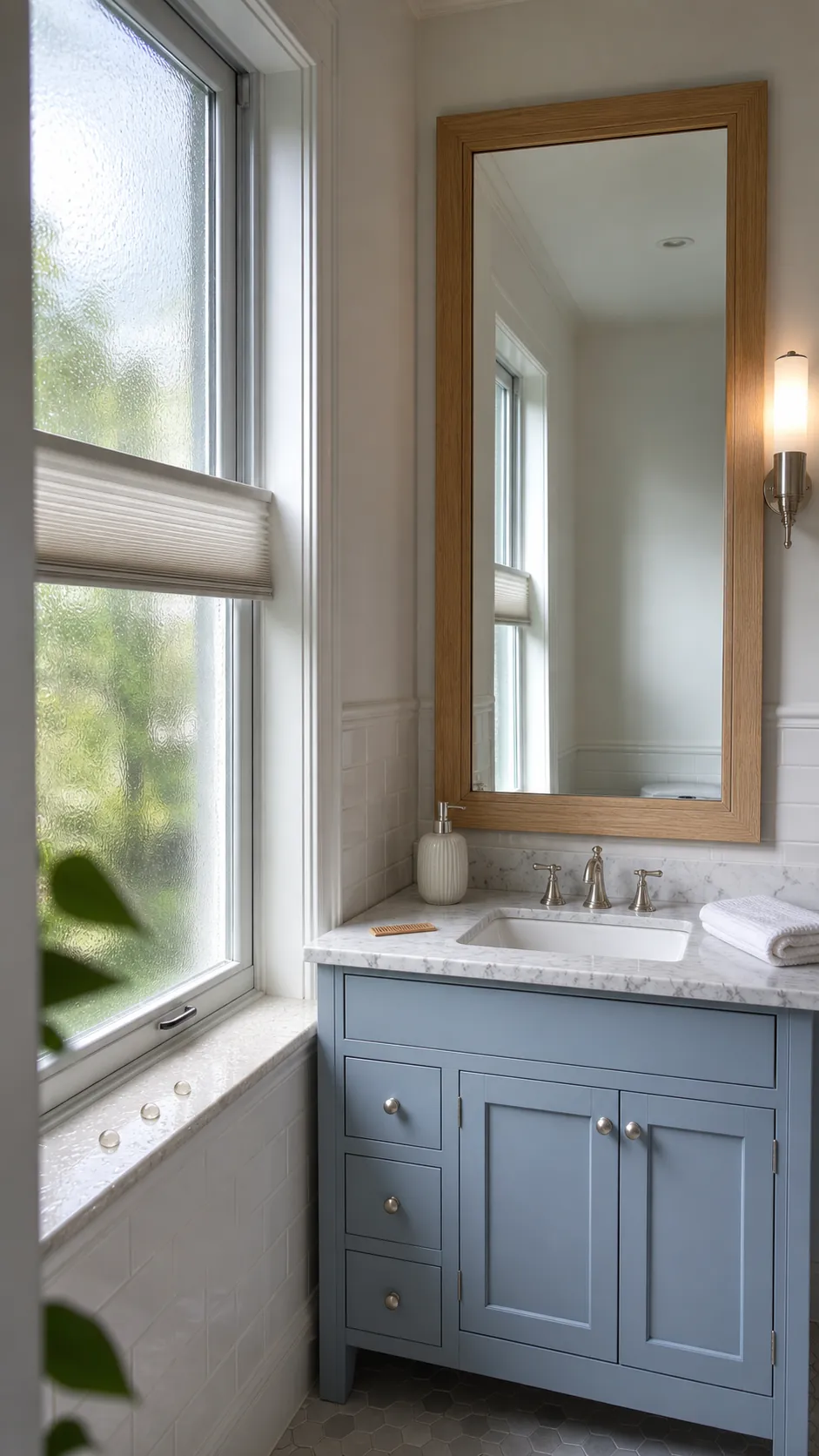
A Daylight-Side Mirror Near a Window
Positioning the vanity beside, rather than directly opposite, a window allows daylight to skim across the face while reducing a bright window reflection in the mirror. The mirror also bounces light deeper into the bathroom.
Use privacy glass or a light-filtering shade that preserves diffuse daylight. Add electric sconces for cloudy mornings and nighttime; natural light is a valuable layer, not a reliable control system.
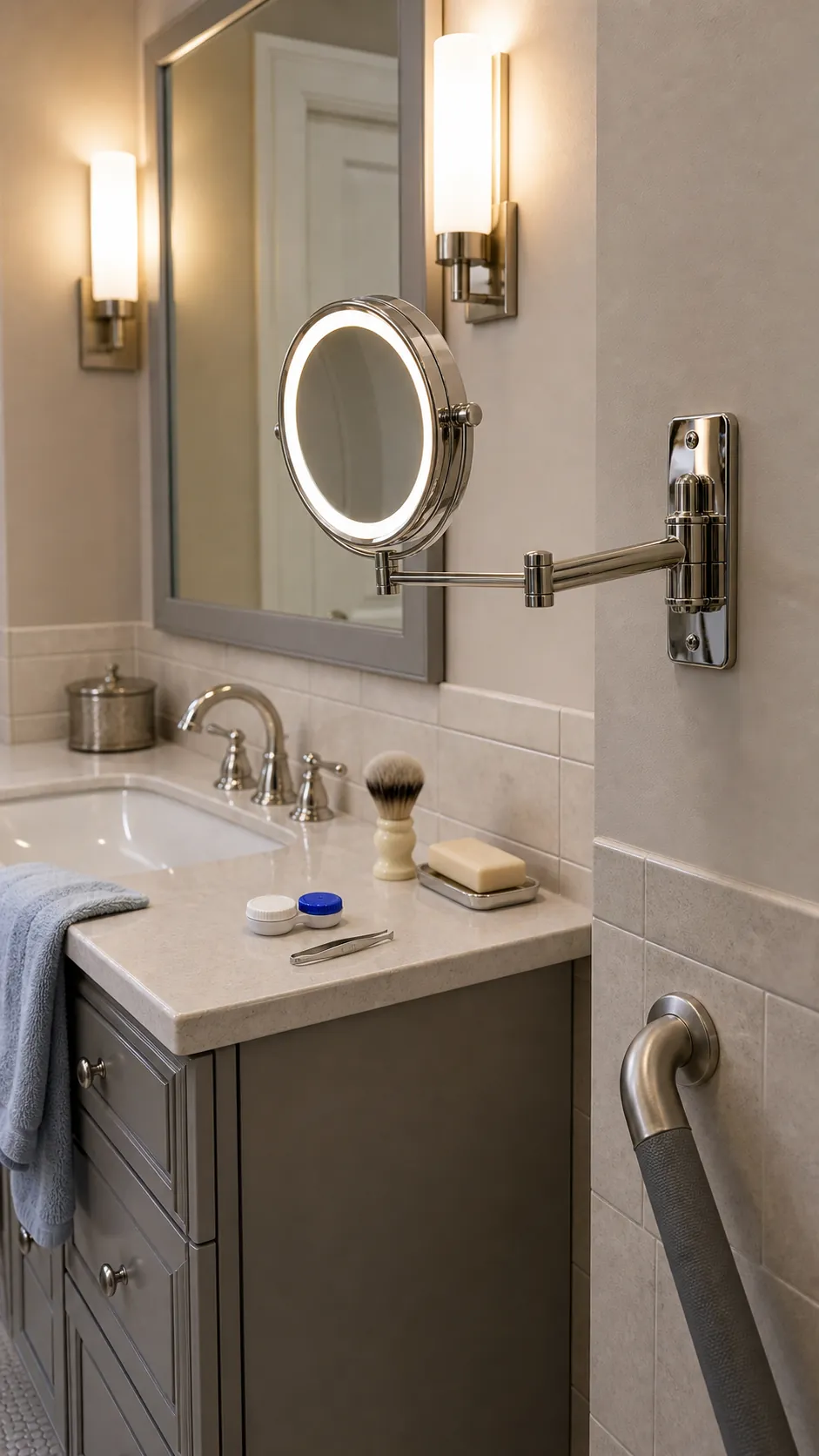
A Magnifying Mirror Beside the Main Mirror
A small swing-arm magnifying mirror handles close work without forcing the main bathroom mirror to provide every function. A model with its own controllable light can be useful for makeup, contact lenses, or shaving details.
Mount it where the arm can extend without hitting a sconce, cabinet, or door. Keep the main lighting soft and even so moving between the two mirrors does not require your eyes to adapt to radically different brightness.
A Layered Mirror Plan With High-Quality Bulbs
The strongest vanity styling idea is also the least flashy: combine face-level task light, gentle ambient light, useful daylight, and bulbs that render color accurately. A mirror cannot correct poor color quality, glare, or deep shadows, no matter how expensive its frame is.
Aim for comfortable warm-neutral light, good diffusion, and independent control of the brightest layer. Check local electrical and wet-area requirements before installation. When the practical pieces are solved first, the mirror shape and finish can express your style without making the bathroom harder to use.