
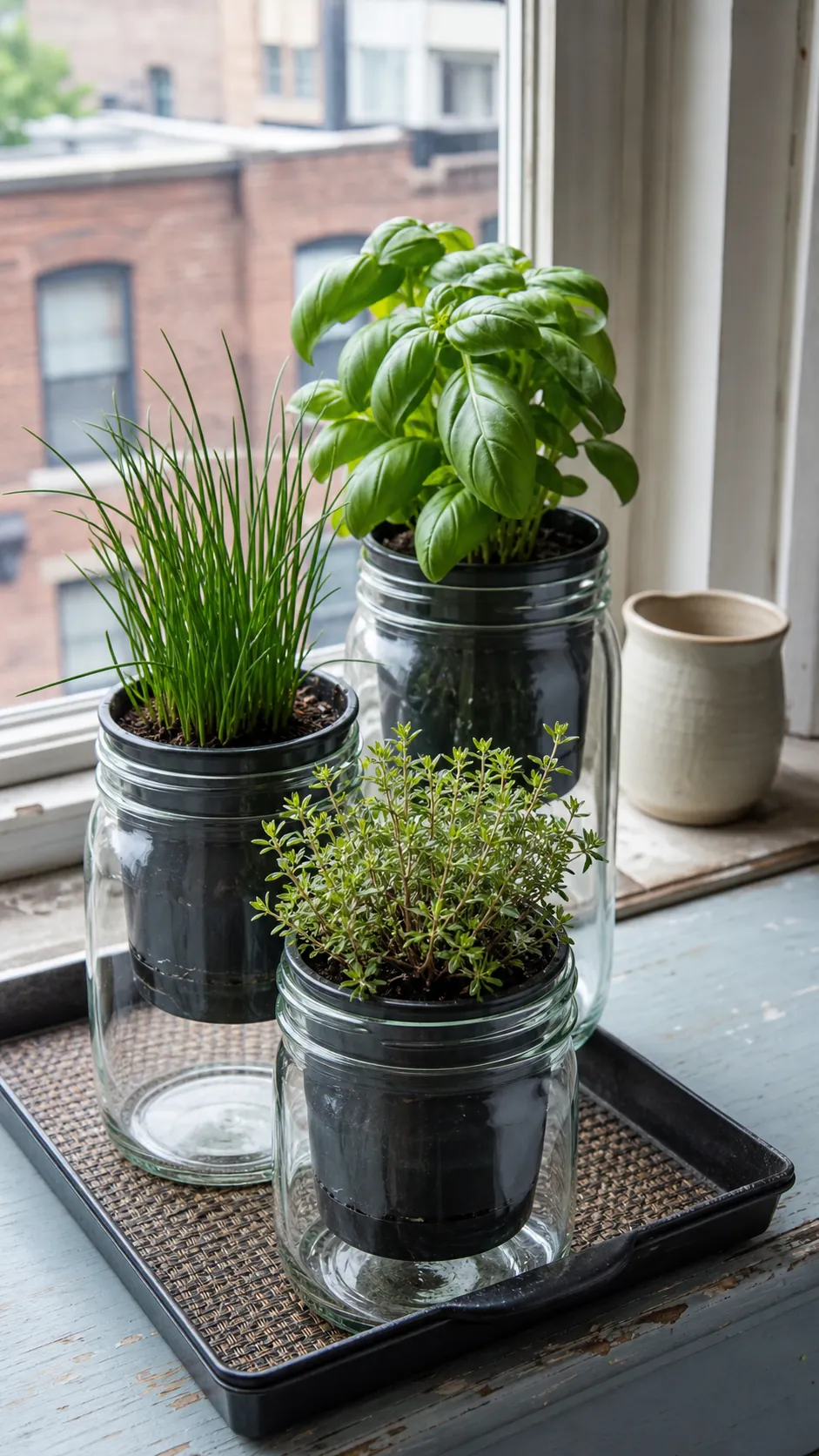
A mason jar herb garden indoor setup looks almost effortless: glass, soil, a seedling, and a sunny windowsill. The part most tutorials skip is that a standard jar has no drainage hole. Once water reaches the bottom, it cannot leave, and a decorative layer of stones does not change that. Roots can sit in stale, oxygen-poor mix while the surface still looks dry.
The reliable version keeps the mason jar as the attractive outer vessel while giving the herb a removable, draining inner pot. That one design choice makes watering measurable, protects roots, and lets you clean the glass before algae and mineral buildup take over.
Treat the jar as a cachepot, not a sealed flowerpot
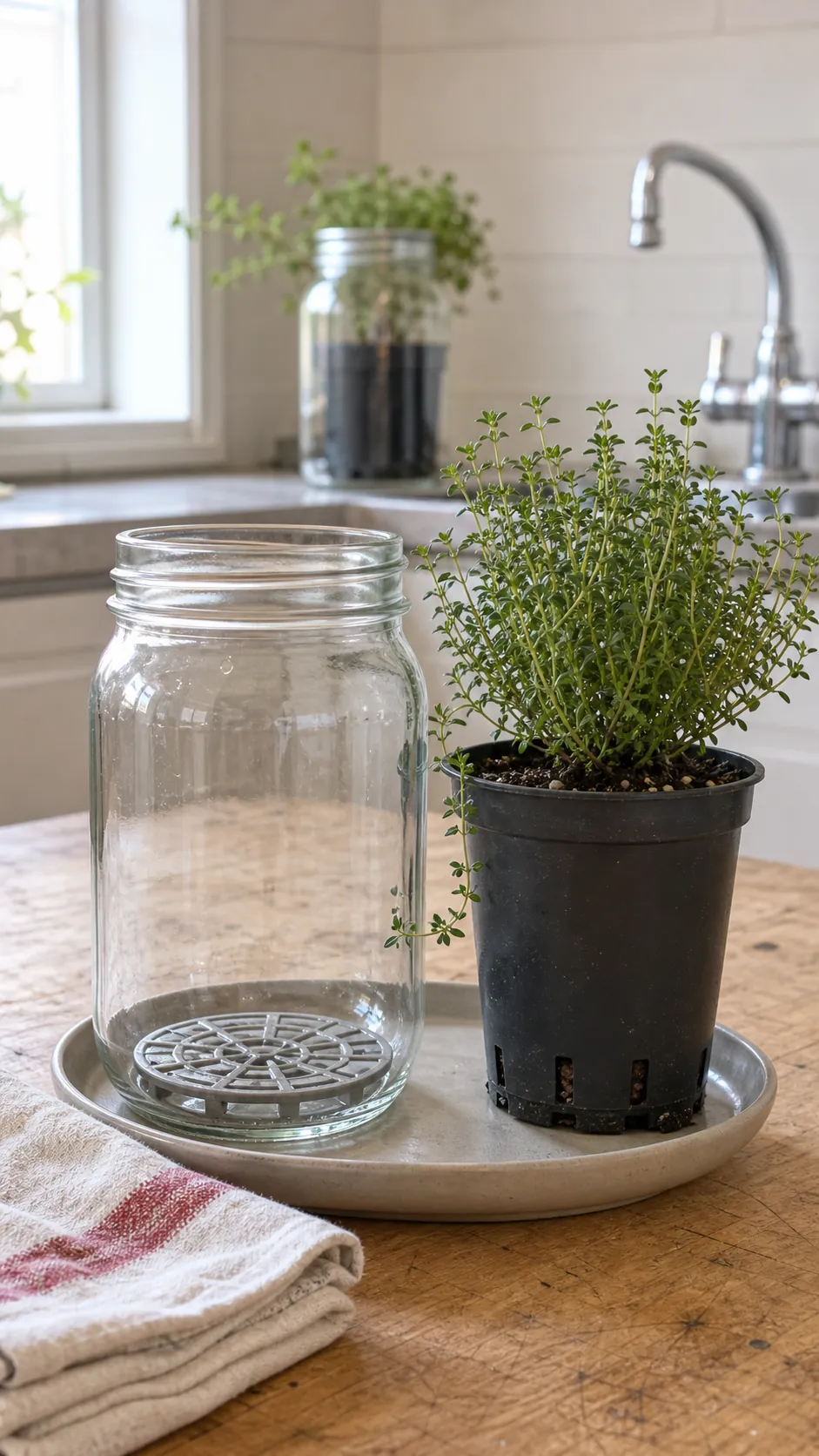
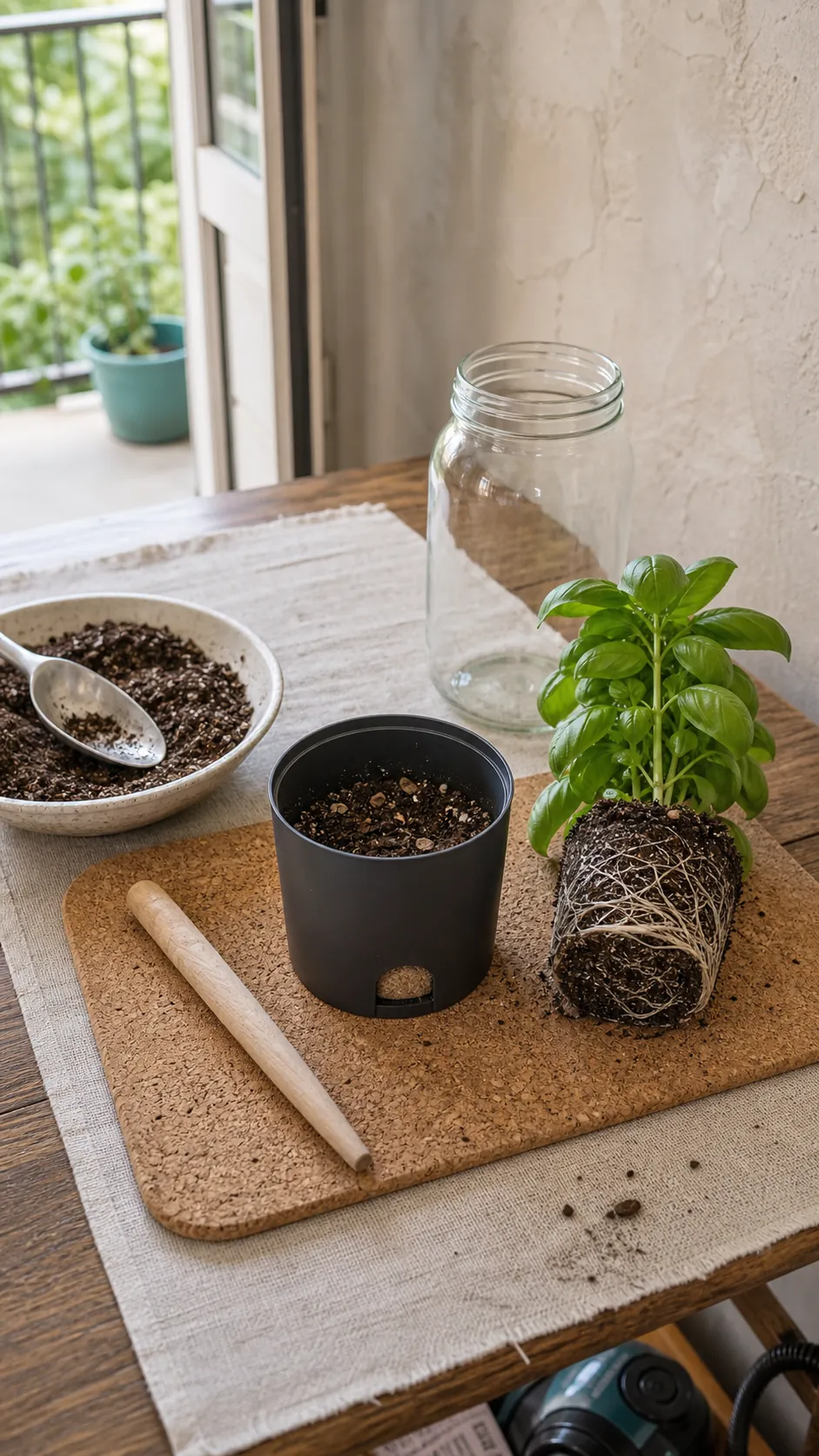
For a soil-grown windowsill herb garden, place a small nursery pot or slotted insert inside a wide-mouth mason jar. The inner pot must have drainage holes and should lift out easily. Add a low spacer beneath it so the holes never sit flat against the jar base, then remove the pot for watering and let it drain fully in the sink before returning it.
Do not assume pebbles at the bottom create drainage. They create a reservoir inside the same sealed container. If you plant directly in soil-filled glass, the margin between “enough” and “too much” water is narrow, especially for rosemary, thyme, sage, and oregano, which prefer to dry somewhat between waterings.
Drilling household glass is not a beginner-friendly fix. Mason jars are not manufactured as planters, and glass can crack or leave dangerous edges. A removable insert gives you the mason-jar look without turning the container into a risky fabrication project.
Choose compact herbs and give each jar one plant
Chives, compact basil, parsley, cilantro, thyme, and oregano can work in an indoor herb garden, but a jar-scale system is a starter home rather than a permanent container for every variety. Dill develops a taproot and wants more depth. Mature rosemary can become woody and top-heavy. Mint spreads vigorously and is best kept alone—which is easy when every jar contains one herb.
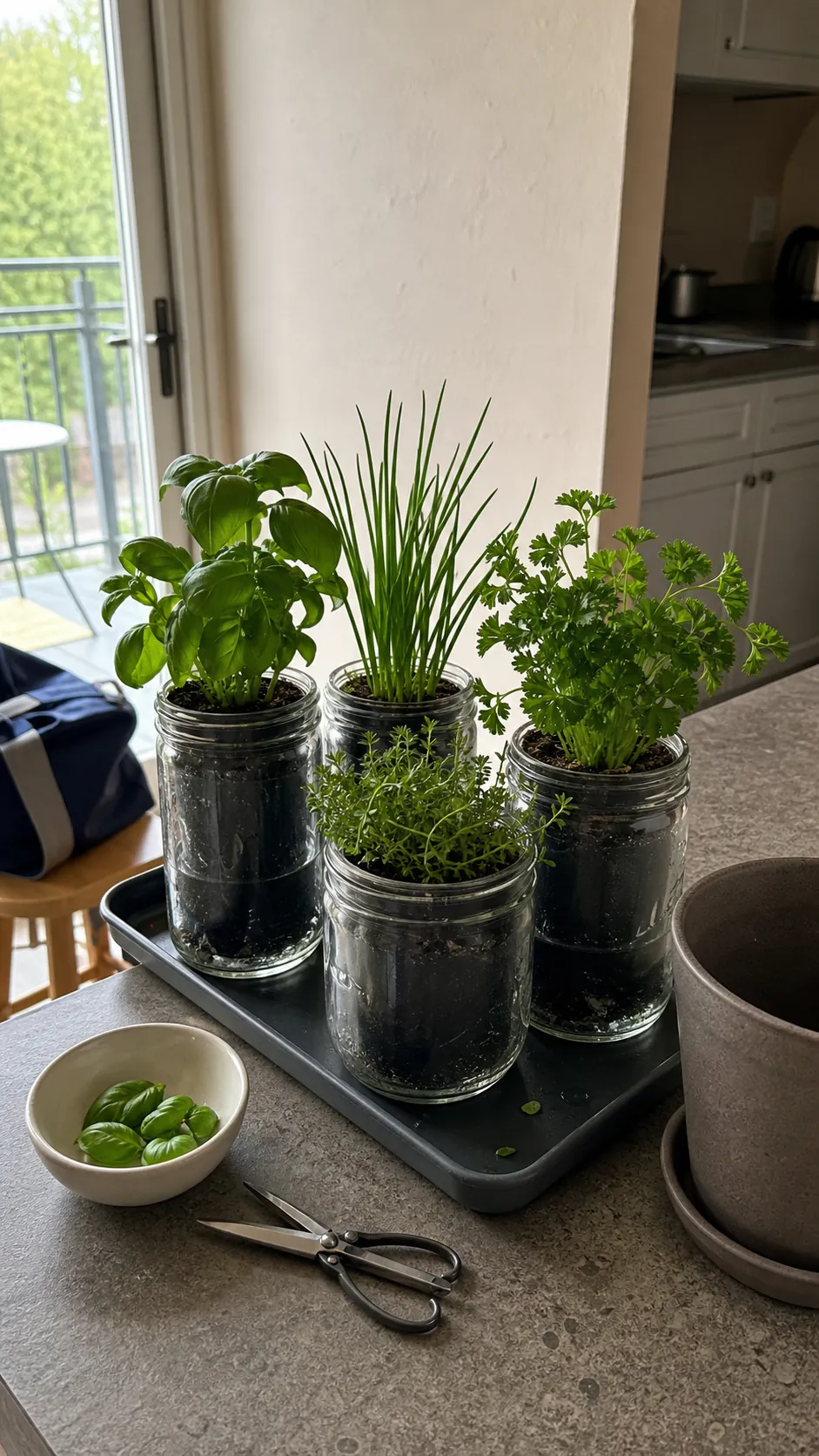
One plant per jar also keeps care decisions clear. Basil prefers more consistent moisture, while thyme and oregano should not remain continually damp. Group jars visually on a tray, but water them individually. This is more successful than squeezing several nursery plugs into one container for an instantly full photograph.
Start with healthy, compact transplants rather than oversized grocery-store clumps. If a purchased basil pot contains many crowded seedlings, divide it gently across multiple inserts. Give roots room to expand, and expect to move vigorous plants into larger pots when they begin drying unusually fast or circling the insert.
Fit a draining insert without trapping runoff
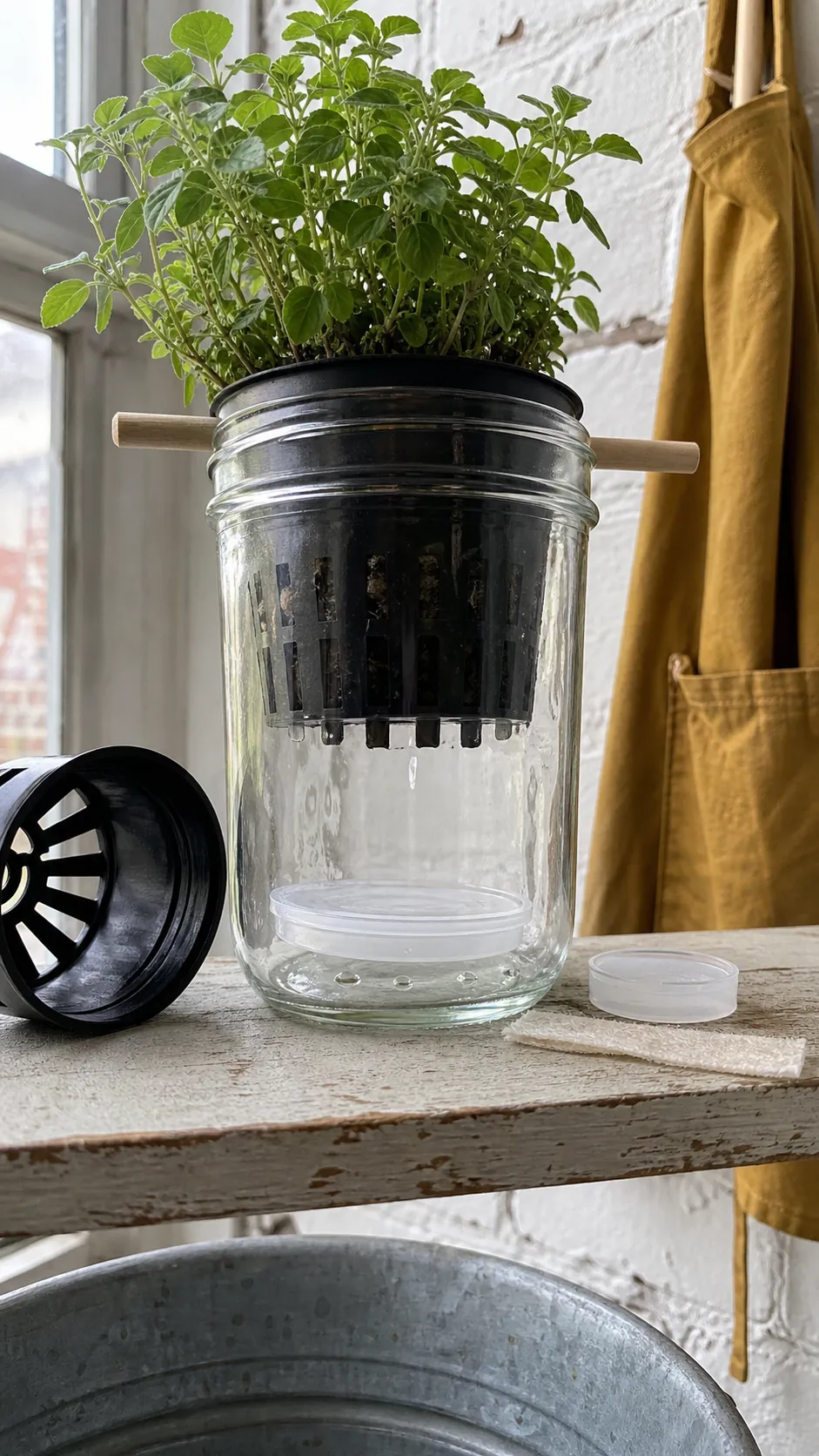
Measure the inside of the jar mouth before buying inserts. A tapered nursery pot may fit through the opening but become wedged lower down. The rim should be easy to grip, and a small gap around it improves airflow and makes removal less messy. Food-safe net cups can also serve as inserts, but their large openings may need a suitable liner or coarse medium to retain potting mix.
Create a spacer with an inverted plastic bottle cap, a short ring cut from food-safe rigid tubing, or a purpose-made pot riser. Keep it stable and low. The goal is not to store a deep pool of water; it is to prevent the insert from sealing against the glass and to make a few unnoticed drops harmless.
After watering, the jar bottom should be nearly dry. If runoff collects, lift the insert and empty the jar. Never let the inner pot stand in water unless you are intentionally following a complete hydroponic method with the correct nutrient and air-gap management.
Use potting mix and plant at the nursery depth
Fill the insert with fresh container potting mix, not dense soil from outdoors. Potting mix holds useful moisture while leaving air spaces around roots. Pre-moisten it until it feels evenly damp rather than dripping, then plant the herb at the same depth it occupied in its nursery container.
Leave headspace beneath the insert rim. This keeps mix from washing into the jar and allows you to test moisture with a fingertip. Gently settle the mix around the root ball without packing it hard. A small coffee filter cut to fit can temporarily stop fine dry mix escaping through a very open insert, but it should not form a sealed plastic barrier.
Clear jars expose damp surfaces to light, so keep loose potting mix contained within the opaque insert when possible. If appearance matters, wrap the lower jar with a removable paper sleeve, fabric band, or fitted jar cozy. It reduces light reaching damp residue and is easier to wash or replace than a permanently painted coating.
Put light ahead of kitchen-counter convenience
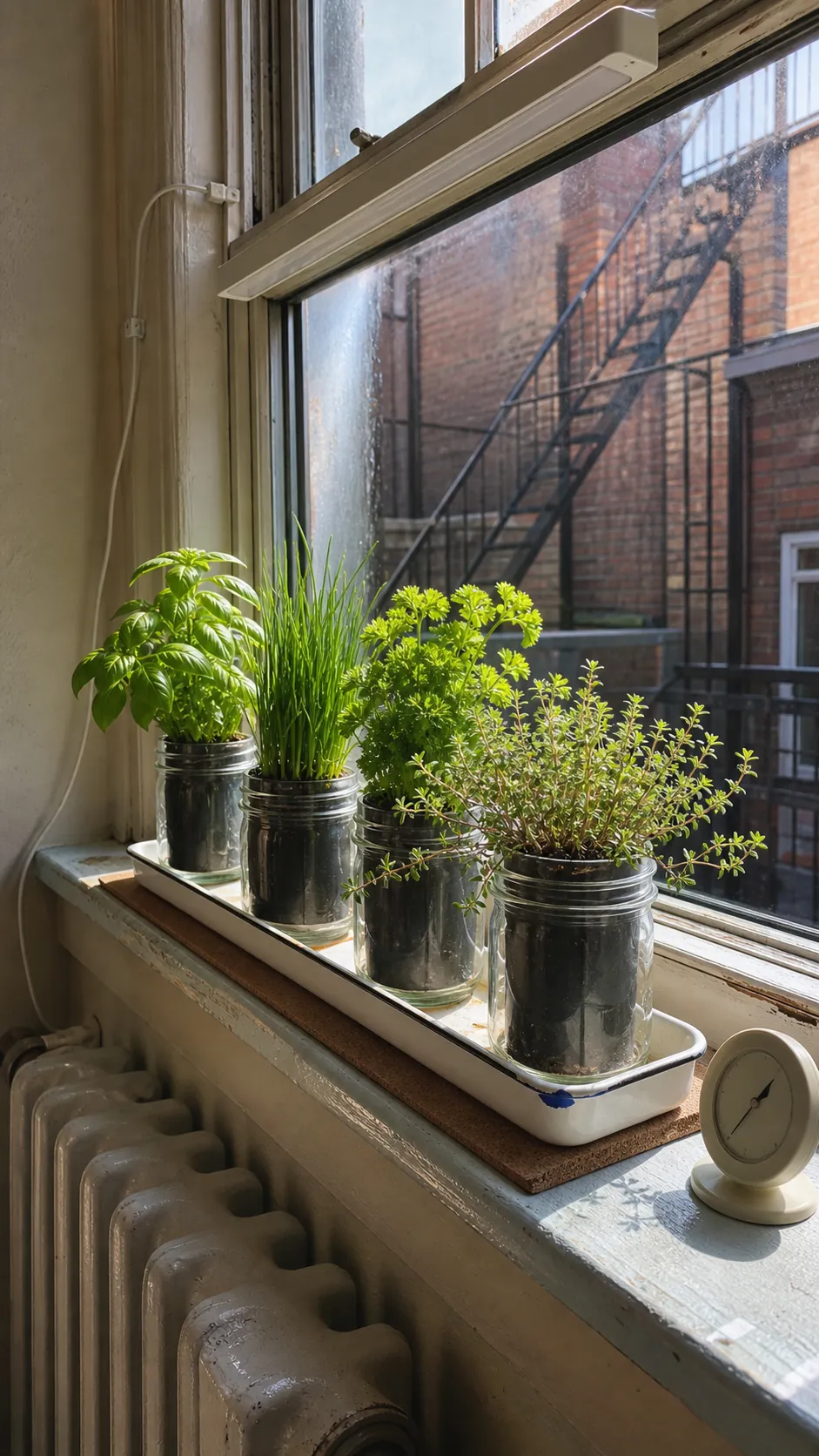
Most herbs want substantial direct light. A south- or west-facing window is often the strongest position, while chives and cilantro can tolerate less than sun-loving rosemary or thyme. Observe shadows across the sill instead of judging brightness by eye. Weak light produces stretched stems, small leaves, and less aroma.
Rotate each jar a quarter turn every few days so growth remains even. Keep basil away from cold winter glass and sudden drafts. If the window cannot provide enough light, place a full-spectrum grow light above the foliage and follow its manufacturer’s distance guidance; moving a weak lamp closer is not always equivalent to using an appropriate fixture.
Glass can also heat roots when strong sun strikes it for hours. An opaque insert and removable sleeve buffer the root zone, while a shallow tray lets you shift the entire kitchen window herb garden back from intense afternoon heat. Check leaf and mix temperature during the first bright days instead of assuming the sill is automatically gentle.
Water outside the jar and clean what you can see
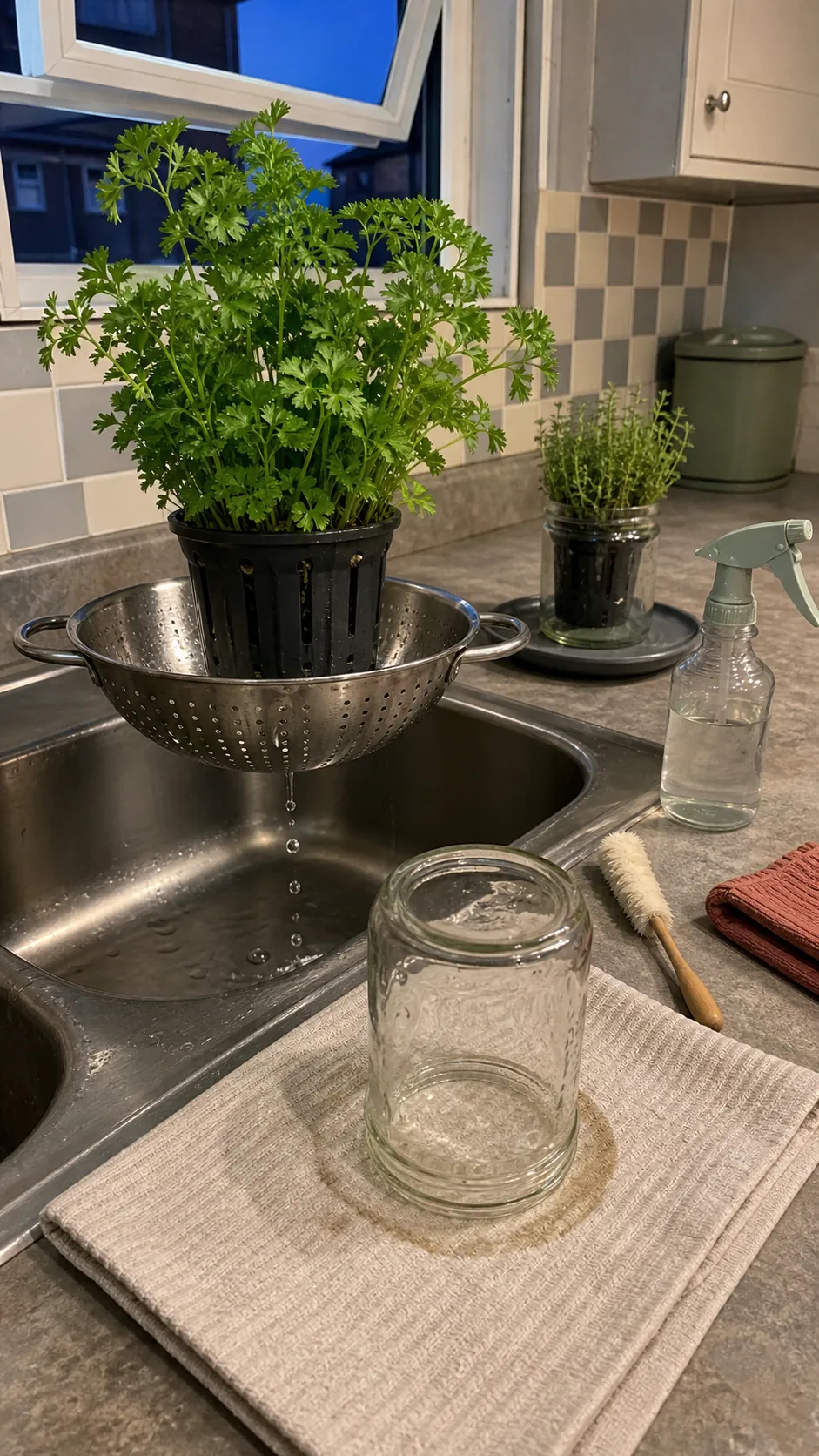
Lift the inner pot out and water over a sink until mix is evenly moist and runoff slows. Let it drain, wipe the pot base, and return it to the clean jar. For basil, water when the surface begins to dry but before the root ball becomes completely parched. Let rosemary, thyme, oregano, and sage dry more between waterings.
Empty accidental runoff immediately. Rinse mineral deposits and green film from the jar before they become stubborn. Algae is encouraged by light and moisture; it is a sign to clean the vessel and review standing water, not a decorative feature. Good air movement around the foliage also reduces persistent dampness and discourages fungal problems.
Inspect the underside of leaves for aphids and watch the soil surface for fungus gnats. Isolate an affected jar so pests do not move through the full apartment herb garden. Since these plants are harvested for food, start with physical controls such as washing, pruning affected growth, cleaning the area, and correcting wet conditions.
Know when the mason jar stage is finished
Repot when roots fill the insert, watering becomes excessively frequent, growth stalls despite adequate light, or the plant becomes top-heavy. Choose a larger container with drainage rather than forcing a mature herb to remain inside a decorative jar. Chives can often be divided; basil can be replaced or propagated; woody perennials deserve room to develop.
A mason jar herb garden works best as a modular system: attractive outer jars, removable draining pots, individual watering, and a shared sunny tray. That structure is especially useful for apartment herb gardens because one struggling plant can be cleaned, moved, or repotted without disturbing the rest.
The glass is not the growing method—it is the cover around a sound container. Once that distinction is clear, the project becomes easier to water, safer to place on a kitchen surface, and far more likely to produce herbs you will actually harvest.