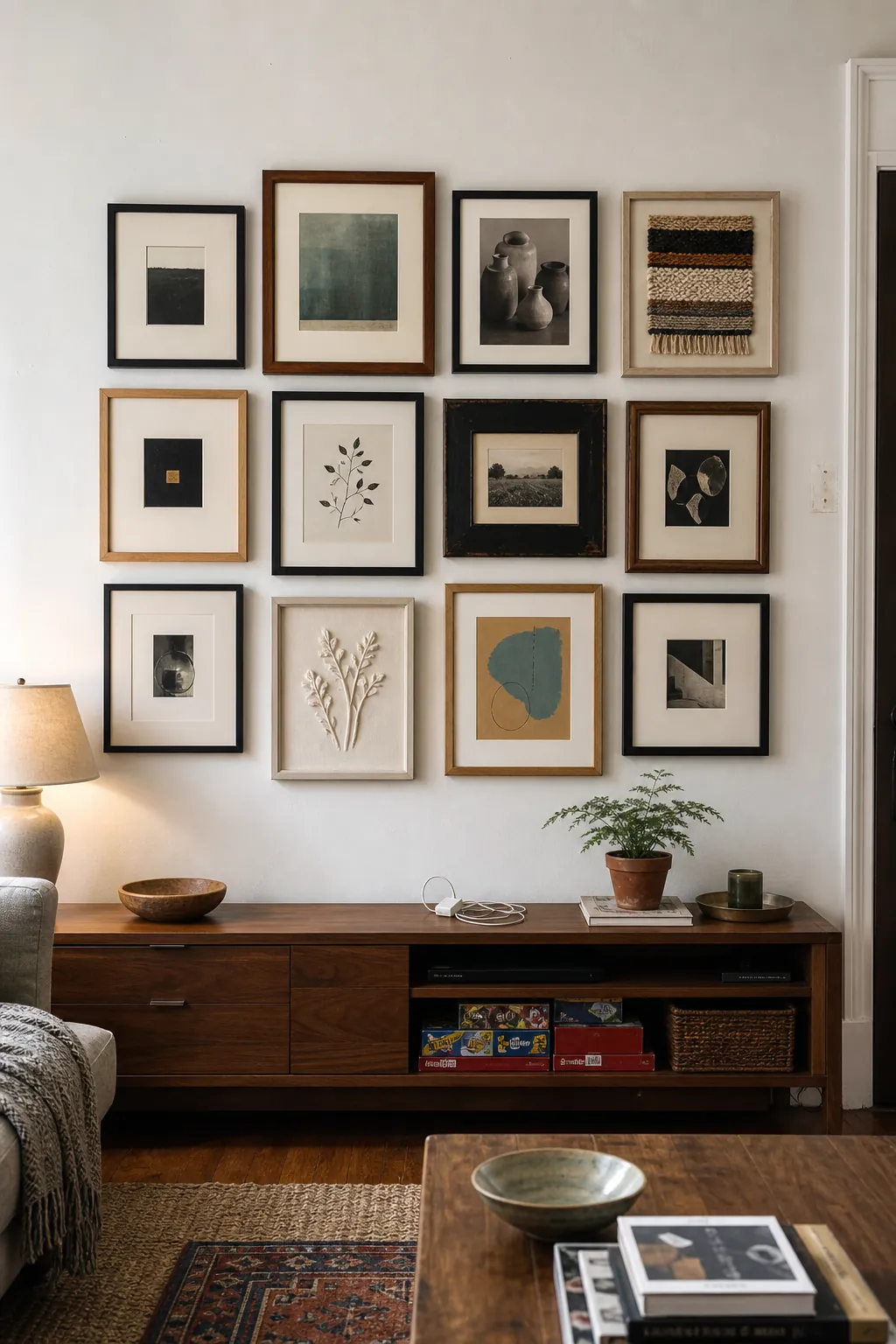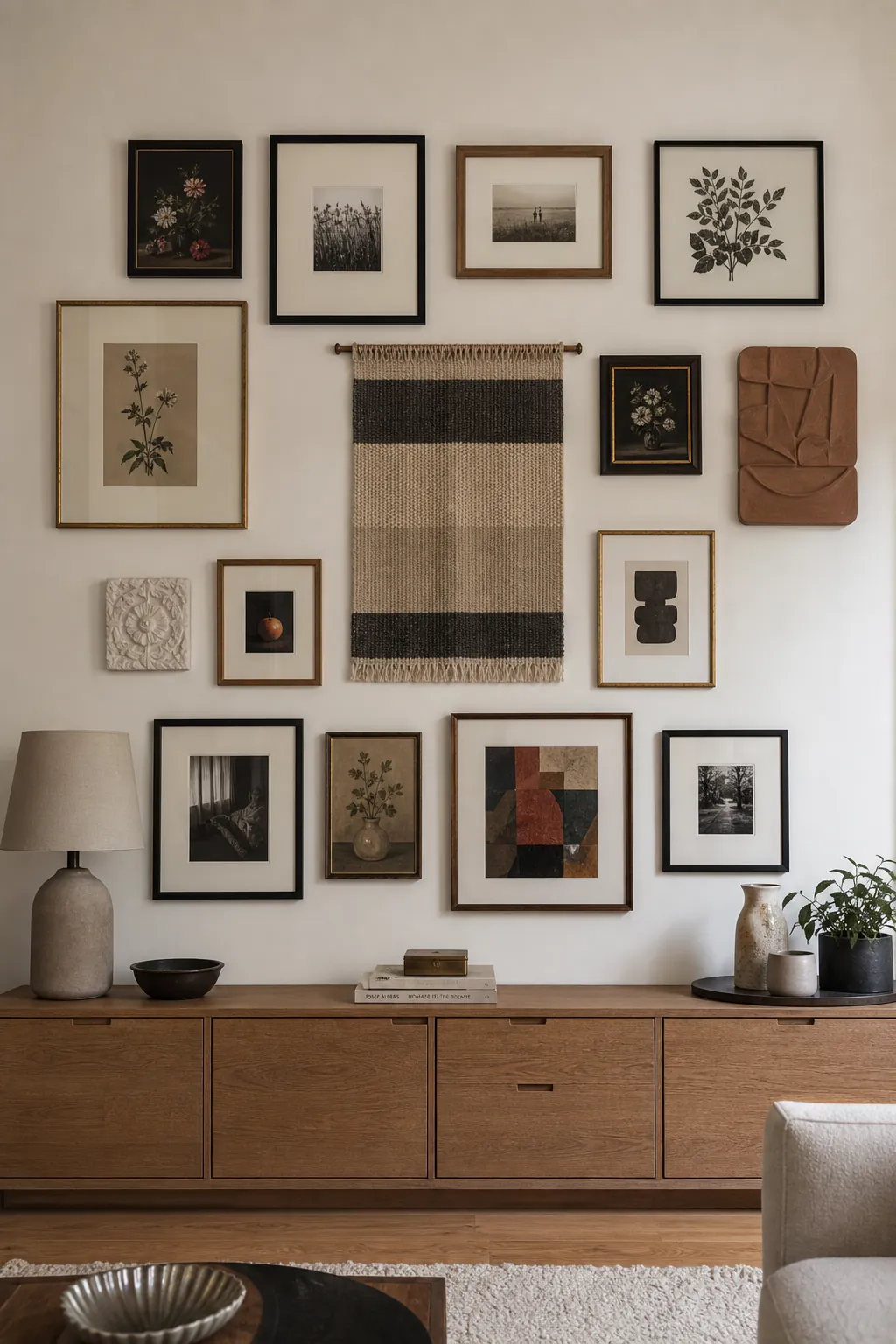
A gallery wall with mixed frames looks best when the differences feel chosen, not merely accumulated. The reliable formula is to combine visible variety with one repeated control—consistent spacing, a limited finish palette, common mats, a defined outer shape, or a color thread. These ideas show how to build an eclectic gallery wall with character and structure, including options for small walls, rentals, televisions, staircases, and sentimental collections.
Mix Black, Walnut, and Brass in a Three-Finish Palette
Use matte black, medium walnut, and aged brass as a deliberate three-finish palette rather than collecting every frame color you find. Repeat each finish at least twice so no material looks accidental or stranded. Distribute the black frames across the wall because their stronger contrast carries more visual weight than pale wood or brass. Keep the art varied, but borrow two or three colors from the room to connect it to the furniture below. This approach creates an eclectic gallery wall that feels collected while retaining a clear visual rule.
Unify Every Frame With Warm White Mats
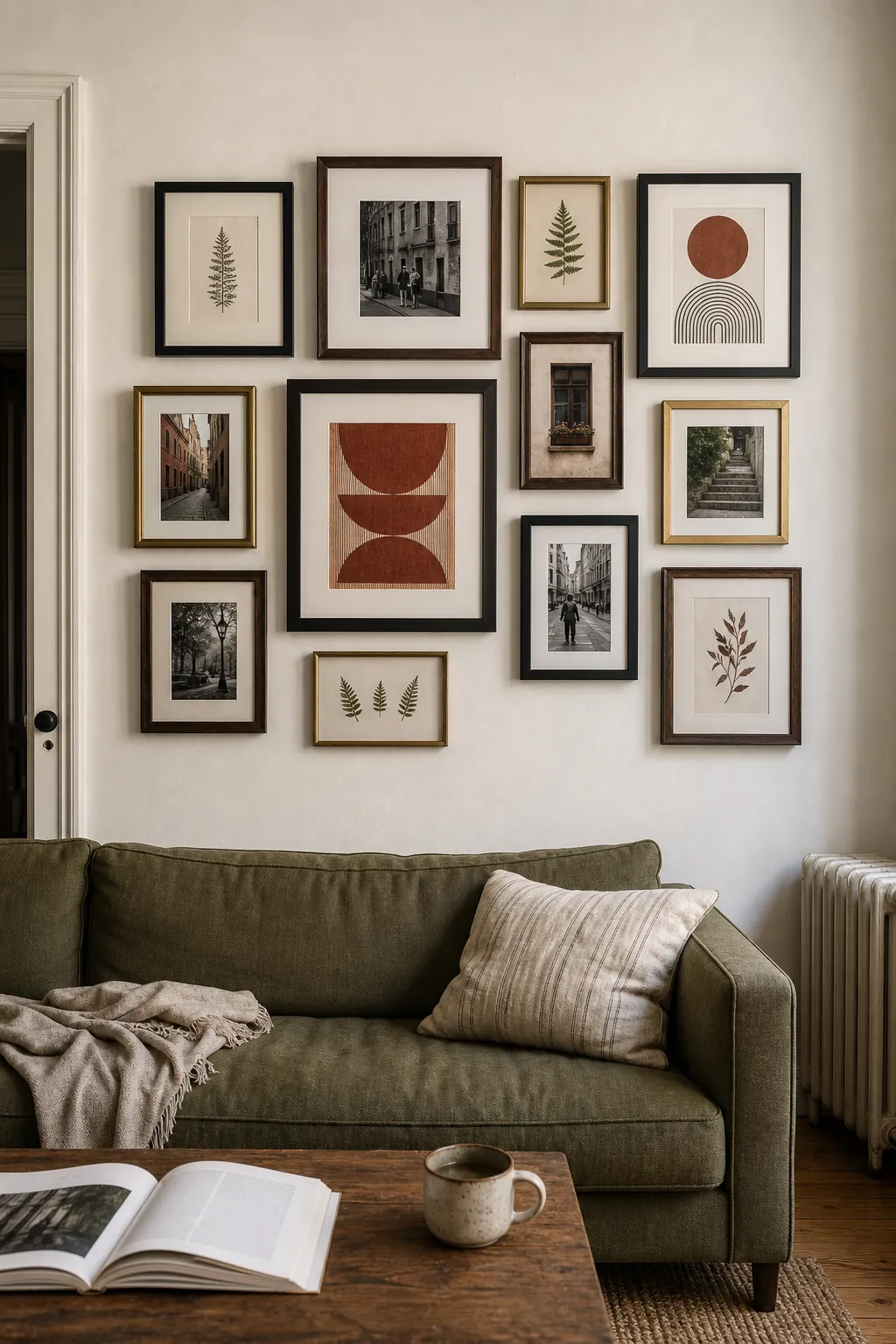
A single mat color can calm frames that differ in age, profile, and material. Warm white is especially useful because it bridges old wood, painted finishes, and modern metal without making antique paper look dingy. Adjust the mat widths to flatter each work, but keep the visible tone consistent across the wall. Place narrow and wide mats in different parts of the arrangement so their scale variation looks intentional. The shared field of warm white gives the eye a repeated pause between strongly individual pieces.
Pair Ornate Vintage Frames With Slim Modern Profiles
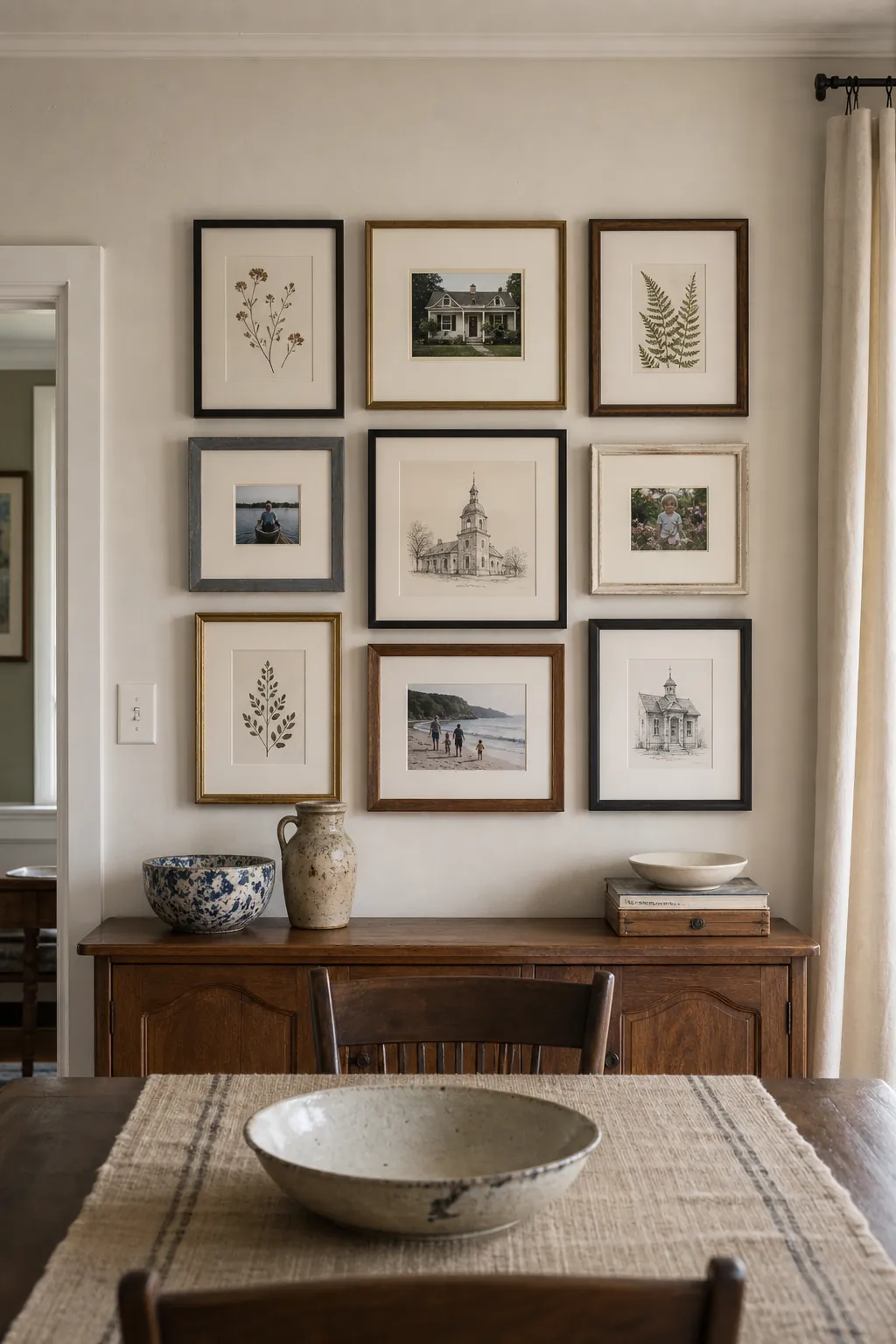
The contrast between carved vintage frames and slim contemporary profiles feels purposeful when each type has a clear role. Give ornate frames to small, intimate works and use simple metal frames for larger pieces that need visual quiet. Keep the overall spacing steady so the change in profile reads as character instead of disorder. Echo one old finish elsewhere in the room through a lamp, handle, or mirror edge. A roughly equal spread of ornate and simple frames prevents either style from looking like a late addition.
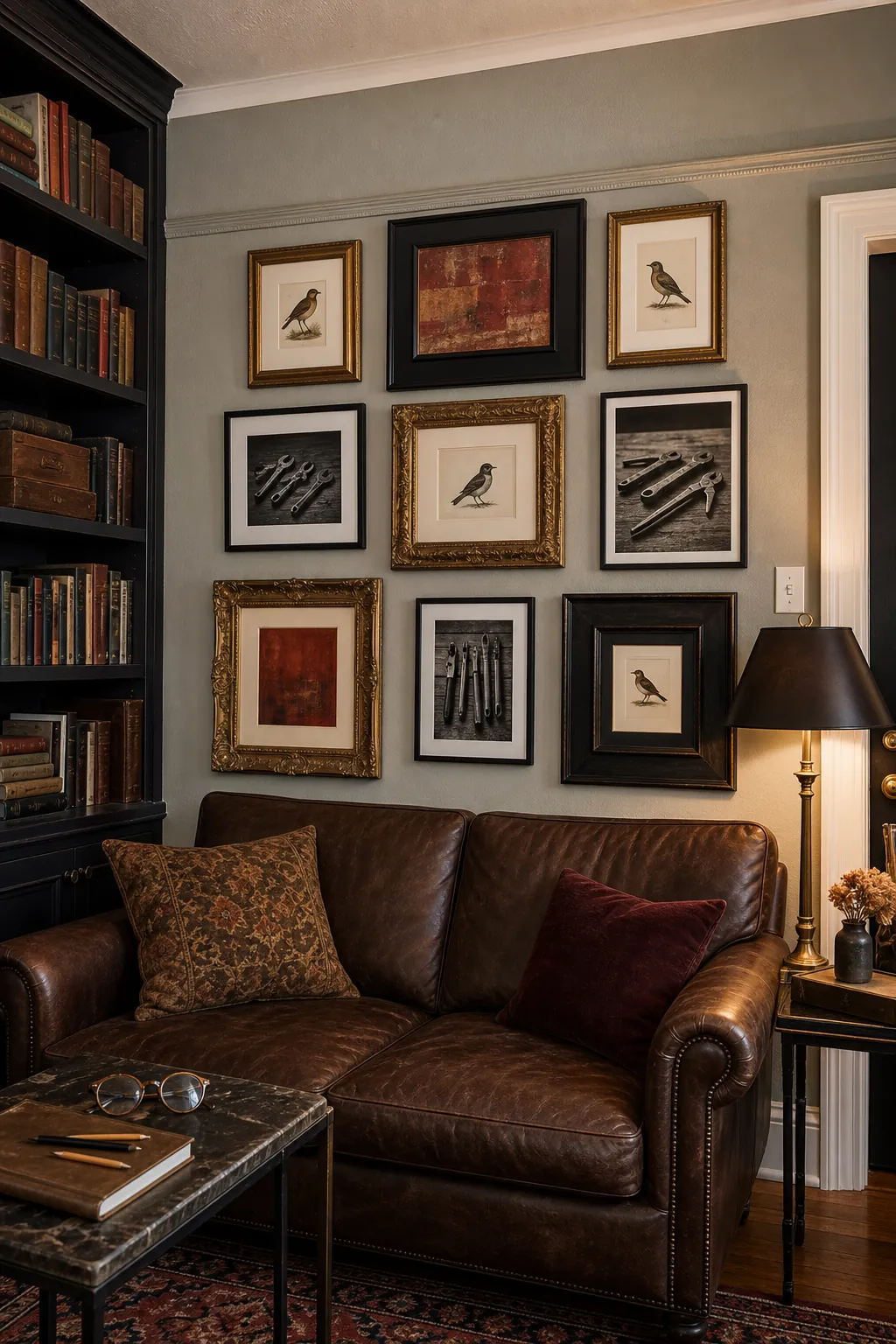
Carry One Accent Color Through Unrelated Art
Choose one color already present in the room and repeat it lightly through otherwise unrelated art. The color might appear in a photograph, a painted border, a textile thread, or one ceramic relief rather than in every piece. Spread those accents from side to side so the eye travels through the whole composition. Let neutral works separate the strongest color moments and stop the wall from becoming overly coordinated. This is an easy way to turn found art into a coherent home gallery wall without buying matching frames.
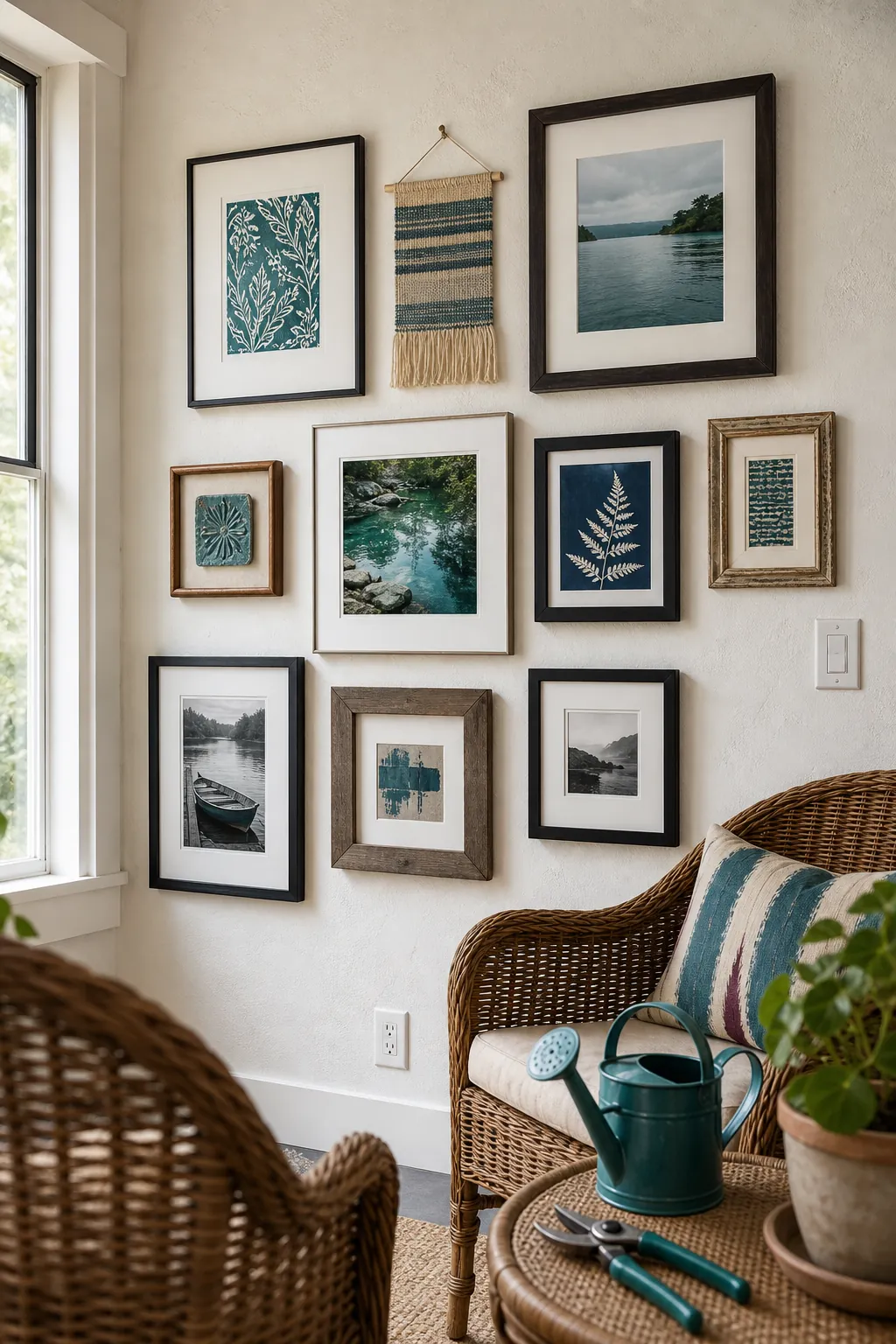
Let One Oversized Frame Set the Scale
Begin with one oversized work that suits the furniture width, then build the mixed arrangement outward with progressively smaller frames. The large piece prevents a collection of tiny art from looking weak on a broad wall. Offset it slightly rather than forcing perfect symmetry, then balance its weight with two medium dark frames on the opposite side. Use the smallest pieces only to resolve gaps after the main structure feels stable. A confident anchor makes mismatched gallery wall decisions much easier because every addition has a reference point.
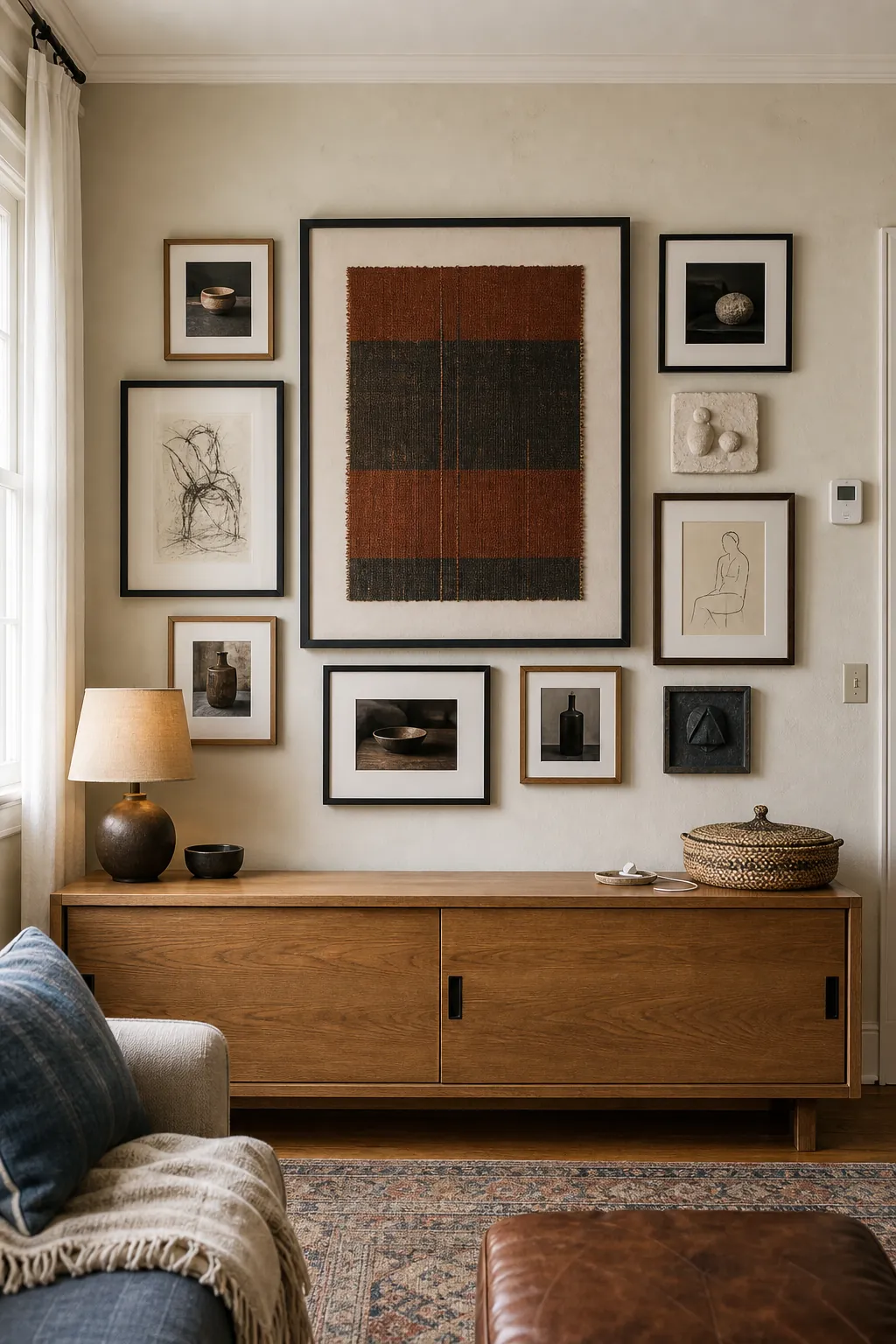
Balance an Asymmetrical Wall Around the Television
Treat the television as one dark rectangle in the composition instead of pretending it is not there. Place a larger pale work above one side and distribute smaller black frames on the other to balance its visual mass. Maintain an even buffer around the screen so the wall never feels cramped and ventilation remains practical. Choose quiet images with generous negative space because detailed art can compete with moving content. The result feels eclectic and lived-in while keeping the television at a comfortable viewing height.
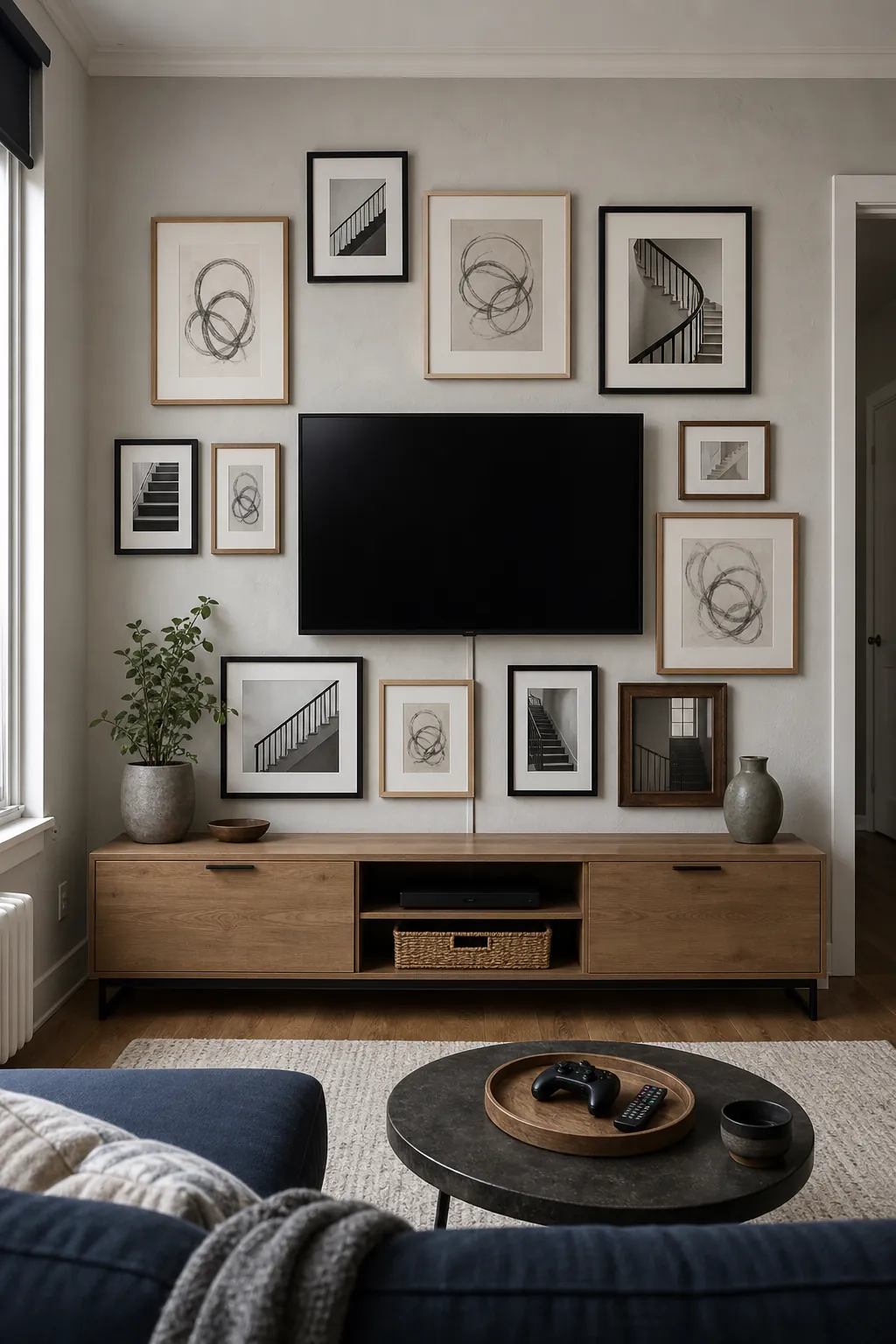
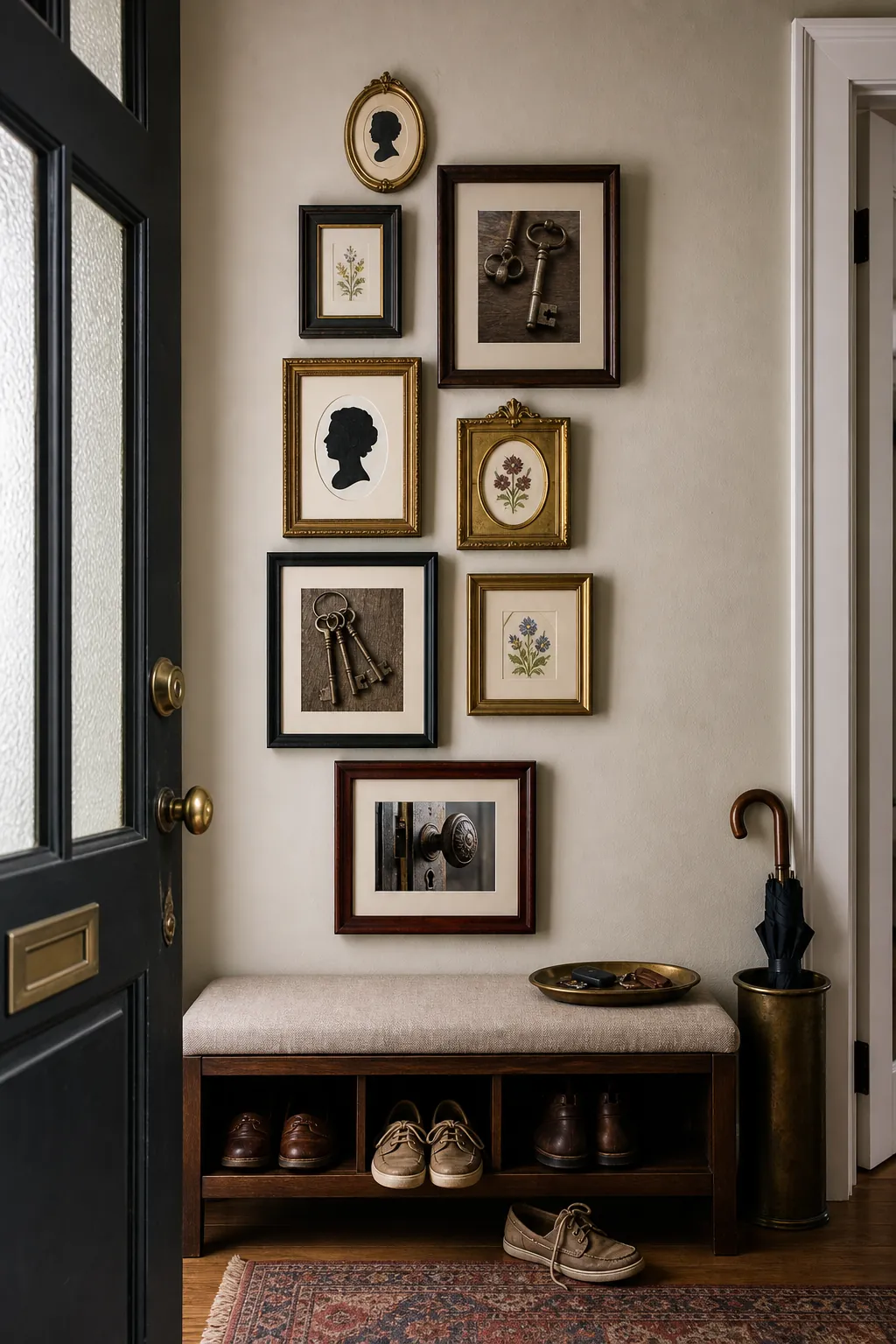
Build a Vertical Entryway Gallery From the Bench Up
A narrow entryway benefits from a gallery that rises vertically instead of spreading into door traffic. Start just above the bench with one medium frame, then taper toward smaller pieces as the arrangement climbs. Alternate wood, black, and brass frames along the center axis so no finish forms an isolated block. Keep the top comfortably below molding and leave hooks, switches, and the door swing unobstructed. The upward layout brings personality to a small wall while preserving the practical function of the entry.
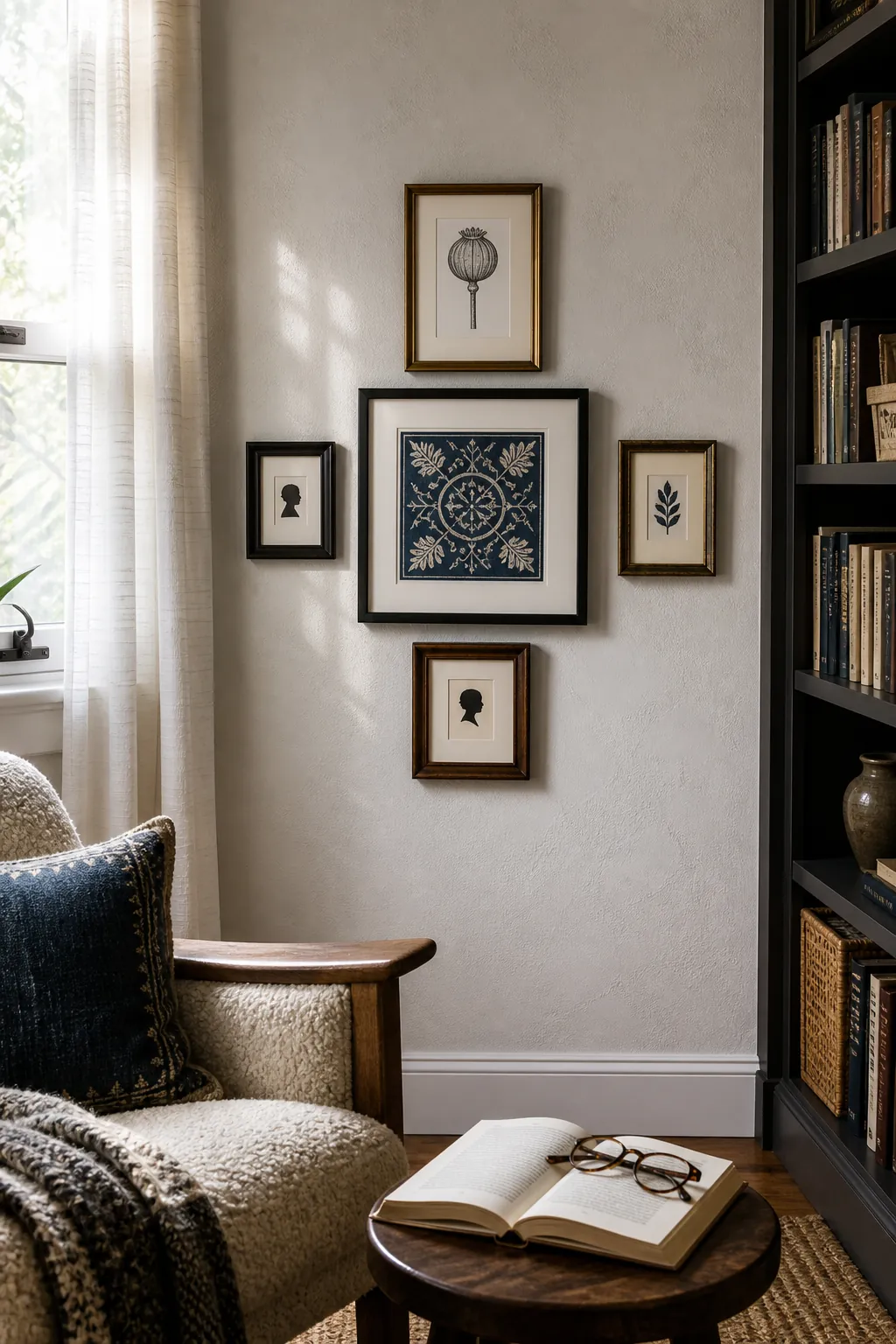
Shape a Compact Diamond on a Small Wall
Arrange one square center frame with four smaller pieces above, below, and to each side to create a compact diamond. This shape fits awkward wall patches where a rectangle would feel too rigid or wide. Vary the frame finishes but repeat the center artwork color in two outer pieces. Keep diagonal gaps visually even and test the points with paper templates before installing hardware. The diamond reads as one jewel-like object and gives a small gallery wall layout a distinct silhouette.
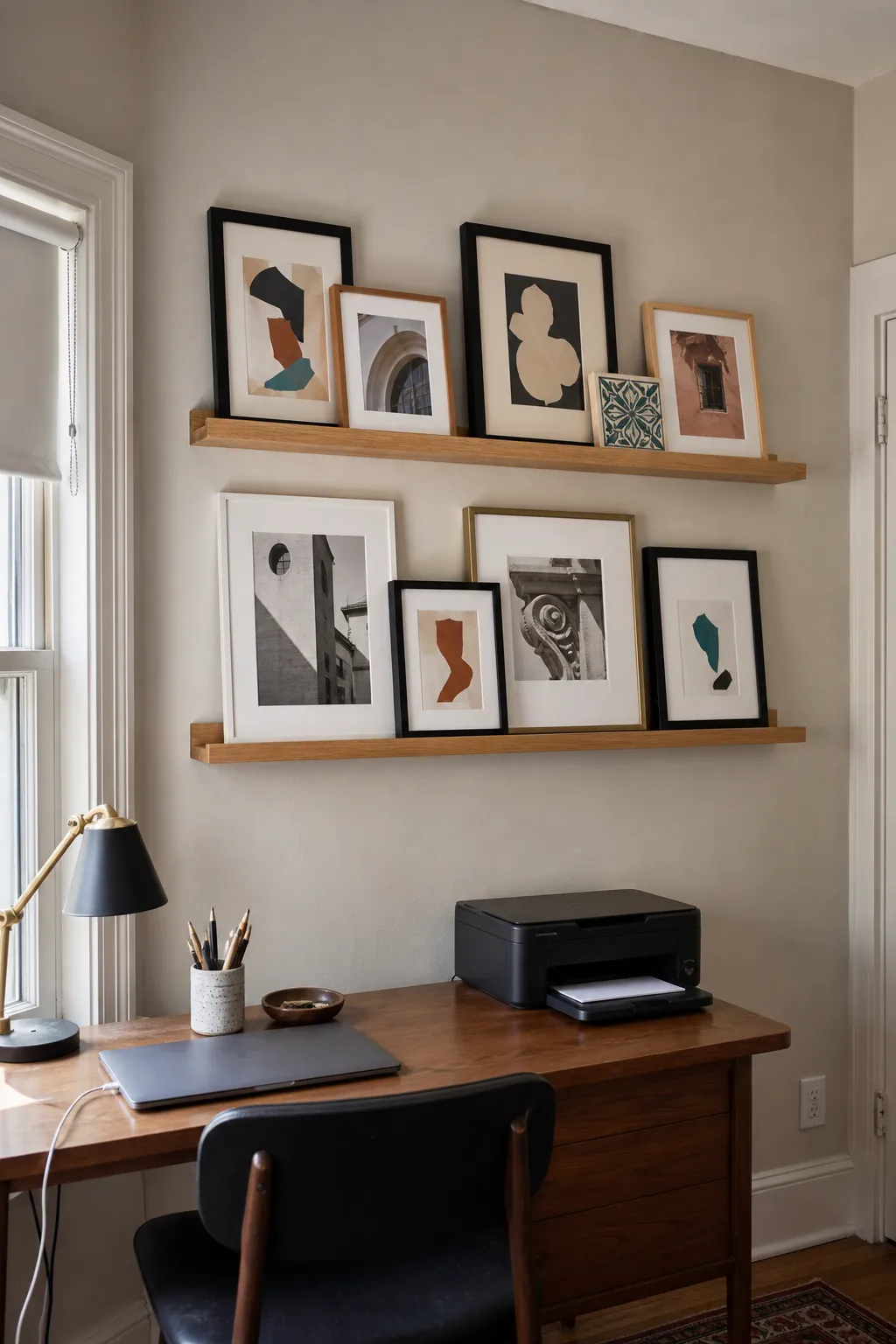
Layer Mixed Frames on Two Picture Ledges
Two ledges remove the pressure to finalize every frame position before hanging. Overlap a few corners, but keep faces and focal details fully visible so the layering looks relaxed rather than careless. Put heavier, taller frames on the lower ledge and use small, light profiles above. Repeat one wood tone across both shelves to connect metal, painted, and vintage frames. The display can evolve with new photos or prints while the ledges preserve an orderly horizontal foundation.
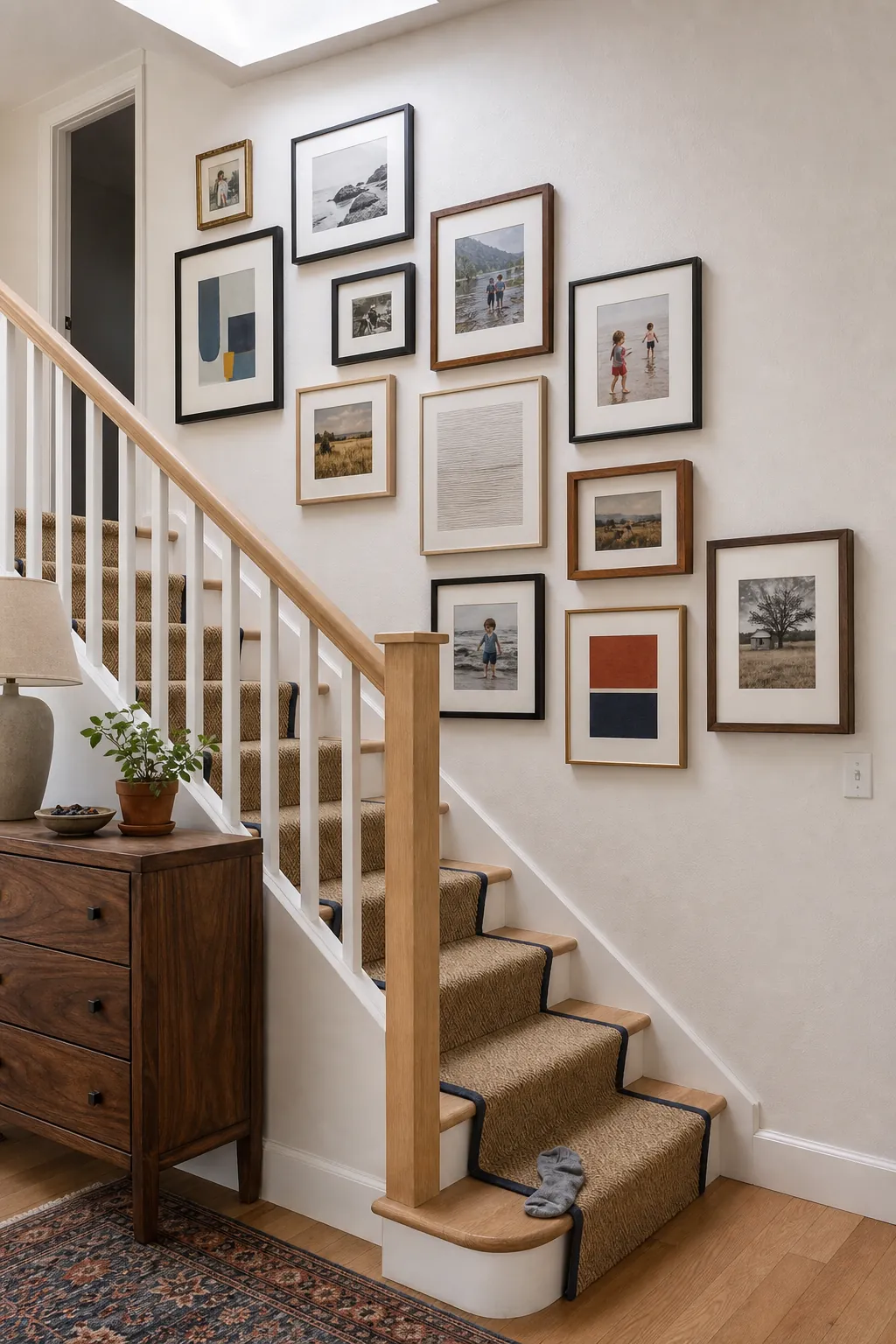
Mix Frames Along the Rise of a Staircase
Use the handrail angle as the guide for a mixed-frame staircase gallery. Begin with larger pieces where the wall opens up, then reduce scale near the upper landing. Repeat two mat colors across wood, metal, and painted frames so the diagonal collection has a quiet internal rhythm. Check the arrangement from both landings because a layout can look balanced from below and crowded from above. Paper templates are invaluable here because they expose awkward gaps before nails go into a tall wall.
Wrap an Eclectic Collection Across a Corner
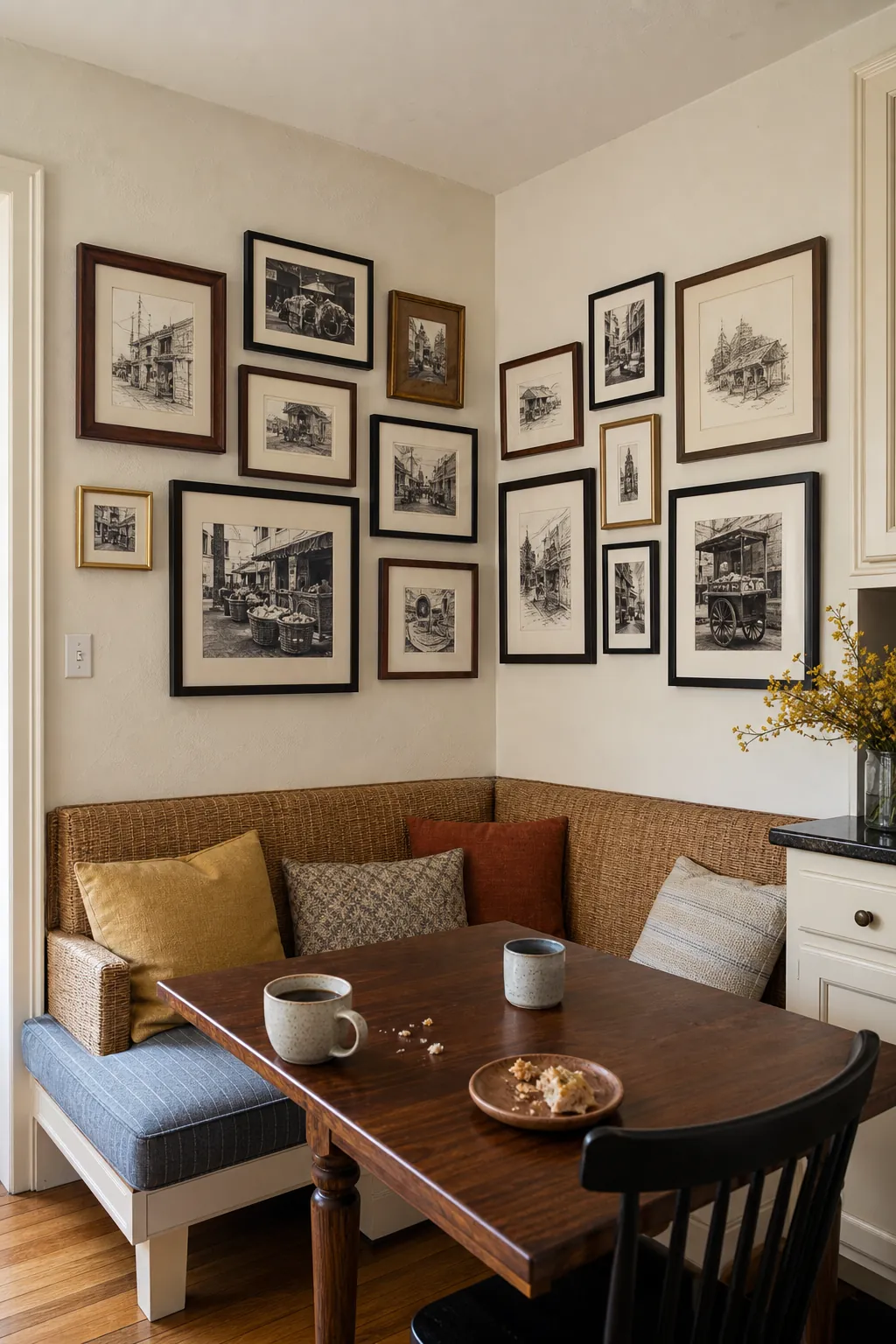
A corner arrangement turns two short walls into one continuous gallery surface. Treat the corner seam as the central hinge and place similar visual weight on each side rather than mirroring frame sizes exactly. Keep frames slightly farther from the seam so their side shadows do not collide. Connect the wall planes with one subject family, such as market sketches and street photographs, while varying frame materials. The angled display feels immersive in a breakfast nook or reading corner without consuming a large flat wall.
Blend Photography, Embroidery, and Small Reliefs
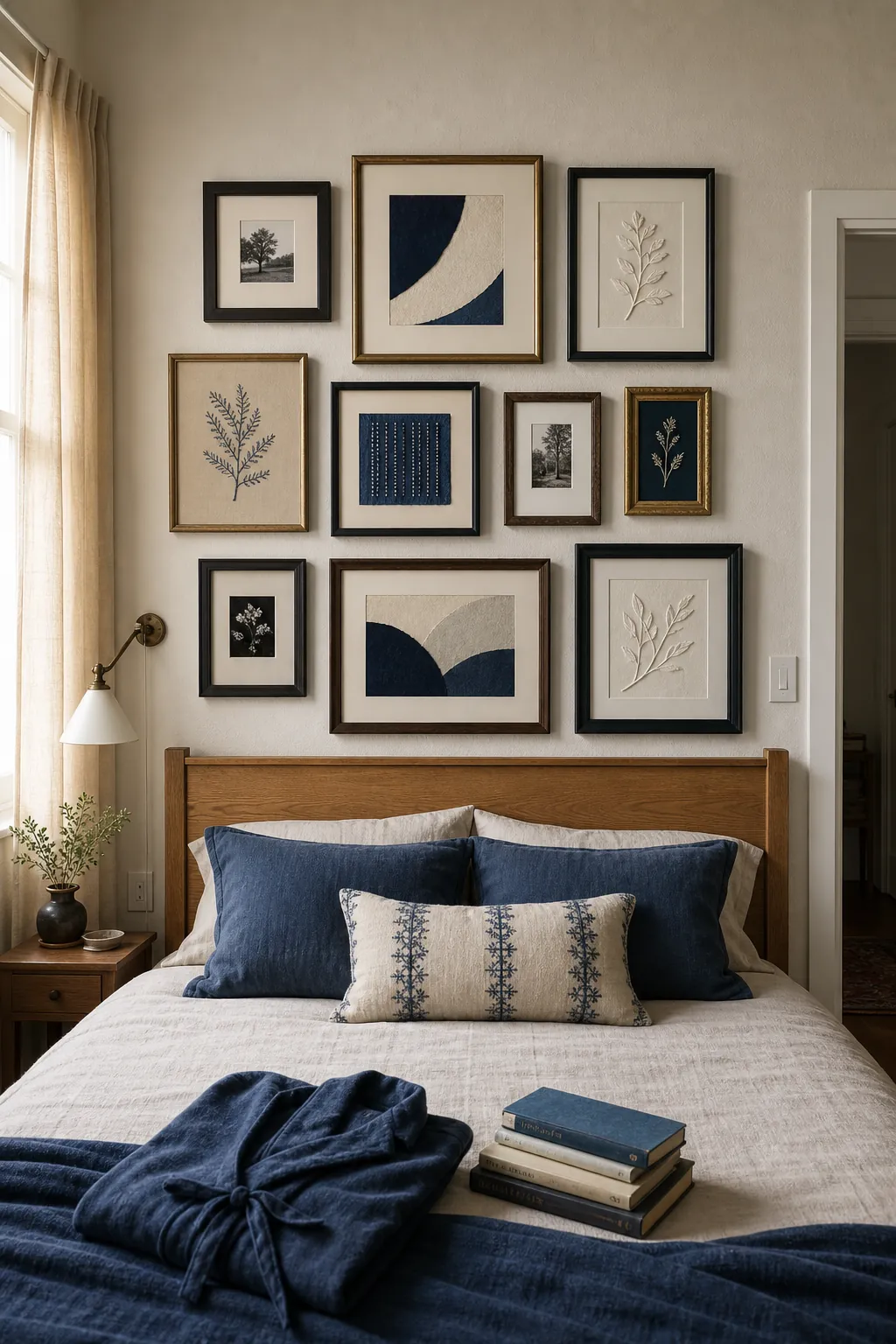
A mixed-frame wall becomes richer when the media vary as much as the profiles. Pair photographs with embroidery, handmade paper, a shallow relief, and one small painting so the surface has genuine depth. Keep the objects safely secured and choose shallow pieces that will not project into a busy pathway. Repeat a color or motif across different media to make the combination feel curated. This method gives handmade and sentimental work equal status beside purchased art.
Use Black-and-White Photos to Calm Colorful Frames
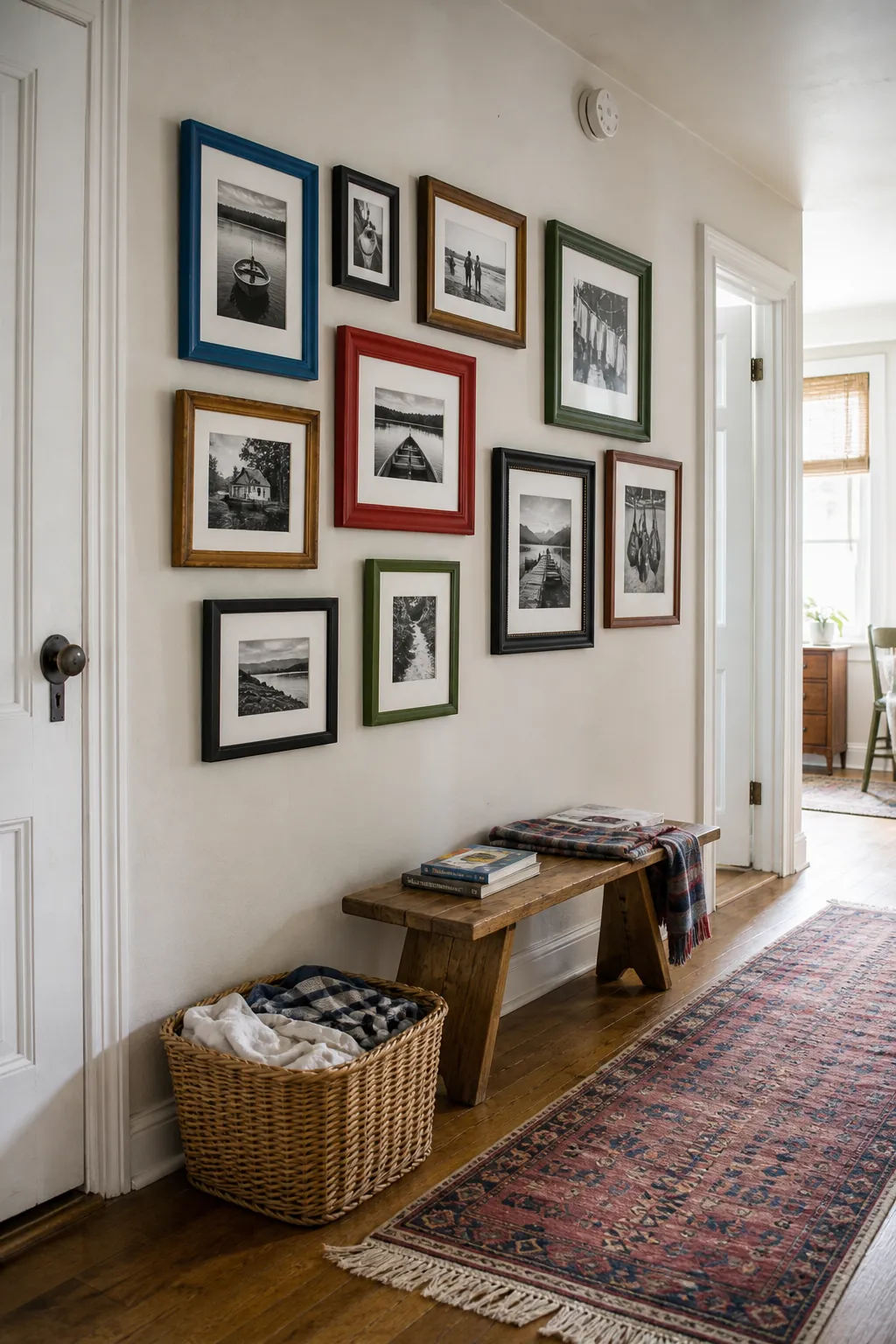
If the frames already supply strong color, simplify the contents with black-and-white photography. Consistent image treatment lets painted red, blue, green, and wood frames behave like a playful border system. Spread the brightest frames across the grouping and use black or natural wood between them as visual rests. Choose photos with varied subjects but similar contrast so one image does not overpower the set. This balance works well for family pictures or travel details that were captured under different lighting conditions.
Interrupt Rectangles With One Round Frame
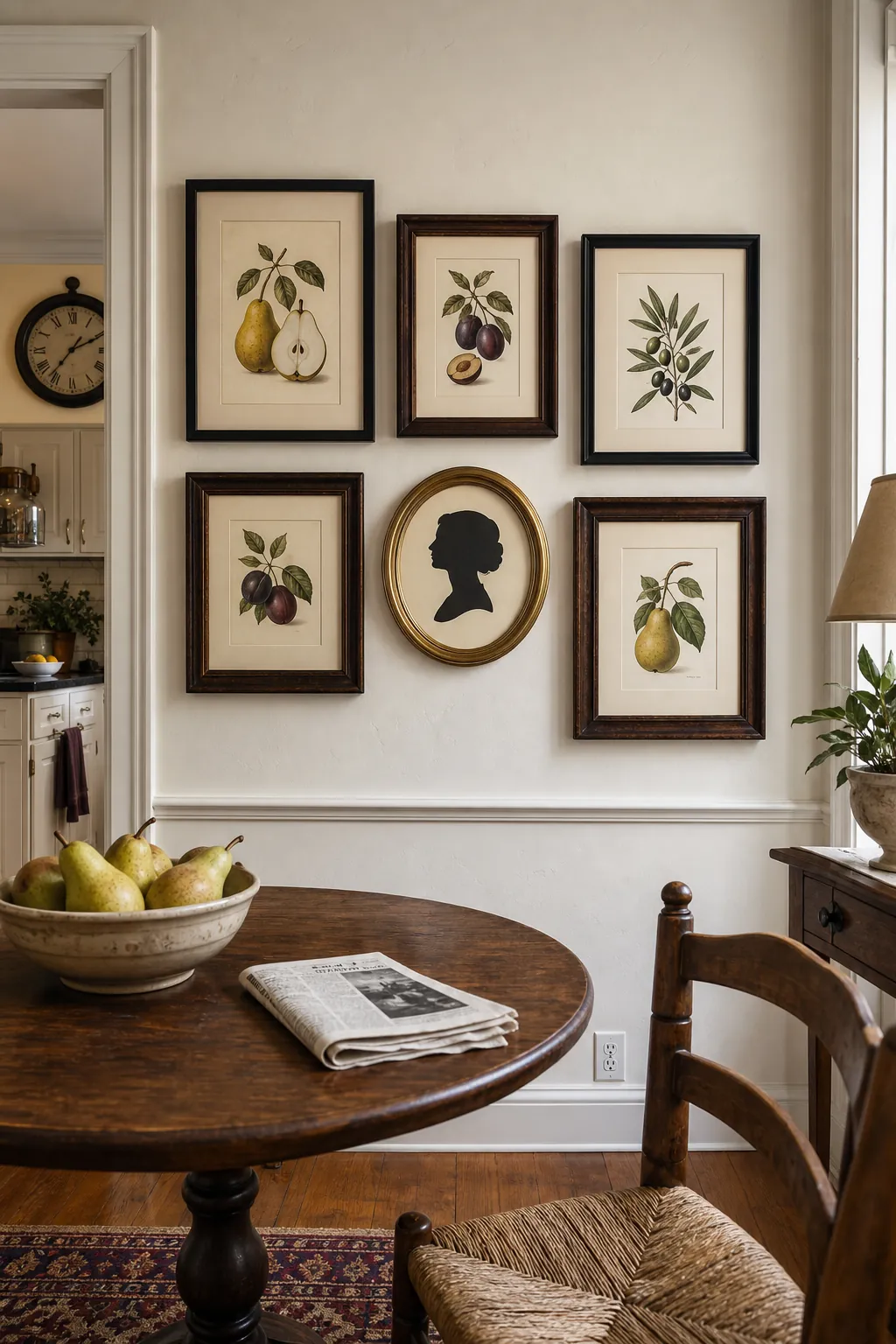
One round frame introduces a pause that can make an irregular rectangular collection feel more fluid. Place it near a transition between large and small frames instead of using it as a random center target. Echo the curve through a table, lamp, or chair elsewhere in the scene for subtle reinforcement. Keep the round frame content simple, such as a silhouette or tiny pressed flower, so its shape remains the feature. A single circular accent often provides enough contrast without turning the wall into a collection of novelties.
Add a Shadow Box for Dimensional Keepsakes
A shallow shadow box can anchor small mementos that would otherwise stay hidden in a drawer. Use one box only and surround it with flatter frames so the change in depth feels special. Mount the contents securely with archival methods and keep the box out of direct sun if textiles or paper are fragile. Repeat the box finish in at least one ordinary frame to connect it to the wall. Tickets, a fabric fragment, dried seedpods, or a small tool can add a personal story without relying on generic art.
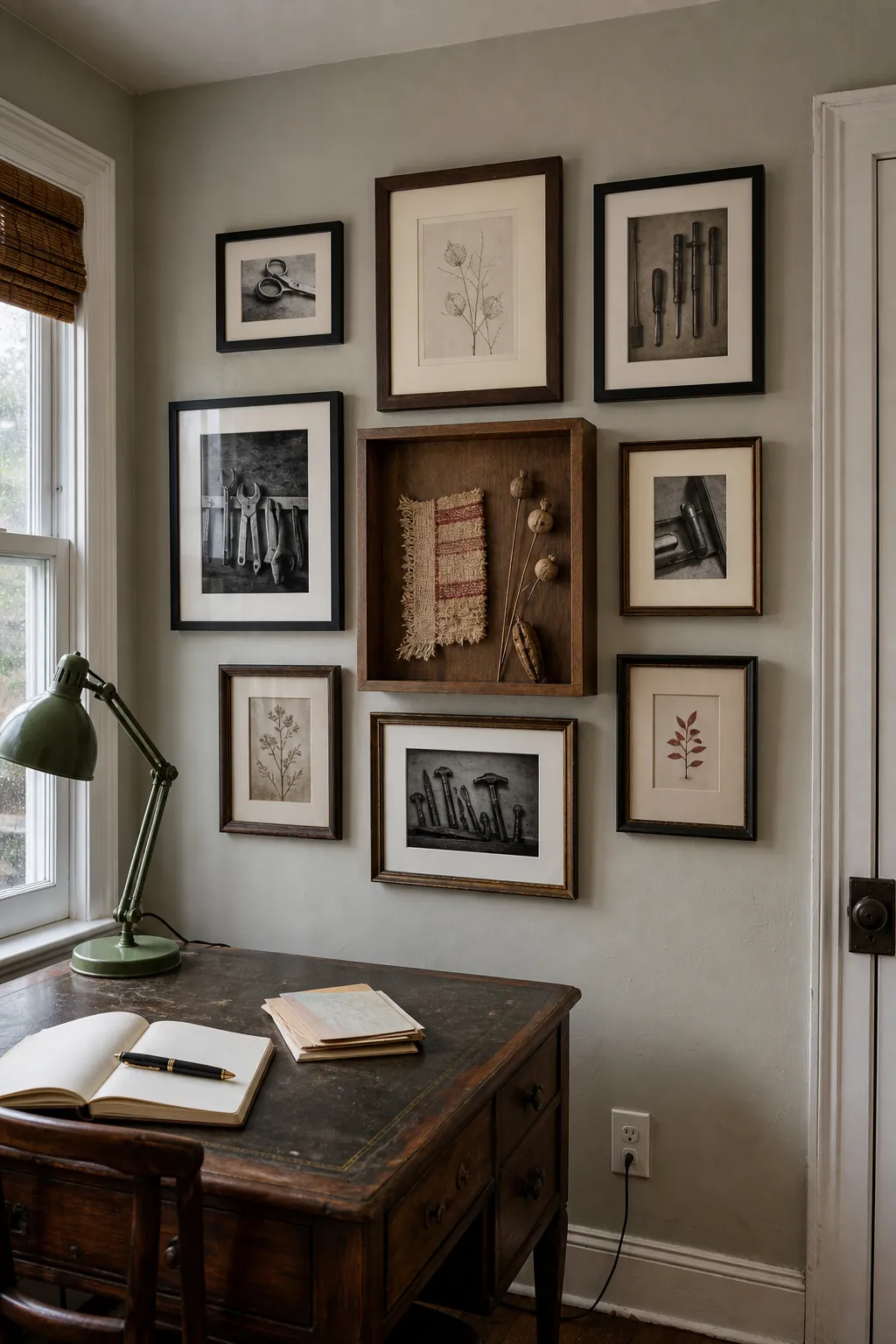
Refresh Thrifted Frames With a Restrained Paint Set
A picture frame makeover can unify damaged thrift finds without erasing all their character. Choose two or three muted paint colors and leave selected wood or metal frames untouched for contrast. Use a matte or eggshell finish so repaired profiles do not look plasticky under daylight. Distribute each painted color across the gallery and avoid placing same-color frames side by side. Small chips or uneven carving can remain visible because they reinforce the collected quality of the wall.
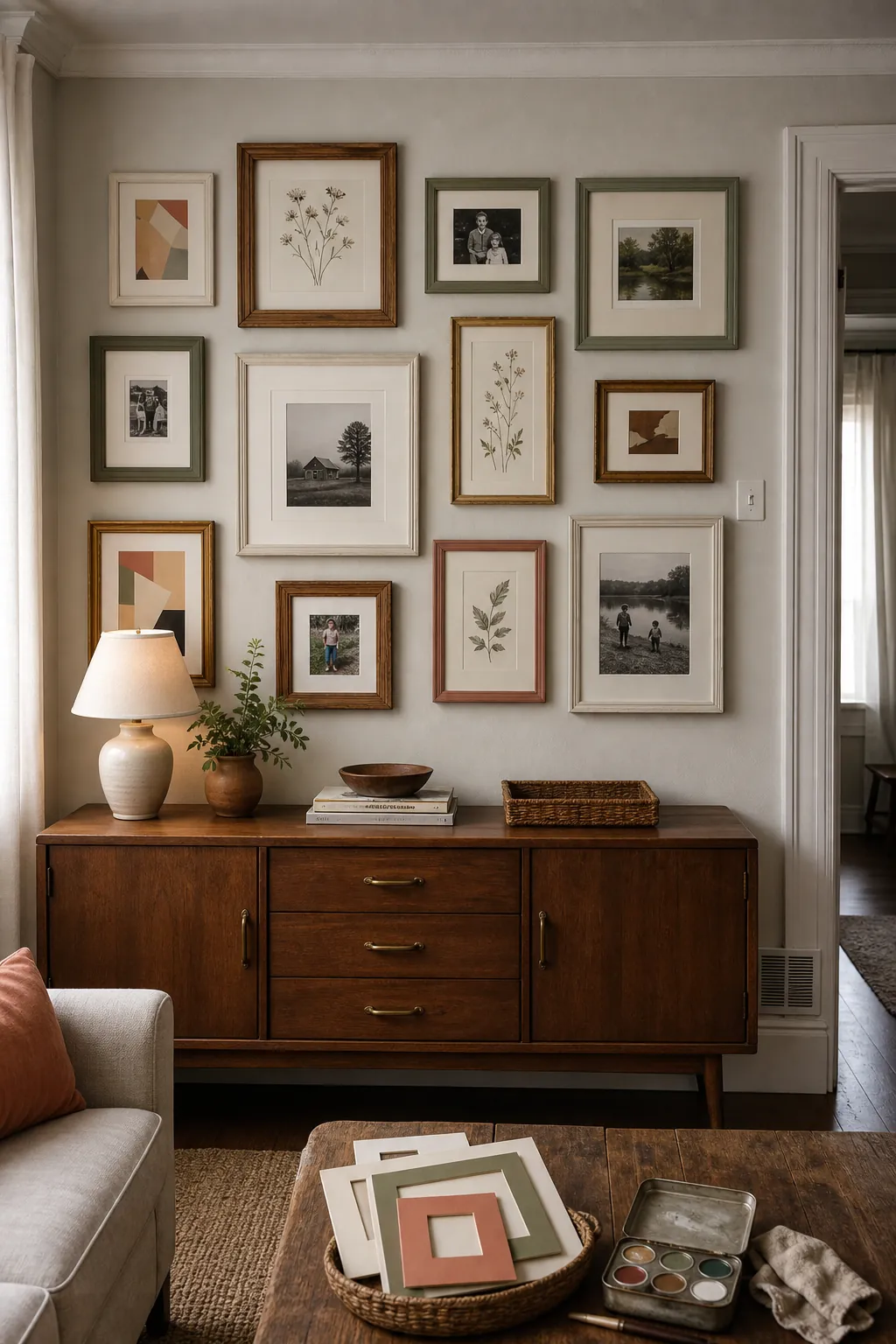
Create a Lightweight Rental Gallery With Removable Strips
For a rental wall, limit the display to lightweight acrylic-front frames that suit approved removable strips. Arrange the pieces with paper templates and verify the strip weight for every individual frame. Keep the grouping compact so fewer anchors carry the visual idea and no frame sits where coats or bags will catch it. Mixed colors and sizes can still feel intentional when the outer boundary and gaps are consistent. This approach adds personality now without treating a temporary home as a waiting room.
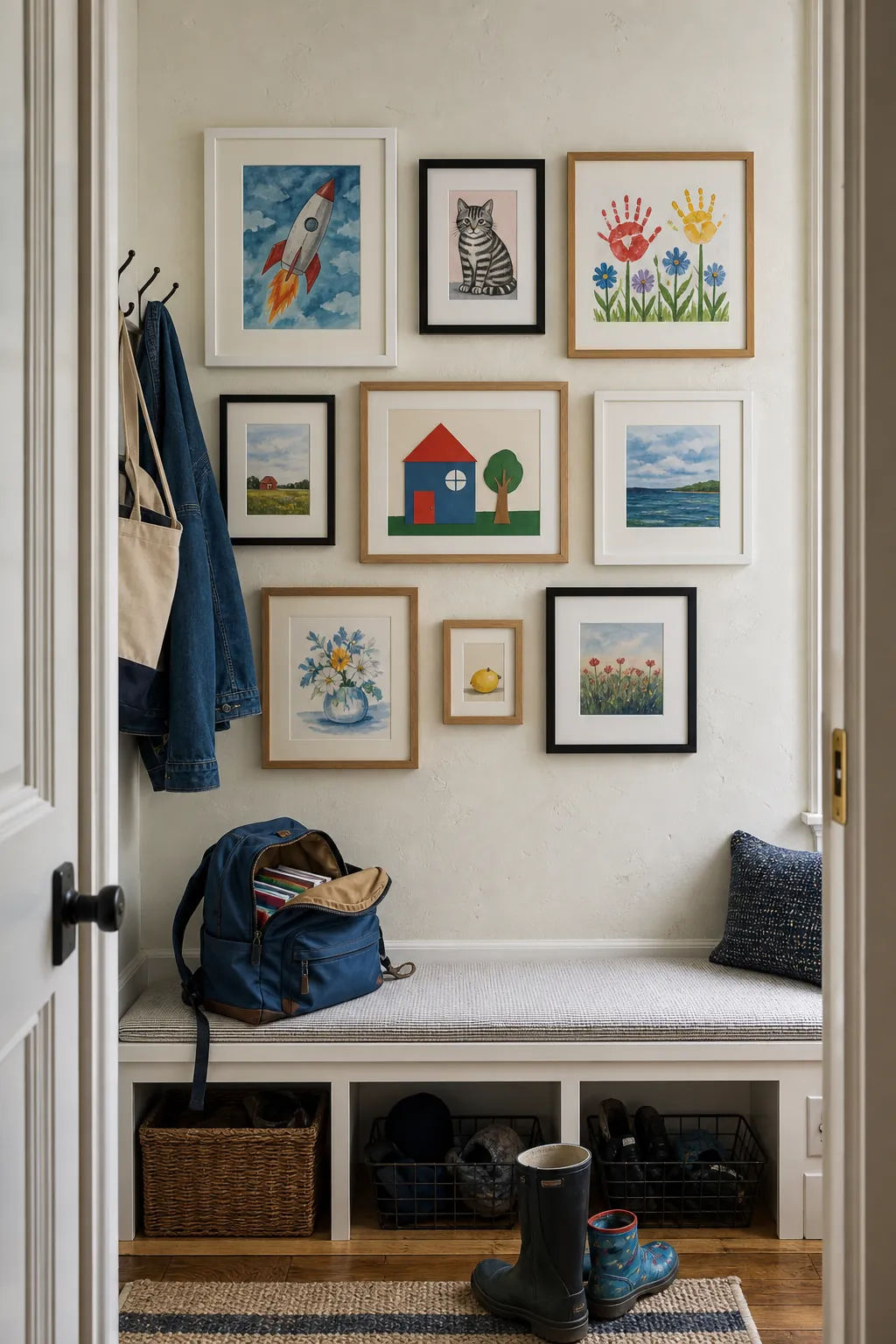
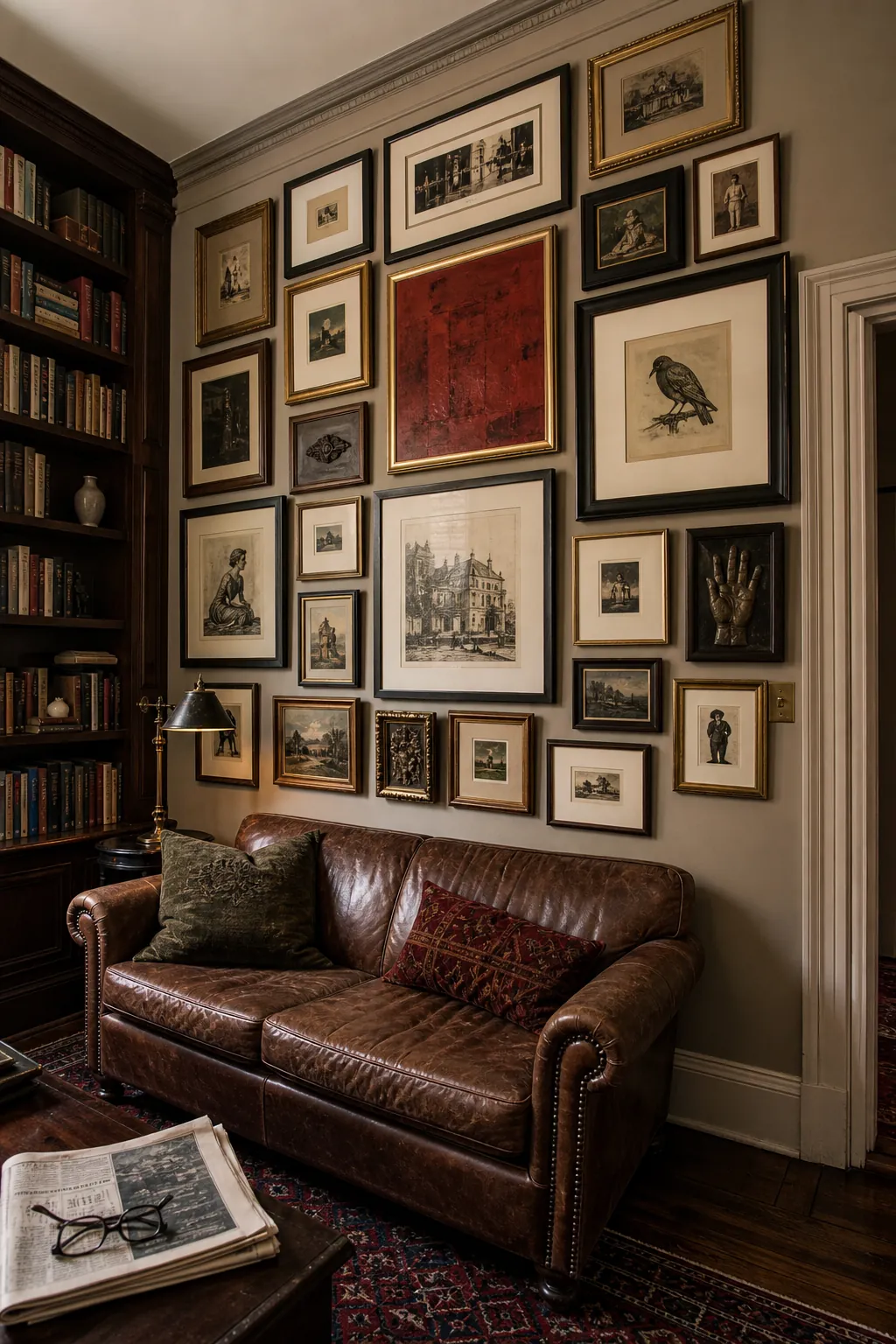
Go Floor-to-Ceiling With a Controlled Salon Wall
A tall room can support a dense salon wall when the collection stays inside a deliberate outer shape. Place the largest works first, then use small pieces to solve the remaining negative spaces. Repeat one deep color through paintings, frames, or textiles so the wall has a visual pulse. Leave breathing room at the ceiling, trim, and furniture edges even when the interior spacing is compact. The finished display should feel abundant and personal, not as if every available object was forced onto the wall.
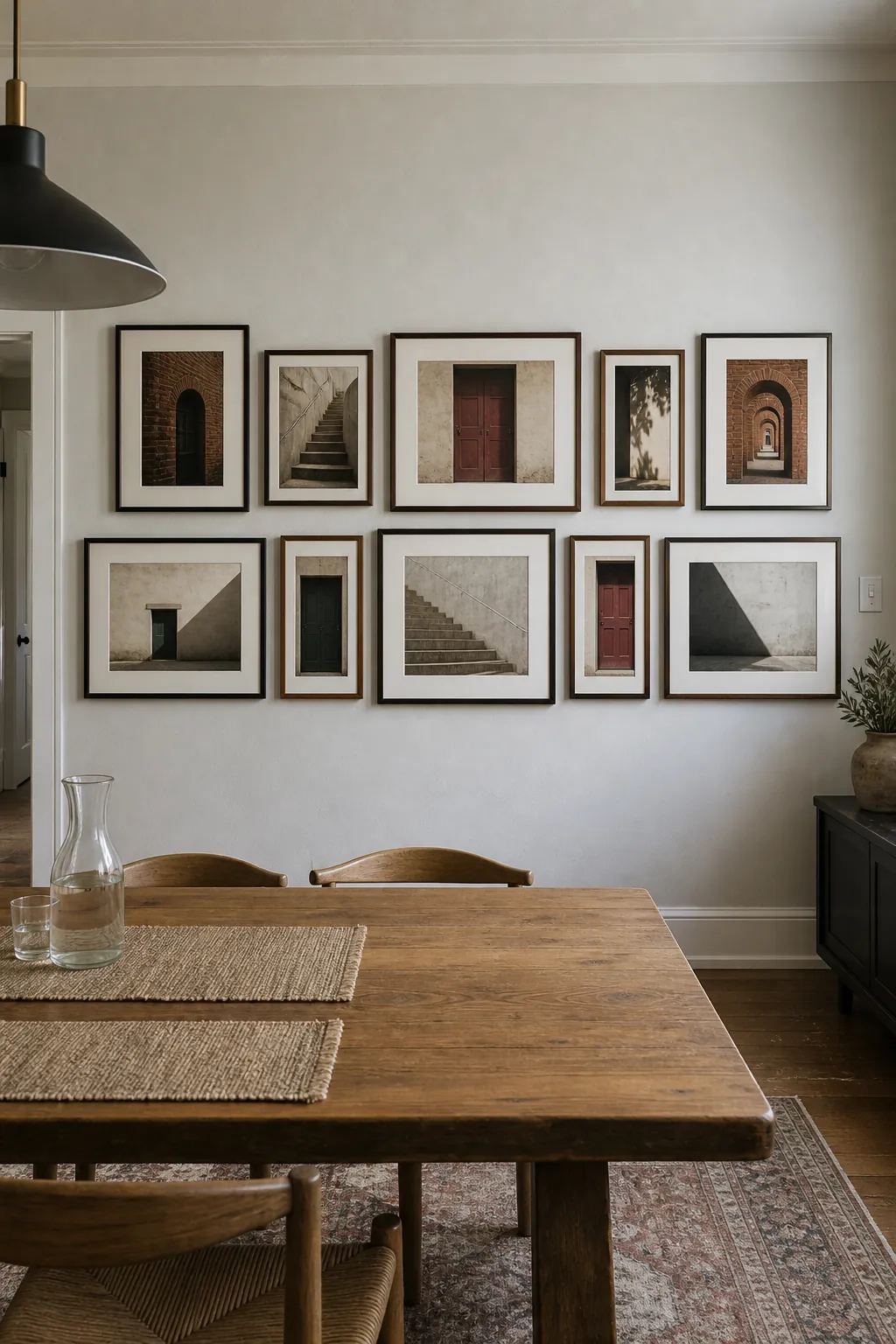
Align Mixed Widths in Two Calm Rows
Two shared baselines can bring order to frames that vary in width and finish. Keep the top row aligned along its lower edge and the bottom row aligned along its upper edge, leaving a clean channel between them. Alternate wide and narrow frames so the visual weight does not bunch at one end. Use similar mat tones to reinforce the row structure while artwork subjects remain diverse. This layout gives a broad dining room wall the rhythm of a grid without requiring identical sizes.
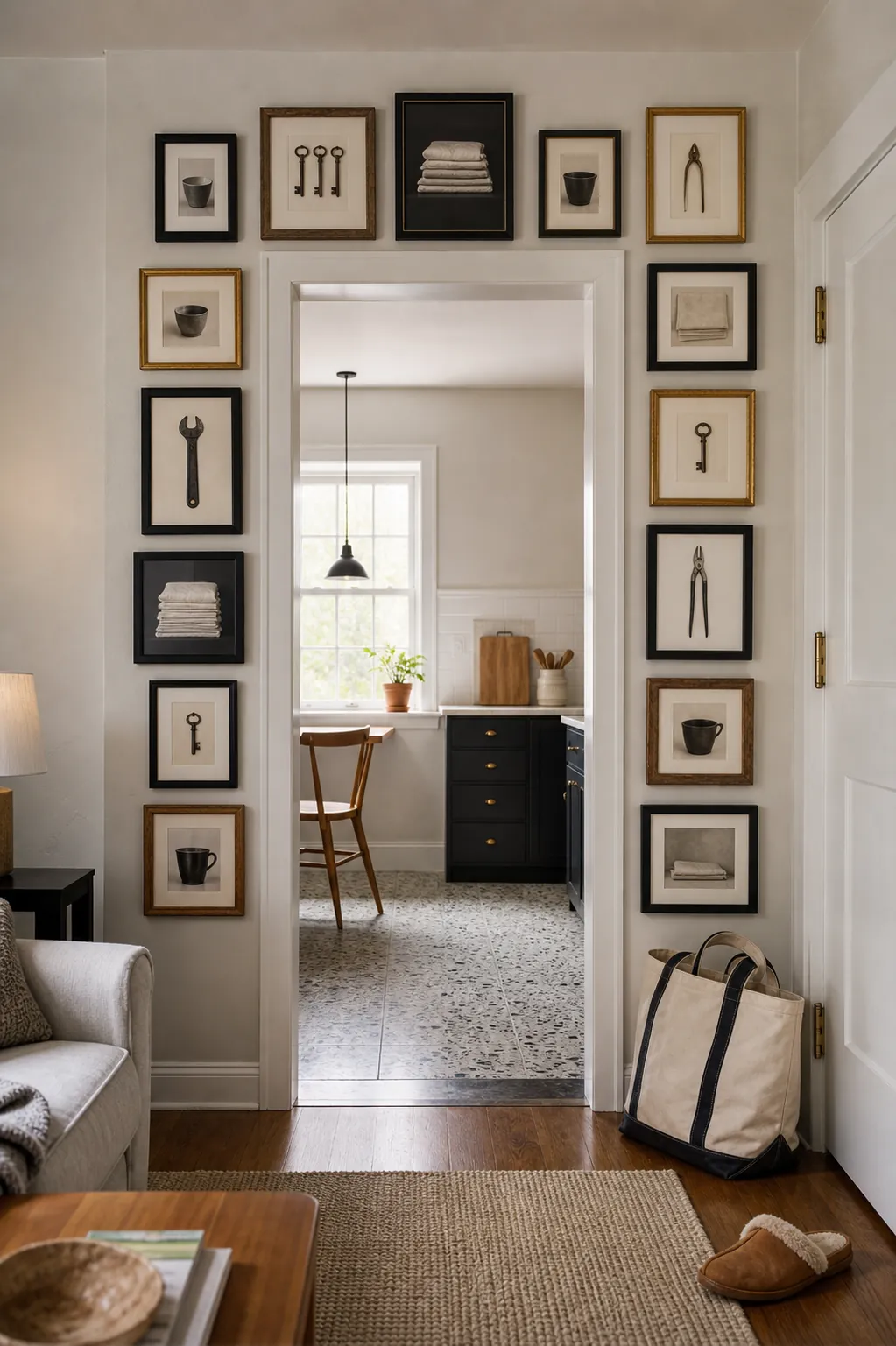
Trace a Doorway With Small Mixed Frames
Small frames can follow a doorway and turn circulation space into a memorable gallery feature. Maintain a consistent offset from the trim while allowing individual frame colors and proportions to vary. Use shallow, securely closed profiles so passing shoulders and bags cannot catch exposed hardware. Keep the strongest frame finishes balanced on opposite sides of the opening. The arrangement works best with intimate object photographs or sketches that reward a close look as people move between rooms.
Contain the Whole Mix Inside an Invisible Rectangle
A free-form mixed gallery becomes dependable when its outer edge reads as one clear rectangle. Tape that boundary first, place two or three large frames, and fill around them while maintaining one chosen gap. Mix profiles, orientations, and media freely inside the outline, but repeat a few finishes and colors to establish rhythm. Photograph the paper-template version and live with it for several days before installing the final hardware. The invisible boundary lets personality remain the focus while giving the eye enough structure to understand the wall.