
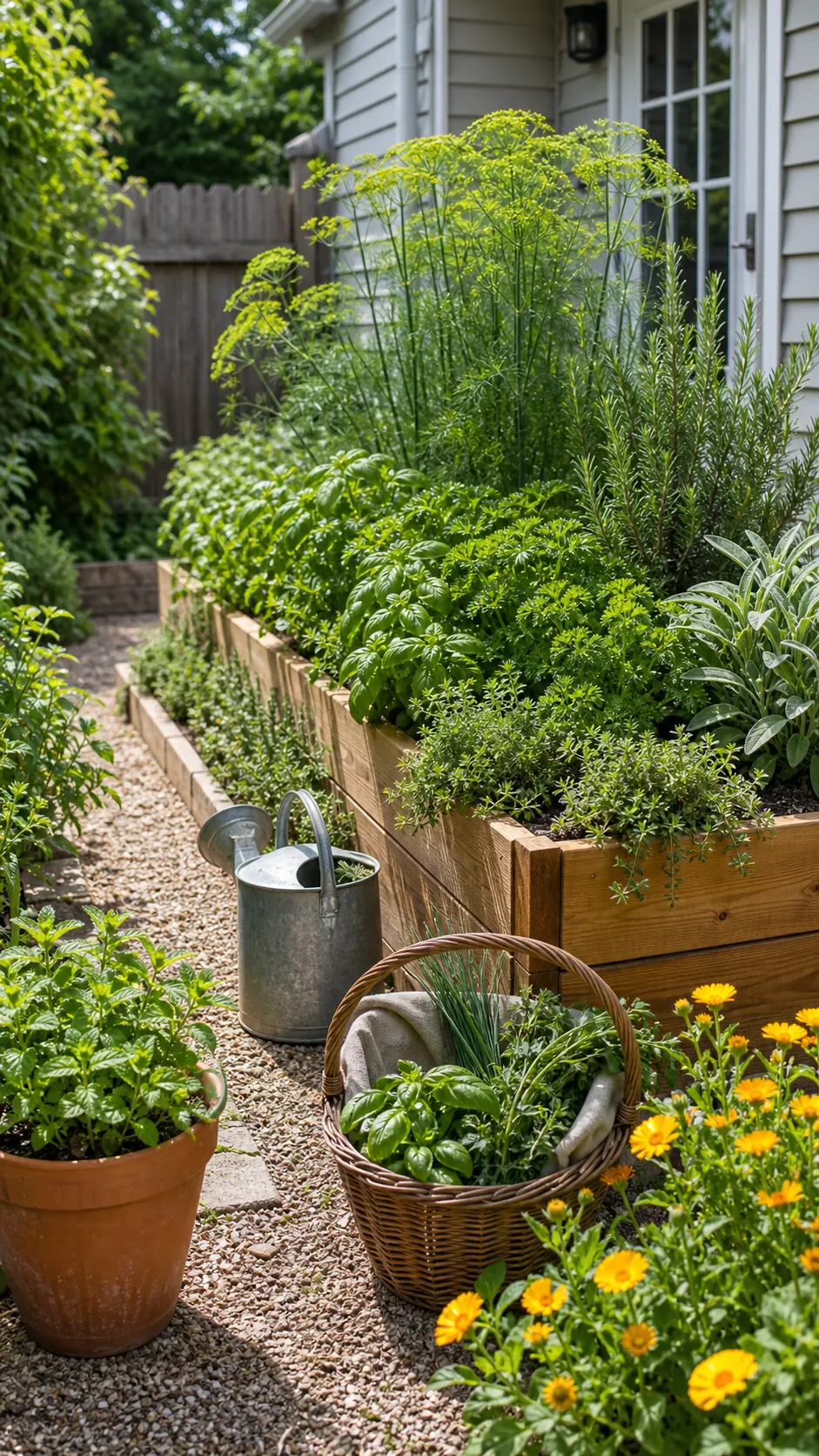
The best herb garden design begins with a less glamorous question: what will you actually cook, brew, or harvest? Gardeners often worry about “companion” lists while overlooking the conditions that decide success—sun, root space, drainage, mature size, and how easily the plants can be watered and cut.
These designs range from a few kitchen-door pots to accessible raised beds and formal potagers. Use them as layout ideas, then adjust the herbs for your climate and light. Keep mint contained, put tall plants where they will not shade short ones, and leave more open soil than a tray of seedlings makes you think you need.
Kitchen-Door Culinary Pots
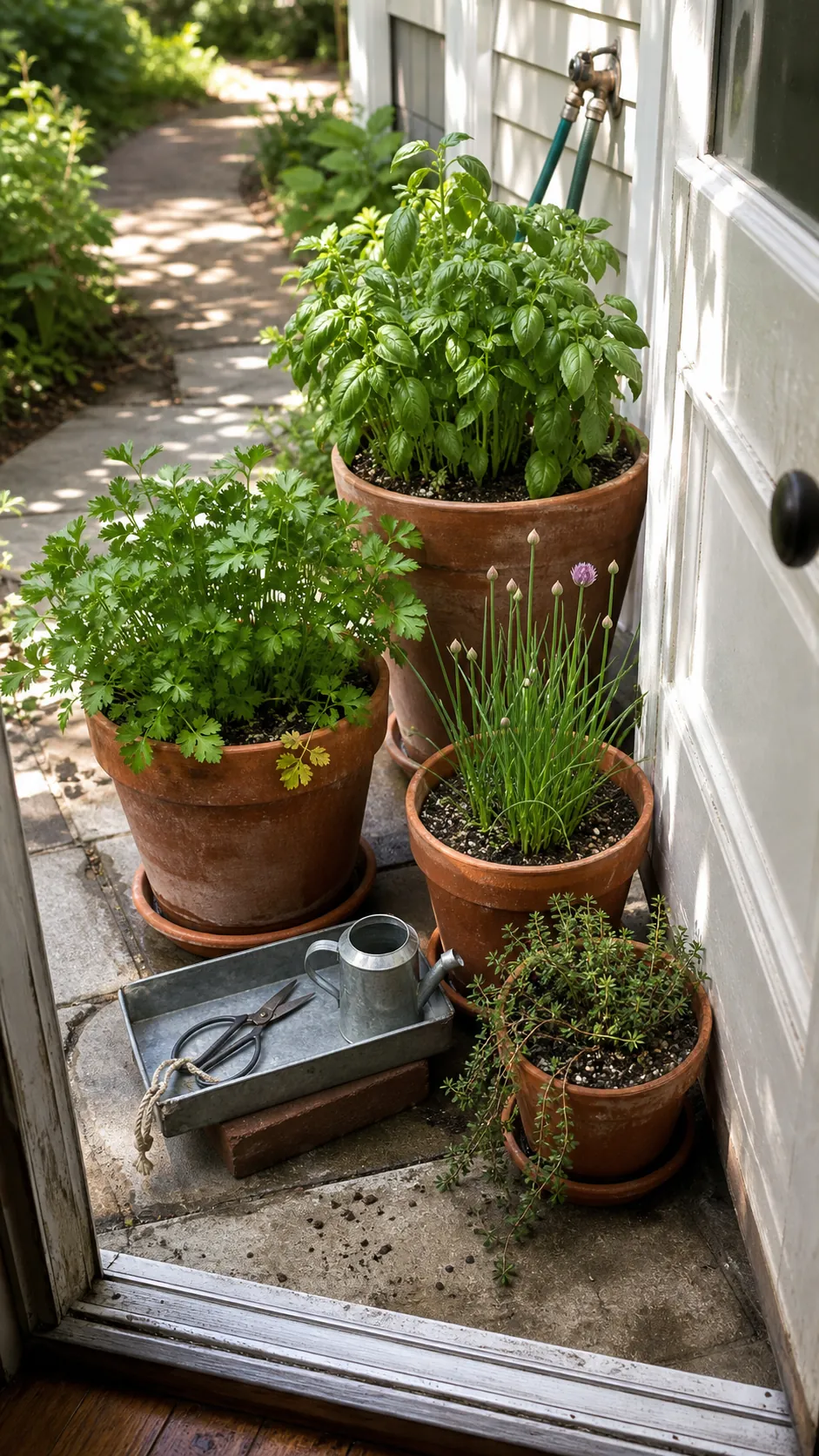
Put the herbs you use most within a few steps of the kitchen. Large individual pots are easier to position than one crowded trough: basil can take the brightest warm spot, parsley can accept a little afternoon shade, and thyme can have a gritty mix that drains quickly.
Leave the door swing and walking route open. Every pot needs drainage, enough soil for mature roots, and a saucer if the landing must be protected. Keep scissors and a small watering can nearby; convenience is what turns a decorative herb plant into dinner.
Stone Herb Spiral
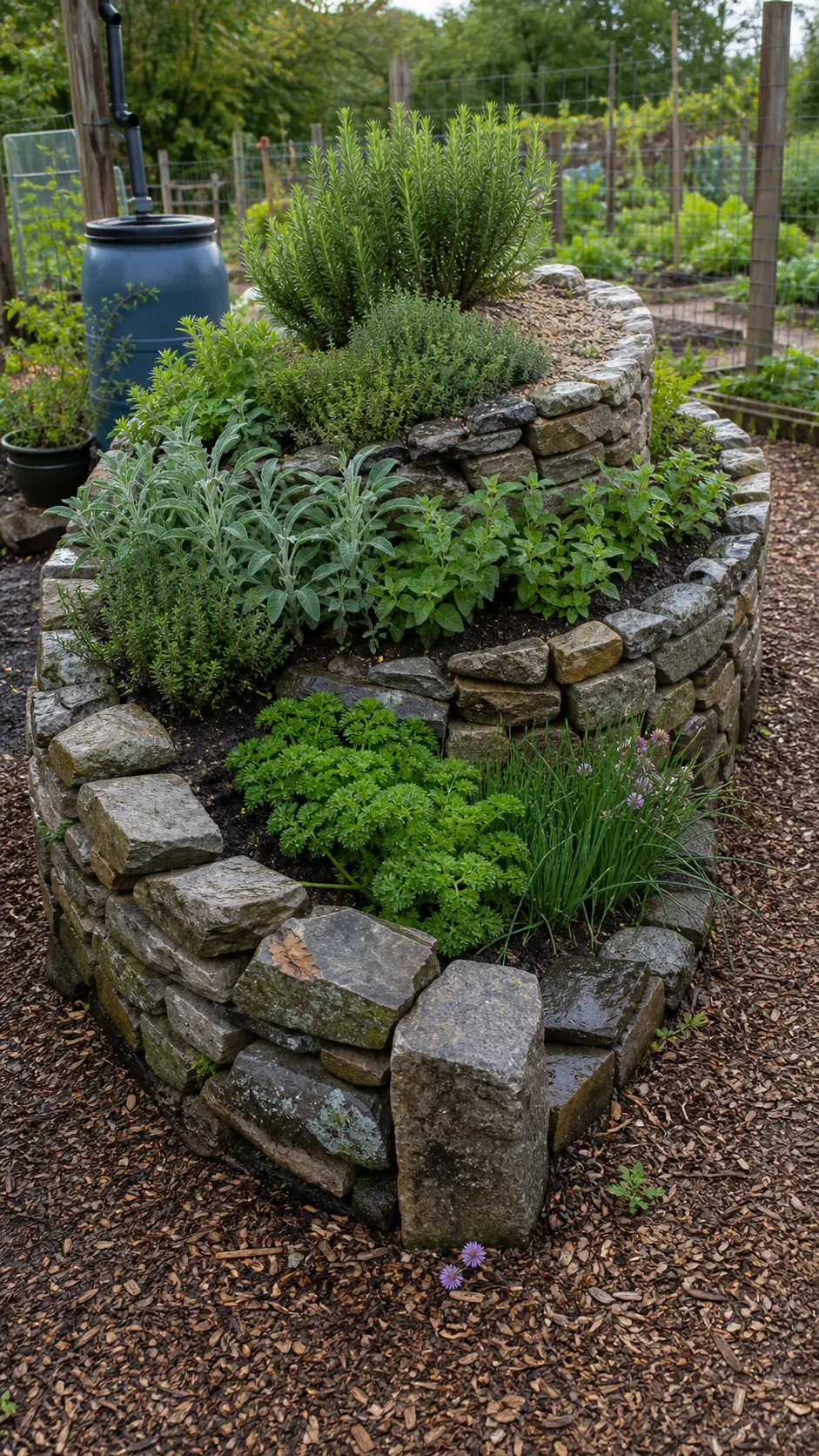
An herb spiral creates several growing conditions in one small footprint. Its high crown drains fastest and suits rosemary or thyme. The middle can hold sage and oregano, while the cooler lower pocket can support parsley or chives.
Build the dry-stacked wall with a slight inward lean and keep a path around it. The spiral only works when its slope, sun orientation, and soil mixes create real differences; a decorative coil packed with identical soil is simply a difficult raised bed.
Height-Zoned Raised Bed
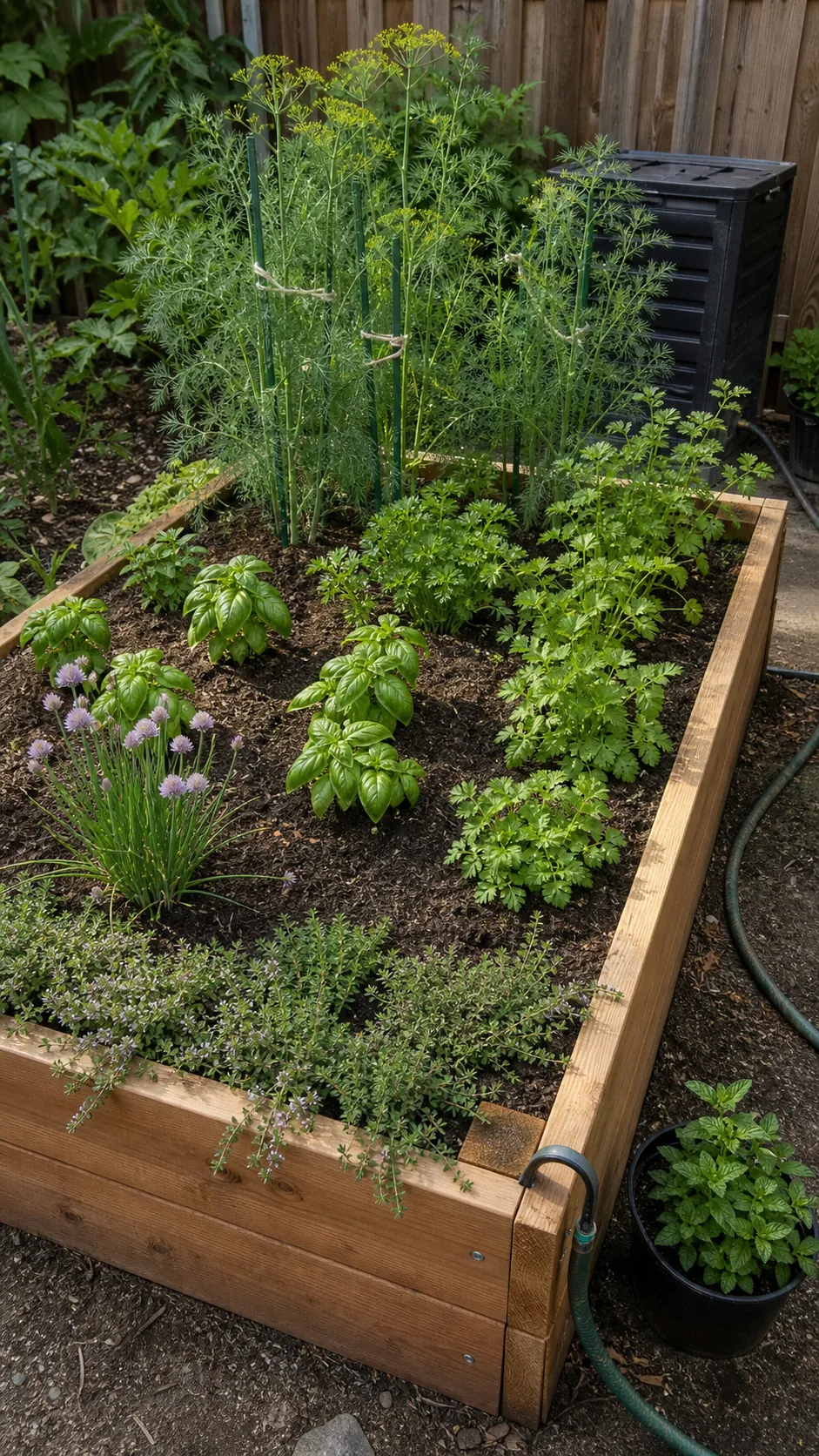
Arrange a rectangular bed in broad height bands. Put tall dill and tarragon on the north side in the Northern Hemisphere, medium basil and parsley through the center, and low thyme or chives along the reachable front edge.
Respect mature spread rather than seedling size. Rosemary can become a shrub, dill needs air and support, and cilantro benefits from succession sowing. A bed no wider than you can reach from both sides protects soil from compaction.
Compact Formal Potager
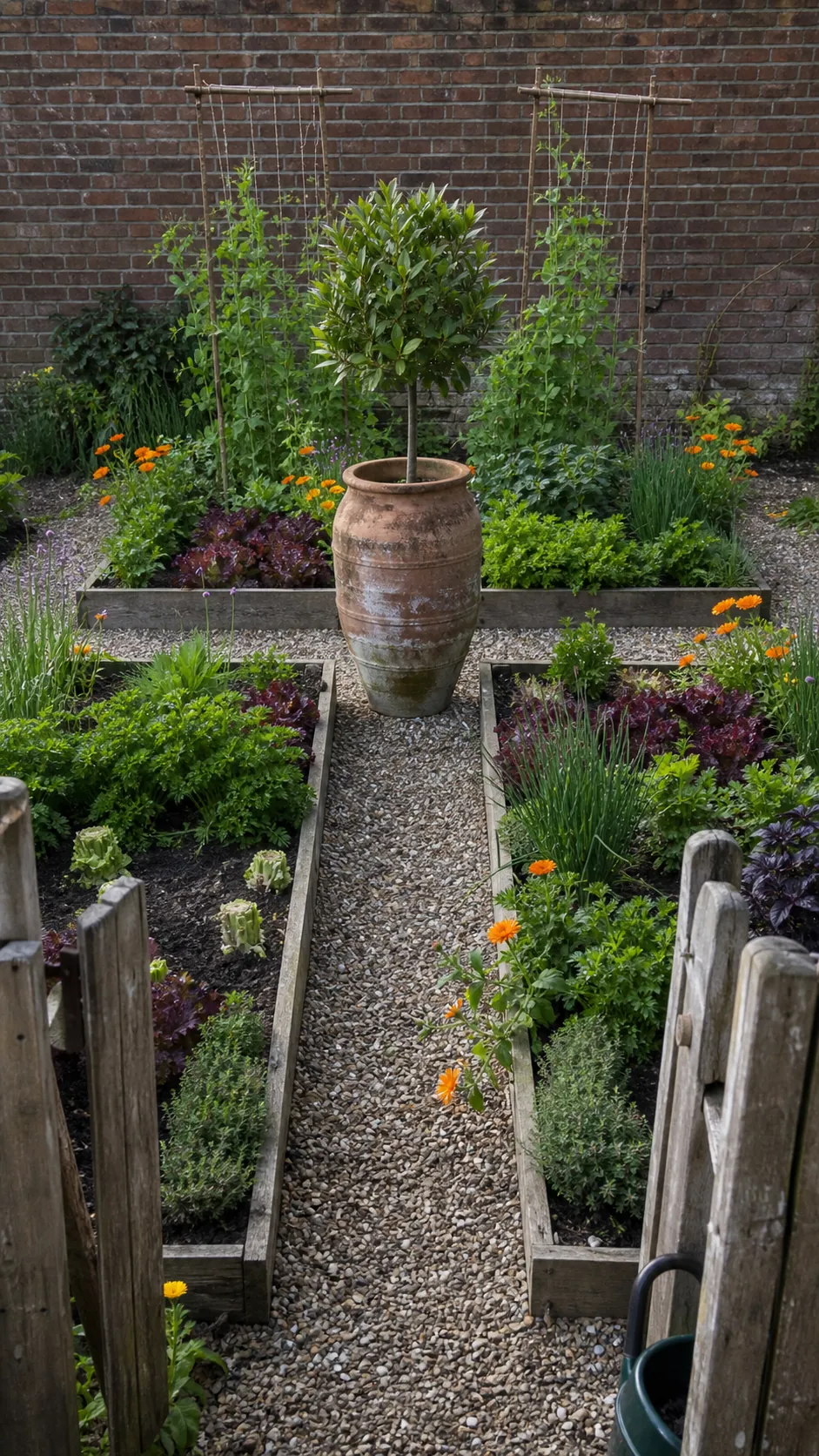
A potager mixes herbs, vegetables, and edible flowers into a repeated layout. Four small beds around a central bay pot can combine parsley, purple basil, chives, lettuce, thyme, and calendula while remaining easy to harvest.
Use repetition to create order, but allow gaps where crops have been cut. Keep trellises northward and paths wide enough to kneel. The beauty comes from useful plants arranged thoughtfully, not from pretending a productive garden never changes.
Patio Container Cluster
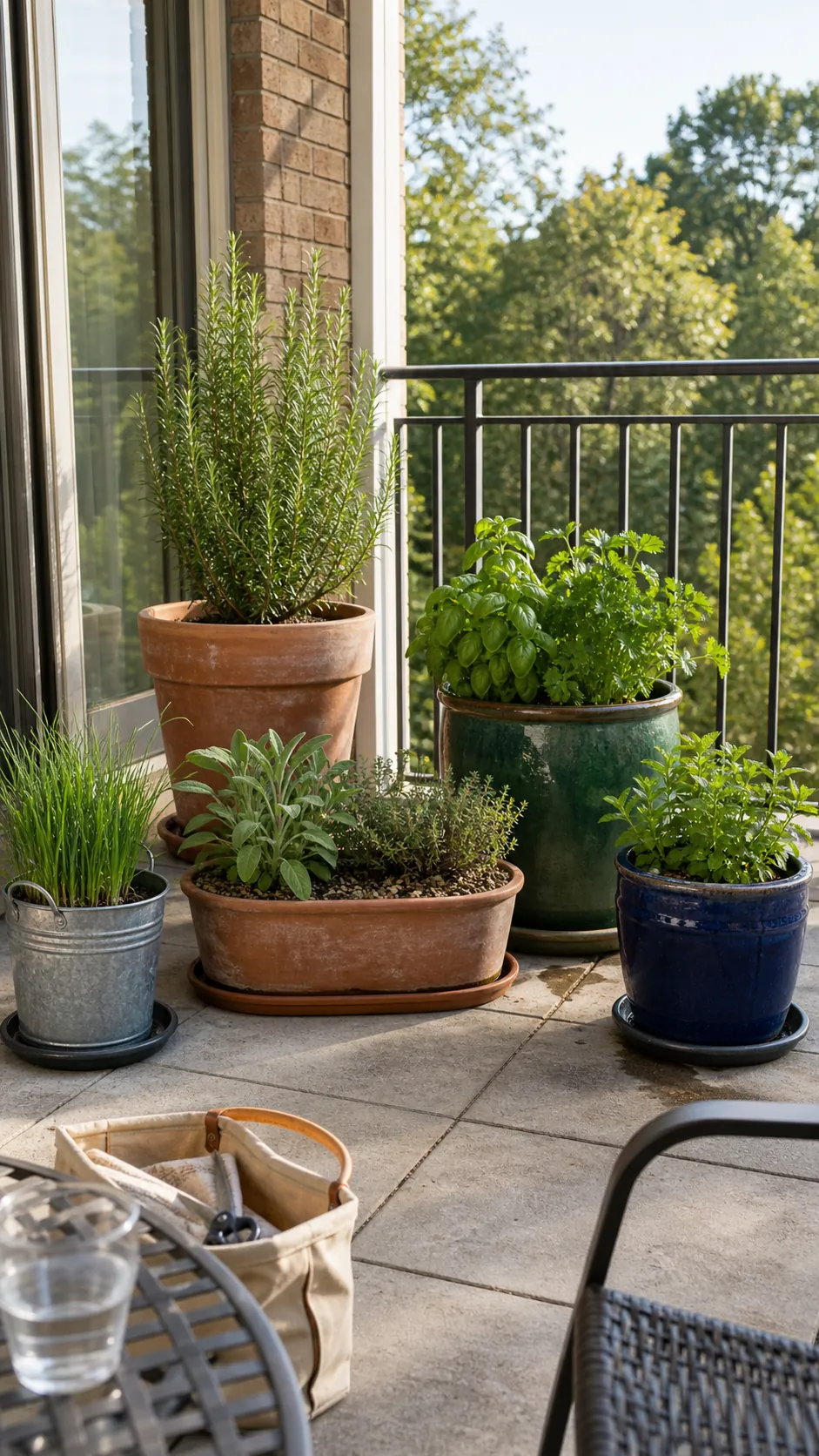
Five substantial containers usually outperform fifteen tiny pots. Group rosemary alone, sage with thyme, basil with parsley only when their watering can be balanced, chives in a tub, and mint by itself.
Map sun across the patio before arranging them. Preserve access to the door and seating, place saucers under pots where needed, and leave air gaps. Staggered heights can look composed without making watering or pruning difficult.
Freestanding Vertical Pockets
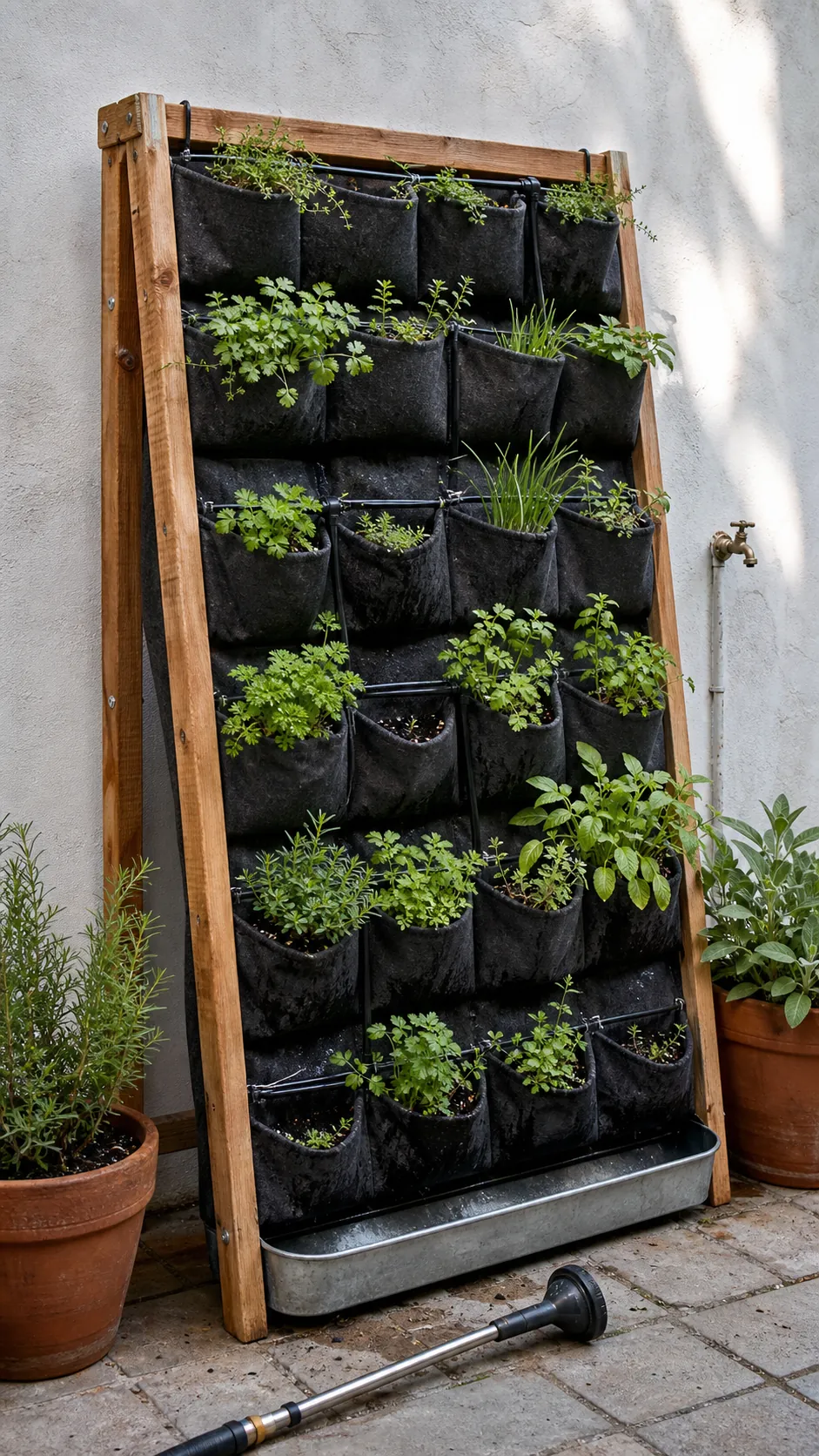
A freestanding A-frame avoids loading an uncertain wall. Use genuinely deep pockets for leafy or shallow-rooted herbs such as parsley, chervil, cilantro, chives, small basil, and creeping thyme. Keep woody rosemary and sage in deep ground pots.
Vertical planters dry unevenly, so include drip irrigation and a catch trough. Make every pocket reachable, show restraint with plant count, and accept that succession-sown pockets will not all look equally full.
Inside-Mounted Railing Boxes
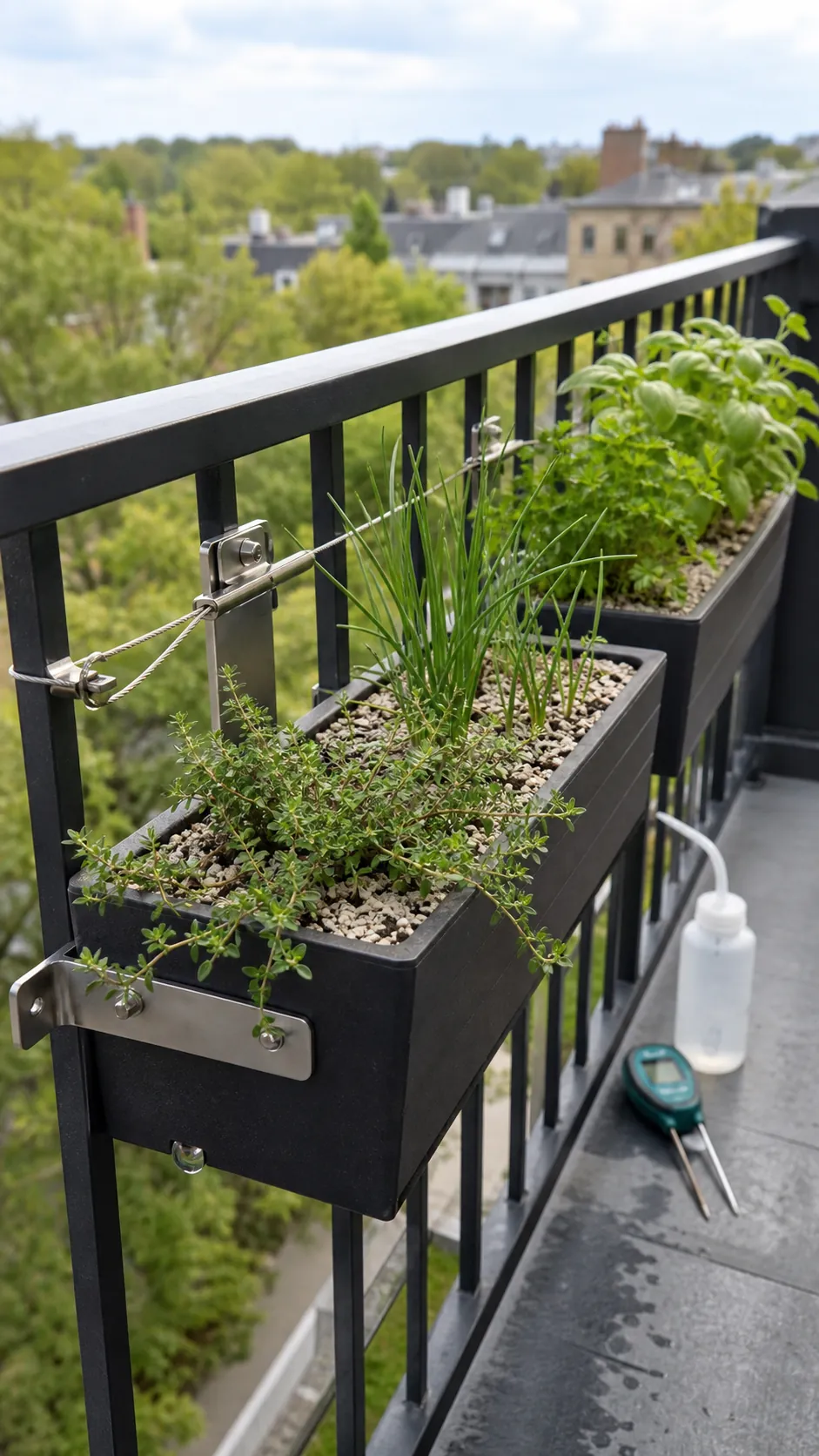
For a balcony, mount lightweight boxes on the inside of the railing with rated brackets and backup safety cables. Compact basil, parsley, chives, and trailing thyme fit better than large woody herbs.
Account for wet-soil weight and control drainage so water does not reach neighbors below. Keep foliage inward, preserve railing use, and follow building rules. A secure two-box garden is better than a risky wall of plants.
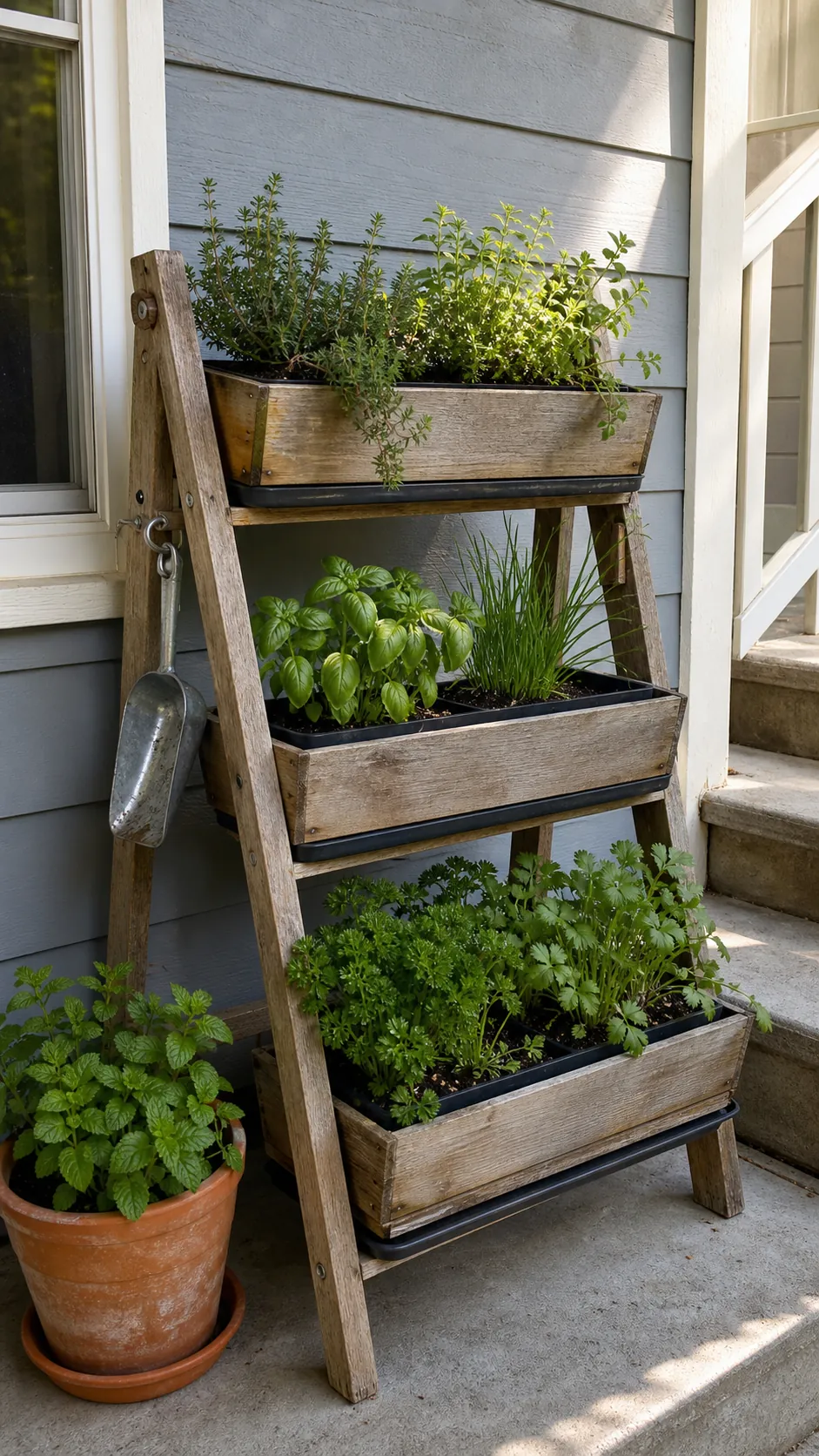
Tiered Herb Ladder
Use the sunniest upper trough for thyme and oregano, the middle for basil and chives, and the cooler lower tier for parsley or cilantro. Offset the levels so one does not completely shade the next.
The structure should be a stable A-frame, not a ladder leaning against siding. Add saucers or controlled drainage so upper tiers do not wash through lower leaves, and keep steps and windows clear.
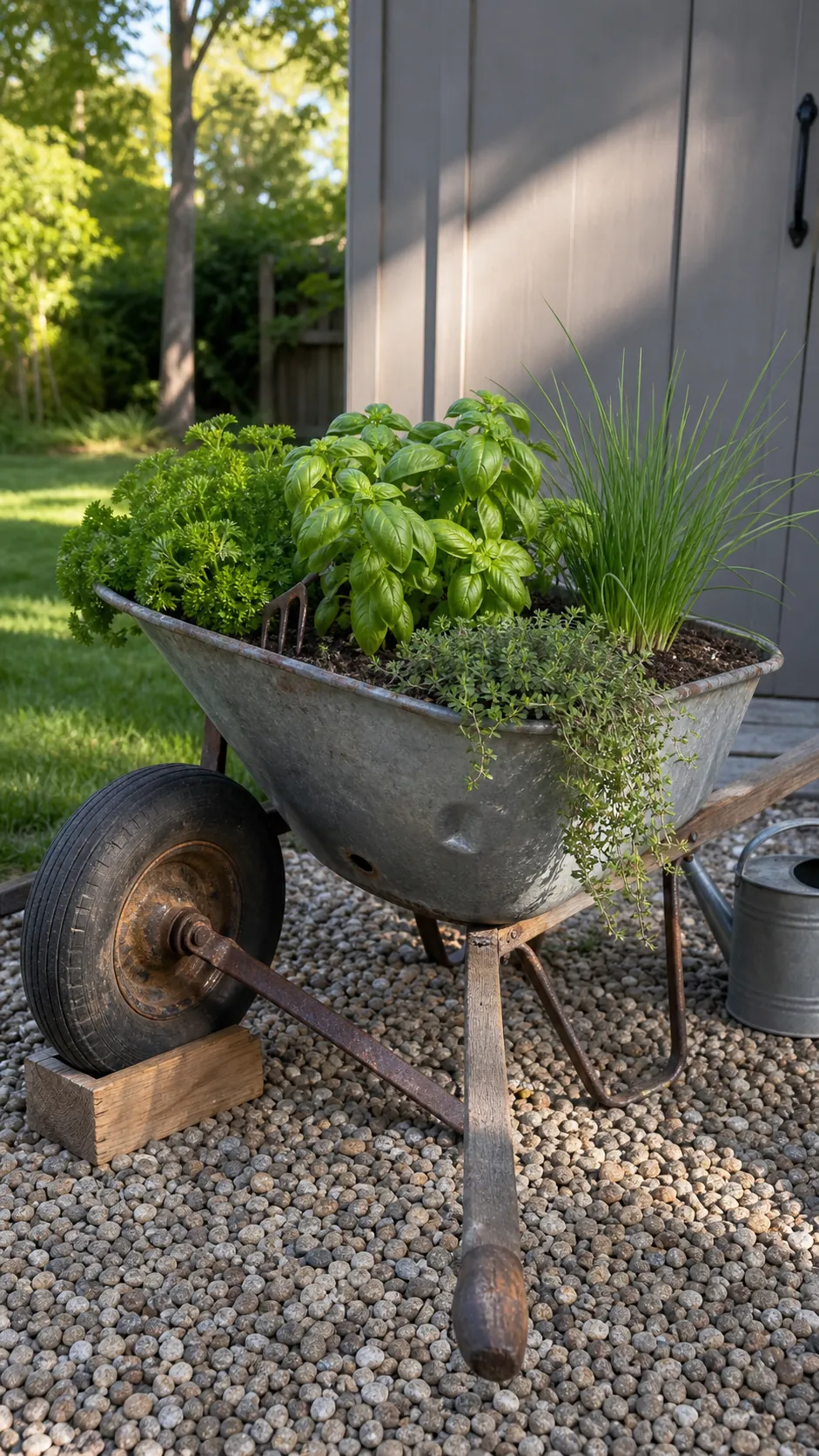
Mobile Wheelbarrow Garden
A sound retired wheelbarrow can follow shifting seasonal sun, but only after drainage holes and mesh are added. Compact basil, parsley, chives, and trailing thyme can share the deep basin when given realistic spacing.
Check the frame, tire, handles, and total wet weight. Chock the wheel on level gravel and keep the handles clear for lifting. Mobility is useful only while the container remains safe to move.
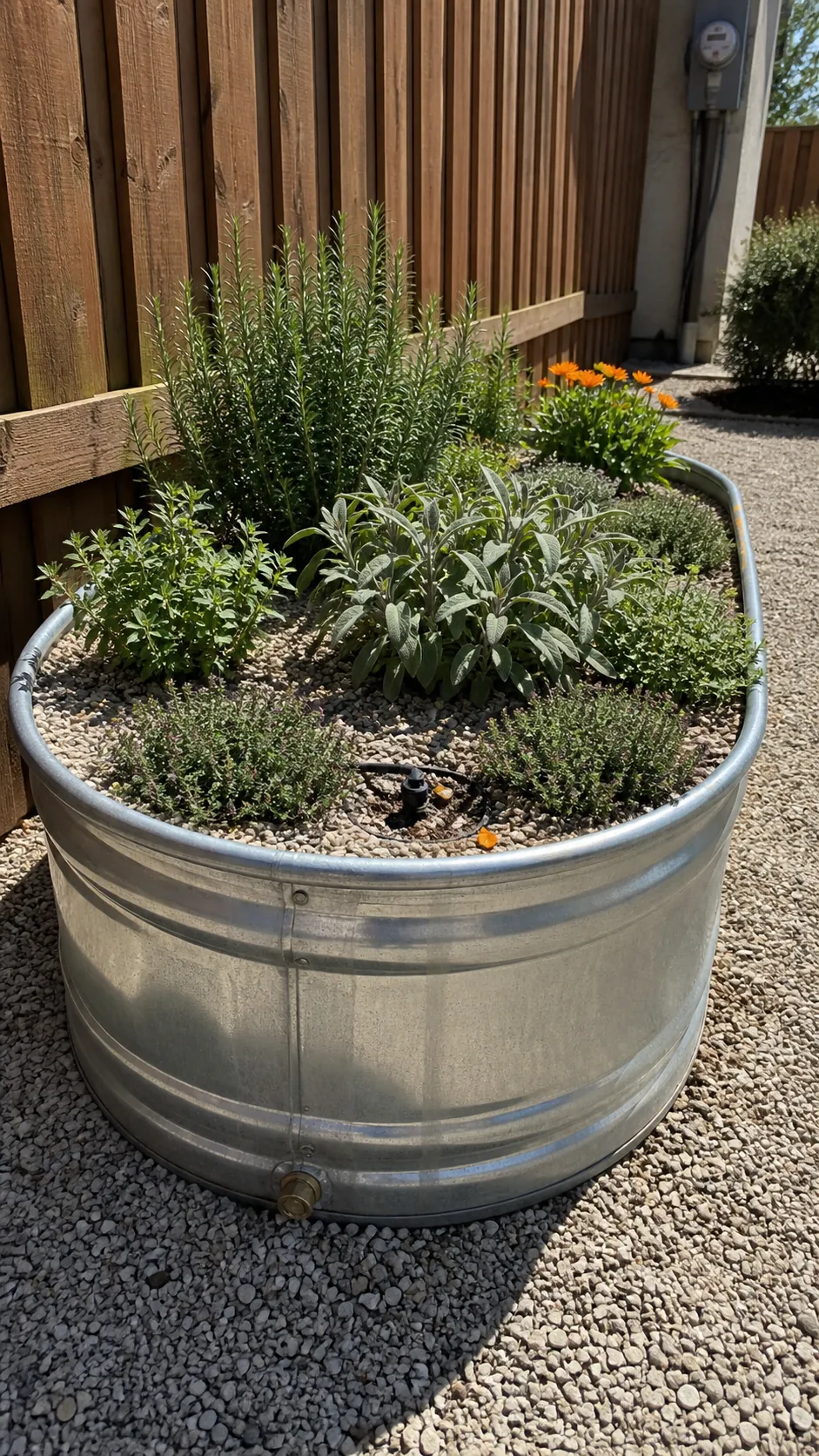
Mediterranean Stock-Tank Bed
A deep galvanized stock tank can solve poor native soil and reduce bending. Fill it with compatible dry-loving herbs—rosemary, sage, thyme, oregano, and savory—rather than mixing in thirsty leafy crops.
Verify drainage, place the tank on a level compacted base, and use drip irrigation beneath mineral mulch. Leave room around mature woody plants and keep the metal far enough from fences for airflow and maintenance.
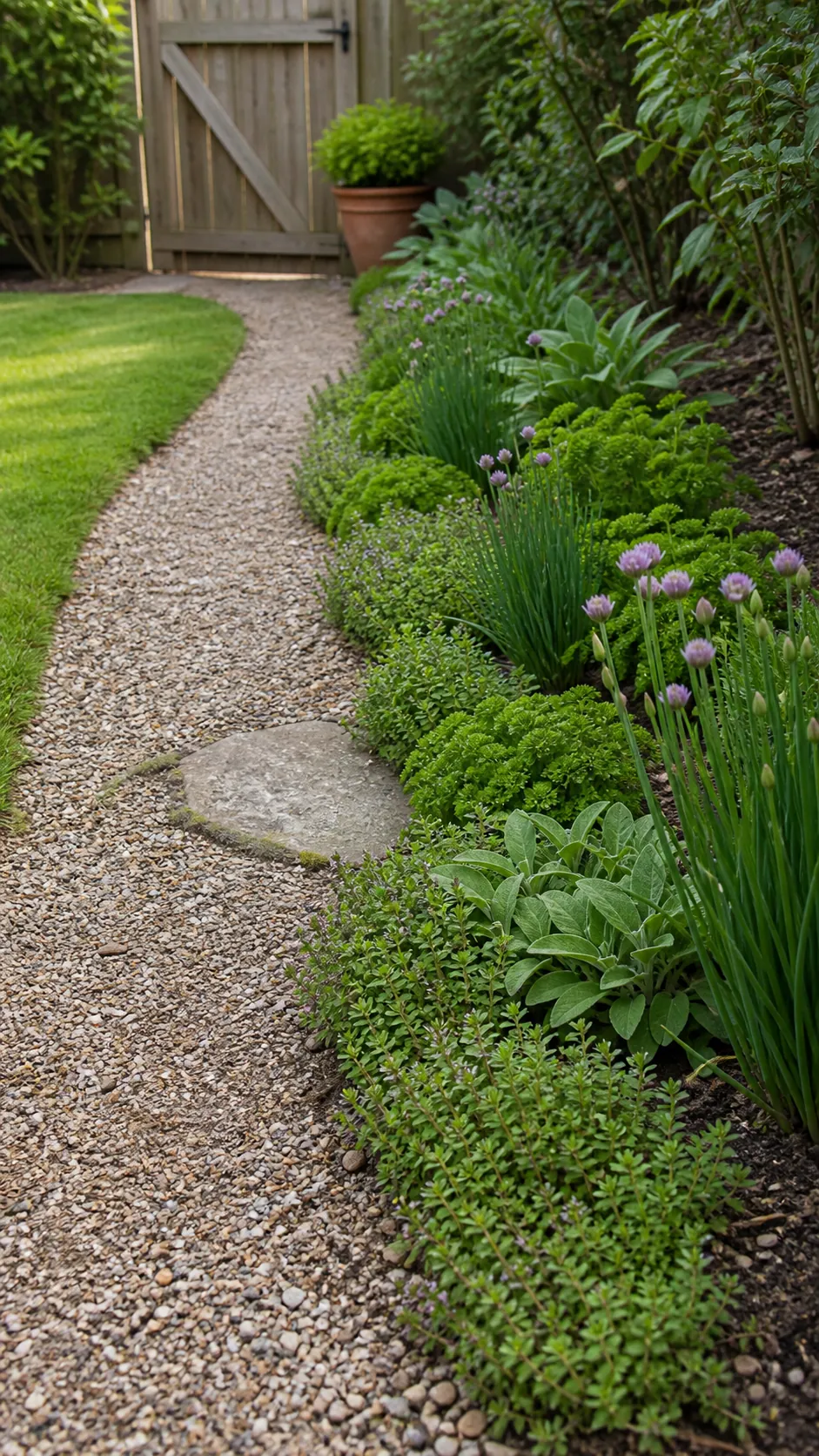
Edible Path Border
Repeat low thyme, chives, parsley, and compact sage along a gravel path. Put the lowest, toughest plants at the edge and leave wider sage clumps farther back so they do not narrow circulation.
Add a stepping stone where you need to reach. Clip growth before it flops into the path, and contain mint in a pot at the far bend. The border should make harvest easier, not turn wheelbarrow access into an obstacle course.
Simplified Herb Knot
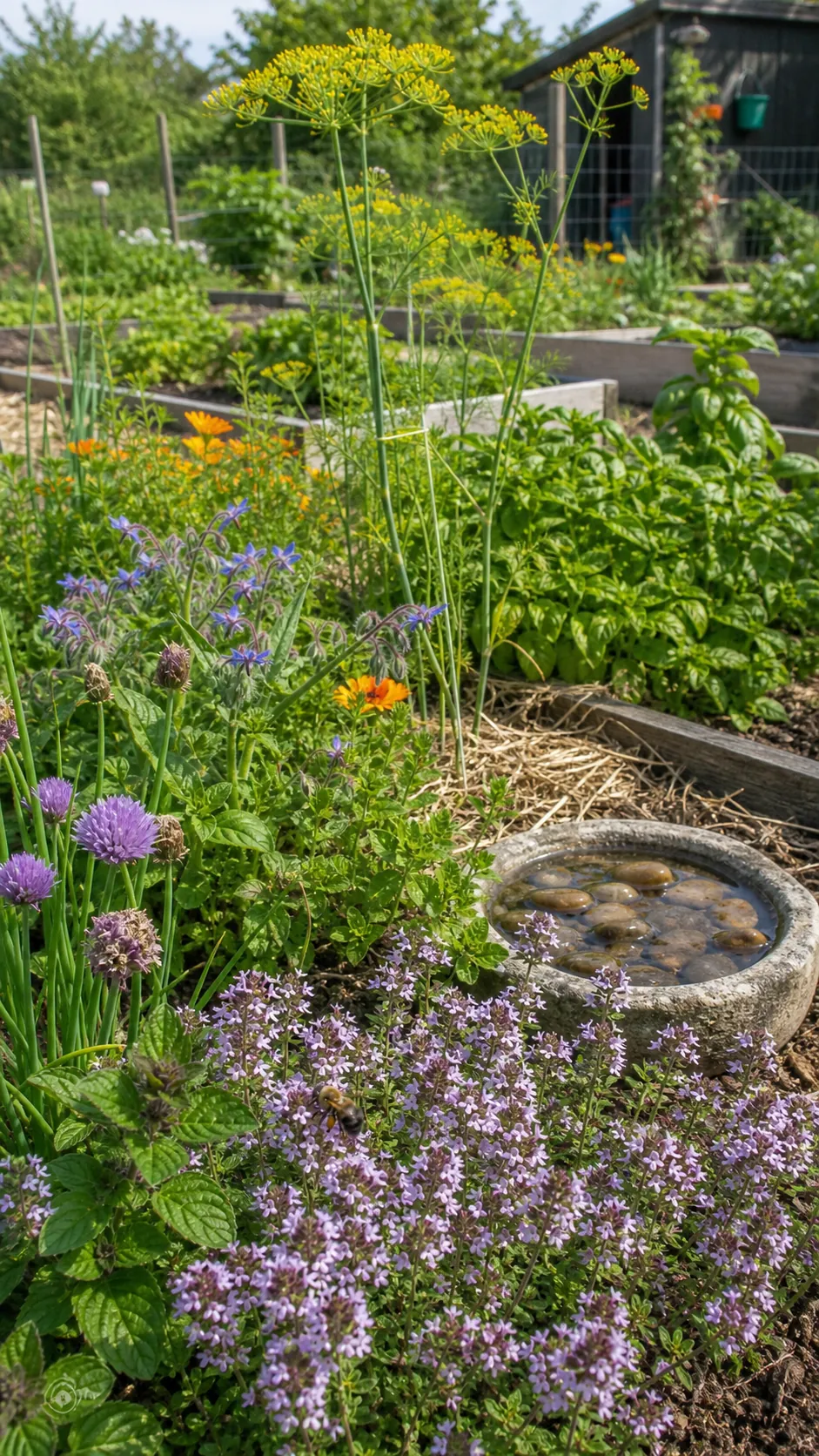
Create two broad interlocking bands with thyme and chives, then fill the larger pockets with parsley and purple basil. Dark mulch between bands keeps the pattern legible and reduces competition.
Keep the bed small enough to trim from a perimeter path. The design should show hand-made variation and harvest gaps; an edible knot is alive, not a computer-perfect parterre.
Dry Mediterranean Gravel Bed
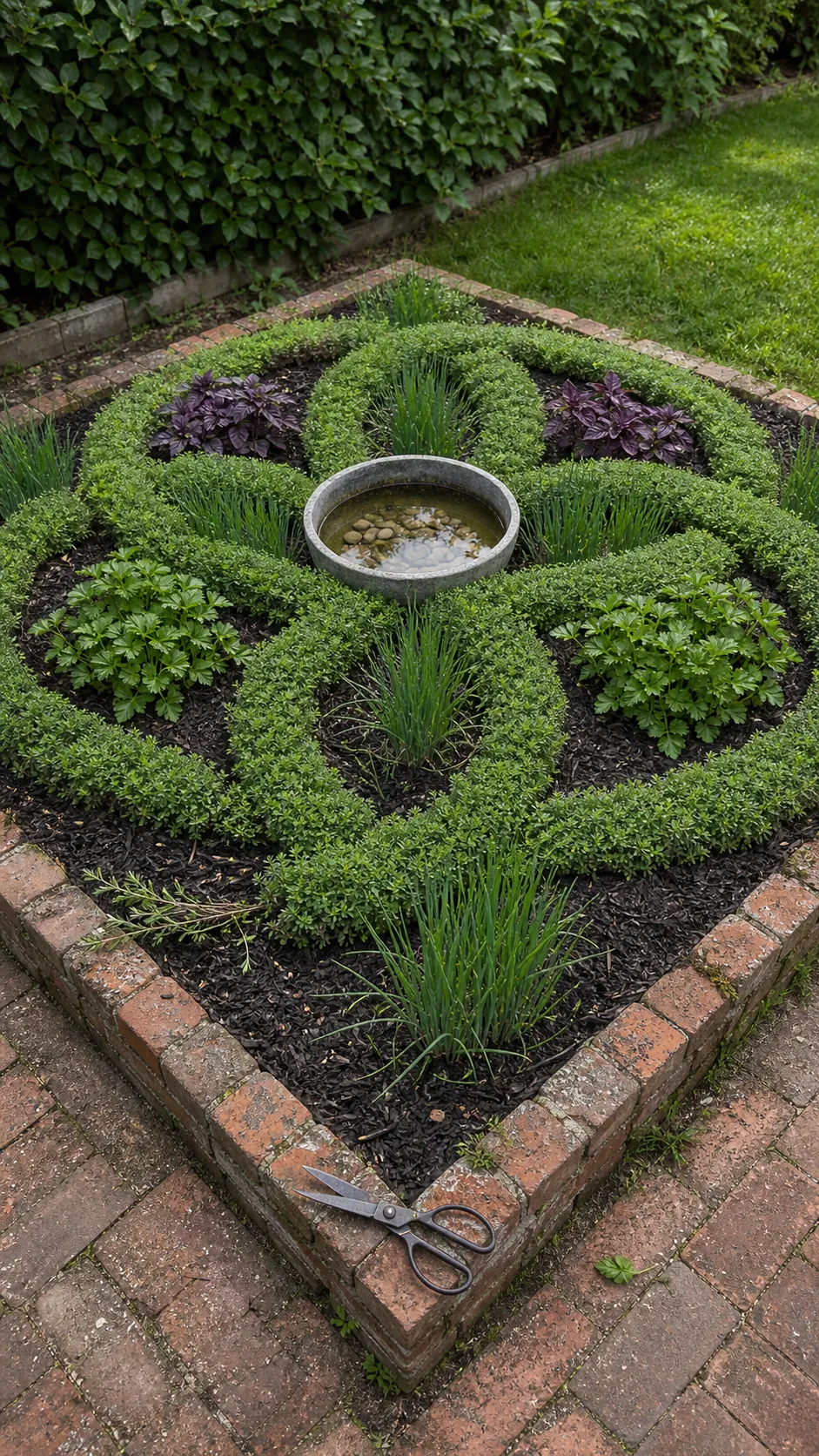
On a sunny free-draining slope, group rosemary, culinary lavender, sage, thyme, and oregano with open gravel between their mature forms. A few edible or pollinator-friendly flowers can add color without changing the water plan.
Keep crowns dry, route downspouts away, and use targeted drip emitters. Flat stepping stones prevent compacted soil during harvest. Do not force moisture-loving basil or parsley into this low-water design.
Leafy Partial-Shade Bed
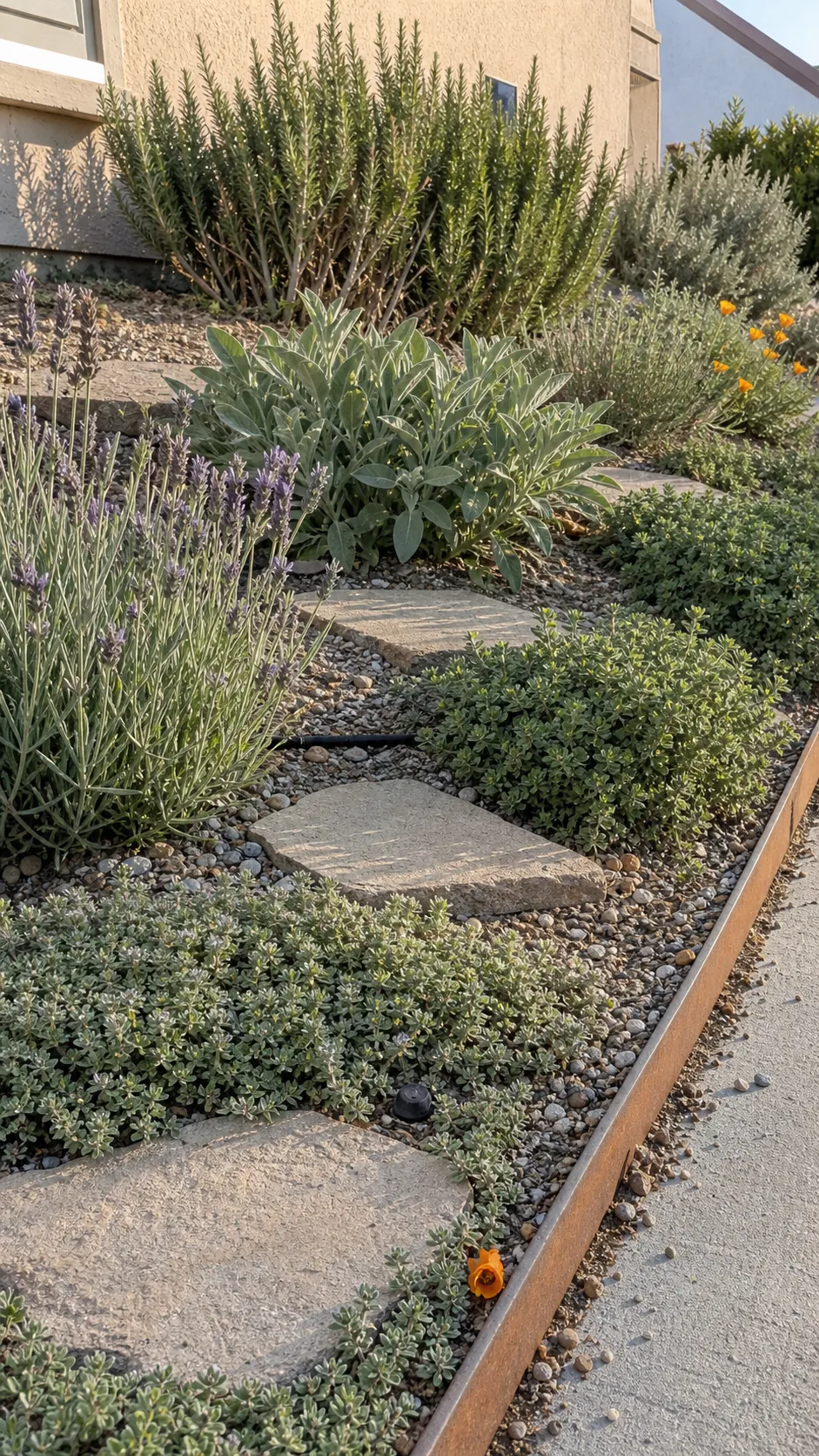
A bed with three or four hours of morning sun can grow parsley, chervil, cilantro, sorrel, and chives. Use leaf mold to conserve moisture and stagger cilantro sowings so one hot week does not end the entire crop.
Keep the tree’s root collar clear and use stepping rounds for access. Put mint in a buried pot with its rim visible. Choosing shade-tolerant herbs is more productive than hoping full-sun rosemary will adapt.
Pollinator-and-Harvest Bed
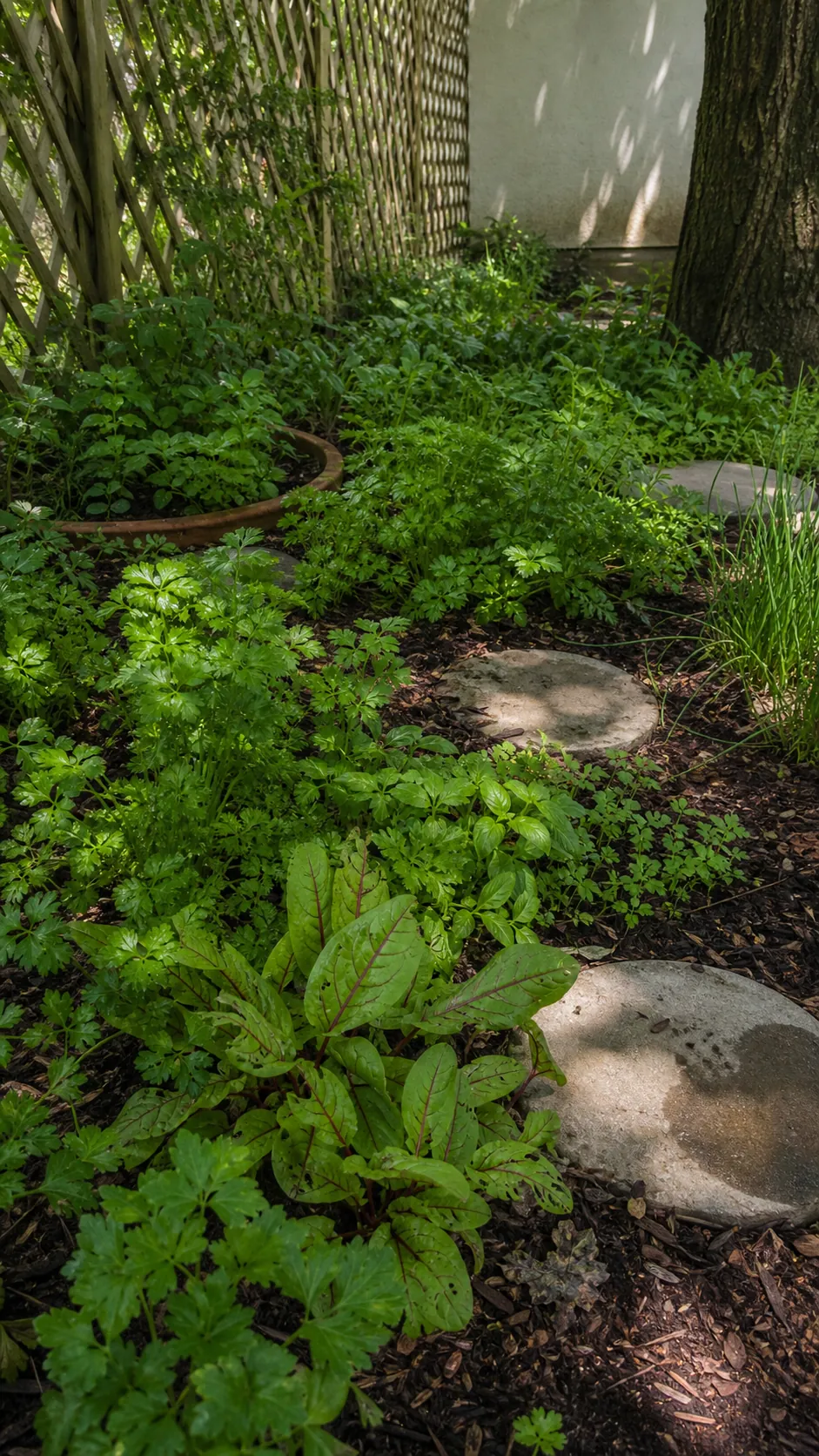
Let part of the thyme, oregano, chives, and dill flower for bees while keeping a separate basil patch clipped for leaves. Borage and calendula can add blooms when they suit your climate and kitchen.
Put tall dill at the north rear and give borage room. A shallow water dish with landing stones can help insects, but refresh it often. The goal is a mix of flower stages and harvest stages, not every plant blooming at once.
Dedicated Tea-Herb Circle
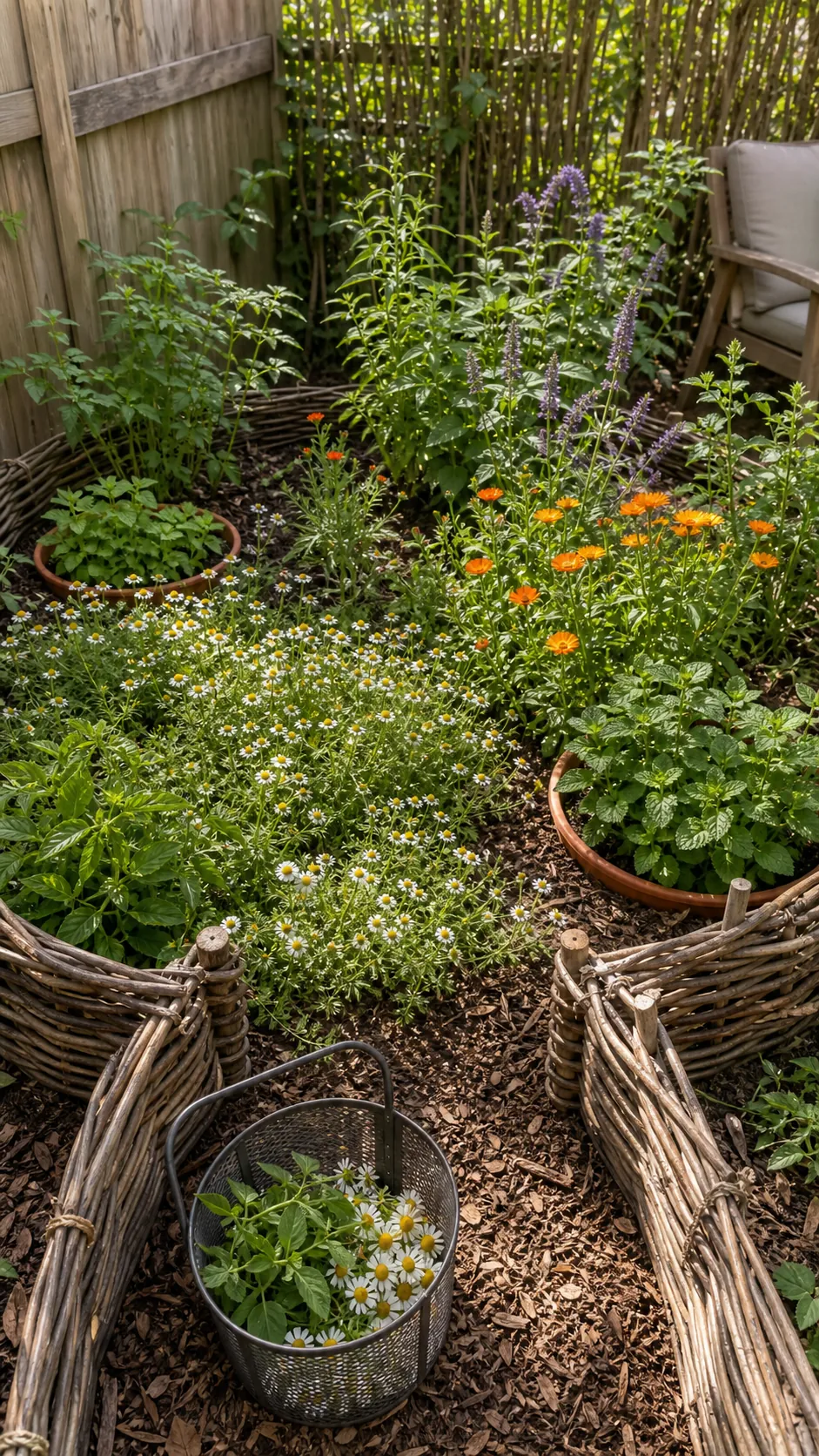
A circular tea garden can combine chamomile, lemon verbena, pineapple sage, anise hyssop, and calendula. Contain peppermint and lemon balm in large buried pots so they do not take over.
Place tall plants at the north rear and cut a keyhole path into the bed for harvesting. Grow only plants you can identify confidently and use safely; a tea garden should be based on verified culinary species, not vague “apothecary” styling.
Recipe-Driven Salsa Bed
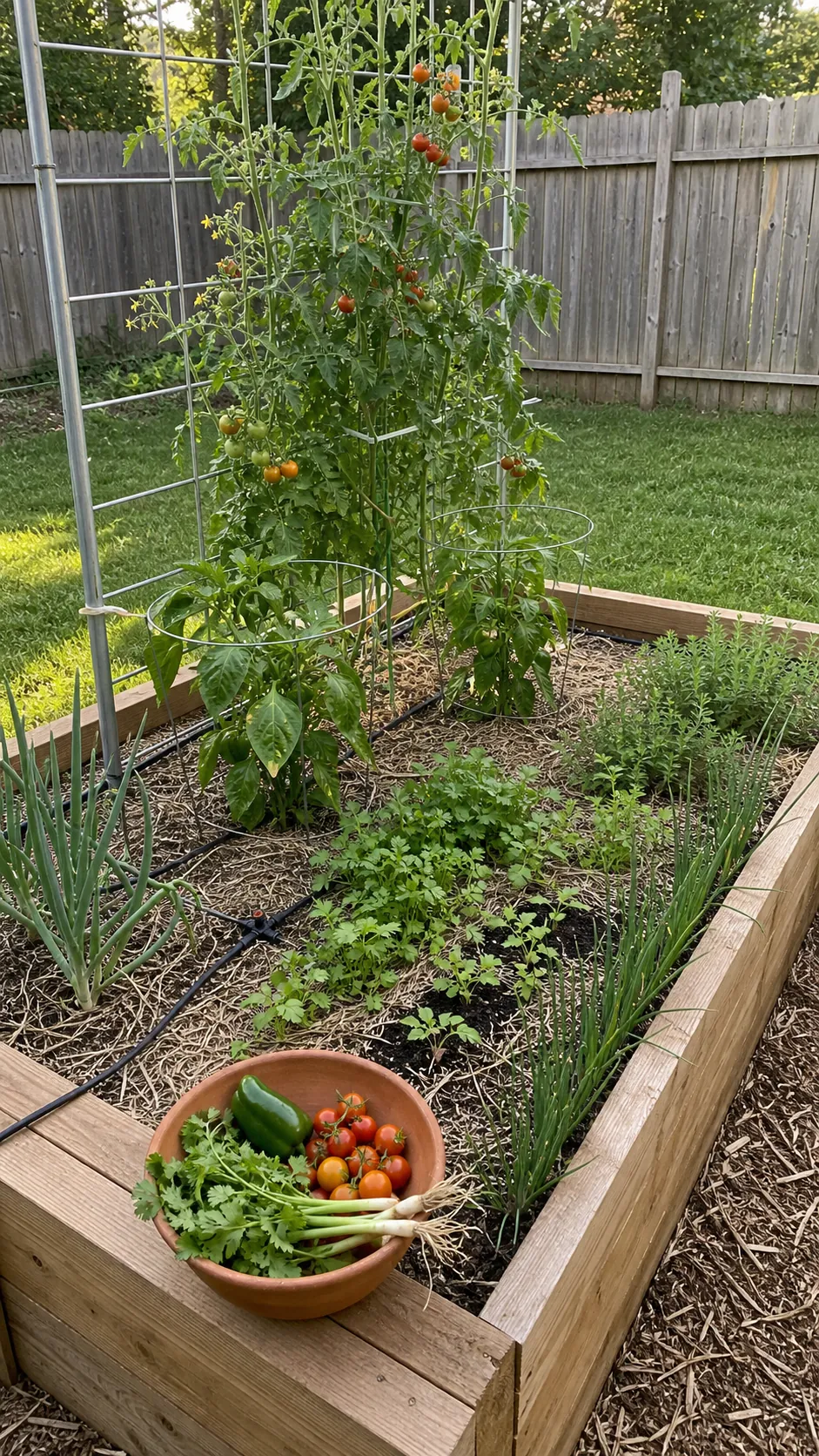
Design around a recipe you make. A salsa bed might include one trellised tomato, two peppers, scallions, chives, Mexican oregano, and successive patches of cilantro.
Reserve real space for tomato and pepper roots, and place the trellis northward. In hot weather, cilantro may benefit from temporary shade cast by taller crops. A modest harvest you use is a better measure than the longest possible plant list.
Accessible Planting Table
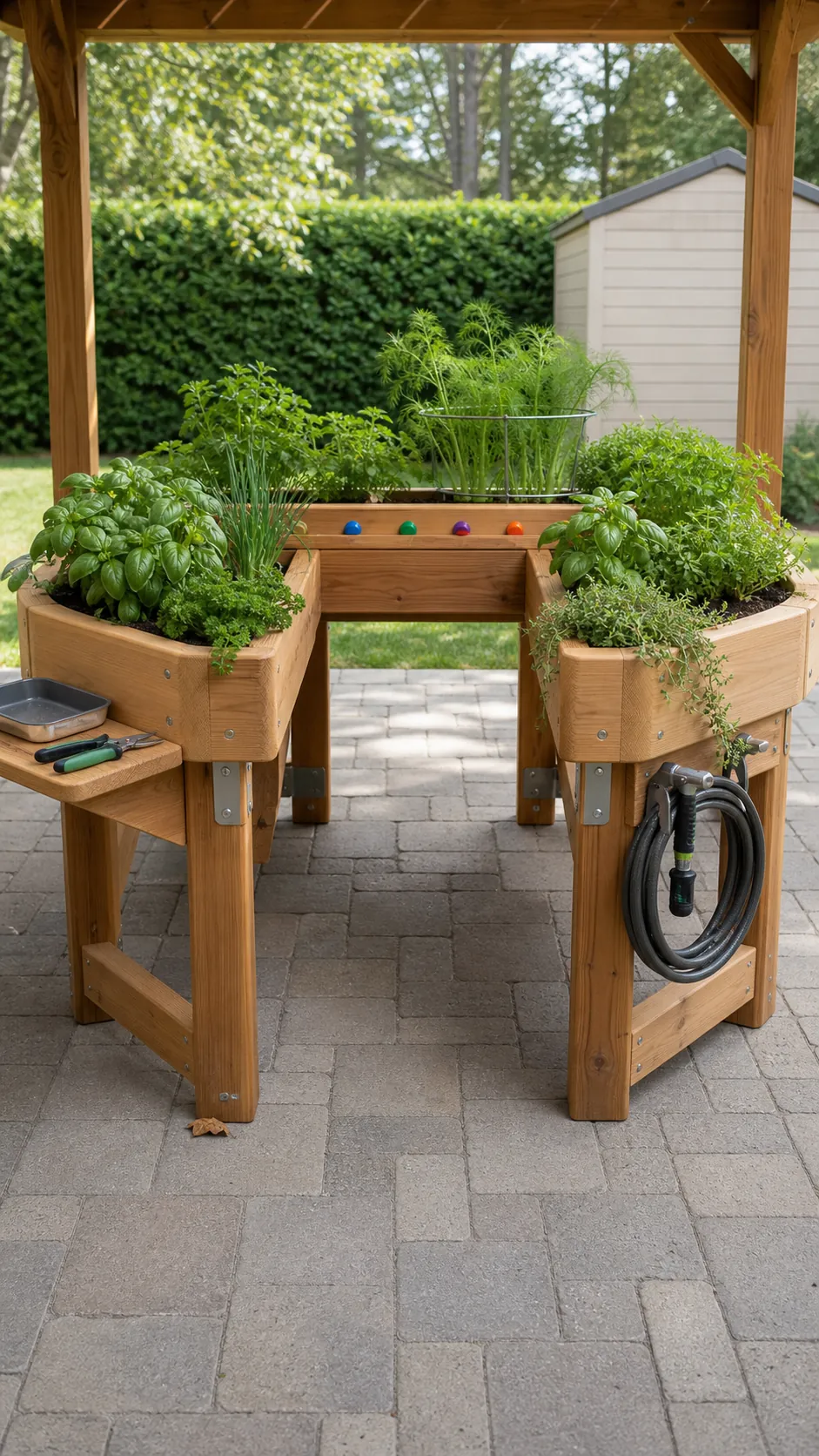
A truly accessible raised garden includes seated knee clearance, smooth edges, firm level paths, and herbs within a comfortable forward reach. Put frequently cut basil and parsley along the front arcs and taller dill near a reachable side opening.
Use strong bracing for wet soil, a lightweight hose with thumb control, and padded snips stored below shoulder height. Keep a full turning area clear. Raising soil is only one part of reducing effort.
Child-Friendly Sensory Bed
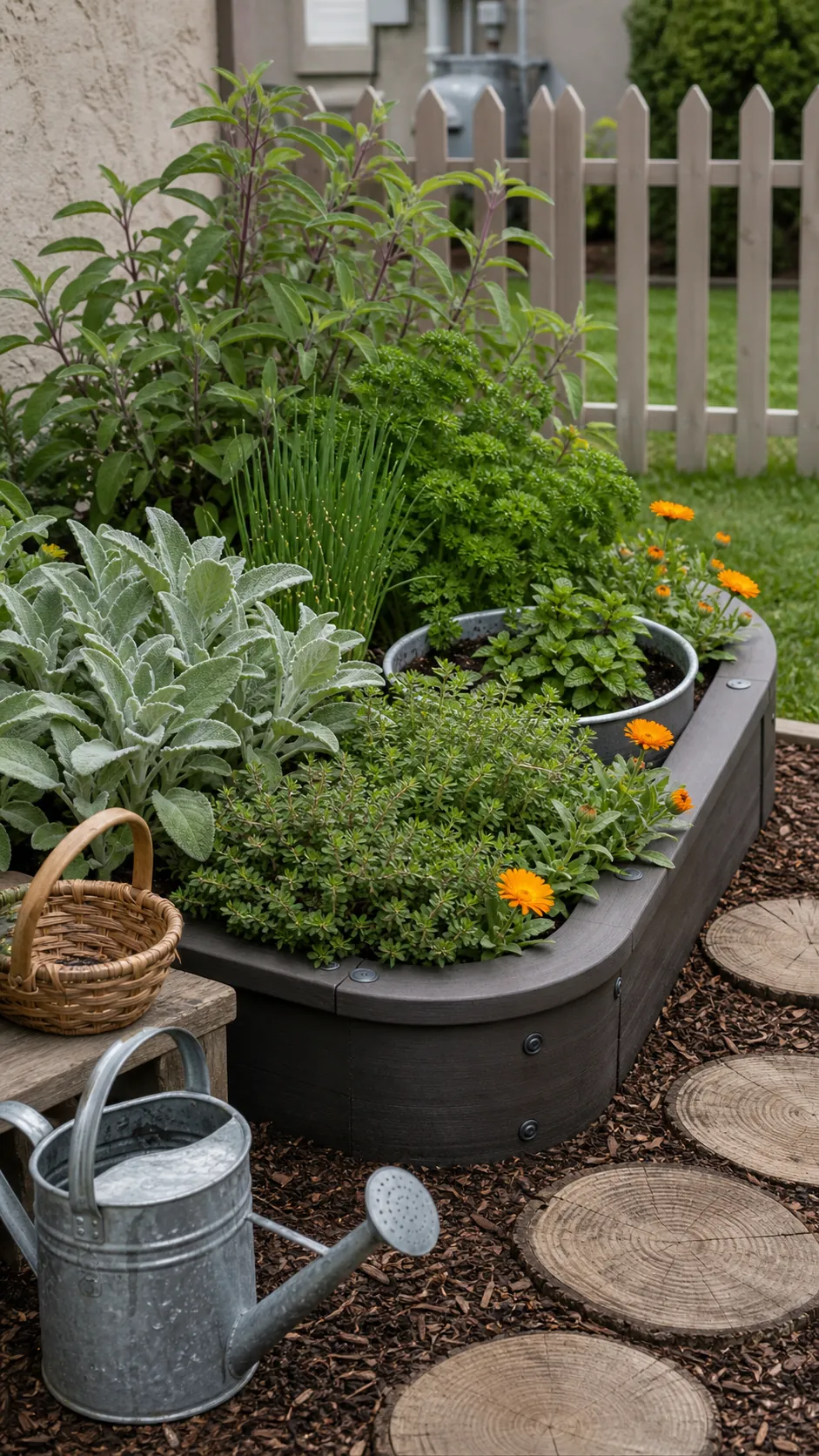
At a child’s eye level, combine safe touchable and fragrant plants such as lamb’s ear, lemon thyme, contained mint, chives, parsley, pineapple sage, and edible calendula. Verify plant safety for your household and supervise tasting.
Round the bed edges, use stable low stepping surfaces, and keep sharp tools elsewhere. Place fuzzy and low fragrant plants at the front, taller sage behind, and lightweight watering tools within easy reach.
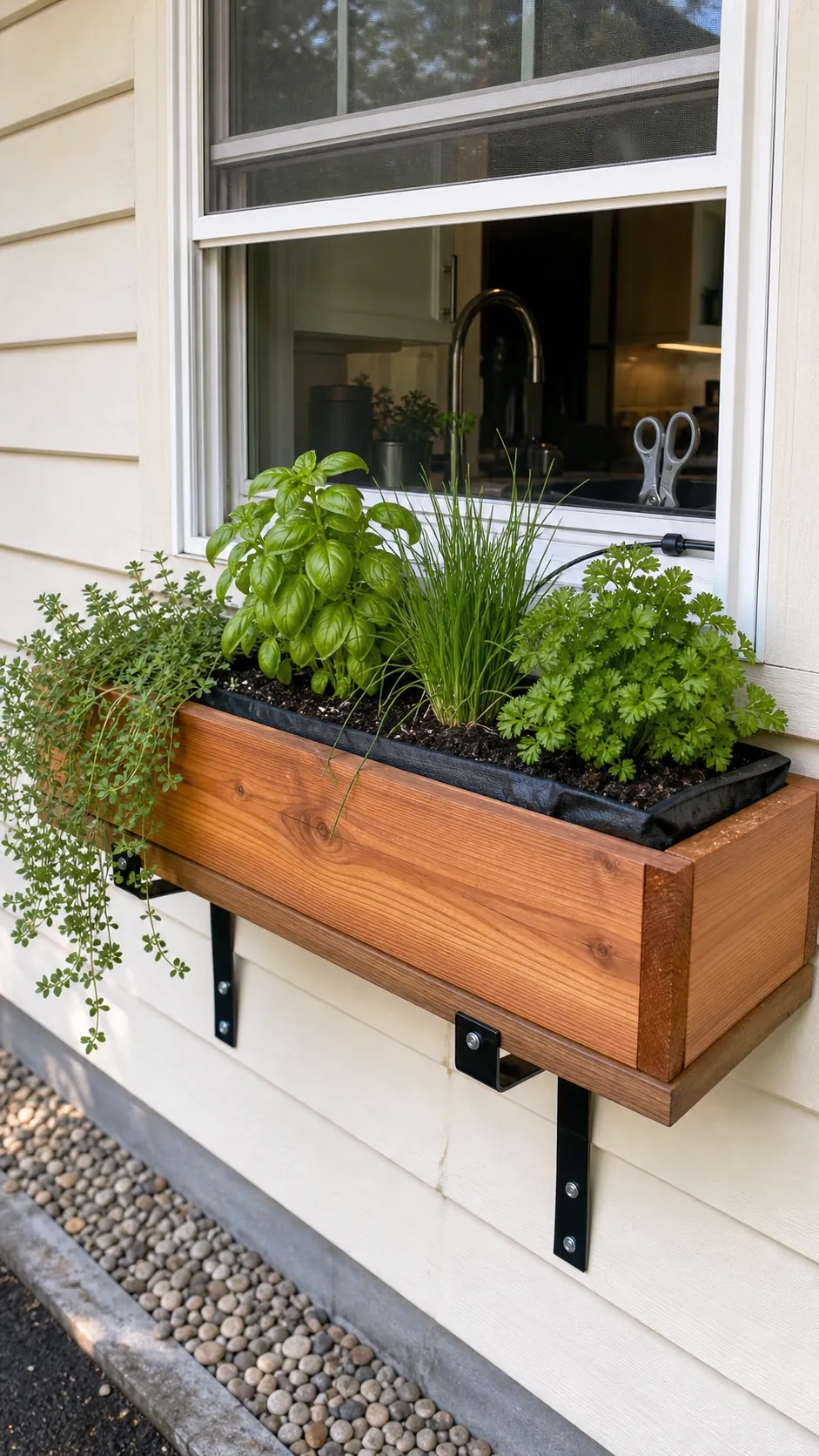
Deep Kitchen Window Box
A ground-floor kitchen window can support a deep, securely mounted box with compact basil, parsley, chives, and lemon thyme. Use a structural cradle beneath the box rather than optimistic hooks.
Protect the wood with a draining liner, direct runoff to gravel, and keep foliage clear of the sash. Confirm wall framing and wet weight before installation. The reward is a small regular harvest within reach of the sink.
Modular Lined Crates
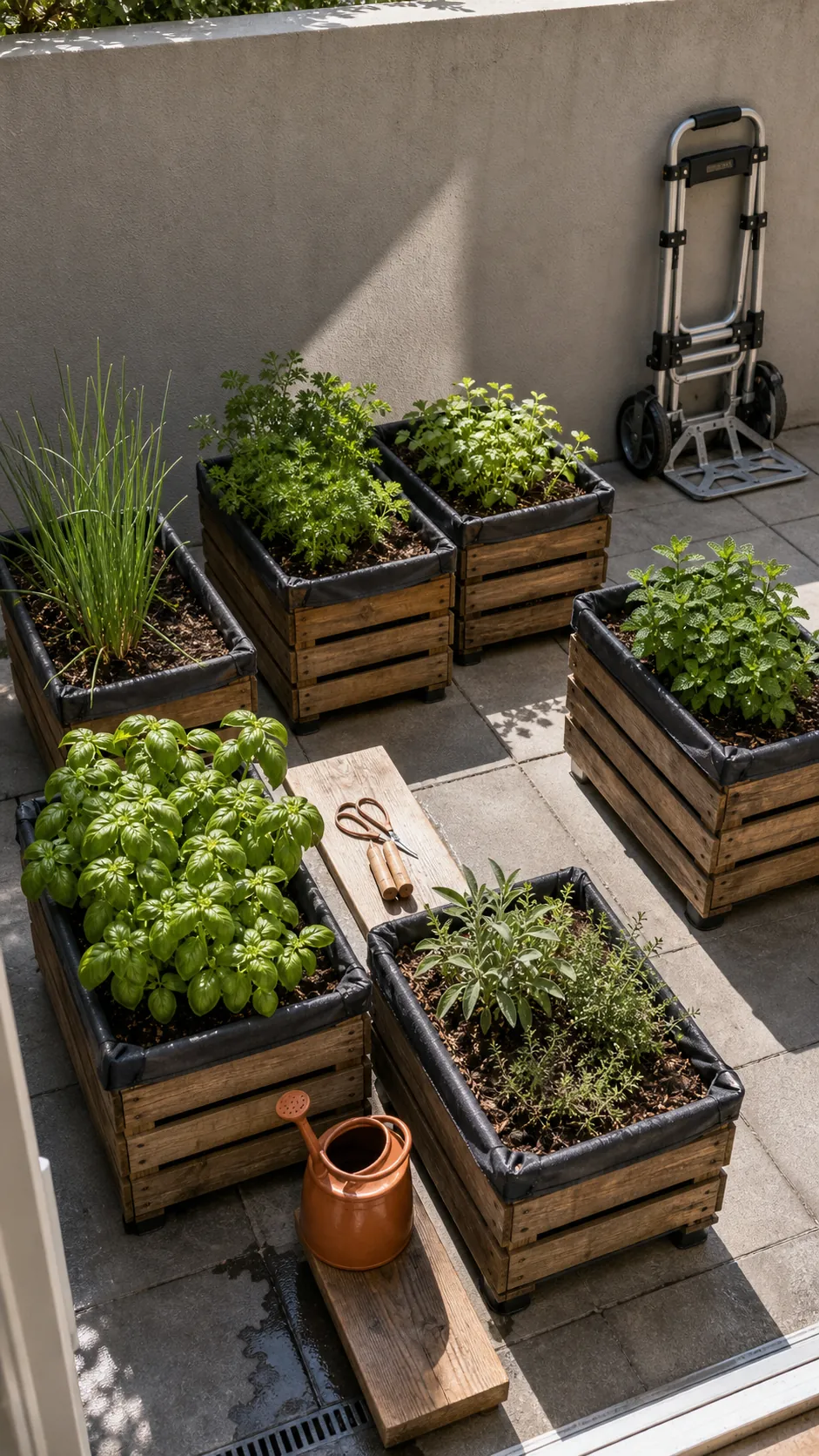
Sturdy lined crates can form a flexible patio gardening layout when each module holds one herb or a compatible pair. Put basil and a sage-thyme crate in the brightest row, parsley and cilantro where afternoon shade begins, chives at an airy edge, and mint in its own separated crate.
Use load-capable crates, breathable liners, and rubber feet that lift wood off wet paving. Preserve channels for watering and a hand truck. The advantage is not rustic appearance; it is the freedom to move crops as light changes, replace one soil mix without disturbing the rest, and take the garden with you.
Whichever design you choose, begin smaller than your ambition. Watch the sun, keep notes, and learn which herbs your kitchen empties first. A successful vegetable garden layout is not the one with the most varieties—it is the one you can water, reach, harvest, and understand all season.