
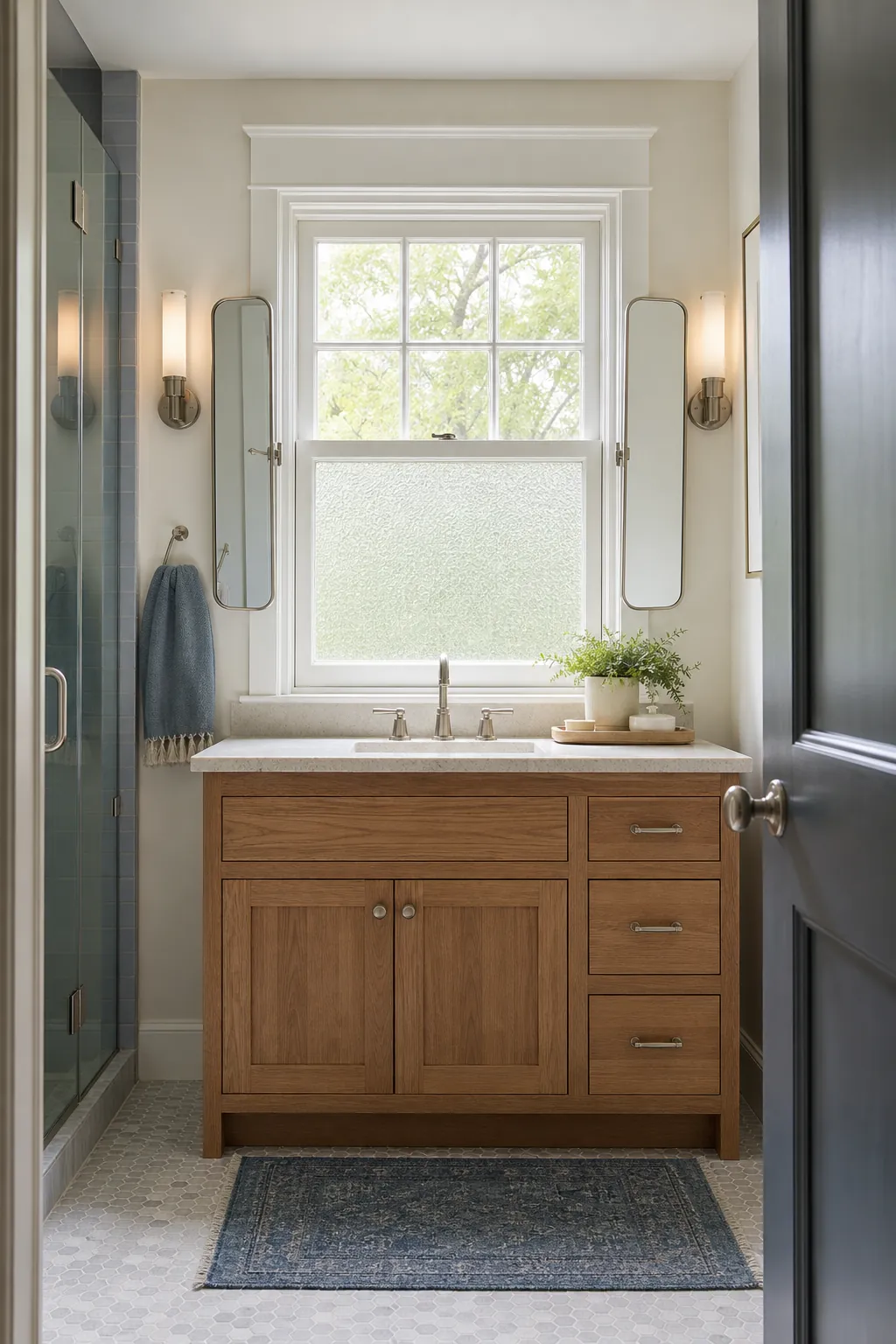
A window over the vanity is valuable daylight in exactly the place people need it, but it removes the wall area normally reserved for a bathroom mirror and vanity lighting. Real homeowners facing this layout repeatedly ask whether a mirror should overlap the window, move to a side wall, or swing into place—and how to add privacy without losing the light.
The right answer starts with function: protect the window from splashes, preserve ventilation and operation, provide a mirror where grooming actually happens, and add face-level light rather than relying on a ceiling downlight. Once those decisions are settled, the window becomes an intentional focal point instead of an obstacle.
Treat the Window as the Centerline
Align the vanity, basin, and window as one composition whenever the plumbing allows. Repeat the window casing color on the vanity or hardware, and keep the sill mostly clear. Do not force a conventional mirror arrangement onto an unconventional wall; let the window provide the symmetry.
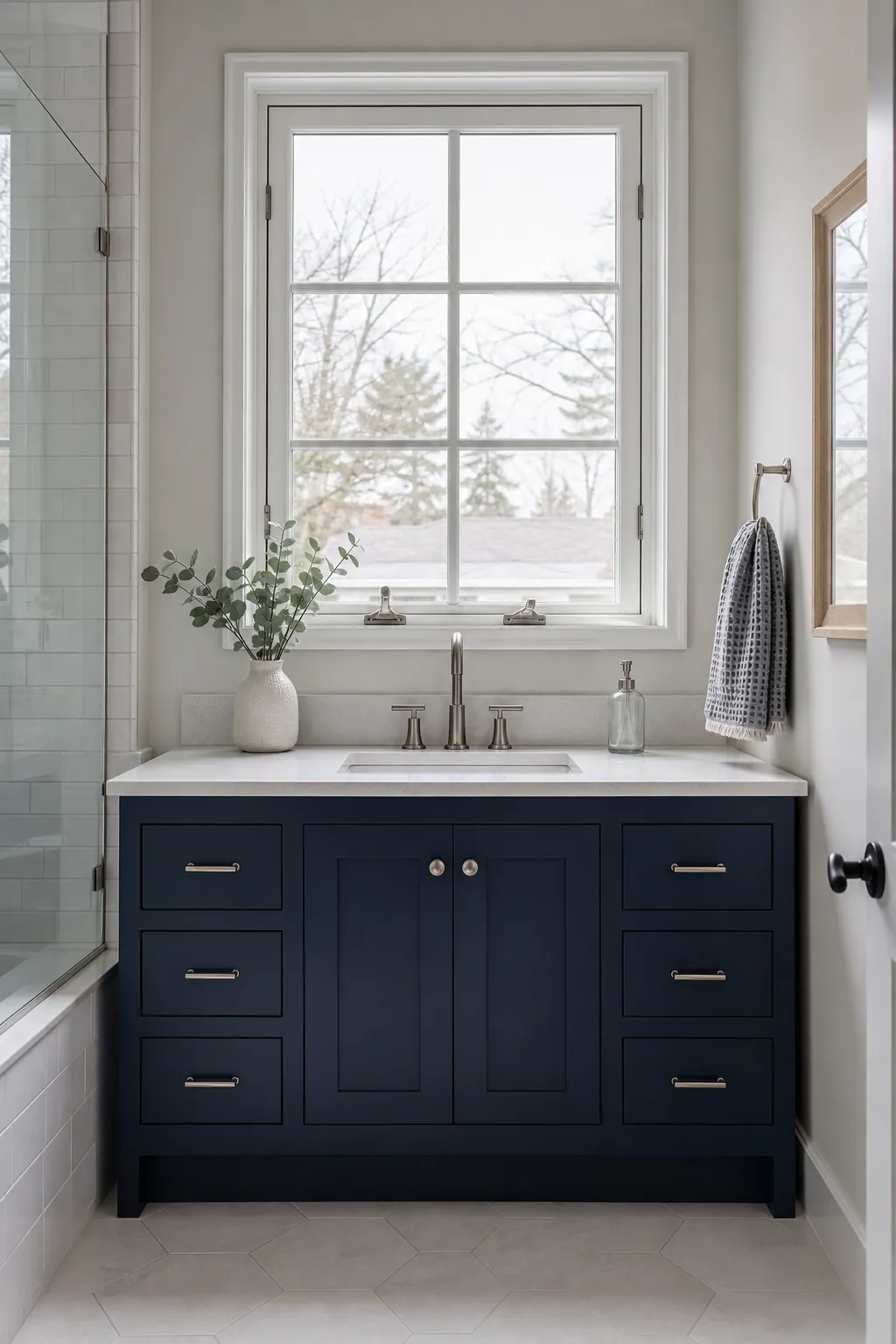
Mount a Swing-Arm Mirror on the Side Wall
A wall-mounted pivot mirror can fold flat when not needed and swing in front of the user for shaving or makeup. Choose a generous mirror rather than a tiny magnifying disc, confirm its arm reaches the basin center, and mount it into solid blocking or suitable anchors.
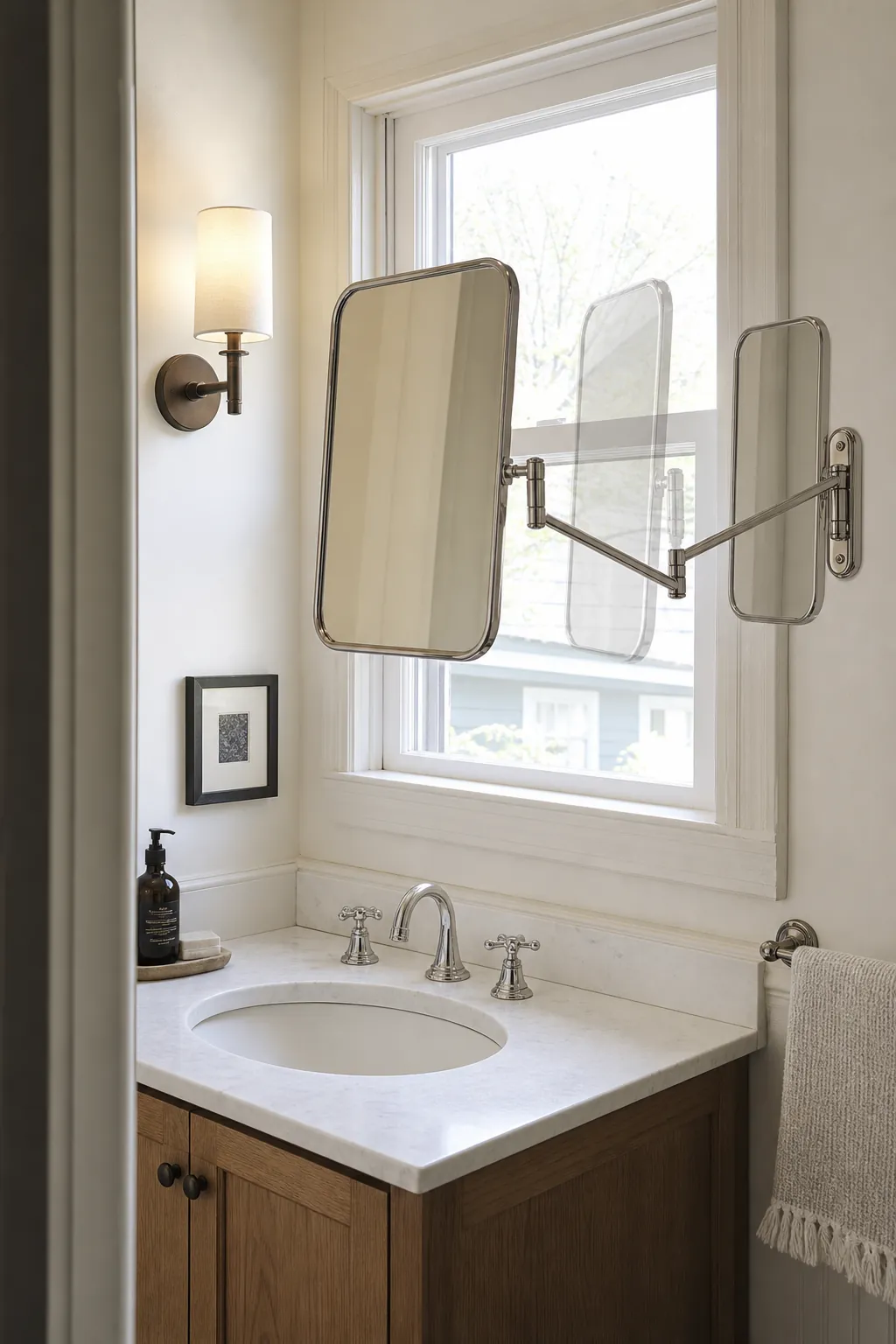
Place a Full Mirror on the Adjacent Wall
If the room has a nearby wall, a larger mirror there may be more useful than a small mirror squeezed beside the casing. Position it close enough that a person can turn from the sink without crossing the room. A mirrored medicine cabinet adds storage and reduces bathroom counter decor.
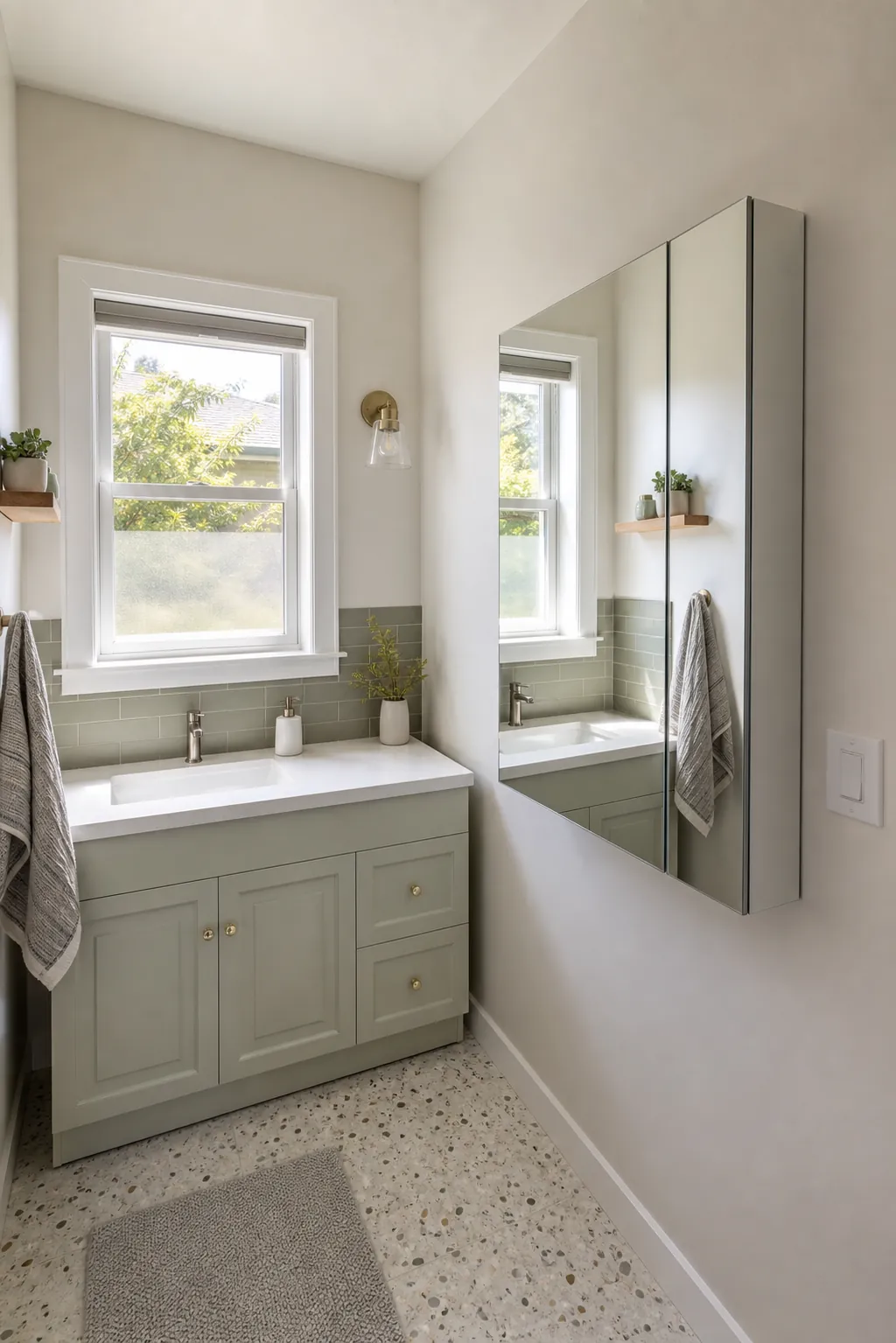
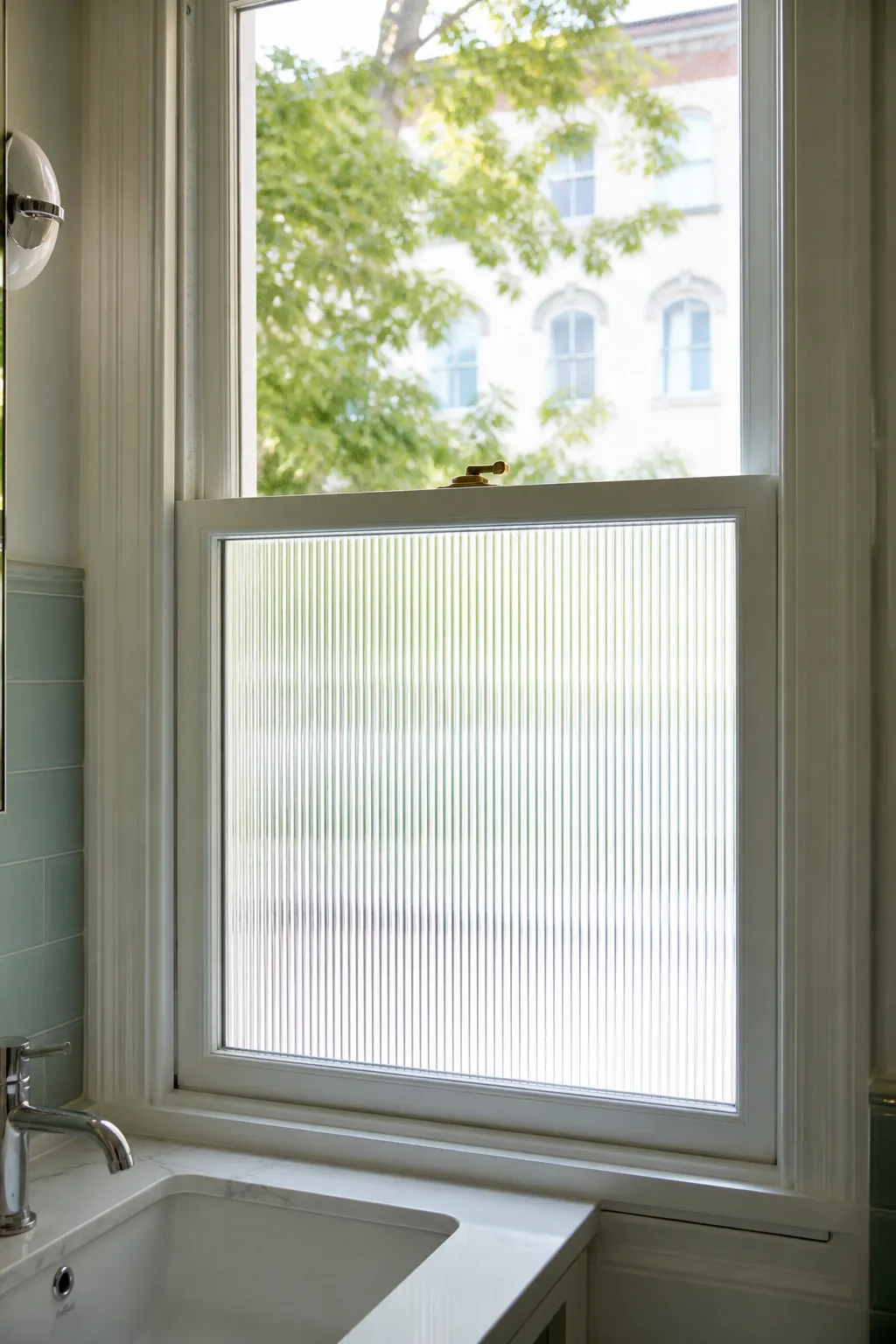
Use Privacy Film on the Lower Glass
Frosted or reeded privacy film can obscure direct views while the upper glass still admits daylight. Apply a bathroom-rated film according to its instructions and avoid blocking the sash, latch, or drainage channels. Test privacy after dark with the room lights on; daytime privacy is not the same as nighttime privacy.
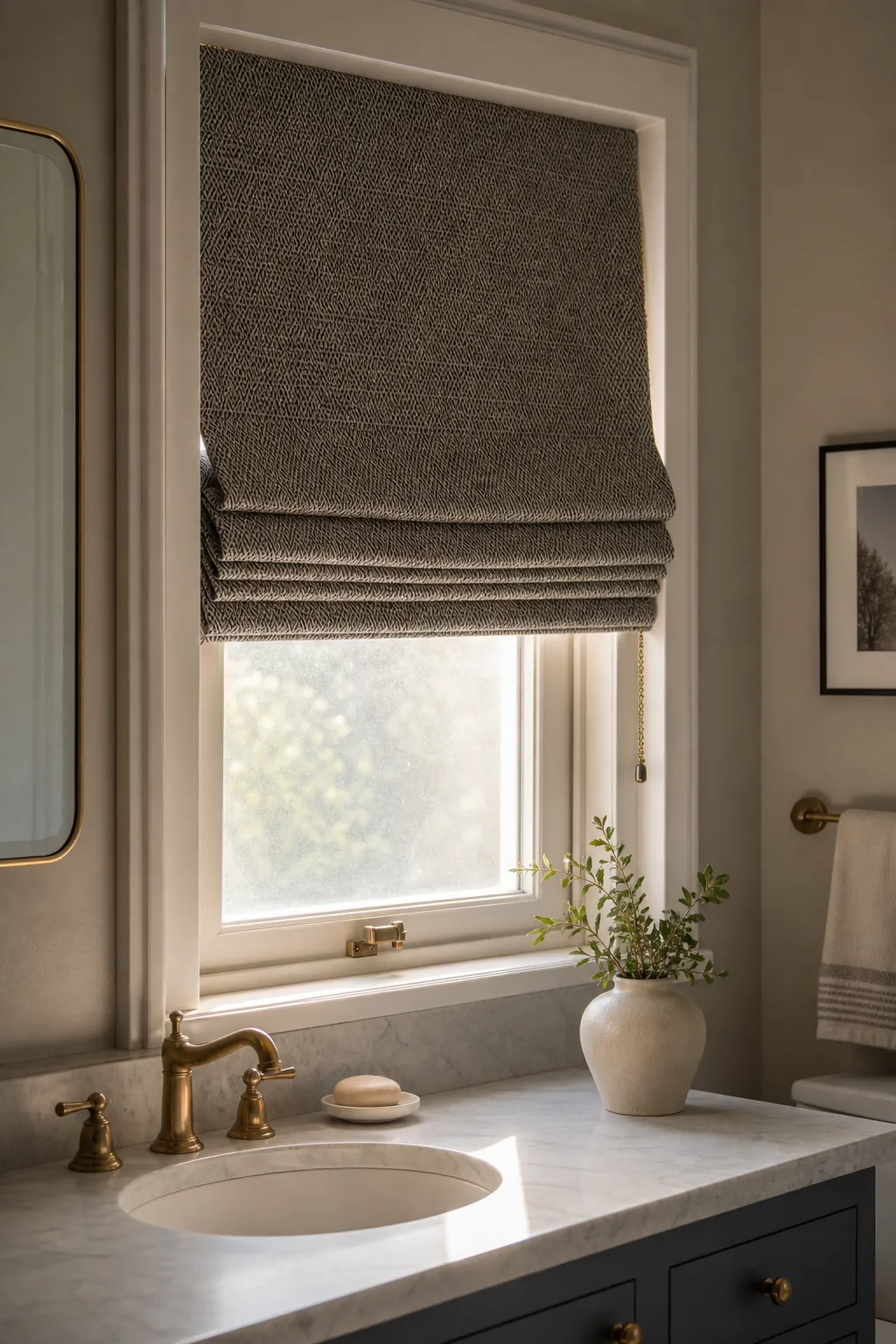
Fit a Moisture-Suitable Roman Shade
A simple shade supplies complete privacy when required and rolls above the glass when daylight matters. Keep fabric away from regular splashes, select washable or moisture-resistant material, and mount it so the window can still open. A small geometric weave or quiet solid usually competes less with the vanity.
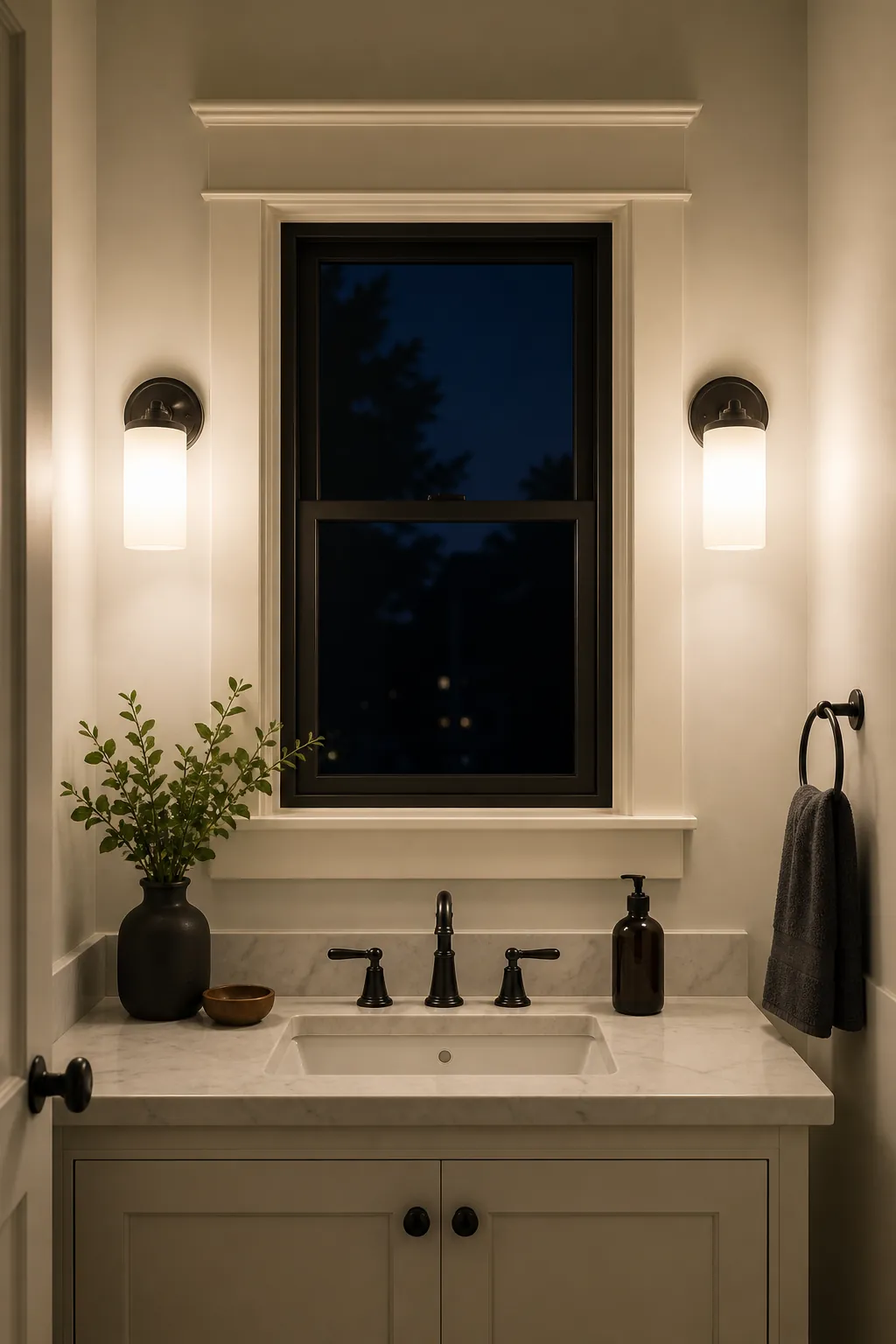
Light the Face From Both Sides
Use shallow damp-rated sconces on the walls flanking the window when space permits. Side light is helpful for grooming because it reduces shadows under the eyes and chin. If the casing is tight, place one good fixture above the window plus a lighted swing mirror, but do not depend on a ceiling can directly overhead.
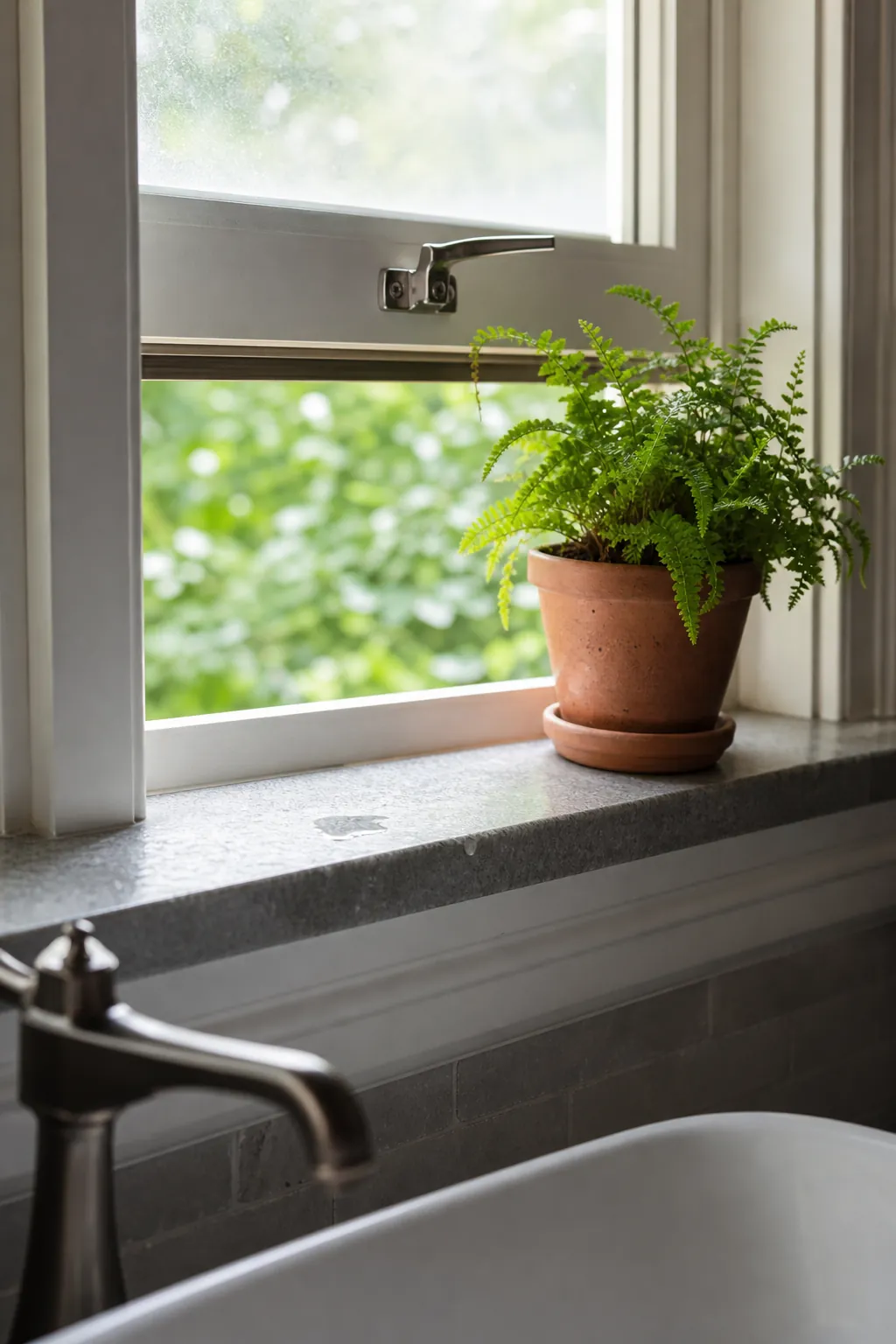
Protect the Sill and Keep Decor Low
Use a durable sill material, maintain sound sealant at the counter and casing, and wipe standing water before it damages trim. If the sill is deep enough, one low moisture-tolerant plant or a small ceramic dish can soften the architecture, but nothing should obstruct the latch or sit where it will be knocked into the basin.
Make the Layout Look Deliberate
The best window-over-vanity arrangement does not hide the unusual feature. It repeats alignments, gives the mirror a purposeful alternate home, controls privacy in layers, and keeps light aimed at the user. Hardware should share a finish or clear relationship, while the counter stays spare enough for the window and daylight to remain the visual focus.
Before buying decor, stand at the sink and trace the actual routine: open the window, reach the faucet, pull the mirror into place, switch on the light, and dry the counter. If every movement works without a collision, the composition will feel calm because its function is resolved.