
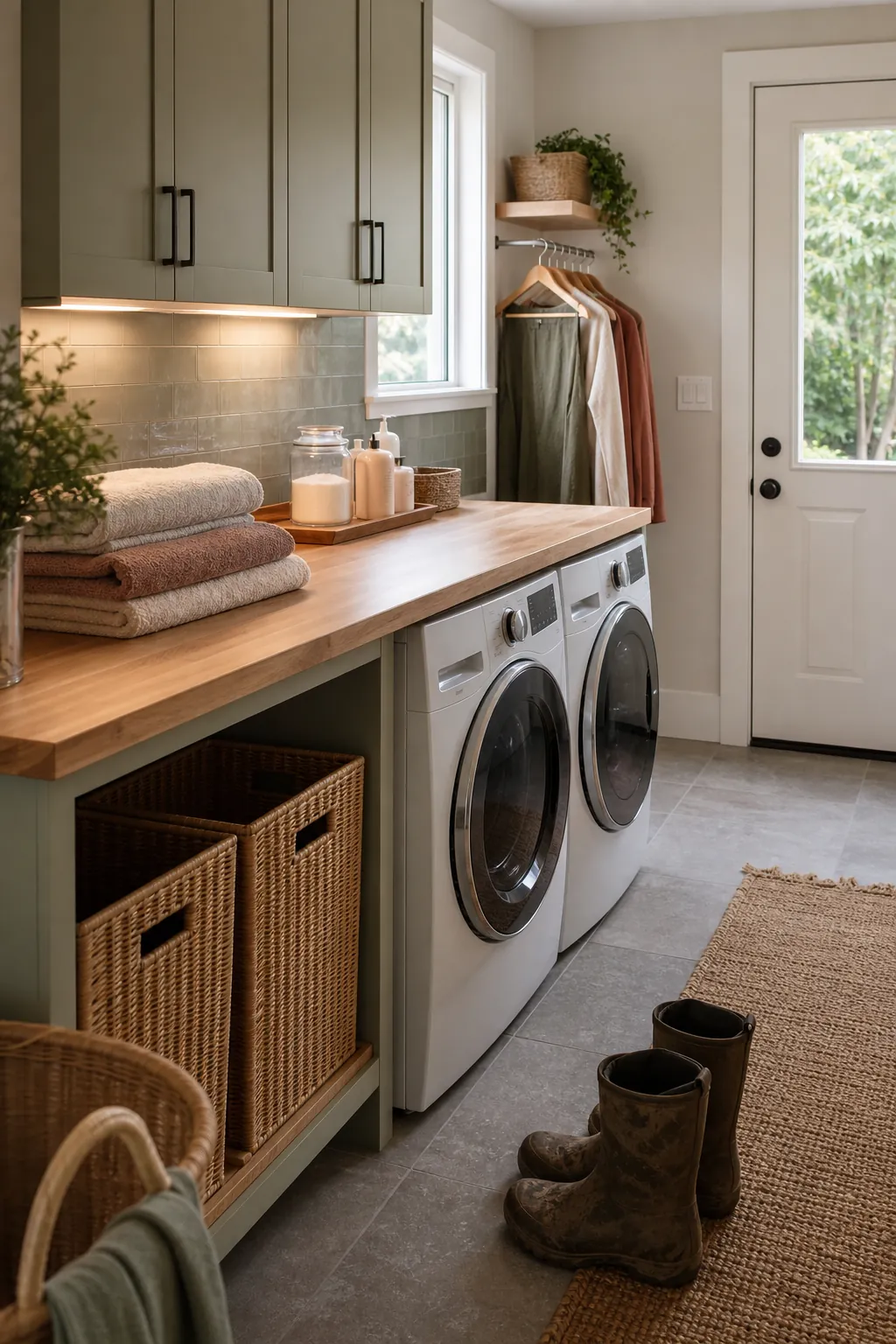
Good laundry room ideas start with the same question real homeowners keep asking: where does everything go when the washer is running, the dryer is full, and the floor is already crowded? The best rooms below solve storage, sorting, folding, drying, lighting, and daily entry clutter before they worry about styling.
Use these ideas as a practical menu for a small laundry room makeover, a narrow utility room, a mudroom laundry room, or a dream laundry room that still has to handle real baskets, muddy towels, and detergent refills.
Continuous Folding Counter
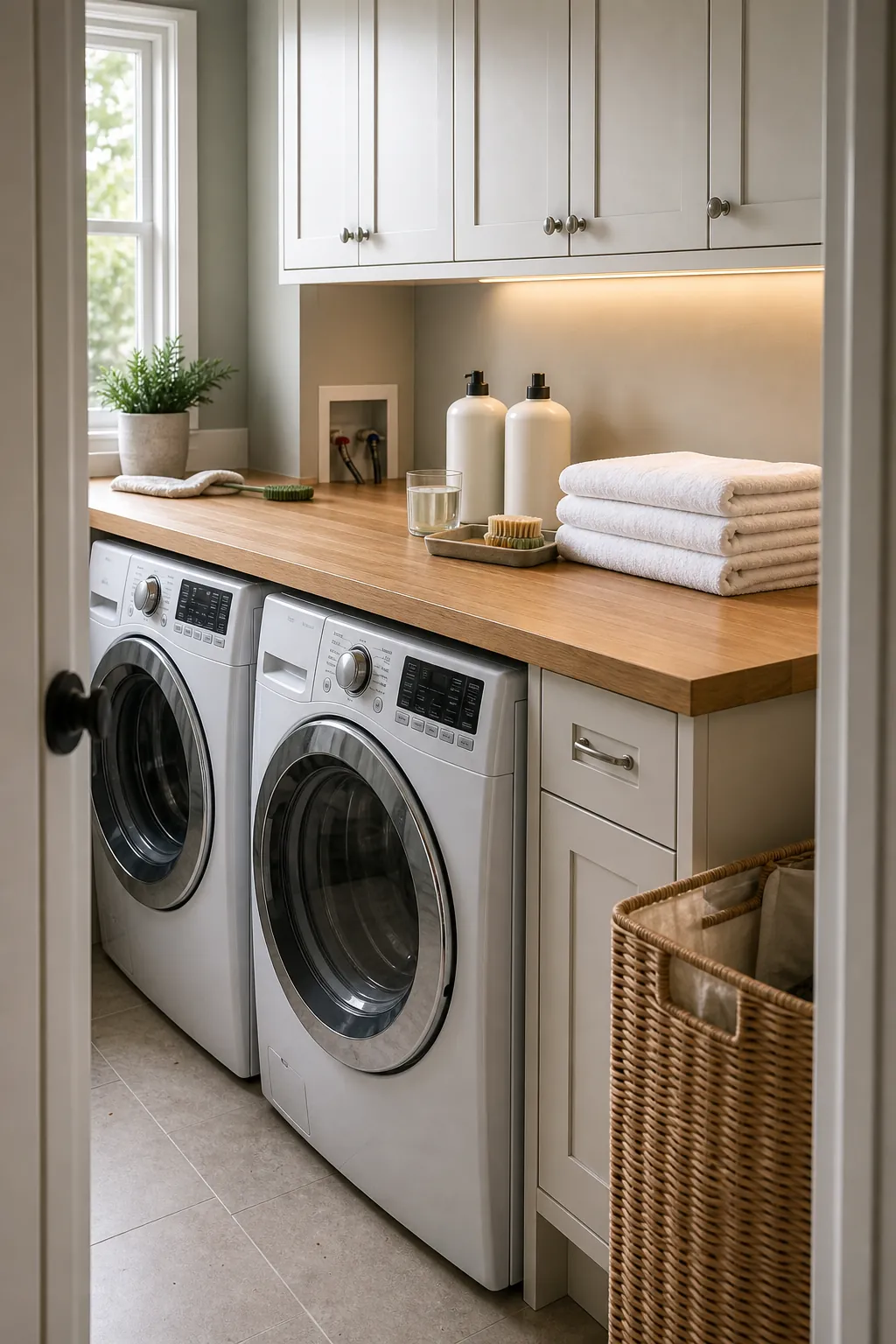
A counter over side-by-side machines is the idea most people imagine first because it solves the problem they feel every week: nowhere to fold, sort, or treat stains. It works best when it runs wall to wall instead of stopping awkwardly at each appliance.
Keep the counter simple and wipeable. A sealed butcher block, quartz remnant, or laminate slab can make a small laundry room makeover feel finished without taking away the clearances needed for service access.
Low Upper Cabinets for Everyday Supplies
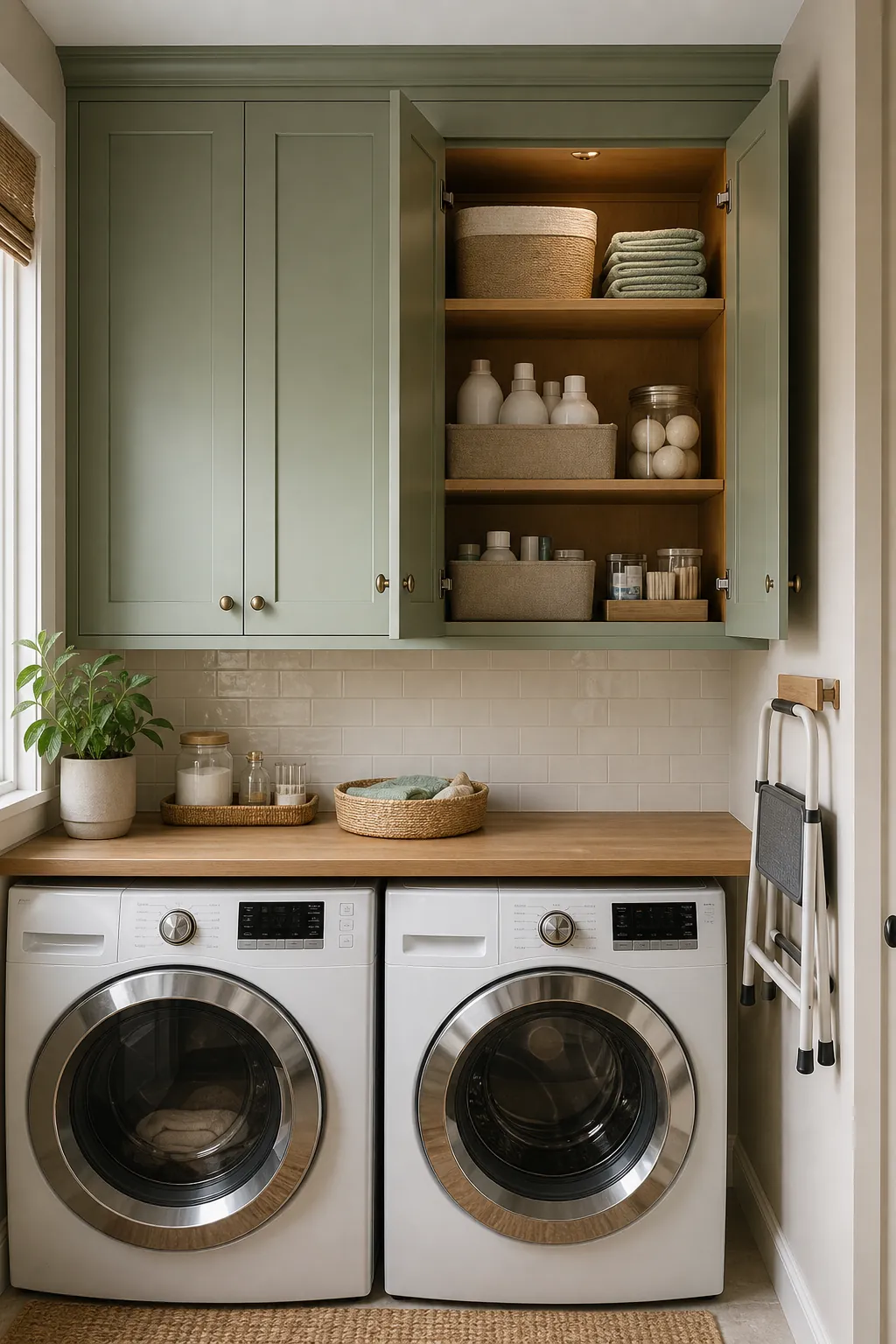
Open shelves look airy, but many real laundry rooms get cluttered within a month. Low upper cabinets hide detergent refills, stain removers, lint rollers, and cleaning cloths while keeping them close to the machines.
For an elegant laundry room, choose doors that match the rest of the house and mount the cabinets low enough that the top shelf is not a daily reach. Storage only works when people can use it quickly.
Slim Rolling Cart Between Machines and Wall
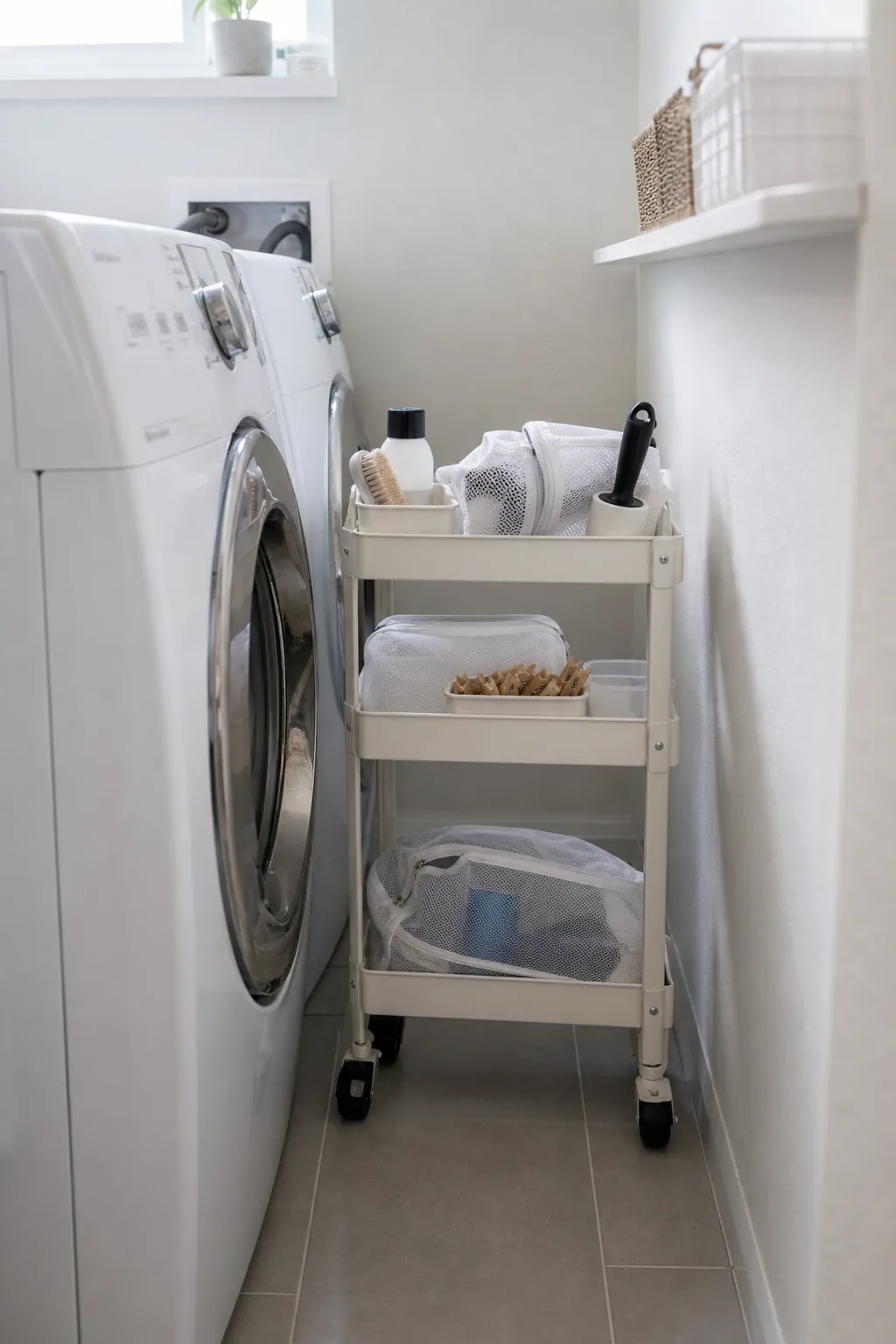
A narrow laundry room often has one awkward gap that is too small for a cabinet and too useful to waste. A slim rolling cart turns that gap into storage for dryer sheets, stain tools, mesh bags, and backup soap.
Measure the gap after the machines are installed and leave room for hoses and airflow. The best cart looks modest, rolls easily, and disappears when pushed back into place.
Mudroom Laundry Drop Zone
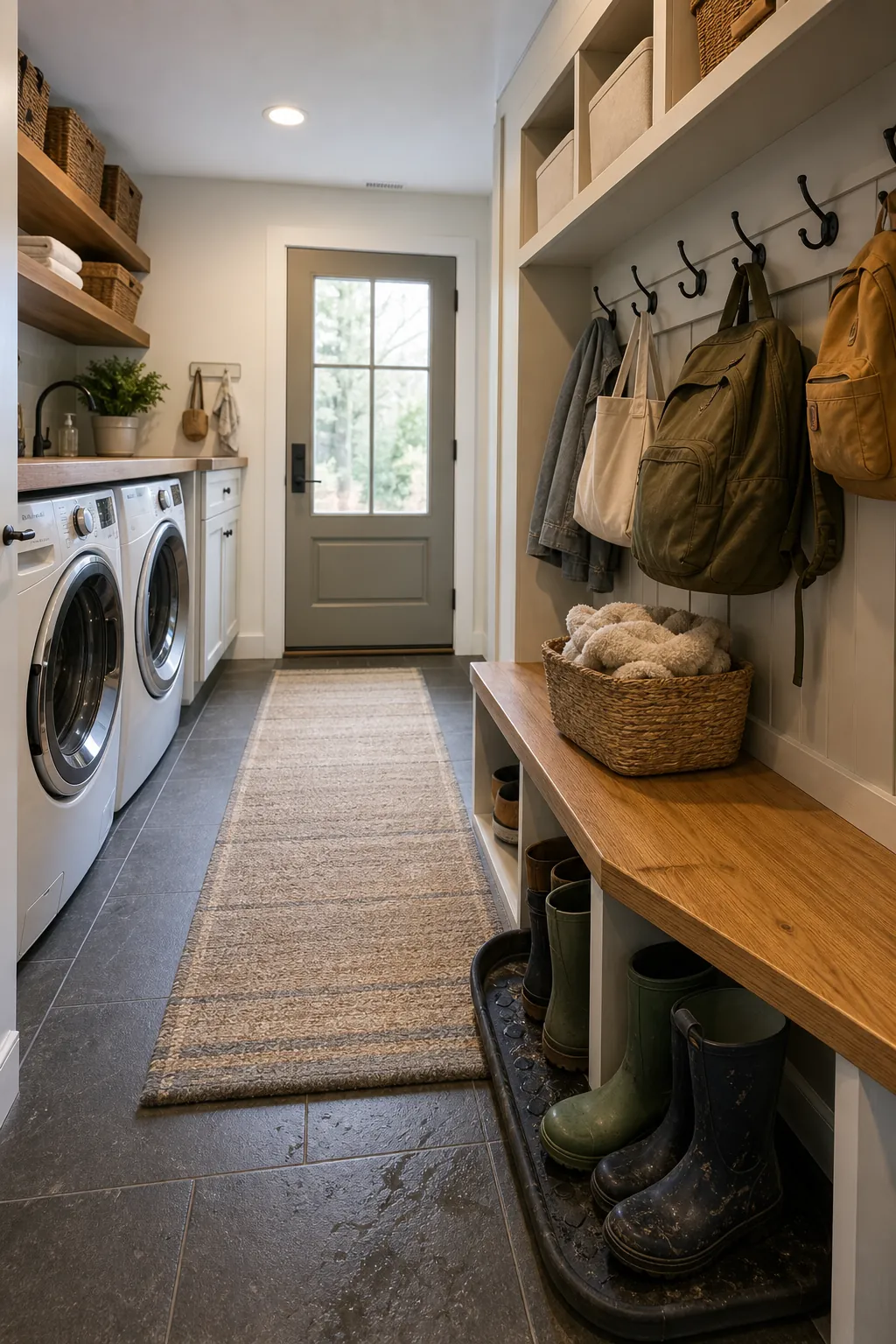
A mudroom laundry room needs zones, not just cabinets. Put dirty-shoe storage, backpacks, pet towels, and laundry supplies where each person naturally drops them when they enter.
The most useful layout keeps washer and dryer work on one side and a bench, hooks, or cubbies on the other. That separation makes the space easier for families because coats do not compete with wet laundry.
Stackable Machines With a Real Work Niche
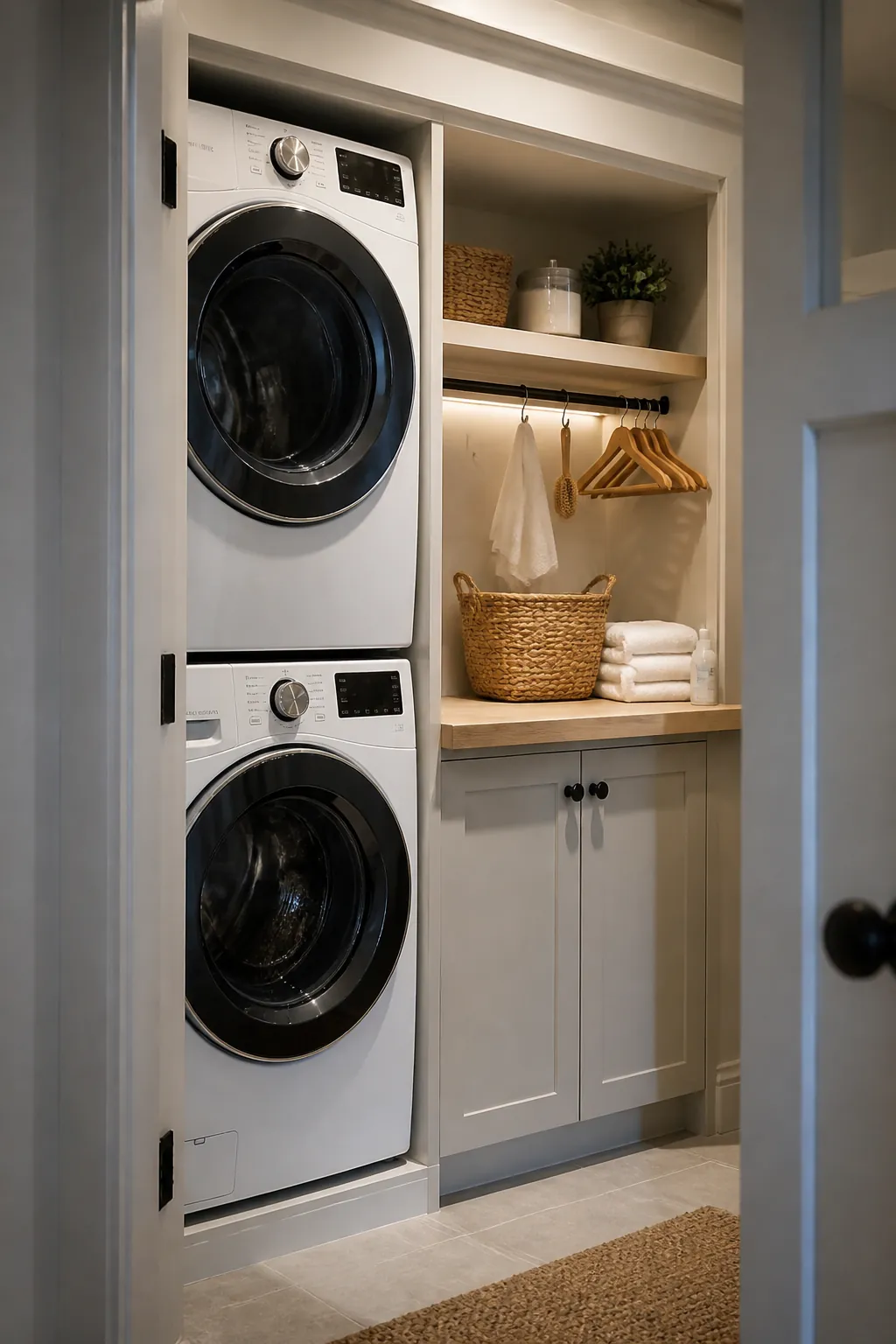
Stacking machines can free up floor space, but the empty space should become a work niche. Add a narrow counter, shelves, or a hamper tower so the room gains function instead of just vertical height.
Before choosing this route, check dryer venting, washer filter access, and whether the upper unit can be serviced. A stackable layout is strongest when it creates a better room, not just a tighter appliance column.
Wall-Mounted Drying Rail
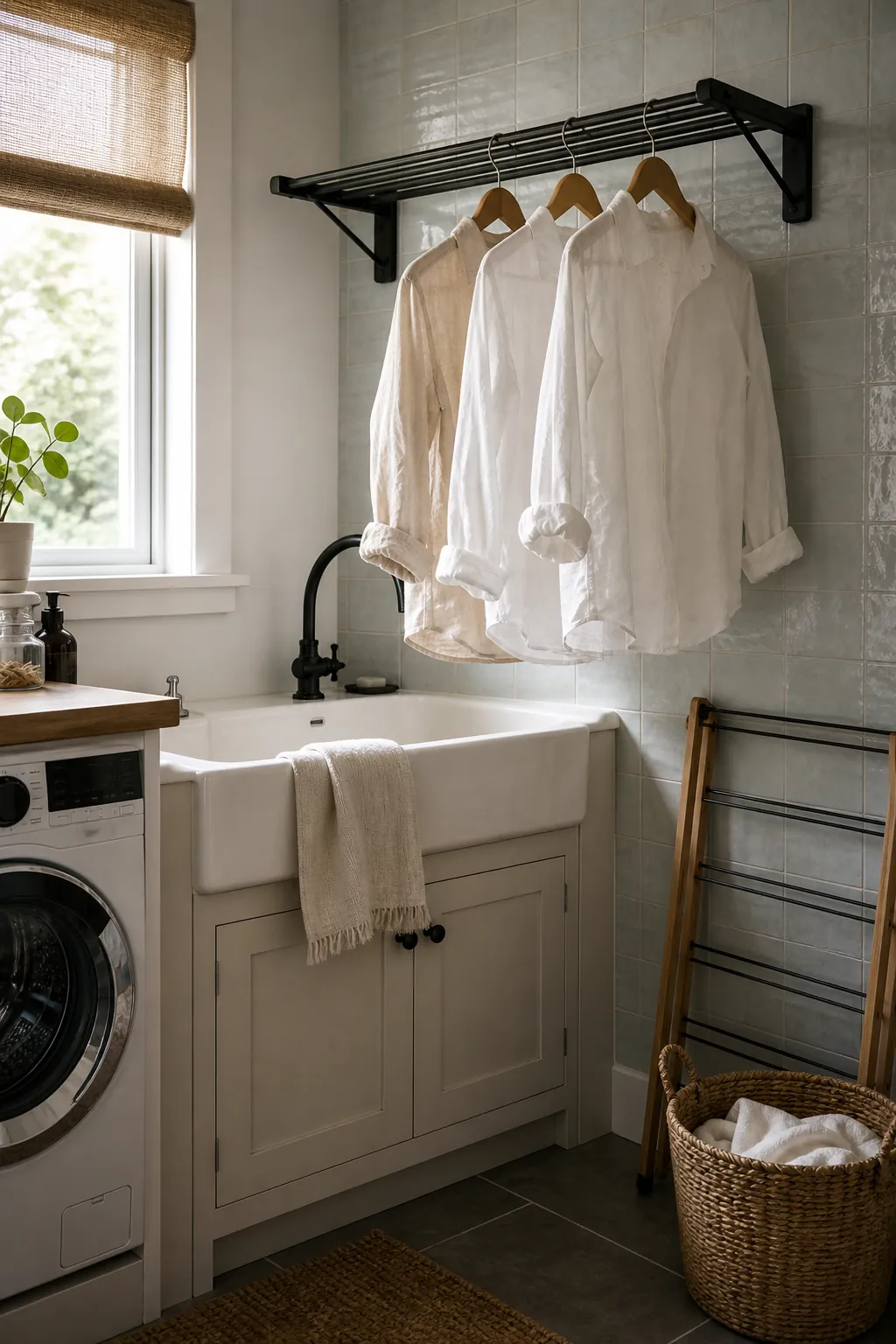
Hang-dry pieces are the hidden pain point in many dream laundry room photos. A wall-mounted rail gives sweaters, linen shirts, and delicates a place to dry without taking over the door, shower rod, or kitchen chairs.
Place the rail where drips will not damage wood floors. Above a utility sink, tile wall, or washable mat is usually safer than over storage baskets.
Closet Laundry Station
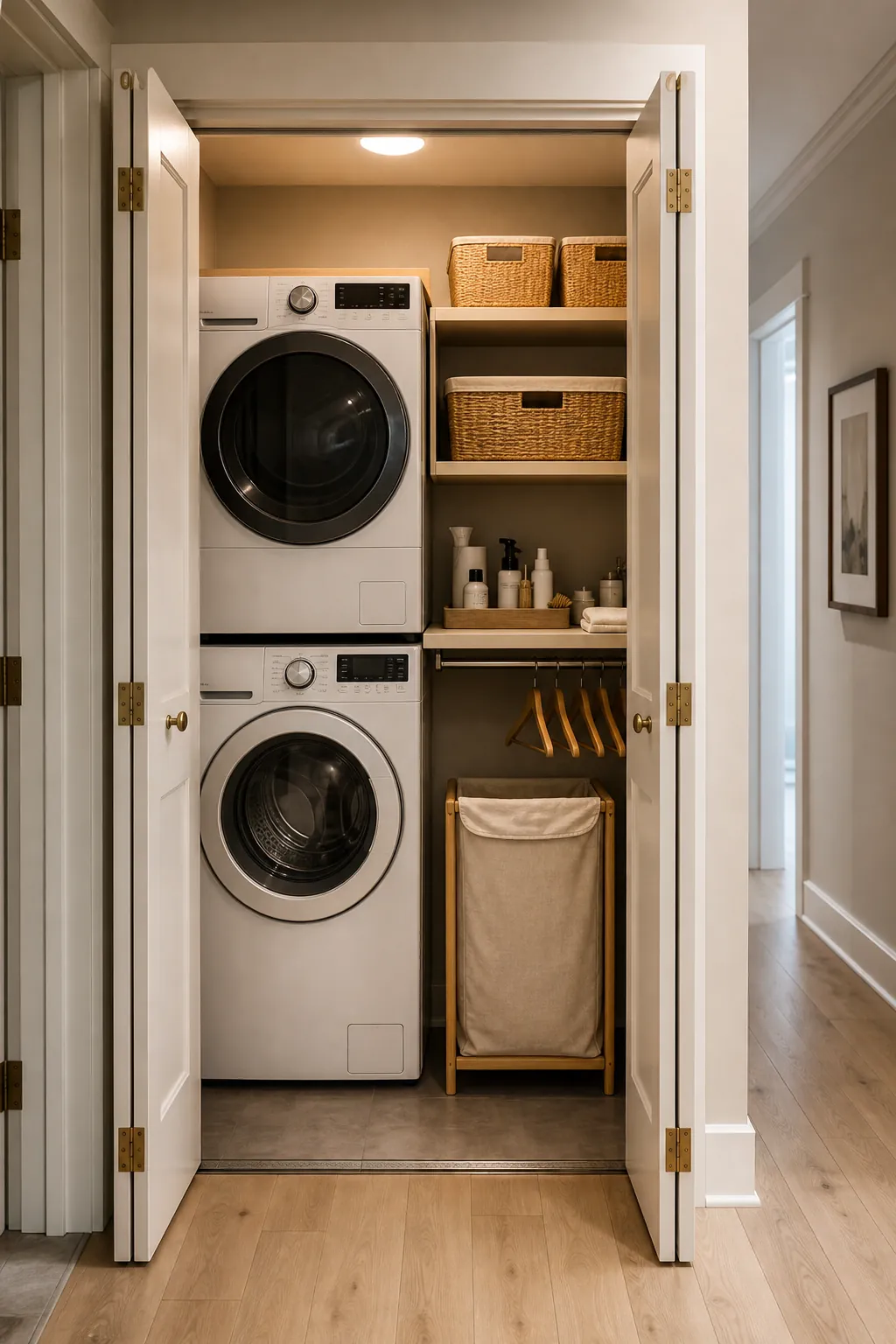
A closet laundry station can be beautiful when the inside is treated like a tiny room. Paint the back wall, add a durable shelf, and use matching bins so the doors can stay open without visual chaos.
The trick is restraint. A closet organization idea should keep only what belongs to laundry: detergent, a small hamper, hangers, a stain kit, and maybe one basket for lost socks.
Warm Wood Open Shelves
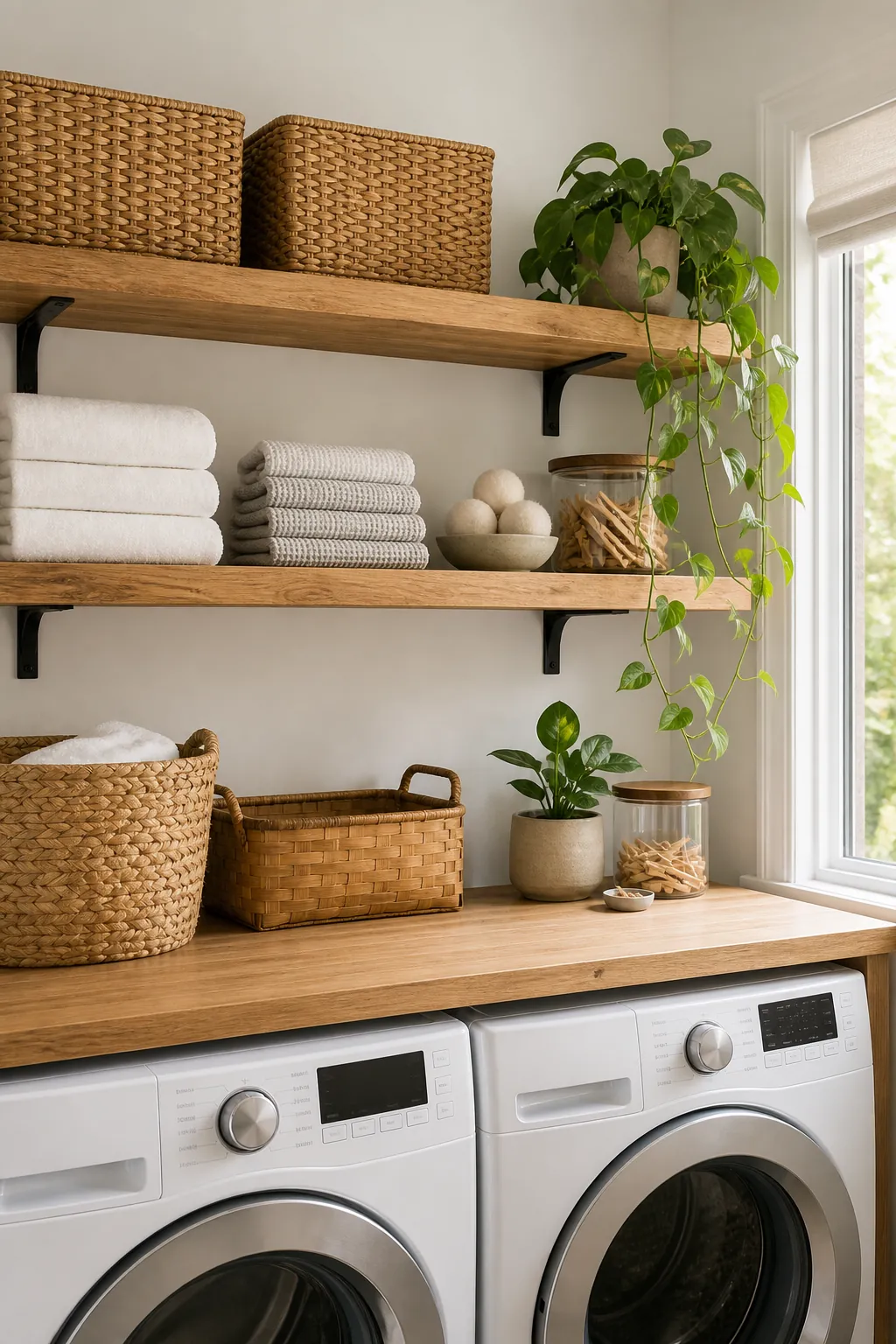
Open shelves are best for the few things that actually look good and get used often: towels, baskets, clothespins, dryer balls, and a small plant if there is light.
Use warm wood to soften the appliance-heavy room. Then keep the shelf count low, because too many shelves can turn a small utility room into visual noise.
Patterned Floor Tile
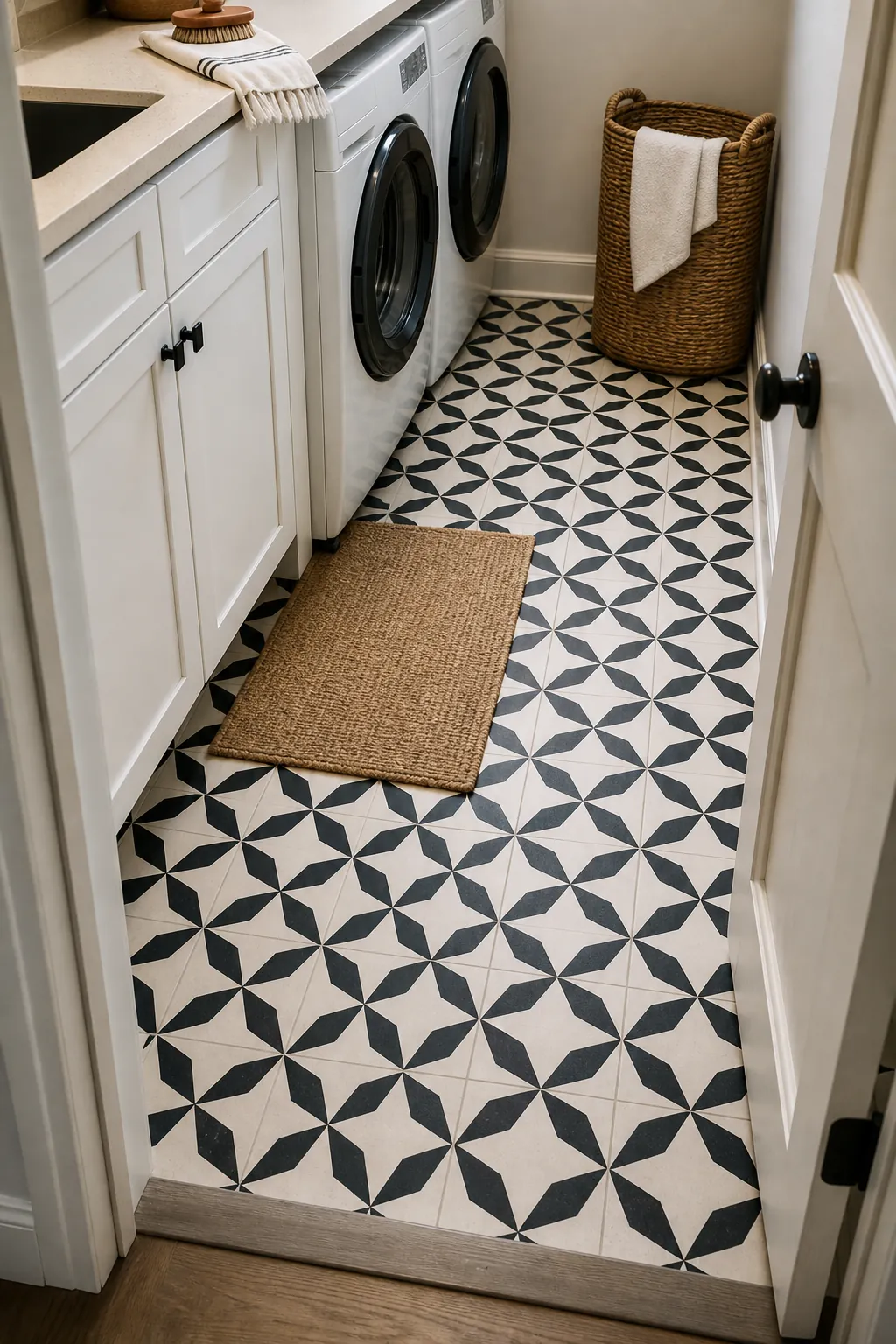
Patterned tile gives the room personality where water, lint, and dropped detergent are already hard on surfaces. It is especially useful when the walls and cabinets stay simple.
In a narrow laundry room, keep the pattern medium scale. Tiny busy prints can make the floor look dirty, while oversized patterns may disappear under machines and hampers.
Deep Utility Sink With Storage Below
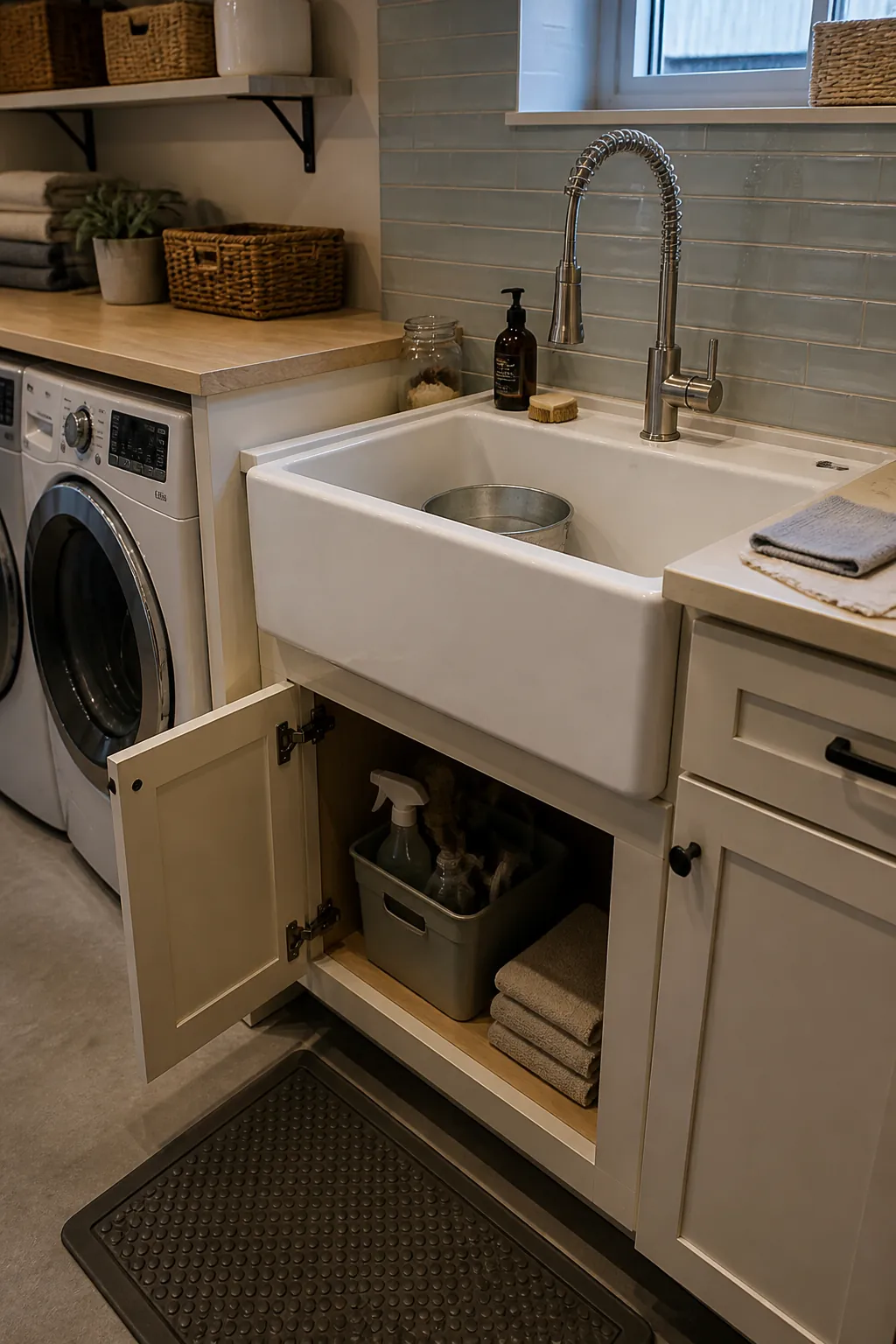
A deep sink earns its space if you soak stained clothes, rinse muddy shoes, wash paint brushes, or fill a mop bucket. Pair it with a cabinet below so plumbing does not become wasted space.
Choose a faucet with enough clearance for buckets and hand-washing. The sink can be plain, but the surrounding cabinet should feel intentional.
Sorted Hampers That Actually Fit
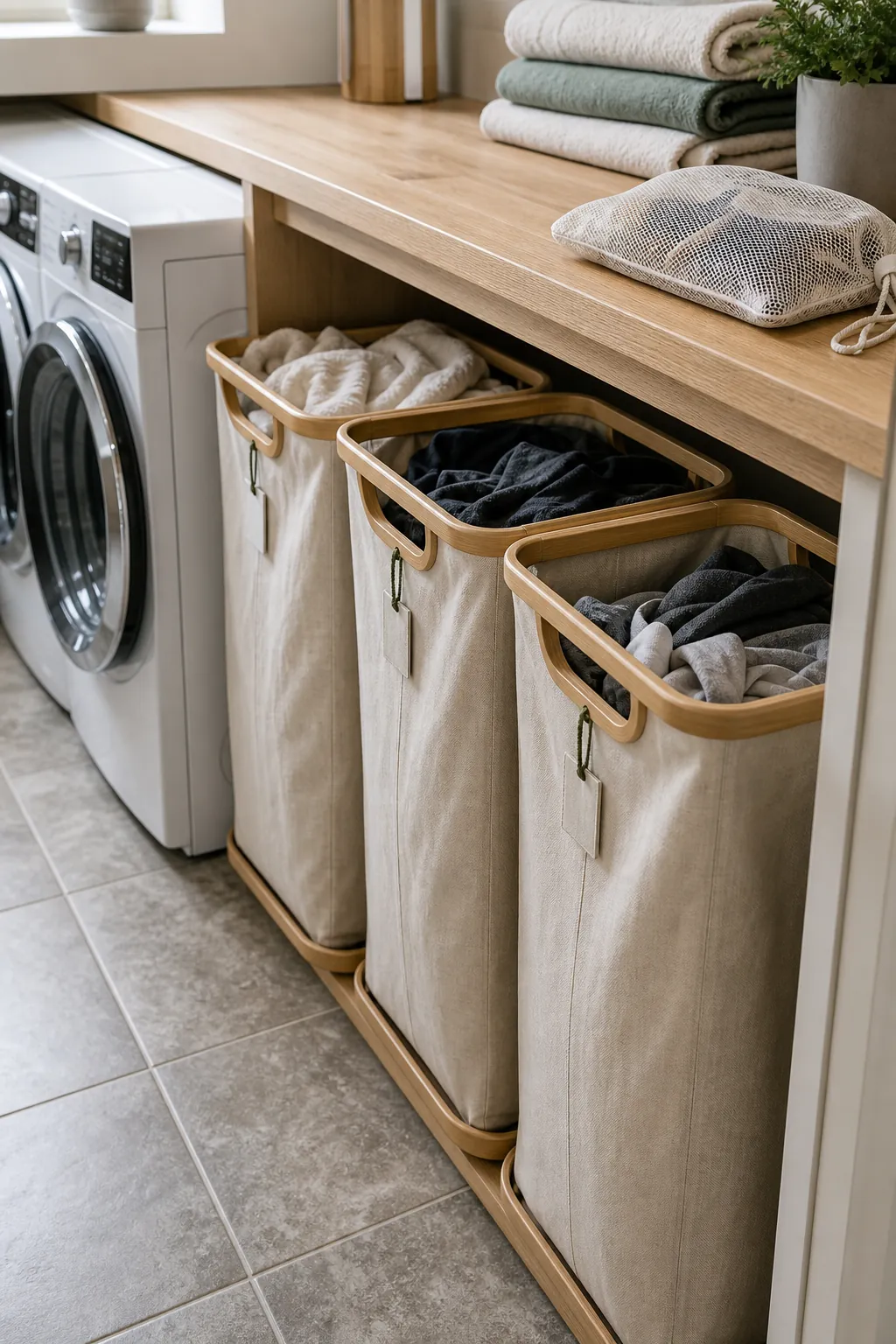
The prettiest laundry room still fails if dirty clothes have nowhere to land. Sorted hampers under a counter or bench keep whites, colors, towels, and delicates from spreading across the floor.
If the room is tiny, use two categories instead of four. A system people will actually follow beats a perfect system that blocks the aisle.
Intentional Galley Layout
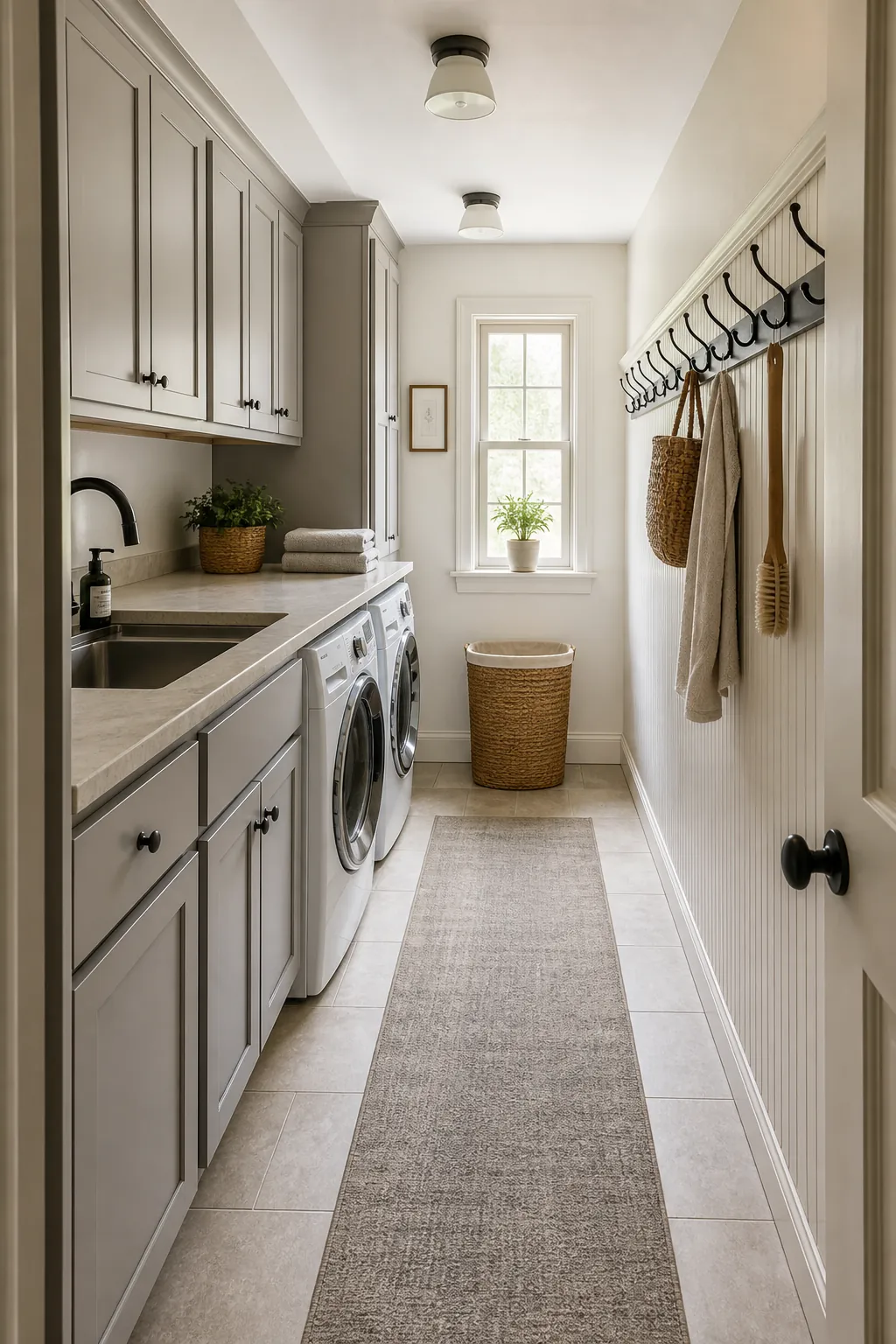
A narrow laundry room can feel polished when one wall does the heavy lifting. Keep machines, counter, cabinets, and sink on the same side, then let the opposite wall stay shallow.
Use the blank wall for hooks, a peg rail, or a thin ledge instead of deep storage. The goal is to preserve the walkway while making the long shape feel deliberate.
Peg Rail for Quick-Grip Tools
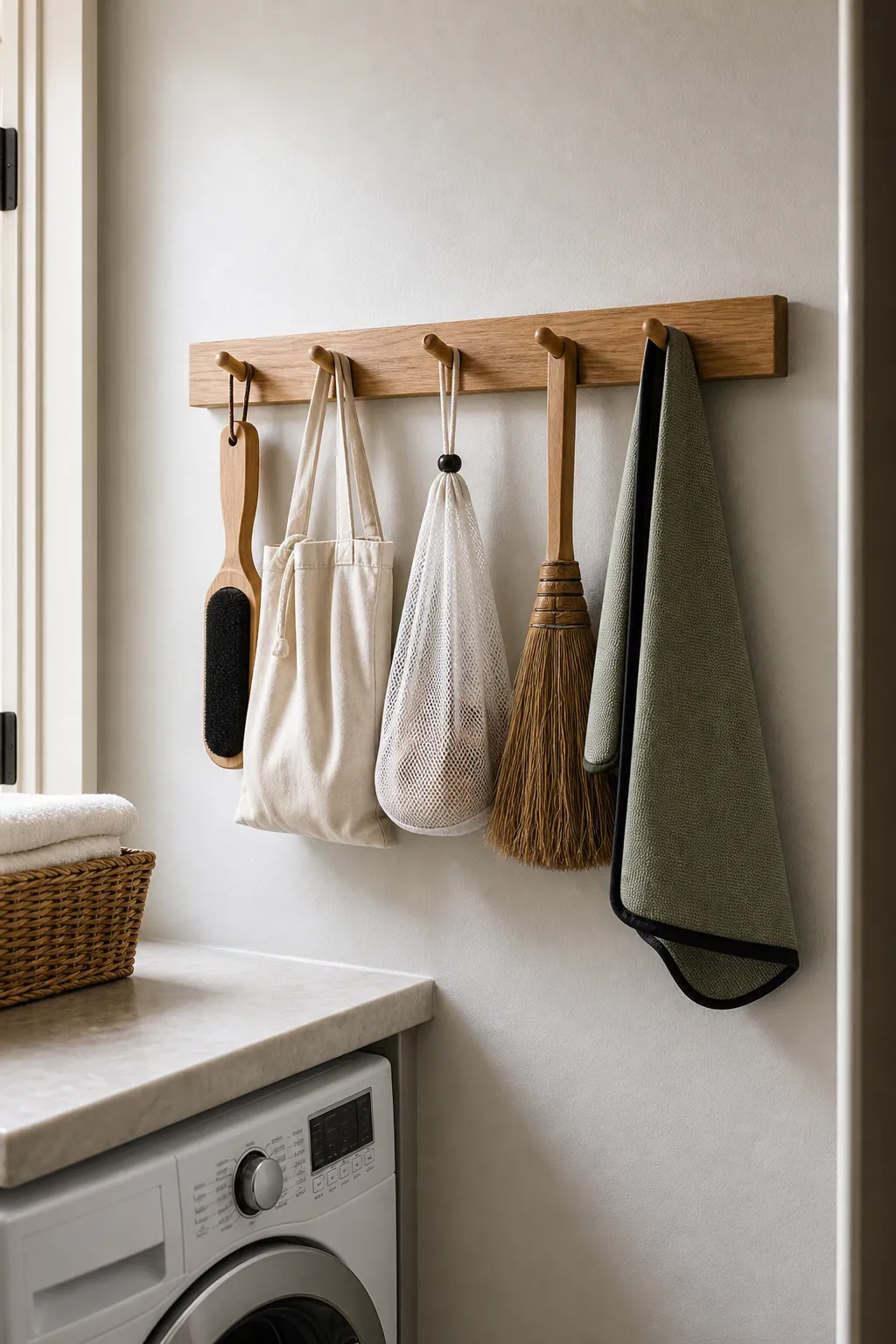
A peg rail is cheap, shallow, and useful. It can hold a lint brush, mesh bags, dog leash, dustpan, small tote, or the delicates bag that otherwise gets lost.
This is one of the easiest small utility room ideas because it works even when cabinets are not possible. Keep the rail edited so it does not become a wall of random things.
Farmhouse Cabinet Details
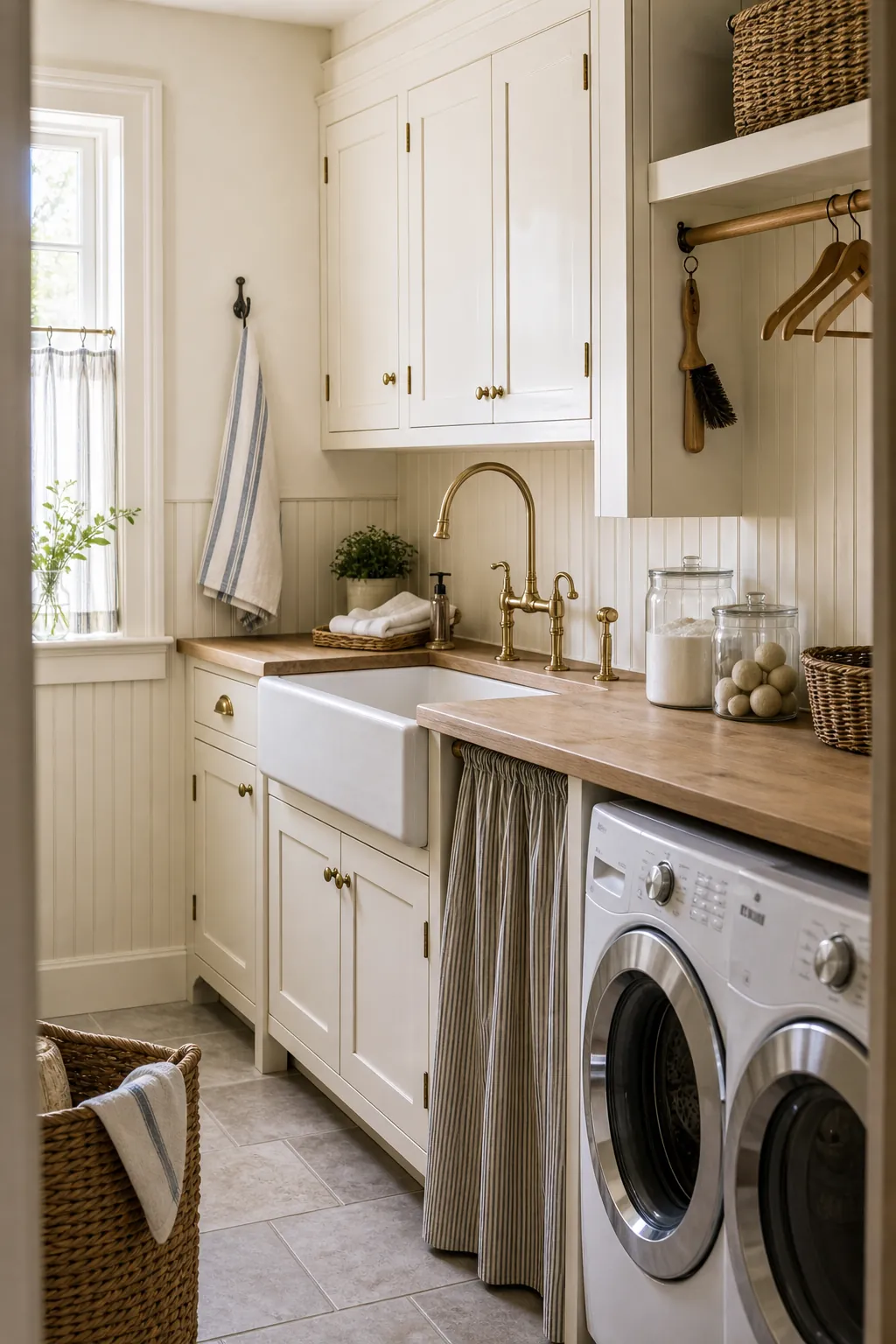
Farmhouse laundry room style works when the details are useful: shaker cabinets, a skirted hamper nook, beadboard, an apron sink, and warm hardware.
Avoid filling the room with signs or props. The modern farmhouse version feels better when the storage, sink, and textures do the decorating.
Finished Basement Laundry Room
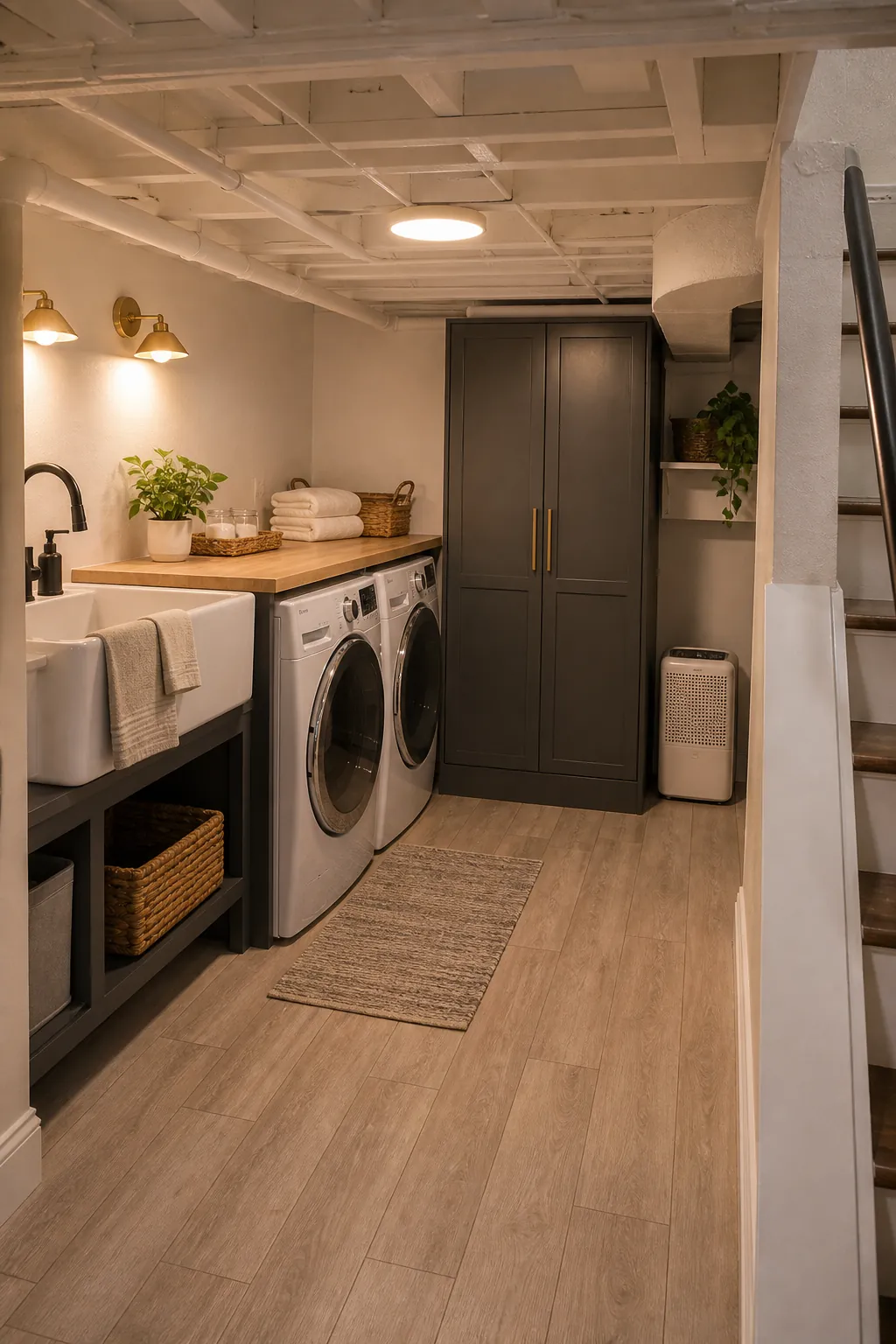
A basement laundry room does not need to feel like leftover space. Paint the ceiling, add washable flooring, improve lighting, and use closed storage so the area feels intentional.
Moisture matters more downstairs, so choose materials that handle humidity and occasional splashes. A dehumidifier nook or vented storage can be more valuable than another decorative shelf.
Under-Cabinet Task Lighting
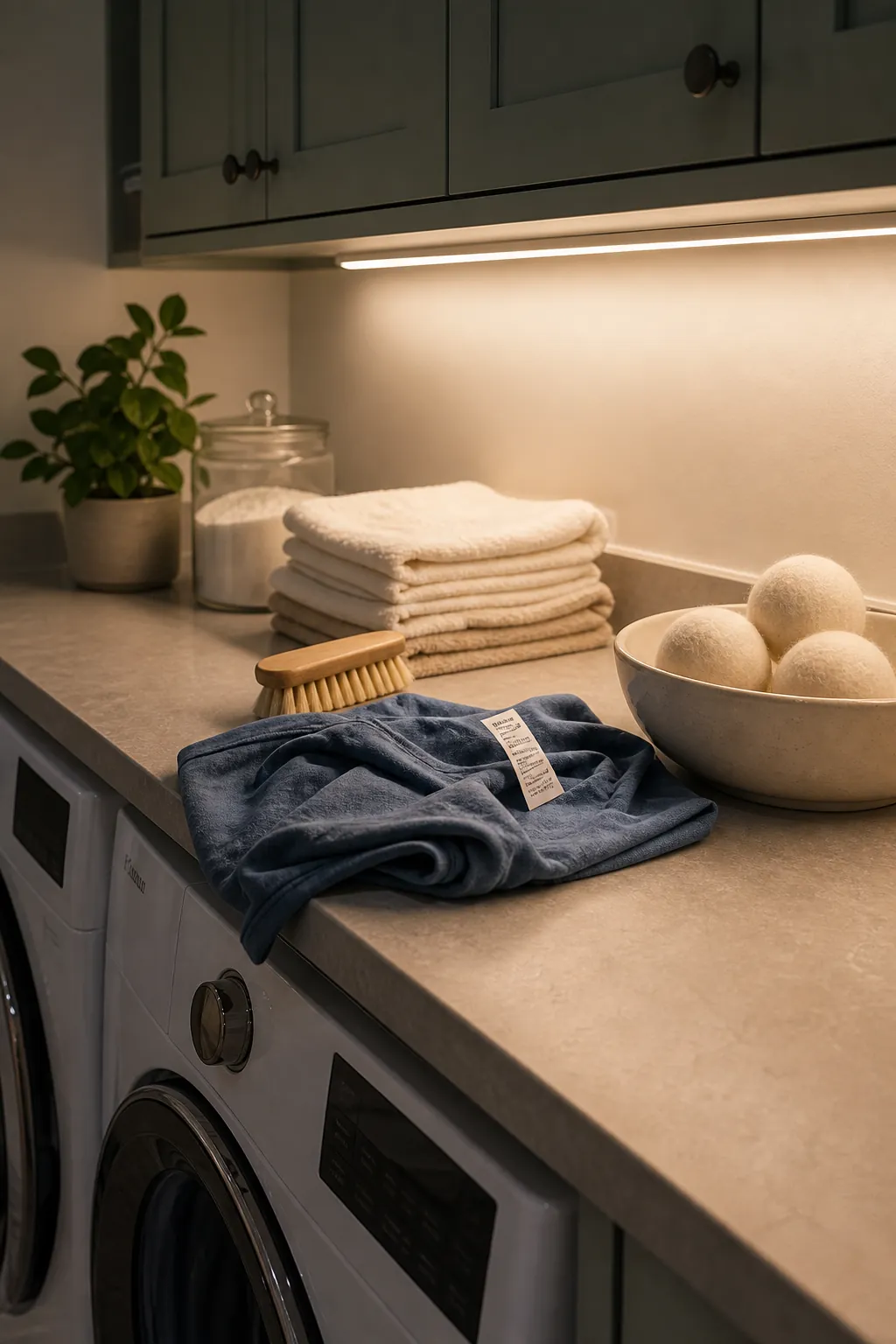
Good lighting changes how the room works. Under-cabinet lighting helps with stain checks, matching socks, reading care labels, and folding at night.
Use a warm-neutral color temperature so whites do not look dingy and colors do not shift too much. The light should brighten the counter, not create glare on the machines.
Bamboo Baskets and Natural Texture
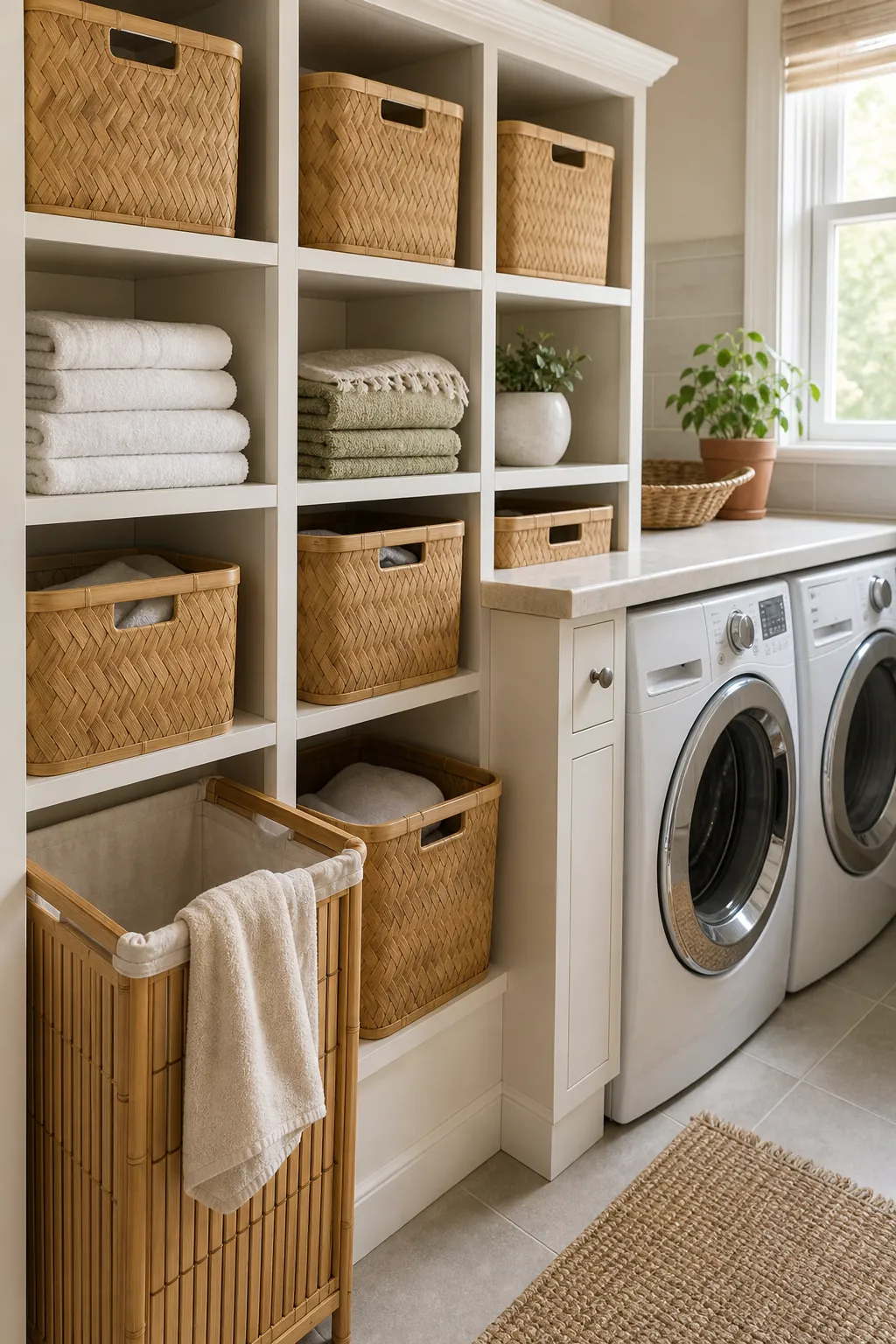
Bamboo baskets, trays, and hamper frames add warmth without making the laundry room feel busy. They are especially useful when the rest of the room is white or gray.
Use natural texture in places that stay dry: shelves, hamper fronts, trays, and drawer organizers. Keep splash zones in tile, stone, laminate, or sealed wood.
Compact Ironing Station
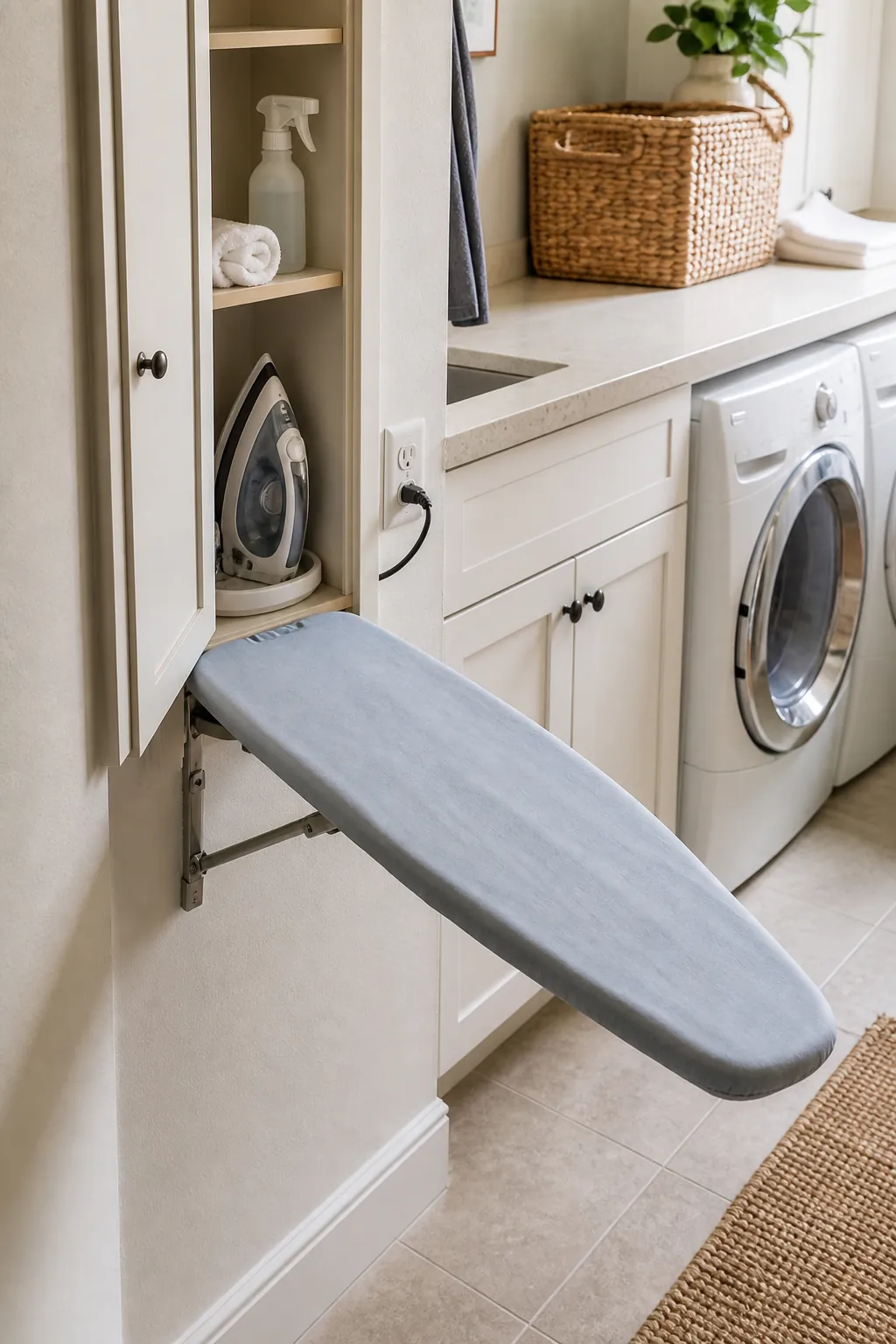
If you iron even occasionally, give the board a designated home. A wall-mounted ironing board, slim cabinet, or over-door holder keeps it from leaning in the hallway.
Place it near an outlet and a heat-safe landing spot. In a compact laundry room, the ironing station should fold away without blocking the machines.
Top-Loader Friendly Shelf Height
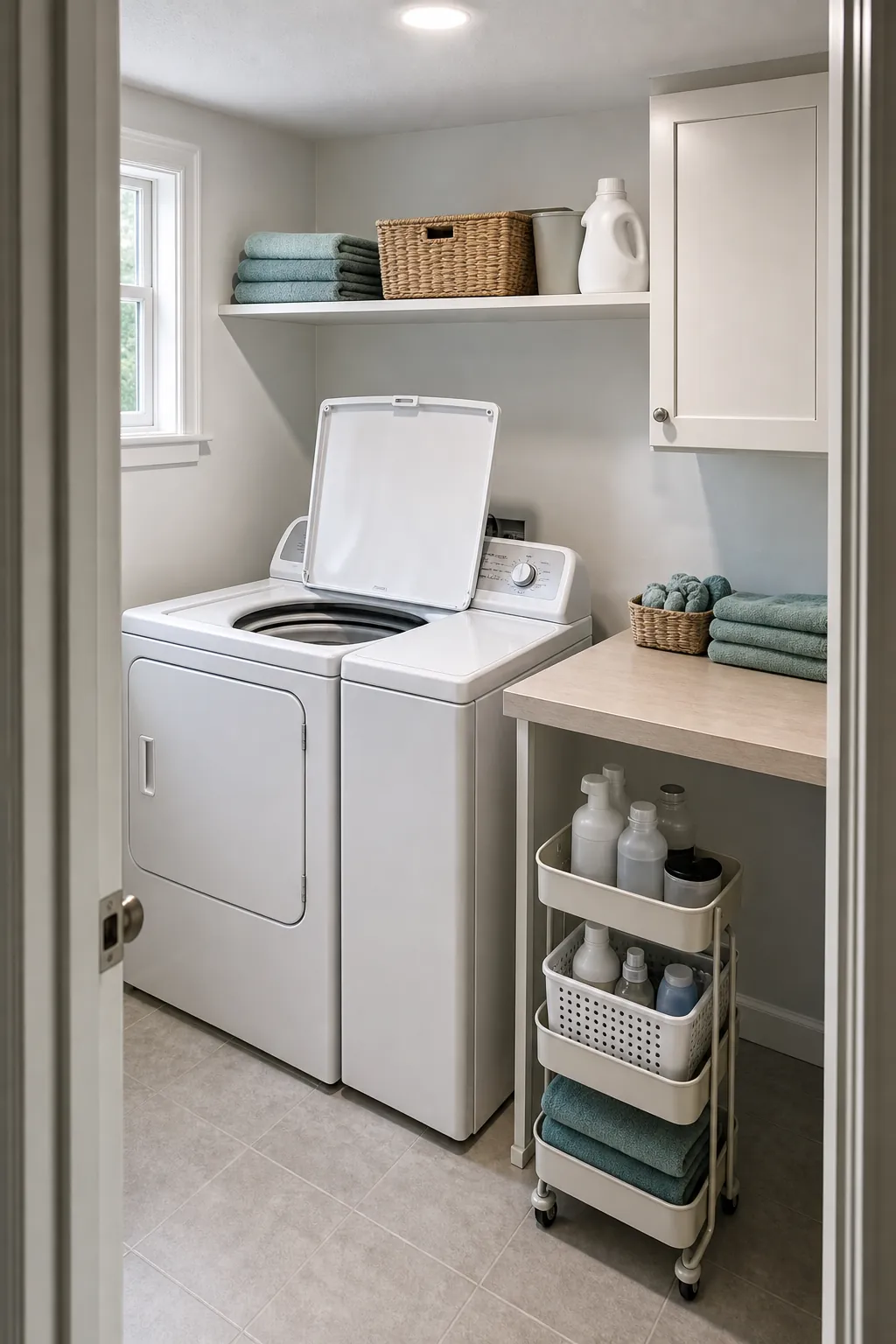
Top-loader laundry room small spaces need a different plan than front-loader photos. The shelf or cabinet above the washer must clear the lid, and the work surface usually belongs beside the machine rather than over it.
Add a side counter, rolling cart, or wall shelf instead of forcing a counter across the top. The room will feel better when it respects the appliance you actually own.
Pet and Cleaning Supply Nook
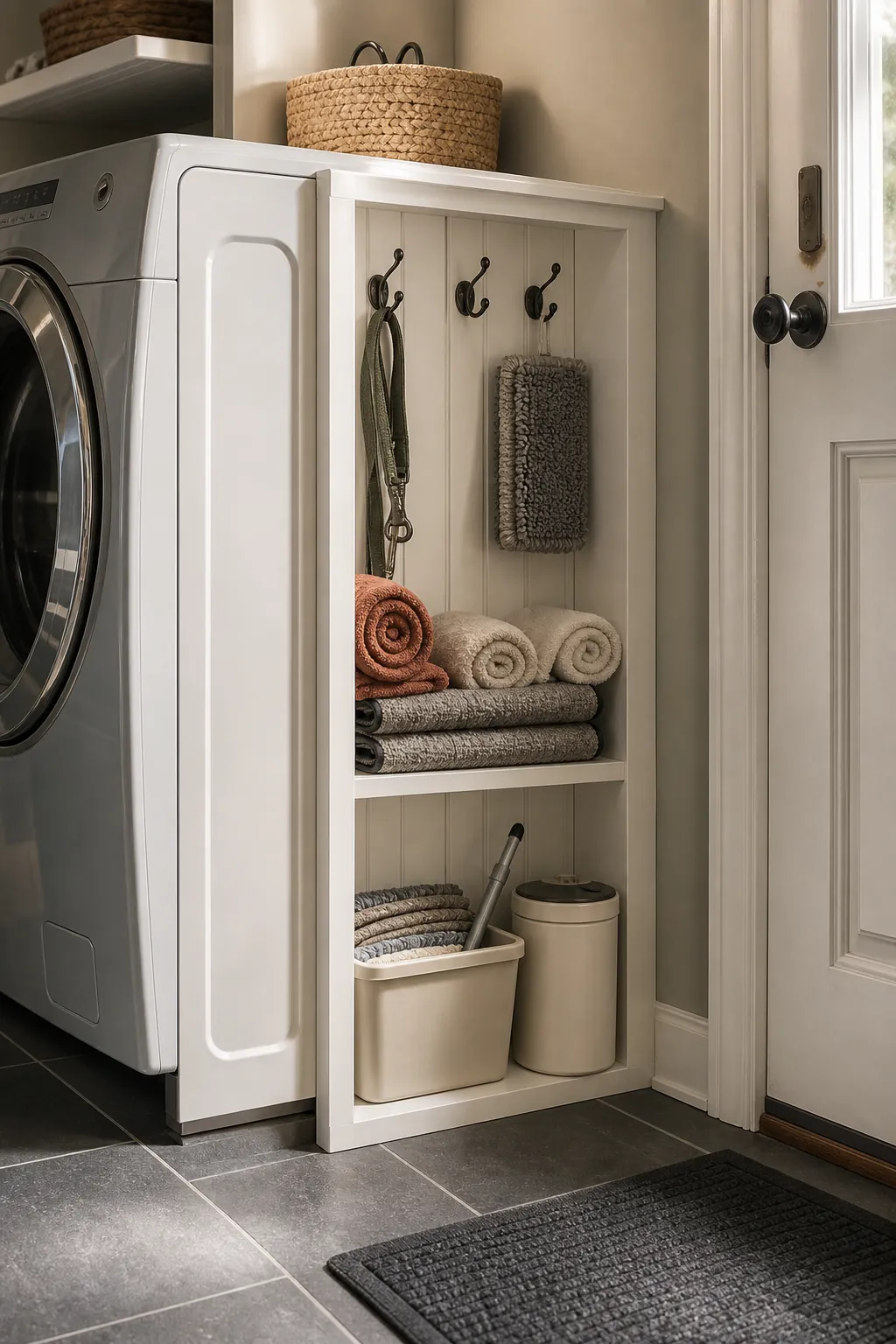
Laundry rooms often become the place for pet towels, mop pads, vacuum attachments, and cleaning refills. Give those items one nook so they do not spread through every cabinet.
Keep pet items washable and low. Hooks for leashes, a basket for towels, and a bin for paw wipes can make a mudroom laundry room much easier to reset.
Elegant Calm Color Palette
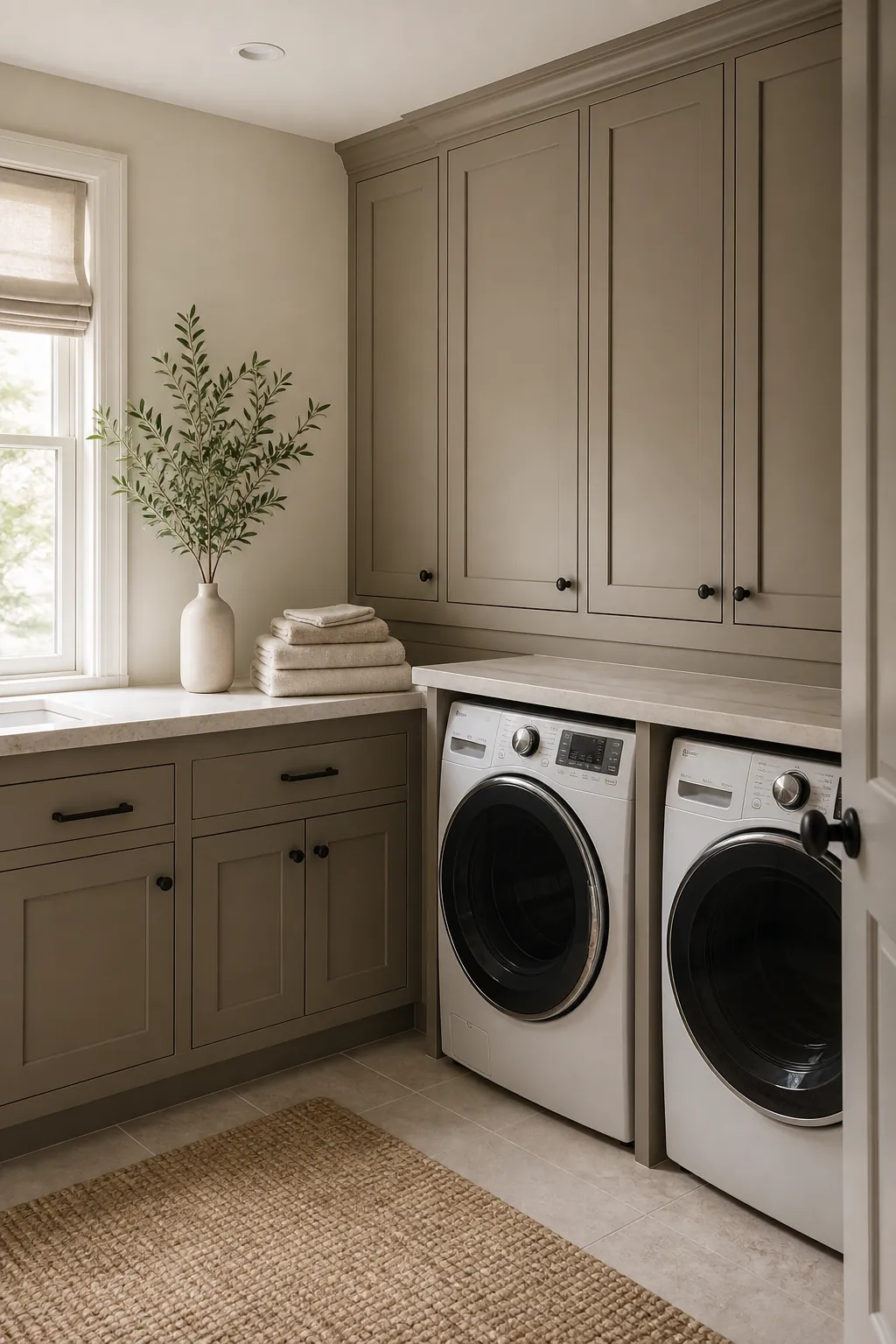
An elegant laundry room does not need expensive materials everywhere. It needs a controlled palette, good lighting, and fewer visible products.
Try warm white walls, one muted cabinet color, natural texture, and a darker accent through hardware or floor tile. The room will feel grown-up without becoming cold.
Start with the idea that removes the biggest daily friction first. Once the folding, sorting, hanging, and supply storage have a home, the pretty finishes become easier to choose and much easier to maintain.