
Imagine stepping outside every single day to a garden bursting with vibrant blooms. No bare spots. No seasonal gaps. Just continuous, stunning flowers from January through December.
This isn’t a fantasy. With the right all season plants, you can create an at home flower garden that delivers year-round beauty. These flowering plants for home garden spaces work harder than traditional annuals. They bloom repeatedly, recover quickly, and adapt to changing conditions.
Whether you’re planning pot plants outdoor displays or selecting porch plants full sun areas, continuous bloomers transform any space into a living rainbow. The key lies in understanding which year long plants thrive in your specific conditions and how to care for them properly.
Let’s explore the world of all year flowering plants that keep gardens gorgeous through every season.
Indoor Continuous Bloomers: Bringing Year-Round Color Inside
African Violet (Saintpaulia): The Mountain Marvel
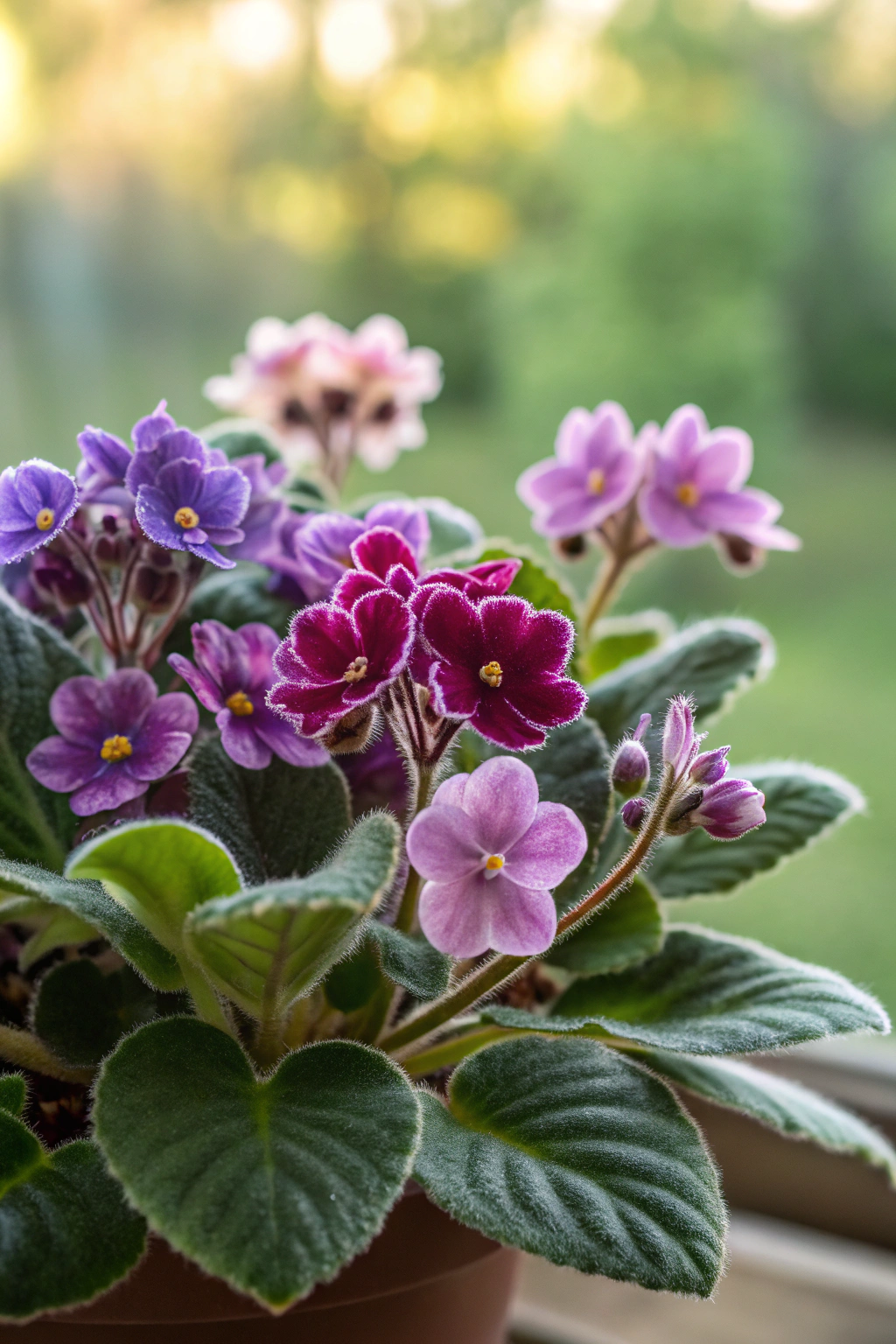
African violets originated in the Usambara Mountains of Tanzania in 1892. German botanist Baron Walter von Saint Paul-Illaire discovered these fuzzy-leafed beauties growing in rocky crevices 8,000 feet above sea level.
Today, over 20,000 registered varieties exist. That’s more varieties than roses and orchids combined.
Unique Characteristics:
- Velvet-textured leaves covered in microscopic hairs
- Flowers can be single, double, or ruffled
- Colors range from pure white to deep purple, with bicolors and fantasy patterns
- Self-pollinating varieties produce seeds without cross-pollination
Bloom Details:
African violets produce clusters of 5-petaled flowers measuring 0.5 to 2 inches across. A healthy plant blooms continuously for 10-12 months annually. Each bloom cycle lasts 2-3 weeks, with new buds forming constantly.
Growing Specifics:
- Temperature: 65-75°F (18-24°C) consistently
- Humidity: 40-60% relative humidity
- Light: Bright, indirect light 10-12 hours daily
- Water: Room temperature water, avoiding leaves completely
Fascinating Facts:
African violets communicate through their leaves. Curled edges mean too much light. Yellow leaves indicate overwatering. Dark green leaves with no flowers signal insufficient light.
The Cherokee used wild violet relatives for respiratory ailments. Modern African violets contain compounds being studied for anti-inflammatory properties.
Common Problems and Solutions:
Crown rot kills more African violets than any other issue. Always water from below using saucers. Remove excess water after 30 minutes.
Mealybugs love the fuzzy leaves. Dab them with rubbing alcohol on cotton swabs. Quarantine affected plants immediately.
Best Varieties:
- ‘Optimara Little Maya’: Compact with purple-blue flowers
- ‘Rob’s Vanilla Trail’: Trailing variety with white blooms
- ‘Ness’ Orange Pekoe’: Coral-colored ruffled flowers
Anthurium: The Hawaiian Heart Plant
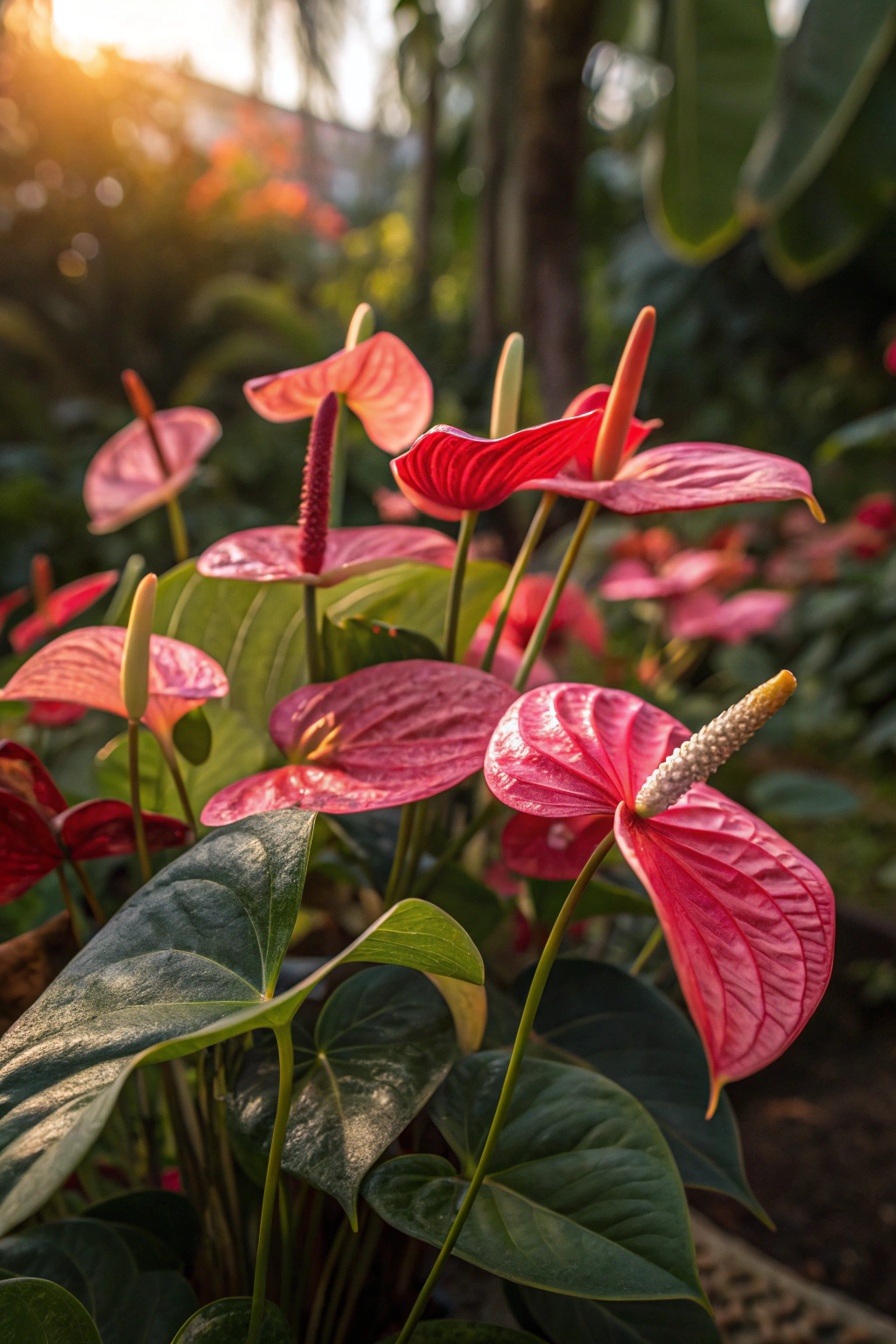
Anthuriums hail from tropical rainforests of Central and South America. Ancient Mayans called them “little boy flowers” due to their distinctive spadix shape. Hawaii began commercial cultivation in the 1940s, making them the state’s second-largest flower export.
More than 1,000 anthurium species exist worldwide. Most commercial varieties descend from just two species: Anthurium andraeanum and Anthurium scherzerianum.
Unique Characteristics:
- Heart-shaped “flowers” are actually colorful bracts (modified leaves)
- True flowers are tiny bumps on the central spadix
- NASA rates anthuriums as top air purifiers, removing formaldehyde and ammonia
- Individual blooms last 6-8 weeks on the plant
Bloom Details:
Each anthurium produces 4-6 blooms annually. New flowers emerge continuously from spring through fall, with slower production in winter. Standard varieties produce 3-4 inch bracts, while miniatures stay under 2 inches.
Growing Specifics:
- Temperature: 70-85°F (21-29°C) daytime, 65-70°F (18-21°C) nighttime
- Humidity: 60-80% relative humidity
- Light: Bright, filtered light (never direct sun)
- Water: Keep soil consistently moist but never waterlogged
Fascinating Facts:
Anthuriums are epiphytic in nature, growing on tree branches in rainforests. Their roots absorb moisture and nutrients from air and organic debris.
The waxy bract surface repels water so efficiently that scientists study it for developing self-cleaning materials.
Common Problems and Solutions:
Brown leaf tips indicate low humidity or fluoride in water. Use distilled water and increase humidity with pebble trays.
Scale insects hide under leaves and along stems. Remove with soft brushes dipped in insecticidal soap.
Best Varieties:
- ‘Red Champion’: Classic red bracts, heat tolerant
- ‘White Delight’: Pure white bracts with green spadix
- ‘Pink Princess’: Soft pink bracts with coral spadix
Peace Lily (Spathiphyllum): The Dramatic Communicator
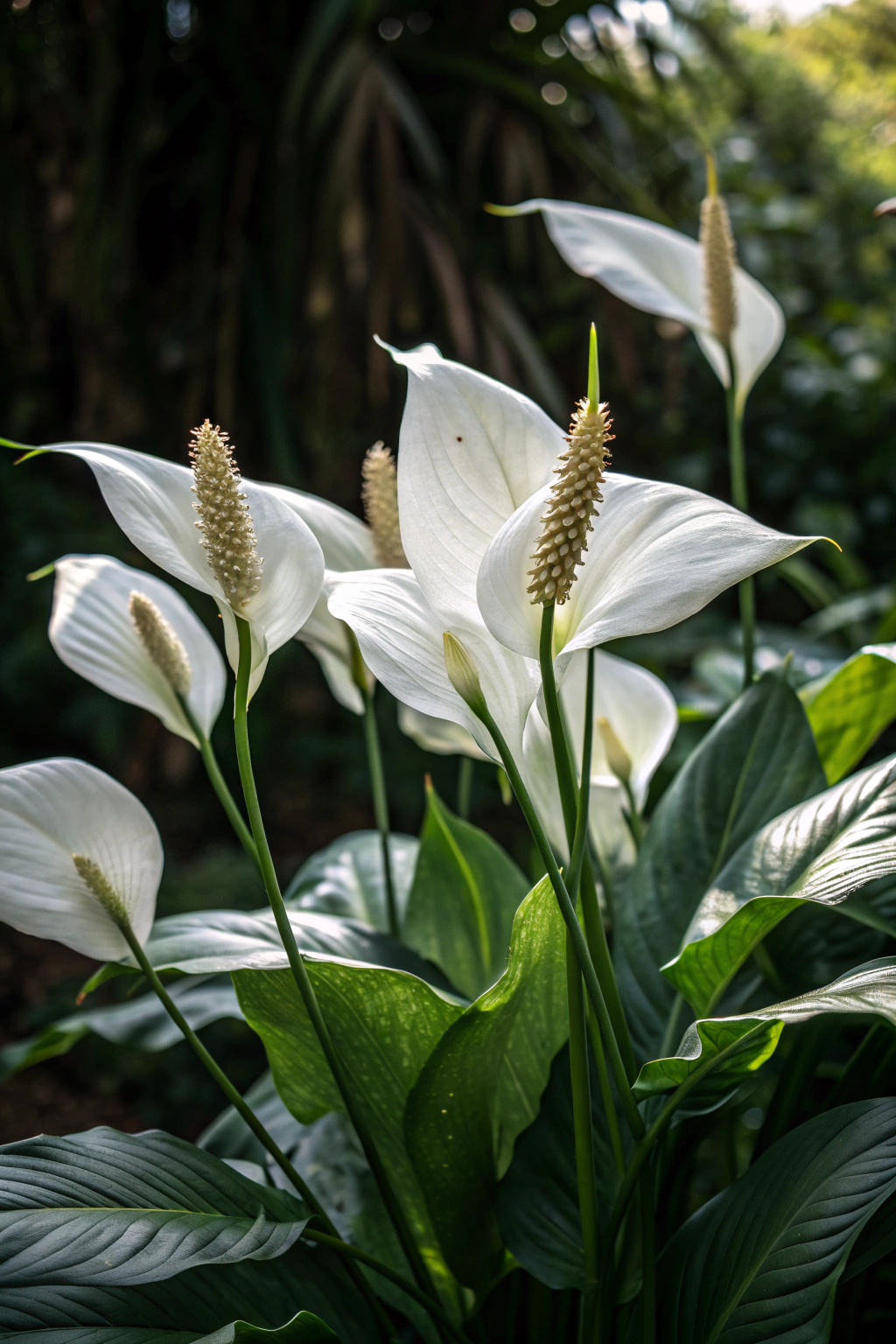
Despite its name, peace lilies aren’t lilies at all. They belong to the Araceae family, making them cousins to anthuriums and philodendrons. Native to tropical Americas and Southeast Asia, these plants have been cultivated since the 1870s.
Their common name comes from the white spathe resembling a surrender flag.
Unique Characteristics:
- Produces both male and female flowers on the same spadix
- Leaves droop dramatically when thirsty, then perk up after watering
- Can survive in extremely low light conditions (as low as 25 foot-candles)
- Contains calcium oxalate crystals toxic to pets and humans
Bloom Details:
Peace lilies bloom most heavily in spring and summer, with sporadic blooms year-round. Each white spathe lasts 4-6 weeks, gradually turning green. Mature plants produce 3-5 blooms simultaneously.
Growing Specifics:
- Temperature: 68-85°F (20-29°C) optimal range
- Humidity: 40-50% minimum, prefers 60%+
- Light: Low to medium indirect light
- Water: Allow top inch to dry between waterings
Fascinating Facts:
NASA’s Clean Air Study ranked peace lilies among the top 10 air-purifying plants. They remove benzene, formaldehyde, trichloroethylene, xylene, and ammonia from indoor air.
The plant’s Latin name Spathiphyllum means “spathe leaf,” referring to the modified leaf surrounding the flowers.
Common Problems and Solutions:
Yellow leaves usually indicate overwatering or poor drainage. Improve soil drainage and reduce watering frequency.
No blooms often result from insufficient light or overfertilization. Move to brighter location and stop fertilizing for 2-3 months.
Best Varieties:
- ‘Sensation’: Largest variety, reaches 4-6 feet tall
- ‘Petite’: Compact at 8-10 inches, perfect for desks
- ‘Domino’: Variegated leaves with white streaks
Begonia: The Edible Flower Champion
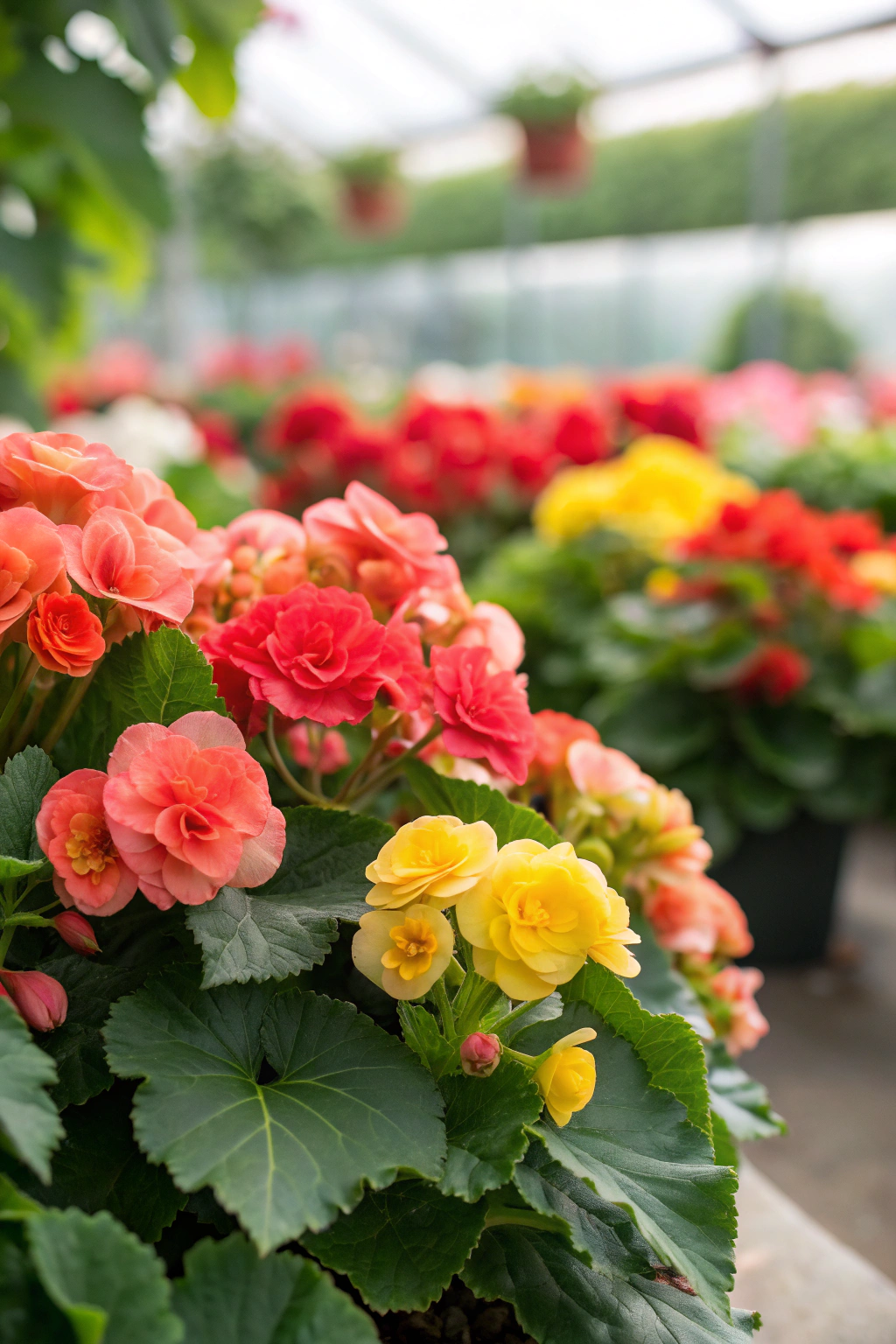
Begonias originated in subtropical regions across five continents. French botanist Charles Plumier named them after Michel Bégon, governor of French Canada, in 1690. Today, over 2,000 species exist, making begonias one of the largest plant families.
Ancient Aztecs ate begonia flowers and used the plants medicinally for stomach ailments.
Unique Characteristics:
- Male and female flowers appear on the same plant but look different
- Flowers are completely edible with a crisp, citrusy flavor
- Asymmetrical leaves distinguish begonias from all other plants
- Some varieties have Rex-type foliage more colorful than their flowers
Bloom Details:
Fibrous-rooted begonias bloom continuously from spring until first frost. Each plant produces hundreds of small flowers measuring 1-2 inches across. Tuberous begonias produce larger, showier blooms but have shorter seasons.
Growing Specifics:
- Temperature: 65-75°F (18-24°C) ideal range
- Humidity: 45-65% relative humidity
- Light: Bright, indirect light for most varieties
- Water: Keep soil evenly moist, never soggy
Fascinating Facts:
Begonia flowers contain vitamin C and citric acid, giving them their tart flavor. Chefs use them as garnishes and in salads worldwide.
The International Begonia Society recognizes begonias in 72 different classification groups based on growth habits and characteristics.
Common Problems and Solutions:
Powdery mildew appears as white, fuzzy growth on leaves. Improve air circulation and avoid overhead watering.
Botrytis (gray mold) attacks flowers in humid conditions. Remove spent blooms promptly and ensure good ventilation.
Best Varieties:
- ‘Dragon Wing’: Heat-tolerant with red flowers and bronze leaves
- ‘BIG Red’: Giant blooms up to 6 inches across
- ‘Whiskey’: Bronze leaves with pink flowers
Kalanchoe: The Succulent Bloomer
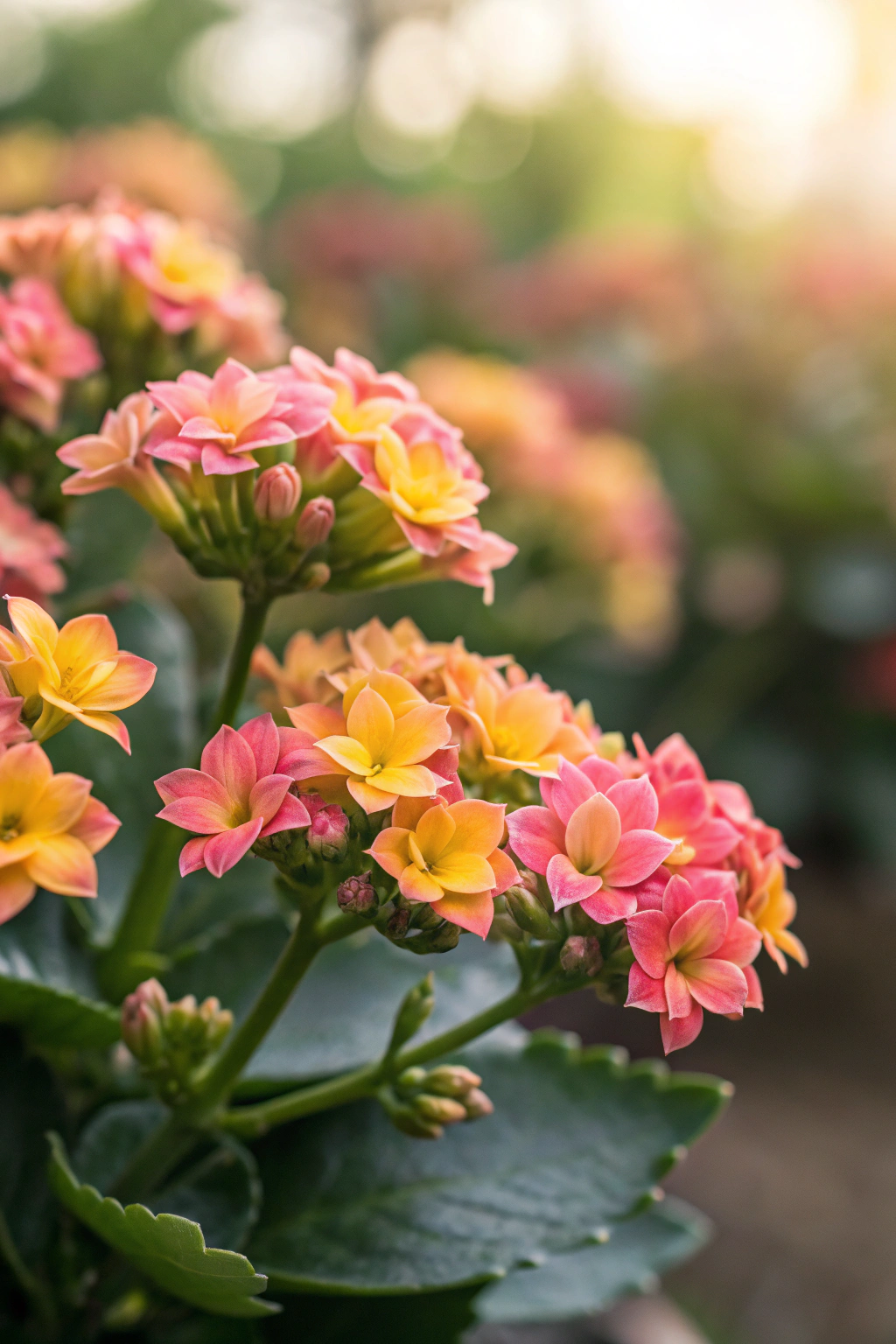
Kalanchoe species evolved in Madagascar, where 60% of the world’s 125 species still grow wild. Dutch sailors brought the first specimens to Europe in the 1920s. The name comes from the Chinese word “Kalan Chauhuy,” meaning “that which falls and grows.”
This refers to kalanchoe’s ability to produce plantlets that drop and root wherever they land.
Unique Characteristics:
- Thick, waxy leaves store water like cacti
- Produces clusters of small, tubular flowers in dense heads
- Many species are photoperiodic, requiring specific day lengths to bloom
- Some varieties produce plantlets along leaf edges (Mother of Thousands)
Bloom Details:
Kalanchoe blossfeldiana blooms for 6-8 weeks continuously. Each flower head contains 50-100 individual flowers. Under proper conditions, plants rebloom 2-3 times annually.
Growing Specifics:
- Temperature: 60-85°F (15-29°C) tolerance range
- Humidity: 30-50% relative humidity (lower than most houseplants)
- Light: Bright, direct light 4-6 hours daily
- Water: Deep, infrequent watering when soil dries completely
Fascinating Facts:
Traditional Chinese medicine uses kalanchoe leaves to treat inflammation, infections, and pain. Scientific studies confirm anti-inflammatory compounds in several species.
Kalanchoe can survive months without water by entering a dormant state where it stops all growth processes.
Common Problems and Solutions:
Leggy growth indicates insufficient light. Move to brighter location or supplement with grow lights.
Root rot develops quickly in overly moist soil. Use cactus potting mix and ensure drainage holes in containers.
Best Varieties:
- ‘Calandiva’: Double flowers resembling tiny roses
- ‘Queen Series’: Compact plants with vibrant flower colors
- ‘Flaming Katy’: Classic orange-red blooms
Bromeliad: The Pineapple’s Colorful Cousin
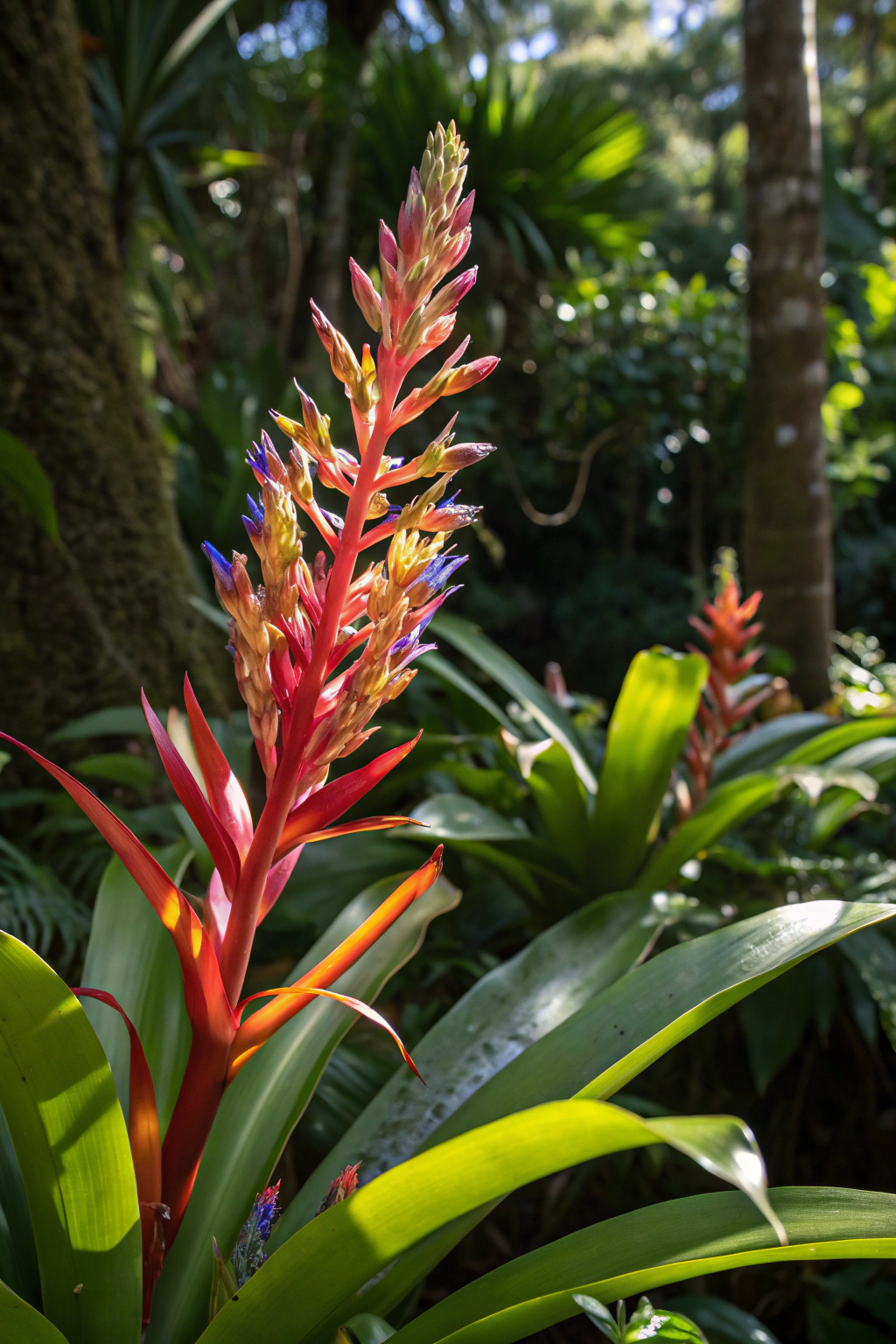
Bromeliads evolved in the Americas, from Virginia to Chile, with highest diversity in Brazil’s Atlantic Forest. The pineapple, discovered by Europeans in 1493, was the first bromeliad known to science. Spanish explorers found indigenous peoples cultivating pineapples throughout tropical America.
Today, over 3,500 bromeliad species exist, with new ones discovered annually.
Unique Characteristics:
- Central cup collects rainwater and organic debris for nutrition
- Colorful “flowers” are actually modified leaves called bracts
- Parent plants die after blooming but produce offspring called “pups”
- Many species are epiphytic, growing on trees without soil
Bloom Details:
Bromeliad blooms last 3-6 months, far longer than most houseplants. The colorful bracts remain vibrant throughout this period while tiny true flowers appear within the center.
Growing Specifics:
- Temperature: 70-80°F (21-27°C) optimal range
- Humidity: 50-70% relative humidity
- Light: Bright, indirect light preferred
- Water: Fill central cup, mist leaves regularly
Fascinating Facts:
Bromeliad tanks provide miniature ecosystems in rainforests. Frogs breed in them, insects live their entire lives in them, and birds drink from them.
The fiber from pineapple leaves creates piña cloth, used for traditional Filipino formal wear called Barong Tagalog.
Common Problems and Solutions:
Brown leaf tips indicate low humidity or poor water quality. Use rainwater or distilled water in the central cup.
Mealybugs hide in leaf joints and flower bracts. Apply rubbing alcohol with cotton swabs weekly until eliminated.
Best Varieties:
- Guzmania ‘Ostara’: Bright red bracts with yellow tips
- Aechmea fasciata: Silver-striped leaves with pink flower spike
- Neoregelia ‘Fireball’: Leaves turn brilliant red when blooming
Cyclamen: The Mediterranean Beauty
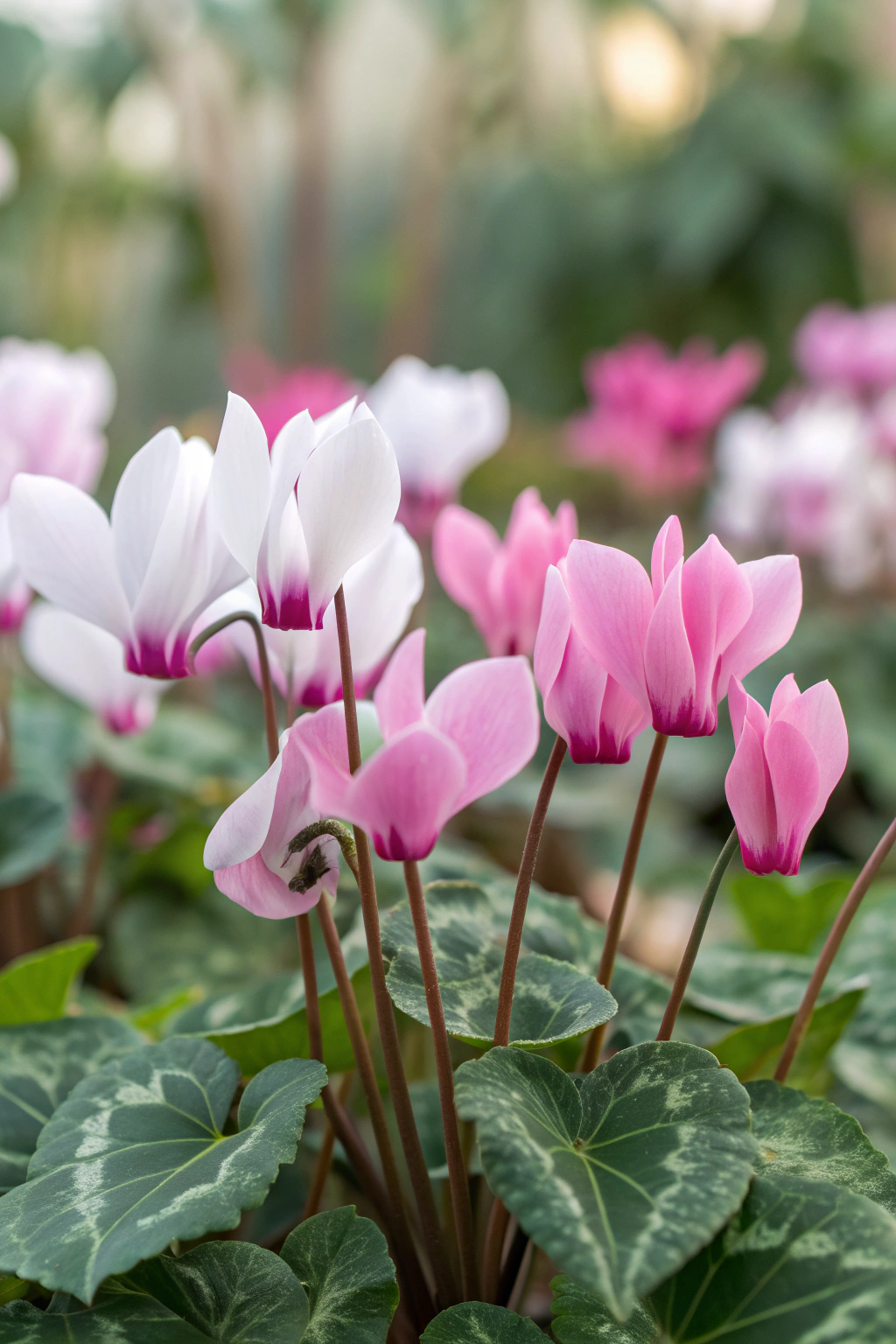
Wild cyclamens grow throughout Mediterranean regions, from Spain to Turkey. Ancient Greeks and Romans cultivated them for medicine and food. The name derives from the Greek word “kyklos” (circle), referring to the plant’s rounded tubers.
European monks preserved cyclamen through the Dark Ages, growing them in monastery gardens for their supposed magical properties.
Unique Characteristics:
- Heart-shaped leaves often marked with silver patterns
- Flowers have reflexed petals that curve backward
- Goes completely dormant in summer, appearing dead
- Tubers can live over 100 years with proper care
Bloom Details:
Cyclamen blooms from fall through spring, producing waves of flowers for 4-6 months. Each plant can produce 50-100 flowers during peak blooming periods. Individual blooms last 2-3 weeks.
Growing Specifics:
- Temperature: 50-65°F (10-18°C) during blooming season
- Humidity: 40-50% relative humidity
- Light: Bright, indirect light in cool locations
- Water: Bottom watering to avoid crown rot
Fascinating Facts:
Ancient peoples believed cyclamen tubers could induce labor in pregnant women. Modern science confirms they contain compounds affecting smooth muscle tissue.
Wild boars dig up and eat cyclamen tubers, leading to their common name “sowbread” in some regions.
Common Problems and Solutions:
Yellowing leaves during active growth indicate overwatering or excessive heat. Move to cooler location and reduce watering.
Failure to bloom after dormancy often results from inadequate cold treatment. Provide 2-3 months at 45-50°F during summer dormancy.
Best Varieties:
- ‘Miracle Series’: Compact plants with fragrant flowers
- ‘Sierra White’: Pure white blooms with silver-marked leaves
- ‘Halios’: Heat-tolerant variety for warmer climates
Lipstick Plant (Aeschynanthus): The Rainforest Tube
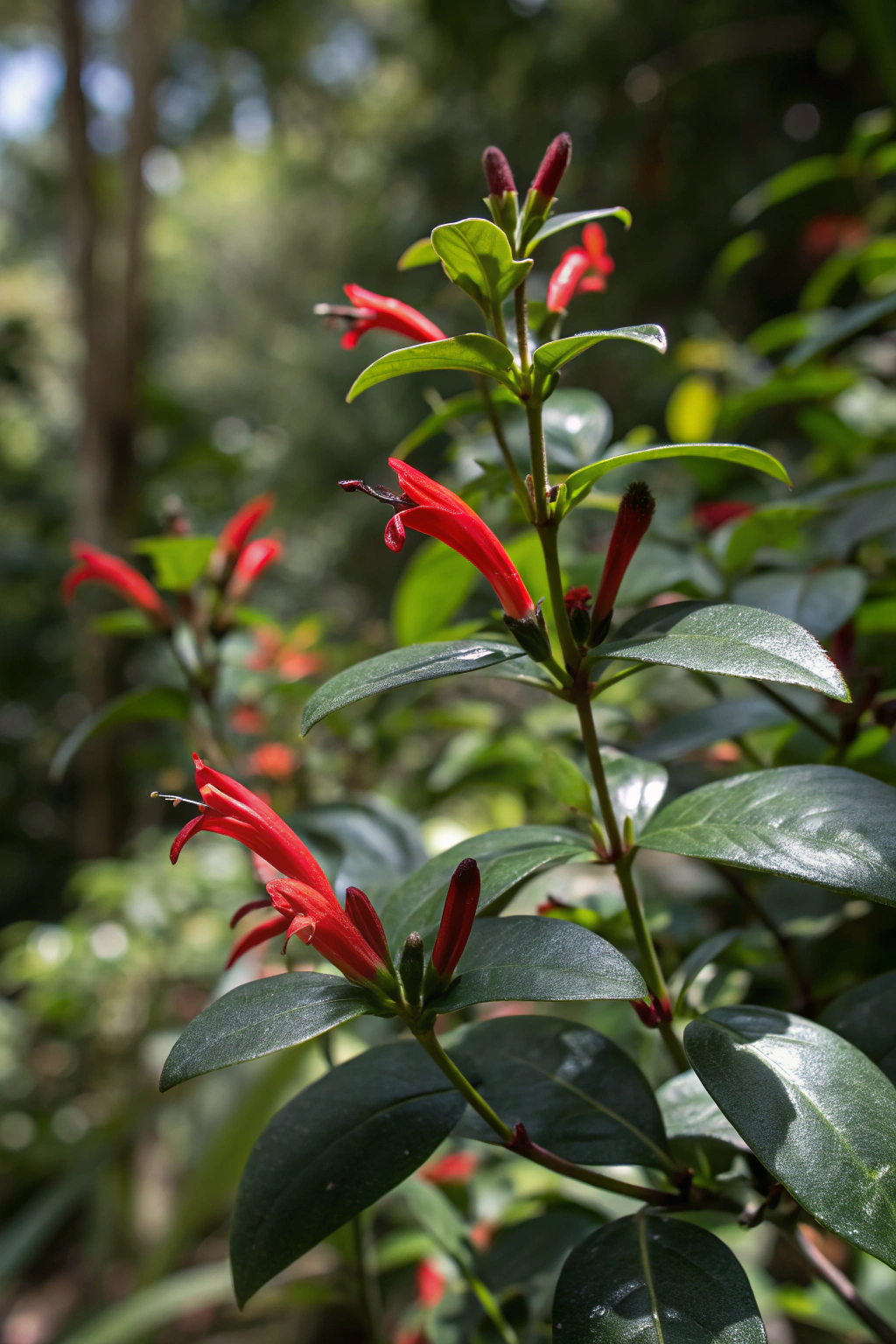
Lipstick plants evolved in tropical rainforests from Malaysia to New Guinea. They’re epiphytes, growing on tree branches 50-100 feet above ground. The distinctive flowers emerge from dark calyces resembling lipstick tubes, inspiring their common name.
Over 150 Aeschynanthus species exist, many still undiscovered in remote rainforest canopies.
Unique Characteristics:
- Trailing stems can reach 3-6 feet long
- Flowers emerge from dark, tubular calyces
- Thick, waxy leaves resist moisture loss
- Some species have variegated or mottled foliage
Bloom Details:
Lipstick plants bloom most heavily in spring and summer but produce sporadic flowers year-round. Each plant can have 20-50 blooms simultaneously during peak periods. Individual flowers last 1-2 weeks.
Growing Specifics:
- Temperature: 75-85°F (24-29°C) daytime, 65-70°F (18-21°C) nighttime
- Humidity: 60-80% relative humidity
- Light: Bright, indirect light with some morning sun
- Water: Allow top inch to dry between thorough waterings
Fascinating Facts:
In nature, lipstick plants rely on sunbirds for pollination. The tubular flowers perfectly match sunbird beak shapes and lengths.
The thick leaves store water during dry periods, allowing plants to survive brief droughts in their rainforest homes.
Common Problems and Solutions:
Dropping flower buds indicates low humidity or temperature stress. Increase humidity with pebble trays and maintain consistent temperatures.
Leggy growth with few blooms results from insufficient light. Move to brighter location or supplement with grow lights.
Best Varieties:
- ‘Mona Lisa’: Red-orange flowers with dark calyces
- ‘Rasta’: Variegated yellow-green leaves
- ‘Black Pagoda’: Dark purple foliage with red flowers
Outdoor Tropical Continuous Bloomers
Hibiscus: The Malaysian National Beauty
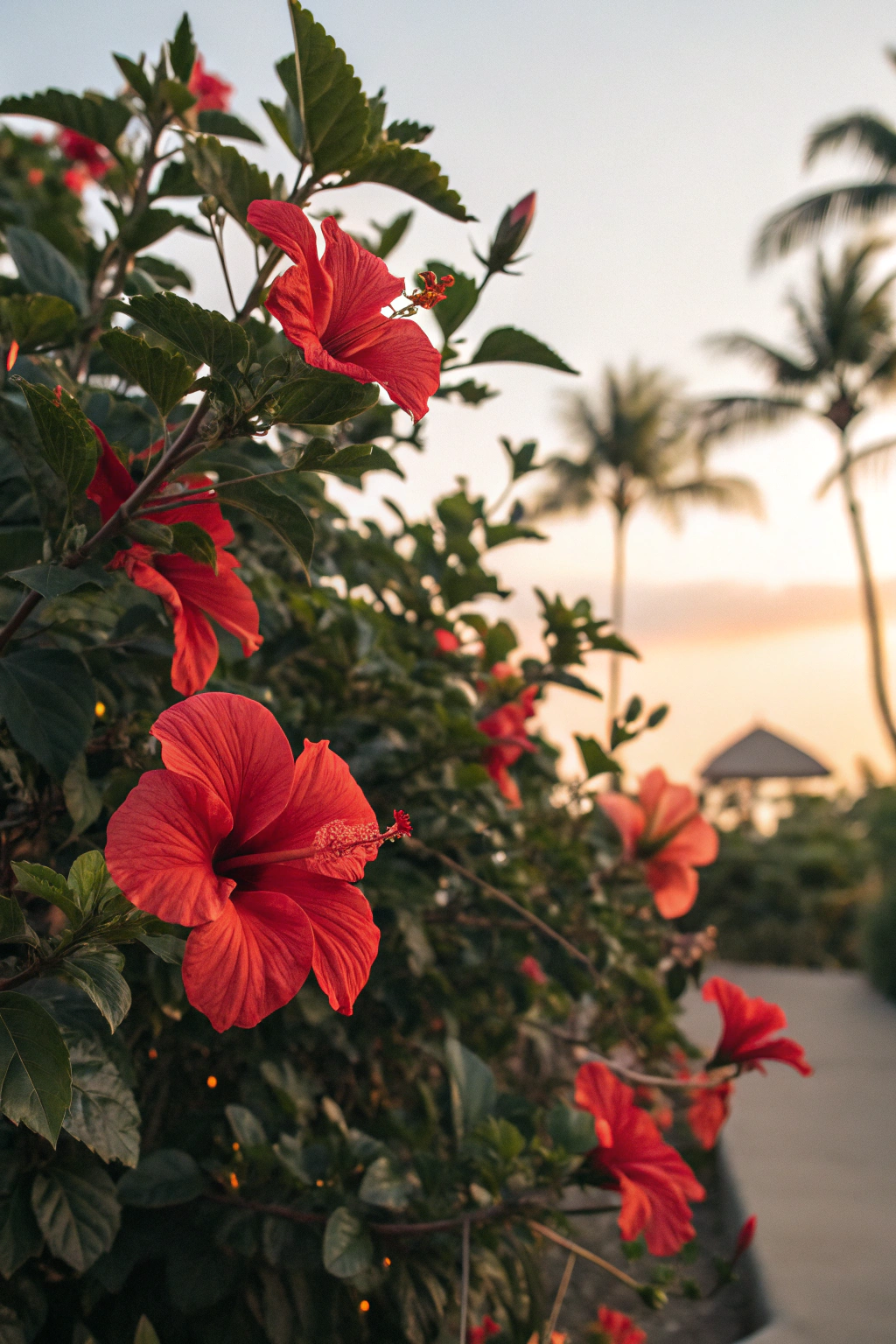
Hibiscus rosa-sinensis originated in East Asia but spread throughout tropical regions over 1,000 years ago. Malaysia adopted it as their national flower in 1960. Ancient Egyptians used hibiscus flowers to make red dye, while Polynesians wove them into ceremonial leis.
Today, over 300 hibiscus species exist worldwide, with thousands of hybrid cultivars.
Unique Characteristics:
- Flowers contain both male and female parts in a prominent central column
- Blooms typically last only one day but plants produce them continuously
- Flowers are completely edible with a tart, cranberry-like flavor
- Some varieties change color throughout the day as pH levels shift
Bloom Details:
Hibiscus produces 1-5 new blooms daily during growing season. Each flower measures 4-12 inches across, depending on variety. Peak blooming occurs with 12+ hours of daylight and temperatures above 60°F.
Growing Specifics:
- Temperature: 60-90°F (15-32°C) tolerance range
- Humidity: 50-70% relative humidity preferred
- Light: Full sun 6-8 hours daily minimum
- Water: Consistent moisture, 1-2 inches weekly
Fascinating Facts:
Hibiscus flowers make a vitamin C-rich tea consumed worldwide. The dried petals contain more antioxidants than green tea.
In Hindu traditions, red hibiscus flowers are offered to goddess Kali and used in religious ceremonies.
Common Problems and Solutions:
Yellowing leaves with green veins indicate iron deficiency. Apply iron sulfate or chelated iron fertilizer monthly during growing season.
Aphids cluster on new growth and flower buds. Spray with strong water streams or apply insecticidal soap weekly.
Best Varieties:
- ‘Red Dragon’: Deep red double flowers, compact growth
- ‘Luna Pink Swirl’: Cold-hardy variety with pink and white blooms
- ‘Tahitian Wind’: Orange flowers with red centers
Bougainvillea: The Brazilian Thorny Wonder
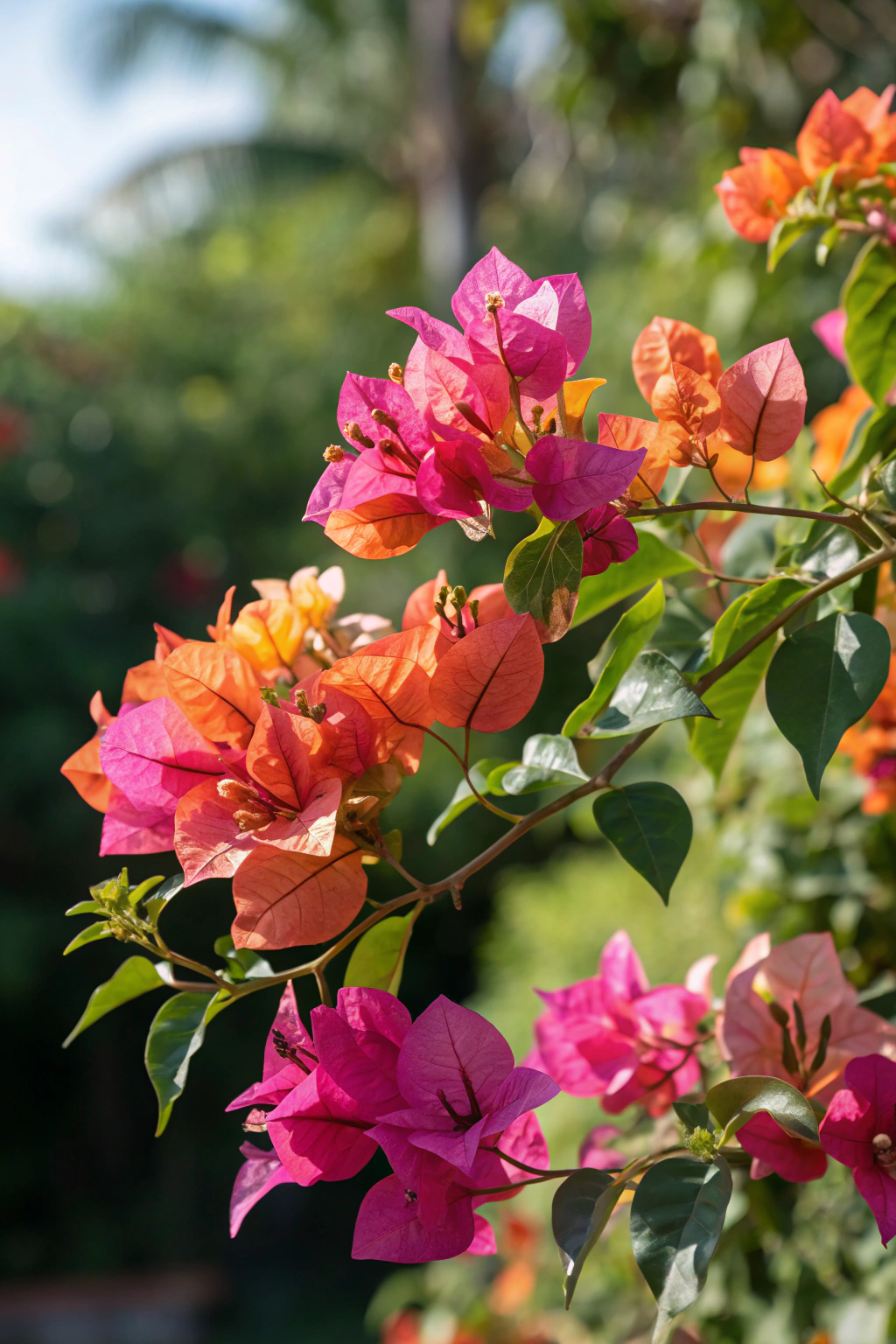
Bougainvillea originated in South America, discovered by French botanist Philibert Commerson in Brazil in 1768. He named it after Louis Antoine de Bougainville, the expedition leader. Indigenous peoples used the thorns as needles and the colorful bracts for dyes.
Bougainvillea now grows in every tropical and subtropical region worldwide.
Unique Characteristics:
- Colorful “flowers” are actually modified leaves called bracts
- Sharp thorns can reach 1-2 inches long
- True flowers are small, white, and inconspicuous
- Drought tolerance rivals that of cacti once established
Bloom Details:
Bougainvillea blooms continuously in frost-free climates. Each bract cluster lasts 4-6 weeks before fading. Mature plants can have hundreds of bract clusters simultaneously.
Growing Specifics:
- Temperature: Above 50°F (10°C), optimal 70-85°F (21-29°C)
- Humidity: Tolerates 20-80% relative humidity
- Light: Full sun 6+ hours daily required
- Water: Deep, infrequent watering once established
Fascinating Facts:
Bougainvillea bracts contain betalains, the same pigments found in beets and amaranth. These compounds have antioxidant and anti-inflammatory properties.
In many cultures, bougainvillea symbolizes passion and protection due to its vibrant colors and defensive thorns.
Common Problems and Solutions:
Poor flowering in shade locations requires relocation to full sun. Bougainvillea needs intense light to produce colorful bracts.
Scale insects hide under bracts and along stems. Apply horticultural oil sprays bi-weekly during infestations.
Best Varieties:
- ‘Barbara Karst’: Bright red bracts, vigorous growth
- ‘Snowcap’: White bracts with green edges
- ‘Gold Rush’: Golden-yellow bracts, thornless variety
Ixora: The Hindu Temple Flower
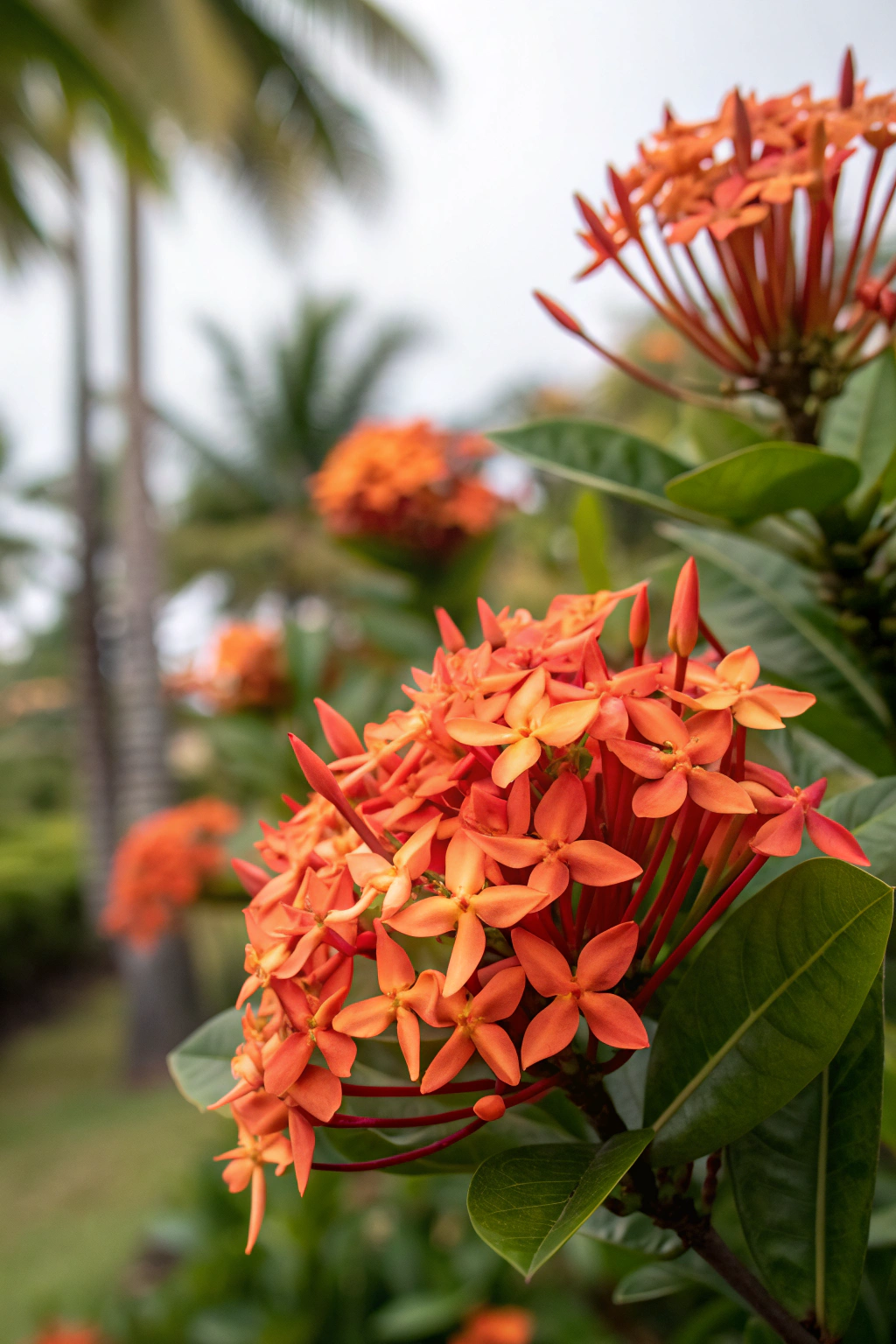
Ixora originated in tropical Asia, particularly India and Sri Lanka. Hindu temples have used orange and red ixora flowers in religious ceremonies for over 2,000 years. The name comes from an Indian deity, Iswara, another name for Lord Shiva.
Portuguese traders spread ixora to tropical regions worldwide during the 16th century.
Unique Characteristics:
- Flowers form dense, rounded clusters called corymbs
- Individual flowers have long, thin tubes with four petals
- Leaves are dark green, glossy, and evergreen
- Attracts butterflies, hummingbirds, and long-tongued bees
Bloom Details:
Ixora blooms year-round in tropical climates, with peak flowering during warm months. Each flower cluster contains 20-50 individual flowers lasting 2-3 weeks. Plants can have 10-20 clusters blooming simultaneously.
Growing Specifics:
- Temperature: 65-85°F (18-29°C) optimal range
- Humidity: 60-80% relative humidity
- Light: Partial shade to full sun tolerance
- Water: Consistent moisture, avoid waterlogging
Fascinating Facts:
Ixora flowers produce nectar continuously, making them valuable butterfly garden plants. Over 40 butterfly species regularly visit ixora blooms.
In traditional Ayurvedic medicine, ixora leaves treat skin conditions and digestive problems. Modern research confirms anti-inflammatory compounds.
Common Problems and Solutions:
Chlorosis (yellowing leaves) indicates alkaline soil pH. Apply sulfur or aluminum sulfate to acidify soil to 5.5-6.5 pH.
Aphids congregate on new growth and flower buds. Introduce ladybugs or apply neem oil sprays weekly.
Best Varieties:
- ‘Maui Red’: Compact variety with bright red flowers
- ‘Super King’: Large flower clusters, heat tolerant
- ‘Yellow Diamond’: Golden-yellow blooms, rare color
Pentas: The Egyptian Starflower
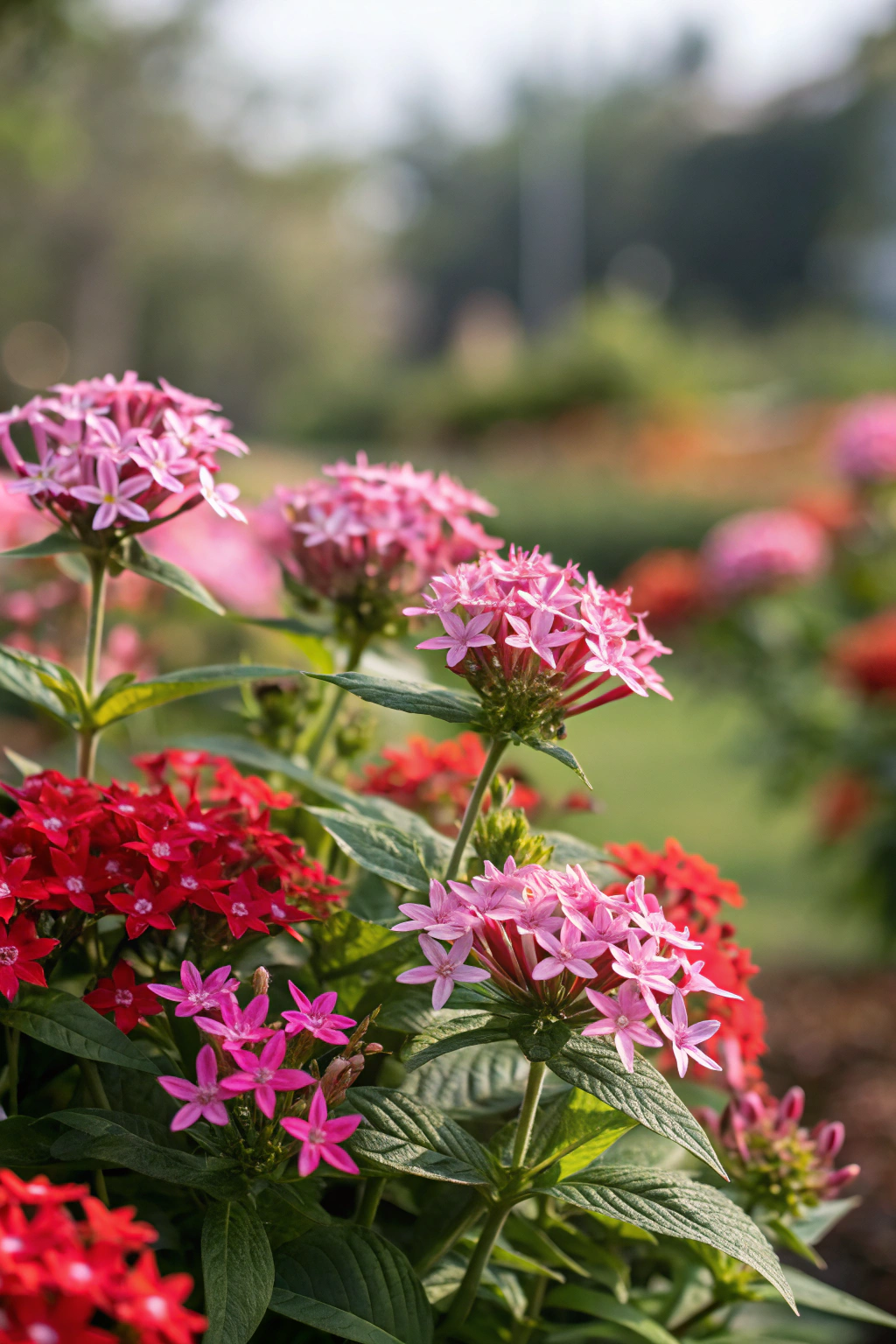
Pentas lanceolata originated in tropical Africa, from Arabia to East Africa. Ancient Egyptians cultivated them along the Nile River, calling them “star flowers” due to their five-pointed blooms. Arab traders spread seeds throughout the Middle East and Asia.
The name “pentas” comes from the Greek word for five, referring to the flower’s five petals.
Unique Characteristics:
- Five-pointed star-shaped flowers in dense clusters
- Nectar production rivals that of specialized butterfly plants
- Heat and humidity tolerance exceeds most flowering plants
- Self-cleaning flowers drop cleanly without deadheading
Bloom Details:
Pentas blooms continuously from spring until frost, with no rest periods. Each plant produces 50-100 flower clusters annually. Individual flowers last 5-7 days, replaced immediately by new buds.
Growing Specifics:
- Temperature: 65-95°F (18-35°C) tolerance range
- Humidity: 40-90% relative humidity
- Light: Full sun to partial shade adaptation
- Water: Moderate moisture, drought tolerant when established
Fascinating Facts:
Hummingbirds prefer red pentas over most other flowers due to optimal nectar concentration and flower tube length.
Pentas flowers contain compounds that naturally repel some garden pests while attracting beneficial pollinators.
Common Problems and Solutions:
Leggy growth in shade requires pinching tips monthly to maintain compact form. Move to sunnier location if possible.
Spider mites attack during hot, dry periods. Increase humidity and apply predatory mites for biological control.
Best Varieties:
- ‘Graffiti Red’: Compact variety, continuous blooming
- ‘Lucky Star Pink’: Heat-tolerant with large flower clusters
- ‘StarCluster White’: Pure white blooms, butterfly magnet
Lantana: The Color-Changing Wanderer
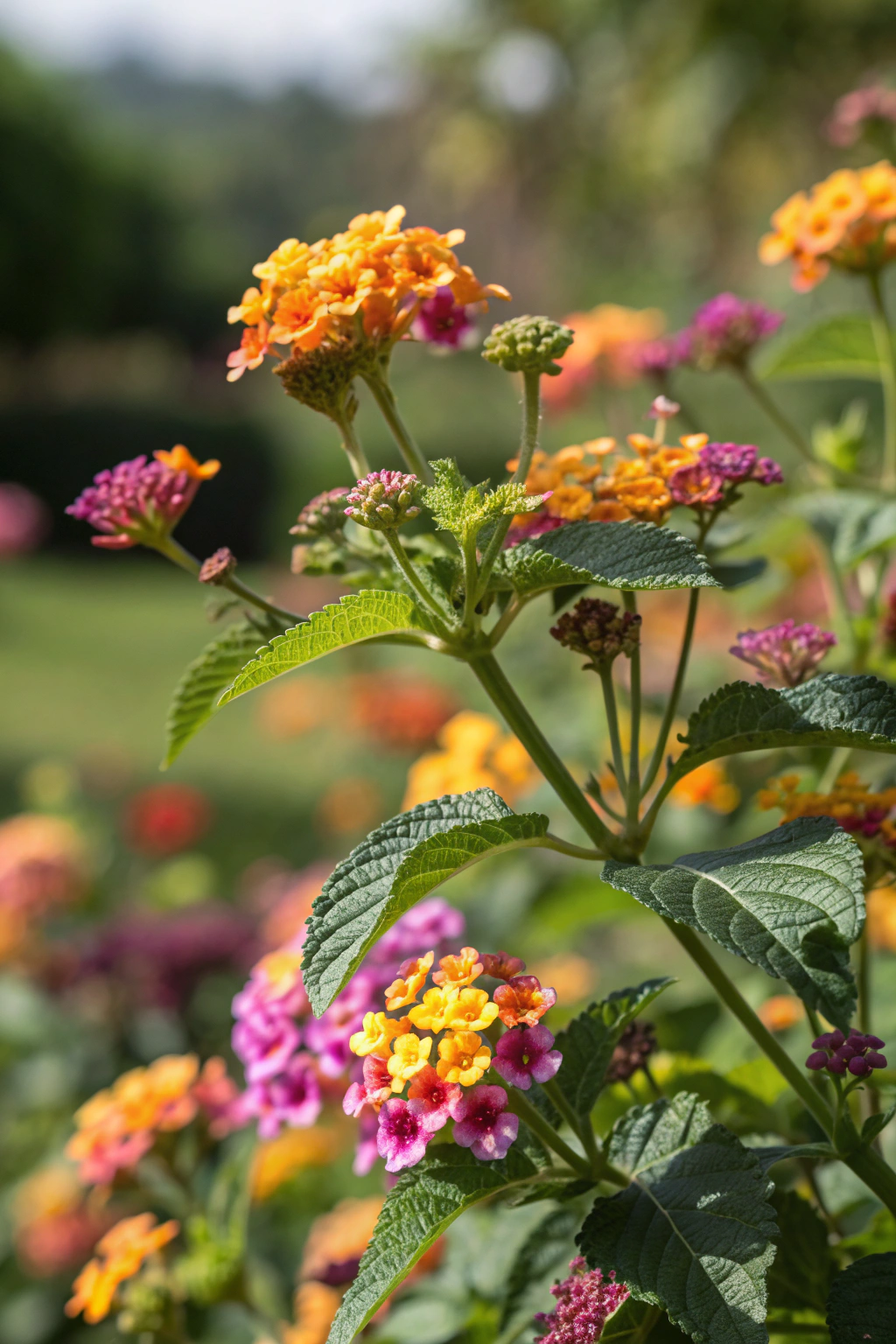
Lantana originated in tropical Americas but now grows wild on six continents. Spanish colonists introduced it to the Philippines in the 1500s, where it escaped cultivation and spread rapidly. The name comes from the Latin word for the similar-looking Viburnum lantana.
Today, lantana is considered invasive in many warm regions due to its aggressive growth and bird-dispersed seeds.
Unique Characteristics:
- Flowers change color as they age, creating multicolored clusters
- Produces small, berry-like fruits that birds eagerly consume
- Leaves have a strong, distinctive odor when crushed
- Extremely drought and heat tolerant once established
Bloom Details:
Lantana blooms continuously year-round in frost-free climates. Each plant produces 20-50 flower clusters simultaneously. Individual clusters last 3-4 weeks before being replaced by new growth.
Growing Specifics:
- Temperature: 55-100°F (13-38°C) survival range
- Humidity: 30-80% relative humidity tolerance
- Light: Full sun preferred, tolerates partial shade
- Water: Drought tolerant, avoid overwatering
Fascinating Facts:
Lantana’s color-changing flowers help pollinators identify the freshest blooms with the most nectar. Younger flowers offer more rewards than older ones.
The berries are toxic to humans and livestock but provide important food for over 100 bird species worldwide.
Common Problems and Solutions:
Powdery mildew appears in humid, crowded conditions. Improve air circulation and avoid overhead watering.
Whiteflies congregate under leaves during hot weather. Apply yellow sticky traps and beneficial insect releases.
Best Varieties:
- ‘Confetti’: Compact variety with yellow and pink flowers
- ‘Miss Huff’: Cold-hardy variety surviving to 20°F
- ‘New Gold’: Pure yellow blooms, no color change
Vinca/Periwinkle: The Cancer-Fighting Beauty
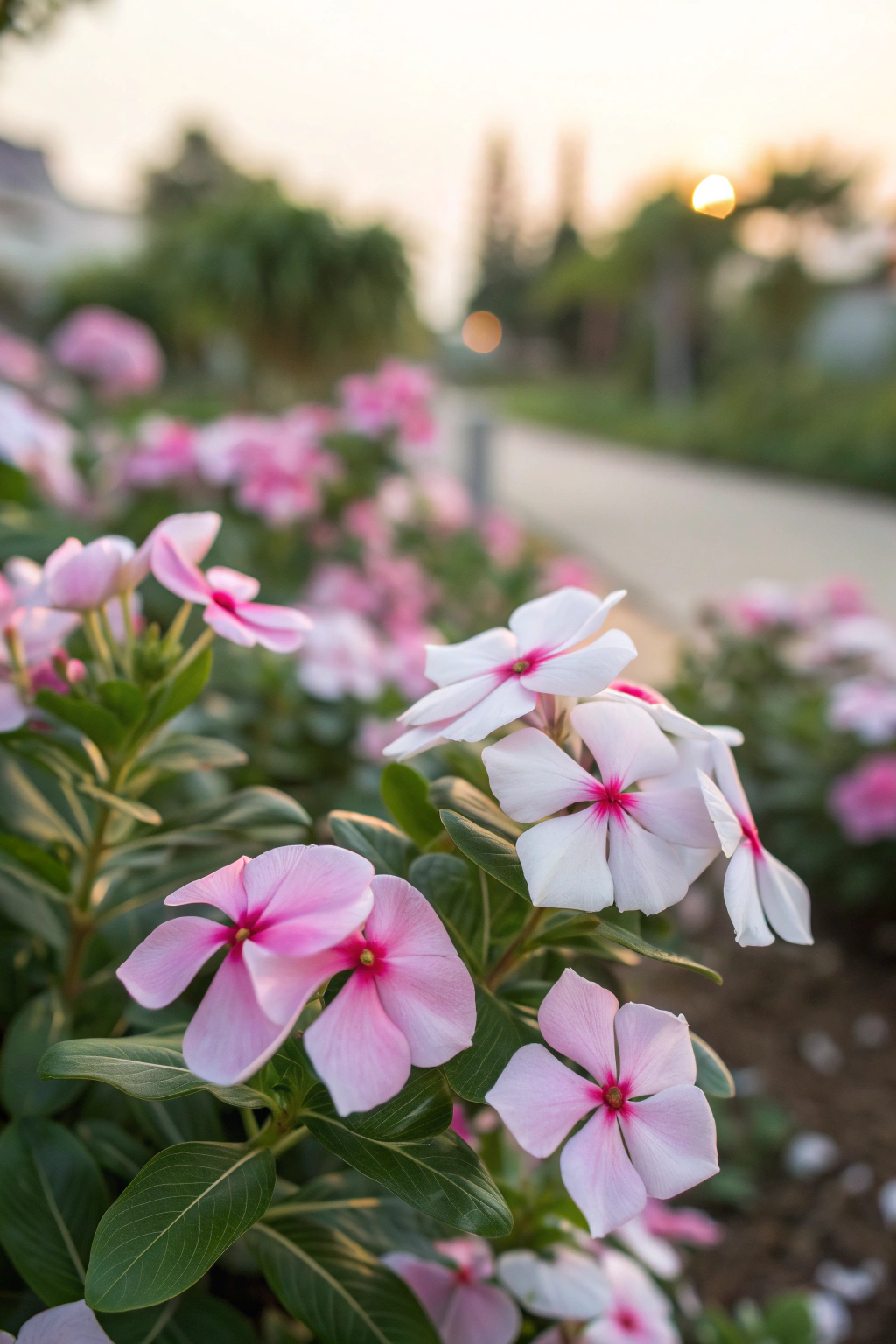
Catharanthus roseus evolved in Madagascar but spread throughout tropical regions centuries ago. Ancient Malagasy peoples used the plants medicinally. In the 1950s, scientists discovered that periwinkle contains over 70 alkaloids, including vincristine and vinblastine, now used in cancer chemotherapy.
These discoveries revolutionized cancer treatment and saved millions of lives.
Unique Characteristics:
- Glossy, oval leaves with prominent white veins
- Five-petaled flowers with flat, round faces
- Self-cleaning flowers that drop cleanly when spent
- Contains powerful alkaloids toxic to humans and animals
Bloom Details:
Vinca blooms continuously from spring until frost without any rest periods. Each plant produces 2-5 new flowers daily during peak season. Flowers last 3-4 days individually but plants maintain constant color.
Growing Specifics:
- Temperature: 65-85°F (18-29°C) optimal range
- Humidity: 40-70% relative humidity
- Light: Full sun to partial shade tolerance
- Water: Moderate moisture, excellent drought tolerance
Fascinating Facts:
Madagascar periwinkle produces vincristine, which increased childhood leukemia survival rates from 10% to 95%. Vinblastine treats Hodgkin’s lymphoma and other cancers.
The plant self-pollinates but can cross-pollinate, producing genetic diversity in wild populations.
Common Problems and Solutions:
Root rot develops in poorly drained soils. Plant in raised beds or containers with excellent drainage.
Aerial blight causes sudden wilting in humid conditions. Remove affected plants immediately and improve air circulation.
Best Varieties:
- ‘Cora Cascade’: Trailing variety perfect for containers
- ‘Titan Red’: Large 2-inch flowers, heat tolerant
- ‘Cooler Peppermint’: White flowers with red centers
Plumeria: The Hawaiian Lei Flower
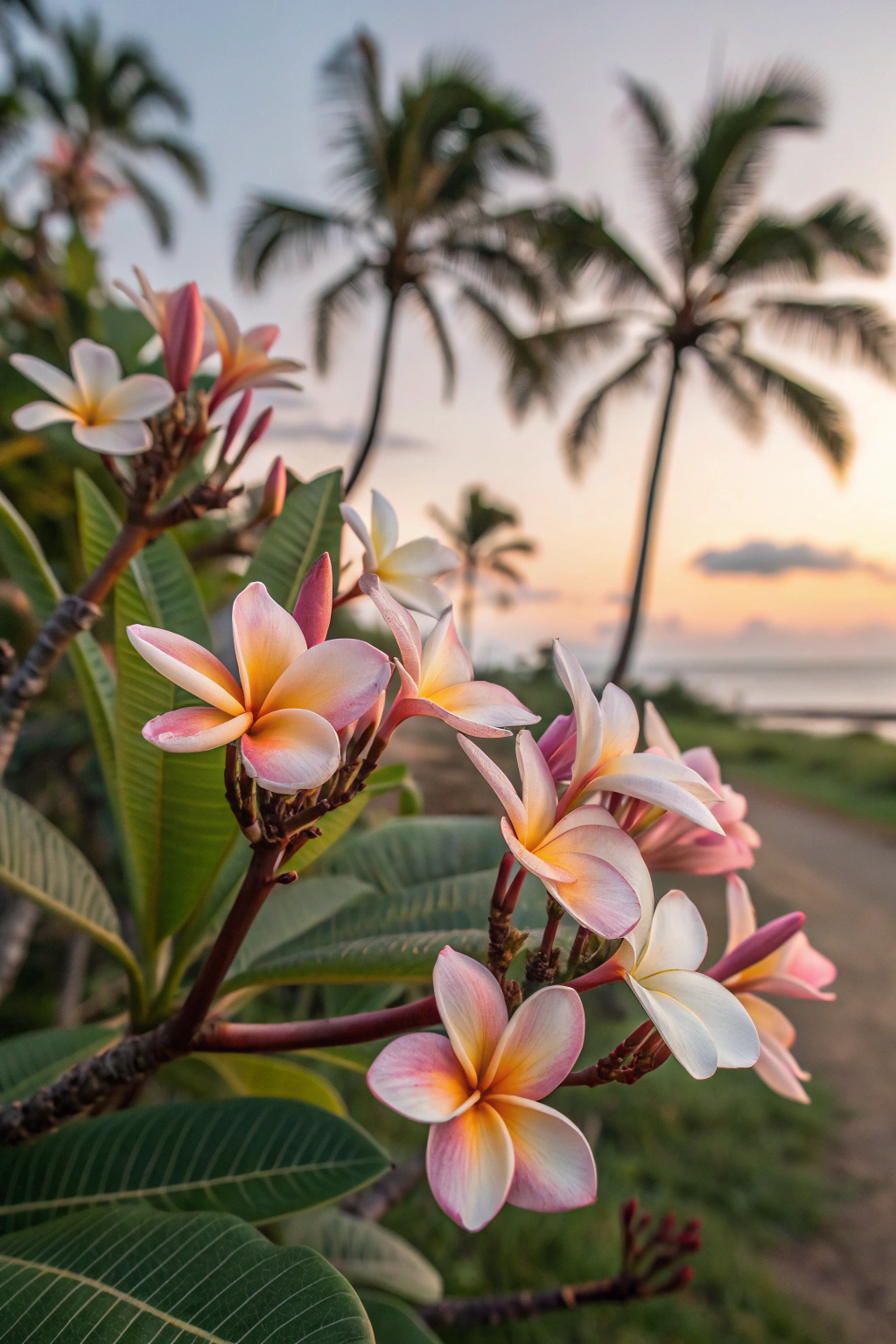
Plumeria originated in Central America and the Caribbean, where Mayans and Aztecs considered them sacred. Spanish missionaries brought them to the Philippines in the 1600s. From there, they spread throughout tropical Asia and the Pacific islands.
Hawaii adopted plumeria as their lei flower, though it’s not native to the islands.
Unique Characteristics:
- Thick, succulent branches store water and nutrients
- Flowers have no nectar but produce intoxicating fragrance
- Milky sap contains toxic compounds that protect from herbivores
- Deciduous in cooler climates, evergreen in tropics
Bloom Details:
Plumeria blooms from spring through fall, with peak flowering during hot summer months. Each branch tip produces clusters of 50-100 flowers over several months. Individual blooms last 3-5 days.
Growing Specifics:
- Temperature: 65-90°F (18-32°C) growing season
- Humidity: 50-70% relative humidity preferred
- Light: Full sun 6+ hours daily required
- Water: Deep, infrequent watering, allow drying between
Fascinating Facts:
Plumeria flowers trick sphinx moths into visiting by mimicking nectar-producing flowers through fragrance alone. Moths receive no reward but transfer pollen between plants.
The fragrant flowers are used in perfume production, with some varieties commanding premium prices for their essential oils.
Common Problems and Solutions:
Black tip fungus attacks branch ends during wet weather. Prune affected areas and apply copper fungicide preventively.
Scale insects hide in bark crevices and leaf joints. Apply systemic insecticides or beneficial predator releases.
Best Varieties:
- ‘Celadine’: Yellow flowers with white edges, compact growth
- ‘Singapore White’: Pure white blooms with yellow centers
- ‘Rainbow’: Pink, yellow, and orange multicolored flowers
Temperate and Container All Season Plants Outdoor
Geranium (Pelargonium): The South African Impostor
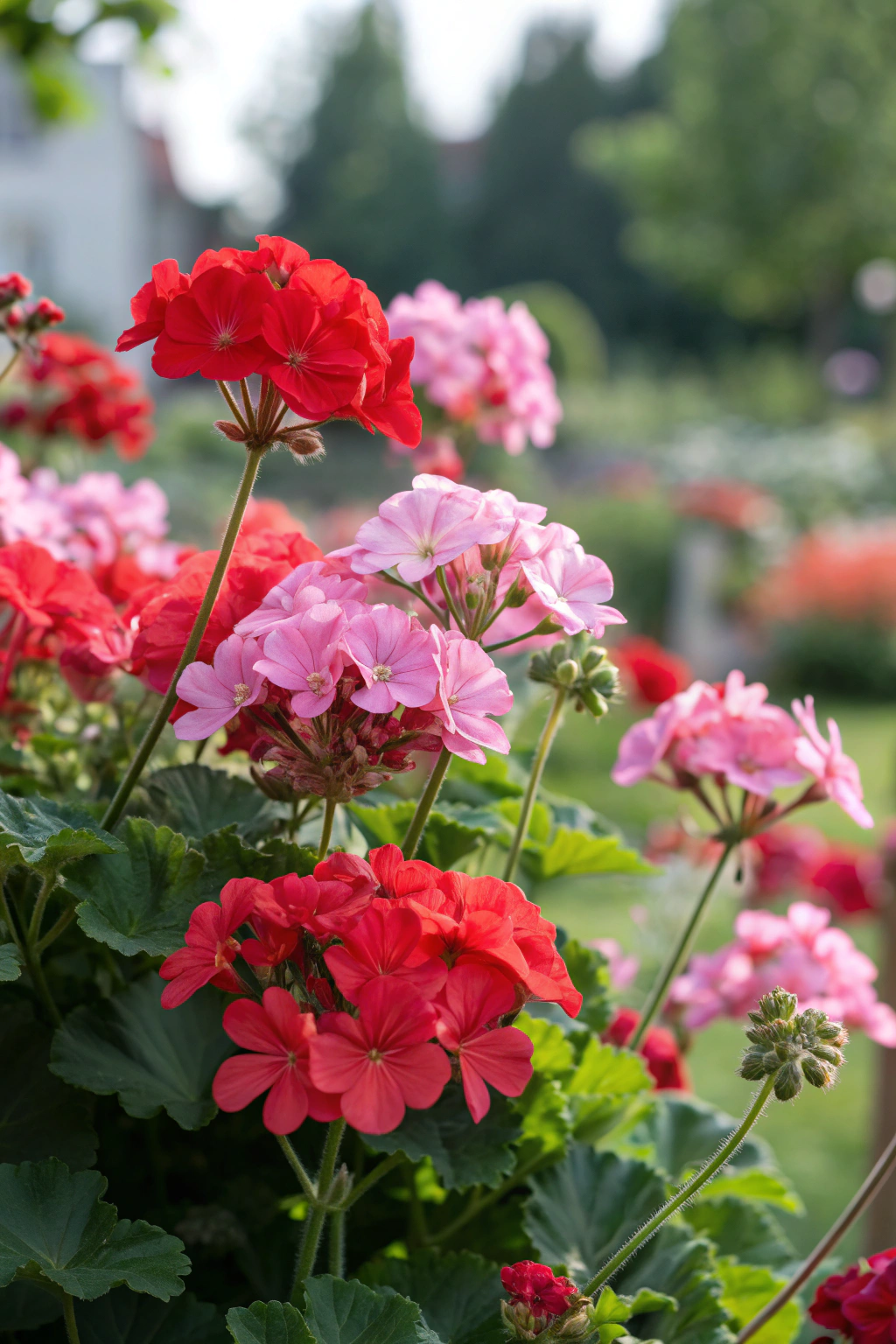
True to their deceptive nature, common “geraniums” aren’t geraniums at all. These plants belong to the genus Pelargonium and originated in South Africa. Dutch traders brought them to Europe in the 1600s, where they became Victorian garden favorites.
The confusion arose because both true geraniums and pelargoniums belong to the same family, Geraniaceae.
Unique Characteristics:
- Scented varieties release fragrances when leaves are touched
- Flowers have uneven petals (zygomorphic symmetry)
- Succulent stems store water for drought tolerance
- Over 280 wild species exist, mostly in South Africa
Bloom Details:
Geraniums bloom continuously from spring until frost in temperate climates. Each plant produces 20-40 flower clusters simultaneously. Individual clusters last 2-3 weeks before requiring deadheading.
Growing Specifics:
- Temperature: 55-75°F (13-24°C) optimal range
- Humidity: 30-50% relative humidity preferred
- Light: Full sun 6+ hours daily for best blooming
- Water: Allow soil to dry between thorough waterings
Fascinating Facts:
Scented geraniums produce over 140 different fragrances, from rose and lemon to chocolate and peppermint. Essential oil production makes some varieties commercially valuable.
Victorian flower language assigned geraniums meanings based on color: red for comfort, pink for preference, white for indecision.
Common Problems and Solutions:
Bacterial blight causes dark, water-soaked spots on leaves. Remove affected foliage immediately and avoid overhead watering.
Geranium budworms tunnel into flower buds, preventing blooming. Apply Bt (Bacillus thuringiensis) sprays every 7-10 days during peak moth activity.
Best Varieties:
- ‘Rozanne’: Hardy variety blooming continuously for months
- ‘Maverick Red’: Heat-tolerant with large flower clusters
- ‘Attar of Roses’: Scented variety with rose-like fragrance
Petunia: The Tobacco Family Stunner
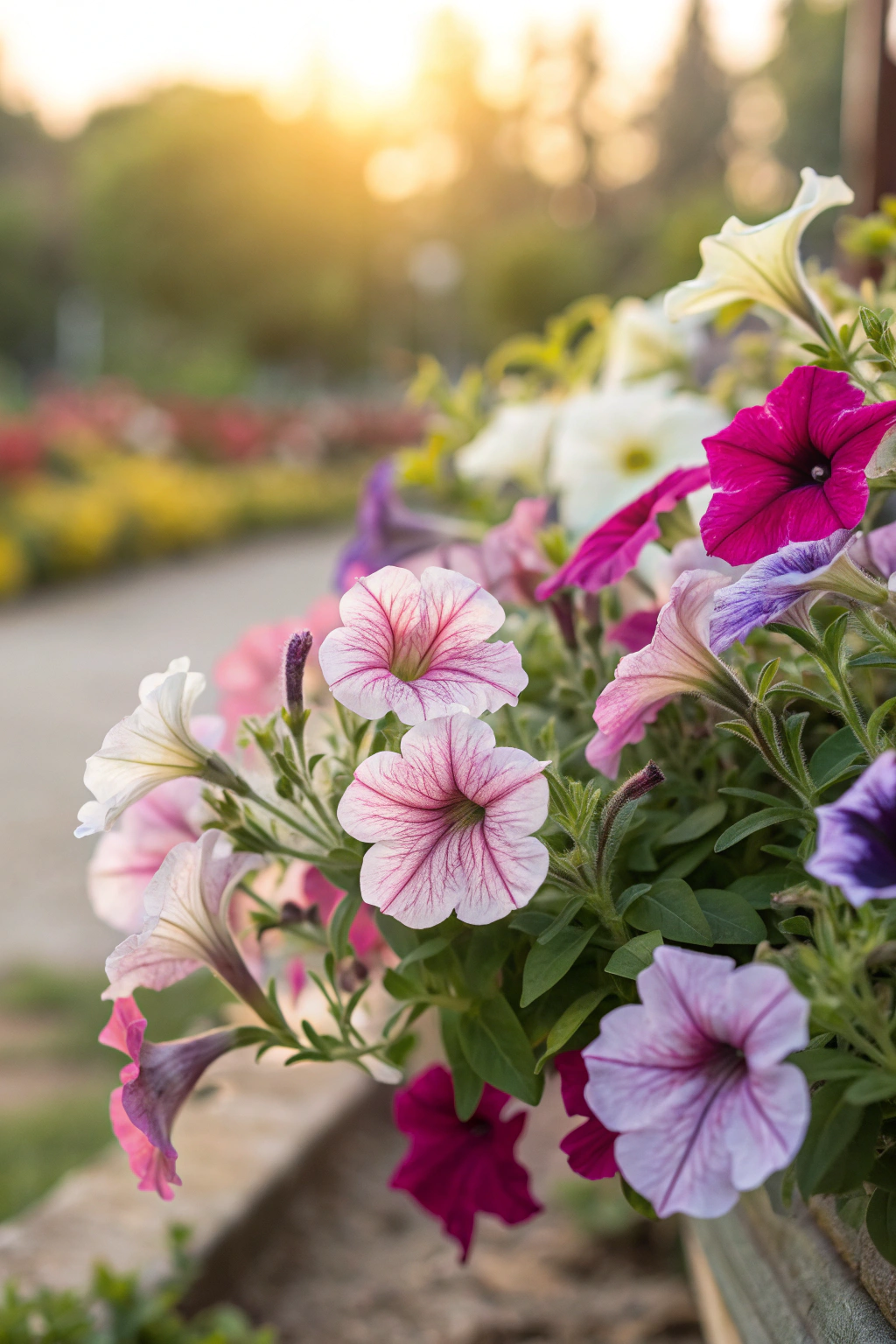
Petunias originated in South America, primarily Argentina and Brazil. Spanish explorers encountered indigenous peoples using wild petunias in ceremonies. The name comes from the Tupi-Guarani word “petun,” meaning tobacco, reflecting their family relationship.
Modern garden petunias descend from just two species hybridized in the 1830s.
Unique Characteristics:
- Sticky, hairy leaves trap small insects like natural flypaper
- Flowers range from tiny (1 inch) to giant (5 inches) across
- Related to tomatoes, potatoes, and tobacco plants
- Trumpet-shaped flowers evolved to attract long-tongued moths
Bloom Details:
Petunias bloom continuously from spring until frost, producing hundreds of flowers per plant. Each bloom lasts 2-4 days but plants replace them constantly. Peak flowering occurs during cool morning and evening hours.
Growing Specifics:
- Temperature: 60-75°F (15-24°C) optimal blooming range
- Humidity: 40-60% relative humidity
- Light: Full sun preferred, tolerates light shade
- Water: Consistent moisture, avoid waterlogged conditions
Fascinating Facts:
Petunia flowers open and close on daily cycles, staying closed during hot midday hours to conserve moisture and pollen.
The sticky leaf surfaces capture and digest small insects, providing supplemental nitrogen nutrition like carnivorous plants.
Common Problems and Solutions:
Botrytis (gray mold) attacks flowers in cool, wet conditions. Improve air circulation and remove spent blooms promptly.
Aphids cluster on growing tips and under leaves. Introduce beneficial insects or spray with insecticidal soap weekly.
Best Varieties:
- ‘Wave Purple’: Spreading variety perfect for containers
- ‘SuperCal Premium’: Large flowers, superior weather tolerance
- ‘Night Sky’: Purple flowers with white star patterns
Calibrachoa (Million Bells): The Mini Petunia Marvel
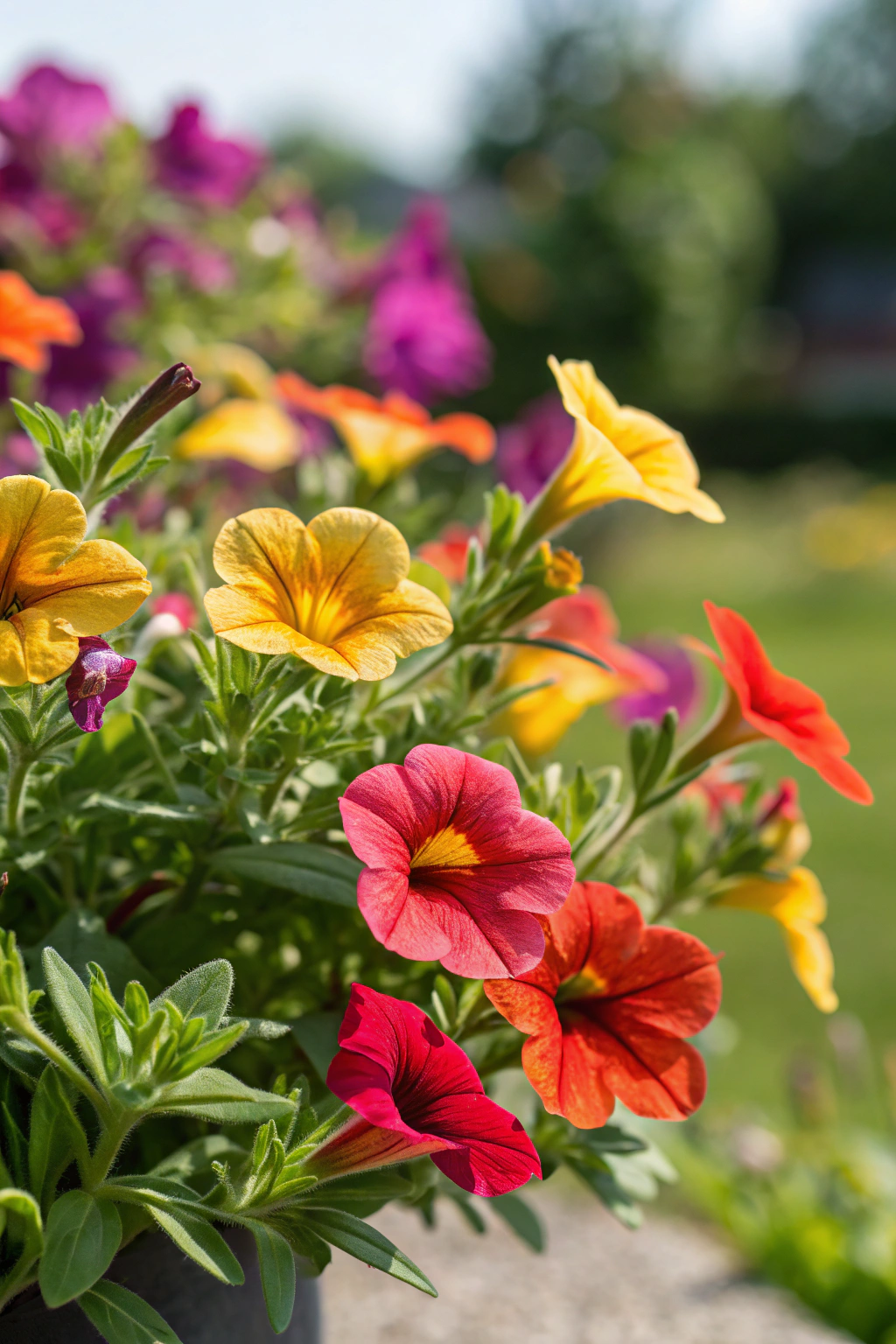
Calibrachoa species evolved in South America, particularly in Brazil’s highland regions. Scientists first distinguished them from petunias in 1985, making them relatively new to horticulture. The common name “million bells” refers to their prolific flowering habit.
These plants produce more flowers per square inch than almost any other annual.
Unique Characteristics:
- Flowers measure only 1 inch across but appear in incredible quantities
- Trailing growth habit perfect for hanging baskets
- Self-cleaning flowers require no deadheading
- More drought tolerant than their petunia relatives
Bloom Details:
Calibrachoa produces 50-100 new flowers daily during peak season. Each plant can have over 1,000 blooms simultaneously. Individual flowers last 3-5 days but plants maintain constant color coverage.
Growing Specifics:
- Temperature: 65-75°F (18-24°C) optimal range
- Humidity: 45-65% relative humidity
- Light: Full sun 6+ hours daily preferred
- Water: Consistent moisture, excellent drainage essential
Fascinating Facts:
Calibrachoa flowers contain anthocyanins that change color based on soil pH and temperature, creating subtle variations within the same plant.
Hummingbirds and long-tongued butterflies can access the nectar, while bees often “rob” it by biting holes in the flower tubes.
Common Problems and Solutions:
Iron deficiency causes yellowing between leaf veins. Apply iron chelate or lower soil pH with sulfur amendments.
Fungal root rot develops in poorly drained soils. Use well-draining potting mixes and avoid overwatering.
Best Varieties:
- ‘Superbells Cherry Star’: Red flowers with white throats
- ‘MiniFamous Neo’: Compact variety with large flowers
- ‘Celebration Banana Punch’: Yellow flowers with red centers
Impatiens: The Explosive Shade Lover
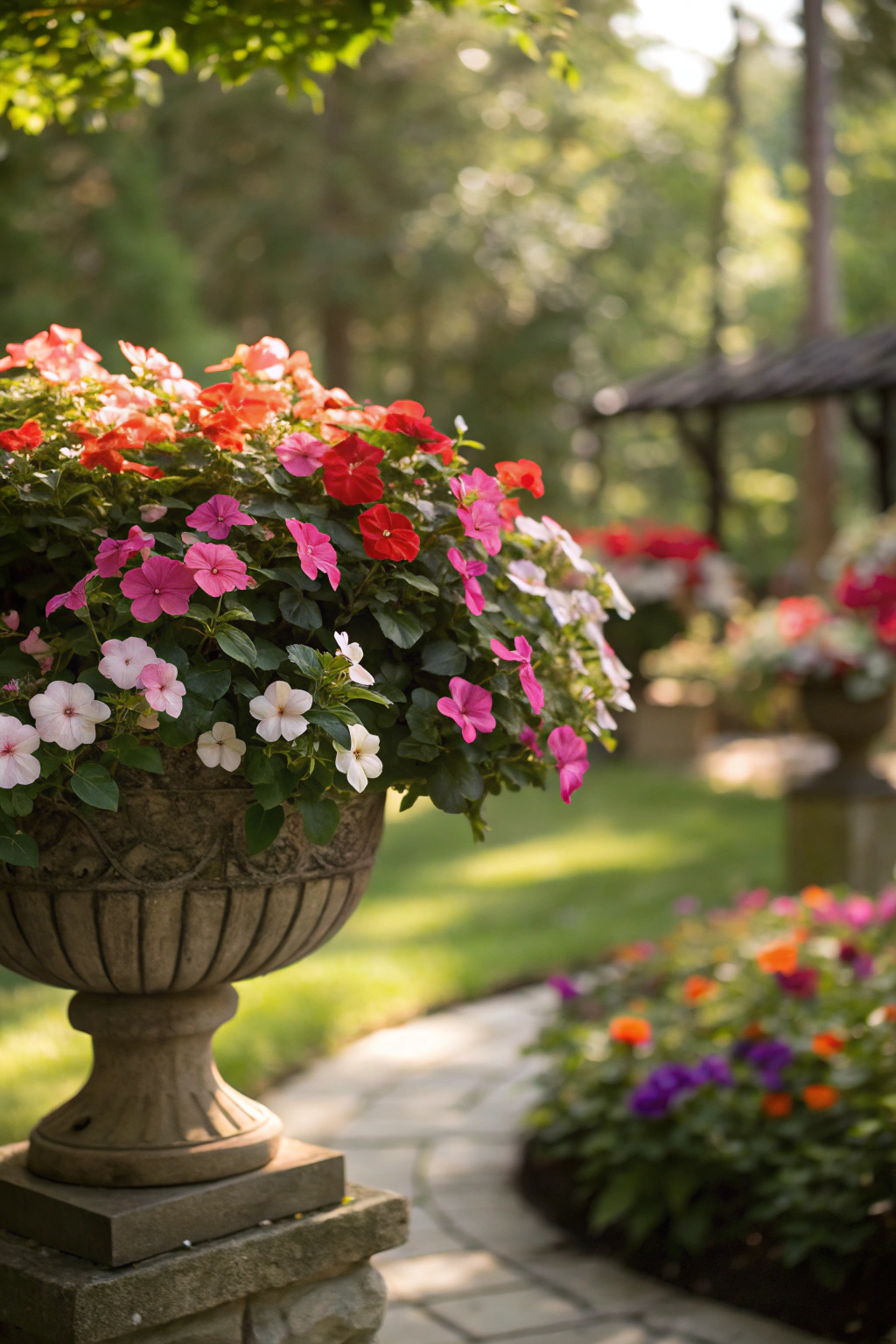
Impatiens originated in East Africa and the Himalayas, with over 1,000 species worldwide. The name means “impatient,” referring to the explosive seed pods that burst at the slightest touch. Victorian gardeners called them “busy Lizzies” due to their continuous blooming habit.
New Guinea impatiens weren’t introduced to cultivation until 1970, making them relative newcomers.
Unique Characteristics:
- Seed pods explode when ripe, shooting seeds several feet
- Translucent, succulent stems store water efficiently
- Shade tolerance exceeds most flowering annuals
- Flowers have distinctive spurs containing nectar
Bloom Details:
Impatiens bloom continuously from spring until frost, producing 2-5 new flowers daily per plant. Each bloom lasts 4-7 days depending on conditions. Plants can maintain 20-50 flowers simultaneously.
Growing Specifics:
- Temperature: 65-80°F (18-27°C) optimal range
- Humidity: 50-70% relative humidity preferred
- Light: Partial to full shade tolerance
- Water: Consistent moisture, never allow wilting
Fascinating Facts:
Impatiens flowers evolved to attract butterflies and long-tongued bees. The nectar spurs match pollinator tongue lengths perfectly.
Some impatiens species are used in traditional medicine for treating warts, burns, and snake bites in various cultures.
Common Problems and Solutions:
Downy mildew devastated traditional impatiens in many regions after 2012. Plant resistant New Guinea varieties or alternatives like begonias.
Sudden wilting despite moist soil indicates root rot. Improve drainage and reduce watering frequency.
Best Varieties:
- ‘SunPatiens Compact White’: Sun-tolerant variety for brighter locations
- ‘New Guinea Divine Orange’: Large flowers, bronze foliage
- ‘Beacon Violet Shades’: Traditional variety with purple blooms
Verbena: The Butterfly Magnet
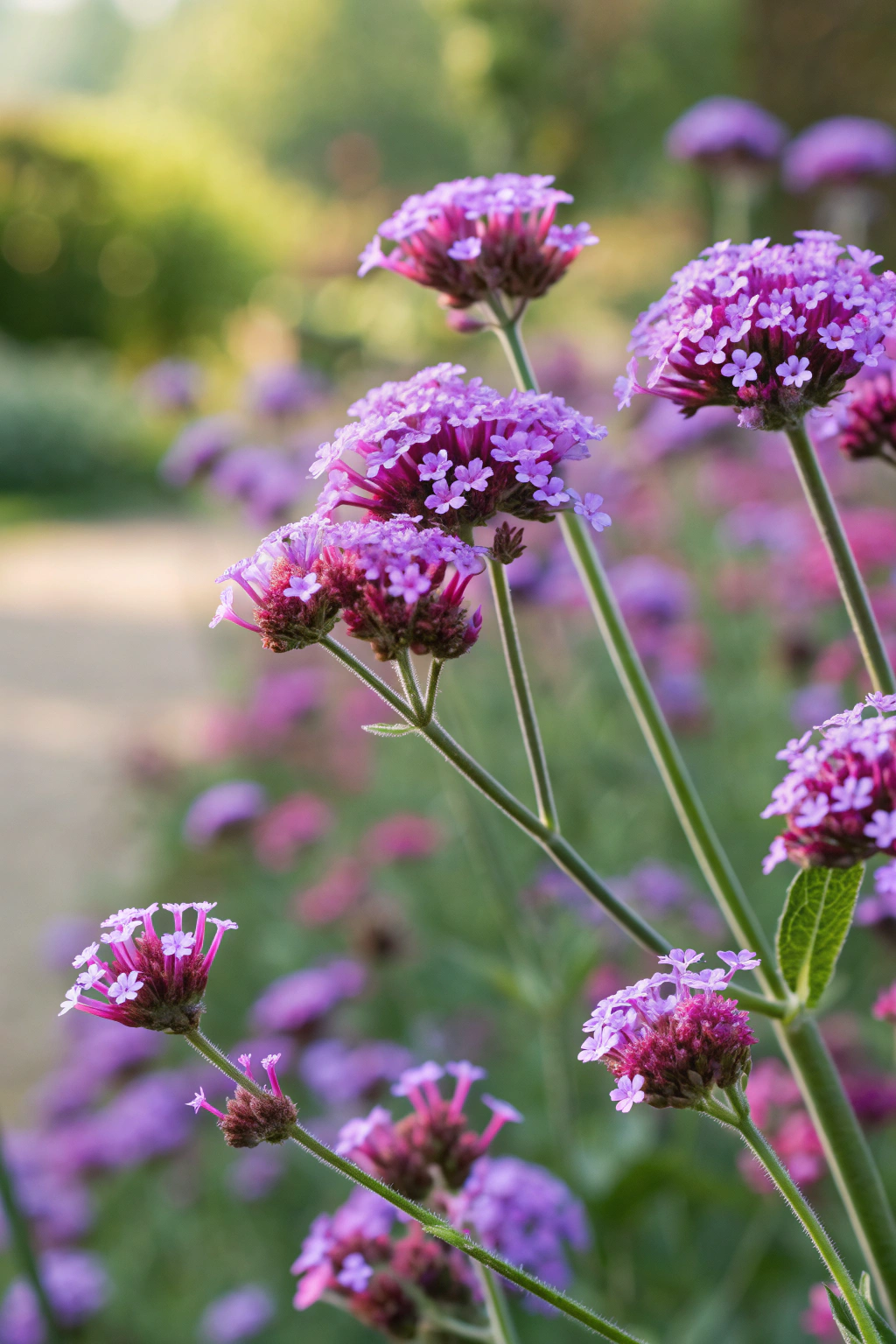
Verbena species evolved throughout the Americas, with highest diversity in South America. Ancient Romans considered verbena sacred, using it in religious ceremonies and peace negotiations. The name comes from the Latin “verbum,” meaning word, referring to its use in oaths.
Native Americans used wild verbena medicinally for centuries before European contact.
Unique Characteristics:
- Flowers arranged in dense, flat-topped clusters
- Strong fragrance attracts butterflies from considerable distances
- Trailing varieties can spread 3-4 feet wide
- Heat and drought tolerance rivals desert plants
Bloom Details:
Verbena blooms continuously from late spring until frost, with peak flowering during hot summer months. Each plant produces 10-30 flower clusters simultaneously. Individual clusters last 2-3 weeks before requiring deadheading.
Growing Specifics:
- Temperature: 70-85°F (21-29°C) optimal flowering range
- Humidity: 30-50% relative humidity tolerance
- Light: Full sun 6+ hours daily required
- Water: Moderate moisture, excellent drought tolerance when established
Fascinating Facts:
Verbena flowers produce nectar continuously throughout daylight hours, making them reliable butterfly food sources. Over 50 butterfly species regularly visit verbena blooms.
Essential oils in verbena leaves have antimicrobial properties, historically used for wound treatment and food preservation.
Common Problems and Solutions:
Powdery mildew appears on leaves during humid conditions. Improve air circulation and apply preventive fungicide sprays.
Aphids attack growing tips and flower buds. Release beneficial insects or apply horticultural oil sprays bi-weekly.
Best Varieties:
- ‘Homestead Purple’: Spreading variety with continuous blooming
- ‘Tapien Pink’: Trailing habit perfect for containers
- ‘Superbena Red’: Compact growth with large flower clusters
Portulaca: The Sun Worshipper
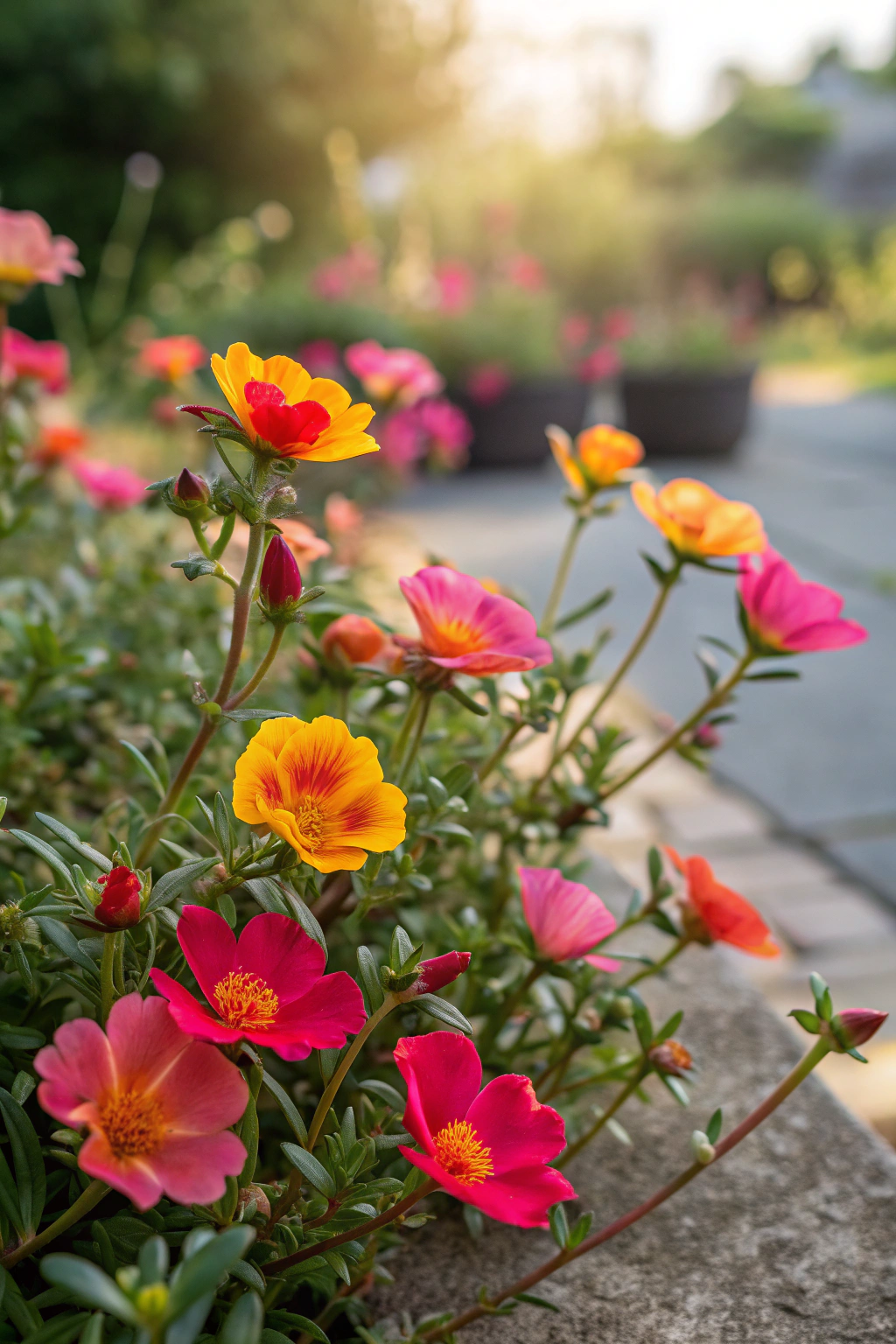
Portulaca grandiflora originated in Argentina, Uruguay, and southern Brazil. Portuguese traders spread it throughout their colonial territories in the 1600s. The common name “moss rose” refers to the needle-like leaves resembling moss, while “portulaca” comes from the Latin “portula,” meaning little gate, describing the seed capsule opening.
This plant demonstrates extreme adaptation to hot, dry conditions.
Unique Characteristics:
- Flowers open with sunrise, close in late afternoon
- Succulent leaves and stems store water like cacti
- Seeds remain viable in soil for over 40 years
- Flowers close completely during cloudy weather
Bloom Details:
Portulaca blooms continuously from late spring until frost, producing 5-10 new flowers daily per plant. Each bloom lasts only one day but plants produce them constantly. Peak flowering occurs during hot, sunny afternoon hours.
Growing Specifics:
- Temperature: 70-100°F (21-38°C) thrives in extreme heat
- Humidity: 20-40% relative humidity preferred
- Light: Full sun 8+ hours daily required
- Water: Minimal watering, drought tolerant when established
Fascinating Facts:
Portulaca flowers track the sun’s movement throughout the day, maximizing light exposure for photosynthesis and pollinator attraction.
The plant produces both chasmogamous (open) and cleistogamous (closed, self-pollinating) flowers, ensuring reproduction under all conditions.
Common Problems and Solutions:
Poor flowering in shade or during cloudy weather is normal behavior. Plants require intense sunlight to open flowers.
Root rot develops quickly in heavy, wet soils. Plant in sandy, well-draining locations or raised containers.
Best Varieties:
- ‘Sundial Mix’: Large 2-inch double flowers in mixed colors
- ‘Happy Hour Mix’: Early flowering variety with vibrant colors
- ‘Margarita Rosita’: Pink flowers with white centers
Growing All Season Plants Successfully
Creating continuous blooms requires understanding each plant’s specific needs and growth cycles. Most all season plants outdoor thrive with consistent care routines rather than intensive seasonal management.
Temperature Management:
Monitor minimum and maximum temperature tolerances for each species. Indoor plants need consistent temperatures year-round, while outdoor varieties may require protection during extreme weather.
Light Requirements:
Full sun means 6-8 hours of direct sunlight daily. Partial shade indicates 4-6 hours, while full shade means less than 4 hours. Insufficient light causes leggy growth and reduced flowering in most species.
Watering Strategies:
Deep, infrequent watering encourages strong root systems. Surface watering creates shallow roots susceptible to stress. Check soil moisture 2-3 inches deep before watering again.
Fertilization Programs:
Continuous bloomers require regular nutrition. Use balanced fertilizers (10-10-10 or 20-20-20) every 2-3 weeks during growing seasons. Reduce frequency during dormant periods.
Pest and Disease Prevention:
Good air circulation prevents most fungal problems. Regular inspection catches pest issues early when treatment is most effective. Remove dead or diseased material promptly.
Seasonal Adjustments:
Many plants that grow back every year need modified care as seasons change. Reduce watering and fertilizing during shorter daylight periods. Increase humidity as heating systems dry indoor air.
Understanding your specific climate zone helps determine which year long plants will thrive outdoors year-round versus needing winter protection or indoor cultivation.
The reward for proper care is a garden or home filled with continuous color, fragrance, and the satisfaction of nurturing plants that bloom endlessly throughout the seasons.