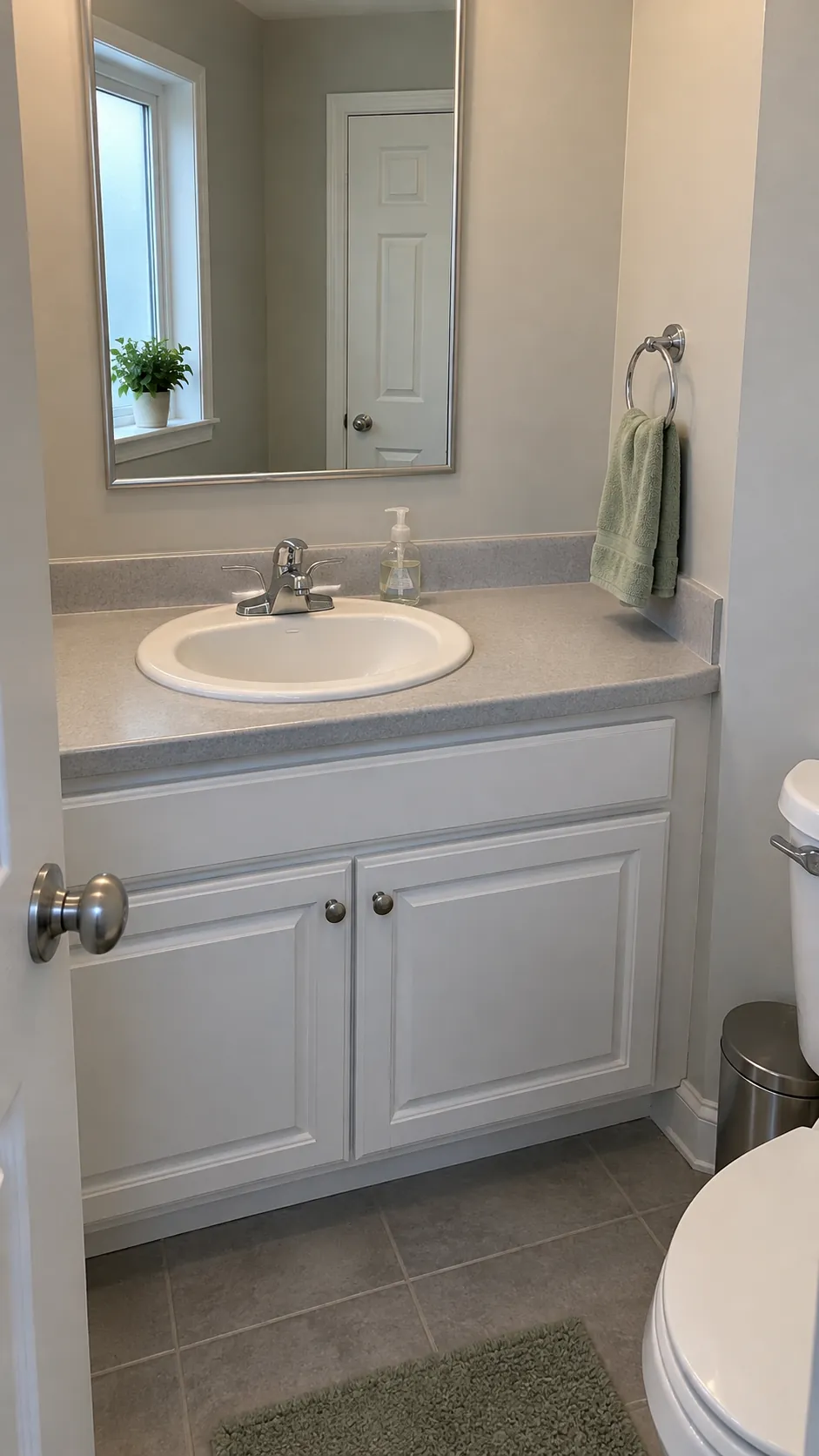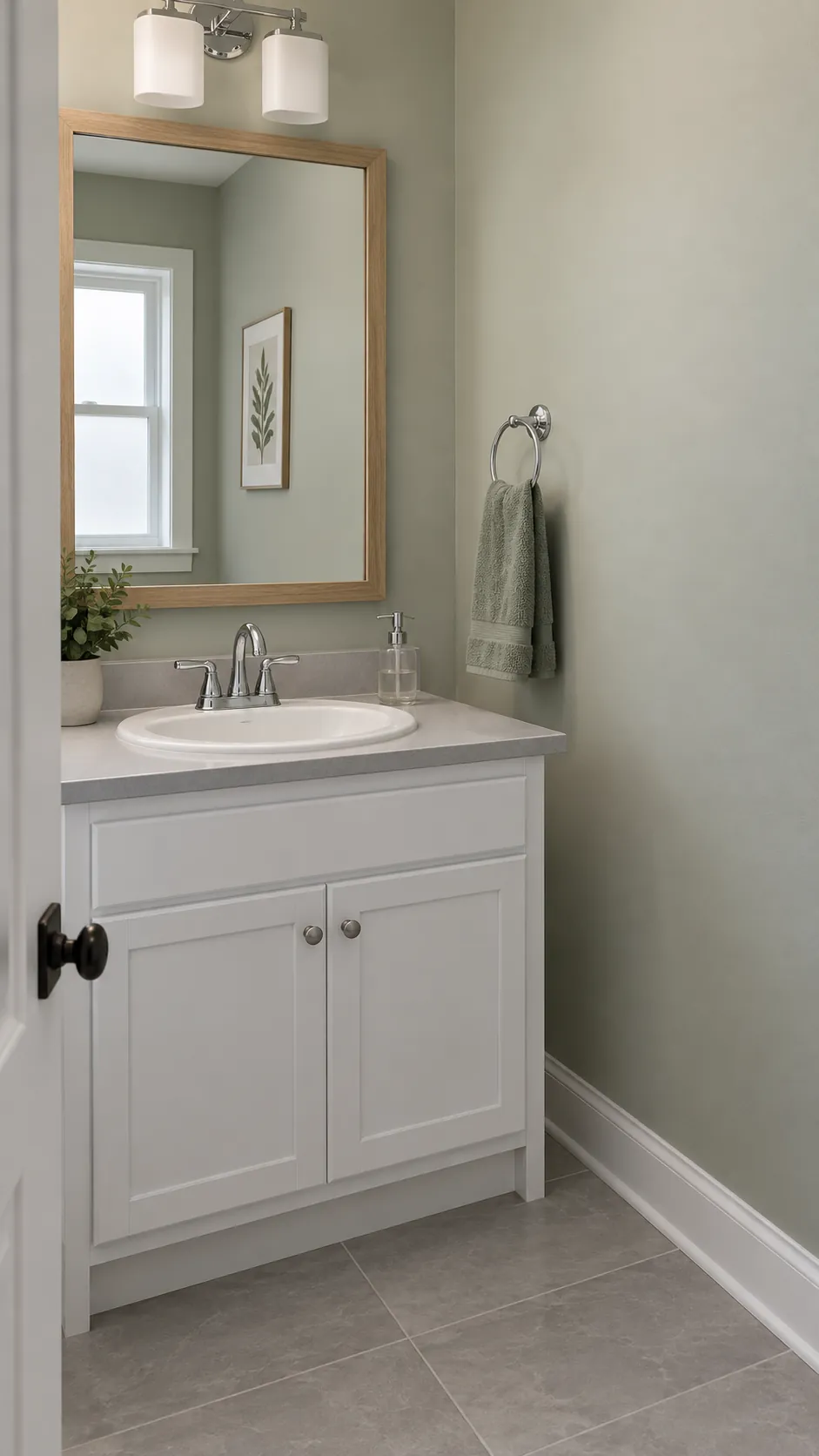
A working faucet and plain vanity do not need replacing just because the room feels unfinished. Start with the surfaces you will keep, then repeat a few colors, shapes and materials around them. Small choices become more convincing when each one has a useful job.
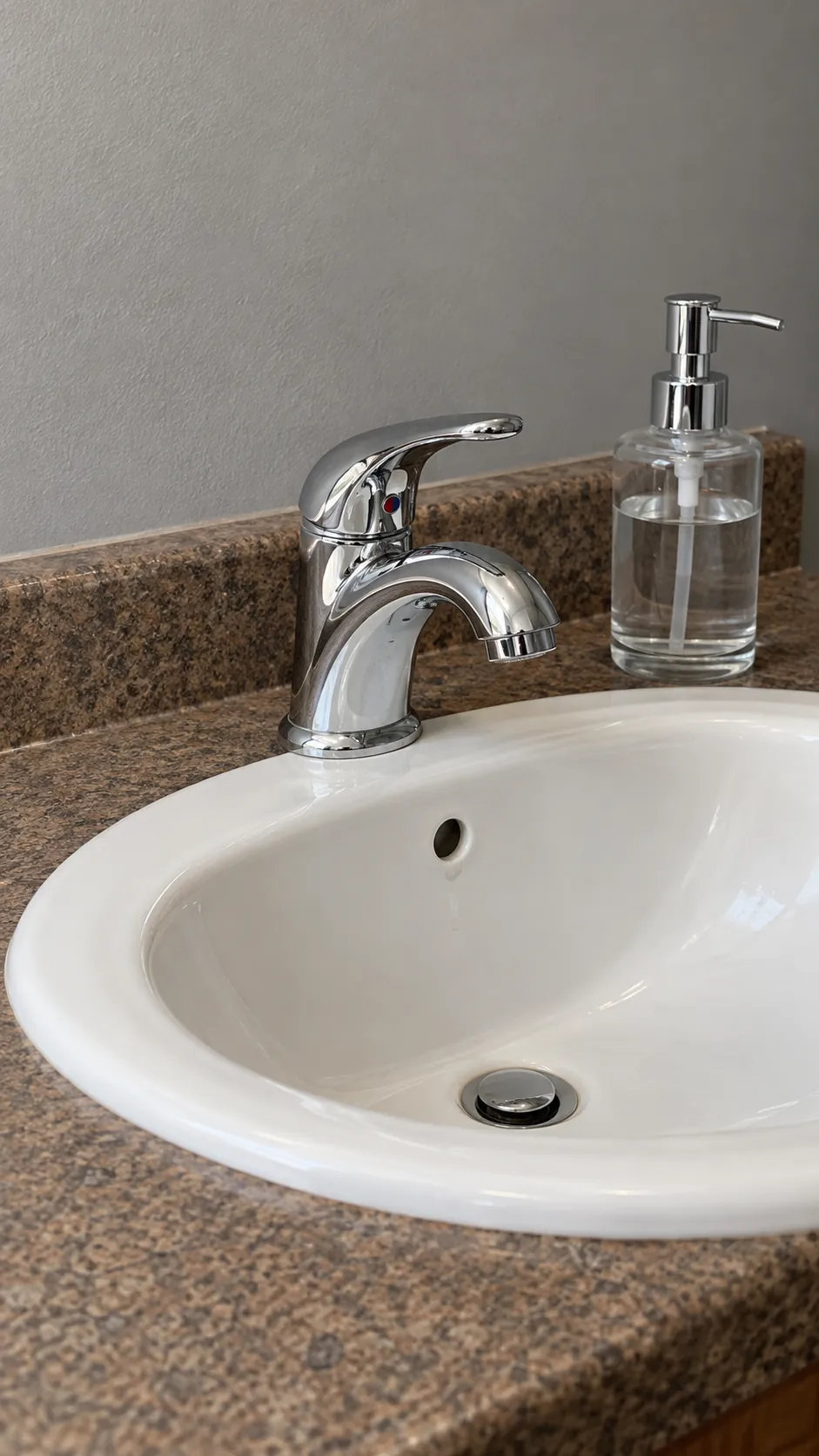
Let the existing faucet set the metal direction
Start with the metal finish that is hardest to change, often the faucet. Repeat it in one nearby accessory so it looks like a deliberate choice. Keep a clear photo or actual finish sample with you when shopping, because chrome, nickel and silver painted plastic can look similar online.
Choose paint beside the fixtures you are keeping
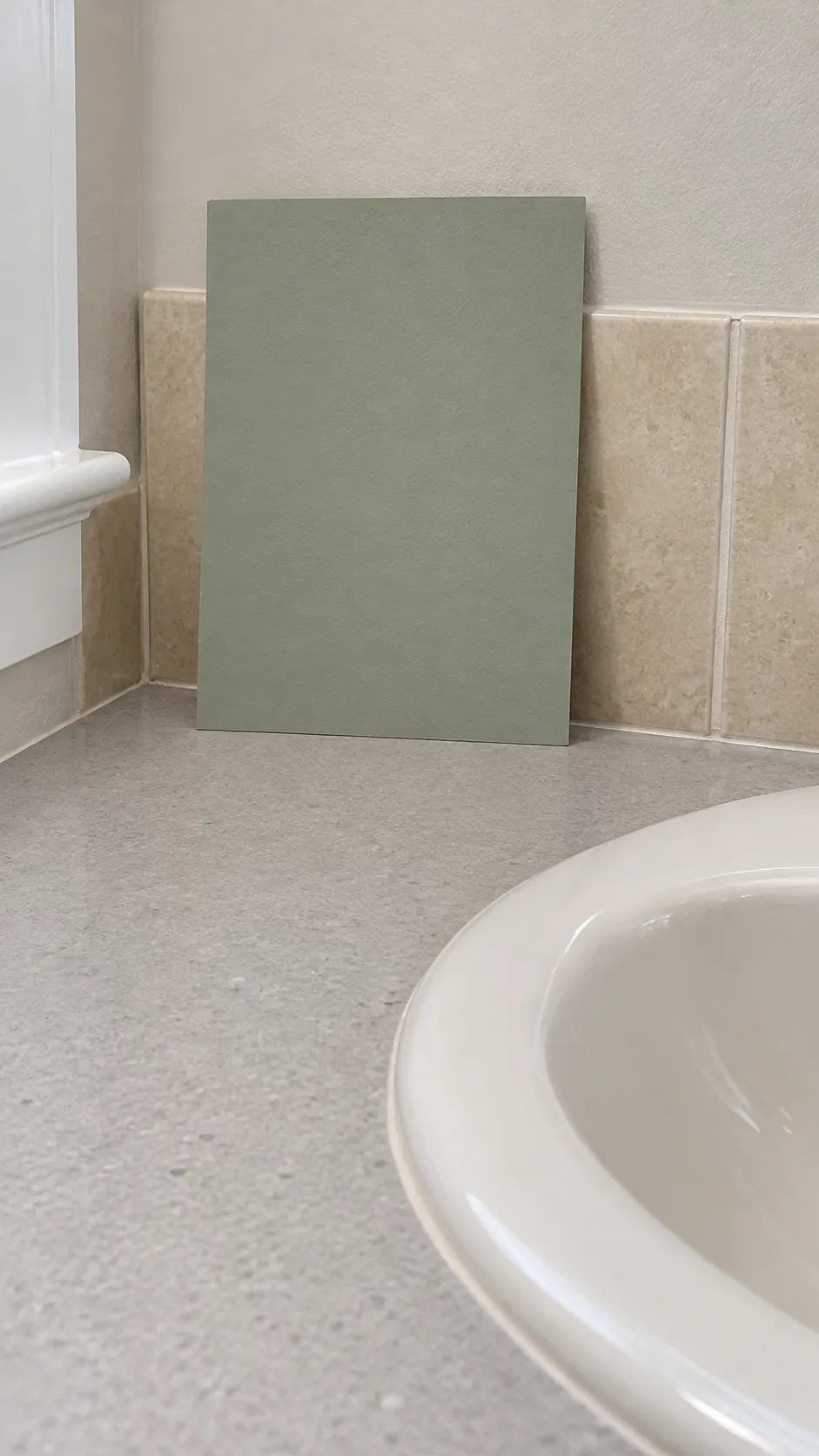
White ceramic, beige tile and a pale countertop can each lean in a different color direction. Test a large paint sample beside all three rather than selecting from a tiny chip in another room. Look at it under daylight and the bathroom light before deciding. A muted shade that sits comfortably with the fixed surfaces usually creates more unity than a fashionable color that fights them. Do not expect paint to make every existing white identical.
Give the mirror a frame with a clear role
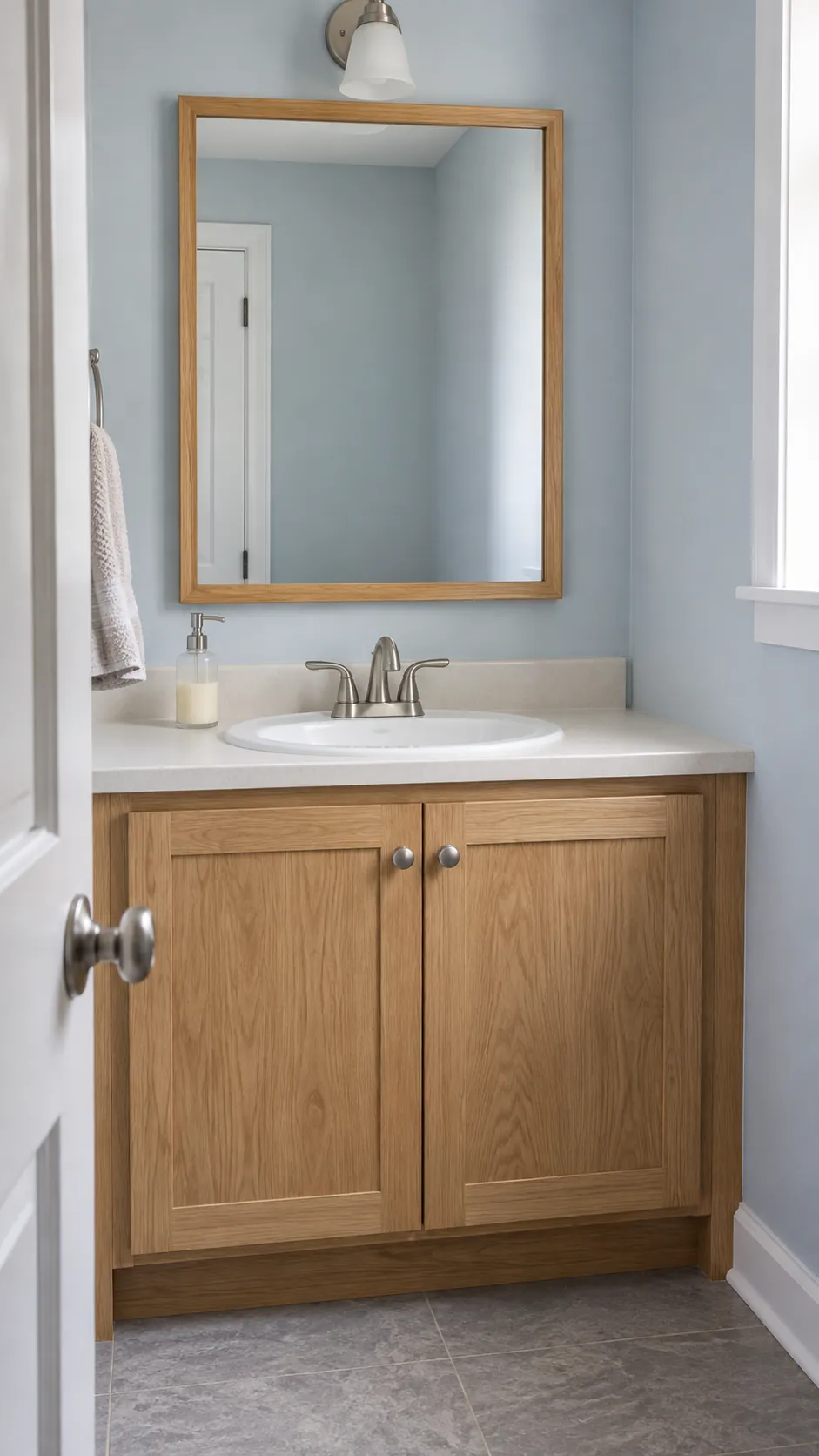
A plain mirror can look more connected when its frame repeats a material already in the room. Light wood can echo a cabinet, while a thin metal frame can relate to the faucet or light. Check the frame depth and fixing method before adapting an existing mirror.
Mirror clips, light fittings and the wall behind the glass may limit what will fit. Inspect the surface before removing a glued mirror, since removal can expose damaged drywall or adhesive. Choose a frame proportion that leaves useful space above the faucet and below the light.
Scale the light to the mirror
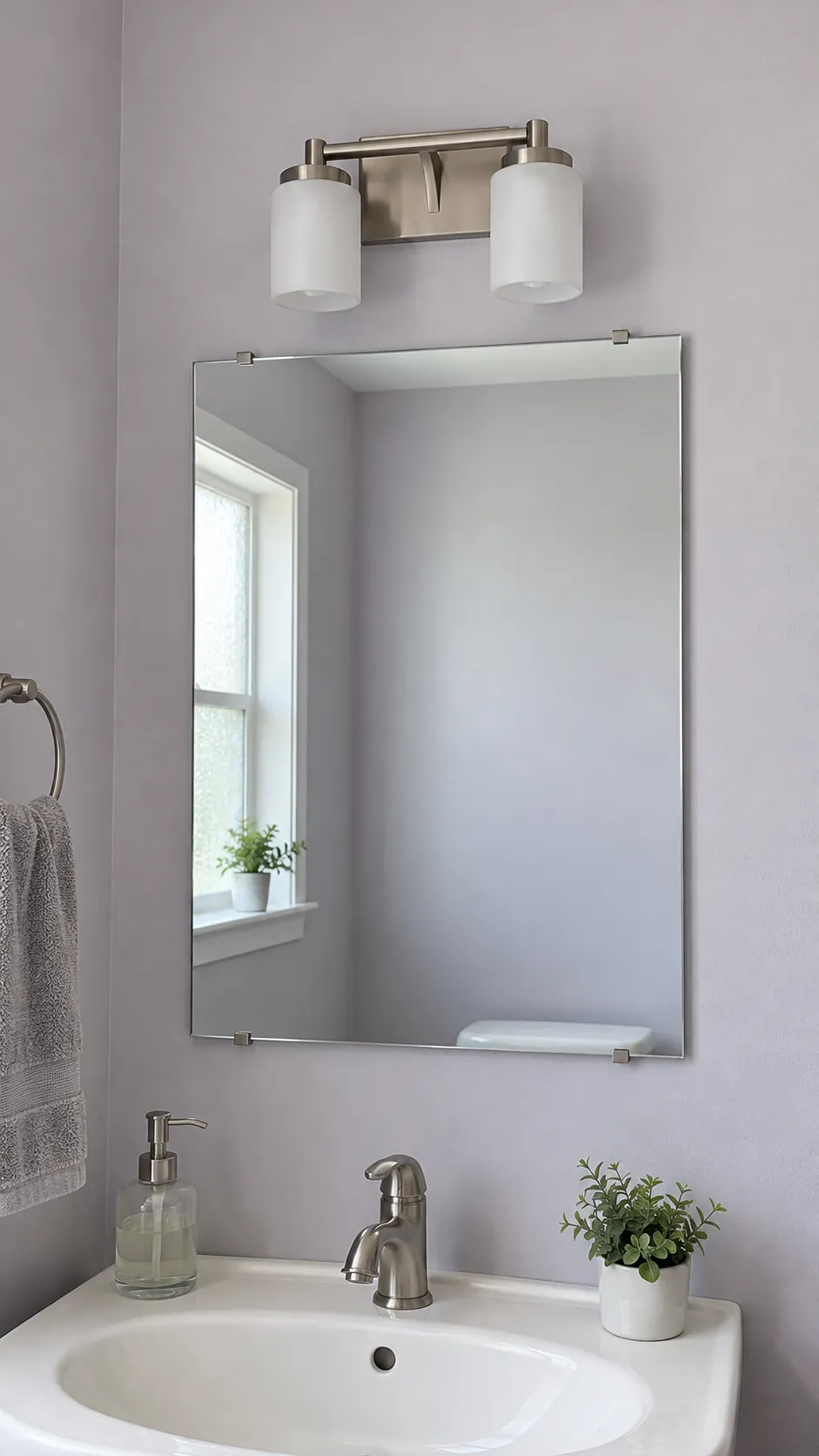
A fixture that looks unrelated in size can make an otherwise sensible bathroom feel pieced together. Compare the light width with the mirror and check that the shade or bar sits comfortably inside the available wall space. Use a paper outline to judge the shape before ordering. A qualified electrician should handle changes to fixed wiring, especially when the existing box or bathroom location raises questions.
Keep visible bulbs the same color
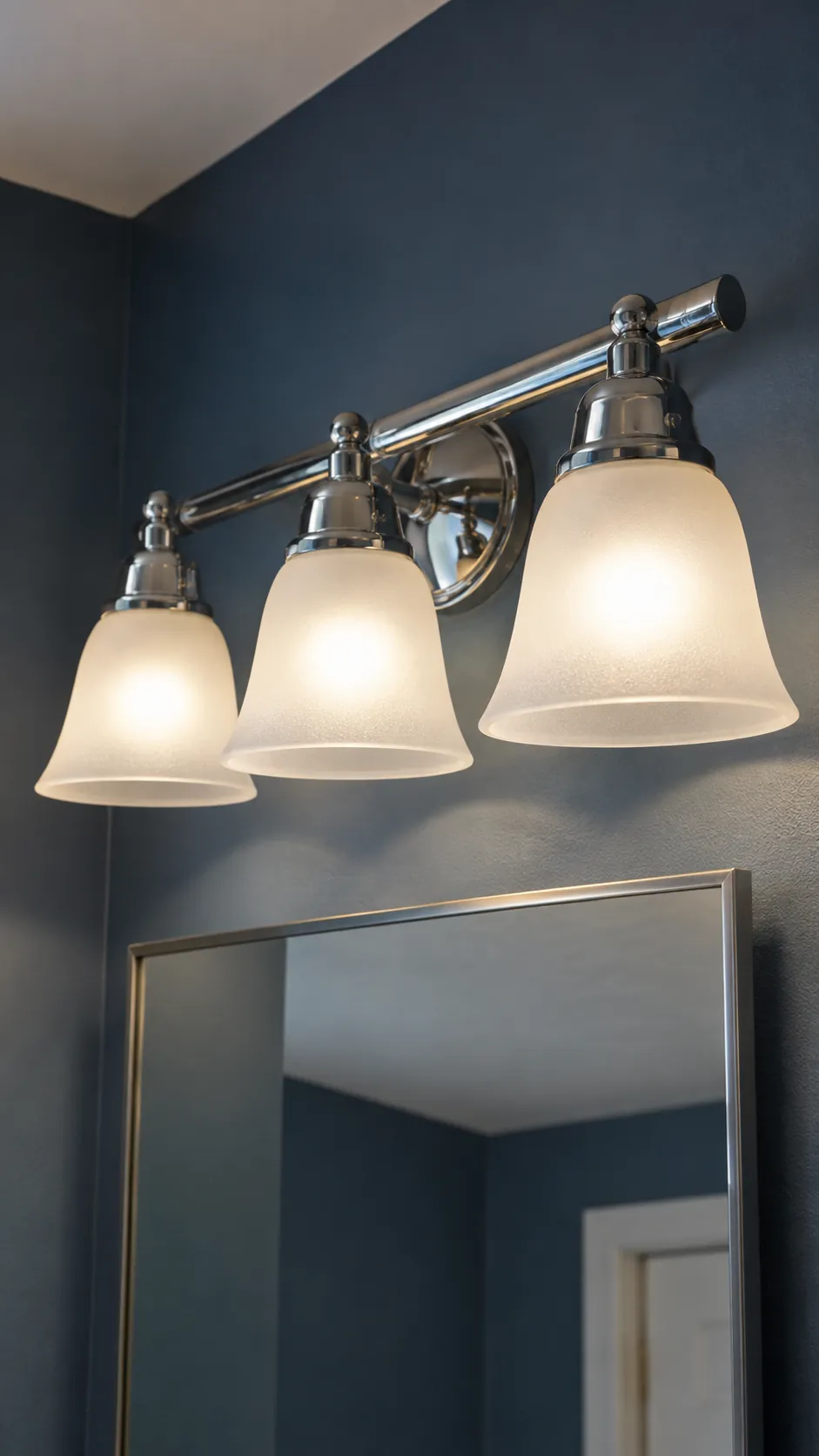
Different bulb colors can make one wall look yellow and another look blue. Use matching compatible bulbs in a visible multi bulb fixture and compare the result with any other light that operates at the same time. Read the fixture rating before choosing replacements. A consistent light color makes your paint and accessory choices easier to judge. It does not require unusually bright bulbs or a decorative exposed filament.
Echo a simple shape in the cabinet pulls
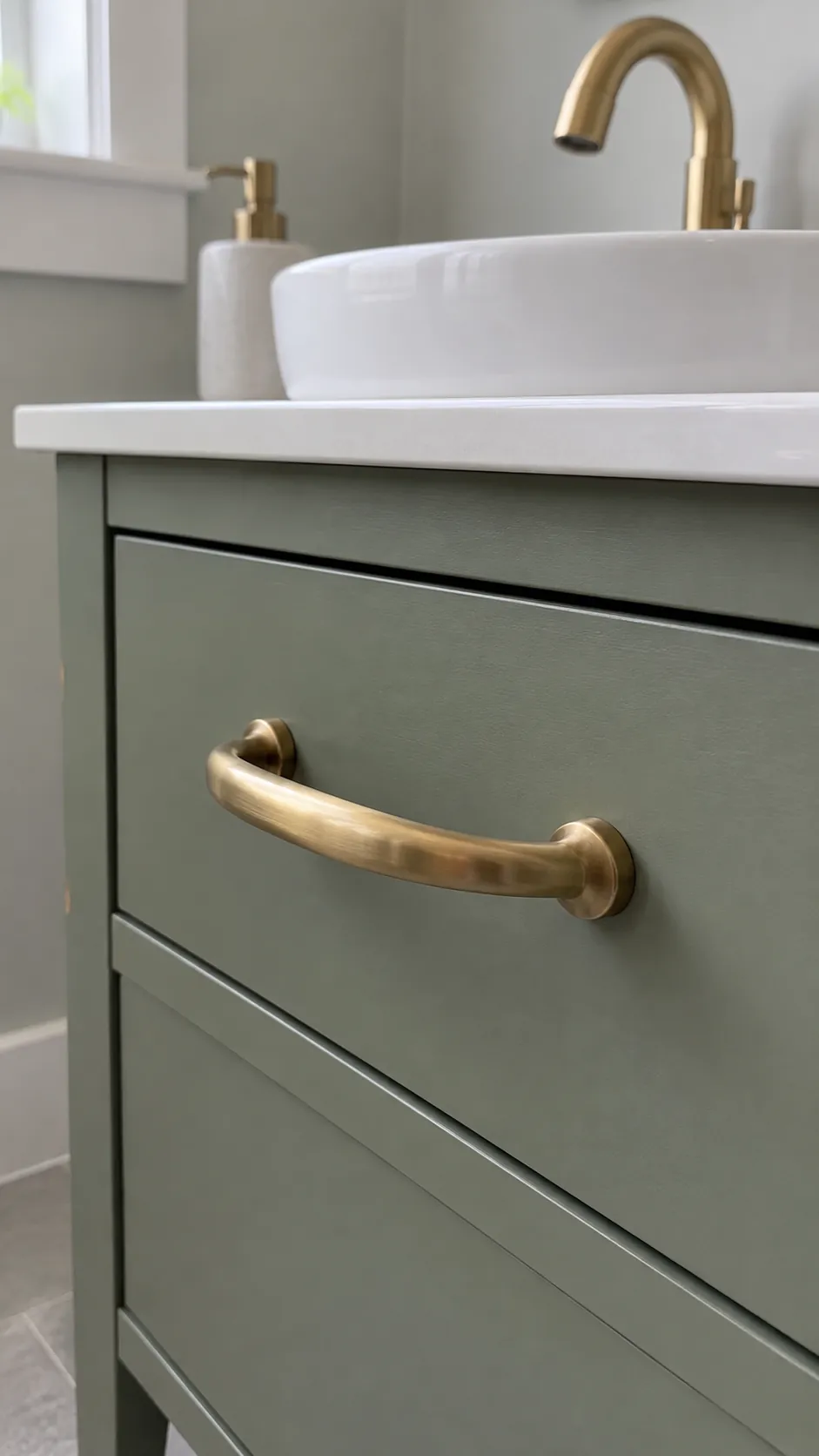
Look at the room for a repeated curve or straight line before choosing cabinet hardware. Rounded pulls can relate to a curved faucet, while plain bar pulls can support a rectangular mirror. Measure the existing hole spacing so a small update does not create an unnecessary repair.
Test the grip and clearance on a real door or drawer. The pull should be comfortable with wet hands and should not collide with a neighboring front. A coordinated shape is useful only if the cabinet still opens easily.
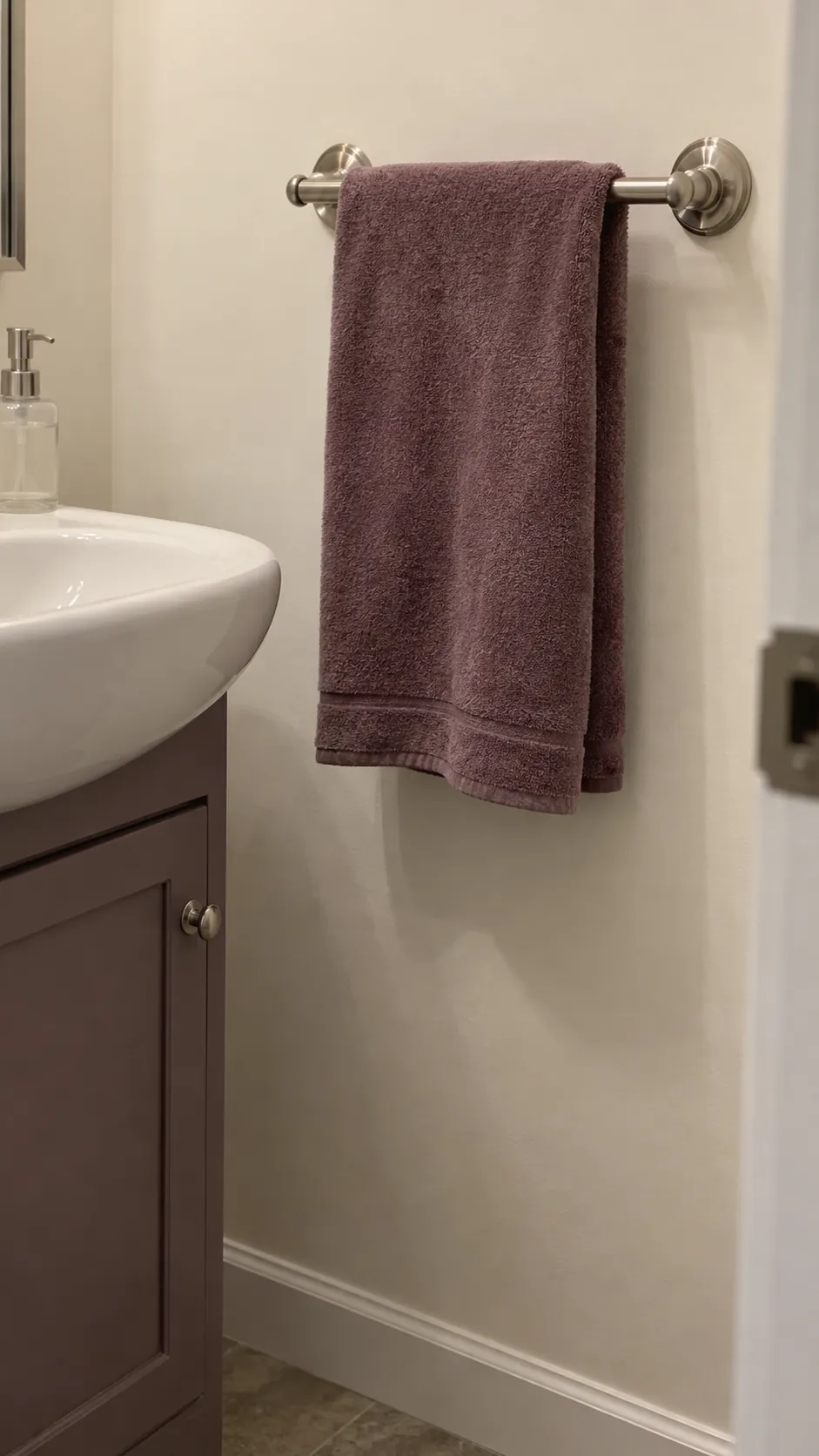
Carry one accent color into the hand towel
A hand towel is a useful place to repeat a color from the wall, rug or print. Choose one clear connection rather than buying every accessory in the same saturated shade. Hold the towel in the room before removing its tag, because fabric color changes under bathroom light. Leave the towel hanging loosely enough to dry, with its hem clear of nearby fittings.
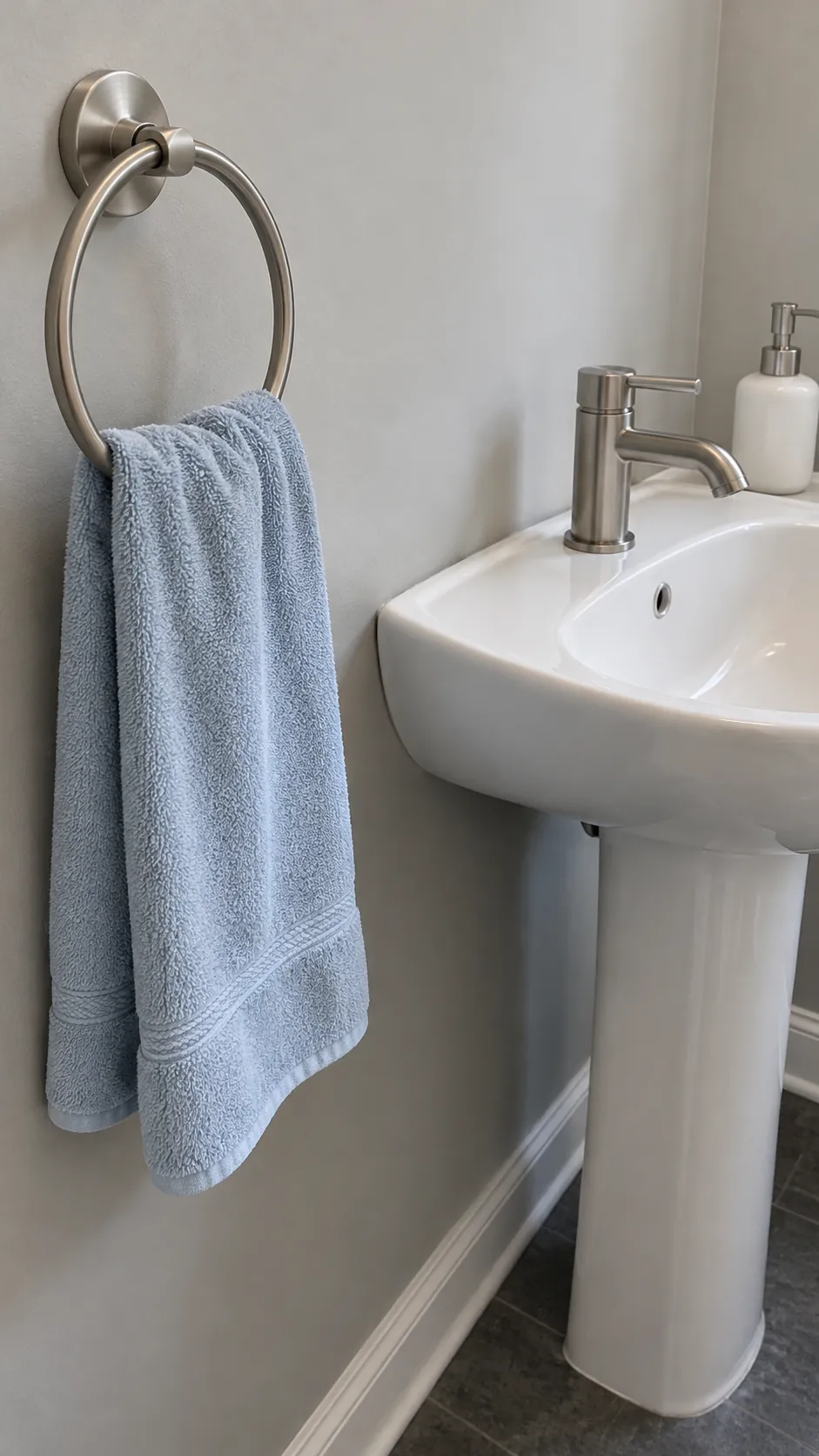
Make the towel ring belong to the faucet
The towel ring sits close enough to the sink that its finish is easy to compare with the faucet. Repeating the same metal here gives a small room a simple visual link. Check the old mounting footprint before buying a replacement, since the new plate may not cover the previous holes. Position the towel for reach and drying rather than choosing its location only for symmetry.
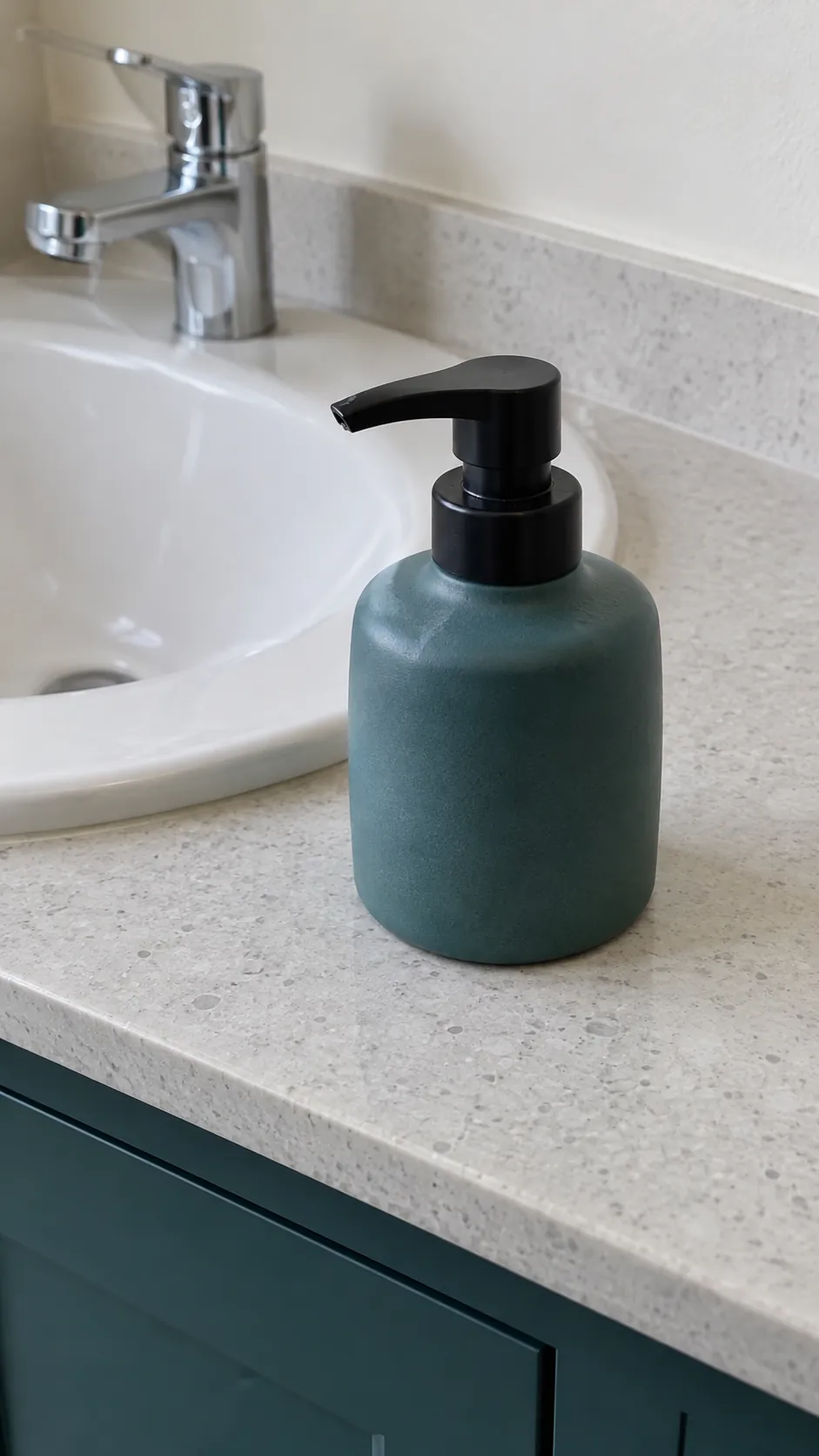
Choose a soap vessel that repeats a surface
A soap dispenser can connect to the room through its material rather than its metal pump. Matte ceramic can echo a painted cabinet, while clear glass can stay quiet beside a reflective faucet. Choose a stable base and a pump that leaves room for a hand over the bowl. Keep the bottle small enough that cleaning around it remains easy. Do not sacrifice a usable sink rim for an oversized decorative vessel.
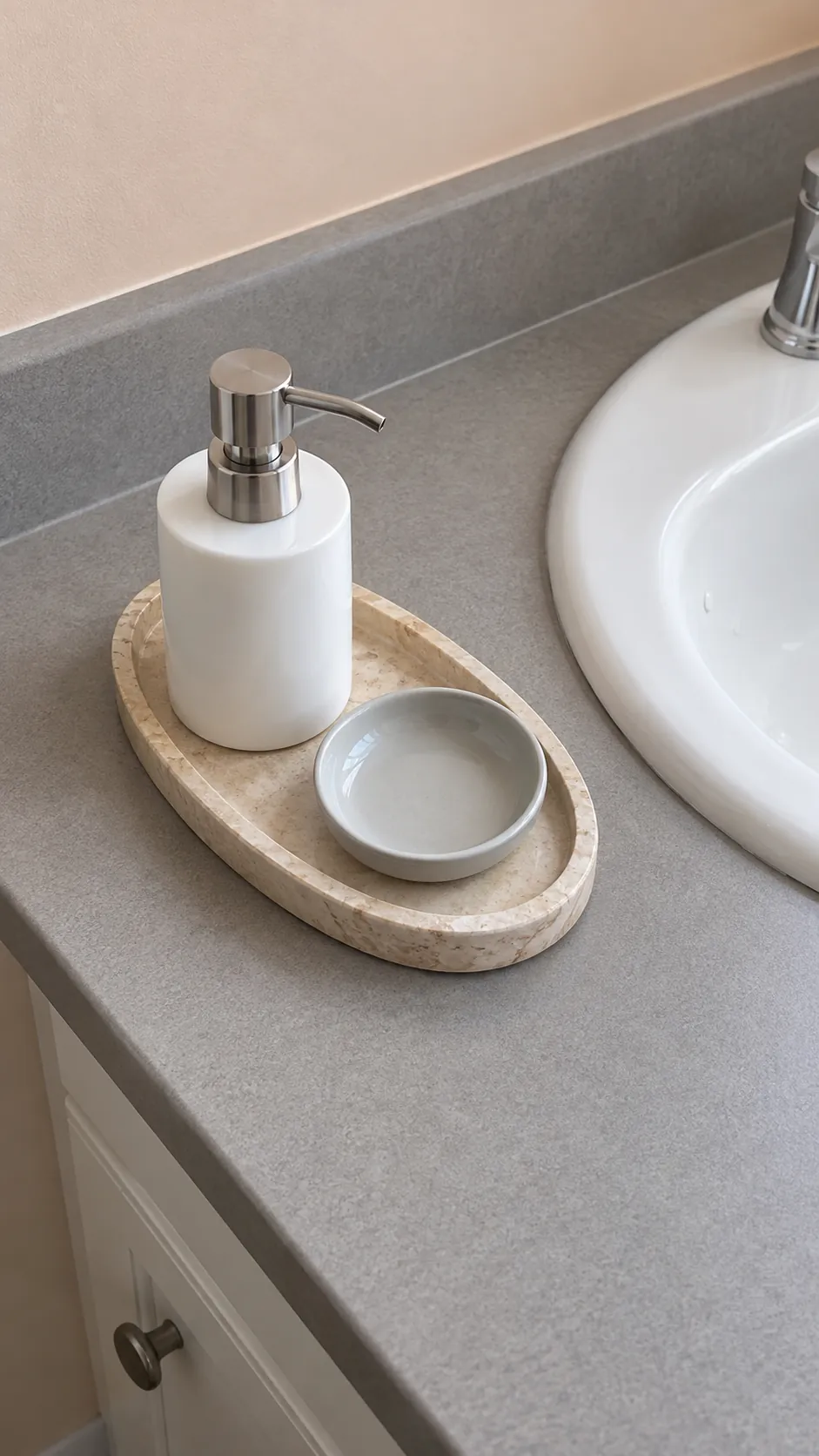
Use one small tray to define the essentials
A tray can make two necessary objects read as one group on a vanity. Measure the free counter area first and leave space for water splashes and handwashing. Choose a washable surface that tolerates soap rather than a fragile decorative finish.
Set only the items you actually use inside the tray. A soap bottle and a small dish may be enough in a guest room. If the counter is too narrow, omit the tray instead of letting it overhang the basin.
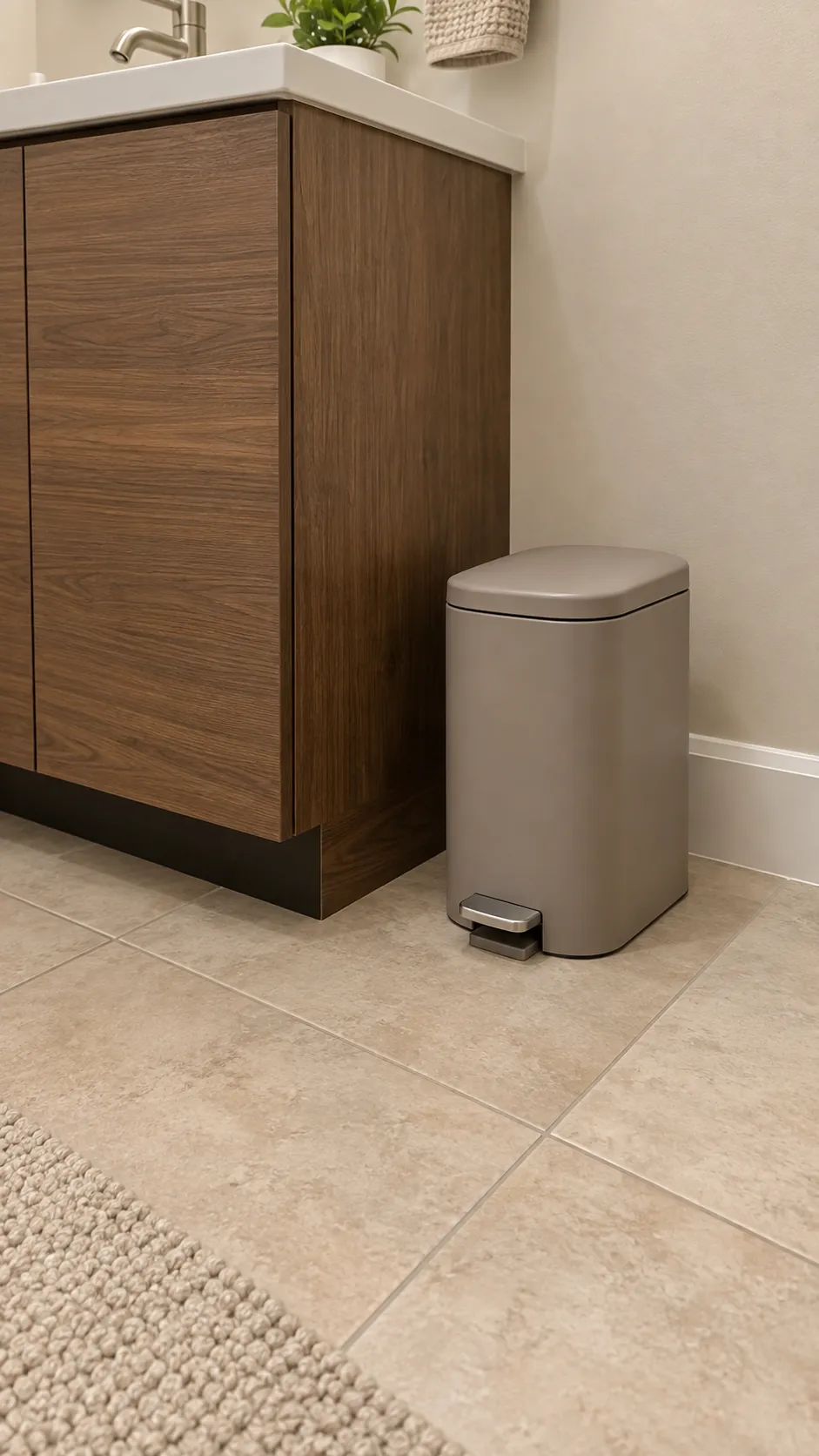
Match the waste bin to a larger element
A small waste bin can feel less like an afterthought when it relates to the cabinet or floor. A muted taupe bin can sit quietly beside a wood vanity, while a dark bin can connect to dark floor tile. Check that its lid or pedal works without hitting the wall. Keep it out of the door swing and leave enough room to remove the liner.
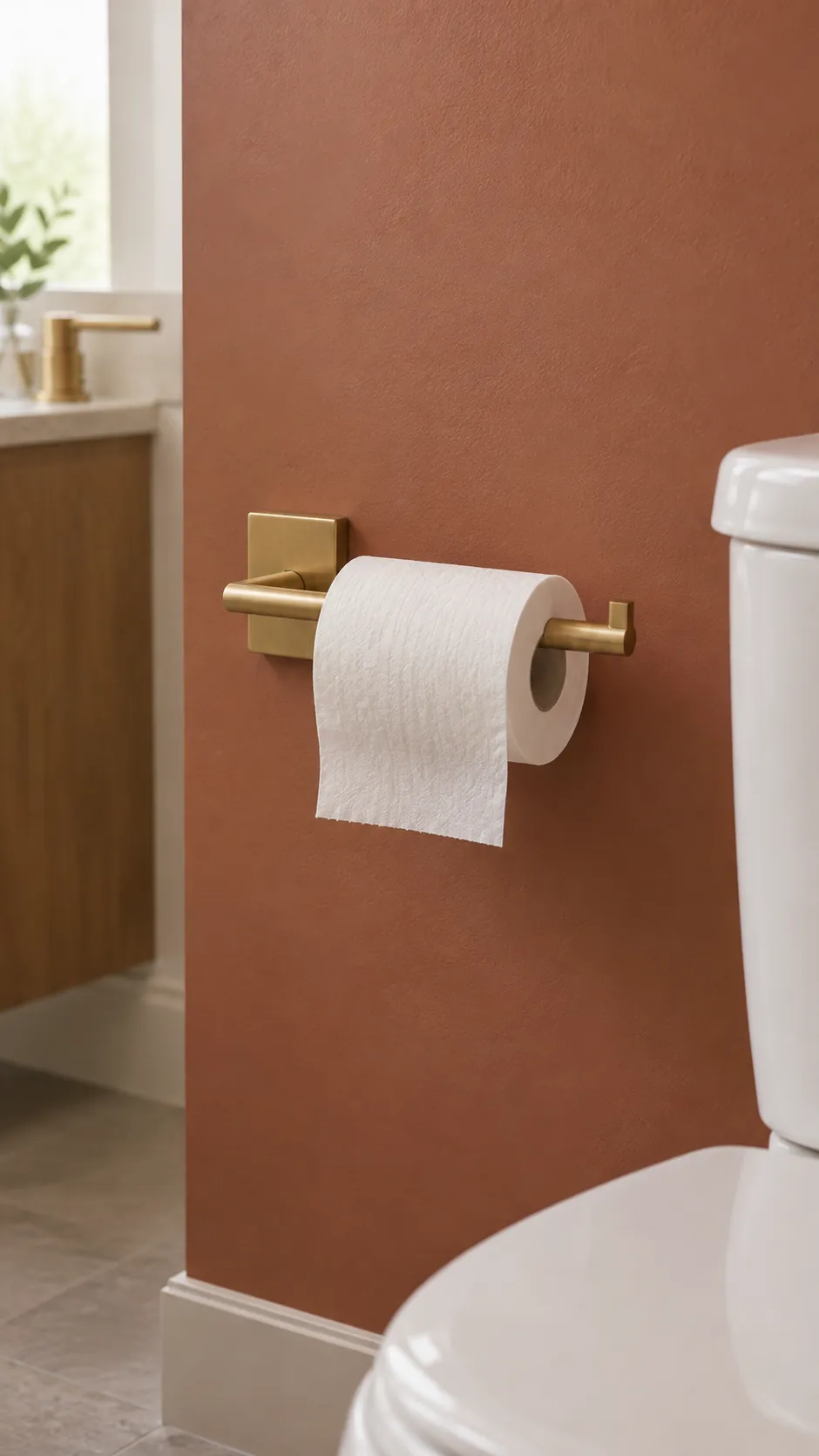
Repeat the hardware language at the toilet
A simple toilet paper holder can echo the straight or curved form of the sink hardware. Coordinate the finish if you want a close match, or repeat its shape when the metals are deliberately different. Test the reach from the toilet and the clearance needed to replace a roll. Avoid choosing a dramatic holder that projects into a narrow walking route.
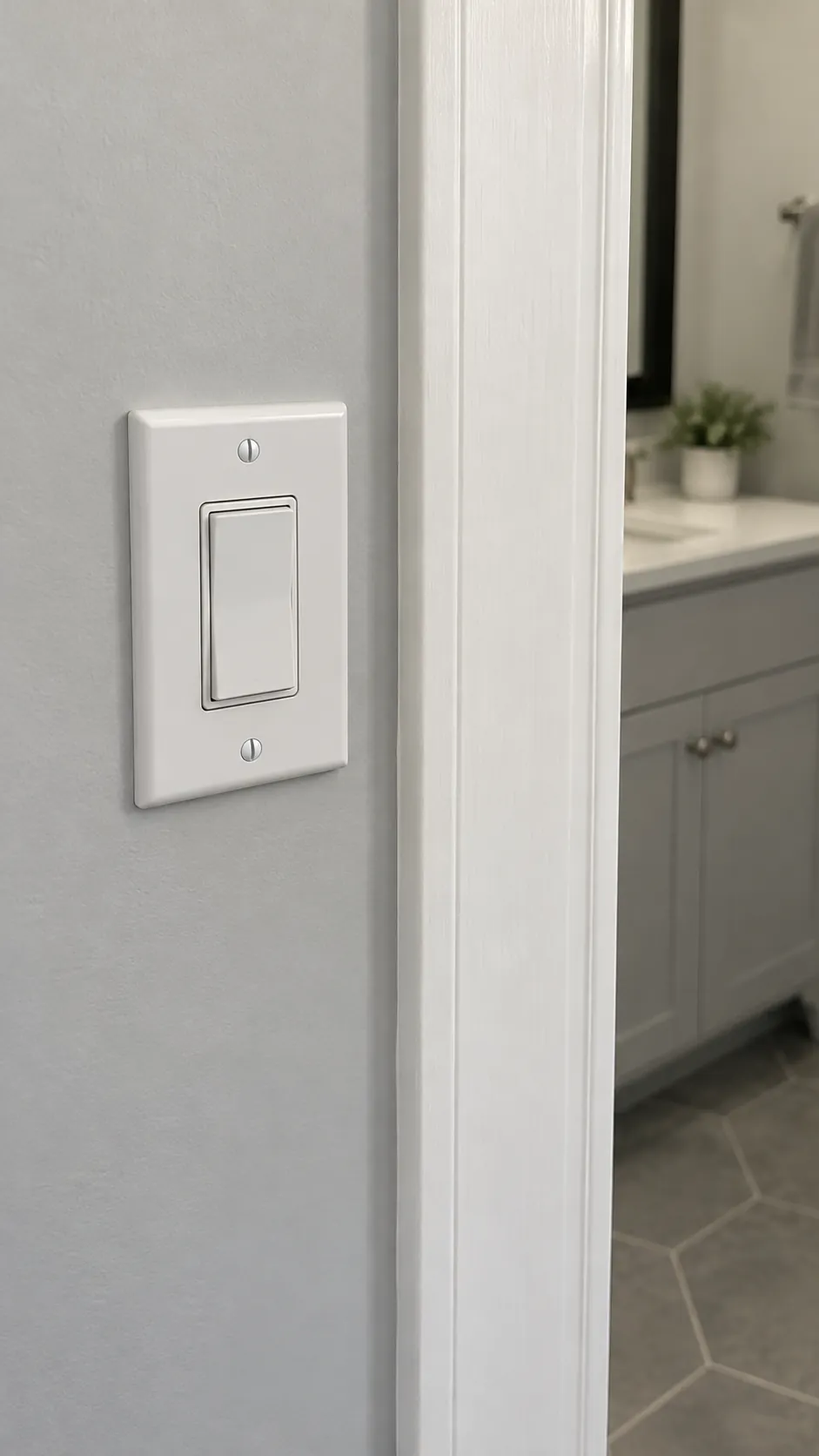
Let switch plates recede into the trim
A clean plain switch plate often looks more finished than a decorative one that introduces another unrelated material. Match its color to the nearby trim or wall where practical. Use a properly fitting cover made for the installed electrical device. Do not paint over a switch, outlet opening or damaged electrical component. Refer loose fittings, cracks or wiring concerns to a qualified electrician.
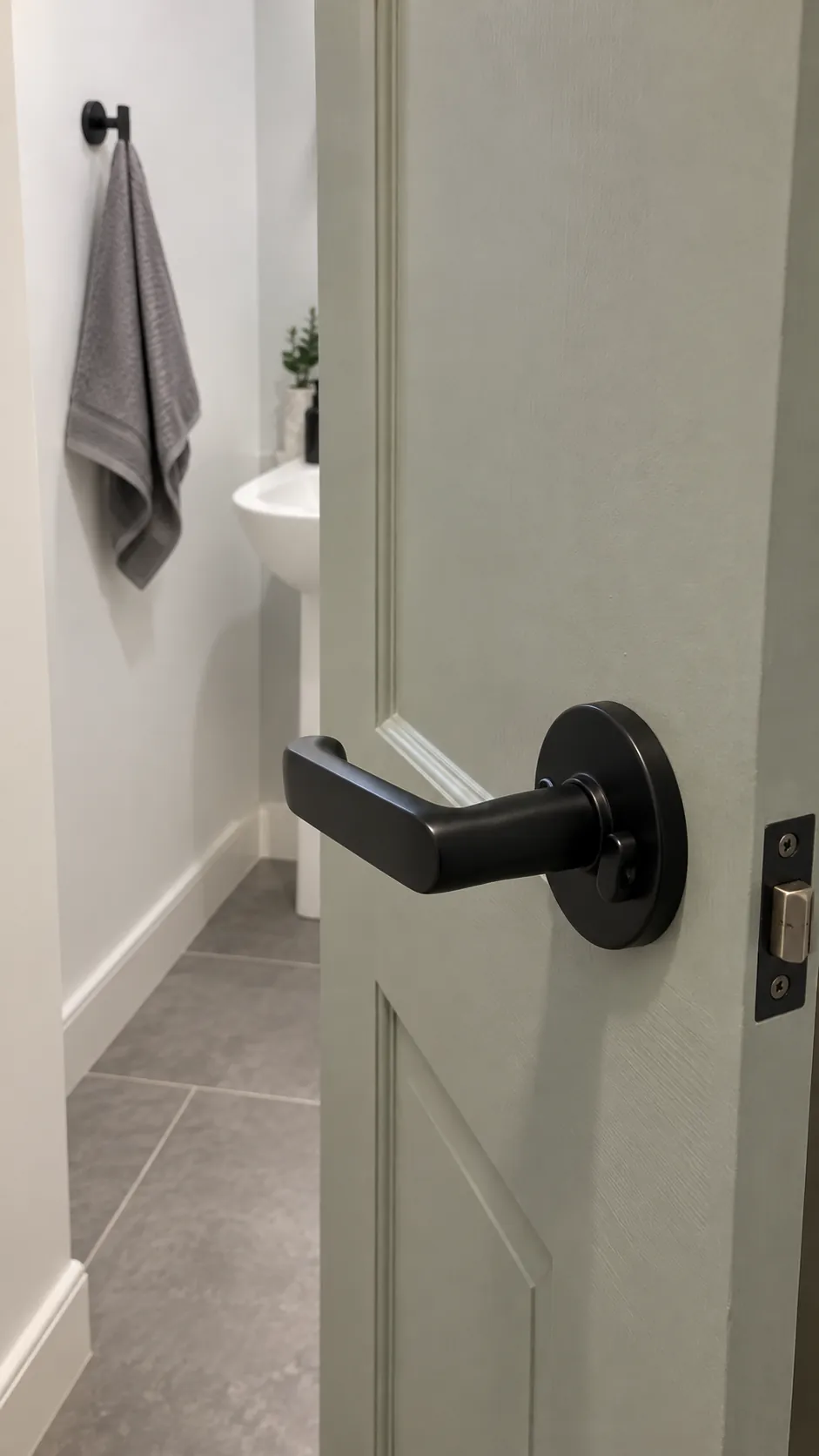
Connect the door hardware to the room
The inside door handle belongs to the bathroom view as much as the faucet does. A repeated dark or silver finish can connect the doorway to the fittings farther inside. Compare the whole handle set, including its plate, rather than matching only a small knob.
Keep privacy hardware appropriate to the room and check that the latch works properly. Replacing an interior handle should not leave sharp edges or exposed old holes. When a door is part of a required safety assembly, preserve its approved hardware and get suitable advice before changing it.
Use one trim color at the visible edges
Different whites on the baseboard, door casing and shelf can create accidental stripes around a tiny room. Choose one trim color and sheen for compatible painted elements when you are already refreshing them. Sample it beside the sink so the ceramic still looks clean in the room light. Sound paint and neat edges matter more than a decorative molding profile.
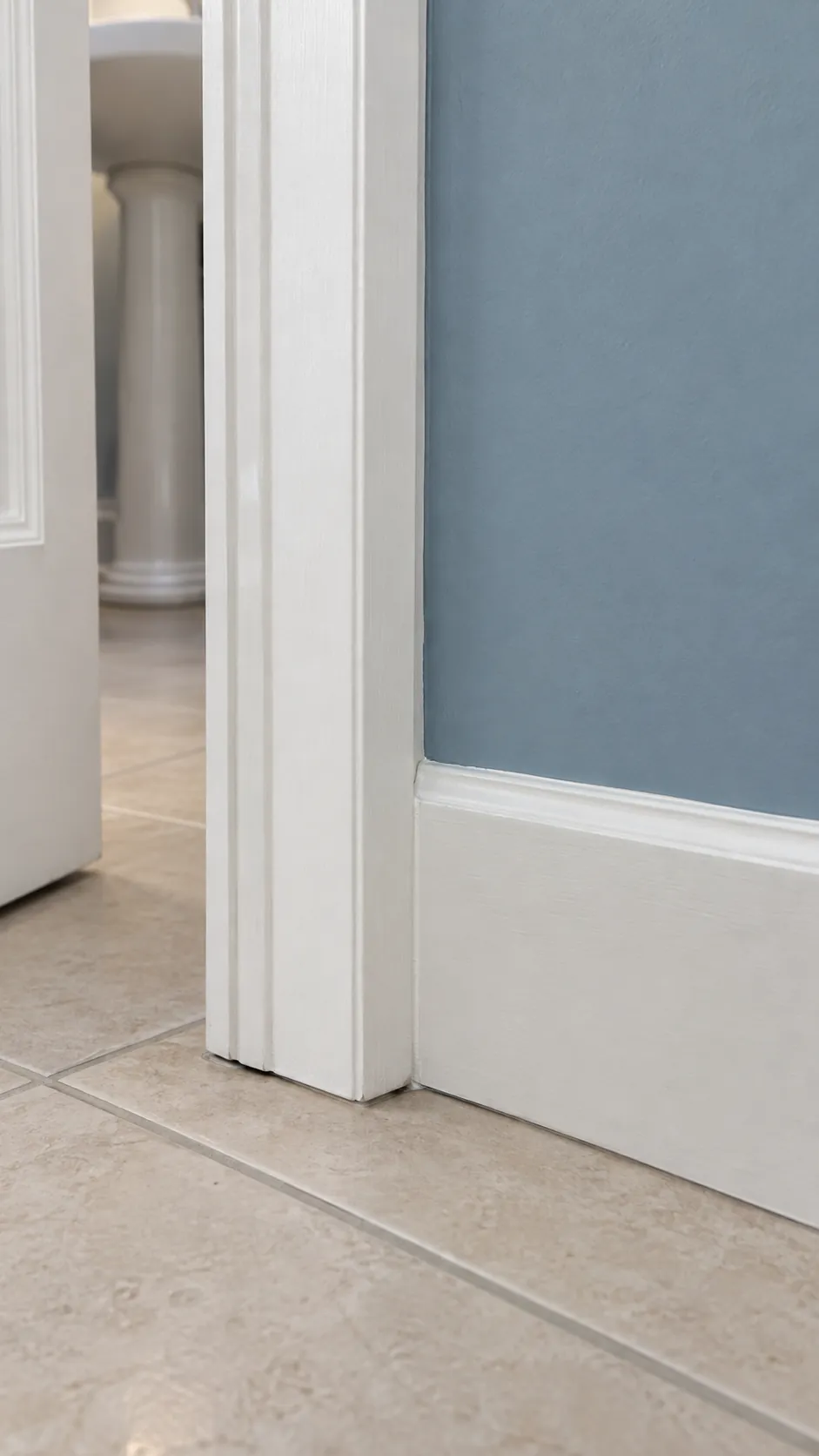
Choose a print that repeats the room palette
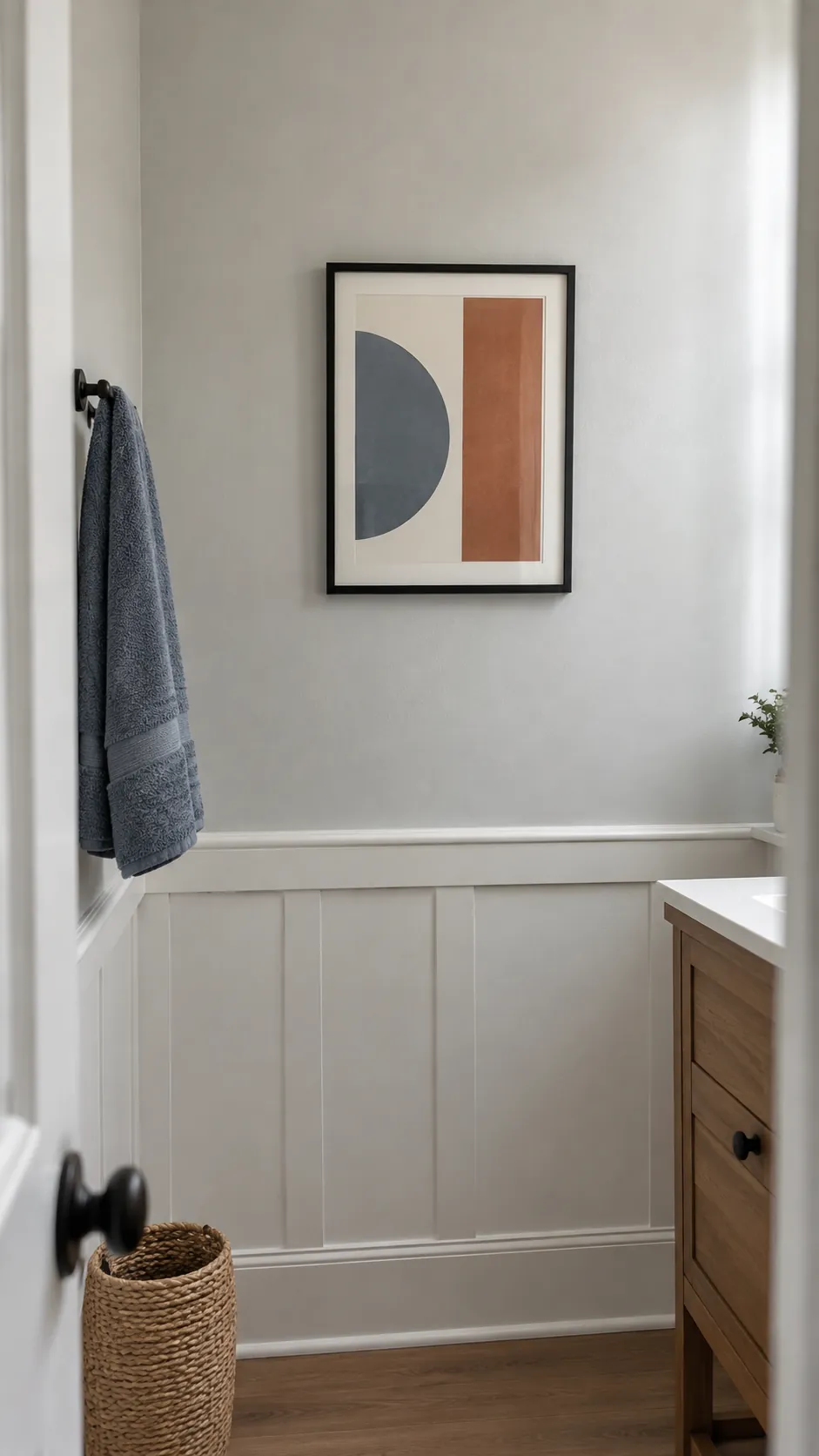
A small geometric print can borrow two colors already present in the room and add a clear focal point. Keep the frame simple enough to relate to the mirror or cabinet. Place it away from direct splashes and check the view from the doorway. The image does not need to depict a bathroom to belong there. A single well placed piece is often easier to coordinate than several small unrelated pictures.
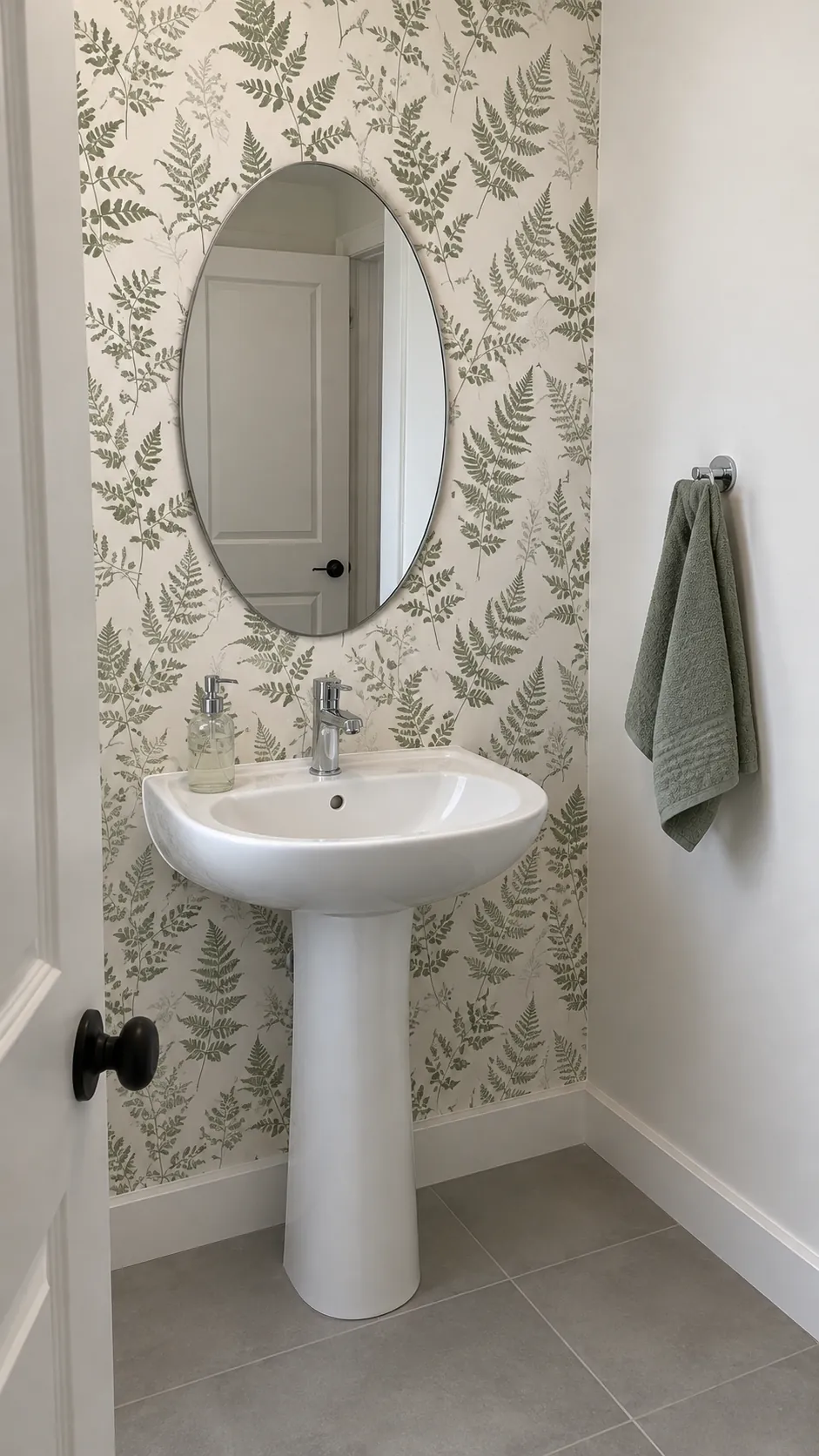
Keep a wall pattern connected to the fixed finishes
A restrained botanical pattern can link white fixtures with a green towel or painted cabinet. Look at a real sample beside the existing tile before covering a wall. Pay attention to the pattern background, because it will sit beside the ceramic across a much larger area.
Choose a wall covering and adhesive suitable for the room and prepare the surface as directed. Remove or repair loose material rather than hiding it under a new layer. Keep the pattern as the main visual feature and let nearby accessories remain simple.
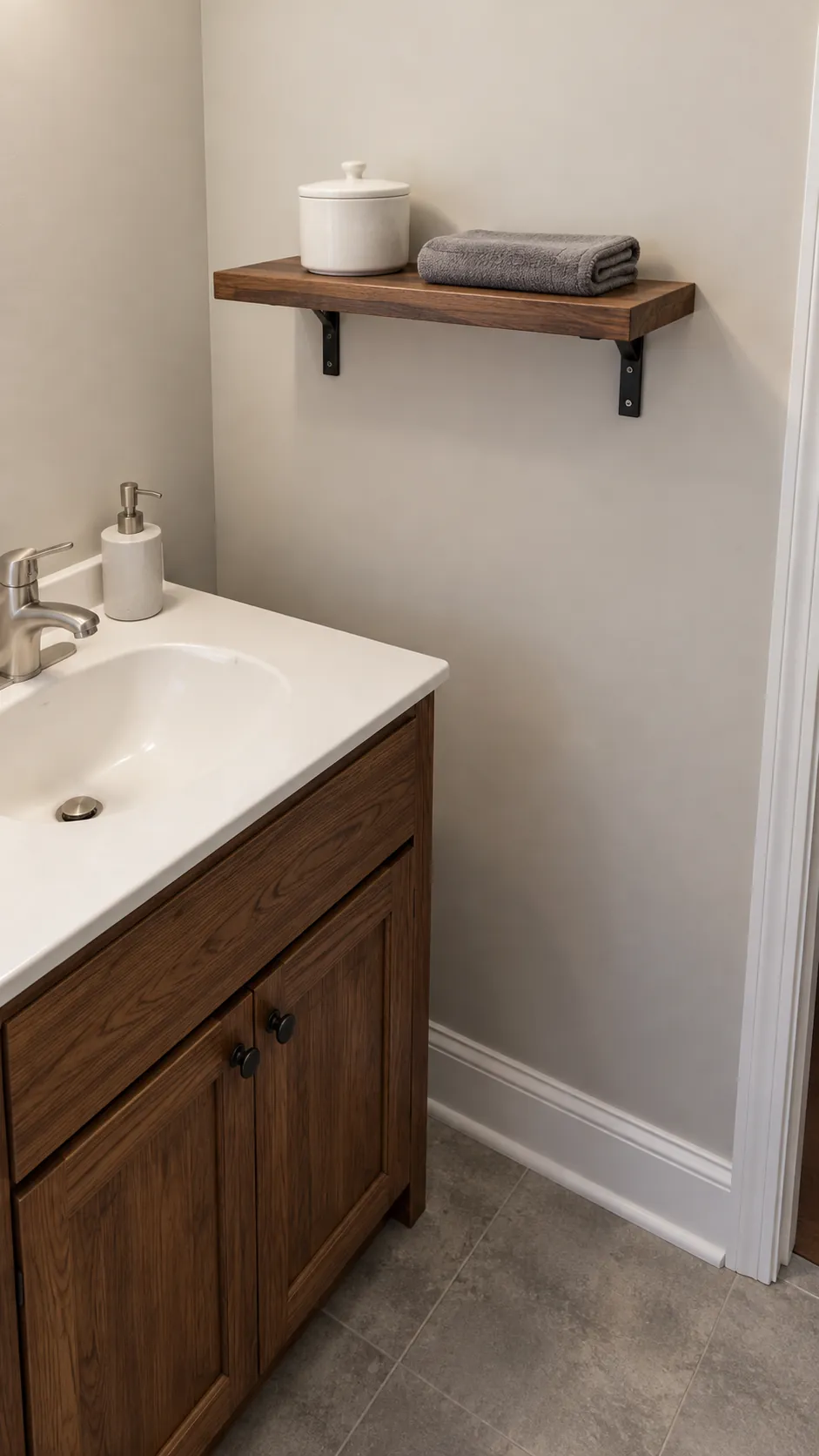
Repeat a wood tone on a useful shelf
A small wood shelf can connect a plain painted wall to an existing wood vanity. Compare the undertone and grain rather than expecting two different woods to match perfectly. Keep the shelf shallow enough for the available clearance and use fixings suitable for the wall. Protect the surface as its maker recommends if it may receive splashes.
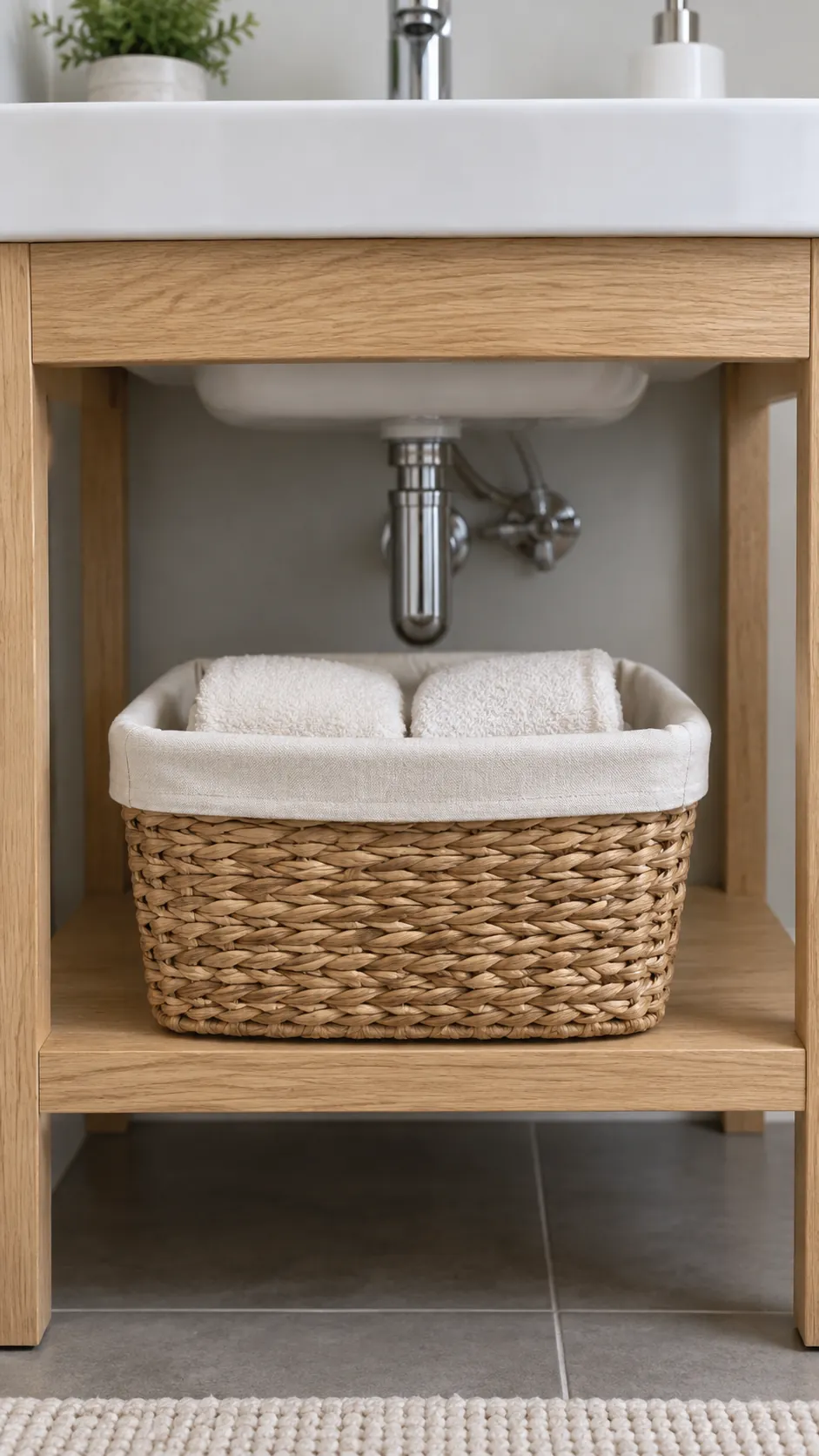
Add one woven texture near smooth fixtures
Porcelain and metal can feel hard when every other object is equally shiny. A small woven basket adds a different texture while repeating the warm tone of a wood cabinet or frame. Use it for dry spare towels rather than damp cloths. Keep it off any area where leaks or routine splashes collect.
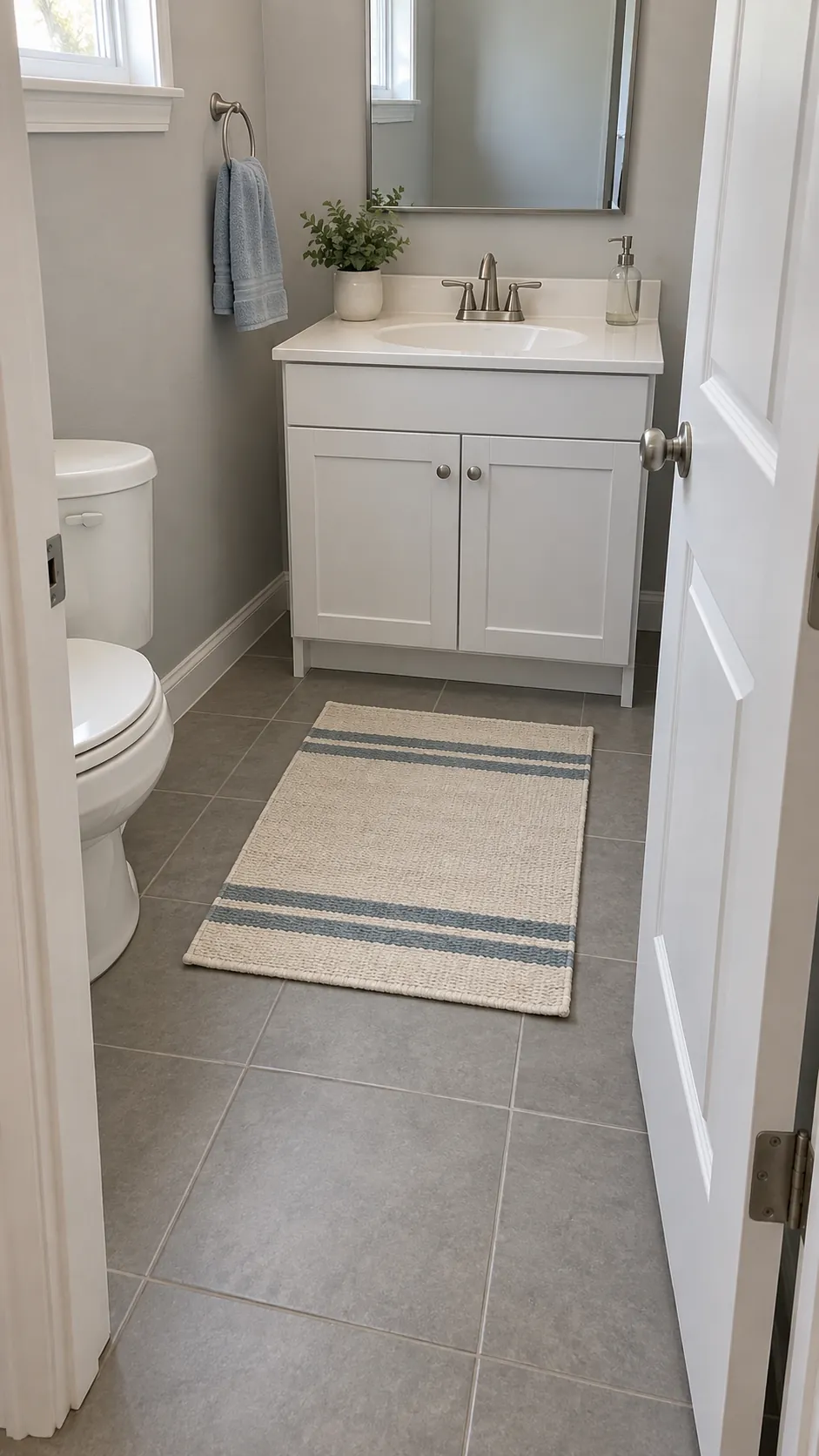
Use a rug pattern that supports the scale of the room
A small quiet stripe can connect a towel color to the floor without competing with the mirror and light. Check the rug size with the door fully open before choosing its pattern. A thin flat edge and suitable grip matter more than a decorative border.
Make sure the actual rug and any pad clear the full door swing. Place it where both feet can stand comfortably at the sink. Leave the floor bare if the only available position causes bunching or an awkward step.
Leave a visible margin around the working sink
The final coordinating detail is often the space between the objects. Remove spare bottles and decorative pieces until the faucet, soap and towel are easy to use. Keep a little bare counter or ceramic visible so each chosen material can be seen. Stand in the doorway and check whether the room has a few clear connections rather than a new finish on every surface. Stop adding accessories when the room works comfortably.