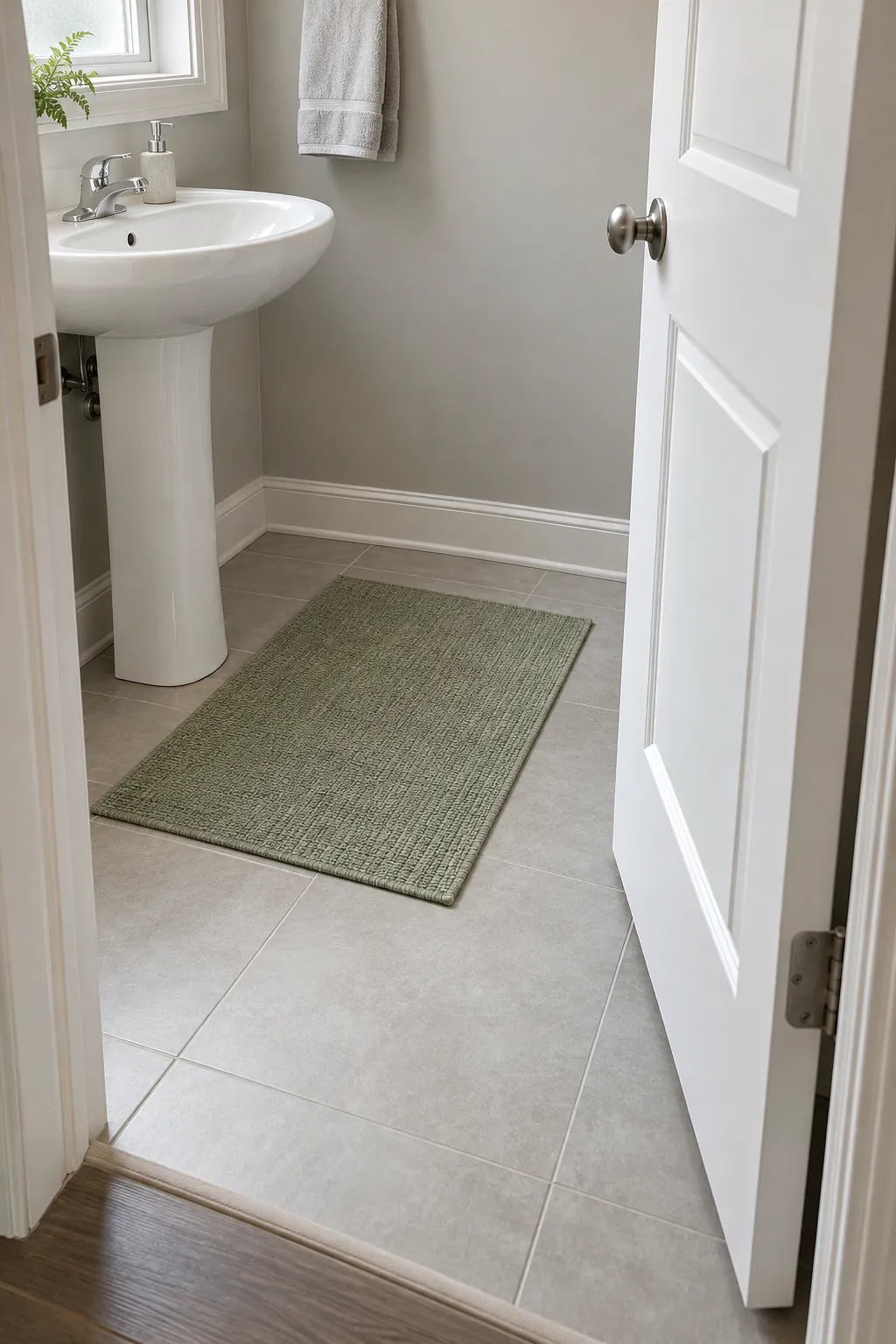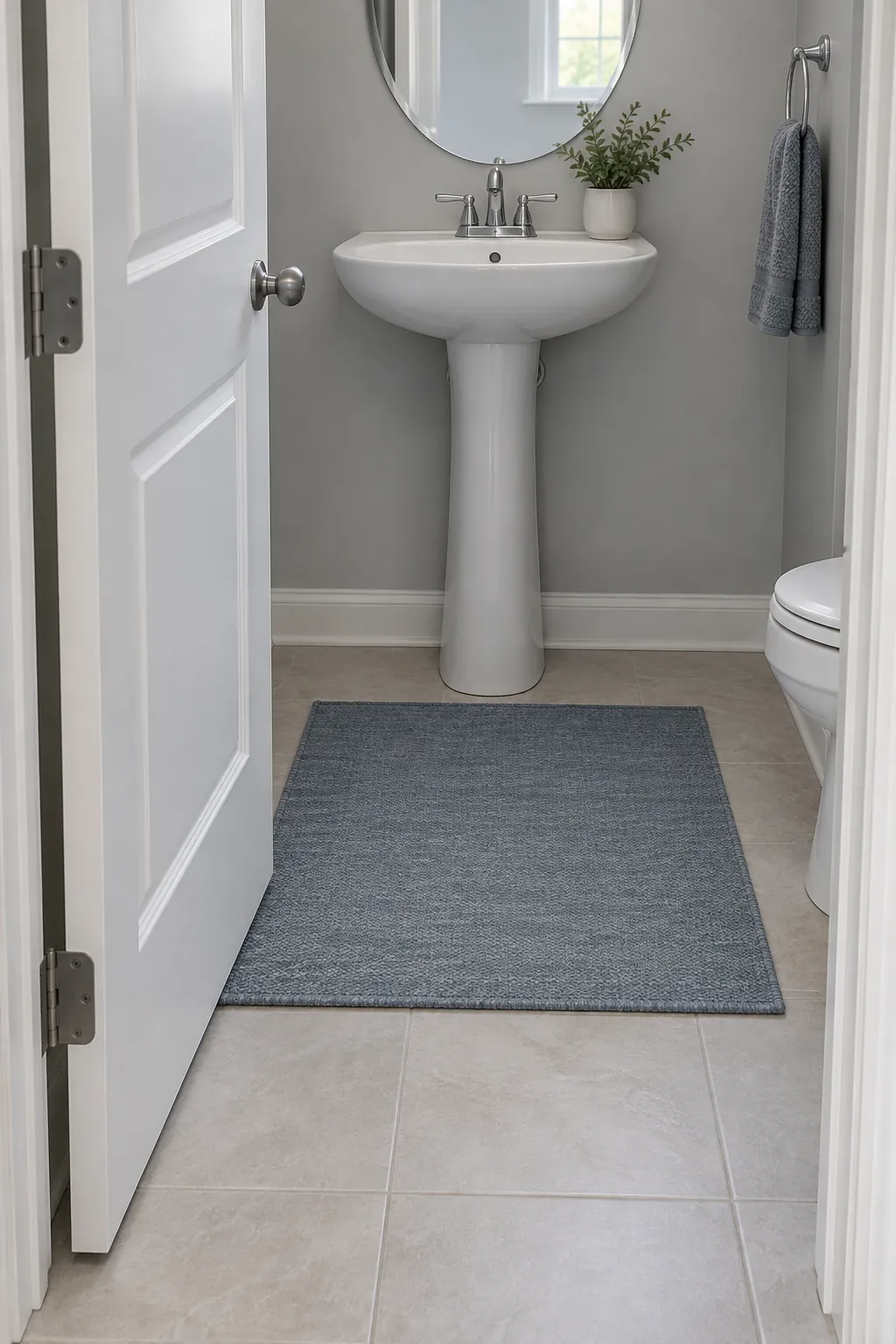
A beautiful rug becomes a nuisance when every visit pushes it into a heap. Choose the footprint and complete thickness around the door you already have, then consider color and pattern. The useful test is simple: the door must travel freely and the rug must stay flat without help.
Start with the door fully open
A rug can fit the floor plan and still stop the door halfway through its swing. Before shopping, open and close the door slowly over the bare floor and look for the lowest point along its entire path. A sloping tile, raised threshold or projecting door sweep can make that gap smaller than it looks at the closed edge.
If the door already rubs with no rug in place, address that problem first. Do not choose a rug on the assumption that the door can simply be shaved down later. A rental door, a fire rated door or a door with a limited bottom rail needs an appropriate professional assessment before alteration.
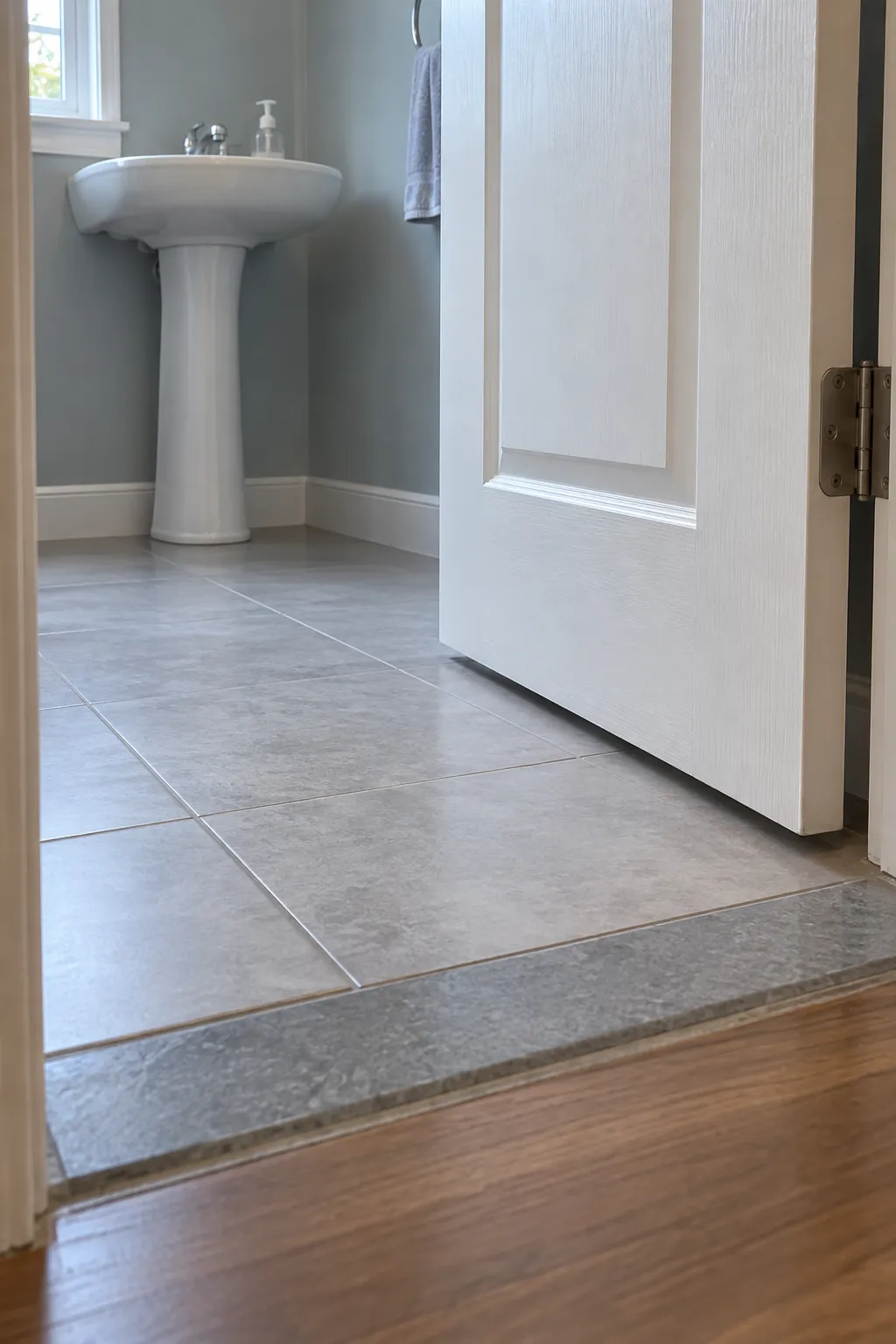
Measure the smallest gap, not the easiest one
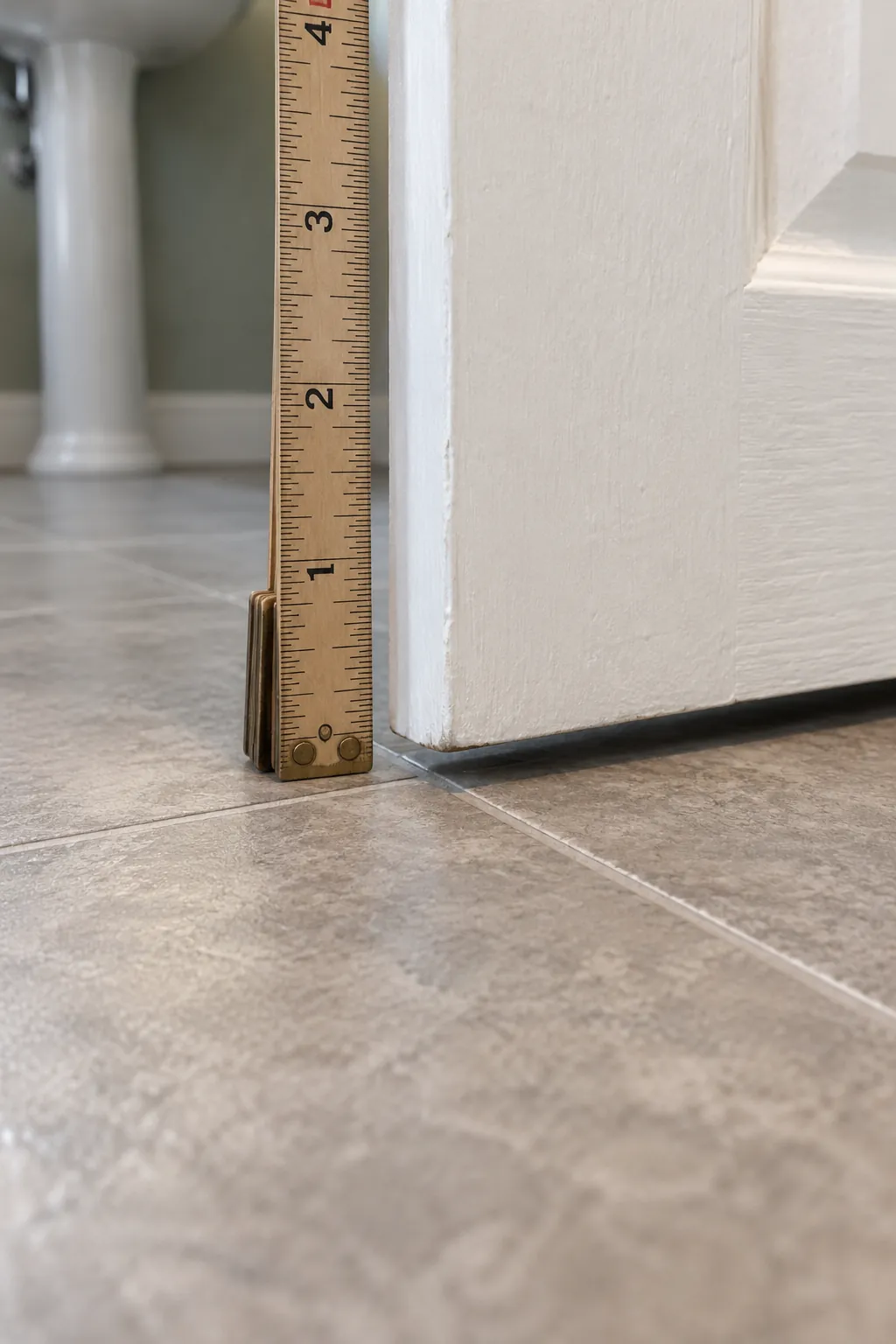
Use a ruler or a stack of thin rigid spacers to check the clearance at several points along the door swing. Measure at the leading corner and near any high tile or threshold, keeping fingers away from the moving edge. Record the smallest gap in a single unit, such as millimeters, so you can compare it directly with product dimensions. A measurement taken only beside the hinge can miss the place where a rug actually catches.
Leave room for the door to move freely rather than buying a rug that matches the gap exactly. Floors and rug edges are rarely perfectly uniform. For example, an 8 mm gap does not make an 8 mm rug a sensible choice, even before a pad is added.
Compare the complete rug and pad stack
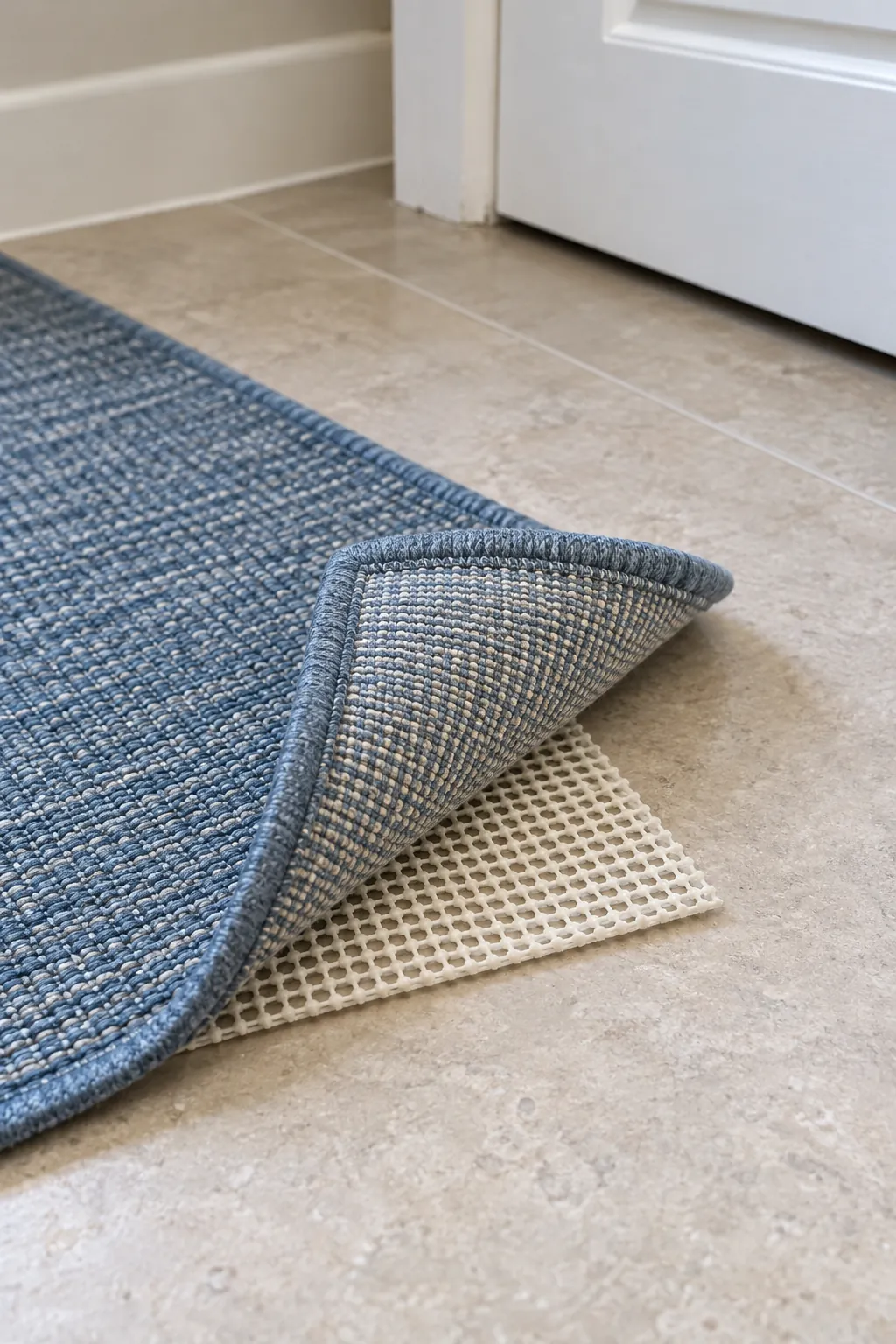
Look for total rug thickness, not only pile height. The backing, bound edge and any pad all contribute to the height that the door must clear. A product described as low pile may still have a raised border or thick backing, so ask for missing measurements before ordering.
Add the rug thickness and the pad thickness, then check the highest edge separately. A 4 mm rug over a 2 mm pad makes a nominal 6 mm stack, but an 8 mm door gap would still need a real swing test rather than a promise that it will fit. Compression under a foot is not a reliable allowance because the door needs to pass before anyone stands on the rug.
Choose grip materials that the rug and flooring manufacturers permit for your floor finish. A thinner pad is useful only if it still prevents movement and does not damage the floor. Avoid solving clearance by removing necessary grip and leaving a loose rug on smooth tile.
Move the rug outside the swing when possible
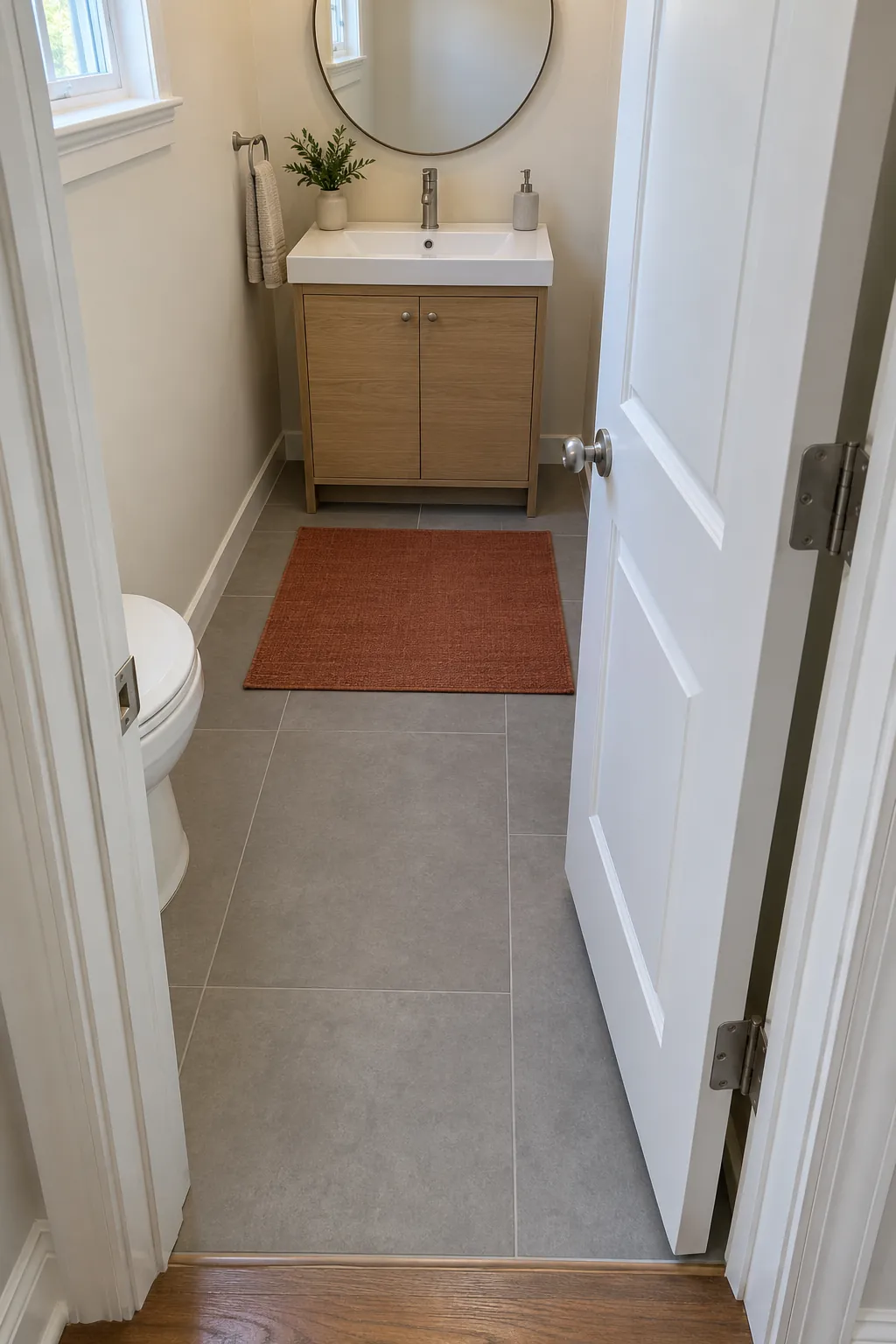
Bathroom rug placement can solve a problem that shopping for thinner fabric cannot. Mark the proposed footprint with small pieces of removable tape approved for the floor, then swing the door through its full travel. A smaller rectangle at the sink or a short runner farther into the room may keep the textile entirely beyond the door path. Leave a clear walking route and keep the rug away from the toilet base and any floor vent.
Check the standing position as well as the door. Both feet should land naturally on a stable surface rather than straddling a thick edge. If the only available spot makes entry awkward, the room may work better without a rug.
Choose a flat edge and a practical wash routine
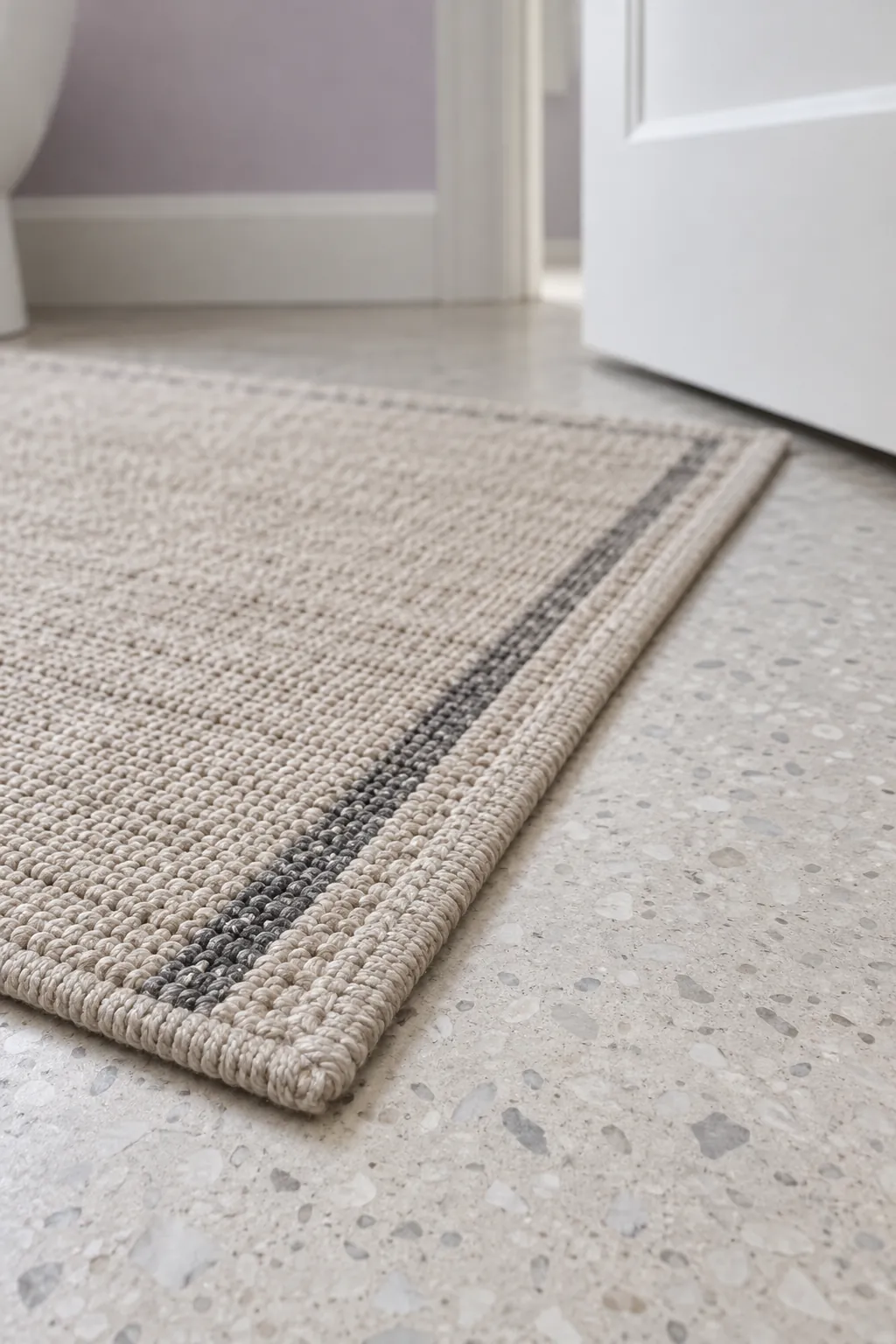
A tightly woven flat rug or thin bathroom mat is often easier to assess than plush tufting, but construction matters more than the name. Reject corners that curl, thick fringe in the swing path and edges that lift when the door passes. The rug should lie flat without relying on the door to press it down.
For a washable powder room rug, read both washing and drying instructions before buying. A rug that fits your washing machine but takes too long to dry may spend more time folded over a rail than on the floor. Allow it to dry completely before returning it to a clean dry floor, and recheck the shape and clearance after washing.
Test the finished setup before keeping it
Place the actual rug and approved pad in their intended position, then open and close the door slowly through the full swing. Stop at any brushing, drag or bunching rather than pushing the door harder. Walk into the room, stand at the sink and turn back toward the exit to check that corners stay put. Repeat the test after cleaning or washing, because a shifted pad or curled edge can change a setup that worked before. If a stable rug cannot clear the door or sit safely outside its path, keep the floor bare and add softness through a towel or wall color instead.