
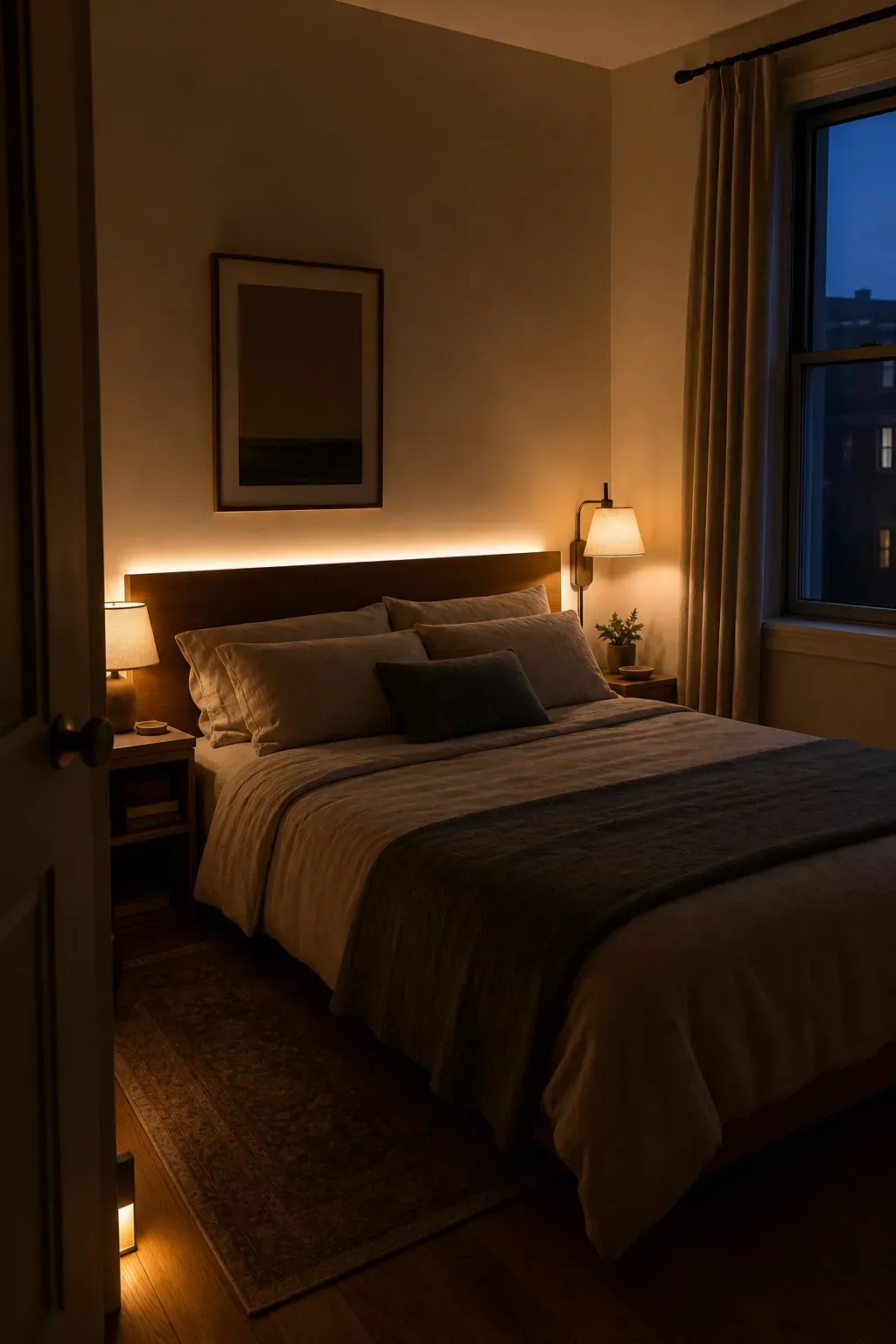
A small bedroom can feel especially unforgiving after dark. One bright ceiling fixture flattens every surface, exposes clutter, and makes winding down harder. The answer is not simply “less light.” It is smaller pools of useful light, positioned below eye level and easy to dim.
These small bedroom lighting ideas are arranged as practical choices rather than a shopping list. Pick two or three that solve different jobs—reading, dressing, navigating, and relaxing—and let darkness remain part of the design.
Swap the Big Light for a Shaded Bedside Lamp
A fabric or frosted-glass shade spreads light across the table and wall instead of putting a bare bright point in your eyes. Choose a lamp that places the bottom of the shade near shoulder height when you sit in bed. The bulb should disappear behind the shade from your normal pillow position.
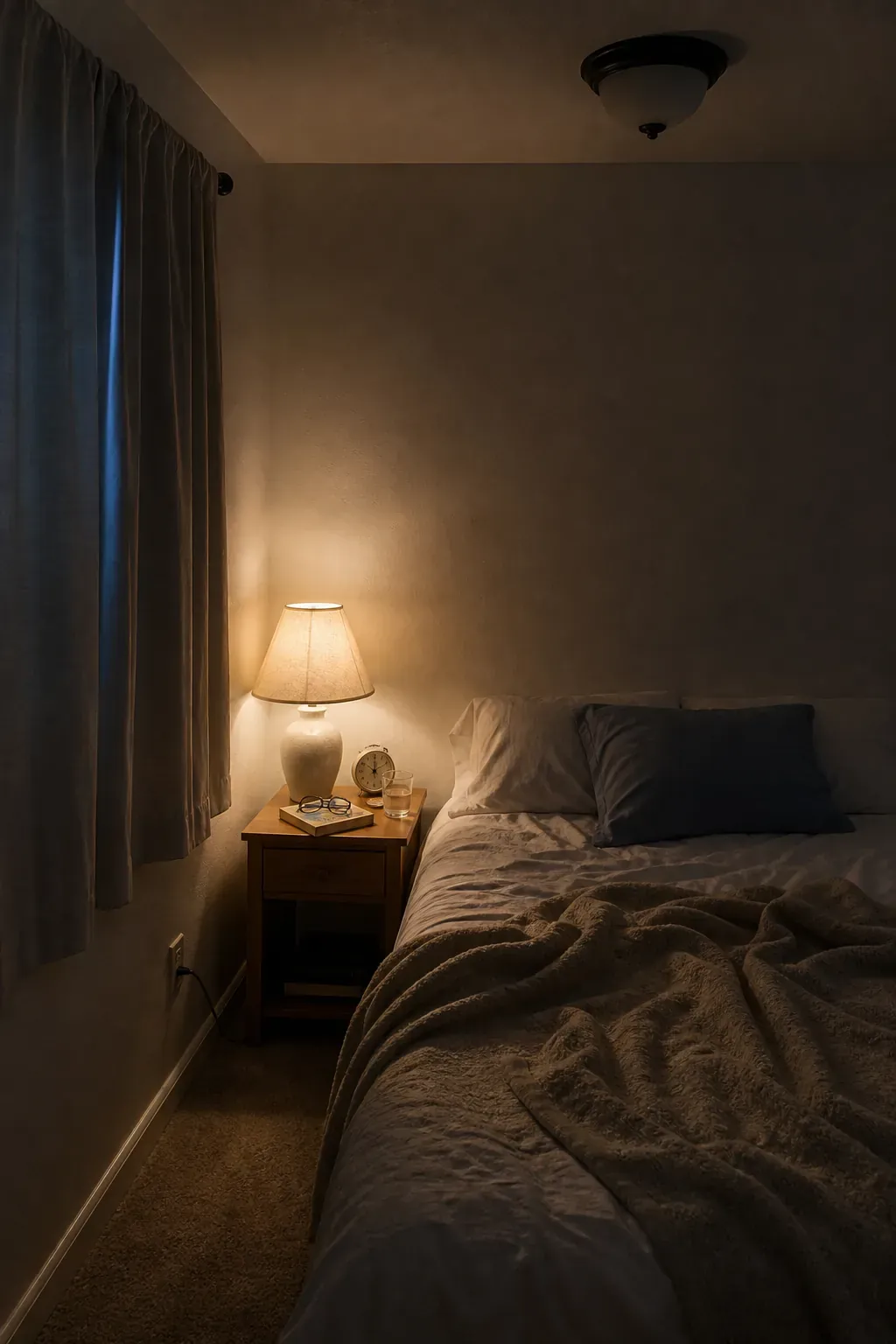
Use Matching Light Levels, Not Matching Lamps
When two sleepers have different furniture or tastes, the lamps do not need to match. What matters is that their brightness and color temperature feel related. A ceramic table lamp on one side and a compact wall light on the other can look balanced if both cast warm pools at a similar height.
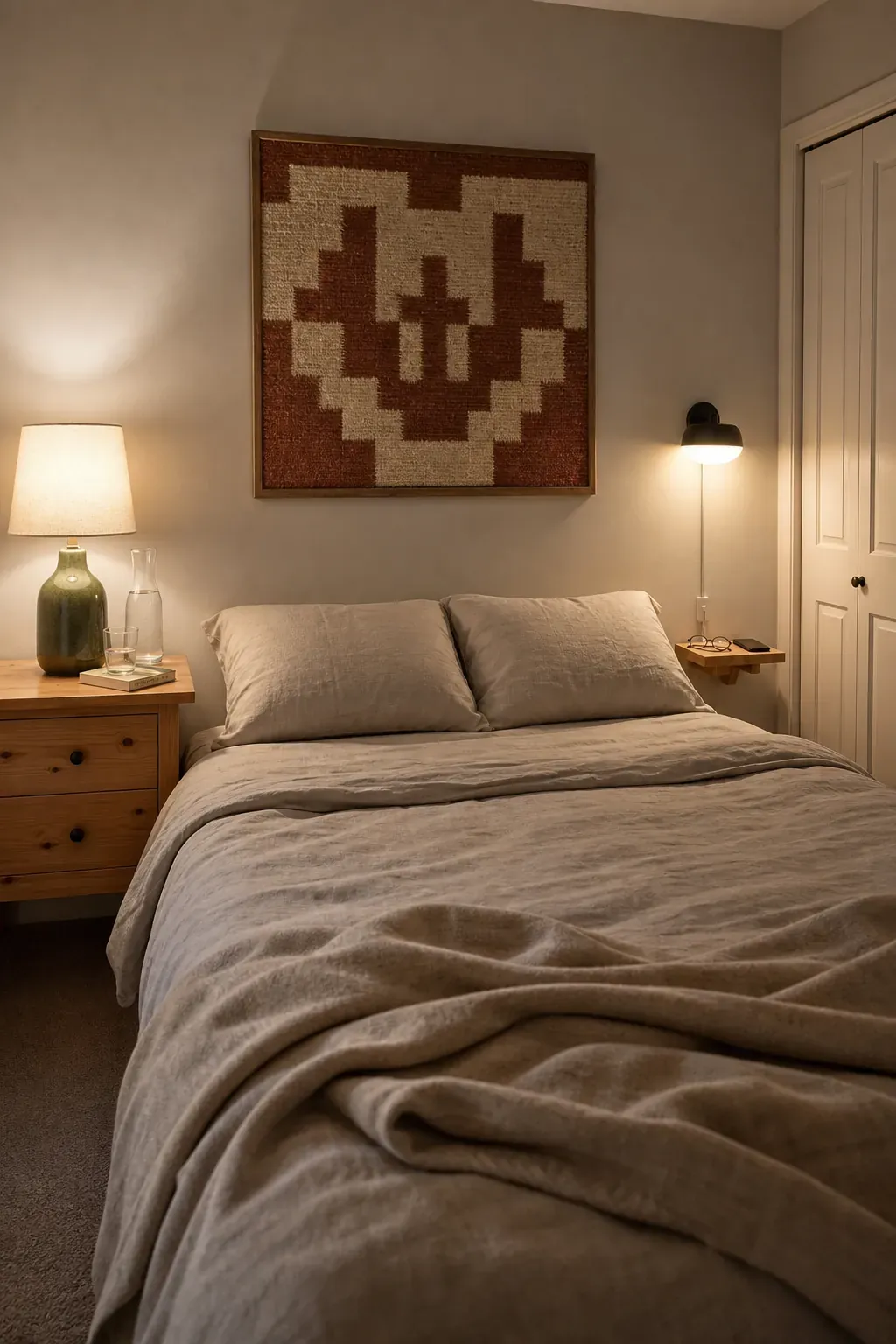
Mount Plug-In Sconces Above Narrow Nightstands
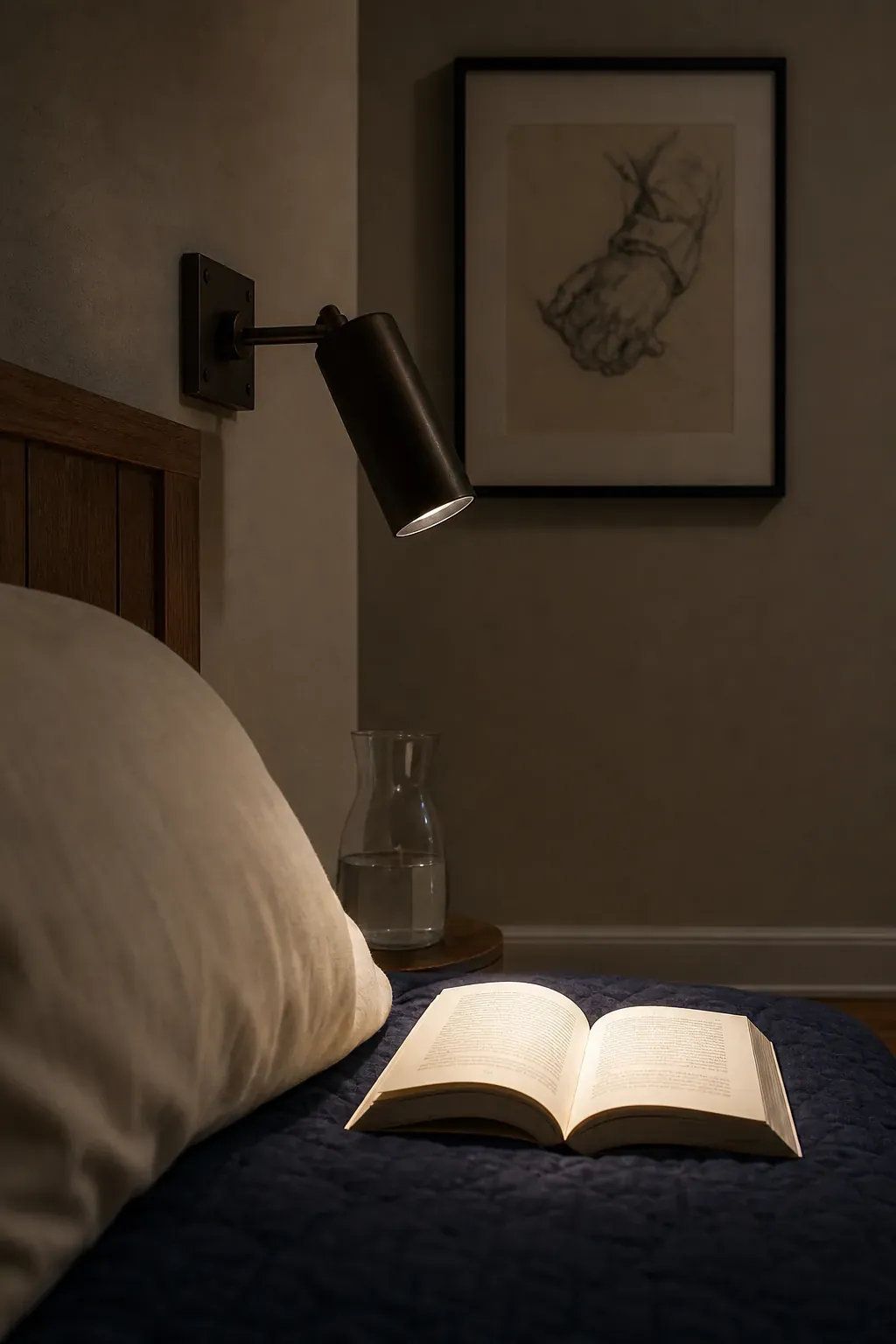
A plug-in wall sconce frees the tabletop without requiring new wiring. Place the switch where it can be reached from bed, secure the cord neatly, and aim the shade toward the book rather than the sleeper’s face. Swing-arm designs help one fixture serve reading and ambient light.
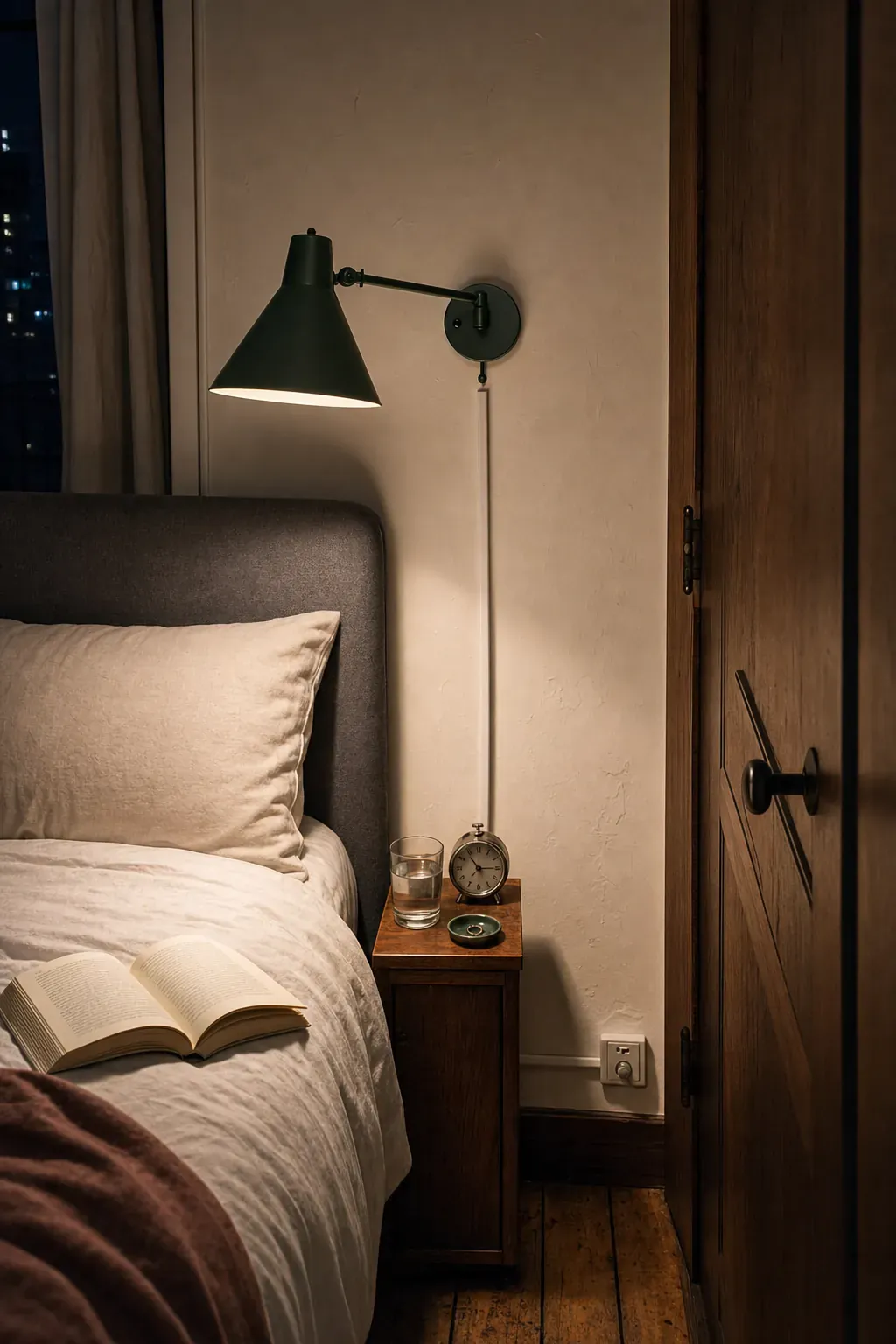
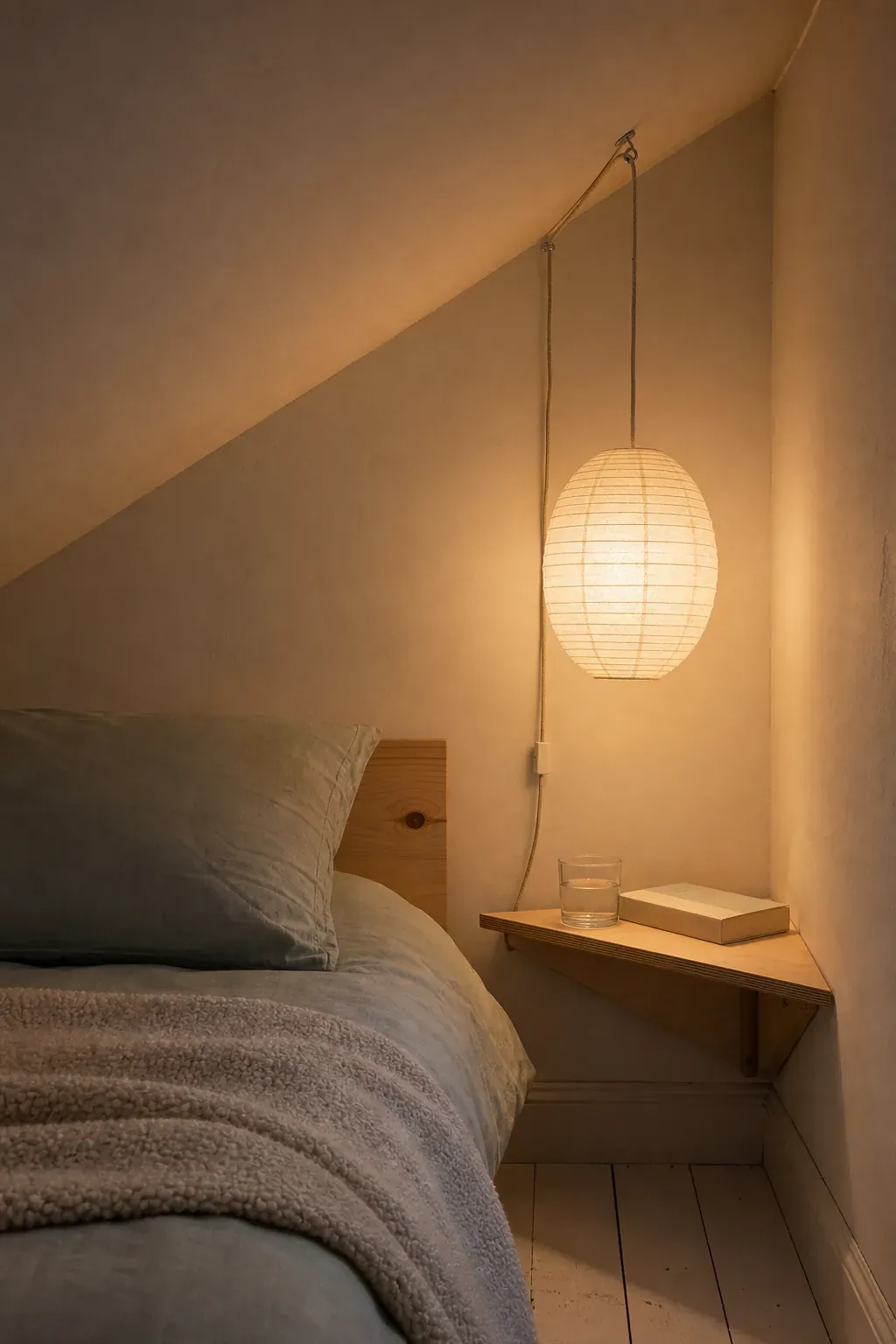
Hang a Pendant Over One Bedside Corner
A small pendant can reclaim the surface of a tiny nightstand. Use an opaque or diffusing shade, hang it high enough that nobody bumps it, and keep the bulb outside the direct sightline. An off-center pendant also gives an awkward corner a clear visual purpose.
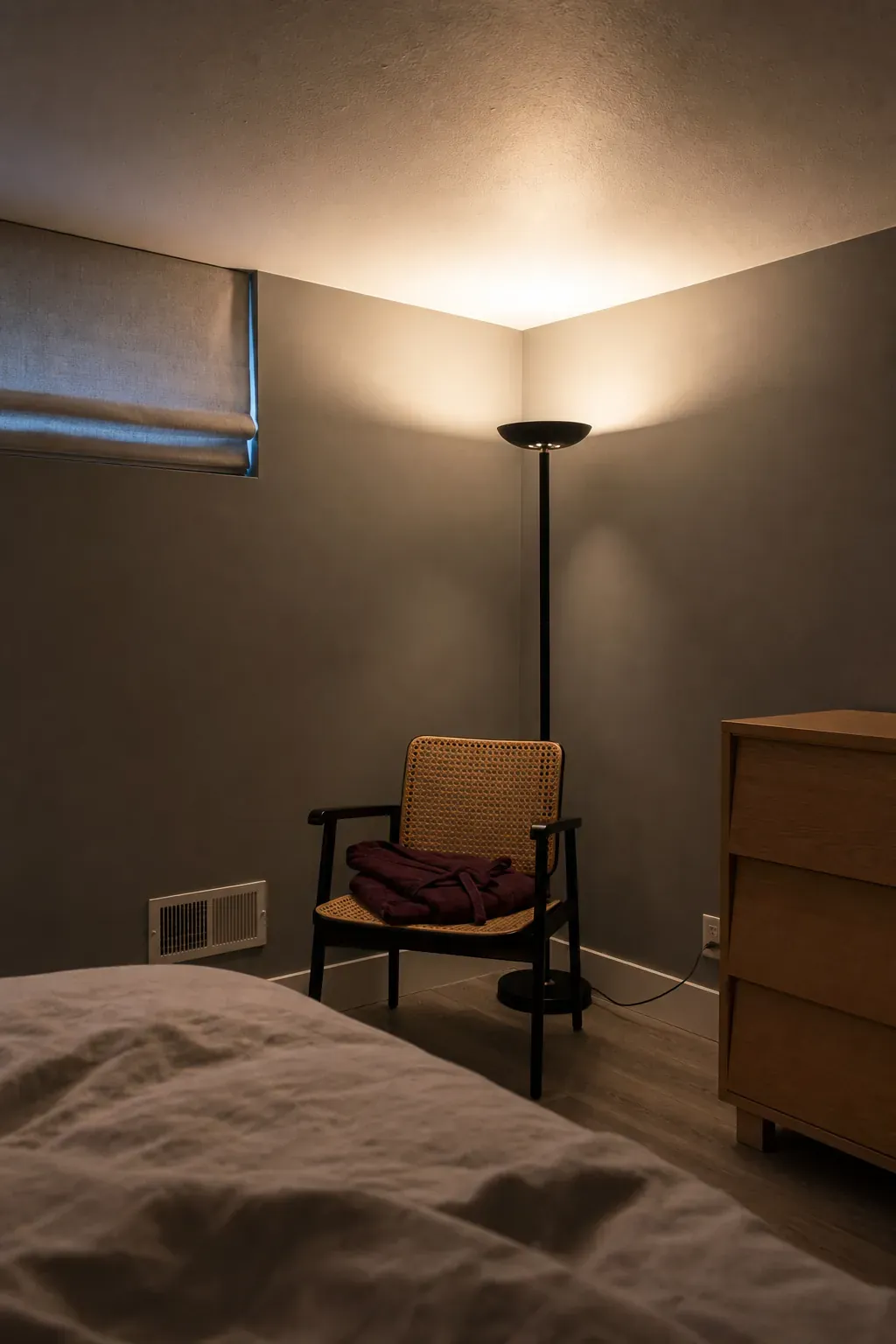
Place a Floor Lamp Where the Ceiling Feels Dark
A slim uplight in a neglected corner can make a low ceiling feel less heavy by bouncing light upward. Choose a stable base that fits behind a chair or dresser and keep the beam on a pale ceiling. This creates background brightness without crowding the bed.
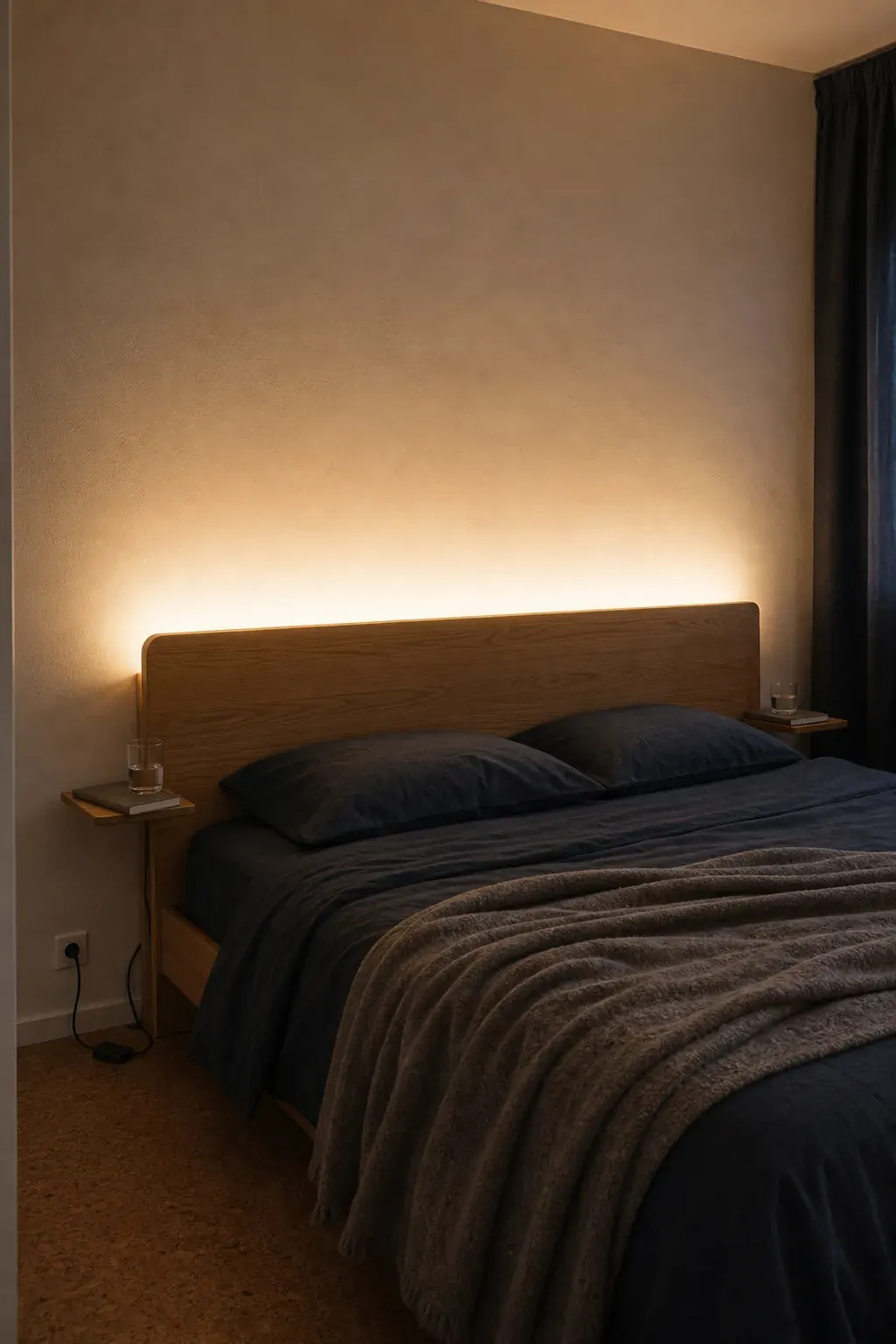
Bounce Light Off the Wall Behind the Headboard
Indirect light feels softer because the wall becomes the large glowing surface. Hide a low-output LED strip behind a headboard or place a small lamp so its beam faces the wall. Keep the source itself invisible from the pillow to avoid distracting hot spots.
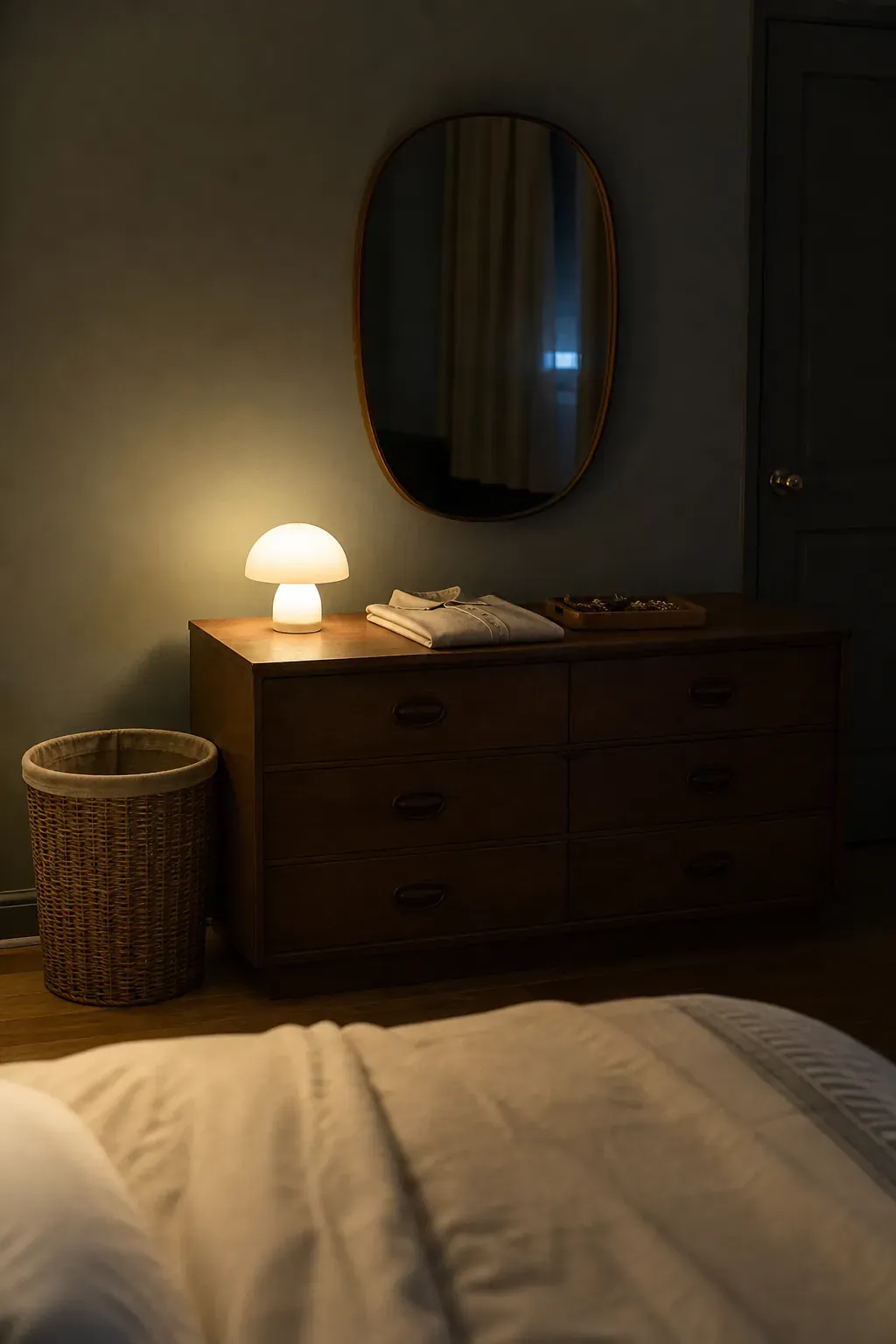
Add a Low Dresser Lamp for a Second Layer
A short lamp on a dresser adds depth beyond the bedside zone. It should illuminate folded clothes and soften the far wall, not rival the reading lamp. This second layer prevents the room from becoming a bright island around the bed surrounded by black corners.
Choose Warm Bulbs for the Last Hours of the Day
For evening use, warm-white bulbs around 2700K are a practical starting point. More important than the number is the result: skin, wood, and fabric should look comfortable rather than gray or icy. Reserve cooler, brighter light for daytime cleaning or dressing.
Use a Dimmer That Reaches a Truly Low Level
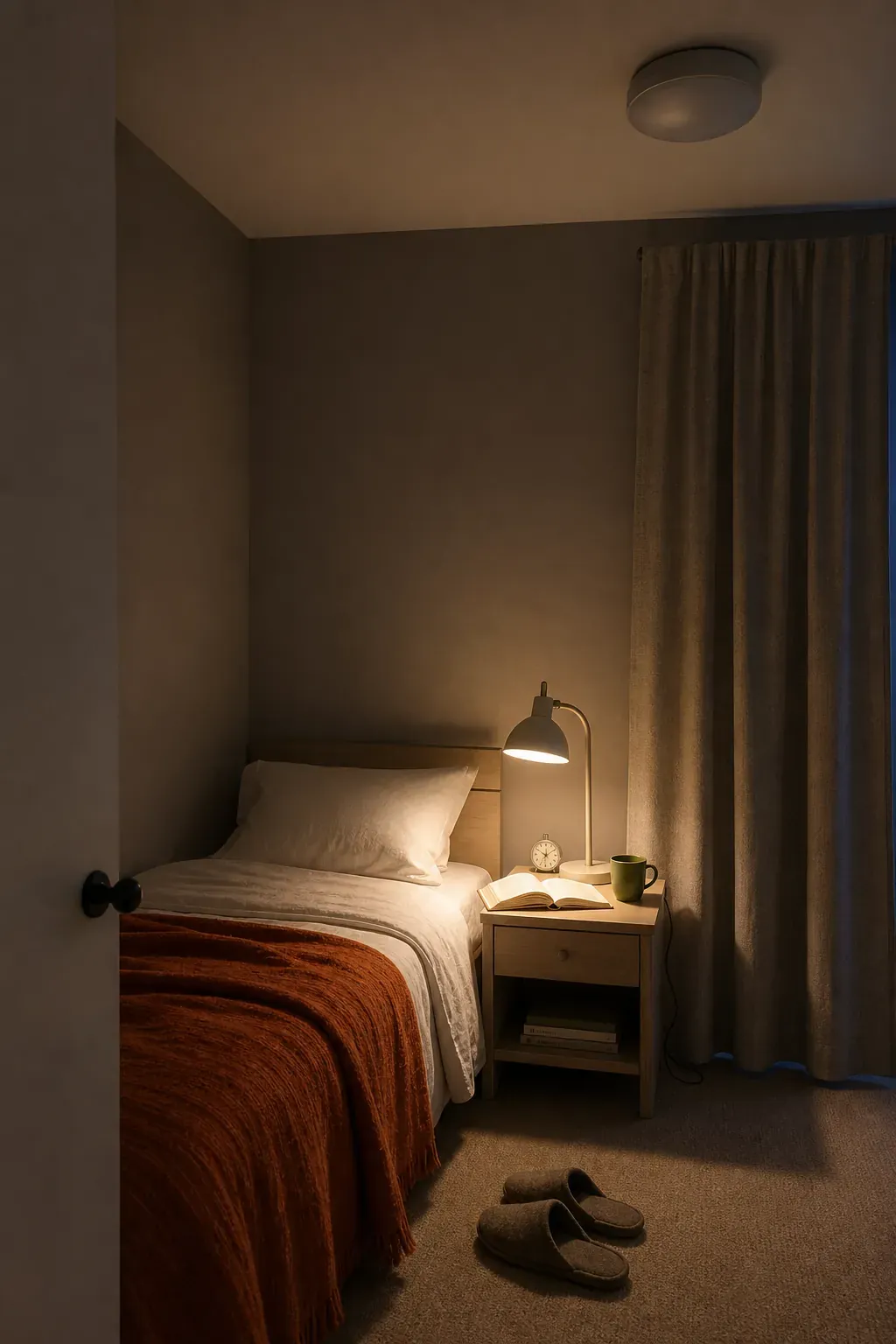
Many lamps claim to dim but remain surprisingly bright at their lowest setting. Test the bottom of the range. A useful nighttime dimmer should let you move around and find a glass of water without flooding the entire room. Check bulb and dimmer compatibility to avoid flicker.
Put Bedside Controls Within Reach
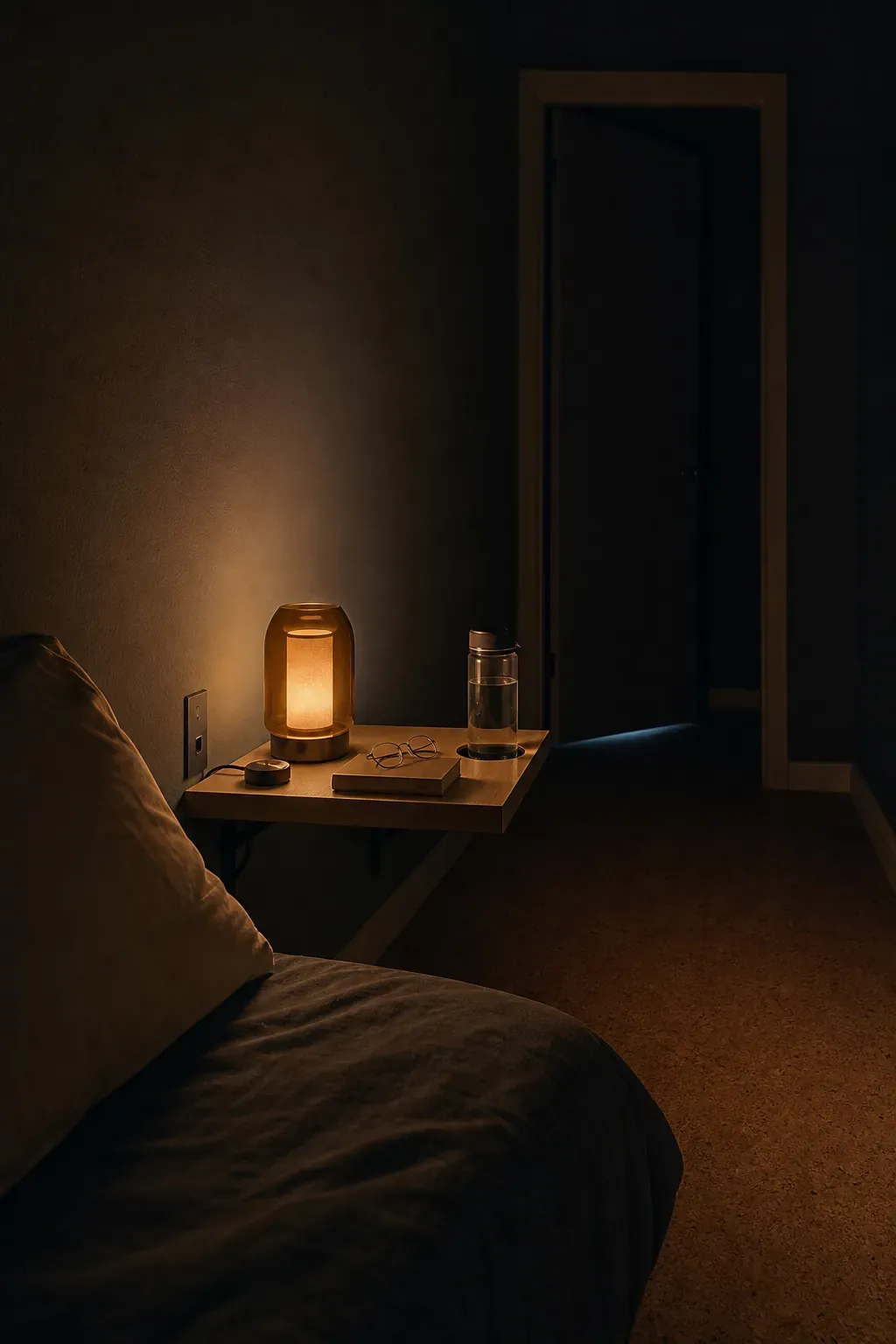
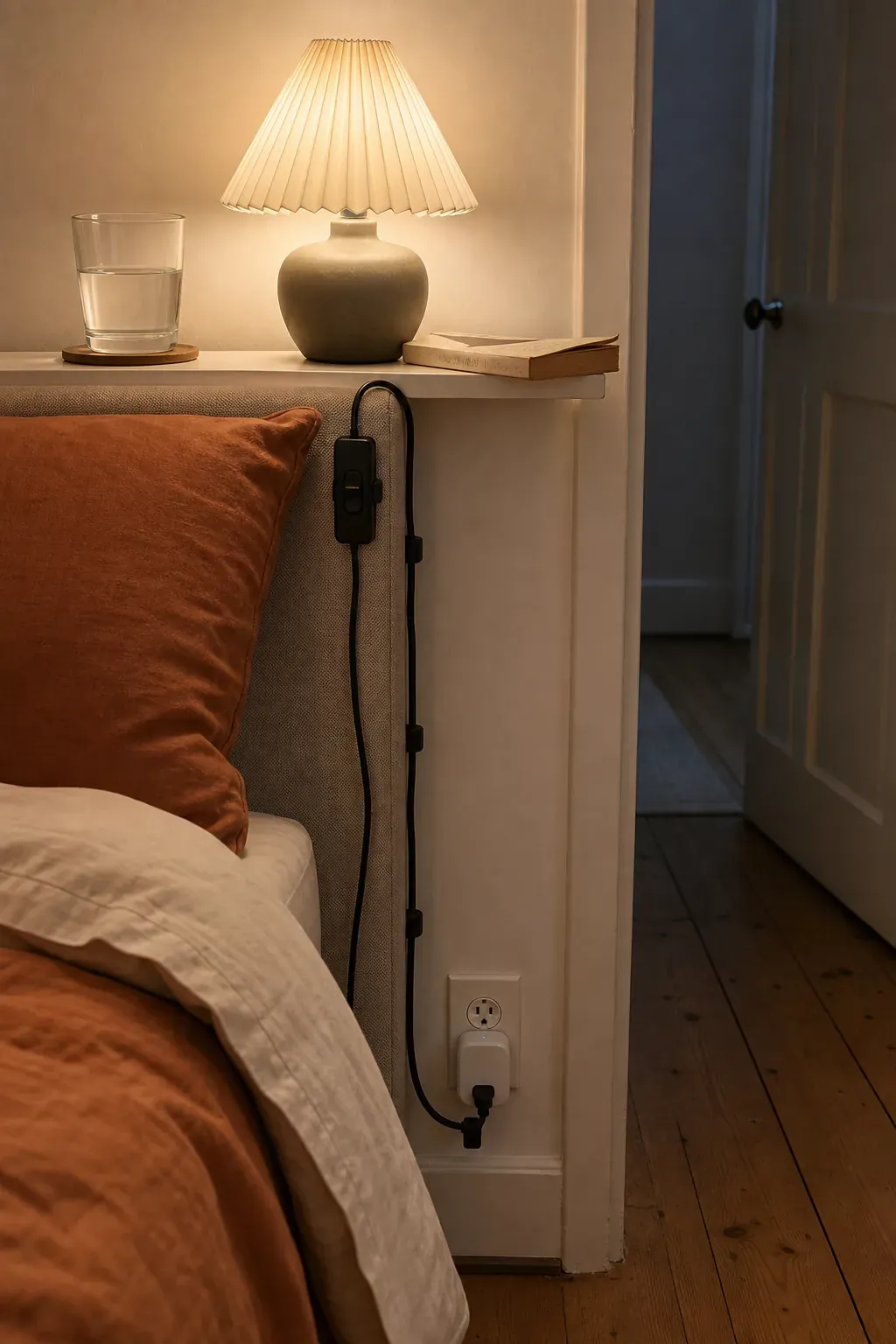
If switching off the light requires getting out of bed, the overhead fixture often wins by default. Use an inline cord switch, reachable sconce toggle, smart plug, or simple remote. Convenient controls are part of the lighting plan, not an afterthought.
Shield the Bulb From the Pillow View
Glare is often a positioning problem rather than a brightness problem. Lie down and look toward every fixture. If you can see a bare bulb or intense LED point, adjust the shade, raise the fixture, or redirect it. A shielded source can provide useful light while feeling much calmer.
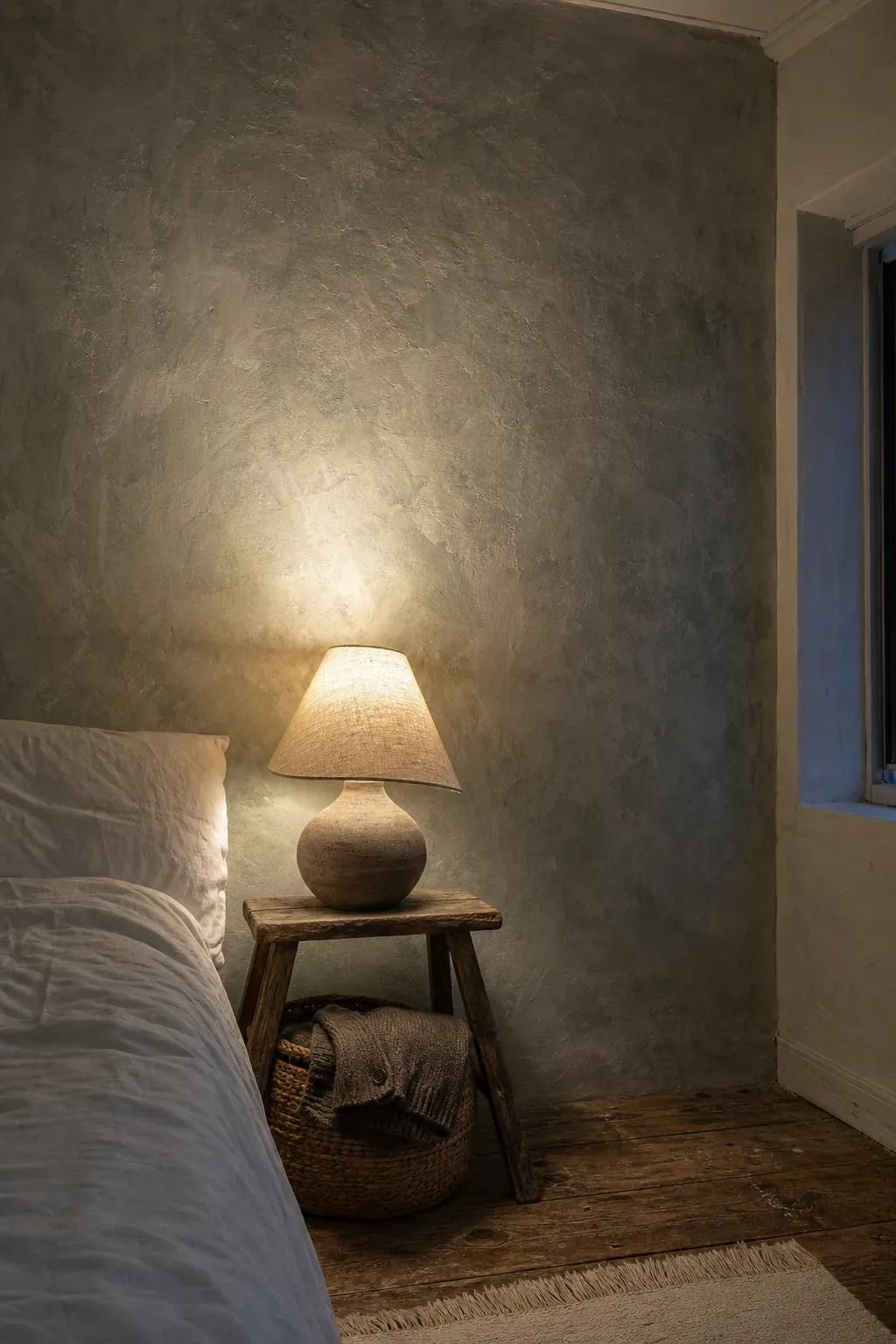
Wash a Textured Wall With Soft Side Light
Grasscloth, limewash, brick, or simple plaster gains depth when light skims across it. Place a shaded lamp slightly to the side rather than directly in front. The surface catches gentle highlights and shadows, adding atmosphere without another decorative object in the room.
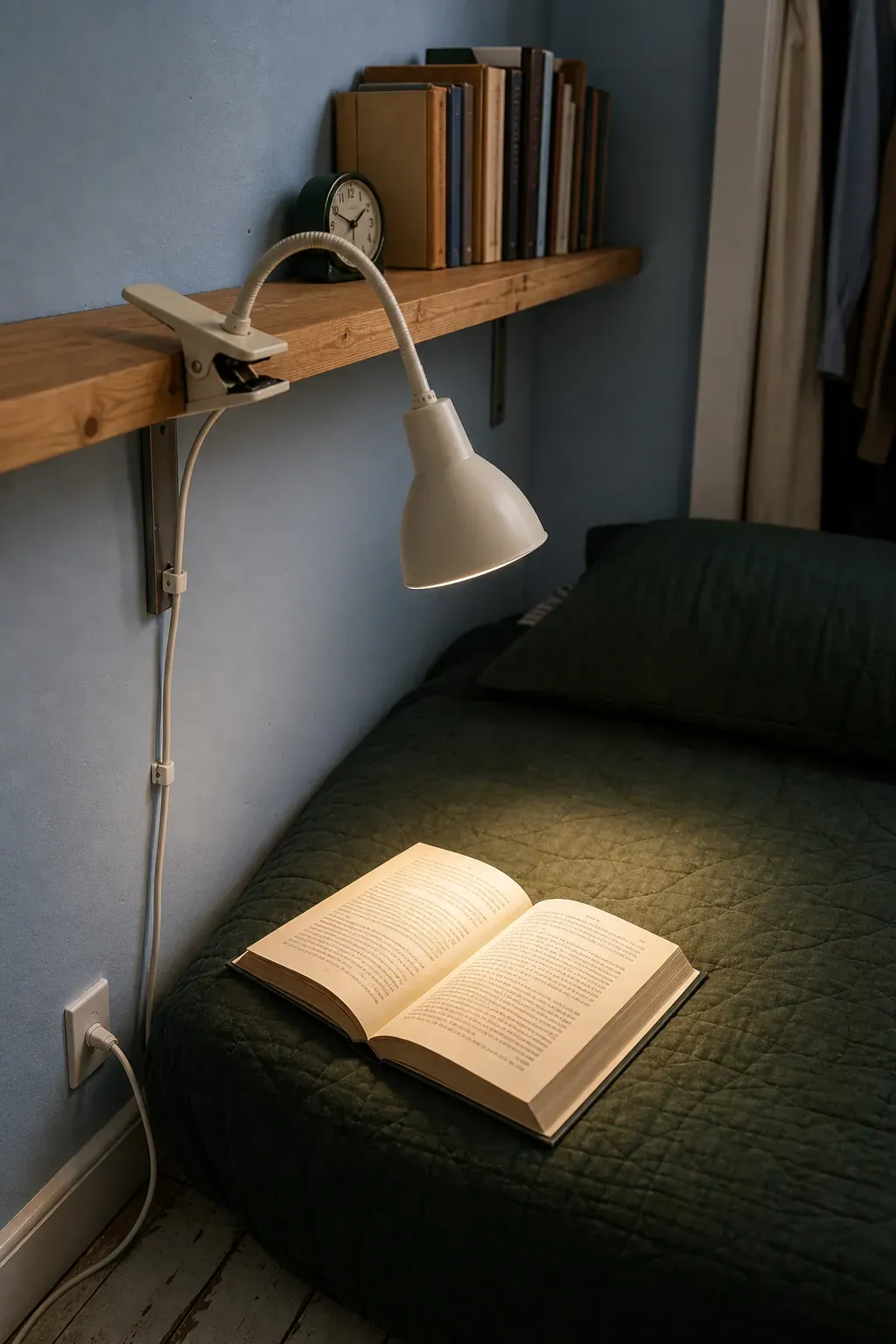
Clip a Reading Lamp to a Shelf
When there is no room for a nightstand, a sturdy clip lamp can turn an existing shelf into a focused reading source. Confirm that the clamp is secure, the cord cannot be pulled across the bed, and the shade stays cool enough near books and fabric.
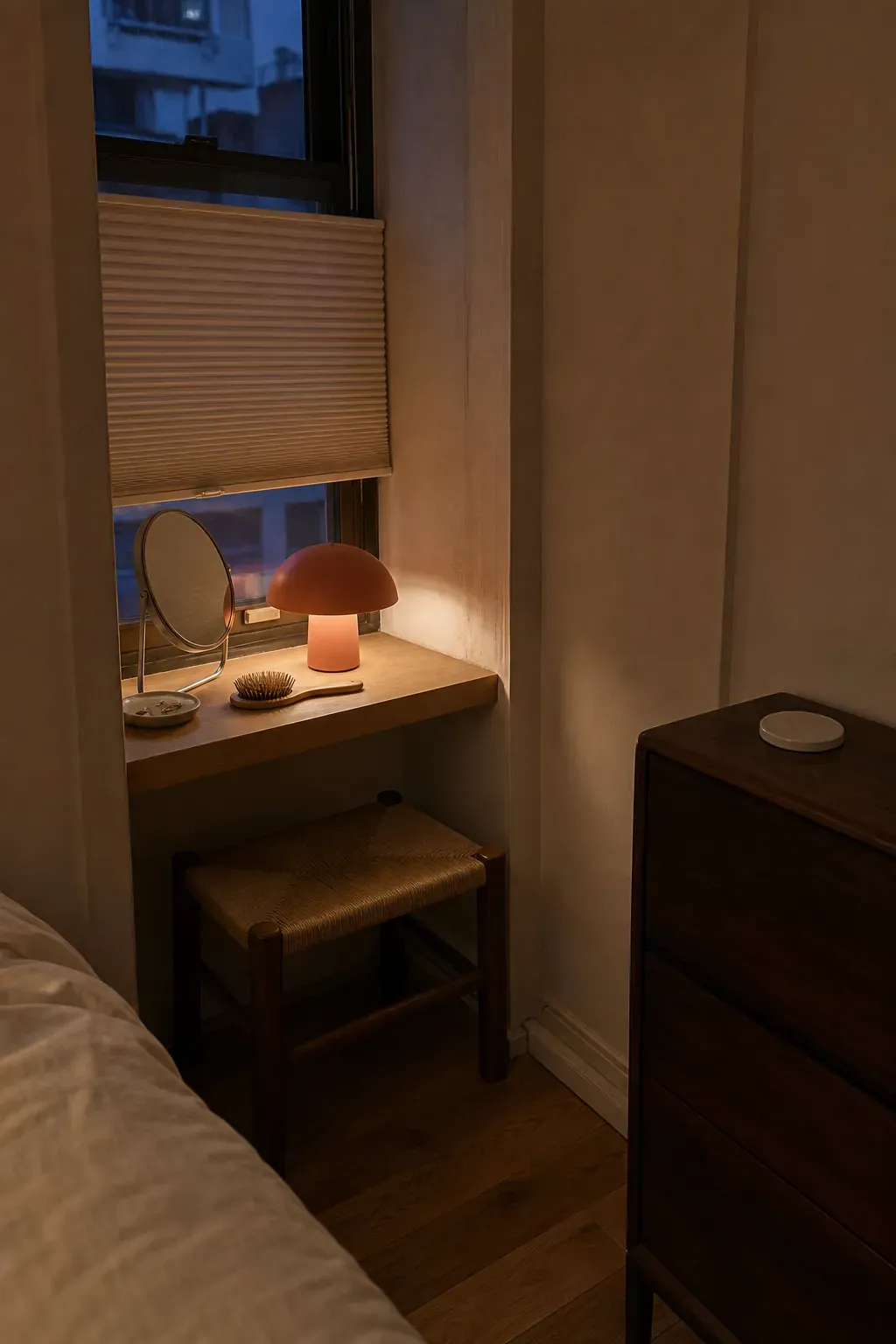
Tuck a Rechargeable Lamp Into an Awkward Nook
A rechargeable lamp can illuminate a window ledge, tiny vanity, or rental corner without a nearby outlet. Choose a stable, diffused design and give it a regular charging home. It is especially useful when cords would cross a walkway or interfere with drawers.
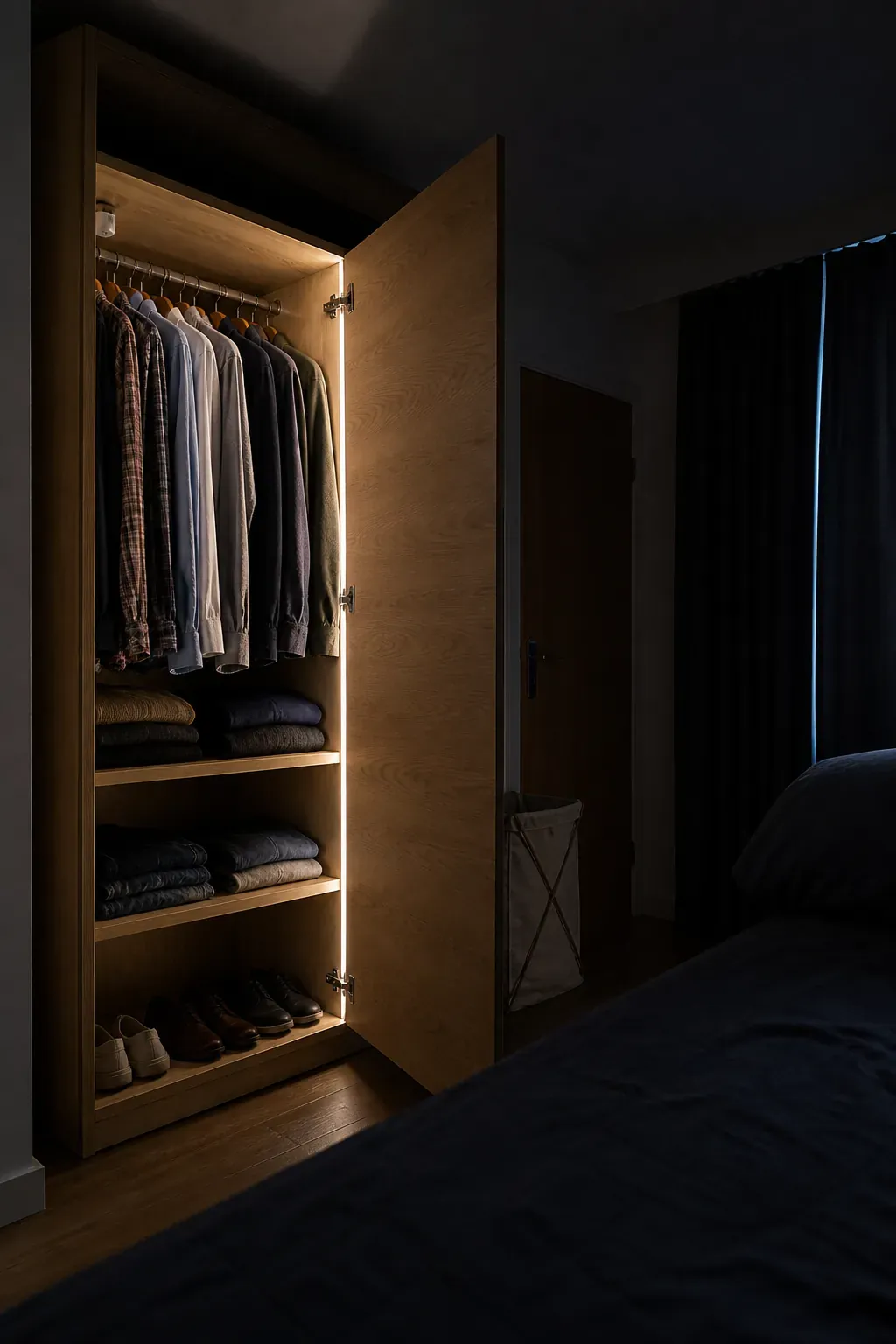
Light the Wardrobe Without Lighting the Whole Room
Motion-activated wardrobe lighting makes early mornings and late nights easier for shared bedrooms. Mount the strip so the door blocks direct glare and the light falls onto clothes. A short automatic shutoff keeps the fixture from remaining on after the doors close.
Guide Nighttime Steps With Low Amber Light
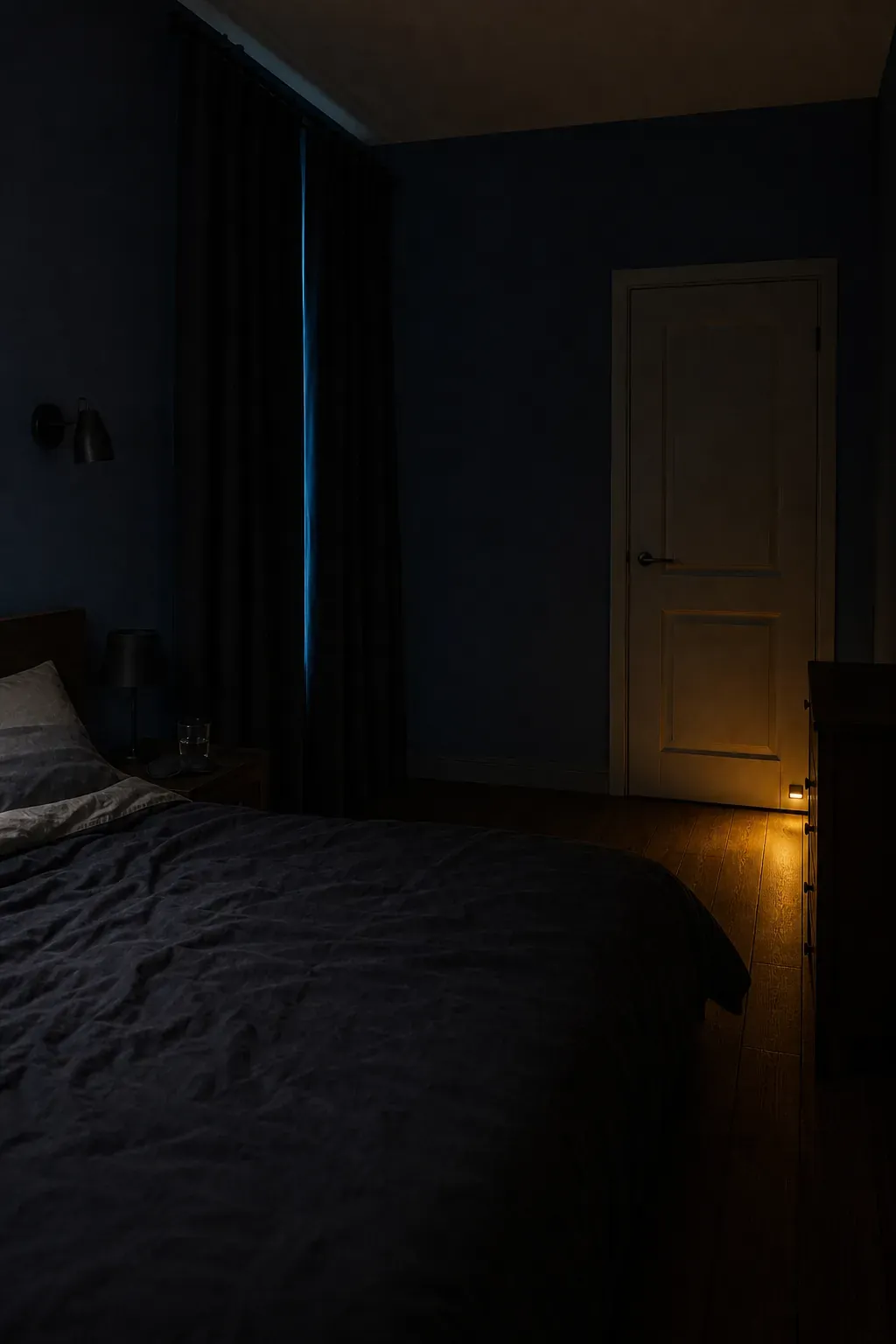
A very dim amber nightlight near floor level can mark the path to the door without shining into the sleeper’s eyes. Place it behind furniture or near the baseboard so the source is concealed. The goal is orientation, not room illumination.
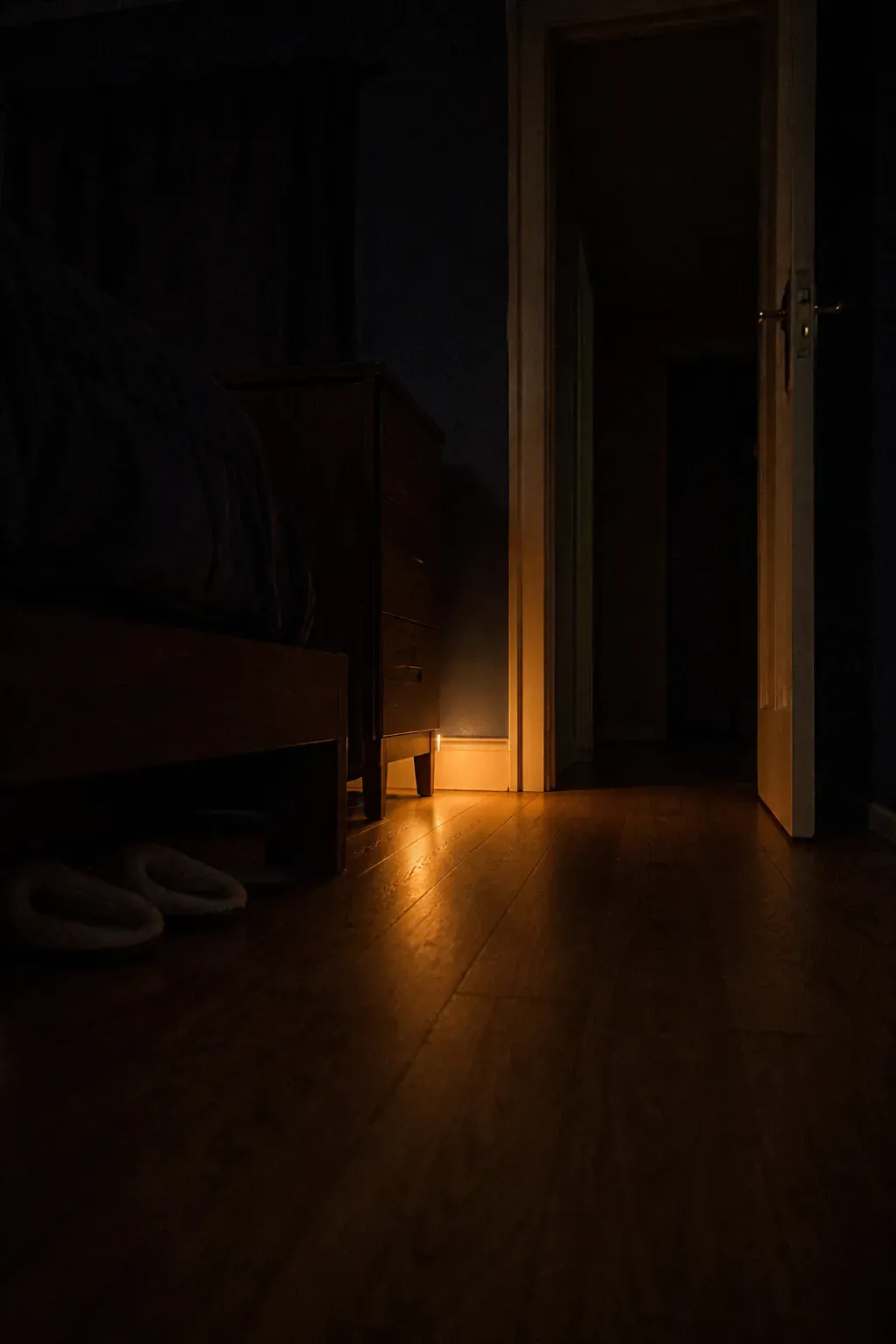
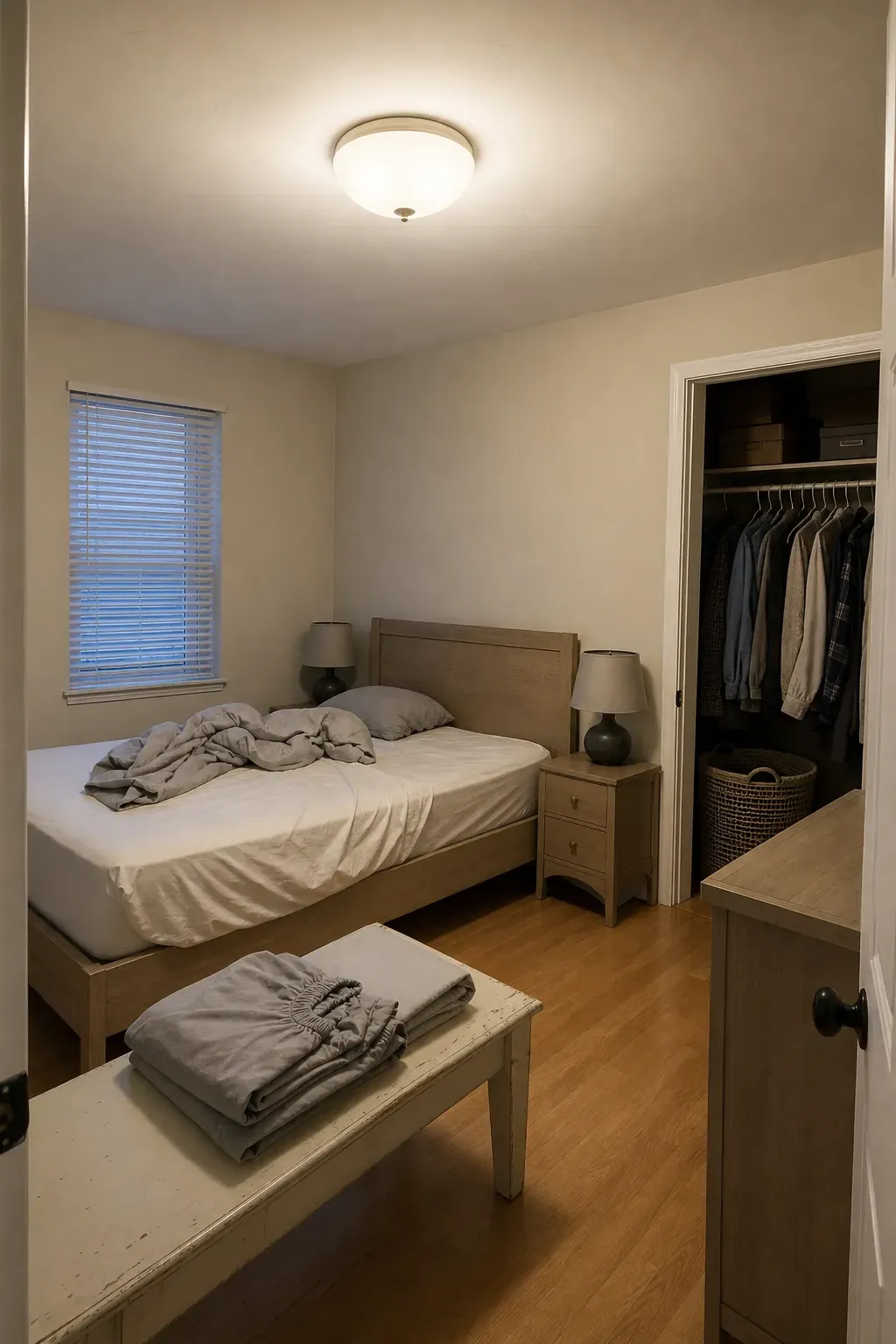
Soften a Ceiling Fixture With a Diffusing Shade
The overhead light can still be useful for cleaning and packing. Replace a clear or open shade with frosted glass, paper, or fabric that hides the bulb from common angles. Put it on a dimmer so it can support the lamps rather than dominate them.
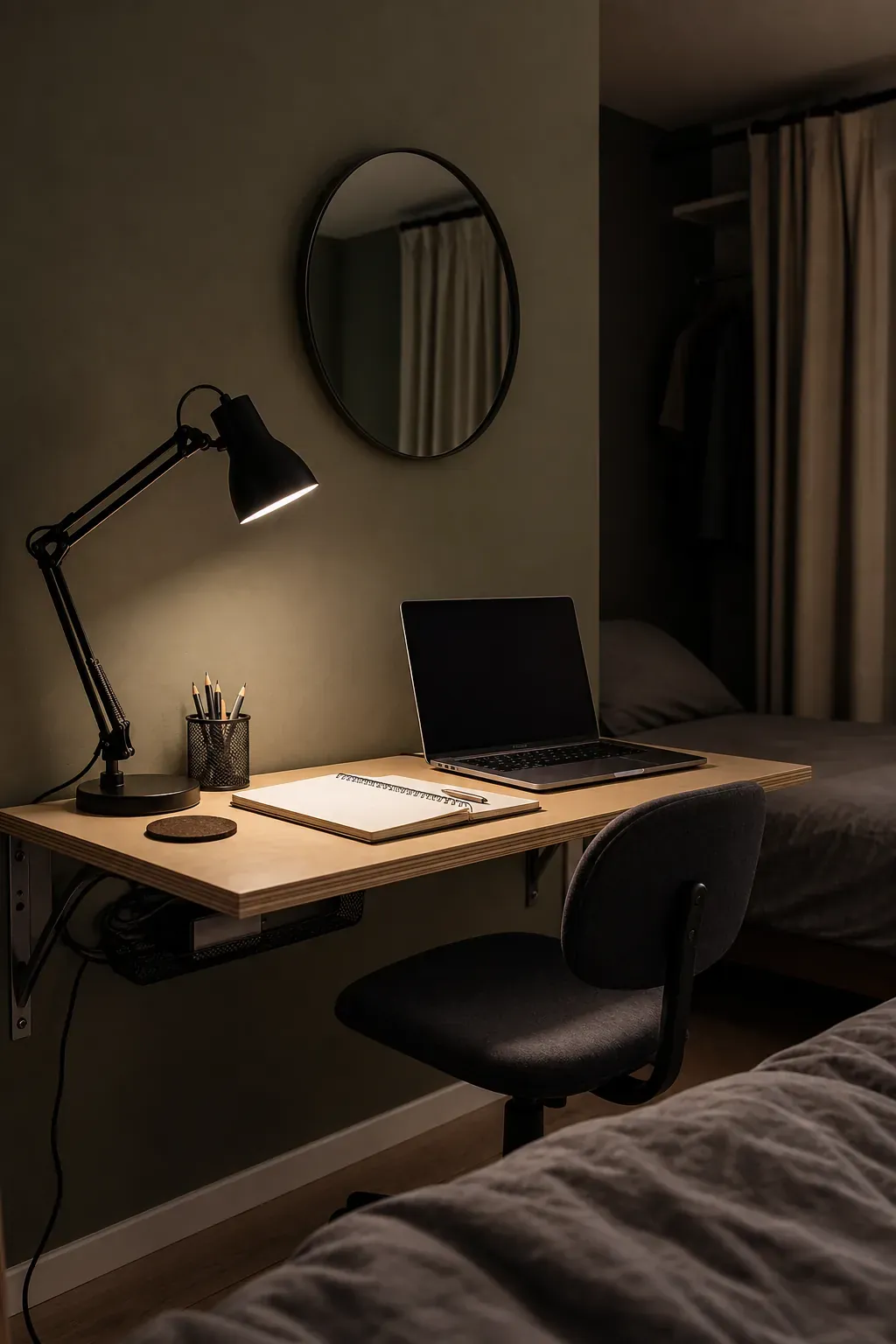
Aim Task Light Away From Mirrors and Screens
In a bedroom that doubles as a work area, reflected glare can keep the room feeling active. Angle the desk lamp so it lights the keyboard or page without appearing in a mirror or laptop screen. Then switch that task source off during the wind-down period.
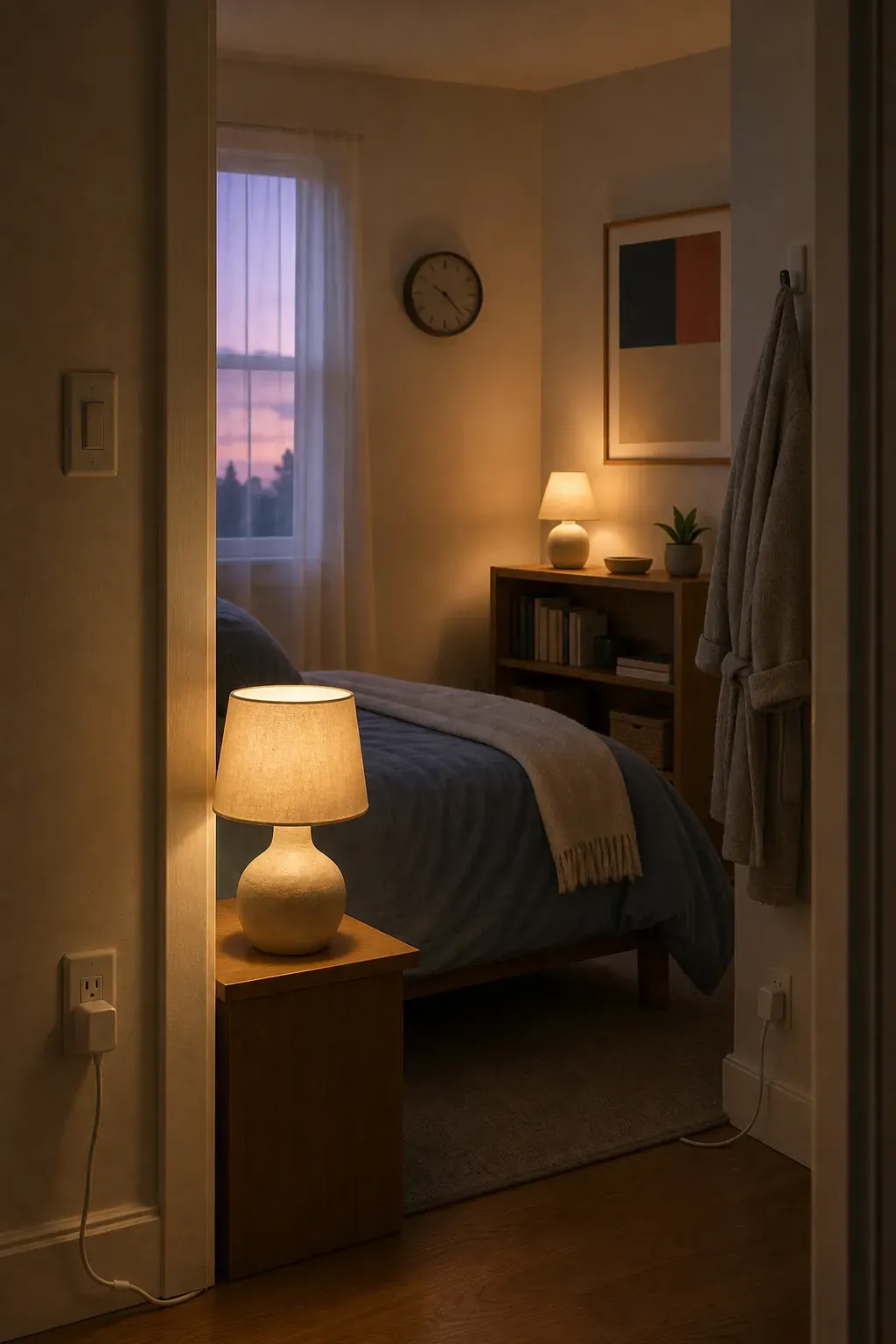
Set a Sunset Scene With a Timer or Smart Plug
A timer can turn on the softer lamps before you enter and turn them off after your routine. Keep the automation simple: one warm bedside source and one background source at a low level. Manual switches should still work when plans change.
Keep One Bright Cleaning Mode
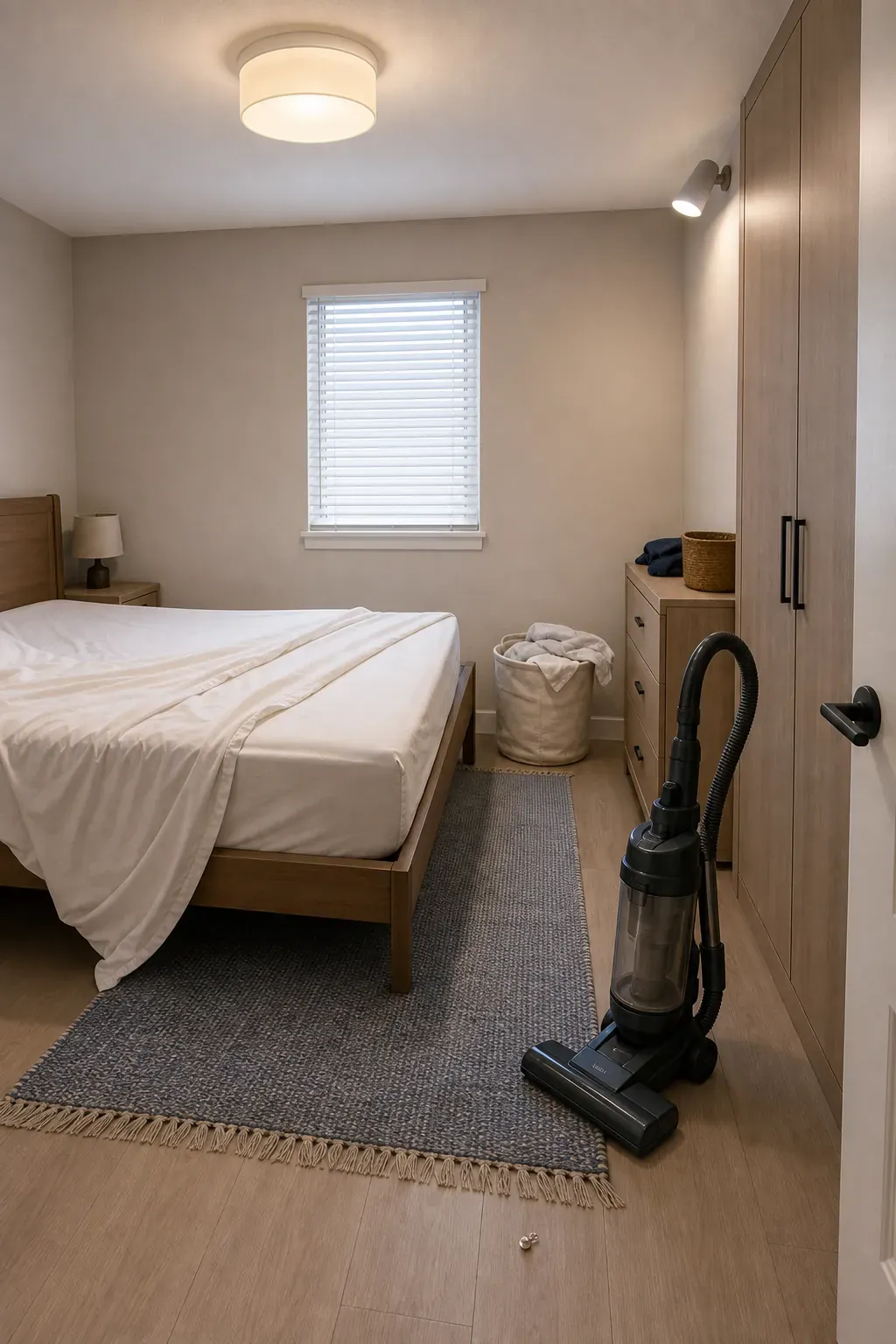
Soft lighting should not make it difficult to find a dropped earring, change sheets, or vacuum properly. Keep a brighter ceiling or portable task mode for chores, then return to the lower evening layers. Separating “cleaning light” from “living light” lets both work better.
Finish the Night With Darkness
The softest nighttime mood has an ending. After reading and getting ready for bed, switch off decorative and task lighting rather than leaving the room glowing all night. Block intrusive exterior light where practical, and keep only the minimum low path light needed for safe movement.
Stand at the doorway, sit on the bed, and finally lie on the pillow to check every source. If a bulb is visible, a reflection flashes in your eyes, or one corner is dramatically brighter than the rest, adjust the angle or level. A good small-bedroom plan supports activity when needed, then gives darkness back to the room.